16S rRNA Gene Amplicon Sequencing: A Comprehensive Guide from Experimental Design to Data Interpretation for Microbiome Researchers
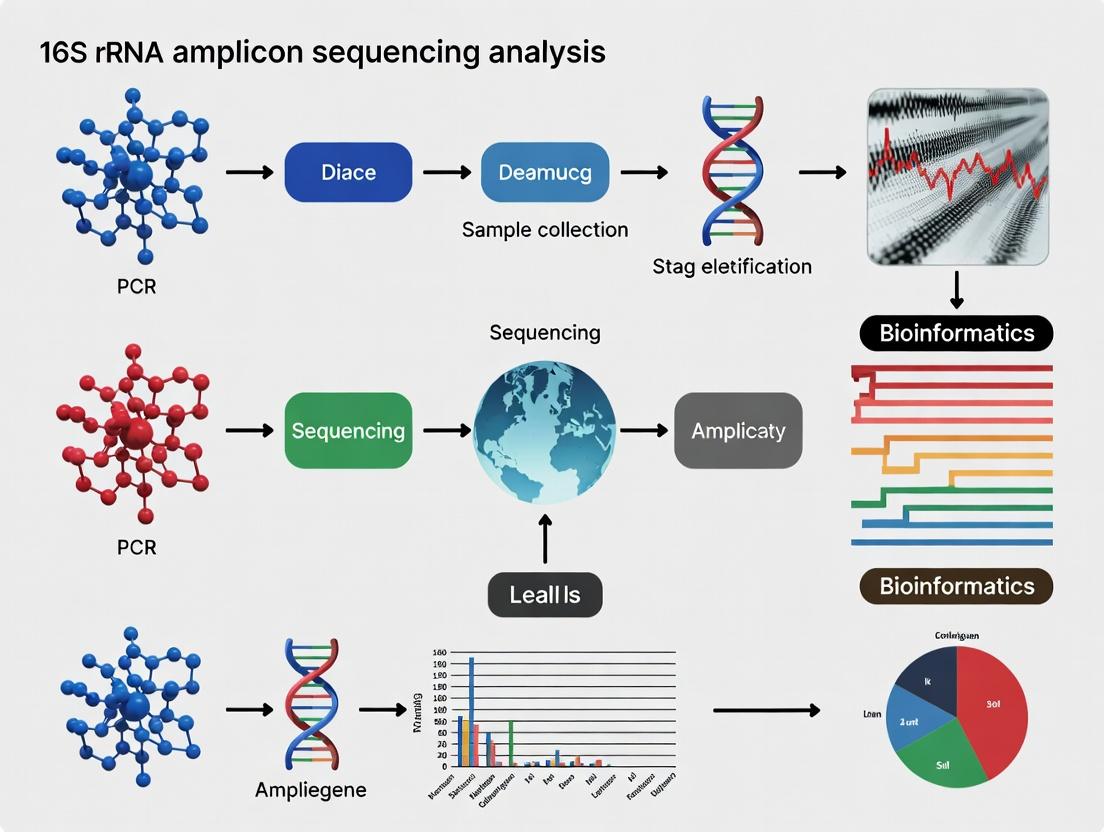
This comprehensive guide details the complete workflow for 16S rRNA gene amplicon sequencing, a cornerstone of modern microbiome research.
16S rRNA Gene Amplicon Sequencing: A Comprehensive Guide from Experimental Design to Data Interpretation for Microbiome Researchers
Abstract
This comprehensive guide details the complete workflow for 16S rRNA gene amplicon sequencing, a cornerstone of modern microbiome research. Targeting researchers, scientists, and drug development professionals, it covers foundational principles, experimental methodologies, data analysis pipelines, and advanced applications. The article addresses four critical intents: establishing a core understanding of 16S rRNA as a phylogenetic marker, detailing step-by-step protocols from primer selection to bioinformatics, providing solutions for common pitfalls and optimization strategies, and critically evaluating the method's strengths, limitations, and alternatives. This resource aims to empower users to design robust studies, generate high-quality data, and derive meaningful biological insights for biomedical and clinical translation.
What is 16S rRNA Sequencing? Core Principles and Applications in Biomedical Research
Within the framework of 16S rRNA gene amplicon sequencing analysis research, the 16S ribosomal RNA gene stands as the foundational pillar for microbial phylogeny and taxonomy. This technical whitepaper elucidates the molecular, evolutionary, and practical rationale for its preeminent status, detailing its application in contemporary research and drug development. The gene’s unique combination of universal distribution, functional constancy, and mosaic of variable regions provides an unparalleled tool for classifying and identifying Bacteria and Archaea, enabling researchers to decipher complex microbial communities without the need for culturing.
Fundamental Properties of the 16S rRNA Gene
The 16S rRNA gene (~1,500 bp) is a component of the 30S small subunit of the prokaryotic ribosome. Its utility stems from a confluence of conserved and variable regions.
Table 1: Key Properties of the 16S rRNA Gene Enabling its Gold Standard Status
| Property | Description | Implication for Phylogeny/Taxonomy |
|---|---|---|
| Ubiquitous & Essential | Present in all Bacteria and Archaea; fundamental to protein synthesis. | Enables universal primer design and comparison across all prokaryotic life. |
| Functionally Constant | High conservation due to critical role in ribosome function. | Provides a stable molecular chronometer for evolutionary distance. |
| Appropriate Length & Structure | ~1,500 nucleotides offers sufficient information; secondary structure provides additional validation. | Balances information content with sequencing feasibility; structural conservation aids alignment. |
| Mosaic of Variation | Contains nine hypervariable regions (V1-V9) interspersed with conserved regions. | Variable regions provide genus- and species-level discrimination; conserved regions anchor alignments and primer binding. |
| Extensive Database | Curated repositories like SILVA, Greengenes, and RDP contain millions of sequences. | Allows for robust comparative analysis and reliable taxonomic assignment. |
| Low Horizontal Gene Transfer | Rarely transferred between organisms compared to protein-coding genes. | Evolutionary history reflects organismal lineage, not shared metabolic traits. |
Experimental Protocol: 16S rRNA Gene Amplicon Sequencing Workflow
The standard pipeline for microbial community analysis via 16S sequencing involves the following detailed methodology.
1. Sample Collection & DNA Extraction:
- Protocol: Samples (e.g., soil, gut content, water) are collected with appropriate sterility controls. Genomic DNA is extracted using bead-beating or enzymatic lysis kits optimized for diverse cell wall types (e.g., Gram-positive bacteria). DNA concentration is quantified via fluorometry (e.g., Qubit).
- Critical Considerations: Extraction bias must be minimized. Include negative extraction controls.
2. PCR Amplification of Target Region:
- Protocol: Using universal primer pairs (e.g., 27F/1492R for full-length; 515F/806R for V4 region), amplify the 16S gene. Reactions include: 25-30 cycles of PCR, high-fidelity polymerase, template DNA (1-10 ng), and barcoded primers for multiplexing. Amplicons are verified by agarose gel electrophoresis.
- Key Reagent: Primer choice defines taxonomic resolution and bias.
3. Library Preparation & Sequencing:
- Protocol: Amplicons are purified (e.g., with AMPure beads), and indices are attached via a secondary limited-cycle PCR for Illumina platforms. Libraries are quantified, pooled in equimolar ratios, and sequenced on platforms like Illumina MiSeq (2x300 bp for V4) or NovaSeq.
4. Bioinformatic Analysis:
- Protocol: Raw sequences are processed using pipelines like QIIME 2, mothur, or DADA2. Steps include: demultiplexing, quality filtering (Q-score >20), denoising/error correction, chimera removal, Amplicon Sequence Variant (ASV) calling or clustering into Operational Taxonomic Units (OTUs) at 97% identity, and taxonomic assignment against reference databases (e.g., SILVA 138.1).
5. Statistical & Ecological Interpretation:
- Protocol: Data is analyzed for alpha-diversity (Shannon, Chao1) and beta-diversity (UniFrac, PCoA). Differential abundance testing (e.g., ANCOM-BC, DESeq2) identifies taxa associated with experimental conditions.
Diagram Title: 16S rRNA Amplicon Sequencing Workflow
The Scientist's Toolkit: Key Research Reagent Solutions
Table 2: Essential Materials for 16S rRNA Gene Amplicon Sequencing
| Item | Function & Rationale | Example Products/Brands |
|---|---|---|
| Universal 16S Primers | Target conserved regions to amplify variable domains from diverse taxa. Choice defines resolution and bias. | 27F/1492R (full gene); 515F/806R (V4); 341F/785R (V3-V4). |
| High-Fidelity DNA Polymerase | Reduces PCR errors to ensure accurate sequence data for sensitive ASV calling. | Q5 Hot Start (NEB), Phusion (Thermo). |
| Magnetic Bead Clean-up Kits | For efficient post-PCR purification and library size selection. Minimizes cross-contamination. | AMPure XP (Beckman Coulter), SPRIselect. |
| Dual-Index Barcode Kits | Allows multiplexing of hundreds of samples in one sequencing run with minimal index hopping. | Nextera XT Index Kit (Illumina), 16S Metagenomic Kit. |
| DNA Quantification Fluorometer | Accurate quantification of low-concentration DNA and library pools for equitable sequencing. | Qubit dsDNA HS Assay (Invitrogen). |
| Standardized Mock Community DNA | A defined mix of genomic DNA from known species. Serves as a positive control for extraction, PCR, and bioinformatic bias. | ZymoBIOMICS Microbial Community Standard. |
| Negative Control (PCR-grade Water) | Critical for detecting contamination introduced during wet-lab steps. | Nuclease-Free Water. |
| Reference Databases | Curated collections of high-quality 16S sequences for taxonomic classification. | SILVA, Greengenes, RDP. |
Limitations and Complementary Technologies
While indispensable, 16S analysis has limitations. It offers taxonomic, not functional, insight. Resolution at the species/strain level is often insufficient. PCR and database biases can skew results. Therefore, it is often integrated with other 'omics' approaches.
Table 3: Quantitative Comparison of 16S Sequencing with Metagenomic Sequencing
| Parameter | 16S rRNA Amplicon Sequencing | Shotgun Metagenomic Sequencing |
|---|---|---|
| Primary Target | Single gene (16S). | All genomic DNA in sample. |
| Taxonomic Resolution | Genus-level, sometimes species. | Species- and strain-level. |
| Functional Insight | Inferred from taxonomy. | Direct assessment of genes/pathways. |
| Cost per Sample | Low (~$20-$100). | High (~$100-$500+). |
| Computational Demand | Moderate. | High (large data volumes). |
| Host DNA Contamination Impact | Minimal (targeted). | Major (sequences everything). |
| Key Application | Profiling community composition & diversity. | Linking taxonomy to function, discovering new genes. |
The 16S rRNA gene remains the gold standard due to its irreplaceable balance of universality, evolutionary relevance, and practical applicability. Within the thesis of amplicon sequencing research, it provides the fundamental scaffold for exploring microbial ecology. While newer technologies like shotgun metagenomics and metatranscriptomics provide deeper functional understanding, 16S sequencing continues to be the first, most cost-effective step in mapping the microbial universe, forming the cornerstone of research in human health, environmental science, and therapeutic development.
The analysis of microbial communities via 16S rRNA gene amplicon sequencing is a cornerstone of modern microbiome research. A central thesis in this field posits that the accuracy and biological resolution of community profiling are fundamentally limited by the bioinformatic methods used to define taxonomic units. The evolution from Operational Taxonomic Units (OTUs) to Amplicon Sequence Variants (ASVs) or Zero-radius OTUs (ZOTUs) represents a paradigm shift, moving from clustering-based, approximate groups to exact, reproducible sequence variants. This transition is critical for advancing research and drug development, where detecting subtle, strain-level changes in microbiota can elucidate disease mechanisms and therapeutic responses.
Core Conceptual Frameworks
Operational Taxonomic Units (OTUs)
OTUs are clusters of sequencing reads grouped based on a predefined sequence similarity threshold (typically 97%), intended to approximate species-level classification. This method inherently assumes that intra-species 16S rRNA gene sequence variation is below this threshold.
Amplicon Sequence Variants (ASVs) / Zero-radius OTUs (ZOTUs)
ASVs (also known as ZOTUs in some pipelines) are unique, exact ribosomal RNA sequences obtained from high-throughput sequencing data. They are inferred using error-correction algorithms (e.g., DADA2, Deblur, UNOISE) that distinguish biological variation from sequencing noise without relying on arbitrary clustering thresholds.
Comparative Analysis: Resolution, Reproducibility, and Impact
Table 1: Quantitative Comparison of OTU vs. ASV Methodologies
| Feature | OTU (97% Clustering) | ASV/ZOTU (Error-Corrected) |
|---|---|---|
| Definition Basis | Clustering by % similarity (e.g., 97%) | Exact, error-corrected sequence |
| Biological Resolution | Species/Genus level (approximate) | Single-nucleotide resolution, enabling strain-level differentiation |
| Reproducibility | Low; varies with algorithm, database, & clustering parameters | High; |
| inherently reproducible across studies | ||
| Sequence Error Handling | Clusters errors with real sequences, inflating diversity | Models and removes sequencing errors |
| Computational Demand | Moderate (distance matrix calculation is intensive) | High (requires precise error models) |
| Downstream Sensitivity | May obscure real ecological patterns due to clustering | Captures subtle shifts in community structure |
| Typical Diversity (Richness) | Lower (clustering reduces unique units) | Higher (retains true biological variants) |
Table 2: Impact on Key Alpha and Beta Diversity Metrics (Representative Data)
| Metric | OTU Approach Effect | ASV Approach Effect | Implication for Research |
|---|---|---|---|
| Observed Richness | Underestimation by 20-50%* | More accurate, often 1.5-2x higher* | ASVs reveal hidden diversity. |
| Beta Diversity (Bray-Curtis) | Can overestimate between-sample differences due to inconsistent clustering | More precise, reproducible distances | Enables reliable cross-study comparisons. |
| Differential Abundance | Reduced power; signals diluted across clusters | Increased statistical power for strain-level associations | Critical for identifying precise biomarkers. |
| *Note: Specific percentages vary by sample type, sequencing depth, and pipeline. |
Detailed Experimental Protocols for Key Methodologies
Protocol A: Traditional OTU Picking (Open-Reference via QIIME2)
- Demultiplex & Quality Filter: Use
q2-demuxandq2-quality-filter. Trim low-quality bases (default Q20). - Dereplication & Clustering: Pick representative sequences via
vsearch --derep_fulllength. Cluster sequences usingvsearch --cluster_sizeat 97% identity. - Chimera Removal: Apply UCHIME algorithm (
vsearch --uchime_ref) against a reference database (e.g., SILVA). - Taxonomy Assignment: Classify OTUs using a naive Bayes classifier (
q2-feature-classifier) trained on a reference database. - Table Construction: Create final OTU table (
q2-feature-table).
Protocol B: ASV Inference via DADA2 (in R)
- Filter & Trim: Use
filterAndTrim()to truncate reads at quality score drop (e.g., forward 240F, reverse 160R). Trim primer sequences. - Learn Error Rates: Model sequencing error profiles with
learnErrors()using a subset of data. - Dereplication: Combine identical reads with
derepFastq(). - Core Inference: Apply the DADA algorithm with
dada()to infer exact sequence variants, correcting errors. - Merge Paired Reads & Remove Chimeras: Merge forward/reverse reads with
mergePairs(). Remove chimeras withremoveBimeraDenovo(). - Construct Sequence Table: The output is a count matrix of ASVs versus samples.
Protocol C: ZOTU Generation via UNOISE3 (in USEARCH)
- Quality Control: Merge paired reads and quality filter using
-fastq_filterwith-fastq_maxee1.0. - Dereplication: Use
-fastx_uniquesto find unique sequences and abundances. - Denoising/ZOTU Creation: Run the UNOISE3 algorithm:
-unoise3command with optional alpha parameter to denoise and create ZOTUs. - Chimera Filtering: Apply built-in reference-based chimera filtering.
- OTU Table Creation: Map reads back to ZOTUs with
-otutabto generate the final ZOTU table.
Visualizing the Methodological Evolution and Workflow
Diagram 1: OTU vs ASV Analysis Workflow Comparison
Diagram 2: Clustering vs Resolution of Sequences and Errors
The Scientist's Toolkit: Essential Research Reagent Solutions
Table 3: Key Reagents and Materials for 16S Amplicon Sequencing Studies
| Item | Function & Importance | Example/Note |
|---|---|---|
| High-Fidelity DNA Polymerase | Critical for low-error PCR amplification of the 16S target region. Minimizes early-cycle errors that become ASVs/OTUs. | Q5 Hot Start (NEB), KAPA HiFi. |
| Dual-Indexed PCR Primers | Enable multiplexing of hundreds of samples in a single run. Unique dual indices reduce index-hopping artifacts. | 16S V4 primers (515F/806R) with Illumina Nextera indices. |
| Mock Microbial Community | Defined mixture of known bacterial genomic DNA. Essential positive control for evaluating accuracy, error rates, and resolution of the entire workflow. | ZymoBIOMICS Microbial Community Standard. |
| Magnetic Bead-Based Cleanup Kits | For reproducible size-selection and purification of amplicon libraries, removing primer dimers and nonspecific products. | AMPure XP Beads (Beckman Coulter). |
| Library Quantification Kit | Accurate fluorometric quantification of final library concentration is vital for balanced sequencing depth across samples. | Qubit dsDNA HS Assay (Thermo Fisher). |
| PhiX Control v3 | Spiked into every Illumina run (1-5%) for base calling calibration, especially important for low-diversity amplicon libraries. | Illumina PhiX Control. |
| Bioinformatics Pipelines | Software for processing raw data into OTUs/ASVs. Choice dictates resolution and reproducibility. | QIIME2 (OTUs/plugins), DADA2 (R), USEARCH (UNOISE3). |
| Curated Reference Database | For taxonomic assignment of inferred features. Quality and curation directly impact classification reliability. | SILVA, Greengenes, GTDB. |
This technical whitepaper, framed within a broader thesis on 16S rRNA gene amplicon sequencing analysis, details the integrative study of human-associated microbiomes. The analysis of microbial communities in the gut, skin, oral cavity, and internal tissues via 16S sequencing provides a powerful lens to understand their collective impact on host physiology, disease pathogenesis, and therapeutic development. This guide presents current data, standardized protocols, and analytical frameworks for researchers and drug development professionals.
Core Quantitative Data: Microbiome-Host Interactions in Health and Disease
The following tables consolidate key quantitative findings from recent studies (2023-2024) linking microbiome composition and function to clinical outcomes.
Table 1: Alpha-Diversity Metrics (Shannon Index) Across Body Sites in Health vs. Disease
| Body Site | Healthy Cohort Mean (±SD) | Disease State (Example) | Disease Cohort Mean (±SD) | Key Associated Pathogen/Shift | P-value |
|---|---|---|---|---|---|
| Gut | 3.8 ± 0.5 | Inflammatory Bowel Disease | 2.9 ± 0.7 | ↓ Faecalibacterium prausnitzii, ↑ Escherichia coli | <0.001 |
| Subgingival Plaque | 3.2 ± 0.4 | Periodontitis | 4.1 ± 0.6 | ↑ Porphyromonas gingivalis, ↑ Treponema denticola | <0.001 |
| Skin (Forearm) | 2.5 ± 0.3 | Atopic Dermatitis | 1.8 ± 0.4 | ↓ Cutibacterium spp., ↑ Staphylococcus aureus | <0.01 |
| Placental Tissue* | 0.5 ± 0.2 (low biomass) | Preterm Birth | 1.8 ± 0.5 | ↑ Ureaplasma spp., ↑ Mycoplasma spp. | <0.05 |
Note: Tissue microbiomes are typically low biomass and require stringent controls.
Table 2: Key Microbial Taxa and Their Correlations with Systemic Inflammatory Markers
| Taxonomic Assignment (Genus level) | Body Site | Correlation with Serum CRP | Putative Mechanism | Associated Disease Model |
|---|---|---|---|---|
| Faecalibacterium | Gut | Negative (r = -0.65) | Butyrate production, IL-10 induction | Crohn's Disease |
| Streptococcus (saccharolytic) | Oral | Neutral | Competes with pathobionts | Dental Caries |
| Streptococcus (inflammatory)* | Oral | Positive (r = 0.58) | Hydrogen sulfide production | Atherosclerosis (CAD) |
| Cutibacterium acnes | Skin (sebaceous) | Negative (r = -0.42) | Propionate production, sebum regulation | Acne Vulgaris |
| Escherichia/Shigella | Gut | Positive (r = 0.71) | LPS production, epithelial barrier disruption | Ulcerative Colitis |
Experimental Protocols for 16S rRNA Gene Amplicon Sequencing Analysis
Protocol A: Sample Collection and Preservation for Multi-Site Studies
Objective: Standardized collection of microbial DNA from gut, oral, skin, and low-biomass tissue samples. Materials: Sterile swabs (skin/oral), stool collection tubes with DNA stabilizer, tissue homogenizer, liquid nitrogen, low-binding microcentrifuge tubes. Procedure:
- Gut: Collect fresh stool (~200 mg) into tube containing 2 mL of RNAlater or specialized stool preservative. Homogenize and freeze at -80°C.
- Oral (Subgingival): Use sterile curettes or paper points. Place in 500 µL of PBS-lysis buffer (0.5% Tween 20) immediately, vortex, freeze.
- Skin: Moisten swab with sterile SCF-1 buffer, rub firmly on 4 cm² area for 30 seconds. Break swab tip into lysis buffer.
- Tissue: Aseptically collect tissue specimen. For DNA, snap-freeze in liquid nitrogen. For RNA/DNA co-extraction, place in Allprotect reagent.
- Controls: Include extraction blanks, no-template PCR controls, and positive mock community controls in every batch.
Protocol B: Library Preparation for Illumina Platforms (V3-V4 Region)
Objective: Generate amplicon libraries of the 16S rRNA gene. Primers: 341F (5′-CCTACGGGNGGCWGCAG-3′), 806R (5′-GGACTACHVGGGTWTCTAAT-3′). Reagent Kit: KAPA HiFi HotStart ReadyMix. Procedure:
- DNA Extraction: Use bead-beating mechanical lysis (e.g., MagNA Lyser) with a kit optimized for difficult samples (e.g., Qiagen PowerSoil Pro for stool/tissue; Molzym MolYsis for host DNA depletion in tissue).
- First-Stage PCR (Amplification):
- 25 µL reaction: 12.5 µL KAPA HiFi Mix, 1 µL each primer (10 µM), 2-10 ng template DNA.
- Cycling: 95°C 3 min; 25-30 cycles of [95°C 30s, 55°C 30s, 72°C 30s]; 72°C 5 min.
- Indexing PCR (Add Illumina Adapters & Barcodes): Use Nextera XT Index Kit. 8 cycles.
- Clean-up & Pooling: Clean amplicons with AMPure XP beads. Quantify by fluorometry (Qubit). Pool equimolar amounts.
- Sequencing: Run on Illumina MiSeq or NovaSeq with 2x250 or 2x300 bp paired-end chemistry.
Protocol C: Bioinformatics & Statistical Analysis Workflow (QIIME 2 / DADA2)
Objective: Process raw sequences into analyzed ecological data. Software: QIIME 2 (2024.2), DADA2, phyloseq (R), PICRUSt2. Procedure:
- Demultiplexing & Primer Trimming: Use
q2-demuxandcutadapt. - Denoising & ASV Creation: Use DADA2 via
q2-dada2to infer exact Amplicon Sequence Variants (ASVs). Truncation: fwd 240, rev 200. - Taxonomy Assignment: Classify ASVs against SILVA 138 or Greengenes2 (2022) database using a fitted classifier.
- Phylogenetic Tree: Generate with
q2-fragment-insertionfor diversity metrics. - Downstream Analysis: In R/phyloseq: Rarefaction (or use SRS), calculate alpha/beta diversity, perform PERMANOVA (adonis2) for group differences, use LEfSe or MaAsLin2 for differential abundance (correcting for covariates).
Title: 16S rRNA Amplicon Data Analysis Workflow
Title: Cross-Body Microbiome Interactions in Systemic Disease
The Scientist's Toolkit: Key Research Reagent Solutions
Table 3: Essential Materials for Integrated Microbiome Studies
| Item (Supplier Example) | Function & Rationale |
|---|---|
| DNA/RNA Shield (Zymo Research) | Preserves nucleic acid integrity at ambient temperature for diverse sample types during transport. Critical for field studies. |
| PowerSoil Pro Kit (Qiagen) | Gold-standard for high-yield, inhibitor-free DNA extraction from stool and soil-like samples. Bead-beating ensures lysis of tough Gram-positives. |
| MolYsis Complete5 (Molzym) | Selectively degrades human/animal DNA in low-biomass samples (tissue, blood), enriching microbial DNA and reducing host background. |
| ZymoBIOMICS Microbial Community Standard | Quantitative mock community of defined bacteria and fungi. Serves as essential positive control for extraction, PCR, and bioinformatics pipeline validation. |
| Nextera XT DNA Library Prep Kit (Illumina) | Streamlined, low-input protocol for amplicon indexing compatible with Illumina sequencers. Enables high-plex sample pooling. |
| KAPA HiFi HotStart ReadyMix (Roche) | High-fidelity polymerase with proofreading activity. Minimizes PCR errors during amplicon generation, crucial for accurate ASV inference. |
| PBS-1T Buffer (0.1% Tween 20 in PBS) | Standardized swab collection buffer for skin and oral samples, maintaining microbial viability and aiding in cell detachment. |
| BEI Resources Mock Community RNA (ATCC) | Controls for metatranscriptomic studies assessing active community function. |
Within the framework of 16S rRNA gene amplicon sequencing research, the foundational step is the explicit definition of study objectives. This choice, between hypothesis-driven and exploratory design, dictates every subsequent phase of experimental design, statistical analysis, and biological interpretation.
1. Core Philosophical and Methodological Distinction
The dichotomy between these approaches is summarized in Table 1.
Table 1: Comparative Overview of Study Design Paradigms
| Aspect | Hypothesis-Driven Design | Exploratory (Discovery) Design |
|---|---|---|
| Primary Goal | Test a specific, pre-defined causal or associative hypothesis. | Generate novel hypotheses by characterizing patterns without prior assumptions. |
| Theoretical Basis | Strong prior knowledge from preliminary data or literature. | Limited prior knowledge; seeks to define the unknown. |
| Experimental Control | High; uses tight controls, randomization, and blinding to minimize confounders. | Variable; often focuses on broad characterization, controls may be for technical variation. |
| Sample Size & Power | Calculated a priori based on expected effect size. | Often pragmatic; larger cohorts to capture diversity. |
| Sequencing Depth | Sufficient to detect hypothesized differences; can be lower. | Generally deeper to capture rare taxa and increase feature space. |
| Primary Statistical Focus | Inferential (e.g., hypothesis tests: PERMANOVA, differential abundance). | Descriptive (e.g., alpha/beta diversity, clustering) and predictive modeling. |
| Risk | False conclusion regarding the specific hypothesis. | Failure to generate robust, testable new hypotheses; "fishing expedition." |
| Example Question | "Does antibiotic X reduce the abundance of Bacteroides genus in the gut, leading to increased Enterobacteriaceae?" | "What is the composition of the gut microbiome in patients with novel disease Y?" |
2. Integrated Workflow in 16S rRNA Gene Amplicon Sequencing
The choice of objective influences the entire analytical pipeline, from sample collection to interpretation.
Diagram Title: Workflow Divergence Based on Initial Study Objective
3. Detailed Experimental Protocols
3.1 Protocol for a Hypothesis-Driven 16S Study: Testing a Dietary Intervention
- Objective: Test if a high-fiber supplement increases fecal Bifidobacterium abundance.
- Design: Randomized, placebo-controlled, double-blind trial.
- Sample Collection: Stool samples at baseline (Day 0), mid-point (Day 14), and endpoint (Day 28). Immediate freezing at -80°C.
- DNA Extraction: Using a kit with mechanical lysis (e.g., bead beating) to ensure Gram-positive bacterial lysis. Include extraction controls.
- 16S rRNA Gene Amplification: Target the V4 region using primers 515F/806R. Use a dual-indexing strategy to multiplex samples. Perform PCR in triplicate to reduce bias, then pool.
- Library QC & Sequencing: Quantify with fluorometry, pool equimolarly, and sequence on an Illumina MiSeq with 2x250 bp v2 chemistry to obtain ~50,000 reads/sample.
- Bioinformatic & Statistical Analysis:
- Process reads through DADA2 for denoising, error correction, and generation of Amplicon Sequence Variants (ASVs).
- Assign taxonomy using a pre-trained classifier (e.g., SILVA database).
- Primary Analysis: Perform a linear mixed-effects model testing the interaction of time and treatment group on the log-transformed relative abundance of Bifidobacterium.
3.2 Protocol for an Exploratory 16S Study: Cohort Biomarker Discovery
- Objective: Identify microbial signatures associated with disease progression in a novel syndrome.
- Design: Longitudinal observational cohort (patients vs. healthy controls).
- Sample Collection: Stool and (if relevant) oral swabs at multiple timepoints. Extensive metadata collection (diet, medications, clinical scores).
- DNA Extraction & Amplification: As above, but optimized for multiple sample types.
- Sequencing: Deeper sequencing (e.g., Illumina NovaSeq, ~100,000 reads/sample) to capture low-abundance taxa.
- Bioinformatic & Statistical Analysis:
- Process to ASVs as above.
- Descriptive Analysis: Calculate alpha diversity (Shannon, Faith's PD) and beta diversity (UniFrac, Bray-Curtis). Visualize via PCoA.
- Unsupervised Learning: Apply clustering (e.g., Dirichlet Multinomial Mixtures) to identify community types (enterotypes).
- Supervised Learning: Use random forest or similar models to identify ASVs predictive of disease state, validated via cross-validation.
4. The Scientist's Toolkit: Essential Research Reagents & Materials
Table 2: Key Reagent Solutions for 16S rRNA Gene Amplicon Workflows
| Item | Function | Example/Note |
|---|---|---|
| Bead-Beating Lysis Kit | Mechanical disruption of robust microbial cell walls (e.g., Gram-positive bacteria, spores). | PowerSoil Pro Kit (QIAGEN) or similar. Critical for unbiased community representation. |
| PCR Inhibitor Removal Matrix | Binds humic acids, pigments, and other inhibitors common in complex samples (stool, soil). | Often integrated into extraction kits. Essential for high-quality DNA from challenging samples. |
| High-Fidelity DNA Polymerase | Accurate amplification of the 16S gene template with low error rates. | Platinum SuperFi II or Q5 Hot Start. Reduces PCR-derived sequencing errors. |
| Dual-Indexed Primers | Allows multiplexing of hundreds of samples in a single sequencing run with minimal index crosstalk. | Nextera XT Index Kit or custom Golay-coded primers. |
| Quant-iT PicoGreen dsDNA Assay | Fluorometric quantification of low-concentration DNA libraries post-amplification. | More accurate for heterogenous amplicon mixtures than absorbance (A260). |
| Phix Control v3 | Provides balanced nucleotide diversity to correct for low-diversity issues during Illumina sequencing. | Added at 5-10% to amplicon pools to improve cluster recognition. |
| ZymoBIOMICS Microbial Community Standard | Defined mock community of bacteria and fungi. Serves as a positive control for extraction, PCR, and sequencing accuracy. | Used to benchmark and validate the entire wet-lab and bioinformatic pipeline. |
| Silica Membrane Cleanup Kit | Purification and size selection of amplified libraries to remove primer dimers and nonspecific products. | AMPure XP beads are the industry standard for magnetic bead-based cleanup. |
5. Statistical Decision Pathways
The analytical approach is directly determined by the initial study design choice.
Diagram Title: Statistical Method Selection Based on Study Design
Conclusion
In 16S rRNA gene amplicon research, the clear articulation of a hypothesis-driven or exploratory objective is not merely academic. It is the critical first step that determines experimental rigor, resource allocation, analytical strategy, and ultimately, the robustness and interpretability of the scientific findings. A well-designed hypothesis-testing study provides causal evidence, while a well-executed exploratory study maps the unknown to generate new, testable hypotheses, creating a iterative cycle of discovery.
Within the framework of 16S rRNA gene amplicon sequencing research, the initial decision of sample type collection is a foundational, non-reversible step that fundamentally dictates the biological questions that can be addressed, the technical challenges to be overcome, and the validity of downstream conclusions. This guide provides an in-depth technical examination of core sample types—stool, swabs, tissue, and low-biomass specimens—contextualized for microbial ecology and translational drug development research.
Sample Type Characteristics and Impact on 16S Sequencing
The physical and biological properties of the sample type directly influence experimental design, biomass yield, contamination risk, and data interpretation.
Table 1: Comparative Analysis of Common Sample Types for 16S rRNA Amplicon Sequencing
| Sample Type | Typical Biomass Yield | Dominant Challenge | Key Contaminant Sources | Primary Research Applications |
|---|---|---|---|---|
| Stool | High (10^8-10^11 cells/g) | Host DNA proportion, homogenization | Collection kit reagents, cross-contamination | Gut microbiome, therapeutic response, disease association (IBD, IBS) |
| Mucosal Swab | Moderate to Low | Low biomass, host debris, sampling consistency | Operator skin, collection kit, ambient air | Oral, vaginal, skin microbiome, localized dysbiosis studies |
| Tissue (Biopsy) | Low (10^3-10^6 cells/g) | Overwhelming host DNA, spatial heterogeneity | Surgical instruments, preservatives, kit reagents | Host-microbe interactions (e.g., tumor microbiome, mucosal adhesion) |
| Low-Biomass (e.g., CSF, BALF) | Very Low (<10^3 cells) | Signal vs. contamination, reagent/kit-borne DNA | DNA extraction kits, labware, PCR reagents | Sterile site exploration, infectious disease diagnostics |
Detailed Methodological Protocols for Key Sample Types
Protocol 1: Stool Sample Collection and Preservation for Gut Microbiome Studies
Objective: To collect fecal samples that accurately preserve microbial community structure for downstream DNA extraction and 16S sequencing.
- Collection: Use a sterile, DNA-free collection container with an integrated stabilizer solution (e.g., OMNIgene•GUT, RNAlater, or 95% ethanol).
- Aliquoting: Homogenize the sample thoroughly before aliquoting into 0.2-0.5 g portions in cryogenic vials.
- Preservation: Immediate freezing at -80°C is optimal. If using a stabilizer, follow manufacturer's guidelines for ambient storage duration.
- Controls: Include a "field blank" (open stabilizer tube during collection) to control for environmental contamination.
Protocol 2: Processing Low-Biomass Swab/Tissue Samples with Contamination Mitigation
Objective: To extract microbial DNA from low-biomass samples while minimizing the impact of background contamination.
- Pre-processing: For tissue, aseptically slice a subsection (≤25 mg) using sterile, DNA-free tools. For swabs, snap the head into a lysis tube.
- Lysis: Use a bead-beating step with 0.1mm zirconia/silica beads in a commercial kit designed for low biomass (e.g., Qiagen DNeasy PowerLyzer, MoBio PowerSoil Pro). Include negative extraction controls (lysis buffer only).
- DNA Cleanup: Perform post-lysis purification via silica-column or SPRI bead-based methods. Elute in low-EDTA or EDTA-free TE buffer (pH 8.0) to not inhibit downstream PCR.
- Quantification: Use a fluorescent dsDNA assay (e.g., Qubit) sensitive to pg/µl levels. Expect low concentrations (<0.5 ng/µl).
Protocol 3: Host DNA Depletion for Tissue Samples
Objective: To enrich for microbial DNA prior to 16S PCR, improving sequencing depth of the target community. Method A: Differential Lysis (Gentle)
- Incubate minced tissue in a gentle lysis buffer (e.g., 10mM Tris, 1mM EDTA, 1% Triton X-100) with lysozyme (10 mg/ml) for 30 min at 37°C.
- Centrifuge at low speed (500 x g) to pellet host cells/debris.
- Transfer supernatant (enriched for prokaryotic cells) to a fresh tube and proceed with standard mechanical lysis (bead-beating).
Method B: Enzymatic Host DNA Depletion
- Post-DNA extraction, treat total DNA with a host DNA depletion kit (e.g., NEBNext Microbiome DNA Enrichment Kit) which uses an engineered human cell-preferring nuclease.
- Purify the nuclease-treated DNA via SPRI bead clean-up before PCR amplification.
Visualizing the Experimental Decision Workflow
Title: Experimental Decision Workflow for 16S Sample Preparation
The Scientist's Toolkit: Essential Research Reagent Solutions
Table 2: Critical Reagents and Kits for 16S Sample Processing
| Item | Function/Benefit | Example Products/Brands |
|---|---|---|
| Sample Stabilization Buffer | Preserves microbial community ratio at point of collection; inhibits nuclease activity. | OMNIgene•GUT, DNA/RNA Shield, RNAlater |
| Low-Biomass Optimized DNA Extraction Kit | Maximizes yield from limited cells; includes reagents to co-purify inhibitors. | Qiagen DNeasy PowerLyzer, MoBio PowerSoil Pro, ZymoBIOMICS DNA Miniprep |
| Bead Beating Tubes with Heterogeneous Beads | Mechanically disrupts tough bacterial/gram-positive cell walls. | Tubes with 0.1mm zirconia & 0.5mm silica beads |
| Fluorometric DNA Quantification Assay | Accurately measures low-concentration dsDNA without RNA interference. | Qubit dsDNA HS Assay, Quant-iT PicoGreen |
| PCR-Grade Water (DNA-free) | Serves as negative control template; used to dilute samples/reagents. | Invitrogen UltraPure DNase/RNase-Free Water |
| Mock Microbial Community (Standard) | Positive control for extraction & sequencing; validates assay performance. | ZymoBIOMICS Microbial Community Standard, ATCC MSA-1003 |
| Human DNA Depletion Kit | Selectively degrades host DNA to enrich microbial signal in tissue samples. | NEBNext Microbiome DNA Enrichment Kit |
| High-Fidelity PCR Master Mix | Amplifies 16S hypervariable regions with low error rate for accurate sequencing. | KAPA HiFi HotStart ReadyMix, Q5 High-Fidelity DNA Polymerase |
The choice of sample type is an irreducible first step that sets the trajectory for any 16S rRNA amplicon sequencing study. For high-biomass samples like stool, the focus is on representative sampling and stabilization. For swabs, tissue, and low-biomass environments, the paradigm shifts to an overwhelming emphasis on contamination mitigation through rigorous controls, specialized reagents, and tailored protocols. Integrating these considerations at the outset is critical for generating robust, interpretable data that can reliably inform mechanistic research and drug development pipelines.
Step-by-Step 16S rRNA Sequencing Protocol: From Lab Bench to Computational Analysis
Within the broader thesis on 16S rRNA gene amplicon sequencing analysis research, the selection of PCR primers remains the foundational step determining the success and accuracy of microbial community profiling. The choice of which hypervariable region(s) (V1-V9) to target involves critical trade-offs between taxonomic resolution, amplicon length, sequencing platform compatibility, and coverage bias. This technical guide provides an in-depth analysis of primer coverage across the nine hypervariable regions and examines the performance of recently optimized, high-fidelity primer panels designed to mitigate amplification biases and improve taxonomic classification.
The 16S rRNA Gene Structure and Primer Binding Sites
The prokaryotic 16S rRNA gene (~1,550 bp) contains nine conserved (C) regions interspersed with nine hypervariable (V) regions (V1-V9). Universal primers bind to the conserved regions to amplify the intervening variable regions. The discriminatory power of each region varies significantly across different bacterial phyla.
Diagram Title: 16S rRNA Gene Structure and Primer Binding
Comparative Analysis of Hypervariable Regions
The resolution and bias of each hypervariable region are not uniform. Recent systematic evaluations using curated, full-length 16S rRNA gene databases have provided quantitative metrics for region performance.
Table 1: Performance Characteristics of Individual Hypervariable Regions (Based on Recent Evaluations)
| Region | Approx. Length (bp) | Taxonomic Resolution (Genus Level) | Notable Strengths | Known Biases & Weaknesses |
|---|---|---|---|---|
| V1-V2 | ~350 | Moderate-High for many Gram+; Poor for some Gram- | Good for distinguishing Bifidobacterium, Staphylococcus. Short length suits short-read platforms. | Severe bias against Candidatus Saccharibacteria (TM7). High intra-genomic heterogeneity can inflate diversity. |
| V3-V4 | ~460 | High (Current Gold Standard) | Balanced performance across many phyla. Optimal for Illumina MiSeq 2x300 bp chemistry. | Underrepresents Bifidobacterium. Can miss certain Clostridia species. |
| V4 | ~250 | Moderate | Short, highly accurate. Minimal amplification bias. Excellent for large-scale studies (Earth Microbiome Project). | Lower genus-level resolution compared to longer regions. |
| V4-V5 | ~390 | Moderate-High | Good compromise between length and resolution. Performs well for environmental samples. | Lower resolution for Bacteroidetes compared to V3-V4. |
| V6-V8 | ~380 | Moderate for Gram-; Low for Gram+ | Useful for specific pathogens (e.g., Pseudomonas). | Poor resolution for Firmicutes. Limited reference database coverage. |
| V7-V9 | ~330 | Low-Moderate | Often used for Archaea. Applicable for degraded DNA (e.g., fossil samples). | Generally lowest bacterial taxonomic resolution. |
Table 2: Quantitative Metrics from Recent Primer Evaluation Studies (2022-2024)
| Primer Pair (Target Region) | Mean Taxonomic Accuracy (Genus) | % of Sequences Classified to Genus | Bias Index (Lower=Better) | Recommended Application |
|---|---|---|---|---|
| 27F-338R (V1-V2) | 78.2% | 81.5% | 0.41 | Human microbiome (skin, nasal), specific Gram+ communities. |
| 341F-805R (V3-V4) | 92.7% | 94.1% | 0.22 | General-purpose human gut, environmental, clinical. |
| 515F-806R (V4) | 85.4% | 89.3% | 0.18 | Large-scale ecological studies, meta-analyses, low-biomass. |
| 515F-926R (V4-V5) | 88.9% | 91.7% | 0.25 | Marine, freshwater, soil microbiomes. |
| 967F-1391R (V6-V8) | 71.8% | 75.2% | 0.53 | Targeted studies on specific Gram- phyla like Proteobacteria. |
| 1100F-1391R (V7-V9) | 65.3% | 68.9% | 0.49 | Archaeal communities, ancient/paleontological DNA. |
Bias Index: A composite metric (0-1) reflecting deviation from expected community composition in mock communities.
Recent Optimized Primer Panels
To overcome limitations of single-region amplification, recent research has focused on multi-region or "parsimonious" primer panels and improved primer chemistries.
A. Tandem Amplicon (Two-Region) Strategies: Simultaneous sequencing of two variable regions (e.g., V1-V3 & V4-V6) from the same sample increases resolution and provides internal validation.
B. Improved Primer Chemistry:
- Degenerate Bases & Wildcards: Intentional inclusion of inosine or wobble bases to match more diverse templates.
- Peptide Nucleic Acid (PNA) Clamps: Used to block amplification of host (e.g., human) mitochondrial or plastid DNA in low-biomass samples.
- Locked Nucleic Acid (LNA) Modifications: Increase primer binding specificity and thermal stability, improving discrimination of single-nucleotide mismatches.
Diagram Title: Primer Panel Evaluation Workflow
Experimental Protocols for Primer Validation
Protocol 1: In Silico Specificity and Coverage Analysis
- Database Download: Obtain the latest high-quality, full-length 16S rRNA gene reference alignment (e.g., SILVA SSU NR 99, GTDB R214).
- Primer Input: Prepare a FASTA file of primer sequences in forward orientation. Account for all degenerate bases.
- Simulated PCR: Use a tool like
vsearch --search_pcrorusearch -search_pcrwith parameters:--maxdiffs 2(allow up to 2 mismatches total),--maxee 1.0. - Analysis: Parse output to calculate the percentage of sequences in the database that would be amplified. Stratify results by phylum to identify taxonomic bias.
Protocol 2: Wet-Lab Validation Using ZymoBIOMICS Microbial Community Standard
- Template: Use the ZymoBIOMICS Microbial Community Standard (D6300), which contains 8 bacterial and 2 yeast strains at known abundances.
- PCR Setup: Perform triplicate 25 µL reactions for each primer pair: 12.5 µL 2x HiFi HotStart ReadyMix, 1 µL each forward/reverse primer (10 µM), 1 µL template DNA (1 ng/µL), 9.5 µL PCR-grade H2O.
- Thermocycling: 95°C for 3 min; 30 cycles of (95°C for 30s, [Ta] for 30s, 72°C for 45s/kb); 72°C for 5 min. Optimize annealing temperature (Ta) via gradient PCR.
- Library Prep & Sequencing: Pool triplicate amplicons, clean with magnetic beads. Prepare Illumina libraries (e.g., with Nextera XT Index Kit). Sequence on MiSeq with ≥20% PhiX spike-in for quality control.
- Bioinformatic Analysis: Process reads through a standardized pipeline (e.g., QIIME 2 with DADA2 for denoising). Classify ASVs against a curated database.
- Metric Calculation:
- Accuracy: Correlation (Spearman's rho) between observed and expected relative abundances.
- Bias: Log-ratio deviation for each member:
Bias = log2(Observed Abundance / Expected Abundance). - Sensitivity: Proportion of expected community members detected.
The Scientist's Toolkit: Research Reagent Solutions
Table 3: Essential Reagents and Kits for 16S rRNA Primer Optimization Studies
| Item | Function & Rationale | Example Product |
|---|---|---|
| High-Fidelity DNA Polymerase | Reduces PCR errors and chimera formation, critical for accurate sequence data. Essential for long or complex amplicons. | KAPA HiFi HotStart ReadyMix, Q5 High-Fidelity DNA Polymerase. |
| Defined Mock Community DNA | Gold standard for benchmarking primer bias and accuracy. Contains known, quantifiable genomic material from diverse taxa. | ZymoBIOMICS Microbial Community Standard, ATCC Mock Microbial Communities. |
| PCR Inhibitor Removal Beads | Clean up soil, fecal, or clinical DNA extracts to prevent PCR inhibition, ensuring robust amplification across samples. | OneStep PCR Inhibitor Removal Kit, SeraMag SpeedBeads. |
| PNA or LNA Oligomers | Specially designed primers/clamps with modified backbones to increase specificity and block co-amplification of unwanted DNA. | PNA PCR Clamps (e.g., for human mitochondrial 16S), LNA-modified primers. |
| Dual-Indexing Library Prep Kit | Allows multiplexing of hundreds of samples with minimal index cross-talk, crucial for large-scale primer panel studies. | Illumina Nextera XT Index Kit v2, 16S Metagenomic Sequencing Library Prep (Illumina). |
| Quantitative DNA Standard | For precise quantification of input gDNA and final libraries, ensuring consistency and preventing amplification bias from variable input. | dsDNA HS Assay Kit (Qubit), Genomic DNA Quantitative Standard. |
The selection of 16S rRNA gene primer sets is a deliberate strategic choice that fundamentally shapes all downstream analytical results. While the V3-V4 region remains the robust, general-purpose choice, the emergence of optimized multi-region panels and modified oligonucleotides offers paths to superior resolution and reduced bias. The integration of in silico analysis with rigorous wet-lab validation using mock communities, as detailed in this guide, constitutes the modern standard for primer selection. This rigorous approach, framed within the ongoing thesis of 16S rRNA research, is essential for generating reproducible, high-fidelity data that accurately reflects the underlying microbial ecology in drug development, clinical research, and environmental studies. Future directions will likely involve primer panels tailored to specific biome types and the integration of full-length 16S sequencing via PacBio or Oxford Nanopore technologies as they become more cost-accessible.
Within the context of 16S rRNA gene amplicon sequencing research, the accuracy of downstream ecological and taxonomic analysis is wholly dependent on the integrity of the initial library preparation. This technical guide details best practices for the three core stages—PCR amplification, indexing, and quality control—to minimize bias, ensure sample multiplexing fidelity, and yield high-quality sequencing data for robust hypothesis testing in microbial ecology and drug development research.
PCR Amplification for 16S rRNA Genes
The goal is to uniformly amplify target hypervariable regions (e.g., V3-V4) from complex microbial communities with minimal bias.
Key Considerations & Best Practices
- Polymerase Selection: Use a high-fidelity, low-bias polymerase engineered for amplicon sequencing. These enzymes often have proofreading activity and reduced GC bias.
- Template Input: Ideal genomic DNA input typically ranges from 1-10 ng for bacterial communities. Excessive input can lead to inhibitor carryover and chimera formation.
- Cycle Number: Minimize PCR cycles (≤30 cycles) to reduce stochastic bias and chimera formation. Cycle number should be empirically determined to yield sufficient product for library construction.
- Primer Design: Utilize widely validated primer sets (e.g., 341F/806R for V3-V4) with overhangs compatible with your sequencing platform's adapter system.
- Replicates & Pooling: Perform multiple PCR replicates per sample (e.g., 2-4) to mitigate early-cycle stochastic bias; pool replicates before purification.
Experimental Protocol: 16S rRNA Gene Amplification
- Reaction Setup: In a sterile, nuclease-free tube, combine the following on ice:
- High-Fidelity PCR Master Mix: 12.5 µL
- Forward Primer (10 µM): 0.5 µL
- Reverse Primer (10 µM): 0.5 µL
- Template Genomic DNA (1-10 ng/µL): 2 µL
- Nuclease-free Water: to 25 µL final volume.
- Thermocycling: Use the following conditions:
- Initial Denaturation: 95°C for 3-5 min.
- 25-30 Cycles of:
- Denature: 95°C for 30 sec.
- Anneal: Primer-specific Tm (e.g., 55°C) for 30 sec.
- Extend: 72°C for 60 sec/kb.
- Final Extension: 72°C for 5 min.
- Hold: 4°C.
- Post-PCR: Verify amplification success and specificity via gel electrophoresis (1-2% agarose). Proceed to purification.
Indexing and Adapter Ligation
Dual indexing (unique combinations of i5 and i7 indices) is critical for multiplexing samples and demultiplexing post-sequencing without crosstalk.
Best Practices
- Unique Dual Indexing (UDI): Use combinatorially unique, non-redundant index pairs. This corrects for index hopping, a known artifact on patterned flow cells.
- Index PCR vs. Ligation: For Illumina platforms, a limited-cycle "indexing PCR," where primers contain the full adapter and index sequences, is standard. For other platforms, adapter ligation may be required.
- Index Balancing: Ensure multiplexed pools have balanced nucleotide diversity across all index positions throughout the sequencing run to improve base calling.
Experimental Protocol: Indexing PCR
- Purify the initial amplicon product using a magnetic bead-based clean-up system (e.g., 0.8x ratio) to remove primers and dNTPs. Elute in low TE or nuclease-free water.
- Indexing Reaction: In a new tube, combine:
- Purified Amplicon DNA: 2-5 µL (∼10-50 ng)
- Indexing PCR Master Mix: 12.5 µL
- Unique i5 Index Primer (10 µM): 2.5 µL
- Unique i7 Index Primer (10 µM): 2.5 µL
- Nuclease-free Water: to 25 µL.
- Thermocycling: Run for 8 cycles using the standard extension polymerase protocol.
- Purify the final indexed library using a magnetic bead clean-up (e.g., 0.9x ratio to remove primer dimers, followed by 0.15x ratio to remove large contaminants). Elute in 20-30 µL of elution buffer.
Quality Control (QC)
Rigorous QC at each stage prevents resource waste on failed sequencing runs.
Table 1: Quality Control Metrics and Recommended Specifications for 16S Libraries
| QC Stage | Assay | Target Metric | Acceptance Range | Purpose |
|---|---|---|---|---|
| Post-Amplification | Agarose Gel Electrophoresis | Single, distinct band | Size matching expected amplicon (e.g., ~550bp for V3-V4) | Confirm specificity and absence of primer dimers. |
| Post-Indexing | Fluorometry (Qubit) | Library Concentration | ≥ 2 nM (for accurate pooling) | Accurately quantitate double-stranded DNA. |
| Post-Indexing | Fluorometry (Qubit) | Library Yield | Total yield > 50 ng | Ensure sufficient material for sequencing. |
| Final Library | Fragment Analyzer / Bioanalyzer | Peak Size Distribution | Mean size ± 10% of expected amplicon | Verify correct size and purity, absence of adapter dimers (~100-150bp). |
| Final Library | qPCR (Library Quant Kit) | Molarity for Loading | Accurate nM concentration for pooling | Quantify amplifiable library fragments for optimal cluster density. |
Experimental Protocol: Library QC via Fluorometry and Fragment Analysis
- Fluorometric Quantitation (Qubit):
- Prepare the Qubit working solution by diluting the dye in the provided buffer.
- Prepare standards (0 ng/µL and 10 ng/µL) and samples (1-2 µL of library) in the working solution.
- Vortex, incubate 2 min, read on the Qubit using the "dsDNA High Sensitivity" assay.
- Calculate concentration (ng/µL) and convert to nM using the average library size from fragment analysis.
- Fragment Analysis (Bioanalyzer/Fragment Analyzer):
- Use the appropriate High Sensitivity DNA kit (e.g., Agilent HS DNA Kit).
- Load 1 µL of purified, indexed library according to the manufacturer's protocol.
- The electrophoretogram should show a single, sharp peak at the expected amplicon size. A small peak at ~100-150bp indicates adapter-dimer contamination, requiring re-purification.
Visualizing the 16S Amplicon Library Prep Workflow
16S Amplicon Library Preparation Workflow
The Scientist's Toolkit: Research Reagent Solutions
Table 2: Essential Materials for 16S rRNA Gene Amplicon Library Prep
| Item Category | Specific Example/Name | Function in Workflow |
|---|---|---|
| Polymerase Mix | KAPA HiFi HotStart ReadyMix, Q5 High-Fidelity DNA Polymerase | Provides high-fidelity, low-bias amplification of the target 16S region from complex gDNA. |
| Validated Primers | 341F (CCTACGGGNGGCWGCAG), 806R (GGACTACHVGGGTWTCTAAT) with overhangs | Specifically amplifies the bacterial/archaeal V3-V4 hypervariable region; overhangs enable subsequent indexing. |
| Unique Dual Indexes | Nextera XT Index Kit v2, IDT for Illumina UDI Sets | Provides unique combinatorial barcodes for each sample, enabling multiplexing and correcting for index hopping. |
| Purification Beads | AMPure XP, SPRIselect Magnetic Beads | Size-selective purification to remove primers, dNTPs, primer dimers, and other contaminants. |
| QC Instrumentation | Agilent 4200 TapeStation / 2100 Bioanalyzer, Fragment Analyzer | Provides precise electrophoretic sizing and quantification of the final library, detecting adapter dimer. |
| Quantitation Kits | Qubit dsDNA HS Assay Kit, KAPA Library Quantification Kit | Accurately measures library concentration (mass and molarity) for normalization and optimal sequencing loading. |
| Sealing Foils & Plates | Microseal 'B' Adhesive Seals, Hard-Shell PCR Plates | Prevents evaporation and cross-contamination during thermal cycling. |
The selection of a sequencing platform is a critical, foundational decision in 16S rRNA gene amplicon analysis. This choice dictates the resolution of microbial community profiles, the accuracy of taxonomic assignment, and the ability to resolve complex genomic regions. Within the broader thesis of advancing 16S rRNA methodologies, this guide provides a technical comparison of the dominant short-read (Illumina) and emerging long-read (Pacific Biosciences [PacBio], Oxford Nanopore Technologies [ONT]) platforms. Each technology presents a unique trade-off between throughput, accuracy, read length, and cost, directly influencing experimental design and downstream biological interpretation in microbiome and drug development research.
Table 1: Core Technical Specifications of Major Sequencing Platforms for 16S rRNA Amplicon Sequencing
| Feature | Illumina MiSeq | Illumina NovaSeq 6000 (SP/ S1 Flow Cell) | PacBio (Sequel IIe/ Revio) HiFi | Oxford Nanopore (MinION Mk1C/ PromethION) |
|---|---|---|---|---|
| Core Technology | Sequencing-by-Synthesis (SBS) | Sequencing-by-Synthesis (SBS) | Circular Consensus Sequencing (CCS) | Nanopore-based Electronic Sensing |
| Read Type | Short-read (paired-end) | Short-read (paired-end) | Long-read, High-Fidelity (HiFi) | Long-read, real-time |
| Typical 16S Read Length | 2 x 300 bp (max) | 2 x 250 bp (common) | 1,300 - 2,500 bp (full-length gene) | 1,000 - 4,000+ bp (full-length gene, multiplexed) |
| Output per Run | 0.3 - 15 Gb | 200 - 800 Gb (SP), 1.2 - 3 Tb (S1) | 15 - 120 Gb (HiFi) | 10 - 50 Gb (MinION), 100-300 Gb (PromethION) |
| Throughput (16S reads) | ~25 million reads | Up to 10 billion reads (system total) | 0.5 - 4 million HiFi reads | 1 - 10 million+ reads (device-dependent) |
| Raw Read Accuracy | >99.9% (Q30+) | >99.9% (Q30+) | >99.9% (Q30+) for HiFi | ~95-98% (Q10-Q20); post-correction >99% |
| Run Time | 4 - 56 hours | 13 - 44 hours | 0.5 - 30 hours (for HiFi) | 1 - 72 hours (configurable) |
| Primary 16S Advantage | High accuracy, low cost per sample for hypervariable regions. | Unmatched multiplexing for 1,000s of samples. | Full-length 16S with single-molecule accuracy. | Real-time, full-length 16S, ultra-long reads possible. |
| Primary 16S Limitation | Inability to sequence the full 1.5 kb gene in a single read. | Inability to sequence the full 1.5 kb gene in a single read. | Higher DNA input requirements, lower throughput than NovaSeq. | Higher per-read error rate requires robust bioinformatics. |
Table 2: Experimental Considerations for 16S Amplicon Studies
| Consideration | Illumina (MiSeq/NovaSeq) | PacBio HiFi | Oxford Nanopore |
|---|---|---|---|
| Optimal Target | Hypervariable regions (V3-V4, V4-V5). | Full-length 16S gene (V1-V9 or near-full). | Full-length 16S gene (V1-V9) or long multiplexed amplicons. |
| Sample Multiplexing Capacity | Very High (NovaSeq: 1,000s). | Moderate (100s per SMRT Cell). | High (96-384 per flow cell). |
| Hands-on Library Prep Time | ~6-8 hours | ~8-10 hours (with size selection) | ~2 hours (rapid kits) |
| Capital Cost (Instrument) | Moderate (MiSeq) to Very High (NovaSeq). | Very High. | Low (MinION) to High (PromethION). |
| Cost per 1M 16S Reads (2024) | $5 - $15 (consumables) | $80 - $200 (consumables) | $20 - $75 (consumables) |
Detailed Experimental Protocols for 16S rRNA Amplicon Sequencing
Protocol 1: Illumina MiSeq 16S (V3-V4) Library Preparation (Based on 16S Metagenomic Sequencing Library Preparation, Illumina)
- PCR Amplification: Perform first-round PCR (25-35 cycles) using barcoded primers (e.g., 341F/806R) targeting the V3-V4 region. Use a high-fidelity polymerase. Include a negative control.
- PCR Clean-up: Purify amplicons using magnetic bead-based clean-up (e.g., AMPure XP beads) to remove primers, dNTPs, and enzyme.
- Index PCR (Optional): For dual-indexing on MiSeq, perform a second, limited-cycle (8 cycles) PCR to attach full Illumina adapters and unique dual indices.
- Second Clean-up: Repeat bead-based clean-up.
- Library Quantification & Pooling: Quantify libraries using fluorometry (e.g., Qubit). Normalize concentrations and pool equimolarly.
- Quality Control: Analyze pooled library fragment size on a bioanalyzer or TapeStation (expect ~550-600 bp for V3-V4).
- Sequencing: Denature and dilute library per Illumina protocol. Load onto MiSeq with 10-15% PhiX control. Use a 600-cycle v3 kit (2 x 300 bp).
Protocol 2: PacBio HiFi Full-Length 16S (V1-V9) Library Preparation (Based on SMRTbell Express Template Prep Kit 3.0)
- PCR Amplification: Amplify the full-length 16S gene (~1,500 bp) using primers with overhang adapters (e.g., 27F/1492R). Use high-fidelity, long-range polymerase and minimal cycles (15-20).
- PCR Clean-up: Purify amplicons with magnetic beads, with careful size selection to remove primer dimers.
- SMRTbell Library Construction: Damage-repair and end-prep the amplicon. Ligate universal hairpin adapters to both ends to create a circularizable SMRTbell template.
- Size Selection & Purification: Use solid-phase reversible immobilization (SPRI) beads for a tight size selection around the target insert size.
- Primer Annealing & Polymerase Binding: Anneal sequencing primers to the SMRTbell template. Bind the proprietary polymerase enzyme to the primer-template complex.
- Sequencing: Load the bound complex onto a SMRT Cell. Perform Circular Consensus Sequencing (CCS). The polymerase traverses the insert repeatedly, generating multiple subreads that are collapsed into one highly accurate HiFi read.
Protocol 3: Oxford Nanopore Full-Length 16S Rapid Library Preparation (Based on SQK-16S024 Kit)
- PCR Amplification: Perform a single PCR (25 cycles) using the provided barcoded primers targeting the V1-V9 region.
- Pooling: Combine equal volumes of up to 24 uniquely barcoded reactions.
- Bead Clean-up: Purify the pooled amplicons using AMPure XP beads.
- Library Load Preparation: In a single tube, sequentially add: i.) Rapid Adapter (for motor protein binding), ii.) Sequencing Buffer, iii.) Loading Beads (for library retention on the flow cell). Incubate at room temperature for 5 minutes.
- Sequencing: Prime the flow cell (FLO-MIN114/FLO-PRO114) with priming buffer. Load the prepared library directly onto the SpotON sample port. Begin the sequencing run via MinKNOW software. Data is streamed in real-time.
Visualization of Workflows and Logical Relationships
Title: Illumina 16S Amplicon Sequencing Workflow
Title: Long-Read 16S Sequencing Technology Paths
Title: 16S Platform Selection Decision Logic
The Scientist's Toolkit: Key Research Reagent Solutions
Table 3: Essential Reagents & Kits for 16S Amplicon Library Prep
| Item Name (Example) | Platform | Function in Protocol |
|---|---|---|
| KAPA HiFi HotStart ReadyMix | Illumina/PacBio | High-fidelity PCR enzyme mix for accurate, bias-minimized amplification of target regions. |
| AMPure XP Beads | All | Magnetic SPRI beads for size-selective purification and clean-up of PCR products and final libraries. |
| Illumina 16S Metagenomic Library Prep Kit | Illumina | Provides optimized primers and buffers for amplifying hypervariable regions and attaching Illumina adapters. |
| SMRTbell Express Template Prep Kit 3.0 | PacBio | Comprehensive kit for converting PCR amplicons into SMRTbell libraries ready for HiFi sequencing. |
| SQK-16S024 Rapid Barcoding Kit | Oxford Nanopore | Enables rapid single-tube barcoding and adapter ligation for multiplexed full-length 16S sequencing. |
| Qubit dsDNA HS Assay Kit | All | Fluorometric quantification of low-concentration DNA libraries, essential for accurate pooling. |
| Agilent High Sensitivity D1000 ScreenTape | Illumina/PacBio | Microfluidic electrophoresis for precise library fragment size distribution analysis and QC. |
| PhiX Control v3 | Illumina | Sequencing control library for quality monitoring, error rate calculation, and initial cluster density calibration. |
This in-depth technical guide, framed within a broader thesis on 16S rRNA gene amplicon sequencing analysis research, provides a comparative analysis of three predominant bioinformatics pipelines: DADA2, QIIME 2, and mothur. Accurate characterization of microbial communities is foundational to research in microbiology, ecology, and drug development, where understanding microbiota shifts can inform therapeutic discovery. This whitepaper details their core methodologies for read processing and denoising, enabling researchers to select the most appropriate tool for their experimental objectives.
Core Algorithmic Philosophies and Quantitative Performance
The three pipelines employ fundamentally different strategies for deriving Amplicon Sequence Variants (ASVs) or Operational Taxonomic Units (OTUs) from raw sequencing reads.
Table 1: Core Algorithmic Comparison for Denoising and Clustering
| Feature | DADA2 | QIIME 2 | mothur |
|---|---|---|---|
| Primary Output | Amplicon Sequence Variants (ASVs) | ASVs or OTUs (via plugins) | Traditional OTUs (primarily), also ASVs |
| Core Denoising Method | Parametric error model (Pac-Bayes inference). Corrects substitution errors. | Framework that can utilize DADA2, Deblur (error-profile-based), or other denoising plugins. | Uses pre-clustering (e.g., pre.cluster) and chimera removal (e.g., chimera.vsearch). |
| Chimera Removal | Integrated within the algorithm (removeBimeraDenovo). |
Plugin-dependent (e.g., DADA2 includes it, others may use vsearch). |
Separate steps (chimera.uchime, chimera.vsearch). |
| Speed Benchmark* | ~30-60 mins for 10 million reads (single-threaded). | Varies by plugin; DADA2 plugin similar to standalone, Deblur may be faster. | ~2-4 hours for 10 million reads for full SOP, depending on steps. |
| Memory Usage* | Moderate (~8-16 GB for large datasets). | Moderate to High, depends on plugin and actions. | Can be high for alignment and clustering steps (>32 GB for very large datasets). |
| Statistical Model | Yes, a parametric error model for precise error correction. | Depends on plugin; DADA2 (yes), Deblur (yes, based on error profiles). | No, relies on heuristic, distance-based clustering. |
*Benchmarks are approximate for typical 2x250/300bp MiSeq data on a standard server (2023-2024 community reports). Performance heavily depends on data size, quality, and hardware.
Table 2: Typical Error Rate and Output Reduction Metrics
| Metric | Typical Input (MiSeq 16S V4) | DADA2 Output | QIIME 2 with Deblur | mothur (97% OTUs) |
|---|---|---|---|---|
| Raw Read Pairs | 10,000,000 | - | - | - |
| Post-Quality Filtering | ~7,000,000 | ~7,000,000 | ~7,000,000 | ~7,000,000 |
| Post-Denoising/Clustering | - | ~3,500 ASVs | ~3,800 ASVs | ~2,800 OTUs |
| Estimated Residual Error Rate | ~0.1% per base (post-QC) | <0.001% | <0.001% | ~1-3% (within-OTU errors) |
Detailed Experimental Protocols
Protocol 1: DADA2 Workflow for Paired-End Reads (R-based)
This protocol details the standard DADA2 pipeline within R, from raw FASTQ files to an ASV table.
Materials:
- Raw paired-end FASTQ files.
- R (version 4.0+).
- DADA2 package (version 1.28+).
- Adequate computational memory (≥16GB recommended).
Method:
- Load and Inspect Quality Profiles: Use
plotQualityProfile(fastq_files)to visualize read quality and determine trim lengths. - Filter and Trim:
filterAndTrim(fwd="input_R1", filt="filtered_R1", rev="input_R2", filt.rev="filtered_R2", truncLen=c(240,200), maxN=0, maxEE=c(2,2), truncQ=2, rm.phix=TRUE, compress=TRUE). Parameters are dataset-dependent. - Learn Error Rates: Model the sequencing error profile:
errF <- learnErrors(filtFs, multithread=TRUE)anderrR <- learnErrors(filtRs, multithread=TRUE). - Sample Inference (Denoising): Apply the error model to correct reads:
dadaF <- dada(filtFs, err=errF, multithread=TRUE)anddadaR <- dada(filtRs, err=errR, multithread=TRUE). - Merge Paired Reads:
mergers <- mergePairs(dadaF, filtFs, dadaR, filtRs, verbose=TRUE). - Construct Sequence Table:
seqtab <- makeSequenceTable(mergers). - Remove Chimeras:
seqtab.nochim <- removeBimeraDenovo(seqtab, method="consensus", multithread=TRUE, verbose=TRUE). - Assign Taxonomy: Using a reference database (e.g., SILVA):
taxa <- assignTaxonomy(seqtab.nochim, "silva_nr99_v138.1_train_set.fa.gz", multithread=TRUE). - Output: The objects
seqtab.nochim(ASV abundance table) andtaxa(taxonomic assignments) are ready for downstream analysis.
Protocol 2: QIIME 2 via q2-dada2 Plugin (Command Line)
This protocol uses the QIIME 2 framework to execute the DADA2 algorithm.
Materials:
- Raw FASTQ files and a QIIME 2 manifest file.
- QIIME 2 core distribution (version 2024.2+).
q2-dada2plugin.
Method:
- Import Data: Create a manifest CSV file, then import:
qiime tools import --type 'SampleData[PairedEndSequencesWithQuality]' --input-path manifest.csv --output-path paired-end-demux.qza --input-format PairedEndFastqManifestPhred33V2. - Denoise with DADA2:
qiime dada2 denoise-paired --i-demultiplexed-seqs paired-end-demux.qza --p-trunc-len-f 240 --p-trunc-len-r 200 --p-trim-left-f 0 --p-trim-left-r 0 --p-max-ee-f 2.0 --p-max-ee-r 2.0 --o-representative-sequences rep-seqs.qza --o-table table.qza --o-denoising-stats stats.qza. - View Denoising Stats:
qiime metadata tabulate --m-input-file stats.qza --o-visualization stats.qzv. - Assign Taxonomy:
qiime feature-classifier classify-sklearn --i-classifier silva-138-99-nb-classifier.qza --i-reads rep-seqs.qza --o-classification taxonomy.qza. - Create Phylogenetic Tree:
qiime phylogeny align-to-tree-mafft-fasttree --i-sequences rep-seqs.qza --o-alignment aligned-rep-seqs.qza --o-masked-alignment masked-aligned-rep-seqs.qza --o-tree unrooted-tree.qza --o-rooted-tree rooted-tree.qza.
Protocol 3: mothur Standard Operating Procedure (SOP) for OTUs
This protocol outlines the key steps in the mothur SOP for generating 97% similarity OTUs.
Materials:
- Raw FASTQ or FASTA/QUAL files.
- mothur software (version 1.48+).
- Reference alignment (e.g., SILVA) and taxonomy database.
Method:
- Make contigs (for paired-end):
make.contigs(file=stability.files). - Screen Sequences:
screen.seqs(fasta=current, group=current, maxambig=0, maxlength=275). - Alignment:
align.seqs(fasta=current, reference=silva.v4.align). - Filter Alignment:
filter.seqs(fasta=current, vertical=T, trump=.). - Pre-cluster (denoising):
pre.cluster(fasta=current, count=current, diffs=2). - Chimera Removal:
chimera.vsearch(fasta=current, count=current, dereplicate=t)andremove.seqs(fasta=current, accnos=current). - Classify Sequences:
classify.seqs(fasta=current, count=current, reference=trainset18_062020.rdp.fasta, taxonomy=trainset18_062020.rdp.tax, cutoff=80). - Cluster into OTUs:
dist.seqs(fasta=current, cutoff=0.03)andcluster(column=current, count=current, cutoff=0.03). - Generate OTU Table:
make.shared(list=current, count=current, label=0.03)andclassify.otu(list=current, count=current, taxonomy=current, label=0.03).
Visualized Workflows
Title: DADA2 Denoising and ASV Inference Workflow
Title: QIIME 2 Modular Pipeline Structure
Title: mothur SOP for OTU Generation
The Scientist's Toolkit: Essential Research Reagent Solutions
Table 3: Key Reagents, Databases, and Software Tools
| Item | Function/Description | Typical Source/Example |
|---|---|---|
| 16S rRNA Gene Primers (V4 Region) | Amplify the hypervariable V4 region for bacterial/archaeal profiling. | 515F (Parada)/806R (Appolonia) modified for Illumina. |
| PCR Enzyme & Master Mix | High-fidelity polymerase for accurate amplification with minimal bias. | KAPA HiFi HotStart ReadyMix, Q5 Hot Start High-Fidelity. |
| Size Selection & Clean-up Beads | Purify amplicons and remove primer dimers; normalize library concentration. | SPRIselect (Beckman Coulter), AMPure XP beads. |
| PhiX Control Library | Spiked into Illumina runs for quality control, error rate calibration, and cluster generation. | Illumina PhiX Control v3. |
| Reference Taxonomy Database | For classifying sequences into taxonomic groups (Kingdom to Species). | SILVA (v138/140), Greengenes2 (2022), RDP. |
| Reference Alignment Database | For aligning sequences prior to filtering and OTU clustering (mothur). | SILVA SEED alignment, mothur-compatible references. |
| Pre-trained Classifier (QIIME 2) | Machine-learning model (e.g., Naive Bayes) for fast taxonomic assignment within QIIME 2. | silva-138-99-nb-classifier.qza, gg-13-8-99-nb-classifier.qza. |
| Positive Control (Mock Community) | Genomic DNA from known mixture of bacterial strains to assess pipeline accuracy, error rate, and bias. | ZymoBIOMICS Microbial Community Standard. |
| Negative Extraction Control | Reagent-only control to identify and filter contaminant sequences introduced during wet-lab steps. | Nuclease-free water taken through extraction and PCR. |
Within the comprehensive pipeline for 16S rRNA gene amplicon sequencing analysis, downstream statistical and visual interpretation represents the critical phase where biological insights are extracted. Following preprocessing, denoising, and taxonomic assignment, researchers must interrogate the microbial community data to answer fundamental questions: How diverse are the samples? Do communities differ between experimental groups? Which specific taxa are driving these differences? This technical guide details core methodologies for alpha and beta diversity analysis, differential abundance testing, and their visualization, framed within a thesis on advancing microbiome research for therapeutic discovery.
Alpha and Beta Diversity Metrics
Diversity metrics quantify the structure of microbial communities within (alpha) and between (beta) samples.
Alpha Diversity: Within-Sample Richness and Evenness
Alpha diversity metrics, often compared across groups using non-parametric Kruskal-Wallis tests, summarize the complexity of a single sample.
Table 1: Common Alpha Diversity Metrics
| Metric | Formula/Description | Sensitivity | Interpretation |
|---|---|---|---|
| Observed Features | Count of unique ASVs/OTUs | Richness only | Simple count of taxa. Ignores abundances. |
| Shannon Index | H' = -∑(pᵢ ln(pᵢ)) | Richness & Evenness | Increases with more species and more even distribution. Logarithmic base. |
| Faith's Phylogenetic Diversity | Sum of branch lengths in phylogenetic tree | Phylogenetic richness | Incorporates evolutionary relationships between sequences. |
| Pielou's Evenness | J' = H' / ln(S) | Evenness only | Ratio of observed Shannon to maximum possible Shannon (given S species). |
Beta Diversity: Between-Sample Dissimilarity
Beta diversity quantifies the compositional dissimilarity between samples, typically visualized via ordination (PCoA, NMDS) and tested using PERMANOVA (Adonis).
Table 2: Common Beta Diversity Distance/Dissimilarity Metrics
| Metric | Properties | Handles Zeros? | Phylogenetic? |
|---|---|---|---|
| Bray-Curtis | Abundance-based, [0,1] | Sensitive | No |
| Jaccard | Presence/Absence-based, [0,1] | Sensitive | No |
| Weighted UniFrac | Abundance & phylogeny-based, [0,1] | Moderate | Yes |
| Unweighted UniFrac | Presence/Absence & phylogeny, [0,1] | Sensitive | Yes |
| Aitchison | Euclidean on CLR-transformed data | Requires imputation | No (Compositional) |
Beta Diversity Analysis Workflow
Differential Abundance Testing (DAT)
Identifying taxa with significant abundance differences between groups is a core, yet statistically challenging, goal due to the compositional, sparse, and over-dispersed nature of microbiome data.
DESeq2 (Phylum to Genus level often)
Principle: Adapts a negative binomial generalized linear model (NB-GLM) for sequence count data, robust to over-dispersion and compositionality via internal normalization (median of ratios). Protocol:
- Input: Raw count table (non-rarefied).
- Model:
~ group + covariates(design formula). - Normalization: Internal median of ratios method.
- Dispersion Estimation: Estimates per-feature dispersion, sharing information across features.
- Testing: Wald test or Likelihood Ratio Test (LRT) for hypotheses.
- Output: Log2 fold change, p-value, adjusted p-value (Benjamini-Hochberg).
LEfSe (Linear Discriminant Analysis Effect Size)
Principle: Identifies biomarkers (features) that are statistically different and biologically consistent (effect size estimation) across classes using Kruskal-Wallis, pairwise Wilcoxon, and LDA. Protocol:
- Input: Relative abundance table (or normalized counts).
- Step 1 - KW Test: Identify features with significant differential abundance across all classes (p < 0.05).
- Step 2 - Pairwise Wilcoxon: For significant features, test consistency of differences between subclasses (p < 0.05).
- Step 3 - LDA: Estimate effect size (log10 LDA score) of differentially abundant features.
- Output: LDA score plot and cladogram.
LEfSe Analysis Stepwise Procedure
ANCOM-BC
Principle: Addresses compositionality by correcting bias induced by sampling fraction differences and using a linear model with a log-transformation on the observed counts. Protocol:
- Input: Raw count table.
- Bias Correction: Estimates sample-specific sampling fractions and corrects the log-counts.
- Model:
log(observed) = β₀ + β₁*group + offset(log(sampling_fraction)) + ε - Testing: Uses a t-test or F-test on the bias-corrected coefficients (β).
- Multiple Correction: Controls the False Discovery Rate (FDR) across taxa.
- Output: Log fold change (bias-corrected), p-value, adjusted p-value.
Table 3: Comparison of Differential Abundance Methods
| Feature | DESeq2 | LEfSe | ANCOM-BC |
|---|---|---|---|
| Primary Approach | NB-GLM | KW/Wilcoxon + LDA | Log-Linear Model w/ Bias Correction |
| Input Data | Raw Counts | Normalized Abundance | Raw Counts |
| Handles Compositionality | Partially (via internal norm.) | No (requires normalized input) | Yes (Explicitly) |
| Effect Size | Log2 Fold Change | LDA Score | Log Fold Change (bias-corrected) |
| Strengths | Robust to over-dispersion, flexible design | Identifies hierarchical biomarkers, good for multi-class | Strong control for false positives, addresses sampling fraction |
| Weaknesses | Sensitive to many zeros, assumes most taxa not DM | Less suited for simple pair-wise, p-value driven first step | Can be conservative, computationally intensive |
Visualization Strategies
Effective visualization is paramount for interpretation and communication.
- Alpha Diversity: Boxplots with paired points, grouped by experimental condition.
- Beta Diversity: PCoA/NMDS plots colored by group, with ellipses or hulls. Must include PERMANOVA statistics on plot.
- Differential Abundance: Volcano plots (DESeq2, ANCOM-BC), LDA score bar plots (LEfSe), heatmaps of significant taxa, cladograms (LEfSe).
Core Visualization Pathways
The Scientist's Toolkit
Table 4: Essential Research Reagent Solutions for 16S Downstream Analysis
| Item | Function in Analysis | Example/Note |
|---|---|---|
| QIIME 2 (2024.5) | End-to-end pipeline platform for microbiome analysis. | Plugins for diversity (q2-diversity) and composition (q2-composition for ANCOM). |
| R (v4.3+) & RStudio | Statistical computing and graphics environment. | Foundation for all analyses. |
| phyloseq (R Package) | Data structure & analysis for microbiome census data. | Integrates OTU table, taxonomy, sample data, phylogeny. Core for visualization. |
| DESeq2 (R Package) | Differential abundance testing of count data. | Use via phyloseq_to_deseq2() wrapper. |
| microeco (R Package) | Integrated pipeline for microbiome data analysis. | Includes LEfSe and other methods in a unified object. |
| ANCOMBC (R Package) | Implementation of ANCOM-BC for differential abundance. | Preferred for rigorous control of compositionality effects. |
| ggplot2 (R Package) | Declarative system for creating graphics. | Primary tool for generating publication-quality figures. |
| Graphviz (Software) | Graph visualization software. | Used for generating cladograms (e.g., from LEfSe output). |
| Greengenes / SILVA | Curated 16S rRNA gene reference databases. | Essential for phylogenetic tree building (beta diversity, UniFrac). |
| PICRUSt2 / Tax4Fun2 | Functional prediction from 16S data. | Downstream step after taxonomic analysis to infer KEGG pathways. |
Solving Common 16S rRNA Sequencing Problems: Contamination, Bias, and Data Quality Issues
Within the framework of a comprehensive thesis on 16S rRNA gene amplicon sequencing analysis, the rigorous identification and mitigation of contamination is paramount. This technical guide provides an in-depth analysis of control strategies to ensure data integrity, which is critical for robust microbial community analysis in research and drug development contexts.
Contamination in 16S rRNA sequencing can originate from multiple sources, broadly categorized as kit-derived reagents, laboratory environment, and cross-sample (cross-talk) effects. Quantitative assessments from recent studies are summarized below.
Table 1: Quantitative Profile of Common Contaminant Sources in 16S rRNA Studies
| Contaminant Source Category | Typely Identified Taxa | Estimated Average Abundance in Negative Controls | Primary Mitigation Strategy |
|---|---|---|---|
| DNA Extraction Kits | Pseudomonas, Comamonadaceae, Burkholderia | 10^2 - 10^4 16S copies/µL | Use of Kit Control Reagents |
| PCR Master Mixes | Bacillus, Lactobacillus | 10^1 - 10^3 16S copies/µL | UV Irradiation, DNase Treatment |
| Laboratory Environment | Streptococcus, Staphylococcus, Corynebacterium | Highly Variable (Spatially/Temporally) | Environmental Monitoring, HEPA Filtration |
| Cross-Talk (Index Hopping) | Sample-Dependent | 0.1% - 6% of reads in affected samples (platform-dependent) | Unique Dual Indexing, Bioinformatic Filtering |
Experimental Protocols for Control Implementation
Protocol for Comprehensive Negative Control Setup
This protocol is designed to identify contamination from kits and laboratory processes.
- Reagent Blanks: For every extraction batch (max 12 samples), include a minimum of one "blank" tube containing only the lysis buffer or molecular-grade water processed identically to samples.
- Extraction Kit Controls: Use the manufacturer's provided negative control (if any). Alternatively, prepare a control using sterile, DNA-free substrate.
- PCR Negative Controls: For every PCR plate, include at least two wells containing all PCR components except template DNA (replaced with nuclease-free water).
- Sequencing: Pool all negative controls alongside samples. They must be subjected to the same library preparation and sequencing depth.
- Analysis: Bioinformatically retain these controls for downstream filtering. Contaminants present in negative controls above a minimum threshold (e.g., 0.1% of total library reads) should be considered for subtraction from samples.
Protocol for Cross-Talk (Index Hopping) Assessment using Unique Dual Indexing (UDI)
This protocol quantifies and mitigates index hopping common on patterned flow cell platforms.
- Library Preparation: Use a UDI system where each sample receives a unique combination of i5 and i7 indexes. No combinatorial dual-indexing.
- Pooling: Quantify libraries precisely by qPCR (e.g., using KAPA Library Quant Kit) and pool in equimolar ratios.
- Spike-in Control: Include a "synthetic mock community" or a uniquely tagged exogenous control (e.g., External RNA Controls Consortium sequences) at a low, known proportion (~1%) in the pool.
- Sequencing: Sequence on the intended platform (e.g., Illumina NovaSeq).
- Analysis:
- Demultiplex using strict criteria (no mismatches allowed in indexes).
- For each sample, identify reads containing index pairs assigned to other samples. The percentage of these mis-assigned reads quantifies the cross-talk rate.
- Apply bioinformatic tools like
decontam(frequency or prevalence method) to remove reads corresponding to identified cross-talk or reagent contaminants.
Visualization of Workflows and Relationships
Title: End-to-End Contamination Control Workflow
Title: Cross-Talk Causation and Mitigation Pathway
The Scientist's Toolkit: Essential Research Reagent Solutions
Table 2: Key Reagents and Materials for Contamination Control
| Item | Function | Example Product/Catalog |
|---|---|---|
| DNase/RNase-Free Water | Serves as diluent and negative control template. Must be certified nuclease-free. | Invitrogen UltraPure DNase/RNase-Free Distilled Water (10977023) |
| Mock Microbial Community (Standard) | Validates entire workflow, detects bias, and helps quantify cross-talk. | ATCC MSA-1000 (Microbiome Standard) |
| Exogenous Internal Control DNA | Spiked into samples pre-extraction to monitor extraction efficiency and identify cross-talk. | ZymoBIOMICS Spike-in Control I (D6320) |
| UV-Irradiated PCR Master Mix | Pre-treated to degrade contaminating bacterial DNA present in polymerase enzymes. | Thermo Scientific Phusion UV-treated DNA Polymerase (F-560S) |
| Unique Dual Index (UDI) Primer Sets | Minimizes index hopping by ensuring each sample has a completely unique index pair. | Illumina Nextera XT Index Kit v2 (FC-131-2001) |
| DNA Decontamination Reagent | Treats work surfaces and equipment to degrade environmental DNA. | DNA-OFF (Coplan # 070100) |
| High-Efficiency Particulate Air (HEPA) Filtered Hood | Provides a sterile environment for PCR setup and reagent handling to reduce environmental contamination. | N/A (Equipment) |
| Magnetic Bead-Based Cleanup Kits | For reproducible library purification, reducing carryover contamination. | Beckman Coulter AMPure XP Beads (A63880) |
Within 16S rRNA gene amplicon sequencing research, accurate microbial community profiling is paramount. The foundational PCR amplification step is a major source of bias, distorting true taxonomic abundance through artifacts like primer mismatch, differential amplification efficiency, and chimera formation. This technical guide details strategies to mitigate these biases, focusing on cycle optimization, polymerase selection, and multiplexing, directly impacting downstream bioinformatic analysis and biological interpretation in drug development and clinical research.
Cycle Optimization: Balancing Yield and Fidelity
Excessive PCR cycles exponentially amplify minor early-round biases, over-representing dominant templates and pushing rare sequences below detection thresholds. Optimal cycling preserves quantitative fidelity.
Experimental Protocol: Cycle Number Gradient Test
- Template: Use a defined mock microbial community (e.g., ZymoBIOMICS Microbial Community Standard).
- PCR Setup: Prepare a master mix with selected polymerase and 16S primers (e.g., 515F/806R targeting V4). Aliquot into 8 tubes.
- Cycling: Use a thermal cycler to run identical conditions except for cycle number (e.g., 20, 25, 28, 30, 32, 35, 38, 40).
- Analysis: Quantify yield (Qubit), assess amplicon size (Bioanalyzer), and sequence. Analyze metrics: alpha-diversity (Shannon Index), relative abundance skew vs. known mock composition, and chimera rate (UCHIME).
Table 1: Impact of PCR Cycle Number on Amplicon Data Fidelity
| Cycle Number | Mean Yield (ng/µl) | Shannon Index Deviation* | % Abundance Skew (Dominant Taxa) | Chimera Rate (%) |
|---|---|---|---|---|
| 25 | 15.2 | 0.05 | 8.5 | 0.3 |
| 28 | 45.7 | 0.12 | 12.1 | 0.7 |
| 30 | 78.9 | 0.21 | 18.7 | 1.2 |
| 35 | 210.5 | 0.45 | 35.2 | 3.8 |
| 40 | 310.8 | 0.87 | 51.6 | 8.9 |
*Absolute difference from theoretical mock community index.
Diagram 1: PCR Cycle Optimization Logic Flow
Polymerase Choice: Enzyme Fidelity and Bias
DNA polymerases differ in processivity, mismatch rates, and GC-bias, critically affecting amplicon representation. High-fidelity, proofreading enzymes are preferred but may require optimization.
Experimental Protocol: Polymerase Comparison
- Enzymes: Test 4-5 polymerases (e.g., standard Taq, HotStart Taq, Q5 High-Fidelity, Phusion, KAPA HiFi).
- Template & Primers: Identical mock community and primer set (V4 region) across all reactions.
- PCR Conditions: Follow manufacturer-recommended protocols for each enzyme, normalizing to the same cycle number determined from Section 1 (e.g., 28 cycles).
- Evaluation: Sequence in same run. Analyze using:
- Taxonomic Bias: Correlation coefficient (R²) between observed and expected relative abundance.
- Error Rate: Calculate substitution rate from known 16S sequences.
- GC Coverage: Assess amplification evenness across templates with varying GC content.
Table 2: Performance Comparison of Common PCR Polymerases for 16S Amplicons
| Polymerase | Proofreading? | Error Rate (per bp) | R² to Mock Community | Relative Cost (per rxn) | Recommended for 16S? |
|---|---|---|---|---|---|
| Standard Taq | No | 2.1 x 10⁻⁵ | 0.85 | $ | No |
| HotStart Taq | No | 2.0 x 10⁻⁵ | 0.88 | $$ | Limited use |
| KAPA HiFi | Yes | 2.8 x 10⁻⁶ | 0.97 | $$$ | Yes |
| Q5 High-Fidelity | Yes | 2.7 x 10⁻⁶ | 0.96 | $$$ | Yes |
| Phusion | Yes | 4.4 x 10⁻⁷ | 0.95 | $$$$ | Yes (with GC bias caveat) |
Multiplexing Strategies: Primer Design and Balancing
Multiplex PCR (amplifying multiple target regions in one reaction) increases information depth but exacerbates bias from primer competition. Strategies involve careful primer design and reaction balancing.
Experimental Protocol: Dual-indexed Multiplex Amplicon Setup
- Primer Design: Design primers for multiple hypervariable regions (e.g., V1-V2, V3-V4, V4-V5) with equivalent melting temperatures (Tm ± 1°C). Incorporate unique dual-index barcodes and Illumina adapters.
- Primer Titration: Perform a matrix titration (e.g., 0.1µM to 0.5µM) for each primer pair in a multiplex reaction using a mock community.
- PCR: Use optimized cycles and polymerase (from Sections 1 & 2).
- Normalization & Sequencing: Clean amplicons, normalize concentrations (SequalPrep plate), pool, and sequence on MiSeq.
- Analysis: Demultiplex. Per-region analysis: compare diversity metrics and community structure congruence.
Table 3: Titration Results for 3-Plex 16S Amplicon Primers
| Primer Pair (Region) | Optimal Concentration (nM) | Post-Seq Yield (Reads) | Shannon Index (vs Single-plex) |
|---|---|---|---|
| V1-V2 | 150 | 45,000 | -0.05 |
| V3-V4 | 100 | 38,000 | -0.08 |
| V4-V5 | 150 | 42,000 | -0.03 |
Diagram 3: Workflow for Bias-Minimized 16S Amplicon Sequencing
The Scientist's Toolkit: Research Reagent Solutions
Table 4: Essential Reagents for Minimizing 16S Amplicon Bias
| Item | Function & Rationale | Example Product |
|---|---|---|
| Defined Mock Community | Provides known abundance standard to quantify PCR bias and validate protocols. | ZymoBIOMICS Microbial Community Standard |
| High-Fidelity PCR Polymerase | Proofreading activity reduces nucleotide misincorporation, improving sequence accuracy. | NEB Q5 Hot Start, KAPA HiFi HotStart |
| Ultra-Pure, Inhibitor-Removal Buffers | Critical for unbiased amplification from complex samples (stool, soil). | PCR Inhibitor Removal Kit (Zymo), OneTaq Blood Kit |
| Low-Bias, Barcoded Primer Sets | Balanced primer sets with unique dual indices enable precise multiplexing and reduce index hopping. | 515F/806R (Earth Microbiome Project), Nextera XT Index Kit |
| Library Normalization Beads | Enables equimolar pooling of diverse amplicon sizes/concentrations for balanced sequencing. | Invitrogen SequalPrep Normalization Plate |
| Automated Size Selection Beads | Removes primer dimers and large contaminants, ensuring clean amplicon library. | AMPure XP, SPRIselect Beads |
| PCR Cycle Quantification Dye | Allows real-time monitoring to stop PCR during exponential phase, minimizing chimera formation. | EvaGreen, SYBR Green I |
| Low-EDTA TE Buffer | For amplicon resuspension; EDTA can inhibit downstream enzymatic steps if concentrated. | Ambion Nuclease-Free TE Buffer (pH 8.0) |
Within the broader scope of 16S rRNA gene amplicon sequencing analysis research, the accurate characterization of microbial communities is paramount. This endeavor is critically challenged by two prevalent sample types: low-biomass samples, where microbial DNA is scarce relative to sequencing background noise, and inhibitor-rich samples, where co-purified substances impede molecular downstream processes. The successful analysis of such samples—common in airway, tissue, blood, and forensic contexts—hinges on two interdependent pillars: efficient nucleic acid extraction that maximizes microbial yield while minimizing inhibitors, and effective host DNA depletion to enrich for bacterial signal. This technical guide details current methodologies and reagents essential for robust microbiome data generation from these challenging matrices.
Critical Challenges in 16S rRNA Sequencing from Difficult Samples
Low-Biamass Samples: These samples (e.g., bronchoalveolar lavage from non-infected individuals, tissue biopsies, skim milk) contain a low absolute abundance of microbial cells. The primary risks are false positives from contamination during collection/processing and insufficient template for library preparation, leading to poor sequencing depth or failed runs. The extraction step must maximize lysis efficiency and DNA recovery while introducing minimal exogenous DNA.
Inhibitor-Rich Samples: Samples like sputum, feces, soil, or blood contain substances (e.g., humic acids, bile salts, hemoglobin, heparin) that co-purify with DNA. These inhibitors can interfere with PCR amplification during library construction, causing underestimation of diversity, reduced sequence yield, or complete amplification failure. Extraction must include rigorous purification steps.
High Host-to-Microbial DNA Ratio: In samples like whole blood, tissue, or epithelial swabs, host DNA can constitute >99% of total DNA. This drastically reduces sequencing reads from the target microbiome, wasting capacity and obscuring low-abundance taxa. Host depletion is therefore essential for cost-effective and sensitive analysis.
Nucleic Acid Extraction: Kit Comparison and Selection
The choice of extraction kit significantly impacts yield, purity, and community representation. Mechanical lysis (bead-beating) is essential for robust Gram-positive bacterial cell wall disruption. The table below compares prominent commercial kits optimized for difficult samples.
Table 1: Comparison of DNA Extraction Kits for Low-Biomass and Inhibitor-Rich Samples
| Kit Name | Mechanism | Inhibitor Removal | Avg. Yield from Low-Biomass (ng) | Best For | Key Consideration |
|---|---|---|---|---|---|
| Qiagen DNeasy PowerLyzer PowerSoil Pro | Bead-beating, spin-column | High (specialized buffers) | 0.5 - 10 | Soil, stool, inhibitor-rich env. | Industry gold-standard for soil; high inhibitor removal. |
| MagMAX Microbiome Ultra Nucleic Acid Isolation Kit | Bead-beating, magnetic beads | Very High (multi-step wash) | 0.1 - 5 | Blood, tissue, low-biomass clinical | Includes host depletion step; excellent for blood. |
| ZymoBIOMICS DNA Miniprep Kit | Bead-beating, spin-column | Medium-High | 1 - 15 | Mixed communities, cultured cells | Includes defined internal controls for QC. |
| MO BIO PowerWater Sterivex DNA Isolation Kit | In-filter bead-beating, spin-column | High | 0.01 - 2 | Filter-collected low-biomass water | Designed for in-line filter processing minimizes loss. |
| Norgen Stool DNA Isolation Kit | Bead-beating, spin-column | High (focused on stool inhibitors) | 10 - 50 | Stool, inhibitor-rich biological | Cost-effective; includes optional RNA isolation. |
Detailed Protocol: Extraction Using MagMAX Microbiome Ultra for Blood
This protocol is designed for maximal recovery of microbial DNA from whole blood with concurrent host DNA depletion.
- Sample Lysis & Bead-Beating: Combine 1-2 mL of whole blood with a provided lysis buffer containing proteinase K in a bead-beating tube. Secure tube on a vortex adapter or bead beater and homogenize at maximum speed for 10 minutes.
- Binding & Magnetic Clearance: Add magnetic beads designed to bind all nucleic acids (DNA and RNA) to the lysate. Place on a magnetic stand. Discard the supernatant, which contains impurities and inhibitors.
- Host DNA Depletion (Enzymatic): Resuspend the bead-bound nucleic acids in a nuclease-free buffer. Add a carefully optimized cocktail of human DNA-selective nucleases. These enzymes digest human genomic DNA into small fragments while leaving microbial DNA largely intact due to differences in methylation and structure. Incubate at 37°C for 30 minutes.
- Microbial Nucleic Acid Purification: After enzymatic host depletion, add fresh magnetic beads that specifically bind the now-fragmented host DNA and the enzymes. Apply to a magnetic stand. The supernatant, now enriched in microbial nucleic acids, is transferred to a new tube.
- Final Wash & Elution: Add a second set of binding beads to the supernatant to capture the microbial DNA. Wash twice with wash buffers. Elute in a low-EDTA buffer (e.g., 10 mM Tris-HCl, pH 8.5) to ensure compatibility with subsequent PCR.
Host DNA Depletion Methods: Principles and Workflows
Host depletion can occur post-extraction (enzymatic or probe-based) or during extraction (selective lysis). The choice depends on sample type and desired outcome.
Table 2: Comparison of Host DNA Depletion Methodologies
| Method | Principle | Efficiency (% Host Removal) | Microbial DNA Loss | Throughput | Cost |
|---|---|---|---|---|---|
| Enzymatic (e.g., NEBNext Microbiome DNA Enrichment) | Selective digestion of methylated CpG motifs common in mammalian DNA. | 90 - 99.5% | Low to Moderate (5-30%) | High | Medium |
| Probe-Based Hybridization (e.g., MICHEL) | Biotinylated probes hybridize to host DNA; streptavidin beads remove complexes. | >99.9% | Low (<10%) | Medium | High |
| Selective Lysis (e.g., MolYsis) | Pre-lyses mammalian cells with gentle detergent; degrades released DNA with DNase before microbial lysis. | 95 - 99% | Very Low | Low | Low |
| Size Selection (e.g., SPRI beads) | Relies on larger fragment size of host gDNA vs. fragmented microbial DNA. | 50 - 80% | High for large microbes | High | Low |
Detailed Protocol: NEBNext Microbiome DNA Enrichment Kit (Post-Extraction)
This enzymatic method is applied to total DNA extracts.
- DNA Fragmentation: Dilute up to 500 ng of total DNA in nuclease-free water to 50 µL. Using a Covaris or Bioruptor sonicator, shear DNA to an average size of 300 bp. This increases accessibility for enzymes.
- Methylation-Dependent Binding: Add the MBD2-Fc protein to the fragmented DNA. This recombinant protein binds specifically to double-stranded methylated CpG dinucleotides, which are abundant in mammalian host DNA but largely absent in bacterial DNA.
- Immobilization and Separation: Add magnetic beads coated with Protein A (which binds the Fc portion of MBD2-Fc). Place the tube on a magnetic stand. The bead-protein complex, now bound to host DNA fragments, is pulled to the magnet.
- Recovery of Microbial DNA: Carefully transfer the supernatant, which contains the enriched, non-bound microbial DNA, to a new tube.
- Clean-up: Purify the enriched DNA using a standard SPRI bead cleanup (0.8x ratio) to remove salts, proteins, and buffer components. Elute in 20 µL of elution buffer.
Integrated Workflow for 16S rRNA Library Prep from Challenging Samples
The following diagram illustrates the logical decision-making and experimental workflow for processing low-biomass, inhibitor-rich samples for 16S sequencing.
Diagram Title: Workflow for 16S Prep from Challenging Samples
The Scientist's Toolkit: Essential Research Reagent Solutions
Table 3: Key Reagents and Materials for Featured Experiments
| Item / Kit | Primary Function | Application Context |
|---|---|---|
| DNase/RNase-Free Sleeve Barrier Pipette Tips | Prevents aerosol cross-contamination. | Critical for all low-biomass work to avoid false positives. |
| PCR Inhibition Removal Kit (e.g., OneStep PCR Inhibitor Removal) | Removes residual humic acids, polyphenols, ions. | Post-extraction cleanup for inhibitor-rich samples failing qPCR. |
| Mock Microbial Community (e.g., ZymoBIOMICS Microbial Standard) | Defined mix of bacterial/fungal genomes. | Positive control for extraction efficiency and bias assessment. |
| Spike-in Control (e.g., Synthetic Salmonella DNA) | Known quantity of non-native DNA. | Added pre-extraction to calculate absolute microbial load and PCR inhibition. |
| Methylation-Dependent Binding Protein (MBD2-Fc) | Binds methylated CpG sites for host depletion. | Core component of enzymatic host DNA depletion methods. |
| Biotinylated Human DNA Probes & Streptavidin Beads | Hybridize to and capture host DNA sequences. | Core components for probe-based host depletion (e.g., MICHEL). |
| Next-Generation Sequencing Library Quantification Kit (qPCR-based) | Accurately quantifies amplifiable libraries. | Essential for balanced pooling of 16S amplicon libraries before sequencing. |
| Broad-Range 16S rRNA Gene Primers (e.g., 515F/806R for V4) | Amplify hypervariable region from diverse bacteria. | First PCR step in amplicon library construction. |
Thesis Context: This technical guide is framed within a broader doctoral thesis investigating the impact of methodological decisions on ecological inference in 16S rRNA gene amplicon sequencing analysis for human gut microbiome studies in drug development.
The analysis of 16S rRNA gene amplicon data is a cornerstone of microbial ecology and microbiome-related drug discovery. However, the path from raw sequences to biological insight is fraught with technical pitfalls. Three critical, interconnected challenges—chimera removal, singleton handling, and rarefaction depth selection—directly influence downstream diversity metrics and statistical conclusions. This whitepaper provides an in-depth, technical guide for researchers and drug development professionals to navigate these decisions within a rigorous bioinformatic framework.
Table 1: Impact of Chimera Removal Tools on Sequence Retention and ASV Recovery
| Tool (Version) | Algorithm | Avg. % Reads Removed | Avg. % ASVs Identified as Chimeric | Recommended Use Case |
|---|---|---|---|---|
| UCHIME2 (REF) | Reference-based | 5-15% | 10-25% | When high-quality reference DB available |
| UCHIME3 (DENOVO) de novo | Abundance-based | 8-20% | 15-30% | For novel communities; no reference needed |
| DECIPHER (IDTAXA) | Phylogenetic | 3-12% | 8-22% | For high-accuracy, conservative removal |
| DADA2 (removeBimeraDenovo) | de novo, consensus | 10-25% | 20-40% | Integrated within DADA2 pipeline |
Table 2: Effect of Singleton & Rarefaction Decisions on Diversity Metrics
| Decision | Alpha Diversity (Shannon) | Beta Diversity (Weighted UniFrac) | Statistical Power (PERMANOVA) |
|---|---|---|---|
| Remove all singletons | 5-15% decrease | Minimal change (<2%) | 5-10% increase |
| Retain all singletons | Higher, but inflated | Increased technical variation | 10-20% decrease |
| Rarefy to median depth | Unbiased but reduced | Standard for comparison | Maximized, most conservative |
| Rarefy to 90% of min depth | Moderate reduction | Slight loss of samples | Good, balances depth & N |
| Use non-rarefaction (e.g., SRS) | Model-dependent | Can be biased if unnormalized | High, if model correct |
Detailed Experimental Protocols
Protocol: Integrated Chimera Detection and Removal with DADA2
This protocol is for processing raw FASTQ files through chimera removal within the DADA2 pipeline (v1.28+).
Quality Filtering & Dereplication:
Learn Error Rates & Infer ASVs:
De novo Chimera Removal:
Validation: Post-removal, it is recommended to perform a secondary check using a reference-based method (e.g., against the SILVA v138 database) for critical applications.
Protocol: Rational Singleton Management and Rarefaction
This protocol guides decision-making post-chimera removal.
- Generate Initial ASV Table: Start with chimera-checked table (
seqtab.nochim). Singleton Audit: Calculate the proportion of ASVs that are singletons and their distribution across samples.
Rational Removal Decision:
- If singleton ASVs constitute >20% of total ASVs and are sparsely distributed (e.g., <5% of samples), consider removal to reduce noise:
seqtab.clean <- seqtab.nochim[, colSums(seqtab.nochim) > 1]. - For studies focusing on rare biosphere or where sequencing depth is low, retain singletons but note their presence for later sensitivity analysis.
- If singleton ASVs constitute >20% of total ASVs and are sparsely distributed (e.g., <5% of samples), consider removal to reduce noise:
- Rarefaction Depth Determination:
- Calculate sample read depths:
depths <- rowSums(seqtab.clean) - Plot rarefaction curves (using
vegan::rarecurve) to visualize if diversity plateaus. - Set rarefaction depth at the point where curves approach asymptotes, but do not exclude >20% of your samples. This is often between the 50th-80th percentile of minimum sample depth.
- Calculate sample read depths:
- Execute Rarefaction:
Visualizations
Title: 16S Analysis Troubleshooting Workflow (76 chars)
Title: Singleton & Rarefaction Decision Logic (98 chars)
The Scientist's Toolkit: Research Reagent Solutions
Table 3: Essential Materials for 16S rRNA Gene Amplicon Troubleshooting
| Item | Function in Troubleshooting | Example/Notes |
|---|---|---|
| High-Quality Reference Database | Essential for reference-based chimera checking and taxonomic assignment. | SILVA SSU Ref NR 99, Greengenes2, RDP. Curated, version-specific. |
| Mock Community (ZymoBIOMICS) | Gold-standard control for evaluating chimera/singleton rates and rarefaction impact. | Known composition validates pipeline accuracy. |
| DADA2 (R Package) | Integrated pipeline for error modeling, ASV inference, and de novo chimera removal. | Primary tool for sequence inference. |
| QIIME 2 (2024.5+) | Platform for alternative chimera filters (q2-vsearch), rarefaction, and diversity analysis. | Reproducible, containerized workflows. |
| DECIPHER (R Package) | Provides the IDTAXA algorithm for high-specificity phylogenetic chimera detection. | Useful for conservative removal in novel samples. |
| vegan (R Package) | Contains functions for rarefaction curves (rarecurve) and rarefaction (rrarefy). |
Standard for diversity analysis. |
| SRS (Cranium R Package) | Implements the Scaling with Ranked Subsampling normalization as an alternative to rarefaction. | For comparing samples of highly variable depth. |
| Positive Control DNA | Validates the entire wet-lab and bioinformatic workflow from PCR to analysis. | Helps partition technical vs. bioinformatic noise. |
Within 16S rRNA gene amplicon sequencing analysis research, reproducibility is a cornerstone for generating credible, actionable insights in microbial ecology and therapeutic development. This technical guide details the essential framework of standardized wet-lab protocols, comprehensive metadata reporting via the Minimum Information about any (x) Sequence (MIxS) standards, and mandated public data deposition to ensure research integrity and utility.
Standardized Wet-Lab Protocols for 16S rRNA Sequencing
Divergent DNA extraction, PCR amplification, and library preparation methods introduce significant technical variation, confounding biological interpretation.
Detailed Methodology: The Earth Microbiome Project (EMP) Protocol
A widely adopted standardized workflow for bacterial community profiling.
1. DNA Extraction:
- Material: 0.25g of sample (soil, stool, etc.).
- Reagent: MoBio PowerSoil DNA Isolation Kit (or equivalent).
- Procedure:
- Add sample to PowerBead Tube.
- Add Solution C1 and vortex horizontally for 10 min.
- Incubate at 60°C for 10 min, then centrifuge at 10,000g for 30 sec.
- Transfer supernatant to a clean tube. Add Solution C2, vortex, incubate on ice for 5 min, centrifuge.
- Bind DNA from supernatant using Solution C3 and a spin filter. Wash with Solutions C4 and C5.
- Elute DNA in 50 µL of Solution C6 (10 mM Tris buffer, pH 8.5).
2. PCR Amplification of 16S rRNA Gene:
- Primers: 515F (5'-GTGYCAGCMGCCGCGGTAA-3') and 806R (5'-GGACTACNVGGGTWTCTAAT-3'), targeting the V4 hypervariable region.
- PCR Mix (25 µL reaction):
- 12.5 µL of 2x KAPA HiFi HotStart ReadyMix.
- 0.5 µL of each primer (10 µM).
- 10 ng of template DNA.
- Nuclease-free water to 25 µL.
- Thermocycling Conditions:
- 95°C for 3 min.
- 25 cycles of: 95°C for 30 sec, 55°C for 30 sec, 72°C for 30 sec.
- 72°C for 5 min.
- 4°C hold.
3. Library Pooling & Quantification:
- PCR products are quantified using a fluorometric method (e.g., PicoGreen).
- Equimolar pooling is performed based on concentration, followed by purification (e.g., with AMPure XP beads) and final library QC via bioanalyzer.
Diagram Title: Standardized 16S rRNA Amplicon Wet-Lab Workflow
Metadata Reporting with MIxS Standards
MIxS provides a controlled vocabulary and checklist to ensure environmental, sequencing, and sample data are complete and computable.
Core MIxS Checkpoints for 16S Studies:
- MIMS (Minimum Information about a Marker Gene Sequence): Core for amplicon studies.
- MIMARKS (Minimum Information about a MARKer Sequence): Survey-specific add-on.
Table 1: Critical MIxS Fields for 16S Reproducibility
| Field Category | Mandatory Field | Example Entry for Gut Microbiome Study | Purpose |
|---|---|---|---|
| Investigation | investigation_type |
mimarks-survey |
Defines study type. |
| Sample | env_broad_scale |
host-associated [ENVO:00000486] |
Broad environmental classification. |
env_local_scale |
large intestine [UBERON:0000059] |
Specific habitat. | |
host_taxid |
9606 (Homo sapiens) |
NCBI Taxonomy ID. | |
host_health_state |
inflammatory bowel disease |
Key phenotype metadata. | |
| Sequencing | seq_meth |
Illumina MiSeq |
Platform used. |
target_gene |
16S rRNA |
Target gene. | |
pcr_primers |
F:GTGYCAGCMGCCGCGGTAA,R:GGACTACNVGGGTWTCTAAT |
Exact primer sequences. | |
pcr_cond |
95C_3min;(95C_30s,55C_30s,72C_30s)x25;72C_5min |
PCR conditions. |
Diagram Title: MIxS Metadata Hierarchy for 16S Studies
Public Data Deposition
Public archiving in recognized repositories ensures data longevity, accessibility, and meta-analysis.
Table 2: Major Public Repositories for 16S Data
| Repository | Primary Focus | Mandatory Metadata Linkage | Typistic Submission ID |
|---|---|---|---|
| ENA (European Nucleotide Archive) | Comprehensive sequence data. | MIxS compliance enforced via checklists. | ERPXXXXXX |
| SRA (Sequence Read Archive, NCBI) | Raw sequencing reads. | BioSample (MIxS-compatible) & BioProject. | SRPXXXXXX |
| Qiita | Multi-omics microbiome studies. | Built-in EMP/MIxS templates for curation. | 12345 |
Deposition Protocol:
- Prepare Metadata: Complete a MIxS-compliant sample information spreadsheet.
- Choose Repository: Align with journal requirements (ENA, SRA often mandated).
- Create Project: Register a new BioProject (NCBI) or Study (ENA).
- Upload Metadata: Link samples to metadata via BioSample (NCBI) or sample.xml (ENA).
- Upload Sequences: Transfer FASTQ files via FTP or Aspera.
- Validate: Repository performs automated checks (format, metadata completeness).
- Accession: Receive a public accession number (e.g., PRJNAXXXXXX) for publication.
The Scientist's Toolkit: Key Research Reagent Solutions
Table 3: Essential Materials for Standardized 16S rRNA Amplicon Sequencing
| Item | Example Product/Kit | Function in Workflow |
|---|---|---|
| DNA Extraction Kit | DNeasy PowerSoil Pro Kit (Qiagen) | Inhibitor-removing, high-yield DNA isolation from complex samples. |
| High-Fidelity PCR Master Mix | KAPA HiFi HotStart ReadyMix (Roche) | Accurate amplification with low error rate for library construction. |
| Universal 16S Primers | 515F/806R (Illumina) | Amplify the V4 region across Bacteria and Archaea. |
| Library Purification Beads | AMPure XP Beads (Beckman Coulter) | Size-selective clean-up and normalization of PCR products. |
| Library Quantification Kit | Qubit dsDNA HS Assay Kit (Thermo Fisher) | Accurate fluorometric quantification of DNA concentration. |
| Positive Control DNA | ZymoBIOMICS Microbial Community Standard (Zymo Research) | Mock community with known composition to assess protocol bias. |
| Negative Control | Nuclease-Free Water | Reagent control to detect contamination during extraction/PCR. |
16S rRNA Sequencing: Validating Findings and Comparing to Shotgun Metagenomics & Metatranscriptomics
Within the framework of 16S rRNA gene amplicon sequencing analysis research, a fundamental trade-off exists between taxonomic resolution and classification accuracy. This technical guide examines the inherent limitations of the 16S rRNA gene for discriminating between bacterial species compared to the more reliable genus-level assignments. The variable regions of the 16S gene, while evolutionarily conserved, often lack the nucleotide divergence necessary to distinguish between closely related species, leading to potential misidentification when pushing resolution to the species level.
Core Quantitative Comparisons
The following tables summarize key performance metrics for genus versus species-level identification using standard 16S rRNA sequencing (V3-V4 region, Illumina MiSeq).
Table 1: Expected Classification Accuracy Across Taxonomic Ranks
| Taxonomic Rank | Average Accuracy (%) | Key Limiting Factor |
|---|---|---|
| Phylum | 99 - 99.9% | High sequence conservation across regions. |
| Family | 97 - 99% | Sufficient variation in full-length 16S. |
| Genus | 90 - 97% | Dependent on database completeness and hypervariable region choice. |
| Species | 70 - 85% (often lower) | High 16S similarity among congeners; requires alternative markers. |
Table 2: Technical Limitations of Common 16S Amplicons for Species-Level ID
| Hypervariable Region Pair (Common Primer Set) | Approximate Amplicon Length (bp) | Reported Genus-Level Resolution Rate | Reported Species-Level Resolution Rate* |
|---|---|---|---|
| V1-V3 (27F-534R) | ~500 | High (Often >95%) | Low-Moderate (Varies widely by genus) |
| V3-V4 (341F-805R) | ~460 | High (Routine >95% with Silva/GTDB) | Low (Limited for Streptococcus, Lactobacillus, etc.) |
| V4 (515F-806R) | ~290 | Moderate-High | Very Low (Insufficient sequence information) |
*Species-level resolution defined as the ability to distinguish between type strains of different species within a given genus.
Experimental Protocols for Validation
Protocol 1: In Silico Evaluation of Taxonomic Resolution
- Reference Sequence Curation: Download a curated set of full-length 16S rRNA gene sequences from a trusted database (e.g., SILVA, GTDB) for a target genus containing multiple species.
- In Silico PCR: Use a tool like
EMBOSSprimersearch orcutadaptto extract and trim the sequences corresponding to the amplified region (e.g., V3-V4). - Sequence Alignment & Distance Calculation: Perform a multiple sequence alignment (e.g., with
MAFFT). Calculate a pairwise genetic distance matrix (e.g., using thedist.seqsfunction inmothurordnadistinPHYLIP). - Threshold Analysis: Determine if the intra-species genetic distances are consistently and significantly smaller than inter-species distances. A clear bimodal distribution supports resolution; overlap indicates limitation.
Protocol 2: Wet-Lab Validation via Mock Community Analysis
- Mock Community Design: Create a defined genomic DNA mixture (e.g., from ZymoBIOMICS or ATCC) comprising known species from the same genus and species from different genera.
- Library Preparation & Sequencing: Amplify the community DNA using standard 16S primers (e.g., 341F/805R). Perform paired-end sequencing on an Illumina MiSeq or NovaSeq platform.
- Bioinformatic Processing: Process raw reads through a standard pipeline (DADA2, QIIME 2, or mothur). Classify sequences against a reference database (Greengenes, SILVA, RDP) using a naive Bayes classifier.
- Accuracy Assessment: Compare the observed taxonomic proportions at genus and species levels to the known input proportions. Calculate metrics like Root Mean Square Error (RMSE).
Visualizing the Identification Workflow and Limits
Title: 16S Analysis Workflow with Genus vs. Species Outcomes
Title: Logic Tree for Taxonomic Assignment Confidence
The Scientist's Toolkit: Key Research Reagent Solutions
| Item / Reagent | Function in 16S rRNA Amplicon Studies |
|---|---|
| Mock Microbial Community Standards (e.g., ZymoBIOMICS D6300) | Provides a DNA mixture with known, balanced composition of strains from different genera and species. Essential for validating accuracy and quantifying bias at both genus and species levels. |
| High-Fidelity DNA Polymerase (e.g., Q5, KAPA HiFi) | Minimizes PCR errors and chimera formation during library amplification, preserving true sequence variants critical for distinguishing closely related organisms. |
| Platform-Specific Sequencing Kits (e.g., Illumina MiSeq Reagent Kit v3, 600-cycle) | Provides the necessary chemistry and read length (2x300bp) to cover key hypervariable regions (e.g., V3-V4) with sufficient overlap for high-quality merged reads. |
| Standardized DNA Extraction Kits with Bead-Beating (e.g., DNeasy PowerSoil Pro) | Ensures efficient, reproducible, and unbiased lysis across diverse bacterial cell wall types, which is fundamental for accurate relative abundance estimates. |
| Quantitative DNA Standards (e.g., gBlocks Gene Fragments) | Synthetic 16S gene fragments of known sequence and concentration used as spike-in controls to assess limit of detection, PCR efficiency, and potential cross-talk between samples. |
| Bioinformatics Pipelines (QIIME 2, DADA2, mothur) | Software packages providing standardized workflows for sequence quality control, denoising, chimera removal, and taxonomic assignment against reference databases. |
| Curated Reference Databases (SILVA, GTDB, RDP) | High-quality, non-redundant sequence databases with consistent taxonomy, required as the classification reference. Database choice and version significantly impact species-level outcomes. |
16S rRNA gene amplicon sequencing is a cornerstone of microbial ecology, providing a high-resolution census of community composition. However, its limitations are well-documented: it reveals "who is there" but not "what they are doing," it suffers from PCR and primer bias, it cannot distinguish between live and dead cells, and its taxonomic resolution often stops at the genus level. To move from correlative observations to causative functional claims—essential for drug development, probiotic validation, and microbiome therapeutics—complementary validation techniques are mandatory. This guide details the integrated application of quantitative PCR (qPCR), Fluorescence In Situ Hybridization (FISH), and Culturomics to substantiate hypotheses generated from 16S data.
Core Validation Techniques: Principles and Applications
Quantitative PCR (qPCR)
Principle: qPCR provides absolute quantification of specific taxonomic markers (e.g., a species-specific 16S region) or functional genes (e.g., antibiotic resistance genes, butyrate synthesis pathways) identified from amplicon sequencing.
Role in Validation:
- Absolute Abundance: Converts 16S relative abundance data to absolute cell counts, critical for understanding true microbial load changes.
- Targeted Verification: Confirms the presence and quantity of a specific organism or gene of interest predicted by sequencing.
- Viability Indication: When coupled with propidium monoazide (PMMA), can target intact DNA from viable cells.
FluorescenceIn SituHybridization (FISH)
Principle: Uses fluorescently labeled oligonucleotide probes targeting ribosomal RNA (rRNA) to visualize and spatially localize specific microorganisms within a sample (e.g., tissue section, biofilm).
Role in Validation:
- Spatial Context: Validates co-localization of microbes suggested by correlation networks from 16S data.
- Morphological Confirmation: Provides visual confirmation of cell shape and aggregation state.
- Metabolic Activity Indication: High rRNA content in cells correlates with metabolic activity, offering insights into functional state.
Culturomics
Principle: High-throughput culture using diverse conditions (media, atmospheres, pre-treatments) to isolate a wide range of microorganisms, followed by MALDI-TOF or sequencing for identification.
Role in Validation:
- Strain Isolation: Provides live isolates for in vitro and in vivo functional experiments (e.g., immune modulation, metabolite production).
- Genome Resolution: Enables whole-genome sequencing of isolates to confirm the presence of putative functional pathways identified via PICRUSt2 or other 16S inference tools.
- Causation Testing: Isolates can be used in gnotobiotic models to test causative functional claims.
Integrated Experimental Workflow
The following diagram illustrates the complementary validation workflow stemming from an initial 16S rRNA amplicon sequencing analysis.
Validation Workflow from 16S to Functional Claim
Detailed Experimental Protocols
qPCR for Absolute Quantification of a Target Taxon
Objective: Validate a 10-fold increase in Faecalibacterium prausnitzii (predicted from 16S data) in a treatment group.
Protocol:
- DNA Extraction: Use a bead-beating kit with a spiked internal control (e.g., synthetic DNA) to account for extraction efficiency.
- Primer/Probe Design: Use validated species-specific primers/probe targeting the 16S rRNA gene of F. prausnitzii.
- Standard Curve: Create from gBlock gene fragment or genomic DNA from a pure culture, with known copy number (10^1 to 10^8 copies/µL).
- qPCR Reaction:
- Master Mix: 10 µL 2x TaqMan Environmental Master Mix, 0.9 µM each primer, 0.25 µM probe, 2 µL template DNA, nuclease-free water to 20 µL.
- Cycling: 95°C for 10 min; 40 cycles of 95°C for 15 sec, 60°C for 1 min (acquire fluorescence).
- Analysis: Calculate target copies/µL from standard curve. Normalize to the internal control and report as copies per gram of sample.
FISH for Spatial Localization
Objective: Validate the suspected mucosal association of Akkermansia muciniphila.
Protocol:
- Sample Fixation & Sectioning: Fix colonic tissue in 4% paraformaldehyde for 4-6h at 4°C. Embed in paraffin and section (3-5 µm thickness).
- Probe Selection: Use Cy3-labeled probe Akk-656: 5'-CCT TGC GGT TGG CTT CAG AT-3'.
- Hybridization:
- Deparaffinize and permeabilize sections.
- Apply hybridization buffer (0.9 M NaCl, 20 mM Tris/HCl pH 7.4, 0.01% SDS, 20% formamide) containing 50 ng/µL probe.
- Incubate at 46°C for 2-3h in a humidified chamber.
- Washing & Visualization: Wash with pre-warmed buffer (48°C). Counterstain with DAPI. Mount and image with a confocal microscope.
- Analysis: Quantify fluorescence intensity or bacterial cells per unit area of mucosa vs. lumen.
Culturomics for Strain Isolation
Objective: Isolate live strains of a novel Bifidobacterium sp. identified by 16S sequencing.
Protocol:
- Sample Pre-treatment: Subject stool sample to various pre-treatments: ethanol (to select for spores), heat shock, filtration.
- High-Throughput Culturing:
- Inoculate into multiple rich and selective media (e.g., YCFA, MRS + cysteine, Columbia blood agar).
- Incubate under diverse atmospheres: aerobic, anaerobic (80% N₂, 10% CO₂, 10% H₂), microaerophilic.
- Incubate at 37°C for up to 30 days, checking for growth daily.
- Colony Picking & Identification: Pick morphologically distinct colonies. Perform rapid ID via MALDI-TOF MS. For unidentified spectra, perform 16S rRNA gene Sanger sequencing.
- Banking & Genomic Validation: Cryopreserve isolates. Perform whole-genome sequencing on the target Bifidobacterium isolate to confirm identity and mine for functional genes.
Data Integration & Interpretation
Table 1: Comparative Analysis of Validation Techniques
| Aspect | qPCR | FISH | Culturomics |
|---|---|---|---|
| Primary Output | Absolute gene copy number | Spatial localization & visualization | Live microbial isolate |
| Quantitative Nature | High (absolute or relative quant.) | Semi-quantitative (e.g., cells/area) | Qualitative (presence/absence) & strain count |
| Throughput | High (96/384-well) | Low (manual microscopy) | Very High (1000s of cultures) |
| Functional Insight | Indirect (gene presence) | Indirect (spatial, morphological) | Direct (phenotypic testing possible) |
| Key Limitation | Does not confirm viability or activity | Probe-dependent; autofluorescence interference | Captures only culturable fraction |
| Optimal Use Case | Validating abundance changes of a key target | Confirming host-microbe or microbe-microbe interactions | Obtaining strains for mechanistic studies |
Table 2: Example Integrated Data from a Hypothetical Study on IBS-D
| 16S Prediction | qPCR Result | FISH Observation | Culturomics Output | Integrated Functional Claim |
|---|---|---|---|---|
| Bacteroides spp. increased | 5e8 copies/g (2.5-fold increase) | Aggregated in lumen, not mucosa-associated | 12 distinct Bacteroides strains isolated | Bacteroides overgrowth is real, but luminal. |
| Roseburia spp. decreased | 2e7 copies/g (10-fold decrease) | Sparse in crypts | Difficult to culture from diseased sample | Active depletion of a key butyrate producer. |
| Novel Clostridium cluster | 1e6 copies/g | Co-localizes with enteroendocrine cells | Slow-growing isolate obtained (Genome: TBD) | Candidate for direct host-microbe signaling. |
The Scientist's Toolkit: Research Reagent Solutions
Table 3: Essential Materials for Validation Experiments
| Item | Example Product/Category | Function in Validation |
|---|---|---|
| Inhibitor-Removal DNA Kit | PowerFecal Pro Kit (Qiagen) | High-quality DNA extraction for sensitive qPCR, includes bead beating for Gram-positives. |
| qPCR Master Mix with UNG | TaqMan Environmental Master Mix | Robust amplification from complex samples; UNG prevents amplicon carryover contamination. |
| Synthetic DNA Standard | gBlocks Gene Fragments (IDT) | Provides absolute standard curve for qPCR without need for culturing. |
| Cy3/FITC-labeled FISH Probes | Custom from Metabion/IDT | Species-specific visualization; multiple colors allow multiplexing. |
| Mounting Medium with DAPI | ProLong Gold Antifade with DAPI | Preserves fluorescence and counterstains total DNA (host & microbial). |
| Anaerobic Chamber/Workstation | Whitley A95 Workstation | Essential for cultivating obligate anaerobes identified by 16S sequencing. |
| Diverse Culture Media | YCFA, BHI + blood, GAM Agar | Expands the cultivable diversity by catering to fastidious organisms. |
| Rapid ID System | MALDI-TOF MS (Bruker) | High-throughput identification of cultured isolates to species level. |
| Propidium Monoazide (PMA) | PMAxx (Biotium) | Distinguishes DNA from live (PMA-excluded) vs. dead (PMA-bound) cells in qPCR. |
This technical guide examines the critical decision point in microbial ecology and drug development research: selecting between targeted 16S rRNA gene amplicon sequencing and whole-genome shotgun (WGS) metagenomics. Framed within the broader thesis of 16S rRNA gene amplicon sequencing analysis, this analysis provides a structured, evidence-based framework to guide researchers in aligning their choice with specific experimental goals, resources, and required data resolution.
Core Technical Comparison
Fundamental Principles and Outputs
16S rRNA Amplicon Sequencing targets the hypervariable regions (e.g., V1-V9) of the conserved 16S ribosomal RNA gene, which serves as a phylogenetic marker. Analysis involves clustering sequences into Operational Taxonomic Units (OTUs) or Amplicon Sequence Variants (ASVs) to profile microbial community composition and relative abundance.
Whole-Genome Shotgun Metagenomics involves random fragmentation and sequencing of all DNA in a sample. Sequences are assembled and aligned to reference databases to profile the full genetic content, enabling functional analysis (genes, pathways) and higher-resolution taxonomic classification.
Quantitative Comparison Table
Table 1: Core Methodological and Performance Comparison
| Parameter | 16S rRNA Amplicon Sequencing | Whole-Genome Shotgun Metagenomics |
|---|---|---|
| Primary Target | Hypervariable regions of 16S rRNA gene | All genomic DNA in sample |
| Taxonomic Resolution | Genus to species level (rarely strain) | Species to strain level |
| Functional Insight | Inferred from taxonomy (PICRUSt2, Tax4Fun2) | Direct assessment of genes & pathways |
| Cost per Sample (Approx.) | $20 - $100 | $200 - $1000+ |
| Required Sequencing Depth | 10,000 - 50,000 reads/sample | 10 - 50 million reads/sample |
| Bioinformatics Complexity | Moderate (QIIME 2, mothur, DADA2) | High (KneadData, MetaPhlAn, HUMAnN) |
| Host DNA Contamination Sensitivity | Low (specific priming) | High (non-specific sequencing) |
| PCR Bias | Yes (primer selection, amplification) | No |
| Reference Database Dependence | High (Greengenes, SILVA, RDP) | Very High (NCBI nr, UniRef, MGnify) |
| Typical Turnaround Time (Data to Analysis) | Days to weeks | Weeks to months |
Table 2: Decision Framework Based on Research Objective
| Research Objective | Recommended Method | Rationale |
|---|---|---|
| Primary Community Profiling (e.g., gut microbiota shifts) | 16S Amplicon | Cost-effective for high sample number, well-established for alpha/beta diversity. |
| Functional Potential Analysis (e.g., antibiotic resistance genes) | WGS Metagenomics | Directly sequences coding regions, enabling gene-centric analysis. |
| High-Resolution Strain Tracking (e.g., outbreak source) | WGS Metagenomics | Provides single-nucleotide variant (SNV) level discrimination. |
| Large-Scale Epidemiological Studies (1000s of samples) | 16S Amplicon | Lower cost and computational burden allows for greater statistical power. |
| Discovery of Novel Organisms/Genes | WGS Metagenomics | Not limited by primer specificity; enables de novo assembly. |
| Rapid Diagnostic Screening | 16S Amplicon | Faster, simpler pipeline; suitable for known pathogen identification. |
Detailed Experimental Protocols
Protocol 1: Standard 16S rRNA Amplicon Sequencing Workflow (V3-V4 Region)
1. Sample Preparation & DNA Extraction:
- Use a validated kit (e.g., Qiagen DNeasy PowerSoil Pro Kit) to lyse cells and isolate total genomic DNA. Include negative extraction controls.
- Quantify DNA using a fluorometric assay (e.g., Qubit dsDNA HS Assay). Maintain consistent input mass (e.g., 10-30 ng).
2. PCR Amplification & Library Preparation:
- First-Stage PCR: Amplify the target region (e.g., V3-V4, ~460 bp) using region-specific primers (e.g., 341F/806R) with overhang adapters.
- Reaction: 25 µL containing 1X PCR buffer, 200 µM dNTPs, 0.2 µM each primer, 0.5 U polymerase, and 2 µL template DNA.
- Cycling: 95°C for 3 min; 25 cycles of 95°C for 30s, 55°C for 30s, 72°C for 30s; final extension 72°C for 5 min.
- Clean-up: Purify amplicons using magnetic beads (e.g., AMPure XP).
- Indexing PCR: Attach dual indices and sequencing adapters in a second, limited-cycle (8 cycles) PCR.
- Pooling & Quantification: Normalize and pool libraries equimolarly. Quantify pool via qPCR (KAPA Library Quantification Kit).
3. Sequencing:
- Sequence on an Illumina MiSeq system using 2x300 bp paired-end chemistry to achieve minimum 50,000 reads per sample.
Protocol 2: Standard Whole-Genome Shotgun Metagenomics Workflow
1. Sample Preparation & DNA Extraction:
- Use a mechanical lysis-based kit (e.g., MP Biomedicals FastDNA Spin Kit) optimized for diverse cell walls. Include negative controls.
- Assess DNA quality via fragment analyzer (e.g., Agilent TapeStation); ideal size >10 kbp. Quantify via fluorometry.
2. Library Preparation:
- Fragmentation & Size Selection: Use acoustic shearing (e.g., Covaris) to achieve a target fragment size of 350-550 bp. Perform size selection with magnetic beads.
- Library Construction: Employ a kit designed for low-input or microbial DNA (e.g., Illumina DNA Prep). Steps include end-repair, A-tailing, and adapter ligation.
- PCR Amplification: Perform a limited-cycle PCR (4-8 cycles) to enrich for adapter-ligated fragments.
- Pooling & QC: Quantify libraries via fluorometry and qPCR, then pool equimolarly.
3. Sequencing:
- Sequence on an Illumina NovaSeq or HiSeq platform to achieve a minimum of 20 million 2x150 bp paired-end reads per sample for complex communities.
Visualized Workflows
Title: Comparative Workflow: 16S Amplicon vs. WGS Metagenomics
Title: Decision Tree for Selecting Metagenomic Method
The Scientist's Toolkit: Key Research Reagent Solutions
Table 3: Essential Materials for Metagenomic Studies
| Item | Example Product | Primary Function |
|---|---|---|
| Inhibitor-Removing DNA Extraction Kit | Qiagen DNeasy PowerSoil Pro Kit | Efficient lysis of diverse microbes and removal of humic acids, bile salts, etc. |
| High-Fidelity DNA Polymerase | Thermo Fisher Platinum SuperFi II | Accurate amplification for 16S PCR and WGS library prep, minimizing errors. |
| Dual-Indexed Primers / Adapters | Illumina Nextera XT Index Kit | Unique barcoding of individual samples for multiplexed sequencing. |
| Magnetic Bead Clean-up Reagents | Beckman Coulter AMPure XP | Size selection and purification of DNA fragments post-PCR and post-ligation. |
| Fluorometric DNA Quantification Assay | Invitrogen Qubit dsDNA HS Assay | Accurate, specific quantification of double-stranded DNA without RNA interference. |
| qPCR Library Quantification Kit | KAPA Biosystems Library Quant Kit | Precise quantification of sequencing-ready libraries containing adapters. |
| Positive Control Mock Community | ATCC Mock Microbial Community (MSA-1000) | Validates entire workflow, from extraction to bioinformatics, for both 16S and WGS. |
| Negative Control | Nuclease-Free Water | Identifies contamination introduced during extraction and library preparation. |
The choice between 16S amplicon and shotgun metagenomics is not hierarchical but strategic. 16S rRNA gene sequencing remains the cornerstone for large-scale, hypothesis-generating studies of community structure, perfectly aligned with the foundational aims of many ecological theses. Whole-genome shotgun metagenomics is the definitive tool for hypothesis-driven research demanding functional and strain-level insight. Increasingly, a synergistic, tiered approach—using 16S for broad screening and WGS for deep dive on critical samples—maximizes resource efficiency and scientific yield, driving forward discovery in both basic research and applied drug development.
Within the broader thesis of 16S rRNA gene amplicon sequencing research, the integration of microbial community profiling with functional multi-omics data represents a paradigm shift. While 16S sequencing provides a census of community membership, it offers limited direct insight into microbial function, metabolic activity, and host-microbe interactions. This whitepaper provides an in-depth technical guide for correlating 16S-derived taxonomic data with metabolomics, metatranscriptomics, and proteomics to construct a mechanistic understanding of microbial community dynamics. This integrated approach is critical for researchers and drug development professionals aiming to move from correlation to causation in microbiome studies, identifying novel therapeutic targets and biomarkers.
Foundational Concepts and Rationale
16S rRNA gene amplicon sequencing is a robust, cost-effective method for profiling bacterial and archaeal community composition. However, its limitations—including lack of functional data, taxonomic resolution constrained by variable regions, and inability to distinguish between live/dead cells or constitutive/active genes—necessitate integration with other omics layers.
- Metabolomics measures the small-molecule metabolites, the ultimate functional output of the microbiome and host. Correlation with 16S data can link specific taxa to metabolic pathways.
- Metatranscriptomics profiles the complete set of RNA transcripts, revealing the genes being actively expressed by the community at a specific time.
- (Meta)proteomics identifies and quantifies the proteins present, providing a direct measure of functional machinery and enzymatic activity.
Integrating these datasets allows researchers to answer: Which taxa are metabolically active? What functions are they performing? What are the resulting chemical products? How do these products influence the host or ecosystem?
Core Methodologies for Each Omics Layer
16S rRNA Gene Amplicon Sequencing
Protocol Summary: DNA is extracted from samples (e.g., stool, soil, biofilm). The hypervariable regions (e.g., V4) of the 16S rRNA gene are amplified using universal primers with attached adapters and sample-specific barcodes. Amplicons are purified, quantified, pooled in equimolar ratios, and sequenced on platforms like Illumina MiSeq. Bioinformatics pipelines (QIIME 2, mothur, DADA2) are used for demultiplexing, quality filtering, denoising (ASV/OTU generation), taxonomy assignment against reference databases (SILVA, Greengenes), and phylogenetic analysis.
Metabolomics (Untargeted LC-MS)
Protocol Summary: Samples are prepared using protein precipitation (e.g., with cold methanol/acetonitrile) to extract metabolites. The supernatant is analyzed by Liquid Chromatography-Mass Spectrometry (LC-MS) in both positive and negative ionization modes. Chromatographic separation is typically performed on a C18 column. Mass spectrometers (Q-TOF, Orbitrap) acquire high-resolution data. Processing involves peak picking, alignment, and annotation using software (XCMS, MS-DIAL, GNPS) against public spectral libraries (HMDB, METLIN).
Metatranscriptomics
Protocol Summary: Total RNA is extracted using kits that preserve RNA and remove DNA. Ribosomal RNA (both prokaryotic and eukaryotic) is depleted using probe-based kits. The remaining mRNA is converted to cDNA, fragmented, and used to construct sequencing libraries (Illumina TruSeq). After sequencing, host reads are filtered out bioinformatically. The remaining reads are assembled de novo or mapped to reference genomes/genes for quantification. Functional annotation is performed using databases like KEGG and COG.
(Meta)proteomics
Protocol Summary: Proteins are extracted from samples via lysis and precipitation. They are digested into peptides using trypsin. Peptides are separated by LC and analyzed by tandem MS (LC-MS/MS). Data-dependent acquisition identifies and fragments peptides. Database searching is performed against a customized database containing predicted protein sequences from metagenomic assemblies or reference genomes, using tools like MaxQuant or Proteome Discoverer. Label-free quantification is commonly used.
Data Integration Strategies and Challenges
Integration requires moving from separate analyses to simultaneous, multi-layered interpretation.
Table 1: Data Integration Approaches and Their Applications
| Approach | Description | Tools/Software | Best Used For |
|---|---|---|---|
| Correlation-Based | Calculates pairwise correlations (e.g., Spearman) between 16S taxa abundance and omics feature intensity. | HAllA, mixOmics, MMINP, SparsePLS |
Generating hypotheses about taxon-function relationships. |
| Multivariate/Dimensionality Reduction | Jointly projects multi-omics data into a lower-dimensional space to identify co-varying patterns. | MOFA, DIABLO, Procrustes analysis |
Identifying overarching community states linked to host phenotype. |
| Network Analysis | Constructs correlation or co-occurrence networks where nodes are features from any omics layer. | MNet, CCLasso, ggClusterNet, Cytoscape |
Visualizing complex, multi-layered interactions within the system. |
| Pathway-Centric Integration | Maps features (genes, proteins, metabolites) onto biological pathways; overlays taxon contributions. | HUMAnN 3, MetaCyc, KEGG Mapper, IPath |
Elucidating complete metabolic pathways and the taxa driving them. |
Key Challenges:
- Experimental Design: Matched samples (same aliquot/split) are ideal but often logistically difficult. Biological replication is critical.
- Data Heterogeneity: Omics data types differ in scale, sparsity, noise, and dimensionality.
- Batch Effects: Separate processing pipelines for each omics type can introduce severe technical confounding.
- Temporal Dynamics: A single time point provides a snapshot; longitudinal sampling is more powerful for inferring causality.
- Causality vs. Correlation: Integration alone does not prove mechanism; requires validation via culturing, gnotobiotic models, or targeted assays.
Essential Workflow and Pathway Visualization
Title: Multi-Omics Integration Workflow from Sample to Insight
The Scientist's Toolkit: Key Research Reagents & Materials
Table 2: Essential Research Reagent Solutions for Multi-Omics Integration
| Item | Category | Function/Brief Explanation |
|---|---|---|
| ZymoBIOMICS DNA/RNA Miniprep Kit | Nucleic Acid Extraction | Simultaneous co-extraction of high-quality DNA and RNA from the same sample aliquot, minimizing variation for 16S and metatranscriptomics. |
| Qiagen AllPrep DNA/RNA/Protein Kit | Multi-Omics Extraction | Allows for the parallel isolation of genomic DNA, total RNA, and proteins from a single sample specimen. |
| NEBNext rRNA Depletion Kit (Bacteria) | Metatranscriptomics | Selective removal of abundant bacterial ribosomal RNA to enrich for mRNA prior to sequencing, improving functional data depth. |
| Pierce Quantitative Colorimetric Peptide Assay | Metaproteomics | Accurate quantification of peptide concentrations after digestion, critical for normalizing sample load in LC-MS/MS. |
| Methanol (LC-MS Grade) | Metabolomics | High-purity solvent for metabolite extraction and mobile phase preparation in LC-MS, reducing background chemical noise. |
| MiSeq Reagent Kit v3 (600-cycle) | 16S Sequencing | Standardized chemistry for Illumina sequencing of 16S amplicons (2x300 bp), suitable for the V4 region. |
| BEADS Cellysis Kit (or similar) | Sample Homogenization | Standardized mechanical lysis using beads for consistent cell disruption across diverse, tough-to-lyse microbial samples. |
| Internal Standard Mix (e.g., MSK-CAF-1) | Metabolomics | A cocktail of stable isotope-labeled metabolites added pre-extraction for quality control and normalization in MS data. |
| Trypsin, Sequencing Grade | Metaproteomics | Protease used for specific digestion of proteins into peptides for bottom-up proteomics analysis. |
| Human Microbiome Project (HMP) Mock Community | Quality Control | Defined genomic material from known bacterial species used as a positive control for 16S and metatranscriptomic workflows. |
Table 3: Typical Quantitative Outputs and Scales from Each Omics Platform
| Omics Layer | Typical Features per Sample | Measurement Scale | Normalization Strategy | Common Statistical Tests |
|---|---|---|---|---|
| 16S Amplicon | 100 - 10,000 ASVs/OTUs | Relative Abundance (%), Read Counts | Rarefaction, CSS, or proportional (total sum) | PERMANOVA, ANCOM-BC, DESeq2, LEFSe |
| Metabolomics (Untargeted) | 500 - 10,000 Spectral Features | Peak Intensity (Counts) | Probabilistic Quotient Normalization (PQN), log-transformation | T-test/U-test (with FDR), OPLS-DA, MetaboAnalyst |
| Metatranscriptomics | 10,000 - 1,000,000+ Gene Counts | Reads per Gene, TPM/FPKM | TMM (edgeR), or DESeq2 median-of-ratios | DESeq2, edgeR, MaAsLin2 |
| Metaproteomics | 1,000 - 20,000 Protein Groups | MS1 Peak Area, Spectral Counts | Median normalization, variance stabilizing transformation | Limma, t-test (after log2), QSpec |
The integration of 16S rRNA gene amplicon data with metabolomics, metatranscriptomics, and proteomics is no longer a futuristic concept but a necessary framework for advanced microbiome research. This guide outlines the methodological foundations, integration strategies, and essential tools required to undertake such studies. By moving beyond taxonomy to a functional, multi-layered understanding, researchers can deconvolute the complex mechanisms by which microbial communities influence their environment, including human health and disease, thereby accelerating the discovery of novel diagnostics and therapeutics. The successful application of this integrated approach will be a cornerstone of the next generation of microbiome science.
Within 16S rRNA gene amplicon sequencing research, a foundational thesis is that accurate taxonomic classification is paramount for generating biologically meaningful insights. This process is entirely dependent on the reference database used. Microbial taxonomy is not static; it is a rapidly evolving field driven by continuous genomic discoveries. The release of new database versions (e.g., SILVA 140 to SILVA 138.1, Greengenes to Greengenes2, and the rise of the Genome Taxonomy Database - GTDB) reflects significant revisions in phylogenetic trees, nomenclature, and the very definition of taxonomic ranks. Consequently, analytical results from even two years ago may be based on outdated paradigms. Future-proofing research data thus mandates periodic re-analysis with updated references to ensure long-term validity, comparability across studies, and alignment with contemporary scientific consensus.
Quantitative Evolution of Major Reference Databases
The following table summarizes key quantitative changes across recent versions of primary databases, underscoring the scale of evolution.
Table 1: Comparative Evolution of 16S rRNA Reference Databases
| Database (Version) | Release Year | Total Sequences/Genomes | Number of Taxa/Clusters | Key Changes & Impact on Classification |
|---|---|---|---|---|
| SILVA 138.1 | 2020 | ~2.7M high-quality rRNA sequences | ~47,000 prokaryotic species clusters | Introduction of LTP taxonomy; major curation removing taxonomically mislabeled entries; improved phylogenetic consistency. |
| SILVA 140 (Arb-SILVA) | Pre-2020 | ~3.2M sequences | ~50,000 species clusters | Previous standard. Many entries later identified as low-quality or mislabeled. |
| Greengenes2 2022.10 | 2022 | ~3.3M unique ASVs from >550,000 samples | ~520,000 ASV clusters, ~86,000 species-level clusters | Paradigm shift: Built from massive public data using DEENUC; probabilistic taxonomy; integrates with GTDB. Dramatically expands diversity. |
| Greengenes 13_8 | 2013 | ~1.3M aligned sequences | ~130,000 OTUs | Long-standing but now obsolete standard. Lacks genomic context and modern phylogenetic rigor. |
| GTDB r220 | 2023 | ~52,000 bacterial & ~8,000 archaeal genomes | ~12,000 species clusters (genome-based) | Genome-based revolution. Standardizes taxonomic ranks based on relative evolutionary divergence. Reclassifies many polyphyletic groups from legacy NCBI/SILVA taxonomy. |
Experimental Protocol for Systematic Database Re-Analysis
To validate the impact of database updates, a controlled re-analysis experiment is essential. Below is a detailed methodology.
Protocol: Comparative Re-Analysis of 16S Amplicon Data Using Multiple Database Versions
Objective: To quantify changes in taxonomic composition, alpha diversity, and beta diversity metrics resulting from the re-analysis of existing sequencing data with updated reference databases.
Materials & Input Data:
- Existing Dataset: A representative 16S rRNA gene amplicon dataset (e.g., V4 region, FASTQ files) with associated sample metadata.
- Bioinformatics Pipeline: A containerized or scripted pipeline (e.g., QIIME 2, DADA2 in R) to ensure reproducibility.
- Reference Databases:
- SILVA 138.1
- Greengenes2 2022.10
- GTDB r220 (via compatible classifiers like
q2-feature-classifierwith GTDB-trained classifiers)
Procedure:
- Sequence Processing & ASV/OTU Picking: Process raw FASTQ files through a consistent quality control, denoising (DADA2, Deblur), or clustering (VSEARCH) step to generate a feature table (ASVs/OTUs) and representative sequences. Fix this output for all subsequent steps.
- Parallel Taxonomic Classification:
- Branch A: Classify representative sequences against SILVA 138.1 using a pre-trained Naive Bayes classifier.
- Branch B: Classify against Greengenes2 using the provided
gg2_taxonomy.qzaand a fitted classifier. - Branch C: Classify against a GTDB-derived 16S reference (e.g.,
RefSeq-RDP16S_v2_GTDB_r220) using a compatible classifier.
- Data Integration & Normalization: Merge the feature table with each resulting taxonomy table. Apply consistent rarefaction to an even sampling depth for diversity analyses.
- Differential Analysis:
- Alpha Diversity: Calculate observed features, Shannon, and Faith's PD indices for each sample under each database. Compare using paired statistical tests (e.g., Wilcoxon signed-rank).
- Beta Diversity: Generate weighted/unweighted UniFrac and Bray-Curtis distance matrices for each database. Perform PERMANOVA to assess if the database choice introduces significant variance. Use Procrustes analysis to compare ordinations (PCoA) pairwise.
- Taxonomic Composition: Aggregate counts at Phylum, Family, and Genus levels. Identify taxa showing significant relative abundance shifts (>5% absolute change) between database results.
Logical Workflow for Database Selection and Re-Analysis
Title: Decision Workflow for Database Re-Analysis
Impact on Phylogenetic and Functional Inference Pathways
Database choice influences downstream biological interpretation. The diagram below maps how updated phylogenies alter inference pathways.
Title: Database Impact on Analysis Pathway
Table 2: Research Reagent Solutions for Database Re-Analysis
| Item | Function & Relevance |
|---|---|
| QIIME 2 Core (2024.2) | Reproducible, containerized bioinformatics platform with plugins for data import, quality control, and classification against multiple databases. |
| DADA2 (R Package) | Alternative pipeline for denoising and generating ASVs. Requires separate R scripts for taxonomy assignment with different databases. |
| SILVA SSU Ref NR 99 138.1 | Curated, high-quality rRNA sequence database and taxonomy files for use with q2-feature-classifier or DADA2. |
| Greengenes2 Reference Package | Includes 16S reference sequences, taxonomy, and a pre-trained sklearn classifier optimized for use within QIIME 2. |
| GTDB-to-16S Reference | Derived datasets (e.g., from microbialomics) that map GTDB genome taxonomy to full-length 16S sequences, enabling classification. |
| NCBI RefSeq 16S Database | A large, frequently updated collection of 16S sequences linked to genomes; can be filtered and used to create custom classifiers. |
| PICRUSt2 / Tax4Fun2 | Tools for predicting metagenome functional profiles. Their accuracy is directly dependent on the input taxonomy's accuracy and modernity. |
| PhyloSeq & microbiome R Packages | Essential for statistical analysis, visualization, and comparative analysis of results from multiple database outputs. |
Conclusion
16S rRNA gene amplicon sequencing remains an indispensable, cost-effective tool for profiling microbial communities and generating hypotheses in biomedical research. Mastery of the workflow—from a well-designed experiment informed by foundational knowledge, through rigorous methodology and proactive troubleshooting, to a critical interpretation validated against complementary techniques—is paramount for generating robust, reproducible data. The field is rapidly evolving with improved bioinformatics (ASVs), updated databases, and long-read sequencing, enhancing resolution. Future directions point toward standardized protocols, integration with functional multi-omics data (metagenomics, metabolomics), and the application of machine learning to translate microbial signatures into clinically actionable insights for diagnostics, therapeutics, and personalized medicine. By adhering to best practices outlined across all four intents, researchers can confidently harness this powerful technology to unravel the complex roles of microbiomes in health and disease.