16S rRNA vs Shotgun Metagenomics: Choosing the Right Microbial Biomarker Discovery Tool for Clinical Research
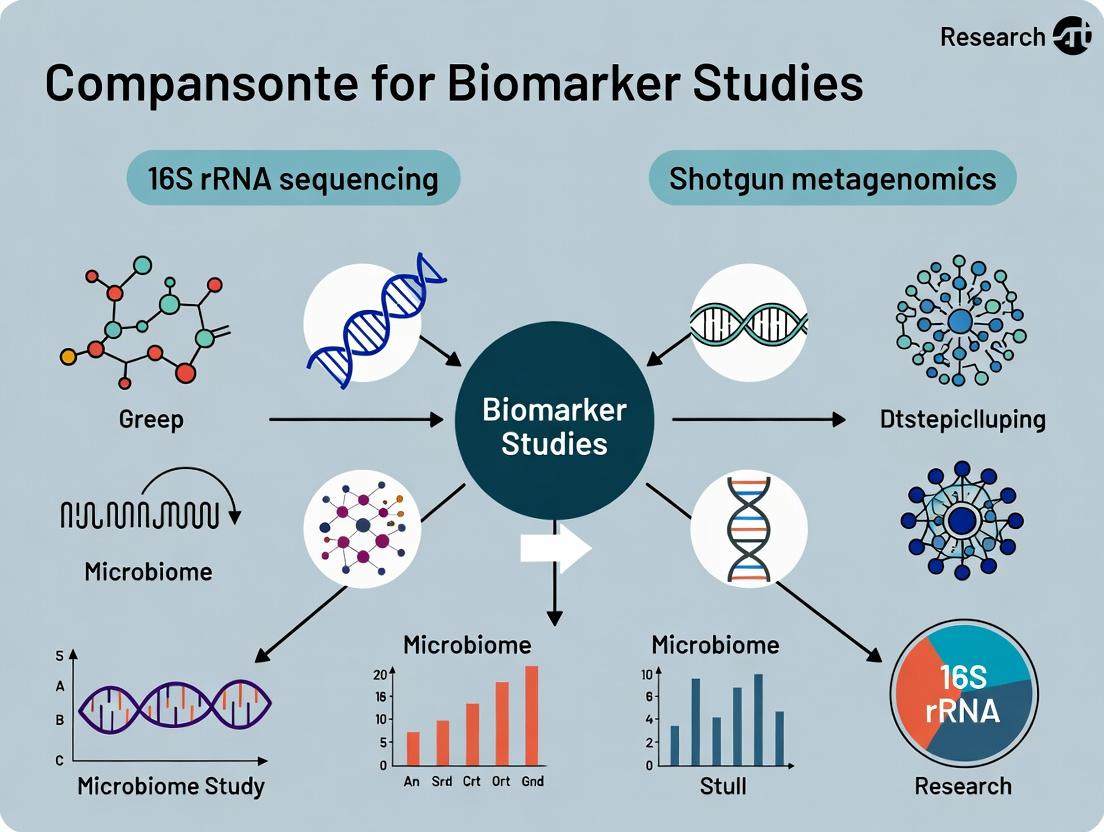
This article provides a comprehensive comparison of 16S rRNA gene sequencing and shotgun metagenomics for identifying microbial biomarkers in human health and disease.
16S rRNA vs Shotgun Metagenomics: Choosing the Right Microbial Biomarker Discovery Tool for Clinical Research
Abstract
This article provides a comprehensive comparison of 16S rRNA gene sequencing and shotgun metagenomics for identifying microbial biomarkers in human health and disease. Targeted for researchers and drug development professionals, we explore the foundational principles, methodological workflows, and analytical considerations of each technique. We detail best practices for study design, data analysis, and validation, addressing common pitfalls and optimization strategies. A direct comparative analysis evaluates their strengths, limitations, and cost-effectiveness in specific clinical and translational research scenarios, empowering scientists to select the most appropriate approach for robust and reproducible biomarker discovery.
Biomarker Discovery 101: Core Principles of 16S and Shotgun Sequencing for Microbial Profiling
1. Introduction & Methodological Context Within biomarker discovery for conditions like IBD, CRC, and metabolic disorders, the choice between 16S rRNA gene sequencing and shotgun metagenomics is foundational. 16S sequencing offers a cost-effective profile of taxonomic biomarkers (e.g., elevated Fusobacterium in CRC). Shotgun metagenomics enables functional pathway analysis (e.g., enriched polyamine synthesis or depleted butyrate production pathways), linking community composition to host physiology. The integrated workflow moves from associative signatures to mechanistic insight.
2. Key Comparative Data: 16S vs. Shotgun Metagenomics
Table 1: Methodological Comparison for Biomarker Discovery
| Parameter | 16S rRNA Sequencing | Shotgun Metagenomics |
|---|---|---|
| Target | Hypervariable regions of 16S gene | All genomic DNA |
| Primary Output | Operational Taxonomic Units (OTUs) / ASVs | Microbial genes & pathways |
| Biomarker Type | Taxonomic (Genus/Species) | Functional (KEGG/EC/MetaCyc) |
| Resolution | Limited to genus, sometimes species | Strain-level & functional potential |
| Cost per Sample (approx.) | $20 - $100 | $80 - $500+ |
| Data Volume/Sample | 10 - 50 MB | 2 - 10+ GB |
| Downstream Analysis | Alpha/Beta-diversity, differential abundance | Pathway enrichment, host DNA analysis |
| Key Limitation | Inferred function, primer bias | High cost/compute, host DNA depletion |
Table 2: Example Biomarkers Identified by Each Method
| Condition | 16S-Derived Taxonomic Biomarker | Shotgun-Derived Functional Biomarker |
|---|---|---|
| Colorectal Cancer (CRC) | ↑ Fusobacterium nucleatum | ↑ Polyamine synthesis (speE, speG); ↑ LPS biosynthesis |
| Inflammatory Bowel Disease (IBD) | ↓ Faecalibacterium prausnitzii | ↓ Butyrate synthesis (but, buk); ↑ oxidative stress pathways |
| Type 2 Diabetes | ↓ Akkermansia muciniphila | ↑ Branched-chain amino acid (BCAA) biosynthesis; ↑ sulfate reduction |
3. Detailed Protocols
Protocol 1: 16S rRNA Sequencing for Taxonomic Biomarker Discovery Objective: Identify differentially abundant taxa between case/control cohorts. Steps:
- DNA Extraction: Use bead-beating mechanical lysis kit (e.g., Qiagen DNeasy PowerSoil Pro) for robust Gram-positive lysis. Include negative controls.
- PCR Amplification: Amplify V3-V4 region with primers 341F/806R. Use high-fidelity polymerase. Triplicate reactions to mitigate bias.
- Library Prep & Sequencing: Clean amplicons, attach indices/adapters, pool equimolarly. Sequence on Illumina MiSeq (2x300 bp).
- Bioinformatic Analysis (QIIME2):
- Demultiplex & denoise (DADA2) to generate ASVs.
- Assign taxonomy via pre-trained classifier (e.g., Silva 138).
- Perform statistical analysis: PERMANOVA for beta-diversity, ANCOM or DESeq2 for differential abundance.
Protocol 2: Shotgun Metagenomics for Functional Pathway Analysis Objective: Reconstruct metabolic pathways and identify gene/pathway biomarkers. Steps:
- High-Input DNA Extraction: Use kits optimized for high molecular weight DNA (e.g., MagAttract HMW DNA Kit). Quantify via Qubit.
- Library Preparation: Fragment DNA (Covaris shearing), size-select (~550 bp). Prepare library with Illumina DNA Prep. Use KAPA HyperPrep for high complexity.
- Sequencing: High-depth sequencing on Illumina NovaSeq (10-20M paired-end 150 bp reads/sample).
- Bioinformatic Analysis (KneadData, HUMAnN3):
- Quality-trim (Trimmomatic) and remove host reads (KneadData vs. human genome).
- Perform functional profiling: HUMAnN3 maps reads to UniRef90 via MetaPhlAn, then maps to pathway databases (MetaCyc, KEGG).
- Analyze differentially abundant pathways (MaAsLin2, adjusting for covariates).
4. Visualization: Workflows & Pathways
Diagram 1: Biomarker Discovery Method Workflow
Diagram 2: Butyrate as a Functional Biomarker Pathway
5. The Scientist's Toolkit: Research Reagent Solutions
Table 3: Essential Reagents & Kits for Microbial Biomarker Studies
| Item | Function & Application |
|---|---|
| Qiagen DNeasy PowerSoil Pro Kit | Gold-standard for microbial DNA extraction from stool; removes PCR inhibitors. |
| ZymoBIOMICS Microbial Community Standard | Defined mock community for validating 16S & shotgun workflow accuracy. |
| KAPA HyperPrep Kit (Roche) | Robust library prep for shotgun metagenomics with low input tolerance. |
| Illumina DNA Prep | Streamlined, integrated adapter ligation for shotgun libraries. |
| MagAttract HMW DNA Kit (Qiagen) | For high molecular weight DNA extraction critical for shotgun sequencing. |
| NEBNext Microbiome DNA Enrichment Kit | Probes to deplete host (human) DNA, enriching microbial signals. |
| Phusion High-Fidelity DNA Polymerase | High-fidelity PCR for 16S amplicon generation, minimizing errors. |
| Qubit dsDNA HS Assay Kit | Accurate quantification of low-concentration DNA for library prep. |
Application Notes: 16S rRNA Sequencing in Biomarker Discovery
In the context of a thesis comparing 16S rRNA sequencing and shotgun metagenomics for biomarker studies, 16S rRNA sequencing serves as a targeted, cost-effective method for profiling bacterial community composition. It is optimal for large-scale cohort studies where the primary aim is to identify taxonomic biomarkers (e.g., specific taxa associated with a disease state) rather than functional potential.
Comparative Advantages for Biomarker Research
Table 1: 16S rRNA vs. Shotgun Metagenomics for Biomarker Studies
| Feature | 16S rRNA Amplicon Sequencing | Shotgun Metagenomic Sequencing |
|---|---|---|
| Primary Target | Hypervariable regions of the 16S rRNA gene | All genomic DNA in sample |
| Read Depth Required | 10,000 - 50,000 reads/sample | 10 - 50 million reads/sample |
| Cost per Sample (2024 Estimate) | $20 - $100 | $150 - $500+ |
| Taxonomic Resolution | Genus to species-level (dependent on region) | Species to strain-level |
| Functional Insight | Indirect, via inferred pathways (PICRUSt2, etc.) | Direct, via gene family abundance (KO, EC numbers) |
| Key Biomarker Output | Differential abundance of taxa (e.g., Faecalibacterium ↓) | Differential abundance of taxa & functional genes (e.g., butyrate kinase ↑) |
| Best Suited For | Large-scale population screens, ecological dynamics | Mechanistic studies, antibiotic resistance gene profiling, viral/ fungal detection |
Key Considerations for Robust Biomarker Identification
- Primer Selection: Choice of hypervariable region (e.g., V4, V3-V4) influences taxonomic coverage and resolution. The Earth Microbiome Project primer set 515F/806R targeting V4 is a community standard.
- Sequencing Depth: Saturation curves should be analyzed to ensure sufficient depth to capture rare taxa. A common benchmark is to sequence until <1% new OTUs/ASVs are detected per additional 1000 reads.
- Contamination Control: Inclusion of negative extraction and PCR controls is mandatory to filter background contaminant sequences (e.g., using the
decontamR package). - Bioinformatic Pipeline Choice: DADA2 (for Amplicon Sequence Variants - ASVs) versus QIIME2 with clustering (for Operational Taxonomic Units - OTUs) impacts resolution and reproducibility. ASVs are now preferred for biomarker tracking.
Detailed Protocols
Protocol: 16S rRNA Gene Amplicon Library Preparation (Illumina MiSeq)
Objective: To amplify and prepare the V4 hypervariable region of the 16S rRNA gene for paired-end sequencing on the Illumina MiSeq platform.
Research Reagent Solutions & Essential Materials:
| Item | Function/Explanation |
|---|---|
| DNeasy PowerSoil Pro Kit (Qiagen) | Gold-standard for microbial genomic DNA extraction from complex samples (stool, soil). Inhibitor removal technology ensures pure DNA. |
| KAPA HiFi HotStart ReadyMix (Roche) | High-fidelity polymerase for accurate amplification of the target region, minimizing PCR chimeras. |
16S V4 Primer Set (515F/806R) with Illumina adapters: 515F = 5′-TCGTCGGCAGCGTCAGATGTGTATAAGAGACAGGTGCCAGCMGCCGCGGTAA-3′ 806R = 5′-GTCTCGTGGGCTCGGAGATGTGTATAAGAGACAGGGACTACHVGGGTWTCTAAT-3′ |
Target-specific primers fused to Illumina sequencing adapter sequences for downstream indexing. |
| Nextera XT Index Kit v2 (Illumina) | Provides unique dual indices (i7 and i5) for multiplexing samples, enabling sample identification post-sequencing. |
| AMPure XP Beads (Beckman Coulter) | Magnetic beads for size selection and purification of PCR products, removing primers, dimers, and contaminants. |
| Qubit dsDNA HS Assay Kit (Thermo Fisher) | Fluorometric quantification of library DNA concentration, more accurate for dilute samples than absorbance. |
| Agilent High Sensitivity DNA Kit (Bioanalyzer/TapeStation) | Assesses library fragment size distribution and quality, confirming successful amplification. |
Procedure:
- DNA Extraction: Extract genomic DNA from samples (e.g., 200 mg stool) using the DNeasy PowerSoil Pro Kit according to manufacturer's instructions. Elute in 50 µL EB buffer. Include a minimum of one negative extraction control (no sample).
- First-Stage PCR (Target Amplification):
- Prepare 25 µL reactions: 12.5 µL KAPA HiFi Mix, 2.5 µL each primer (1 µM), 5 µL template DNA (10-20 ng), 2.5 µL PCR-grade water.
- Cycling: 95°C for 3 min; 25 cycles of: 95°C for 30s, 55°C for 30s, 72°C for 30s; final extension 72°C for 5 min; hold at 4°C.
- Include a negative PCR control (water as template).
- Amplicon Purification: Clean PCR products with 1X volume of AMPure XP beads. Elute in 30 µL 10 mM Tris pH 8.5.
- Index PCR (Library Indexing):
- Prepare 50 µL reactions: 25 µL KAPA HiFi Mix, 5 µL each Nextera XT index primer (i7 and i5), 10 µL purified amplicon, 5 µL water.
- Cycling: 95°C for 3 min; 8 cycles of: 95°C for 30s, 55°C for 30s, 72°C for 30s; final extension 72°C for 5 min.
- Library Purification & Validation: Clean indexed libraries with 0.9X volume of AMPure XP beads (to remove primer dimers). Elute in 30 µL. Quantify with Qubit and check size (~500-550 bp) on a Bioanalyzer.
- Pooling & Sequencing: Normalize libraries to 4 nM, then pool equimolarly. Denature and dilute to optimal loading concentration (e.g., 8 pM) for sequencing on a MiSeq with a 500-cycle (2x250) v2 reagent kit.
Protocol: Bioinformatic Analysis Pipeline for Taxonomic Biomarkers (QIIME2/DADA2)
Objective: To process raw 16S sequencing data into an Amplicon Sequence Variant (ASV) table and perform differential abundance analysis to identify candidate taxonomic biomarkers.
Procedure:
- Demultiplexing & Import: Use
qiime tools importto import raw paired-end FastQ files in Casava 1.8 format. - Denoising & ASV Inference: Run DADA2 via
qiime dada2 denoise-pairedto quality filter, denoise, merge reads, and remove chimeras, producing a feature table of ASVs and their representative sequences. (Example parameters:--p-trunc-len-f 240 --p-trunc-len-r 200). - Taxonomic Assignment: Classify ASVs against a reference database (e.g., SILVA 138 or Greengenes2) using a pre-trained classifier via
qiime feature-classifier classify-sklearn. - Phylogenetic Tree Construction: Generate a phylogenetic tree for diversity metrics using
qiime phylogeny align-to-tree-mafft-fasttree. - Diversity Analysis: Calculate alpha (Shannon, Faith's PD) and beta (Bray-Curtis, Weighted UniFrac) diversity metrics. Use PERMANOVA (via
qiime diversity beta-group-significance) to test for significant community shifts between sample groups (e.g., Healthy vs. Disease). - Differential Abundance Testing: Use specialized tools outside QIIME2 for robust biomarker identification:
- ANCOM-BC2 (in R): Models log-ratios of abundances with proper bias correction to identify differentially abundant taxa between conditions.
- DESeq2 (in R, on genus-level aggregated counts): Applies a negative binomial model to find taxa with significant fold-changes between groups.
Visualizations
Title: 16S rRNA Amplicon Sequencing & Analysis Workflow
Title: Decision Guide: 16S vs. Shotgun for Biomarkers
Within the ongoing methodological debate for microbiome biomarker discovery, shotgun metagenomic sequencing (SMS) stands in contrast to targeted 16S rRNA gene sequencing. While 16S sequencing provides a cost-effective profile of taxonomic composition via a single marker gene, SMS delivers an untargeted, whole-genome view. This enables simultaneous assessment of taxonomic identity, down to the strain level, and functional potential, including metabolic pathways and antibiotic resistance genes. For biomarker studies, particularly in drug development, this comprehensive functional capacity is critical for moving beyond correlation to mechanistic understanding of host-microbiome interactions in health and disease.
Comparative Analysis: 16S rRNA Sequencing vs. Shotgun Metagenomics
Table 1: Methodological Comparison for Biomarker Studies
| Feature | 16S rRNA Gene Sequencing | Shotgun Metagenomics |
|---|---|---|
| Target | Hypervariable regions of 16S rRNA gene | Total genomic DNA (unbiased) |
| Primary Output | Taxonomic profile (genus level, sometimes species) | Taxonomic profile (species/strain level) & functional gene catalog |
| Functional Insight | Inferred from taxonomy (PICRUSt2, etc.) | Directly measured via gene families & pathways |
| Required Sequencing Depth | 10,000 - 50,000 reads/sample | 5 - 20 million reads/sample (varies by complexity) |
| Host DNA Depletion Need | Low | Critical for host-associated samples (e.g., biopsy, blood) |
| Cost per Sample (Relative) | Low (~1x) | High (~5-20x) |
| Best for Biomarker Type | Taxonomic compositional shifts | Functional pathways, virulence factors, resistance genes |
Table 2: Analytical Considerations in Biomarker Discovery
| Parameter | Impact on 16S Studies | Impact on Shotgun Studies |
|---|---|---|
| Database Dependency | High (RefDB quality crucial for taxonomy) | Very High (RefDB quality crucial for taxonomy & function) |
| Computational Demand | Moderate | Very High (assembly, mapping, annotation) |
| Strain-Level Resolution | Limited | Possible with sufficient coverage and reference databases |
| Novel Gene Discovery | Not applicable | Enabled via de novo assembly |
| Standardization | Well-established (MIxS) | Evolving (MGnify, EBI pipelines) |
Application Notes for Shotgun Metagenomic Biomarker Studies
Study Design & Power Considerations
For case-control biomarker discovery, sample size must account for high inter-individual variation. Power calculations should be based on pilot data, with typical recommendations of 20-30 subjects per group for exploratory studies. Depth of sequencing must be sufficient to capture rare microbial taxa and genes; a minimum of 10 million paired-end (2x150bp) reads per human gut sample is a contemporary standard.
Critical Wet-Lab Considerations
- Sample Preservation: Use stabilizers (e.g., RNAlater, specialized stool buffers) that preserve DNA integrity and inhibit further microbial growth.
- Host DNA Depletion: For low-microbial-biomass samples (e.g., tissue, plasma), implement enzymatic or probe-based host DNA depletion kits. This step is non-critical for high-biomass samples like stool.
- Library Preparation: Use library kits validated for complex, low-input metagenomic DNA, often involving whole-genome amplification if biomass is insufficient.
Detailed Protocol: Shotgun Metagenomic Sequencing for Stool Samples
Title: End-to-End Workflow for Shotgun Metagenomic Biomarker Discovery
Protocol Steps:
I. Sample Collection & Storage
- Collect stool sample in a DNA/RNA stabilizing buffer (e.g., Zymo Research DNA/RNA Shield) immediately upon passage.
- Homogenize thoroughly by vortexing.
- Store at 4°C short-term (≤1 week) or -80°C for long-term storage.
II. Microbial DNA Extraction
- Principle: Mechanical lysis followed by chemical purification.
- Recommended Kit: QIAamp PowerFecal Pro DNA Kit (Qiagen) or MagAttract PowerMicrobiome Kit (Qiagen).
- Procedure:
- Aliquot 200 µL of homogenized stool-buffer mixture into a bead-beating tube.
- Add recommended lysis buffers and bead-beat at high speed for 10 minutes.
- Heat at 70°C for 10 minutes.
- Centrifuge and transfer supernatant to a deep-well plate.
- Perform magnetic bead-based purification following kit protocol.
- Elute DNA in 50-100 µL of elution buffer.
III. DNA Quality Control (QC)
- Quantity: Use fluorescence-based assays (Qubit dsDNA HS Assay). Aim for >1 ng/µL.
- Quality/Size: Use fragment analyzers (e.g., Agilent TapeStation) to assess DNA integrity. Expect a broad smear >1kb. DNA Integrity Number (DIN) >5 is acceptable.
IV. Library Preparation & Sequencing
- Kit: Illumina DNA Prep or Nextera XT Library Prep Kit.
- Procedure:
- Tagmentation: Fragment 1ng of input DNA and tag with adapter sequences.
- PCR Amplification: Perform limited-cycle PCR (12-15 cycles) to add full adapter sequences and sample-specific dual indices.
- Size Selection: Clean and size-select libraries using SPRI (solid-phase reversible immobilization) beads (e.g., 0.8x ratio).
- Library QC: Quantify final library yield by qPCR (KAPA Library Quant Kit) and confirm size distribution by TapeStation.
- Pooling & Sequencing: Normalize and pool libraries. Sequence on an Illumina platform (NovaSeq 6000) using a 2x150bp Paired-End configuration to a minimum depth of 10 million read pairs per sample.
Core Bioinformatic Analysis Workflow for Biomarker Identification
Title: Core Bioinformatics Pipeline for Shotgun Data
Protocol 1: Read-Based Taxonomic & Functional Profiling
- Preprocessing: Use
fastpto remove adapters, trim low-quality bases (Q<20), and filter short reads. - Host Depletion: Align reads to the host reference genome (e.g., human GRCh38) using
Bowtie2in--very-sensitivemode. Retain unmapped reads. - Taxonomic Profiling:
- Run
Kraken2against a standard database (e.g., Standard-PlusPF). - Use
Brackento estimate species/taxon abundances from Kraken2 output.
- Run
- Functional Profiling:
- Run
HUMAnN3pipeline. This maps reads to the UniRef90 protein database viaDIAMONDand normalizes outputs to copies per million (CPM) for gene families and metabolic pathways (MetaCyc).
- Run
Protocol 2: De Novo Assembly-Based Analysis
- Co-Assembly: Assemble quality-filtered, host-depleted reads from all samples using
MEGAHIT(--k-min 27 --k-max 127). - Binning: Map reads back to contigs with
Bowtie2. UseMetaBAT2on depth and composition (k-mer) information to generate draft Metagenome-Assembled Genomes (MAGs). - MAG Refinement & Annotation: Use
CheckMto assess MAG completeness/contamination. Annotate high-quality MAGs withProkkaorDRAMfor functional insights.
Statistical Analysis for Biomarker Discovery
- Normalization: Convert raw read counts to relative abundance or use robust count-based normalization methods (e.g., CSS in
metagenomeSeq, TSS followed by CLR transformation). - Differential Abundance Testing: For taxa/genes/pathways, use zero-inflated models like
DESeq2(count-based) orMaAsLin2(for complex study designs with covariates). - Multivariate Analysis: Apply PERMANOVA (
vegan::adonis) on Bray-Curtis or Jaccard distances to test for overall group separation. - Biomarker Model Building: Use regularized regression (LASSO) or Random Forest to identify minimal predictive feature sets and validate via cross-validation.
The Scientist's Toolkit: Essential Research Reagent Solutions
Table 3: Key Reagents and Kits for Shotgun Metagenomics Workflow
| Item | Example Product | Function in Workflow |
|---|---|---|
| Sample Stabilizer | Zymo Research DNA/RNA Shield | Preserves nucleic acid integrity at room temperature, inhibits nuclease activity. |
| DNA Extraction Kit | Qiagen QIAamp PowerFecal Pro DNA Kit | Efficient mechanical/chemical lysis and purification of microbial DNA from complex samples. |
| Host DNA Depletion Kit | New England Biolabs NEBNext Microbiome DNA Enrichment Kit | Enzymatically removes methylated host DNA (e.g., human) to increase microbial sequencing yield. |
| Library Prep Kit | Illumina DNA Prep | Integrated tagmentation-based library preparation for low-input, fragmented DNA. |
| Size Selection Beads | Beckman Coulter SPRIselect Reagents | Magnetic beads for precise fragment size selection and library cleanup. |
| Library Quant Kit | Roche KAPA Library Quantification Kit | qPCR-based accurate quantification of amplifiable library fragments for pooling. |
| Sequencing Control | Illumina PhiX Control v3 | Spiked-in control for run monitoring, focusing, and error rate calculation. |
| Bioinformatics Suite | bioBakery (KneadData, HUMAnN3, MetaPhlAn) | Integrated suite of tools for quality control, taxonomic, and functional profiling. |
Historical Context and Evolution of Sequencing Technologies in Biomarker Research
The quest for reliable biomarkers—objective indicators of biological processes, pathogenic states, or pharmacologic responses—has been fundamentally transformed by sequencing technologies. The journey began with Sanger sequencing (1977), which enabled the sequencing of single genes but was low-throughput and costly, limiting biomarker discovery to candidate genes. The Human Genome Project (1990-2003) catalyzed the development of first-generation (1G) capillary electrophoresis-based methods, establishing the reference human genome as a cornerstone for subsequent biomarker research.
The Next-Generation Sequencing (NGS) revolution (circa 2005 onward) marked a pivotal shift. Platforms from Illumina (sequencing by synthesis), Ion Torrent (semiconductor sequencing), and others reduced cost per base by orders of magnitude while exponentially increasing throughput. This allowed for unbiased exploration of the genome, transcriptome, and epigenome for biomarker discovery. The maturation of third-generation (3G) sequencing technologies, such as PacBio (SMRT) and Oxford Nanopore (ONT), introduced long-read, real-time sequencing, enabling the resolution of complex structural variants and epigenetic modifications previously inaccessible as biomarkers.
Today, sequencing for biomarkers is characterized by multi-omics integration (genomics, transcriptomics, epigenomics, metagenomics) and the move toward single-cell resolution, allowing for the discovery of highly specific biomarkers from rare cell populations. This evolution directly informs the critical methodological choice in microbial ecology: targeted 16S rRNA sequencing versus comprehensive shotgun metagenomics.
Application Notes: 16S rRNA vs. Shotgun Metagenomics for Biomarker Discovery
Core Application: Identifying microbial biomarkers (taxonomic or functional) associated with disease states (e.g., IBD, cancer, metabolic disorders) or treatment responses.
| Parameter | 16S rRNA Gene Sequencing | Shotgun Metagenomics |
|---|---|---|
| Sequencing Target | Hypervariable regions (e.g., V3-V4) of the prokaryotic 16S rRNA gene. | All genomic DNA in a sample (prokaryotic, eukaryotic, viral, archaeal). |
| Primary Output | Taxonomic profile (relative abundance of bacteria/archaea, usually to genus level). | Taxonomic profile + functional potential (gene families, metabolic pathways). |
| Resolution | Species- to strain-level resolution is often limited. | Enables species- and strain-level resolution, and assembly of genomes (MAGs). |
| Bias | PCR amplification bias; primer selection affects community representation. | Reduced amplification bias; but sensitive to host DNA contamination. |
| Cost per Sample (Approx.) | $20 - $100 (low to moderate). | $100 - $500+ (moderate to high, depends on depth). |
| Data Analysis Complexity | Moderate (OTU/ASV picking, taxonomy assignment). | High (requires extensive computational resources for QC, assembly, annotation). |
| Ideal for Biomarker Type | Taxonomic biomarkers (e.g., "Increase in Bacteroides spp./Prevotella spp. ratio"). | Functional biomarkers (e.g., "Depletion of butyrate synthesis pathway genes"). |
| Key Limitation | Inferred function only (using PICRUSt2, etc.), not direct genetic evidence. | Higher cost and bioinformatics burden; requires deeper sequencing. |
Conclusion for Thesis Context: The choice hinges on the research question. 16S sequencing is a robust, cost-effective tool for initial, broad-scale taxonomic surveys and biomarker discovery across large cohorts. Shotgun metagenomics is the subsequent, hypothesis-driven step to validate and mechanistically explain biomarkers by linking taxonomy to genetic function, enabling the discovery of causal pathways and therapeutic targets.
Detailed Experimental Protocols
Protocol 3.1: 16S rRNA Amplicon Sequencing for Microbial Biomarker Screening (Illumina MiSeq)
Objective: Generate taxonomic profiles from stool/DNA samples for case-control biomarker discovery.
Key Reagents & Materials:
- DNA Extraction Kit: DNeasy PowerSoil Pro Kit (Qiagen) – for efficient lysis and inhibitor removal.
- PCR Primers: 341F (5'-CCTAYGGGRBGCASCAG-3') and 806R (5'-GGACTACNNGGGTATCTAAT-3') targeting V3-V4 regions.
- High-Fidelity PCR Master Mix: e.g., KAPA HiFi HotStart ReadyMix – minimizes PCR errors.
- Indexing & Library Prep Kit: Illumina Nextera XT Index Kit v2 – for dual-index multiplexing.
- QC Equipment: Qubit fluorometer, Bioanalyzer/TapeStation.
- Sequencer: Illumina MiSeq with v3 (600-cycle) reagent kit.
Procedure:
- Genomic DNA Extraction: Extract high-quality DNA from 250 mg stool using the PowerSoil kit, including bead-beating step. Elute in 50 µL EB buffer. Quantify with Qubit.
- Primary PCR (Amplification): Amplify the V3-V4 region in 25 µL reactions: 12.5 ng DNA template, 0.2 µM each primer, 1X HiFi Master Mix. Cycle: 95°C 3 min; 25 cycles of (95°C 30s, 55°C 30s, 72°C 30s); 72°C 5 min.
- PCR Clean-up: Use AMPure XP beads (0.8X ratio) to purify amplicons.
- Indexing PCR (Barcoding): Attach dual indices and sequencing adapters using 5 µL purified amplicon in a 50 µL Nextera XT reaction (8 cycles). Clean-up with AMPure XP beads (0.9X ratio).
- Library QC & Pooling: Quantify each library with Qubit, check fragment size (~550 bp) on Bioanalyzer. Normalize and pool libraries equimolarly.
- Sequencing: Denature and dilute pooled library per Illumina protocol. Load at 8-10 pM with 10% PhiX spike-in on MiSeq. Use 2x300 bp paired-end run.
Protocol 3.2: Shotgun Metagenomic Sequencing for Functional Biomarker Discovery
Objective: Recover whole-genome sequences to associate microbial taxa with functional pathways.
Key Reagents & Materials:
- DNA Extraction Kit: MoBio PowerMax Soil DNA Isolation Kit – for large-volume, high-yield extraction.
- Fragmentation & Library Prep Kit: Illumina DNA Prep kit – for enzymatic fragmentation and library construction.
- Size Selection Beads: SPRIselect beads – for precise library size selection.
- QC Equipment: Qubit, Bioanalyzer, qPCR (for library quantification).
- Sequencer: Illumina NovaSeq 6000 (S4 flow cell) for deep coverage.
Procedure:
- High-Yield DNA Extraction: Follow PowerMax protocol for 2g stool sample. Resuspend DNA in 1-2 mL buffer. Quantify; typical yield >5 µg.
- DNA Shearing & Size Selection: Use Covaris ultrasonicator or enzymatic fragmentation (via Illumina kit) to achieve target fragment size of 350 bp. Perform double-sided SPRIselect bead cleanup (0.45X / 0.9X ratios).
- Library Preparation: Perform end-repair, A-tailing, and adapter ligation per Illumina DNA Prep kit. Use unique dual index adapters.
- Library Amplification & Final Clean-up: Amplify library with 6-8 PCR cycles. Perform final SPRIselect cleanup (0.9X). Validate library size (~450 bp) on Bioanalyzer.
- Quantitative QC: Quantify library precisely via qPCR (KAPA Library Quant kit) for accurate pooling.
- Deep Sequencing: Pool libraries and sequence on NovaSeq 6000 (2x150 bp) targeting 20-50 million paired-end reads per sample (for human stool).
Visualizations
Diagram Title: Biomarker Discovery Workflow: 16S vs. Shotgun
Diagram Title: Sequencing Tech Evolution & Biomarker Scope
The Scientist's Toolkit: Essential Research Reagents & Materials
| Item | Function & Rationale |
|---|---|
| DNeasy PowerSoil Pro Kit (Qiagen) | Gold-standard for microbial DNA extraction from complex samples; removes PCR inhibitors common in stool/soil. |
| Nextera XT DNA Library Prep Kit (Illumina) | Fast, integrated kit for amplicon or low-input DNA library prep with dual indexing to minimize index hopping. |
| KAPA HiFi HotStart ReadyMix | High-fidelity polymerase for accurate amplification of 16S amplicons, critical for reducing sequencing errors. |
| SPRIselect / AMPure XP Beads | Magnetic beads for reproducible size selection and cleanup of DNA fragments during library preparation. |
| PhiX Control v3 (Illumina) | Added during sequencing runs (~1-10%) to improve base calling accuracy on low-diversity libraries (like 16S amplicons). |
| ZymoBIOMICS Microbial Community Standard | Defined mock microbial community used as a positive control to assess extraction, sequencing, and bioinformatics bias. |
| RNeasy PowerMicrobiome Kit (Qiagen) | For concurrent RNA extraction enabling metatranscriptomics, to study active functional biomarkers. |
| Human DNA Depletion Kit (e.g., NEBNext Microbiome) | Enriches microbial DNA in host-rich samples (e.g., blood, biopsy) for more efficient shotgun metagenomic sequencing. |
Key Scientific Questions Each Technique is Designed to Answer
In the context of biomarker discovery within microbiome research, the selection between 16S rRNA gene sequencing and whole-genome shotgun (WGS) metagenomics is foundational. Each technique targets distinct, complementary scientific questions, guiding study design, resource allocation, and interpretative scope. This application note delineates the core questions addressed by each method within a comparative biomarker research thesis.
Core Questions & Comparative Data Presentation
The following table summarizes the primary scientific questions best answered by each technique, highlighting their complementary roles.
Table 1: Key Scientific Questions and Corresponding Techniques
| Key Scientific Question | Optimal Technique | Rationale & Technical Basis | Typical Data Output Metrics |
|---|---|---|---|
| What is the taxonomic composition and structure of the microbial community? | 16S rRNA Sequencing | Targets hypervariable regions (e.g., V3-V4) of the conserved 16S gene; enables classification via reference databases (e.g., SILVA, Greengenes). | Relative abundance (%), Alpha-diversity (Shannon, Chao1), Beta-diversity (UniFrac distances). |
| What is the functional potential of the microbiome? | Shotgun Metagenomics | Sequences all genomic DNA; allows mapping of reads to functional databases (e.g., KEGG, eggNOG, CAZy). | Gene family abundance (e.g., KO counts), Pathway completeness scores. |
| Which specific bacterial species or strains are present? | Shotgun Metagenomics | Provides whole-genome data enabling species/strain-level discrimination via single-nucleotide variants (SNVs) and marker genes. | Strain-level phylogenetic trees, SNV profiles, pangenome coverage. |
| How does overall community diversity compare between conditions? | Primarily 16S rRNA Sequencing | Cost-effective for deep sequencing of many samples, providing robust, standardized diversity metrics. | Statistical comparison of alpha/beta-diversity indices (PERMANOVA p-value). |
| What are the specific metabolic pathways and virulence factors encoded? | Shotgun Metagenomics | Captures all genes, enabling reconstruction of metabolic pathways and identification of virulence gene cassettes. | Pathway relative abundance, Virulence factor (VF) gene copy number. |
| Is there a presence of non-bacterial members (e.g., viruses, fungi, archaea)? | Shotgun Metagenomics | Non-targeted; can identify and characterize all domains of life and extrachromosomal elements. | Proportion of eukaryotic/viral reads, Plasmid contig identification. |
| What is the taxonomic resolution at the genus or family level? | 16S rRNA Sequencing | Sufficient resolution for community profiling at genus level; reliable and established pipelines (QIIME2, MOTHUR). | Taxonomic assignment confidence (bootstrap %). |
Detailed Experimental Protocols
Protocol 2.1: 16S rRNA Amplicon Sequencing for Taxonomic Biomarker Discovery
Objective: To identify differentially abundant taxa between patient cohorts (e.g., diseased vs. healthy).
Materials:
- DNA Source: Microbial DNA from stool, saliva, or tissue (≥ 1 ng/µL).
- Primers: e.g., 341F (5’-CCTACGGGNGGCWGCAG-3’) and 805R (5’-GACTACHVGGGTATCTAATCC-3’) for V3-V4 region.
- Kit: 2x KAPA HiFi HotStart ReadyMix, Agencourt AMPure XP beads.
- Platform: Illumina MiSeq with v3 chemistry (2x300 bp).
Procedure:
- PCR Amplification: Perform triplicate 25 µL reactions: 12.5 µL Master Mix, 1 µL each primer (10 µM), 10 ng template DNA. Cycle: 95°C/3 min; 25 cycles of [95°C/30s, 55°C/30s, 72°C/30s]; 72°C/5 min.
- Amplicon Pooling & Purification: Pool triplicates, purify with AMPure XP beads (0.8x ratio), elute in 30 µL nuclease-free water.
- Indexing PCR & Clean-up: Attach dual indices (Nextera XT Index Kit) via 8-cycle PCR. Perform a second bead clean-up (0.9x ratio).
- Library QC & Sequencing: Quantify with Qubit dsDNA HS Assay. Normalize, pool libraries at 4 nM. Denature with 0.2 N NaOH, dilute to 8 pM, load on MiSeq. Include 5-10% PhiX control.
- Bioinformatics: Process using QIIME2 (2024.2). Demultiplex, denoise with DADA2, assign taxonomy via sklearn classifier trained on SILVA 138.99% database. Perform differential abundance analysis with ANCOM-BC.
Protocol 2.2: Shotgun Metagenomics for Functional Biomarker Discovery
Objective: To characterize the functional gene content and metabolic pathways differentiating sample groups.
Materials:
- DNA Source: High-quality microbial DNA (≥ 10 ng/µL, fragment size > 1 kb).
- Kit: Illumina DNA Prep Kit, IDT for Illumina DNA/RNA UD Indexes.
- Platform: Illumina NovaSeq X Plus (2x150 bp) for deep sequencing (~10-20 M reads/sample).
Procedure:
- Library Preparation: Fragment 100 ng DNA via acoustic shearing (Covaris) to ~350 bp. Follow Illumina DNA Prep Kit protocol: end-repair, A-tailing, adapter ligation.
- Library Amplification & Clean-up: Amplify ligated DNA with 8-cycle PCR. Clean up using provided beads. Validate library size on Bioanalyzer (peak ~450 bp).
- Quantification & Pooling: Quantify by qPCR (KAPA Library Quant Kit). Pool equimolar amounts of uniquely indexed libraries.
- Sequencing: Denature and dilute pool to 300 pM. Load on NovaSeq X Plus flow cell. Target minimum 5 Gb data per sample.
- Bioinformatics: Process using the Human Microbiome Project (HMP) Unified Metabolic Analysis Network (HUMAnN 3.6) pipeline.
- Host Read Removal: Map reads to human genome (hg38) using Bowtie2, retain unmapped pairs.
- Taxonomic Profiling: Analyze with MetaPhlAn 4.0 using its integrated marker database.
- Functional Profiling: Align reads directly to the integrated ChocoPhlAn pan-genome database. Report pathway abundances in copies per million (CPM). Test for differential abundance with MaAsLin2.
Signaling Pathways & Workflow Visualizations
Title: Comparative Workflow: 16S vs Shotgun for Biomarker Studies
Title: Data Analysis Pathways from DNA to Biomarker Output
The Scientist's Toolkit: Research Reagent Solutions
Table 2: Essential Materials for Microbiome Biomarker Studies
| Item | Function | Example Product/Catalog | Key Consideration for Biomarker Studies |
|---|---|---|---|
| Stabilization Buffer | Preserves microbial community structure at collection. | OMNIgene•GUT (OMR-200), Zymo DNA/RNA Shield. | Prevents shifts in abundance, critical for longitudinal biomarker research. |
| Extraction Kit (Inhibitor Removal) | Lyses all cell types, removes PCR inhibitors. | QIAamp PowerFecal Pro DNA Kit, MagMAX Microbiome Ultra Kit. | High yield and purity from complex matrices (stool) ensures reproducible sequencing. |
| High-Fidelity Polymerase | Accurate amplification of 16S region with minimal bias. | KAPA HiFi HotStart ReadyMix, Platinum SuperFi II. | Reduces chimera formation, improving ASV/OTU fidelity for differential analysis. |
| Dual-Index Adapter Kit | Provides unique sample identifiers for multiplexing. | Illumina IDT for Illumina UD Indexes, Nextera XT Index Kit v2. | Essential for pooling hundreds of samples while preventing index hopping. |
| Metagenomic Standard | Controls for technical variability in extraction and sequencing. | ZymoBIOMICS Microbial Community Standard (D6300). | Allows benchmarking of sensitivity and specificity for low-abundance biomarker taxa. |
| Functional Database | Reference for annotating metagenomic reads. | Integrated KEGG (via HUMAnN), UniRef90, dbCAN2 (for CAZymes). | Choice dictates functional biomarker discovery scope (metabolism, virulence, resistance). |
| Bioinformatics Pipeline | Standardized analysis from raw reads to statistics. | QIIME2 (for 16S), HUMAnN3/MetaPhlAn4 (for shotgun). | Reproducibility and community support are paramount for validating candidate biomarkers. |
From Sample to Insight: Step-by-Step Workflows for 16S and Shotgun Biomarker Studies
1. Introduction
Within the broader thesis investigating 16S rRNA gene sequencing versus shotgun metagenomics for microbiome-based biomarker discovery, robust study design is paramount. The choice of sequencing method directly impacts cohort selection and statistical power, as each technique offers different resolutions of taxonomic and functional data. These application notes provide protocols for performing power calculations specific to each method, ensuring studies are adequately powered to detect biomarker signals of biological and clinical relevance.
2. Power Calculation Fundamentals & Comparative Parameters
The core difference in power analysis between the two methods stems from the nature of the primary outcome variable. 16S sequencing typically yields relative abundance of Operational Taxonomic Units (OTUs) or Amplicon Sequence Variants (ASVs), while shotgun metagenomics provides absolute abundance estimates, functional gene counts, and pathway abundances.
Table 1: Key Parameters for Power Calculations in 16S vs. Shotgun Metagenomics
| Parameter | 16S rRNA Sequencing | Shotgun Metagenomics |
|---|---|---|
| Primary Outcome | Relative abundance of taxa (e.g., Genus X %). | Absolute abundance (reads/kb per million), gene/pathway counts. |
| Effect Size (δ) | Fold-change in relative abundance (e.g., 2-fold increase). | Fold-change in absolute abundance, or log2 fold-change in gene count. |
| Baseline Abundance | Mean relative abundance in control group. | Mean reads per gene/pathway or mean organism load. |
| Dispersion (Variability) | High, often modeled with beta or zero-inflated negative binomial distributions. | Modeled with negative binomial, Poisson, or zero-inflated models. |
| Alpha (α) Level | Typically 0.05, with multiple testing correction (FDR) heavily applied. | Typically 0.05, with stringent FDR control due to vast feature number. |
| Desired Power (1-β) | Commonly 80% or 90%. | Commonly 80% or 90%. |
| Key Influencing Factors | Sequencing depth (reads/sample), primer bias, taxonomic resolution. | Sequencing depth (Gbp/sample), host DNA depletion efficiency, database completeness. |
3. Protocol for Power and Sample Size Calculation
Protocol 3.1: Power Analysis for 16S rRNA Sequencing Biomarker Studies
Objective: To determine the minimum sample size required to detect a significant difference in the relative abundance of a target taxon between two groups (e.g., Case vs. Control) using 16S data.
Materials & Software:
- Statistical Software: R (with
HMP,microbiomeSeq,MaAsLin2, orpwrpackages) or QIIME 2 with diversity plugin. - Pilot Data or Published Estimates: For baseline mean abundance and expected variability.
Procedure:
- Define Hypothesis: State the primary taxonomic hypothesis (e.g., "Genus Faecalibacterium is depleted in Crohn's disease patients").
- Set Parameters:
- α (Significance Level): 0.05.
- Power (1-β): 0.80.
- Effect Size (δ): Estimate the fold-change in relative abundance. For example, a shift from 5% (control) to 2.5% (case) is a 2-fold decrease (δ=0.5).
- Baseline Mean & Variance: Obtain from pilot data or literature. For example, Control mean = 0.05 (5%), variance ≈ 0.001.
- Choose Statistical Test: Determine the planned test (e.g., non-parametric Mann-Whitney U, PERMANOVA for beta-diversity, or linear model on centered log-ratio transformed data).
- Perform Calculation: Use appropriate tools.
- R Example (
HMPpackage): For comparing two groups using a Dirichlet-multinomial model.
- R Example (
- Iterate and Refine: Adjust sample size (
N.rep) or effect size until target power is achieved. Account for anticipated dropout (e.g., add 10-15% more subjects). - Report: Document all parameters, software used, and final sample size per group.
Protocol 3.2: Power Analysis for Shotgun Metagenomics Biomarker Studies
Objective: To determine the minimum sample size required to detect a significant difference in gene or pathway abundance between two groups.
Materials & Software:
- Statistical Software: R (with
metagenomeSeq,Maaslin2,phyloseq, orDESeq2/edgeRadapted for metagenomics). - Pilot Data or Published Estimates: For baseline count data and dispersion.
Procedure:
- Define Hypothesis: State the primary functional or taxonomic hypothesis (e.g., "The butyrate kinase gene is underrepresented in colorectal cancer patients").
- Set Parameters:
- α (Significance Level): 0.05, adjusted for False Discovery Rate (FDR, e.g., Benjamini-Hochberg).
- Power (1-β): 0.80.
- Effect Size: Log2 fold-change (e.g., log2FC = -1 for a 50% decrease).
- Baseline Mean Count: Estimated average read count for the target gene in controls.
- Dispersion: Biological coefficient of variation, estimated from pilot data.
- Model Selection: Shotgun count data is typically modeled using a negative binomial distribution.
- Perform Calculation: Use tools designed for RNA-Seq, adapted for metagenomics.
- R Example (
DESeq2simulation):
- R Example (
- Iterate and Refine: Vary sample size (
m) and log2 fold-change to achieve target power. Consider sequencing depth (total Gbp) as a covariate affecting mean counts. - Report: Document parameters, simulation code, dispersion estimates, and final sample size.
4. Visualization of Study Design & Power Workflow
Title: Power Calculation Workflow for 16S vs. Shotgun
5. The Scientist's Toolkit: Research Reagent Solutions
Table 2: Essential Materials for Microbiome Biomarker Study Power Analysis
| Item | Function / Relevance to Power Calculation |
|---|---|
| Pilot Cohort Samples (n=10-20/group) | Provides empirical estimates of baseline mean abundance, variance, and dispersion—critical inputs for accurate power calculations. |
| Mock Microbial Community Standards (e.g., ZymoBIOMICS) | Validates sequencing protocol sensitivity and specificity; informs limits of detection for rare taxa, affecting achievable effect sizes. |
| High-Yield DNA Extraction Kits with Bead-Beating (e.g., QIAGEN PowerFecal Pro, MP Biomedicals FastDNA) | Standardizes biomass input, impacting read count depth and variability, a key factor in power for both methods. |
| Host DNA Depletion Kits (e.g., NEBNext Microbiome DNA Enrichment) | For shotgun metagenomics, increases microbial sequencing depth, raising mean gene counts and improving power to detect functional differences. |
| 16S rRNA Gene Primer Set (e.g., 515F-806R for V4 region) | Choice affects taxonomic resolution and bias, influencing which taxa/effect sizes can be reliably studied with 16S. |
| Library Prep Kits with Unique Dual Indexes (e.g., Illumina Nextera) | Enables high multiplexing, facilitating larger cohort sizes determined by power analysis while controlling for batch effects. |
| Bioinformatics Pipeline Software (QIIME 2, mothur, HUMAnN3, MetaPhlAn4) | Choice defines the feature table (OTUs, ASVs, genes) which is the direct input for statistical power modeling. |
| Statistical Computing Environment (R + phyloseq, Python + SciPy) | Platform for executing power simulations and sample size calculations using specialized packages. |
Sample Collection, Preservation, and DNA Extraction Best Practices
Article Context: 16S rRNA vs. Shotgun Metagenomics for Biomarker Discovery
Effective biomarker discovery in microbiome research is fundamentally dependent on the integrity of the initial sample. Both 16S rRNA gene sequencing (targeted, cost-effective) and shotgun metagenomics (comprehensive, functional) are powerful, but their accuracy is constrained by pre-analytical variables. This article details best practices for sample collection, preservation, and DNA extraction, emphasizing protocols that minimize bias to ensure data from either platform is reliable for downstream biomarker analysis and drug development.
Sample Collection & Preservation: Critical First Steps
Pre-analytical handling introduces significant variance. Best practices vary by sample type, with the core goal of instantly stabilizing microbial community structure.
Table 1: Sample-Specific Collection & Preservation Guidelines
| Sample Type | Recommended Collection Device | Immediate Preservation Method | Optimal Storage | Max Hold Time at -80°C |
|---|---|---|---|---|
| Fecal | Sterile, RNase-free tube or dedicated commercial kit | Snap-freeze in liquid N₂ or immersion in stabilizer buffer (e.g., RNAlater, DNA/RNA Shield) | -80°C | 6-12 months (long-term for DNA) |
| Saliva/Oral Swab | Salivette or OMNIgene•ORAL kit | Commercial stabilizer at point-of-collection | Room temp (stabilized) or -80°C | 2 years (stabilized) |
| Skin/Swab | Sterile polyester swab with plastic shaft | Place swab tip in stabilization buffer; vortex | -80°C | 1 year |
| Blood (for cell-free DNA) | Streck Cell-Free DNA BCT tubes (for plasma) | Gentle inversion; no immediate freeze required | Room temp (up to 3 days) then -80°C | 1 year (plasma at -80°C) |
| Tissue | Sterile biopsy tools | Snap-freeze in liquid N₂ (do not use fixatives) | -80°C | 6 months |
Key Protocol: Fecal Sample Preservation with Stabilization Buffer
- Preparation: Aliquot stabilization buffer (e.g., 2 mL of DNA/RNA Shield) into a pre-labeled screw-cap tube.
- Collection: Collect fresh fecal material (≥100 mg) using a sterile collection spoon or swab.
- Stabilization: Immediately immerse the sample into the buffer. Vigorously vortex or shake for 30 seconds to ensure complete homogenization.
- Storage: Store at 4°C for up to 30 days or at -80°C for long-term preservation. Avoid repeated freeze-thaw cycles.
DNA Extraction: Balancing Yield, Integrity, and Bias
The extraction method profoundly impacts downstream sequencing results, affecting observed microbial composition.
Table 2: Comparison of DNA Extraction Method Impacts on Sequencing
| Extraction Method Type | Key Principle | Bias/Consideration for 16S | Bias/Consideration for Shotgun | Typical Yield (Fecal) |
|---|---|---|---|---|
| Mechanical Lysis (Bead Beating) | Physical disruption of tough cell walls (e.g., Gram-positives) | Essential for diverse representation; reduces Firmicutes bias. | Critical for unbiased genomic recovery. | 1-10 µg DNA/g |
| Enzymatic Lysis | Enzymes (lysozyme, mutanolysin) digest cell walls. | Often insufficient alone; combine with bead beating. | Can be gentle for high-molecular-weight DNA. | 0.5-5 µg DNA/g |
| Chemical Lysis (Guanidine salts) | Denatures proteins and lyses cells. | May not lyse all species; can co-precipitate inhibitors. | Can fragment DNA; requires clean-up. | 0.5-8 µg DNA/g |
| Spin-Column Purification | Silica-membrane binding in high-salt, elution in low-salt. | Efficient inhibitor removal; may lose small fragments. | Suitable; may under-represent very large/small fragments. | 0.1-5 µg DNA/g |
| Magnetic Bead Purification | Paramagnetic bead binding in PEG/salt solution. | High-throughput, automatable; size selection possible. | Excellent for automation and size selection. | 0.1-5 µg DNA/g |
Detailed Protocol: High-Efficiency Fecal DNA Extraction (Bead Beating + Column) This protocol is optimized for simultaneous recovery of Gram-positive and Gram-negative bacteria.
Materials:
- Lysis buffer (500 mM NaCl, 50 mM Tris-HCl pH 8.0, 50 mM EDTA, 4% SDS)
- Bead-beating tube (0.1 mm and 0.5 mm zirconia/silica beads)
- Phenol:Chloroform:Isoamyl Alcohol (25:24:1)
- Isopropanol and 70% Ethanol
- Silica-based spin columns
- Elution Buffer (10 mM Tris-HCl, pH 8.5)
Procedure:
- Homogenize: Weigh 180-220 mg of preserved fecal sample into a bead-beating tube.
- Lysis: Add 1 mL of pre-heated (70°C) lysis buffer. Secure cap tightly.
- Mechanical Disruption: Bead beat at 6.0 m/s for 45 seconds. Place on ice for 2 minutes. Repeat bead-beating once.
- Incubate: Heat samples at 95°C for 10 minutes to further lyse cells and denature proteins. Centrifuge at 13,000 x g for 5 minutes.
- Organic Extraction: Transfer supernatant to a new tube. Add an equal volume of Phenol:Chloroform:Isoamyl Alcohol. Vortex vigorously for 30 seconds. Centrifuge at 13,000 x g for 10 minutes.
- Precipitation: Transfer the upper aqueous phase to a clean tube. Add 0.7 volumes of room-temperature isopropanol. Mix by inversion. Incubate at -20°C for 30 minutes. Centrifuge at 13,000 x g for 15 minutes to pellet DNA.
- Wash: Carefully discard supernatant. Wash pellet with 1 mL of 70% ethanol. Centrifuge at 13,000 x g for 5 minutes. Air-dry pellet for 5-10 minutes.
- Purify & Elute: Resuspend pellet in 100 µL Elution Buffer. Perform a final clean-up using a silica spin column per manufacturer's instructions. Elute in 50-100 µL Elution Buffer.
- QC: Quantify DNA using a fluorometric assay (e.g., Qubit). Assess purity via A260/A280 and A260/A230 ratios. Check integrity by agarose gel electrophoresis or Fragment Analyzer.
The Scientist's Toolkit: Key Research Reagent Solutions
| Product Category | Example Product/Brand | Primary Function |
|---|---|---|
| Sample Stabilizers | DNA/RNA Shield (Zymo), RNAlater (Thermo), OMNIgene kits | Instant inactivation of nucleases and microbial activity at point-of-collection. |
| Inhibitor Removal Beads | OneStep PCR Inhibitor Removal (Zymo), SeraSil-Mag beads | Selective binding of humic acids, bile salts, and other PCR inhibitors from complex samples. |
| High-Efficiency Lysis Beads | 0.1 mm Zirconia/Silica Beads (BioSpec) | Maximizes physical disruption of microbial cell walls, including tough spores. |
| Broad-Spectrum Protease | Proteinase K (Thermo, Qiagen) | Digests proteins and nucleases, aiding lysis and protecting nucleic acids. |
| PCR/Inhibition Controls | Internal Amplification Control (IAC) spikes, Microbial DNA Standard (Zymo) | Monitors for PCR failure due to inhibitors or extraction inefficiency. |
| Automation-ready Kits | MagAttract PowerMicrobiome (Qiagen), KingFisher (Thermo) kits | Integrated, high-throughput solutions for reproducible extraction on robotic platforms. |
| DNA Integrity Assay | Fragment Analyzer (Agilent), TapeStation | Assesses DNA fragment size distribution, critical for shotgun library prep. |
Experimental Workflow Visualization
Within a thesis investigating 16S rRNA sequencing versus shotgun metagenomics for biomarker discovery, the choice of initial wet-lab protocol is foundational. 16S rRNA PCR amplification targets a single, conserved gene to profile microbial community composition at low cost and depth. Shotgun metagenomic library preparation involves fragmenting and preparing all genomic DNA, enabling functional and taxonomic analysis at the resolution of strains and genes. This application note provides detailed protocols for both, framing them as critical, divergent first steps that dictate all downstream analytical possibilities and biomarker types (taxonomic vs. functional/pathogenic).
Quantitative Comparison: 16S vs. Shotgun for Biomarker Studies
Table 1: Core Methodological & Data Output Comparison
| Parameter | 16S rRNA PCR Amplification | Shotgun Metagenomic Library Prep |
|---|---|---|
| Input DNA | 1-10 ng (purified genomic DNA) | 10-100 ng (high-quality, high-molecular-weight DNA) |
| Primary Target | Hypervariable regions (e.g., V3-V4) of the 16S rRNA gene | All genomic DNA, non-targeted |
| Key Biomarker Output | Taxonomic relative abundance (Phylum to Genus, sometimes Species) | Taxonomic profile (to Species/Strain level), Functional genes (KEGG, COG), AMR genes, Virulence factors |
| Estimated Cost per Sample (Reagents) | $10 - $30 | $50 - $200 |
| Sequencing Depth Required | 10,000 - 50,000 reads/sample | 10 - 50 million paired-end reads/sample |
| Host DNA Depletion | Not required (specific amplification) | Often critical (e.g., for low-biomass host-associated samples) |
| PCR Bias | High (primers, cycle number) | Lower (but present in PCR-based library prep) |
| Downstream Analysis Complexity | Moderate (OTU/ASV picking, taxonomy assignment) | High (quality trimming, assembly, mapping, complex databases) |
Table 2: Suitability for Biomarker Research Questions
| Research Question | Recommended Protocol | Rationale |
|---|---|---|
| Rapid microbiome composition shift (e.g., after antibiotic treatment) | 16S PCR Amplication | Cost-effective for large cohort studies tracking broad taxonomic changes. |
| Identifying bacterial species or strains driving a disease phenotype | Shotgun Library Prep | Provides species/strain-level resolution and linkage to virulence genes. |
| Discovering novel functional biomarkers (e.g., enzyme pathways) | Shotgun Library Prep | Captures the full genetic content, enabling reconstruction of metabolic pathways. |
| Epidemiology & source tracking in environmental samples | 16S PCR Amplification | Standardized, comparable profiles across many studies and samples. |
| Studying the gut virome or eukaryotes | Shotgun Library Prep | 16S primers do not amplify viruses, fungi, or protozoa. |
Detailed Experimental Protocols
Protocol 3.1: 16S rRNA Gene Amplicon PCR (V3-V4 Region)
Principle: Amplify the ~460 bp V3-V4 hypervariable region of the bacterial 16S rRNA gene using universal primers with overhang adapters for subsequent index PCR and Illumina sequencing.
Materials: See "The Scientist's Toolkit" (Section 5). Reagent Setup:
- PCR Master Mix (per reaction): 12.5 µL 2x KAPA HiFi HotStart ReadyMix, 5.5 µL PCR-grade water, 1.0 µL forward primer (10 µM), 1.0 µL reverse primer (10 µM).
- Primers (with Illumina overhangs):
- 341F: 5´-TCGTCGGCAGCGTCAGATGTGTATAAGAGACAGCCTACGGGNGGCWGCAG-3´
- 805R: 5´-GTCTCGTGGGCTCGGAGATGTGTATAAGAGACAGGACTACHVGGGTATCTAATCC-3´
Procedure:
- DNA Quantification: Quantify input gDNA using a fluorometric method (e.g., Qubit). Dilute to 5 ng/µL in 10 mM Tris-HCl (pH 8.5).
- First-Stage PCR Setup: In a PCR plate, combine 5 µL of diluted DNA (25 ng total) with 20 µL of PCR Master Mix. Include a negative control (PCR-grade water).
- Thermocycling:
- 95°C for 3 min (initial denaturation)
- 25 cycles of:
- 95°C for 30 sec (denaturation)
- 55°C for 30 sec (annealing)
- 72°C for 30 sec (extension)
- 72°C for 5 min (final extension)
- Hold at 4°C.
- PCR Clean-up: Purify amplicons using a magnetic bead-based clean-up protocol (e.g., AMPure XP beads) at a 0.8x bead-to-sample ratio to remove primers, dimer, and non-specific products. Elute in 20 µL of 10 mM Tris.
- Index PCR & Clean-up: Use a limited-cycle (8 cycles) PCR to attach dual indices and sequencing adapters (e.g., Nextera XT Index Kit). Perform a second 0.8x bead clean-up. Quantify library concentration (e.g., Qubit), check average size (~550 bp) on a Bioanalyzer, and pool equimolar amounts for sequencing (e.g., 2x300 bp on Illumina MiSeq).
Protocol 3.2: Shotgun Metagenomic Library Preparation (Illumina Nextera XT)
Principle: Utilize a tagmentation reaction to simultaneously fragment and tag input genomic DNA with adapter sequences, followed by limited-cycle PCR to amplify and index the libraries.
Materials: See "The Scientist's Toolkit" (Section 5). Critical Pre-Step: Assess DNA quality via Bioanalyzer/Fragment Analyzer. Optimal input is >30 kb average fragment size. For host-associated samples (e.g., stool, tissue), consider a host DNA depletion step (e.g., using NEBNext Microbiome DNA Enrichment Kit) prior to this protocol.
Procedure:
- Normalization & Tagmentation: Dilute input DNA to 0.2 ng/µL in 10 mM Tris-HCl (pH 8.5). Combine 5 µL (1 ng) of DNA with 10 µL of TD (Tagmentation DNA) Buffer and 5 µL of ATM (Amplicon Tagment Mix). Mix gently and incubate at 55°C for 10 minutes. Immediately add 5 µL of NT (Neutralize Tagment) Buffer, mix, and incubate at room temp for 5 minutes.
- Note: For higher input (e.g., 1 ng in a different volume), adjust the protocol accordingly.
- Indexing PCR: To the tagmented DNA, add 5 µL of a unique NPM (Nextera PCR Master Mix) and 5 µL of a unique index 1 (i7) and index 2 (i5) combination from the Nextera XT Index Kit. Use 8 µL of PCR-grade water.
- Thermocycling:
- 72°C for 3 min (gap filling)
- 95°C for 30 sec (initial denaturation)
- 12 cycles of:
- 95°C for 10 sec
- 55°C for 30 sec
- 72°C for 30 sec
- 72°C for 5 min
- Hold at 4°C.
- Library Clean-up & Validation: Purify libraries using a magnetic bead-based clean-up (e.g., AMPure XP beads) at a 1.0x bead-to-sample ratio to remove short fragments and reaction components. Elute in 20 µL of Resuspension Buffer (RSB). Validate library concentration (Qubit) and profile (Bioanalyzer; expect a broad peak ~300-1000 bp).
- Normalization & Pooling: Use the bead-based normalization protocol provided in the Nextera XT guide or quantify precisely by qPCR (e.g., KAPA Library Quant Kit) to pool libraries equimolarly. Sequence on an appropriate Illumina platform (NovaSeq, NextSeq) to achieve desired depth.
Visualized Workflows and Relationships
Title: Decision Workflow for 16S vs Shotgun Protocol Selection
Title: Step-by-Step Comparison of 16S and Shotgun Wet-Lab Workflows
The Scientist's Toolkit: Research Reagent Solutions
Table 3: Essential Reagents and Kits
| Item | Function in Protocol | Example Product(s) |
|---|---|---|
| High-Fidelity DNA Polymerase | Reduces PCR errors during amplification and indexing cycles. Critical for accuracy. | KAPA HiFi HotStart ReadyMix, Q5 High-Fidelity DNA Polymerase |
| 16S V3-V4 Primers with Overhangs | Specifically amplifies the target region and adds universal adapter sequences for indexing. | Illumina 341F/805R, Earth Microbiome Project primers |
| Nextera XT DNA Library Prep Kit | All-in-one kit for tagmentation, indexing, and amplification in shotgun prep. Optimized for low-input. | Illumina Nextera XT Kit |
| Magnetic Beads (SPRI) | Size-selective clean-up of PCR products and libraries. Removes primers, dimers, and small fragments. | AMPure XP Beads, SPRIselect |
| Fluorometric DNA Quantification Kit | Accurate quantification of dsDNA for input normalization and library pooling. | Qubit dsDNA HS Assay |
| Library Quantification Kit (qPCR) | Accurately measures the concentration of sequencing-competent library fragments. | KAPA Library Quantification Kit (Illumina) |
| High-Sensitivity DNA Analysis Kit | Assesses DNA quality (input gDNA) and final library size distribution. | Agilent High Sensitivity D5000/1000 ScreenTape |
| Dual Indexing Adapters | Allows multiplexing of hundreds of samples by attaching unique barcode combinations. | IDT for Illumina Nextera UD Indexes, Illumina CD Indexes |
Application Notes
In the pursuit of microbial biomarkers for disease diagnosis, prognosis, and therapeutic targeting, two dominant sequencing approaches are employed: targeted 16S rRNA gene sequencing and whole-genome shotgun (WGS) metagenomics. Each requires specialized bioinformatics pipelines for robust, reproducible analysis. This protocol details the application of the QIIME2/DADA2 suite for 16S data and the KneadData/MetaPhlAn/HUMAnN suite for WGS data, framing their use within biomarker discovery research.
- 16S rRNA Sequencing (QIIME2/DADA2): Ideal for cost-effective, high-depth profiling of microbial taxonomy, primarily at the genus level. It is best suited for initial exploratory biomarker studies where the goal is to identify broad taxonomic shifts (e.g., Bacteroides vs. Firmicutes ratio) associated with a condition. Its limitation is functional inference, which is often predicted from taxonomy.
- Shotgun Metagenomics (KneadData/MetaPhlAn/HUMAnN): Provides a comprehensive view of both taxonomic composition (strain-level) and functional potential (gene families and pathways). This is critical for identifying precise mechanistic biomarkers, such as the enrichment of specific antibiotic resistance genes, virulence factors, or metabolic pathways in a disease state.
The choice hinges on the research question: 16S for "who is there?" on a budget, and shotgun for "who is there and what can they do?" with higher resolution and cost.
Quantitative Data Comparison
Table 1: Pipeline Input/Output & Resource Profile
| Metric | QIIME2/DADA2 (16S) | KneadData/MetaPhlAn/HUMAnN (WGS) |
|---|---|---|
| Primary Input | 16S rRNA gene amplicon sequences (V1-V9 region) | Whole-genome shotgun sequencing reads |
| Key Output - Taxonomy | Amplicon Sequence Variants (ASVs), taxonomic table (often genus-level) | Strain-level taxonomic profiling via marker genes |
| Key Output - Function | Predicted (e.g., PICRUSt2) | Quantified gene families & metabolic pathways |
| Typical Compute Time (per 100 samples) | ~10-20 CPU-hours | ~50-150 CPU-hours |
| Approx. Storage Needed (per 100 samples) | 5-10 GB | 50-200 GB |
| Primary Biomarker Output | Differential ASV/Taxa abundance | Differential species, gene, & pathway abundance |
Table 2: Strengths & Limitations in Biomarker Context
| Aspect | QIIME2/DADA2 | KneadData/MetaPhlAn/HUMAnN |
|---|---|---|
| Taxonomic Resolution | Genus/Species (via ASVs) | Strain-level |
| Functional Insight | Indirect prediction | Direct quantification |
| Cost per Sample | Lower | Higher |
| Host DNA Contamination | Less affected (targeted) | Requires robust removal (kneadData) |
| Standardization | Highly standardized workflows | Flexible, modular toolkit |
| Ideal Biomarker Study Phase | Large cohort screening, preliminary association | Mechanistic validation, functional discovery |
Experimental Protocols
Protocol 1: 16S rRNA Biomarker Analysis with QIIME2 & DADA2
- Raw Data Import: Import paired-end FASTQ files into QIIME2 using the
q2-tools importtool, specifying the manifest format. - Denoising & ASV Generation: Use
q2-dada2to denoise, dereplicate, and infer Amplicon Sequence Variants (ASVs). Key parameters:--p-trim-left-f,--p-trunc-len-f,--p-trunc-len-r(based on quality plots). - Taxonomic Assignment: Classify ASVs against a reference database (e.g., Silva 138 or Greengenes2) using a pre-trained classifier via
q2-feature-classifier. - Phylogenetic Tree: Generate a phylogenetic tree for diversity metrics using
q2-phylogeny(align-to-tree-mafft-fasttree pipeline). - Core Metrics Diversity: Calculate alpha (Shannon, Faith PD) and beta (Bray-Curtis, UniFrac) diversity metrics with
q2-diversity. - Differential Abundance: Identify taxonomic biomarkers between sample groups using statistical tools like
q2-ancomorq2-songbird. - Functional Prediction (Optional): Infer MetaCyc metabolic pathways from the ASV table using
q2-picrust2.
Protocol 2: Shotgun Metagenomic Biomarker Analysis with KneadData, MetaPhlAn & HUMAnN
- Quality Control & Host Decontamination: Run
kneaddatausing Trimmomatic for adaptor/quality trimming and Bowtie2 against a host genome (e.g., human GRCh38) to remove contaminating reads. - Profiling Microbial Taxonomy: Run
metaphlanon the kneaded output to generate a taxonomic profile (strain-level). Merge individual profiles withmerge_metaphlan_tables.py. - Profiling Metabolic Pathways: Run
humannon the kneaded output. HUMAnN uses MetaPhlAn for taxonomic binning and then maps reads to the UniRef90/EC/Pathway databases. - Normalization & Stratification: Normalize HUMAnN output gene families and pathways to copies per million (CPM) with
humann_renorm_table. Optionally stratify pathways by contributing taxa withhumann_stratified_table. - Biomarker Identification: Use statistical frameworks (e.g., LEfSe via
huttenhower lefse, MaAsLin2) on merged MetaPhlAn and HUMAnN tables to identify differentially abundant taxa, genes, and pathways between sample groups.
Visualization
Title: Two Bioinformatics Pipelines for Microbial Biomarker Discovery
Title: QIIME2/DADA2 16S Analysis Workflow
Title: Shotgun Metagenomics Analysis Workflow
The Scientist's Toolkit: Research Reagent & Software Solutions
Table 3: Essential Resources for Pipeline Execution
| Item | Function in Biomarker Pipeline | Example/Note |
|---|---|---|
| Silva 138 Database | Reference for taxonomic classification of 16S rRNA sequences in QIIME2. | Provides high-quality, aligned rRNA sequences. |
| Greengenes2 Database | Alternative curated 16S reference database for taxonomy. | 2022.10 release; used for consistent annotation. |
| Human Reference Genome (GRCh38) | Reference for host read contamination removal in KneadData. | Critical for human microbiome studies. |
| MetaPhlAn Species-Specific Marker DB | Set of unique clade-specific genes for precise taxonomic profiling. | Enables strain-level identification from WGS. |
| UniRef90 Protein Database | Reference for identifying gene families in HUMAnN. | Clustered protein sequences for functional mapping. |
| MetaCyc Pathway Database | Reference database of metabolic pathways for functional profiling. | Used by HUMAnN and PICRUSt2 for pathway output. |
| Conda/Bioconda | Package manager for installing and managing pipeline software versions. | Ensures reproducible environment. |
| QIIME2 Core Distribution | Integrated suite for 16S analysis from raw data to visualization. | 2024.2 or later; includes DADA2 plugin. |
| BioBakery Suite | Integrated collection of KneadData, MetaPhlAn, and HUMAnN. | Ensows modular WGS analysis. |
| High-Performance Compute (HPC) Cluster | Infrastructure for processing large cohort datasets (esp. WGS). | Necessary for timely analysis of 100s of samples. |
Application Notes
In the broader thesis comparing 16S rRNA sequencing versus shotgun metagenomics for biomarker discovery, downstream analysis is pivotal for translating raw microbial community data into actionable biological insights. The core divergence lies in the nature of the biomarker: 16S sequencing is restricted to taxonomic biomarkers (e.g., differential abundance of Faecalibacterium prausnitzii), while shotgun metagenomics enables the discovery of both taxonomic and functional biomarkers (e.g., enrichment of butyrate synthesis pathways or specific antibiotic resistance genes). The choice of initial sequencing method irrevocably determines the downstream analytical pathways and the biological conclusions that can be drawn.
Functional biomarkers, accessible only via shotgun data, often provide more mechanistic, transferable, and stable indicators of a physiological or diseased state than taxonomy alone, which can be highly variable between individuals. However, 16S analysis, with its lower cost and complexity, remains a powerful tool for initial taxonomic screening and study design. The following protocols detail the parallel downstream workflows, highlighting their unique requirements and intersection points.
Protocols
Protocol 1: Downstream Analysis for Taxonomic Biomarkers from 16S rRNA Data
Objective: To process Amplicon Sequence Variant (ASV) or Operational Taxonomic Unit (OTU) tables into statistically validated taxonomic biomarkers associated with a phenotype (e.g., disease vs. control).
Materials & Input: Demultiplexed paired-end FASTQ files, sample metadata file (e.g., .csv), reference database (e.g., SILVA, Greengenes).
Detailed Methodology:
Bioinformatic Processing (using QIIME 2 or DADA2):
- Import & Denoising: Import FASTQ files. Use DADA2 for quality filtering, dereplication, chimera removal, and inference of exact ASVs.
- Taxonomic Assignment: Assign taxonomy to ASVs using a pre-trained classifier (e.g., Naive Bayes) against the 16S reference database (99% OTUs).
- Alignment & Phylogeny: Align sequences (MAFFT) and build a phylogenetic tree (FastTree) for diversity metrics.
Core Differential Abundance Analysis:
- Normalization: Rarefy the ASV/OTU table to an even sampling depth per sample to correct for uneven sequencing effort. Alternative: Use CSS (Cumulative Sum Scaling) normalization in MetagenomeSeq.
- Statistical Testing: For each taxon (at genus or species level if possible), apply non-parametric tests (Mann-Whitney U for two groups; Kruskal-Wallis for >2 groups) or model-based frameworks.
- Multiple Testing Correction: Apply False Discovery Rate (FDR) correction (Benjamini-Hochberg) to p-values.
- Effect Size Calculation: Compute fold-change (log2) or Cohen's d for significant taxa to rank biomarker candidates.
Validation & Visualization:
- Machine Learning: Use the significant taxa as features in a supervised model (e.g., Random Forest or LASSO regression) to assess predictive power for the phenotype via cross-validation.
- Visualization: Generate cladograms (LEfSe), volcano plots (log2 fold-change vs -log10 p-value), and heatmaps of normalized abundance for key biomarkers.
Protocol 2: Downstream Analysis for Functional Biomarkers from Shotgun Metagenomics Data
Objective: To process metagenomic reads into quantified gene families or pathways and identify functional features differentially abundant between sample groups.
Materials & Input: Quality-controlled shotgun metagenomic FASTQ files, sample metadata, functional reference database (e.g., KEGG, eggNOG, CAZy).
Detailed Methodology:
Functional Profiling (using HUMAnN 3.0 or similar):
- Metagenomic Assembly (Optional): Co-assemble or single-assemble reads using MEGAHIT or metaSPAdes for deeper analysis.
- Gene Abundance Quantification: Map quality-filtered reads directly to a integrated database of microbial pangenomes (like the ChocoPhlAn database) using bowtie2. Alternatively, call open reading frames (ORFs) on assembled contigs.
- Pathway Reconstruction: Regroup gene families (e.g., UniRef90 identifiers) into metabolic pathways using MinPath based on database hierarchies (MetaCyc, KEGG).
Differential Abundance of Functions:
- Normalization: Convert read counts to Copies per Million (CPM) or use Transcripts per Million (TPM)-like normalization in HUMAnN. Do not use rarefaction.
- Statistical Testing: Apply generalized linear models (e.g., DESeq2, edgeR) suitable for over-dispersed count data, using the raw gene/pathway abundance table. Account for covariates (e.g., age, BMI) in the model design.
- Multiple Testing Correction: Apply FDR correction.
- Stratification by Taxonomy (Optional): Use
humann2_stratified_tableoutputs to determine which microbial taxa contribute to significant pathway differences—bridging taxonomic and functional analysis.
Interpretation & Integration:
- Pathway Enrichment Analysis: Test for over-representation of specific high-level functional categories (e.g., "Amino Acid Metabolism") among significant hits using Fisher's exact test.
- Visualization: Create pathway abundance plots, network diagrams linking functions to contributing taxa, and barcode plots of enriched Gene Ontology terms.
Data Presentation
Table 1: Comparison of Downstream Outputs from 16S vs. Shotgun Metagenomics for Biomarker Discovery
| Aspect | 16S rRNA Sequencing (Taxonomic Biomarkers) | Shotgun Metagenomics (Functional Biomarkers) |
|---|---|---|
| Primary Output | ASV/OTU table (Taxon × Sample counts) | Gene Family & Pathway table (Function × Sample abundance) |
| Typical Biomarker | Relative abundance of Bacteroides spp. | Increased abundance of the porA gene (butyrate production) |
| Key Analysis Tools | QIIME 2, mothur, LEfSe, MaAsLin2 | HUMAnN 3, MetaPhlAn, DESeq2, LEfSe, PICRUSt2 (inference) |
| Statistical Models | Non-parametric tests, Negative Binomial (MetagenomeSeq) | Negative Binomial (DESeq2, edgeR), Linear models (MaAsLin2) |
| Normalization | Rarefaction, CSS, TSS | CPM, TPM, RPKM/FPKM (for genes) |
| Multiple Testing Burden | High (10^3 - 10^4 taxa) | Very High (10^5 - 10^6 genes/pathways) |
| Mechanistic Insight | Indirect (via known physiology of taxa) | Direct (specific metabolic, resistance, virulence functions) |
| Cross-Study Validation | Lower (taxonomic composition varies) | Higher (conserved functions are more transferable) |
Table 2: Essential Research Reagent Solutions Toolkit
| Item | Function & Application |
|---|---|
| ZymoBIOMICS Microbial Community Standard | Defined mock community of bacteria and fungi. Used as a positive control and for benchmarking bioinformatic pipeline accuracy in both 16S and shotgun protocols. |
| MagAttract PowerSoil DNA KF Kit (QIAGEN) | Optimized for simultaneous lysis of difficult-to-lyse Gram-positive bacteria and inhibitor removal. Critical for high-yield, high-purity DNA from stool for shotgun sequencing. |
| Nextera XT DNA Library Preparation Kit (Illumina) | Standardized, rapid protocol for preparing sequencing libraries from low-input metagenomic DNA. Essential for shotgun metagenomics workflow. |
| PhiX Control v3 (Illumina) | Spiked into every sequencing run (1-5%) for error rate monitoring, calibration of base calling, and controlling for low-diversity samples (like 16S amplicons). |
| Bioinformatics Pipelines (QIIME 2, HUMAnN 3) | Not a physical reagent, but a crucial "research solution." Standardized, containerized software suites that ensure reproducibility and accuracy in analysis. |
Mandatory Visualizations
Diagram 1 Title: Downstream Workflows for Taxonomic vs Functional Biomarkers
Diagram 2 Title: Integrating Taxonomic & Functional Biomarker Data
Navigating Pitfalls: Optimization Strategies for Robust and Reproducible Biomarker Data
In the search for robust microbial biomarkers for diagnostics, prognostics, and therapeutic monitoring, the choice between 16S rRNA gene amplicon sequencing and whole-genome shotgun (WGS) metagenomics is critical. While 16S sequencing is cost-effective and standardized for profiling community composition, it is fundamentally limited by primer bias, PCR artifacts, and insufficient taxonomic resolution below the genus level. These limitations can obscure true microbial signatures crucial for biomarker discovery. Shotgun metagenomics, though more expensive and computationally intensive, provides species- and strain-level resolution, functional gene content, and avoids PCR amplification biases. This application note details the inherent challenges of 16S sequencing and provides protocols to mitigate them, within the thesis that for definitive biomarker identification—especially where specific strains or functional pathways are implicated—shotgun metagenomics is often the necessary confirmatory technology.
Table 1: Primer Bias Across Commonly Used 16S rRNA Gene Regions
| Primer Pair (Target Region) | Reported Bias / Limitations | Approximate Taxonomic Resolution | Key Omitted/Underrepresented Taxa |
|---|---|---|---|
| 27F/338R (V1-V2) | High GC content bias; poor for Bifidobacterium | Genus to Species | Some Bacteroidetes, Bifidobacterium |
| 338F/806R (V3-V4) | Most common (Illumina); biases against Clostridiales, Bacillales | Genus (limited species) | Lactobacillus, some Firmicutes |
| 515F/806R (V4) | Shorter read; biases against Bifidobacterium, Coriobacteriaceae | Genus | Bifidobacterium, Coriobacteriales |
| 515F/926R (V4-V5) | Broader coverage; still misses high-GC taxa | Genus | Some Actinobacteria |
| 799F/1193R (V5-V7) | Reduces host (plant) and mitochondrial DNA | Genus | Varies with sample type |
Table 2: Impact of PCR Cycle Number on Artifact Generation
| PCR Cycles | Chimeras Formation Rate | Index Switching Rate (Multiplexed Runs) | Recommendation Context |
|---|---|---|---|
| 25 Cycles | Low (<1%) | Very Low | High-biomass samples (e.g., stool) |
| 30 Cycles | Moderate (1-3%) | Low | Standard for most environmental/gut samples |
| 35 Cycles | High (3-8%) | Moderate | Low-biomass samples (e.g., skin, plasma) – use with caution |
| 40+ Cycles | Very High (>8%) | High | Not recommended; consider alternative extraction/enrichment |
Table 3: Resolution Limits of Full-Length vs. Partial-Length 16S Sequencing
| Sequencing Technology | Amplicon Length | Theoretical Species ID | Practical Strain Discrimination | Cost Relative to V4 |
|---|---|---|---|---|
| Illumina MiSeq (2x300bp) | ~600bp (V3-V4) | ~50-80% of reads to species | Very Limited | 1x (Baseline) |
| PacBio SMRT (HiFi) | ~1,500bp (Full-length) | ~90%+ of reads to species | Possible for some taxa | 3-5x |
| Oxford Nanopore (V14) | ~1,500bp (Full-length) | ~85%+ of reads to species | Possible for some taxa | 2-4x |
| Shotgun Metagenomics | N/A (Random fragments) | >95% to species, strain-level | Yes, including functional potential | 10-20x |
Detailed Protocols for Mitigation
Protocol 1: Minimizing Primer Bias via Multi-Region Amplification
Objective: To obtain a more comprehensive community profile by parallel sequencing of two hypervariable regions.
Reagents:
- DNA Template: 10-30 ng microbial genomic DNA.
- Primers: Two validated primer sets (e.g., 338F/806R for V3-V4 and 515F/926R for V4-V5) with Illumina adapters.
- Polymerase: High-fidelity, proofreading polymerase (e.g., Q5 Hot Start, KAPA HiFi).
- PCR Clean-up Kit: Solid-phase reversible immobilization (SPRI) beads.
Procedure:
- PCR Setup (Separate for each region):
- For each sample, set up two 25 µL reactions.
- 1X High-Fidelity PCR Master Mix.
- 0.5 µM each forward and reverse primer (region-specific).
- 2 µL template DNA.
- Thermocycling:
- 98°C for 30s (initial denaturation).
- 25-30 cycles: 98°C for 10s, 55°C for 30s, 72°C for 30s/kb.
- 72°C for 2 min (final extension).
- Post-Amplification:
- Purify each reaction separately with SPRI beads (0.8x ratio).
- Quantify amplicons using fluorometry (e.g., Qubit).
- Pool equimolar amounts of the two different region amplicons from the same sample prior to library pooling and sequencing.
- Bioinformatics:
- Process reads from each region separately through standard pipelines (DADA2, QIIME2).
- Merge feature tables at the taxonomic assignment stage, using union or consensus approaches to create a final composite table.
Protocol 2: Reducing PCR Artifacts and Chimera Formation
Objective: To generate accurate Amplicon Sequence Variants (ASVs) through rigorous wet-lab and computational chimera removal.
Reagents:
- Polymerase: Must use low-error-rate, proofreading polymerase.
- Template Dilution: PCR-grade water.
- Negative Controls: PCR-grade water (Extraction Blank, PCR Master Mix Blank).
Procedure:
- Template Optimization:
- Dilute template DNA to 1-5 ng/µL to minimize inhibition and reduce early cycle competition.
- Limited Cycle PCR:
- Use the minimum number of cycles (see Table 2) to achieve sufficient yield for library prep (~10 nM).
- Perform triplicate PCR reactions per sample.
- Post-PCR Pooling & Purification:
- Pool triplicate reactions to reduce stochastic amplification effects.
- Perform a double-size selection with SPRI beads (e.g., 0.6x to remove large fragments, then 0.8x supernatant to recover target-sized fragments) to exclude primer dimers and non-specific products.
- Rigorous Control Inclusion:
- Include at least one negative control for every 8-12 samples.
- Computational Chimera Removal:
- Use DADA2's
removeBimeraDenovofunction (consensusmethod) AND a reference-based method like UCHIME2 against a curated database (SILVA, Greengenes). - Treat ASVs flagged by either method as chimeras and remove them.
- Use DADA2's
Visualizing Workflows and Relationships
Diagram 1: 16S Workflow and Major Challenge Points
Diagram 2: 16S vs. Shotgun Path in Biomarker Research
The Scientist's Toolkit: Research Reagent Solutions
Table 4: Essential Reagents for Robust 16S rRNA Sequencing Studies
| Item | Function & Rationale | Example Products |
|---|---|---|
| Mechanical Lysis Beads | Ensures efficient rupture of diverse bacterial cell walls (Gram+/Gram-), critical for unbiased representation. | Lysing Matrix E (MP Biomedicals), 0.1mm silica/zirconia beads |
| Inhibitor Removal Kit | Removes humic acids, polyphenols, and salts from complex samples (soil, stool) that inhibit PCR. | OneStep-96 PCR Inhibitor Removal Kit (Zymo), PowerClean Pro |
| High-Fidelity DNA Polymerase | Reduces PCR errors and minimizes chimera formation due to proofreading (3’→5’ exonuclease) activity. | Q5 Hot Start (NEB), KAPA HiFi HotStart ReadyMix, Phusion Plus |
| Mock Microbial Community | Validates entire workflow (extraction to bioinformatics) and calibrates bias; absolute essential control. | ZymoBIOMICS Microbial Community Standard, ATCC MSA-1000 |
| Dual-Indexed Adapter Primers | Allows high-level sample multiplexing while drastically reducing index-hopping (index-switching) artifacts. | Nextera XT Index Kit v2, 16S-specific dual-index sets |
| Size Selection SPRI Beads | Precisely removes primer dimers and non-specific products, crucial for clean library preparation. | AMPure XP Beads, Sera-Mag Select Beads |
| Fluorometric Quantification Kit | Accurately measures DNA/amplicon library concentration without contamination interference (vs. spectrophotometry). | Qubit dsDNA HS Assay, Picogreen |
| Curated 16S Reference Database | Provides accurate taxonomic classification; choice influences results. Must be updated. | SILVA, Greengenes 2, RDP |
Application Notes
Within the critical context of selecting between 16S rRNA gene sequencing and shotgun metagenomics for biomarker discovery, the latter's superior functional and taxonomic resolution is tempered by three significant technical hurdles. These challenges directly impact data quality, feasibility, and interpretability, influencing study design in translational research.
1. Host DNA Depletion: In samples like blood or tissue biopsies, >99% of sequenced DNA can be host-derived, drastically reducing microbial sequencing depth and increasing costs. Effective depletion is non-negotiable for sensitivity.
2. High Computational Demand: Shotgun data analysis requires extensive computational resources for quality control, assembly, and annotation, posing a barrier to labs without robust bioinformatics infrastructure.
3. Database Dependencies: Taxonomic and functional annotation accuracy is wholly reliant on the completeness and quality of reference databases, which are biased toward well-studied organisms and functions.
Quantitative Comparison of Key Challenges
Table 1: Impact of Host DNA Depletion Methods on Human Blood Samples
| Method | Principle | Host DNA Reduction | Microbial DNA Loss | Key Consideration |
|---|---|---|---|---|
| Probe-based Hybridization (e.g., NEBNext Microbiome DNA Enrichment) | DNA probes bind host DNA (human, mouse) for nuclease digestion | ~95-99% | 10-50% (varies by kit/protocol) | Efficiency depends on probe design; can deplete non-target microbes. |
| Methylation-Dependent Depletion (e.g., Swift Depletion) | Restriction enzymes target methylated CpG sites common in host genomes | ~90-99% | Minimal (<5%) reported | Preserves unmethylated microbial DNA; newer, less benchmarked. |
| Selective Lysis | Differential lysis of human vs. microbial cells (often for eukaryotic pathogens) | Variable, moderate | High for intracellular microbes | Primarily for specific sample types (e.g., blood cultures). |
Table 2: Computational Resource Requirements for Standard Workflow
| Analysis Step | Typical Compute Time (per 10M reads)* | Memory (RAM) Requirement | Software Examples |
|---|---|---|---|
| Quality Control & Host Read Filtering | 0.5-2 hours | 8-16 GB | FastQC, KneadData, BMTagger |
| Metagenomic Assembly | 4-48 hours | 100-500 GB | MEGAHIT, metaSPAdes |
| Gene Prediction & Abundance Profiling | 2-10 hours | 16-64 GB | PROKKA, Salmon, HUMAnN3 |
| Taxonomic Profiling | 1-3 hours | 16-32 GB | Kraken2/Bracken, MetaPhlAn |
*Based on a high-performance computing node (16-32 CPU cores). Time varies with data size, complexity, and tool parameters.
Table 3: Influence of Reference Database on Annotation Output
| Database | Focus | Version | Notable Size/Scope | Impact on Results |
|---|---|---|---|---|
| NCBI nr | General protein sequences | 2024 | >400 million sequences | Broad but noisy; high computational load. |
| UniRef90 | Clustered protein sequences | 2024 | ~200 million clusters | Reduces redundancy; common for functional profiling. |
| IGGdb | Gut prokaryotic genomes | 2022 | 1.07M genomes/draft genomes | Gut-specific; higher mapping rates for stool samples. |
| RefSeq | Curated non-redundant genomes | 2024 | ~300k prokaryotic genomes | Higher quality, less contamination for taxonomic analysis. |
Experimental Protocols
Protocol 1: Host DNA Depletion Using Probe Hybridization for Plasma cfDNA
Objective: To enrich microbial cell-free DNA from human plasma for shotgun metagenomic sequencing.
Materials: See "The Scientist's Toolkit" below. Procedure:
- Extract Total Nucleic Acid: Isolate total DNA from 1-5 mL of plasma using the QIAamp Circulating Nucleic Acid Kit. Elute in 20 µL of AVE buffer.
- Assess DNA Quality: Quantify using Qubit dsDNA HS Assay. Analyze fragment size distribution with Agilent Bioanalyzer High Sensitivity DNA chip.
- Host Depletion Reaction: a. Prepare the hybridization mix on ice: 1-100 ng total DNA, 5 µL Host Depletion Probe Mix (human/mouse), 1 µL Blocking Agent, and Nuclease-free Water to 10 µL. b. Add 10 µL of Hybridization Buffer. Mix thoroughly by pipetting. c. Incubate in a thermal cycler: 95°C for 5 min (denature), then 65°C for 10 min (hybridize).
- Nuclease Digestion: a. While the reaction is at 65°C, prepare the Nuclease Master Mix: 5 µL Nuclease, 1 µL Nuclease Buffer, 14 µL Nuclease-free Water per reaction. b. Add 20 µL of the Nuclease Master Mix directly to the 20 µL hybridization reaction. Mix gently. c. Incubate at 65°C for 30 minutes.
- DNA Clean-up: Purify the digested reaction using AMPure XP beads at a 1.8X ratio (72 µL beads to 40 µL reaction). Elute in 22 µL of 10 mM Tris-HCl, pH 8.5.
- Library Preparation & Sequencing: Proceed immediately with a metagenomic library prep kit (e.g., Nextera XT DNA Library Prep Kit). Sequence on an Illumina platform (2x150 bp, aiming for 20-50 million post-depletion paired-end reads).
Protocol 2: Computational Pipeline for Taxonomic Profiling and Reporting
Objective: From raw FASTQ files, generate a taxonomic profile and a summary report.
Materials: Linux server/HPC, Conda environment manager. Procedure:
- Environment Setup:
Quality Control & Host Read Removal:
Taxonomic Classification with Kraken2/Bracken:
Generate Summary Report:
Visualizations
Workflow: Shotgun Metagenomics with Key Hurdles
Decision: 16S vs. Shotgun for Biomarker Study
The Scientist's Toolkit
Table 4: Essential Research Reagents & Solutions
| Item | Function & Application | Example Product/Brand |
|---|---|---|
| Probe-based Host Depletion Kit | Selectively degrades host (human/mouse) DNA via hybridization and nuclease digestion. Critical for low-microbial-biomass samples. | NEBNext Microbiome DNA Enrichment Kit; QIAseq xHYB Microbial DNA Kit. |
| Methylation-aware Depletion Kit | Depletes methylated eukaryotic host DNA, preserving unmethylated microbial DNA. Alternative to probe-based methods. | Swift Accel Amplification Kit (with Depletion SW). |
| Ultra-sensitive DNA Extraction Kit | Maximizes yield from minimal input, often optimized for cell-free DNA or difficult-to-lyse microbes. | QIAamp Circulating Nucleic Acid Kit; MagAttract PowerMicrobiome DNA Kit. |
| Metagenomic Library Prep Kit | Prepares sequencing libraries from low-input, fragmented DNA typical of environmental or depleted samples. | Illumina DNA Prep; Nextera XT DNA Library Prep Kit. |
| Bioinformatic Pipeline Manager | Creates reproducible, containerized analysis environments to manage software/dependency conflicts. | Conda/Bioconda; Snakemake/Nextflow; Docker/Singularity. |
| Curated Reference Database | Essential for accurate taxonomic and functional annotation. Choice drives results. | Kraken2 Standard Database; UniRef90; MetaCyc; IGGR. |
Contamination Control and Batch Effect Correction in Multi-Cohort Studies
Within the broader thesis comparing 16S rRNA sequencing versus shotgun metagenomics for biomarker discovery, contamination control and batch effect correction emerge as critical, yet distinct, challenges for both techniques. The integrity of multi-cohort studies, which amalgamate data from different times, locations, or protocols to increase statistical power, hinges on addressing these issues. 16S sequencing, targeting specific hypervariable regions, is highly susceptible to contamination from reagents (kitome) and laboratory environments, which can obscure true biological signals, especially in low-biomass samples. Shotgun metagenomics, while providing a broader functional and taxonomic profile, introduces more complex batch effects related to DNA extraction efficiency, sequencing depth, and bioinformatic processing pipelines. This document provides application notes and protocols to mitigate these risks, ensuring robust cross-cohort biomarker identification.
Table 1: Contamination & Batch Effect Profiles in 16S vs. Shotgun Metagenomics
| Aspect | 16S rRNA Sequencing | Shotgun Metagenomics |
|---|---|---|
| Primary Contamination Source | Reagent & Kitome (e.g., Pseudomonas, Delftia). Amplification bias exacerbates signal. | Host DNA (human reads). Less prone to kitome due to no targeted amplification. |
| Key Batch Effect Drivers | PCR cycle number, primer lot, sequencing run, hypervariable region choice. | DNA extraction method, sequencing platform/library prep kit, read depth, computational pipeline. |
| Typical Contamination Level | Can constitute >80% of reads in low-biomass samples. | Varies; host DNA can be >90% in some samples (e.g., stool), but can be bioinformatically filtered. |
| Correction Complexity | High for contamination; requires negative controls. Batch correction is standard but must preserve biological variance. | Moderate for contamination; requires positive controls (mock communities). Batch correction is computationally intensive. |
| Impact on Biomarker Studies | False positive taxa; spurious cohort differences. | Skewed functional potential; confounded abundance estimates. |
Experimental Protocols
Protocol 3.1: Systematic Negative and Positive Control Strategy
Objective: To identify and quantify contaminant signals and technical variation across batches. Materials: Sterile water (negative control), defined mock microbial community (e.g., ZymoBIOMICS, ATCC MSA-1003), sample replicates, DNA-free certified reagents. Procedure: 1. Incorporate Controls: Include at least 3 negative control samples (extraction blanks using sterile water) per extraction batch and per sequencing run. 2. Include Positive Controls: Spike a consistent mock community into a sterile matrix (or lysis buffer) alongside experimental samples. Use one per batch for shotgun, one per plate for 16S. 3. Distribute Randomly: Place controls randomly across plates/runs to avoid systematic bias. 4. Sequencing: Process controls identically to biological samples. 5. Bioinformatic Profiling: Process control data through the same pipeline as experimental data.
Protocol 3.2: Post-Sequencing Contamination Removal withdecontam(R)
Objective: To statistically identify and remove contaminant sequences from 16S or low-biomass shotgun data.
Input: ASV/OTU table (16S) or species-level count table (shotgun), metadata with "SampleType" (e.g., "Sample", "Control") and/or DNA concentration.
Procedure:
1. Installation: In R, run install.packages("decontam").
2. Load Data: Import your feature table and metadata.
3. Identify Contaminants:
- Frequency Method (preferred with negative controls): contam.freq <- isContaminant(seqtab, method="frequency", conc=meta$DNA_conc).
- Prevalence Method (if no quantitation): contam.prev <- isContaminant(seqtab, method="prevalence", neg=meta$SampleType=="Control").
4. Threshold: Adjust the threshold or p.value parameter based on visual inspection of control plots.
5. Filtering: Remove contaminants identified (TRUE) from the feature table.
Protocol 3.3: Batch Effect Correction UsingHarmonyorComBat
Objective: To integrate multi-cohort data by removing technical batch variance while preserving biological signal.
Input: A dimensionality-reduced embedding (e.g., PCA from PCoA of beta diversity) or a normalized feature count table.
Procedure for Harmony (Recommended for Cohort Integration):
1. *Create Embedding: Generate a PCA matrix from your normalized data (e.g., from centered log-ratio transformed counts).
2. Run Harmony: library(harmony); harmony_emb <- HarmonyMatrix(pca_embedding, meta_data, 'cohort_id', do_pca=FALSE).
3. Use Corrected Embedding: Use harmony_emb for downstream clustering, visualization, or as covariates in differential analysis.
Procedure for ComBat (Feature-level Correction):
1. *Normalize Data: Use a variance-stabilizing transformation (e.g., DESeq2::varianceStabilizingTransformation for shotgun; metagenomeSeq::fitZig for 16S).
2. Run ComBat: library(sva); corrected_data <- ComBat(dat=normalized_data, batch=meta$batch, mod=model.matrix(~disease_status, data=meta)).
3. Proceed with Analysis: Use corrected_data for differential abundance testing.
Visualization of Workflows
Title: Contamination & Batch Effect Correction Workflow
Title: Multi-Cohort Integration Using Harmony
The Scientist's Toolkit: Research Reagent Solutions
Table 2: Essential Materials for Contamination-Controlled Metagenomic Studies
| Item | Function & Rationale |
|---|---|
| DNA/RNA-Free Water & Tubes | Serves as the matrix for negative controls and reagent preparation. Certified nuclease-free to prevent introduction of exogenous microbial DNA. |
| Commercial Mock Microbial Community (e.g., ZymoBIOMICS) | Quantifies batch-specific technical bias (e.g., extraction efficiency, GC bias) and validates bioinformatic pipeline accuracy. |
| Ultra-clean DNA Extraction Kits (e.g., Qiagen PowerSoil Pro, MoBio) | Designed with reagents and beads treated to minimize background "kitome" contamination, crucial for low-biomass 16S studies. |
| Duplex-Specific Nuclease (DSN) or Depletion Kits | For shotgun studies, selectively depletes host (e.g., human) DNA, increasing microbial sequencing depth and reducing cost. |
| Standardized Lysis Matrix (e.g., SKIM Milk, PBS) | Provides a consistent, inert background for positive control (mock community) spikes, mimicking sample matrix. |
| Unique Molecular Identifiers (UMIs) | Incorporated during library prep to enable accurate PCR duplicate removal, improving quantitative accuracy for both techniques. |
Within biomarker discovery studies, selecting between 16S rRNA gene sequencing and shotgun metagenomics necessitates a clear understanding of sequencing depth optimization. This application note details protocols for constructing saturation curves, a critical tool for determining the point of diminishing returns in microbial community profiling. The choice impacts cost, resolution, and the ability to detect taxonomic and functional biomarkers relevant to therapeutic development.
Core Concepts and Quantitative Comparison
Table 1: Key Methodological Differences Impacting Saturation
| Parameter | 16S rRNA Gene Sequencing | Shotgun Metagenomics |
|---|---|---|
| Target | Hypervariable regions of 16S rRNA gene | All genomic DNA (unbiased) |
| Primary Output | Taxonomic profile (genus/species) | Taxonomic + functional potential (genes/pathways) |
| Typical Sequencing Depth (per sample) | 10,000 - 50,000 reads | 10 - 40 million reads |
| Saturation Metric | Observed ASVs/OTUs or Shannon Diversity | Non-redundant genes, pathway richness |
| Depth for Species Saturation | Often reached at 10-30k reads in gut microbiota | Often not reached even at 10M+ reads for rare functions |
| Cost per Sample (Relative) | Low | High (5-20x higher) |
Table 2: Recent Benchmarking Data on Saturation Points*
| Study Focus | 16S Saturation (Reads) | Shotgun Saturation (Reads) | Key Finding |
|---|---|---|---|
| Gut Microbora (Human) | ~20,000 reads for ASVs | ~5M reads for species, >20M for genes | Functional profiling requires vastly greater depth than 16S taxonomy. |
| Soil Microbiome | >50,000 reads (often not saturated) | >40M reads (rare taxa/genes unsampled) | Environmental complexity pushes saturation points extremely high. |
| Low-Biomass (Skin) | 10,000-15,000 reads | 10-15M reads | Contaminant management is as critical as depth for saturation curves. |
| Data synthesized from current literature (2023-2024). |
Experimental Protocols
Protocol 1: Generating Saturation Curves for 16S rRNA Gene Sequencing
Objective: To determine the sequencing depth required to capture taxonomic diversity in a sample. Materials: See "The Scientist's Toolkit" below. Procedure:
- Sequence: Process samples using a standard 16S protocol (e.g., Illumina MiSeq, V4 region). Generate a minimum of 50,000 paired-end reads per sample.
- Bioinformatic Sub-sampling: Use a tool like
seqtkor therarefyfunction in QIIME 2 to create multiple random sub-samples of your data.- Example command:
seqtk sample -s100 input.fastq 1000 > sub_1k.fastq - Create subsets (e.g., 100, 500, 1000, 5000, 10000, 20000, 30000, 40000, 50000 reads).
- Example command:
- Diversity Calculation: For each sub-sampled set, perform ASV/OTU clustering (DADA2, Deblur) and calculate alpha-diversity metrics (Observed Features, Shannon Index).
- Curve Fitting: Plot the diversity metric (y-axis) against sequencing depth (x-axis). Fit a non-linear regression model (e.g., Michaelis-Menten). The saturation point is where the curve asymptotically flattens.
- Replication: Repeat sub-sampling 5-10 times per depth point to calculate error bars (mean ± SD).
Protocol 2: Generating Saturation Curves for Shotgun Metagenomics
Objective: To determine the depth required to capture genetic and functional diversity. Materials: See "The Scientist's Toolkit" below. Procedure:
- Sequence: Process samples using a shotgun library prep (e.g., Illumina NovaSeq). Aim for >20 million paired-end reads (2x150bp) per sample.
- Bioinformatic Sub-sampling: As in Protocol 1, use
seqtkto create subsets (e.g., 1M, 5M, 10M, 15M, 20M, 30M reads). - Diversity Calculation:
- Taxonomic: Assemble reads per depth bin (MegaHIT) and profile via MetaPhlAn or classify reads directly with Kraken2. Calculate species richness.
- Functional: Assemble reads and predict genes (Prodigal). Cluster genes at 95% identity (CD-HIT) to define non-redundant gene catalog. Map reads to this catalog (Bowtie2) to calculate gene discovery rate. Alternatively, use HUMAnN3 for pathway abundance and plot pathway richness.
- Curve Fitting: Plot species richness or gene discovery rate (y-axis) against sequencing depth (x-axis). The plateau indicates saturation. Note that gene discovery often plateaus slower than species richness.
- Replication: Perform multiple rarefactions per depth point.
Visualizations
Decision & Saturation Curve Workflow
Sequencing Method Decision Tree
The Scientist's Toolkit
Table 3: Essential Research Reagent Solutions
| Item | Function | Example Product/Kit |
|---|---|---|
| High-Fidelity DNA Polymerase | Accurate amplification of 16S target regions for minimal bias. | Q5 High-Fidelity DNA Polymerase, KAPA HiFi HotStart ReadyMix. |
| Magnetic Bead Cleanup Kits | Size selection and purification of sequencing libraries. | SPRIselect Beads, AMPure XP Beads. |
| Metagenomic DNA Extraction Kit | Efficient lysis of diverse microbes and inhibitor removal. | DNeasy PowerSoil Pro Kit, ZymoBIOMICS DNA Miniprep Kit. |
| Dual-Index Barcoding Kit | Multiplexing samples for cost-effective high-throughput sequencing. | Illumina Nextera XT Index Kit, IDT for Illumina UD Indexes. |
| Library Quantification Kit | Accurate measurement of library concentration for pooling. | Qubit dsDNA HS Assay, KAPA Library Quantification Kit. |
| Positive Control Mock Community | Validating extraction, PCR, and sequencing performance. | ZymoBIOMICS Microbial Community Standard. |
| Negative Extraction Control | Monitoring contamination from reagents and environment. | Nuclease-free water processed alongside samples. |
Quality Control Checkpoints for Raw Reads, Assembly, and Annotation
Within the broader thesis comparing 16S rRNA sequencing and shotgun metagenomics for biomarker discovery, rigorous quality control (QC) is paramount. The choice of method dictates distinct experimental and computational workflows, each with specific QC checkpoints to ensure data integrity, reproducibility, and biologically valid conclusions. This protocol details the essential QC stages from raw data to annotated features, framed for biomarker research.
QC for Raw Reads
16S rRNA Amplicon Sequencing
Primary Goal: Assess sequencing depth, primer/adapter contamination, and overall read quality to prevent spurious OTU/ASV generation.
Protocol: FastQC & MultiQC Analysis
- Input: Demultiplexed FASTQ files (R1, and R2 if paired-end).
- Tool Execution:
- Key Metrics & Checkpoints (Table 1):
Table 1: Raw Read QC Metrics for 16S rRNA Data
Metric Target (Illumina) Action if Failed Per-base Seq Quality (Phred) ≥30 for majority of cycles Truncate reads (via DADA2, QIIME2) Adapter Content ≤ 5% Explicit adapter trimming (Cutadapt) Per-seq GC Content Matches expected microbial distribution Investigate sample contamination Overrepresented Sequences Identify if matches primers Remove primer sequences Total Reads per Sample >10,000 (minimum) Exclude or resequence sample
Shotgun Metagenomic Sequencing
Primary Goal: Evaluate library complexity, detect host/pathogen contamination, and assess insert size for proper assembly.
Protocol: FastQC, Kraken2 & MultiQC
- Input: Demultiplexed FASTQ files.
- Tool Execution for Contamination Screen:
- Key Metrics & Checkpoints (Table 2):
Table 2: Raw Read QC Metrics for Shotgun Data
Metric Target Action if Failed Sequence Duplication Levels Low for complex communities Indicates low input or PCR bias Mean Sequence Length As per library prep (~150bp) Filter short reads Host DNA (e.g., human) < 5% (gut), < 80% (skin) Subtract with BMTagger, KneadData PhiX/Control Signal < 1% Filter aligned reads Total Reads per Sample > 5M for shallow sequencing Exclude or deepen sequencing
Diagram 1: Raw Read Quality Control Workflow
QC for Assembly (Shotgun Metagenomics)
Primary Goal: Evaluate completeness, contamination, and fragmentation of metagenome-assembled genomes (MAGs) for downstream functional analysis.
Protocol: MetaQUAST & CheckM2 Assessment
- Input: Assembled contigs (FASTA) from tools like MEGAHIT or metaSPAdes.
- Tool Execution for Assembly QC:
- Key Metrics & Checkpoints (Table 3):
Table 3: Assembly and Binning QC Metrics
Metric Target (for HQ MAG) Tool/Source N50 (bp) Higher than read length (>5kbp) MetaQUAST Total Assembly Size Plausible for community MetaQUAST Completeness (CheckM2) > 90% CheckM2 Contamination (CheckM2) < 5% CheckM2 # of tRNA genes > 18 tRNAscan-SE 16S rRNA gene presence Consistent with taxonomy Barrnap
Diagram 2: Assembly and Binning QC Workflow
QC for Annotation
16S rRNA: Taxonomic Assignment
Primary Goal: Ensure confident taxonomic classification of ASVs/OTUs, critical for compositional biomarker identification.
Protocol: Database Validation & Classification Confidence
- Input: Representative sequences (ASVs/OTUs).
- Method: Assign taxonomy using a curated database (SILVA, Greengenes) with a naive Bayes classifier (QIIME2).
- Checkpoint: Filter based on confidence threshold.
Shotgun: Functional Annotation
Primary Goal: Validate functional annotation (e.g., via KEGG, EggNOG) against trusted reference databases to enable pathway-based biomarker discovery.
Protocol: DIAMOND Alignment & Coverage Filtering
- Input: Predicted protein sequences from MAGs or assembly.
- Tool Execution:
- Key Metrics & Checkpoints (Table 4):
Table 4: Functional Annotation QC Parameters
Parameter Typical Threshold Purpose in Biomarker Studies Alignment Identity ≥ 60% Ensure orthologous function Query Coverage ≥ 70% Annotate full domain structure E-value ≤ 1e-10 Ensure statistical significance Database Version Latest (e.g., KEGG 2023) Use current pathway definitions
The Scientist's Toolkit
Table 5: Essential Research Reagent Solutions & Tools
| Item | Function | Example Product/Version |
|---|---|---|
| Wet Lab | ||
| PCR Inhibitor Removal Kit | Removes humic acids for soil/fecal DNA | Zymo OneStep PCR Inhibitor Removal Kit |
| Library Prep Kit w/UMIs | Reduces duplication bias in shotgun | Illumina DNA Prep with Unique Dual Indexes |
| Mock Community Control | Validates 16S & shotgun workflow | ZymoBIOMICS Microbial Community Standard |
| Bioinformatics | ||
| QC Pipeline Wrapper | Aggregates raw read metrics | MultiQC v1.14 |
| Taxonomic Profiler (16S) | Generates ASVs with error modeling | DADA2 (in QIIME2 v2023.9) |
| Read Classifier (Shotgun) | Screens for host/contaminant | Kraken2 w/Standard DB |
| Genome QC Tool | Assesses MAG completeness/contamination | CheckM2 v1.0.1 |
| Functional DB | Curated pathway/ontology resource | KEGG (2023 release) |
Head-to-Head Comparison: Deciding Between 16S and Shotgun for Your Biomarker Study
Within the broader thesis comparing 16S rRNA sequencing and shotgun metagenomics for biomarker discovery, understanding the intrinsic link between taxonomic resolution and functional insight is paramount. 16S rRNA sequencing, targeting a conserved genomic region, provides cost-effective, high-depth taxonomic profiling but is largely limited to genus-level identification and offers only inferred functional potential. Conversely, shotgun metagenomics sequences all genomic material, enabling resolution to the species or strain level and allowing direct characterization of functional genes and pathways, albeit at higher cost and complexity. This document details application notes and protocols for leveraging these techniques to navigate the trade-off between taxonomic depth and functional insight in biomarker research.
Table 1: Core Comparison of 16S rRNA Sequencing vs. Shotgun Metagenomics
| Feature | 16S rRNA Sequencing | Shotgun Metagenomics |
|---|---|---|
| Target | Hypervariable regions of 16S rRNA gene | All genomic DNA in sample |
| Taxonomic Resolution | Typically genus-level; species-level with full-length sequencing (e.g., PacBio) | Species to strain-level |
| Functional Insight | Indirect (phylogenetic inference via PICRUSt2, Tax4Fun2) | Direct (gene calling, pathway reconstruction) |
| Average Cost per Sample (2024) | $20 - $100 | $100 - $500+ |
| Recommended Sequencing Depth | 20,000 - 50,000 reads | 10 - 40 million paired-end reads |
| Primary Output | Amplicon Sequence Variants (ASVs) / OTUs | Metagenome-Assembled Genomes (MAGs), gene catalogs |
| Key Limitations | PCR bias, limited functional data, database dependence | Host DNA contamination, high computational demand, assembly challenges |
| Best for Biomarker | Taxonomic shifts in community structure | Linking specific taxa and their genes to host phenotype |
Table 2: Functional Prediction Accuracy vs. Direct Detection (Simulated Data)
| Method | Tool/Approach | Average Accuracy vs. Metagenomic Truth | Key Limitation |
|---|---|---|---|
| 16S-based Inference | PICRUSt2 | ~80% at pathway level | Fails for novel genes, precision drops for low-abundance taxa |
| 16S-based Inference | Tax4Fun2 | ~75-82% at pathway level | Performance varies by habitat type |
| Shotgun Direct | HUMAnN3 | ~95%+ (direct detection) | Dependent on quality of reference databases |
Experimental Protocols
Protocol 3.1: 16S rRNA Sequencing for High-Resolution Taxonomic Profiling (Illumina MiSeq)
Objective: To characterize microbial community composition from stool/DNA samples at the highest possible taxonomic resolution (aiming for species-level) using full-length 16S amplification and long-read sequencing.
Materials: See The Scientist's Toolkit. Procedure:
- DNA Extraction: Use a bead-beating mechanical lysis kit (e.g., QIAamp PowerFecal Pro DNA Kit) to ensure robust lysis of Gram-positive bacteria. Quantify with Qubit dsDNA HS Assay.
- Full-Length 16S Amplification: Perform PCR using primers 27F (5'-AGRGTTYGATYMTGGCTCAG-3') and 1492R (5'-RGYTACCTTGTTACGACTT-3'). Use a high-fidelity polymerase (e.g., KAPA HiFi HotStart) to minimize errors.
- Reaction: 35 cycles, annealing at 55°C.
- Library Preparation & Sequencing: Purify amplicons with AMPure XP beads. Prepare SMRTbell library per PacBio's protocol for Circular Consensus Sequencing (CCS). Sequence on PacBio Sequel IIe system to generate HiFi reads (≥Q20 accuracy).
- Bioinformatics Analysis:
- Demultiplexing & CCS Generation: Use
ccstool (SMRT Link) to generate HiFi reads from subreads. - Denoising & ASV Calling: Use
DADA2(viaqiime2) ordebarcodeto generate exact Amplicon Sequence Variants (ASVs). - Taxonomic Assignment: Classify ASVs against the SILVA 138.1 or Greengenes2 database using a Naive Bayes classifier. For species-level calls, use
SPINGOorIDTAXAwith a curated 16S species database.
- Demultiplexing & CCS Generation: Use
- Functional Inference (Optional): Input the ASV table and taxonomy into
PICRUSt2to predict metagenome contributions and infer pathway abundances (e.g., MetaCyc).
Protocol 3.2: Shotgun Metagenomics for Strain-Level Resolution and Functional Profiling
Objective: To generate a non-targeted genomic profile of a microbial sample, enabling strain-level taxonomic identification and direct quantification of functional genes and pathways.
Materials: See The Scientist's Toolkit. Procedure:
- DNA Extraction & QC: As in Protocol 3.1, but aim for >1μg of high-molecular-weight DNA. Check integrity via gel electrophoresis or Fragment Analyzer.
- Library Preparation: Fragment DNA via sonication (e.g., Covaris) to ~350bp. Prepare libraries using a kit with dual-indexing (e.g., Illumina DNA Prep). Perform size selection with AMPure XP beads.
- Sequencing: Pool libraries and sequence on an Illumina NovaSeq X Plus platform using a 2x150bp configuration, targeting 20-40 million read pairs per sample.
- Bioinformatics Analysis (Dual Pathway):
- Pathway A: Read-based Profiling (Fast)
- Host Depletion: Align reads to the host genome (e.g., human GRCh38) using
Bowtie2and retain unmapped reads. - Taxonomic Profiling: Classify reads using
Kraken2with the StandardPlus database. Refine estimates withBracken. - Functional Profiling: Directly align reads to functional databases using
HUMAnN3(which runsMetaPhlAnfor taxonomy andBowtie2/DIAMONDfor gene families against UniRef90/ChocoPhlAn).
- Host Depletion: Align reads to the host genome (e.g., human GRCh38) using
- Pathway B: Assembly-based Profiling (Deep)
- Co-assembly & Binning: Assemble quality-filtered reads from multiple samples using
MEGAHITormetaSPAdes. Recover Metagenome-Assembled Genomes (MAGs) usingMetaBat2. Check quality withCheckM. - Strain-Level Analysis: Use
StrainPhlAnorPANDAseqon marker genes from high-quality MAGs (>90% complete, <5% contamination). - Functional Annotation: Annotate MAGs or assembled contigs with
PROKKAand map gene clusters to KEGG/EC numbers viaEggNOG-mapper.
- Co-assembly & Binning: Assemble quality-filtered reads from multiple samples using
- Pathway A: Read-based Profiling (Fast)
Visualizations
Title: Workflow: 16S vs Shotgun Metagenomics Paths
Title: Resolution vs Insight Trade-off
The Scientist's Toolkit
Table 3: Essential Research Reagent Solutions for Metagenomic Studies
| Item | Function & Rationale | Example Product(s) |
|---|---|---|
| Mechanical Lysis Bead Tubes | Ensures uniform breakage of tough microbial cell walls (Gram-positive, spores) for unbiased DNA representation. | Garnet or silica beads in collection tubes (e.g., from Macherey-Nagel, Qiagen, MP Biomedicals) |
| Inhibitor Removal Chemistry | Critical for complex samples (stool, soil) to remove humic acids, bile salts, etc., that inhibit downstream PCR and sequencing. | PowerSoil Pro Kit (Qiagen), ZymoBIOMICS DNA Miniprep Kit |
| High-Fidelity PCR Polymerase | For 16S amplification with minimal error rates, preserving true sequence variation for accurate ASVs. | KAPA HiFi HotStart ReadyMix, Q5 High-Fidelity DNA Polymerase |
| Size Selection Beads | For precise library fragment isolation in shotgun prep (removing adapters/primer dimers) and post-amplicon cleanup. | AMPure XP SPRI beads |
| Dual-Indexed Adapter Kits | Enables massive multiplexing in shotgun sequencing while minimizing index hopping/cross-talk. | Illumina DNA/RNA UD Indexes, IDT for Illumina Nextera DNA UD Indexes |
| Metagenomic Standard | Control for technical variability, from extraction to analysis. Quantifies bias and recovery. | ZymoBIOMICS Microbial Community Standard |
| Host Depletion Reagents | For low-microbial-biomass or host-contaminated samples (e.g., tissue, blood) to increase microbial sequencing yield. | NEBNext Microbiome DNA Enrichment Kit (human host depletion) |
Application Notes and Protocols
1. Thesis Context: 16S rRNA Sequencing vs. Shotgun Metagenomics in Biomarker Studies The selection between 16S rRNA gene sequencing and shotgun metagenomics for biomarker discovery in clinical or translational research represents a critical cost-benefit decision. This analysis provides structured protocols and financial/computational comparisons to guide researchers in selecting the optimal approach for their specific hypothesis, budget, and computational infrastructure.
2. Comparative Cost-Benefit Data Summary
Table 1: Financial & Resource Comparison for a Typical 100-Sample Study
| Consideration Factor | 16S rRNA Sequencing (V4 Region) | Shotgun Metagenomics |
|---|---|---|
| Approx. Cost per Sample (2024) | $20 - $50 | $100 - $300+ |
| Total Sequencing Cost (100 samples) | $2,000 - $5,000 | $10,000 - $30,000+ |
| Primary Output | Taxonomic profile (Genus/Species) | Taxonomic profile + functional potential (genes/pathways) |
| Data Volume per Sample | 10,000 - 50,000 reads; ~10-50 MB | 20-50 million reads; ~6-15 GB |
| Total Data Volume (100 samples) | ~1-5 GB | ~0.6-1.5 TB |
| Primary Computational Demand | Low to Moderate (QIIME 2, Mothur) | Very High (KneadData, MetaPhlAn, HUMAnN) |
| Cloud Compute Cost (Est.) | $50 - $200 | $500 - $5,000 |
| Infrastructure Need | Standard laptop/workstation | High-performance cluster or cloud |
| Experimental Protocol Complexity | Low (targeted PCR) | High (fragmentation, library prep) |
| Key Benefit | Cost-effective taxonomy | Holistic genomic insight |
| Key Limitation | Limited resolution, no functional data | High cost, complex analysis |
Table 2: Computational Tool & Time Comparison
| Analysis Stage | 16S rRNA Protocol (Tool) | Time (per 100 samples) | Shotgun Protocol (Tool) | Time (per 100 samples) |
|---|---|---|---|---|
| Quality Control | DADA2 (QIIME2) | 1-2 hours | FastQC, Trimmomatic, KneadData | 10-20 hours |
| Taxonomic Profiling | classify-sklearn (SILVA) | 1 hour | MetaPhlAn 4 | 2-4 hours |
| Functional Profiling | PICRUSt2 (inferred) | 3-5 hours | HUMAnN 3 (direct) | 20-40 hours |
| Downstream Analysis | Phyloseq (R) | 2-5 hours | MaAsLin 2, LEfSe | 5-10 hours |
3. Detailed Experimental Protocols
Protocol 3.1: Standardized 16S rRNA (V4) Amplicon Sequencing for Biomarker Screening Objective: To generate cost-effective taxonomic profiles from fecal/ tissue DNA for case-control biomarker discovery. Reagents: See The Scientist's Toolkit, Table 3. Procedure:
- DNA Amplification: Perform triplicate 25μL PCR reactions per sample using primers 515F/806R and a high-fidelity polymerase. Include negative controls.
- PCR Clean-up: Pool replicates, then use magnetic bead-based clean-up (e.g., AMPure XP) to purify amplicons.
- Index PCR & Library Pooling: Perform a limited-cycle index PCR. Quantify libraries fluorometrically, pool in equimolar ratios.
- Sequencing: Sequence pooled library on an Illumina MiSeq (2x250 bp) to target 50,000 reads/sample.
- Bioinformatics: Process using QIIME 2 DADA2 pipeline (see Protocol 3.3).
Protocol 3.2: Shotgun Metagenomic Sequencing for Functional Biomarker Discovery Objective: To comprehensively profile taxonomic and functional biomarkers from host-associated DNA. Procedure:
- Library Preparation: Fragment 100ng of high-quality DNA (Qubit, Bioanalyzer) via acoustic shearing (Covaris) to ~350bp.
- Library Construction: Use Illumina DNA Prep kit for end-repair, A-tailing, adapter ligation, and PCR amplification (8 cycles).
- Host DNA Depletion: (For host-rich samples) Use probe-based hybridization (e.g., NEBNext Microbiome DNA Enrichment Kit) to deplete human/mouse DNA.
- Sequencing: Quantify library by qPCR, sequence on Illumina NovaSeq (2x150 bp) to a minimum depth of 20 million read pairs per sample.
- Bioinformatics: Process using the standardized pipeline (see Protocol 3.4).
Protocol 3.3: Core 16S rRNA Analysis Pipeline (QIIME 2)
- Import Data:
qiime tools importwith manifest format. - Denoise & ASV Table:
qiime dada2 denoise-paired(trim 240F, 200R). - Taxonomy Assignment:
qiime feature-classifier classify-sklearnwith SILVA 138 99% OTUs classifier. - Phylogenetic Tree:
qiime phylogeny align-to-tree-mafft-fasttree. - Diversity Analysis:
qiime diversity core-metrics-phylogenetic(sampling depth rarefied). - Differential Abundance: Export and analyze using DESeq2 or MaAsLin 2 in R.
Protocol 3.4: Core Shotgun Metagenomics Analysis Pipeline (HUMAnN 3 Workflow)
- Quality Control:
fastqcon raw reads, thentrimmomaticto remove adapters/low-quality bases. - Host Read Removal:
bowtie2against host genome (e.g., GRCh38) and remove aligned reads. - Taxonomic Profiling: Run
metaphlanon cleaned reads to generate species-level profiles. - Functional Profiling: Run
humannwith--bypass-nucleotide-searchusing MetaPhlAn output. Normalize gene families (UniRef90) and pathways (MetaCyc) to Copies per Million (CPM). - Statistical Analysis: Use
maaslin2(R) to identify taxa/pathways associated with phenotypes, adjusting for covariates.
4. Visualization: Decision and Analysis Workflows
Title: Decision Workflow for Sequencing Method Selection
Title: Comparative Analysis Workflows for 16S vs Shotgun
5. The Scientist's Toolkit
Table 3: Essential Research Reagent Solutions
| Item | Example Product | Primary Function in Protocol |
|---|---|---|
| High-Yield DNA Kit | QIAamp PowerFecal Pro DNA Kit | Robust microbial lysis & inhibitor removal for complex samples. |
| 16S PCR Primers | 515F (Parada) / 806R (Apprill) | Amplify the hypervariable V4 region for taxonomic profiling. |
| High-Fidelity Polymerase | KAPA HiFi HotStart ReadyMix | Accurate amplification for 16S PCR to minimize errors. |
| Magnetic Beads | AMPure XP Beads | Size selection and clean-up of amplicon & shotgun libraries. |
| Shotgun Library Prep Kit | Illumina DNA Prep | Integrated end-prep, A-tailing, ligation, and PCR for shotgun. |
| Host Depletion Kit | NEBNext Microbiome DNA Enrichment Kit | Reduces host (human/mouse) genomic reads in host-rich samples. |
| Library Quantification | KAPA Library Quantification Kit (qPCR) | Accurate molarity for optimal sequencing pool normalization. |
| Positive Control | ZymoBIOMICS Microbial Community Standard | Validates entire workflow from extraction to analysis. |
| Negative Control | Nuclease-free Water | Monitors contamination during extraction and PCR. |
Application Notes
Within the broader thesis of 16S rRNA sequencing versus shotgun metagenomics for biomarker discovery, the transition from a statistically significant sequencing hit to a validated diagnostic target is a critical, multi-stage process. 16S studies, which profile the hypervariable regions of the prokaryotic 16S rRNA gene, are efficient for taxonomic profiling and identifying differential abundance of microbial taxa. Shotgun metagenomics, which sequences all genomic material in a sample, enables functional pathway analysis and strain-level discrimination. While both can generate candidate biomarkers (e.g., a specific bacterial taxon or a microbial gene pathway), the validation requirements for a clinically actionable assay are stringent and extend beyond bioinformatic significance.
Key validation pillars include:
- Analytical Specificity: The assay must accurately distinguish the target biomarker from near-neighbors or background noise. This is more challenging for 16S-derived taxa due to conserved regions.
- Analytical Sensitivity: The limit of detection (LOD) must be established and be clinically relevant for the intended sample type (e.g., stool, saliva, tissue).
- Precision: The assay must demonstrate repeatability and reproducibility across runs, operators, and laboratories.
- Clinical/Biological Validation: The association must be confirmed in a new, independent cohort using the targeted assay, establishing positive/negative predictive values.
- Assay Format Translation: The sequencing-based discovery must be adaptable to a scalable, cost-effective diagnostic platform (e.g., qPCR, multiplex PCR, NanoString).
Table 1: Comparative Strengths for Biomarker Validation
| Validation Aspect | 16S rRNA Sequencing | Shotgun Metagenomics |
|---|---|---|
| Primary Discovery Output | Taxonomic abundance (Genus/Species) | Taxonomic & Functional gene abundance |
| Key Validation Challenge | Primer/probe design for specific strain; functional role inferred. | Designing specific assays for short, unique genomic regions. |
| Translational Assay Fit | qPCR, FISH, targeted amplicon sequencing. | qPCR for gene targets, custom capture panels, NanoString. |
| Reference Databases | Curated 16S databases (e.g., SILVA, Greengenes). | Comprehensive genomic databases (e.g., NCBI, KEGG, eggNOG). |
Experimental Protocols
Protocol 1: Targeted qPCR Assay Validation for a 16S-Derived Taxon
Objective: To develop and validate a species-specific qPCR assay from a differentially abundant bacterium identified in a 16S rRNA sequencing study.
Materials: (See Toolkit Section) Procedure:
- In Silico Design:
- Retrieve full-length 16S rRNA gene sequences for the target species and its closest phylogenetic relatives from a database (e.g., SILVA).
- Perform multiple sequence alignment using MAFFT or Clustal Omega.
- Identify a hypervariable region (≥3 unique nucleotides) specific to the target species.
- Design primers and a TaqMan probe (if used) targeting this region. Verify specificity in silico using BLAST against the nr/nt database.
Analytical Specificity Testing:
- Obtain genomic DNA from the target species and a panel of non-target, closely related species (negative controls).
- Run the qPCR assay with all DNA samples. The assay should only produce amplification in the target species. Confirm melt curve uniqueness for SYBR Green assays.
Standard Curve and LOD Determination:
- Prepare a serial dilution (e.g., 10^8 to 10^1 gene copies/µL) of a gBlock gene fragment or quantified genomic DNA containing the target amplicon.
- Run qPCR in triplicate for each dilution.
- Plot Cycle Threshold (Ct) vs. log10(Copy Number). The assay's efficiency (E) is calculated: E = [10^(-1/slope) - 1] x 100%. Optimal efficiency is 90-110%.
- The LOD is the lowest concentration that amplifies with ≥95% detection rate.
Precision Assessment:
- Test intra-assay precision by running replicates (n=5) of high, medium, and low concentration samples on the same plate.
- Test inter-assay precision across three different days or by two different operators.
- Calculate the coefficient of variation (%CV) for the Ct values. A %CV < 5% is typically acceptable for qPCR.
Protocol 2: Functional Gene Marker Validation from Shotgun Data
Objective: To validate the differential abundance of a microbial metabolic pathway gene identified via shotgun metagenomics using a multiplexed digital PCR (dPCR) assay.
Materials: (See Toolkit Section) Procedure:
- Target Identification and Selection:
- From the shotgun analysis (e.g., using HUMAnN2 or MetaCyc), identify a specific gene (e.g., but for butyrate production) that is enriched in the case cohort.
- Extract the consensus nucleotide sequence of the gene hit from the metagenomic assemblies.
Assay Design for Complex Background:
- Due to potential sequence heterogeneity, design 2-3 independent primer-probe sets targeting different conserved regions of the same gene.
- Use a degenerate base code (e.g., W, R) in primers if necessary to capture variants.
- Include a primer set for a universal bacterial gene (e.g., 16S rRNA) as a reference for total bacterial load.
Digital PCR Partitioning and Absolute Quantification:
- Partition the sample DNA, master mix, and assays into thousands of individual nanoreactions.
- Amplify. Reactions containing the target sequence will fluoresce positively.
- Use Poisson statistics to calculate the absolute concentration of the target gene (copies/µL) and the reference gene in the original sample without a standard curve.
Normalization and Clinical Correlation:
- Normalize the target gene concentration to the reference gene concentration or to total DNA input.
- Compare the normalized abundance between independent case and control cohorts using statistical tests (Mann-Whitney U test).
- Perform receiver operating characteristic (ROC) analysis to assess the diagnostic power (AUC) of the gene target alone or in combination with others.
Mandatory Visualizations
Workflow: Biomarker to Diagnostic Pipeline
Validation Paths: 16S vs. Shotgun Hits
The Scientist's Toolkit: Research Reagent Solutions
Table 2: Essential Materials for Validation Workflows
| Item | Function in Validation | Example/Notes |
|---|---|---|
| High-Fidelity DNA Polymerase | Accurate amplification of target sequences for cloning standards. | Phusion or Q5 Polymerase. |
| Synthetic gBlock Fragments | Generate absolute quantification standards for q/dPCR; contain exact target amplicon sequence. | IDT gBlocks, Twist Bioscience oligos. |
| Digital PCR Master Mix | Enables absolute nucleic acid quantification without standard curves for sensitive validation. | Bio-Rad ddPCR Supermix, Thermo Fisher QuantStudio dPCR mix. |
| Multiplex PCR Assay Kits | Allows simultaneous validation of multiple biomarker targets in a single reaction. | Qiagen Multiplex PCR Kit, TaqMan Multiplex Master Mix. |
| Nucleic Acid Isolation Kits (Stool) | Standardized, inhibitor-removing extraction for consistent DNA yield from complex samples. | QIAamp PowerFecal Pro, ZymoBIOMICS DNA Miniprep. |
| Probe-Based qPCR Reagents | Provide specific detection in complex backgrounds; essential for 16S strain discrimination. | TaqMan Gene Expression Master Mix. |
| Bioinformatic Specificity Tools | In silico validation of primer/probe specificity against genomic databases. | NCBI Primer-BLAST, DECIPHER ProbeCheck. |
| Reference Genomic DNA | Positive and negative controls for analytical specificity testing. | ATCC Microbial Genomic DNA, whole-cell mock community standards. |
This Application Note series explores the successful discovery of microbial biomarkers in three major disease areas: Inflammatory Bowel Disease (IBD), Oncology, and Metabolic Disease. The content is framed within a comparative research thesis examining the relative merits and applications of 16S rRNA gene sequencing versus shotgun metagenomics for biomarker discovery. The choice of methodology profoundly impacts the resolution, functional insight, and clinical applicability of the findings.
Case Study 1: Inflammatory Bowel Disease (IBD)
Application Note: Identifying a Diagnostic Microbial Signature for Crohn's Disease
A landmark study (Lloyd-Price et al., Nature, 2019) characterized the gut microbiome in treatment-naïve Crohn's Disease (CD) patients. The research compared 16S rRNA sequencing (V4 region) for broad taxonomic profiling with shotgun metagenomics for species-level identification and functional analysis.
Key Quantitative Findings:
| Metric | 16S rRNA Sequencing Data | Shotgun Metagenomics Data |
|---|---|---|
| Primary Finding | Reduced alpha diversity in CD vs. controls (Shannon Index: 3.2 vs. 3.9; p<0.01). | Confirmed diversity loss. Identified specific species depletion (e.g., Faecalibacterium prausnitzii). |
| Taxonomic Resolution | Genus-level (e.g., Faecalibacterium ↓). | Species/strain-level (e.g., F. prausnitzii ↓, specific E. coli strains ↑). |
| Functional Insight | Inferred from taxonomy (PICRUSt2). | Direct gene cataloging: identified ↓ in butyrate synthesis pathways (e.g., but gene). |
| Biomarker Panel | Combination of 12 genera differentiated CD from controls (AUC=0.85). | 10-species signature improved differentiation (AUC=0.92). |
Detailed Protocol: Fecal DNA Extraction and 16S rRNA Library Prep for IBD Biomarker Discovery
- Sample Homogenization: Weigh 200 mg of frozen fecal sample into a PowerBead tube. Add 750 µL of PowerBead Solution and 60 µL of Solution C1 from the DNeasy PowerSoil Pro Kit.
- Mechanical Lysis: Secure tubes in a bead beater and homogenize at 5.5 m/s for 45 seconds. Incubate at 65°C for 10 minutes.
- DNA Binding: Centrifuge at 13,000g for 1 minute. Transfer supernatant to a clean tube. Add 250 µL of Solution C2, incubate at 4°C for 5 min, then centrifuge.
- DNA Purification: Load supernatant onto a DNeasy Mini spin column. Wash with 500 µL of Solution C3 and then with 500 µL of ethanol-based Solution C4. Elute DNA in 50 µL of Solution C5.
- 16S rRNA Amplification: Perform PCR targeting the V4 hypervariable region using primers 515F (5'-GTGYCAGCMGCCGCGGTAA-3') and 806R (5'-GGACTACNVGGGTWTCTAAT-3') with attached Illumina adapters.
- Library Clean-up & Pooling: Clean amplicons with AMPure XP beads. Quantify with Qubit dsDNA HS Assay, normalize, and pool equimolarly for Illumina MiSeq sequencing (2x250 bp).
Case Study 2: Oncology (Colorectal Cancer - CRC)
Application Note: A Metagenomic Classifier for Early Colorectal Cancer Detection
The Metagenomic Sequencing of the Intestinal Microbiota as a Diagnostic Tool for Colorectal Cancer (METACA) cohort study (Thomas et al., Nature Medicine, 2019) demonstrated the superiority of shotgun metagenomics over 16S sequencing for developing a diagnostic classifier.
Key Quantitative Findings:
| Metric | 16S rRNA Sequencing (V3-V5) | Shotgun Metagenomics |
|---|---|---|
| Diagnostic Performance | Genus-level model AUC = 0.78 for CRC vs. healthy. | Species/gene-level model AUC = 0.94 for CRC vs. healthy. |
| Key Taxa Identified | Fusobacterium ↑, Peptostreptococcus ↑. | Fusobacterium nucleatum ↑, Bacteroides fragilis (ETBF strain) ↑, Clostridium symbiosum ↑. |
| Functional Biomarkers | Limited inference. | Direct detection of polyketide synthase (pks) island genes from E. coli (genotoxin-associated). |
| Stage Detection | Could not reliably differentiate advanced adenoma (pre-cancer) from healthy. | Identified a specific signature detecting advanced adenomas (AUC=0.81). |
Detailed Protocol: Shotgun Metagenomic Sequencing for CRC Biomarker Discovery
- High-Yield DNA Extraction: Use the QIAamp DNA Stool Mini Kit with modifications. Add inhibitor removal solution and heat at 95°C for 5 minutes prior to standard lysis and column purification.
- Library Preparation (Nextera XT): Fragment 1 ng of genomic DNA and tagment using Amplicon Tagment Mix. Perform limited-cycle PCR (12 cycles) with unique dual indices (i7 and i5) for sample multiplexing.
- Library Normalization & Pooling: Clean libraries with AMPure XP beads. Quantify by fluorometry (Qubit) and fragment analyzer (e.g., Agilent Bioanalyzer). Normalize to 4 nM and pool.
- Sequencing: Load pooled library onto an Illumina NovaSeq 6000 system using an S4 flow cell to achieve a minimum of 20 million 150 bp paired-end reads per sample.
- Bioinformatic Analysis: Process reads with KneadData for host read removal. Profile taxa using MetaPhlAn 4 and functional potential with HUMAnN 3.0 against the UniRef90 database.
Case Study 3: Metabolic Disease (Type 2 Diabetes - T2D)
Application Note: Functional Gut Microbiome Shifts in Type 2 Diabetes
The MetaHIT consortium (Qin et al., Nature, 2012) utilized shotgun metagenomics to define a functional metagenomic signature for T2D, a level of insight not achievable with 16S sequencing.
Key Quantitative Findings:
| Metric | 16S rRNA Sequencing Limitation | Shotgun Metagenomics Finding |
|---|---|---|
| Species-Level Insight | Could not resolve key species. | Identified specific decrease in Roseburia intestinalis and Faecalibacterium prausnitzii. |
| Functional Pathway Analysis | Only phylogenetically inferred. | Direct quantification: ↓ in butyrate-producing enzymes (e.g., butyryl-CoA dehydrogenase). |
| Biomarker Quality | Moderate correlation with clinical indices. | Gene Marker Abundance: 50+ metagenomic clusters (MGCs) correlated with T2D status. |
| Diagnostic Model | N/A based on 16S alone in this study. | A model based on 13 gene markers achieved an AUC of 0.81 for distinguishing T2D patients. |
Detailed Protocol: Metagenomic Functional Profiling for T2D Biomarkers
- Sample Preparation & Sequencing: Follow the shotgun metagenomic protocol from Case Study 2 (Steps 1-4).
- Gene Catalog Construction: Assemble quality-filtered reads per sample using MEGAHIT. Predict open reading frames (ORFs) with Prodigal. Cluster all ORFs from all samples at 95% identity to create a non-redundant gene catalog.
- Gene Abundance Quantification: Map quality-controlled reads from each sample back to the gene catalog using Bowtie2. Calculate gene abundance as Reads Per Kilobase per Million (RPKM).
- Pathway Reconstruction: Annotate gene catalog against the Kyoto Encyclopedia of Genes and Genomes (KEGG) database using DIAMOND. Reconstruct pathway abundance from gene abundances using the MinPath algorithm.
- Statistical Correlation: Correlate the abundance of specific microbial genes and pathways (e.g., sulfate reduction, oxidative stress resistance) with host glycemic indices (HbA1c, fasting glucose) using Spearman's rank correlation.
The Scientist's Toolkit: Essential Research Reagents & Materials
| Item / Reagent | Function in Biomarker Discovery |
|---|---|
| DNeasy PowerSoil Pro Kit (QIAGEN) | Gold-standard for microbial DNA extraction from stool; efficiently removes PCR inhibitors. |
| Nextera XT DNA Library Prep Kit (Illumina) | Rapid, low-input library preparation for shotgun metagenomic sequencing. |
| AMPure XP Beads (Beckman Coulter) | Solid-phase reversible immobilization (SPRI) beads for precise PCR product and library clean-up and size selection. |
| MetaPhlAn 4 Database | Curated database of ~1 million unique clade-specific marker genes for precise taxonomic profiling. |
| UNIREF90 Protein Database | Non-redundant protein sequence database for functional annotation of metagenomic reads. |
| Qubit dsDNA HS Assay Kit (Thermo Fisher) | Highly sensitive fluorometric quantification of double-stranded DNA, critical for library normalization. |
| PNA Clamp Mix (for 16S) | Peptide Nucleic Acid clamps to block host (mitochondrial) 16S amplification in tissue biopsies. |
| ZymoBIOMICS Microbial Community Standard | Defined mock microbial community used as a positive control and for benchmarking pipeline performance. |
Visualizations
Title: Comparative Workflow for IBD Biomarker Discovery
Title: Microbial Drivers of CRC Identified via Metagenomics
Title: 16S vs. Shotgun for Biomarker Studies
Within the broader thesis comparing 16S rRNA sequencing and shotgun metagenomics for biomarker discovery, it is established that each technique provides a limited, often taxonomic-centric view. 16S offers cost-effective profiling but lacks functional resolution, while shotgun metagenomics elucidates genetic potential but not active function. This application note details integrated multi-omics protocols designed to transcend these limitations, moving from correlative biomarker identification to mechanistic understanding of microbiome-host interactions in disease and therapeutic response.
Application Notes
Note 1: Sequential Multi-Omics for Causal Mechanistic Insights
A dominant challenge in microbiome biomarker research is distinguishing causal drivers from passenger phenomena. A sequential integration approach, where 16S/shotgun data informs targeted metatranscriptomic and metabolomic profiling, allows researchers to formulate and test specific hypotheses about microbial community function.
Key Finding: In a recent IBD cohort study (2023), shotgun metagenomics identified an enrichment of Faecalibacterium prausnitzii genes in remission samples. Subsequent metatranscriptomics confirmed the active transcription of butyrate synthesis pathways, and metabolomics validated elevated butyrate levels. This causal chain, unattainable by 16S alone, was proposed as a composite biomarker for therapeutic efficacy.
Note 2: Multi-Omics for Drug-Microbiome Interaction
For drug development professionals, understanding how a drug modulates the microbiome functionally is critical. Parallel multi-omics profiling pre- and post-intervention can deconvolute taxonomic shifts, functional pathway alterations, and resultant metabolite changes.
Key Finding: A 2024 study on a novel metabolic disease therapeutic used 16S for rapid, longitudinal cohort screening, identifying a consistent reduction in Bacteroides spp. abundance. Shotgun sequencing of baseline and endpoint samples revealed a depletion of specific bacterial bile salt hydrolase (BSH) genes. Integrated metabolomics showed a consequent shift in host bile acid pools, identifying BSH activity as a key microbiota-mediated mechanism of drug action.
Protocols
Protocol 1: Coordinated Sample Processing for Multi-Omics
Goal: To generate matched DNA, RNA, and metabolome extracts from a single, homogeneous fecal sample aliquot.
Materials: Frozen fecal sample aliquot (~200 mg), ZymoBIOMICS DNA/RNA Miniprep Kit, Methanol (80%, LC-MS grade), Bead-beating tubes (0.1mm & 0.5mm beads), RNAlater.
Procedure:
- Homogenization: Thaw aliquot on ice. Suspend in sterile PBS and vortex vigorously for 10 min. Split suspension into three equal volumes for DNA, RNA, and metabolite extraction.
- DNA Extraction (for 16S/Shotgun): Process one volume per ZymoBIOMICS DNA protocol. Elute in 50 µL DNase-free water. Assess quality via Nanodrop (A260/A280 ~1.8) and quantity via Qubit.
- RNA Extraction (for Metatranscriptomics): To the second volume, add 2x volume of RNAlater, incubate 5 min. Pellet, then process per ZymoBIOMICS RNA protocol including DNase I step. Elute in 30 µL. Assess integrity via Bioanalyzer (RIN > 6.5).
- Metabolite Extraction: To the third volume, add 500 µL of -20°C 80% methanol. Vortex 5 min, incubate at -20°C for 1 hour. Centrifuge at 16,000 x g, 15 min, 4°C. Collect supernatant, dry in speed-vac. Store at -80°C until LC-MS/MS analysis.
Protocol 2: Integrated Bioinformatic Analysis Workflow
Goal: To process and correlate data from 4 omics layers into a unified model.
Input: 16S ASV table, Shotgun taxonomic & functional profiles (KEGG/COG), Metatranscriptomic TPM counts, Metabolomic peak intensities.
Procedure:
- Individual Omics Processing:
- 16S: DADA2 pipeline in QIIME2 for ASV calling and taxonomy assignment (Greengenes v13_8).
- Shotgun: KneadData for QC, MetaPhlAn4 for taxonomy, HUMAnN3 for pathway abundance.
- Metatranscriptomics: SortMeRNA to remove host/rRNA, Trinity for de novo assembly, Salmon for quantification.
- Metabolomics: XCMS for peak picking, CAMERA for annotation, MS-DIAL for identification against mass libraries.
- Data Integration: Use MaAsLin2 (multivariate analysis) to find associations between omics layers and clinical metadata. Perform correlation network analysis (Sparse Correlations for Compositional data, SparCC) linking microbial taxa (from shotgun), pathway expression (metatranscriptomics), and metabolite levels.
Data Presentation
Table 1: Comparative Output of Omics Techniques in a Simulated IBD Biomarker Study
| Omics Layer | Measured Entity | Typical Output Metrics | Key Insight for Biomarker Thesis | Cost per Sample (USD, approx.) |
|---|---|---|---|---|
| 16S rRNA Sequencing | Hypervariable region(s) of 16S gene | ASV/OTU counts, Taxonomic profile (Genus level) | Identifies that a community shift occurs; fast, cheap cohort screening. | $50 - $100 |
| Shotgun Metagenomics | All genomic DNA fragments | Species/strain-level taxonomy, Functional gene/pathway abundance (KEGG) | Shows what genetic potential is present; links taxa to possible functions. | $150 - $300 |
| Metatranscriptomics | Total RNA (mRNA enriched) | Gene expression levels (TPM), Active pathway inference | Reveals what functions are actively expressed at time of sampling. | $300 - $500 |
| Metabolomics | Small molecules (<1500 Da) | Metabolite identity & relative abundance | Provides the functional readout impacting the host; closest to phenotype. | $200 - $400 |
Table 2: Essential Reagent Solutions for Multi-Omics Workflow
| Reagent/Kit | Function | Critical Specification |
|---|---|---|
| ZymoBIOMICS DNA/RNA Miniprep Kit | Co-extraction of high-quality microbial DNA and RNA from complex samples. | Effective lysis for Gram-positive/negative cells; includes DNase & RNase inactivation. |
| RNAlater Stabilization Solution | Immediately stabilizes and protects RNA in fresh samples prior to extraction. | Prevents degradation during sample transport and storage. |
| LC-MS Grade Methanol | Extraction solvent for polar and semi-polar metabolites in untargeted metabolomics. | High purity ensures low background noise and minimal ion suppression. |
| DNase/RNase-free Bead Beating Tubes | Mechanical disruption of tough microbial cell walls for complete nucleic acid release. | Mix of 0.1mm and 0.5mm zirconia/silica beads optimizes lysis efficiency. |
| PCR Inhibitor Removal Beads | Removal of humic acids, polyphenols, and other PCR inhibitors from environmental DNA extracts. | Essential for robust amplification in downstream 16S or shotgun library prep. |
Visualizations
Title: Multi-Omics Experimental Integration Workflow
Title: Multi-Omics as Solution to 16S/Shotgun Limitations
Title: Causal Biomarker Discovery via Multi-Omics
Conclusion
The choice between 16S rRNA sequencing and shotgun metagenomics is not a matter of which is universally superior, but which is optimal for the specific goals and constraints of a biomarker discovery project. 16S remains a powerful, cost-effective tool for large-scale, hypothesis-generating studies focused on bacterial community structure. In contrast, shotgun metagenomics is indispensable for uncovering functional potential, profiling non-bacterial kingdoms, and achieving species- or strain-level resolution critical for mechanistic insight. Future directions point toward standardized, multi-omics frameworks that leverage the initial screening power of 16S with the deep functional resolution of shotgun sequencing, validated through cultured isolates and mechanistic models. For translational impact, the chosen method must align with the endpoint goal—whether identifying a broad microbial signature for patient stratification or pinpointing a specific enzymatic pathway for drug target discovery—ensuring that microbial biomarkers move robustly from association to clinical application.