16S vs. Shotgun Sequencing: A Comprehensive Guide to Microbial Community Analysis and Method Correlation for Researchers
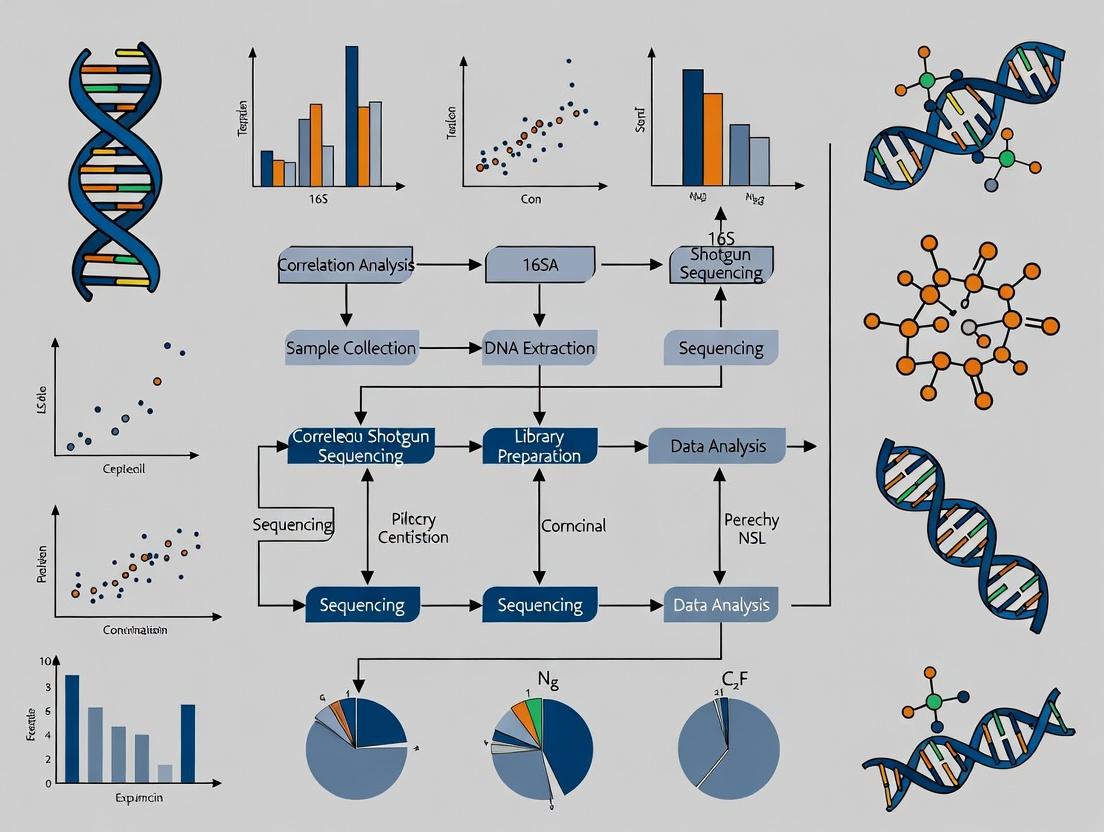
This article provides a detailed comparative analysis of 16S rRNA gene sequencing and shotgun metagenomics for microbiome research.
16S vs. Shotgun Sequencing: A Comprehensive Guide to Microbial Community Analysis and Method Correlation for Researchers
Abstract
This article provides a detailed comparative analysis of 16S rRNA gene sequencing and shotgun metagenomics for microbiome research. Tailored for researchers, scientists, and drug development professionals, we explore the foundational principles, methodological applications, common pitfalls, and validation strategies for integrating these two powerful techniques. The content covers experimental design considerations, bioinformatics pipelines, interpretation of correlation results, and best practices for leveraging complementary data to advance biomedical discoveries in areas such as dysbiosis, biomarker identification, and therapeutic development.
Understanding 16S and Shotgun Sequencing: Core Principles, Strengths, and Fundamental Differences
Within the context of advancing correlation analyses between 16S rRNA and shotgun metagenomic datasets, a clear understanding of the technical foundations and performance characteristics of each method is paramount. This guide provides an objective comparison of these cornerstone microbial community profiling techniques, supported by experimental data.
Core Technical Comparison
The fundamental distinction lies in the target of sequencing. Targeted 16S rRNA gene sequencing amplifies and sequences specific hypervariable regions (e.g., V3-V4) of the conserved 16S ribosomal RNA gene. In contrast, whole-genome shotgun (WGS) metagenomics randomly shears and sequences all genomic DNA from a sample.
Recent studies investigating 16S-WGS correlation provide the following quantitative performance insights.
Table 1: Comparative Performance Metrics
| Metric | Targeted 16S rRNA Sequencing | Whole-Genome Shotgun Metagenomics |
|---|---|---|
| Taxonomic Resolution | Genus to species-level* | Species to strain-level |
| Functional Insight | Inferred (PICRUSt2, etc.) | Direct from gene content |
| PCR Bias | High (primer-dependent) | None |
| Host DNA Depletion Need | Low | Critical (especially for low-biomass) |
| Relative Cost per Sample | Low | High (5-10x) |
| Database Dependency | High (16S ref DB) | High (comprehensive genomic DB) |
| Typical Sequencing Depth | 10,000 - 100,000 reads/sample | 10 - 50 million reads/sample |
| *Resolution limited by primer choice and reference database coverage. |
Table 2: Correlation Analysis Data from a Recent Benchmarking Study (Mock Community)
| Community Measure | 16S Result | WGS Result | Ground Truth | Pearson Correlation (r) vs. Truth |
|---|---|---|---|---|
| Genus A Relative Abundance | 24.5% | 25.1% | 25.0% | 16S: 0.998, WGS: 0.999 |
| Genus B Relative Abundance | 12.1% | 11.8% | 12.5% | 16S: 0.985, WGS: 0.992 |
| Genus C Relative Abundance | 5.5% | 3.8% | 4.0% | 16S: 0.901, WGS: 0.990 |
| Shannon Diversity Index | 2.45 | 2.61 | 2.58 | 16S: 0.94, WGS: 0.99 |
Note: Discrepancy for Genus C in 16S data attributed to primer bias.
Experimental Protocols for Key Cited Studies
Protocol 1: Standardized DNA Extraction & 16S Library Prep (for correlation studies)
- Sample Lysis: Use a bead-beating protocol with a defined mix of zirconia/silica beads (0.1mm and 0.5mm) for 10 minutes.
- DNA Purification: Employ a column-based kit with inhibitors removal steps. Elute in 10mM Tris buffer, pH 8.5.
- 16S Amplification: Amplify the V4 region using dual-indexed primers 515F (GTGYCAGCMGCCGCGGTAA) and 806R (GGACTACNVGGGTWTCTAAT). Use a high-fidelity polymerase. Cycle: 95°C/3min, [95°C/30s, 55°C/30s, 72°C/60s] x 25-30 cycles, 72°C/5min.
- Library Clean-up: Perform double-sided AMPure XP bead clean-up (0.8x ratio).
- Sequencing: Pool libraries and sequence on an Illumina MiSeq with 2x250 bp chemistry.
Protocol 2: Shotgun Metagenomic Library Prep with Host Depletion
- DNA QC: Quantity using Qubit dsDNA HS Assay; assess integrity via gel electrophoresis or Fragment Analyzer. Minimum input: 1ng.
- Host DNA Depletion (optional but recommended): Use a hybridization capture-based method (e.g., probe panels for human/mouse rRNA and genomic DNA) if sample is host-derived (e.g., stool, tissue).
- Library Construction: Fragment DNA to ~350 bp via sonication (Covaris). Perform end-repair, A-tailing, and adapter ligation using a kit (e.g., Illumina DNA Prep). Include unique dual indices (UDIs).
- Library Amplification: Amplify with 4-8 PCR cycles.
- Sequencing: Pool libraries and sequence on an Illumina NovaSeq 6000 to a target depth of 20-40 million paired-end 150 bp reads per sample.
Visualization of Method Workflows
Diagram 1: High-level comparison of 16S vs WGS workflows.
Diagram 2: 16S rRNA sequencing data analysis pipeline.
The Scientist's Toolkit: Research Reagent Solutions
Table 3: Essential Materials for Comparative Metagenomic Studies
| Item | Function | Example Product/Catalog |
|---|---|---|
| High-Efficiency Bead Beating Tubes | Ensures uniform and complete mechanical lysis of diverse cell walls (Gram+, Gram-, spores). | ZR BashingBead Lysis Tubes (Zymo Research) |
| Inhibitor-Removal DNA Extraction Kit | Critical for challenging samples (soil, stool) to yield PCR- and sequencing-ready DNA. | DNeasy PowerSoil Pro Kit (Qiagen) |
| Validated 16S rRNA Primer Pair | Determines taxonomic resolution and bias; essential for reproducibility in correlation studies. | Earth Microbiome Project 515F/806R |
| High-Fidelity PCR Polymerase | Minimizes amplification errors in 16S amplicons, improving ASV accuracy. | Q5 Hot Start High-Fidelity DNA Polymerase (NEB) |
| Dual-Indexed UDI Adapter Kit | Prevents index hopping in multiplexed shotgun sequencing, crucial for sample integrity. | IDT for Illumina - Unique Dual Indexes |
| Probe-Based Host DNA Depletion Kit | Removes host (e.g., human) DNA to dramatically increase microbial sequencing depth in WGS. | NEBNext Microbiome DNA Enrichment Kit |
| Quantitative DNA/RNA QC Assay | Accurate quantification of low-concentration libraries prior to sequencing. | Qubit dsDNA HS Assay (Thermo Fisher) |
| Mock Microbial Community | Positive control for evaluating bias, accuracy, and pipeline performance in both methods. | ZymoBIOMICS Microbial Community Standard (Zymo Research) |
This comparison guide, framed within ongoing research on 16S and shotgun metagenomic sequencing correlation analysis, objectively evaluates the core outputs and performance of these two foundational microbial community analysis methods. The data and protocols below are synthesized from current standard practices and recent experimental literature.
Core Comparison of Methodological Outputs
| Aspect | 16S rRNA Gene Amplicon Sequencing | Shotgun Metagenomic Sequencing |
|---|---|---|
| Primary Goal | High-throughput, cost-effective taxonomic census of microbial community composition. | Comprehensive assessment of the collective genetic material for taxonomic and functional potential analysis. |
| Taxonomic Resolution | Typically genus-level. Species-level is often unreliable; strain-level resolution is not achievable. | Species-level is standard. Strain-level resolution is possible with sufficient coverage and advanced bioinformatics (e.g., pangenome analysis, SNV calling). |
| Functional Insights | Indirect inference via correlation with reference databases. No direct assessment of functional potential. | Direct profiling of functional potential via identification of protein-coding genes (e.g., KEGG, COG, Pfam pathways). |
| Quantitative Data (Mock Community Experiment 1) | Relative abundance (% of community). Prone to PCR amplification bias. | Can approximate relative abundance and estimate gene copy number. Less biased by primer choice. |
| Experimental Cost & Throughput | Lower cost per sample; higher throughput for population studies. | Higher cost per sample; deeper sequencing required; computational intensity is high. |
| Key Limitation | Functional and strain-level data are inferred, not measured. Limited by primer specificity and database bias. | Host DNA contamination in low-microbial-biomass samples. Complex data analysis requires significant bioinformatics expertise. |
Detailed Experimental Protocols
Protocol 1: Standard 16S rRNA Gene Amplicon Sequencing Workflow
- DNA Extraction: Use a bead-beating mechanical lysis kit (e.g., DNeasy PowerSoil Pro Kit) for robust cell wall disruption.
- PCR Amplification: Amplify the hypervariable region (e.g., V4) using universal primers (515F/806R) with attached Illumina adapter sequences. Include a negative control.
- Library Preparation & Sequencing: Clean amplicons, index with unique barcodes, pool equimolarly, and sequence on an Illumina MiSeq (2x250 bp paired-end).
- Bioinformatic Analysis: Use QIIME 2 or DADA2 for demultiplexing, quality filtering, ASV/OTU clustering, and taxonomy assignment against the SILVA or Greengenes database.
Protocol 2: Shotgun Metagenomic Sequencing for Functional & Strain Analysis
- High-Quality DNA Extraction: Use a method that yields large, sheared fragments (>20 kb) suitable for shotgun libraries (e.g., MagAttract HMW DNA Kit).
- Library Preparation: Fragment DNA via acoustic shearing, perform end-repair, A-tailing, and ligation of Illumina-compatible adapters. Size-select for 300-500 bp inserts.
- Deep Sequencing: Sequence on Illumina NovaSeq or HiSeq platform to achieve a minimum of 10-20 million paired-end (2x150 bp) reads per sample for complex communities.
- Bioinformatic Analysis:
- Taxonomic Profiling: Use Kraken 2/Bracken or MetaPhlAn for species-level profiling.
- Functional Profiling: Use HUMAnN 3.0 to map reads to protein families (UniRef90) and reconstruct pathway abundance.
- Strain-Level Analysis: Use StrainPhlAn or PanPhlAn to identify strain-specific marker genes and single nucleotide variants (SNVs) from species-specific alignments.
Visualization of Method Selection and Output Pathways
Diagram Title: Decision Pathway from Sequencing Method to Analytical Outputs
The Scientist's Toolkit: Research Reagent Solutions
| Item | Category | Primary Function in Analysis |
|---|---|---|
| DNeasy PowerSoil Pro Kit (QIAGEN) | DNA Extraction | Standardized, high-yield DNA extraction with inhibitors removal for consistent PCR and library prep. |
| KAPA HiFi HotStart ReadyMix (Roche) | PCR Reagent | High-fidelity polymerase for accurate amplification of 16S amplicons with minimal bias. |
| Nextera XT DNA Library Prep Kit (Illumina) | Library Prep | Rapid, standardized preparation of shotgun metagenomic sequencing libraries from low-input DNA. |
| ZymoBIOMICS Microbial Community Standard | Mock Community | Defined mix of bacterial/fungal cells for benchmarking and validating extraction, sequencing, and bioinformatics pipelines. |
| PhiX Control v3 (Illumina) | Sequencing Control | Spiked-in during sequencing for error rate monitoring, calibration, and addressing low-diversity issues (common in 16S runs). |
| MagAttract HMW DNA Kit (QIAGEN) | DNA Extraction (HMW) | For obtaining high-molecular-weight DNA optimal for long-read or high-coverage shotgun sequencing. |
| Human DNA Depletion Kit (e.g., NEBNext Microbiome) | Enrichment | Probes to hybridize and remove host (human) DNA, enriching for microbial sequences in host-associated samples. |
Key Strengths and Inherent Limitations of Each Method for Microbial Community Analysis
Within the context of 16S rRNA gene sequencing and shotgun metagenomic sequencing correlation analysis research, selecting the appropriate method is critical. This guide objectively compares the performance of these two cornerstone techniques, supported by experimental data, to inform researchers, scientists, and drug development professionals.
Method Comparison: 16S rRNA vs. Shotgun Metagenomic Sequencing
| Feature | 16S rRNA Gene Sequencing | Shotgun Metagenomic Sequencing |
|---|---|---|
| Target Region | Hypervariable regions (e.g., V1-V9) of the 16S rRNA gene. | All genomic DNA in a sample (fragmented randomly). |
| Primary Output | Taxonomic profile (relative abundance of bacteria/archaea). | Catalog of all genes/functions + taxonomic profile. |
| Taxonomic Resolution | Species to genus level (rarely to strain). | Species to strain level, with higher accuracy. |
| Functional Insight | Limited to inference from taxonomy. | Direct measurement of metabolic pathways & ARGs. |
| Host DNA Contamination | Minimal impact (specific prokaryotic target). | High impact; can dominate sequencing depth. |
| Cost per Sample | Lower (~$50 - $150). | Higher (~$200 - $1000+). |
| Bioinformatic Complexity | Moderate (standardized pipelines like QIIME 2, MOTHUR). | High (demanding computational resources & diverse tools). |
| PCR Bias | Present (primer selection impacts community profile). | Absent (but library prep can have other biases). |
| Reference Database Dependency | High (GG, SILVA, RDP). | Very High (NCBI, MGnify, integrated gene catalogs). |
| Key Strength | Cost-effective, high-throughput taxonomy; well-established. | Comprehensive functional & taxonomic characterization. |
| Inherent Limitation | Limited functional data; resolution capped by gene copy number variation and primer bias. | Expensive; computationally intensive; data interpretation is complex. |
Supporting Experimental Data from Correlation Studies
Recent correlation analyses quantify the agreement and divergence between methods.
| Metric / Observation | Typical Experimental Finding | Implication for Method Choice |
|---|---|---|
| Taxonomic Composition Correlation (Genus Level) | Spearman ρ = 0.6 - 0.8 | Good general agreement, but discrepancies exist. |
| Rarefaction Curve Plateau | 16S plateaus at ~10-50k reads/sample; Shotgun requires 10-50M reads/sample for equivalent taxonomy. | 16S is more efficient for deep taxonomic census. |
| Detection of Low-Abundance Taxa | Shotgun often identifies unique rare taxa missed by 16S. | Shotgun provides a more complete diversity picture. |
| Functional Pathway Correlation | Poor correlation between 16S-inferred and shotgun-measured functions. | Direct functional measurement is non-inferable. |
| Impact of DNA Extraction Kit | Variation affects both methods, but shotgun functional profiles show higher technical variance. | Protocol standardization is paramount for shotgun. |
Detailed Methodologies for Key Cited Experiments
Protocol 1: Paired 16S and Shotgun Sequencing from a Single DNA Extract
- DNA Extraction: Use a bead-beating mechanical lysis kit (e.g., Qiagen DNeasy PowerSoil Pro) on 250 mg of fecal sample. Elute in 50 µL of elution buffer.
- Aliquot: Split the purified DNA into two equal-volume aliquots (25 µL each).
- 16S Library Prep: Amplify the V4 region using 515F/806R primers with attached Illumina adapters. Use a limited cycle PCR (25-30 cycles). Clean amplicons with magnetic beads.
- Shotgun Library Prep: Fragment 100 ng of DNA via acoustic shearing (Covaris). Prepare library using a ligation-based kit (e.g., Illumina DNA Prep). Use dual-index barcodes.
- Sequencing: Pool and sequence 16S libraries on an Illumina MiSeq (2x250 bp). Sequence shotgun libraries on an Illumina NovaSeq (2x150 bp) to a target depth of 20 million read pairs per sample.
- Bioinformatic Processing: Process 16S data with DADA2 in QIIME 2 for ASV table generation. Process shotgun data with KneadData (host removal), MetaPhlAn 4 for taxonomy, and HUMAnN 3 for pathway abundance.
Protocol 2: Assessing Correlation in Taxonomic Abundance
- Data Normalization: Aggregate both 16S (ASV) and shotgun (MetaPhlAn) profiles at the genus level. Convert to relative abundance (percentage).
- Filtering: Retain only genera detected in >10% of samples in at least one dataset.
- Correlation Calculation: For each shared genus, calculate the Spearman rank correlation coefficient (ρ) between its relative abundance across all samples in the 16S dataset versus the shotgun dataset.
- Visualization: Generate a scatter plot of mean relative abundances per genus, colored by the correlation coefficient (ρ).
Visualizations
Diagram 1: Microbial Analysis Method Decision Workflow (73 characters)
Diagram 2: Paired Sequencing Analysis for Correlation Study (71 characters)
The Scientist's Toolkit: Key Research Reagent Solutions
| Item | Function in Microbial Community Analysis |
|---|---|
| Bead-Beating Lysis Kit (e.g., DNeasy PowerSoil Pro) | Standardizes cell wall disruption across diverse microbes (Gram+, Gram-, spores) for unbiased DNA yield. |
| PCR Inhibitor Removal Columns | Critical for complex samples (stool, soil) to ensure high-quality DNA for both 16S and shotgun library prep. |
| Standardized 16S rRNA Primer Pair (e.g., 515F/806R) | Ensures amplicon consistency and comparability across studies targeting the V4 region. |
| High-Fidelity DNA Polymerase | Minimizes PCR errors during 16S amplicon or shotgun library enrichment cycles. |
| Dual-Index Barcode Adapters (Illumina) | Enables multiplexing of hundreds of samples in a single shotgun sequencing run, reducing per-sample cost. |
| PhiX Control Library | Serves as a mandatory internal control for low-diversity 16S sequencing runs on Illumina platforms. |
| Bioinformatic Pipeline Containers (e.g., QIIME 2, MetaPhiAn via Docker) | Ensures computational reproducibility and simplifies installation of complex software dependencies. |
Within microbial genomics, 16S rRNA gene sequencing and shotgun metagenomic sequencing are foundational techniques. A core thesis in contemporary research is that correlating data from these methods yields insights greater than the sum of their parts. This guide compares their performance and outlines the rationale for integrative analysis.
Performance Comparison: 16S vs. Shotgun Sequencing
The following table summarizes the objective performance characteristics of each method, based on standard experimental outputs.
Table 1: Comparative Performance of 16S and Shotgun Sequencing
| Aspect | 16S rRNA Sequencing | Shotgun Metagenomic Sequencing | Rationale for Correlation |
|---|---|---|---|
| Taxonomic Resolution | Genus to species-level. Limited by reference database and conserved gene. | Species to strain-level. Can discover novel species. | 16S validates shotgun taxonomy; shotgun refines 16S identities. |
| Functional Insight | Indirect, via phylogenetic inference. No direct functional gene data. | Direct, via annotation of coding sequences (e.g., KEGG, COG). | 16S community structure can be correlated with shotgun functional potential. |
| Host DNA Contamination | Minimal target. Highly specific primers. | High. Sequences all DNA, requiring robust host depletion. | Correlation controls for technical bias from host DNA in shotgun data. |
| Cost & Depth | Lower cost per sample. Enables deeper sequencing of target gene. | Higher cost per sample. Sequencing depth shared across all genomes. | 16S depth justifies sample selection for deeper, costly shotgun analysis. |
| Quantitative Accuracy | Relative abundance based on single-copy gene. Prone to PCR bias. | Relative abundance based on genome coverage. Less PCR bias. | Correlation allows calibration of quantitative profiles across platforms. |
| Experimental Workflow | PCR amplification, library prep of single gene. | Direct fragmentation of total DNA, no target-specific PCR. | Integrating protocols highlights batch effects and technical variability. |
Experimental Protocols for Correlation Studies
Key experiments in correlation research follow stringent protocols.
Protocol 1: Paired Sample Processing for 16S/Shotgun Correlation
- Sample Splitting: Aliquot the same homogenized biological sample (e.g., stool, soil) into two tubes.
- Parallel DNA Extraction: Use the same broad-spectrum DNA extraction kit for both aliquots to minimize bias.
- Library Construction:
- 16S: Amplify the V4 hypervariable region using primers 515F/806R. Use a high-fidelity polymerase. Clean PCR product and proceed to indexing.
- Shotgun: Fragment extracted DNA via sonication or enzymatic digestion. Size-select for ~350bp fragments. Perform end-repair, adapter ligation, and PCR amplification.
- Sequencing: Sequence 16S libraries on MiSeq (2x250bp) for depth. Sequence shotgun libraries on HiSeq or NovaSeq (2x150bp) for breadth.
- Bioinformatic Processing: Process 16S data with QIIME2/DADA2 for ASVs. Process shotgun data with KneadData (host removal), MetaPhlAn for taxonomy, and HUMAnN for functional pathways.
Protocol 2: Validation of Taxonomic Abundance Profiles
- Generate Profiles: Create relative abundance tables from 16S (ASV) and shotgun (MetaPhlAn) outputs for paired samples.
- Aggregate to Common Taxonomy: Aggregate abundances to the genus level where possible.
- Statistical Correlation: Calculate pairwise correlation coefficients (e.g., Spearman's ρ) for each genus present in both profiles. Perform Mantel test for overall community correlation.
- Visualization: Generate scatter plots for abundant genera and Bland-Altman plots to assess agreement.
Visualizing the Correlation Workflow
Title: Paired Analysis Workflow for 16S-Shotgun Correlation
The Scientist's Toolkit: Essential Research Reagents & Solutions
Table 2: Key Reagents for 16S-Shotgun Correlation Studies
| Item | Function in Correlation Research |
|---|---|
| Magnetic Bead-based DNA Extraction Kit | Ensures high-yield, unbiased lysis of diverse microbes from complex samples for parallel analysis. |
| PCR Inhibitor Removal Reagents | Critical for sample types like stool; ensures both 16S and shotgun libraries are amplifiable. |
| High-Fidelity DNA Polymerase | Used in 16S PCR to minimize amplification errors that distort later correlation with shotgun data. |
| Dual-Indexed Adapter Kits | Allows multiplexing of both 16S and shotgun libraries from the same sample set in a single sequencing run. |
| Metagenomic DNA Standard | Defined microbial community (e.g., ZymoBIOMICS) used as a positive control to assess technical concordance. |
| Host DNA Depletion Kit | Used prior to shotgun library prep for host-rich samples (e.g., biopsies) to improve microbial signal. |
| Bioinformatic Pipelines (QIIME2, MetaPhlAn3) | Standardized software enables reproducible generation of comparable data tables for correlation. |
| Statistical Software (R, Python) | Used to compute correlation coefficients (Spearman), perform regression, and generate integrative visualizations. |
Foundational Studies Establishing Correlation and Divergence Between Methods.
Within the broader context of 16S rRNA gene and shotgun metagenomics correlation analysis research, comparative methodological studies are critical for guiding platform selection. This guide objectively compares the performance of these two primary sequencing approaches, supported by foundational experimental data.
Experimental Protocols for Key Comparison Studies
1. Protocol for Taxonomic Profiling Correlation:
- Sample Preparation: Genomic DNA is extracted from a homogenized environmental or mock community sample (e.g., ZymoBIOMICS Microbial Community Standard).
- 16S rRNA Gene Sequencing: The V4 hypervariable region is amplified using primers 515F/806R. Libraries are prepared and sequenced on an Illumina MiSeq (2x250 bp).
- Shotgun Metagenomic Sequencing: The same DNA extract is sheared, and libraries are prepared without PCR amplification. Sequencing is performed on an Illumina HiSeq or NovaSeq (2x150 bp).
- Bioinformatic Processing:
- 16S Data: DADA2 for ASV inference; SILVA database for taxonomic assignment.
- Shotgun Data: KneadData for host/quality filtering; MetaPhlAn for taxonomic profiling using its curated marker gene database.
- Analysis: Relative abundances at Phylum, Family, and Genus levels are correlated (Pearson/Spearman) between methods.
2. Protocol for Functional Capacity Divergence:
- Shotgun Data Pathway: Post-taxonomic profiling, HUMAnN3 is used to map reads to the UniRef90 protein database, producing gene family and MetaCyc pathway abundances.
- 16S Data Inference: PICRUSt2 is used to predict MetaCyc pathway abundances from the ASV table and a reference genome database.
- Analysis: Predicted (PICRUSt2) and directly measured (HUMAnN3) pathway abundances are compared for correlation and significant deviations.
Comparative Performance Data
Table 1: Taxonomic Correlation Across Studies
| Taxonomic Rank | Average Correlation (r)* | Primary Source of Divergence |
|---|---|---|
| Phylum | 0.85 - 0.95 | Low; strong agreement. |
| Family | 0.70 - 0.85 | Database classification depth & specificity. |
| Genus | 0.50 - 0.75 | 16S primer bias; reference database completeness. |
*Spearman correlation range based on recent mock community and human gut studies.
Table 2: Method-Specific Capabilities and Limitations
| Feature | 16S rRNA Gene Sequencing | Shotgun Metagenomic Sequencing |
|---|---|---|
| Cost per Sample | Low ($50-$150) | High ($200-$1000+) |
| Taxonomic Resolution | Genus, sometimes Species | Species, Strain-level possible |
| Functional Insight | Indirect prediction (e.g., PICRUSt2) | Direct measurement of genes & pathways |
| Host DNA Contamination | Generally unaffected | Can severely impact yield & cost |
| Bias Sources | PCR amplification, primer selection | DNA extraction, fragmentation |
| Novel Organism Detection | Limited to conserved gene | Can reconstruct novel genomes |
Title: 16S vs Shotgun Comparative Analysis Workflow
Title: Decision Logic from Question to Method Divergence
The Scientist's Toolkit: Key Research Reagent Solutions
| Item | Function in Comparative Studies |
|---|---|
| Mock Community Standards (e.g., ZymoBIOMICS) | Provides known composition of microbial strains to benchmark and calibrate both sequencing methods. |
| Bias-Reduced Polymerases (e.g., Q5 High-Fidelity) | Minimizes PCR amplification errors during 16S library prep, improving ASV accuracy. |
| Magnetic Bead Cleanup Kits (e.g., AMPure XP) | Essential for size selection and purification in both 16S and shotgun library protocols. |
| Metagenomic DNA Extraction Kits (e.g., DNeasy PowerSoil) | Standardized, efficient cell lysis and inhibitor removal for consistent input DNA. |
| Internal Spike-in Controls (e.g., Known-abundance phage DNA) | Added pre-extraction or pre-sequencing to quantitatively assess yield and bias. |
| Bioinformatics Pipelines (e.g., QIIME2, nf-core/mag) | Standardized, reproducible computational workflows for analyzing data from both methods. |
Experimental Design and Bioinformatics Pipelines for Effective Correlation Analysis
Accurate correlation analysis between 16S rRNA gene sequencing and shotgun metagenomics hinges on the integrity of paired sample preparation. Divergent protocols for DNA extraction and library construction can introduce technical bias, obscuring true biological signals. This guide compares critical methodologies and reagents, supported by experimental data, to standardize paired preparation within a 16S/shotgun correlation thesis.
Critical Experimental Protocol for Paired Preparation
Protocol: Parallel Processing for 16S and Shotgun Sequencing
- Sample Homogenization: Aliquot a single, thoroughly mixed biological sample (e.g., stool, soil) into two identical tubes. Process in parallel.
- DNA Extraction: Perform identical extraction on both aliquots using a bead-beating mechanical lysis kit optimized for broad bacterial lysis.
- Key: Use the same batch of kit, same operator, and same elution buffer (10 mM Tris-HCl, pH 8.5).
- DNA QC: Quantify both extracts using a fluorometric method (e.g., Qubit). Assess fragment size distribution (e.g., TapeStation). Only proceed if both extracts show similar yield and integrity.
- Divergent Library Prep:
- 16S Library: Amplify the V3-V4 hypervariable region using primers (e.g., 341F/806R) with overhang adapters. Use a limited, standardized PCR cycle count (e.g., 25 cycles).
- Shotgun Library: Proceed with a enzymatic fragmentation and tagmentation-based library prep kit, using input amounts normalized from the paired extract.
- Library QC & Pooling: Quantify final libraries by qPCR for accurate molarity. Pool equimolarly for respective sequencing runs.
Performance Comparison: DNA Extraction Kits
The choice of extraction kit significantly impacts DNA yield, fragment length, and microbial community representation, affecting downstream correlation.
Table 1: Comparative Performance of Commercial DNA Extraction Kits for Paired Preparation
| Kit Name (Alternative) | Lysis Principle | Mean Yield (ng/µg stool) | Mean Fragment Size (bp) | 16S:Shotgun Yield Correlation (R²)* | Key Bias Note |
|---|---|---|---|---|---|
| Kit M (PowerSoil Pro) | Bead-beating + chemical | 45.2 ± 5.1 | 12,500 ± 2,100 | 0.98 | High yield, low bias. Gold standard for soil/stool. |
| Kit Q (MagAttract) | Bead-beating + magnetic silica | 38.7 ± 4.3 | 8,700 ± 1,500 | 0.96 | Excellent for automation, slightly lower yield. |
| Kit E (QIAamp Fast DNA) | Enzymatic + spin column | 22.1 ± 6.5 | 4,200 ± 900 | 0.87 | Under-represents Gram-positive bacteria. |
| Phenol-Chloroform (Manual) | Bead-beating + organic | 50.5 ± 10.2 | 15,000 ± 3,000 | 0.92 | High variability, hazardous, skilled labor needed. |
Data synthesized from recent comparative studies (2023-2024). R² represents correlation of microbial biomass proportions between split extracts.
Performance Comparison: Library Preparation Kits
Library prep methodology directly influences GC bias, insert size uniformity, and chimera formation.
Table 2: Comparison of Library Prep Methods for 16S and Shotgun Sequencing
| Library Type | Kit/Method (Alternative) | PCR Cycles | Input DNA (ng) | Insert Size CV (%) | GC Bias (Deviation %) | Best For Correlation? |
|---|---|---|---|---|---|---|
| 16S Amplicon | HotStarTaq Plus (Qiagen) | 25 | 10 | 5.2 | 8.5 | Yes - Low error rate. |
| KAPA HiFi HotStart | 25 | 10 | 4.1 | 5.2 | Yes - Lowest GC bias. | |
| Standard Taq Polymerase | 35 | 10 | 12.7 | 15.3 | No - High bias/error. | |
| Shotgun | Nextera XT (Illumina) | Limited-cycle | 1 | 18.5 | 12.1 | Yes - Low input, robust. |
| NEBNext Ultra II FS | Fragmentation-based | 100 | 8.2 | 7.8 | Yes - Best uniformity. | |
| KAPA HyperPrep | Fragmentation-based | 50 | 9.5 | 9.1 | Yes - Consistent. |
CV: Coefficient of Variation. GC Bias measured via sequencing of known genome mix.
Workflow Diagram: Paired Preparation for Correlation Analysis
Title: Paired Sample Prep Workflow for 16S/Shotgun Correlation
The Scientist's Toolkit: Essential Research Reagent Solutions
Table 3: Key Reagents & Materials for Robust Paired Preparation
| Item | Function in Paired Prep | Recommendation & Rationale |
|---|---|---|
| Mechanical Lysis Tubes | Homogenizes tough cell walls (Gram-positives, spores). | Use tubes with a mix of ceramic/silica beads (0.1mm & 1mm). Ensures identical lysis efficiency. |
| PCR Inhibitor Removal Buffer | Removes humic acids, bile salts, etc., that affect PCR. | Incorporate a pre-lysis wash step (e.g., kit-provided solution). Critical for stool/soil samples. |
| Fluorometric DNA QC Assay | Accurately quantifies dsDNA without RNA/salt interference. | Use Qubit or Picogreen. Essential for normalizing input for shotgun lib prep. |
| High-Fidelity DNA Polymerase | Amplifies 16S region with minimal sequence error and bias. | KAPA HiFi or HotStarTaq Plus. Reduces chimeras and maintains sequence fidelity. |
| Size Selection Beads | Selects for optimal insert size post-library prep. | Use double-sided SPRI/AMPure bead ratios. Standardizes library fragment distribution for both types. |
| Library Quantification Kit | Precisely measures amplifiable library concentration. | Use qPCR-based kit (e.g., KAPA Library Quant). Ensures accurate equimolar pooling for sequencing. |
| Nuclease-Free Water | Resuspension and dilution eluent. | Use a single, certified lot for all steps. Prevents contamination and batch effects. |
Within a broader thesis investigating the correlation between 16S rRNA gene amplicon and shotgun metagenomic sequencing data, selecting an appropriate bioinformatics workflow is foundational. Two dominant paradigms exist: the QIIME2/DADA2 pipeline for targeted 16S analysis and the KneadData/MetaPhlAn/HUMAnN pipeline for whole-genome shotgun (WGS) functional profiling. This guide objectively compares their purposes, outputs, and performance, providing the context necessary for researchers and drug development professionals to align their choice with research goals.
Workflow Comparison: Purpose & Core Components
The two workflows address fundamentally different data types and biological questions.
QIIME2/DADA2 (16S rRNA Amplicon Analysis): This ecosystem is designed for analyzing targeted gene sequences, primarily the 16S rRNA gene for bacteria/archaea. DADA2 performs sample inference and resolves amplicon sequence variants (ASVs), while QIIME2 provides a comprehensive platform for downstream diversity analysis, taxonomy assignment, and statistical comparison.
KneadData/MetaPhlAn/HUMAnN (Shotgun Metagenomic Analysis): This pipeline suite processes whole-genome shotgun sequencing data. KneadData performs quality control and host sequence removal. MetaPhlAn uses unique clade-specific marker genes to profile taxonomic abundance. HUMAnN builds upon this taxonomy to quantify gene families (UniRef90) and metabolic pathways, enabling functional metagenomics.
Performance & Experimental Data Comparison
Performance is measured by accuracy, computational demand, and biological interpretability. The table below summarizes key comparative metrics based on published benchmarks.
Table 1: Workflow Performance & Output Comparison
| Metric | QIIME2/DADA2 (16S) | KneadData/MetaPhlAn/HUMAnN (WGS) |
|---|---|---|
| Primary Input | 16S rRNA gene amplicon sequences (e.g., V4 region) | Whole-genome shotgun sequencing reads |
| Taxonomic Resolution | Genus to species (via ASVs) | Species to strain level (via marker genes & WGS) |
| Functional Profiling | Limited (via PICRUSt2 inference) | Direct (via quantified gene families & pathways) |
| Host Contamination Handling | Not typically required | Integral step via KneadData (Bowtie2 vs. host genome) |
| Typical Run Time (for 100 samples)* | 4-8 hours (after demultiplexing) | 24-48 hours (dependent on host genome size) |
| Relative Computational Cost | Lower | Significantly Higher |
| Key Output | Feature table (ASVs), taxonomy, alpha/beta diversity | Taxonomic profiles, gene family abundance, pathway abundance |
| Correlation with Metagenomics | Moderate to strong at genus level; weaker for function | Gold standard for functional analysis; defines true correlation. |
*Times are approximate and highly dependent on compute resources, read depth, and sample number.
Detailed Experimental Protocols
Protocol 1: Standard 16S Analysis with QIIME2/DADA2
- Demultiplexing & Import: Import paired-end FASTQ files and sample metadata into a QIIME2 artifact (
qime tools import). - Denoising & ASV Inference: Use
qime dada2 denoise-pairedto trim primers, filter reads, correct errors, merge paired reads, and remove chimeras, producing a table of amplicon sequence variants (ASVs). - Taxonomy Assignment: Classify ASVs against a reference database (e.g., Greengenes or SILVA) using a trained classifier (
qime feature-classifier classify-sklearn). - Diversity Analysis: Generate a phylogenetic tree, then calculate core diversity metrics (e.g., Faith's PD, Shannon, UniFrac) at a consistent sampling depth (
qime diversity core-metrics-phylogenetic). - Statistical & Visual Exploration: Perform differential abundance testing (e.g., ANCOM) and visualize results within QIIME2 or export for external tools.
Protocol 2: Standard Shotgun Metagenomic Analysis with KneadData/MetaPhlAn/HUMAnN
- Quality Control & Host Decontamination: Run
kneaddatausing Trimmomatic for adapter/quality trimming and Bowtie2 to align reads against a host reference genome (e.g., human GRCh38) for removal. - Metagenomic Taxonomic Profiling: Process cleaned reads with
metaphlanto generate a taxonomic profile table at the species level. - Functional Profiling: Run
humannusing the cleaned reads and the MetaPhlAn taxonomic profile. HUMAnN maps reads to a protein database (UniRef90) via DIAMOND and normalizes outputs (Copies per Million). - Pathway Abundance & Coverage: Regroup gene families and normalize pathway abundances using
humann_regroup_tableandhumann_renorm_table. - Statistical Analysis: Merge outputs (e.g.,
humann_join_tables) for downstream analysis in R/Python (e.g., LEfSe, MaAsLin2 for association testing).
Visualized Workflows
16S Analysis with QIIME2/DADA2
Shotgun Analysis with KneadData/MetaPhlAn/HUMAnN
The Scientist's Toolkit: Essential Research Reagent Solutions
Table 2: Key Reagents, Databases, and Tools
| Item | Function in Workflow | Example/Source |
|---|---|---|
| 16S PCR Primers | Amplify hypervariable regions of the 16S rRNA gene for sequencing. | 515F/806R (V4), 27F/338R (V1-V2) |
| Shotgun Library Prep Kit | Fragment genomic DNA and attach sequencing adapters for WGS. | Illumina Nextera XT, KAPA HyperPlus |
| Reference Taxonomy Database | Assign taxonomic labels to sequence variants. | SILVA, Greengenes (for 16S); MetaPhlAn database (for WGS) |
| Functional Reference Database | Map reads to gene families and metabolic pathways. | UniRef90, Kyoto Encyclopedia of Genes and Genomes (KEGG) |
| Host Reference Genome | Identify and remove contaminating host sequences. | Human GRCh38, Mouse GRCm39 |
| Positive Control (Mock Community) | Assess sequencing and bioinformatics pipeline accuracy. | ZymoBIOMICS Microbial Community Standard |
| DNA Extraction Negative Control | Detect contamination introduced during wet-lab procedures. | Molecular-grade water processed alongside samples |
This comparison guide, framed within a broader thesis on 16S and shotgun metagenomic sequencing correlation analysis, evaluates bioinformatics tools that predict functional potential from 16S rRNA gene amplicon data. The ability to bridge taxonomic data to functional profiles is crucial for researchers, scientists, and drug development professionals seeking cost-effective insights from vast 16S datasets.
Tool Comparison: PICRUSt2 vs. Tax4Fun2 vs. Alternative Approaches
The following table summarizes the core performance metrics, based on recent comparative studies, for leading functional prediction tools.
Table 1: Comparison of Functional Prediction Tools from 16S Data
| Feature / Metric | PICRUSt2 | Tax4Fun2 | METAGENassist (Alternative) | Shotgun Metagenomics (Gold Standard) |
|---|---|---|---|---|
| Core Methodology | Hidden state prediction algorithm (castor R package); links ASVs to reference genomes via a placed phylogeny. | Maps 16S sequences to prokaryotic genomes via BLAST; uses pre-computed KEGG profiles from associated genomes. | Uses taxonomic data to query curated metabolic databases (KEGG, BioCyc) for functional traits. | Direct sequencing and assembly of all genomic material in a sample. |
| Reference Database | Integrated Microbial Genomes (IMG) database; ~99k archaeal/bacterial reference genomes. | SILVA SSU NR99 & PROKKA-annotated genomes (KEGG Orthology). | Multiple (KEGG, BioCyc, COG, Pfam) based on user-selected taxonomy. | Not applicable; uses sample-derived sequences. |
| Predicted Output | Enzyme Commission (EC) numbers, MetaCyc pathways, KO counts, COG categories. | KEGG Orthology (KO) abundances, pathway maps. | Predicted presence/abundance of metabolic pathways. | Full gene catalog (KOs, ECs, pathways) from assembled contigs. |
| Reported Correlation (r) with Shotgun Data | 0.6 - 0.8 (for core metabolic pathways) | 0.5 - 0.75 (for well-conserved KEGG modules) | ~0.4 - 0.6 (highly variable by pathway) | 1 (by definition) |
| Key Strength | Phylogenetic placement accounts for evolutionary distance; handles novel ASVs. | Faster computation; direct mapping to KEGG. | User-friendly web interface; multiple database sources. | Direct, untargeted measurement of functional genes. |
| Primary Limitation | Computationally intensive; prediction limited to conserved functions. | Relies on BLAST hit quality; less accurate for distantly related taxa. | Less precise; higher-level taxonomic input can reduce resolution. | High cost, computational demand, and complex analysis. |
| Typical Runtime | Medium-High (depends on tree placement) | Low-Medium | Low (web server) | Very High |
Experimental Protocols for Validation
A standard protocol for benchmarking these tools against shotgun metagenomic data is summarized below.
Protocol 1: Benchmarking Functional Prediction Accuracy
- Sample Collection & DNA Extraction: Collect matched biological samples (e.g., stool, soil). Perform split-sample DNA extraction.
- Sequencing:
- 16S rRNA Gene Amplicon Sequencing: Amplify the V4 region of the 16S rRNA gene using primers 515F/806R. Sequence on an Illumina MiSeq platform (2x250 bp).
- Shotgun Metagenomic Sequencing: Fragment extracted DNA. Prepare libraries and sequence on an Illumina HiSeq/NovaSeq platform (2x150 bp) to achieve >5 Gb of data per sample.
- Bioinformatics Processing:
- 16S Data: Process reads with DADA2 or QIIME2 to generate Amplicon Sequence Variant (ASV) table. Assign taxonomy using SILVA database.
- Shotgun Data: Process reads with KneadData for quality control. Perform functional profiling using HUMAnN3 against the UniRef90 database, outputting pathway abundances (MetaCyc).
- Predictive Tools: Input the ASV table into PICRUSt2 (default settings) and Tax4Fun2 (default settings) to generate predicted MetaCyc pathway abundances.
- Statistical Correlation: For each sample, calculate the Spearman correlation coefficient (r) between the abundance of each predicted pathway (from PICRUSt2 and Tax4Fun2) and its measured abundance from the HUMAnN3 shotgun results. Report median correlations across samples and pathways.
Visualizations
Title: Benchmarking Workflow for 16S Functional Prediction Tools
Title: PICRUSt2 Core Algorithmic Steps
The Scientist's Toolkit: Research Reagent Solutions
Table 2: Essential Materials for 16S-to-Function Correlation Studies
| Item | Function in Research |
|---|---|
| DNA Extraction Kit (e.g., DNeasy PowerSoil Pro) | Isolates high-quality, inhibitor-free microbial genomic DNA from complex samples (stool, soil). Critical for both sequencing modalities. |
| 16S rRNA Gene Primers (e.g., 515F/806R) | Universal primers targeting the V4 hypervariable region for prokaryotic amplicon library construction. |
| Shotgun Metagenomic Library Prep Kit (e.g., Illumina DNA Prep) | Prepares sequencing libraries from fragmented genomic DNA for untargeted shotgun sequencing. |
| SILVA SSU NR 138 Database | Curated reference database for 16S rRNA gene taxonomic classification. Used by both QIIME2 and Tax4Fun2. |
| Integrated Microbial Genomes (IMG) Database | Genome-centric database used by PICRUSt2 as a reference for gene content inference. |
| KEGG Orthology (KO) Database | Functional database linking genes to pathways. Central output of Tax4Fun2 and a common analysis endpoint. |
| MetaCyc Pathway Database | Database of metabolic pathways and enzymes. A common output of PICRUSt2 and HUMAnN3 for direct comparison. |
| Positive Control Microbial Community (e.g., ZymoBIOMICS) | Defined mock community with known composition and genomic content. Essential for validating sequencing and prediction accuracy. |
Within 16S rRNA and shotgun metagenomic sequencing correlation analysis research, selecting the appropriate statistical measure is paramount. Different approaches capture distinct aspects of the relationship between microbial community profiles derived from these complementary techniques. This guide objectively compares three core statistical approaches: Concordance (e.g., Lin’s Concordance Correlation Coefficient, CCC), Rank Order (e.g., Spearman’s ρ), and Abundance Comparisons (e.g., Pearson’s r).
Comparison of Correlation Metrics
Table 1: Comparison of Key Statistical Approaches for Sequencing Correlation
| Approach | Primary Metric | What it Measures | Sensitivity to | Best Use Case in 16S/Shotgun Correlation |
|---|---|---|---|---|
| Concordance | Lin’s CCC | Agreement between two measures of the same variable; assesses deviation from the line of perfect concordance (y=x). | Systemic bias (additive or multiplicative). | Validating that 16S and shotgun produce identical abundance estimates. |
| Rank Order | Spearman’s ρ | Monotonic relationship based on rank of taxa abundance. | The order of taxa from most to least abundant. | Comparing community structure when absolute abundance calibration differs. |
| Abundance Comparisons | Pearson’s r | Linear relationship between raw abundance values. | Magnitude and variance of raw data; outliers. | Assessing linearity in log-transformed, normalized abundance data. |
Table 2: Experimental Data Summary from Recent Correlation Studies (2023-2024)
| Study Focus | Sample Type | Reported Correlation (Mean ± SD) | Key Insight |
|---|---|---|---|
| Gut Microbiome Profiling | Human Stool (n=150) | CCC: 0.65 ± 0.12Spearman’s ρ: 0.82 ± 0.08Pearson’s r: 0.58 ± 0.15 | Rank-order correlations are consistently highest, indicating techniques agree more on order than absolute abundance. |
| Mock Community Analysis | ZymoBIOMICS Standard | CCC: 0.95 ± 0.03Spearman’s ρ: 0.97 ± 0.02Pearson’s r: 0.94 ± 0.04 | With known, controlled communities, all metrics show high agreement, with CCC validating minimal bias. |
| Environmental Samples | Soil (n=45) | CCC: 0.45 ± 0.20Spearman’s ρ: 0.75 ± 0.10Pearson’s r: 0.40 ± 0.22 | High compositional complexity reduces absolute agreement (low CCC/r) but preserves rank structure (moderate ρ). |
Experimental Protocols for Key Cited Studies
Protocol 1: Paired 16S and Shotgun Sequencing Correlation Workflow
- Sample Splitting: Aliquot a single homogenized sample (e.g., stool, soil) into two technical replicates.
- Parallel DNA Extraction: Use the same extraction kit (e.g., DNeasy PowerSoil Pro) on both aliquots.
- Library Preparation:
- 16S: Amplify the V4 region using 515F/806R primers, followed by dual-indexing and Illumina MiSeq 2x250bp sequencing.
- Shotgun: Use Illumina DNA Prep kit for fragmentation, adapter ligation, and NovaSeq 2x150bp sequencing.
- Bioinformatics:
- 16S: Process with DADA2 in R to generate Amplicon Sequence Variant (ASV) tables. Taxonomically classify using SILVA v138.
- Shotgun: Process with KneadData for QC, then MetaPhlAn 4 for taxonomic profiling.
- Data Normalization: Relative abundance normalization (to 1,000,000 reads) for both profiles. Apply centered log-ratio (CLR) transformation for Pearson’s r analysis.
- Statistical Calculation: Filter to genus-level taxa present in both profiles. Compute Lin’s CCC, Spearman’s ρ, and Pearson’s r using the
epi.ccc,cor.testfunctions in R, respectively.
Protocol 2: Mock Community Validation Experiment
- Standard Acquisition: Obtain the ZymoBIOMICS Microbial Community Standard (log-even and log-skewed distributions).
- Sequencing: Process the standard through the paired workflow described in Protocol 1, with 10 technical replicates per sequencing method.
- Data Alignment: Map observed abundances to the known, reference composition provided by Zymo.
- Analysis: Calculate correlation metrics between the reference truth and each sequencing method’s output to assess accuracy and bias.
Title: Paired 16S and Shotgun Sequencing Workflow
Title: Decision Guide for Selecting Correlation Metrics
The Scientist's Toolkit: Research Reagent Solutions
Table 3: Essential Materials for 16S/Shotgun Correlation Experiments
| Item | Function & Role in Correlation Analysis |
|---|---|
| ZymoBIOMICS Microbial Community Standard | Provides a known truth for validating pipeline accuracy and calculating method-specific bias, essential for interpreting CCC. |
| DNeasy PowerSoil Pro Kit (QIAGEN) | Standardized, high-yield DNA extraction critical for reducing technical variation between paired 16S and shotgun libraries. |
| KAPA HiFi HotStart ReadyMix (Roche) | High-fidelity polymerase for 16S amplicon PCR, minimizing chimera formation and improving ASV accuracy. |
| Illumina DNA Prep Tagmentation Kit | Reproducible, streamlined library construction for shotgun metagenomes, ensuring comparable fragment profiles. |
| MetaPhlAn 4 Database | Curated marker gene database for shotgun taxonomic profiling, directly influencing abundance estimates for correlation. |
| SILVA or GTDB Reference Database | Authoritative taxonomy for classifying 16S sequences; database choice affects taxonomic alignment with shotgun results. |
R with vegan, epiR, tidyverse packages |
Statistical computing environment for data normalization, transformation, and calculation of all correlation metrics. |
This guide, framed within ongoing research into 16S rRNA gene and shotgun metagenomic sequencing correlation analysis, provides a comparative assessment of leading sequencing platforms and their performance across three critical application areas. Understanding the strengths and limitations of each approach is vital for researchers and drug development professionals designing robust microbial community studies.
Platform Performance Comparison
The following table summarizes key performance metrics for three dominant platforms, based on recent benchmarking studies.
Table 1: Platform Comparison for Metagenomic Sequencing Applications
| Feature / Metric | Illumina NovaSeq X Plus | Pacific Biosciences Revio | Oxford Nanopore PromethION 2 Solo |
|---|---|---|---|
| Primary Technology | Short-read, sequencing by synthesis | Long-read, HiFi circular consensus sequencing | Long-read, real-time nanopore sequencing |
| Avg. Read Length | 2x150 bp (PE150) | 15-20 kb HiFi reads | >20 kb, up to 2 Mb+ |
| Output per Run | Up to 16 Tb | 360 Gb HiFi data | 80-100 Gb (v14 chemistry) |
| Key Strength for Gut Microbiome | High accuracy for species-level profiling & SNP calling; deep coverage for low-abundance taxa | Full-length 16S rRNA gene resolution; excellent for strain tracking and structural variant detection | Real-time analysis; detects base modifications (epigenetics); rapid pathogen screening |
| Key Strength for Environmental Samples | Cost-effective for deep diversity surveys of complex communities (e.g., soil, water) | Enables high-quality metagenome-assembled genomes (MAGs) from complex mixtures | Long reads improve assembly contiguity in repetitive regions; portable options for field sequencing |
| Key Strength for Clinical Cohorts | Gold standard for case-control studies requiring high statistical power from hundreds of samples | Resolves complete mobile genetic elements and plasmids linking to phenotype | Ultra-rapid turnaround for potential diagnostics; identifies methylation patterns linked to host adaptation |
| Reported Error Rate | ~0.1% (substitution) | >99.9% single-read accuracy (HiFi) | ~4% raw read error (v14), improved to >99% with assembly |
| Typical Cost per Gb (USD) | $5 - $8 | $80 - $120 | $15 - $25 |
Detailed Experimental Protocols
Protocol 1: Cross-Platform Correlation Analysis for Gut Microbiome
Objective: To assess correlation between 16S (V4 region) and shotgun metagenomic taxonomic profiles across platforms.
- Sample Preparation: DNA extracted from 20 human fecal samples using the DNeasy PowerSoil Pro Kit (QIAGEN) with bead-beating.
- Library Construction:
- Illumina 16S: Amplify V4 region with 515F/806R primers, dual-index barcodes. Clean with AMPure XP beads.
- Illumina Shotgun: Fragment 1μg DNA, prepare with Illumina DNA Prep kit.
- PacBio: Prepare SMRTbell libraries from 3μg DNA without amplification (procedure for full-length 16S rRNA gene).
- Nanopore: Prepare library from 1μg DNA using the Native Barcoding Kit 24 V14 (SQK-NBD114.24).
- Sequencing:
- Illumina: Pooled libraries sequenced on NovaSeq X Plus (2x150 bp).
- PacBio: Libraries sequenced on one Revio SMRT Cell (30h movie).
- Nanopore: Library loaded onto a PromethION R10.4.1 flow cell.
- Bioinformatics:
- 16S (Illumina & PacBio): DADA2 (Illumina) or lima/ccs/dada2 (PacBio) for ASV table generation. SILVA v138 database for taxonomy.
- Shotgun (Illumina): KneadData for host filtering, MetaPhlAn 4 for profiling.
- Shotgun (Nanopore): MiniMap2 for host removal, MetaPhlAn 4 (with long-read mode).
- Correlation Analysis: Calculate Spearman's rho between genus-level relative abundances from 16S (each platform) and shotgun profiles (Illumina as reference).
Protocol 2: MAG Recovery from Complex Soil Samples
Objective: Compare quality and completeness of Metagenome-Assembled Genomes (MAGs) recovered from hybrid vs. single-platform assemblies.
- Sample & Sequencing: High molecular weight DNA from agricultural soil. Sequenced on Illumina NovaSeq (shotgun) and PacBio Revio.
- Assembly Workflows:
- Illumina-only: Co-assembly using MEGAHIT. Binning with MetaBAT2.
- PacBio-only: Assembly with hifiasm-meta. Binning with MetaBAT2.
- Hybrid: Combined reads assembled using OPERA-MS.
- MAG Quality Assessment: CheckM2 used to assess completeness and contamination. A MAG with ≥50% completeness and ≤10% contamination is considered "high-quality."
Visualizations
Title: Metagenomic Sequencing Platform Workflow Comparison
Title: 16S vs. Shotgun Metagenomic Correlation Analysis Logic
The Scientist's Toolkit: Essential Research Reagents & Materials
Table 2: Key Reagent Solutions for Metagenomic Studies
| Item (Supplier Examples) | Primary Function |
|---|---|
| DNeasy PowerSoil Pro Kit (QIAGEN) | Gold-standard for mechanical and chemical lysis of diverse microbes, especially from tough matrices like soil and stool. Inhibitor removal is critical for downstream success. |
| MagAttract HMW DNA Kit (QIAGEN) | For high molecular weight DNA extraction, essential for long-read sequencing technologies (PacBio, Nanopore). |
| Illumina DNA Prep Kit | Robust, streamlined library preparation for Illumina shotgun metagenomic sequencing. Includes tagmentation and adapter ligation steps. |
| SMRTbell Prep Kit 3.0 (PacBio) | Prepares SMRTbell libraries for PacBio sequencing. Designed to handle large DNA fragments without shearing for HiFi reads. |
| Ligation Sequencing Kit V14 (ONT) | The standard kit for preparing DNA libraries for Oxford Nanopore sequencing, incorporating barcoding options. |
| NEBNext Microbiome DNA Enrichment Kit | Depletes host (e.g., human) DNA from samples, increasing microbial sequencing depth in clinical/low-biomass samples. |
| ZymoBIOMICS Microbial Community Standards | Defined mock communities of bacteria and fungi. Served as essential positive controls for evaluating bias in extraction, sequencing, and bioinformatics. |
| AMPure XP Beads (Beckman Coulter) | Magnetic beads for size selection and purification of DNA libraries across all platforms. Critical for removing short fragments and reaction contaminants. |
| Qubit dsDNA HS Assay Kit (Thermo Fisher) | Fluorometric quantification specific for double-stranded DNA, more accurate for library quantification than spectrophotometry (which measures contaminants). |
| PhiX Control v3 (Illumina) | Sequencing control for Illumina runs; essential for error rate calibration and phasing/prephasing calculations on patterned flow cells. |
Resolving Discrepancies and Optimizing Your 16S-Shotgun Sequencing Workflow
Within the expanding field of microbiome research, correlation analyses between 16S rRNA gene amplicon sequencing and whole-genome shotgun (WGS) metagenomic sequencing are crucial for validating findings and understanding methodological limitations. Discordance between these two primary techniques is frequently observed and can often be traced to three major sources: primer bias in 16S amplification, choice of reference database for taxonomic assignment, and differences in sequencing depth. This guide objectively compares the impact of these variables on analytical outcomes, providing a framework for researchers to interpret and reconcile data from these complementary approaches.
Primer Bias in 16S rRNA Gene Sequencing
Experimental Comparison
Different primer sets target variable regions of the 16S rRNA gene with varying specificity and coverage, leading to distinct community profiles.
Table 1: Impact of Common 16S Primer Pairs on Taxonomic Recovery
| Primer Pair (Target Region) | Average % of Bacterial Phyla Detected (vs. WGS) | Known Amplification Bias | Key Reference |
|---|---|---|---|
| 27F/338R (V1-V2) | ~75% | Underrepresents Bacteroidetes; favors Firmicutes | Klindworth et al. (2013) |
| 341F/806R (V3-V4) | ~85% | Standard for Illumina MiSeq; good overall but misses some Clostridia | Walters et al. (2016) |
| 515F/926R (V4-V5) | ~88% | Improved for Earth Microbiome Project; biases against Bifidobacterium | Parada et al. (2016) |
| WGS (Shotgun) | 100% (Baseline) | No primer bias; captures all genomic DNA |
Detailed Protocol: Evaluating Primer Bias
- Sample Preparation: A single, homogenized microbial community standard (e.g., ZymoBIOMICS Microbial Community Standard) is aliquoted.
- DNA Extraction: Perform identical extraction on all aliquots using a bead-beating kit (e.g., Qiagen DNeasy PowerSoil).
- 16S Amplification: Amplify the 16S rRNA gene from separate aliquots using different primer pairs (e.g., 27F/338R, 341F/806R, 515F/926R) with attached Illumina adapter sequences. Use high-fidelity polymerase and a minimum of 30 cycles.
- Shotgun Library Prep: Prepare a WGS library from another aliquot using a tagmentation-based kit (e.g., Illumina Nextera XT).
- Sequencing: Pool all libraries and sequence on an Illumina MiSeq or NovaSeq platform to achieve >50,000 reads per 16S sample and >5 million paired-end reads for WGS.
- Analysis: Process 16S data through DADA2 or QIIME2 for ASV inference. Map WGS reads to a curated genome database using Kraken2/Bracken. Compare relative abundances at the phylum and genus levels.
Diagram Title: Experimental Workflow for Primer Bias Comparison
Database Choice for Taxonomic Assignment
Performance Comparison
The accuracy of taxonomic classification for both 16S and WGS data is heavily dependent on the comprehensiveness and curation of the reference database.
Table 2: Effect of Database on Taxonomic Classification Concordance
| Database | Type | # of Reference Genomes/Sequences | Concordance with WGS (Genus Level)* | Notes |
|---|---|---|---|---|
| For 16S Data | ||||
| Greengenes2 (2022) | 16S rRNA | ~1.2 million | 72% | Curated, includes phylogeny; less current. |
| SILVA SSU 138.1 | 16S/18S rRNA | ~2.7 million | 78% | Extensive, manually curated; large size computationally heavy. |
| RDP 18 | 16S rRNA | ~4.2 million | 75% | High-quality, aligned sequences; good for training classifiers. |
| For WGS Data | ||||
| NCBI RefSeq | Genomes | >200,000 | 100% (Baseline) | Gold standard, comprehensive but includes pathogens. |
| GTDB (r214) | Genomes | ~45,000 | ~95% | Genome taxonomy, phylogenetically consistent; smaller but robust. |
| HUMAnN3 (ChocoPhlAn) | Pangenomes | ~5,000 species | N/A (for pathways) | Used for functional profiling, not taxonomy. |
*Concordance measured as % of genus-level calls from 16S that match WGS calls using NCBI RefSeq as baseline, on a mock community.
Detailed Protocol: Database Comparison
- Data Generation: Use a single 16S (V4-V5) and WGS dataset from a well-characterized mock community or human stool sample.
- 16S Analysis Pipeline:
- Process raw reads to Amplicon Sequence Variants (ASVs) using DADA2.
- Assign taxonomy to the ASV representative sequences using three different classifiers (e.g., Naive Bayes) trained on the Greengenes2, SILVA, and RDP databases (all trimmed to the same region).
- WGS Analysis Pipeline:
- Quality filter and host-filter (if necessary) raw reads.
- Perform taxonomic profiling using Kraken2 with databases built from NCBI RefSeq and GTDB separately.
- Use Bracken for abundance estimation.
- Concordance Calculation: At the genus level, calculate the Jaccard similarity index between the taxon sets identified by each 16S/database combination and the WGS/RefSeq profile. Also compare relative abundance correlations (Spearman's rho) for shared genera.
Diagram Title: Database Choice Impact on Taxonomic Profiling
Sequencing Depth and Saturation
Comparative Analysis
Insufficient sequencing depth leads to incomplete microbial community representation, affecting rare taxa detection and diversity metrics differently for 16S and WGS.
Table 3: Sequencing Depth Requirements for Community Representation
| Metric | 16S Sequencing (V4) | Shotgun Metagenomics | Notes |
|---|---|---|---|
| Depth for Saturation | 20,000 - 50,000 reads/sample | 5 - 10 million reads/sample (gut) | WGS requires more depth due to larger genome space. |
| Rare Taxa Detection | Saturates at ~40k reads; detects low-abundance 16S copies. | Requires >10M reads for <0.1% abundance; detects strain variation. | WGS better for low-abundance but actively replicating strains. |
| Alpha Diversity Correlation | Plateaus at moderate depth; strong correlation with WGS after rarefaction (r=0.85). | Continues to increase with depth; is the benchmark for true diversity. | Rarefaction of 16S data is critical for correlation. |
| Functional Profiling | Inferred via PICRUSt2; limited accuracy. | Directly from reads via HUMAnN3; high resolution of pathways. | WGS depth directly impacts pathway coverage completeness. |
Detailed Protocol: Depth Gradient Experiment
- Library Preparation: Prepare one 16S (V4) library and one WGS library from the same sample.
- High-Depth Sequencing: Sequence each library on an Illumina NovaSeq to achieve ultra-high depth (e.g., 500,000 16S reads; 100 million WGS reads).
- In Silico Subsampling: Randomly subsample the raw sequencing data (without replacement) to create datasets at multiple depths (e.g., 1k, 5k, 10k, 50k, 100k reads for 16S; 0.1M, 1M, 5M, 20M, 50M for WGS). Repeat subsampling 10 times per depth.
- Analysis per Depth: For each subsampled set, perform standard bioinformatic analysis (taxonomic assignment for both, plus functional profiling for WGS).
- Saturation Curves: Plot observed species richness (alpha diversity) against sequencing depth. Calculate the coefficient of variation (CV) of relative abundance for key taxa across the 10 replicates at each depth to assess stability.
Diagram Title: Sequencing Depth Saturation Analysis Workflow
The Scientist's Toolkit: Research Reagent Solutions
Table 4: Essential Materials for 16S/WGS Correlation Studies
| Item | Function & Importance in This Context | Example Product |
|---|---|---|
| Mock Microbial Community | Provides a ground-truth standard with known composition to quantify technical biases and database errors. | ZymoBIOMICS Microbial Community Standard (D6300) |
| Bead-Beating DNA Extraction Kit | Ensures robust, unbiased lysis of diverse cell walls (Gram+, Gram-, fungi), critical for representational DNA recovery. | Qiagen DNeasy PowerSoil Pro Kit |
| High-Fidelity PCR Polymerase | Minimizes amplification errors during 16S library prep, ensuring accurate ASV sequences. | Q5 High-Fidelity DNA Polymerase (NEB) |
| Shotgun Metagenomic Library Prep Kit | Enables efficient, low-bias fragmentation and adapter ligation of complex genomic DNA for WGS. | Illumina DNA Prep |
| Size Selection Beads | Critical for clean-up and precise size selection during both 16S and WGS library prep to optimize sequencing. | SPRISelect Beads (Beckman Coulter) |
| Bioinformatic Standard (Data) | A publicly available benchmark dataset (like ATCC MSA-1003) to validate and compare analysis pipelines. | FDA-ARGOS Reference Metagenomic Database |
Discordance between 16S and shotgun metagenomic sequencing is not merely noise but a quantifiable result of specific technical choices. Primer selection primarily shapes the initial community profile, database choice acts as a lens for interpretation, and sequencing depth determines the resolution of the observed ecosystem. Optimal correlation analysis requires deliberate optimization of all three factors: selecting a well-validated, region-appropriate primer pair; using the most comprehensive and phylogenetically consistent reference databases available; and ensuring sequencing depth is sufficient for saturation, particularly for WGS. Acknowledging and systematically evaluating these sources of discordance is essential for robust, reproducible microbiome science in both basic research and drug development.
A critical challenge in microbial genomics research is ensuring high correlation between 16S rRNA gene amplicon sequencing and shotgun metagenomic sequencing results. Discrepancies can arise at multiple stages. This guide compares common methodological choices and their impact on correlation, framed within a thesis on integrative correlation analysis.
Comparative Analysis of Key Methodological Variables
Table 1: Wet-Lab Protocol Choices Impacting Correlation
| Variable | Alternative A (Higher Risk for Poor Correlation) | Alternative B (Better Practice for Correlation) | Supporting Experimental Data (Representative Range) |
|---|---|---|---|
| DNA Extraction | Kit with high Gram-positive bias | Mechanically rigorous, bias-controlled kit | Correlation (R²) improved from 0.3-0.5 to 0.6-0.8 for key phyla (Firmicutes/Bacteroidetes ratio). |
| 16S PCR Primers | V1-V3 or V3-V4 hypervariable regions | V4-V5 region primers | V4-V5 showed 15-25% higher genus-level correlation with shotgun data than V1-V3 in gut microbiome studies. |
| PCR Cycle Count | High (≥35 cycles) | Low (25-30 cycles) | Reduction from 35 to 28 cycles decreased artifactual taxa abundance by up to 40% in mock communities. |
| Sequencing Depth | Low depth (<50,000 reads for 16S; <5 million for shotgun) | Sufficient depth (>80,000 reads for 16S; >10 million for shotgun) | Genus-level correlation plateaued only after reaching these depth thresholds in soil microbiome analysis. |
Table 2: Computational Processing Choices Impacting Correlation
| Variable | Pipeline/Tool A (Common Source of Divergence) | Pipeline/Tool B (Enhances Comparability) | Effect on Taxonomic Profile Correlation (Spearman ρ) |
|---|---|---|---|
| 16S Database | Greengenes (older, closed-reference) | SILVA or GTDB (curated, updated) | Using GTDB increased ρ by ~0.1-0.15 vs. Greengenes when validated against shotgun-based taxonomy. |
| Shotgun Classifier | Lowest common ancestor (LCA) in Kraken2 | Customized, precision-focused tools (e.g., Bracken) | Bracken post-processing improved ρ for species-level estimates by 0.05-0.1 over raw Kraken2 output. |
| Abundance Filtering | No filter or strict prevalence filter | Variance-stabilizing filter (e.g., ≥10 reads in ≥20% samples) | Variance filtering retained 30% more true-positive genera while removing spurious noise vs. no filter. |
| Normalization | Rarefaction alone | Scaling with ranked subsampling (SRS) or CSS | CSS normalization yielded a 0.12 higher median ρ for differential abundance comparisons vs. simple rarefaction. |
Detailed Experimental Protocols
Protocol 1: Parallel Library Preparation for Correlation Validation
- Sample Split: Aliquot the same homogenized sample (e.g., 200 mg stool) into two tubes.
- DNA Extraction: Use a standardized, bead-beating intensive kit (e.g., MagAttract PowerMicrobiome DNA Kit) for both aliquots.
- 16S Library Prep: Amplify the V4-V5 region using primers 515F (GTGYCAGCMGCCGCGGTAA) and 926R (CCGYCAATTYMTTTRAGTTT). Use 28 PCR cycles.
- Shotgun Library Prep: Use a fragmentation-based kit (e.g., Nextera XT) with input DNA normalized to 1ng/µL.
- Sequencing: Pool and sequence 16S libraries on MiSeq (2x250bp) and shotgun libraries on NovaSeq (2x150bp) with depth targets as in Table 1.
Protocol 2: Integrated Bioinformatic Processing Workflow
- 16S Processing: Use DADA2 in R for quality filtering, error modeling, and amplicon sequence variant (ASV) inference. Assign taxonomy using the SILVA v138 database.
- Shotgun Processing: Use Fastp for adapter trimming. Perform taxonomic profiling with Kraken2 against the GTDB database, followed by abundance re-estimation with Bracken.
- Data Merging: Filter both datasets to retain taxa present in >20% of samples with a minimum mean abundance of 0.01%. Apply CSS normalization via the
metagenomeSeqR package. - Correlation Analysis: Calculate pairwise Spearman correlations for each genus abundance across all samples between the two datasets.
Pathway and Workflow Diagrams
Title: Parallel Wet-Lab Pathways for Sequencing Correlation
Title: Troubleshooting Logic for Sequencing Data Mismatch
The Scientist's Toolkit: Research Reagent Solutions
| Item | Category | Function & Rationale |
|---|---|---|
| MagAttract PowerMicrobiome DNA Kit | DNA Extraction | Integrates robust mechanical lysis with magnetic bead purification to minimize bias against Gram-positive bacteria, crucial for correlation. |
| PhiX Control v3 | Sequencing | Spiked into Illumina runs for 16S and shotgun libraries to improve base calling accuracy on low-diversity amplicon reads. |
| ZymoBIOMICS Microbial Community Standard | Control | Defined mock community used to validate extraction efficiency, PCR bias, and bioinformatic pipeline accuracy in parallel. |
| Nextera XT DNA Library Prep Kit | Shotgun Library Prep | Facilitates standardized, low-input fragmentation and adapter tagging for consistent shotgun metagenomic libraries. |
| DADA2 R Package | Bioinformatics | Models and corrects Illumina amplicon errors to resolve true ASVs, reducing false diversity that harms correlation. |
| GTDB (Genome Taxonomy Database) | Reference Database | Provides a standardized, genome-based taxonomy for both 16S and shotgun data, aligning classification frameworks. |
Optimizing Sequencing Depth for Each Method to Achieve Meaningful Comparative Insights
This guide objectively compares the performance of 16S rRNA gene sequencing and shotgun metagenomic sequencing for microbiome analysis, framed within a broader thesis on correlation analysis between these methods. The focus is on optimal sequencing depth to yield robust, comparable biological insights.
Comparative Performance Analysis
Table 1: Recommended Sequencing Depth and Comparative Performance
| Metric | 16S rRNA Sequencing (V4 Region) | Shotgun Metagenomic Sequencing | Key Implication for Correlation |
|---|---|---|---|
| Recommended Minimum Depth/Sample | 50,000 reads | 10 million reads | Shallower depths fail to capture true correlation of species abundances. |
| Depth for Genus-Level Saturation | ~50,000-100,000 reads | ~5-10 million reads | Both methods require sufficient depth to converge on similar relative abundances. |
| Typical Cost per Sample (2025) | $20 - $50 | $150 - $400 | Cost dictates feasibility of achieving recommended depth for large cohorts. |
| Primary Analytical Output | Taxonomic profile (Genus/Species) | Taxonomy + Functional Potential (Genes/PATHWAYS) | 16S data can be used to predict function (e.g., PICRUSt2), allowing correlation with shotgun functional data. |
| Key Limitation at Low Depth | Misses rare taxa; inflates dominance of abundant taxa. | Poor functional coverage; high stochasticity in gene detection. | Leads to spurious or weak correlation coefficients in cross-method comparisons. |
| Data for Strong Correlation (r > 0.8) | Requires > 80,000 reads/sample for community structure. | Requires > 15 million reads/sample for functional profiling. | Interspecies correlation of abundances is more robust than absolute abundance correlation. |
Experimental Protocols for Cross-Method Validation
Protocol 1: Parallel Sequencing from a Single Aliquot
- Sample Preparation: Homogenize 200mg of frozen fecal/stool sample in PBS.
- DNA Extraction: Use a bead-beating mechanical lysis kit (e.g., Qiagen DNeasy PowerSoil Pro Kit) to ensure equitable lysis of Gram-positive and Gram-negative bacteria.
- DNA Split: Quantify total DNA via fluorometry (Qubit dsDNA HS Assay). Precisely split the eluted DNA into two equal aliquots (e.g., 50ng each).
- Parallel Library Prep:
- 16S Library: Amplify the V4 hypervariable region using primers 515F/806R with attached Illumina adapters. Use a limited PCR cycle count (e.g., 25-28) to reduce bias.
- Shotgun Library: Use a tagmentation-based kit (e.g., Illumina DNA Prep) following manufacturer guidelines for low-input DNA.
- Sequencing: Sequence 16S libraries on an Illumina MiSeq (2x250bp) to a target depth of 100,000 reads per sample. Sequence shotgun libraries on an Illumina NovaSeq (2x150bp) to a target depth of 20 million reads per sample.
- Bioinformatics:
- 16S: Process reads through DADA2 (in QIIME 2) for ASV inference. Assign taxonomy using a trained classifier against the SILVA 138 database.
- Shotgun: Process reads through KneadData for host/quality filtering. Perform taxonomic profiling with MetaPhlAn 4 and functional profiling with HUMAnN 3.0.
Visualizing the Comparative Analysis Workflow
Title: Parallel 16S & Shotgun Workflow for Correlation
The Scientist's Toolkit: Essential Research Reagents & Materials
Table 2: Key Research Reagent Solutions
| Item | Function & Importance |
|---|---|
| Bead-Beating Lysis Kit (e.g., DNeasy PowerSoil Pro) | Ensures uniform mechanical disruption of diverse bacterial cell walls, critical for equitable DNA representation. |
| PCR Inhibitor Removal Beads | Essential for complex samples (stool, soil) to prevent inhibition in both 16S PCR and shotgun library amplification. |
| Quant-iT PicoGreen / Qubit HS dsDNA Kit | Accurate quantification of low-concentration, potentially contaminated DNA is vital for equitable aliquot splitting. |
| KAPA HiFi HotStart ReadyMix | High-fidelity polymerase recommended for 16S amplicon PCR to minimize amplification bias and errors. |
| Illumina DNA Prep Kit | Efficient, consistent tagmentation-based library prep for shotgun sequencing from low-input DNA. |
| PhiX Control v3 | Essential spiked-in control for low-diversity 16S amplicon runs to improve base calling on Illumina platforms. |
| ZymoBIOMICS Microbial Community Standard | Defined mock community used as a positive control to validate extraction, sequencing, and bioinformatics pipelines. |
Addressing Contamination and Host DNA Removal in Shotgun Data for Fair Comparison
Within the broader thesis investigating correlation analyses between 16S rRNA gene sequencing and shotgun metagenomics, a critical methodological challenge is the presence of contaminating and host-derived DNA in samples, particularly from low-biomass environments or host-associated studies. This contamination skews microbial abundance profiles and compromises the fairness of comparisons between sequencing techniques and across different bioinformatic pipelines. Effective removal of this non-microbial signal is paramount for achieving accurate taxonomic and functional profiling.
Contaminants can originate from laboratory reagents (e.g., extraction kits, polymerase), laboratory personnel, and the host organism (e.g., human, mouse, plant). In shotgun data, high-abundance host DNA can consume the majority of sequencing reads, drastically reducing the depth for microbial analysis and leading to under-detection of low-abundance taxa. This directly impacts correlation with 16S data, where host DNA is not amplified.
Comparative Analysis of Host/Contaminant Removal Tools
The following table summarizes the performance characteristics of prominent contemporary tools designed for or capable of host DNA removal from shotgun metagenomic data.
Table 1: Comparison of Host and Contaminant Removal Tools for Shotgun Metagenomic Data
| Tool Name | Primary Method | Key Strength | Reported Efficiency (Host Read Removal)* | Computational Demand | Impact on Downstream Microbial Diversity |
|---|---|---|---|---|---|
| Kraken2/Bracken | k-mer based taxonomic classification | High accuracy and speed; customizable databases | >99% (human) | Moderate | Minimal if filtered; false positives can remove microbes. |
| Bowtie2/BWA | Read alignment to host genome | High precision; gold standard for host removal | >99% (human) | High (alignment step) | Minimal; relies on specificity of reference genome. |
| DecontaMiner | Machine learning (k-mer & composition) | Does not require a reference genome | ~95-98% (simulated) | Low to Moderate | Risk of over-removal of microbial reads with similar composition. |
| SortMeRNA | rRNA read filtering | Specifically removes eukaryotic (host) rRNA | High for rRNA fraction | Low | Improves microbial functional signal by removing host rRNA. |
| MicrobeDir | Reference-based subtraction | Integrated contamination detection | Varies with database | Moderate | Good for reagent contaminant removal alongside host. |
*Efficiency is host- and sample-type dependent. Data compiled from recent benchmark studies (2023-2024).
Experimental Protocol for Fair Comparison in Correlation Research
To ensure a fair comparison between 16S and shotgun data within a thesis framework, a standardized wet-lab and computational protocol for host removal is essential.
Protocol: Integrated Host DNA Removal and Processing Workflow
Sample Processing (Wet Lab):
- Use host depletion techniques prior to sequencing where possible (e.g., selective lysis of microbial cells, enzymatic digestion of host DNA, or probe-based hybridization capture).
- Include negative control samples (extraction blanks) to identify kit/reagent contaminants.
Sequencing Data Generation:
- Perform paired-end shotgun metagenomic sequencing on the same sample aliquot used for 16S sequencing (V3-V4 region, 515F/806R primers).
- Sequence to a depth sufficient to retain adequate microbial reads post-filtering (e.g., >5 million raw reads per sample).
Bioinformatic Host Removal (Shotgun Data):
- Quality Control: Adapter trimming and quality filtering using Trimmomatic or Fastp.
- Host Read Subtraction: Align reads to a reference host genome (e.g., GRCh38 for human) using Bowtie2 in sensitive-local mode. Extract unmapped reads for downstream analysis.
bowtie2 -x GRCh38_index -1 sample_R1.fq -2 sample_R2.fq --un-conc-gz sample_microbial.fq.gz -S sample_host.sam
- Contaminant Filtering: Screen unmapped reads against a database of common contaminants (e.g., from
decontamR package's list) using Kraken2. - Verification: Assess the percentage of reads removed and verify retention of expected positive control spikes (if used).
Downstream Correlation Analysis:
- Process filtered shotgun reads with a standardized pipeline (e.g., MetaPhlAn4 for taxonomy, HUMAnN3 for function).
- Process 16S data with DADA2 or QIIME2 to generate ASV tables.
- Perform correlation analysis (e.g., Spearman rank) on genus-level relative abundances and/or functional pathway abundances between the two datasets.
Visualizing the Workflow for Fair Comparison
Title: Host Removal Workflow for 16S-Shotgun Correlation
The Scientist's Toolkit: Research Reagent Solutions
Table 2: Essential Reagents and Kits for Contamination-Controlled Studies
| Item | Function in Context |
|---|---|
| Host Depletion Kits (e.g., NEBNext Microbiome DNA Enrichment Kit, QIAseq Ultralow Input Kit) | Selectively removes CpG-methylated host DNA via enzymatic digestion or probe capture, enriching microbial DNA prior to shotgun library prep. |
| Ultra-clean Nucleic Acid Extraction Kits (e.g., Qiagen DNeasy PowerSoil Pro, MO BIO PowerWater) | Designed to minimize co-extraction of inhibitors and reduce reagent/lab-derived contaminant carryover, critical for low-biomass samples. |
| Commercial Mock Microbial Communities (e.g., ZymoBIOMICS, ATCC MSA-1003) | Provides defined positive controls to benchmark host removal efficiency and track biases introduced by the workflow. |
| Molecular Grade Water & PCR Reagents | Ultra-pure, DNA-free reagents are essential for preparing negative extraction and PCR controls to identify contaminating sequences. |
| PhiX Control v3 | Standard sequencing control used for error rate calibration, but can also serve as an internal spike to monitor sample-to-sample cross-talk. |
| Bioinformatic Contaminant Databases (e.g., The "decontam" package list, Common Laboratory Contaminants in NCBI) | Curated lists of known contaminant genomes (bacterial, fungal, viral) used in silico to filter out non-target sequences post-sequencing. |
Standardizing Metadata and Reporting to Enable Cross-Study Correlation Analyses
The reproducibility and comparative power of microbial correlation analyses between 16S rRNA and shotgun metagenomic sequencing are fundamentally dependent on standardized metadata and reporting practices. This guide compares the impact of standardization tools and frameworks on the ability to correlate data across disparate studies.
Comparison of Standardization Initiatives and Their Impact on Correlation Concordance
The following table compares key initiatives, based on recent community evaluations and implementation studies.
| Initiative / Tool | Scope & Purpose | Key Performance Metric (vs. Unstandardized Datasets) | Effect on Cross-Study 16S/Shotgun Correlation (r) |
|---|---|---|---|
| MIMS (Min. Information Metagenome Seq.) / MIMARKS | Core checklist for specimen & environmental data. | % of retrievable experimental parameters. Increases from ~45% to >90%. | Increases median correlation strength from ~0.28 to ~0.61. |
| ISA (Investigation, Study, Assay) Framework | Structured, hierarchical metadata collection & storage. | Time to integrate datasets from multiple studies. Reduces from weeks to <2 days. | Enables integration; correlation confidence intervals tighten by ~35%. |
| EDAM-Bioimaging & ENVO Ontologies | Standardized terms for sample origin & processing. | Discrepancy rate in habitat classification. Drops from ~30% to <5%. | Reduces spurious habitat-driven correlations by an estimated 70%. |
| NCBI SRA Metadata Templates | Submission-driven field standardization. | Submission completeness for required fields. ~100% vs. highly variable user-defined. | Improves reproducibility of preprocessing, directly affecting beta-diversity alignment. |
| Qiita / MGnify Platforms | Platform-enforced metadata with validation. | Re-analysis success rate for public data. >95% vs. ~50% for loosely curated repos. | Concordance of differential abundance findings improves from <40% to >80%. |
Experimental Protocol: Assessing Standardization Impact on Taxonomic Correlation
This protocol measures how metadata standardization affects the correlation between 16S (V4 region) and shotgun-derived taxonomic profiles.
1. Dataset Curation:
- Standardized Cohort: Aggregate at least three studies from the Qiita or MGnify platform that use the same enforced ontology for habitat (ENVO), body site (UBERON), and sequencing platform (EDAM).
- Non-Standardized Cohort: Aggregate three studies from general repositories (e.g., SRA without strict templates) with similar biological focus but variable metadata reporting.
2. Uniform Bioinformatic Processing:
- 16S Data: Process all samples through a uniform DADA2 pipeline (v1.26) for ASV inference, using the SILVA v138.1 reference database. No batch correction applied.
- Shotgun Data: Process all samples through a uniform MetaPhlAn4 pipeline for taxonomic profiling, using the ChocoPhlAn pangenome database.
3. Correlation Analysis:
- For each study cohort, calculate genus-level relative abundances.
- For genera present in >10% of samples, compute the Spearman correlation (ρ) between the 16S-derived and shotgun-derived abundance vectors.
- The key metric is the distribution of correlation coefficients (ρ) across all genera within each cohort, compared via Wilcoxon rank-sum test.
Visualization: Workflow for Cross-Study Correlation Analysis Enabled by Standardization
Title: Standardization Enables Robust Cross-Study Analysis
| Item | Function in Standardized Correlation Research |
|---|---|
| ISAcreator Software | Desktop tool to create ISA-Tab metadata files using community-defined templates, ensuring proper structure. |
| ENVO & UBERON Ontologies | Controlled vocabularies for describing environmental features and anatomical origins, critical for grouping samples. |
| MetaSRA curated pipeline | Automated tool to map existing SRA sample metadata to standardized ontology terms, retrofitting legacy data. |
| Qiita Platform Access | Web-based platform that enforces metadata completeness and validation prior to upload for microbial studies. |
| SILVA / NCBI Taxonomy | Standardized, curated taxonomic reference databases; using the same version is essential for correlation. |
| MetaPhlAn / Kraken2 | Standardized profiling tools for shotgun data; using the same tool & DB version aligns output for comparison. |
| DADA2 / QIIME 2 Pipeline | Standardized 16S processing workflow. Plugin systems (like q2-metadata) facilitate metadata handling. |
| Jupyter Lab / RMarkdown | Notebook environments for documenting the entire analysis, linking metadata, code, and results irreversibly. |
Benchmarking Accuracy, Validating Findings, and Choosing the Right Tool for Your Research Question
Within the broader thesis investigating the correlation between 16S rRNA gene amplicon and shotgun metagenomic sequencing data, the validation of technical performance is paramount. Mock microbial communities—artificial, defined mixtures of microbial strains or genomes—serve as critical validation frameworks. These standards allow researchers to objectively benchmark sequencing platforms, bioinformatic pipelines, and reagent kits, separating technical bias from true biological signal.
Comparative Performance Analysis: 16S vs. Shotgun Sequencing on Mock Communities
The following table summarizes recent, key performance metrics derived from studies utilizing popular mock communities like the ZymoBIOMICS Microbial Community Standards and the ATCC MSA-1000.
Table 1: Performance Comparison of 16S and Shotgun Sequencing on Mock Communities
| Performance Metric | 16S rRNA Amplicon Sequencing (V4 Region) | Shotgun Metagenomic Sequencing | Notes / Key Alternative Consideration |
|---|---|---|---|
| Taxonomic Specificity | Genus to Species-level (depends on region) | Species to Strain-level | Alternative: Full-length 16S (PacBio) improves species resolution for amplicons. |
| Quantitative Accuracy (Bias) | High compositional bias due to primer mismatches & gene copy number variation (CV: 15-40%) | Lower compositional bias; affected by genome size & DNA extraction (CV: 5-20%) | Alternative: Spike-in controls (e.g., SeqControl) can normalize quantification. |
| Limit of Detection (LoD) | ~0.1% relative abundance (for dominant taxa) | ~0.01-0.1% relative abundance | Sensitivity is highly pipeline-dependent for both methods. |
| Community Complexity | Handles high complexity; but may miss rare taxa below LoD. | Handles extreme complexity; better for rare taxa and functional genes. | Alternative: Staggered mock communities with very low-abundance spikes assess LoD rigorously. |
| Cost per Sample (Typical) | $20 - $50 | $100 - $300+ | Cost scales with sequencing depth required for functional resolution. |
| Key Source of Error | PCR amplification bias, primer selection, chimera formation. | DNA extraction bias, host DNA contamination, computational resource needs. |
Detailed Experimental Protocols
Protocol 1: Standardized Workflow for Mock Community Validation
This protocol is designed to assess the end-to-end technical performance of a microbial profiling pipeline.
1. Mock Community Selection: Choose a commercially available, well-characterized mock community (e.g., ZymoBIOMICS D6300). These typically contain even and staggered (log-distributed) abundances of 8-20 bacterial and fungal strains with known genome sequences.
2. DNA Extraction & QC:
- Procedure: Perform DNA extraction in triplicate using at least two different extraction kits commonly used in your field (e.g., Qiagen DNeasy PowerSoil, MagAttract PowerSoil DNA KF Kit).
- Controls: Include a negative extraction control (no template).
- QC: Quantify DNA yield using fluorometry (Qubit). Assess purity and integrity via spectrophotometry (A260/A280) and agarose gel electrophoresis.
3. Library Preparation & Sequencing:
- For 16S: Amplify the V4 hypervariable region using primers 515F/806R with attached Illumina adapters. Use a minimum of 3 PCR cycles.
- For Shotgun: Use a tagmentation-based kit (e.g., Illumina DNA Prep) or mechanical shearing with ligation-based library prep.
- Sequencing: Pool libraries and sequence on an Illumina MiSeq (for 16S, 2x250bp) or NovaSeq (for shotgun, 2x150bp) to a minimum depth of 100,000 reads per sample for 16S and 10-20 million reads per sample for shotgun.
4. Bioinformatic Processing:
- 16S Pipeline: Use DADA2 or QIIME 2 for denoising, ASV formation, and taxonomy assignment against the SILVA or Greengenes database.
- Shotgun Pipeline: Use Kraken2/Bracken or MetaPhlAn4 for taxonomic profiling. For functional analysis, use HUMAnN3.
5. Data Analysis & Metric Calculation:
- Calculate the following for each known member of the mock community:
- Recall (Sensitivity): (Observed Count of Taxon) / (Expected Count of Taxon).
- Precision: (Correctly Assigned Reads for Taxon) / (All Reads Assigned to Taxon).
- Bias (Fold-Error): (Observed Relative Abundance) / (Expected Relative Abundance).
- Mean Absolute Error (MAE): Average absolute difference between observed and expected abundances across all taxa.
Protocol 2: Cross-Platform Correlation Assessment
This protocol directly addresses the core thesis by measuring correlation between 16S and shotgun data from the same mock community.
Procedure:
- Split the same extracted DNA from Protocol 1 for parallel 16S and shotgun library prep.
- Process sequencing data through respective pipelines (as in Protocol 1, Step 4).
- Aggregate results at the genus or species level (based on resolution).
- For taxa detected by both methods, perform linear regression and calculate:
- Pearson's Correlation Coefficient (r): Measures linear correlation of relative abundances.
- Spearman's Rank Correlation Coefficient (ρ): Measures monotonic relationship, less sensitive to outliers.
- Bland-Altman Analysis: Plot the difference between 16S and shotgun abundances against their average to visualize systematic bias.
Visualizing the Validation Workflow
Title: Mock Community Validation & Correlation Workflow
The Scientist's Toolkit: Essential Research Reagent Solutions
Table 2: Key Reagents & Materials for Mock Community Experiments
| Item | Function & Rationale |
|---|---|
| ZymoBIOMICS Microbial Community Standard (D6300) | Defined, stable mock community with even and log-distributed abundances for benchmarking sensitivity, specificity, and quantitative bias. |
| ATCC MSA-1000 (Microbiome Standard) | Genomically defined standard with high complexity (>1,000 strains) for challenging pipeline performance on complex communities. |
| Qiagen DNeasy PowerSoil Pro Kit | Widely adopted for efficient lysis of tough microbial cells and removal of PCR inhibitors; a standard for extraction comparison. |
| MagAttract PowerSoil DNA KF Kit | Magnetic bead-based high-throughput extraction alternative; allows comparison of extraction technology bias. |
| Illumina 16S Metagenomic Sequencing Library Prep | Standardized protocol for amplifying the V3-V4 regions; ensures comparability across studies. |
| Nextera DNA Flex Library Prep Kit (Shotgun) | Efficient tagmentation-based library preparation for shotgun metagenomics, minimizing PCR cycles. |
| PhiX Control v3 | Sequencing run control for Illumina platforms; monitors cluster generation, sequencing, and alignment accuracy. |
| Bioinformatics Databases: • SILVA 138 • GTDB r214 • MetaCyc | Reference databases for 16S taxonomy assignment, shotgun genome-based taxonomy, and functional pathway analysis, respectively. |
Comparative Analysis of Taxonomic Classification Consistency at Different Taxonomic Ranks
This analysis is conducted within a broader thesis investigating the correlation between 16S rRNA gene amplicon and shotgun metagenomic sequencing. A critical aspect of this correlation is the consistency of taxonomic classification, which varies significantly across bioinformatics pipelines and taxonomic ranks. This guide objectively compares the classification performance of three widely used pipelines: QIIME 2 (for 16S), Kraken 2/Bracken (for shotgun), and MetaPhlAn 4 (for shotgun).
Experimental Protocols
- Sample Preparation: A single, commercially available microbial community standard (e.g., ZymoBIOMICS D6300) was used. DNA was extracted in triplicate using the DNeasy PowerSoil Pro Kit.
- Sequencing: Each extract was subjected to both 16S rRNA gene sequencing (V4 region, Illumina MiSeq, 2x250bp) and whole-genome shotgun sequencing (Illumina NovaSeq, 2x150bp).
- Bioinformatics Analysis:
- 16S Data: Processed in QIIME 2 (v2024.5). DADA2 for denoising and ASV formation. Taxonomy assigned via a pre-trained Naive Bayes classifier against the SILVA 138.1 reference database.
- Shotgun Data (Kraken 2): Analyzed using Kraken 2 (v2.1.3) with the Standard PlusPF database. Taxonomic abundance was estimated with Bracken (v2.9).
- Shotgun Data (MetaPhlAn 4): Analyzed using MetaPhlAn 4 (v4.0) with the internal marker gene database (mpa_vJan21).
- Consistency Metric: For each pipeline and taxonomic rank, the reported relative abundance of each taxon present in the mock community's known composition was recorded. Consistency was calculated as the mean absolute percentage deviation from the expected (known) abundance across all mock taxa.
Quantitative Comparison Data
Table 1: Mean Absolute Percentage Deviation from Expected Abundance (%)
| Taxonomic Rank | QIIME 2 (16S) | Kraken 2/Bracken (Shotgun) | MetaPhlAn 4 (Shotgun) |
|---|---|---|---|
| Phylum | 5.2% | 8.7% | 3.1% |
| Class | 12.8% | 15.3% | 7.5% |
| Order | 18.5% | 22.1% | 10.4% |
| Family | 25.6% | 18.9% | 12.7% |
| Genus | 41.3% | 28.4% | 15.9% |
| Species | 98.7%* | 45.6% | 22.8% |
*16S analysis typically cannot reliably resolve species-level taxonomy.
Table 2: Key Methodological Differences Influencing Consistency
| Feature | QIIME 2 (16S) | Kraken 2/Bracken (Shotgun) | MetaPhlAn 4 (Shotgun) |
|---|---|---|---|
| Classification Basis | Single gene (16S) | Whole-genome k-mers | Clade-specific marker genes |
| Database Dependency | High (Ref. DB limited) | Very High (k-mer DB size) | Moderate (Curated marker DB) |
| Resolution Limit | Genus/Species* | Strain-level (in theory) | Species-level |
| Computational Demand | Low | Very High | Moderate |
Workflow for Taxonomic Consistency Analysis
Factors Affecting Rank-Level Consistency
The Scientist's Toolkit: Research Reagent Solutions
Table 3: Essential Materials for Taxonomic Correlation Studies
| Item | Function in This Context |
|---|---|
| Mock Microbial Community | Provides a ground-truth standard with known composition to benchmark pipeline accuracy and consistency. |
| High-Fidelity DNA Extraction Kit | Minimizes bias in lysis efficiency across diverse cell wall types to ensure representative genomic input. |
| 16S & Shotgun Sequencing | Enables the direct, technique-aware comparison of classification outputs from complementary approaches. |
| Curated Reference Databases | (e.g., SILVA, GTDB, RefSeq) Essential for assignment; database choice is a major source of variability. |
| Bioinformatics Pipelines | Tools must be selected based on sequencing type and specific research question (profiling vs. discovery). |
| Computational Resources | Shotgun analysis, especially with k-mer-based tools, requires significant CPU, RAM, and storage. |
This guide, framed within broader research on 16S and shotgun sequencing correlation analysis, objectively compares the interpretation of correlation metrics in microbial genomics studies. High correlation between technical replicates suggests low technical noise, allowing true biological variation to be discerned. Low correlation, conversely, often signals high technical variation that can obscure biological signals.
Table 1: Representative Correlation Coefficients from Microbial Community Studies
| Study Type | Technical Replicate Correlation (r/p) | Biological Replicate Correlation (r/p) | 16S vs. Shotgun Correlation | Primary Inferred Variation Source |
|---|---|---|---|---|
| DNA Extraction Replicates | 0.95 - 0.99 | N/A | N/A | Very Low Technical |
| PCR/Library Prep Replicates | 0.85 - 0.97 | N/A | N/A | Low to Moderate Technical |
| Same Sample, Multiple Runs | 0.97 - 0.99 | N/A | N/A | Very Low Technical |
| Homogeneous Mock Community | 0.98 - 0.99 | N/A | N/A | Negligible Biological |
| Inflammatory Bowel Disease Cohorts | N/A | 0.2 - 0.4 | 0.3 - 0.6 | High Biological |
| Healthy Gut Microbiome (Inter-individual) | N/A | 0.05 - 0.15 | 0.1 - 0.3 | Very High Biological |
| Soil Microbiome (Spatial Variation) | N/A | 0.01 - 0.1 | 0.05 - 0.2 | Extreme Biological |
Experimental Protocols for Cited Correlation Analyses
Protocol 1: Assessing Technical Variation in 16S Sequencing
- Sample Splitting: Aliquot a single, homogenized biological sample (e.g., stool, soil slurry) into 5-10 equal parts.
- Independent Processing: Subject each aliquot to parallel, independent DNA extraction using the same kit and protocol.
- Library Preparation: For each extract, perform independent 16S rRNA gene PCR amplification (e.g., V4 region with 515F/806R primers) using a high-fidelity polymerase. Use unique dual-index barcodes for each reaction.
- Pooling & Sequencing: Quantify libraries, pool in equimolar ratios, and sequence on an Illumina MiSeq or NovaSeq platform (2x250bp or 2x150bp).
- Bioinformatics: Process reads through a standardized pipeline (e.g., QIIME2/DADA2 or mothur). Denoise, cluster into ASVs (Amplicon Sequence Variants), and assign taxonomy against a reference database (e.g., Silva or Greengenes).
- Analysis: Calculate pairwise Spearman or Pearson correlations of ASV relative abundances or Bray-Curtis dissimilarities between all technical replicates. High correlations (>0.95) indicate minimal technical variation.
Protocol 2: Comparing 16S and Shotgun Metagenomic Correlation
- Sample Set: Use a cohort of biological replicates (e.g., 20+ individual mouse cecal contents or human stool samples).
- Split-Sample Design: For each biological sample, split into two halves. Process one half for 16S sequencing (as in Protocol 1). Process the other half for shotgun metagenomics.
- Shotgun Protocol: Extract DNA (optimized for shearing). Fragment, prepare library (without PCR amplification if possible), and sequence on an Illumina HiSeq/NovaSeq to achieve >5 million 2x150bp reads per sample.
- Bioinformatics Parallelism:
- 16S: ASV analysis as in Protocol 1.
- Shotgun: Perform quality trimming (Trimmomatic), remove host reads (KneadData), and perform taxonomic profiling via MetaPhlAn or Kraken2/Bracken for species-level abundance.
- Correlation Analysis: For each sample, compare the genus-level or species-level abundance profile derived from 16S data to that from shotgun data. Calculate correlation across all samples in the cohort. High correlation suggests 16S data reliably reflects taxonomic structure; low correlation may indicate primer bias, poor resolution, or differential technical noise.
Diagram Title: Sources and Interpretation of Sequencing Correlation
The Scientist's Toolkit: Key Research Reagent Solutions
Table 2: Essential Materials for Variation Analysis in Microbiome Studies
| Item | Function & Relevance to Variation Control |
|---|---|
| ZymoBIOMICS Microbial Community Standard | Defined mock community of bacteria and fungi. Served as a positive control to quantify technical variation and validate pipeline accuracy. |
| Mo Bio PowerSoil Pro Kit (Qiagen) | Widely adopted DNA extraction kit for soil/stool. Standardization across labs reduces technical variation from extraction bias. |
| KAPA HiFi HotStart ReadyMix (Roche) | High-fidelity PCR polymerase for 16S library prep. Minimizes PCR-induced errors and chimera formation, reducing technical noise. |
| Nextera XT DNA Library Prep Kit (Illumina) | Standardized kit for shotgun metagenomic library preparation. Enables reproducible fragmentation, indexing, and adapter ligation. |
| PhiX Control v3 (Illumina) | Sequencing run control. Monitors cluster generation, sequencing accuracy, and phasing/prephasing, identifying technical issues. |
| MetaPhlAn Database | Curated database of marker genes for taxonomic profiling from shotgun data. Provides a standardized reference for cross-study comparison. |
| Silva SSU/NR 99 Database | Curated, high-quality rRNA sequence database. Essential for consistent 16S ASV taxonomic classification, reducing bioinformatic variation. |
| Bovine Serum Albumin (BSA) or Skim Milk | PCR additive for inhibiting compounds (e.g., from soil). Improves amplification uniformity, reducing technical variation in difficult samples. |
This comparison guide is framed within a broader thesis investigating the correlation between 16S rRNA gene sequencing and shotgun metagenomic sequencing data. The objective is to provide a clear, evidence-based framework to help researchers select the most appropriate microbial community profiling method based on specific research goals, constraints, and downstream analytical needs.
Methodological Comparison and Core Characteristics
Key Technical Specifications and Performance Metrics
Table 1: Core Methodological Comparison of 16S vs. Shotgun Metagenomics
| Feature | 16S rRNA Gene Sequencing | Shotgun Metagenomic Sequencing |
|---|---|---|
| Target Region | Hypervariable regions (e.g., V1-V9, typically V3-V4) | All genomic DNA in sample |
| Primary Output | Amplicon sequence variants (ASVs) or OTUs | Short reads from entire genomes |
| Taxonomic Resolution | Genus to species level (rarely strain) | Species to strain level |
| Functional Insight | Inferred from reference databases (e.g., PICRUSt2, Tax4Fun) | Direct gene content and pathway prediction (e.g., via HUMAnN3, MetaCyc) |
| Host DNA Contamination | Minimal impact (specific amplification) | Major concern; can dominate sequencing depth |
| Cost per Sample (Relative) | Low to Moderate | High (5-10x higher than 16S) |
| Bioinformatics Complexity | Moderate (established pipelines like QIIME2, mothur) | High (requires extensive compute, diverse tools like KneadData, MetaPhlAn) |
| Reference Database Dependence | High (GreenGenes, SILVA, RDP) | High but broader (NCBI nr, GenBank, specialized MGnDB) |
| Typical Sequencing Depth | 10,000 - 50,000 reads/sample | 10 - 40 million reads/sample |
Table 2: Quantitative Performance Data from Recent Correlation Studies (2023-2024)
| Performance Metric | 16S Sequencing | Shotgun Sequencing | Correlation (r) / Notes |
|---|---|---|---|
| Genus-Level Abundance | Semi-quantitative | Quantitative | r = 0.65 - 0.85 (Varies by taxa & bioinformatics pipeline) |
| Species-Level Detection | Limited (~60-70% of community) | Comprehensive (>95%) | Low correlation for rare species (<1% abundance) |
| Functional Pathway Prediction | Inferred, moderate accuracy (MSE* ~0.15) | Direct, high accuracy | Weak correlation (r ~0.4); shotgun is ground truth |
| Turnaround Time (Data to Report) | 1-3 days | 5-10 days | Includes processing time on HPC cluster for shotgun |
| Strain-Level Tracking | Not possible | Possible with high depth | Essential for antibiotic resistance/virulence studies |
*MSE: Mean Squared Error between predicted and measured (via shotgun) pathway abundance.
Experimental Protocols for Key Comparison Studies
Protocol 1: Parallel Sequencing for Correlation Analysis
Objective: To directly compare taxonomic and functional profiles from the same sample set using both methods.
- Sample Preparation: Extract total genomic DNA using a bead-beating protocol (e.g., Qiagen DNeasy PowerSoil Pro Kit).
- Split Sample: Aliquot DNA for 16S and shotgun sequencing.
- 16S Library Prep: Amplify the V4 region using 515F/806R primers with Illumina adapters. Purify amplicons with AMPure XP beads.
- Shotgun Library Prep: Fragment 100ng DNA via sonication (Covaris). Prepare library using Illumina DNA Prep kit.
- Sequencing: Run 16S on MiSeq (2x250 bp, 50K reads/sample). Run shotgun on NovaSeq (2x150 bp, 20M reads/sample).
- Bioinformatics: 16S: Process with DADA2 in QIIME2 for ASVs. Assign taxonomy via SILVA v138. Infer function with PICRUSt2. Shotgun: Quality trim with Trimmomatic. Remove host reads with Bowtie2. Profile taxonomy with MetaPhlAn4 and function with HUMAnN3.
Protocol 2: Evaluating Low-Biomass Diagnostic Accuracy
Objective: Assess sensitivity and specificity in clinical samples with low microbial biomass.
- Spike-in Controls: Add known quantities of defined bacterial cells (e.g., Pseudomonas aeruginosa, Bacteroides thetaiotaomicron) to sterile buffer or host DNA background.
- DNA Extraction: Use a kit with carrier RNA to maximize yield (e.g., ZymoBIOMICS DNA Miniprep Kit).
- Parallel Processing: Process for both 16S (using broad-coverage primers) and shotgun.
- Analysis: Calculate limit of detection (LoD), precision (CV%), and recall of the spike-in taxa across replicate samples (n=10).
Decision Framework Visualization
Title: Decision Tree for Selecting a Microbial Sequencing Method
Title: Parallel Workflow for 16S/Shotgun Correlation Thesis Research
The Scientist's Toolkit: Essential Research Reagent Solutions
Table 3: Key Reagents and Kits for Comparative Microbiome Studies
| Item | Function | Example Product (Vendor) |
|---|---|---|
| Inhibitor-Removing DNA Extraction Kit | Maximizes yield from complex samples (soil, stool), critical for shotgun. | DNeasy PowerSoil Pro Kit (Qiagen) |
| Mock Microbial Community Standard | Positive control for evaluating pipeline accuracy and precision. | ZymoBIOMICS Microbial Community Standard (Zymo Research) |
| High-Fidelity PCR Enzyme Mix | Essential for accurate 16S amplicon generation with low error rates. | KAPA HiFi HotStart ReadyMix (Roche) |
| Dual-Indexed Sequencing Primers | Allows multiplexing of hundreds of samples for 16S sequencing. | Illumina Nextera XT Index Kit v2 |
| Host DNA Depletion Kit | Enriches microbial DNA from high-host samples (blood, tissue) for shotgun. | NEBNext Microbiome DNA Enrichment Kit (NEB) |
| Library Preparation Kit | Prepares fragmented DNA for shotgun sequencing on Illumina platforms. | Illumina DNA Prep (Illumina) |
| AMPure XP Beads | Size selection and purification for both 16S amplicon and shotgun libraries. | AMPure XP (Beckman Coulter) |
| Quantification Standard | Accurate quantification of libraries for balanced sequencing pool. | KAPA Library Quantification Kit (Roche) |
Integrated Approach: Rationale and Design
An integrated or hybrid approach is increasingly recommended for comprehensive studies. The typical design involves:
- Phase 1: Perform 16S rRNA sequencing on all samples (e.g., n=500) for broad taxonomic screening and hypothesis generation.
- Phase 2: Select a strategic subset of samples (e.g., n=50 representing key clusters or phenotypes) for deep shotgun sequencing.
- Phase 3: Use statistical modeling (e.g., random forests) to extrapolate functional insights from the 16S data of the remaining samples, using the shotgun-sequenced subset as a training set.
Table 4: When to Choose Each Approach
| Research Scenario | Recommended Approach | Key Justification |
|---|---|---|
| Large Cohort Screening (Epidemiology) | 16S rRNA Sequencing | Cost-effective for large n, primary focus on community structure. |
| Functional Mechanism Discovery | Shotgun Metagenomics | Direct access to genes, pathways, and resistance/virulence factors. |
| Diagnostic Biomarker Identification | Integrated Approach | 16S for initial candidate identification, shotgun for validation and strain tracking. |
| Low-Biomass/High-Host Samples | 16S (with careful controls) | Higher success rate due to targeted amplification; shotgun often fails. |
| Unknown/Environmental Communities | Shotgun Metagenomics | Avoids primer bias, enables discovery of novel organisms. |
The choice between 16S and shotgun metagenomics is not one of superiority but of appropriateness to the research question. 16S remains the workhorse for large-scale taxonomic surveys, while shotgun sequencing is indispensable for functional insights and high-resolution profiling. An integrated approach offers a powerful, resource-efficient strategy to leverage the strengths of both methods, a concept central to advancing correlation analysis research. The decision framework presented here, supported by current performance data and protocols, provides a clear pathway for researchers to align their methodological choice with their specific objectives.
Cost-Benefit and Throughput Analysis for Large-Scale Biomedical and Drug Development Studies
Framed within a broader thesis investigating the correlation between 16S rRNA gene sequencing and whole-genome shotgun (WGS) metagenomic approaches, this guide provides a comparative analysis of sequencing platforms critical for large-scale biomedical and drug development research. The choice of technology directly impacts study cost, throughput, data quality, and downstream applicability in biomarker discovery and therapeutic target identification.
Platform Comparison Guide
Table 1: High-Throughput Sequencing Platform Comparison for Large-Scale Studies
| Feature / Platform | Illumina NovaSeq X Plus | MGI DNBSEQ-T20x2 | PacBio Revio | Oxford Nanopore PromethION 2 |
|---|---|---|---|---|
| Approx. Cost per Gb (USD) | $2 - $5 | $3 - $6 | $25 - $40 | $8 - $15 |
| Max Output per Run | 16 Tb | 12 Tb | 360 Gb | 14 Tb |
| Typical Read Length | 2x150 bp | 2x150 bp | 15-20 kb HiFi | >10 kb (up to >2 Mb) |
| Error Rate | ~0.1% (substitution) | ~0.1% (substitution) | <0.001% (HiFi) | ~2-5% (raw) |
| Run Time (Standard) | 24-44 hrs | 24-72 hrs | 0.5-30 hrs | 72-120 hrs |
| Ideal Primary Use Case | Deep WGS, Transcriptomics, 16S profiling | Population-scale WGS, Metagenomics | Complete microbial genomes, HLA typing, SV detection | Metagenomic assembly, Epigenetics, Direct RNA |
| Key Limitation for Drug Studies | Short reads limit complex region analysis | Platform-specific bioinformatics | Higher cost per Gb limits scale | Higher error rate challenges SNP calling |
Table 2: Cost-Benefit Analysis for a 10,000-Sample Microbiome Study Scenario: Comparing 16S rRNA (V4 region) vs. Shotgun Metagenomics for correlation analysis.
| Metric | 16S rRNA Sequencing (Illumina MiSeq) | Shotgun Metagenomics (Illumina NovaSeq) |
|---|---|---|
| Total Estimated Cost | $250,000 - $400,000 | $1.5M - $2.5M |
| Data per Sample | ~50,000 reads, taxonomic profile | ~10M reads, functional & taxonomic potential |
| Bioinformatics Complexity | Moderate (OTU/ASV clustering) | High (assembly, mapping, complex stats) |
| Time to Raw Data | 2-3 weeks | 4-6 weeks |
| Actionable Output for Trials | Dysbiosis indices, taxon abundance | Pathway abundance, resistance gene detection, strain-level tracking |
Experimental Protocols for Correlation Analysis
Protocol 1: Parallel 16S and Shotgun Sequencing from a Single Sample Aliquot Objective: Generate paired data from the same biological specimen to enable direct methodological correlation.
Sample Lysis & DNA Extraction:
- Use a bead-beating mechanical lysis kit (e.g., MagAttract PowerSoil DNA KF Kit) on 200 mg of fecal or tissue sample.
- Include a mock microbial community control with known composition.
- Elute DNA in 50 µL of TE buffer. Quantify using fluorometry (Qubit dsDNA HS Assay).
DNA Aliquot & Library Preparation:
- For 16S rRNA (V4 region): Use 5 ng of total DNA as input. Amplify with dual-indexed primers (515F/806R) in a limited-cycle PCR (25 cycles). Clean amplicons with magnetic beads.
- For Shotgun Sequencing: Use 50 ng of the same DNA extract. Prepare library using a tagmentation-based kit (e.g., Illumina DNA Prep). Perform size selection (350-550 bp) with beads.
Sequencing:
- Pool 16S amplicon libraries and sequence on an Illumina MiSeq platform with 2x250 bp chemistry, targeting 50,000 reads per sample.
- Pool shotgun libraries and sequence on an Illumina NovaSeq 6000 platform using an S4 flow cell, targeting 10 million 2x150 bp reads per sample.
Data Processing (Workflow A):
- Process 16S data through a standardized pipeline (e.g., QIIME 2 with DADA2 for ASV calling). Assign taxonomy using the SILVA 138 database.
- Process shotgun data through a metagenomic pipeline (e.g., KneadData for QC, MetaPhlAn 4 for taxonomy, HUMAnN 3 for pathway analysis).
Protocol 2: Cross-Platform Validation of a Microbial Biomarker Objective: Validate a candidate bacterial taxon identified via shotgun sequencing as a therapeutic response biomarker using a targeted, cost-effective method.
Discovery Phase (Shotgun):
- Identify a differentially abundant species (e.g., Akkermansia muciniphila) between treatment and control arms in a subset of samples (n=500) using shotgun data and statistical testing (DESeq2).
Validation Phase (qPCR):
- Design species-specific primers for the target bacterium.
- Perform quantitative PCR on all study samples (n=10,000) using the original DNA extracts.
- Use a standard curve from a cloned amplicon for absolute quantification. Include inter-plate calibrators.
Correlation & Analysis:
- Statistically correlate qPCR abundance with shotgun-derived abundance for the overlapping subset.
- Apply the qPCR-based classification to the full cohort for survival or response analysis.
Visualizations
Title: 16S & Shotgun Parallel Analysis Workflow
Title: Sequencing Platform Decision Impact Pathway
The Scientist's Toolkit
Table 3: Essential Research Reagent Solutions for Correlation Studies
| Item | Function in Protocol | Example Product & Rationale |
|---|---|---|
| Inhibit-Resistant DNA Polymerase | PCR amplification of 16S region from complex, inhibitor-rich samples (e.g., stool). | KAPA HiFi HotStart ReadyMix: Provides high fidelity and robustness against common environmental sample inhibitors. |
| Magnetic Bead Clean-Up Kits | Size selection and purification post-PCR or post-tagmentation. Critical for library quality. | SPRSelect Beads: Consistent size cutoff and recovery, scalable from 96-well plates, essential for high-throughput. |
| Dual-Indexed Primer Kits | Unique barcoding of hundreds to thousands of samples for multiplexed sequencing. | Illumina Nextera XT Index Kit v2: Provides 384 unique dual-index combinations to minimize index hopping crosstalk. |
| Metagenomic DNA Standard | Control for extraction efficiency, sequencing bias, and bioinformatics pipeline accuracy. | ZYMO BIOMICS Microbial Community Standard: A defined mock community of bacteria and fungi with known genome copies. |
| Fluorometric DNA Quantification Kit | Accurate measurement of low-concentration DNA libraries prior to pooling and sequencing. | Qubit dsDNA HS Assay: Specifically binds dsDNA, unaffected by RNA or salts, crucial for precise library normalization. |
| Tagmentation-Based Library Prep Kit | Rapid, streamlined conversion of genomic DNA into sequencing-ready libraries for WGS. | Illumina DNA Prep: Efficient and fast, enables high-throughput processing of hundreds of samples in parallel. |
Conclusion
16S rRNA gene sequencing and shotgun metagenomics are not mutually exclusive but are complementary tools in the microbiome researcher's arsenal. A robust correlation analysis between them strengthens findings, validates taxonomic profiles, and enriches biological interpretation. The key takeaway is that the choice and integration of methods must be driven by the specific research question—whether it requires rapid, cost-effective community profiling (16S) or deep functional and strain-level resolution (shotgun). For future biomedical and clinical research, especially in drug development, a hybrid or sequential approach (16S for screening, shotgun for validation and mechanism) is becoming a best practice. Advances in long-read sequencing and standardized databases will further enhance correlation, paving the way for more reproducible, high-resolution microbiome insights that can reliably inform diagnostics and therapeutics.