A Researcher's Guide to Controlling Contamination in Low Microbial Biomass Microbiome Studies
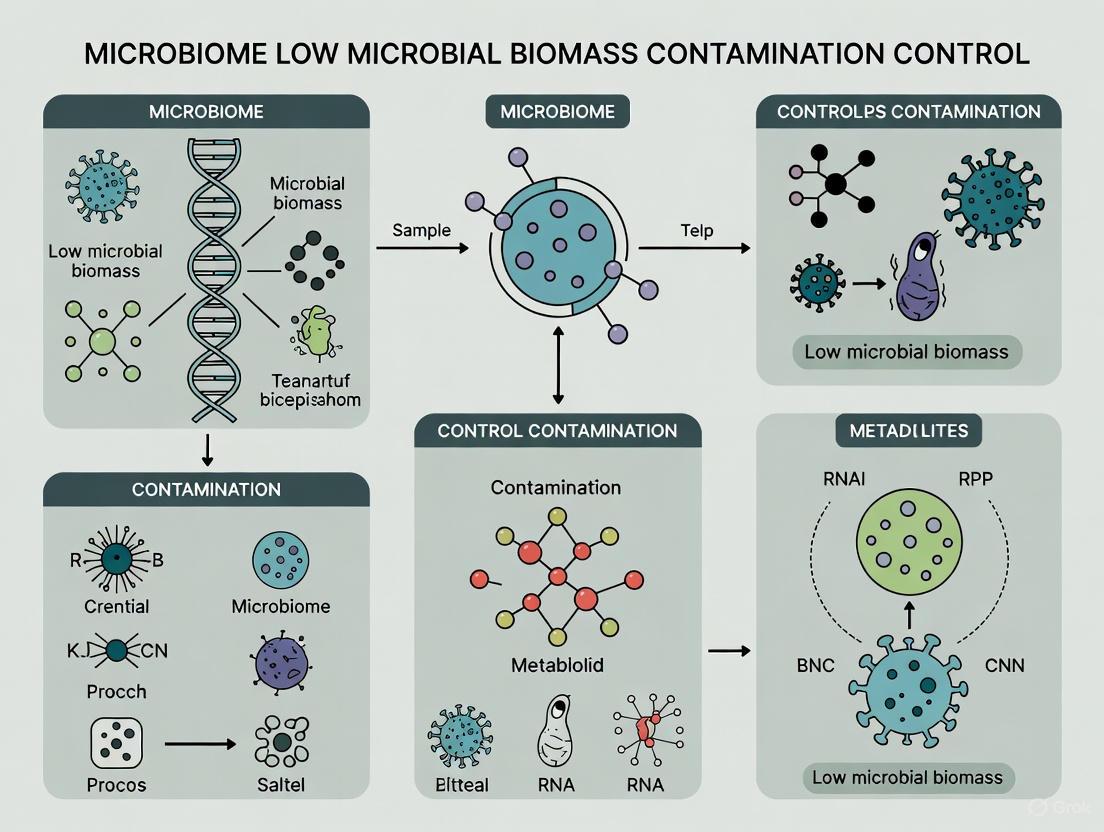
This article provides a comprehensive framework for researchers and drug development professionals to address the critical challenge of contamination in low microbial biomass microbiome studies.
A Researcher's Guide to Controlling Contamination in Low Microbial Biomass Microbiome Studies
Abstract
This article provides a comprehensive framework for researchers and drug development professionals to address the critical challenge of contamination in low microbial biomass microbiome studies. Covering the entire workflow from foundational concepts to advanced validation, it details the unique vulnerabilities of low-biomass samples, outlines robust methodological controls during sampling and wet-lab procedures, introduces computational tools for data decontamination, and establishes best practices for experimental validation and standardization. By integrating the latest guidelines and tools, this guide aims to enhance the accuracy, reproducibility, and translational potential of microbiome research in low-biomass environments like human tissues, blood, and pharmaceuticals.
Understanding the Contamination Challenge: Why Low-Biomass Microbiome Research is Uniquely Vulnerable
Frequently Asked Questions
What defines a low microbial biomass environment? A low microbial biomass environment is characterized by harboring very low levels of microorganisms, where the amount of target microbial DNA approaches the detection limits of standard sequencing methods. In these environments, the contaminant DNA "noise" can be disproportionately large compared to the true biological "signal," making contamination a critical concern [1].
What are common examples of low microbial biomass environments? They span clinical, industrial, and environmental settings. Common examples are summarized in the table below [1]:
| Environment Category | Specific Examples |
|---|---|
| Human Tissues | Fetal tissues, placenta, blood, lower respiratory tract, breast milk, some cancerous tumours [1]. |
| Animal & Plant | Certain animal guts (e.g., caterpillars), plant seeds, and other internal plant tissues [1] [2]. |
| Manufactured Products | Treated drinking water, sterile drugs, and other aseptic pharmaceutical products [1] [3]. |
| Environmental | The atmosphere, hyper-arid soils, deep subsurface, ice cores, snow, and metal surfaces [1]. |
Why is contamination particularly problematic in these samples? In low-biomass samples, even a minuscule amount of contaminating DNA from reagents, kits, personnel, or the laboratory environment can constitute a large portion of the sequenced DNA. This can [1] [4]:
- Generate false-positive signals, leading to incorrect conclusions about the presence of microbes.
- Obscure the true, native microbial community (if one exists).
- Distort ecological patterns and lead to inaccurate claims, as seen in past debates over the existence of a placental microbiome [1].
What are the main sources of contamination? Contamination can be introduced at virtually every stage of the workflow [1] [2]:
- External Contaminants: DNA from sampling equipment, laboratory reagents and kits, personnel (skin, aerosol droplets), and the laboratory environment itself.
- Cross-Contamination: The transfer of DNA between samples within the same study, often due to well-to-well leakage during DNA extraction in a 96-well plate [5].
Troubleshooting Guides
Guide 1: Preventing Contamination During Sampling and Handling
Contamination prevention starts before a sample even enters the lab. Adopting rigorous pre-analytical practices is the most effective way to ensure data quality [1].
Problem: In-Situ Contamination. The sample is contaminated during the collection process.
- Solution: Decontaminate all sampling equipment and tools. Use single-use, DNA-free collection vessels where possible. For re-usable equipment, decontaminate with 80% ethanol (to kill cells) followed by a nucleic acid degrading solution like sodium hypochlorite (bleach) or UV-C irradiation (to destroy residual DNA) [1].
Problem: Operator-Induced Contamination. Microbial DNA from the researcher contaminates the sample.
- Solution: Use appropriate personal protective equipment (PPE). This should include gloves, face masks, goggles, and coveralls or cleansuits. Gloves should be decontaminated frequently and should not touch any surface before sample collection [1].
Problem: Unidentified Contaminant Sources. It is impossible to know what contaminants have been introduced without tracking them.
| Control Type | Description | Purpose |
|---|---|---|
| Negative Controls | "Blank" samples such as an empty collection vessel, a swab of the air, or an aliquot of sterile preservation solution that undergoes the entire processing workflow. | To identify the "contamination background" originating from reagents, kits, and the laboratory environment [1] [2]. |
| Positive Controls | Commercially available synthetic microbial communities (mock communities) with a known composition. | To assess the performance of the entire workflow, from DNA extraction to sequencing, and identify any biases or failures [2]. |
| Sampling Controls | Swabs of PPE or surfaces the sample may contact during collection. | To identify specific contamination sources introduced during the sampling procedure itself [1]. |
Guide 2: Investigating and Identifying Contamination in Data
Despite best efforts, contamination can still occur. The following workflow and tools help detect and manage it post-sequencing.
Problem: Contaminant DNA from reagents or kits is present in the data.
- Solution: Use control-based decontamination methods. Tools like the
decontamR package or themicRocleanpackage can identify and remove sequences (features) that are more abundant in your negative controls than in your biological samples [6]. These methods are highly reliable when negative controls are available.
- Solution: Use control-based decontamination methods. Tools like the
Problem: Cross-contamination (well-to-well leakage) is suspected between samples.
- Solution 1: Use sample-based filtering and spatial analysis. The
micRocleanpackage can estimate and correct for well-to-well leakage, especially if well-location information from extraction plates is provided [6]. - Solution 2: Apply strain-resolved analysis. For metagenomic data, high-resolution strain tracking can reveal cross-contamination by showing that identical strains are shared between samples in a pattern that correlates with their physical proximity on the extraction plate, which is biologically implausible for unrelated samples [5].
- Solution 1: Use sample-based filtering and spatial analysis. The
Problem: Over-filtering of data, removing true biological signal.
- Solution: Use tools that quantify the impact of decontamination. The
micRocleanpackage provides a Filtering Loss (FL) statistic, which measures the contribution of the removed contaminants to the overall data covariance. An FL value closer to 0 suggests minimal impact, while a value closer to 1 may indicate over-filtering [6].
- Solution: Use tools that quantify the impact of decontamination. The
The Scientist's Toolkit: Key Research Reagent Solutions
| Item | Function & Rationale |
|---|---|
| DNA Decontamination Solutions | Sodium hypochlorite (bleach) or commercial DNA removal solutions are used to decontaminate surfaces and equipment. They degrade contaminating DNA that can persist even after ethanol treatment or autoclaving [1]. |
| Synthetic Mock Communities | Commercially available positive controls (e.g., from ZymoResearch, BEI Resources, ATCC) with a defined composition of microbial genomes. They are essential for benchmarking DNA extraction efficiency, PCR amplification bias, and bioinformatic processing accuracy [2] [5]. |
| Ultra-Clean DNA Extraction Kits | Specially designed kits that minimize the introduction of contaminating bacterial DNA from the reagents themselves. Critical for reducing background noise [1] [2]. |
| MALDI-TOF MS System | An instrument used for rapid microbial identification based on protein fingerprints. It can be a first-line tool for identifying environmental contaminants during manufacturing or routine monitoring, with high genus-level identification capability [3]. |
| Unique Dual Indexes (UDIs) | Used during library preparation for sequencing. UDIs virtually eliminate the problem of index hopping, a source of cross-contamination where reads are misassigned between samples during sequencing [5]. |
Frequently Asked Questions
Q1: Why are low-biomass samples particularly vulnerable to contamination?
In samples with low microbial biomass, the small amount of target DNA from the actual sample can be effectively "swamped" or outnumbered by contaminating DNA introduced during experimental procedures [7] [8]. This means that contaminants can constitute the majority of the sequencing data, leading to incorrect conclusions about the sample's true microbial composition [7]. The problem becomes more pronounced with techniques like increased PCR cycle numbers, which, while boosting signal, also amplify contaminant DNA [7].
Q2: I always include negative controls. Is that sufficient to identify all contamination?
While negative controls (e.g., blank extractions with water) are essential, they are not sufficient on their own [9]. Negative controls are excellent for identifying background contamination from external sources like reagents and kits [7]. However, they often fail to capture a specific type of internal contamination known as well-to-well contamination (or cross-contamination), where DNA leaks from one sample to another on a processing plate [5] [10]. Contaminants in your actual samples can therefore come from other samples in your study, not just your reagents.
Q3: What are the most common contaminating genera found in reagents?
Multiple studies have cataloged a "cabal" of common contaminants, often referred to as the "Brady Bunch" [11]. The table below summarizes frequently reported contaminant genera and their likely sources.
Table: Common Laboratory Contaminants and Their Sources
| Contaminant Genera | Typical Source |
|---|---|
| Acinetobacter, Pseudomonas, Ralstonia, Sphingomonas, Methylobacterium | Water and soil bacteria; common in reagents and kits [7] [8]. |
| Bradyrhizobium, Mesorhizobium, Herbaspirillum | Soil- and plant-associated bacteria; frequent kit contaminants [7] [11] [8]. |
| Corynebacterium, Propionibacterium, Streptococcus | Human skin-associated organisms; introduced from personnel [7]. |
| Burkholderia, Chryseobacterium, Microbacterium | Environmental bacteria; prevalent in various DNA extraction kits [7] [8]. |
Q4: How can I tell if my results are affected by well-to-well contamination?
Well-to-well contamination has a distinct signature. It is not random; it is distance-dependent [10]. Contamination is significantly more likely to occur between samples that are physically close on a processing plate (e.g., adjacent wells) than between samples that are far apart [5] [10]. If you observe that your samples share unexpected microbes primarily with their immediate neighbors on the plate, this is a strong indicator of well-to-well leakage. This type of contamination primarily occurs during DNA extraction [10].
Q5: Our lab uses 96-well plates for high-throughput work. How can we reduce well-to-well contamination?
Standard 96-well plates, with their shared seal and minimal separation between wells, are a common source of well-to-well leakage [12] [10]. Mitigation strategies include:
- Randomization: Randomly distributing sample types (e.g., case and control) across the plate to avoid confounding biological signals with contamination patterns [9] [10].
- Alternative Methods: Consider using single-tube extractions or innovative methods like the "Matrix Tubes" system, which has been shown to significantly reduce well-to-well contamination compared to plate-based methods [12] [10].
- Batch Processing: When possible, process samples with similar microbial biomass together, as low-biomass samples are more susceptible to being contaminated by high-biomass samples [10].
Troubleshooting Guides
Problem: Suspected Reagent and Kit Contamination
Identification:
- Microbial taxa identified in your samples match those found in your negative control (blank) extracts [7] [8].
- You detect unexpected environmental or skin bacteria in your low-biomass samples [7].
Solutions:
- Sequence Negative Controls: Always process negative controls (e.g., molecular grade water) alongside your samples, using the same reagents and kits from the DNA extraction step through to sequencing [7] [1].
- Compare to Contaminant Lists: Actively screen your results against published lists of common contaminant genera (see table above) [7].
- Use Multiple Kit Batches: Be aware that contaminant profiles can vary significantly between different batches of the same DNA extraction kit [7] [8]. Test new batches if possible.
Problem: Suspected Well-to-Well Cross-Contamination
Identification:
- Samples located near each other on a processing plate show unexpectedly similar microbial profiles [5].
- Strain-resolved analysis reveals identical microbial strains in samples that are not biologically related but were processed in adjacent wells [5].
- Negative controls placed on a plate contain DNA that matches samples located nearby on the same plate [5].
Solutions:
- Audit Plate Layouts: Review your DNA extraction and PCR plate layouts. Evidence of contamination between nearby wells confirms the issue [5] [10].
- Implement Strategic Plate Layouts:
- Do NOT group all samples from one experimental group (e.g., all "cases") on the same plate or in the same region of a plate [9].
- Do randomize samples from different groups across the entire plate [9] [10].
- Do intersperse multiple negative controls throughout the plate to map contamination spread, rather than placing them all together [9].
- Consider Alternative Platforms: For critical low-biomass studies, transition from 96-well plates to single-tube extraction systems or other validated low-contamination platforms like the Matrix method to drastically reduce leakage risk [12] [10].
Table: Quantitative Impact of Contamination in a Serial Dilution Experiment
| Sample Input (Cells) | Proportion of Reads from Target (S. bongori) | Proportion of Reads from Contamination | Key Takeaway |
|---|---|---|---|
| ~10⁸ (High Biomass) | ~100% | ~0% | Contamination is negligible in high-biomass samples. |
| ~10⁴ (Medium Biomass) | ~50% | ~50% | Contamination can account for half of all sequenced DNA. |
| ~10³ (Low Biomass) | 5-30% | 70-95% | Contamination dominates the data in low-biomass contexts [7]. |
Problem: Suspected Personnel and Environmental Contamination
Identification:
- Detection of human commensal bacteria (e.g., Corynebacterium, Propionibacterium, Streptococcus) in samples expected to be sterile or have a different profile [7].
Solutions:
- Use PPE: Implement strict use of gloves, lab coats, masks, and—for ultra-sensitive work—cleanroom suits to minimize shedding of skin and oral microbes [1].
- Decontaminate Surfaces: Thoroughly clean work surfaces and equipment with agents that destroy nucleic acids (e.g., bleach, UV light) before and after use [1].
- Use Sterile, DNA-Free Consumables: Whenever possible, use single-use, pre-sterilized plasticware and reagents certified to be DNA-free [1].
Experimental Protocol: Using a Serial Dilution to Quantify Contamination
This protocol, adapted from a foundational study, helps quantify the level and profile of contamination in your specific laboratory setup [7] [8].
Purpose: To empirically determine the amount and taxonomic identity of contaminating DNA in your laboratory's workflow when processing low-biomass samples.
Principle: A pure culture of a microbe not typically found as a lab contaminant is serially diluted. As the target biomass decreases, the relative contribution of contaminating DNA in the sequence data increases, allowing for its quantification and characterization.
Materials:
- Pure Culture: A bacterial strain not expected in your samples or as a common contaminant (e.g., Salmonella bongori) [7].
- Growth Medium: Appropriate sterile broth for the chosen culture.
- DNA Extraction Kits: The kits you routinely use for your samples.
- Molecular Grade Water: Sterile, DNA-free water for dilutions.
- qPCR Reagents: For quantifying 16S rRNA gene copies.
- Sequencing Reagents: For 16S rRNA gene amplicon or shotgun metagenomic sequencing.
Method:
- Culture Preparation: Grow the pure culture to a high density and determine the cell count.
- Serial Dilution: Perform a series of 10-fold dilutions of the culture in molecular grade water, covering a range from high biomass (e.g., 10⁸ cells) to very low biomass (e.g., 10³ cells).
- DNA Extraction: Subject aliquots from each dilution to DNA extraction using your standard kit(s). Include a negative control (water only) in the same extraction batch.
- qPCR Analysis: Perform qPCR targeting the 16S rRNA gene on all extracts.
- Expected Outcome: Copy number will decrease with dilution until it plateaus. The plateau level represents the total background bacterial DNA from all sources (kit reagents, water, etc.) [7].
- Sequencing and Analysis: Sequence all samples and controls (using both 20 and 40 PCR cycles if doing amplicon sequencing). Bioinformatically analyze the data to determine the relative abundance of the target organism versus contaminants at each dilution point.
Diagrams
Strategic Plate Layout to Mitigate Bias
The Scientist's Toolkit
Table: Essential Resources for Contamination Control in Low-Biomass Research
| Item | Function in Contamination Control |
|---|---|
| Negative Control (Blank) | Molecular grade water processed identically to samples; identifies background contamination from reagents and kits [7] [1]. |
| Process-Specific Controls | Controls for individual steps (e.g., swab of air, empty collection tube, extraction blank) to pinpoint contamination source [1] [9]. |
| Mock Community | A defined mix of known microbes; verifies experimental and bioinformatic accuracy and can help identify biases [5]. |
| Single-Tube Extraction Kits / Matrix Tubes | Reduces the risk of well-to-well contamination compared to 96-well plate-based extraction methods [12] [10]. |
| Personal Protective Equipment (PPE) | Gloves, masks, and cleanroom suits minimize the introduction of contaminating DNA from personnel [1]. |
| DNA Decontamination Solutions | Bleach (sodium hypochlorite) or commercial DNA degradation solutions to remove trace DNA from surfaces and equipment [1]. |
| Strain-Resolved Bioinformatics Tools | High-resolution bioinformatic methods capable of tracking specific microbial strains to identify cross-contamination between samples [5]. |
In low-biomass microbiome studies, where the authentic biological signal is minimal, the DNA introduced from contaminants can disproportionately dominate the final dataset, leading to spurious results and incorrect conclusions. This technical support center provides actionable guidelines, troubleshooting advice, and detailed protocols to help researchers identify, prevent, and mitigate contamination throughout their experimental workflow.
Why Low-Biomass Samples Are Uniquely Vulnerable
Low microbial biomass environments—such as certain human tissues (e.g., placenta, blood, lower respiratory tract), treated drinking water, hyper-arid soils, and the deep subsurface—pose a unique challenge for DNA-based sequencing. The fundamental issue is proportionality: in high-biomass samples (like stool), the target DNA "signal" vastly outweighs the contaminant "noise." In low-biomass samples, even tiny amounts of contaminating DNA, which are inevitable in reagents, kits, and laboratory environments, can constitute most or even all of the sequenced DNA, making the true biological signal indistinguishable from background noise [1] [13]. This problem is exacerbated by cross-contamination, where DNA leaks between samples during processing [1].
Frequently Asked Questions (FAQs)
FAQ 1: My negative controls show microbial sequences. Does this invalidate my entire study? Not necessarily. The presence of contaminants in controls confirms their necessity. The critical step is to use these controls to identify and bioinformatically remove contaminant sequences from your biological samples before analysis. Studies that implement validated protocols with internal negative controls show that residual contamination rarely impacts whether microbiome differences between groups are detected, though it can affect the number of differentially abundant taxa identified [14]. The key is to report the contaminants and your removal process transparently.
FAQ 2: Can I just use a published "contaminant list" to filter my data? While published lists can be informative, our analysis shows they are highly inconsistent across studies and thus lack reliability as a standalone method [14]. The most robust approach is to rely on study-specific internal negative controls (e.g., extraction blanks and no-template controls) processed alongside your samples in the same batch. These controls accurately capture the unique contaminant profile of your specific reagents, kits, and laboratory environment [13] [14].
FAQ 3: How many negative controls should I include? The consensus is to include multiple negative controls. As a minimum standard, you should include at least one extraction blank and one no-template amplification control for every batch of samples processed. A ratio of one control for every 10 biological samples has been used effectively [1] [13]. For greater statistical power to identify stochastic contamination, including more controls is advisable.
FAQ 4: My study involves sampling in a non-sterile environment (e.g., a clinic or field site). How can I possibly control for contamination? While you cannot control the entire environment, you can document and account for it. During sampling, use "field blanks" or "sampling controls," such as:
- An empty collection vessel opened and closed at the site.
- A swab exposed to the air in the sampling environment.
- An aliquot of the preservation solution [1]. Processing these controls through your entire workflow will help you distinguish environmental contaminants from the true sample signal.
Troubleshooting Guides
Use this flowchart to systematically identify the potential source of contamination in your workflow.
Guide: Quantitative Impact of Contamination on Data Analysis
Understanding how contamination affects specific statistical outcomes is crucial for correct data interpretation. The following table summarizes findings from a 2025 simulation and real-world data study [14].
Table: Impact of Contamination on Key Microbiome Analysis Metrics
| Analysis Metric | Primary Drivers | Impact of Contamination | Notes & Recommendations |
|---|---|---|---|
| Alpha Diversity | Sample number, Community dissimilarity | Marginal direct impact | Contamination can inflate diversity estimates in very low-biomass samples, but the effect is smaller than other factors. |
| Beta Diversity | Number of unique taxa, Group dissimilarity | Marginal impact on weighted metrics | The overall community structure comparison is robust to low-level, evenly distributed contamination. |
| Differential Abundance | Number of unique taxa, Sample number | Significant impact on the number of differentially abundant taxa | The effect starts when ≥10 contaminant taxa are present. False positive rate remains <15% with proper controls. Use tools like DESeq2, which is more robust to stochastic contamination. |
| Overall Interpretation | Group dissimilarity is the strongest driver. | When differences are observed, they are unlikely to be driven solely by contamination if validated protocols are used. | The use of internal negative controls is the most critical factor for reliability. |
Experimental Protocols & Standard Operating Procedures (SOPs)
SOP: Ultra-Clean Sample Collection for Low-Biomass Specimens
This protocol is adapted from consensus guidelines for collecting low-biomass samples in a clinical or field setting [1].
Objective: To minimize the introduction of contaminating DNA during the sample acquisition phase.
Materials:
- Single-use, DNA-free swabs or collection vessels (pre-sterilized by autoclaving and/or UV irradiation)
- DNA-free sample preservation solution (e.g., DNA/RNA Shield)
- Personal Protective Equipment (PPE): Gloves, lab coat, hair net, and surgical face mask
- Nucleic acid degrading solution (e.g., 10% bleach, commercially available DNA removal solutions)
- Materials for field controls: empty collection vessels, extra swabs
Procedure:
- Decontaminate Surfaces and Equipment: Wipe down all external surfaces (e.g., vial exteriors, workbench) with 80% ethanol followed by a nucleic acid degrading solution like 10% bleach. Note: Bleach must be thoroughly removed with ethanol or water afterward to prevent DNA degradation in your actual samples [1].
- Don PPE: Wear a fresh pair of gloves, a lab coat, a hair net, and a surgical mask. Decontaminate gloves with ethanol before touching any sterile equipment.
- Collect Sample: Using aseptic technique, collect the sample (e.g., tissue, swab, water) with the single-use, pre-sterilized equipment. Minimize the time the sample is exposed to the air.
- Collect Field Controls:
- Equipment Blank: Open and close an empty collection vessel at the site.
- Air Exposure: Open a swab and wave it in the air for 30 seconds before placing it in a tube [13].
- Solution Blank: Aliquot the preservation solution into a tube at the site.
- Immediately Transfer and Store: Place the sample into a sterile tube containing DNA-free preservation solution. Seal tightly and immediately transfer to frozen storage (-20°C or -80°C).
Protocol: DNA Extraction and Library Preparation in a Standard Lab
This protocol outlines the core principles for the laboratory phase, emphasizing the critical role of controls.
Objective: To extract DNA and prepare sequencing libraries while minimizing and monitoring for contamination and cross-contamination.
Materials:
- DNA extraction kit (note: commercial kits are known contamination sources; test different lots) [13] or a home-made silica-based protocol [13]
- Sterile, DNA-free water
- DNA-free plasticware (tips, tubes, plates)
- Reagents for PCR and library construction
- Controls: Extraction Blank Controls (EBCs), No-Template Controls (NTCs)
Procedure:
- Workspace Decontamination: Clean the entire work area and inside of biosafety cabinets or laminar flow hoods with 5% bleach, followed by 80% ethanol. UV-irradiate the cabinet for 20-30 minutes before starting work [13].
- DNA Extraction:
- Process samples in a batch that includes your biological samples, field controls, and at least one Extraction Blank Control (EBC) per batch. An EBC is a tube containing only the lysis buffer or other reagents, but no sample [13].
- Use mechanical lysis (e.g., bead beating) combined with chemical lysis for maximal cell disruption from low-biomass samples [15].
- Include a negative control provided in some commercial kits, if available.
- PCR Amplification and Library Prep:
- From the extracted DNA (including the EBCs), proceed to amplify the target gene (e.g., 16S rRNA V4 region) or prepare metagenomic libraries.
- For every amplification reaction, include a No-Template Control (NTC). This is a reaction mix containing all PCR reagents but using sterile water instead of DNA template [13].
- Use a polymerase and master mix designed for high sensitivity and low contamination risk.
- Sequencing: Pool libraries and sequence. The EBCs and NTCs must be sequenced at the same depth as the biological samples to allow for meaningful comparison.
The following workflow diagram summarizes the entire process from sample to data, highlighting critical control points.
The Scientist's Toolkit: Essential Research Reagents & Materials
Table: Key Reagents and Materials for Low-Biomass Microbiome Research
| Item | Function & Rationale | Key Considerations |
|---|---|---|
| DNA Decontamination Solution | To remove contaminating DNA from surfaces and equipment. Critical for sampling tools and workstations. | Sodium hypochlorite (bleach) is effective but corrosive. Commercial DNA removal sprays are a good alternative. Ethanol alone kills cells but does not remove pre-existing DNA [1]. |
| Ultra-Clean DNA Extraction Kits | To lyse cells and purify nucleic acids with minimal contaminating bacterial DNA. | Commercial kits are known sources of contaminating DNA. Test different kits and lots via EBCs to identify the cleanest one. Some studies use home-made silica-based methods for lower background [13]. |
| Personal Protective Equipment (PPE) | To form a barrier between the researcher and the sample, preventing contamination from skin, hair, and aerosols. | Standard gloves and lab coats are a minimum. For ultra-sensitive work, consider cleanroom suits, face masks, and visors [1] [13]. |
| Sterile, DNA-Free Plasticware | To handle and store samples without introducing contaminants. | Purchase certified DNA-free, non-pyrogenic tubes and tips. Autoclaving does not remove DNA, so ensure plasticware is pre-treated by the manufacturer [1]. |
| Internal Negative Controls (EBCs & NTCs) | To empirically identify the contaminant profile of your specific laboratory workflow. | These are non-negotiable for low-biomass studies. They are the gold standard for identifying contaminants for subsequent bioinformatic removal [13] [14]. |
| Bioinformatic Contamination Removal Tools | To subtract contaminant sequences identified in controls from biological samples. | Tools like decontam (R) use prevalence or frequency in controls to identify contaminants. The validity of the output is entirely dependent on the quality of the input controls [1]. |
FAQs: Understanding Contamination in Low-Biomass Studies
FAQ 1: Why is contamination a particularly critical issue in low-biomass microbiome studies?
In low microbial biomass samples, the authentic microbial DNA "signal" from the environment is very faint. Contaminating DNA from reagents, kits, or the laboratory environment introduces a disproportionately high level of "noise." This noise can easily overwhelm the true signal, leading to spurious results and incorrect biological conclusions. In contrast, high-biomass samples (like stool or soil) contain so much target DNA that contaminant noise is negligible by comparison [1] [4].
FAQ 2: What are the primary sources of contamination in these studies?
Contamination can be introduced at virtually every stage of research:
- Reagents and Kits: DNA extraction kits and PCR master mixes are well-documented sources of contaminating bacterial DNA [16] [4].
- Sampling Equipment: Contaminated collection tubes, swabs, or fluids can introduce foreign DNA during sample acquisition [1].
- Laboratory Environment: Airborne particles and laboratory surfaces can be a source of contaminating DNA [1].
- Personnel: Microbial cells and DNA from researchers' skin or clothing can be introduced during sample handling [1].
- Cross-Contamination: DNA can leak between samples processed concurrently, for example, in adjacent wells on a 96-well plate [9].
FAQ 3: What are the real-world consequences of undetected contamination?
Failure to control for contamination has led to significant controversies and retractions in the field. A prominent example is the initial claim of a distinct "placental microbiome," which subsequent research revealed was likely driven by contamination from laboratory reagents and delivery-associated microbes [1] [9]. Similar debates have surrounded studies of the blood microbiome and certain tumor microbiomes, where contamination has distorted ecological patterns and led to false attributions of pathogen exposure [1] [9].
FAQ 4: How can I determine if my low-biomass samples are compromised by contamination?
The most effective strategy is the routine inclusion and analysis of various control samples. By sequencing these controls alongside your experimental samples, you can create a profile of the contaminating DNA in your workflow. Tools like the Decontam R package use statistical models (e.g., based on DNA concentration or prevalence in controls) to help distinguish contaminants from true signal in your data [16].
Troubleshooting Guides
Guide 1: Investigating a Sudden Shift in Microbial Profile
Problem: After processing a new batch of low-biomass samples (e.g., bronchial lavage), the dominant taxa in your results have unexpectedly changed, showing a high abundance of organisms not typically associated with your sample type.
Investigation Steps:
- Check Process Controls: Immediately review the sequencing data from your negative controls (extraction blanks, no-template PCR controls) from the same batch. Do the dominant taxa in your samples match the dominant taxa in your controls? If yes, the source is likely systemic contamination [16].
- Audit Reagents: Compare the lot numbers of all key reagents (especially DNA extraction kits and water) with those used in previous, successful batches. Different lots of the same kit can have distinct contaminant profiles [16] [4].
- Inspect Laboratory Logs: Check for any recent changes in laboratory procedures, personnel, or cleaning protocols that could have introduced a new contaminant source [1].
Resolution:
- If a specific reagent lot is identified as the source, discontinue its use and quarantine the affected samples for re-processing with a clean lot.
- Apply a robust decontamination algorithm (e.g., Decontam) to the dataset, using the negative controls from the affected batch to identify and remove contaminant sequences prior to re-analysis [16].
Guide 2: Addressing High Background Contamination in All Samples
Problem: All samples and controls in your study show a consistently high level of background contamination, making it difficult to identify any true biological signal.
Investigation Steps:
- Profile the Contamination: Analyze the taxonomic composition of your negative controls. A dominant, single taxon (like Ralstonia or Burkholderia) often points to a specific reagent as the source [16].
- Trace the Source Systematically: Introduce controls at different stages of your workflow to pinpoint the origin.
- PCR Water Control: Water carried through the PCR and library preparation steps identifies contamination introduced after DNA extraction.
- Extraction Blank: An empty tube processed through the DNA extraction identifies contaminants from the extraction kit itself [16] [4].
- Sampling Controls: For environmental studies, include controls of the sampling fluids or swabs exposed only to the air during sampling [1].
- Evaluate Decontamination Protocols: Review your lab's procedures for decontaminating work surfaces and equipment. Ethanol kills cells but does not remove DNA; consider using DNA-degrading solutions like bleach or UV irradiation for critical surfaces and equipment [1].
Resolution:
- If a specific source is identified (e.g., a contaminated reagent), replace it and ensure new stocks are aliquoted in a clean, DNA-free environment.
- Enhance physical barriers by using dedicated PPE, including gloves, masks, and clean lab coats to prevent contamination from personnel [1].
- For existing data, the consistent contaminant profile may be subtracted bioinformatically, but this is a less ideal solution than preventing it at the source.
Quantitative Data on Contamination Impact
The table below summarizes key quantitative findings from case studies on contamination in low-biomass research.
Table 1: Quantitative Evidence of Contamination Consequences from Case Studies
| Study Context | Key Quantitative Finding | Implication | Source |
|---|---|---|---|
| Airway Microbiome (Bronchoalveolar Lavage) | Contamination accounted for 10-50% of the bacterial community readout in lower airway samples. | In low-biomass samples, a large portion of the sequenced data can be non-biological noise. | [16] |
| DNA Extraction Kits | A single lot of a commercial DNA extraction kit was found to be the main source of laboratory contamination, dominating control samples. | Reagents are a major contamination source; different lots from the same manufacturer can vary. | [16] |
| Simulated Low-Biomass Sample | In a dilution series of a known bacterium, >95% of the taxonomic composition in the most diluted sample was from contaminant DNA. | As biomass decreases, the relative impact of contamination increases dramatically. | [4] |
| Contamination Controls | A study found that two control samples are always preferable to one, and in specific cases, more controls are needed for adequate contaminant profiling. | A single negative control is insufficient to capture the variability and extent of contamination. | [9] |
Experimental Protocol: A Rigorous Workflow for Contamination Control
This protocol outlines a comprehensive strategy for collecting the process controls essential for diagnosing and correcting contamination.
Objective: To implement a multi-layered control system that monitors contamination at every stage of processing low-biomass samples.
Materials:
- DNA-free, sterile water (for PCR and extraction blanks)
- Sterile buffer (e.g., PBS) for simulated sampling
- Sterile collection swabs and tubes
- The same DNA extraction kits and PCR reagents used for actual samples
Methodology:
- Pre-Sampling Controls:
- Field/Collection Blanks: For environmental or clinical sampling, expose a sterile swab to the air at the sampling site for the duration of sampling. Place it in a sterile collection tube. This controls for airborne and kit-borne contamination during sample acquisition [1].
- Procedure Blanks: Simulate the entire sampling procedure without a subject or sample present (e.g., a "mock" bronchoscopy using sterile buffer) [16].
DNA Extraction Controls:
Library Preparation Controls:
Analysis:
- All control samples must be sequenced on the same sequencing run as the experimental samples.
- Use bioinformatic tools like the Decontam R package to statistically identify and remove contaminants. The "prevalence" method, which identifies sequences that are significantly more abundant in negative controls than in true samples, is highly effective [16].
Visualizing the Contamination Control Workflow
The diagram below outlines a robust experimental workflow for low-biomass studies, integrating critical control points to diagnose contamination.
The Scientist's Toolkit: Essential Reagents and Materials
The table below lists key materials and solutions for controlling contamination in low-biomass microbiome research.
Table 2: Key Research Reagent Solutions for Contamination Control
| Item | Function | Key Consideration |
|---|---|---|
| DNA Degrading Solution (e.g., bleach, sodium hypochlorite) | To decontaminate work surfaces and equipment by degrading trace DNA. | Essential for removing DNA; ethanol kills cells but does not fully remove DNA [1]. |
| UV-C Light Sterilization Cabinet | To sterilize plasticware, glassware, and reagents by disrupting DNA. | Used to pre-treat labware before use to destroy contaminating DNA [1]. |
| DNA-Free Water and Reagents | Certified DNA-free water, buffers, and enzymes for PCR and DNA extraction. | Critical for reducing background contamination from the reagents themselves [16] [4]. |
| Personal Protective Equipment (PPE) | Gloves, masks, clean lab coats, and hair covers. | Acts as a barrier to prevent contamination from researchers' skin, hair, and breath [1]. |
| Single-Use, Sterile Consumables | DNA-free collection tubes, swabs, and filter tips. | Prevents introduction of contaminants during sample collection and liquid handling [1]. |
| Decontam R Package | A bioinformatic tool to identify and remove contaminant sequences post-sequencing. | Uses statistical models (prevalence or frequency) that compare control and sample data [16]. |
Building a Fortified Workflow: Practical Strategies for Sampling, Storage, and Wet-Lab Processing
In low microbial biomass microbiome research—encompassing studies of human tissues, blood, plant seeds, and certain environmental samples—the inevitability of contamination from external sources becomes a critical concern when working near the limits of detection [1]. The fundamental challenge is that lower-biomass samples can be disproportionately impacted by contamination, and practices suitable for handling higher-biomass samples (like stool or soil) may produce misleading results when applied to low microbial biomass samples [1] [17]. Pre-sampling decontamination of equipment and reagents forms the first and most crucial line of defense against introducing contaminant DNA that can compromise your entire study.
This guide addresses the specific challenges, best practices, and troubleshooting strategies for effective pre-sampling decontamination, framed within the broader context of contamination control for low-biomass microbiome research.
Core Concepts: Sterilization vs. DNA Removal
What is the fundamental difference between sterilization and DNA removal for laboratory equipment?
Sterilization refers to processes that eliminate all viable microorganisms, including bacteria, fungi, and viruses. Common methods include autoclaving (using steam heat), dry heat, and treatment with chemicals like 80% ethanol [1]. While sterilization kills contaminating organisms, it does not necessarily remove their DNA. Even after autoclaving or ethanol treatment, cell-free DNA can remain on surfaces and be detected in highly sensitive downstream sequencing applications [1].
DNA Removal specifically targets and degrades nucleic acids that remain after sterilization. Methods include treatment with sodium hypochlorite (bleach), ultraviolet (UV-C) light exposure, hydrogen peroxide, ethylene oxide gas, or commercially available DNA removal solutions [1]. These treatments degrade DNA fragments that could otherwise be amplified in PCR-based assays, giving false positive results.
For comprehensive decontamination in low-biomass studies, a two-step approach is recommended: sterilization followed by DNA removal [1].
When studying low-biomass environments, which decontamination approach should I prioritize?
For low-biomass microbiome studies, DNA removal should be prioritized, though a combined approach is most effective. The proportional nature of sequence-based datasets means even small amounts of contaminant DNA can strongly influence study results and their interpretation [1]. Since the research question typically revolves around "What DNA is present?" rather than "Are living cells present?", ensuring the removal of external DNA is paramount.
However, sterilization remains important for preventing the introduction of viable contaminants that could grow during sample storage or processing. The minimal standard for critical equipment that contacts low-biomass samples should include both steps where practical [1].
Technical Protocols & Best Practices
Standard Two-Step Decontamination Protocol for Reusable Equipment
This protocol is suitable for metal tools, glassware, and certain plasticware that must be reused.
Step 1: Sterilization
- Autoclaving: Clean equipment thoroughly, then autoclave at 121°C for 15-30 minutes under standard conditions. This eliminates viable microorganisms.
- Chemical Sterilization: For heat-sensitive items, submerge or wipe with 80% ethanol. Allow sufficient contact time (typically 5-10 minutes) before air drying [1].
Step 2: DNA Removal
- Sodium Hypochlorite (Bleach) Treatment: Immerse or wipe the sterilized equipment with a freshly prepared 1-10% (v/v) sodium hypochlorite solution. A common effective concentration is 2-3% [4]. Contact time should be at least 5 minutes.
- Neutralization and Rinsing: After bleach treatment, rinse the equipment thoroughly with DNA-free water (e.g., molecular biology grade, UV-irradiated) to neutralize and remove the bleach, which can inhibit downstream PCR reactions [4].
- Alternative DNA Removal Methods: If bleach is incompatible with the material, use UV-C irradiation (wavelength 254 nm) in a crosslinker or biosafety cabinet for at least 30 minutes, or use a commercial DNA degradation solution according to the manufacturer's instructions [1].
Final Step: After processing, seal decontaminated equipment in sterile packaging until use to prevent recontamination from the laboratory environment.
Decontamination Methods at a Glance
Table 1: Comparison of Common Decontamination Methods for Low-Biomass Research
| Method | Primary Action | Effectiveness on Viable Cells | Effectiveness on DNA | Key Considerations |
|---|---|---|---|---|
| Autoclaving | Sterilization | High | Low to Moderate | Standard method but may not fully degrade robust DNA; can leave amplifiable fragments [1]. |
| Ethanol (80%) | Sterilization | High | Low | Kills cells but does not effectively remove DNA; useful as a first step [1]. |
| Sodium Hypochlorite (Bleach) | DNA Removal | High (at correct concentrations) | High | Effective for DNA degradation; requires subsequent rinsing with DNA-free water to remove PCR inhibitors [1] [4]. |
| UV-C Irradiation | DNA Removal | Moderate (surface only) | High | Effective for surface DNA degradation; shadowed areas may be missed; requires direct line of sight [1]. |
| Commercial DNA Removal Solutions | DNA Removal | Variable | High | Specifically formulated to degrade DNA; follow manufacturer's instructions for concentration and contact time. |
Troubleshooting Common Decontamination Issues
My negative controls still show contamination after decontaminating equipment. What could be wrong?
Persistent contamination after decontamination suggests several potential failure points:
- Insufficient Contact Time or Concentration: Verify that decontamination solutions are used at the correct concentration (e.g., ≥2% for bleach) and that equipment is immersed for the recommended contact time. Rushed protocols are a common source of failure.
- Inadequate Rinsing: If using bleach, residual hypochlorite can carry over into reactions and inhibit PCR, creating false negatives or, paradoxically, altering community profiles due to differential inhibition. Ensure thorough rinsing with certified DNA-free water [4].
- Recontamination After Processing: The decontaminated equipment could be becoming re-contaminated from the air, benchtop, or gloves after processing but before use. Always perform decontamination in a clean, dedicated space (e.g., a PCR hood or UV-irradiated biosafety cabinet) and seal equipment immediately after processing.
- Alternative Contamination Source: Remember that equipment is only one potential source. Contamination can also originate from commercial DNA extraction kits, PCR reagents, and the laboratory environment itself [1] [4]. Always include appropriate negative controls (e.g., extraction blanks) to monitor for these sources.
How can I validate that my decontamination protocol is actually working?
The most direct way to validate your decontamination protocol is through empirical testing:
- Swab Testing: After decontaminating equipment, swab the surface with a sterile, DNA-free swab moistened with a DNA-free buffer.
- Extraction and Amplification: Extract DNA from the swab using your standard kit (alongside a swab negative control) and attempt to amplify the 16S rRNA gene (or other target) via PCR.
- Analysis: Run the PCR product on a gel or, more sensitively, use qPCR. Successful decontamination should yield no amplification, or a significantly higher Cq value (e.g., >10 cycles difference) compared to a non-decontaminated control.
This validation should be performed when establishing a new protocol and repeated periodically to ensure consistency.
The Scientist's Toolkit: Essential Reagents for Decontamination
Table 2: Key Reagent Solutions for Effective Pre-Sampling Decontamination
| Reagent / Solution | Primary Function | Brief Protocol & Function |
|---|---|---|
| Sodium Hypochlorite (Bleach) | DNA Removal | Use a fresh 2-10% (v/v) dilution for immersion or wiping. Contact time >5 min. Effective nucleic acid degradation. Must be rinsed off with DNA-free water [1]. |
| Ethanol (80%) | Sterilization | Used for wiping surfaces or immersing tools. Contact time of 5-10 min. Effective against viable cells but poor for DNA removal. Often used before DNA removal step [1]. |
| Molecular Biology Grade Water | Rinsing/Dilution | Certified to be DNA-free. Used for preparing solutions and, critically, for rinsing off bleach residues to prevent PCR inhibition. |
| Commercial DNA Decontamination Solutions | DNA Removal | Ready-to-use solutions (e.g., DNA-ExitusPlus, DNA-Zap). Follow manufacturer's instructions. Often based on aggressive oxidative chemistry. |
| UV-C Light Source | DNA Removal/Sterilization | Used in biosafety cabinets or crosslinkers. Provides broad-surface, non-contact decontamination. Effective for degrading DNA; requires direct exposure for >30 mins [1]. |
Integrating Decontamination into a Broader Contamination Control Strategy
Pre-sampling decontamination is just one component of a robust contamination control strategy for low-biomass studies. The following workflow integrates these practices into the broader research context, from sampling to sequencing.
Workflow for Integrated Contamination Control. This diagram outlines the critical stages of a low-biomass microbiome study, highlighting where pre-sampling decontamination fits into a comprehensive strategy.
As shown, effective contamination control requires:
- Proactive Measures: Pre-sampling decontamination of equipment and reagents is a foundational, proactive step [1].
- Reactive Monitoring: The use of multiple negative controls throughout the process (e.g., sample collection blanks, DNA extraction blanks, PCR blanks) is non-negotiable. These controls are essential for identifying the contaminant "signature" introduced by your specific reagents and protocols [1] [4].
- Bioinformatic Cleaning: Finally, the data from these negative controls must be used in the bioinformatic phase to identify and subtract potential contaminants from the final dataset using specialized tools [1].
By combining rigorous pre-sampling decontamination with comprehensive control strategies and transparent reporting, researchers can significantly improve the reliability and credibility of their low-biomass microbiome findings.
Frequently Asked Questions (FAQs)
1. Why are aseptic techniques and PPE particularly critical for low-biomass microbiome studies? In low-biomass samples (e.g., tissue, blood, catheter-collected urine), the target microbial DNA signal is very faint. Contaminants introduced during sampling can constitute a large proportion, or even the majority, of the final sequenced data, leading to false conclusions and irreproducible results. Aseptic techniques and PPE create a barrier to prevent this contamination. [18] [1] [4]
2. What is the difference between aseptic technique and sterile technique? Sterile technique ensures an environment is completely free of all microorganisms, often applied to equipment and reagents before use. Aseptic technique is a set of procedures used to maintain the sterility of a pre-sterilized environment and materials during an experiment, preventing the introduction of contaminants while you work. [19]
3. How often should we include negative controls in our study design? The consensus is to include multiple negative controls (e.g., blank collection kits, extraction blanks) throughout your workflow. It is recommended to include these controls in every processing batch to account for variable contamination sources, not just as a single control for the entire study. [1] [9]
4. Can't we just use computational tools to remove contaminants from sequencing data later? While computational decontamination is a valuable tool, it has limitations. These methods struggle to distinguish between a true, low-abundance signal and contamination, especially when contamination levels are high or variable. A rigorous in-lab prevention strategy is always the first and most reliable line of defense. [1] [9]
5. Our samples are collected in a clinical setting with limited access to a laminar flow hood. How can we maintain asepsis? Even without a hood, you can create a designated, controlled work area. Key steps include: decontaminating all surfaces with 70% ethanol and a DNA-degrading solution (e.g., 10% bleach), using single-use DNA-free collection materials, wearing full PPE, and working deliberately and quickly to minimize exposure time. [1] [20]
Troubleshooting Guides
Problem: Consistent Contamination in Negative Controls
Potential Causes and Solutions:
- Cause 1: Contaminated reagents or kits.
- Cause 2: Inadequate decontamination of reusable labware or surfaces.
- Cause 3: Personnel-derived contamination from improper PPE use.
Problem: Inconsistent or Sporadic Contamination Across Samples
Potential Causes and Solutions:
- Cause 1: Well-to-well leakage (cross-contamination) during plate-based setups.
- Cause 2: Improper handling of samples and containers.
- Solution: Always wipe the outside of all bottles, flasks, and tubes with 70% ethanol before placing them in a clean work area. Never leave sterile containers open to the environment. If a cap must be placed down, put it with the inner surface facing down. [19]
- Cause 3: Variable aseptic technique among different personnel.
- Solution: Implement standardized, documented protocols for sample collection and handling. Use training tools like GloGerm powder and a UV light to visually demonstrate the effectiveness of handwashing and decontamination techniques for all staff. [18]
Problem: Discrepancies in Microbiome Profiles Between Research Groups
Potential Causes and Solutions:
- Cause 1: Batch effects from different DNA extraction kits or protocols.
- Cause 2: Use of different sample collection materials (e.g., swab types).
- Solution: Document and use the same brand and lot of collection materials across the study. Different swab materials have been shown to harbor different contaminating microbes, which can skew results. [9]
- Cause 3: Lack of standardized positive controls.
- Solution: Include a commercially available mock microbial community (positive control) in each sequencing run. This allows you to identify and correct for technical biases introduced during DNA extraction, amplification, and sequencing, improving inter-study comparability. [2]
Experimental Protocols & Data
Detailed Methodology: GloGerm Decontamination Training
This protocol helps visualize and improve personnel aseptic technique. [18]
- Application: Apply GloGerm powder or gel to hands and lab surfaces as directed. This product simulates microbial contamination.
- Decontamination: Perform your standard handwashing technique or surface decontamination procedure (e.g., using ethanol, bleach, soap).
- Inspection: Use the provided UV blue light to examine hands and surfaces. Any remaining glowing spots indicate areas that were inadequately cleaned, highlighting breaches in technique.
- Correction: Refine the decontamination procedure based on the findings. For example, focus on often-missed areas like fingernails, between fingers, and around sink handles.
- Documentation: Take pictures of the results for training records and to document the effectiveness of different decontamination agents (e.g., hand sanitizer vs. soap and water).
Key Research Reagent Solutions
The following table details essential materials for preventing contamination during low-biomass sample collection. [18] [1] [22]
| Item | Function in Contamination Control |
|---|---|
| Single-Use, DNA-Free Swabs & Containers | Prevents introduction of contaminants from manufacturing or previous use; the gold standard for sample collection. |
| Personal Protective Equipment (PPE) | Creates a barrier against human-associated contaminants; includes gloves, lab coats, masks, and hair covers. |
| 70% Ethanol | Effective disinfectant for killing viable microorganisms on surfaces, gloves, and equipment. |
| Sodium Hypochlorite (Bleach, 5-10%) | Degrades environmental and contaminating DNA on surfaces; used after ethanol for comprehensive decontamination. |
| DNA Decontamination Solutions (e.g., DNA Away) | Commercially available solutions designed to specifically degrade DNA residues on labware and surfaces. |
| Ultra-Pure, Certified DNA-Free Water | Used in reagent preparation and as a negative control; ensures water is not a source of contaminating DNA. |
| Mock Microbial Communities | Defined synthetic communities of microbes used as positive controls to assess technical bias and accuracy. |
Low-Biomass Sample Collection Workflow
The diagram below outlines the key steps for a contamination-conscious sample collection protocol.
The Critical Role of Negative and Sampling Controls in Experimental Design
FAQs on Control Implementation
Q1: Why are negative and sampling controls especially critical in low-biomass microbiome studies?
In low-biomass samples, the amount of target microbial DNA is very small. Any contaminating DNA introduced during sampling or laboratory processing can make up a large proportion of the final sequenced data, potentially obscuring the true biological signal and leading to incorrect conclusions [1]. Contamination can distort ecological patterns, cause false attribution of pathogen exposure pathways, or lead to inaccurate claims about the presence of microbes in sterile environments [1]. Sampling and negative controls are essential for identifying these contaminants.
Q2: What is the current rate of control usage in published microbiome studies, and why does it matter?
Alarmingly, a review of 265 high-throughput sequencing publications from 2018 found that only 30% reported using any type of negative control, and only 10% reported using a positive control [2]. This is a major concern because studies published without appropriate controls are potentially reporting results indistinguishable from contamination, which undermines the credibility and reproducibility of findings, especially for low-biomass environments like mucosa, amniotic fluid, or human milk [2].
Q3: What is the key difference between a sampling control and a negative (reagent) control?
- Sampling Control: Captures contaminants introduced during the sample collection process. Examples include an empty collection vessel exposed to the air, a swab of the collector's gloves, or a sample of the preservation solution [1].
- Negative (Reagent) Control: Captures contaminants introduced during the wet-lab processing stage, such as DNA extraction and library preparation. This is a tube containing only the reagents (e.g., sterile water) processed alongside your biological samples [23] [24].
Q4: How can I tell if my dataset has been affected by contamination during the analysis phase?
Bioinformatic tools can compare the frequency and prevalence of microbial sequences in your biological samples against your controls. Two common methods are:
- Frequency-based: Identifies contaminants by finding sequences that are more abundant in samples with lower DNA concentrations [25] [6].
- Prevalence-based: Identifies sequences that are significantly more common in negative controls than in true biological samples [25] [6]. R packages like
decontamandmicRocleanimplement these methods [6].
Q5: What is "well-to-well contamination" and how can I prevent it?
Well-to-well contamination, or cross-contamination, occurs when DNA from one sample leaks into a neighboring well on a DNA extraction or PCR plate. Studies using strain-resolved analysis have confirmed this phenomenon, showing that contamination is more likely between samples that are physically adjacent on the plate [5].
- Prevention: Ensure plates are properly sealed during shaking or centrifugation. When designing your plate layout, avoid placing very high-biomass samples (like stool) next to very low-biomass samples or negative controls [5].
Troubleshooting Guides
Problem: Contamination is Detected in All Negative Controls
Symptoms: The same bacterial taxa (e.g., Cutibacterium acnes, Pseudomonas spp.) appear consistently across all negative controls and low-biomass samples.
Possible Causes & Solutions:
- Contaminated Reagents: DNA extraction kits, enzymes, or water can be a source of microbial DNA.
- Contaminated Laboratory Environment:
- Solution: Decontaminate work surfaces and equipment with a DNA-degrading solution (e.g., 10% bleach, followed by ethanol to remove residual bleach) before and after use. Use dedicated UV cabinets for consumables like pipette tips and tubes [1].
Problem: Inconsistent Contamination Across Controls
Symptoms: Contamination profiles vary between controls, and some controls are clean while others are heavily contaminated.
Possible Causes & Solutions:
- Well-to-Well Leakage (Cross-Contamination): This is a major issue during DNA extraction in plate formats [5].
- Aerosol Contamination during Sample Handling:
- Solution: Use filter pipette tips. Open tubes carefully and work in a dedicated clean bench or laminar flow hood when handling samples post-extraction [1].
Problem: Positive Control Does Not Match Expected Composition
Symptoms: The microbial community profile of your commercial mock community standard does not match its known composition.
Possible Causes & Solutions:
- Lysis Bias: Tough-to-lyse Gram-positive bacteria may be underrepresented.
- Amplification Bias: PCR conditions may preferentially amplify certain templates.
- Solution: Optimize PCR conditions, such as the number of cycles and the amount of input DNA. Using ~125 pg input DNA and 25 PCR cycles has been suggested as optimal parameters to reduce the detection of contaminants [23].
Experimental Protocols for Control Implementation
Protocol 1: Implementing Sampling Controls during Clinical or Environmental Collection
Objective: To capture and identify contaminants introduced at the point of sample collection.
Materials:
- Sterile swabs or collection vessels
- DNA-free sampling buffers or preservatives (e.g., DNA/RNA Shield)
- Personal Protective Equipment (PPE): gloves, mask, clean lab coat [1]
Procedure:
- Field Blank: Open a sterile collection vessel (e.g., tube, swab) at the sampling site and then close it immediately without collecting any sample. This controls for airborne contamination at the site [1].
- Equipment Blank: Swab the sampling equipment (e.g., forceps, corer) after it has been decontaminated to check the efficacy of the decontamination procedure [1].
- Processor Blank: Swab the gloves of the person collecting the sample to control for human-associated contaminants [1].
- Preservative Blank: Bring an aliquot of the preservation solution to the field and return it unopened to control for the possibility of contaminated preservative [1].
- Transport and process all sampling controls identically to the true biological samples through DNA extraction and sequencing.
Protocol 2: Setting Up Negative and Positive Controls for DNA Extraction and Sequencing
Objective: To monitor and identify contamination introduced during laboratory processing and to verify the performance of the entire wet-lab workflow.
Materials:
- Certified DNA-free water
- Commercial mock microbial community standards (e.g., from ZymoBIOMICS or BEI Resources)
- DNA extraction kits
- Library preparation kits
Procedure:
- Negative Control (Reagent Blank): For each batch of DNA extractions, include a tube that contains only the lysis buffer and reagents, with no sample added [23] [24].
- Positive Control (Mock Community): Include a well-characterized mock community of known composition in each extraction batch. This can be a "whole-cell" standard to test the entire workflow from lysis onwards, or a "pre-extracted DNA" standard to test steps from PCR onwards [24].
- Library Preparation Control: Use DNase-free water as a negative control during the PCR and library preparation steps.
- Sequence all controls on the same run as the biological samples.
- Analysis: Bioinformatically compare the sequences obtained from the negative controls to identify contaminating taxa. Compare the profile of the positive control to its expected composition to identify any technical biases (e.g., lysis inefficiency, amplification bias) [2] [24].
Table 1: Types of Essential Controls in Low-Biomass Microbiome Studies
| Control Type | Purpose | When to Implement | Example |
|---|---|---|---|
| Sampling Control | Identify contamination from the collection environment, equipment, or personnel. | During sample collection in the field or clinic. | Air blank, swab of gloves, empty collection tube [1]. |
| Negative Control (Reagent Blank) | Identify contamination from laboratory reagents and kits. | During DNA extraction and library preparation. | Tube with only lysis buffer and reagents [23] [24]. |
| Positive Control (Mock Community) | Verify the performance and bias of the entire wet-lab and bioinformatic workflow. | During DNA extraction and/or library preparation. | Commercially available defined microbial community (e.g., ZymoBIOMICS) [2] [24]. |
| Positive Control (Internal Spike) | Quantify absolute abundance and detect PCR inhibition. | During DNA extraction. | A known quantity of an organism not expected to be in the sample [24]. |
Table 2: Analysis of Control Usage in Published Microbiome Literature (2018)
| Category | Number of Publications | Percentage of Total | Implication |
|---|---|---|---|
| Total Publications Reviewed | 265 | 100% | Review covered two leading journals [2]. |
| Used Any Negative Control | 79 | ~30% | Majority of studies lacked a key quality check. |
| Used a Positive Control | 27 | ~10% | Very few studies validated their workflow performance. |
Workflow Visualization
The Scientist's Toolkit: Key Research Reagent Solutions
Table 3: Essential Materials for Effective Contamination Control
| Item | Function | Considerations |
|---|---|---|
| DNA/RNA Stabilization Solution (e.g., DNA/RNA Shield) | Preserves nucleic acids at point of collection, preventing microbial growth and DNA decay during transport [24]. | Allows for room-temperature storage and shipping, maintaining the original microbial profile. |
| Mechanical Lysis Beads (Zirconia/Silica mix) | Ensures rupture of tough cell walls (e.g., Gram-positive bacteria) during DNA extraction to prevent lysis bias [23] [24]. | A repeated bead-beating protocol is critical for an unbiased representation of the community. |
| Certified DNA-free Water & Reagents | Used for preparing negative controls and solutions to ensure they are not a source of contaminating DNA. | Look for reagents that are certified "DNA-free" or "PCR-grade." UV-treat consumables when possible [1]. |
| Whole-Cell Mock Community | A defined mix of intact microorganisms used as a positive control to test the entire workflow from cell lysis to sequencing [2] [24]. | Reveals biases in DNA extraction efficiency (e.g., under-lysing certain taxa). |
| DNA Mock Community | A defined mix of genomic DNA from microorganisms used as a positive control to test steps from PCR onwards [2] [24]. | Helps identify biases introduced during amplification, sequencing, and bioinformatic analysis. |
Optimal Storage Strategies and the Impact of DNA Extraction Protocols
Frequently Asked Questions (FAQs)
FAQ 1: Why are low-biomass samples particularly vulnerable to contamination during storage and processing?
In low-biomass samples, the microbial DNA signal from the actual sample is very small. Any contaminating DNA introduced from reagents, equipment, or the environment during collection, storage, or DNA extraction can make up a large proportion of the final sequenced DNA, leading to misleading results. Even small amounts of contaminant DNA can strongly influence study results and their interpretation [1].
FAQ 2: What is the most critical step to ensure reliable results in a low-biomass microbiome study?
The single most critical step is the consistent inclusion of appropriate negative controls throughout your workflow. This includes collection controls (e.g., empty collection vessels, swabs of the air), extraction blanks (using water instead of sample), and no-template PCR controls [1] [26] [27]. These controls are essential for identifying the "kitome"—the contaminating microbial profile of your specific reagents and lab environment—so that these sequences can be accounted for in data analysis [26].
FAQ 3: Does surface sterilizing insect or other specimens prior to DNA extraction improve microbiome data?
For many insect species, evidence suggests that surface sterilization may not be necessary. Studies have found that surface sterilization did not change the resulting bacterial community structure, likely because the vast majority of microbial biomass is found inside the insect body relative to its surface [28]. This can save significant time and effort in large-scale studies, though testing for your specific sample type is recommended.
FAQ 4: Can I trust that my molecular biology reagents are DNA-free?
No. Multiple studies have confirmed that commercial reagents, including PCR enzymes and DNA extraction kits, often contain trace amounts of bacterial DNA [26] [27]. This contamination varies not only by brand but also between different manufacturing lots of the same product [26]. You should always test your reagents and not assume they are sterile.
Troubleshooting Common Experimental Issues
Problem: High Background Contamination in Sequencing Data
- Symptoms: High levels of microbial taxa not expected in your sample type (e.g., common water and soil bacteria) are present across all samples and controls.
- Potential Causes & Solutions:
| Potential Cause | Recommended Solution | Supporting Evidence |
|---|---|---|
| Contaminated DNA extraction kits or PCR reagents | Test new lots of reagents before use; include extraction blank controls in every run; consider using DNase-treated reagents if available. | Contaminating bacterial DNA was found in 7 out of 9 commercial PCR enzymes tested [27]. |
| Inadequate decontamination of surfaces or equipment | Decontaminate tools and work surfaces with 80% ethanol (to kill microbes) followed by a nucleic acid degrading solution like sodium hypochlorite (bleach) to remove residual DNA [1]. | Autoclaving alone does not remove persistent DNA; physical removal and DNA-destroying chemicals are often required [1]. |
| Cross-contamination between samples | Use physical barriers between samples; use single-use materials where possible; arrange samples randomly across plates to avoid confounding with experimental groups. | "Well-to-well leakage" or the "splashome" can transfer DNA between adjacent samples on a plate, violating the assumptions of decontamination tools [9]. |
Problem: Low Microbial DNA Yield with High Host DNA Content
- Symptoms: Low total DNA yield after extraction; metagenomic sequencing results are overwhelmingly composed of host (e.g., human) sequences, with very few microbial reads.
- Potential Causes & Solutions:
| Potential Cause | Recommended Solution | Supporting Evidence |
|---|---|---|
| Inefficient lysis of microbial cells | Use a DNA extraction protocol that includes both mechanical (bead-beating) and chemical lysis to break open tough Gram-positive bacterial cells [29]. | For nasopharyngeal aspirates, the MasterPure Gram Positive DNA Purification Kit successfully retrieved expected DNA yields from mock communities [29]. |
| No host DNA depletion step | For samples with high host content (e.g., tissue, blood), integrate a host DNA depletion step such as the MolYsis protocol, which selectively lyses mammalian cells and degrades their DNA before microbial lysis [29]. | In infant nasopharyngeal samples, only the MolYsis protocol achieved satisfactory reduction of host DNA (from >99% to as low as 15%), enabling microbiome analysis [29]. |
| Sample stored improperly, leading to degradation | Ensure samples are frozen rapidly at the lowest possible temperature (e.g., -80°C) after collection and avoid repeated freeze-thaw cycles [30] [31]. | Frozen storage is generally preferred over air-drying for preserving microbiological characteristics in soil samples [31]. |
Comparison of Storage and DNA Extraction Methods
Quantitative Comparison of Sample Storage Methods
The table below summarizes evidence-based findings on different storage methods, which can be selected based on practical considerations like field conditions and cost [28].
| Storage Method | Typical Temperature | Maximum Recommended Duration | Key Considerations & Efficacy |
|---|---|---|---|
| Refrigeration (Agar Plates) | 4°C | 4-6 weeks | Suitable for short-term storage of bacterial cultures; wrap plates to prevent dehydration [30]. |
| 95-100% Ethanol | Room Temperature | ≥8 weeks (Insect specimens) | A practical field method; effective for preserving community structure for DNA-based analysis in some insect species [28]. |
| Freezing (Standard Freezer) | -20°C | 1-3 years | A common lab method; requires access to freezer; cryoprotectants like glycerol (5-15%) are needed to prevent cell damage [30]. |
| Freezing (Ultra-low) | -80°C | 1-10+ years | The gold standard for long-term preservation; use cryoprotectants like glycerol or DMSO; snap-freezing is recommended [30]. |
| Room Temperature (No Preservative) | ~21°C | ≥8 weeks (Insect specimens) | Mimics museum storage; showed little effect on community structure in some insects but is not generally recommended [28]. |
Comparative Analysis of DNA Extraction Challenges for Low-Biomass Samples
| Methodological Challenge | Impact on Low-Biomass Data | Recommended Mitigation Strategy |
|---|---|---|
| Reagent-Derived Contamination ("Kitome") | Introduces foreign microbial DNA that can dominate true signal. Profiles vary by brand and manufacturing lot [26]. | Profile contamination for each reagent lot using extraction blanks; use these profiles with bioinformatic decontamination tools like Decontam [26]. |
| Host DNA Misclassification | In metagenomics, host sequences can be misidentified as microbial, creating false positives and wasting sequencing depth [9]. | Apply robust host DNA depletion techniques (e.g., MolYsis) prior to extraction and use reference databases that can accurately distinguish host from microbial sequences [9] [29]. |
| Inefficient Microbial Lysis | Skews community profile by under-representing microbes with tough cell walls (e.g., Gram-positive bacteria) [29]. | Employ protocols that combine mechanical disruption (bead-beating) with chemical/enzymatic lysis for broad cell wall coverage [29]. |
Detailed Experimental Protocols
Protocol 1: Validating PCR Reagents for Bacterial DNA Contamination
This protocol allows labs to inexpensively check their PCR enzymes for contamination using endpoint PCR and Sanger sequencing [27].
- Reaction Setup: Prepare two sets of PCR reactions for each enzyme lot to be tested.
- Positive Control: Contains a known template (e.g., E. coli DNA) to confirm the reaction works.
- Test Reaction: Uses molecular biology-grade water as a no-template control.
- Aseptic Technique: Prepare all reactions in a laminar flow hood dedicated to PCR setup using aseptic technique to prevent external contamination.
- PCR Amplification: Use primers targeting a variable region of the 16S rRNA gene (e.g., V3-V4). Run the reactions according to the manufacturer's recommended cycling conditions.
- Gel Electrophoresis: Separate 5 µL of the PCR product on a 1% agarose gel. A visible band in the water control lane (~500 bp for V3-V4) indicates contamination.
- Sequencing & Identification: Excise bands from the gel, purify them, and submit for Sanger sequencing. Analyze the resulting sequences against a database (e.g., NCBI BLAST) to identify the contaminating species [27].
Protocol 2: Combining Host DNA Depletion and Microbial DNA Extraction for High-Host Content Samples
This protocol is adapted from methods tested on nasopharyngeal aspirates from preterm infants [29].
- Host Cell Lysis and DNA Degradation:
- Use a commercial host depletion kit like MolYsis Basic5.
- Resuspend the sample in the provided buffer, which selectively lyses mammalian cells.
- Add DNase I to degrade the released host DNA.
- Incubate according to the manufacturer's instructions.
- Microbial Enrichment:
- Centrifuge the sample to pellet the intact microbial cells.
- Carefully remove and discard the supernatant containing degraded host DNA.
- Microbial DNA Extraction:
- Lyse the microbial pellet using a robust DNA extraction kit suitable for a wide range of bacteria, such as the MasterPure Gram Positive DNA Purification Kit.
- This kit is effective because it includes steps for rigorous mechanical and chemical lysis to break down tough microbial cell walls.
- Proceed with DNA purification according to the kit's protocol [29].
Workflow Visualization: A Comprehensive Low-Biomass Strategy
The following diagram outlines a holistic experimental workflow for low-biomass microbiome studies, integrating strategies from sample collection to data analysis to minimize and account for contamination.
The Scientist's Toolkit: Essential Research Reagent Solutions
| Item | Function in Low-Biomass Research | Key Consideration |
|---|---|---|
| MolYsis Basic5 | Selectively lyses host cells and degrades their DNA in a sample, enriching for intact microbial cells prior to DNA extraction [29]. | Critical for samples with high host DNA content (e.g., tissues, nasopharyngeal aspirates) to increase microbial sequencing depth. |
| MasterPure Gram Positive DNA Purification Kit | A DNA extraction kit that uses intensive mechanical and chemical lysis, effective for breaking down a wide range of bacterial cell walls, including tough Gram-positive species [29]. | Helps prevent bias against hard-to-lyse microbes, providing a more comprehensive community profile. |
| ZymoBIOMICS Spike-in Control | A defined mix of microbial cells added to the sample as an internal control. Used to monitor extraction efficiency, detect PCR inhibition, and quantify microbial load [26] [29]. | Essential for distinguishing true negative results from failed experiments and for normalizing data. |
| DNase-treated PCR Enzymes | DNA polymerases that have been treated to remove contaminating bacterial DNA, reducing background noise in amplification steps [27]. | Not all commercial enzymes are treated; verification with no-template controls is still required. |
| Decontam (Bioinformatic Tool) | An R package that uses statistical methods to identify and remove contaminant sequences from feature tables based on their prevalence in negative controls and their inverse correlation with sample DNA concentration [26]. | Requires properly sequenced negative controls to function correctly. |
Computational Decontamination: Selecting and Applying the Right Bioinformatic Tools
In 16S-rRNA microbiome studies, cross-contamination and environmental contamination can obscure true biological signals, which is particularly problematic in low-biomass samples characterized by small amounts of microbial DNA. Contaminant bacteria, arising from cross-contamination between samples or environmental DNA, often represent a greater proportion of the overall signal in low-biomass samples, making decontamination essential prior to data analysis [6].
FAQ: Decontamination Methodologies
What are the main categories of bioinformatic decontamination methods?
Bioinformatic decontamination methods can be broadly classified into three main categories [6]:
- Blocklist methods: Remove features contained in pre-established lists of common contaminants identified in literature
- Sample-based methods: Identify contaminant features based on their behavior across samples, such as negative correlation with total DNA concentration
- Control-based methods: Identify contaminant features based on their abundance in negative control samples processed alongside experimental samples
How do I choose the most appropriate decontamination method?
The choice of decontamination method depends on your research goals, study design, and available controls:
Table 1: Guidance for Selecting Decontamination Methods
| Research Scenario | Recommended Approach | Key Considerations |
|---|---|---|
| Goal: Characterize original composition | Control-based methods (e.g., SCRuB), Original Composition Estimation pipeline in micRoclean [6] | Ideal when concerned about well-to-well contamination; requires well location information |
| Goal: Biomarker identification | Multi-batch sample-based or control-based methods; Biomarker Identification pipeline in micRoclean [6] | Strictly removes all likely contaminant features; requires multiple batches |
| Limited control samples | Sample-based methods (e.g., Decontam frequency filter) or blocklist approaches [32] | Uses intrinsic sample characteristics; no negative controls required |
| Well-defined negative controls | Control-based methods (e.g., Decontam prevalence filter, MicrobIEM) [32] | Leverages negative controls processed alongside samples |
| Known common contaminants | Blocklist methods [32] | Quickly removes previously identified contaminants |
What are the essential experimental controls for low-biomass studies?
Including appropriate controls is crucial for effective decontamination [1] [9]:
- Blank extraction controls: Contain only the reagents used for DNA extraction
- PCR no-template controls: Contain molecular grade water instead of sample template
- Sampling controls: Empty collection vessels or swabs exposed to the sampling environment
- Mock communities: Samples with known microbial composition to assess accuracy
For comprehensive contamination profiling, we recommend process-specific controls that represent different contamination sources throughout your experiment [9]. Collect multiple controls of each type, as two controls are always preferable to one for better contamination profiling [9].
How can I quantify the impact of decontamination to avoid over-filtering?
The filtering loss (FL) statistic quantifies the impact of contaminant removal on the overall covariance structure of your data. FL is calculated as [6]:
Where X is the pre-filtering count matrix and Y is the post-filtering count matrix. Values closer to 0 indicate low contribution of removed features to overall covariance, while values closer to 1 indicate high contribution and potential over-filtering [6].
What are common pitfalls in decontaminating low-biomass data?
- Well-to-well leakage: Cross-contamination between samples processed nearby spatially (e.g., adjacent wells on a 96-well plate) [6] [9]
- Batch confounding: When batches are confounded with experimental groups, creating artifactual signals [9]
- Host DNA misclassification: In metagenomic studies, host DNA can be misclassified as microbial [9]
- Over-filtering: Removing true biological signals along with contaminants [6]
Experimental Protocols
Protocol 1: Implementing the micRoclean Package for Low-Biomass Data
micRoclean provides two distinct pipelines for decontaminating 16S-rRNA sequencing samples [6]:
Input Requirements:
- Sample (n) × features (p) count matrix from 16S-rRNA sequencing
- Metadata matrix with n rows containing:
- Sample identification
- Control designation
- Group name
- Optional: Batch and sample well location columns
Original Composition Estimation Pipeline:
- Set research_goal = "orig.composition"
- Function automatically implements SCRuB method [6]
- For multiple batches, micRoclean automatically splits data, decontaminates by batch, and recombines
- Output includes filtered count matrix and filtering loss value
Biomarker Identification Pipeline:
- Set research_goal = "biomarker"
- Architecture derived from established multi-step pipeline for strict contaminant removal [6]
- Specifically designed for studies where minimizing false positives is critical
Protocol 2: CleanSeqU for Urine Microbiome Decontamination
CleanSeqU is specifically designed for catheterized urine samples and uses a single blank extraction control per batch [33]:
Sample Classification:
- Group 1 (uncontaminated): Sum of relative abundances of top 5 ASVs in blank control = 0
- Group 2 (low contamination): Sum of relative abundances of top 5 ASVs < 5%
- Group 3 (moderate-high contamination): Sum of relative abundances of top 5 ASVs ≥ 5%
Group-Specific Decontamination:
- Group 1: No ASVs removed
- Group 2: Remove top 5 ASVs plus ASVs with relative abundance < 0.5%
- Group 3: Apply Euclidean distance similarity analysis with cutoff of 0.019 to distinguish contaminants from genuine features [33]
Protocol 3: MicrobIEM for User-Friendly Decontamination
MicrobIEM provides a graphical user interface suitable for researchers without coding experience [32]:
Input Preparation:
- ASV/OTU table in standard format
- Metadata indicating control samples
Filter Selection:
- Ratio filter: Identifies contaminants based on relative abundance in controls vs. samples
- Span filter: Identifies consistently occurring contaminants in controls
Interactive Visualization:
- Explore taxa in negative controls visually
- Adjust filtering parameters based on visual feedback
Comparative Analysis of Decontamination Tools
Table 2: Performance Comparison of Decontamination Tools
| Tool | Method Category | Input Requirements | Performance Notes | User Experience |
|---|---|---|---|---|
| micRoclean [6] | Sample-based & control-based | Count matrix, metadata, optional well locations | Matches or outperforms similar tools; provides FL statistic | R package; two pipeline options |
| Decontam [32] | Sample-based (frequency) or control-based (prevalence) | Count matrix, sample DNA concentration or control info | Prevalence filter effective at reducing contaminants while keeping true signals | R package |
| MicrobIEM [32] | Control-based | ASV table, control sample identification | Performs better or as good as established tools | Graphical user interface available |
| SCRuB [6] | Control-based | Count matrix, well location information | Effective for well-to-well contamination; integrated in micRoclean | Python package |
| CleanSeqU [33] | Control-based | ASV table, single blank control | Outperforms Decontam, Microdecon, and SCRuB in urine samples | Algorithm with specific parameters |
Research Reagent Solutions
Table 3: Essential Materials for Low-Biomass Microbiome Research
| Reagent/Kit | Function | Considerations for Low-Biomass Studies |
|---|---|---|
| DNA Extraction Kits | Microbial DNA isolation | Different kits introduce varying contaminant profiles; use same batch across study [34] |
| Mock Communities | Process control | Zymobiomics D6300 or custom staggered communities validate decontamination [32] |
| Preservative Buffers | Sample stabilization | OMNIgene·GUT, AssayAssure maintain microbial composition at room temperature [22] |
| DNA-Free Water | Negative control | Essential for PCR no-template controls [35] |
| Sterile Collection Materials | Sample integrity | Pre-treated by autoclaving or UV-C light sterilization; single-use preferred [1] |
Workflow Visualization
Decontamination Method Decision Workflow
Contamination Control Strategy Overview
Effective decontamination of low-biomass microbiome data requires careful consideration of method selection based on research goals, proper experimental design with appropriate controls, and rigorous validation to avoid over-filtering. By implementing these guidelines and selecting methods appropriate for your specific study design, you can significantly improve the reliability and interpretability of your low-biomass microbiome research.
Frequently Asked Questions
Q1: What are the fundamental differences between how these tools remove contaminants?
The core difference lies in whether tools perform complete or partial removal of contaminant taxa and what data they use for identification.
- Complete removal tools like Decontam entirely eliminate any taxonomic feature (e.g., ASV, OTU) identified as a contaminant [6].
- Partial removal tools like SCRuB and MicrobIEM remove only the proportion of reads identified as contamination, preserving potentially mixed-signal taxa that are both contaminants and genuinely present in samples [36] [32].
- micRoclean is unique in housing two distinct pipelines: one implementing SCRuB's partial removal ("Original Composition Estimation") and another for strict contaminant removal ("Biomarker Identification") [6].
Q2: My negative controls failed—no DNA was detected. Can I still decontaminate my data?
Yes, but your options are limited to methods that don't rely solely on negative controls. Sample-based methods in Decontam (frequency mode) can identify contaminants based on their correlation with sample DNA concentration [36] [32]. Blocklist methods that remove known common contaminants are also an option, though they may be less specific to your experimental conditions [6].
Q3: I have multiple sequencing batches with different negative controls. How should I handle this?
- SCRuB (used within micRoclean's "Original Composition Estimation" pipeline) is specifically designed to handle multiple batches. It automatically decontaminates batches separately and recombines results [6].
- Avoid running multiple batches together through methods not designed for this, as it can cause incorrect decontamination by violating the assumption of a shared contamination profile [36].
Q4: My negative controls show very high read counts, suggesting significant well-to-well leakage. What should I do?
This is a critical scenario where tool selection matters greatly:
- Use SCRuB (via micRoclean's "Original Composition Estimation" pipeline) if you have well location data, as it directly models and corrects for well-to-well leakage [6] [36].
- micRoclean's built-in
well2wellfunction can estimate leakage and warn if it exceeds 10%, prompting you to use the appropriate pipeline [6]. - Avoid methods like Decontam prevalence mode, microDecon, or restrictive approaches with high leakage, as they can perform worse than no decontamination at all under these conditions [36].
Q5: How do I know if I'm over-filtering my data and removing true biological signal?
micRoclean provides a Filtering Loss (FL) statistic to address this exact concern. The FL value quantifies the impact of contaminant removal on the overall covariance structure of your data. Values closer to 0 indicate low impact, while values closer to 1 suggest high impact and potential over-filtering [6].
Experimental Protocols for Tool Implementation
Protocol 1: Implementing micRoclean for Different Research Goals
Input Requirements: Sample-by-feature count matrix and metadata with control identifiers and batch information [6].
Pipeline Selection:
- Choose
research_goal = "orig.composition"if characterizing original sample composition is the goal, especially with well-to-well leakage concerns. - Choose
research_goal = "biomarker"if strictly removing all likely contaminants for downstream biomarker discovery, particularly with multiple batches.
- Choose
Well-to-Well Contamination Check: The
well2wellfunction runs automatically, estimating cross-contamination and warning if levels exceed 10% [6].Output Interpretation: Review the Filtering Loss statistic. An FL value >0.5 suggests significant covariance structure alteration—consider less aggressive parameters if biological signal loss is suspected [6].
Protocol 2: Standardized Benchmarking of Decontamination Performance
Adapted from Hülpüsch et al. [32], this protocol evaluates tool performance using mock communities.
Materials:
- Serial dilutions (10^8–10^3 cells) of ZymoBIOMICS Microbial Community Standard or custom staggered mock communities [32].
- Pipeline negative controls and PCR controls processed alongside experimental samples.
- Illumina MiSeq 16S rRNA gene sequencing (V4 region) of all samples and controls.
Bioinformatic Processing:
- Process raw sequences through DADA2 for denoising and ASV inference [32].
- Assign taxonomy using SILVA database.
- Classify ASVs as "mock" (true) or "contaminant" based on reference sequences.
Decontamination Application:
- Apply each tool (micRoclean, Decontam, SCRuB) with multiple parameter thresholds.
- Compare decontaminated results to known mock composition.
Performance Evaluation:
- Calculate Youden's index = Sensitivity + Specificity - 1, which provides an unbiased measure of true versus contaminant signal retention [32].
- Tools performing well in low-biomass samples (≤10^6 cells) in staggered mocks most realistically predict environmental sample performance [32].
Comparative Tool Analysis
Table 1: Core Methodologies and Research Goals
| Tool | Decontamination Method | Contaminant Removal | Ideal Research Goal |
|---|---|---|---|
| micRoclean | Dual-pipeline: (1) Control-based (SCRuB), (2) Multi-batch sample-based | Partial (Pipeline 1) or Complete (Pipeline 2) | Flexible: either estimating original composition OR strict biomarker identification [6] |
| SCRuB | Control-based, probabilistic source-tracking | Partial | Precisely estimating the original sample composition, especially with well-to-well leakage [36] |
| Decontam | Sample-based (frequency) OR Control-based (prevalence) | Complete | Identifying differentially abundant features, particularly in high- to medium-biomass samples [36] [32] |
| MicrobIEM | Control-based, ratio and prevalence filtering | Complete | User-friendly decontamination with graphical interface, suitable for coding novices [32] |
Table 2: Performance and Technical Requirements
| Tool | Well-to-Well Leakage Handling | Multi-Batch Processing | Low-Biomass Performance | Key Output Metric |
|---|---|---|---|---|
| micRoclean | Yes (with well locations) | Yes (automated) | Excellent (designed for it) | Filtering Loss (FL) statistic [6] |
| SCRuB | Yes (with well locations) | Requires manual batch separation | 15-20x better than alternatives in simulations [36] | Decontaminated count matrix |
| Decontam | No | Not recommended | Variable: performs worse than no decontamination with leakage [36] | List of contaminant features |
| MicrobIEM | No | Information not available in sources | Good: effectively reduces contaminants in skin microbiome [32] | Interactive plots for parameter selection |
The Scientist's Toolkit: Essential Research Reagents and Materials
Table 3: Key Materials for Low-Biomass Microbiome Research
| Item | Function in Contamination Control | Example Use Case |
|---|---|---|
| Process Control Samples | Track contamination across wet-lab workflow; essential for control-based decontamination methods [36] [32] | Pipeline negative controls (full process), PCR controls (post-extraction) |
| Staggered Mock Communities | Benchmark decontamination tool performance with realistic, uneven taxon distributions [32] | Evaluating tool performance in low-biomass conditions (10^3-10^6 cells) |
| ZymoBIOMICS Microbial Community Standard | Even mock community for initial method validation and dilution series preparation [32] | Creating known contamination levels for threshold optimization |
| UCP Pathogen Kit (Qiagen) | DNA extraction optimized for low-biomass samples; included in pipeline controls [32] | Processing low-biomass samples (skin, plasma) alongside negative controls |
Troubleshooting Common Experimental Scenarios
Scenario 1: Poor Separation Between True Signal and Contamination After Decontamination
Problem: After running decontamination, biological groups still don't separate well in ordination plots, or the Filtering Loss value is high.
Solutions:
- Verify negative control quality: Controls should be processed alongside true samples using the same reagents and kits. High biomass in controls indicates good contamination tracking [32].
- Switch decontamination methods: If using a complete removal method (Decontam), try a partial removal method (SCRuB via micRoclean), which can better handle taxa with mixed origin [6] [36].
- Adjust parameters: In MicrobIEM, use interactive plots to visually select filtering parameters that balance contaminant removal with signal preservation [32].
Scenario 2: Inconsistent Decontamination Results Across Multiple Experimental Batches
Problem: Each batch decontaminated separately shows different microbial profiles, preventing batch integration.
Solutions:
- Use micRoclean's batch-aware functionality: The "Original Composition Estimation" pipeline automatically handles multiple batches correctly, unlike tools requiring manual batch separation [6].
- Ensure consistent controls: Each processing batch should include its own negative controls to account for batch-specific contamination profiles [36].
Scenario 3: Tool Identifies Known Commensal Bacteria as Contaminants
Problem: Decontamination removes taxa like Staphylococcus in skin samples or Lactobacillus in vaginal samples, which are likely genuine community members.
Solutions:
- Employ partial removal methods: SCRuB's approach removes only the contaminant portion of a taxon's reads, preserving genuine signal [36].
- Use staggered mock communities: Benchmark your specific tool parameters on mocks with uneven composition to optimize for realistic community structures [32].
- Consult the Filtering Loss statistic: A high FL value (>0.7) may indicate over-filtering of biologically relevant taxa [6].
Low-biomass microbiome samples, such as blood, plasma, and skin, present unique challenges for 16S-rRNA sequencing studies. These samples contain small amounts of microbial DNA, making them particularly vulnerable to contamination from environmental sources and cross-contamination between samples. This contamination can obscure true biological signals, leading to inaccurate research conclusions. The micRoclean R package addresses this critical issue by providing specialized decontamination pipelines specifically designed for low-biomass studies [6].
Unlike general decontamination tools, micRoclean offers two distinct analytical approaches: the Original Composition Estimation pipeline for reconstructing true microbial profiles, and the Biomarker Identification pipeline for strictly removing contaminants to enhance feature selection. This guide will help you navigate the implementation of both pipelines, troubleshoot common issues, and select the appropriate approach based on your research objectives [6].
Understanding the Two Pipelines: Core Principles and Applications
Original Composition Estimation Pipeline
The Original Composition Estimation pipeline aims to reconstruct the sample's original microbiome composition as closely as possible prior to contamination. This approach is ideal for research focused on characterizing true microbial communities rather than identifying specific biomarkers [6].
Key Applications:
- Ecological studies seeking to understand community structure
- Clinical studies aiming to characterize patient microbiome profiles
- Longitudinal studies tracking compositional changes over time
- Any research where preserving true biological abundance is paramount
This pipeline implements the SCRuB method which can account for well-to-well contamination when spatial information is available. It performs partial removal of contaminant reads rather than eliminating entire features, thereby preserving potentially important biological signals that might be present at low abundances [6].
Biomarker Identification Pipeline
The Biomarker Identification pipeline takes a more aggressive approach to decontamination, prioritizing the strict removal of all likely contaminant features to minimize false discoveries in downstream analyses. This method is particularly valuable in diagnostic and therapeutic development contexts [6].
Key Applications:
- Diagnostic biomarker discovery studies
- Therapeutic target identification
- Machine learning feature selection for classification models
- Any research where minimizing false positives is critical
This pipeline employs a four-step approach that combines batch effect detection, control-based filtering, and prevalence-based filtering to identify and remove contaminant features. It removes entire features identified as contaminants, providing a more conservative approach suitable for biomarker work [6].
Table 1: Pipeline Selection Guide Based on Research Objectives
| Research Goal | Recommended Pipeline | Key Advantages | Potential Limitations |
|---|---|---|---|
| Characterizing true microbial composition | Original Composition Estimation | Preserves partial biological signals; Accounts for well-to-well contamination | May retain some contamination |
| Diagnostic biomarker discovery | Biomarker Identification | Maximally removes contaminants; Reduces false discoveries | May remove some true biological signals |
| Studies with well location data | Original Composition Estimation | Leverages spatial information for better decontamination | Requires well location metadata |
| Multi-batch studies | Biomarker Identification | Effectively handles batch effects | Requires multiple batches for optimal performance |
| Single-batch studies | Original Composition Estimation | Optimized for single-batch decontamination | Cannot leverage cross-batch comparisons |
Experimental Protocols and Implementation Guide
Input Data Requirements
Both pipelines require specific input data formats for proper operation:
Essential Inputs:
- A sample (n) by features (p) count matrix from 16S-rRNA sequencing
- Metadata matrix with n rows containing:
- Sample identification variables
- Control designation column (identifying negative controls)
- Group assignment column (e.g., disease/healthy) [6]
Optional but Recommended Metadata:
- Batch information column
- Sample well location coordinates (for well-to-well contamination correction) [6]
Implementing the Original Composition Estimation Pipeline
Critical Parameters:
research_goal: Must be set to "orig.composition"batch_column: Essential for multi-batch studieswell_column: Crucial for well-to-well contamination correction
Implementing the Biomarker Identification Pipeline
Critical Parameters:
research_goal: Must be set to "biomarker"batch_column: Required as pipeline uses cross-batch comparisonssteps_identify: Controls stringency (higher = more conservative)
Workflow Visualization
Troubleshooting Common Implementation Issues
Well-to-Well Contamination Warnings
Problem: Receiving warning about high well-to-well contamination (>0.10) when using pseudo-well locations.
Solution:
Alternative Approach: If well locations cannot be obtained, consider increasing sample spacing in future experiments and using additional negative controls to improve decontamination accuracy.
High Filtering Loss Values
Problem: Filtering Loss (FL) value approaching 1, indicating potential over-filtering.
Interpretation: FL quantifies the contribution of removed features to overall covariance structure. Values closer to 0 indicate low impact, while values closer to 1 suggest significant biological signal may be removed [6].
Mitigation Strategies:
Multi-Batch Processing Errors
Problem: Incorrect decontamination when handling multiple batches.
Solution: Ensure proper batch specification and let micRoclean handle batch-wise processing:
Performance Metrics and Quality Assessment
Understanding Filtering Loss Metric
The Filtering Loss (FL) statistic quantifies the impact of decontamination on the overall covariance structure of your data. It is calculated as:
[ FLJ = 1 - \frac{\|Y^TY\|F^2}{\|X^TX\|_F^2} ]
Where (X) is the pre-filtering count matrix and (Y) is the post-filtering count matrix [6].
Interpretation Guidelines:
- FL < 0.3: Low impact filtering (ideal)
- 0.3 ≤ FL < 0.7: Moderate impact (acceptable)
- FL ≥ 0.7: High impact (potential over-filtering, requires investigation)
Benchmarking Performance
In validation studies using multi-batch simulated data, micRoclean demonstrates competitive performance:
Table 2: Performance Metrics Across Decontamination Methods [37]
| Method | Average Accuracy | Average Precision | Average Recall | Recommended Use Case |
|---|---|---|---|---|
| micRoclean Biomarker Identification | 0.629 | 0.808 | 0.409 | Multi-batch biomarker studies |
| micRoclean Original Composition Estimation | 0.473 | NA | 0.000 | Single-batch composition studies |
| MicrobIEM | 0.462 | 0.544 | 0.077 | Control-based decontamination |
| GRIMER | 0.481 | 1.000 | 0.001 | Blocklist-based approaches |
Research Reagent Solutions and Computational Tools
Table 3: Essential Research Materials and Computational Tools
| Item | Function | Implementation Notes |
|---|---|---|
| DNA-extraction Negative Controls | Identify environmental contamination | Include multiple controls per batch |
| 96-well Plate Layout | Track spatial sample arrangement | Crucial for well-to-well correction |
| Batch Tracking System | Monitor processing batches | Essential for multi-batch studies |
| SCRuB Package | Core decontamination algorithm | Automatically implemented in micRoclean |
| ANCOM-BC Method | Batch effect detection | Used in Biomarker Identification pipeline |
| PopPUNK Tool | Lineage assignment | Optional for downstream analysis |
| R Statistical Environment | Package implementation | Version 4.0+ recommended |
| Nextflow Framework | Pipeline scalability | For large-scale analyses |
Frequently Asked Questions
Q1: Can I use both pipelines sequentially for maximum decontamination? No, this is not recommended. Each pipeline employs fundamentally different approaches (partial vs. full feature removal), and sequential application would likely result in over-filtering. Select one pipeline based on your primary research goal.
Q2: How many negative controls are needed for optimal performance? The package documentation recommends at least 2-3 negative controls per batch, though more may be beneficial for low-biomass studies with high contamination risk. The Biomarker Identification pipeline particularly benefits from multiple controls across batches.
Q3: My data was processed in a single batch. Which pipeline should I use? The Original Composition Estimation pipeline is more appropriate for single-batch studies, as the Biomarker Identification pipeline relies on cross-batch comparisons for contaminant detection.
Q4: How does micRoclean differ from other decontamination tools like decontam? Unlike decontam which removes entire features identified as contaminants, micRoclean's Original Composition Estimation pipeline can perform partial removal of contaminant reads, potentially preserving true biological signals. Additionally, micRoclean provides specific pipelines optimized for different research goals.
Q5: What should I do if my Filtering Loss value is exceptionally high (>0.9)? A very high FL value suggests you may be removing biologically relevant features. First, verify your pipeline choice aligns with your research goal. Consider reducing stringency parameters (in Biomarker Identification pipeline) or switching to the less aggressive Original Composition Estimation approach.
Mitigating Well-to-Well Contamination and Quantifying Filtering Impact with the FL Statistic
Troubleshooting Guides and FAQs
Frequently Asked Questions
What is well-to-well contamination and why is it a critical issue in low-biomass microbiome studies?
Well-to-well leakage, also known as cross-contamination, occurs when biological materials leak between adjacent wells on a sampling plate during laboratory processing. This is particularly problematic in low-biomass studies (such as those investigating skin, blood, or plasma) where the contaminant DNA can represent a significant proportion of the overall signal, potentially obscuring true biological findings. In these samples, the limited amount of microbial DNA means contaminants introduced during processing can dramatically skew results [38].
Which computational tools can effectively address well-to-well contamination?
The micRoclean R package specifically addresses well-to-well contamination through its integration with the SCRuB method. If well location information is available, micRoclean's "Original Composition Estimation" pipeline can directly account for and correct this spatial leakage. For datasets lacking well location data, the package can assign pseudo-locations to estimate and mitigate the contamination [38]. Additionally, Squeegee offers a de novo approach to contamination detection that doesn't require negative controls by identifying microbial contaminants that appear across multiple distinct sample types processed with the same kits or in the same lab environment [39].
How do I quantify whether my decontamination process has been too aggressive?
The Filtering Loss (FL) statistic provides a quantitative measure to assess the impact of decontamination on your dataset. It calculates the contribution of removed features (whether full or partial) to the overall covariance structure of the data. The FL value is calculated as:
FL = 1 - (||YᵀY||²F / ||XᵀX||²F)
Where X is the pre-filtering count matrix and Y is the post-filtering count matrix. Values closer to 0 indicate low contribution of removed features to overall covariance, while values closer to 1 suggest high contribution and potential over-filtering. This statistic helps researchers avoid removing biologically relevant signals during decontamination [38].
What are the key differences between major decontamination tools?
Table 1: Comparison of Microbiome Decontamination Tools
| Tool Name | Method Category | Negative Controls Required? | Well-to-Well Contamination Handling | Key Features |
|---|---|---|---|---|
| micRoclean | Control-based & Sample-based | Optional | Yes, via SCRuB integration | Provides two pipelines for different research goals; calculates FL statistic [38] |
| Squeegee | Sample-based | No | Not specified | De novo approach; identifies contaminants without negative controls [39] |
| Decontam | Control-based & Sample-based | For prevalence method | Not specified | Frequency and prevalence-based approaches [39] [32] |
| MicrobIEM | Control-based | Yes | Not specified | User-friendly with graphical interface; ratio filter performance [32] |
| SCRuB | Control-based | Yes | Yes | Accounts for spatial leakage and cross-contamination [38] |
How does sample pre-treatment affect contamination analysis in soil studies?
Sample pre-treatment significantly impacts microbial parameters. Research shows that pre-incubation of 14 days reduces microbial respiration rate, growth rate, and biomass by 28-63% compared to field-fresh samples. Drying and rewetting increases microbial respiration in forest soils by 64±53% (air-drying) and 86±65% (oven-drying) - known as the Birch effect. However, microbial carbon use efficiency (CUE) as a ratio parameter remains unaffected by these pre-treatments [40].
Troubleshooting Common Experimental Issues
Problem: Inconsistent decontamination results across multiple batches of samples.
Solution: Use micRoclean's batch processing capability. The tool automatically handles multiple batches within a single analysis, preventing the incorrect decontamination that can occur when manually combining separately processed batches. Ensure your metadata includes a batch designation column for proper processing [38].
Problem: High FL statistic value after decontamination, suggesting potential over-filtering.
Solution: When FL values approach 1, indicating high contribution of removed features to covariance:
- Re-examine decontamination parameters using interactive visualization tools like MicrobIEM's interface [32]
- Consider using micRoclean's "Biomarker Identification" pipeline which aims to strictly remove only likely contaminants [38]
- Validate with known community composition if available
Problem: Suspected relic DNA bias in skin microbiome samples.
Solution: Implement propidium monoazide (PMA) treatment prior to DNA extraction and sequencing. This method selectively binds to and fragments DNA from dead cells with compromised membranes, preventing its amplification. Studies show this can address significant relic-DNA bias (up to 90% of microbial DNA in skin samples) and provide more accurate characterization of viable microbial populations [41].
Table 2: Research Reagent Solutions for Contamination Control
| Reagent/Tool | Function | Application Context |
|---|---|---|
| Propidium Monoazide (PMA) | Cross-links relic DNA from dead cells; prevents amplification | Distinguishing viable vs. non-viable microbes in low-biomass samples [41] |
| Zymobiomics Mock Community | Defined microbial community standard | Benchmarking decontamination tools and protocols [32] |
| UCP Pathogen Kit (Qiagen) | Microbial DNA extraction | Standardized DNA extraction with contamination control [32] |
| SCRuB Algorithm | Statistical decontamination | Correcting for well-to-well leakage and other technical contaminants [38] |
Experimental Protocols for Key Methodologies
Protocol: Implementing micRoclean with FL Statistic Calculation
Input Preparation: Prepare a sample (n) by features (p) count matrix from 16S-rRNA sequencing and corresponding metadata with control designations and batch information [38].
Pipeline Selection:
- Choose "Original Composition Estimation" pipeline when aiming to estimate original microbiome composition prior to contamination, especially with well location data available.
- Select "Biomarker Identification" pipeline when the goal is strict contaminant removal for downstream biomarker analysis.
Well-to-Well Contamination Assessment:
- For datasets with well location information: micRoclean automatically implements SCRuB's spatial functionality.
- For datasets without well location: The well2well function assigns pseudo-locations to estimate leakage.
FL Statistic Calculation: The package automatically computes the Filtering Loss value after decontamination. Interpret values close to 1 as potential over-filtering warning [38].
Protocol: PMA Treatment for Relic-DNA Depletion in Skin Samples
Sample Collection: Swab skin sites using standardized area patterns with sterile PBS-soaked swabs [41].
Sample Processing: Vortex swabs, filter through 5-µm filter to remove human cells and debris, pool samples by site.
PMA Treatment:
- Add PMA to bacterial extract (1-µM final concentration).
- Incubate in dark at room temperature for 5 minutes.
- Expose to light (488 nm) on ice for 25 minutes with gentle vortexing every 5 minutes.
- Process parallel untreated controls under same conditions but kept in dark.
DNA Extraction and Sequencing: Proceed with standard DNA extraction and shotgun metagenomic sequencing protocols [41].
Workflow Visualization
Diagram 1: Comprehensive workflow for contamination mitigation in low-biomass studies
Diagram 2: Contamination sources and corresponding mitigation strategies
Ensuring Data Integrity: Standards, Reference Materials, and Reporting for Reproducibility
Frequently Asked Questions (FAQs) on Contamination Control
1. What is the primary purpose of the RIDE checklist in microbiome research? The RIDE checklist is a set of minimal experimental criteria designed to improve the validity and reliability of low microbial biomass microbiome studies. Its purpose is to help researchers systematically Report methodology, Include negative controls, Determine the level of contamination, and Explore contamination downstream during data analysis. Adhering to this checklist is crucial because contaminant DNA and cross-contamination can efficiently be detected by sensitive sequencing tools and confound the interpretation of data, especially in samples with low microbial biomass [4] [42] [43].
2. Which sample types are most vulnerable to contamination, and why? Samples with low microbial biomass are most vulnerable to contamination. In these samples, the quantity of microbial DNA from the actual sample can be similar to or even less than the amount of contaminant DNA introduced from laboratory reagents, kits, or the environment. This can make contaminant signals appear biological. Common low microbial biomass samples include:
- Insect tissues and symbionts [44].
- Human tissue samples (e.g., historically, placenta) [4].
- Forensic and ancient DNA samples [4].
3. What are the essential negative controls required for a rigorous study? A rigorous low microbial biomass study should sequence several types of negative controls alongside the actual samples. These are critical for identifying contaminant DNA. The essential controls are:
- DNA extraction blank controls: An empty tube or well that undergoes the DNA extraction process to identify contaminants from the kits and reagents [4].
- PCR amplification controls: A water sample used in the PCR step to detect contaminants present in polymerases or other mastermix components [4] [45].
- Sampling controls: For environmental sampling, a control that captures potential contaminating DNA from the air or sampling equipment [4].
4. How can I distinguish true microbial signals from contamination during data analysis? Distinguishing true signals requires a downstream, comparative approach after sequencing your samples and negative controls. Key steps include:
- Determine the level of contamination: Compare the taxonomic composition of your samples with the negative controls. Sequences found in both, especially at similar abundances, are likely contaminants [4] [44].
- Explore contamination downstream: Use statistical methods and specialized bioinformatics tools to subtract contaminants. The RIDES checklist (an extension of RIDE) emphasizes stating the amount of off-target amplification and exploring data downstream to account for contamination [44].
- Utilize reference materials: Compare your results to a standardized reference material, like the NIST Human Gut Microbiome RM, to benchmark your methods and identify deviations [46].
5. Our lab is new to low microbial biomass research. What is the first step to improve rigor? The most critical first step is to include and sequence negative controls in every experiment. A 2025 systematic review of insect microbiota studies revealed that two-thirds of published studies had not included blanks, highlighting a major gap in the field. By sequencing these controls, you take the essential first step in identifying and subsequently accounting for contamination [44].
Troubleshooting Common Experimental Issues
Problem: Negative controls show high microbial biomass, indicating widespread contamination.
- Potential Cause 1: Contaminated reagents. Kits, water, and plastic consumables are common sources of contaminant DNA.
- Solution: Aliquot reagents to avoid repeated use from the same tube. Use ultraclean, certified DNA-free reagents and tubes. Test different lots of kits to find one with the lowest background contamination [4].
- Potential Cause 2: Cross-contamination from high-biomass samples in the lab.
- Solution: Physically separate pre- and post-PCR workspaces. Use dedicated equipment and supplies for low-biomass work. Perform DNA extraction and PCR setup in a laminar flow hood or dedicated clean bench [4].
Problem: After sequencing, it is difficult to determine which taxa are true positives.
- Solution: Apply the RIDE framework. Use the data from your sequenced negative controls to create a "contaminant profile." Several bioinformatics tools and R packages (e.g.,
decontam) are available that can use this profile to statistically identify and remove contaminant sequences found in your true samples [4]. The consensus on clinical microbiome testing also recommends comparing results to a matched control group to aid interpretation [47].
Problem: Inconsistent results between different labs or when using different methods.
- Solution: Incorporate a standard reference material into your workflow. For gut microbiome research, the NIST Human Fecal Material Reference Material provides a exhaustively characterized "gold standard" to compare diverse methods and techniques, ensuring accuracy, consistency, and reproducibility across labs [46].
The RIDE Checklist in Practice: A Workflow Diagram
The following diagram visualizes the key steps of the RIDE checklist integrated into a standard research workflow for low microbial biomass studies.
RIDE Checklist Implementation Workflow
Current State of the Field: A Quantitative Look
The following table summarizes key quantitative findings on the adoption of contamination controls in microbiome research, highlighting the critical need for standardized reporting.
Table: Prevalence of Contamination Control in Microbiome Studies
| Field of Study | Percentage of Studies NOT Including Blanks/Negative Controls | Percentage of Studies That Sequenced Blanks & Controlled for Contamination | Key Implication | Source |
|---|---|---|---|---|
| Insect Microbiota Research (over 10 years) | ~66% (Two-thirds) | 13.6% | A potentially considerable number of reported bacteria in literature could be contaminants, misrepresenting true microbiota. | [44] |
Research Reagent Solutions for Contamination Control
The following table details key reagents and materials essential for conducting robust low microbial biomass research.
Table: Essential Research Reagents for Low Biomass Studies
| Reagent/Material | Function & Importance | Key Considerations for Use |
|---|---|---|
| DNA Extraction Blank Controls | Serves as a negative control to identify contaminant DNA originating from extraction kits, reagents, and laboratory environment. | Must be processed in the same batch and simultaneously with the actual samples to be valid [4]. |
| PCR Amplification Controls | A water sample used to detect contamination from PCR mastermixes, polymerases, and the PCR setup process. | Should be included for every PCR run to monitor for reagent-borne and airborne contaminants during amplification [4]. |
| NIST Human Gut Microbiome Reference Material | A standardized, exhaustively characterized human fecal material that acts as a "gold standard" for method validation and inter-lab comparison. | Enables labs to benchmark their techniques, ensure reproducibility, and compare results meaningfully [46]. |
| Ultra-Clean Reagents | Certified DNA-free water, tubes, and kits to minimize the introduction of contaminant DNA from the very beginning of the workflow. | Aliquot reagents to avoid cross-contamination; test different lots for the lowest background contamination [4]. |
| Mock Communities | A defined mix of microbial cells or DNA with a known composition, used as a positive control to assess sequencing accuracy and bias. | Helps verify that the entire wet-lab and bioinformatics pipeline is functioning correctly and without major bias [45]. |
In low microbial biomass microbiome research, the risk of contamination and non-reproducible results is a significant challenge. The NIST Human Gut Microbiome Reference Material (RM 8048) serves as a critical tool for quality control, enabling researchers to validate methods, identify contaminants, and ensure cross-laboratory comparability. This technical support center provides practical guidance for integrating this standard into your experimental workflow.
FAQs on Using NIST's Human Gut Microbiome RM
What is NIST RM 8048 and what does it contain?
NIST RM 8048, also known as the Human Gut Microbiome Reference Material, is a stable and homogeneous material developed from human fecal samples. It is designed to be a benchmark for gut microbiome analysis [48] [46]. This reference material is exhaustively characterized, and the accompanying data includes:
- Metagenomic sequences and relative abundances for over 150 microbial species [46] [49].
- Highly confident annotations for more than 150 metabolites thought to be relevant to human health [46].
- Data on key microbes and biomolecules provided in over 25 pages of documentation [46].
Table 1: Key Characteristics of NIST RM 8048
| Characteristic | Description |
|---|---|
| Material | Eight frozen vials of human feces in aqueous solution [46] |
| Cohorts | Four vials from vegetarian donors; four from omnivore donors [46] |
| Shelf Life | At least five years [46] |
| Primary Use | Standardizing measurements for NGS-based metagenomics and mass spectrometry-based metabolomics [48] |
How does this RM address reproducibility issues in microbiome research?
Reproducibility is a major hurdle in microbiome science, as the same stool sample analyzed by different labs can yield "strikingly different results" due to varied methods [46]. NIST RM 8048 helps mitigate this by providing a common, well-characterized benchmark. Researchers can use it to:
- Compare diverse methods and techniques by serving as a "gold standard" for evaluating different measurement approaches [46].
- Enable reproducibility between different laboratories, as similar findings using the RM indicate that methods and techniques produce comparable results [46].
- Ensure accuracy, consistency, and comparability in gut microbiome research [46].
What is the specific role of this RM in low-biomass contamination control?
While NIST RM 8048 is a high-biomass material, it plays an indirect but vital role in low-biomass studies by improving the overall reliability of microbiome methods. For low-biomass environments specifically, where contaminants can constitute most of the detected signal, a 2025 study in Nature Microbiology emphasizes that practices suitable for higher-biomass samples can be misleading [1]. Using a validated RM for your platform ensures your core methods are robust. Furthermore, a 2025 mSystems paper confirms that when validated protocols are used, residual contamination has a minimal impact on core statistical outcomes like beta diversity, though it can affect the number of differentially abundant taxa [14].
Troubleshooting Guides
Problem: Inconsistent Results Between Batches or Platforms
Issue: Measurements of microbial abundance or metabolite concentration are not consistent when the experiment is repeated or when a different instrument is used.
Solution: Integrate NIST RM 8048 as a system suitability control in every batch run.
Experimental Protocol:
- Incorporate the RM: Include at least one vial of NIST RM 8048 in every sequencing or metabolomics batch [48] [46].
- Extract DNA/Metabolites: Process the RM alongside your experimental samples using the exact same protocol.
- Sequence and Analyze: Generate sequence data (e.g., metagenomic) or metabolomic profiles for the RM and your samples.
- Benchmark Performance: Compare your results for the RM against the published NIST data. The workflow below outlines this quality control process:
Problem: Suspected Contamination in Low-Biomass Samples
Issue: In low-biomass studies, it is difficult to distinguish true signal from contamination introduced during sampling or processing [1].
Solution: Use a tiered control strategy that includes the NIST RM alongside dedicated negative controls.
Experimental Protocol:
- Decontaminate: Thoroughly decontaminate all equipment and use personal protective equipment (PPE) to limit contact between samples and contamination sources [1].
- Deploy Multiple Controls:
- Negative Controls: Collect and process "blank" controls (e.g., an empty collection vessel, swabs exposed to the air, aliquots of preservation solution) alongside your true samples [1].
- Positive Control (NIST RM): Process NIST RM 8048 to verify that your DNA extraction and sequencing protocols are working correctly and can detect a known community [46].
- Bioinformatic Analysis: Use the data from your negative controls to identify and remove contaminant sequences found in both controls and true samples. The known composition of the NIST RM helps validate that the method itself is not introducing biases.
Table 2: Essential Research Reagent Solutions for Contamination Control
| Reagent / Material | Function in Experiment |
|---|---|
| NIST RM 8048 (Human Fecal Material) | A high-biomass positive control to validate method performance and ensure inter-laboratory reproducibility [48] [46]. |
| DNA-Free Collection Vessels & Swabs | Pre-sterilized, single-use materials to minimize the introduction of contaminating DNA at the sampling stage [1]. |
| DNA Decontamination Solutions | Reagents like sodium hypochlorite (bleach) or commercial DNA removal solutions to eliminate contaminating DNA from reusable equipment and surfaces [1]. |
| Sample Preservation Solution | A solution verified to be DNA-free, used to stabilize samples after collection without adding contaminating signal [1]. |
| DNA Extraction Kit with Beads | Kits that include bead-beating are often necessary for effective lysis of diverse microbial cells; performance should be validated with a mock community like NIST RM [2]. |
Troubleshooting Guides
Guide 1: Addressing Low Precision in Microbial Signature Selection
Problem: My feature selection method identifies numerous microbial signatures, but validation reveals a high false positive rate (low precision).
Explanation: In sparse microbiome data, statistical methods can be unstable and prone to selecting features that are not reproducibly associated with the condition of interest. This often occurs due to data sparsity (70-90% zeros) and the high dimensionality of the data [50].
Solution: Implement a feature selection framework that incorporates prevalence penalization to prioritize stable, generalizable features.
Steps:
- Apply Prevalence-Based Filtering: Use methods like PreLect that incorporate a prevalence penalty to discourage selection of low-prevalence features that may represent noise rather than true signal [50].
- Benchmark Against Multiple Methods: Compare your results with various statistical (edgeR, LEfSe, ANCOM-BC2) and machine learning (LASSO, Random Forest) approaches to identify consistently selected features [50].
- Validate Across Cohorts: Test selected signatures on independent datasets to verify generalizability rather than relying on single-cohort performance [50] [51].
- Utilize Meta-Analysis Frameworks: For multi-study designs, employ specialized meta-analysis tools like Melody that account for compositional data structure to identify robust, generalizable signatures [51].
Expected Outcome: Significantly higher precision in signature selection, with features demonstrating consistent performance across multiple cohorts and conditions.
Guide 2: Managing Low Recall in Contaminant Identification
Problem: My decontamination pipeline effectively removes common contaminants but fails to detect study-specific contaminants, resulting in false negatives (low recall).
Explanation: Standard blocklist approaches may miss contaminants specific to your laboratory reagents, sampling equipment, or processing batches. Complete contaminant identification requires a multi-faceted control strategy [1] [9].
Solution: Implement a comprehensive control-based decontamination approach with multiple control types.
Steps:
- Collect Process-Specific Controls: Include multiple control types representing all potential contamination sources:
- Account for Well-to-Well Leakage: Include spatial controls in your plating design and use tools like SCRuB or micRoclean that can model and correct for cross-contamination between adjacent samples [38].
- Use Specialized Decontamination Tools: Implement R packages like micRoclean that offer multiple pipelines tailored to different research goals - "Original Composition Estimation" for characterizing true composition versus "Biomarker Identification" for strictly removing contaminants [38].
- Quantify Filtering Impact: Calculate Filtering Loss (FL) statistics to ensure you're not over-filtering true biological signal while removing contaminants [38].
Expected Outcome: Improved recall in contaminant identification with minimal impact on true biological signal, as measured by appropriate filtering loss metrics.
Guide 3: Overcoming Poor Real-World Efficacy in Diagnostic Models
Problem: My microbiome-based diagnostic model shows excellent internal validation performance but fails to generalize to external cohorts (poor real-world efficacy).
Explanation: This common issue arises from batch effects, improper data preprocessing, and failure to account for the compositional nature of microbiome data across different studies [52] [51].
Solution: Adopt a optimized workflow specifically designed for generalizable model development.
Steps:
- Optimized Data Preprocessing:
- Apply appropriate low-abundance filtering thresholds (0.001%-0.05%)
- Implement ComBat from the sva R package for batch effect removal
- Use Ridge or Random Forest algorithms which show superior generalizability [52]
- Address Compositionality: Use methods like Melody that specifically handle the compositional nature of microbiome data in meta-analyses, enabling identification of generalizable signatures [51].
- Employ Cross-Study Validation: Always validate models using external cohorts rather than relying solely on internal cross-validation [52] [51].
- Leverage Multi-Study Frameworks: Utilize summary-data meta-analysis approaches that circumvent the need for individual-level data harmonization while respecting microbiome data characteristics [51].
Expected Outcome: Significantly improved model generalizability across diverse cohorts and populations, with stable performance metrics in external validations.
Frequently Asked Questions (FAQs)
Q1: What are the most critical experimental controls for low-biomass microbiome studies? A: For low-biomass studies, essential controls include: (1) Empty collection vessels, (2) Swabs exposed to sampling environment air, (3) Sample preservation solutions alone, (4) Extraction blanks (no-template controls), and (5) Library preparation controls. Multiple controls of each type should be included across all processing batches to account for batch-to-batch variation in contamination [1] [9].
Q2: How can I determine if my decontamination process is too aggressive? A: Use the Filtering Loss (FL) statistic to quantify the impact of decontamination on your data's covariance structure. FL values closer to 0 indicate low impact (appropriate filtering), while values closer to 1 suggest you may be removing true biological signal (over-filtering). The micRoclean package automatically calculates this metric [38].
Q3: Which machine learning algorithm performs best for microbiome-based diagnostic models? A: Based on benchmarking across 83 gut microbiome cohorts, Ridge regression and Random Forest consistently rank highest for generalizability. However, optimal performance depends on using appropriate preprocessing: four specific preprocessing methods work well for regression-type algorithms, while a different method excels for non-regression-type algorithms [52].
Q4: How does compositionality affect microbiome meta-analyses? A: Microbiome data are compositional, meaning they represent relative rather than absolute abundances. Standard meta-analysis protocols fail because relative abundance changes can be driven by both genuine changes in a microbe's absolute abundance or changes in other microbes. Specialized frameworks like Melody address this by identifying "driver" signatures - the minimal set of microbes whose absolute abundance changes explain observed patterns [51].
Q5: What is the advantage of prevalence-based feature selection? A: Methods like PreLect that incorporate prevalence penalties consistently select features with higher mean relative abundance across samples compared to statistical or other machine learning methods. This approach reduces false positives by prioritizing features that are reproducibly present across samples rather than sporadically abundant in a subset [50].
Performance Metrics Comparison
Table 1: Comparative Performance of Feature Selection Methods Across 42 Microbiome Datasets
| Method | Mean Precision | Mean Recall | Feature Prevalence | Cross-Cohort Stability |
|---|---|---|---|---|
| PreLect | 0.89 | 0.85 | High | Superior |
| LASSO | 0.82 | 0.79 | Medium | Moderate |
| Random Forest | 0.85 | 0.81 | Medium | Moderate |
| edgeR | 0.76 | 0.88 | Low | Low |
| LEfSe | 0.74 | 0.85 | Low | Low |
| ANCOM-BC2 | 0.83 | 0.72 | High | High |
Data derived from benchmarking across 42 microbiome datasets [50]
Table 2: Decontamination Tool Performance for Low-Biomass Samples
| Tool/Method | Contaminant Recall | Biological Signal Preservation | Well-to-Well Correction | Multi-Batch Support |
|---|---|---|---|---|
| micRoclean (Orig. Composition) | 0.91 | High (FL: 0.08-0.15) | Yes | Yes |
| micRoclean (Biomarker ID) | 0.95 | Medium (FL: 0.15-0.25) | Limited | Yes |
| SCRuB | 0.90 | High | Yes | Limited |
| decontam | 0.82 | High | No | Yes |
| MicrobIEM | 0.85 | Medium | No | Yes |
FL = Filtering Loss statistic; lower values indicate better signal preservation [38]
Table 3: Meta-Analysis Method Performance for Signature Generalizability
| Method | AUPRC | Cross-Study Consistency | Compositionality Handling | Computational Efficiency |
|---|---|---|---|---|
| Melody | 0.92 | Superior | Explicit modeling | High |
| MMUPHin | 0.78 | Moderate | Batch correction only | Medium |
| Pooled+ALDEx2 | 0.75 | Low | Limited | Low |
| Pooled+ANCOM-BC2 | 0.81 | Moderate | Partial | Low |
| CLR-LASSO | 0.83 | Moderate | CLR transformation | Medium |
AUPRC = Area Under Precision-Recall Curve based on comprehensive simulations [51]
Experimental Protocols
Protocol 1: Comprehensive Contamination Control for Low-Biomass Sampling
Purpose: To minimize and monitor contamination during collection of low-biomass microbiome samples.
Materials:
- DNA-free collection swabs/vessels
- Personal protective equipment (gloves, masks, coveralls)
- Nucleic acid degrading solution (e.g., 10% bleach)
- 80% ethanol for surface decontamination
- Control swabs and empty collection tubes
Procedure:
- Pre-Sampling Decontamination:
- Decontaminate all surfaces and equipment with 80% ethanol followed by DNA degradation solution
- Use single-use, DNA-free collection vessels when possible
- Wear appropriate PPE including gloves, masks, and coveralls to minimize human-derived contamination [1]
Control Collection:
Sample Processing:
- Process controls alongside samples through all downstream steps
- Include extraction blanks and no-template controls
- Randomize samples across processing batches to avoid confounding [9]
Validation: Sequence all controls and apply decontamination tools (e.g., micRoclean) to identify and remove contaminants.
Protocol 2: Optimized Machine Learning Workflow for Diagnostic Models
Purpose: To develop generalizable microbiome-based diagnostic models with high real-world efficacy.
Materials:
- Multiple cohort datasets (minimum 2-3 for validation)
- R or Python with appropriate packages (sva, caret, Melody)
- High-performance computing resources for large-scale benchmarking
Procedure:
- Data Preprocessing:
- Apply low-abundance filtering (threshold: 0.001-0.05%)
- Normalize using methods optimized for your algorithm type
- Remove batch effects using ComBat from sva R package [52]
Model Training:
- Implement either Ridge regression or Random Forest algorithms
- Use nested cross-validation to avoid overfitting
- Tune hyperparameters using Bayesian optimization [52]
Validation:
Validation Metrics: Report both internal (cross-validation) and external (independent cohort) AUC values, with emphasis on external performance as the primary efficacy metric.
Signaling Pathways and Workflows
Research Reagent Solutions
Table 4: Essential Research Reagents and Tools for Contamination Control
| Reagent/Tool | Function | Application Notes |
|---|---|---|
| MO BIO Powersoil DNA Extraction Kit | DNA extraction with bead beating | Optimized for both manual and automated extractions; includes bead beating for robust lysis [53] |
| Sodium Hypochlorite (Bleach) | DNA degradation | Remove contaminating DNA from surfaces and equipment; use after ethanol decontamination [1] |
| Ethanol (80%) | Surface decontamination | Kill contaminating organisms prior to DNA removal with bleach [1] |
| UV-C Light Source | Sterilization | Eliminate DNA from plasticware and surfaces; note that sterility ≠ DNA-free [1] |
| BBL CultureSwab EZ II | Sample collection | Double-swab system in rigid non-breathable transport tube [53] |
| Norgen Biotek Collection Devices | Sample collection | Room temperature stabilization for certain sample types [53] |
| SequalPrep 96-well Plate Kit | PCR cleanup and normalization | Enable multiplexing up to 384 samples per run [53] |
| KAPA qPCR Library Quant Kit | Library quantification | Accurate quantification for pooling and sequencing [53] |
Frequently Asked Questions: Troubleshooting Low-Biomass Microbiome Studies
FAQ: What are the most critical steps to prevent contamination during sample collection? The most critical steps involve decontaminating equipment, using personal protective equipment (PPE), and collecting thorough controls. Sampling equipment and surfaces should be decontaminated with 80% ethanol followed by a nucleic acid degrading solution (e.g., bleach, UV-C light) to remove viable cells and residual DNA [1]. Researchers should wear extensive PPE—including gloves, masks, coveralls, and shoe covers—to minimize contamination from human skin, hair, and aerosols [1]. It is essential to collect multiple types of field controls, such as empty collection vessels, swabs of the air and PPE, and samples of preservation solutions, and process them alongside your samples through all downstream steps [1].
FAQ: Our negative controls still show some microbial signal. Does this invalidate our study? Not necessarily. Recent evidence suggests that when validated protocols with internal negative controls are used, residual contamination has a minimal impact on core statistical outcomes like beta diversity, though it can affect the number of differentially abundant taxa detected [14]. The primary drivers of statistical results are the biological effect size (group dissimilarity) and the number of unique taxa in your samples [14]. Relying on published contaminant lists is not recommended, as they are highly inconsistent; the most robust approach is to use your study-specific internal negative controls to identify and account for contaminants [14].
FAQ: Which statistical method for differential abundance analysis is more robust to contamination? The choice of algorithm can depend on the nature of the contamination. In simulation studies, DESeq2 outperformed ANCOM-BC when contamination was stochastically distributed across sample groups. However, the performance of these algorithms was similar when the contamination was weighted toward one group [14]. The rate of false positives in differential abundance analysis generally remains below 15% when proper controls are used [14].
FAQ: How does low microbial biomass affect data interpretation? Low-biomass samples have a low target DNA "signal," making them disproportionately vulnerable to contaminant "noise" [1]. This can distort ecological patterns, lead to false attribution of pathogens, and cause inaccurate claims about the presence of microbes in a given environment [1]. Studies in low-biomass environments inherently have reduced statistical power to detect differences between groups. However, when differences are observed despite this reduced power, they are unlikely to be driven solely by contamination [14].
Impact of Contamination and Study Design on Statistical Outcomes
The table below summarizes how different factors influence the results of low-biomass microbiome studies, based on analyses of simulated and real-world data [14].
| Statistical Metric | Primary Influencing Factors | Impact of Contamination |
|---|---|---|
| Alpha Diversity | Sample number; Community dissimilarity | Marginal impact |
| Beta Diversity | Number of unique taxa; Group dissimilarity | Marginal impact on weighted metrics |
| Number of Differentially Abundant Taxa | Number of unique taxa; Sample number (algorithm-dependent) | Increased when ≥10 contaminants are present; effect grows with contamination level |
Detailed Experimental Protocol for Low-Biomass Sampling
This protocol outlines key methodologies for collecting low-biomass samples to minimize contamination [1].
1. Pre-Sampling Preparation
- Equipment Decontamination: Use single-use, DNA-free collection vessels and tools where possible. Reusable equipment must be sterilized by autoclaving or UV-C light, followed by treatment with a DNA-removal solution (e.g., sodium hypochlorite, hydrogen peroxide) [1].
- Personnel Attire: Researchers must wear appropriate PPE, including a face mask, gloves, cleanroom suit or coveralls, and shoe covers. Gloves should be decontaminated with ethanol and DNA removal solution and changed frequently [1].
2. In-Situ Sample Collection
- Minimal Handling: Handle samples as little as possible to reduce exposure to contaminants.
- Collect Field Controls: It is crucial to process the following controls in parallel with your samples [1]:
- Negative Controls: Empty collection vessels opened and closed at the sampling site, swabs of sampling fluids or preservation solutions.
- Environmental Controls: Swabs exposed to the air for the duration of sampling, swabs of PPE, and swabs of surfaces the sample may contact.
- Tracer Dyes: For studies involving drilling or fluids, consider using a tracer dye in the fluid to monitor contamination [1].
3. Sample Storage and Transport
- Immediately place samples in pre-sterilized containers and freeze at the recommended temperature (e.g., -80°C) for transport and long-term storage.
Experimental Workflow: From Sampling to Analysis
The following diagram illustrates the complete workflow for a low-biomass microbiome study, highlighting critical contamination control points.
The Scientist's Toolkit: Key Research Reagent Solutions
| Item Category | Specific Examples | Function & Importance |
|---|---|---|
| Decontamination Agents | 80% Ethanol; Sodium Hypochlorite (Bleach); Hydrogen Peroxide; DNA removal solutions | Eliminate viable contaminating cells and degrade residual environmental DNA on sampling equipment and surfaces [1]. |
| Personal Protective Equipment (PPE) | Gloves; Face Masks; Cleanroom Suits/Coveralls; Shoe Covers | Acts as a barrier to prevent contamination from researchers' skin, hair, and aerosols [1]. |
| Sampling Controls | Empty collection vessels; Swabs of air/PPE; Sample preservation solution blanks; Tracer dyes | Serves as a critical baseline to identify the identity, source, and quantity of contaminants introduced during the study workflow [1]. |
| Bioinformatic Tools | DESeq2; ANCOM-BC | Statistical algorithms used for identifying differentially abundant taxa between sample groups; performance can vary under different contamination scenarios [14]. |
Conclusion
Effective contamination control in low microbial biomass studies is not a single step but an integrated philosophy that must be embedded throughout the entire research workflow, from experimental design and sample collection to computational analysis and reporting. Mastering foundational knowledge, implementing rigorous methodological controls, skillfully applying bioinformatic decontamination tools, and adhering to emerging community standards and reference materials are all essential for producing valid, reproducible, and impactful data. As the field advances toward developing live microbial therapies and other clinical applications, the robust frameworks outlined here will be paramount in building a solid, trustworthy foundation for the next generation of microbiome-based diagnostics and therapeutics.
References
- 1. Guidelines for preventing and reporting contamination in ... [https://www.nature.com/articles/s41564-025-02035-2]
- 2. Issues and current standards of controls in microbiome ... [https://pmc.ncbi.nlm.nih.gov/articles/PMC6469980/]
- 3. A comprehensive technology strategy for microbial ... [https://pmc.ncbi.nlm.nih.gov/articles/PMC10895062/]
- 4. Contamination in Low Microbial Biomass Microbiome Studies [https://www.sciencedirect.com/science/article/abs/pii/S0966842X18302531]
- 5. Using strain-resolved analysis to identify contamination in ... [https://microbiomejournal.biomedcentral.com/articles/10.1186/s40168-023-01477-2]
- 6. an R package for decontaminating low-biomass 16S-rRNA ... [https://www.frontiersin.org/journals/bioinformatics/articles/10.3389/fbinf.2025.1556361/full]
- 7. Reagent and laboratory contamination can critically impact ... [https://pmc.ncbi.nlm.nih.gov/articles/PMC4228153/]
- 8. Reagent and laboratory contamination can critically impact ... [https://bmcbiol.biomedcentral.com/articles/10.1186/s12915-014-0087-z]
- 9. Planning and analyzing a low-biomass microbiome study [https://pmc.ncbi.nlm.nih.gov/articles/PMC12445924/]
- 10. Quantifying and Understanding Well-to- ... [https://pmc.ncbi.nlm.nih.gov/articles/PMC6593221/]
- 11. Contaminomics: Why Some Microbiome Studies May Be ... [https://www.nationalgeographic.com/science/article/contaminomics-why-some-microbiome-studies-may-be-wrong]
- 12. Clearing the plate: a strategic approach to mitigate well- ... [https://pmc.ncbi.nlm.nih.gov/articles/PMC11494942/]
- 13. Laboratory contamination over time during low‐biomass ... [https://pmc.ncbi.nlm.nih.gov/articles/PMC6850301/]
- 14. Impact of study design, contamination, and data ... [https://pubmed.ncbi.nlm.nih.gov/40767516/]
- 15. Protocol for microbial profiling of low-biomass upper ... [https://www.sciencedirect.com/science/article/pii/S2666166725001467]
- 16. Laboratory contamination in airway microbiome studies [https://bmcmicrobiol.biomedcentral.com/articles/10.1186/s12866-019-1560-1]
- 17. Microbiome applications for pathology: challenges of low ... [https://pmc.ncbi.nlm.nih.gov/articles/PMC7164373/]
- 18. Lab Safety, PPE & Aseptic – Dr. Oli’s Microbiology... Techniques [https://ufl.pb.unizin.org/monikaolimicrobiologylab/chapter/ppe-aseptic-techniques/]
- 19. Laboratory Aseptic and... | Thermo Fisher Scientific - JP Techniques [https://www.thermofisher.com/jp/ja/home/references/gibco-cell-culture-basics/aseptic-technique.html]
- 20. | Aseptic Starters | EBSCO technique Research Research [https://www.ebsco.com/research-starters/health-and-medicine/aseptic-technique]
- 21. How to Reduce Sample Contamination [https://blog.omni-inc.com/blog/how-to-reduce-sample-contamination]
- 22. Best Practice Guidelines for Collecting Microbiome ... [https://www.sciencedirect.com/science/article/abs/pii/S2405456924002657]
- 23. Reducing bias in microbiome research: Comparing ... [https://www.frontiersin.org/journals/microbiology/articles/10.3389/fmicb.2023.1094800/full]
- 24. Microbiome QC: From Sample to Sequencing [https://nanodiagnostika.lt/microbiome-quality-control-ensuring-reproducible-results-from-sample-to-sequencing-2/]
- 25. 9 Exploration & quality control - miaverse [https://microbiome.github.io/OMA/docs/devel/pages/quality_control.html]
- 26. Deciphering the impact of contaminating microbiota in DNA ... [https://pmc.ncbi.nlm.nih.gov/articles/PMC12502690/]
- 27. Bacterial DNA Contamination of Commercial PCR Enzymes [https://www.mdpi.com/2076-2607/13/4/732]
- 28. Evidence-based recommendations on storing and handling ... [https://pmc.ncbi.nlm.nih.gov/articles/PMC4548535/]
- 29. Microbial DNA extraction of high-host content and low ... [https://pmc.ncbi.nlm.nih.gov/articles/PMC9811202/]
- 30. Storing Bacterial Samples for Optimal Viability [https://www.thermofisher.com/us/en/home/industrial/microbiology/microbiology-learning-center/storing-bacterial-samples-for-optimal-viability.html]
- 31. Sample storage for soil enzyme activity and bacterial ... [https://www.sciencedirect.com/science/article/abs/pii/S0167701210000400]
- 32. Benchmarking MicrobIEM – a user-friendly tool ... - BMC Biology [https://bmcbiol.biomedcentral.com/articles/10.1186/s12915-023-01737-5]
- 33. CleanSeqU algorithm for decontamination of catheterized ... [https://www.nature.com/articles/s41598-025-98875-3]
- 34. Optimizing methods and dodging pitfalls in microbiome research [https://microbiomejournal.biomedcentral.com/articles/10.1186/s40168-017-0267-5]
- 35. Microbiome FAQs - Protocols [https://protocols.hostmicrobe.org/microbial-genomics-faqs]
- 36. Contamination source modeling with SCRuB improves cancer ... [https://pmc.ncbi.nlm.nih.gov/articles/PMC10504420/]
- 37. https://www.frontiersin.org/journals/bioinformatics/articles/ ... [https://www.frontiersin.org/journals/bioinformatics/articles/10.3389/fbinf.2025.1556361/xml/nlm]
- 38. an R package for decontaminating low-biomass 16S-rRNA ... [https://pmc.ncbi.nlm.nih.gov/articles/PMC12095030/]
- 39. De novo identification of microbial contaminants in low ... [https://www.nature.com/articles/s41467-022-34409-z]
- 40. Impact of common sample pre-treatments on key soil ... [https://www.sciencedirect.com/science/article/pii/S0038071721001942]
- 41. Absolute quantification of the living skin microbiome ... [https://microbiomejournal.biomedcentral.com/articles/10.1186/s40168-025-02063-4]
- 42. Contamination in Low Microbial Biomass Microbiome Studies [https://pure.psu.edu/en/publications/contamination-in-low-microbial-biomass-microbiome-studies-issues-]
- 43. Contamination in low microbial biomass microbiome studies [https://researchoutput.csu.edu.au/en/publications/contamination-in-low-microbial-biomass-microbiome-studies-issues-]
- 44. few insect microbiota studies control for contaminants [https://pubmed.ncbi.nlm.nih.gov/39998222/]
- 45. Research - Microbiome - BioMed Central [https://microbiomejournal.biomedcentral.com/submission-guidelines/preparing-your-manuscript/research-article]
- 46. NIST Releases Reference Material to Aid Gut Microbiome ... [https://www.nist.gov/news-events/news/2025/03/nist-releases-reference-material-aid-gut-microbiome-research]
- 47. International consensus on microbiome testing in clinical ... [https://www.gutmicrobiotaforhealth.com/new-international-consensus-on-microbiome-testing-in-clinical-practice/]
- 48. Human Gut Microbiome Reference Material | NIST [https://www.nist.gov/programs-projects/human-gut-microbiome-reference-material]
- 49. New Human Microbiome Reference Material Is Set to ... [https://iafns.org/new-human-microbiome-reference-material-is-set-to-transform-the-field/]
- 50. PreLect: Prevalence leveraged consistent feature selection ... [https://www.nature.com/articles/s41522-024-00598-2]
- 51. Melody: meta-analysis of microbiome association studies for ... [https://genomebiology.biomedcentral.com/articles/10.1186/s13059-025-03721-4]
- 52. Best practices for developing microbiome-based disease ... [https://pmc.ncbi.nlm.nih.gov/articles/PMC11980492/]
- 53. Frequently Asked Questions [https://microbiomeinsights.com/faq/]