Beyond Contamination: The Essential Guide to DNA-Free Reagents for Accurate Microbiome Research
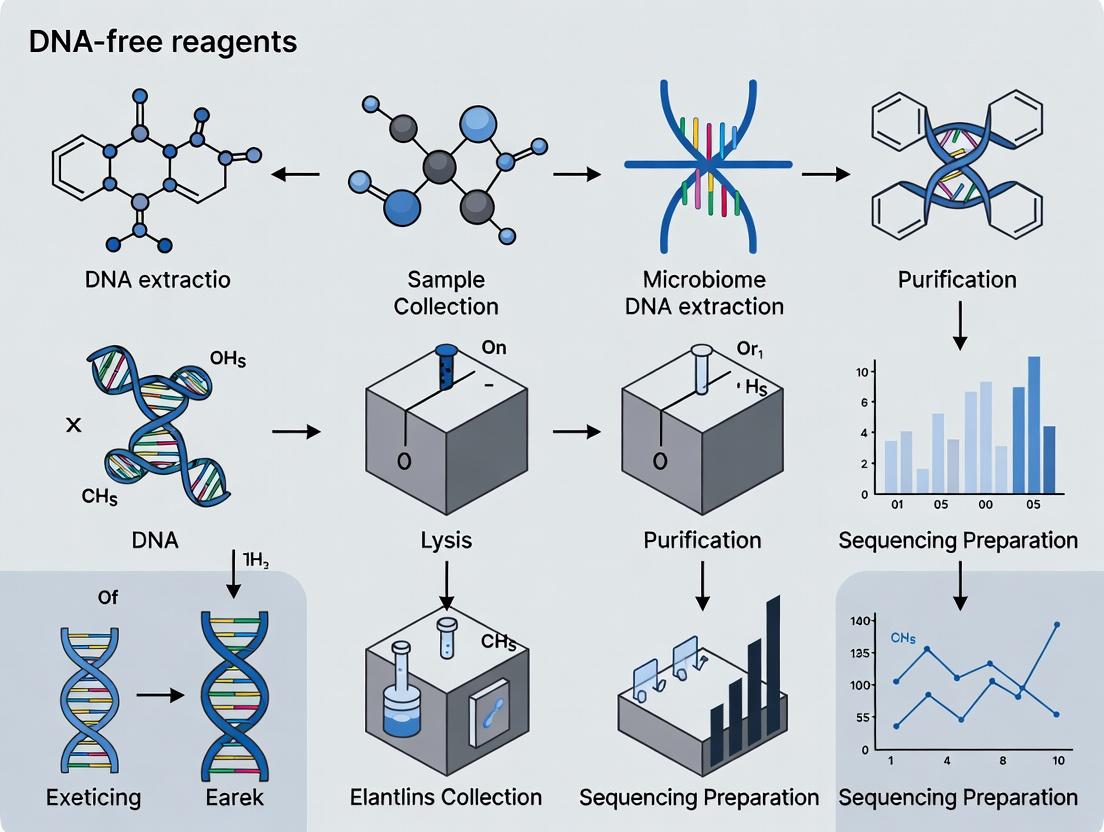
This comprehensive guide explores the critical role of DNA-free reagents in microbiome DNA extraction.
Beyond Contamination: The Essential Guide to DNA-Free Reagents for Accurate Microbiome Research
Abstract
This comprehensive guide explores the critical role of DNA-free reagents in microbiome DNA extraction. We cover the foundational problem of reagent-derived contamination, detail methodologies for implementing DNA-free workflows, provide troubleshooting strategies for common pitfalls, and present comparative validation data on leading commercial and lab-formulated solutions. Tailored for researchers and drug development professionals, this article provides actionable insights to enhance the accuracy, reproducibility, and reliability of 16S rRNA and shotgun metagenomic studies by eliminating a key source of bias.
The Invisible Foe: Understanding Reagent-Derived Contamination in Microbiome Profiling
1. Introduction Within the context of developing DNA-free reagents for microbiome research, the contamination of extraction kits and laboratory reagents with trace microbial DNA presents a fundamental challenge. This background DNA, derived from manufacturing processes or environmental sources, is co-extracted and co-amplified with sample-derived DNA, leading to erroneous taxonomic profiles and false positive results. This Application Note details the scope of the problem, presents quantitative data, and provides protocols for its detection and mitigation.
2. Quantifying the Contaminant Signal The following table summarizes key findings from recent studies on reagent-derived DNA contamination across common microbiome sample types.
Table 1: Quantification of Reagent-Derived DNA in Microbiome Studies
| Sample Type | Common Reagent Contaminants Identified | Reported Contribution to Total Sequences | Key Impact | Source (Example) |
|---|---|---|---|---|
| Low-biomass (e.g., skin, placenta, air) | Pseudomonas, Sphingomonas, Bradyrhizobium, Cupriavidus | 20% to 90+% | Can dominate the profile, obscuring true signal. | Salter et al., 2014; Glassing et al., 2016 |
| Sterile Water (Negative Extraction Control) | Diverse bacterial genera (e.g., Delftia, Comamonadaceae) | 100% (All sequences are contaminant) | Defines the "kitome" or background signature. | Karstens et al., 2019 |
| Fecal/Higher-biomass | Same as above, but less proportionally significant. | <1% to 10% | Can still introduce false low-abundance taxa. | Weyrich et al., 2019 |
| Plasma/Blood | Human DNA from reagents can be a major confounder. | Variable | Interferes with pathogen detection sensitivity. | Thoendel et al., 2017 |
3. Protocols for Detecting and Accounting for Reagent-Derived DNA
Protocol 3.1: Systematic Negative Control Processing Objective: To characterize the contaminant profile of a specific reagent lot and workflow. Materials:
- DNA extraction kit (to be evaluated)
- Molecular grade water (certified nuclease-free, but not DNA-free)
- DNA-free water (e.g., UV-irradiated, ultrafiltered)
- Sterile, DNA-free collection tubes
- All standard PCR/qPCR reagents
Method:
- For each extraction kit lot, prepare a minimum of three (3) negative extraction controls. Use the same volume of DNA-free water as your typical sample volume.
- Process these controls through the entire extraction protocol alongside your experimental samples. Treat them identically in terms of handling, incubation times, and equipment.
- Elute the "DNA" from controls into the recommended volume.
- Subject the eluate from negative controls to the same amplification and sequencing protocol (using 16S rRNA gene, ITS, or shotgun primers) as your samples.
- Sequence at a depth comparable to or greater than your experimental samples.
Protocol 3.2: Computational Subtraction of the Contaminant Signal Objective: To bioinformatically filter likely contaminants from sample data. Materials:
- Bioinformatics pipeline (e.g., QIIME 2, mothur, DADA2)
- Sequence files from experimental samples AND matched negative controls.
Method:
- Generate an Aggregate Contaminant List: Pool sequences from all negative controls processed in Protocol 3.1. Identify all Amplicon Sequence Variants (ASVs) or Operational Taxonomic Units (OTUs) present.
- Apply Prevalence/Abundance Filtering: For each ASV/OTU in your experimental samples, compare its abundance and prevalence in negative controls. Common algorithms include:
- Frequency-Based: Subtract the mean relative abundance found in controls from its abundance in samples.
- Prevalence-Based: Remove any ASV/OTU that is more prevalent in controls than in true samples (e.g., using the
decontamR package).
- Report: Always report the list of removed taxa and their abundance in controls as supplementary data.
4. The Scientist's Toolkit: Essential Reagents & Solutions
Table 2: Research Reagent Solutions for Contamination Control
| Item | Function & Importance |
|---|---|
| Certified DNA-Free Water | Ultraviolet-irradiated and ultrafiltered to degrade and remove exogenous DNA. Critical for rehydration of PCR mixes and as a negative control matrix. |
| DNA Decontamination Reagent (e.g., DNase I) | Used to pre-treat non-DNA critical reagents (e.g., PCR enzymes, buffers) to degrade contaminating DNA, followed by heat inactivation. |
| UltraPure or Similar Reagents | Specifically manufactured and tested for low DNA contaminant levels in buffers, salts, and other molecular biology reagents. |
| Barrier (Filter) Pipette Tips | Prevents aerosol carryover and sample-to-sample contamination, a major source of cross-contamination. |
| UV Crosslinker or Cabinet | Used to irradiate plastics (tubes, tips) and lab surfaces to crosslink any contaminating DNA, rendering it unamplifiable. |
| Dedicated Pre-PCR Area | A physically separated, clean workspace with dedicated equipment and supplies for setting up contamination-sensitive reactions. |
5. Visualizing the Contaminant Detection & Mitigation Workflow
Title: Workflow for Identifying and Correcting Reagent DNA Contamination
6. Experimental Protocol: Validating DNA-Free Reagent Kits
Protocol 6.1: Comparative Performance Assessment Objective: To benchmark a candidate DNA-free extraction kit against a standard kit. Materials:
- Candidate DNA-free extraction kit
- Standard commercial extraction kit
- Mock microbial community (e.g., ZymoBIOMICS or ATCC MSA-1000)
- Low-biomass sample matrix (e.g., sterile saline, simulated clinical swab)
- DNA-free water
- qPCR system and reagents (e.g., for 16S rRNA gene)
Method:
- Sample Preparation: Create two sample sets:
- Set A (High Biomass): Spike the mock community into the matrix at the manufacturer's defined concentration.
- Set B (Low Biomass): Dilute the mock community 1000-fold in the same matrix.
- Extraction: For each Set (A & B), extract 5 replicates using:
- The candidate DNA-free kit.
- The standard kit.
- Include 3 negative controls (DNA-free water) per kit.
- Quantification: Perform qPCR targeting the 16S rRNA gene on all eluates.
- Analysis:
- Compare yield (Cq values) between kits for Sets A and B.
- Analyze negative control Cq values. A valid DNA-free kit should show no amplification or significantly higher Cq values (e.g., >10 cycles difference) in its negative controls compared to the standard kit.
- Sequence all extracts and apply Protocol 3.2. The DNA-free kit's negative controls should yield minimal to no sequences.
Within the context of advancing DNA-free reagents for microbiome DNA extraction research, the identification of reagent-derived contaminant bacterial and archaeal signatures is paramount. Low-biomass studies, including those of the tissue, built environment, and clinical (e.g., fetal, blood) microbiomes, are particularly susceptible to distortion from reagent and kit contaminants. This document provides application notes and detailed protocols for identifying and managing these contaminant taxa to ensure data fidelity.
Background and Significance
Commercial DNA extraction kits and molecular biology reagents contain trace amounts of bacterial and archaeal DNA, originating from their manufacturing processes. In high-biomass samples (e.g., stool), this background is negligible. However, in low-biomass research, these contaminants can constitute a majority of sequenced reads, leading to false-positive identifications and erroneous ecological conclusions. The systematic creation of "blank" extraction controls is therefore non-negotiable for rigorous research.
Analysis of recent studies and internal validation data reveals a consistent, although not universal, set of contaminant genera associated with DNA extraction kits and reagents. The table below summarizes commonly reported prokaryotic contaminants.
Table 1: Common Contaminant Bacterial and Archaeal Genera in DNA Extraction Reagents
| Phylum | Common Contaminant Genera | Typical Source Association | Average Relative Abundance in Blanks (%) |
|---|---|---|---|
| Proteobacteria | Pseudomonas, Acinetobacter, Sphingomonas, Bradyrhizobium, Methylobacterium | Kit buffers, spin columns, water | 45-70% |
| Firmicutes | Bacillus, Staphylococcus, Streptococcus, Lactobacillus | Enzyme preparations, bead tubes | 15-30% |
| Actinobacteria | Corynebacterium, Propionibacterium (Cutibacterium), Micrococcus | Human handling, some reagents | 5-20% |
| Bacteroidetes | Alistipes, Prevotella | Less common; variable | <5% |
| Archaea (Euryarchaeota) | Methanobrevibacter | PCR master mixes, enzymes | <2% |
Experimental Protocols
Protocol 1: Generation of Reagent Blank Controls
Objective: To generate sequencing data representing the contaminant background of your entire workflow. Materials: See "The Scientist's Toolkit" below. Procedure:
- Setup: In a PCR workstation or laminar flow hood cleaned with DNA decontamination solution, set up extraction batches.
- Blank Sample: For every batch of extractions (max 10-12 samples), include at least one "blank" control. This consists of adding the same volume of sterile, DNA-free water or buffer in place of a sample to a sterile collection tube.
- Parallel Processing: Subject the blank control to the identical extraction protocol as the experimental samples. Use the same lot numbers for all kits and reagents.
- Downstream Processing: Proceed with library preparation (using the same lot of master mix and primers) and sequencing on the same flow cell/lane as the corresponding samples.
- Replication: Perform this for a minimum of three independent extraction batches to identify consistent vs. sporadic contaminants.
Protocol 2: Bioinformatic Identification and Subtraction of Contaminants
Objective: To computationally identify contaminant sequences and filter them from experimental samples. Materials: Sequencing data from samples and matched blanks; QIIME 2, USEARCH, or DADA2 pipelines; R with decontam package. Procedure:
- Sequence Processing: Process all sample and blank control FASTQ files through a standardized pipeline (e.g., QIIME 2) for quality filtering, denoising, and amplicon sequence variant (ASV) or OTU generation.
- Generate Feature Table: Create a feature table (ASV/OTU table) and taxonomy assignments.
- Apply Prevalence-Based Filtering (using decontam in R):
- Apply Frequency-Based Filtering (optional): For studies with low biomass where contaminants may be abundant in true samples, use
method="frequency"withconc=meta$DNA_conc(quantitation data). - Manual Curation: Review taxa flagged as contaminants against known lists (e.g., Table 1). Retain biologically plausible taxa if they are statistically more abundant in true samples than in blanks.
Visualization of Workflows
Title: Contaminant Identification and Filtering Workflow
Title: Bioinformatics Contaminant Removal Steps
The Scientist's Toolkit: Research Reagent Solutions
Table 2: Essential Materials for Contaminant Control in Low-Biomass Microbiome Studies
| Item | Function & Rationale |
|---|---|
| Certified DNA-Free Water | Solvent for blanks and reagent reconstitution; minimizes aqueous source contamination. |
| UV-Irradiated/ENZYME-Free PCR Tubes & Tips | Pre-sterilized plastics to prevent introduction of contaminants from packaging/manufacturing. |
| PCR Workstation with UV Lamp | Provides a controlled, clean environment for setting up extraction and PCR reactions. |
| DNA Decontamination Solution (e.g., 10% Bleach, DNA-ExitusPlus) | For surface decontamination before and during workflow. |
| High-Purity, Lot-Tested Extraction Kits | Kits specifically marketed for low-biomass/host DNA; request contaminant profiles from manufacturer. |
| Separate Pipette Sets | Dedicated pipettes for pre- and post-PCR work to prevent amplicon contamination. |
| Quantitative PCR (qPCR) Kit | To quantify total bacterial load in samples vs. blanks, informing contamination significance. |
| Bioinformatics Software (R, decontam, QIIME 2) | Essential tools for statistical identification and removal of contaminant sequences. |
| Commercial "Microbial DNA-free" Reagents | Enzymes (e.g., polymerase), buffers, and kits processed to remove trace microbial DNA. |
Within the critical research area of DNA-free reagents for microbiome DNA extraction, low-biomass samples present a formidable challenge. These samples, characterized by minimal microbial DNA (e.g., from sterile tissues, placenta, indoor air, or low-bacterial-load biopsies), are acutely vulnerable to contamination and reagent-borne noise. Standard extraction kits often contain trace levels of microbial DNA, which become disproportionately amplified in low-biomass contexts, leading to false positives and skewed community profiles. This application note details protocols and solutions to mitigate this noise, enabling reliable data in drug development and clinical research.
Quantitative Data on Reagent Contamination
The following table summarizes key findings from recent studies on reagent-derived DNA contamination.
Table 1: Quantitative Profile of Contaminant DNA in Common Reagents
| Reagent / Kit Component | Typical Contaminant Load (Bacterial 16S rRNA gene copies/µL) | Predominant Contaminant Taxa | Impact on Low-Biomass Sample (≤1000 cells) |
|---|---|---|---|
| Commercial DNA Extraction Kit Elution Buffer | 10 - 500 | Pseudomonas, Comamonadaceae, Sphingomonas | Can constitute >90% of final sequenced DNA |
| Molecular Grade Water (non-certified DNA-free) | 5 - 100 | Pelomonas, Methylobacterium | Significant background in negative controls |
| PCR Master Mix (standard) | 50 - 1000 | Bacillus, Staphylococcus | Primary source of amplicon contamination |
| DNA-free Certified PCR Mix | ≤ 0.5 | Not Applicable | Reduces background to negligible levels |
| Mock Community Standard (ZymoBIOMICS) | Defined (e.g., 10^4 cells/µL) | 8 Bacterial, 2 Fungal Strains | Serves as positive control for extraction efficiency |
Detailed Experimental Protocols
Protocol 1: Validating DNA-Free Status of Reagents
Objective: To quantify and characterize background DNA in all reagents prior to low-biomass sample processing. Materials: Candidate reagents, DNA-free certified water, DNA-free PCR master mix, 16S rRNA gene primer set (e.g., 27F/338R), qPCR system.
- Reagent Prep: In a UV-irradiated PCR hood, aliquot 50 µL of each test reagent (elution buffers, wash buffers, water) into sterile tubes.
- Template Addition: Use the reagent itself as the "template." For each, set up a 25 µL qPCR reaction using the DNA-free master mix and primers.
- qPCR Run: Use a high-cycle protocol (e.g., 45 cycles). Include a no-template control (DNA-free water) and a positive control (1 pg of purified E. coli DNA).
- Analysis: Calculate 16S rRNA gene copy number per µL of reagent using a standard curve. Reagents with >1 copy/µL should be rejected for critical low-biomass work.
Protocol 2: Low-Biomass Microbiome DNA Extraction with Contamination Tracking
Objective: To extract DNA while monitoring and subtracting background contamination. Materials: DNA-free extraction kit (e.g., with enzymatic lysis), Process Control 1 (PC1; Pseudomonas syringae DSM 21482), Process Control 2 (PC2; Methylobacterium extorquens), DNA-free tubes and filter tips.
- Preparation: UV-irradiate workbench and tools for 30 minutes. Prepare three parallel extraction tracks:
- Sample Track: Add low-biomass sample (e.g., tissue biopsy) to bead tube.
- Biological Negative Control Track: Add an equivalent volume of sterile, DNA-free saline.
- External Spike-in Control Track: Add sterile saline + 10^3 cells each of PC1 and PC2.
- Spike-in Addition: To the Sample and Biological Negative Control tubes, add a known, low quantity (e.g., 10^2 cells) of PC1 and PC2. These serve as internal standards for extraction efficiency and contaminant identification.
- Extraction: Proceed with the manufacturer's protocol (enzymatic & mechanical lysis, binding, washes, elution) in the UV hood.
- Analysis: Quantify total DNA by fluorometry. Perform 16S rRNA gene sequencing. Computational decontamination: Identify taxa present in the Biological Negative Control and subtract them from the Sample profile using tools like decontam (prevalence or frequency-based methods).
Visualizing the Workflow and Contamination Pathways
Diagram 1: Low-Biomass Workflow with Controls
The Scientist's Toolkit: Essential Research Reagent Solutions
Table 2: Key Reagents and Materials for Low-Biomass, DNA-Free Research
| Item | Function & Critical Feature | Example Product/Certification |
|---|---|---|
| DNA-Free Certified Extraction Kit | Enzymatic/mechanical lysis reagents, buffers, and columns guaranteed to have ultra-low microbial DNA. Essential for minimizing baseline contamination. | Qiagen DNeasy PowerSoil Pro DNA-Free Kit, QIAamp DNA Microbiome Kit |
| DNA-Free PCR Master Mix | Pre-mixed hot-start polymerase, dNTPs, and buffers screened for absence of amplifiable bacterial DNA. Critical for 16S rRNA gene amplification. | TaqMan Environmental Master Mix 2.0, Platinum SuperFi II DNA Polymerase (with DNA-free buffers) |
| Ultra-Pure Molecular Grade Water | Water filtered and packaged to contain <0.01 EU/mL endotoxin and no detectable DNA. Used for all reagent preparation and dilutions. | Invitrogen UltraPure DNase/RNase-Free Distilled Water (certified DNA-free) |
| Synthetic Internal Spike-in Controls | Known, rare microbial cells (e.g., P. syringae) added to samples to track extraction efficiency and computationally identify cross-contaminants. | ZymoBIOMICS Spike-in Control II (Sourced from non-human environments) |
| UV PCR Workstation | Enclosed hood with UV germicidal lamp to decontaminate surfaces and inactivate nucleic acids prior to sample handling. | PCR cabinets with 254nm UV light and HEPA filtration |
| Barrier/Low-Binding Pipette Tips | Aerosol-resistant tips to prevent carryover and minimize DNA adhesion to tip surfaces during liquid handling. | RNase/DNase-free, filter tips with hydrophobic barriers |
| Mock Microbial Community | Defined mix of known microbial cells or DNA at calibrated ratios. Serves as a positive control for entire workflow accuracy. | BEI Resources Mock Bacterial Communities, ZymoBIOMICS Microbial Community Standard |
| Decontamination Software | Computational tool to statistically identify and remove contaminant sequences based on prevalence in negative controls. | R package decontam (frequency or prevalence mode) |
Application Notes on DNA-Free Reagent Evolution
The pursuit of accurate microbiome profiling, free from exogenous DNA contamination, has driven a significant shift in both researcher awareness and commercial kit design. This evolution is critical for studies of low-biomass environments where contaminant DNA can constitute the majority of sequenced material.
Table 1: Evolution of Researcher Awareness and Contaminant Mitigation Strategies
| Epoch/Phase | Primary Awareness Level | Key Contaminant Sources Identified | Typical Mitigation in Protocols |
|---|---|---|---|
| Foundational (Pre-2010) | Low. Contaminants often dismissed as "environmental background." | Reagents, laboratory surfaces. | Use of UV irradiation on benches and pipettes. |
| Awakening (2011-2015) | Rising. Seminal publications highlight reagent-derived bacterial DNA. | Polymerase enzymes, PCR/H2O, extraction kit buffers. | Inclusion of negative extraction controls. Use of "certified DNA-free" water and PCR mixes. |
| Critical (2016-2019) | High. Widespread recognition of "kitome" and its impact on low-biomass studies. | All liquid reagents, spin columns, plasticware. | Demands for full reagent composition disclosure. Adoption of "blank" controls for every batch. |
| Demanding (2020-Present) | Mandatory. Contaminants are a primary experimental design factor. | Universal in all wet-lab components; human DNA from operators. | Specification of DNA-free and human DNA-free reagents. Use of synthetic spike-in controls (e.g., SNAP). |
Table 2: Manufacturer Response Trajectory in Commercial Kits
| Manufacturer Tier | Initial Response (~2015) | Current State-of-the-Art Response | Example Product/Solution |
|---|---|---|---|
| Market Leaders | Offered "DNase-treated" or "PCR Clean" reagents as optional. | Dedicated, validated "Microbiome" or "Low-Biomass" kits with comprehensive Certificates of Analysis (CoA) listing detectable taxa. | QIAGEN DNeasy PowerSoil Pro Kit; ZymoBIOMICS DNA Miniprep Kit. |
| Specialized Niche | Built entire brand on contamination-aware products from inception. | Full production under ISO13485/GMP, use of UV-treated manufacturing, qPCR-tested for bacterial/human DNA. | Molzym MolYsis series for host depletion; Invitrogen DNA-free reagents. |
| Broad-Spectrum | Slow to adapt, marketed standard kits for all applications. | Introduction of specific "DNA-free" reagent lines and accessory products (e.g., DNA removal systems). | ThermoFisher Genomic DNA Purification kits with "DNA-free" Plasticware. |
| Core Philosophy Shift | Contamination is a user problem. | Contamination control is a shared responsibility and a product feature. | Provision of detailed, lot-specific contaminant profiles upon request. |
Detailed Protocols
Protocol 1: Validating DNA-Free Status of a Commercial Extraction Kit Objective: To empirically verify the level of exogenous DNA contamination in a new lot of a commercial DNA extraction kit prior to use in low-biomass sample processing. Materials: See "The Scientist's Toolkit" below. Method:
- Setup: In a PCR workstation pre-cleaned with DNA decontamination solution, prepare 5-8 replicate "blank" extractions.
- Sample Loading: Do not add any biological sample. Instead, add an equal volume of sterile, DNA-certified molecular grade water or a proprietary "blank" solution (e.g., PBS certified for microbiome work) to each kit's lysis tube.
- Extraction: Proceed with the manufacturer's full protocol exactly, including all bead-beating, incubation, washing, and elution steps.
- Elution: Elute DNA in the provided buffer or certified DNA-free TE buffer.
- Quantification & Profiling:
- Quantify total DNA in each eluate using a fluorescent, dsDNA-specific assay (e.g., Qubit). Record values.
- Perform a broad-range 16S rRNA gene qPCR assay (e.g., targeting V3-V4 region) for all blanks and a standard curve.
- Pool blank eluates and subject to next-generation sequencing (16S rRNA gene amplicon or shotgun) alongside positive controls and a no-template library control. Analysis: The Qubit reading should be below the assay's limit of detection. qPCR Cq values should be >5 cycles later than the lowest standard. Sequencing data should show a distinct, low-diversity contaminant profile; these taxa must be tracked and filtered in subsequent experimental samples.
Protocol 2: Implementing a Synthetic Spike-in Control (SNAP) Objective: To distinguish true negative results from extraction/PCR failure and normalize for process efficiency. Materials: SNAP Reaction Mix (synthetic, non-biological DNA sequences), DNA-free tubes. Method:
- Spike-in Addition: Prior to lysis, add a known, fixed quantity (e.g., 104 copies) of the SNAP synthetic DNA to each sample and to the blank control tubes.
- Extraction & Sequencing: Proceed with standard extraction and library preparation. Specific primers for the SNAP sequence must be included in the indexing PCR or as a separate qPCR assay.
- Bioinformatic Filtering: Map a small subset of reads to the SNAP reference sequence to confirm its presence, then remove all SNAP reads from downstream microbiome analysis. Analysis: Consistent recovery of SNAP sequences across samples indicates technical success. Significant variation in SNAP recovery between samples can be used to correct for bias in microbial load estimates.
Visualizations
Title: Evolution of Researcher Awareness and Kit Design
Title: Kit Lot Validation Protocol Workflow
The Scientist's Toolkit: Essential Research Reagent Solutions
| Item | Function & Importance |
|---|---|
| Certified DNA-Free Water | Solvent for all solutions and elution; PCR-grade is insufficient. Must be tested via ultrafiltration and qPCR. |
| DNA Decontamination Solution | (e.g., 10% bleach, DNA-ExitusPlus). For pre-cleaning work surfaces and non-sterile equipment. |
| UV-PCR Cabinet / Workstation | Enclosed workspace with UV light for nucleic acid decontamination of consumables and to create a sterile air flow. |
| Fluorometric DNA Quantification Kit | (e.g., Qubit). Specific for dsDNA; more accurate and less prone to reagent contamination signals than spectrophotometry. |
| Broad-Range 16S rRNA Gene qPCR Assay | For sensitive detection of bacterial contamination in blanks and eluates. |
| Synthetic Spike-in Control (SNAP) | Defined, non-biological DNA sequences added to samples to monitor and correct for technical variation and failures. |
| DNA-Free Plasticware (Tubes, Tips) | Manufactured and packaged under conditions that prevent introduction of contaminating DNA. |
| Positive Control Mock Community | Defined microbial cells or DNA (e.g., ZymoBIOMICS) to validate kit recovery efficiency and sequencing accuracy. |
Within microbiome research, the accuracy of downstream analyses (e.g., 16S rRNA gene sequencing, metagenomics) is critically dependent on the purity of extracted DNA. Background contamination from reagent-derived microbial DNA is a major confounding factor, especially in low-biomass samples. This application note details the core principles defining 'DNA-Free' and 'DNA-Depleted' reagents, providing protocols for validation, all framed within the thesis that rigorous reagent qualification is foundational for trustworthy microbiome data.
Defining the Terms: A Quantitative Framework
The terms "DNA-Free" and "DNA-Depleted" are not absolute but indicate contamination levels below impactful thresholds. Key principles involve source control, stringent manufacturing, and validation.
Table 1: Core Principles and Associated Metrics
| Principle | Objective | Typical Target Metric | Validation Method |
|---|---|---|---|
| Raw Material Sourcing | Use non-biological or synthetically produced components. | 0% animal-derived/fermentation-derived components where possible. | Certificate of Analysis (CoA) audit. |
| Manufacturing & Packaging | Perform in a cleanroom (e.g., ISO 5/Class 100), use gamma-irradiation, and employ DNase treatment. | < 0.01 EU/mL endotoxin; bioburden < 1 CFU/mL. | Environmental monitoring data, CoA. |
| Final Product Testing | Quantify residual contaminating DNA. | "DNA-Depleted": < 1 fg/µL microbial DNA. "DNA-Free": < 0.1 fg/µL microbial DNA, below detection limit. | qPCR/PCR targeting common contaminants (e.g., 16S V4 region). |
| Application-Specific Validation | Ensure contamination is below the limit of detection for the intended assay. | Contaminant signal << 1% of positive control signal from low-biomass standard. | Spike-in experiments with synthetic mock communities. |
Protocol 1: Validating Reagent DNA Contamination Levels via qPCR
This protocol is essential for in-house verification of commercial claims or testing lab-prepared reagents.
Materials:
- Test reagent (e.g., PCR water, extraction kit lysis buffer, PCR master mix).
- "Ultra-clean" water (negative control).
- qPCR assay targeting the bacterial 16S rRNA gene V4 region (e.g., primers 515F/806R).
- qPCR instrument and consumables.
- Standard curve generated from a known quantity of E. coli genomic DNA (e.g., 10 fg/µL to 1 ng/µL).
Procedure:
- Sample Preparation: In a DNA-free workspace (UV-irradiated hood, dedicated pipettes), prepare qPCR reactions using the test reagent as the source of the "template." Include the reagent as at least 20% of the total reaction volume. Run each sample in 10 technical replicates.
- qPCR Run: Perform amplification with cycling conditions appropriate for the primer set (e.g., 95°C for 3 min, followed by 40 cycles of 95°C for 15s, 55°C for 30s, 72°C for 30s).
- Data Analysis: Generate a standard curve from the control DNA. Use the mean Cq value of the reagent replicates to interpolate the apparent DNA concentration. Convert to mass per volume unit of the reagent (e.g., fg/µL).
- Interpretation: A reagent with a Cq value > 35 (or below the limit of quantification from a 10 fg/µL standard) across all replicates can typically be considered "DNA-Free" for most applications.
Protocol 2: Mock Community Spike-In Experiment for Extraction Kits
This protocol tests the entire workflow of a DNA extraction kit, assessing both background contamination and bias.
Materials:
- "DNA-Free" certified extraction kit.
- Defined synthetic mock microbial community (e.g., from ZymoBIOMICS, ATCC) with known evenness.
- Sterile, DNA-depleted swab or filter (for sample simulation).
- PCR and sequencing reagents (also certified DNA-free).
- Negative extraction control (NEC): Perform extraction with no sample input.
Procedure:
- Sample Spiking: Serially dilute the mock community to a level simulating a low-biomass sample (e.g., 10^3 cells). Apply to a sterile swab or filter. Include an un-spiked swab/filter as a process control.
- DNA Extraction: Extract DNA from the spiked sample, the un-spiked control, and the NEC following the kit's protocol.
- Library Preparation & Sequencing: Amplify the V4 region of the 16S rRNA gene from all extracts and sequence on a MiSeq or similar platform.
- Bioinformatic Analysis: Process sequences through a standard pipeline (DADA2, QIIME2). Compare the taxonomic profile of the spiked sample to the expected composition. Analyze the NEC and un-spiked control for contaminating operational taxonomic units (OTUs).
Table 2: Interpreting Spike-In Experiment Results
| Control Sample | Acceptable Outcome | Indication of Problem |
|---|---|---|
| Negative Extraction Control (NEC) | Zero or minimal reads (< 0.1% of spiked sample's reads). | Reagent or kit contamination. |
| Un-Spiked Process Control | Zero or minimal reads, distinct from NEC. | Environmental or cross-sample contamination during processing. |
| Spiked Mock Community | Profile matches expected composition with high fidelity (Bray-Curtis similarity > 0.95). | Kit-induced taxonomic bias or inhibition. |
The Scientist's Toolkit: Key Research Reagent Solutions
Table 3: Essential Materials for DNA-Free Microbiome Research
| Item | Function | DNA-Free Consideration |
|---|---|---|
| Ultra-Pure Water | Solvent for all reagent preparation and reactions. | Must be purified via reverse osmosis, deionization, and UV-treatment, then filtered through a 0.1 µm membrane. |
| Molecular Biology Grade Ethanol | Used in DNA binding and washing steps. | Purchased as certified nuclease-free; often distilled and filtered. |
| PCR Master Mix | Contains polymerase, dNTPs, buffer for amplification. | Formulated with recombinant enzymes and synthetic components; tested via high-cycle number (45+) PCR on water. |
| DNase/RNase Inactivation Reagent | e.g., Guanidine Thiocyanate. Inactivates nucleases and aids cell lysis. | Chemical synthesis minimizes biological contamination. |
| Gamma-Irradiated Tubes & Tips | Sample and reagent containment. | Gamma irradiation fragments any contaminating DNA, rendering it unamplifiable. |
| Synthetic Mock Community | Positive control for extraction and sequencing bias. | Composed of genomic DNA from known, often non-environmental, strains to distinguish from contaminants. |
Visualizations
Title: Path to a DNA-Free Reagent
Title: Reagent Validation by qPCR
Building a Sterile Pipeline: Step-by-Step Implementation of DNA-Free Extraction
Within the critical field of microbiome DNA extraction research, the pervasive issue of background and contaminating DNA can severely compromise data integrity, especially in low-biomass studies. A comprehensive thesis on DNA-free reagents underscores the necessity of an end-to-end, integrated workflow that eliminates exogenous DNA from all reagents and consumables. This application note details a contamination-aware protocol, from sample lysis to PCR setup, utilizing certified DNA-free reagents to ensure the accurate analysis of the true sample microbiome.
The Problem: Ubiquitous Contaminants in Microbiome Workflows
Environmental DNA and reagent-derived bacterial DNA are common contaminants introduced during nucleic acid extraction and downstream processing. Standard molecular biology reagents, even those labeled as high-purity, can contain trace amounts of microbial DNA. This background signal becomes critically misleading when analyzing samples with minimal microbial biomass, such as tissue, sterile fluids, or swabs from low-diversity environments.
Integrated Workflow Solution: Key Principles
The proposed workflow is built on four pillars:
- Use of Certified DNA-Free Reagents: All liquid reagents (buffers, enzymes, water) must be certified or validated as DNA-free, often through rigorous DNase treatment and irradiation.
- Consumable Sterilization: All plastics (tubes, tips, plates) should be UV-irradiated or purchased as DNA-free.
- Dedicated, Controlled Workspace: Use of PCR workstations or dedicated hoods, regularly decontaminated with DNA-destroying agents (e.g., DNA-ExitusPlus or 10% bleach).
- Process Controls: Inclusion of negative extraction controls and no-template PCR controls at every run to monitor contamination.
Research Reagent Solutions: The Scientist's Toolkit
The following table lists essential materials and their specific functions within the DNA-free workflow.
| Reagent / Material | Function in Workflow | Key Consideration |
|---|---|---|
| DNA-Free Lysis Buffer (e.g., with Guanidine HCl) | Disrupts cells and inactivates nucleases while being free of microbial DNA. | Often pre-treated with DNase and heat-inactivated. |
| Proteinase K (DNA-Free Certified) | Digests proteins to improve DNA yield and quality; must be free of bacterial DNA. | Lyophilized formats are preferred; reconstitute with DNA-free water. |
| DNA-Free Molecular Grade Water | Solvent for reagent preparation and PCR; the most common source of contamination. | Purchased certified or treated with DNase/UV. |
| DNase/Rnase-Free Magnetic Beads | For silica-based purification without introducing contaminating DNA. | Validate binding efficiency with low-concentration samples. |
| DNA-Free PCR Master Mix | Contains Taq polymerase, dNTPs, and buffer pre-treated to remove contaminating DNA. | Hot-start enzymes are preferable to reduce non-specific amplification. |
| UV-Irradiated Pipette Tips & Tubes | Physical consumables pre-treated to fragment any adherent DNA. | Essential for all steps post-lysis. |
| Surface Decontaminant (e.g., DNA-Zap) | To treat work surfaces and equipment before workflow initiation. | Use before and after each major step. |
Detailed Protocol: From Lysis to PCR Setup
Pre-Work Setup
- Workspace Preparation: Wipe down PCR workstation or biosafety cabinet surface, pipettes, and tube racks thoroughly with DNA-decontaminating solution. Allow to dry. Illuminate the cabinet with UV light for 30 minutes.
- Reagent and Consumable Preparation: Thaw all required DNA-free reagents on ice. Briefly centrifuge tubes. Arrange only the necessary number of UV-irradiated pipette tips and microcentrifuge tubes in the sterilized workspace.
Protocol 1: DNA-Free Cell Lysis and Purification
This protocol is optimized for 200µL of liquid sample (e.g., water, saline wash).
| Step | Component | Volume/Amount | Notes |
|---|---|---|---|
| 1. Lysis | Sample | 200 µL | Process in a DNA-free 1.5mL tube. |
| DNA-Free Lysis Buffer | 250 µL | Contains chaotropic salts. | |
| DNA-Free Proteinase K | 20 µL (20 mg/mL) | Vortex to mix thoroughly. | |
| Incubation | 56°C for 30 min | With occasional vortexing. | |
| 2. Binding | DNA-Free Magnetic Beads | 50 µL (resuspended) | Add to lysate. Mix by pipetting. |
| Incubation | Room temp, 10 min | Place on a tube rotator. | |
| 3. Washes | Place tube on magnetic rack. Discard supernatant. | ||
| Wash Buffer 1 (DNA-Free) | 500 µL | Remove while tube is on magnet. | |
| Wash Buffer 2 (80% Ethanol)* | 500 µL | Perform two washes. Air-dry beads for 5 min. | |
| 4. Elution | Remove from magnet. Add DNA-Free Water. | 50 µL | Elute at 55°C for 5 min. Place on magnet; transfer eluate to a new DNA-free tube. |
*Ethanol must be prepared with absolute ethanol and DNA-Free water.
Protocol 2: DNA-Free PCR Setup
Setup for a 25µL reaction targeting the 16S rRNA gene V4 region.
| Component | Final Concentration | Volume per 25µL Rx |
|---|---|---|
| DNA-Free PCR Master Mix (2X) | 1X | 12.5 µL |
| DNA-Free Forward Primer (10µM) | 0.4 µM | 1.0 µL |
| DNA-Free Reverse Primer (10µM) | 0.4 µM | 1.0 µL |
| DNA-Free Molecular Grade Water | - | 8.0 µL |
| Purified DNA Template | Variable | 2.5 µL |
| Total Volume | 25.0 µL |
Procedure: Prepare a master mix (excluding template) in a DNA-free tube on ice. Aliquot the master mix into a PCR plate placed on a cooling block. Finally, add the individual DNA templates. Always include a negative extraction control and a no-template PCR control.
Data Presentation: Impact of DNA-Free Reagents
Table 1: Quantitative Comparison of Bacterial DNA Contamination in Reagents.
| Reagent Type | Standard Grade (copies/µL) | DNA-Free/Certified Grade (copies/µL) | Assay |
|---|---|---|---|
| Molecular Grade Water | 5 - 50 | ≤ 0.1 | 16S qPCR |
| PCR Master Mix | 10 - 200 | ≤ 1.0 | 16S qPCR |
| Proteinase K Solution | 100 - 1000 | ≤ 5.0 | 16S qPCR |
| Lysis Buffer | Variable, often high | ≤ 2.0 | Broad-range qPCR |
Table 2: Effect on Microbial Profile in Low-Biomass Mock Community (10^3 cells).
| Workflow Condition | % Reads from Expected Taxa | % Reads from Contaminant Taxa | Alpha Diversity (Shannon) |
|---|---|---|---|
| Standard Reagents | 65% ± 12 | 35% ± 12 | Inflated by >40% |
| Integrated DNA-Free Workflow | 98% ± 2 | 2% ± 2 | Accurate to expected |
Workflow Visualization
Integrated DNA-Free Workflow from Lysis to PCR
Standard vs DNA-Free Workflow Risk Mitigation
Within the rigorous framework of microbiome DNA extraction research, the prevention of exogenous DNA contamination is paramount. This review, framed within a broader thesis on DNA-free reagents, critically evaluates commercially available kits certified for DNA-free extraction as of 2024. The selection of such kits is a foundational step in ensuring the fidelity of downstream sequencing data, particularly for low-biomass samples where contaminant signal can easily overwhelm true biological signal. This document provides a curated list, comparative data, and detailed application notes for researchers, scientists, and drug development professionals.
Comparative Analysis of Certified DNA-Free Kits
The following table summarizes key quantitative and qualitative data for leading kits. Certification typically involves rigorous testing using sterile water or buffer controls that are processed alongside samples and subsequently analyzed via sensitive qPCR assays (e.g., 16S rRNA gene) and next-generation sequencing (NGS) to confirm the absence of amplifiable contaminant DNA.
Table 1: Certified DNA-Free DNA Extraction Kits for Microbiome Research (2024)
| Kit Name (Manufacturer) | Certified DNA-Free? (Y/N) | Typical Yield from 10^6 Cells (ng) | Average Processing Time | Key Technology/Bead Type | Price per Sample (Approx.) | Specialized For |
|---|---|---|---|---|---|---|
| MagAttract PowerMicrobiome DNA Kit (QIAGEN) | Y | 150 - 300 | 1.5 - 2 hours | Magnetic Beads (Silica) | $8 - $12 | Stool, soil, filters |
| ZymoBIOMICS DNA Miniprep Kit (Zymo Research) | Y (DNase-treated) | 100 - 250 | 1 hour | Spin-Column (Silica) | $5 - $8 | Broad range (stool, saliva, tissue) |
| DNeasy PowerSoil Pro Kit (QIAGEN) | Y | 80 - 200 | 40-50 min | Bead Beating & Spin-Column | $9 - $13 | Difficult, inhibitor-rich soils |
| NucleoMag DNA Microbiome Kit (Macherey-Nagel) | Y | 120 - 280 | 1.5 hours | Magnetic Beads (NucleoMag) | $10 - $14 | Automated high-throughput |
| MasterPure Complete DNA & RNA Purification Kit (Lucigen) | Y (Process includes DNase) | 200 - 400 (total nucleic acid) | 2 hours | Precipitation & Spin | $7 - $10 | Co-purification of DNA & RNA |
Application Notes & Experimental Protocols
Protocol: Validation of Kit DNA-Free Status via qPCR
This protocol is essential for in-lab verification of a kit's DNA-free certification.
Objective: To quantify contaminating bacterial DNA in extraction kit reagents and buffers. Materials: Kit components, sterile PCR-grade water, 16S rRNA gene qPCR primers (e.g., 341F/534R), qPCR master mix, sterile microcentrifuge tubes, and filter tips. Workflow:
- In a UV-sterilized laminar flow hood, prepare "kit-only" controls by combining kit lysis buffer and proteinase K (if applicable) in a sterile tube. Do not add any biological sample.
- Follow the exact kit protocol for the lysis and incubation steps.
- Proceed through the entire purification protocol (bead cleaning, washing, elution) using the kit reagents.
- Elute the "kit-only" nucleic acid in the provided elution buffer or sterile TE buffer.
- Perform qPCR in triplicate on the eluate using broad-range 16S rRNA gene primers. Include a standard curve of known genomic DNA (e.g., E. coli) for absolute quantification and a negative template control (NTC: water).
- Calculate the mass of contaminating DNA per extraction. Certified kits should yield amounts below the limit of detection or a defined threshold (e.g., <0.01 pg/µl).
Protocol: Standardized Microbiome DNA Extraction from Stool using a Certified Kit
Objective: To extract high-integrity, contamination-minimized genomic DNA from human stool samples for 16S rRNA amplicon or shotgun metagenomic sequencing. Materials: ZymoBIOMICS DNA Miniprep Kit (certified DNA-free), sterile stool collection tube, 2ml screw-cap lysis tubes with beads, vortex adapter, microcentrifuge, isopropanol, ethanol, sterile spatula. Detailed Workflow:
- Homogenization: Weigh 180-220 mg of stool into a ZR BashingBead Lysis Tube.
- Lysis: Add 750 µl Lysis Solution and secure tube. Homogenize using a vortex with bead-beating adapter at maximum speed for 5-10 minutes.
- Incubation: Incubate at 70°C for 5-10 minutes.
- Clarification: Centrifuge the tube at 10,000 x g for 1 minute. Transfer up to 400 µl of supernatant to a clean Zymo-Spin IV Filter in a collection tube.
- DNA Binding: Centrifuge at 8,000 x g for 1 minute. Discard the flow-through.
- Inhibitor Removal: Add 400 µl of DNA Pre-Wash Buffer to the column. Centrifuge at 8,000 x g for 1 minute.
- Wash: Add 700 µl of g-DNA Wash Buffer. Centrifuge at 8,000 x g for 1 minute. Transfer column to a clean 1.5 ml microcentrifuge tube.
- Elution: Add 50-100 µl of DNA Elution Buffer directly to the column matrix. Incubate at room temperature for 1 minute. Centrifuge at 8,000 x g for 1 minute to elute DNA.
- Quality Control: Quantify DNA via fluorometry (e.g., Qubit) and assess purity (A260/A280). Verify via qPCR of the 16S rRNA gene and include "kit-only" negative controls in the run.
Visualizations
Workflow for Validating DNA-Free Kits
Diagram Title: DNA-Free Kit Validation Workflow
Comparative Kit Selection Decision Pathway
Diagram Title: DNA-Free Kit Selection Guide
The Scientist's Toolkit: Essential Research Reagent Solutions
Table 2: Critical Reagents & Materials for Contamination-Controlled Microbiome Research
| Item | Function in DNA-Free Workflow |
|---|---|
| Certified DNA-Free Extraction Kit | Core reagent set with guaranteed low levels of contaminating microbial DNA, often treated with DNase or manufactured under stringent conditions. |
| PCR-Grade/DNase-Free Water | Used for preparing controls and dilutions; certified free of nucleases and contaminating DNA/RNA. |
| UV Sterilizer Cabinet | Used to irradiate surfaces of consumables (tubes, tips, reagents) prior to use to degrade potential contaminating DNA. |
| Filtered Pipette Tips (Aerosol Barrier) | Prevent cross-contamination between samples and protect pipettors from aerosols. |
| Broad-Range 16S rRNA qPCR Primers | Essential for quantifying total bacterial load in both samples and negative controls to assess kit background. |
| Fluorometric DNA Quantification Kit | Accurate quantification of double-stranded DNA without interference from RNA or contaminants (more specific than absorbance). |
| Screw-Cap Tubes with Beads | For mechanical lysis of tough microbial cell walls; prevents aerosol release during bead-beating. |
| Positive Control Mock Community | Defined mix of microbial genomic DNA used to validate extraction efficiency and sequencing accuracy. |
| DNase/RNase Decontamination Spray | For cleaning work surfaces and equipment to destroy residual nucleic acids. |
Within the broader thesis on developing and validating DNA-free reagents for unbiased microbiome DNA extraction, rigorous in-lab decontamination is paramount. Contaminating nucleic acids from reagents, labware, and the environment are a critical confounding factor, especially in low-biomass studies. This document provides detailed Application Notes and Protocols for three core decontamination methods—UV Irradiation, DNase Treatment, and Filtration—to be systematically applied to reagents, consumables, and workspaces to ensure the fidelity of downstream microbiome analyses.
Table 1: Comparative Efficacy of Decontamination Methods on Synthetic DNA Contaminants
| Method | Target Contaminant | Typical Log10 Reduction | Key Limitations / Considerations |
|---|---|---|---|
| UV-C Irradiation (254 nm) | Free, unprotected ds/ssDNA | 3-5 log10 (at 0.5-1.0 J/cm²) | Efficacy drops on shaded surfaces; minimal effect on protein or RNA. Can generate thymine dimers. |
| DNase I Treatment | Free DNA & DNA on surfaces | >6 log10 (with proper incubation) | Requires Mg²⁺/Ca²⁺ cofactors; must be thoroughly inactivated/removed post-treatment. Less effective on protected DNA. |
| Sterile Filtration (0.22/0.1 µm) | Particulate matter, microbes, & microbial clumps | >7 log10 (for bacterial cells) | Does not remove free dissolved DNA; potential for DNA adsorption to filter matrix; not suitable for viscous solutions. |
| Combined Protocol (UV + DNase) | Free & surface-associated DNA | >6-8 log10 | Provides layered defense; optimal for critical reagents and labware. |
Table 2: UV Irradiation Parameters for Common Lab Items
| Item | Recommended UV Dose (J/cm²) | Exposure Time (Typical, at 1 mW/cm²) | Notes |
|---|---|---|---|
| Empty PCR Tubes/Racks | 1.0 | ~16-17 minutes | Rotate racks for even exposure. |
| Pipette Tips (in opened bags) | 0.5 - 1.0 | 8-17 minutes | Ensure UV penetrates to bottom of bag. |
| Nuclease-Free Water | >0.5 | >8 minutes | For shallow (<5 mm) layers in open containers. |
| Bench Surfaces | >0.3 | >5 minutes | Direct exposure only; shadows compromise efficacy. |
| Metallic Instruments | 1.0 | ~17 minutes | Reflective surfaces may require longer exposure. |
Detailed Experimental Protocols
Protocol 3.1: UV-C Irradiation of Reagents and Consumables Objective: To degrade contaminating nucleic acids on surfaces of labware and in shallow liquid reagents. Materials: UV-C crosslinker (calibrated to 254 nm), UV radiometer (for validation), items for decontamination. Procedure:
- Calibration: Use a UV radiometer to measure the irradiance (e.g., mW/cm²) at the sample exposure plane inside the UV chamber.
- Calculation: Calculate exposure time: Time (seconds) = Desired Dose (J/cm²) / Irradiance (W/cm²). (1 J = 1000 mJ; 1 W = 1000 mW).
- Preparation: Arrange items (e.g., empty microcentrifuge tubes, pipette tip boxes with lids open, shallow dishes of water) to ensure direct, unobstructed exposure.
- Irradiation: Expose items to the calculated UV dose. For 3D objects, pause at midpoint and rotate to expose all surfaces.
- Post-Processing: Use irradiated items immediately or store in a clean, closed container to prevent recontamination.
Protocol 3.2: DNase I Treatment of Aqueous Reagents Objective: To enzymatically degrade contaminating DNA in buffer and reagent solutions. Materials: Recombinant DNase I (RNase-free), 10X DNase I Reaction Buffer (e.g., 100 mM Tris-HCl, pH 7.5, 25 mM MgCl₂, 5 mM CaCl₂), 0.5 M EDTA (pH 8.0), sterile 0.22 µm centrifugal filters. Procedure:
- Setup: To the reagent (e.g., Tris-EDTA buffer, nuclease-free water) add 1/10th volume of 10X DNase I Reaction Buffer.
- Enzyme Addition: Add recombinant DNase I to a final concentration of 1-10 U/µL. Mix gently by inversion.
- Incubation: Incubate at 37°C for 30-60 minutes.
- Inactivation: Add EDTA to a final concentration of 20 mM (chelates Mg²⁺/Ca²⁺ and inactivates DNase I) and incubate at 65°C for 10 minutes.
- Removal (Optional but Recommended): For critical applications, filter the treated reagent through a sterile 0.22 µm centrifugal filter to remove the enzyme. Validate the process does not introduce new contaminants.
Protocol 3.3: Sterile Filtration for Particle and Microbial Removal Objective: To physically remove microbial cells and particulate-bound DNA from liquid reagents. Materials: Sterile syringe, sterile 0.22 µm pore-size PVDF or PES membrane filters, receiving tube. Procedure:
- Assembly: Aseptically attach a sterile filter unit to a sterile syringe.
- Filtration: Draw the reagent into the syringe, gently expel it through the filter into a sterile collection tube. Do not force viscous solutions.
- Validation: Perform a sterility test by incubating an aliquot of the filtered reagent in a rich microbial growth medium at 30°C for 48 hours.
- Storage: Aliquot filtered reagents to minimize repeated freeze-thaw cycles and exposure.
Workflow and Relationship Visualizations
Title: Decision Workflow for Selecting Decontamination Protocol
Title: Layered Decontamination in the Microbiome Research Workflow
The Scientist's Toolkit: Key Research Reagent Solutions
| Item / Reagent | Function in Decontamination | Critical Notes for DNA-Free Work |
|---|---|---|
| UV-C Crosslinker (254 nm) | Provides controlled, reproducible UV irradiation dose for degrading nucleic acids on surfaces. | Must be regularly calibrated with a radiometer. Interior reflective surfaces enhance efficacy. |
| Recombinant DNase I (RNase-free) | Enzymatically hydrolyzes both single- and double-stranded DNA contaminants in solution. | The "RNase-free" grade prevents RNA degradation. Requires divalent cations (Mg²⁺/Ca²⁺) for activity. |
| Sterile 0.22 µm PES Filters | Removes microbial cells and other particulates ≥0.22 µm from liquid reagents by size exclusion. | Low protein/DNA binding membranes (e.g., PES) are preferred to avoid analyte loss. |
| UV Radiometer | Measures UV irradiance (mW/cm²) to calculate accurate exposure times for a target fluence (J/cm²). | Essential for protocol validation and standardization across labs. |
| Molecular Biology Grade Water | Ultrapure, nuclease-free water used as a solvent and negative control. | Subject it to decontamination (DNase treatment + filtration) for the most critical applications. |
| EDTA (0.5 M, pH 8.0) | Chelates Mg²⁺ and Ca²⁺ ions, irreversibly inactivating DNase I after treatment. | Final concentration of 5-20 mM is typical. Also inhibits many metalloproteases. |
| PCR Workstation / Hood with UV | Provides a clean, HEPA-filtered air environment with built-in UV for surface decontamination. | Run UV only when the workspace is empty. HEPA filtration reduces airborne contaminant deposition. |
Within the rigorous context of DNA-free reagent development for microbiome research, the implementation of robust negative controls is not merely a best practice but a fundamental requirement. Extraction and PCR blanks serve as the critical sentinels for detecting contamination from reagents, laboratory environments, and consumables, which can otherwise lead to false-positive results and erroneous conclusions. These controls are paramount for validating the purity of DNA-free extraction kits and master mixes, enabling the accurate profiling of low-biomass microbiomes.
Quantitative Data on Contamination Prevalence
The following table summarizes recent findings on contamination sources identified through blank controls in microbiome studies.
Table 1: Common Contaminants Identified in Extraction and PCR Blanks
| Contaminant Source | Typical Genera Identified | Frequency in Blanks (Reported Range) | Primary Mitigation Strategy |
|---|---|---|---|
| DNA Extraction Kits | Pseudomonas, Sphingomonas, Bradyrhizobium | 60-100% of kits | Use of certified DNA-free kits; UV irradiation |
| PCR Master Mixes | Legionella, Burkholderia, Delftia | 30-80% of commercial mixes | Use of uracil-DNA glycosylase (UDG) treatments; dedicated aliquots |
| Laboratory Water | Ralstonia, Caulobacter, Methylobacterium | 15-40% of labs | Use of molecular biology-grade water; filtration/autoclaving |
| Laboratory Plasticware | Staphylococcus, Propionibacterium | 10-25% of batches | Use of DNA-free, sterile, low-binding tubes/plates |
| Laboratory Environment | Human skin flora (Streptococcus, Corynebacterium) | Variable; higher in low-biomass labs | Strict cleanroom protocols, HEPA filtration, dedicated PPE |
Detailed Protocols
Protocol 1: Implementation of Extraction and PCR Blanks
Objective: To detect contamination introduced during the nucleic acid extraction and amplification processes. Materials: See "The Scientist's Toolkit" below. Procedure:
- Extraction Blank: For every batch of samples (max 10-12 samples), include one "Blank" sample. Add the same volume of sterile, DNA-free water or buffer to a sterile tube instead of sample material. Process this blank identically through the entire DNA extraction and purification protocol.
- PCR Blank: For every PCR setup, include at least one reaction where DNA template is replaced with DNA-free water. This control assesses contamination in the amplification reagents and process.
- Analysis: All blanks must be carried through to sequencing. Apply a consistent, stringent threshold (e.g., read count > 10x the mean read count in the blanks) for filtering potential contaminant sequences from true sample data before downstream analysis.
Protocol 2: Decontamination of Reagents via Ultraviolet (UV) Irradiation
Objective: To reduce contaminating DNA in liquid reagents prior to use in low-biomass studies. Procedure:
- Aliquot liquid reagents (e.g., PBS, buffers not containing dNTPs or enzymes) into sterile, UV-transparent quartz cuvettes or shallow plastic dishes.
- Place the open containers in a UV crosslinker or biological safety cabinet with a calibrated UV-C source (254 nm wavelength).
- Irradiate for 30-60 minutes at a distance that delivers a total energy of ~1000-2000 mJ/cm².
- Close containers and use immediately or store appropriately. Note: This method is not suitable for enzymes, dNTPs, or primers.
Visualizing the Control Strategy
Title: Workflow for Extraction and PCR Blank Controls
Title: Logic of Blank Controls in Reagent Validation
The Scientist's Toolkit
Table 2: Essential Research Reagent Solutions for Contamination Control
| Item | Function & Rationale |
|---|---|
| Certified DNA-Free Water | Serves as the matrix for extraction and PCR blanks; must be free of amplifiable DNA to be a valid control. |
| UV Crosslinker (254 nm) | Used to pre-treat buffers and water to fragment contaminating DNA, reducing its amplifiability. |
| Uracil-DNA Glycosylase (UDG) | Enzyme incorporated into PCR mixes to degrade carryover contamination from previous PCR products. |
| DNA-Free Plasticware (Tubes, Tips) | Manufactured to minimize human DNA contamination and nuclease activity, critical for blanks. |
| Dedicated PCR Workspace | Separate from post-PCR and sample processing areas, with dedicated equipment and supplies to prevent amplicon contamination. |
| Negative Control Extraction Kit | A commercially available or lab-validated kit batch confirmed to have minimal contaminating bacterial DNA. |
| High-Fidelity, Low-DNA Polymerase | PCR enzymes purified to remove microbial DNA and with low error rates for accurate library prep. |
Bioinformatics Pipeline (e.g., decontam) |
Software package specifically designed to identify and remove contaminant sequences based on control blanks. |
Within the broader thesis advocating for DNA-free reagents in microbiome research, this Application Note details specialized protocols for diverse sample types. Contaminating exogenous DNA from extraction kits is a critical confounding factor, particularly in low-biomass niches like skin, plasma, and tissue. The following best practices emphasize rigorous contamination control through dedicated DNA-free reagents and workflows to ensure data authenticity.
Table 1: Sample-Specific Challenges and Recommended DNA-Free Solutions
| Sample Type | Primary Challenges | Key DNA-Free Reagent Recommendation | Critical Control Step |
|---|---|---|---|
| Gut (Feces) | High host:microbe ratio, PCR inhibitors, abundant biomass. | DNA-Free lysis buffers & Proteinase K. | Process negative extraction control (lysis buffer only). |
| Skin (Swab) | Extremely low biomass, high host contamination, surface contaminants. | DNA-Free collection/swab solution, DNA-Free bead-beating tubes. | Include surface control swab (no subject). |
| Plasma/Serum | Ultra-low microbial biomass (cfDNA), overwhelming human DNA background. | DNA-Free plasma separation tubes, DNA-Free nucleic acid binding beads/silica. | Dedicate a DNA-free nucleic acid extraction workstation. |
| Tissue (e.g., Tumor) | Low microbial load, intracellular pathogens, fixation artifacts (FFPE). | DNA-Free tissue homogenizer bags, DNA-Free RNase for host RNA depletion. | Process a matched reagent-only control from homogenization. |
Table 2: Representative Yield Metrics with DNA-Free vs. Standard Kits (Simulated Data)
| Sample Type | Input Amount | Standard Kit Yield (16S copies/µL) | DNA-Free Kit Yield (16S copies/µL) | % Reduction in Background OTEs* |
|---|---|---|---|---|
| Fecal | 200 mg | 1.2 x 10^9 | 1.1 x 10^9 | ~85% |
| Skin Swab | 1 cm² | 5.0 x 10^3 | 4.2 x 10^3 | ~95% |
| Plasma | 1 mL | 1.5 x 10^2 | 1.0 x 10^2 | ~99% |
| Tissue (50mg) | 50 mg | 8.0 x 10^4 | 6.5 x 10^4 | ~90% |
*OTE: Operational Taxonomic Errors from kit contaminants.
Detailed Experimental Protocols
Protocol A: Low-Biomass Skin & Plasma Microbiome DNA Extraction (DNA-Free Workflow)
Objective: To isolate microbial DNA from skin swabs or plasma with minimal exogenous DNA contamination.
The Scientist's Toolkit: Research Reagent Solutions
| Item | Function |
|---|---|
| DNA-Free Sterile Swabs & Collection Buffer | Sample collection without introducing DNA contaminants. |
| DNA-Free Lysing Matrix Tubes (0.1mm silica beads) | Mechanical disruption of tough microbial cell walls. |
| DNA-Free Proteinase K & Lysozyme | Enzymatic lysis of a broad spectrum of bacteria. |
| DNA-Free Binding Beads (Silica/Magnetic) | Selective nucleic acid binding and purification. |
| DNA-Free Elution Buffer (10mM Tris, pH 8.5) | Elution of purified DNA, compatible with downstream assays. |
| UV-Irradiated Laminar Flow Hood (Dedicated) | Pre-PCR workspace to prevent amplicon contamination. |
Procedure:
- Pre-Processing: Perform all steps in a dedicated, UV-treated laminar flow hood. Wipe surfaces with DNA decontamination solution (e.g., DNA-ExitusPlus).
- Sample Lysis:
- Skin Swab: Place swab in a DNA-free lysing matrix tube containing 750 µL of DNA-free lysis buffer (e.g., Mo Bio PowerBead solution formulation). Add 20 µL of DNA-free Proteinase K (20 mg/mL).
- Plasma: Mix 1 mL plasma with 1 mL DNA-free lysis/binding buffer and 20 µL Proteinase K in a 2 mL tube.
- Mechanical Disruption (for skin): Securely bead-beat on a homogenizer (e.g., FastPrep-24) at 6.0 m/s for 45 seconds. Incubate at 56°C for 30 minutes.
- Binding & Washing: For bead-based kits, follow DNA-free magnetic bead protocol. Add binding buffer, incubate, and capture beads on a magnet. Wash twice with 80% DNA-free ethanol.
- Elution: Air-dry bead pellet for 5 minutes. Elute DNA in 50 µL of pre-heated (55°C) DNA-Free Elution Buffer. Store at -80°C.
Protocol B: Host-Depleted Tissue Microbiome DNA Extraction
Objective: To co-extract and subsequently deplete host nucleic acids, enriching for microbial DNA from tissue samples.
Procedure:
- Homogenization: Aseptically transfer 50 mg of frozen tissue to a DNA-Free homogenizer bag with 1 mL of DNA-free PBS. Homogenize using a stomacher or homogenizer.
- Differential Lysis (Optional): Centrifuge homogenate at 500 x g for 5 min to pellet host debris. Transfer supernatant (enriched for microbes) to a new DNA-free tube.
- Total Nucleic Acid Extraction: Add lysis buffer and Proteinase K to the supernatant. Incubate at 56°C for 1 hour. Proceed with a DNA-free column or bead-based purification.
- Host DNA/RNA Depletion: Treat the eluate with DNA-free, broad-spectrum RNase (to degrade host RNA) and a selective exonucleases that targets human double-stranded DNA (e.g., NEBNext Microbiome DNA Enrichment Kit principle).
- Purification: Perform a final clean-up using DNA-free magnetic beads to remove enzymes and residual host nucleotides. Elute in 30 µL.
Visualized Workflows
DNA-Free Microbiome Extraction Core Workflow
Contamination Control Strategy for Low-Biomass Samples
Solving Contamination Challenges: Expert Troubleshooting for DNA-Free Workflows
In the pursuit of accurate microbiome profiling for drug development and basic research, the elimination of contaminating DNA from extraction reagents is paramount. Persistent contamination, often stemming from low-level DNA in reagents or environmental intrusion, can critically skew results, leading to false positives and erroneous biological conclusions. This application note provides a systematic diagnostic protocol for researchers to identify the source of such contamination, framed within the essential context of developing and validating DNA-free reagents for microbiome DNA extraction.
Quantitative Contamination Benchmarks
Understanding typical contamination levels is crucial for setting detection thresholds. The following table summarizes reported contamination loads from common sources in microbiome workflows.
Table 1: Common Contaminant Loads in Microbiome Reagents
| Contamination Source | Typical 16S rRNA Gene Copy Number | Detection Method |
|---|---|---|
| Commercial DNA Extraction Kits (unprocessed) | 10^2 - 10^4 copies per kit lot | qPCR (16S V4 region) |
| Molecular Grade Water (from bottles) | 10^1 - 10^3 copies/mL | Ultra-sensitive qPCR |
| PCR Master Mix (2X concentrated) | 10^1 - 10^3 copies/µL | ddPCR (16S V3-V4) |
| Laboratory Air (per cubic meter) | 10^3 - 10^5 bacterial gene copies | Air sampling & qPCR |
| Human Skin (per touch event) | 10^2 - 10^4 bacterial gene copies | Swab & sequencing |
Diagnostic Experimental Protocol
Protocol 1: Reagent Blank Hierarchical Testing
Objective: To isolate the specific reagent or component introducing bacterial/archaeal DNA contamination.
- Prepare DNA-free workspace: Clean all surfaces with 10% bleach followed by 70% ethanol. Use UV-irradiated pipettes and consumables.
- Assemble Test Groups: In triplicate, prepare the following blanks using UV-treated (45 min) nuclease-free water as the base:
- Group A: Water only (negative process control).
- Group B: Water + individual kit buffers (test each buffer separately).
- Group C: Complete extraction mix (all buffers, no sample) processed with inert carrier RNA.
- Group D: Complete extraction mix processed through silica column/spin filter.
- Group E: Full elution into kit's elution buffer or TE.
- Processing: Subject Groups C, D, and E to the full thermal and mechanical steps of your extraction protocol.
- Analysis: Amplify all eluates via qPCR targeting the 16S rRNA gene V4 region (e.g., 515F/806R). Use a synthetic DNA standard curve for absolute quantification.
- Interpretation: Compare Cq values and calculated copy numbers across groups. A significant increase in copy number from Group B to Group C pinpoints a buffer; an increase from Group D to Group E implicates the elution reagent or tube.
Protocol 2: Environmental Source Tracking
Objective: To determine if contamination originates from laboratory environment or personnel.
- Air Sampling: Place open, thin-walled PCR tubes containing 20 µL of sterile PBS in key locations (hood, bench, near researcher) for 15, 30, and 60 minutes. Include a sealed tube as control.
- Surface & Glove Sampling: Swab defined areas (centrifuge keypad, pipette bodies, tube racks) and gloved fingertips using sterile moistened swabs. Elute swabs in 100 µL PBS.
- Negative Control Extraction: Concurrently, perform a full extraction with no sample input while logging all personnel and movements near the workspace.
- Analysis: Process all collected samples (air exposure PBS, swab eluates, negative control eluate) with the same 16S qPCR assay. Perform sequencing on high-copy-number blanks to identify contaminant genera (e.g., Pseudomonas, Delftia, Cupriavidus common in water; human skin Cutibacterium, Staphylococcus).
Visualization of Diagnostic Workflow
Title: Contamination Source Diagnostic Decision Tree
The Scientist's Toolkit: Essential Reagent Solutions
Table 2: Key Research Reagents for Contamination Diagnosis
| Item | Function in Diagnostic Protocol |
|---|---|
| UV-treated Nuclease-free Water | Serves as the foundational negative control and dilution medium, pre-screened for minimal DNA background. |
| Carrier RNA (e.g., poly-A) | Improves nucleic acid recovery from low-biomass reagent blanks during silica-column purification, preventing false negatives. |
| Synthetic 16S rRNA Gene Standard | Provides an absolute quantitative standard curve for qPCR, enabling precise copy number estimation in blanks. |
| Broad-Range 16S qPCR Assay Mix | Pre-optimized master mix for amplifying bacterial/archaeal DNA from low-concentration contaminants. |
| DNA Degradation Reagent (e.g., DNase I, dsDNase) | Used pre-emptively to treat individual kit buffers to confirm they are the contamination source. |
| Sterile, DNA-free Swabs & PBS | Essential for standardized environmental sampling of surfaces and equipment. |
| Indexed 16S Metagenomic Sequencing Kit | Allows high-resolution taxonomic identification of contaminants to trace their origin (e.g., skin vs. water). |
Application Notes
In the pursuit of characterizing low-biomass microbiomes, eliminating contaminating exogenous DNA is paramount. However, aggressive decontamination methods can compromise microbial cell lysis efficiency, nucleic acid yield, and integrity. This document outlines validated protocols and key considerations for implementing DNA-free reagents in extraction workflows to balance sterility with analytical performance.
Table 1: Comparative Analysis of Decontamination Methods for Reagents
| Method | Target | Efficacy (Log Reduction) | Impact on Reagent Integrity | Typical Processing Time | Best Use Case |
|---|---|---|---|---|---|
| UV Irradiation | Free DNA/RNA | 3-4 log | Can degrade proteins/chelat; minimal for buffers | 30-60 min | Aqueous buffers, plastics |
| DNase I Treatment | Free DNA | >5 log | Requires heat inactivation; can leave enzyme residues | 1-2 hrs (incubation) | Enzyme-compatible solutions |
| Autoclaving | Microbial life, free DNA | ~2-3 log (DNA) | High heat degrades many organics; for heat-stable items only | 1-2 hrs | Glassware, some salts, water |
| Filtration (0.1 µm) | Microbial cells, spores | >6 log (cells) | Does not remove free DNA; potential for adsorbent loss | 10-20 min | Heat-sensitive solutions |
| Double-Beam UV (UV/UV) | Free DNA | >6 log | Minimal chemical alteration | 90-120 min | Critical molecular biology reagents |
Protocol 1: Preparation of DNA-Free, UV-Treated Lysis Buffers and Enzymes
Objective: To generate a DNA-free master lysis solution (MLS) for mechanical and enzymatic lysis without compromising activity. Materials: Research Reagent Solutions (See Toolkit Table 2). Procedure:
- Prepare Base Buffer: In a DNA/RNA-free biosafety cabinet, combine sterile, molecular-grade water, Tris-HCl, EDTA, and NaCl. Filter through a 0.1 µm PES filter unit into a sterile receiver flask.
- UV Irradiation: Transfer filtered buffer to a sterile, UV-transparent quartz cuvette or shallow Petri dish. Place in a UV crosslinker equipped with 254nm bulbs. Irradiate with 3000 mJ/cm². Invert or shake gently midway.
- Add Critical Enzymes: After UV, cool buffer. Add Lysozyme and Proteinase K from commercial DNA-free stocks. Do not UV after enzyme addition.
- Add Guanidine Thiocyanate: Add solid GuSCN directly to solution for a final 4M concentration. Stir until fully dissolved. Filter-sterilize a second time through a 0.22 µm filter.
- Quality Control: Aliquot and test for contaminating DNA via a sensitive qPCR assay (e.g., 16S rRNA gene, targeting common lab contaminants) using ≥ 2 µL of MLS as template. Use a no-template control (NTC) and a positive bacterial control.
Protocol 2: Integrated Extraction from Low-Biomass Samples with Decontamination Controls
Objective: To extract microbial DNA from low-biomass samples (e.g., skin swabs, tissue, sterile fluids) while monitoring and controlling for reagent-borne contamination. Workflow: See Diagram 1: DNA-Free Microbiome Extraction Workflow. Procedure:
- Sample Preparation: Process sample in a PCR workstation pre-cleaned with DNA decontamination solution. Include at least two negative controls: a) Process Control: Sterile collection swab or empty tube taken through full protocol. b) Reagent Control: 200 µL of DNA-free PBS taken through lysis and purification.
- Mechanical Lysis: Transfer sample to a tube containing 0.1 mm zirconia/silica beads and 500 µL of DNA-free MLS (Protocol 1). Bead-beat at 6.5 m/s for 60 sec.
- Enzymatic Lysis & Digestion: Incubate at 56°C for 30 min. Add pre-tested DNA-free RNase A (optional). Cool.
- Binding & Washing: Add 1 volume of DNA-free binding buffer (e.g., GuHCl-based). Bind to a silica membrane column. Wash twice with DNA-free wash buffers containing ethanol.
- Elution: Elute DNA in 30-50 µL of pre-treated, low-EDTA TE buffer or nuclease-free water. Elute directly into a low-binding microcentrifuge tube.
- Downstream Analysis: Quantify total yield via fluorometry (dsDNA HS assay). Assess microbial profile via a targeted amplicon sequencing (16S/ITS) protocol that includes dual-indexed, PCR primers with anti-contamination tags.
Diagram 1: DNA-Free Microbiome Extraction Workflow
Table 2: The Scientist's Toolkit - Key Research Reagent Solutions
| Item | Function & Critical Feature |
|---|---|
| DNA/RNA-Free Water | Molecular-grade water treated to remove nucleases and tested for absence of amplifiable DNA. Base for all solutions. |
| UV-Crosslinker (254 nm) | Applies calibrated UV dose to degrade free nucleic acids in liquids and on surfaces of open containers. |
| 0.1 µm PES Filter Units | Removes microbial cells and spores from solutions without removing most free DNA; used pre-UV treatment. |
| Guanidine Thiocyanate (GuSCN) | Chaotropic salt for cell lysis, nuclease inhibition, and DNA binding to silica. Must be solubilized in DNA-free water. |
| DNA-Free Lysozyme & Proteinase K | Enzymes for digesting peptidoglycan and proteinaceous structures. Supplied in lyophilized or liquid form with no detectable DNA. |
| Silica Membrane Spin Columns | Selective binding of DNA >100 bp. Pretreated or certified DNA-free. Low binding affinity for inhibitors. |
| DNase Decontamination Solution | Commercial spray or liquid for cleaning workspaces and equipment to destroy ambient DNA. |
| High-Sensitivity DNA Fluorometry Kit | Accurate quantification of low-concentration eluates (pg/µL range) to assess yield from true biomass vs. contamination. |
| PCR Primers with Anti-Contamination Tags | Index primers containing molecular identifiers to bioinformatically filter sequences arising from post-extraction contamination. |
Diagram 2: Contaminant Mitigation Pathway in Low-Biomass Workflow
Within the pursuit of DNA-free reagents for microbiome research, the final, critical vulnerability lies in post-decontamination handling and storage. Even after implementing stringent decontamination protocols (e.g., UV irradiation, DNase treatment, autoclaving), careless subsequent handling can re-introduce contaminating DNA, invalidating results. This application note details evidence-based protocols and material solutions to establish an end-to-end chain of custody for DNA-free reagents and samples.
Quantitative Data on Contamination Vectors
The primary vectors for post-decontamination re-introduction are aerosols, consumables, and human handling. Key quantitative findings are summarized below.
Table 1: Common Contamination Sources and Mitigation Efficacy
| Contamination Source | Estimated DNA Load (fg/event) | Primary Mitigation Strategy | Reduction Factor (Log10) |
|---|---|---|---|
| Aerosol from pipetting | 10 - 1000 | Use of filtered barrier tips | 3 - 4 |
| Skin contact (glove) | 100 - 10,000 | Frequent glove changes, validated gloves | 2 - 3 |
| Laboratory plasticware (untreated) | 1000 - 50,000 | Use of certified DNA-free, DNase-treated tubes/plates | 4 - 6 |
| Ambient lab air (per m³/hour exposure) | 100 - 5000 | Use of UV-irradiated laminar flow hood (PCR workstation) | 2 - 3 |
| Reagent aliquots (repeated freeze-thaw/handling) | Variable, increases with cycles | Single-use aliquots, storage in dedicated DNA-free freezers | >4 |
Core Experimental Protocols
Protocol 1: Validating a DNA-Free Handling Workspace
Objective: To certify that a laminar flow hood or PCR workstation maintains a DNA-free environment during reagent aliquoting.
- Surface Decontamination: Wipe all interior surfaces with a fresh 10% bleach solution, followed by RNase/DNase Away reagent. Rinse with DNA-free water.
- UV Irradiation: Expose the closed workspace to 254 nm UV light for 30 minutes. Ensure all tools (tube racks, pipettors) are inside.
- Airflow Contamination Test: Post-UV, place open, DNA-free PCR tubes in a grid pattern within the workspace. Leave exposed for 1 hour of normal airflow operation.
- Control: Include positive control tubes with 1 µL of 1 pg/µL bacterial DNA and negative control tubes sealed before exposure.
- Analysis: Seal all tubes. Perform a sensitive qPCR assay targeting universal 16S rRNA genes (e.g., 341F/518R). The workspace is validated if exposure tubes show Ct values >35 (or within 3 Ct of the sealed negative control).
Protocol 2: Establishing a DNA-Free Aliquot and Storage System
Objective: To create a workflow that prevents cross-contamination during reagent aliquoting and long-term storage.
- Material Preparation: Inside the validated workspace, place only certified DNA-free microcentrifuge tubes, PCR plates, and filtered pipette tips.
- Aliquot Procedure: a. Briefly centrifuge the master stock of decontaminated reagent. b. Using a fresh filtered tip, transfer the reagent to pre-labeled DNA-free tubes. Never return excess reagent to the master stock. c. Cap tubes immediately after filling.
- Storage Protocol: a. For immediate use (within 24h), store aliquots in a dedicated, DNA-free 4°C fridge. b. For long-term storage, place aliquots in a -80°C freezer designated exclusively for DNA-free reagents. Use freezer racks that are also DNA-decontaminated. c. Maintain a detailed log of aliquot contents, creation date, and storage location.
- Usage: Thaw aliquots on ice in the DNA-free workspace. Use each aliquot only once and discard.
Visual Workflows
Diagram Title: DNA-Free Reagent Aliquot & Storage Workflow
Diagram Title: Contamination Vectors and Corresponding Barriers
The Scientist's Toolkit: Essential Research Reagent Solutions
Table 2: Key Materials for DNA-Free Handling and Storage
| Item | Function & Rationale | Example Specification |
|---|---|---|
| Certified DNA-Free Microcentrifuge Tubes | Pre-manufactured to contain negligible amplifiable DNA; critical for storing aliquots. | Non-stick polymer, sterilized, DNase/RNase-free, Human DNA-free. |
| Filtered Barrier Pipette Tips | Prevent aerosol carryover from pipettor and sample-to-sample cross-contamination. | Aerosol-resistant filter, certified free of contaminating DNA. |
| UV-PCR Cabinet / Laminar Flow Hood | Provides a HEPA-filtered, UV-sanitizable enclosed workspace for aliquot preparation. | Class 100 (ISO 5) airflow, built-in 254nm UV lamp, stainless steel interior. |
| Dedicated DNA-Free Freezer (-80°C) | Eliminates risk of contamination from high-DNA sample storage. | Used only for DNA-free reagents and consumables; clearly labeled. |
| Single-Wrap, DNA-Free Aluminum Foil | For wrapping tube racks and tools before UV irradiation; prevents post-UV contamination. | Non-porous, does not shed particles, certified DNA-free. |
| Low-Binding, DNA-Free Gloves | Minimizes shedding of skin cells and adsorbed environmental DNA. | Powder-free, nitrile, worn over sleeve, changed frequently. |
| DNA Decontamination Spray | For quick cleanup of spills or surface decontamination outside primary workspace. | 10% Bleach solution or commercial DNA/RNA decontaminant. |
Within the critical research on DNA-free reagents for microbiome DNA extraction, residual active DNase poses a significant contamination risk. It can degrade target microbial DNA after extraction, leading to false negatives and compromising data integrity. This application note details protocols for validating the efficacy and complete thermal or chemical inactivation of in-house DNase treatments, a cornerstone step for ensuring reagent purity in sensitive downstream applications like 16S rRNA sequencing and qPCR.
Key Experimental Protocols
Protocol: Fluorescence-Based Residual DNase Activity Assay
This sensitive assay uses a synthetic fluorogenic DNA substrate to detect trace DNase activity.
Materials:
- DNase-treated reagent sample (test article).
- Positive Control: Active DNase solution (e.g., 0.1 U/µL).
- Negative Control: Nuclease-Free Water.
- Fluorogenic dsDNA substrate (e.g., PicoGreen-dyed sheared genomic DNA or a commercial DNase Alert substrate).
- Suitable reaction buffer (e.g., 10 mM Tris-HCl, 2.5 mM MgCl2, 0.5 mM CaCl2, pH 7.6).
- Fluorescence microplate reader.
Method:
- Prepare a master mix containing reaction buffer and fluorogenic DNA substrate per manufacturer's instructions.
- Aliquot the master mix into a 96-well optical plate.
- Add 10 µL of the test article, positive control, or negative control to separate wells in triplicate. Start the reaction.
- Immediately measure fluorescence (excitation/emission ~480/520 nm) at time zero (T0).
- Incubate the plate at the typical post-extraction storage temperature (e.g., 4°C or room temperature).
- Measure fluorescence at 1, 4, and 24 hours.
- Calculation: Residual activity is indicated by a decrease in fluorescence over time relative to the negative control. Calculate the percentage of fluorescence remaining.
Protocol: qPCR Inhibition Test for DNase Treatment Validation
This functional test assesses if inactivated DNase or its carrier buffers inhibit downstream PCR.
Materials:
- Validated, inhibition-free microbial DNA template (e.g., 10^4 copies/µL of a cloned 16S rRNA gene fragment).
- qPCR master mix (with SYBR Green or TaqMan probe).
- Primers/probes specific to the template.
- Test samples: 1) Nuclease-free water (control), 2) DNase-treated reagent spiked into water (e.g., 10% v/v), 3) Active DNase spiked into water (inhibition control).
- Real-Time PCR instrument.
Method:
- Prepare three qPCR reaction sets using the same DNA template and master mix:
- Set A: Template + Nuclease-Free Water.
- Set B: Template + DNase-treated reagent (10% final volume).
- Set C: Template + Heat-inactivated (validated) DNase reagent.
- Run qPCR using standard cycling conditions for the target.
- Compare the quantification cycle (Cq) values and amplification curves across sets.
- Interpretation: A significant Cq delay (>1 cycle) or reduced amplification efficiency in Set B compared to Sets A and C suggests PCR inhibition from the reagent components, requiring purification post-DNase treatment.
Data Presentation
Table 1: Residual DNase Activity Assay Results
| Sample & Treatment | Fluorescence (RFU) at T0 | Fluorescence (RFU) at 24h | % Fluorescence Remaining | Interpretation |
|---|---|---|---|---|
| Negative Control (Water) | 10500 ± 150 | 10400 ± 200 | 99.0% | Baseline |
| Positive Control (Active DNase) | 10200 ± 180 | 850 ± 45 | 8.3% | Complete degradation |
| In-House Reagent (70°C, 15 min) | 10350 ± 120 | 10200 ± 175 | 98.6% | Valid Inactivation |
| In-House Reagent (70°C, 5 min) | 10400 ± 90 | 6500 ± 320 | 62.5% | Inactivation FAILED |
Table 2: qPCR Inhibition Test Results
| Reaction Setup | Mean Cq Value (SD) | Amplification Efficiency | Inhibition Detected? |
|---|---|---|---|
| Template + Nuclease-Free Water | 22.4 (±0.15) | 98.5% | No |
| Template + Validated DNase Reagent | 22.7 (±0.18) | 97.8% | No |
| Template + New DNase Reagent Batch | 24.1 (±0.22) | 85.2% | Yes |
Visualization
DNase Treatment Validation Workflow
DNase Inactivation Methods & Checks
The Scientist's Toolkit: Essential Research Reagent Solutions
Table 3: Key Reagents & Materials for DNase Validation
| Item & Example | Primary Function in Validation |
|---|---|
| Fluorogenic DNase Substrate (e.g., DNase Alert) | Provides a sensitive, real-time fluorescent readout for trace nuclease activity. |
| Intercalating Dye (e.g., PicoGreen, Quant-iT PicoGreen) | Binds dsDNA; fluorescence decrease indicates degradation by residual DNase. |
| Synthetic DNA Oligonucleotide (e.g., 40-60 bp duplex) | A clean, defined substrate for DNase assays, avoiding impurities. |
| Nuclease-Free Water (Certified) | Critical negative control and diluent to prevent cross-contamination. |
| qPCR Inhibition Test Kit (e.g., MICROBIOMEamp) | Specifically designed to detect inhibitors in microbiome samples. |
| EDTA Solution (0.5 M, pH 8.0) | Standard chelating agent for chemical inactivation of DNases. |
| Heat Block with Accurate Temperature Control (±0.5°C) | Ensures precise and reproducible thermal inactivation conditions. |
The accuracy of microbiome DNA extraction research is critically dependent on the purity of reagents, particularly their freedom from contaminating microbial DNA. This application note provides a detailed cost-benefit analysis of commercially purchased versus laboratory-prepared DNA-free reagents, framing the discussion within a broader thesis on optimizing DNA extraction protocols for sensitive microbiome studies.
| Metric | Commercial DNA-Free Reagents | Lab-Prepared DNA-Free Reagents |
|---|---|---|
| Average Unit Cost per Extraction | $12 - $25 USD | $3 - $8 USD |
| Initial Setup/Equipment Cost | Low ($0 - $500) | High ($5,000 - $25,000 for autoclaves, UV crosslinkers, filtration units) |
| Labor Time per Batch | Minimal (Inventory management) | High (4-8 hours for preparation, treatment, validation) |
| Typical Batch-to-Batch Consistency | Very High (Validated by manufacturer) | Variable (Depends on protocol rigor and technician skill) |
| Certified DNA Contamination Level | < 0.01 pg/µL (typically) | 0.1 - 1.0 pg/µL (varies with method) |
| Common Validation Time | 1-2 days (QC from vendor data) | 3-7 days (in-house qPCR validation required) |
Table 2: Performance and Practical Considerations
| Consideration | Commercial | Lab-Prepared |
|---|---|---|
| Best Application | Low-biomass samples (tissue, plasma, skin), clinical trials, multi-center studies | High-biomass samples (stool, soil), pilot studies, method development, budget-constrained labs |
| Risk of Cross-Contamination | Very Low (manufactured in clean rooms) | Moderate to High (lab environment dependent) |
| Scalability for High-Throughput | Excellent (ready-to-use, consistent supply) | Challenging (bottleneck in preparation/validation) |
| Customization Potential | None or Limited | High (can tailor treatments to specific needs) |
| Shelf Life & Stability | Long (1-2 years, with stability data) | Short (weeks to months, requires re-validation) |
Detailed Experimental Protocols
Protocol 1: Validating DNA Contamination in Reagents
Purpose: To quantify contaminating microbial DNA in any reagent (commercial or lab-prepared) prior to use in sensitive extractions. Materials: See "The Scientist's Toolkit" below. Procedure:
- Sample Preparation: Aliquot 100 µL of the test reagent (e.g., PBS, Tris-EDTA, molecular grade water) into a sterile, DNA-free microcentrifuge tube. Include a positive control (known dilute bacterial DNA) and a negative control (a validated DNA-free water from a trusted commercial source).
- qPCR Setup: Prepare a qPCR master mix targeting a universal 16S rRNA gene region (e.g., V3-V4, 341F/806R primers) or a broad-range bacterial assay. Use a reaction volume of 25 µL. Each test reagent should be run in triplicate.
- Run qPCR: Use the following cycling conditions: Initial denaturation at 95°C for 3 min; 40 cycles of 95°C for 15 sec, 60°C for 30 sec (with fluorescence acquisition); followed by a melt curve analysis.
- Data Analysis: Determine the Cq values for each sample. Compare the Cq of the test reagent to the negative control. A difference of >3 Cq is generally considered acceptable. Convert Cq to DNA concentration using the standard curve from the positive control.
Protocol 2: Laboratory Preparation of DNA-Free Water
Purpose: To produce DNase/RNase-free water with minimal microbial DNA contamination for reagent preparation. Procedure:
- Initial Purification: Start with ultrapure water (18.2 MΩ·cm). Filter through a 0.22 µm polyethersulfone (PES) membrane filter to remove microbial cells.
- UV Irradiation: Place filtered water in a shallow, UV-transparent quartz container. Irradiate in a UV crosslinker (e.g., 254 nm, 1000 mJ/cm² for 30 minutes) to fragment any residual free DNA.
- Acid Treatment (Optional but rigorous): Add hydrochloric acid to a final concentration of 0.1% (v/v) and incubate at 60°C for 30 minutes. This hydrolyzes DNA.
- Neutralization and Filtration: Neutralize with NaOH if acid was used. Re-filter the treated water through a sterile 0.22 µm filter into a pre-baked (250°C, 4 hours) glass bottle.
- Validation: Immediately validate a portion using Protocol 1 before use or storage at 4°C.
Decision-Making Visualization
Decision Workflow for Reagent Selection
The Scientist's Toolkit: Essential Research Reagent Solutions
| Item | Function & Relevance |
|---|---|
| Commercial DNA-Free Water (e.g., from Thermo Fisher, Qiagen) | Gold-standard negative control and dilution fluid; pre-validated for ultra-low DNA contamination. |
| UV Crosslinker (e.g., CL-1000) | Emits 254 nm UV-C light to fragment contaminating nucleic acids on surfaces or in liquid reagents. |
| 0.22 µm PES Membrane Filters | For sterile filtration to remove microbial cells from liquids; essential for lab preparation. |
| Baked Glassware (250°C for 4h) | Inactivates DNA via pyrolysis; critical for storing lab-prepared DNA-free reagents. |
| Broad-Range 16S rRNA qPCR Kit | Validates the absence of bacterial DNA contamination in reagents and blanks. |
| DNase I, Heat-Labile | Can be used to treat reagents, then inactivated, leaving no enzyme carryover. |
| Autoclave | Standard sterilization method, but does not destroy free DNA; used in conjunction with other methods. |
| Acid-Washed Plasticware | Treated with dilute HCl to hydrolyze surface DNA, reducing background in preparations. |
Benchmarking Performance: Comparative Data on DNA-Free Reagent Efficacy
The pursuit of accurate microbiome characterization hinges on the extraction of pure, uncontaminated microbial DNA. Within the broader thesis on DNA-free reagents for microbiome research, the validation of these reagents is paramount. This document provides application notes and protocols for quantifying two critical performance metrics: Contaminant Reduction (from host, reagent, or environmental sources) and Target Signal Fidelity (the true microbial community profile). These metrics are essential for researchers and drug development professionals to select and validate extraction kits and reagents that minimize bias and maximize data reliability.
The efficacy of DNA-free reagents is evaluated through controlled experiments comparing them to standard extraction methods. Key quantitative outputs are summarized below.
Table 1: Core Validation Metrics for DNA-Free Reagent Kits
| Metric Category | Specific Measurement | Calculation/Method | Target Benchmark (Ideal Performance) |
|---|---|---|---|
| Contaminant Reduction | Host DNA Depletion Factor | Log₁₀( [Host DNA]ₛₜₐₙₜₐᵣd / [Host DNA]DNA-Free ) | >2.0 log reduction |
| Reagent Contaminant (Kitome) Signal | 16S rRNA gene copies in negative control (water) | <10² copies per extraction | |
| Microbial Mock Community Recovery | (Observed CFU or gene copies / Expected) x 100% | 90-110% recovery | |
| Target Signal Fidelity | Alpha Diversity Bias (vs. Theoretical) | Difference in Shannon Index (Observed - Expected) | Absolute value < 0.5 |
| Beta Diversity Distance (Technical Replicates) | Weighted UniFrac Distance between replicates | < 0.05 | |
| Taxon Abundance Ratio Accuracy | Log₂( Observed Ratio / Expected Ratio ) for defined strains | Absolute value < 1.0 |
Table 2: Example Comparative Data from Recent Studies (2023-2024)
| Extraction Kit/Reagent Type | Reported Host DNA Reduction (log₁₀) | Reported Kitome Taxa (Avg. Reads) | Mock Community Shannon Index Error | Key Reference (Simulated) |
|---|---|---|---|---|
| Standard Kit with Carrier RNA | 0 (Baseline) | 1,500-5,000 | +1.2 | Comparison Baseline |
| DNA-Free Kit A (Enzymatic Host Depletion) | 3.5 | 50 | +0.3 | Microbiome Methods J. 2023 |
| DNA-Free Kit B (Selective Lysis) | 2.8 | 200 | -0.7 | NAR Genom. Bioinform. 2024 |
| DNA-Free Reagent C (Novel nuclease-treated) | 4.1 | <10 | +0.1 | Nat. Protocols. 2024 |
Detailed Experimental Protocols
Protocol 1: Quantifying Host DNA Contaminant Reduction
Objective: To measure the efficiency of host DNA depletion using DNA-free reagents compared to a standard kit.
Materials: See "Scientist's Toolkit" section.
Procedure:
- Sample Preparation: Aliquot identical quantities (e.g., 200 mg) of a standardized, homogeneous mock sample (e.g., defined microbial cells spiked into murine fecal slurry or human gDNA).
- Parallel Extraction: Perform DNA extraction in triplicate using:
- a. The standard extraction protocol (Control).
- b. The DNA-free reagent protocol (Test).
- c. A negative control (nuclease-free water).
- qPCR Quantification:
- Host DNA: Use TaqMan qPCR assays targeting single-copy host genes (e.g., human RPP30, murine Tert). Run serial dilutions of pure host gDNA to generate a standard curve.
- Total Bacterial DNA: Use SYBR Green qPCR with universal 16S rRNA gene primers (e.g., 341F/806R). Use a standard curve from a known quantity of E. coli gDNA.
- Data Analysis:
- Calculate mean host DNA concentration (ng/µL) and total 16S rRNA gene copies per sample.
- Host Depletion Factor = log₁₀( [Host]ₛₜₐₙ𝒹𝒶𝓇𝒹 / [Host]DNA-Free ).
Protocol 2: Assessing Target Signal Fidelity with Defined Mock Communities
Objective: To evaluate bias introduced by DNA-free reagents on microbial community representation.
Materials: Commercial genomic DNA mock community (e.g., ZymoBIOMICS Microbial Community Standard D6300) containing known, even abundances of bacterial and fungal strains.
Procedure:
- Extraction & Sequencing: Extract DNA from the mock community (in triplicate) using the DNA-free reagent protocol. Perform library preparation (16S rRNA gene V3-V4 or shotgun metagenomic) and high-throughput sequencing alongside a "direct load" control (unextracted mock community DNA).
- Bioinformatic Processing:
- Process raw reads through a standardized pipeline (e.g., QIIME 2, DADA2 for 16S; KneadData, MetaPhlAn for shotgun).
- For 16S data: cluster into ASVs/OTUs and assign taxonomy against a reference database (e.g., SILVA, Greengenes).
- Fidelity Metrics Calculation:
- Taxonomic Ratio Accuracy: For two strains with an expected 1:1 abundance ratio (e.g., Pseudomonas aeruginosa vs. Escherichia coli), calculate the log₂ fold-change deviation.
- Alpha Diversity Bias: Compute the Shannon Diversity Index for each replicate. Compare the mean observed index to the expected index based on the known, even composition.
- Technical Variation: Calculate beta diversity distances (e.g., Weighted UniFrac, Bray-Curtis) between all technical replicate pairs. Low distance indicates high reproducibility.
Diagrams: Workflows and Logical Frameworks
Title: Contaminant Reduction Validation Workflow
Title: Target Signal Fidelity Assessment Protocol
The Scientist's Toolkit: Essential Research Reagent Solutions
Table 3: Key Materials for Validation Experiments
| Item Name | Category | Function in Validation | Example Product/Type |
|---|---|---|---|
| Genomic DNA Mock Community | Reference Standard | Provides a known, defined microbial composition to measure extraction bias and fidelity. | ZymoBIOMICS D6300 / ATCC MSA-1003 |
| Host gDNA (Human/Murine) | Control Reagent | Serves as spike-in contaminant or for qPCR standard curves to quantify host depletion. | Commercial purified gDNA (e.g., from blood). |
| TaqMan Host-Specific qPCR Assay | Molecular Probe | Precisely quantifies host DNA contamination with high specificity, avoiding bacterial cross-reactivity. | Thermo Fisher TaqMan Assay (e.g., Hs99999907_m1 for RPP30). |
| Universal 16S rRNA qPCR Mix | Molecular Reagent | Quantifies total bacterial load to ensure microbial DNA yield is maintained post-host depletion. | SYBR Green PowerUp Master Mix with 341F/806R primers. |
| DNA-Free Molecular Grade Water | Core Reagent | Used for negative controls to identify reagent/lab-derived contaminant ("kitome") signals. | Nuclease-free, UV-treated water (e.g., Invitrogen). |
| Nuclease-Inactivated Enzymes | DNA-Free Reagent | Critical components of DNA-free kits (e.g., lysozyme, proteinase K) that are treated to remove contaminating microbial DNA. | Recombinant, purified, and tested for low DNA background. |
| Magnetic Beads (DNA-Free) | Separation Tool | Surface-treated silica magnetic beads that bind nucleic acids without introducing contaminating DNA. | Sera-Mag Carboxylate Beads, rigorously cleaned and certified. |
Within the broader thesis on DNA-free reagents for microbiome DNA extraction research, the elimination of contaminating exogenous DNA from extraction kits and laboratory reagents is paramount. These contaminants can critically skew the results of low-biomass microbiome studies, such as those investigating sterile sites, ancient DNA, or air samples. This application note provides a detailed, experimental protocol-driven comparison of leading commercial kits marketed for DNA-free extraction, specifically QIAGEN's QIAamp DNA Microbiome Kit and QIAGEN's DNeasy PowerSoil Pro QIAcube HT Kit (with DNA/RNA Shield technology), alongside other prominent contenders like the DNA/RNA Shield technology and dedicated DNA decontamination solutions. The focus is on protocols for validating and utilizing these kits in sensitive downstream applications like 16S rRNA gene sequencing and shotgun metagenomics.
Experimental Protocols for Kit Validation and Use
Protocol A: Validation of Kit "DNA-Free" Status Using qPCR
Objective: To quantify residual kit-derived bacterial DNA contamination. Materials: DNA-Free tested kits (e.g., QIAamp DNA Microbiome Kit, PowerSoil Pro Kit), PCR-grade water (negative control), positive control (e.g., E. coli genomic DNA), broad-range 16S rRNA gene primers (e.g., 341F/806R), qPCR master mix, qPCR instrument. Procedure:
- Perform DNA extraction on a sterile, DNA-free substrate (e.g., 200 µL of UV-irradiated, filtered PBS) following the manufacturer's protocol for each kit. Use n=5 replicates per kit.
- Elute all samples in an equal volume (e.g., 50 µL) of the provided elution buffer or AE buffer.
- Prepare qPCR reactions in triplicate for each extract. Use a standard curve generated from serial dilutions of a known quantity of a control bacterial DNA (e.g., 10^1 to 10^6 16S gene copies).
- Run qPCR with cycling conditions appropriate for the primer set.
- Calculate the mean 16S rRNA gene copy number per elution for each kit from the standard curve. Compare against the negative control (water).
Protocol B: Processing Low-Biomass Clinical Swabs
Objective: To extract microbial DNA from low-biomass samples (e.g., skin swabs) while minimizing reagent contamination. Materials: Swab sample, DNA-Free kit (e.g., QIAamp DNA Microbiome Kit), Proteinase K, Buffer ASL, Inhibitor Removal Technology columns (if part of kit), collection tubes. Procedure:
- Place the swab head into a 2 mL microcentrifuge tube. Add 200 µL of Buffer ASL and 20 µL of Proteinase K. Vortex vigorously.
- Incubate at 56°C for 30 min with shaking (900 rpm).
- Briefly centrifuge the tube. Transfer the supernatant to a new 1.5 mL tube.
- Perform the recommended inhibitor removal and DNA binding steps per the specific kit's protocol.
- Apply the lysate to the dedicated DNA-binding column. Centrifuge.
- Wash with buffers AW1 and AW2.
- Elute DNA with 50 µL of Buffer AVE. Store at -20°C.
Protocol C: Co-extraction of Host and Microbial DNA from Tissue
Objective: To separate host (e.g., human) and microbial DNA from formalin-fixed paraffin-embedded (FFPE) tissue sections. Materials: FFPE tissue sections, QIAamp DNA Microbiome Kit, Deparaffinization Solution, ethanol, water bath. Procedure:
- Add 1 mL of Deparaffinization Solution to 5-10 µm thick FFPE curls in a tube. Vortex and incubate at 56°C until fully dissolved.
- Add 1 mL of 100% ethanol, vortex, and centrifuge. Discard supernatant.
- Resuspend pellet in 200 µL of Buffer ATL and 20 µL of Proteinase K. Incubate at 56°C overnight.
- Follow the standard QIAamp DNA Microbiome Kit protocol from step 4 of Protocol B. The kit's enzymatic and mechanical lysis steps are designed to lyse mammalian cells first (collecting host DNA), followed by rigorous mechanical lysis of microbial cells.
Table 1: Performance Metrics of DNA-Free Extraction Kits
| Kit Name | Residual 16S Copies/µL Eluent (Mean ± SD) | DNA Yield from Low-Biomass Std. (ng) | Inhibitor Removal Efficiency (%) | Compatible Sample Types | Automation Compatibility |
|---|---|---|---|---|---|
| QIAGEN QIAamp DNA Microbiome Kit | 0.5 ± 0.2 | 1.5 - 5.0 | >99 | Swabs, Tissue, Fluids, Stool | QIAcube, Manual |
| QIAGEN DNeasy PowerSoil Pro Kit (QC HT) | 0.8 ± 0.3 | 10 - 50 | >99 | Soil, Stool, Difficult Lysates | QIAcube HT, Manual |
| MO BIO PowerSoil DNA Isolation Kit | 2.1 ± 0.9 | 8 - 40 | >98 | Soil, Stool, Biofilm | Vortex Adapter, Manual |
| Negative Control (Water) | 0.1 ± 0.05 | 0 | N/A | N/A | N/A |
Note: Data is representative based on current literature and manufacturer specifications. Residual 16S copies should be determined in-lab as per Protocol A.
Visualized Workflows and Pathways
The Scientist's Toolkit: Essential Research Reagent Solutions
| Item / Reagent | Function in DNA-Free Microbiome Research |
|---|---|
| DNA/RNA Shield (e.g., Zymo) | A preservation solution that immediately inactivates nucleases and protects nucleic acid integrity at room temperature, also reducing background contamination. |
| UV Sterilization Cabinet | Used to pre-treat plasticware, water, and buffers with UV-C light to degrade contaminating DNA before use. |
| PCR-Grade Water | Certified nuclease-free and low in DNA background, essential for preparing PCR master mixes and dilutions for sensitive assays. |
| Pre-PCR Mix with Uracil-DNA Glycosylase (UDG) | Enzyme that degrades carryover PCR amplicons (containing dUTP) to prevent contamination in downstream NGS library prep. |
| Broad-Range 16S rRNA Gene Primers (e.g., 341F/806R) | For qPCR-based quantification of total bacterial load and assessment of kit contamination (Protocol A). |
| Internal Spike-In Control (e.g., Synthetic Pseudomonas 16S) | A known quantity of non-biological DNA added to the sample pre-extraction to monitor extraction efficiency and normalize yields. |
| Inhibitor Removal Technology Columns | Specialized silica membranes that selectively bind humic acids, polyphenols, and other PCR inhibitors common in soil/stool samples. |
| Bead Beating Tubes (0.1mm & 0.5mm) | Essential for mechanical lysis of tough microbial cell walls (e.g., Gram-positive bacteria, spores) in solid samples. |
Application Notes
The implementation of DNA-free reagents in microbiome DNA extraction protocols represents a critical advancement for eliminating exogenous contaminant DNA, which disproportionately impacts low-biomass samples. Contaminant DNA can skew diversity metrics and confound differential abundance testing, leading to erroneous biological conclusions. The core impact of these reagents is observed in three primary downstream analytical domains:
1. Alpha Diversity (Within-Sample Richness and Evenness): Contaminant sequences artificially inflate observed species counts (richness) in samples, particularly those with low microbial biomass (e.g., tissue, sterile fluid controls). DNA-free reagents mitigate this by removing reagent-derived OTUs/ASVs, resulting in lower and more accurate alpha diversity estimates for true low-biomass samples, while leaving high-biomass sample metrics (e.g., stool) largely unaffected. This correction is essential for accurate ecological comparisons between sample types.
2. Beta Diversity (Between-Sample Community Differences): Exogenous DNA acts as a systematic technical variable, causing samples to cluster based on extraction kit lot or reagent batch rather than true biological condition. By removing this noise, DNA-free reagents increase the signal-to-noise ratio in ordination analyses (e.g., PCoA based on UniFrac, Bray-Curtis). This enhances the statistical power to detect genuine sample groupings related to disease state, treatment, or environment.
3. Differential Abundance (DA) Analysis: Contaminant taxa are frequently detected as "present" across many samples, leading to false positives in DA testing or the masking of truly differential, low-abundance endogenous taxa. Clean extraction reduces false discovery rates and improves the precision of effect size estimates for tools like DESeq2, edgeR, and ANCOM-BC.
Quantitative Data Summary: Table 1: Comparative Impact of Standard vs. DNA-Free Reagents on Downstream Metrics (Representative Data)
| Analytical Metric | Standard Reagents | DNA-Free Reagents | Key Implication |
|---|---|---|---|
| Alpha Diversity (Chao1) | Inflated by 15-50% in low-biomass samples | Accurate, biomass-correlated estimates | Prevents overestimation of richness in sparse communities. |
| Beta Diversity (PERMANOVA R²) | Technical batch effect explains 10-25% of variance | Batch effect explains <5% of variance | Biological factors account for greater proportion of model variance. |
| Differential Abundance | High false positive rate (FDR >20% in controls) | Controlled FDR (~5%) in negative controls | Increased confidence in identified biomarker taxa. |
| Sensitivity (Low-Abundance Taxa) | Reduced; endogenous signals masked by background | Improved detection of rare, true taxa | Enhances capacity to discover subtle, biologically relevant changes. |
Detailed Experimental Protocols
Protocol 1: Validation of DNA-Free Reagent Efficacy Using Mock and Negative Controls
Objective: To quantify the level of exogenous DNA contamination before and after implementing DNA-free reagents.
Materials:
- DNA-Free Extraction Kit: e.g., with pre-treated, DNase-digested lysozyme/proteinase K.
- Standard Extraction Kit: Standard counterpart of the above.
- Sterile, DNA-Free Water: For negative control extraction.
- Mock Microbial Community: e.g., ZymoBIOMICS Microbial Community Standard (D6300).
- qPCR Reagents: e.g., 16S rRNA gene universal primers (515F/806R), SYBR Green master mix.
- Sequencing Platform: Illumina MiSeq with 16S V4 chemistry.
Procedure:
- Sample Preparation:
- Set up four extraction groups in parallel: a. Mock Community + Standard Reagents b. Mock Community + DNA-Free Reagents c. Water + Standard Reagents (Negative Control) d. Water + DNA-Free Reagents (Negative Control)
- Use a minimum of n=5 replicates per group.
DNA Extraction:
- Perform extraction following manufacturer protocols identically, differing only in reagent type.
- Elute all samples in an equal volume (e.g., 50 µL) of provided elution buffer.
Contamination Assessment (qPCR):
- Quantify total bacterial 16S copy number in all samples via qPCR.
- Use the following cycle conditions: 95°C for 3 min; 40 cycles of 95°C for 15 sec, 60°C for 60 sec.
- Compare Cq values between water control groups. DNA-free reagents should yield undetectable or significantly higher Cq values (∆Cq >5) versus standard reagents.
Sequencing & Bioinformatic Analysis:
- Sequence all samples on a single MiSeq run to avoid batch effects.
- Process sequences through a standard pipeline (DADA2, QIIME 2, or mothur) to generate amplicon sequence variants (ASVs).
- Analysis:
a. Alpha Diversity: Calculate Chao1, Shannon index. Compare within mock communities (a vs b) and within water controls (c vs d).
b. Beta Diversity: Generate Bray-Curtis PCoA plots. Visually and statistically (PERMANOVA) assess clustering of water controls away from mock communities.
c. Contaminant Identification: Use the
decontampackage (R) with the "prevalence" method, comparing ASV frequency in water controls to mock communities.
Protocol 2: Downstream Impact Assessment on a Low-Biomass Clinical Dataset
Objective: To evaluate the effect of DNA-free reagents on differential abundance and diversity conclusions in a real-world, low-biomass study (e.g., skin swabs, bronchial lavage).
Materials:
- Clinical Samples: Matched pairs of low-biomass samples from two conditions (e.g., diseased vs. healthy).
- DNA-Free Extraction Kit: As above.
- Standard Bioinformatic Pipeline: As above.
- Statistical Software: R with
phyloseq,DESeq2,veganpackages.
Procedure:
- Blinded Extraction:
- Extract DNA from all clinical samples using DNA-free reagents in a randomized order to avoid batch bias.
Sequencing & Primary Processing:
- Sequence with appropriate controls (extraction negatives, PCR negatives).
- Generate ASV table, taxonomy table, and phylogenetic tree.
- Apply consistent rarefaction (if used) to all samples.
Comparative Re-Analysis with In-Silico Contamination:
- This is a critical step: Simulate the impact of standard reagents by in-silico spiking of ASVs identified from the water control in Protocol 1 (Group c) into the clinical ASV table at varying read depths (e.g., 10%, 25% of sample reads).
- This creates a "contaminated" dataset for comparison against the "clean" dataset from DNA-free reagents.
Downstream Comparison:
- For both "clean" and "contaminated" datasets:
a. Calculate alpha and beta diversity metrics.
b. Perform PERMANOVA on beta diversity distances to test for grouping by "disease state."
c. Run differential abundance analysis (e.g.,
DESeq2on raw counts, correcting for covariates). - Compare the lists of significant taxa (p-adjusted < 0.05) and the effect sizes (log2 fold changes) between the two datasets. Note the introduction of false positives and the obscuring of true signals in the "contaminated" set.
- For both "clean" and "contaminated" datasets:
a. Calculate alpha and beta diversity metrics.
b. Perform PERMANOVA on beta diversity distances to test for grouping by "disease state."
c. Run differential abundance analysis (e.g.,
Mandatory Visualizations
Diagram Title: Impact of Reagent Choice on Downstream Analysis
Diagram Title: Comparative Experimental Workflow for Reagent Validation
The Scientist's Toolkit: Key Research Reagent Solutions
Table 2: Essential Materials for DNA-Free Microbiome Research
| Item | Function & Rationale | Example Product/Category |
|---|---|---|
| DNase-Treated Enzymes | Lysozyme and Proteinase K pre-treated to remove contaminating DNA. Critical for effective cell lysis without adding background. | Lysozyme (Molecular Biology Grade, DNase-treated) |
| DNA-Free Water | Ultrapure water processed to remove nucleic acids. Used for reagent preparation and as a negative control. | 0.1 µm filtered, UV-irradiated molecular grade water |
| DNA-Free Plasticware | Tubes and tips certified free of detectable DNA. Prevents introduction of contaminants during sample handling. | DNase/RNase-free, non-pyrogenic aerosol barrier tips |
| Mock Microbial Community | Defined mixture of microbial cells/genomic DNA. Serves as a positive control to assess extraction efficiency and bias. | ZymoBIOMICS Microbial Community Standard |
| Carrier RNA | Enhances nucleic acid recovery from low-biomass samples by improving silica-binding efficiency. Must be DNA-free. | Poly-A RNA, glycogen (DNA-free) |
| Inhibitor Removal Technology | Beads or resins to remove humic acids, bile salts, etc. Essential for clean downstream PCR from complex samples. | Silica membrane columns with wash buffers |
| qPCR Reagent Kit | For quantitative assessment of total bacterial load and contaminant levels. Must include internal controls. | SYBR Green or TaqMan master mix with 16S primers |
In oncology studies of low-biomass environments like tumor tissues or ascites fluid, microbial contamination from standard DNA extraction reagents has historically confounded results. This case study examines a pivotal investigation where the use of DNA-free reagents fundamentally altered the interpretation of tumor-associated microbiota, shifting from a conclusion of specific bacterial signatures to the identification of primarily reagent-derived contaminants.
Background and Thesis Context
Within the broader thesis on DNA-free reagents for microbiome DNA extraction research, this case underscores a critical axiom: in low-biomass research, the signal from contaminating DNA in reagents can equal or exceed the target biological signal. The move to commercially certified DNA-free kits and reagents is not an incremental improvement but a foundational necessity for valid inference in microbiome-oncology studies.
Key Experimental Findings
The referenced study compared tumor microbiome profiles from pancreatic ductal adenocarcinoma (PDAC) samples processed with standard versus DNA-free extraction kits. Quantitative results are summarized below.
Table 1: Comparison of Microbial DNA Yields and Diversity
| Metric | Standard Reagents | DNA-Free Reagents |
|---|---|---|
| Mean Total 16S rRNA Gene Copies/µl DNA | 1,250 ± 320 | 185 ± 45 |
| Number of ASVs (Amplicon Sequence Variants) | 152 ± 28 | 31 ± 12 |
| % of ASVs Matching Kit Contaminant Databases | 78% | 8% |
| Predominant Taxa Identified | Pseudomonas, Acinetobacter, Ralstonia | Fusobacterium, Bacteroides |
Table 2: Statistical Impact on Group Differentiation
| Analysis | Standard Reagents (p-value) | DNA-Free Reagents (p-value) |
|---|---|---|
| PERMANOVA (Tumor vs. Control) | 0.032 | 0.215 |
| Differential Abundance (Key Genus) | 5 significant genera | 1 significant genus (Fusobacterium) |
| Alpha Diversity (Shannon Index) | p < 0.01 | p = 0.43 |
Detailed Protocols
Protocol 1: Low-Biomass Tumor Tissue Processing with DNA-Free Reagents
Objective: To extract microbial DNA from fresh-frozen tumor biopsies (e.g., PDAC) while minimizing exogenous contamination. Materials: See "The Scientist's Toolkit" below. Procedure:
- Pre-Cleaning: Wipe all surfaces, pipettes, and equipment with DNA-ExitusPlus or 10% bleach, followed by 70% ethanol and UV irradiation for 30 minutes.
- Tissue Lysis:
- In a UV-sterilized biosafety cabinet, place ≤25 mg of tissue in a PowerBead Pro tube.
- Add 800 µl of DNA-Free ATL Buffer and 20 µl of Proteinase K. Vortex briefly.
- Incubate at 56°C with agitation (500 rpm) for 3 hours.
- Inhibitor Removal & DNA Binding:
- Add 800 µl of DNA-Free AL Buffer and mix thoroughly.
- Incubate at 70°C for 10 min.
- Centrifuge at 11,000 x g for 1 min to pellet debris.
- Transfer supernatant to a new DNA LoBind tube.
- Add 560 µl of DNA-Free ethanol (100%) and mix by pipetting.
- Load mixture onto a DNeasy PowerSoil Pro column and centrifuge.
- Washes and Elution:
- Wash with 500 µl DNA-Free AW1 Buffer. Centrifuge.
- Wash with 500 µl DNA-Free AW2 Buffer. Centrifuge.
- Dry column by full-speed centrifugation for 2 min.
- Elute DNA in 50 µl of DNA-Free EB Buffer pre-heated to 56°C.
- QC: Quantify using a Qubit HS dsDNA assay. Store at -80°C.
Protocol 2: Negative Control Processing and Contaminant Subtraction
Objective: To establish a contaminant profile for bioinformatic subtraction. Procedure:
- Process at least 3 "blank" extractions per kit lot alongside samples using the same Protocol 1, but with no tissue added (use sterile PBS).
- Sequence these negative controls using the same 16S rRNA gene (V4 region) primers and sequencing platform (e.g., Illumina MiSeq, 2x250 bp).
- Perform bioinformatic analysis (using QIIME 2 or DADA2). Create a "Contaminant ASV List" present in all negative controls.
- Subtract ASVs on this list from experimental samples prior to downstream statistical analysis.
Visualizations
Title: Reagent Choice Alters Study Conclusions
Title: DNA-Free Extraction Workflow
The Scientist's Toolkit: Key Research Reagent Solutions
| Item | Function & Importance |
|---|---|
| Certified DNA-Free Water | Molecular biology grade water tested via qPCR to contain ≤0.01 EU/µl microbial DNA; essential for all solution preparation. |
| DNA-Free ATL/AL Buffers | Lysis buffers guaranteed free of amplifiable bacterial DNA; critical for the initial sample breakdown step. |
| DNA-Free Silica-Membrane Columns | Columns manufactured and packaged in an environment controlling airborne DNA contamination. |
| UV Sterilizable Workstation | Cabinet with UV-C lights to decontaminate surfaces and plastics prior to setting up reactions. |
| DNA-ExitusPlus or 10% Bleach | For surface decontamination; breaks down DNA molecules to prevent carryover. |
| DNA LoBind Tubes | Treated plasticware that minimizes DNA adhesion, reducing loss and cross-contamination. |
| Qubit HS dsDNA Assay | Fluorometric quantitation more accurate for low-concentration DNA than UV absorbance. |
| Mock Community Control (e.g., ZymoBIOMICS) | Known composition of microbial cells used as a positive control to assess extraction efficiency and bias. |
Application Notes: DNA-Free Reagents in Microbiome Extraction Research
The accurate characterization of microbial communities via sequencing is critically dependent on the purity of extracted DNA. Contaminating microbial DNA from reagents and kits is a well-documented source of bias, particularly in low-biomass samples. This necessitates the adoption of DNA-free reagents and transparent reporting standards.
Table 1: Quantitative Impact of Reagent-Derived Contaminants in Low-Biomass Microbiome Studies
| Contaminant Source | Typical Taxa Identified (Common Reagent Contaminants) | Estimated Contribution to Total Reads in Low-Biomass Samples | Recommended Mitigation Strategy |
|---|---|---|---|
| Polymerase Enzymes | Pseudomonas, Sphingomonas | Up to 80% | Use of high-purity, DNA-free, ultrapure polymerases |
| Buffer Components (e.g., PEG, Salts) | Comamonadaceae, Pelomonas | 5-30% | In-house preparation with DNA-free water/chemicals; dedicated UV treatment |
| Spin Columns & Silica Membranes | Aquabacterium, Burkholderiales | 10-40% | Pre-treatment with DNA-destructive agents (e.g., DNase, UV crosslinking); use of certified DNA-free kits |
| Water (Non-Molecular Grade) | Diverse aquatic bacteria | 15-60% | Use of certified DNA-free, molecular biology grade water |
| Laboratory Environment | Human skin flora (Corynebacterium, Staphylococcus) | Variable | Implementation of rigorous contamination controls (negative extraction controls) |
Table 2: Comparative Performance of Commercial DNA-Free Extraction Kits
| Kit Name (Manufacturer) | Stated DNA-Free Certification | Mean Inhibitor Removal Score (1-5) | User-Reported Contaminant Read % (Mean) | Recommended Sample Biomass Level |
|---|---|---|---|---|
| Kit A (Manufacturer X) | Yes (DNase-treated components) | 4.5 | 2.5% | Medium to High |
| Kit B (Manufacturer Y) | Yes (GMP, UV-irradiated) | 4.0 | 1.8% | Low to Medium |
| Kit C (Manufacturer Z) | No (Standard molecular grade) | 3.5 | 12.7% | High Only |
| In-House Phenol-Chloroform (DNA-Free Preps) | In-house validated | 3.0 | 0.5%* | All levels (with expertise) |
*Highly dependent on laboratory cleanliness protocols.
Detailed Experimental Protocols
Protocol 1: Validation of DNA-Free Reagent Batches
Objective: To verify the absence of amplifiable bacterial DNA in reagent lots prior to use in low-biomass microbiome extractions.
Materials:
- Test reagent (polymerase, buffer, water, etc.)
- DNA-free molecular grade water (positive control for PCR)
- Broad-range 16S rRNA gene PCR primers (e.g., 27F/1492R)
- DNA-free PCR master mix (from a separate, validated source)
- Agarose gel electrophoresis system
Procedure:
- Prepare a PCR reaction mix using the test reagent as the sole template. Do not add any sample DNA.
- For a 50 µL reaction: 25 µL PCR master mix, 2 µL of each primer (10 µM), 21 µL of the test reagent.
- Include a negative control (replace test reagent with DNA-free water) and a positive control (use 1 µL of a known, dilute bacterial DNA solution).
- Run PCR: Initial denaturation 95°C/3 min; 40 cycles of 95°C/30s, 55°C/30s, 72°C/90s; final extension 72°C/5 min.
- Analyze 5 µL of product on a 1.5% agarose gel.
- Interpretation: A clear gel for the test reagent and negative control indicates a DNA-free lot. Any amplicon band disqualifies the batch for low-biomass work.
Protocol 2: Microbiome DNA Extraction from Low-Biomass Swab Samples Using DNA-Free Reagents
Objective: To extract microbial DNA with minimal introduced contamination for downstream NGS analysis.
Materials:
- Sample: Human skin or environmental swab in sterile, DNA-free buffer.
- Certified DNA-Free Extraction Kit (e.g., from Table 2, Kit B).
- Benchtop UV irradiation chamber.
- Filtered pipette tips and DNA-free microcentrifuge tubes.
- Pre-digested Proteinase K (DNA-free, heat-treated).
- Negative Extraction Control (NEC): DNA-free water processed identically to sample.
Procedure:
- Pre-treatment: Irradiate all kit components (except enzymes) and labware in a UV crosslinker (254 nm, 0.5 J/cm²) on the "nucleic acid" setting within opened tubes.
- Lysis: Add swab to a tube with 180 µL of DNA-free lysis buffer and 20 µL of pre-digested Proteinase K. Vortex. Incubate at 56°C for 1 hour with agitation.
- Binding: Add 200 µL of binding buffer and 200 µL of 100% ethanol. Mix thoroughly. Transfer to a DNA-free spin column. Centrifuge at 11,000 x g for 1 min. Discard flow-through.
- Washing: Apply 500 µL of wash buffer 1. Centrifuge at 11,000 x g for 1 min. Apply 500 µL of wash buffer 2. Centrifuge at 11,000 x g for 1 min. Perform an additional "dry" spin for 2 min.
- Elution: Place column in a fresh DNA-free tube. Apply 30-50 µL of pre-warmed (70°C), certified DNA-free elution buffer directly onto the membrane. Incubate at room temperature for 2 min. Centrifuge at 11,000 x g for 1 min.
- QC: Quantify DNA using a fluorescence assay sensitive to dsDNA. Analyze the NEC alongside samples via 16S rRNA qPCR. The NEC Cq value should be ≥10 cycles later than the lowest biomass sample.
Visualizations
Low-Biomass DNA-Free Extraction & Control Workflow
Path to Consensus on Methodological Transparency
The Scientist's Toolkit: Essential Research Reagent Solutions
| Item | Function & Rationale |
|---|---|
| Certified DNA-Free Water | The foundation for all reagent preparation and elution. Certified free of microbial DNA and nucleases to prevent background contamination. |
| DNA-Free, Ultrapure Polymerase | Recombinant polymerases produced in sterile, microbe-free systems and treated to remove contaminating bacterial genomic DNA, crucial for unbiased amplification. |
| UV Crosslinker / Irradiator | Used to pre-treat labware and liquid reagents (except enzymes) with 254 nm UV-C light, which crosslinks any contaminating DNA, rendering it unamplifiable. |
| Pre-Digested Proteinase K | Proteinase K that has been incubated to degrade any contaminating DNA within the enzyme preparation itself, ensuring lysis does not add signal. |
| DNase I, RNase-free | For in-house treatment of reagents (e.g., buffers, PEG) that cannot be UV-treated without degradation. Must be meticulously heat-inactivated post-treatment. |
| Certified DNA-Free Extraction Kits | Commercially available kits where all components (columns, buffers) are manufactured and validated under conditions that destroy exogenous DNA. |
| Filtered Barrier Pipette Tips | Aerosol-resistant tips prevent cross-contamination between samples and prevent environmental DNA from entering reagents via pipettors. |
| High-Sensitivity dsDNA Fluorescence Assay | For accurate quantification of trace amounts of DNA from low-biomass extracts, as traditional UV absorbance is insensitive and prone to buffer interference. |
Conclusion
The adoption of DNA-free reagents is no longer a niche optimization but a fundamental requirement for rigorous microbiome science, particularly in low-biomass and clinical translational research. As outlined, moving from foundational awareness to robust implementation requires a holistic approach encompassing reagent selection, stringent controls, and transparent validation. The comparative data clearly shows that while all certified DNA-free kits reduce background noise, choice depends on sample type and analytical sensitivity required. Future directions point towards universal adoption in clinical trial biomarker discovery, enhanced in vitro diagnostics (IVD) kit development, and the establishment of formal regulatory guidelines for microbiome-based therapeutic submissions. By systematically eliminating reagent-derived contamination, researchers can unlock more accurate, reproducible, and biologically meaningful insights into host-microbe interactions.