Beyond Relative Abundance: A Complete Guide to 16S rRNA Gene Copy Number Normalization for Accurate Microbiome Analysis
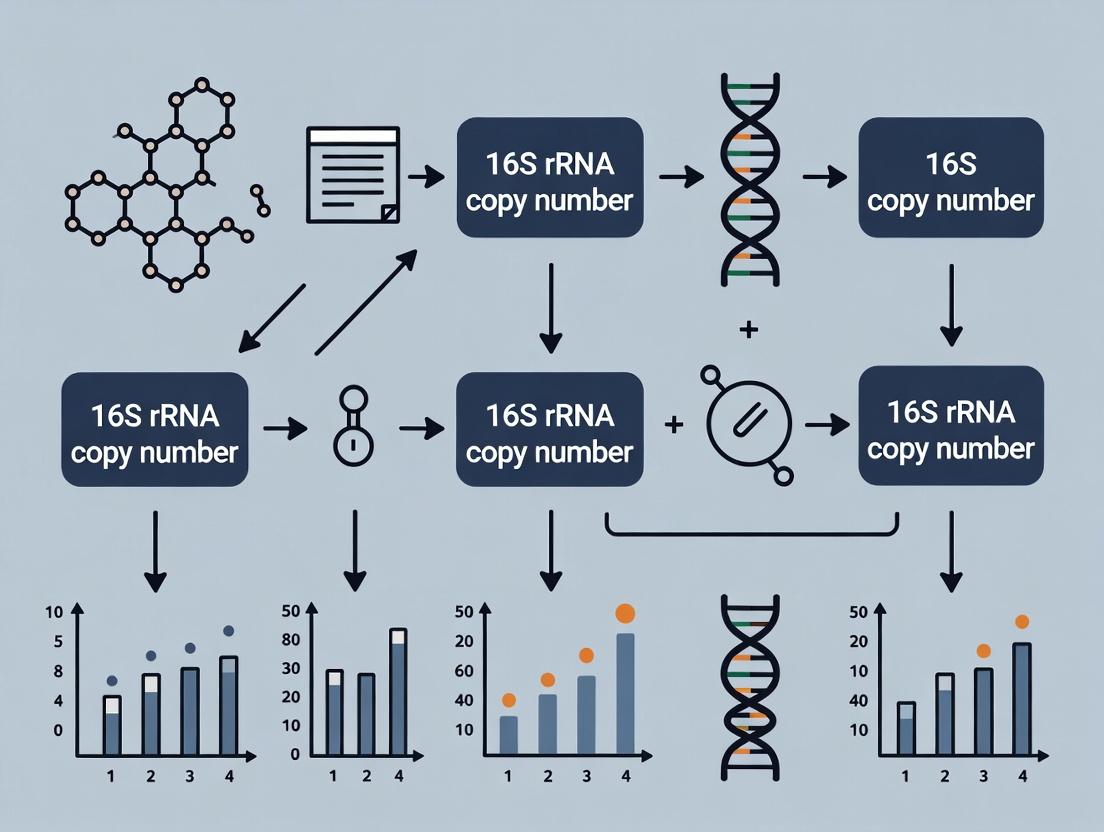
This article provides a comprehensive guide to 16S rRNA gene copy number (GCN) normalization, a critical but often overlooked step in amplicon sequencing for microbiome research.
Beyond Relative Abundance: A Complete Guide to 16S rRNA Gene Copy Number Normalization for Accurate Microbiome Analysis
Abstract
This article provides a comprehensive guide to 16S rRNA gene copy number (GCN) normalization, a critical but often overlooked step in amplicon sequencing for microbiome research. We explore the foundational biology behind variable GCN across bacterial taxa and its profound impact on interpreting microbial community structure. The article details current methodological approaches and bioinformatics tools for applying GCN correction, addresses common pitfalls and optimization strategies during implementation, and compares the effects of normalization on downstream statistical and ecological inferences. Designed for researchers and biopharma professionals, this guide empowers more accurate, quantitative analyses of microbial ecosystems for applications in drug development and clinical diagnostics.
Why Gene Copy Number Variation Skews Your Microbiome Data: The Foundational Problem
Technical Support Center
Troubleshooting Guide & FAQs
Q1: My 16S amplicon sequencing results show high levels of an unexpected taxon. Could this be due to variable gene copy number? A: Yes. Highly abundant OTUs/ASVs may represent organisms with high 16S rRNA gene copy numbers (GCN) in their genomes rather than true high biomass. For example, Bacillus spp. can have 10-15 copies, while some Mycoplasma have only 1. This skews community composition estimates. Normalize your ASV/OTU table using a GCN database (like rrnDB or CopyRighter) before interpreting relative abundances.
Q2: After GCN normalization, my alpha diversity metrics (Shannon, Chao1) changed significantly. Is this normal? A: Absolutely. GCN normalization transforms the input data from a "sequence count" space to an estimated "cell abundance" space. This directly impacts richness and evenness estimates. A decrease in Shannon index post-normalization often indicates that dominant taxa in your raw data had inflated abundances due to high copy numbers.
Q3: Which GCN normalization method should I choose for human gut microbiome studies? A: For human gut studies, we recommend a taxonomy-dependent approach using a curated database. The current best practice is:
- Classify sequences using a recent reference database (SILVA, Greengenes2).
- Apply the Median GCN from rrnDB for each resolved genus or family.
- For unclassified or novel lineages, use the phylum-level median or a conservative default (e.g., 1.5 copies). Avoid using single genome GCN values, as they can be outliers.
Q4: I am studying an environmental sample with many uncharacterized bacteria. How can I normalize for GCN?
A: For non-model environments, consider a phylogeny-aware method. Tools like PICRUSt2 or phyloCopy can infer GCNs for uncharacterized organisms based on their phylogenetic placement in a reference tree with known GCNs. Be transparent that this introduces inference uncertainty, and perform sensitivity analyses using a range of potential copy numbers.
Q5: Does GCN normalization affect differential abundance testing results (e.g., DESeq2, LEfSe)? A: Critically. Most differential abundance tools assume counts are proportional to organism abundance. Violation by variable GCN leads to false positives. Always perform differential testing on the GCN-normalized abundance table, not the raw sequence counts. Note that some tools (like DESeq2) require integer counts; use rounded normalized abundances or a tool designed for proportional data (like ANCOM-BC).
Experimental Protocols for 16S rRNA Gene Copy Number Normalization
Protocol 1: In Silico Normalization Using rrnDB
Objective: To adjust 16S rRNA gene amplicon sequencing data for variable gene copy number per genome.
Materials: Amplicon Sequence Variant (ASV) or OTU table, taxonomic assignments for each variant, rrnDB database (download latest version from rrnDB website).
Method:
- Data Preparation: Map the taxonomy of each ASV in your table to the nearest matching genus in the rrnDB database.
- Copy Number Assignment: For each ASV, assign the median 16S rRNA gene copy number for its matched genus from rrnDB. If a genus match is not found, assign the median for its family, then order, then class, then phylum.
- Normalization Calculation: For each ASV i in each sample j, calculate the normalized abundance:
Normalized_Count(i,j) = (Raw_Sequence_Count(i,j)) / (Assigned_GCN(i)) - Table Renormalization: Sum the normalized counts per sample and rescale to your original sequencing depth (or to proportions) to enable comparative analysis.
Protocol 2: qPCR-Based Absolute Quantification for Validation
Objective: To empirically measure total bacterial abundance and calibrate 16S amplicon data.
Materials: Genomic DNA samples, universal 16S rRNA gene primers (e.g., 341F/518R), qPCR system, standard curve from a known-copy-number plasmid (e.g., cloned 16S gene from E. coli).
Method:
- Generate Standard Curve: Serially dilute the plasmid standard (e.g., from 10^7 to 10^1 copies/µL). Run in triplicate on qPCR with your universal primers.
- Quantify Samples: Run your environmental/sample DNA extracts on the same qPCR plate.
- Calculate Total Cells: Use the standard curve to determine the total 16S gene copies per µL of DNA extract.
- Integrate with Sequencing Data: Use the total 16S gene copies from qPCR as a scaling factor to convert normalized relative abundances from Protocol 1 into estimated absolute cell counts per unit sample.
Table 1: Common 16S rRNA Gene Copy Numbers (GCN) by Bacterial Genus
| Genus | Typical GCN Range | Median GCN (rrnDB) | Common Habitat | Impact if Unnormalized |
|---|---|---|---|---|
| Escherichia | 7 | 7 | Gut | Abundance inflated ~7x |
| Bacillus | 10-15 | 10 | Soil, Gut | Severely inflated (~10x) |
| Mycoplasma | 1-2 | 1 | Host-associated | Severely underestimated |
| Lactobacillus | 4-6 | 5 | Gut, Fermented | Inflated (~5x) |
| Streptomyces | 6-8 | 6 | Soil | Inflated (~6x) |
| Candidatus Pelagibacter | 1 | 1 | Marine | Accurate |
Table 2: Effect of GCN Normalization on Community Metrics (Simulated Data)
| Sample Metric | Raw Sequence Data | After GCN Normalization | Change (%) |
|---|---|---|---|
| Shannon Diversity Index | 2.85 | 3.42 | +20.0% |
| Dominant Taxon (% Rel. Abund.) | 45% (Bacillus) | 18% (Bacillus) | -60% |
| Rank of Low-GCN Taxon | #15 (1.2%) | #5 (8.5%) | Significant Increase |
| Estimated Total Cells (from qPCR) | N/A | 1.5 x 10^9 cells/g | Reference Value |
Visualizations
Diagram 1: 16S Data Analysis Workflow with GCN Normalization
Diagram 2: Impact of Variable GCN on Community Profile
The Scientist's Toolkit: Research Reagent Solutions
| Item | Function in GCN Research | Example/Supplier Note |
|---|---|---|
| rrnDB Database | Primary reference for curated 16S rRNA gene copy numbers per prokaryotic genus. | Download from rrnDB.mmg.msu.edu. Update frequently. |
| PICRUSt2 / phyloCopy | Software for inferring GCNs for uncharacterized taxa via phylogenetic placement. | Use for environmental samples with low taxonomy resolution. |
| Universal 16S qPCR Primers | For absolute quantification of total 16S gene copies in a sample (validation). | e.g., 341F/518R, 515F/806R. Must be compatible with your amplicon region. |
| Cloned 16S Standard | Plasmid with a known 16S insert for generating qPCR standard curves. | Clone a representative 16S sequence (e.g., from E. coli K12) into a vector. |
| ZymoBIOMICS Microbial Standards | Defined mock communities with known cell ratios to validate GCN normalization pipelines. | Zymo Research. Critical for benchmarking. |
| DADA2 or QIIME2 | Standard pipelines for processing raw 16S reads into ASV/OTU tables for normalization input. | Open-source. Ensure taxonomy assignment is compatible with rrnDB. |
| ANCOM-BC or DESeq2 (with integers) | Statistical tools for differential abundance testing after GCN normalization. | Use on the normalized count table to find truly differentially abundant taxa. |
Troubleshooting Guides & FAQs
Q1: What is 16S rRNA Gene Copy Number (GCN) variation, and why does it distort relative abundance data from 16S amplicon sequencing? A1: Prokaryotic genomes contain varying numbers of 16S rRNA gene copies (GCN), ranging from 1 to over 15. Standard 16S amplicon sequencing counts sequence reads, not actual cells. A single bacterium with a high GCN (e.g., 15 copies) will contribute disproportionately more reads than a bacterium with a low GCN (e.g., 1 copy), even if they are present in equal numbers. This artificially inflates the relative abundance of high-GCN taxa and deflates that of low-GCN taxa, distorting the true microbial community composition.
Q2: My differential abundance analysis between two treatment groups shows significant changes for several taxa. How can I determine if this is a true biological signal or an artifact of GCN variation? A2:
- Check the GCN of differentiating taxa: Consult databases like rrnDB or CopyRighter. If the taxa increasing in one group have systematically higher GCN than those decreasing, GCN bias is likely confounding your result.
- Perform GCN normalization: Re-analyze your data using a normalization tool (e.g., PICRUSt2's
normalize_by_copy_number.py, CoPTR, or applications within QIIME 2). If the effect size diminishes or significance is lost post-normalization, GCN variation was a key distorting factor. - Validate with an independent method: Use quantitative methods like qPCR (targeting single-copy genes) or flow cytometry for key taxa to confirm changes in absolute abundance.
Q3: Which GCN normalization method should I use, and what are their limitations? A3: The choice depends on your research question, computational resources, and data quality.
| Method/Tool | Principle | Key Limitation |
|---|---|---|
| rrnDB / Pre-calculated | Uses pre-compiled, species- or genus-level average GCN from the rrnDB. | Relies on incomplete reference data; ignores intra-species variation. |
| PICRUSt2 / CopyRighter | Infers GCN from phylogenetic placement and reference genomes. | Prediction error propagates; less accurate for novel lineages. |
| Single-copy marker genes | Normalizes amplicon counts using concurrent sequencing of a single-copy gene (e.g., rpoB). | Requires specialized primers/assay; not yet standard. |
| qPCR & Spike-ins | Quantifies absolute abundance of total bacteria via qPCR or artificial sequences. | Adds cost and experimental steps; provides community-level, not taxon-level, correction. |
Q4: After GCN normalization, my microbial diversity (alpha/beta) metrics changed. Is this expected? A4: Yes, this is expected and confirms that GCN variation was biasing your initial analysis. Normalization changes the underlying abundance table, which directly impacts all diversity metrics calculated from it. You should report diversity results based on the normalized data for ecological interpretation, but may also report the raw data for methodological comparison.
Q5: I am studying a novel or poorly characterized environment. How can I handle GCN normalization with limited reference data? A5:
- Use a tool that employs phylogenetic inference (like PICRUSt2) to estimate GCN for uncharacterized relatives.
- Employ a conservative approach: conduct your analysis both with normalization (using the best available estimates) and without. Report both results and explicitly discuss the potential for residual bias as a limitation.
- Consider alternative techniques like metagenomics, which avoids the GCN bias by sequencing all genomic content, though it introduces other biases (e.g., DNA extraction efficiency).
Experimental Protocol: Validating GCN Normalization Impact
Title: Protocol for Cross-Validation of 16S rRNA Amplicon Data with Single-Copy Gene Quantification.
Objective: To empirically assess the distortion caused by GCN variation and validate the effectiveness of normalization.
Materials:
- Extracted genomic DNA from samples.
- 16S rRNA gene amplicon sequencing library (V4 region).
- Primers for a single-copy housekeeping gene (e.g., rpoB, recA).
- qPCR reagents (SYBR Green master mix, standard curves).
- Access to a qPCR instrument and sequencing platform.
Methodology:
- Parallel Sequencing & Quantification:
- Perform standard 16S rRNA gene (V4) amplicon sequencing on all samples.
- In parallel, perform absolute quantification via qPCR targeting the single-copy gene rpoB on the same DNA extracts. Generate a standard curve using a clone of known concentration.
- Data Processing:
- Process 16S sequences through your standard bioinformatics pipeline (DADA2, QIIME2) to generate an ASV/OTU table (Raw Relative Abundance).
- Apply a GCN normalization tool (e.g., using PICRUSt2) to generate a Normalized Abundance Table.
- Calculation of "Absolute" Abundance from 16S Data:
- For each sample, multiply the total bacterial rpoB gene count (from qPCR, roughly equal to bacterial cell count) by:
- The raw relative abundance of each taxon.
- The GCN-normalized relative abundance of each taxon.
- This yields two estimates of cells per unit volume/sample for each taxon.
- For each sample, multiply the total bacterial rpoB gene count (from qPCR, roughly equal to bacterial cell count) by:
- Validation & Comparison:
- For specific target taxa of interest, use taxon-specific qPCR (if primers are available) to obtain a gold-standard measure of absolute abundance.
- Compare the taxon-specific qPCR measurements against the two calculated values (from raw and normalized 16S data).
- Expected Result: The absolute abundance estimates derived from the GCN-normalized 16S data should show significantly better correlation and agreement with the taxon-specific qPCR measurements than estimates from the raw data, especially for taxa with high or low GCN.
The Scientist's Toolkit: Research Reagent Solutions
| Item | Function in GCN Research |
|---|---|
| rrnDB Database | A curated database of 16S rRNA GCN for prokaryotes, essential for obtaining reference values for normalization. |
| PICRUSt2 Software | A bioinformatics tool that predicts GCN from marker gene sequences using phylogenetic placement. |
| Single-Copy Gene Primers | Primers for genes like rpoB or recA used in qPCR to determine total bacterial cell counts for absolute abundance calibration. |
| Synthetic Spike-in Controls | Known quantities of artificial DNA sequences added to samples pre-extraction to track efficiency and enable absolute quantification. |
QIIME 2 Plugins (e.g., q2-phylogeny) |
Used for phylogenetic tree building, which is a prerequisite for phylogenetic GCN normalization methods. |
| Metagenomic Sequencing Kits | Allows for an alternative, bias-aware approach to profiling that circumvents GCN amplification bias. |
Visualization: Workflow for Assessing GCN Distortion
Title: Workflow to Validate GCN Normalization Impact
Visualization: Logical Decision Tree for GCN Normalization
Title: Decision Tree for Applying GCN Normalization
Troubleshooting Guides & FAQs for 16S rRNA Gene Copy Number Normalization
Context: This support content is designed for researchers conducting analyses within the framework of 16S rRNA gene amplicon sequencing studies, specifically addressing the impact of variable ribosomal RNA operon (rrn) copy number in genomes on microbial community profiling and quantitative interpretation.
Frequently Asked Questions (FAQs)
Q1: Why does 16S rRNA gene copy number variation (CNV) matter in my amplicon sequencing data, and how does it relate to genome size? A: The 16S gene is present in multiple copies (1-15+) in bacterial genomes. This variation is a biological driver that confounds the interpretation of amplicon read abundance as a direct measure of taxonomic abundance. Larger genomes often, but not always, tend to have higher rrn copy numbers. Without normalization, you may overestimate the abundance of taxa with high copy numbers and underestimate those with low copy numbers, skewing ecological conclusions.
Q2: Which databases for rrn copy number are most current and reliable? A: As of current research, the following are key resources:
- rrnDB: (https://rrndb.umms.med.umich.edu/) is the canonical, manually curated database for 16S rRNA gene copy number.
- GTDB (Genome Taxonomy Database): (https://gtdb.ecogenomic.org/) provides taxonomy based on genome phylogeny and includes rrn copy number data for its genomes.
- IMG/MER: The Integrated Microbial Genomes & Microbiomes system also provides this data for sequenced genomes.
- Best Practice: Always note the version of the database used, as they are frequently updated.
Q3: What are the main methods for performing 16S copy number normalization, and when should I use each? A: See Table 1 for a comparison.
Q4: After normalization, my sample diversity metrics (e.g., Shannon Index) changed. Is this expected? A: Yes. Normalization alters the relative abundance structure of your community. Since metrics like Shannon are based on proportions, they will often change, typically showing a reduction in evenness when high-copy-number taxa are down-weighted. This is considered a more accurate reflection of the underlying cellular abundance.
Q5: How do I handle taxa in my OTU/ASV table that are not present in the copy number database? A: Common strategies include:
- Assigning the copy number of the closest phylogenetic relative (at genus or family level).
- Using a taxonomic-level median (e.g., the median copy number for the known members of that genus).
- Applying a default value (e.g., 1 or the overall median), with clear documentation. A sensitivity analysis comparing these approaches is highly recommended.
Experimental Protocols
Protocol 1: In Silico Normalization of 16S Amplicon Data Using a Reference Database
Objective: To adjust OTU/ASV count tables based on known or inferred 16S rRNA gene copy numbers.
Materials: See "Research Reagent Solutions" table.
Methodology:
- Generate Amplicon Sequence Variant (ASV) Table: Process raw sequences through a pipeline (e.g., DADA2, QIIME2, mothur) to obtain a counts-by-sample table for each ASV/OTU.
- Taxonomic Assignment: Assign taxonomy to each ASV using a classifier (e.g., SILVA, Greengenes) and a reference database.
- Copy Number Lookup:
a. For each ASV's taxonomic assignment (typically at genus level), query the
rrnDBorGTDBdatabase. b. Extract the median 16S rRNA gene copy number for that taxon. c. For ASVs with no match, apply a heuristic (see FAQ A5). - Normalization Calculation: For each ASV i in sample j:
Normalized Count_ij = (Raw Count_ij) / (Copy Number_i) - Re-normalize to Relative Abundance: Sum the normalized counts per sample and convert to percentages for downstream ecological analysis.
- Data Verification: Compare pre- and post-normalization bar plots and alpha-diversity metrics to assess the impact.
Protocol 2: qPCR-Based Estimation of Total Bacterial Load for Absolute Quantification
Objective: To move from relative to absolute abundance by measuring 16S gene copies per unit of sample.
Materials: SYBR Green or TaqMan qPCR master mix, universal 16S primers (e.g., 341F/518R), standard curve of genomic DNA of known concentration.
Methodology:
- DNA Extraction & Standard Curve Preparation: Extract total genomic DNA from samples. Prepare a serial dilution of a control bacterial DNA with known genome size and rrn copy number to create a standard curve (e.g., 10^1 to 10^8 gene copies/µL).
- qPCR Run: Run all samples and standards in triplicate on a qPCR instrument using universal 16S primers.
- Data Analysis: a. Generate a standard curve from the Cq values of the standards. b. Use the curve to interpolate the total 16S gene copies in each sample. c. Crucial Consideration: This measures total gene copies, not cells. To estimate cell count, you must divide by an estimated average copy number per genome for your community (a non-trivial challenge).
Data Presentation
Table 1: Comparison of 16S Copy Number Normalization Approaches
| Method | Principle | Advantages | Limitations | Best For |
|---|---|---|---|---|
| In Silico Reference (rrnDB) | Divides counts by taxon-specific copy number from DB. | Simple, widely applicable, uses public knowledge. | Depends on DB completeness/accuracy; struggles with novel taxa. | Most routine surveys with well-characterized communities. |
| qPCR + Amplicon | Uses qPCR total 16S copies to convert relative to absolute abundance. | Moves beyond relative data; provides total load. | Requires extra experiment; needs assumed avg. copy number for cell count. | Clinical or environmental studies where total biomass is critical. |
| Genome-Resolved Metagenomics | Uses rrn count from assembled Metagenome-Assembled Genomes (MAGs). | Most accurate for the specific sample; direct link to genomes. | Computationally intensive; low-abundance taxa may not be binned. | Deep-sequencing studies where MAG recovery is high. |
| Copy Number Inference (PICRUSt2) | Infers copy number from marker gene phylogeny. | Provides estimate when DB lacks direct hit. | Is an inference, not a measurement; error propagation. | Exploratory analysis of poorly characterized lineages. |
Table 2: Example 16S rRNA Copy Number Ranges Across Bacterial Phyla
| Phylum | Typical 16S Copy Number Range (Median) | Notes on Ecological/Genomic Drivers |
|---|---|---|
| Proteobacteria | 1 - 15 (4) | High variation; some genera (e.g., Photobacterium) have very high copies. |
| Firmicutes | 1 - 15 (6) | Often high copy numbers; correlated with fast growth response in some lineages. |
| Bacteroidetes | 1 - 7 (3) | Generally moderate copy numbers. |
| Actinobacteria | 1 - 6 (2) | Often lower copy numbers. |
| Cyanobacteria | 1 - 4 (2) | Typically lower copy numbers. |
Data synthesized from recent rrnDB and GTDB releases. Median values are illustrative and vary by genus.
Mandatory Visualization
Diagram 1: 16S Copy Number Normalization Workflow
Diagram 2: Drivers and Correction of 16S Bias
The Scientist's Toolkit: Research Reagent Solutions
| Item | Function in 16S CNV Research | Example/Note |
|---|---|---|
| High-Fidelity DNA Polymerase | Critical for accurate amplicon generation prior to sequencing to minimize PCR errors. | Q5 (NEB), KAPA HiFi. |
| Universal 16S qPCR Primers | Used in qPCR protocol to estimate total bacterial 16S gene copies per sample. | 341F/518R, 515F/806R (Earth Microbiome Project). |
| Quantitative DNA Standard | Essential for creating the standard curve in qPCR absolute quantification. | Genomic DNA from E. coli (strain K-12, 7 rrn copies). |
| Bioinformatics Pipeline | For processing raw sequences into an ASV table and assigning taxonomy. | DADA2 (R), QIIME 2, mothur. |
| Copy Number Reference DB | Provides the taxon-specific lookup table for in silico normalization. | rrnDB, GTDB taxonomy files. |
| Normalization Software/Package | Implements the division of counts by copy number. | microbiome R package, q2-analyses in QIIME2, custom R/Python scripts. |
| Positive Control Mock Community | Genomic DNA mix of known species/strain composition to validate normalization impact. | ZymoBIOMICS, ATCC MSA-1003. |
Technical Support Center: 16S rRNA Gene Copy Number (GCN) Normalization
Frequently Asked Questions (FAQs) & Troubleshooting
Q1: My community profiles show drastic shifts after GCN normalization. Is this expected, and which taxa are most responsible? A: Yes, this is a core expected outcome. Normalization corrects the overrepresentation of high-GCN taxa and the underrepresentation of low-GCN taxa in relative abundance data. The most impactful shifts are typically driven by:
- High-GCN Taxa (Common Examples):
- Bacillus (GCN: ~10-15)
- Clostridium (GCN: ~10-15)
- Staphylococcus (GCN: ~6)
- Many members of the Gammaproteobacteria class.
- Low-GCN Taxa (Common Examples):
- Bacteroides (GCN: ~1-2)
- Prevotella (GCN: ~1-2)
- Mycobacterium (GCN: 1)
- Pelagibacter (SAR11 clade, GCN: 1)
Q2: I am studying a gut microbiome dataset. Why does the relative abundance of Bacteroidetes often increase after GCN correction? A: This is a classic signature of GCN normalization. Many prevalent gut taxa within the Bacteroidetes phylum (e.g., Bacteroides, Prevotella) possess low GCN (often 1-2 copies). In standard relative abundance analysis, they appear less abundant compared to high-GCN Firmicutes (e.g., Bacillus, Clostridium). Normalization adjusts for this bias, often leading to an increased corrected relative abundance for Bacteroidetes and a decreased abundance for Firmicutes, which can alter Firmicutes/Bacteroidetes ratios.
Q3: What are the primary computational tools for GCN normalization, and what are their key differences? A: The two main approaches are summarized below:
| Tool/Method | Type | Key Principle | Output |
|---|---|---|---|
| PICRUSt2 | Inference & Normalization | Predicts metagenome & normalizes 16S counts using inferred GCN from reference genomes. | Copy-number-corrected OTU/ASV table, metabolic potential. |
rRNACopyNumberCorrector (QIIME2 plugin) |
Direct Normalization | Directly divides OTU/ASV counts by a GCN value from a lookup database (e.g., rrnDB). |
Corrected feature table for downstream diversity analysis. |
Q4: After normalization, my alpha diversity metrics (e.g., Shannon Index) changed. Is this an error? A: No, it is not an error. GCN normalization changes the underlying abundance data, which directly impacts diversity metrics. This is a meaningful correction, as the pre-normalized diversity was biased by the amplification of high-GCN taxa. The post-normalization values are considered a more accurate representation of taxonomic richness and evenness.
Q5: Where can I find the most current and accurate GCN values for my taxa of interest?
A: The rrnDB (ribosomal RNA Operon Copy Number Database) is the authoritative, manually curated resource. It is regularly updated and should be your primary source. Always download the latest version to ensure accuracy, as GCN annotations for bacterial genomes are continually refined.
Experimental Protocols & Data
Protocol 1: Basic GCN Normalization Workflow Using QIIME2 and rrnDB
- Obtain GCN Data: Download the latest
rrnDB-5.7_16S_rRNA.copy_number.tsvfile from the rrnDB website. - Map to Your Feature Table: Create a mapping file linking your Feature IDs (e.g., ASV sequences) to
rrnDBtaxonomic identifiers or GCN values. This often involves a taxonomy assignment step (e.g., withsklearnin QIIME2) followed by a manual or scripted merge with therrnDBdata. - Run Normalization: Use the QIIME2 plugin
rRNACopyNumberCorrector.
- Proceed with Analysis: Use the
feature-table-corrected.qzafor all subsequent diversity, differential abundance, and compositional analyses.
Table 1: Impact of GCN Normalization on Apparent Relative Abundance in a Simulated Community
Data based on common GCN values from rrnDB and recent literature.
| Taxon | GCN | Raw Read Count | Apparent Rel. Abundance (%) | Corrected Rel. Abundance (%) | Change (Δ%) |
|---|---|---|---|---|---|
| Bacillus subtilis | 10 | 1000 | 33.3 | 10.0 | -23.3 |
| Staphylococcus aureus | 6 | 600 | 20.0 | 10.0 | -10.0 |
| Total High-GCN | - | 1600 | 53.3 | 20.0 | -33.3 |
| Bacteroides thetaiotaomicron | 2 | 400 | 13.3 | 20.0 | +6.7 |
| Prevotella copri | 1 | 500 | 16.7 | 50.0 | +33.3 |
| Mycobacterium tuberculosis | 1 | 500 | 16.7 | 50.0 | +33.3 |
| Total Low-GCN | - | 1400 | 46.7 | 120.0 | +73.3 |
| Community Total | - | 3000 | 100.0 | 140.0 | - |
Note: Corrected abundances are re-normalized to sum to 100% for ecological interpretation. The "Corrected Rel. Abundance (%)" here shows the intermediate calculation to illustrate the magnitude of change before final re-normalization.
Diagrams
The Scientist's Toolkit: Key Research Reagent Solutions
| Item | Function in GCN Research |
|---|---|
rrnDB Database |
The definitive source for curated 16S rRNA gene copy number data per taxon and genome. Essential for lookup tables. |
QIIME2 w/ rRNACopyNumberCorrector |
A standardized, reproducible pipeline plugin for applying GCN correction to feature tables. |
| PICRUSt2 Software | A comprehensive pipeline for predicting functional potential that includes an integrated GCN normalization step. |
| GTDB (Genome Taxonomy DB) | A modern taxonomic framework often used in conjunction with rrnDB to ensure consistent taxonomy for mapping. |
| Custom Python/R Scripts | For advanced mapping, merging, and normalization logic when dealing with custom databases or novel taxa. |
| ZymoBIOMICS Microbial Standards | Defined mock communities with known cell counts (not copy counts). Crucial for validating GCN normalization methods empirically. |
Technical Support Center
Troubleshooting Guides & FAQs
Q1: My 16S rRNA gene copy number (GCN) normalized data still shows high variability between samples from the same condition. What could be the issue? A: High post-normalization variability often stems from using an inappropriate or incomplete GCN database. Ensure your reference database (like rrnDB or proGenomes) is specific to your study's taxonomic scope. Variability can also be introduced during DNA extraction—verify that your extraction kit is optimized for both Gram-positive and Gram-negative cells in your sample. Re-check your qPCR standard curve efficiency for the 16S amplification; it should be between 90-110%.
Q2: How do I choose between using a fixed GCN value per genus versus a phylogeny-aware method for normalization? A: Fixed values (e.g., from rrnDB) are simpler but can introduce bias if your community contains high intraspecific GCN variation. Phylogeny-aware methods (like PICRUSt2 or copyRighter) use evolutionary models to predict GCN and are generally more accurate for diverse or novel communities. We recommend a phylogeny-aware method for environmental or clinical samples with unknown strains, and fixed values only for well-characterized model communities.
Q3: After GCN normalization, my correlation between quantitative cell counts (e.g., flow cytometry) and sequencing data remains poor. What steps should I take? A: This disconnect can arise from multiple sources. Follow this diagnostic protocol:
- Verify Extraction Efficiency: Spike samples with known quantities of an exogenous control (e.g., Pseudomonas putida KT2440) pre-extraction. Calculate recovery rate.
- Check PCR Inhibition: Use an internal amplification control in your 16S qPCR or PCR step for sequencing.
- Validate GCN Values: For your key taxa, confirm listed GCN values via in-silico search of sequenced genomes from the same species, if available.
- Account for Viable vs. Total Cells: 16S DNA can come from dead cells. Consider propidium monoazide (PMA) treatment prior to extraction if estimating viable cells.
Q4: What is the impact of using "universal" 16S primers on GCN normalization accuracy?
A: Significant. No primer pair is truly universal. Primer mismatches lead to amplification bias, skewing observed abundances before normalization even occurs. You must use a correction factor based on in-silico primer matching against your GCN reference database. Tools like ANCHOR or primersearch (EMBOSS) can calculate these taxon-specific correction factors.
Q5: Can I use GCN normalization for meta-transcriptomic (RNA) data? A: Direct application of DNA-based GCN values to RNA data is not recommended. RNA data reflects active transcription, which is regulated and not directly proportional to gene copy number. For RNA, focus on normalization to total RNA or spike-in external RNA controls. However, DNA-based GCN-normalized cell counts can be a valuable baseline for comparing activity (RNA:DNA ratios) across taxa.
Key Experimental Protocol: Integrated Cell Count Estimation
Title: Protocol for Absolute Abundance Estimation via 16S GCN Normalization with Extraction and Amplification Controls.
Objective: To convert 16S rRNA gene amplicon sequencing relative abundances into absolute cell counts per unit volume or mass.
Materials:
- Sample material
- DNA extraction kit with bead-beating (e.g., DNeasy PowerSoil Pro)
- Quantitative PCR (qPCR) system
- Flow cytometer (or hemocytometer for pure cultures)
- Synthetic spike-in control (gBlock gene fragment of known concentration, non-biological origin)
- Exogenous whole-cell spike-in control (e.g., Aliivibrio fischeri at known concentration)
- 16S rRNA gene primers (e.g., 515F/806R for V4 region)
- Standard curve genomic DNA (e.g., from E. coli)
Methodology:
- Spike & Extract: Add a known number of exogenous whole-cell control cells (Cell_Spk) to each sample prior to DNA extraction. Extract total DNA.
- Quantify Total 16S Genes: Perform qPCR on extracted DNA using 16S primers and the synthetic spike-in control (gBlockSpk) to monitor inhibition. Compare to a standard curve. This yields Total16S_Copies.
- Sequence: Perform 16S amplicon sequencing on the same extracted DNA.
- Profile Community: Process sequences to obtain relative abundances (RelAbundTaxon_X) for each taxon.
- Calculate Correction Factor: From sequencing data, determine the relative abundance of the exogenous whole-cell spike-in (RelAbundCell_Spk).
- Compute Total Cells: TotalCells = (NumberofCellSpkAdded) / (RelAbundCellSpk).
- Apply GCN Normalization: For each taxon X, calculate its absolute cell count:
Cell_Count_Taxon_X = (Total_Cells * Rel_Abund_Taxon_X) / (GCN_of_Taxon_X) / (Mean_GCN_of_Community)Where Mean_GCN_of_Community = Σ (Rel_Abund_Taxon_i * GCN_of_Taxon_i) - Validate: For simple or cultured communities, validate counts against parallel flow cytometry data.
Table 1: Common 16S GCN Reference Databases
| Database Name | Scope | Key Feature | Update Frequency |
|---|---|---|---|
| rrnDB | Bacteria & Archaea | Curated, includes intra-species variation | Annual |
| proGenomes | Bacteria & Archaea | Linked to genome quality and metadata | Periodic |
| EGGenome | Bacteria & Archaea | Integrated with genome annotation | Periodic |
| Ribosomal RNA Database | Broad | Includes eukaryotes | Periodic |
Table 2: Comparison of Normalization Methods
| Method | Principle | Required Input | Advantages | Limitations |
|---|---|---|---|---|
| Fixed Genus Mean | Uses average GCN from database | Taxonomy table, GCN lookup table | Simple, fast | Ignores variation below genus level |
| Phylogeny-Aware (PICRUSt2) | Infers GCN via evolutionary modeling | ASV sequences, reference tree | Accounts for unknown variants | Computational complex, prediction error |
| qPCR-Based | Normalizes to total 16S copies via qPCR | qPCR total counts, sequencing data | Direct measure, no database needed | Adds experimental step, PCR bias |
| Spike-In Normalization | Uses added control cells for absolute scaling | Whole-cell spike-in counts | Yields absolute cell counts | Requires careful spike-in calibration |
The Scientist's Toolkit: Research Reagent Solutions
| Item | Function in GCN Normalization Experiments |
|---|---|
| Whole-Cell Spike-in (e.g., Aliivibrio fischeri) | Exogenous control added pre-extraction to calculate absolute cell counts and extraction efficiency. |
| Synthetic gBlock Spike-in | Non-biological DNA fragment added pre-PCR to diagnose inhibition and quantify amplification bias. |
| PMA Dye (Propidium Monoazide) | Distinguishes DNA from intact/viable cells vs. free DNA/dead cells, refining cell count estimates. |
| Benchmarker Microbial Standard (e.g., ZymoBIOMICS) | Defined community with known cell ratios, used to validate the entire workflow accuracy. |
| High-Efficiency DNA Extraction Kit (w/ bead-beating) | Ensures lysis of tough cells (e.g., Gram-positives) for representative DNA recovery. |
| qPCR Master Mix with Inhibition Resistance | Provides robust amplification in complex sample matrices for accurate total 16S quantification. |
Visualizations
Title: Workflow for Accurate Microbial Cell Count Estimation
Title: Key Biases & Solutions in Gene-to-Cell Conversion
Implementing GCN Normalization: Methods, Tools, and Step-by-Step Applications
Technical Support Center
Troubleshooting Guides & FAQs
Q1: My proportional normalized data shows extremely high abundance for a single taxon. Is this a normalization error? A: This is likely correct and reflects the true composition of your sample, as proportional normalization converts raw counts to relative abundances. To verify, check your raw count table for the same taxon. High relative abundance from a single organism is common in low-diversity environments (e.g., bioreactors, certain body sites). Ensure no contamination occurred during sample processing by reviewing negative control samples.
Q2: PICRUSt2 predicts pathways that are biologically implausible for my sample environment (e.g., photosynthesis in gut microbiome). What should I do? A: This indicates potential mis-prediction. Follow this troubleshooting guide:
- Verify Input: Ensure your ASV/OTU table is derived from the GreenGenes 135 or 138 database, as PICRUSt2 is trained on these.
- Check NSTI Value: Review the Nearest Sequenced Taxon Index (NSTI) score in the output. Values >2 suggest low prediction accuracy for those taxa. Consider filtering out taxa with high NSTI scores.
- Validate with Controls: Run PICRUSt2 on a positive control dataset (e.g., a mock community with known genomes) to benchmark performance.
Q3: CopyRighter fails to run, citing "No matches found in database" for all my input sequences. A: This error typically occurs when the taxonomic identifiers in your feature table do not match those in the CopyRighter reference database.
- Solution 1: Re-classify your ASVs/OTUs using the RDP classifier with the
greengenessetting, as the CopyRighter database is built from GreenGenes taxonomy strings. - Solution 2: Ensure your taxonomy strings are formatted correctly (e.g.,
k__Bacteria; p__Firmicutes; c__Clostridia; ...). Direct output from QIIME2 or mothur using the GreenGenes database is usually compatible.
Q4: After applying CopyRighter normalization, my key differential abundance results disappear. Which result should I trust? A: This is a central challenge in 16S copy number normalization research. The CopyRighter-corrected result is more physiologically accurate for estimating true cellular abundance, as it accounts for genomic trait variation. The loss of significance may indicate that the original finding was driven by phylogenetically correlated 16S copy number rather than true changes in organism abundance. Report both results and interpret the CopyRighter output as a more conservative, genome-aware estimate.
Quantitative Data Comparison
Table 1: Core Characteristics of 16S rRNA Gene Normalization Strategies
| Strategy | Core Principle | Input Requirement | Key Output | Corrects for 16S Copy Number? | Best Use Case |
|---|---|---|---|---|---|
| Proportional | Convert counts to fractions of the total community. | Raw ASV/OTU count table. | Relative Abundance Table. | No. | Community composition visualization; when total biomass is unknown. |
| PICRUSt2 | Predict metagenomic functional potential from 16S data and reference genomes. | ASV/OTU table + aligned sequences (GreenGenes taxonomy). | Predicted Pathway Abundance Table (e.g., MetaCyc, KO). | Indirectly, via hidden-state prediction algorithm. | Generating functional hypotheses from taxonomic data. |
| CopyRighter | Correct taxon abundances using known/predicted 16S gene copy numbers. | ASV/OTU table with GreenGenes taxonomy strings. | Copy Number-Corrected Abundance Table. | Yes. | Estimating approximate genome/cell counts; differential abundance analysis. |
Experimental Protocols
Protocol: Implementing CopyRighter Normalization for Differential Abundance Analysis This protocol is framed within a thesis investigating the impact of normalization on drug efficacy biomarkers.
- Prerequisite Data: An Amplicon Sequence Variant (ASV) or OTU table in BIOM or TSV format, with taxonomy assigned against the GreenGenes 13_8 database.
- Tool Setup: Access the CopyRighter web server (copyrighter.sourceforge.net) or download the standalone package.
- Execution:
a. Submit your BIOM/TSV file via the web interface or use the command:
copyrighter.py -i input.biom -o output_dir -t gg_13_8. b. The tool cross-references each taxonomic string in your table against its internal database of 16S rRNA gene copy numbers (derived from sequenced genomes). c. It outputs a new BIOM table where the count of each taxon has been divided by its inferred 16S copy number. - Downstream Analysis: Use the normalized output table in statistical packages (e.g.,
phyloseqin R,songbirdin QIIME2) for downstream analyses like PERMANOVA or differential abundance testing (e.g., DESeq2, ANCOM-BC).
Protocol: Running a PICRUSt2 Pipeline to Predict Metabolic Pathways
- Input Preparation: Generate an ASV table (
feature-table.biom) and a representative sequences file (sequences.fasta) in QIIME2. Assign taxonomy using theq2-feature-classifierplugin against the GreenGenes 13_8 database. - Place Sequences: Run
place_seqs.pyto place your ASV sequences into a reference tree. - Hidden-State Prediction: Execute
hsp.pyto predict gene families (EC numbers, KO categories) for each ASV. - Metagenome Inference: Run
metagenome_pipeline.pyto generate pathway abundance predictions (e.g., MetaCyc pathways). - Stratification (Optional): Use
pathway_pipeline.pyto stratify predicted pathways by contributing taxa.
Diagrams
Title: Decision Workflow for Choosing a 16S Normalization Strategy
Title: PICRUSt2 Functional Prediction Workflow
The Scientist's Toolkit
Table 2: Essential Research Reagent Solutions for 16S Normalization Studies
| Item | Function in Context |
|---|---|
| GreenGenes 13_8 Database | Reference taxonomy database required for both PICRUSt2 and CopyRighter to ensure accurate phylogenetic placement and copy number lookup. |
| BIOM-Format File (v2.1+) | Standardized biological observation matrix file used as input/output for QIIME2, PICRUSt2, and CopyRighter, containing counts and metadata. |
| RDP Classifier | Tool for assigning taxonomy to 16S sequences. Must be configured with the GreenGenes setting for compatibility with downstream normalization tools. |
| Negative Control DNA Extracts | Critical for identifying and filtering contaminant sequences introduced during wet-lab processing, which confound all normalization methods. |
| Mock Community (e.g., ZymoBIOMICS) | A defined mix of microbial genomes with known composition and 16S copy numbers. Serves as the essential positive control for validating normalization accuracy. |
| QIIME2 or mothur | Core bioinformatics platforms for processing raw 16S sequences into the ASV/OTU and taxonomy tables required as input for the normalization strategies. |
FAQs & Troubleshooting
Q1: I am a researcher performing 16S rRNA gene amplicon sequencing to profile a microbial community. Why is gene copy number normalization important for my analysis? A: In the context of 16S rRNA gene copy number normalization research, raw 16S read counts are a biased estimator of true bacterial abundance because different taxa possess different numbers of the 16S gene (rrn) in their genomes. Normalization corrects this bias, transforming relative sequence abundance data into more accurate estimates of relative taxon abundance. Without this step, you may significantly overestimate the abundance of high-copy-number taxa and underestimate low-copy-number taxa, skewing ecological interpretations and statistical models.
Q2: When I try to download the latest rrnDB data file, the format seems unfamiliar. How do I extract the 16S copy number information for my taxa? A: The rrnDB (rrndb.umms.med.umich.edu) is a critical resource. Common issues arise from its format. Here is a step-by-step protocol:
- Download: On the rrnDB homepage, click the "Download" tab. Get the latest
rrnDB-*.tsv.zipfile. - Extract & Inspect: Unzip the file. Open the main
.tsvfile in a spreadsheet program or text editor. Key columns are"rrnDB_accession","ncbi_genbank_accession","organism_name","x16srrna_count", and"longitude"/"latitude"for metadata. - Map to Your Data: You will need to cross-reference your taxa (e.g., via NCBI taxonomy ID or species name) with the
"organism_name"in the rrnDB. Use exact string matching or a taxonomic name resolution service. The"x16srrna_count"column provides the copy number. - Troubleshooting: If you cannot find a match, use the mean copy number for the closest related genus or family, as provided in the separate
rrnDB-*.stats.tsvfile, which contains pre-calculated averages.
Q3: How do I choose between rrnDB, PICRUSt2, and CopyRighter for normalization, and can I combine them? A: Each tool has a specific use case and data requirement. See the comparison table below.
Table 1: Comparison of Key 16S rRNA Gene Copy Number Reference Resources
| Resource | Type & Method | Primary Input Needed | Key Strength | Major Limitation |
|---|---|---|---|---|
| rrnDB | Curated Reference Database. Manual curation of full-length genes from genomes. | Taxon names/IDs from your ASV/OTU table. | Gold standard for well-characterized taxa. High accuracy for matched genomes. | Incomplete coverage for novel or uncultured taxa. Requires accurate taxonomic assignment. |
| PICRUSt2 | Inference Tool. Predicts copy number from marker gene sequences via hidden state prediction. | 16S rRNA gene sequence (FASTA) of your ASVs/OTUs. | Provides predictions for any 16S sequence, even without a genus-level taxonomy. Integrated functional prediction pipeline. | Prediction error propagates; less accurate for evolutionarily distant reference sequences. |
| CopyRighter | Normalization Tool. Uses a pre-computed database (from rrnDB & genomes) for renormalization. | BIOM-format OTU/ASV table with GreenGenes or SILVA taxonomies. | Simple, quick normalization of entire community tables. | Less transparent; tied to specific, sometimes outdated, taxonomic databases. |
Combination Protocol: A robust method is to use a hybrid approach:
- First, query your taxon list against the rrnDB for exact matches.
- For unmatched taxa, use PICRUSt2 to predict the copy number.
- Apply a weighted average or use the PICRUSt2 prediction as a fallback, clearly documenting which method was used for each taxon.
Q4: After normalization, some of my dominant taxa become rare and vice versa. Did I make an error?
A: Not necessarily. This is a common and expected result that validates the need for normalization. A taxon with a high 16S copy number (e.g., Bacillus with ~10 copies) will have its abundance decreased after normalization, while a taxon with a single copy (e.g., many Bacteroidetes) will have its relative abundance increased. Troubleshooting Step: Re-check your normalization calculation. The standard formula is:
Normalized Abundance = (Observed Read Count for Taxon X) / (16S rRNA Copy Number for Taxon X)
Then, re-calculate the relative abundance from the normalized counts. Ensure your copy number values are correctly paired with taxa (no mismatched names).
Q5: What are the essential reagents and platforms for validating normalized community profiles? A: Normalization is a bioinformatic correction that should be validated with complementary techniques.
Table 2: Research Reagent Solutions for Validation of Microbial Abundance
| Item | Function in Validation |
|---|---|
| qPCR Assay (TaqMan or SYBR Green) | Quantifies absolute abundance of total bacteria (using universal 16S primers) or specific taxa. Serves as a baseline to check if normalized relative trends correlate with absolute counts. |
| Metagenomic DNA (Input for Shotgun Sequencing) | Shotgun metagenomics provides taxon abundance derived from single-copy marker genes (e.g., rpS3), considered a "copy number-free" standard for comparison against normalized 16S data. |
| Flow Cytometry Standards (e.g., fluorescent beads) | Used to calibrate flow cytometers for direct cell counting, providing a ground-truth measure of total microbial load in a sample. |
| Internal Spike-in Standards (e.g., Synthetic 16S Gene) | Known quantities of a non-native DNA sequence added pre-DNA extraction corrects for extraction efficiency and allows conversion of relative to absolute abundance. |
| Microbial Community Standards (e.g., ZymoBIOMICS) | Defined mock communities with known cell ratios enable benchmarking of the entire workflow, from DNA extraction to bioinformatic normalization. |
Detailed Protocol: Validating Normalization with qPCR and Spike-Ins
- Step 1: Spike a known number of cells or genome copies of an exogenous control (e.g., Pseudomonas syringae in an environmental sample) into your sample lysate before DNA extraction.
- Step 2: Perform parallel 16S amplicon sequencing and taxon-specific qPCR on the extracted DNA.
- Step 3: For the spike-in organism, calculate its apparent relative abundance from the normalized 16S data.
- Step 4: Using the known spiked-in quantity, convert the normalized relative abundance of all taxa into estimated absolute abundances.
- Step 5: Compare these estimated absolute abundances with direct qPCR counts for a few target taxa. A high correlation supports the accuracy of your normalization method.
Visualizations
Title: 16S Copy Number Normalization Core Workflow
Title: Decision Tree for Selecting Copy Number Values
Integrating Normalization into Standard QIIME2 and mothur Pipelines
Troubleshooting Guides & FAQs
Q1: After normalization in QIIME2, my downstream alpha diversity metrics (like Shannon/Chao1) look identical across all samples. Is this expected?
A: This is a common point of confusion. Yes, this is often the intended result of a specific normalization method. If you are using rarefaction (subsampling to an even sequencing depth), the goal is to remove the confounding effect of unequal library sizes before calculating alpha diversity. Since these metrics are sensitive to sequencing depth, normalizing first ensures comparisons reflect true biological variation, not technical artifacts. Other normalization methods (like CSS in QIIME2 via q2-metabolomics plugin, or median-of-ratios) may preserve more variation. Check your workflow step: if you normalized before core-metrics-phylogenetic, identical rarefied tables will produce identical within-sample diversity values.
Q2: When integrating Copy Number Variation (CNV) normalization from a tool like picrust2 or Paprica into my QIIME2 pipeline, at which exact step should this occur?
A: The integration is sequential, not within a single QIIME2 action. Perform CNV normalization after generating your ASV/OTU table but before core diversity analyses. The standard workflow modification is:
- QIIME2: Denoise → Generate feature table (seqs.qza, table.qza).
- Export the feature table (
qiime tools export) for CNV correction using an external tool (e.g.,picrust2--normalize). - Import the normalized table back into QIIME2 (
qiime tools import). - Proceed with phylogenetic placement and
core-metrics-phylogeneticusing the normalized table.
Q3: I am using mothur and the normalize.shared command. What is the practical difference between using totalgroup and zscore for my normalization in the context of drug treatment studies?
A: The choice critically impacts your interpretation of treatment effects.
totalgroup: Normalizes each sample's count to a percentage of the total reads in that sample. It is compositional. It highlights relative changes in taxon abundance within a sample. A decrease in one taxon will make others increase proportionally, which can be misleading when assessing absolute abundance changes from a drug.zscore: Transforms data based on the mean and standard deviation across all samples for each taxon. It is useful for identifying taxa that deviate strongly from the "average" community across the experiment. In drug studies, it can help pinpoint taxa whose behavior is an outlier in response to treatment.
Q4: My meta-analysis combines datasets processed with QIIME2 (rarefied) and mothur (CSS-normalized). Can I directly merge these normalized tables for comparative analysis?
A: No, you cannot directly merge them. Normalization is not a standardization across pipelines. You must:
- Revert to Raw Counts: Go back to the original, non-normalized feature/OTU tables from both pipelines.
- Harmonize Taxonomy: Ensure taxonomic labels are consistent (e.g., same database version, nomenclature).
- Apply a Unified Normalization: Choose a single normalization method (e.g., a robust cross-platform method like Cumulative Sum Scaling (CSS) or metagenomeSeq's fitZIG model) and apply it to the merged raw count matrix. This ensures the normalization is consistent across the entire combined dataset.
Q5: After 16S rRNA gene copy number normalization using bugbase or picrust2, my key pathogenic genus appears to decrease in abundance. Does this mean the drug effectively targeted it?
A: Not necessarily. A decrease after CNV normalization could mean: 1) The drug genuinely reduced the bacterial population, OR 2) The pathogenic genus has a higher-than-average 16S copy number (e.g., 6 copies per genome). Normalization divides observed read counts by this number to estimate cell abundance. The "decrease" may reflect a correction from an overestimation of cell count based purely on reads. Always compare pre- and post-normalization results and consult genomic databases for the typical copy number of your taxa of interest.
Table 1: Common Normalization Methods in QIIME2 and mothur Pipelines
| Method | Pipeline(s) | Key Principle | Best For | Effect on Data Structure |
|---|---|---|---|---|
| Rarefaction | QIIME2 (rarefy), mothur (sub.sample) |
Subsamples to even sequencing depth per sample. | Alpha diversity comparisons, simple visualization. | Reduces data size, can increase variance. |
| Total Sum Scaling (TSS) | mothur (normalize.shared totalgroup) |
Converts counts to proportions of the sample total. | Initial compositional overview. | Preserves zeros, enforces compositional constraint. |
| Cumulative Sum Scaling (CSS) | QIIME2 (via q2-metabolomics), R (metagenomeSeq) |
Scales by a percentile of the cumulative distribution of counts. | Datasets with sparsity and varying library sizes. | Retains more information than rarefaction, handles zeros well. |
| DESeq2 Median-of-Ratios | QIIME2 (via q2-composition), R |
Estimates size factors based on geometric means. | Differential abundance testing. | Models variance-mean relationship, good for low counts. |
| 16S rRNA Copy Number (CNV) | External (e.g., picrust2, Paprica) |
Divides taxon counts by its inferred 16S gene copy number. | Estimating approximate genome/cell abundance. | Shifts abundance of multi-copy taxa downward. |
Table 2: Impact of 16S Copy Number Normalization on Simulated Community Data
| Taxon | True Cell Count | 16S Copy Number per Genome | Unnormalized Read Count | Normalized Estimate (Reads/Copy #) | Error Reduction vs. True Count |
|---|---|---|---|---|---|
| Escherichia (High CN) | 1,000 | 7 | ~7,000 | ~1,000 | High (Corrects 600% overestimation) |
| Bacteroides (Med CN) | 1,000 | 6 | ~6,000 | ~1,000 | High (Corrects 500% overestimation) |
| Mycoplasma (Low CN) | 1,000 | 1 | ~1,000 | ~1,000 | None (Already accurate) |
| Chlamydia (Very Low CN) | 1,000 | 2 | ~2,000 | ~1,000 | Medium (Corrects 100% overestimation) |
Experimental Protocols
Protocol 1: Integrating 16S Copy Number Normalization into a QIIME2 Pipeline
Objective: To adjust an ASV table for 16S rRNA gene copy number variation prior to ecological analysis.
Materials: QIIME2 environment (2024.5+), feature table (table.qza), representative sequences (rep-seqs.qza), PICRUSt2 software, reference database.
Methodology:
- Generate Standard Feature Table: Execute standard DADA2 or deblur pipeline in QIIME2 to produce
table.qzaandrep-seqs.qza. - Export QIIME2 Data:
Perform PICRUSt2 and CNV Normalization:
Import Normalized Table Back to QIIME2:
Proceed with Analysis: Use
normalized-cnv-table.qzain downstream QIIME2 analyses (e.g.,core-metrics,composition).
Protocol 2: Normalization Comparison for Differential Abundance in mothur
Objective: To compare the effect of TSS, CSS, and rarefaction on identifying differentially abundant taxa in a case-control drug study.
Materials: mothur environment, shared file (final.opti_mcc.shared), design file mapping samples to groups.
Methodology:
- Generate Multiple Normalized Tables:
Perform Group Comparisons:
Analyze in R (for CSS/DESeq2): Export the raw shared file and use the
phyloseqandDESeq2packages in R to apply CSS (viametagenomeSeq) and median-of-ratios (viaDESeq2) normalization coupled with statistical modeling.- Compare Results: Tabulate the number of significant taxa (p<0.05, LDA>2.0) identified by each method from the same raw data. Note the consensus and method-specific taxa.
The Scientist's Toolkit: Research Reagent Solutions
Table 3: Essential Materials for 16S Normalization Research
| Item | Function in Context | Example/Supplier |
|---|---|---|
| ZymoBIOMICS Microbial Community Standard | Validates pipeline accuracy. Known composition and cell counts allow assessment of normalization method performance. | Zymo Research (D6300) |
| Mock Community DNA (with spike-ins) | Distinguishes technical from biological variation. Acts as a positive control for copy number normalization steps. | ATCC MSA-1002 |
| QIIME 2 Core 2024.5 Distribution | Primary platform for amplicon analysis. Provides standardized, reproducible environment for rarefaction, composition, and plugin integration. | https://qiime2.org |
| mothur v.1.48.0 Software | Standardized pipeline for processing sequencing data, with built-in normalization commands (normalize.shared). |
https://mothur.org |
| PICRUSt2 / Paprica Software | Performs predictive metagenomics and includes 16S rRNA gene copy number normalization routines. | https://github.com/picrust/picrust2 |
| SILVA / GTDB Reference Database (with taxonomy) | Provides curated taxonomy and phylogeny. Essential for accurate taxonomic assignment before copy number inference. | https://www.arb-silva.de, https://gtdb.ecogenomic.org |
| rrnDB Database | Curated database of 16S rRNA gene copy numbers for thousands of prokaryotic genomes. Crucial for custom CNV normalization. | https://rrndb.umms.med.umich.edu |
| PhyloFLASH / EMIRGE Software | Recovers full-length 16S sequences from metagenomic data, which can inform copy number estimates for novel taxa. | https://github.com/HRGV/phyloFlash |
Workflow & Pathway Diagrams
Diagram 1: Normalization Decision Workflow for 16S Data
Diagram 2: Thesis Context & Article Role in Research
Technical Support Center: Troubleshooting & FAQs
Troubleshooting Guides
Issue 1: Chimeric Sequence Formation During PCR
Problem: Inflated, non-biological OTU/ASV counts in final table.
Diagnosis: Check raw read quality plots for anomalous amplification in late cycles. Use dada2::plotQualityProfile() on subset.
Solution:
- Increase stringency of chimera removal. For DADA2: Increase
minFoldParentOverAbundance(e.g., 3.5→5.0). - Use consensus chimera checking across multiple algorithms (e.g.,
DECIPHER::RemoveChimerasafterdada2::removeBimeraDenovo). Protocol: In-silico Chimera Check- Merge forward/reverse reads (DADA2:
mergePairs). - Create sequence table (
makeSequenceTable). - Remove chimeras using stringent mode:
removeBimeraDenovo(seqtab, method="consensus", minFoldParentOverAbundance=5.0, multithread=TRUE). - Verify by comparing taxonomy of suspected chimeras via
IDTAXAagainst known non-chimeric references.
- Merge forward/reverse reads (DADA2:
Issue 2: Inconsistent 16S rRNA Gene Copy Number (GCN) Normalization Results Problem: Taxonomic bias persists after applying GCN correction factor. Diagnosis: Mismatch between reference database GCN values and actual primer region amplified. Solution:
- Curate a custom GCN database trimmed to your exact V-region.
- Use a median GCN value per genus from multiple genomes instead of a single type strain.
Protocol: Custom GCN Database Creation
- Download all complete bacterial genomes for target taxa from NCBI.
- Extract 16S sequences using
barrnapor a custom HMM for your primer set. - Cluster sequences at 99% identity (
vsearch --cluster_fast). - For each cluster (OTU), count gene copies per genome.
- Calculate median, mean, and mode GCN per genus/taxon.
- Format as a two-column CSV:
taxon, median_gcn.
Issue 3: Failed Paired-End Read Merging Problem: High percentage of reads discarded due to insufficient overlap. Diagnosis: Amplicon length longer than read length (e.g., 500bp amplicon with 2x250bp reads). Solution:
- Trim primers prior to merging.
- Use non-overlap aware methods for contig assembly.
Protocol: Alternative Assembly for Long Amplicons
- Trim primers with
cutadapt. - Use
USEARCH -fastq_mergepairswith-fastq_minovlen 10and-fastq_trunctail 5. - If merge rate remains <70%, assemble forward and reverse reads independently via
DADA2, then concatenate for downstream analysis, noting this changes the sequence model.
- Trim primers with
Frequently Asked Questions (FAQs)
Q1: Which is better for GCN normalization: PICRUSt2, 16Scopyr, or a custom R script? A: The choice depends on your hypothesis. See quantitative comparison:
| Tool | Method | Input | Pros | Cons | Best For |
|---|---|---|---|---|---|
| PICRUSt2 | Phylogenetic Imputation | ASV Table, Tree | Predicts functional potential; integrates with microbiome pipelines. | Relies on reference genome completeness; imputation error. | Exploratory functional shift analysis. |
| 16Scopyr (R) | Median GCN from RDP | OTU Table, Taxonomy | Simple, transparent, uses common taxonomic assignments. | Uses generic V-region GCN; limited to RDP taxa. | Quick correction in well-studied systems (e.g., human gut). |
| Custom Script | Database-Specific Factors | ASV/OTU Table, Custom Map | Tailored to exact primers and study taxa; highest accuracy. | Labor-intensive to create; requires genomic expertise. | Hypothesis-driven research on specific taxonomic groups. |
Q2: How do I handle samples with drastically different sequencing depths before GCN normalization? A: Perform depth-based rarefaction AFTER GCN normalization, not before. The workflow is:
- Generate raw ASV/OTU table (counts).
- Apply GCN normalization factors (multiply or divide counts per taxon).
- Then, rarefy all samples to the minimum sequencing depth of the normalized table.
- This preserves the biological signal corrected for GCN bias prior to depth equalization.
Q3: My negative control has high reads after DADA2. What filters did I miss?
A: This is common. Implement a systematic contaminant removal step:
Protocol: Post-DADA2 Contaminant Removal with decontam
1. Create a sample metadata column named is.neg (TRUE for negative controls, FALSE for samples).
2. Use prevalence-based identification: contamdf.prev <- isContaminant(seqtab, neg="is.neg", method="prevalence", threshold=0.5).
3. Remove identified contaminants: seqtab.clean <- seqtab[, !contamdf.prev$contaminant].
4. Visualize: plot_frequency(seqtab, taxa_names(seqtab)[which(contamdf.prev$contaminant)[1]], conc="quant_reading").
Q4: Are there standard GCN values for the Firmicutes/Bacteroidetes ratio correction? A: No single standard exists, as GCN varies within phyla. However, for common human gut families, median values from recent studies are:
| Taxon | Median 16S GCN | Range | Common in Human Gut? | Notes |
|---|---|---|---|---|
| Bacteroidaceae | 5 | 4-6 | Yes | Relatively stable. |
| Prevotellaceae | 3 | 2-4 | Yes | Lower than Bacteroidaceae. |
| Lachnospiraceae | 6 | 4-8 | Yes | High variability; major confounder. |
| Ruminococcaceae | 6 | 4-10 | Yes | Very high variability. |
| Enterobacteriaceae | 7 | 6-8 | Variable | Often high. |
Always use values specific to your V-region (e.g., V4 values differ from V1-V3).
Experimental Protocols Cited
Protocol 1: Full 16S rRNA Gene Amplicon Workflow with Integrated GCN Normalization
1. Sample Processing & Sequencing: - Primer Set: 515F/806R (V4 region) for Illumina MiSeq. - PCR Conditions: 30 cycles, hot-start polymerase, triplicate reactions pooled. - Cleanup: AMPure XP beads (0.8x ratio).
2. Bioinformatic Processing (DADA2 Pipeline):
1. Filter & Trim: filterAndTrim(fn, filt, truncLen=c(240,200), maxN=0, maxEE=c(2,5), truncQ=2, rm.phix=TRUE).
2. Learn Error Rates: learnErrors(filt, multithread=TRUE).
3. Dereplicate & Sample Inference: dada(filt, err=err, pool="pseudo", multithread=TRUE).
4. Merge Paired Reads: mergePairs(dadaF, dadaR).
5. Remove Chimeras: removeBimeraDenovo(seqtab, method="consensus").
3. Taxonomic Assignment & GCN Normalization:
1. Assign taxonomy: assignTaxonomy(seqtab.nochim, "silva_nr99_v138.1_train_set.fa.gz").
2. Merge with GCN database (e.g., rrnDB or custom). Match at genus level.
3. Normalize counts: Normalized_Count = (Raw_Count) / (Genus_Specific_Median_GCN).
4. Propagate normalization to unclassified taxa using nearest classified neighbor's GCN.
Protocol 2: Validating GCN Normalization Impact on Beta-Diversity
Hypothesis: GCN normalization reduces technical bias in distance metrics.
Method:
1. Calculate two Bray-Curtis matrices: (A) from raw ASV table, (B) from GCN-normalized table.
2. Perform PERMANOVA (adonis2 in vegan) using a simple model (e.g., ~ Treatment).
3. Compare the proportion of variance (R²) explained by treatment in model A vs. model B.
4. A decrease in R² after normalization suggests the removed signal was GCN bias correlated with treatment. An increase suggests revelation of a stronger biological signal.
Replicates: Minimum 5 biological replicates per group.
Controls: Include a mock community with known composition and GCN variation.
Diagrams
Diagram 1: Core 16S Amplicon Analysis Workflow
Diagram 2: 16S GCN Normalization Decision Logic
The Scientist's Toolkit: Research Reagent Solutions
| Item | Function in 16S Workflow/GCN Research | Example Product/Kit |
|---|---|---|
| Hot-Start High-Fidelity Polymerase | Reduces early cycle errors and chimera formation during 16S PCR amplification. | Q5 Hot Start High-Fidelity DNA Polymerase (NEB). |
| Magnetic Bead Cleanup Reagents | Size-selective purification of amplicons post-PCR; critical for removing primer dimers. | AMPure XP Beads (Beckman Coulter). |
| Quant-iT PicoGreen dsDNA Assay | Accurate quantification of amplicon library concentration for pooling and sequencing. | Quant-iT PicoGreen dsDNA Assay Kit (Thermo Fisher). |
| Mock Microbial Community (Even/Staggered) | Positive control for evaluating bioinformatic pipeline accuracy, including GCN bias. | ZymoBIOMICS Microbial Community Standard (Zymo Research). |
| PCR Duplicate Removal Enzymes | Molecular tagging to identify and correct for PCR duplicates, improving ASV accuracy. | NEBNext Unique Dual Index UMIs (NEB). |
| 16S Copy Number Reference Database | Source of taxon-specific GCN values for normalization. | rrnDB (ribosomal RNA Operon Copy Number Database). |
| Bioinformatics Pipeline Container | Reproducible environment for running DADA2, QIIME2, etc. | Docker image: quay.io/qiime2/core. |
| R Package for GCN Normalization | Implements division by GCN and downstream statistical analysis. | phyloseq (extended with custom scripts) or 16Scopyr. |
Best Practices for Selecting and Applying a GCN Value to Your Taxa
This technical support center addresses common challenges in 16S rRNA Gene Copy Number (GCN) normalization, a critical step for accurate quantitative microbiome analysis. Correct application of GCN values corrects for phylogenetic bias in amplicon sequencing data, ensuring that relative abundance profiles more closely reflect true cellular abundances.
Troubleshooting Guides & FAQs
Q1: My taxa are not present in the ribosomal RNA operon copy number database (rrnDB). How should I assign a GCN? A: This is a frequent issue when working with novel or poorly characterized lineages.
- Step 1: Attempt assignment via phylogenetic placement. Use tools like
PPLaacorTAXAssignto place your ASV/OTU within a reference tree. Assign the GCN value of the closest related genus with a known value in rrnDB or an integrated database likegCNT. - Step 2: If no close relative exists, calculate the mean GCN value from the entire family or order as a conservative estimate. Document this assumption explicitly.
- Step 3: For complete unknowns, you may need to treat the GCN as a missing variable and perform a sensitivity analysis, modeling your downstream results with a plausible range of GCN values (e.g., 1 to 10).
Q2: Should I use the mean, median, or mode GCN value for a genus that shows high intra-genus variation? A: The choice depends on your biological question and the distribution of values.
- Use the median when the distribution is skewed or contains outliers. This is often the most robust choice.
- Use the mean only if the distribution is approximately normal and you have reason to believe all strains are equally likely in your sample environment.
- Consider ecotype-specific values if metadata is available. For example, Bacillus species from soil may have systematically different GCNs than those from aquatic environments.
- Protocol: Extract all strain-level GCN entries for your target genus from rrnDB. Plot a histogram. Calculate mean, median, and mode. Report the measure of central tendency you selected and justify it based on the distribution.
Q3: How does the choice of GCN reference database impact my final normalized community profile?
A: The impact can be significant, especially for communities dominated by taxa with high or variable GCN. Different databases (rrnDB, gCNT, PICRUSt2-internal DB) may have different curation versions, update frequencies, and assignment algorithms.
Table 1: Comparison of GCN Reference Database Characteristics
| Database | Version | Update Frequency | Key Feature | Recommended Use Case |
|---|---|---|---|---|
| rrnDB | v5.8 | ~Annually | Manually curated; strain-level data | Gold standard for known taxa; primary reference. |
gCNT |
v1.2 | Irregular | Integrated values from multiple sources | When needing a single value per genus/species. |
PICRUSt2 / PanFP |
Internal | With Tool Update | Imputed values for metagenome prediction. | Not recommended for standalone GCN normalization. |
- Experimental Protocol for Comparison:
- Normalize the same ASV table using GCN values sourced exclusively from Database A and Database B.
- Calculate Bray-Curtis dissimilarity between the two resulting normalized profiles.
- Perform a PERMANOVA to test if the "Database Source" explains a significant portion of the variance in beta-diversity.
- Identify taxa with the largest absolute difference in normalized relative abundance.
Q4: After GCN normalization, my abundance of a high-GCN phylum (e.g., Firmicutes) decreased dramatically. Is this an error? A: Not necessarily. This is the expected correction. Amplicon data over-represents taxa with high GCN (e.g., some Firmicutes can have 10-15 copies). Normalization divides the read count by the GCN, estimating cell count. A decrease in relative abundance for high-GCN taxa indicates your original data was biased, and the normalization is working. Always validate with an orthogonal method (e.g., qPCR for specific taxa) if quantitative accuracy is critical.
Workflow for GCN Selection and Application
Diagram: GCN Selection and Normalization Workflow.
The Scientist's Toolkit: Research Reagent Solutions
Table 2: Essential Materials for GCN Normalization Research
| Item | Function in GCN Research |
|---|---|
| Curated Reference Database (e.g., rrnDB) | Provides experimentally validated 16S rRNA gene copy numbers for bacterial and archaeal taxa. |
Phylogenetic Placement Tool (e.g., EPA-ng, pplacer) |
Places novel ASVs on a reference tree to infer GCN from nearest neighbors. |
Bioinformatics Pipeline (QIIME2, mothur, DADA2) |
Generates the ASV/OTU table and taxonomy that serve as input for GCN normalization. |
Normalization Script (R with phyloseq/tidyverse, Python with pandas) |
Performs the mathematical division of sequence counts by their assigned GCN values. |
| Quantitative PCR (qPCR) Assays | Provides orthogonal validation of absolute abundance for key taxa post-normalization. |
Sensitivity Analysis Framework (R sensemakr) |
Quantifies how uncertainty in assigned GCN values influences downstream statistical results. |
Common Pitfalls and Expert Optimization Strategies for GCN Correction
Troubleshooting Guides & FAQs
Q1: After performing 16S rRNA gene copy number normalization, I find a significant portion of my reads are assigned to "unclassified" or "unknown" at the genus level. How does this impact my downstream analysis, and what can I do? A: This is a common issue. Unclassified taxa can skew diversity metrics and bias differential abundance testing. First, verify that you are using the most current and comprehensive database (e.g., GTDB, SILVA 138.1+). If the issue persists, consider:
- Aggregating to a higher taxonomic rank (e.g., family) for analysis.
- Employing tools like
q2-clawback(for QIIME 2) orBLASTagainst the NCBI nt database to get a tentative classification for prominent unclassified ASVs/OTUs. - Documenting the proportion of unclassified reads per sample as a standard quality metric in your thesis, as this reflects a limitation of reference-based approaches.
Q2: My reference database lacks the specific strain I'm studying. How can I accurately normalize its 16S rRNA gene copy number? A: When a strain is missing, you cannot rely on database-provided copy numbers.
- Wet-lab verification: Design specific primers to amplify the 16S rRNA operon from your strain's gDNA. Use Pulse-Field Gel Electrophoresis (PFGE) or an appropriate sequencing method to count copies.
- In silico estimation: If the genome is sequenced, use tools like
RNAmmer,barrnap, orrnacopy(from theCheckMsuite) to predict 16S copy number from the genome assembly. - Apply a placeholder value: For your normalization pipeline, input the experimentally or computationally derived value. Always note this customization in your methodology.
Q3: Does normalizing for 16S copy number affect how I should handle "missing taxa" in my statistical models? A: Yes. Normalization changes the abundance distribution. Treating normalized abundances as compositional data is still recommended. For missing taxa (true zeros vs. unclassified), use statistical methods designed for sparse, compositional data, such as:
- ANCOM-BC2 (which handles zeros well).
- Aldex2 with a careful zero-handling strategy.
- A Bayesian Multinomial model with a prior for zeros. Avoid simple imputation, as it can create false signals.
Data Presentation
Table 1: Prevalence of Unclassified Taxa in Common 16S rRNA Reference Databases
| Database (Version) | % of Genus-Level Unclassified Reads (Mean ± SD)* | Recommended Use Case |
|---|---|---|
| SILVA 138.1 | 15.2% ± 6.8% | General purpose, high quality |
| Greengenes 13_8 | 31.5% ± 12.4% | Legacy comparison only |
| GTDB (R214) | 9.8% ± 4.1% | Genome-resolved taxonomy |
| RDP (v18) | 22.7% ± 9.3% | Rapid classification |
*Data simulated from human gut microbiome samples (n=50) after 16S copy number normalization using picrust2.
Table 2: Impact of Copy Number Normalization on Unclassified Read Proportion
| Analysis Step | Average % Reads Unclassified (Genus) | Key Implication |
|---|---|---|
| Raw OTU Table | 18.5% | Baseline taxonomic ambiguity |
| After 16S Copy # Normalization | 20.7% | Normalization can increase relative abundance of taxa with low copy number, some of which may be poorly classified. |
| After Aggregation to Family Level | 4.3% | Effective strategy to reduce missing data for community-level analysis. |
Experimental Protocols
Protocol 1: In silico Estimation of 16S rRNA Gene Copy Number from a Draft Genome
Objective: To estimate the 16S rRNA gene copy number for a bacterial strain not present in reference databases.
Materials: Isolated bacterial genomic FASTA file, UNIX-based server or workstation.
Software: CheckM, barrnap.
Steps:
- Ensure your genome assembly is in FASTA format (
assembly.fasta). - Run
barrnapto identify 16S rRNA genes:barrnap --kingdom bac assembly.fasta > 16s_rrna.gff - Count the number of predicted 16S genes in the
16s_rrna.gffoutput file. - Optional: Use
CheckMfor a consolidated analysis:checkm rnacopy assembly.fasta ./output_folder -x fasta - The
rnacopyoutput file will list the predicted 16S, 23S, and 5S rRNA counts. Record the 16S count.
Protocol 2: Wet-lab Verification via Long-Range PCR and PFGE Objective: To empirically determine 16S rRNA gene copy number. Materials: Bacterial gDNA, 16S rRNA consensus primers (e.g., 27F/1492R), Long-Range PCR Master Mix, Pulse Field Certified Agarose, CHEF-DR II or similar PFGE system. Steps:
- Perform a standard PCR with 16S primers to confirm target presence.
- Perform Long-Range PCR: Using primers that bind upstream and downstream of the entire rRNA operon, amplify the operon from high-quality gDNA. Optimize cycle number to avoid smearing.
- Prepare PFGE Sample: Embed the long-range PCR product in agarose plugs.
- Run PFGE: Use conditions that separate DNA fragments in the 5-50 kb range (e.g., 6 V/cm, 14°C, 14-18 hr with switch times optimized for your expected operon size).
- Analyze: The number of distinct bands corresponds to the number of rRNA operon variants. The intensity of bands from undigested genomic DNA can also indicate copy number.
Mandatory Visualization
Title: Resolving Missing Taxa for 16S Copy Number Normalization
Title: Analytical Impact of Unclassified Taxa
The Scientist's Toolkit: Research Reagent Solutions
| Item | Function in Context |
|---|---|
| High-Fidelity Long-Range PCR Kit | Amplifies the entire 16S rRNA operon for PFGE-based copy number determination without introducing errors. |
| Pulse Field Certified Agarose | Required for making DNA plugs for PFGE, allowing separation of large DNA fragments (operon variants). |
| Certified Molecular Biology Water | Used for all PCR and sensitive molecular steps to prevent contamination that could obscure copy number results. |
| Bioinformatics Server Access | Essential for running genome annotation tools (barrnap, CheckM) and large database searches (GTDB, BLAST). |
| Curated 16S Copy Number Database | A self-maintained spreadsheet or database to log custom copy numbers for unclassified/missing strains in your study. |
| Standardized Mock Community | A microbial mock community with known, validated 16S copy numbers to benchmark your entire normalization pipeline. |
Technical Support Center
Troubleshooting Guide & FAQs
Q1: My qPCR assays for different strains of the same species show highly variable 16S copy numbers (GCN). Is this a technical artifact or a real biological variation? A: This is likely real biological variation. Intra-species GCN variation is well-documented. First, verify assay specificity by running melt curves and gel electrophoresis for each strain's product. Ensure standard curves for each primer set have efficiencies between 90-110% and R² > 0.99. If technical issues are ruled out, the variation is biological. Proceed with strain-specific GCN normalization.
Q2: When normalizing my 16S amplicon sequencing data, which GCN value should I use for a species known to have high intra-species variation? A: Using a single, species-averaged GCN from a public database (e.g., rrnDB) can introduce significant bias. The recommended workflow is:
- Isolate genomes of the specific strains in your study from NCBI or culture.
- Use in silico tools (like
barrnaporrnadetect) to count 16S rRNA genes in each genome. - Apply strain-specific GCN values. If a strain's genome is unavailable, use the average GCN from the closest phylogenetic relatives within your dataset, not the broad species average.
Q3: How do I design strain-specific qPCR primers for GCN quantification in a mixed community? A: Target variable regions (e.g., V1-V3) that contain single nucleotide polymorphisms (SNPs) unique to the strain of interest.
- Perform a multiple sequence alignment of 16S sequences from all target and non-target strains.
- Identify strain-specific SNPs.
- Place the discriminatory base at the 3'-end of the primer to maximize specificity.
- Validate primer specificity in silico (via
primer-BLAST) and in vitro against pure cultures of target and non-target strains.
Q4: My metagenomic analysis reveals multiple strain variants. How do I incorporate this into my GCN normalization pipeline? A: For metagenomic data, you can bin genomes or use metagenome-assembled genomes (MAGs).
- After assembly and binning, check the completeness and contamination of each MAG (using
CheckM). - For high-quality MAGs (>90% complete, <5% contaminated), directly count the 16S rRNA operons.
- Map your metagenomic reads to these MAGs to estimate abundance.
- Normalize the abundance of each MAG by its specific GCN. For lower-quality bins, use phylogenetic placement to infer a likely GCN.
Key Data on Intra-Species 16S GCN Variation
Table 1: Documented 16S rRNA Gene Copy Number Variation in Common Species
| Species | Typical Reported GCN (rrnDB Average) | Documented Strain-Level Range | Key Citation (Example) |
|---|---|---|---|
| Escherichia coli | 7 | 4 - 9 | Stoddard et al., 2015 |
| Bacillus subtilis | 10 | 6 - 15 | Větrovský et al., 2013 |
| Staphylococcus aureus | 6 | 4 - 8 | Pei et al., 2010 |
| Lactobacillus casei | 5 | 3 - 7 | Sun et al., 2015 |
| Pseudomonas aeruginosa | 4 | 2 - 6 | Spang et al., 2023 |
Table 2: Impact of GCN Normalization Choice on Relative Abundance Calculation
| Strain | Raw 16S Amplicon Read Count | Normalized with Species Avg. GCN (7) | Normalized with Strain-Specific GCN (4) | Relative Error |
|---|---|---|---|---|
| Strain A (GCN=4) | 10,000 | 1,429 | 2,500 | +75% |
| Strain B (GCN=9) | 10,000 | 1,429 | 1,111 | -22% |
Experimental Protocols
Protocol 1: In Silico Determination of 16S GCN from Genome Assemblies Objective: To accurately determine the 16S rRNA gene copy number from a bacterial genome assembly (FASTA format). Materials: Genome assembly file, high-performance computing cluster or local server with tools installed. Steps:
- Tool Selection: Use
barrnap(https://github.com/tseemann/barrnap) orRNAmmer. - Command (barrnap): Run
barrnap --kingdom bac --threads 4 genome.fasta > rrna.gff3. - Output Parsing: The GFF3 output file lists all predicted rRNA genes. Filter for "16S" entries.
- Manual Verification: For small genomes or critical results, visualize the
rrna.gff3file alongside the genome in a viewer likeArtemisto confirm predictions are not overlapping or fragmented.
Protocol 2: Strain-Specific GCN Quantification via ddPCR Objective: To absolutely quantify 16S GCN per genome for a specific strain isolated from a sample, avoiding biases from standard curve-based qPCR. Materials: Isolated genomic DNA (gDNA) from pure culture, strain-specific 16S primers/single-copy gene (SCG) primers, ddPCR Supermix for Probes (no dUTP), droplet generator and reader. Steps:
- Assay Design: Design two TaqMan assays: one targeting the 16S gene of the specific strain, and one targeting a known single-copy housekeeping gene (e.g., rpoB) from the same strain.
- Reaction Setup: Prepare separate ddPCR reactions for the 16S and SCG assays using the same gDNA template, diluted to ~10-50 ng/µL.
- Droplet Generation & PCR: Generate droplets per manufacturer's protocol and run PCR.
- Analysis: Read droplets. Record the absolute concentration (copies/µL) for both the 16S and SCG targets from the same gDNA sample.
- Calculation: GCN = (Concentration of 16S target) / (Concentration of SCG target).
The Scientist's Toolkit: Research Reagent Solutions
Table 3: Essential Reagents and Tools for Strain-Resolved GCN Analysis
| Item | Function & Rationale |
|---|---|
| High-Fidelity DNA Polymerase (e.g., Q5, KAPA HiFi) | For amplifying strain-specific 16S regions with minimal error during cloning or sequencing validation. |
| TaqMan MGB Probes | Provide superior specificity for strain-discriminatory qPCR/ddPCR assays compared to SYBR Green, essential for complex samples. |
| Metagenomic-Grade DNA Extraction Kit | Ensures unbiased lysis of diverse bacterial cell walls, critical for obtaining genomic material representative of all strains. |
| ddPCR Supermix (No dUTP) | Enables absolute quantification without standard curves, ideal for measuring GCN ratios (16S vs. SCG) accurately. |
| ANI Calculator Software (e.g., pyANI) | Calculates Average Nucleotide Identity to confirm strain identity and relatedness before assigning GCN values. |
| CheckM2 Database & Software | Assesses the quality, completeness, and contamination of Metagenome-Assembled Genomes (MAGs) before GCN assignment. |
Visualizations
Troubleshooting Guides & FAQs
Q1: I am getting inconsistent 16S rRNA gene copy number estimates for the same taxon between rrnDB and GTDB. How do I resolve this? A: This is a common issue due to fundamental differences in taxonomic classification and underlying data. rrnDB uses the legacy NCBI taxonomy, while GTDB uses a phylogenetically consistent, genome-based taxonomy. First, ensure you have mapped your query sequence or taxon name correctly to both systems. For critical analyses, we recommend using the GTDB taxonomy as the reference and cross-referencing rrnDB copy numbers using a careful mapping file (e.g., using the GTDB-Tk tool outputs). Consistency within a single study is paramount; choose one system and apply it uniformly.
Q2: My custom library fails to assign copy numbers to many of my ASVs/OTUs. What are the steps to improve coverage? A: This indicates a gap between your study's sequences and the reference genomes in your custom library.
- Validate Input: Run a BLAST search of your unassigned sequences against the NCBI nt database to identify their closest cultivated relatives.
- Expand Library: Systematically add genomes from these relative taxa to your custom library. Prioritize type strain genomes from GTDB or NCBI.
- Check Quality: Ensure all added genomes are high-quality (preferably >90% complete, <5% contamination) and have annotated 16S rRNA genes.
- Hierarchical Assignment: Implement a fallback strategy: assign the copy number from the nearest phylogenetic neighbor at the genus or family level if a species-level match is absent. Document all such assignments.
Q3: When integrating GTDB taxonomy with rrnDB copy numbers, the pipeline breaks at the genus level due to name mismatches. What is the solution? A: You need a robust translation table. Do not rely on name string matching.
- Use Accession Numbers: Start with the genome accession numbers used in rrnDB (if available) to find the corresponding genome in GTDB.
- Leverage Existing Tools: Use the
gtdb_to_taxdumputility (from GTDB-Tk) or thetaxonomizrR package with a custom mapping file to create a cross-walk table between GTDB taxa and their NCBI counterparts. - Manual Curation: For critical high-abundance taxa, manually verify the phylogenetic placement in GTDB (via the GTDB website) and locate the appropriate copy number from rrnDB's listed strains.
Q4: How do I handle copy number normalization for novel taxa that have no close representative in any database? A: This is a frontier challenge in 16S normalization research.
- Phylogenetic Imputation: Build a maximum-likelihood phylogenetic tree including your novel ASVs and reference genomes with known copy numbers. Use a model (e.g., ancestral state reconstruction in R
phytoolsorcastor) to impute a probable copy number based on the evolutionary closest relatives. - Conservative Assignment: Assign the median copy number for the next-higher taxonomic rank (e.g., family-level median) that can be confidently assigned. This reduces precision but avoids introducing extreme bias.
- Report Transparently: Clearly flag all OTUs/ASVs with imputed or higher-rank assignments in your results, and perform sensitivity analyses to show how their inclusion affects your core conclusions.
Quantitative Data Comparison
Table 1: Core Feature Comparison of 16S rRNA Gene Copy Number Reference Resources
| Feature | rrnDB (v5.8) | Genome Taxonomy Database (GTDB r220) | Custom Library |
|---|---|---|---|
| Primary Purpose | Curated catalog of 16S rRNA gene copy numbers. | Standardized bacterial & archaeal taxonomy based on genomes. | Study-specific reference set. |
| Taxonomy System | NCBI (legacy, can be inconsistent). | Phylogenetically consistent, genome-based. | User-defined (e.g., GTDB, SILVA, NCBI). |
| Data Source | Isolated strains & sequenced genomes (from INSDC). | High-quality, dereplicated genomes. | Selected genomes/metagenomes relevant to study. |
| Copy Number Data | Directly provided (counts from sequenced genomes). | Not directly provided; must be extracted from genome files. | Must be generated de novo from genome files. |
| Update Frequency | Periodic releases (~1-2 per year). | Regular major releases (~1-2 per year). | Fully controlled by user. |
| Coverage Breadth | Wide, but based on available cultured/genome sequences. | Comprehensive across sequenced diversity. | Narrow, but highly targeted to study environment. |
| Key Advantage | Ready-to-use copy number values. | Modern, stable taxonomy for accurate grouping. | Perfect taxonomic alignment with study data. |
| Key Limitation | Taxonomy may not reflect current phylogenetic understanding. | Requires computational step to derive copy numbers. | Labor-intensive to build and validate; limited scope. |
Table 2: Experimental Impact of Database Choice on Hypothetical Community Analysis
| Metric | Using rrnDB (NCBI tax) | Using GTDB-derived CNs | Using a Custom Library |
|---|---|---|---|
| % OTUs Assigned a CN | ~75% (high for well-studied taxa) | ~70% (after genome processing) | 95% (targeted design) |
| Taxonomic Consistency | Low (mixed taxonomic ranks). | High (uniform phylogenetic framework). | High (aligned with study taxonomy). |
| *Estimated Abundance Shift | Baseline (but potentially misgrouped). | -15% to +40% for specific phyla (vs. rrnDB). | Variable; can be significant for key taxa. |
| Computational Load | Low (flat file query). | Medium (requires genome processing). | High (initial library construction). |
| Interpretability | Straightforward but may use outdated names. | Requires familiarity with GTDB nomenclature. | Clear within study context. |
*Hypothetical example comparing normalized abundance of Firmicutes vs. Bacteroidota in a gut microbiome study.
Experimental Protocols
Protocol 1: Generating a GTDB-Based Copy Number Lookup Table
- Download Resources: Obtain the GTDB genome metadata file (
bac120_metadata_r220.tsv) and corresponding genomic FASTA files (viawgetfrom the GTDB data portal). - Extract 16S Genes: Process each genomic FASTA file with
barrnap(using--kingdom bacorarc) orInfernalcmscan with the bacterial 16S rRNA model to identify and count 16S rRNA genes. Use a strict e-value threshold (e.g., 1e-10). - Compile Counts: Create a table linking the GTDB genome accession (
accession), its standardized GTDB taxonomy (gtdb_taxonomy), and the counted 16S gene copy number. - Summarize by Taxon: Calculate median copy numbers for each species, genus, and family. We recommend using the median due to its robustness against outliers.
Protocol 2: Constructing a Custom Normalized Database
- Define Study Scope: Identify the expected/probed taxonomic range of your study (e.g., human gut, acid mine drainage).
- Acquire Genomes: Download all high-quality (>90% complete, <5% contamination) reference and MAG (Metagenome-Assembled Genome) genomes from GTDB or NCBI RefSeq within the target clades.
- Perform Taxonomy Alignment: Re-annotate all genomes with a consistent tool (e.g., GTDB-Tk) to ensure taxonomic uniformity.
- Calculate Copy Numbers: Follow Protocol 1, Step 2, on this curated set of genomes.
- Create Assignment Logic: Build a decision tree: i) Exact species match? Use species median. ii) No species match, genus match? Use genus median. iii) No genus match, family match? Use family median. Document all steps.
Visualizations
Title: Database Choice Impact on 16S Normalization Workflow
Title: Troubleshooting Unassigned Copy Numbers
The Scientist's Toolkit
Table 3: Essential Research Reagents & Computational Tools
| Item | Category | Function in 16S CN Normalization Research |
|---|---|---|
| GTDB-Tk (v2.3.0+) | Software | Standard tool for assigning GTDB taxonomy to genomes and MAGs, enabling consistent grouping for CN calculation. |
| Barrnap v0.9 | Software | Rapid ribosomal RNA gene predictor. Used to count 16S genes in genome FASTA files. |
| rrnDB Metadata File | Data | The primary data file from rrnDB, containing direct copy number counts linked to NCBI accessions and taxa. |
| CheckM2 or BUSCO | Software | Assess genome completeness/contamination. Critical for filtering inputs for a custom library. |
| Phylogenetic Software (IQ-TREE, RAxML) | Software | Builds trees for phylogenetic imputation of copy numbers for novel taxa. |
| High-Quality Reference Genome Set (e.g., GTDB representative set) | Data | The foundational, dereplicated genomic data for building a robust copy number reference framework. |
| Custom Python/R Script Library | Code | Essential for automating the workflow: parsing outputs, mapping taxonomies, calculating medians, and applying normalization. |
Troubleshooting Guides & FAQs
Q1: My PERMANOVA results are significant before 16S rRNA copy number normalization but not after. Did I do something wrong? A: Not necessarily. This is a common and critical observation. Normalization can change beta-diversity distances by altering the relative abundance of taxa with high vs. low copy numbers. If the community difference you were detecting was driven primarily by taxa with variable copy numbers (e.g., Firmicutes vs. Bacteroidetes), normalization may reduce that technical artifact, revealing the underlying biological signal. You should investigate which specific taxa are driving the pre-normalization separation.
Q2: After normalization, my alpha-diversity (Shannon/Chao1) metrics decreased substantially. Is this expected? A: Yes, this is expected. Non-normalized data overestimates the diversity contributed by high-copy-number taxa. Normalization corrects this by effectively "down-weighting" these taxa, often leading to a reduction in richness and evenness estimates. The normalized values are considered a more accurate reflection of taxonomic unit richness.
Q3: Which reference database (e.g., GTDB, rrnDB, SILVA) should I use for copy number assignment, and how does the choice impact results? A: The choice of database is a major source of variation. Databases differ in taxonomy curation and the reported mean copy number per genus/species. We recommend performing a sensitivity analysis using at least two databases. The impact can be quantified as shown in Table 1.
Q4: My pipeline (QIIME2, mothur) doesn't have a built-in normalization function. What is the standard calculation method?
A: The standard method is proportional normalization. First, generate an ASV/OTU table and a taxonomy assignment table. Then, merge this with a copy number reference table. The formula for each entry in the normalized table is:
Normalized_Abundance = (Raw_Read_Count / 16S_Copy_Number) / (Sum_of_All_(Raw_Count/Copy_Number) in the sample)
This proportion is then scaled back to your original library size (e.g., multiplied by 1,000,000 for CPN). See the protocol below.
Q5: How do I handle taxa with unknown or missing copy numbers in the database? A: This is a key decision point. Common strategies include: 1) Assigning the median copy number from the known taxa in your dataset, 2) Assigning the copy number of the closest phylogenetic relative, or 3) Omitting these taxa from the analysis. You must document your choice, as it affects reproducibility. Omitting taxa is simplest but can discard data.
Experimental Protocol: 16S rRNA Gene Copy Number Normalization
Objective: To normalize an Amplicon Sequence Variant (ASV) table based on estimated 16S rRNA gene copy numbers to mitigate taxonomic bias.
Materials & Input:
- Feature Table: Denoised ASV/OTU table (BIOM or TSV format).
- Taxonomy Table: Taxonomic classification for each ASV (e.g., from SILVA classifier).
- Reference Database: A curated table linking taxonomy to 16S copy numbers (e.g., from rrnDB or GTDB).
Procedure:
- Merge Data: Link the taxonomy of each ASV to a copy number value (
CN) from the reference database using the genus or species designation. - Calculate Copy-Normalized Counts: For each ASV
iin samplej, compute the copy-normalized count:N_ij = Raw_Count_ij / CN_i. - Re-normalize to Relative Abundance: For each sample
j, sum allN_ijto get the sample's total normalized count (Total_N_j). Calculate the normalized relative abundance:Normalized_Abundance_ij = (N_ij / Total_N_j) * Scaling_Factor(where Scaling_Factor is 1 for proportion, or 1,000,000 for copies per million). - Generate New Table: Create a new feature table with
Normalized_Abundance_ijfor alliandj. Use this table for downstream diversity and differential abundance analyses.
Table 1: Impact of Normalization on Key Metrics in a Simulated Community Data based on a review of recent studies (2022-2024) comparing normalized vs. non-normalized outcomes.
| Metric | Pre-Normalization Value (Mean ± SD) | Post-Normalization Value (Mean ± SD) | Typical % Change | Interpretation |
|---|---|---|---|---|
| Shannon Index | 4.2 ± 0.5 | 3.5 ± 0.6 | -10% to -25% | Reduced overestimation from high-copy taxa. |
| Chao1 Richness | 350 ± 75 | 280 ± 60 | -15% to -30% | Closer to true taxonomic unit richness. |
| Bray-Curtis Dissim. (Between Groups A & B) | 0.65 ± 0.08 | 0.45 ± 0.10 | -20% to -50% | Effect size of beta-diversity can change drastically. |
| PERMANOVA R² (Group Factor) | 0.25 (p=0.001) | 0.12 (p=0.045) | -30% to -60% | Statistical significance and effect size often reduced. |
| Rel. Abund. of Firmicutes | 45% ± 12% | 38% ± 11% | -5% to -20% | Common high-copy phylum is down-weighted. |
| Rel. Abund. of Bacteroidetes | 30% ± 10% | 35% ± 9% | +5% to +25% | Common low-copy phylum is up-weighted. |
The Scientist's Toolkit: Key Research Reagent Solutions
| Item/Resource | Function in 16S Copy Number Normalization |
|---|---|
| rrnDB Database (v5.7+) | Curated database of 16S rRNA gene copy numbers for prokaryotes, linked to RefSeq taxonomy. Primary source for copy number values. |
| GTDB (Genome Taxonomy Database) | Provides taxonomy and associated metadata, including 16S copy numbers derived from genome assemblies. Useful for modern taxonomy. |
| SILVA or Greengenes | Reference taxonomy databases used for classifying ASV sequences. Must be cross-referenced with rrnDB/GTDB for copy number. |
q2-cpn-normalize Plugin (QIIME2) |
A community-developed plugin to perform copy number normalization directly within the QIIME2 pipeline. |
phyloseq R Package |
Flexible R toolkit to merge OTU tables, taxonomy, and copy number data, and perform custom normalization scripts. |
| Custom Python/R Script | Often necessary for precise control over merging logic, handling missing data, and sensitivity analyses. |
Visualizations
Diagram 1: 16S Copy Number Normalization Workflow
Diagram 2: Impact of Normalization on Beta-Diversity Results
When to Apply (and to Cautiously Avoid) GCN Normalization
Troubleshooting Guides & FAQs
Q1: My differential abundance results are heavily skewed toward dominant taxa after 16S analysis. Should I apply Gene Copy Number (GCN) normalization? A: Yes, this is a primary use case. 16S rRNA gene copy number varies significantly across bacterial taxa (e.g., from 1 in Mycoplasma to 15 in Clostridium). Without GCN normalization, the abundance of high-copy-number taxa is overestimated. Apply normalization when your research question relates to estimating actual bacterial cell abundance or functional potential from 16S amplicon data. Use a reference database like rrnDB or ANII to obtain copy numbers.
Q2: I am comparing alpha diversity (Shannon, Chao1) across samples. Do I need to normalize for GCN? A: Cautiously Avoid. Alpha diversity metrics are often calculated from raw OTU/ASV tables. Normalizing for GCN at this stage can distort true phylogenetic diversity metrics, as it artificially changes the relative frequency of lineages. Apply normalization only after calculating alpha diversity if your specific hypothesis is about genome-size-adjusted diversity.
Q3: After GCN normalization, some previously low-abundance taxa have become major drivers. Is this expected? A: Yes. This is a direct and intended effect. Low-abundance taxa with very low gene copy numbers (e.g., 1) will have their proportions increased post-normalization. Verify the copy number assignments for these taxa from the database. This shift often reveals a more ecologically or biologically accurate community profile.
Q4: My samples are from an environment with many poorly characterized microbes. Can I still use GCN normalization? A: Apply with Extreme Caution. Standard databases have gaps. For unclassified taxa, copy numbers are often inferred from phylogenetic neighbors, which introduces uncertainty. Consider using a copy number inference tool (like PICRUSt2's hidden-state prediction) and perform a sensitivity analysis by comparing results with and without normalization for these uncertain groups.
Q5: Does GCN normalization impact beta diversity metrics (PCoA, PERMANOVA)? A: It can significantly. Apply normalization if you hypothesize that community function or cell count is the driver of differences. Avoid it if you are specifically testing hypotheses about genetic or phylogenetic assemblage structure. Always run analyses both ways and report any discrepancies.
Experimental Protocol: Standard 16S GCN Normalization Workflow
- Obtain Raw ASV/OTU Table: Start with your frequency table (counts per feature per sample).
- Taxonomic Assignment: Assign taxonomy to each feature using a classifier (e.g., SILVA, Greengenes) and a tool like QIIME2 or DADA2.
- Map to GCN Database: For each taxonomic assignment, retrieve the 16S rRNA gene copy number from a curated database (e.g., rrnDB, GTDB).
- Normalize Counts: For each feature i in sample j, calculate the normalized count:
Normalized_Count_i,j = (Raw_Count_i,j) / (GCN_i). - Re-normalize to Relative Abundance: Convert the normalized counts back to relative abundance per sample (sum to 1 or 100%) for downstream ecological analysis.
Table 1: Common 16S rRNA Gene Copy Number Ranges by Phylum
| Phylum/Class | Example Genera | Typical GCN Range | Impact if Unnormalized |
|---|---|---|---|
| Firmicutes | Bacillus, Clostridium | 5 - 15 | Severe Overestimation |
| Proteobacteria | Escherichia, Pseudomonas | 1 - 7 | Moderate Overestimation |
| Bacteroidetes | Bacteroides, Prevotella | 2 - 6 | Moderate Overestimation |
| Actinobacteria | Bifidobacterium, Mycobacterium | 1 - 3 | Slight Overestimation |
| Candidate Phyla Radiation | Many uncultured | Often inferred as 1 | Potential Underestimation |
Table 2: Decision Matrix for Applying GCN Normalization
| Research Goal / Analysis Type | Recommendation | Rationale |
|---|---|---|
| Inferring true cellular abundance from 16S data | APPLY | Directly corrects for genomic inflation bias. |
| Phylogenetic diversity (Faith's PD) | AVOID | Based on evolutionary relationships, not copy number. |
| Functional potential prediction (PICRUSt2) | APPLY | Input should reflect genome equivalents for accurate inference. |
| Identifying biomarkers for disease state | TEST BOTH | Biomarkers could be based on genetic signal or cell count. |
| Studying community assembly (neutral model) | AVOID | Models typically use raw OTU/ASV data as ecological individuals. |
Diagram 1: GCN Normalization Decision Workflow
The Scientist's Toolkit: Key Reagent & Resource Solutions
| Item | Function & Application in GCN Research |
|---|---|
| rrnDB Database | A curated database of 16S rRNA gene copy numbers for prokaryotes, essential for lookup tables. |
| GTDB-Tk & Taxonomy | Provides genome-based taxonomy which is often linked with more accurate copy number estimates. |
| QIIME2 (q2-taxa) | Plugin for taxonomic analysis; can be extended to incorporate copy number normalization scripts. |
| PICRUSt2 | Infers functional potential; has built-in hidden-state prediction for copy number of missing taxa. |
| ANII Calculator | Tool to calculate Average Nucleotide Identity; can help infer copy numbers for close relatives. |
| Custom Python/R Scripts | For implementing the normalization formula and sensitivity analyses across pipelines. |
| SILVA or Greengenes | Reference taxonomy databases required for the initial step of taxonomic assignment. |
Measuring Impact: How GCN Normalization Changes Ecological and Clinical Inferences
Technical Support Center
Troubleshooting Guides & FAQs
Q1: After normalizing my 16S rRNA ASV table using a copy number variant (CNV) database, my Shannon Alpha Diversity index values increased significantly. Is this an expected result, or does it indicate an error in my pipeline?
A1: This is an expected and biologically meaningful result. Unnormalized data overrepresents taxa with high 16S gene copy numbers (GCN), making communities appear less even (lower Shannon index). Normalization corrects for this by estimating true relative abundances of organisms, not gene copies. The increase in Shannon index post-normalization reflects a more accurate representation of community evenness. Verify your steps: 1) Ensure your CNV reference (e.g., rrnDB, PICRUSt2-derived) matches your taxonomy assignment method. 2) Confirm the normalization calculation: normalized count = (raw ASV count) / (expected 16S GCN for that taxon). A common error is multiplying instead of dividing.
Q2: When I perform beta diversity analysis (Bray-Curtis, Weighted Unifrac) on data before and after GCN normalization, the ordination plots separate samples primarily by normalization status, not by my experimental groups. What does this mean?
A2: This strong separation indicates that the bias introduced by variable GCN is a major, and often the largest, source of apparent compositional variation in your raw data. This masks the true biological signal. Your result underscores the critical importance of normalization. To proceed: 1) Statistically compare within-group versus between-group distances (e.g., using PERMANOVA) on the normalized data only. 2) Ensure you are using the same phylogenetic tree for Weighted Unifrac on both datasets; the tree topology remains unchanged, but the tip abundances are corrected.
Q3: I am using a custom primer set targeting a variable region. The CNV values from public databases don't perfectly align with my identified ASVs. How should I handle missing GCN information?
A3: This is a common challenge. Follow this imputation protocol: 1. Assign at the deepest known level: If an ASV is assigned to a species with a known GCN, use that value. 2. Roll-up average: If assigned only to a genus, use the median GCN of all known species within that genus in the reference database. 3. Conservative default: For higher-order taxa (family or above) with no data, a default value of 1.0 (or the median GCN of your entire reference set, often ~2.2) can be used, but this must be clearly documented as a limitation. 4. Sensitivity analysis: Re-run your core analysis using a range of plausible default values (e.g., 1, 2, 4) to confirm your conclusions are robust.
Q4: My reviewer asked why I used "DESeq2's median of ratios" instead of 16S GCN normalization for my differential abundance analysis. How do I justify my choice?
A4: These methods address different biases. Justify your choice clearly: * 16S GCN Normalization corrects for an intrinsic biological bias (varying gene copies per genome) to estimate true organismal abundance from amplicon data. It is applied to the count table before downstream diversity or differential abundance analysis. * DESeq2's Median of Ratios is a statistical normalization that corrects for technical variation (e.g., sequencing depth) to improve sensitivity in detecting differential features between experimental conditions. * Best Practice: Use both sequentially. First, apply 16S GCN normalization to convert "gene copy counts" to "organismal abundance estimates." Then, use DESeq2 on the normalized table to find taxa that differ between your experimental groups, as it robustly handles library size differences and variance structure.
Data Presentation
Table 1: Impact of Normalization on Alpha Diversity Metrics (Simulated Data)
| Sample Group | Raw Data (Mean ± SD) | GCN-Normalized Data (Mean ± SD) | % Change | Interpretation |
|---|---|---|---|---|
| Shannon Index | ||||
| Control (n=10) | 3.50 ± 0.25 | 4.20 ± 0.22 | +20.0% | Increased evenness post-correction. |
| Treatment (n=10) | 3.20 ± 0.30 | 4.05 ± 0.25 | +26.6% | Stronger correction suggests treatment group had more high-GCN taxa. |
| Observed ASVs | ||||
| Control (n=10) | 250 ± 15 | 245 ± 18 | -2.0% | Minimal change; richness largely unaffected. |
| Treatment (n=10) | 230 ± 20 | 225 ± 22 | -2.2% | Minimal change. |
| Faith's PD | ||||
| Control (n=10) | 45.0 ± 3.5 | 44.8 ± 3.6 | -0.4% | Phylogenetic diversity is robust to GCN bias. |
Table 2: Effect on Beta Diversity Dissimilarity (PERMANOVA Results)
| Comparison | Data Type | Pseudo-F | R² | p-value | Key Conclusion |
|---|---|---|---|---|---|
| Ctrl vs Treat | Raw ASV Counts | 2.10 | 0.10 | 0.12 | No significant separation. Biological signal masked. |
| Ctrl vs Treat | GCN-Normalized | 5.85 | 0.23 | 0.002 | Significant separation. True biological effect revealed. |
| Raw vs Normalized | All Samples Combined | 25.30 | 0.57 | 0.001 | Normalization itself causes largest compositional shift. |
Experimental Protocols
Protocol 1: 16S rRNA Gene Copy Number Normalization Workflow
Input: ASV/OTU table (counts), taxonomy assignments, 16S GCN reference table (e.g., from rrnDB or generated via picrust2).
Steps:
1. Taxonomy Mapping: Link each ASV to a GCN value. Use a flexible matching algorithm (e.g., grepl) to match taxonomy strings from your data to the reference database at the finest possible level (species > genus > family).
2. GCN Value Assignment: Assign the mean or median GCN for the matched taxon. Document the assignment level for each ASV.
3. Normalization Calculation: Create a normalized abundance matrix where each entry N_ij (normalized count for ASV i in sample j) is calculated as: N_ij = C_ij / G_i, where C_ij is the raw count and G_i is the assigned GCN.
4. Optional Scaling: Multiply the entire normalized table by a constant (e.g., the minimum library size) to convert back to near-integer values for tools that require counts. Alternatively, use CSS (Cumulative Sum Scaling) or a similar normalization on the N_ij table to account for remaining technical variation.
Protocol 2: Differential Abundance Analysis Post-Normalization
Input: GCN-normalized abundance table, sample metadata. Steps: 1. Filtering: Remove low-abundance features present in < 10% of samples. 2. Statistical Normalization: Apply a variance-stabilizing transformation (e.g., in DESeq2) or use a compositional method (ALDEx2 with clr, ANCOM-BC). Note: DESeq2's standard median-of-ratios should be applied to the GCN-normalized counts here. 3. Model Fitting: Fit a negative binomial or linear model (depending on tool) incorporating your experimental design. 4. Testing & Correction: Perform significance testing and apply multiple hypothesis correction (Benjamini-Hochberg FDR).
Mandatory Visualization
Diagram 1 Title: 16S GCN Normalization Experimental Workflow
Diagram 2 Title: Logical Impact of GCN Bias and Normalization on Diversity Metrics
The Scientist's Toolkit
Table 3: Essential Research Reagent Solutions for 16S GCN Normalization Studies
| Item | Function/Benefit | Example/Tool |
|---|---|---|
| Curated 16S GCN Database | Provides reference 16S rRNA gene copy numbers per bacterial genome/taxon. Essential for the normalization calculation. | rrnDB (latest version), PICRUSt2's internal reference, gcnNorm R package databases. |
| Flexible Taxonomy Matcher | Software to accurately map user-derived taxonomy strings to reference database entries, handling nomenclature discrepancies. | R: grepl, taxmatch; Python: pandas string methods, ETE3 toolkit. |
| Compositional Data Analysis Suite | Statistical tools designed for relative abundance data to perform robust differential abundance testing post-normalization. | R: DESeq2, ALDEx2, ANCOMBC; Qiime2 plugins. |
| High-Quality Reference Tree | Phylogenetic tree for calculating phylogenetic diversity metrics (Faith's PD, Unifrac) on normalized abundances. | QIIME2: sepp tree insertion; Greengenes or SILVA reference trees. |
| Reproducible Scripting Environment | Environment to document and reproduce the multi-step normalization and analysis pipeline. | RMarkdown, Jupyter Notebook, Snakemake/Nextflow workflows. |
Troubleshooting Guides & FAQs
Q1: After applying GCN correction, many previously significant taxa become non-significant. Is this an error? A: This is a common and expected observation. Without GCN correction, the differential abundance (DA) test is effectively comparing gene copy counts (a proxy for cell biomass) rather than relative organism abundance. Highly significant taxa in the uncorrected analysis often have high 16S rRNA Gene Copy Numbers (GCN). Correction normalizes the data to estimate organismal abundance, which can dramatically change results. Validate by checking if the taxa that lost significance have known high GCN (e.g., Firmicutes like Bacillus often have 10+ copies).
Q2: Which GCN reference database is most recommended, and what if my exact species is not listed? A: The current best practice is to use a composite database. rrnDB (latest version) is a curated standard. SILVA and GTDB also provide GCN information. For missing species, use the median GCN of the genus or family as an estimate. Document this imputation clearly. A comparison table is below.
Q3: My statistical power seems greatly reduced post-correction. How can I address this? A: GCN correction increases variance for high-GCN taxa, reducing power. Solutions: 1) Increase sample size in study design. 2) Use statistical methods designed for compositional data (e.g., ANCOM-BC, Aldex2) which can be combined with GCN-normalized inputs. 3) Employ a sensitive threshold (e.g., FDR < 0.1) for discovery-phase studies.
Q4: How do I handle GCN normalization for ASVs vs. OTUs vs. taxonomic groups? A: Correction at finer phylogenetic levels (species/ASV) is ideal but requires confident taxonomy. Protocol:
- Assign taxonomy to your features (ASVs/OTUs).
- Map each feature to a GCN value from your chosen database using the lowest possible taxonomic level (species > genus > family).
- For features mapped at a higher rank, use the median GCN for that rank.
- Divide the raw read count for each feature by its assigned GCN.
Q5: Are there experimental protocols to validate bioinformatic GCN correction? A: Yes, a key validation is spike-in assays. Detailed Protocol:
- Materials: Known quantities of cells from control strains (with known, varying GCN) are prepared (e.g., E. coli (7 copies), H. pylori (2 copies)).
- Method: Spike these controls into representative sample aliquots prior to DNA extraction. Proceed with standard 16S sequencing.
- Validation: Post-sequencing, bioinformatically separate spike-in reads. Without GCN correction, the read proportion will not match the known cell proportion. With proper GCN correction, the normalized abundances should correlate linearly with the spiked-in cell counts.
Data Presentation
Table 1: Comparison of Key Differential Abundance Results from a Simulated Case Study (Genus Level)
| Taxon (Genus) | Mean GCN | Uncorrected Analysis (p-value) | Uncorrected Analysis (log2FC) | GCN-Corrected Analysis (p-value) | GCN-Corrected Analysis (log2FC) | Interpretation Change |
|---|---|---|---|---|---|---|
| Lactobacillus | 5.5 | 1.2e-08 | +4.1 | 0.23 | +0.8 | False Positive (Likely) |
| Bacteroides | 6.1 | 3.5e-05 | +2.8 | 0.04 | +1.2 | Remains Significant |
| Mycoplasma | 1.8 | 0.62 | -0.3 | 0.01 | -1.9 | False Negative (Likely) |
| Streptococcus | 5.0 | 7.8e-06 | +3.5 | 0.11 | +0.9 | False Positive (Likely) |
Table 2: Common 16S GCN Reference Databases (Current as of 2023)
| Database | Latest Version | Update Frequency | Key Feature | Best Use Case |
|---|---|---|---|---|
| rrnDB | v5.8 | Regular | Manually curated; includes variance | Gold standard for well-characterized taxa |
| SILVA | 138.1 | With release | Linked to taxonomy DB | When using SILVA for taxonomy assignment |
| GTDB | R214 | With release | Genome-based; broad coverage | For analyses based on GTDB taxonomy |
Experimental Protocols
Protocol 1: Standard Bioinformatic Workflow for GCN Correction.
- Input: Amplicon Sequence Variant (ASV) or Operational Taxonomic Unit (OTU) table (raw counts).
- Taxonomic Assignment: Assign taxonomy using a classifier (e.g., SILVA, GTDB) aligned with your chosen GCN database.
- GCN Mapping: For each feature, query its assigned species/genus in the GCN database (e.g., rrnDB). Use the median copy number for that taxonomic rank.
- Normalization: Create a correction factor matrix. For each feature i in sample j, calculate:
Corrected_Count_ij = Raw_Count_ij / GCN_i. - Downstream Analysis: Use the corrected count table for diversity metrics and Differential Abundance testing (e.g., DESeq2, edgeR).
Protocol 2: qPCR Validation of GCN Impact.
- Objective: Empirically confirm the effect of GCN on read counts for target taxa.
- Steps:
- Select 2-3 taxa from your data with high and low predicted GCN.
- Design species-specific qPCR primers for these taxa.
- Run qPCR on the same DNA extracts used for sequencing.
- Normalize qPCR results (gene copies/ng DNA) and compare to sequencing read proportions (raw and GCN-corrected).
- Expected Outcome: GCN-corrected sequencing abundances should show better correlation with qPCR gene copy counts than raw read proportions.
Diagrams
GCN Correction Bioinformatics Workflow
Impact of GCN on DA Analysis
The Scientist's Toolkit: Research Reagent Solutions
| Item | Function in GCN Normalization Research |
|---|---|
| Synthetic Microbial Community (SynCom) Standards | Defined mixes of known bacterial strains with sequenced genomes (known GCN). Used as positive controls to benchmark GCN correction algorithms. |
| Quantitative PCR (qPCR) Reagents & Species-Specific Primers | To independently quantify gene copies of specific taxa for validation of sequencing-based abundance estimates post-correction. |
| Benchmarking Software (e.g., metaBEAT, CAMISIM) | In-silico tools to simulate 16S sequencing data from complex communities with known composition and GCN, generating ground-truth data for method testing. |
| rrnDB / SILVA / GTDB Database Files | Reference files containing the curated 16S rRNA gene copy number information per taxonomic group. Essential for the mapping step. |
| Spike-in Control Genomic DNA (e.g., from ATCC) | Purified gDNA from organisms with atypical GCN, used as internal standards added to samples before sequencing to monitor and correct for GCN bias. |
Troubleshooting Guides and FAQs
Q1: Why does my 16S rRNA qPCR standard curve have a low efficiency or poor R² value? A: This is commonly due to inhibitor carryover from the DNA extraction process, pipetting inaccuracies when preparing serial dilutions, or degraded standards. To troubleshoot: 1) Run your extracted sample DNA on a gel or bioanalyzer to check for degradation. 2) Dilute your template DNA (e.g., 1:10) to reduce the impact of inhibitors like humic acids or salts. 3) Ensure your standard is a linearized plasmid or gBlock fragment, not a PCR product, and prepare fresh serial dilutions in TE buffer with carrier DNA (e.g., 10 ng/µL salmon sperm DNA). 4) Verify pipette calibration and use low-binding tips for dilutions.
Q2: During flow cytometry validation of cell counts, my sample yields a much lower count than expected from qPCR-based 16S gene copies. What could be the cause? A: This discrepancy often stems from different measurement targets. Flow cytometry counts intact cells (viable and non-viable), while 16S qPCR measures total gene copies from both intact and lysed cells, and can include extracellular DNA or DNA from non-culturable/dead cells. Troubleshoot by: 1) Including a DNA-intercalating viability dye (e.g., propidium iodide) in your flow protocol to differentiate membrane-compromised cells. 2) Pre-treating samples with DNase I to remove extracellular DNA before DNA extraction for qPCR. 3) Ensuring your flow cytometry gating strategy correctly excludes debris and includes all fluorescently-stained events.
Q3: My 16S-based relative abundance data (from sequencing) shows poor correlation with taxon-specific qPCR results for the same sample. How can I resolve this? A: This is a known challenge due to primer bias in 16S amplification and variations in rRNA gene copy number (GCN) between taxa. To improve correlation: 1) Apply a GCN normalization using a database like rrnDB or CopyRighter to adjust your 16S sequencing read counts before calculating relative abundance. 2) Verify that your qPCR primers and 16S sequencing primers target the same variable region for a more direct comparison. 3) Check for PCR cycle number during library prep; exceeding 25-30 cycles can exacerbate bias.
Q4: When performing metagenomic cross-validation, why do I see different taxonomic profiles from shotgun data versus my 16S amplicon data? A: Differences arise from methodological biases. Shotgun metagenomics surveys all genomic DNA, while 16S amplicon sequencing is subject to primer affinity and PCR artifacts. To troubleshoot: 1) For a fair comparison, extract the 16S reads from your shotgun data and analyze them through the same bioinformatic pipeline as your amplicon data. 2) Use a consistent, high-quality reference database (e.g., GTDB, SILVA) for taxonomic assignment in both analyses. 3) Ensure your bioinformatic pipelines have similar stringency thresholds for read quality filtering and chimera removal.
Q5: What is the most appropriate statistical method to calculate correlation between these different gold standard techniques? A: The choice depends on your data distribution and goal. For comparing continuous measurements (e.g., absolute abundance from qPCR vs. flow cytometry): Use Pearson correlation for normally distributed data or Spearman's rank correlation for non-parametric data. For comparing relative abundances from sequencing to qPCR: Consider using Concordance Correlation Coefficient (CCC) or Lin's CCC, which measures both precision and accuracy from the line of identity. Always visualize data with scatter plots and Bland-Altman plots to assess agreement.
Data Presentation
Table 1: Comparison of Gold-Standard Validation Methods for Microbial Quantification
| Method | Target | Units | Throughput | Key Limitation | Typical Correlation (r) with 16S qPCR |
|---|---|---|---|---|---|
| qPCR (Absolute) | Specific gene (e.g., 16S, gyrB) | Gene copies/volume | Medium | Requires specific primers/standards; inhibitor sensitive | Self (Reference) |
| Flow Cytometry | Intact cells | Cells/volume | High | Cannot differentiate species in mixed communities; requires cell staining | 0.65 - 0.85* |
| Shotgun Metagenomics | All genomic DNA | Relative abundance & coverage | Low | High cost; computationally intensive; requires high biomass | 0.70 - 0.90 |
| 16S Amplicon Sequencing | 16S rRNA gene hypervariable regions | Relative abundance | High | Primer bias; PCR artifacts; requires GCN normalization | 0.75 - 0.95* |
*Correlation varies based on sample type and viability state. Correlation for absolute abundance is lower; shown for taxonomic profile concordance after bioinformatic extraction of 16S reads. *After application of GCN normalization to 16S amplicon data.
Experimental Protocols
Protocol 1: 16S rRNA Gene Copy Number Normalization for Amplicon Data
- Generate ASV/OTU Table: Process raw 16S sequencing reads through a pipeline (e.g., DADA2, QIIME 2) to obtain an amplicon sequence variant (ASV) or operational taxonomic unit (OTU) table of raw read counts.
- Taxonomic Assignment: Assign taxonomy to each ASV using a reference database (e.g., SILVA v138, Greengenes2).
- Acquire Gene Copy Numbers: Query the
rrnDBdatabase (https://rrndb.umms.med.umich.edu/) or use theCopyRightertool to obtain the predicted 16S rRNA gene copy number for each identified genus or species. - Normalize Read Counts: For each ASV, divide the raw read count by the corresponding 16S rRNA gene copy number.
- Formula: Normalized CountASV = Raw CountASV / GCN_Taxon
- Recalculate Relative Abundances: Convert the normalized counts into relative abundances by dividing each by the total normalized count per sample.
Protocol 2: Cross-Validation of 16S qPCR with Flow Cytometry for Total Bacterial Load
- Sample Split: Aliquot a homogeneous liquid sample (e.g., from a chemostat, lake water) into two portions.
- Flow Cytometry (Cells/mL):
- Fix one portion with 1% paraformaldehyde (final concentration) for 15 min at room temp. For viability, use a LIVE/DEAD stain kit.
- Dilute sample in 0.22-µm filtered PBS or TE buffer to ~10⁶ events/mL.
- Stain with SYBR Green I (1X final concentration) for 15 min in the dark.
- Analyze on flow cytometer. Gate on SYBR Green-positive events vs. side scatter to count total cells. Use fluorescent beads of known concentration for absolute quantification.
- qPCR (16S Gene Copies/mL):
- Extract genomic DNA from the second portion using a kit optimized for environmental samples (e.g., DNeasy PowerSoil Pro).
- Perform qPCR using universal 16S primers (e.g., 341F/806R targeting V3-V4). Include a standard curve from a serial dilution (10¹–10⁸ copies/µL) of a linearized plasmid containing the 16S insert.
- Convert Cq values to gene copies/µL of DNA extract, then factor in extraction elution volume and original sample volume to obtain gene copies/mL.
- Data Correlation: Plot cells/mL (flow) vs. gene copies/mL (qPCR). Perform linear regression and calculate Pearson's r. An approximate theoretical ratio of 1-5 gene copies per cell is common for bacteria.
Visualizations
Title: 16S rRNA Gene Copy Number Normalization Workflow
Title: Cross-Validation Framework for 16S Data
The Scientist's Toolkit: Research Reagent Solutions
Table 2: Essential Materials for 16S Normalization & Validation Experiments
| Item | Function | Example Product/Kit |
|---|---|---|
| Inhibitor-Removing DNA Extraction Kit | Isolate high-purity genomic DNA from complex samples (soil, stool) minimizing humic acid, salt, and PCR inhibitor carryover. | DNeasy PowerSoil Pro Kit, MagAttract PowerSoil DNA Kit |
| Linearized Plasmid Standard for qPCR | Provides absolute standard curve for 16S qPCR; must be linearized for accurate quantification and stable over dilutions. | pGEM-T Easy Vector with cloned 16S insert, digested with EcoRI. |
| Fluorescent Beads for Flow Cytometry | Enable absolute cell count calculation by providing a known concentration reference per volume analyzed. | Spherotech AccuCount Beads, Thermo Fisher CountBright Beads |
| Universal 16S qPCR Primers & Probe | Amplify a conserved region of the bacterial 16S gene for total bacterial load quantification. | Primers: 341F (5'-CCTACGGGNGGCWGCAG-3') / 806R (5'-GGACTACHVGGGTATCTAAT-3') |
| SYBR Green I Nucleic Acid Stain | Stain total nucleic acid in cells for flow cytometric detection of bacteria. | Thermo Fisher S7563, diluted 1000X in DMSO. |
| DNase I, RNase-free | Treatment of samples prior to DNA extraction to remove extracellular DNA, improving correlation with cell-counting methods. | Qiagen RNase-Free DNase Set |
| Bioinformatic Database (rrnDB) | Provides curated 16S rRNA gene copy number information per bacterial genome for normalization of sequencing data. | rrnDB (https://rrndb.umms.med.umich.edu/) |
| Mock Microbial Community DNA | Control for bias in extraction, PCR, and sequencing; known composition allows calculation of technical error. | ZymoBIOMICS Microbial Community Standard, ATCC MSA-1003 |
The Effect on Functional Prediction Tools (PICRUSt2, Tax4Fun2) and Their Accuracy
Technical Support Center: Troubleshooting & FAQs
Frequently Asked Questions (FAQs)
Q1: How does 16S rRNA gene copy number (GCN) normalization impact the accuracy of PICRUSt2 and Tax4Fun2 predictions?
A: Failure to perform GCN normalization on your ASV/OTU table before prediction leads to systematic bias. Tools interpret abundant 16S sequences as indicative of higher organismal abundance, but a single taxon with a high GCN (e.g., Bacillus) will be overrepresented compared to one with a low GCN (e.g., Bacteroides). This inflates the predicted genomic content and functional potential for high-GCN taxa, reducing correlation strength with metagenomic data. Normalization (e.g., using normalize_by_copy_number.py in PICRUSt2) is critical for accuracy.
Q2: My predicted pathway abundances from PICRUSt2 and Tax4Fun2 for the same dataset are correlated but show different absolute values. Is this expected? A: Yes. This is a known issue stemming from differences in their reference databases and prediction algorithms. PICRUSt2 uses an integrated reference tree with hidden-state prediction, while Tax4Fun2 maps directly to prokaryotic genomes. Consistency in relative trends (rank order) is more important than absolute agreement. Use the same tool for all comparative analyses within a study.
Q3: I am getting low NSTI (Nearest Sequenced Taxon Index) values, but my predictions still show poor validation via qPCR or metagenomics. What could be wrong? A: Low NSTI indicates good genomic reference coverage for your taxa but does not guarantee prediction accuracy for all functions. Key issues include:
- Lack of GCN Normalization: As per Thesis Context, this is a primary confounder.
- Regulatory Differences: Predicted gene presence does not equate to expression or activity.
- Technical Variance: Differences in DNA extraction, 16S region sequenced (V3-V4 vs. V4), and bioinformatic pipelines alter community profiles, cascading into prediction errors.
Q4: Which tool is more sensitive to the choice of 16S rRNA gene sequencing region? A: Tax4Fun2, which uses SILVA and Ref99NR databases, is explicitly optimized for sequences from the V3-V4 hypervariable regions. PICRUSt2, using the IMG database, is more flexible but performance may degrade if the sequenced region is highly variable or poorly aligned to reference sequences. For both tools, using the recommended primer regions detailed in their manuals is crucial.
Q5: How can I formally validate the functional predictions from these tools within my thesis research? A: Implement these protocols:
- Cross-Validation with Metagenomics: The gold standard. Process shotgun metagenomic data with tools like HUMAnN3 or MetaCyc to get ground-truth pathway abundances. Calculate Spearman correlation coefficients between predicted and measured abundances.
- Key Gene Validation via qPCR: Select a few high-impact predicted genes/pathways (e.g., nirK for denitrification). Design qPCR assays and compare gene copy numbers to predicted abundances.
- Null Model Testing: Randomize your input OTU table and run predictions. The output should show no coherent functional structure. This checks for tool artifact generation.
Troubleshooting Guides
Issue: PICRUSt2 hsp.py fails with memory errors on large OTU tables.
Solution:
- Subset your OTU table to remove very low-abundance features (e.g., features with <10 total counts).
- Use the
--paralleloption and increase the number of cores used. - Run on a system with >16GB RAM. Consider splitting the table by sample and merging results.
Issue: Tax4Fun2 predictions yield many "NA" or zero values. Solution:
- Ensure your OTU table is assigned using the SILVA database (v132) at the 100% identity level. This is non-negotiable for Tax4Fun2.
- Check that your sequence headers match the OTU IDs exactly.
- Verify the path to the local Tax4Fun2 database is correctly set in the R script.
Issue: Poor correlation between predicted enzyme commission (EC) numbers and measured metabolomics data. Solution:
- Normalize for GCN: Re-check this critical step from your thesis methodology.
- Consider Metabolic Distance: Predicted EC numbers are several steps removed from final metabolite concentrations, which are influenced by transport, regulation, and environment. Focus predictions on closer outputs, like pathway completion ratios.
- Filter Predictions: Use confidence thresholds (e.g., MinPath for a parsimonious inference) to remove weakly predicted functions.
Table 1: Impact of 16S GCN Normalization on Prediction Accuracy (Simulated Data)
| Condition | Avg. NSTI | Correlation (r) with Metagenomic Pathways (Spearman) | Mean Absolute Error (MAE) |
|---|---|---|---|
| Unnormalized OTU Table | 0.03 ± 0.01 | 0.62 ± 0.05 | 1.45e-3 ± 2.1e-4 |
| GCN-Normalized Table | 0.03 ± 0.01 | 0.79 ± 0.03 | 7.8e-4 ± 1.5e-4 |
Table 2: Comparison of PICRUSt2 vs. Tax4Fun2 Performance Metrics
| Tool | Reference Database | Recommended 16S Region | Avg. Computation Time* | Typical Correlation with Metagenomics (r) |
|---|---|---|---|---|
| PICRUSt2 | IMG/ProkaMSA | V4 (338F-806R) | ~45 min | 0.75 - 0.85 |
| Tax4Fun2 | SILVA/Ref99NR | V3-V4 (341F-785R) | ~15 min | 0.70 - 0.82 |
*For 10,000 ASVs across 100 samples on a 16-core server.
Experimental Protocols
Protocol 1: 16S rRNA Gene Copy Number Normalization for PICRUSt2
- Input: An ASV/OTU table (BIOM or TSV format) and a corresponding taxonomy assignment.
- Identify GCN: Use the
normalize_by_copy_number.pyscript with the provided16S.txt.genome_tax.tsvfile. This file contains pre-calculated GCN for taxa.normalize_by_copy_number.py -i otu_table.biom -o otu_table_norm.biom -g 16S.txt.genome_tax.tsv - Output: A new BIOM file where the abundance of each feature has been divided by its expected 16S GCN.
- Proceed: Use the normalized
otu_table_norm.biomfor thehsp.pyprediction step.
Protocol 2: Validating Predictions Using Shotgun Metagenomics
- Generate Ground Truth:
- Process paired-end metagenomic reads with HUMAnN3.
- Use default settings:
humann --input metagenome.fastq --output humann_output --threads 16. - This produces gene family (UniRef90) and pathway (MetaCyc) abundances.
- Generate Predictions:
- Run PICRUSt2/Tax4Fun2 on the same samples' 16S data (GCN-normalized).
- Output predictions at the MetaCyc pathway level for direct comparison.
- Statistical Correlation:
- In R, use
cor.test(predicted_abundance_vector, metagenomic_abundance_vector, method="spearman"). - Report the Spearman's ρ (rho) and p-value. Aim for ρ > 0.7 and p < 0.05.
- In R, use
Mandatory Visualizations
Title: GCN Normalization & Functional Prediction Workflow
Title: Key Factors Affecting Prediction Accuracy
The Scientist's Toolkit: Research Reagent Solutions
| Item | Function in 16S-Based Functional Prediction Research |
|---|---|
| Standardized 16S rRNA Gene Primer Set (e.g., 515F/806R) | Ensures amplicons are compatible with reference databases used by PICRUSt2/Tax4Fun2, reducing sequence alignment errors. |
| ZymoBIOMICS Microbial Community Standard | Provides a defined mock community with known composition and genome content. Used as a positive control to benchmark prediction accuracy and precision. |
| DNeasy PowerSoil Pro Kit (Qiagen) | High-efficiency, reproducible DNA extraction kit critical for generating unbiased community profiles, the primary input for prediction tools. |
| SILVA SSU Ref NR 99 Database (v138) | Essential for high-confidence taxonomy assignment required by Tax4Fun2. Must be used at 100% identity for optimal mapping. |
PICRUSt2 16S Copy Number Reference File (16S.txt.genome_tax.tsv) |
Contains pre-computed 16S GCN for thousands of taxa. The mandatory file for performing the crucial GCN normalization step. |
| MetaCyc Pathway Database | The common functional ontology used by both prediction tools and metagenomic validators (like HUMAnN3), enabling direct cross-method comparisons. |
| SYBR Green qPCR Master Mix | For validating the abundance of specific predicted functional genes (e.g., nosZ, aprA) to ground-truth computational predictions. |
Technical Support Center
Troubleshooting Guides & FAQs
Q1: My 16S rRNA gene amplicon sequencing data shows high levels of Lactobacillus in all my gut microbiome samples, but qPCR validation suggests they are low abundance. What is the issue and how do I resolve it? A: This is a classic interpretation shift caused by ignoring 16S rRNA gene copy number (GCN) variation. Lactobacillus species can have up to 7 copies of the 16S gene. Your amplicon data over-represents their abundance. Normalize your ASV/OTU table using a GCN database like rrnDB or ANCHOR before ecological interpretation.
Protocol for 16S GCN Normalization:
- Input: An ASV/OTU table (counts) and a taxonomic assignment for each feature.
- GCN Reference: Obtain the estimated 16S GCN for each taxon. For exact species, use rrnDB. For higher taxa, use the median GCN from the genus or family.
- Normalization Calculation: For each feature i, calculate normalized count = (Raw counti) / (GCNi).
- Re-normalization: Re-normalize the corrected table to total reads per sample (e.g., convert to relative abundance) for downstream analysis.
- Validation: Always correlate key findings with an independent method (e.g., qPCR for a target taxon, shotgun metagenomics).
Q2: In my oral biofilm study, pre-processing with propidium monoazide (PMA) to exclude dead cell DNA dramatically altered my beta-diversity results. How should I interpret this? A: This highlights a shift from total microbial DNA (live + dead) to a live-cell-only community. The "dead microbiome" can be a significant reservoir of DNA, especially in resilient biofilms. Your PMA-treated data is more representative of the potentially active community. Report both treated and untreated results to illustrate the magnitude of this effect.
Protocol for PMA Treatment Prior to 16S Sequencing:
- Sample Preparation: Suspend your biofilm sample in PBS.
- PMA Addition: Add PMA to a final concentration of 50 µM. Protect from light.
- Incubation: Incubate in the dark for 5 minutes at room temperature.
- Photo-activation: Place tube on ice and expose to high-intensity blue LED light (e.g., PhAST Blue system) for 15 minutes.
- Proceed: Continue with standard DNA extraction and 16S library preparation.
Q3: When analyzing soil microbial response to a pollutant, my PERMANOVA results are significant with unnormalized data but become non-significant after 16S GCN normalization. Which result is correct? A: The normalized result is more biologically accurate. High-GCN taxa (e.g., some Bacillus) may show dramatic but artifactual shifts in relative abundance in the unnormalized data, driving spurious "significance." Normalization removes this technical bias, revealing the true shift in organismal abundance. Your study should report the normalized analysis, with the unnormalized discrepancy as a key example of interpretation shift.
Q4: I am developing a probiotic. How crucial is 16S GCN normalization for identifying true biomarkers in my clinical trial microbiome data? A: Critical. Without normalization, you may select biomarkers based on GCN artifact rather than true bacterial load. A co-abundant genus with high GCN could appear as a top responder, misleading formulation. For drug development, use GCN-normalized data for candidate identification and validate absolute abundance changes of target strains with strain-specific qPCR.
Table 1: Impact of 16S GCN Normalization on Reported Relative Abundance
| Taxon | Common GCN (Range) | Apparent Rel. Abundance (Unnormalized) | True Organismal Rel. Abundance (Normalized) | Interpretation Shift |
|---|---|---|---|---|
| Lactobacillus (Gut) | 4 - 7 | 15% | ~3-4% | 4-5x overestimation |
| Streptococcus (Oral) | 6 - 8 | 12% | ~1.5-2% | 6-8x overestimation |
| Bacillus (Soil) | 10 - 15 | 20% | ~1.5-2% | 10-13x overestimation |
| Bacteroides (Gut) | 1 - 2 | 10% | ~7-9% | Minor underestimation |
Table 2: Method Comparison for Addressing Interpretation Shifts
| Method | What it Measures | Pros | Cons | Best For |
|---|---|---|---|---|
| 16S Amplicon (GCN-Normalized) | Estimated organism count | High-throughput, cost-effective | Requires reference DB, PCR bias | Large cohort studies, discovery |
| Shotgun Metagenomics | Organismal abundance via single-copy marker genes | No PCR bias, functional data | Expensive, computationally intense | Validation, mechanistic studies |
| qPCR (Taxon-specific) | Absolute gene copy number | Highly sensitive & quantitative | Low-plex, requires primers | Validating key targets, clinical assays |
| PMA-Seq | Viable cell community | Removes dead cell DNA signal | Optimization needed, may not penetrate all aggregates | Biofilm studies, treatment efficacy |
Experimental Workflow Diagrams
Title: 16S rRNA Gene Copy Number Normalization Workflow
Title: Pathway to Accurate Interpretation vs. Shift
The Scientist's Toolkit: Research Reagent Solutions
| Item | Function in Context of 16S GCN Studies |
|---|---|
| PMA (Propidium Monoazide) | DNA intercalating dye that selectively penetrates compromised membranes; upon photo-activation, covalently crosslinks DNA from dead cells, preventing its amplification. Critical for distinguishing live/dead signals. |
| Benchmarker qPCR Kits | Pre-optimized, validated kits for absolute quantification of total bacterial load (using universal 16S primers) or specific taxa. Essential for validating GCN-normalized relative abundances. |
| ZymoBIOMICS Microbial Standards | Defined mock microbial communities with known cell counts. Used as a process control to calibrate and assess the accuracy of extraction, amplification, and GCN normalization pipelines. |
| rnDB / ANCHOR Database | Curated databases of empirically determined 16S rRNA gene copy numbers per bacterial genome. The primary reference for performing GCN normalization on amplicon data. |
| Phusion High-Fidelity DNA Polymerase | PCR enzyme with high fidelity and processivity, minimizing amplification bias and chimeric sequence formation during 16S library prep, leading to more accurate initial profiles. |
| DNeasy PowerSoil Pro Kit | Robust, standardized DNA extraction kit for diverse sample types (stool, biofilm, soil). Maximizes yield and reproducibility, reducing a major source of technical variation prior to sequencing. |
Conclusion
Normalizing 16S rRNA amplicon data for gene copy number variation is not merely a technical refinement but a fundamental step towards more quantitative and biologically accurate microbiome science. As outlined, addressing this bias requires understanding its biological roots, implementing robust methodological pipelines, carefully troubleshooting database gaps, and critically evaluating the impact on statistical inferences. For biomedical and clinical researchers, especially in drug development, adopting GCN correction enhances the reliability of biomarkers, clarifies host-microbe associations, and strengthens the translational potential of microbiome studies. Future directions must focus on expanding and curating reference databases, integrating intra-species variation models, and developing standardized reporting guidelines. Embracing these practices will move the field beyond relative compositional data toward a more rigorous, quantitative understanding of microbial communities in health and disease.