Beyond Sterility: Investigating the Microbiome in Traditional Sterile Human Sites and Its Implications for Disease and Therapeutics
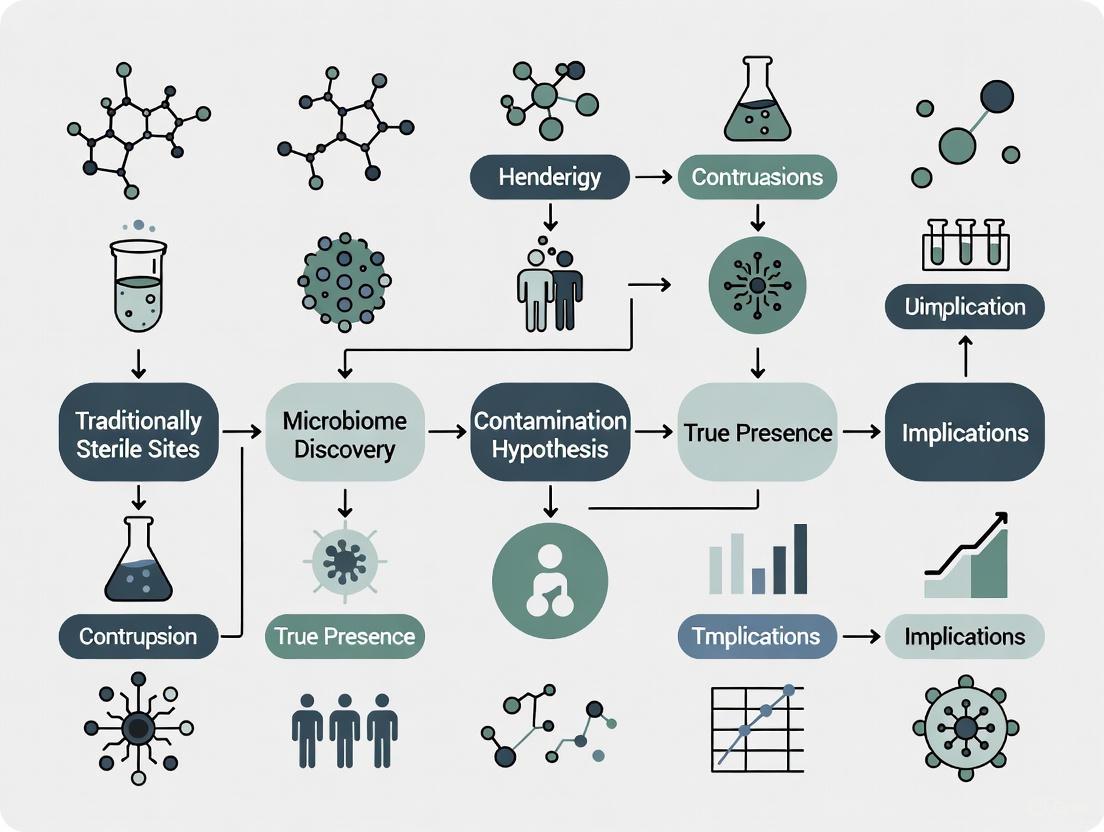
This article examines the paradigm-shifting controversy surrounding the existence of microbiomes in human sites traditionally considered sterile, such as the placenta, blood, and brain.
Beyond Sterility: Investigating the Microbiome in Traditional Sterile Human Sites and Its Implications for Disease and Therapeutics
Abstract
This article examines the paradigm-shifting controversy surrounding the existence of microbiomes in human sites traditionally considered sterile, such as the placenta, blood, and brain. Aimed at researchers and drug development professionals, it synthesizes foundational evidence for and against in utero colonization and blood microbiome hypotheses, critically analyzes methodological challenges in low-biomass research, explores the therapeutic potential of pharmacomicrobiomics, and outlines rigorous validation frameworks. By integrating insights from recent studies and expert commentaries, this review aims to equip scientists with a balanced perspective to navigate this contentious yet transformative field, ultimately guiding future research and clinical translation.
Challenging Dogma: The Evidence For and Against Microbiomes in 'Sterile' Sites
For over a century, the prevailing dogma in reproductive biology held that the fetal development environment—encompassing the uterus, placenta, and amniotic fluid—was entirely sterile, with microbial colonization beginning only during passage through the birth canal [1] [2]. This paradigm has been fundamentally challenged by recent technological advances, particularly next-generation sequencing, which have detected microbial DNA in placental tissues, fetal membranes, and even meconium [1] [3]. The ensuing scientific debate between the "sterile womb" and "in utero colonization" hypotheses represents a pivotal controversy in our understanding of human microbiome development and its implications for maternal and infant health [4] [2]. This whitepaper examines the evidentiary basis for both positions, explores methodological challenges, and assesses the implications for future research and therapeutic development.
Historical Paradigm and Contemporary Challenges
The Sterile Womb Paradigm
The traditional view of uterine sterility was rooted in early microbiological techniques that failed to culture microorganisms from placental tissues under non-pathological conditions [1]. This perspective aligned with the immunological understanding of pregnancy as a state requiring tight regulation to prevent rejection of the semi-allogeneic fetus. The placenta was viewed as a sophisticated barrier protecting the fetal compartment from microbial invasion, with contamination occurring only in pathological states such as chorioamnionitis [2]. This paradigm was further supported by the successful establishment of germ-free animal models through cesarean section delivery and maintenance in sterile isolators, demonstrating that mammalian development could proceed without microbial colonization [4] [2].
Challenging the Dogma
The sterile womb paradigm began to erode with early cultural studies that detected bacteria in placental tissues even in the absence of inflammation. Kovalovszki et al. (1982) reported a 16% positivity rate for bacterial culture in human placentas following delivery under non-inflammatory conditions [1]. However, these findings gained limited traction, as conventional cultural methods were known to underestimate microbial presence due to the inability to culture most environmental bacteria ex vivo [1]. The true paradigm shift emerged with applications of molecular techniques, particularly 16S rRNA gene sequencing, which suggested the presence of diverse bacterial communities in placental tissues from healthy pregnancies [1] [3]. A landmark 2014 study by Aagaard et al. described a unique microbiome in the human placenta, characterized primarily by commensal bacteria from the phyla Firmicutes, Tenericutes, Proteobacteria, Bacteroidetes, and Fusobacteria [1]. This study proposed that the placental microbiota most closely resembled the oral microbiome, suggesting hematogenous transmission from maternal oral and gut reservoirs [1].
Methodological Considerations and the Contamination Challenge
The central controversy in placental microbiome research stems from profound methodological challenges in studying low-biomass microbial communities, where contamination control becomes paramount.
Technical Limitations and the "Kitome"
The extreme sensitivity of PCR-based methods creates significant challenges for low-biomass samples, as microbial DNA contamination can be introduced at multiple stages: during sample collection, DNA extraction, or from reagents themselves (creating a "kitome") [4] [2]. Bacterial DNA is ubiquitous in laboratory reagents and environments, making it difficult to distinguish true signal from background contamination. Studies with the most rigorous controls have often failed to detect microbial DNA beyond what is present in negative controls [4] [2]. Additionally, the detection of DNA does not necessarily indicate the presence of viable, replicating microorganisms, as DNA can persist from dead cells or environmental contamination [5] [2].
Distinguishing Viable Microorganisms
A critical limitation of DNA-based methods is their inability to differentiate between living and dead microorganisms [5]. This distinction is essential for establishing true colonization rather than mere presence of microbial components. Alternative approaches have been proposed to address this limitation:
- RNA-based methods: Targeting RNA with shorter half-lives (e.g., messenger RNA) rather than ribosomal RNA to identify transcriptionally active microorganisms [5].
- Metaproteomics: Identifying microbial proteins that indicate current metabolic activity [5].
- Metabolomic profiling: Detecting microbial metabolic signatures that confirm functional activity [5].
- Culture techniques: Combining sequencing with cultivation attempts to demonstrate viability, though most bacteria remain unculturable [1] [5].
- Fluorescence in situ hybridization (FISH): Using microscopy with species-specific probes to visualize intact microorganisms within tissues [4] [2].
Each method has limitations, and a multimodal approach is increasingly recognized as necessary to provide compelling evidence [5].
Experimental Workflows in Placental Microbiome Research
The following diagram illustrates a generalized experimental workflow for placental microbiome research, highlighting critical control points for contamination:
Figure 1. Experimental Workflow for Low-Biomass Microbiome Studies. This diagram outlines key steps in placental microbiome research, highlighting critical points for implementing negative controls, positive controls (spike-ins), and multi-modal verification to address contamination challenges.
Evaluating the Evidence: Philosophical and Biological Perspectives
Philosophical Framework for the Debate
The placental microbiome debate can be understood through Karl Popper's philosophy of science, which emphasizes falsification over verification [2]. According to Popper, confirmations should only count if they result from "risky predictions" that would refute the theory if not observed [2].
The "sterile womb" hypothesis makes the risky prediction that germ-free mammals should be derivable through cesarean delivery and maintenance in sterile environments—a prediction that has been repeatedly verified across multiple species [4] [2]. Conversely, the "in utero colonization" hypothesis would be falsified by the successful establishment of germ-free mammals, as it predicts that at least some microorganisms detected in utero would be viable and capable of colonizing offspring [2].
Most evidence supporting in utero colonization has been verificationist in nature—detecting microbial DNA in fetal tissues—without demonstrating that these signals represent living, reproducing communities essential for development [2]. This approach creates conditions for confirmation bias, where researchers may unconsciously emphasize positive findings while discounting negative results as methodological artifacts [2].
Biological Plausibility and Evolutionary Considerations
From a biological perspective, the existence of a beneficial placental microbiome raises evolutionary questions. If in utero colonization provides advantages for fetal immune development or metabolism, how would such a relationship evolve given the imperative to protect the vulnerable fetal compartment from pathogens? [2]
The sterile womb hypothesis aligns with the observation that mammals have evolved sophisticated barriers to microbial invasion during pregnancy, including specialized immune adaptations at the maternal-fetal interface [4]. The successful derivation of germ-free animals without obvious developmental defects further challenges the necessity of prenatal microbial exposure for normal development [4] [2].
However, proponents of in utero colonization point to potential adaptive benefits, including early immune priming and metabolic programming [1] [6]. The detection of microbial metabolites in fetal tissues, even in the absence of intact microorganisms, suggests possible mechanisms for fetal exposure to microbial influences without direct colonization [2] [7].
Key Studies and Quantitative Findings
Supporting Evidence for Placental Microbiome
Recent clinical and experimental studies have provided quantitative data supporting the existence and potential functional significance of placental microbial communities:
Table 1. Key Studies Reporting Evidence for Placental Microbiome
| Study Reference | Key Findings | Methodology | Potential Limitations |
|---|---|---|---|
| Aagaard et al., 2014 [1] | Unique placental microbiome distinct from other body sites; dominated by Firmicutes, Tenericutes, Proteobacteria, Bacteroidetes, Fusobacteria | 16S rRNA sequencing | Contamination concerns in low-biomass samples; inability to confirm viability |
| Recent PTB Study [3] | Firmicutes, Bacteroidetes, Actinobacteria, Proteobacteria most dominant phyla in placenta; Ureaplasma urealyticum more abundant in preterm birth placentas | 16S rRNA sequencing | Limited sample size (n=54); potential contamination during delivery |
| Placental-Endocrine Study [7] | Maternal gut Bifidobacterium breve modifies placental endocrine function, nutrient transport, and fetal growth in germ-free mice | Germ-free mouse model, proteomics, metabolomics | Animal model may not fully recapitulate human physiology |
| Vertical Transmission Study [6] | Microbiota detected in placenta, amniotic tissues, and umbilical cord blood; contributes to initial infant gut microbiota | 16S rRNA sequencing, homology analysis | Contamination controls not fully detailed |
Evidence for Sterile Womb Hypothesis
Multiple lines of evidence continue to support the traditional sterile womb paradigm:
Table 2. Key Evidence Supporting Sterile Womb Hypothesis
| Evidence Category | Key Observations | Interpretation | References |
|---|---|---|---|
| Germ-free Animal Models | Successful derivation of germ-free mammals through cesarean section maintained in sterile isolators | Demonstrates mammalian development can proceed without microbial colonization | [4] [2] |
| Contamination Concerns | Bacterial DNA detected in negative controls (reagents, kits) at levels similar to test samples | Signals in test samples may represent contamination rather than true biological signal | [4] [2] |
| Inconsistent Detection | Highly variable results across studies; many well-controlled studies find no microbial DNA beyond background | Suggests earlier positive findings may reflect methodological artifacts | [4] [2] |
| Biological Barriers | Sophisticated placental barrier functions and immune adaptations to exclude microbes | Evolutionary investment in protecting fetal compartment from invasion | [4] |
Origins and Potential Functional Significance
Proposed Origins of Placental Microbiota
For those studies reporting placental microbiota, several potential sources have been proposed, with differing evidence supporting each route:
Figure 2. Proposed Origins and Clinical Associations of Placental Microbiota. This diagram illustrates potential transmission routes from maternal sites to the placenta and reported associations with pregnancy outcomes.
Functional Implications for Maternal and Infant Health
Beyond the controversy over existence, research has explored potential functional roles of placental microbiota in pregnancy outcomes and fetal development:
Preterm Birth Association: Several studies report associations between altered placental microbial composition and preterm birth. One recent study found the placental microbiome in preterm births more closely resembled the vaginal microbiome, while in term pregnancies it was more similar to the oral microbiome [3]. Specific taxa including Ureaplasma urealyticum and Treponema maltophilum showed increased abundance in preterm birth samples [3].
Metabolic and Endocrine Regulation: Experimental work in germ-free mice has demonstrated that colonization with specific bacteria (Bifidobacterium breve) can remotely influence placental function, altering the metabolic profile (increased lactate and taurine), upregulating nutrient transporters, and modifying the expression of placental hormones including prolactins and pregnancy-specific glycoproteins [7]. These changes were correlated with improved fetal growth and viability [7].
Fetal Immune Programming: The in utero colonization hypothesis suggests that prenatal microbial exposure may play a role in educating the developing fetal immune system, potentially influencing susceptibility to immune-mediated diseases later in life [1] [6].
Vertical Transmission: Some studies propose that placental microbiota contribute to the initial colonization of the infant gut, forming part of a vertical transmission pathway from mother to offspring [6]. This challenges the traditional view that gut colonization begins primarily during and after birth.
Essential Research Reagents and Methodological Solutions
Research in this controversial field requires specialized reagents and methodologies to address the unique challenges of low-biomass microbiome studies:
Table 3. Essential Research Reagents and Solutions for Placental Microbiome Studies
| Reagent/Method Category | Specific Examples | Research Application | Critical Considerations |
|---|---|---|---|
| Contamination Controls | DNA extraction kit controls, negative PCR controls, sterile swab controls | Distinguish true signal from background contamination | Must be processed identically to samples; should be included in every experimental batch |
| Positive Controls | Synthetic microbial communities, ZymoBIOMICS standards | Assess detection sensitivity and identify taxonomic biases | Useful for quantifying limit of detection in low-biomass samples |
| Molecular Kits | 16S rRNA sequencing kits, shotgun metagenomics kits, RNA extraction kits | Microbial community profiling and viability assessment | Select kits with minimal bacterial DNA contamination; use same kit lots across experiments |
| Viability Assessment | Propidium monoazide (PMA), RNA sequencing, metaproteomics | Differentiate living from dead microorganisms | PMA pretreatment selectively penetrates dead cells; RNA has shorter half-life than DNA |
| Visualization Reagents | FISH probes, specific antibodies, electron microscopy reagents | Spatial localization of microorganisms in tissues | Provides evidence for tissue integration rather than surface contamination |
| Bioinformatic Tools | Decontam, SourceTracker, Philody | Identify and remove contaminant sequences | Statistical approaches to subtract background signal; requires negative controls |
Future Research Directions and Translational Potential
Despite ongoing controversy, research on placental and in utero microbiota continues to advance with increasingly sophisticated methodologies and applications:
Standardized Protocols: The field requires standardized protocols for sample collection, processing, and analysis specifically validated for low-biomass environments. This includes consensus on negative control implementation, contamination threshold determination, and verification methods [4] [5].
Multi-modal Verification: Future studies should employ complementary methods (DNA, RNA, protein, culture) to provide compelling evidence for viable microbial communities rather than relying on single methodologies [5].
Therapeutic Applications: If specific placental microbial communities are confirmed to beneficially influence pregnancy outcomes, they could represent novel therapeutic targets. Probiotic interventions aimed at modulating placental microbiota have been proposed for preventing preterm birth or fetal growth restriction [1] [7].
Mechanistic Studies: Further research is needed to elucidate mechanisms by which maternal microbiota might remotely influence placental function, potentially through microbial metabolites, immune mediators, or other signaling molecules [7].
The debate between the "sterile womb" and "in utero colonization" hypotheses represents a fundamental controversy in reproductive biology with far-reaching implications for understanding human development and developing novel therapeutic interventions. The current evidence remains divided, with compelling arguments on both sides. Those skeptical of in utero colonization emphasize the methodological challenges of low-biomass microbiome research, the successful derivation of germ-free mammals, and the evolutionary imperative to protect the fetal compartment. Proponents point to detecting microbial DNA in fetal tissues, potential functional impacts on pregnancy outcomes, and experimental evidence that maternal microbiota can remotely influence placental function.
Resolving this controversy will require increasingly sophisticated multidisciplinary approaches that address the profound methodological challenges of studying low-biomass environments. Regardless of the ultimate resolution, this debate has stimulated important refinements in microbiome research methodologies and renewed interest in the prenatal origins of health and disease. The field continues to evolve rapidly, with future studies likely to provide greater clarity on this fundamental question in human biology.
The long-standing dogma that healthy blood is a sterile environment is being fundamentally re-evaluated. For decades, the detection of microorganisms in blood was universally interpreted as a clinical indicator of bloodstream infection. However, advances in sensitive molecular technologies have challenged this paradigm, suggesting the potential existence of a resident blood microbiome in healthy individuals. This concept remains highly controversial within the scientific community, with competing hypotheses about the origin, viability, and biological significance of these microbial signatures. This review synthesizes current evidence from morphological, molecular, and animal studies to evaluate the proposition that blood may host a low-biomass ecosystem of commensal microorganisms, framing this within the broader controversy surrounding microbiomes in traditionally sterile human sites.
The debate centers on whether detected microbial signals represent true colonization or transient contamination. Proponents of the blood microbiome hypothesis point to studies demonstrating bacterial DNA in healthy individuals and visualized microbial structures via electron microscopy [8] [9]. Conversely, large-scale population studies have failed to identify a consistent core community of microbes in human blood, instead supporting a model of sporadic translocation from other body sites [10]. This ongoing controversy mirrors similar debates about sterility in other privileged sites, particularly the prenatal environment [4].
Competing Hypotheses and Theoretical Frameworks
The Blood Microbiome Hypothesis
The blood microbiome hypothesis proposes that blood hosts a low-biomass but consistent community of microorganisms that interact with the host in a commensal or symbiotic relationship. This framework suggests these microbes are not merely contaminants but represent a true ecosystem with potential roles in immune modulation and homeostasis. Key evidence supporting this hypothesis includes:
- Visual Identification: Microscopy studies have documented microbial structures with well-defined cell walls in peripheral blood mononuclear cells (PBMCs) isolated from healthy individuals [9]. These structures demonstrate various proliferation mechanisms, including budding and the formation of electron-dense bodies.
- Culturalbility: Research indicates that blood microbiota from healthy individuals can be resuscitated and cultured under specific conditions, including stress-culturing of lysed whole blood at 43°C in the presence of vitamin K [9].
- Dysbiosis in Disease: Multiple studies have reported alterations in blood microbial profiles associated with disease states. One study in dogs found clear separation between the blood microbiome of healthy subjects and those with chronic gastro-enteropathies, suggesting a potential diagnostic utility [8].
The Transient Translocation Hypothesis
In contrast, the transient translocation hypothesis maintains that blood is fundamentally sterile in healthy states, with detected microbial signals representing temporary incursions from other body sites. This perspective is supported by:
- Large-Scale Sequencing Data: Analysis of blood sequencing data from 9,770 healthy individuals found no evidence for a consistent core microbiome [10]. After rigorous decontamination, no microbial species were detected in 84% of individuals, and the remainder had a median of only one species.
- Sporadic Detection: Microbial species detected in blood demonstrate low prevalence and no co-occurrence patterns, inconsistent with a stable community structure [10].
- Anatomic Origins: Most detected species are commensals associated with the gut (n=40), mouth (n=32), and genitourinary tract (n=18), supporting translocation rather than a resident blood community [10].
Table 1: Key Contrasting Evidence in the Blood Microbiome Debate
| Evidence for Blood Microbiome | Evidence for Transient Translocation |
|---|---|
| Microbial structures visualized via electron microscopy [9] | No species detected in 84% of 9,770 healthy individuals [10] |
| Bacterial DNA differences between healthy and diseased dogs [8] | Low prevalence of detected species (most common in <5% of individuals) [10] |
| Culturalbility under specific conditions [9] | No co-occurrence patterns between different species [10] |
| Distinct profiles compared to fecal microbiome [8] | Most species represent commensals from other body sites [10] |
Methodological Approaches and Technical Challenges
Research into the blood microbiome faces unique methodological challenges due to the extremely low microbial biomass and high host DNA background. Specialized protocols are essential to distinguish true biological signals from contamination.
Sample Collection and DNA Extraction
Rigorous contamination controls must be implemented throughout sample collection and processing:
- Blood Collection: Whole blood should be collected in K3-EDTA tubes via venipuncture after careful disinfection of the skin with chlorhexidine alcohol solution [8]. The disinfection protocol is critical to minimize skin flora contamination.
- DNA Extraction: Different commercial kits are recommended for different sample types. The Exgene Clinic SV kit (GenAll Biotechnology) has been used for blood samples, while the Quick-DNA Fecal/Soil Microbe Miniprep kit (Zymo Research) is suitable for fecal comparisons [8].
- Negative Controls: Both negative and positive controls should be included in the analysis to account for potential contamination introduced during sample processing [8].
Contamination Identification and Filtering
Large datasets with rich batch information enable sophisticated contamination filtering:
- Batch-Specific Contaminants: Laboratory contaminants often show within-batch consistency and between-batch variability, allowing for statistical identification [10].
- Decontamination Filters: Heuristic filters can significantly reduce false positives. One study reduced candidate species from 870 to 117 after decontamination, increasing the proportion of human-associated species from 40% to 78% [10].
- Validation Methods: Confirmation through multiple methods is essential. This includes aligning reads to reference genomes to check coverage breadth and comparing against known contaminant databases [10].
Microscopy Techniques for Morphological Validation
Electron microscopy provides visual evidence complementary to molecular approaches:
- Sample Preparation: Peripheral blood mononuclear cells are isolated from freshly drawn blood and studied both directly and after stress-culturing [9].
- Proliferation Observation: Multiple proliferation mechanisms have been documented, including budding, fission, and a novel "cell within a cell" mechanism [9].
- Structural Diversity: Free circulating microbiota in the PBMC fraction possess well-defined cell walls, while stress-cultured blood microbiota may appear as cell-wall deficient forms [9].
The following diagram illustrates the complex workflow for investigating the low-biomass blood microbiome, highlighting critical control points to address contamination concerns:
Experimental Evidence from Animal and Human Studies
Canine Model of Blood-Gut Microbiome Relationship
A 2023 study investigated the blood microbiome in healthy dogs and those with chronic gastro-enteropathies, providing insights into potential gut-blood communication:
- Experimental Design: Blood and fecal samples were collected from 18 healthy and 19 sick subjects. DNA was extracted, and the V3-V4 regions of the 16S rRNA gene were sequenced on the Illumina platform [8].
- Key Findings: Alpha and beta diversities of both fecal and blood microbiome were significantly different between healthy and sick dogs. Principal coordinates analysis revealed that healthy and sick subjects formed significantly separate clusters for both blood and fecal microbiomes [8].
- Translocation Evidence: The study found shared taxa between gut and blood, suggesting bacterial translocation from the gut to the bloodstream, potentially through a "leaky gut" mechanism or via cellular carriers like dendritic cells [8].
Table 2: Key Research Reagent Solutions for Blood Microbiome Studies
| Reagent/Kit | Specific Application | Function/Purpose |
|---|---|---|
| Exgene Clinic SV kit (GenAll Biotechnology) | DNA extraction from blood samples | Optimized for low-biomass blood samples, starting from 200μL of blood [8] |
| Quick-DNA Fecal/Soil Microbe Miniprep kit (Zymo Research) | DNA extraction from fecal samples | Efficient extraction from approximately 150mg of fecal material for comparison [8] |
| K3-EDTA tubes | Blood collection | Prevents coagulation while preserving microbial DNA for analysis [8] |
| Chlorhexidine alcohol solution | Skin disinfection | Minimizes contamination from skin flora during venipuncture [8] |
| Vitamin K supplement | Stress-culturing medium | Promotes proliferation of blood microbiota in culture at 43°C [9] |
Human Population Studies
The largest-scale analysis to date examined blood sequencing data from 9,770 healthy individuals across six distinct cohorts:
- Species Identification: After stringent decontamination, 117 microbial species were identified across 8,892 individuals. These spanned 56 genera comprising 110 bacteria, 5 viruses, and 2 fungi [10].
- Replication Signatures: Coverage-based peak-to-trough ratio analyses identified DNA signatures of replicating bacteria in blood, providing culture-independent evidence of potentially viable microorganisms [10].
- Epidemiological Patterns: The most prevalent species, Cutibacterium acnes, was observed in only 4.7% of individuals. No species met the criteria for "core" microbiota, and no co-occurrence patterns between different species were observed [10].
Microscopy Evidence of Microbial Structures
A 2023 microscopy study provided visual evidence of microbial forms in blood from healthy individuals:
- Sample Processing: Peripheral blood mononuclear cells were isolated from freshly drawn blood and stress-cultured lysed whole blood at 43°C with vitamin K [9].
- Morphological Diversity: Free circulating microbiota in the PBMC fraction possessed well-defined cell walls and proliferated by budding or through mechanisms similar to extrusion of progeny bodies [9].
- Proliferation Mechanisms: Stress-cultured blood microbiota proliferated as cell-wall deficient forms, with electron-dense bodies proliferating by fission or producing Gram-negatively stained progeny cells in chains [9].
The following diagram illustrates the proposed mechanisms of microbial translocation from various body sites into the bloodstream, and the potential fates of these microorganisms within the blood ecosystem:
Implications for Drug Development and Therapeutic Innovation
The potential existence of a blood microbiome carries significant implications for pharmaceutical research and diagnostic development:
Diagnostic Applications
Characterization of a blood core microbiome in healthy individuals has potential as a diagnostic tool. The demonstrated separation between blood microbiome profiles of healthy and diseased subjects suggests utility for monitoring disease development and treatment response [8]. Specific applications include:
- Early Detection: Blood microbiome signatures could serve as sensitive biomarkers for early detection of gastrointestinal diseases, inflammatory conditions, and metabolic disorders.
- Treatment Monitoring: Longitudinal monitoring of blood microbiome profiles could provide insights into treatment efficacy and disease progression.
- Companion Diagnostics: Blood microbiome analysis could complement existing diagnostic modalities for chronic conditions characterized by low-grade inflammation.
Therapeutic Considerations
Understanding host-microbe interactions in blood could open new therapeutic avenues:
- Microbiome Modulation: Therapeutic strategies aimed at modifying the blood microbiome could emerge for conditions linked to dysbiosis in this compartment.
- Drug-Microbiome Interactions: The blood microbiome may influence drug metabolism and efficacy, necess consideration in pharmaceutical development.
- Delivery Systems: Knowledge of microbial translocation mechanisms could inform targeted drug delivery approaches across biological barriers.
The question of whether blood represents a sterile environment or hosts a resident microbiome remains unresolved, reflecting broader controversies about microbiomes in traditionally sterile sites. Current evidence presents a complex picture: while large-scale studies fail to identify a consistent core blood microbiome, focused investigations continue to find compelling evidence of microbial presence through multiple detection methodologies.
Future research should prioritize standardized protocols for low-biomass microbiome studies, including rigorous contamination controls and validation through multiple complementary methods. Longitudinal studies tracking individuals from health to disease states will be particularly valuable for understanding the dynamics of blood-associated microbes. Technical advances in single-cell analysis, improved cultivation methods, and more sensitive sequencing technologies may help resolve the current controversies.
The concept of blood as an ecosystem represents a paradigm shift with far-reaching implications for our understanding of human physiology, disease mechanisms, and therapeutic development. Whether this ecosystem represents a true resident community or a dynamic interface for microbial translocation, it undoubtedly merits further investigation as a potential factor in human health and disease.
The long-standing doctrine of the sterile brain, protected by an impenetrable blood-brain barrier (BBB), is undergoing a fundamental reevaluation. The concept of a "brain microbiome" proposes the presence of live bacteria, fungi, and viruses within the healthy brain, challenging core tenets of neuroimmunology and neuroanatomy [11]. This paradigm shift suggests that the brain, much like the gut, may host a community of microorganisms, termed the brain microbiome. The implications of this hypothesis are profound, potentially reshaping our understanding of neurodevelopment, healthy brain function, and the pathogenesis of diverse neurological diseases [12]. However, this field is characterized by intense scientific skepticism and debate, primarily revolving around the critical challenge of distinguishing true microbial colonization from methodological artifacts, such as contamination from other sources or post-mortem invasion [12] [11]. This whitepaper provides an in-depth analysis of the evidence, methodologies, and controversies surrounding the brain microbiome, framed within the broader context of discovering microbiomes in other traditionally sterile human sites.
Examining the Evidence For and Against a Brain Microbiome
The debate is fueled by a growing, yet contested, body of literature reporting microbial presence in both healthy and diseased brains. The key evidence and corresponding counterarguments are summarized in Table 1.
Table 1: Key Evidence and Controversies in Brain Microbiome Research
| Evidence For a Brain Microbiome | Critical Counterarguments & Sources of Skepticism |
|---|---|
| Genetic Signatures: Bacterial RNA sequences (e.g., from α-Proteobacteria) identified in healthy control brains and HIV/AIDS patients [11]. | Laboratory Contamination: Microbial DNA is ubiquitous in lab environments, reagents, and on surfaces, potentially leading to false-positive signals [12] [11]. |
| Live Culture: 54 bacterial species successfully cultured from multiple regions of lab-raised trout brains, with the lowest load in the olfactory bulb [12]. | Post-mortem Invasion: The BBB breaks down after death, potentially allowing bacteria from the blood or other tissues to enter the brain before sampling [12]. |
| Tracer Studies: Fluorescent bacteria added to fish tanks were later identified within the fish brains, suggesting a pathway for entry [12]. | Blood Vessel Confounding: Brain tissue samples include capillaries; detected microbes may originate from the blood within these vessels, not the brain parenchyma itself [12]. |
| Association with Disease: Higher microbial loads and specific species (e.g., Fusobacterium nucleatum) linked to Alzheimer's disease, Parkinson's disease, and endometriosis in animal models [12] [13]. | Age as a Confounder: BBB integrity declines with age. Microbial presence in neurodegenerative disease could be a consequence, not a cause, of age-related barrier breakdown [11]. |
| Potential Origin: Some bacteria in human brains (e.g., in Alzheimer's) are species commonly found in the oral microbiome, suggesting a route of entry [11]. | Lack of Consistent Replication: Some well-controlled studies have failed to find microbial signatures in healthy human brains or those from Parkinson's patients, attributing initial signals to contamination [12]. |
A pivotal 2013 study initially investigating HIV/AIDS brains found bacterial RNA in healthy control subjects, first suggesting the brain is not sterile [11]. More recently, a compelling 2024 study on fish has reignited the controversy. Researcher Irene Salinas and her team not only cultured live bacteria from multiple regions of lab-raised trout brains but also demonstrated that bacteria from the environment can translocate into the brain [12]. This finding challenges the assumption that the BBB is an absolute barrier. However, skeptics point to negative studies, such as one that found initial bacterial signals in Parkinson's disease brains were actually due to off-target amplification of human DNA or contamination, highlighting the extreme sensitivity required for this research [12].
Methodological Challenges and Experimental Protocols
The primary hurdle in brain microbiome research is the technically demanding and low-biomass nature of the samples. The following workflow outlines the standard protocol and critical control steps required for a rigorous investigation.
Diagram 1: Experimental workflow for brain microbiome detection with essential control steps.
As depicted in Diagram 1, the process requires meticulous controls at every stage. Key techniques include:
- 16S rRNA Gene Sequencing: This is the most common method for identifying and classifying bacteria. It involves amplifying and sequencing a specific bacterial gene region [11]. Its main vulnerability is amplifying contaminating DNA present in reagents or lab environments.
- Shotgun Metagenomic Sequencing: This technique sequences all the DNA in a sample, allowing for the reconstruction of entire microbial genomes and the identification of non-bacterial organisms [14]. It is more powerful but also more susceptible to noise from host DNA and contaminants.
- Microbial Culture: The successful cultivation of live bacteria from brain tissue, as demonstrated in the fish study, provides some of the most compelling evidence, as it proves viability and is less susceptible to DNA contamination [12].
- Fluorescence In Situ Hybridization (FISH): This method uses fluorescent probes to bind to specific microbial RNA or DNA sequences, allowing for the visualization of microbes directly within the tissue context [12].
Table 2: Essential Research Reagents and Tools for Brain Microbiome Studies
| Research Tool / Reagent | Primary Function | Key Considerations |
|---|---|---|
| DNA/RNA Extraction Kits | Isolate nucleic acids from low-biomass brain tissue. | Must include protocols to minimize co-extraction of inhibitors; source kits with low microbial biomass. |
| 16S rRNA Primers | Amplify conserved bacterial gene regions for sequencing. | Choice of primer set influences which bacterial taxa are detected; potential for amplification of contaminants. |
| Bioinformatic Pipelines (e.g., QIIME 2, DADA2) | Process raw sequencing data, remove contaminants, and classify taxa. | Requires dedicated negative control samples for subtraction of contaminating sequences. |
| Cell Culture Media | Attempt to cultivate live bacteria from brain homogenates. | Requires specific media for diverse bacteria; anaerobic conditions often necessary. |
| Fluorescent Probes (for FISH) | Visually localize specific microbes within tissue sections. | Probe design is critical for specificity; signal can be weak in low-biomass samples. |
| Gnotobiotic (Germ-Free) Animals | Model systems to study causal relationships between specific microbes and brain physiology. | Foundational for gut-brain axis research; allows for controlled colonization studies [15] [16]. |
Proposed Mechanisms of Interaction and Signaling Pathways
If microbes do reside in or influence the brain, they likely communicate through multiple, overlapping pathways. The gut-brain axis serves as the primary model for understanding how peripheral microbes can affect the CNS, even if they are not physically present within it. The gut-immune-brain axis is a critical component of this communication.
Diagram 2: Key communication pathways of the gut-immune-brain axis.
The gut-immune-brain axis, illustrated in Diagram 2, demonstrates how gut microbes can influence the brain without physical translocation. Key mechanistic pathways include:
- Immune Signaling: Gut microbes regulate the maturation and function of the immune system. They produce metabolites like short-chain fatty acids (SCFAs) and influence cytokine production, which can signal to the brain by crossing the BBB or activating neuroimmune cells like microglia [16]. Systemic inflammation is a known contributor to neurodegenerative diseases.
- Vagus Nerve Signaling: This is a direct neural connection between the gut and the brain. Sensory information from the gut is relayed to the brainstem via the vagus nerve [17] [18]. Studies have shown that reduced vagus nerve activity is linked to cognitive deficits in long COVID, and stimulating this nerve can have therapeutic effects [17].
- Microbial Metabolites: Gut bacteria produce neuroactive molecules, including neurotransmitters (e.g., serotonin, dopamine) and metabolites like SCFAs [17] [16]. These can enter the bloodstream, cross the BBB, and directly influence brain function. For instance, gut-produced serotonin has been shown to affect cognitive abilities in mouse models of long COVID [17].
Regarding direct colonization of the brain, several routes have been hypothesized. The olfactory bulb provides a direct connection between the nasal cavity and the brain, bypassing the BBB [12]. A compromised BBB, due to aging or disease, may permit microbial entry from the blood [11]. Some bacteria, such as those from the oral cavity, may exploit peripheral nerve pathways to travel to the brain [11].
Implications for Drug Development and Therapeutic Innovation
The confirmation of a brain microbiome, or even a significant impact from peripheral microbes, would open transformative avenues for neurological drug development.
- Microbiome-Based Biomarkers: Bacterial DNA in the blood is being explored as a potential biomarker to identify vulnerable individuals who could benefit from protective dietary or probiotic interventions [13]. Profiling the gut or potentially the brain microbiome could allow for earlier diagnosis and stratification of patients for neurodegenerative diseases.
- Targeted "Psychobiotics": This class of probiotics is designed to confer mental health benefits by modulating the gut-brain axis [19] [13]. Strains of Bifidobacterium and Lactobacillus have shown promise in preclinical models for reducing anxiety and depression-like behaviors and are being tested in humans [19]. For instance, Bifidobacterium longum APC1472 has shown anti-obesity effects in human trials, with unpublished data suggesting it can attenuate hypothalamic molecular alterations in mice [13].
- Prebiotics and Postbiotics: Therapeutics may shift from live bacteria to the compounds they produce. Prebiotics (fibers that feed beneficial bacteria) and postbiotics (beneficial bacterial metabolites or components) offer more stable and controllable therapeutic modalities [13]. The European Food Safety Authority has already authorized health claims for prebiotics like inulin for improving gut health [13].
- Barrier-Strengthening Strategies: Therapies aimed at reinforcing the integrity of the BBB or the gut barrier could prevent the deleterious passage of microbes or inflammatory molecules into the brain [16]. This represents a novel approach to treating neuroinflammatory conditions.
- Bacterial Amyloid Inhibitors: If bacterial proteins (e.g., curli from E. coli) are found to trigger the misfolding of native proteins like alpha-synuclein in Parkinson's, therapies could be developed to target these microbial amyloids, potentially preventing or slowing disease progression [17].
The field of brain microbiome research is nascent and contentious. Future progress hinges on technical advancements and a concerted effort to address skepticism. Key research priorities include:
- Standardization of Controls: The field must adopt and universally report rigorous negative and positive controls to definitively rule out contamination, as exemplified in the fish study which sterilized exteriors and tested all lab materials [12].
- Longitudinal Human Studies: Research must move beyond post-mortem snapshots to include animal and human studies that track microbial presence in the brain across the lifespan, controlling for age and BBB integrity [11].
- Multi-Omics Integration: Combining genomic, transcriptomic, proteomic, and metabolomic data from both host and microbiome will be essential to move from correlation to mechanism [13].
- Causation Experiments: Using gnotobiotic animals and targeted bacterial introductions to test whether specific microbes can induce physiological or pathological changes in the brain is crucial [15] [16].
In conclusion, the concept of a brain microbiome represents a frontier in neuroscience with the potential to revolutionize our understanding of brain health and disease. While the evidence is mounting, it is balanced by legitimate and serious skepticism regarding methodological rigor. The gut-brain axis serves as a solid foundation, demonstrating that microbes remote from the CNS can exert powerful effects. Whether through direct colonization or remote signaling, the influence of the microbiome on the brain is undeniable. For researchers and drug development professionals, this area offers a high-risk, high-reward landscape. Success will depend on rigorous validation, sophisticated methodologies, and a willingness to challenge one of the last bastions of sterility in the human body. The ongoing controversy is not a weakness but a hallmark of a vibrant and potentially transformative scientific field.
For more than a century, conventional medical science held that internal organs such as the placenta, amniotic fluid, blood, and brain existed in a sterile state, completely free of microorganisms. This paradigm has been fundamentally challenged by advanced detection technologies, particularly next-generation sequencing, which have revealed the potential presence of microbial communities in these traditionally sterile sites [1] [5]. The controversy surrounding these findings represents a critical frontier in microbiome research, with substantial implications for understanding human development, disease pathogenesis, and therapeutic innovation [20].
The core of this scientific debate centers on distinguishing true colonization from methodological artifacts. As Relman notes, "The presence of DNA is quite distinct from 'bacterial colonization' and very different from the presence of a true 'microbiota'" [20]. This distinction is particularly crucial in low-biomass environments where contamination poses a significant challenge to interpretation. This technical guide examines the current evidence, methodological considerations, and research tools essential for investigating these contested anatomical sites within the broader context of the sterile human site controversy.
Placenta: Gateway to Prenatal Microbial Exposure
Evidence and Controversy
The placental microbiome represents one of the most intensively studied yet controversial sites. Traditionally considered sterile, recent studies have detected specific microbial communities in placental tissue, primarily consisting of Proteobacteria, Firmicutes, Bacteroidetes, Actinobacteria, and Tenericutes [1] [3]. These findings have prompted the "in utero colonization" hypothesis, suggesting that microbial exposure begins before birth [1]. However, this hypothesis faces significant skepticism from experts who point to the existence of germ-free mammals, inconsistencies in microbial detection across studies, and the high potential for contamination in low-biomass samples [20].
The functional implications of placental microbes are similarly debated. Some researchers propose that abnormal placental microbial communities may associate with pregnancy complications including preterm birth, gestational hypertension, fetal growth restriction, and gestational diabetes mellitus [1]. A 2025 study analyzing oral and placental microbiomes found distinct profiles in women who experienced preterm birth compared to term deliveries, with higher abundances of Treponema maltophilum, Bacteroides sp, Mollicutes, Prevotella buccae, and Ureaplasma urealyticum in the preterm group [3]. Conversely, skeptics argue that evidence for a functional, resident placental microbiota remains insufficient [20].
Methodological Considerations
Placental microbiome research requires exceptional methodological rigor due to extremely low microbial biomass. Key considerations include:
- Contamination Controls: Implementation of multiple negative controls during DNA extraction and amplification to identify reagent contamination [3] [20]
- Sample Collection: Utilization of sterile techniques during placental collection, typically through biopsy or swabbing of the maternal and fetal surfaces [1]
- Viability Assessment: Combination of DNA-based methods with RNA, culture, or metabolic activity assays to confirm microbial viability [5]
Table 1: Key Microbial Taxa Reported in Placental Studies
| Phylum | Relative Abundance | Potential Association |
|---|---|---|
| Proteobacteria | Variable (16-40%) | Predominant in some healthy placental studies [1] [3] |
| Firmicutes | Variable (15-35%) | Associated with maternal gut translocation [1] |
| Bacteroidetes | Variable (5-20%) | Increased in some preterm birth studies [3] |
| Actinobacteria | Variable (3-15%) | Common in oral and skin microbiomes [3] |
| Fusobacterium | Low (<5%) | Associated with periodontal disease and preterm birth [1] [3] |
Amniotic Fluid: Prenatal Environment and Neonatal Outcomes
Current Evidence and Clinical Correlations
The amniotic fluid, traditionally considered sterile, has emerged as a site of interest for understanding prenatal microbial exposure and its impact on neonatal outcomes, particularly in preterm infants. A 2025 prospective observational study of 126 very preterm deliveries (<32 weeks) analyzed amniotic fluid bacterial signatures using 16S rRNA gene metabarcoding [21] [22]. While overall diversity and bacterial community composition did not differ significantly across outcomes, specific taxa associations emerged.
The study found that enrichments in the Escherichia-Shigella cluster were associated with poor acute outcomes, while the predominance of Ureaplasma and Enterococcus species correlated with unrestricted acute and longer-term outcomes [22]. These findings suggest that amniotic fluid microbiota patterns at birth might enable early identification of infants at risk for severe complications of prematurity.
Methodological Workflow
The following diagram illustrates the experimental workflow for amniotic fluid microbiome analysis as described in recent studies:
Key Findings from Recent Research
Table 2: Amniotic Fluid Microbial Associations with Preterm Outcomes
| Bacterial Taxa | Association with Outcomes | Potential Clinical Significance |
|---|---|---|
| Escherichia-Shigella cluster | Poor acute outcomes (LOI, ROP) | Possible pathogenicity in immature hosts [22] |
| Ureaplasma species | Unrestricted acute and longer-term outcomes | May represent commensal colonization [22] |
| Enterococcus species | Unrestricted acute and longer-term outcomes | Uncertain pathogenicity in this context [22] |
| Gardnerella species | BPD disease severity | Previously associated with vaginal microbiota [22] |
Blood: The Circulating Microbiome
Challenging the Sterile Paradigm
The concept of blood sterility has been fundamentally challenged by recent research demonstrating the presence of microbial DNA and, in some cases, viable microorganisms in circulation [23]. While human blood was traditionally considered sterile, emerging evidence suggests the presence of a transient microbiome, which may influence health and disease [24]. At the phylum level, the blood microbiome is predominantly composed of Proteobacteria, with Bacteroidetes, Actinobacteria, and Firmicutes following in abundance [23].
The origins of blood-associated microbes are believed to be primarily translocation from microbe-rich environments such as the gastrointestinal tract and oral cavity, often triggered by mucosal injury or increased intestinal permeability [23]. A large-scale study reported no consistent core blood microbiome, reinforcing the hypothesis of peripheral origin through translocation rather than a stable endogenous community [23].
Methodological Challenges and Solutions
Blood microbiome research presents unique methodological challenges:
- Low Biomass: Extremely low microbial density requires sensitive detection methods and rigorous contamination controls [24] [23]
- Viability vs. DNA Detection: Distinguishing between living microorganisms and microbial DNA fragments is technically challenging [5]
- Standardization: Lack of standardized protocols across studies contributes to conflicting results [23]
Recommended approaches include:
- Use of multiple control samples (extraction and amplification controls)
- Implementation of chemical contamination signatures (e.g., using Silica database)
- Integration of viability-enrichment methods (e.g., propidium monoazide treatment)
- Application of both DNA and RNA-based analyses [5] [23]
Clinical Implications
Dysbiosis in blood microbiome composition may indicate or contribute to systemic dysregulation, pointing to its potential role in disease etiology [23]. Specific blood microbiome signatures have been associated with:
- Myocardial Infarction: Proteobacteria, Gammaproteobacteria, and Bacilli show potential as diagnostic biomarkers [24]
- HIV Infection: Increased levels of Proteobacteria and decreased levels of Actinobacteria and Firmicutes observed [23]
- Neurological Disorders: Potential involvement in Parkinson's disease pathogenesis via systemic inflammation [17]
Brain and Gut-Brain Axis: Neurological Connections
The Emerging Brain Microbiome Concept
While direct evidence of a brain microbiome remains limited and highly controversial, research has illuminated the critical role of the gut-brain axis in neurological health and disease. The gut and brain maintain constant communication through multiple pathways including the vagus nerve, microbial metabolites, immune signaling, and the enteric nervous system [17].
The gut may serve as the origin point for some brain disorders. Parkinson's disease exemplifies this connection, with gastrointestinal issues such as constipation often preceding motor symptoms by years or decades [17]. Researchers have found that misfolded alpha-synuclein protein, a hallmark of Parkinson's, may originate in the gut and travel to the brain via the vagus nerve [17].
Mechanisms of Gut-Brain Communication
The following diagram illustrates the primary mechanisms of gut-brain axis communication:
Implications for Disease and Therapeutics
Research into the gut-brain axis has revealed several promising therapeutic avenues:
- Long COVID: Cognitive symptoms may result from reduced serotonin levels and impaired vagus nerve signaling, potentially treatable with vagus nerve stimulation [17]
- Parkinson's Disease: Gut-origin hypothesis suggests potential for early intervention targeting gut microbiome [17]
- Mental Health: Microbial metabolites influence mood, sleep, and motivation through dopamine and other neurotransmitter systems [17]
Controversies and Methodological Challenges
The Sterile Womb Debate
The controversy surrounding in utero colonization represents a central conflict in this field. Experts remain divided on the interpretation of existing evidence:
| Evidence for Sterility | Evidence for Colonization |
|---|---|
| Existence of germ-free mammals argues against obligatory colonization [20] | Bacterial DNA detected in placental tissue, amniotic fluid, and fetal tissues [1] [3] |
| Inconsistent results across studies suggest contamination issues [20] | Specific bacterial taxa consistently associated with pregnancy complications [3] |
| Cultivation methods largely fail to recover viable bacteria [20] | Microscopy and FISH techniques visualize bacteria in placental tissues [1] |
Technical Limitations in Low-Biomass Research
Research in low-biomass environments faces significant methodological hurdles:
- Contamination: Reagents, kits, and laboratory environments contribute contaminating DNA that can overwhelm true signals [5] [20]
- Viability Assessment: DNA-based methods cannot distinguish between living microorganisms, dead cells, or free DNA fragments [5]
- Biomass Limitations: Low absolute abundance of microorganisms challenges detection thresholds [5] [20]
Potential solutions include:
- Implementation of rigorous negative controls and contamination tracking [3] [20]
- Use of multiple complementary detection methods (culture, DNA, RNA, metabolites) [5]
- Application of viability-enrichment techniques (e.g., PMA treatment, RNA sequencing) [5]
- Development of improved bioinformatic tools for contaminant identification [20]
The Scientist's Toolkit: Essential Research Reagents and Methods
Table 3: Essential Research Reagents and Methods for Sterile Site Microbiome Research
| Category | Specific Examples | Function/Application | Key Considerations |
|---|---|---|---|
| DNA Extraction Kits | TGuide S96 Magnetic Soil/Stool DNA Kit [24] | Efficient DNA extraction from low-biomass samples | Compare efficiency across kit types; include extraction controls |
| PCR Reagents | KOD FX Neo Buffer, dNTPs [24] | Amplification of target gene regions | Optimize cycle numbers to minimize amplification bias |
| 16S rRNA Primers | 338F (ACTCCTACGGGAGGCAGCA) and 806R (GGACTACHVGGGTWTCTAAT) [24] | Target V3-V4 hypervariable region for bacterial identification | Provides taxonomic resolution at genus/species level |
| Sequencing Platforms | Illumina MiSeq/NovaSeq [24] [22] | High-throughput sequencing of amplicons | Balance depth with cost; 50,000+ reads/sample often sufficient |
| Bioinformatics Tools | QIIME 2, DADA2, SILVA database [22] | Processing raw sequences, ASV calling, taxonomic assignment | Standardize pipeline parameters for cross-study comparisons |
| Contamination Controls | Blank extraction controls, no-template PCR controls [3] [22] | Identification and removal of contaminant sequences | Essential for low-biomass studies; must be processed identically to samples |
The investigation of microbiomes in traditionally sterile sites represents a dynamic and rapidly evolving field with significant implications for understanding human physiology and disease. Future research directions should prioritize:
Standardized Methodologies: Development and adoption of standardized protocols for sample collection, processing, and analysis to enable meaningful cross-study comparisons [23] [20]
Viability Assessment: Implementation of multi-omics approaches that combine DNA, RNA, protein, and metabolic analyses to distinguish viable microorganisms from non-viable signals [5]
Functional Studies: Movement beyond descriptive characterization to functional investigations of host-microbe interactions in these sites [1] [17]
Therapeutic Translation: Exploration of targeted interventions modulating these microbial communities for therapeutic benefit [1] [17]
The controversy surrounding microbiomes in traditionally sterile sites reflects the natural progression of scientific understanding as new technologies enable novel observations. While compelling evidence suggests these sites may harbor microorganisms under certain conditions, the field requires continued rigorous investigation to distinguish true colonization from methodological artifacts. What remains clear is that the traditional binary concept of "sterile" versus "non-sterile" requires refinement to accommodate a more nuanced understanding of microbial presence, persistence, and functional impact across human anatomical sites.
For over a century, the prevailing dogma in human biology has been the "sterile womb" paradigm, which posits that the fetus develops in a completely sterile intrauterine environment and that initial microbial colonization occurs only during and after birth [25]. This view has been fundamentally challenged in the last decade by the "in utero colonization" hypothesis, which suggests that microbial acquisition begins before birth, potentially influencing fetal immune and metabolic development [26]. This debate has profound implications for understanding the origins of the human microbiome and its role in health and disease, particularly within the broader context of microbiome research in traditionally sterile human sites.
The controversy has intensified with advancing molecular technologies, as next-generation sequencing techniques have enabled detection of microbial signatures in fetal tissues that were previously inaccessible to culture-based methods [27]. However, these findings remain hotly contested due to methodological challenges inherent in studying low-biomass microbial communities. This review critically examines the evidence for both hypotheses, analyzes methodological approaches and their limitations, and explores the implications for future research directions and therapeutic development.
Historical Context and Evolution of the Debate
The Established Paradigm: Sterile Womb
The sterile womb paradigm was established through decades of research employing traditional culture-based methods and microscopy. As early as 1885, Theodor Escherich described meconium as free of viable bacteria, suggesting a sterile fetal environment [25]. Later studies in the 1920s and 1930s found that 62% of meconium samples from healthy pregnancies were negative for bacteria by aerobic and anaerobic culture [25]. This paradigm was further supported by studies of amniotic fluid, which demonstrated sterility during healthy pregnancies, with bacterial presence only detected in cases of pregnancy complications or prolonged labor [25].
The anatomical and immunological basis for the sterile womb paradigm rests on the placental barrier, which protects the fetus from microbial invaders in the maternal bloodstream [25]. Additionally, the ability to reliably derive axenic (germ-free) animals via cesarean sections strongly supports the sterility of the fetal environment in mammals [25] [2]. These germ-free lines, maintained across multiple generations in sterile isolation, would not be possible if there were consistent microbial colonization in utero.
The Emerging Challenge: In Utero Colonization Hypothesis
The sterile womb paradigm began facing significant challenges following a 2014 study by Aagaard and colleagues that used next-generation sequencing to describe a unique microbiome in the human placenta [2]. This ignited an entire research field investigating microbial communities in various fetal environments, including placenta, cord blood, amniotic fluid, and meconium [2].
Subsequent studies reported bacterial DNA in meconium from healthy neonates, with composition that did not differ based on delivery mode (vaginal vs. cesarean section) [26]. This suggested that initial colonization might occur prior to delivery, independently of birth mode. Other research detected bacterial communities in placental tissue and amniotic fluid from healthy pregnancies, proposing that the infant gut may be populated in utero, possibly through fetal consumption of amniotic fluid [26].
Table 1: Key Historical Milestones in the Sterile Womb Debate
| Time Period | Dominant Paradigm | Key Evidence | Methodological Approaches |
|---|---|---|---|
| 1885-early 2000s | Sterile Womb | Negative bacterial cultures from meconium and amniotic fluid; Successful derivation of germ-free animals via C-section | Culture-based methods, Microscopy |
| 2014-Present | Challenge to Paradigm | Detection of bacterial DNA in placental tissue, amniotic fluid, and meconium using molecular methods | 16S rRNA sequencing, Shotgun metagenomics, qPCR |
| 2017-Present | Methodological Critique | Recognition of contamination issues in low-biomass samples; Failure of controlled studies to replicate earlier findings | Improved contamination controls, Statistical decontamination approaches |
Critical Assessment of the Evidence
Evidence Supporting the Sterile Womb Paradigm
The sterile womb hypothesis is supported by multiple lines of evidence beyond historical culture-based studies. Most compelling is the consistent success in deriving germ-free mammals through cesarean sections, which has been achieved in rodents, ungulates, swine, and other species [4] [2]. The maintenance of these sterile lines across generations directly contradicts the concept of a consistent in utero microbial transmission, as any resident microbiota would likely be propagated to offspring.
Modern sequencing studies with rigorous contamination controls have largely failed to detect consistent microbial communities in fetal tissues. A critical review published in 2017 argued that evidence for in utero colonization is extremely weak, founded almost entirely on studies that used molecular approaches with insufficient detection limits for low-biomass populations, lacked appropriate controls, and failed to provide evidence of bacterial viability [25] [28]. These methodological concerns have been reinforced by multiple subsequent investigations that implemented stringent controls and found no evidence of placental or fetal microbiota beyond occasional contamination or pathogen exposure [4].
From an anatomical perspective, the placenta contains multiple barrier mechanisms, including physical separation between maternal and fetal circulations, immune cells, and antimicrobial compounds that would prevent bacterial translocation [27]. The species-specific variations in placental structure further complicate extrapolations between animal models and humans.
Evidence Supporting In Utero Colonization
Despite methodological challenges, several lines of evidence continue to support the possibility of in utero microbial exposure. Multiple studies have detected bacterial DNA in meconium from healthy newborns, with profiles that differ from adult microbiota but show consistency across individuals [26]. Some research has found that the meconium microbiome correlates more strongly with the amniotic fluid microbiome than with maternal vaginal or oral communities, suggesting a distinct in utero origin [26].
Advanced molecular techniques beyond 16S sequencing have provided additional support. One study combining 16S rRNA gene sequencing, qPCR, microscopy, and culture methods reported evidence for bacteria in the fetal intestine [2]. While these findings have been challenged, they represent attempts to address concerns about bacterial viability.
Animal studies have demonstrated that prenatal maternal microbial exposures can influence fetal immune development, though this may occur through microbial metabolites or components rather than live bacteria [27]. This suggests that even in the absence of colonization, in utero exposure to microbial products may play a role in fetal programming.
Table 2: Comparison of Key Arguments in the Debate
| Aspect | Sterile Womb Paradigm | In Utero Colonization Hypothesis |
|---|---|---|
| Primary Evidence | Successful derivation of germ-free animals; Negative cultures from fetal tissues; Historical clinical data | Bacterial DNA detection in placental tissue, amniotic fluid, and meconium |
| View on Molecular Data | Contamination-prone in low-biomass samples; DNA detection does not prove viability | Represents legitimate biological signal from authentic microbial communities |
| Interpretation of Positive Cultures | Contamination or clinical infection | Evidence of commensal colonization |
| Placental Function | Effective barrier to microbes | Permeable to selective bacterial transfer |
| Implied Clinical Significance | Microbiome acquisition happens at birth; C-section effects due to lack of vaginal microbes | Microbiome establishment begins before birth; C-section effects potentially due to disrupted in utero communities |
Methodological Considerations and Experimental Protocols
Technical Challenges in Low-Biomass Microbiome Research
The investigation of potential microbiomes in sterile sites represents a classic low-biomass research challenge, where the signal-to-noise ratio is extremely unfavorable. The primary technical issues include:
- Contamination: Microbial DNA contaminants are ubiquitous in laboratory reagents (the "kitome"), collection materials, and the environment [10] [2]. Even minimal contamination can overwhelm authentic signals from low-biomass samples.
- Viability vs. DNA Detection: The detection of bacterial DNA does not demonstrate the presence of live, replicating bacteria [27]. Bacterial translocation from other body sites or contamination can introduce DNA without established colonization.
- Sample Collection: Ensuring completely aseptic sampling during childbirth or surgical procedures is challenging, particularly when passing through non-sterile bodily sites [29].
Essential Methodological Controls and Protocols
Robust experimental design for prenatal microbiome research must include multiple layers of controls and validation:
Sample Collection Protocols
For placental or fetal tissue collection during cesarean sections:
- Perform surgical site preparation with sequential antiseptic solutions (e.g., 70% ethanol followed by 2% povidone-iodine) [29]
- Use sterile surgical drapes to create isolated field
- Collect samples from the first extracted fetus to minimize environmental exposure time
- Include multiple environmental controls sampled throughout the procedure
- Process samples immediately or store at -80°C in sterile containers
For meconium collection:
- Collect immediately after birth using sterile techniques
- Note time between birth and meconium passage, as later samples show increased bacterial detection [25]
- Use sterile collection devices rather than standard diapers
Laboratory Processing and Analysis
DNA extraction and sequencing protocols must include:
- Multiple negative extraction controls (no template) processed alongside samples
- Positive controls with known low-concentration bacterial communities
- Use of DNA-free reagents and consumables
- Technical replicates to assess reproducibility
Bioinformatic analysis should incorporate:
- Rigorous quality filtering and removal of low-complexity sequences
- Statistical identification and removal of contaminant taxa based on negative controls
- Assessment of bacterial viability through approaches like coverage-based peak-to-trough ratio analyses [10]
- Integration with culture-based methods when possible
Research Reagent Solutions for Low-Biomass Studies
Table 3: Essential Research Reagents and Controls for Prenatal Microbiome Studies
| Reagent/Control Type | Specific Examples | Function/Purpose | Key Considerations |
|---|---|---|---|
| DNA Extraction Kits | DNeasy PowerSoil Pro Kit, MoBio PowerWater Kit | Efficient lysis of difficult-to-lyse bacteria; inhibitor removal | Document and account for kit-specific "kitome" contaminants |
| Library Preparation Kits | Illumina DNA Prep, Nextera XT | Preparation of sequencing libraries with minimal bias | Include extraction-to-sequencing negative controls |
| Negative Controls | Sterile water, Blank swabs, Empty collection tubes | Identification of environmental and reagent contamination | Process identically to samples throughout entire workflow |
| Positive Controls | Defined low-biomass mock communities, Spike-in organisms | Assessment of detection sensitivity and technical variation | Use phylogenetically diverse species not expected in samples |
| Contamination Tracking | Synthetic DNA spike-ins, Unique molecular identifiers | Differentiation of true signal from contamination | Add at appropriate points in workflow to monitor introduction |
Broader Implications and Future Directions
Implications for Microbiome Research in Other Sterile Sites
The sterile womb debate reflects broader challenges in investigating microbiomes in traditionally sterile human sites. Similar controversies have emerged regarding blood, brain, and other internal tissues [10] [30]. A 2023 study of 9,770 healthy individuals found no evidence for a consistent blood microbiome, instead observing sporadic translocation of commensal microbes from other body sites [10]. This parallels the sterile womb debate, highlighting that microbial DNA detection does not necessarily indicate established microbiomes.
The methodological advances developed for prenatal microbiome research—including rigorous contamination controls, statistical decontamination approaches, and integrated viability assessments—provide valuable frameworks for other low-biomass microbiome investigations. These approaches are particularly relevant for clinical microbiome studies aiming to distinguish causative pathogens from contamination or background signal.
Therapeutic and Clinical Implications
The resolution of the sterile womb debate has direct implications for clinical practice and therapeutic development:
- Cesarean Section Practices: If the womb is sterile, C-sections primarily disrupt vertical transmission during birth, supporting approaches like vaginal seeding to restore typical microbial exposure [31]. If in utero colonization occurs, the impact of C-sections may be more complex.
- Early-Life Microbiome Interventions: Understanding the timing of initial colonization is crucial for designing interventions to optimize microbiome development and prevent immune-mediated diseases.
- Antibiotic Use During Pregnancy: The risks and benefits of prenatal antibiotic administration would be reassessed if consistent in utero colonization is demonstrated.
Future Research Directions
Key priorities for future research include:
- Development of more sensitive methods for assessing bacterial viability in low-biomass samples
- Standardization of contamination controls across research laboratories
- Investigation of potential microbial exposure through transfer of microbial metabolites and components rather than live bacteria [27]
- Multi-omics approaches integrating metatranscriptomics, metabolomics, and proteomics to assess functional potential
- Advanced imaging techniques to visualize potential microbial communities in situ
The debate between the sterile womb paradigm and in utero colonization hypothesis remains unresolved, though current evidence increasingly questions the existence of a consistent prenatal microbiome. The controversy highlights fundamental challenges in low-biomass microbiome research and the importance of rigorous methodological controls. Philosophical frameworks for scientific evaluation suggest that evidence for the sterile womb aligns better with strong scientific principles, as it provides prohibitive tests (germ-free animals) and multiple explanatory angles, while in utero colonization research has primarily relied on descriptive verifications susceptible to confirmation bias [2].
Regardless of the ultimate resolution, this debate has driven important methodological advances in microbiome research and heightened awareness of contamination issues. It has also stimulated valuable investigation into the earliest origins of the human microbiome and its role in health development. Future research should focus on standardized methodologies, integrated approaches assessing bacterial viability, and careful consideration of the philosophical principles of scientific evidence to move beyond mere verification and toward genuine hypothesis testing.
Germ-Free Animal Models as Foundational Evidence for Fetal Sterility
The question of whether healthy fetal tissues are sterile represents a fundamental paradigm shift in human microbiome research. The "sterile womb" hypothesis, a long-held tenet of human biology, posits that in a state of healthy pregnancy, the fetus develops in a sterile intrauterine environment, with microbial colonization commencing during and after birth. Germ-free (GF) animal models have become an indispensable experimental system for interrogating this concept, providing causal evidence distinct from the correlative data of human studies. Within the context of modern research on microbiomes in traditionally sterile sites, these models help disentangle the complex question of whether microbes detected in fetal tissues are resident communities or the result of contamination. This whitepaper details how GF models are derived, maintained, and applied to provide foundational evidence for fetal sterility, serving as a critical technical resource for researchers and drug development professionals navigating this controversial field.
The Theoretical Basis: Germ-Free Animals as a Model System
Conceptual Framework and Definitions
A germ-free (axenic) animal is one reared in sterile isolators and Confirmed to be free of all living microorganisms, including bacteria, viruses, fungi, and archaea [32]. The ability to sustain such metaorganisms demonstrates that a resident microbiota is not an absolute requirement for mammalian life, though it is essential for complete physiological function. GF animals provide a controlled baseline of "zero microbiota" against which the effects of microbial exposure can be measured.
The theoretical strength of using GF models to investigate fetal sterility lies in a straightforward logic: if a fetus were not sterile and instead received a consistent, in-utero microbial inoculum, then GF animals could not exist. The successful derivation and maintenance of GF animals across generations implies that any microbial transmission from mother to fetus is either non-existent or is not an obligate, resilient colonization that cannot be interrupted by sterile hysterectomy and isolation techniques.
The "Germ-Free Syndrome" and Its Implications
GF animals exhibit a well-documented set of physiological alterations, collectively known as the "germ-free syndrome" [33]. This includes underdeveloped gut-associated lymphoid tissues (GALT), altered immune cell populations, and modified metabolic profiles. This syndrome functionally validates the GF status of the animals; their physiological abnormalities directly result from the absence of microbial stimuli and underscore the microbiome's critical role in postnatal immune and metabolic maturation. From the perspective of fetal sterility, this demonstrates that the fetal immune system develops without the need for direct microbial education in utero, consistent with a sterile intrauterine environment.
Technical Foundations: Establishing and Maintaining Germ-Free Status
Rederivation Techniques for Generating GF Colonies
The creation of a GF mouse line requires the sterile extraction of embryos or pups from a conventionally raised dam.
- Hysterectomy Derivation: This method involves the timed mating of conventional donor mice. Shortly before birth, the uterus is aseptically clamped off and removed from the donor's abdomen. The intact uterus is then transferred into a sterile rederivation isolator via a disinfectant dip tank (e.g., containing iodine or bleach). Inside the isolator, the pups are delivered and immediately fostered by a GF surrogate mother that recently gave birth [32].
- Embryo Transfer: This technique involves harvesting embryos at the two-cell stage from conventional donors. These embryos are then surgically implanted into the oviduct of a GF surrogate mother, which subsequently gives birth within a sterile isolator [32]. Embryo transfer is often considered superior as the embryo's zona pellucida provides an additional physical barrier against microbial contamination.
After rederivation, the new GF line is maintained within sterile isolators for subsequent breeding and experimentation.
Germ-Free Isolator Technology and Housing
GF mice are maintained in flexible-film isolators made of polyvinyl chloride (PVC), which create an impermeable mechanical barrier [32]. Key components of this system ensure sterility:
- Positive Air Pressure: The isolator is maintained under positive pressure with HEPA-filtered air, preventing the ingress of contaminants if a minor leak occurs.
- Port System: A double-door port allows for the safe introduction of sterile supplies (e.g., food, water, cages) into the isolator. Supplies are first surface-sterilized (e.g., with peracetic acid) and passed through the port, which is sealed and sterilized between uses.
- Gloves: Integrated gloves allow personnel to manipulate the interior of the isolator without breaking sterility.
All materials entering the isolator, especially the irradiated or autoclaved diet, must be sterilized. The diet is typically exposed to high-dose gamma or electron beam radiation to ensure sterility without destroying nutritional components [32].
Comprehensive Sterility Testing Regimens
The claim of a "germ-free" status is only as valid as the testing methods used to confirm it. Regular and rigorous sterility testing is paramount. Modern facilities employ a multi-pronged approach, as detailed in Table 1.
Table 1: Standard Methods for Sterility Testing in Germ-Free Facilities
| Testing Method | Target | Sample Type | Frequency | Key Characteristics |
|---|---|---|---|---|
| Aerobic & Anaerobic Culture | Viable Bacteria, Fungi | Feces, Water, Swabs | Weekly | Gold standard; uses diverse media; 14-21 day incubation. |
| Gram Staining (Direct Smear) | All Microbes (viable and non-viable) | Fresh Feces | Weekly | Rapid, inexpensive; detects contamination early. |
| 16S rRNA Gene PCR | Bacterial DNA | Feces, Tissue DNA | Regularly | Highly sensitive; does not confirm viability. |
| Sequencing (16S rRNA / Shotgun) | Broad microbial communities | Feces, Tissue DNA | Periodically / If contamination suspected | Provides taxonomic profile; definitive identification. |
The suite of tests is designed to overcome the limitations of any single method. As noted by James A. Reyniers, a pioneer in the field, "the science or art of detecting contamination is always the limiting factor and is at best a temporary situation" [32]. Therefore, consistent negative results across all these platforms are required to affirm the germ-free status of a colony.
Diagram 1: Workflow for establishing and validating a germ-free mouse model, highlighting the critical checkpoints of rederivation, sterile maintenance, and routine testing.
Experimental Evidence from Germ-Free Models
Immune System Development as a Proxy for Microbial Exposure
The state of the immune system in GF animals provides powerful indirect evidence for fetal sterility. The fetal and neonatal immune system is uniquely tolerogenic, skewed toward regulatory T (Treg) responses rather than pro-inflammatory effector responses, which is vital for maintaining tolerance to maternal and self-antigens [34]. If microbial exposure were a regular feature of in-utero development, one would expect a more mature, primed innate immune system and a different trajectory for adaptive immune cells at birth.
Studies consistently show that GF mice have underdeveloped gut-associated lymphoid tissues (GALT), including smaller Peyer's patches and fewer and smaller mesenteric lymph nodes [33]. Furthermore, they have altered populations of immune cells, such as reduced levels of IgA-producing plasma cells and CD4+ T helper cells, particularly those of the Th1 and Th17 subsets [34]. This "immunological deficit" is not present at birth but emerges postnatally, indicating that the driving force for proper immune maturation is exposure to microbes after birth, not before. The fetal immune system develops its tolerogenic program in the absence of microbial stimuli, which is consistent with a sterile intrauterine environment.
Direct Investigation of In-Utero Transmission
GF models can be used to directly test hypotheses of vertical transmission. In one experimental paradigm, a conventional or specifically colonized mother mouse can be mated, and her tissues (e.g., placenta) and fetuses can be assessed for microbes using the rigorous sterility tests outlined above. The consistent failure to culture or sequence a consistent, viable microbial community from the healthy fetuses and placentas of these dams, when combined with the successful derivation of GF offspring from them, strongly supports the sterile womb hypothesis.
More sophisticated experiments involve humanized gnotobiotic models, where GF mice are colonized with a defined human microbiome. These models allow researchers to investigate whether specific human bacterial strains have the capacity for in-utero transmission under controlled conditions. The current body of evidence from such models has not demonstrated robust, consistent translocation of bacteria to the fetus in healthy pregnancy, reinforcing the view of the fetus as a sterile metaorganism [33] [32].
Table 2: Essential Research Reagents and Resources for Germ-Free Research
| Item / Reagent | Function / Purpose | Technical Notes |
|---|---|---|
| Flexible-Film Isolator | Primary sterile housing unit for GF mice. | PVC material; positive pressure; integrated gloves and ports. |
| Germ-Free Shipper | Secure transport of GF mice between facilities. | Specialized container maintaining sterility during transit [32]. |
| Irradiated Breeder Diet | Sterile nutrition for breeding and maintaining GF colonies. | High-dose gamma or electron beam irradiation to ensure sterility without nutrient degradation. |
| Sterility Testing Media | Detects viable bacterial and fungal contaminants. | Includes aerobic (e.g., TSB) and anaerobic (e.g., Thioglycollate) broths; incubated for 14+ days. |
| 16S rRNA PCR Primers | Molecular detection of bacterial DNA from samples. | High sensitivity; used to screen for contaminating bacterial DNA. |
| Altered Schaedler Flora (ASF) | A defined synthetic community of 8 bacterial species for gnotobiotic studies [32]. | Used to colonize GF mice with a minimal, reproducible microbiome. |
| Peracetic Acid Solution | Surface sterilant for introducing materials into the isolator. | Effective chemical sterilant used in the transfer port. |
Germ-free animal models remain a cornerstone of the "sterile womb" hypothesis, providing causal, experimental evidence that is unattainable from human association studies alone. The very existence of healthy, viable GF animals demonstrates that intrauterine microbial colonization is not a requirement for mammalian fetal development. The documented "germ-free syndrome," particularly the underdeveloped postnatal immune system, confirms the absence of microbial priming in utero and highlights the critical role of postnatal colonization. While molecular techniques continue to detect microbial signals in placental and fetal tissues, their low biomass and inconsistency highlight the ongoing challenge of distinguishing true colonization from contamination. For researchers and drug developers, GF models offer a powerful, controlled system to definitively test the functional impact of specific microbes on host physiology, providing a foundational tool for exploring the true boundaries of the human metaorganism and settling the controversy over microbiomes in traditionally sterile sites.
Navigating the Low-Biomass Challenge: Techniques and Therapeutic Applications
The long-standing paradigm that organs like the blood, brain, heart, liver, and spleen are sterile is being fundamentally challenged by modern microbiome science. The World Health Organization defines sterility as "the freedom from the presence of viable microorganisms" [5]. However, the distinction between contamination, transient microbial presence, and a true structured microbiome in these sites lies at the heart of a major scientific controversy. Technological advances in sequencing have detected microbial nucleic acids in these environments, but a key limitation persists: these techniques cannot inherently distinguish between living, replicating communities and dead organisms or environmental contaminants [5]. This whitepaper outlines rigorous, evidence-based practices for sampling microbiome from sterile sites, focusing on minimizing contamination to generate biologically meaningful data.
Methodological Foundations and Detection Techniques
Accurate characterization of sterile-site microbiomes requires understanding the strengths and limitations of various detection methodologies. The choice of technique profoundly influences the interpretation of results and the ability to confirm the presence of a viable microbiome.
Comparative Analysis of Detection Methodologies
The table below summarizes the core techniques used to identify microorganisms in sterile sites, each with distinct applications and limitations for contamination assessment.
Table 1: Key Methodologies for Detecting Microorganisms in Sterile Sites
| Method | Target | Primary Use | Major Advantage | Key Limitation Regarding Contamination |
|---|---|---|---|---|
| 16S/ITS rDNA Sequencing [5] | Genomic DNA | Prokaryote (16S) & Fungal (ITS) identification & profiling | Well-established, cost-effective, broad profiling | Cannot distinguish between viable and dead cells [5] |
| Shotgun Metagenomic Sequencing [35] | All genomic DNA in sample | Comprehensive taxonomic profiling & functional gene analysis | Allows for strain-level identification & functional insight | Cannot confirm cell viability; highly sensitive to contaminant DNA |
| RNA-based Sequencing [5] | RNA (e.g., rRNA) | Identification of transcriptionally active microbes | Shorter half-life suggests activity/viability | RNA stability varies; may not capture all viable but dormant cells |
| Metaproteomics [5] | Proteins | Identification and functional analysis of microbial proteins | Confirms active protein production, strongly indicates viability | Complex sample preparation; limited by protein databases |
| Culture Techniques [35] | Viable microorganisms | Isolation and expansion of microbial cells | Gold standard for proving viability | >99% of microbes are unculturable with standard methods [5] |
Experimental Workflow for Rigorous Sterile-Site Microbiome Analysis
The following diagram illustrates a comprehensive workflow designed to maximize contamination control throughout the sampling and analytical process.
Diagram 1: Integrated workflow for sterile-site microbiome analysis.
Best Practices for Pre-Analytical and Analytical Phases
Pre-Analytical Considerations and Contamination Control
The pre-analytical phase is the most critical stage for preventing contamination. Key steps include:
- Clinical Indication and Consent: Microbiome testing should be driven by a clear clinical or research question, not as a direct-to-consumer service without clinical oversight [35]. Informed consent must transparently communicate the limited evidence for clinical applicability of such tests [35].
- Sample Collection: Utilize standardized, sterile collection kits. For blood, use specialized kits designed for cell-free DNA or microbial DNA studies, which minimize host DNA background. The international consensus recommends against using multiplex PCR or bacterial cultures alone as a proxy for full microbiome profiling [35].
- Essential Controls: Include multiple negative controls throughout the process. "Blank" samples (e.g., sterile water or buffer) should be processed alongside patient samples from DNA extraction through sequencing to identify reagent and laboratory-derived contaminants [5].
The Scientist's Toolkit: Essential Research Reagents
The following table catalogues critical reagents and materials required for implementing the rigorous protocols described in this guide.
Table 2: Research Reagent Solutions for Sterile-Site Microbiome Analysis
| Item | Function/Application | Key Considerations |
|---|---|---|
| Sterile Blood Collection Kits | Collection of blood for plasma/serum separation with minimal contamination. | Kits containing cell-stabilizing reagents are preferred for reproducible microbial recovery. |
| DNA/RNA Shield | Immediate stabilization and protection of nucleic acids in the sample at point of collection. | Inactivates nucleases and microbes, preserving the in vivo state and ensuring sample stability. |
| Mock Community Standards | Defined mixes of microbial cells or DNA from species not expected in the sample. | Serves as a positive control for extraction efficiency, sequencing accuracy, and bioinformatic pipeline validation. |
| Ultra-Pure Water | Serves as a negative control during nucleic acid extraction and PCR setup. | Critical for detecting background contamination introduced from reagents or the laboratory environment. |
| PCR Decontamination Reagents | Treatment of workstations and reagents to destroy contaminating DNA/RNA. | Essential for preventing amplicon contamination from previous experiments, a major source of false positives. |
| Bioinformatic Contamination Removal Tools | Computational identification and subtraction of contaminant sequences. | Software packages like Decontam use control data to statistically identify and remove contaminating taxa. |
Data Interpretation and Validation
Navigating Quantitative and Contamination Data
Interpreting data from sterile-site studies requires careful comparison of test samples against controls. The following quantitative summary from a decade-long pediatric study illustrates key metrics, including culture positivity rates and contamination levels.
Table 3: Quantitative Profile of Sterile-Site Infections from a Pediatric LMIC Study [36]
| Metric | Neonatal Unit (NNU) | General Paediatric Wards (GPW) | Paediatric Haematology-Oncology Wards (PHOW) |
|---|---|---|---|
| Overall Culture-Positivity Rate | 35.5% | 17.6% | 46.6% |
| Pathogen vs. Contaminant Rate | Pathogens: 22.8%; Contaminants: 13.2% (Overall Study) | Not Specified | Not Specified |
| Predominant Pathogen Type | Gram-negative bacteria (66.0%) | Gram-positive bacteria (more common) | Not Specified |
| Key Multidrug-Resistant (MDR) Pathogens | Extended-spectrum beta-lactamase Enterobacterales (40-50%); Carbapenem-resistant Acinetobacter (increased 40% to 60%) | Not Specified | Not Specified |
A Framework for Clinical Application
The path to clinically relevant findings requires validating the presence of a viable microbiome. The international consensus panel recommends a cautious framework [35]:
- Reporting Standards: The final clinical or research report should include patient medical history and a detailed test protocol covering methods of collection, storage, DNA extraction, and sequencing analysis [35].
- Evidence Generation: Currently, there is insufficient evidence to widely recommend the routine use of microbiome testing in clinical practice. Its application should be confined to dedicated research studies designed to generate this essential evidence [35].
- Multi-Omics Integration: To confirm viability and functional activity, relying on a single method is insufficient. A orthogonal validation strategy, combining DNA-based methods with RNA sequencing (to detect active transcription), metaproteomics (to confirm protein synthesis), or metabolic profiling, is necessary to move beyond correlation and toward causation [5].
Overcoming contamination in sterile-site microbiome research is not merely a technical obstacle but a foundational requirement for producing valid, interpretable data. The controversy surrounding the existence of microbiomes in these sites will only be resolved by adopting the rigorous, multi-layered approach outlined in this guide. This entails stringent pre-analytical controls, the use of specialized reagents, a multi-omics framework for confirming viability, and transparent reporting within a well-defined clinical context. By adhering to these best practices, researchers can generate robust evidence to clarify the true relationship between microorganisms and the most protected environments of the human body, ultimately paving the way for novel diagnostic and therapeutic strategies.
Advanced Sequencing and OMICs Technologies for Low-Biomass Microbial Detection
The long-held dogma of sterility in certain human body sites—such as the placenta, amniotic fluid, brain, and healthy bloodstream—is being rigorously challenged and re-evaluated. This debate sits at the heart of a fundamental question in human biology: when does microbial colonization of the host begin? Claims of a resident placental microbiome, made using next-generation sequencing (NGS), have been met with robust skepticism, as the detected signals are often indistinguishable from contamination introduced during sampling or laboratory processing [4]. This controversy underscores a critical methodological challenge: the accurate detection and analysis of microbes in ultra-low-biomass environments, where the target microbial signal is minimal and can be easily overwhelmed by contaminating "noise" [37].
The resolution of this debate hinges on the deployment of advanced sequencing and multi-OMICs technologies, coupled with exceptionally stringent experimental controls. In low-biomass contexts, standard practices suitable for high-biomass samples (e.g., stool) can produce misleading results [37]. This technical guide outlines the core principles, methodologies, and analytical frameworks essential for conducting robust and reliable microbiome research in environments where microbial biomass approaches the limits of detection, with direct implications for understanding human health and disease.
Core Technical Challenges in Low-Biomass Research
The Contamination Problem
In low-biomass studies, the inevitability of contamination from external sources is a paramount concern. Contaminant DNA can originate from:
- Human operators (skin, aerosol droplets) [37]
- Sampling equipment (swabs, collection vessels) [37]
- Laboratory reagents and kits (the "kitome") [38]
- Cross-contamination between samples during processing (e.g., well-to-well leakage in PCR plates) [37]
The proportional nature of sequence-based data means that even minuscule amounts of contaminating DNA can constitute a large portion of the sequences obtained from an ultra-low-biomass sample, drastically distorting the results and their interpretation [37].
The Sterile Womb Debate: A Case Study
The controversy surrounding the "sterile womb" hypothesis exemplifies these challenges. Some studies, using NGS, have reported bacterial DNA in placental and fetal tissues, suggesting in utero colonization [39]. However, critics argue that these findings are likely artifacts of contamination. As expert David Relman notes, "the presence of bacterial DNA is quite distinct from 'bacterial colonization' and very different from the presence of a true 'microbiota'" [4]. The existence of germ-free animal models, which are born and sustained without any microbes, provides compelling evidence against the universal presence of an in utero microbiome [4]. This debate highlights the necessity for unimpeachable methodologies to distinguish true biological signal from technical artifact.
Advanced Sequencing Technologies and Methodologies
Sample Collection and Decontamination
The first line of defense against contamination is established during sample collection.
- Decontamination: Equipment, tools, and vessels should be decontaminated with 80% ethanol (to kill microbes) followed by a nucleic acid–degrading solution (e.g., sodium hypochlorite, UV-C light) to remove trace DNA. It is critical to note that sterility (absence of viable cells) is not the same as being DNA-free [37].
- Personal Protective Equipment (PPE): Operators should use extensive PPE—including gloves, goggles, coveralls, and masks—to limit the introduction of human-associated contaminants via aerosol droplets or shed skin cells [37].
- Single-Use, DNA-Free Consumables: Whenever possible, single-use, certified DNA-free consumables should be employed for sample collection [37].
Sampling Controls: The Non-Negotiables
The inclusion of multiple, well-designed negative controls is arguably the most critical aspect of low-biomass study design. These controls are essential for identifying the source and extent of contamination.
- Field/Process Blanks: These can include an empty collection vessel, a swab exposed to the air in the sampling environment, or an aliquot of the preservation solution [37].
- Kit/Reagent Blanks: These controls contain only the reagents used for DNA extraction and library preparation and are processed alongside actual samples to characterize the "kitome" [38].
- Tracer Dyes: Some environmental studies use tracer dyes in drilling fluids to physically monitor contamination during sampling [37].
Sample Concentration and DNA Extraction
Due to the inherently low concentration of analyte, samples often require concentration prior to DNA extraction.
- Concentration Techniques: Methods include liquid filtering (e.g., 0.2-µm hollow fiber concentration), SpeedVac concentration, or magnetic capture techniques [38].
- Trade-offs: It is important to recognize that increased sample manipulation during concentration elevates the risk of secondary contamination [38].
- DNA Extraction: Kits designed for low-biomass inputs or high-efficiency DNA recovery should be selected. Elution volumes should be minimized to maximize DNA concentration for downstream steps.
Sequencing Platforms and Library Preparation
Both short-read and long-read sequencing technologies have roles in low-biomass research.
Table 1: Sequencing Platforms for Low-Biomass Applications
| Technology | Key Features | Considerations for Low-Biomass | Example Application |
|---|---|---|---|
| Short-Read (Illumina) | High accuracy, high throughput, well-established bioinformatics pipelines. | Requires sufficient DNA input; prone to kitome contamination. | Deep sequencing of marker genes (16S rRNA) for community profiling [37]. |
| Long-Read (Nanopore) | Portability, real-time sequencing, ability to sequence without amplification. | Library prep often requires DNA concentrations disqualifying for ultra-low inputs without modification [38]. | Rapid on-site metagenomic characterization of cleanroom surfaces [38]. |
For ultra-low-input nanopore sequencing, protocols require modification. One study successfully sequenced cleanroom samples with minimal biomass by adding non-specific carrier DNA and using a modified version of Oxford Nanopore’s Rapid PCR Barcoding Kit, achieving results within ~24 hours of collection [38]. Shotgun metagenomic sequencing is increasingly favored as it provides comprehensive data on both taxonomic composition and functional potential, reducing the biases associated with marker gene amplification [40].
The Scientist's Toolkit: Essential Reagents and Materials
Table 2: Key Research Reagent Solutions for Low-Biomass Experiments
| Item | Function | Critical Consideration |
|---|---|---|
| DNA-Free Water | Solvent for wetting surfaces during sampling and preparing solutions. | Must be certified DNA-free to prevent introduction of contaminating DNA at the first step [38]. |
| DNA Decontamination Solutions | Degrades contaminating DNA on surfaces and equipment. | Sodium hypochlorite (bleach), UV-C light, or commercial DNA removal solutions are used. Ethanol alone does not remove DNA [37]. |
| Hollow Fiber Concentrator | Concentrates microbial cells and DNA from large volume liquid samples. | Increases analyte concentration for downstream processing; exemplified by the InnovaPrep CP device [38]. |
| Ultra-Low DNA Binding Tubes | Sample storage and processing. | Minimizes adsorption of the already scarce target DNA to tube walls. |
| PCR Reagents for Low Input | Amplifies trace amounts of DNA for sequencing. | May require increased PCR cycles; necessitates multiple negative controls to detect cross-contamination [38]. |
Experimental Workflow and Data Analysis
Integrated Experimental Workflow
The following diagram summarizes the end-to-end process for a robust low-biomass microbiome study, from experimental design to data interpretation.
Diagram Title: Low-Biomass Microbial Analysis Workflow
Data Analysis and Contaminant Identification
Post-sequencing, bioinformatic tools are essential for identifying and removing potential contaminants.
- Bioinformatic Decontamination: Tools like
decontam(R package) use prevalence or frequency-based methods to identify taxa that are more abundant in negative controls than in true samples [37]. - Limitations: These post hoc approaches struggle to perfectly distinguish signal from noise, especially in extensively contaminated datasets, which is why rigorous experimental controls are irreplaceable [37].
- Positive Controls and Spike-Ins: The use of mock microbial communities or internal DNA standards (spike-ins) added to the sample allows researchers to monitor efficiency, from DNA extraction to sequencing, and to semi-quantify the microbial load in the original sample [4].
The investigation of microbiomes in traditionally sterile sites represents a frontier in human biology, with profound implications for understanding development, immunity, and disease. However, the path to discovery is fraught with technical peril. The controversy surrounding the prenatal microbiome has served as a critical lesson for the field, emphasizing that claims of colonization in low-biomass environments must be supported by unimpeachable evidence [4]. Advancing our understanding requires a holistic approach that integrates meticulous experimental design—featuring comprehensive controls, rigorous decontamination protocols, and careful sample handling—with advanced sequencing technologies and sophisticated bioinformatic analysis. By adhering to these stringent frameworks, researchers can confidently navigate the challenges of low-biomass detection, moving beyond controversy to generate robust, reproducible, and meaningful insights into the hidden microbial worlds within the human body.
The field of microbial analysis is undergoing a fundamental transformation, moving from traditional culture-based techniques to advanced culture-independent methods that utilize genetic and molecular approaches. This shift is particularly relevant in the context of ongoing controversies regarding microbiomes in traditionally sterile human sites, such as the blood, placenta, and amniotic fluid [4] [10]. For decades, traditional culture-dependent methods have been the gold standard in microbiology laboratories, relying on the growth of microorganisms in artificial media under controlled laboratory conditions [41] [42]. These methods have provided invaluable insights into microbial physiology and enabled antimicrobial susceptibility testing. However, they suffer from a critical limitation: the "great plate count anomaly," where typically less than 1% of microorganisms in most environments can be cultured using standard techniques [41].
In contrast, culture-independent methods analyze microbial communities without requiring cultivation, instead using molecular techniques to detect and identify microorganisms directly from samples [43] [41]. These approaches include next-generation sequencing (NGS), polymerase chain reaction (PCR), fluorescence in situ hybridization (FISH), and mass spectrometry [41] [42]. The application of these methods has revealed previously unappreciated microbial diversity but has also generated technical discrepancies and controversies, particularly when investigating sites traditionally considered sterile [4] [10]. This technical guide examines both methodological approaches, their comparative advantages and limitations, and provides frameworks for resolving discrepancies in microbial detection and analysis.
Fundamental Principles and Methodologies
Culture-Dependent Techniques: Traditional Workhorses
Culture-dependent methods isolate and identify microorganisms through growth in selective or non-selective media. The conventional process involves inoculating clinical specimens onto various media, incubating under specific conditions, followed by phenotypic identification through biochemical testing and morphological characterization [42].
Table 1: Common Culture-Dependent Methods and Their Applications
| Method Type | Examples | Typical Applications | Limitations |
|---|---|---|---|
| Non-selective Media | R2A media, tryptic soy broth, plate count agar | Stimulating growth of general aerobic microbial populations | Limited to cultivable organisms; bias toward fast-growing species |
| Selective Media | Cetrimide (Pseudomonas), MacConkey agar (Gram-negative), BYCE agar (Legionella) | Selection for particular microbial types | May miss non-target organisms; requires prior knowledge of target |
| Field-Based Tests | Dip slides, Biological Activity Reaction Tests (BARTs) | Microbial detection outside laboratory settings | Semi-quantitative; limited species identification |
These methods enable detailed study of microbial physiology, metabolism, and antimicrobial susceptibility [43] [41]. They also allow for preservation of pure strains for biotechnological applications and further research. However, they fail to capture the vast majority of microbial diversity, introduce bias toward fast-growing organisms, and cannot accurately replicate complex environmental conditions [41].
Culture-Independent Techniques: Molecular Revolution
Culture-independent methods analyze microbial communities without cultivation, providing a more comprehensive view of microbial ecosystems [41]. These techniques have evolved significantly, with increasing sophistication in genetic and molecular analysis.
Table 2: Major Culture-Independent Methodologies and Characteristics
| Method Category | Specific Techniques | Key Applications | Technical Considerations |
|---|---|---|---|
| Nucleic Acid Amplification | PCR, qPCR, RT-PCR, multiplex PCR | Targeted detection and quantification of specific taxa or functional genes | Amplification biases; requires primer specificity |
| Sequencing-Based Approaches | 16S rRNA sequencing, metagenomics, single-cell genomics | Comprehensive community profiling, functional potential analysis | Bioinformatics challenges; contamination sensitivity |
| Visualization Techniques | FISH, CARD-FISH | Spatial localization within samples; host-microbe interactions | Limited throughput; taxonomic resolution constraints |
| Mass Spectrometry | MALDI-TOF | Rapid microbial identification | Requires database completeness; limited to known organisms |
These methods have revealed extraordinary microbial diversity in various habitats, from the human gut to extreme environments, and have transformed our understanding of microbial ecology and host-microbe interactions [41] [42]. However, they present their own challenges, including sensitivity to contamination, complex data interpretation, and the inability to always distinguish between living and dead microorganisms [10].
Technical Discrepancies in Detecting Microbiomes in Traditionally Sterile Sites
The application of both methodological approaches to traditionally sterile sites has generated significant controversy, particularly regarding the existence of microbiomes in locations such as blood, placenta, and amniotic fluid.
The Blood Microbiome Controversy
Human blood has conventionally been considered sterile, with occasional pathogen detection indicating infection. Recent studies using culture-independent methods have suggested the presence of a blood microbiome in healthy individuals [10] [44]. However, these findings remain contentious due to methodological challenges.
A comprehensive 2023 population study analyzing blood samples from 9,770 healthy individuals provides crucial insights [10]. After implementing stringent decontamination filters to account for contaminants, researchers detected 117 microbial species across only 18% of samples, with the majority (82%) showing no microbial presence. The most prevalent species, Cutibacterium acnes, was found in just 4.7% of individuals. No species were consistently detected across individuals, and no co-occurrence patterns suggesting structured communities were observed [10].
These findings challenge the concept of a core "blood microbiome" and instead support a model of sporadic translocation of commensal microbes from other body sites (gut, mouth) into the bloodstream [10] [44]. The study highlights how culture-independent methods, while powerful, can produce misleading results if contamination controls are insufficient, particularly in low-biomass environments.
The Prenatal Microenvironment Debate
Similar controversies exist regarding the prenatal environment, with conflicting evidence about in utero colonization [4]. The long-standing "sterile womb" hypothesis is being challenged by studies reporting bacterial DNA in placental tissue, amniotic fluid, and meconium [4]. However, experts emphasize methodological concerns, particularly contamination issues when studying low-biomass environments [4].
As David Relman notes, "The presence of DNA is quite distinct from 'bacterial colonization' and very different from the presence of a true 'microbiota'. Both contamination and the presence of bacterial DNA in blood are plausible explanations for the controversial findings at hand" [4]. The detection of bacterial DNA does not necessarily indicate living, replicating communities, and rigorous controls are essential for accurate interpretation.
Comparative Analysis: Quantitative Data and Case Studies
Direct Methodological Comparisons
Studies directly comparing culture-dependent and culture-independent methods reveal substantial discrepancies in microbial detection and identification:
Table 3: Comparative Performance in Clinical and Environmental Samples
| Study Context | Culture-Dependent Detection | Culture-Independent Detection | Key Findings |
|---|---|---|---|
| Bronchoalveolar lavage from lung transplant recipients [45] | Bacteria detected in 37/46 samples (80.4%); pathogens reported in 18/46 (39.1%) | Bacteria identified in 44/46 samples (95.7%) | Significantly more detection with culture-independent methods (P ≤ 0.05) |
| Industrial water samples [43] | Variable detection depending on BART test type | Comprehensive community analysis via NGS | Discrepancies in dominant taxa between methods; NGS provided more comprehensive profiling |
| Human fecal samples [46] | Conventional colony picking missed many culturable organisms | Culture-enriched metagenomic sequencing detected significantly more species | Only 18% species overlap between culture-enriched and direct metagenomic sequencing |
These comparative analyses demonstrate that method selection dramatically influences microbial community characterization, with each approach capturing different aspects of microbial diversity.
Industrial Water System Case Study
A representative study comparing culture-dependent and culture-independent analysis of industrial water samples highlights technical discrepancies in environmental monitoring [43]. Researchers compared Biological Activity Reaction Tests (BARTs) with next-generation sequencing (NGS) to analyze microbial populations in a corroded chilled-water loop.
The culture-dependent BART test showed growth (cloudiness in tubes) but did not produce the expected reaction pattern for iron-related bacteria. Subsequent NGS analysis of the positive BART tube revealed Pseudomonas as the most abundant genus, with none of the expected iron bacteria (Leptothrix or Sphaerotilus) detected [43]. This case demonstrates how culture-independent methods can resolve ambiguities in culture-dependent results and provide more accurate taxonomic identification.
Experimental Protocols and Methodological Guidelines
Culture-Enriched Metagenomic Sequencing Protocol
A hybrid approach that combines strengths of both methods has emerged as particularly powerful for comprehensive microbiome analysis [46]. The culture-enriched metagenomic sequencing (CEMS) protocol involves:
- Sample Culturing: Inoculate samples on multiple commercial or modified media, incubating under both aerobic and anaerobic conditions [46].
- Colony Collection: Harvest all colonies grown on culture plates, avoiding the bias of traditional colony picking [46].
- DNA Extraction: Use bead-beating homogenization in combination with commercial DNA extraction kits (e.g., Qiagen DNeasy Blood and Tissue Kit) for comprehensive cell lysis [45] [46].
- Library Preparation and Sequencing: Amplify the V4 variable region of the 16S rRNA gene using primers 515F (GTGYCAGCMGCCGCGGTAA) and 806R (GGACTACNVGGGTWTCTAAT) [43]. Alternatively, for shotgun metagenomics, fragment DNA and prepare libraries with appropriate adapters.
- Bioinformatic Analysis: Process sequences using tools like USEARCH and Mothur for quality filtering, chimera removal, and OTU clustering at 97% identity threshold [43] [45]. Classify taxa using reference databases (SILVA, RDP) [43] [45].
This approach significantly enhances detection of culturable organisms compared to traditional colony picking while maintaining the advantages of culture-independent analysis [46].
Low-Biomass Sample Analysis Framework
For traditionally sterile sites, specialized protocols are essential to address contamination challenges:
- Comprehensive Controls: Include extraction controls, no-template amplification controls, and positive controls with known microbial communities in all experiments [4] [10].
- Contaminant Identification: Leverage batch information and reagent lot details to identify laboratory contaminants through within-batch consistency and between-batch variability patterns [10].
- DNA Quantification: Use quantitative PCR to assess bacterial DNA burden and apply abundance thresholds to filter low-level contaminants [45] [10].
- Viability Assessment: When possible, incorporate techniques that distinguish DNA from living versus dead cells, such as propidium monoazide treatment coupled with qPCR [10].
Figure 1: Experimental Workflow Comparison for Microbial Analysis
Essential Research Reagent Solutions
Selecting appropriate reagents and materials is critical for successful microbial analysis, particularly when investigating low-biomass environments where contamination concerns are paramount.
Table 4: Essential Research Reagents and Their Applications
| Reagent Category | Specific Examples | Function | Technical Considerations |
|---|---|---|---|
| DNA Extraction Kits | Qiagen DNeasy Blood and Tissue Kit, MO-BIO PowerSoil DNA Isolation Kit | Nucleic acid purification from various sample types | Efficiency varies by sample type; potential for reagent contamination |
| PCR Reagents | Taq DNA polymerase, dNTPs, buffer systems, primer sets | Amplification of target DNA sequences | Primer specificity critical; potential for amplification biases |
| Sequencing Kits | Illumina MiSeq reagent kits (e.g., v2 500 cycle) | Library preparation and sequencing | Different kits optimized for various read lengths and applications |
| Culture Media | R2A agar, tryptic soy broth, selective media (MacConkey, cetrimide) | Microbial growth and selection | Media composition dramatically influences which organisms grow |
| Contamination Controls | Human DNA depletion kits, DNase treatment reagents | Reducing host background or contaminating DNA | Essential for low-biomass samples; requires optimization |
Resolution Framework for Technical Discrepancies
Based on comparative analyses and methodological studies, a systematic framework for resolving technical discrepancies between culture-dependent and culture-independent methods includes:
Method Selection Guidance
Figure 2: Method Selection Based on Research Question
Integrated Approach for Comprehensive Analysis
The most complete understanding of microbial communities emerges from integrating both methodological approaches:
- Primary Screening: Use culture-independent methods for comprehensive community profiling and hypothesis generation [43] [41].
- Targeted Isolation: Apply culture-dependent techniques to isolate key taxa for functional characterization and experimental manipulation [46] [41].
- Validation: Employ complementary methods (FISH, qPCR) to confirm findings and address methodological limitations [41] [10].
- Contextual Interpretation: Consider biological context (sample type, biomass, potential contaminants) when interpreting results, particularly for controversial findings [4] [10].
This integrated framework acknowledges the strengths and limitations of each approach while providing a pathway for resolving discrepancies and advancing our understanding of microbial communities in health, disease, and the environment.
The technical discrepancies between culture-dependent and culture-independent methods reflect their different underlying principles and limitations rather than fundamental incompatibility. Culture-dependent techniques provide access to viable organisms for functional studies but capture only a fraction of microbial diversity. Culture-independent methods offer comprehensive community profiling but face challenges in distinguishing living from dead cells, controlling contamination, and interpreting complex data [41] [10].
Resolving these discrepancies requires methodological rigor, appropriate controls, and integrated approaches that leverage the strengths of both techniques. This is particularly critical when investigating controversial topics such as microbiomes in traditionally sterile sites, where technical artifacts can easily generate misleading biological conclusions [4] [10]. As methodological advancements continue, including improved culturing techniques, single-cell analysis, and more sophisticated computational tools, our ability to characterize microbial communities accurately will continue to improve, potentially resolving current controversies and revealing new insights into the microbial world.
Pharmacomicrobiomics is an emerging field that investigates the intricate, bidirectional interactions between the human microbiome and pharmaceutical compounds [47]. This discipline explores how an individual's genetic microbiome makeup and its metabolic potential contribute to variations in drug disposition, action, and toxicity [47]. The fundamental premise is that the vast community of microorganisms inhabiting the human body, particularly the gut, significantly influences drug bioavailability, efficacy, and safety profiles. Research in this field is bringing drug therapy for various conditions, including Parkinson's disease and cancer, into the era of precision medicine by accounting for microbial contributions to treatment outcomes [48] [47].
The relevance of pharmacomicrobiomics extends to the broader controversy surrounding microbiomes in traditionally sterile human sites. While this field primarily focuses on the gut microbiome, its principles challenge traditional pharmacological models that have largely overlooked microbial contributions to drug metabolism. Understanding these interactions provides crucial insights for optimizing therapeutic interventions across medical specialties and represents a paradigm shift in how we conceptualize drug metabolism pathways within the human superorganism [49].
Fundamental Mechanisms of Microbiome-Drug Interactions
Direct Microbial Impact on Pharmaceuticals
The gut microbiota directly influences drug metabolism through two primary mechanisms: bioaccumulation and biotransformation [47]. While bioaccumulation (the intracellular storage of drugs without chemical modification) is rarely reported for Parkinson's medications, biotransformation represents a significant pathway for microbial drug modification [47].
Microbial biotransformation encompasses chemical transformations of drug compounds by gastrointestinal microorganisms, potentially altering a drug's bioavailability, bioactivity, and toxicity [47]. These transformations are broadly classified into:
- Phase 1 Reactions: Oxidation, reduction, and hydrolysis
- Phase 2 Reactions: Conjugation reactions [47]
The following diagram illustrates the core concepts and scope of pharmacomicrobiomics:
Indirect Mechanisms Influencing Drug Response
Beyond direct metabolic activities, the microbiome indirectly influences drug response through several sophisticated mechanisms:
- Enterohepatic Circulation: Microbial enzymes can deconjugate drug metabolites that were previously conjugated by host enzymes in the liver, allowing these compounds to be reabsorbed and prolonging their systemic exposure [47].
- Competition with Host Metabolic Pathways: Microbial metabolites may compete with drug intermediates for host metabolic enzymes, potentially altering metabolic pathways and changing the resulting metabolite profiles [47].
- Immunomodulation: The gut microbiome significantly influences systemic immune responses, which is particularly relevant for immunomodulatory therapies like Immune Checkpoint Inhibitors (ICBs) used in oncology [48]. Specific microbial communities can enhance or diminish therapeutic responses to these agents.
- Microbiota-Gut-Brain Axis (MGBA): For neurological treatments, gut microbiota-derived metabolites including short-chain fatty acids (SCFAs), bile acids, and trimethylamine N-oxide can influence neurological, endocrine, and immune pathways that ultimately affect drug responses in the central nervous system [47].
Case Study: Microbial Metabolism of Levodopa in Parkinson's Disease
Experimental Evidence and Methodologies
The metabolism of Levodopa (L-dopa) provides a compelling case study of pharmacomicrobiomics principles. Despite co-administration with aromatic amino acid decarboxylase (AADC) inhibitors like carbidopa, approximately 56% of L-dopa still undergoes peripheral metabolism before reaching the central nervous system [47]. Recent research has revealed that gut microbiota significantly contribute to this peripheral metabolism through specific enzymatic activities.
Key methodological approaches in investigating L-dopa microbial metabolism include:
- Metagenomic Sequencing: Phylogenetic classification and functional potential assessment of microbial communities [47]
- Bacterial Culturing Systems: Isolation and characterization of specific bacterial species with L-dopa metabolic capabilities [50] [51]
- Mass Spectrometry-Based Metabolomics: Precise identification and quantification of L-dopa metabolites produced by microbial activity [50] [52]
- Enzyme Activity Assays: Characterization of bacterial enzyme kinetics and inhibition profiles [50] [51]
Specific Microbial Pathways for L-dopa Metabolism
Research has identified two primary microbial metabolic pathways for L-dopa:
1. Tyrosine Decarboxylase (tyrDC) Pathway
- Primarily found in Enterococcus faecalis and some Lactobacillus species [50] [51]
- Decarboxylates L-dopa to dopamine in the gastrointestinal tract [50] [51]
- Functions optimally at acidic pH similar to the upper small intestine [50]
- Not inhibited by conventional AADC inhibitors (carbidopa, benserazide, methyldopa) [51]
- Positive correlation observed between tyrDC gene abundance and required L-dopa dosage [51]
2. Bacterial Deamination Pathway
- Utilized by gut bacteria including C. sporogenes under anaerobic conditions [52]
- Involves transamination via aromatic amino acid transaminase to produce 3-(3,4-dihydroxyphenyl) lactic acid (DHPLA) [52]
- Subsequent metabolism by dehydrogenases (FldH, AcdA) and dehydratase (FldABC) yields 3-(3,4-dihydroxyphenyl)propionic acid (DHPPA) as the end product [52]
The following diagram illustrates these metabolic pathways:
Research Reagent Solutions for L-dopa Metabolism Studies
Table: Essential Research Reagents for Investigating Microbial L-dopa Metabolism
| Reagent/Category | Specific Examples | Research Application |
|---|---|---|
| Bacterial Strains | Enterococcus faecalis, Lactobacillus species, C. sporogenes, Eggerthella lenta | Investigation of species-specific metabolic pathways and enzymatic activities [50] [51] [52] |
| Enzyme Inhibitors | Carbidopa, benserazide, methyldopa | Assessing inhibition specificity of human vs. microbial enzymes [51] |
| Analytical Standards | L-dopa, dopamine, DHPLA, DHPPA, m-tyramine | Metabolite identification and quantification via mass spectrometry [50] [52] |
| Culture Media | Anaerobic growth media, pH-controlled systems | Maintaining specific bacterial populations and simulating intestinal conditions [50] |
| Molecular Biology Tools | tyrDC gene probes, PCR primers for functional genes | Quantifying gene abundance and correlating with metabolic capacity [51] |
Methodological Approaches in Pharmacomicrobiomics Research
Experimental Workflows and Technical Protocols
Robust methodologies are essential for advancing pharmacomicrobiomics research. The following workflow outlines a comprehensive approach to studying microbiome-drug interactions:
Detailed Methodologies for Key Experiments
Protocol 1: Assessing Direct Microbial Drug Metabolism
- Bacterial Culturing: Grow target bacterial strains (e.g., E. faecalis, C. sporogenes) in appropriate anaerobic conditions [50] [52]
- Drug Exposure: Add therapeutic compound (e.g., L-dopa) to bacterial cultures at physiologically relevant concentrations
- Sample Collection: Collect supernatant and bacterial pellets at multiple time points (0, 1, 2, 4, 8, 24 hours)
- Metabolite Extraction: Use methanol:water:chloroform extraction for intracellular and extracellular metabolites
- Analysis: Employ Liquid Chromatography-Mass Spectrometry (LC-MS) for identification and quantification of drug metabolites [50]
Protocol 2: Functional Metagenomics for Enzyme Discovery
- DNA Extraction: Isolate high-molecular-weight DNA from microbial communities
- Library Construction: Create large-insert metagenomic libraries in bacterial expression hosts
- Functional Screening: Screen for drug-transforming activities using indicator plates or HPLC-based detection
- Sequence Analysis: Sequence active clones and annotate putative genes responsible for metabolic activities
- Enzyme Characterization: Heterologously express and purify candidate enzymes for biochemical characterization [50] [51]
Protocol 3: Microbiome Modulation Studies
- Animal Models: Use germ-free or antibiotic-treated animal models colonized with defined microbial communities
- Drug Administration: Administer therapeutic compounds via relevant routes (oral, intravenous)
- Pharmacokinetic Sampling: Collect blood and tissue samples at multiple time points for drug and metabolite quantification
- Microbiome Analysis: Characterize microbial community structure through 16S rRNA sequencing and metagenomics
- Correlation Analysis: Integrate pharmacokinetic data with microbial abundance and functional gene data [47]
Analytical Techniques and Data Integration
Table: Core Methodologies in Pharmacomicrobiomics Research
| Methodology Category | Specific Techniques | Key Applications and Outcomes |
|---|---|---|
| Microbiome Characterization | 16S rRNA sequencing, Shotgun metagenomics, Metatranscriptomics | Community structure assessment, Functional potential evaluation, Gene expression profiling [47] |
| Metabolite Analysis | Liquid Chromatography-Mass Spectrometry (LC-MS), Gas Chromatography-Mass Spectrometry (GC-MS), Nuclear Magnetic Resonance (NMR) | Drug metabolite identification and quantification, Microbial metabolite profiling [50] [52] |
| Computational Integration | Multivariate statistics, Machine learning, Metabolic network modeling | Identifying microbiome biomarkers of drug response, Predicting individual variations in drug metabolism [47] |
| In Vitro Systems | Bacterial culturing, Human gut simulators, Organ-on-a-chip technologies | Controlled investigation of specific microbial processes, High-throughput screening of drug-microbiome interactions [50] |
Therapeutic Implications and Clinical Applications
Microbiome-Based Therapeutic Strategies
The growing understanding of pharmacomicrobiomics has enabled the development of several microbiome-based therapeutic strategies:
Microbiome Modulation to Enhance Drug Efficacy
- Fecal Microbiota Transplantation (FMT): Initially used for recurrent Clostridioides difficile infection, now being investigated for its potential to modulate responses to immunotherapies and other drugs [48] [49]
- Probiotic and Prebiotic Interventions: Targeted manipulation of microbial communities to enhance therapeutic responses or reduce adverse effects [47]
- Microbial Enzyme Inhibitors: Development of selective inhibitors against microbial enzymes that inactivate therapeutics, such as potential tyrDC inhibitors to improve L-dopa bioavailability [50]
Microbiome-Informed Drug Delivery Systems Advanced drug delivery systems are being designed to target or respond to microbial environments:
- Microbiome-Active Drug Delivery Systems (MADDS): Utilize microbial stimuli (pH, enzymes, metabolites) for controlled drug release in specific gastrointestinal regions [50]
- Microbiota-Responsive Biomaterials: Polymers that degrade in response to microbial enzymes for colon-targeted drug delivery [50]
- Live Biotherapeutic Products (LBPs): Engineered microbial strains designed to perform specific therapeutic functions, including drug activation or metabolite production [50]
Clinical Evidence and Clinical Trial Outcomes
Table: Clinical Evidence for Microbiome-Drug Interactions Across Therapeutic Areas
| Therapeutic Area | Drug Class/Example | Microbiome Interaction | Clinical Impact |
|---|---|---|---|
| Neurology | Levodopa (Parkinson's disease) | Microbial decarboxylation and deamination | Reduced bioavailability requiring higher doses; Contribution to adverse effects [47] |
| Oncology | Immune Checkpoint Inhibitors (anti-PD-1/PD-L1, anti-CTLA-4) | Immunomodulation by specific bacterial species | Enhanced or diminished therapeutic responses; Correlation with progression-free survival [48] |
| Gastroenterology | 5-aminosalicylic acid (5-ASA), Azathioprine (AZA) | Microbial metabolism influencing drug activation | Varied therapeutic efficacy in IBD patients based on microbial profiles [48] |
| Infectious Diseases | Various antibiotics | Alteration of microbial community structure | Disruption of drug-metabolizing communities; Long-term impact on drug efficacy [47] |
Future Directions and Research Challenges
Key Research Priorities
Several critical areas require further investigation to advance the field of pharmacomicrobiomics:
- Mechanistic Elucidation: Move beyond correlation to establish causal mechanisms in microbiome-drug interactions through sophisticated experimental designs [47]
- Standardization of Methodologies: Develop reproducible protocols for microbiome sampling, processing, and analysis to enable cross-study comparisons [49] [47]
- Longitudinal Studies: Conduct extended temporal analyses to understand stability and plasticity of microbiome-mediated drug metabolism [47]
- Multi-Omics Integration: Combine metagenomics, metatranscriptomics, metabolomics, and host genomics for comprehensive understanding [47]
Ethical and Implementation Considerations
The development of pharmacomicrobiomics interventions raises several ethical and practical considerations:
- Regulatory Frameworks: Establish appropriate pathways for regulating microbiome-based diagnostics and therapeutics [49]
- Personalized Interventions: Address challenges in developing individualized microbiome-modifying therapies within current healthcare systems [49] [47]
- Privacy and Identity Issues: Consider implications of microbiome data which may contain unique and identifiable information about donors [49]
- Risk-Benefit Assessment: Carefully evaluate potential long-term risks of microbiome manipulations, particularly for FMT and engineered microbial therapeutics [49]
Pharmacomicrobiomics represents a paradigm shift in understanding drug metabolism and efficacy, moving beyond the traditional host-centered perspective to incorporate the essential contributions of the human microbiome. The evidence clearly demonstrates that microbial communities significantly influence pharmaceutical compounds through direct metabolism, immunomodulation, and interaction with host metabolic pathways. The case of L-dopa metabolism in Parkinson's disease provides a compelling example of how microbial enzymes can substantially impact drug bioavailability and therapeutic outcomes.
As research methodologies advance, incorporating multi-omic approaches, sophisticated in vitro systems, and longitudinal clinical studies, the potential for microbiome-based personalized medicine continues to grow. The successful translation of pharmacomicrobiomics principles into clinical practice will require interdisciplinary collaboration among microbiologists, pharmacologists, clinicians, and bioinformaticians. Ultimately, accounting for microbiome-drug interactions promises to enhance therapeutic efficacy, reduce adverse effects, and usher in a new era of precision medicine tailored to an individual's unique microbial footprint.
The field of microbiome-based therapeutics has evolved from a scientific curiosity into a robust drug development frontier, characterized by a diverse and rapidly expanding pipeline. As of 2025, the global landscape features over 230 investigational microbiome therapeutics sponsored by more than 70 companies worldwide, with nearly 30% of these candidates in clinical development stages [53]. This growth is fueled by enhanced scientific understanding of microbiome-host interactions, significant technological advancements in sequencing and synthetic biology, and pioneering regulatory approvals for conditions like recurrent Clostridioides difficile infection (rCDI) [54]. The pipeline demonstrates remarkable therapeutic diversification beyond gastrointestinal disorders into oncology, metabolic diseases, neurological conditions, and autoimmune disorders, leveraging multiple modality platforms including defined live biotherapeutic products (LBPs), fecal microbiota transplantation (FMT), engineered microbial consortia, and CRISPR-based microbiome editing tools [54] [55]. This analysis comprehensively examines the current developmental landscape, underlying scientific methodologies, key technological innovations, and future directions for microbiome-based therapeutics.
The human microbiome, particularly the gut microbiota comprising approximately 100 trillion microorganisms, has emerged as a crucial modulator of human health and disease [53]. Microbiome-based therapeutics represent a paradigm shift in medical treatment, focusing on manipulating commensal microbial communities to restore physiological homeostasis rather than directly targeting human pathways. The market landscape reflects this innovation, with the global human microbiome market projected to grow from $791 million in 2025 to $6.09 billion by 2035, representing a compound annual growth rate (CAGR) of 20.4% [53]. Parallel market analyses project similarly aggressive growth, with the microbiome therapeutics market specifically expected to expand from $250.06 million in 2025 to $3,405.99 million by 2034, at a CAGR of 33.67% [56].
This remarkable growth trajectory is underpinned by several key developments: the establishment of clearer regulatory pathways for live biotherapeutic products (LBPs), increasing investment from pharmaceutical companies exceeding $1 billion since 2019, and a deepening understanding of microbiome-disease associations across multiple therapeutic areas [53] [54]. The clinical validation of microbiome-based approaches was significantly advanced by the approvals of Ferring Pharmaceuticals/Rebiotix's Rebyota (RBX2660) and Seres Therapeutics' Vowst (SER-109) for recurrent C. difficile infection, which demonstrated the viability of microbiome manipulation as a therapeutic strategy and established foundational regulatory precedents for the field [54].
Global Pipeline Analysis: Quantitative Assessment
The current microbiome therapeutics pipeline encompasses remarkable diversity in developmental stages, therapeutic modalities, and target indications. The distribution across development phases reflects a field still in translation from foundational research to clinical application, while the expanding range of modalities demonstrates increasing technological sophistication.
Pipeline by Developmental Stage
Table 1: Global Microbiome Therapeutic Pipeline by Development Stage (2025)
| Development Stage | Number of Candidates | Percentage of Total Pipeline | Therapeutic Focus Highlights |
|---|---|---|---|
| Preclinical | ~138 | ~60% | Oncological disorders, rare diseases, neurological conditions |
| Phase I | ~46 | ~20% | Infectious diseases, gastrointestinal disorders, metabolic conditions |
| Phase II | ~35 | ~15% | IBD, immuno-oncology combinations, metabolic disorders |
| Phase III | ~11 | ~5% | rCDI, graft-versus-host disease, primary hyperoxaluria |
| Approved | 2+ | <1% | rCDI (Rebyota, Vowst) |
Source: Adapted from Strategic Market Research and Industry Reports [53] [54]
The distribution shows a predominance of preclinical candidates, indicating continued innovation and future growth potential. The progression of candidates reflects increasing validation of microbiome approaches, with Phase III trials expanding beyond rCDI into new indications like graft-versus-host disease (GvHD) and primary hyperoxaluria [54].
Pipeline by Therapeutic Modality
Table 2: Microbiome Therapeutics by Modality and Mechanism (2025)
| Therapeutic Modality | Number of Candidates | Representative Examples | Key Characteristics |
|---|---|---|---|
| Live Biotherapeutic Products (LBPs) | ~90 | Vowst (SER-109), VE303, MRx0518 | Defined microbial consortia; standardized manufacturing; oral administration |
| Fecal Microbiota Transplantation (FMT) | ~40 | Rebyota (RBX2660), MaaT013, MBK-01 | Diverse microbial communities; donor-derived; rectal or oral administration |
| Engineered Microbial Strains | ~15 | SYNB1934, Eligobiotics | Genetically modified bacteria with enhanced therapeutic functions |
| Microbiome-Derived Molecules | ~10 | SG-3, EO2401 | Purified metabolites, peptides, or antigens derived from microbial components |
| Phage-Based Therapies | ~5 | SNIPR001, BX003 | CRISPR-guided bacteriophages for selective bacterial targeting |
Source: Adapted from Pipeline Analysis and Company Disclosures [53] [54] [55]
The modality distribution demonstrates a strategic evolution from entire microbial community transfer (FMT) toward precisely defined and engineered products (LBPs, engineered strains), reflecting efforts to enhance product consistency, manufacturing scalability, and therapeutic precision.
Pipeline by Therapeutic Area
Table 3: Microbiome Pipeline by Target Therapeutic Area (2025)
| Therapeutic Area | Number of Candidates | Leading Indications | Phase Distribution |
|---|---|---|---|
| Gastrointestinal Disorders | ~100 | rCDI, IBD, IBS, NEC | All phases, including approved drugs |
| Oncological Disorders | ~45 | Solid tumors, GvHD, immuno-oncology combinations | Predominantly preclinical and Phase I/II |
| Metabolic Disorders | ~35 | Obesity, diabetes, hyperoxaluria | Phase I through Phase III |
| Neurological & Psychiatric Conditions | ~20 | Autism, depression, Parkinson's disease | Predominantly preclinical and Phase I |
| Infectious Diseases | ~15 | Multi-drug resistant infections, C. difficile | All phases, including approved drugs |
| Autoimmune & Inflammatory Disorders | ~10 | Atopic dermatitis, allergy, arthritis | Predominantly Phase I and II |
Source: Adapted from Pipeline Analysis and Company Disclosures [53] [54] [57]
The therapeutic area distribution highlights the extensive investigation of microbiome therapies beyond their initial gastrointestinal applications, particularly the growing emphasis on oncological and metabolic disorders that represent significant market opportunities.
Technological Platforms and Methodological Approaches
The development of microbiome therapeutics relies on increasingly sophisticated technological platforms that enable precise manipulation and analysis of microbial communities. These platforms span from conventional microbial cultivation to cutting-edge gene editing technologies, each with distinct applications and advantages.
Core Research and Development Workflows
The foundational workflow for microbiome therapeutic development integrates multi-omic technologies with functional validation across in vitro and in vivo systems, progressing toward standardized manufacturing and clinical assessment.
Figure 1: Comprehensive workflow for microbiome therapeutic development, integrating multi-omic discovery with functional validation and clinical translation.
Key Technological Platforms
3.2.1 Defined Consortia Platforms Companies including Vedanta Biosciences and Seres Therapeutics utilize defined bacterial consortia platforms that employ systematic approaches to identify, characterize, and combine specific bacterial strains with complementary functions [54]. Vedanta's VE303 for rCDI comprises eight defined bacterial strains selected for their ability to promote colonization resistance and restore bile acid metabolism, while Seres' Vowst (SER-109) utilizes purified Firmicutes spores that competitively exclude C. difficile [54]. These platforms employ sophisticated culturing techniques under anaerobic conditions to isolate fastidious commensal organisms that were previously uncultivable, enabling the creation of reproducible, standardized products with defined mechanisms of action.
3.2.2 Full-Ecosystem Microbiome Restoration MaaT Pharma and EnteroBiotix utilize full-ecosystem approaches that preserve microbial community complexity while implementing rigorous quality control measures [54] [55]. MaaT Pharma's MaaT013 pools donor microbiota to create high-diversity products for restoring gut-immune homeostasis in patients with gastrointestinal GvHD, demonstrating clinical responses in over 50% of treated patients in Phase 3 trials [55]. These platforms employ advanced screening protocols for donor selection, standardized manufacturing processes, and innovative formulation strategies such as oral capsules for traditionally rectal-administered products.
3.2.3 Engineered Microbiome Platforms Synthetic biology approaches represent the technological frontier in microbiome therapeutics, employing genetic engineering to create microorganisms with enhanced therapeutic functions. Synlogic develops engineered E. coli Nissle strains expressing phenylalanine ammonia lyase for phenylketonuria treatment, while Eligo Bioscience employs CRISPR-guided bacteriophages to selectively eliminate antibiotic-resistance genes from bacterial populations without broadly disrupting the microbial ecosystem [54] [55]. These platforms utilize advanced gene editing tools, synthetic gene circuits, and delivery systems to create precisely targeted microbiome therapies with novel mechanisms of action.
3.2.4 Microbiome-Based Immunomodulation Platforms Enterome has pioneered a microbiome-based immunomodulation platform that identifies bacterial proteins with structural similarity to human signaling molecules [55]. Their "Mimicry" platform screens microbiome-derived proteins for sequence similarity to tumor antigens (OncoMimics) or cytokines/hormones (EndoMimics), leveraging pre-existing microbiome-trained immunity to activate or modulate immune responses. EO2463 for non-Hodgkin lymphoma comprises four synthetic peptides derived from gut-bacterial sequences that mimic B-cell lineage markers, demonstrating the potential of microbiome-informed cancer immunotherapy.
Experimental Models and Validation Systems
3.3.1 In Vitro Screening Systems High-throughput in vitro systems enable functional screening of microbial strains and consortia for desired activities including short-chain fatty acid production, bile acid metabolism, immunomodulatory properties, and pathogen exclusion [54]. These systems utilize anaerobic chamber technology, co-culture with human cell lines, and multi-omic profiling to characterize strain function and microbial interactions prior to in vivo testing.
3.3.2 Animal Models of Disease Animal models remain essential for validating microbiome therapeutic efficacy and mechanisms, though their limitations require careful interpretation [58]. Commonly employed models include:
- C. difficile infection models: Used to assess efficacy of rCDI therapeutics
- Maternal Immune Activation (MIA) models: Investigate gut-brain axis interventions
- Genetically engineered mouse models: Study microbiome interactions in oncology and metabolic disease
- Gnotobiotic (germ-free) models: Enable precise microbiome manipulation to establish causal relationships
Recent controversies highlight methodological challenges in animal models, particularly regarding the translatability of behavioral endpoints in neurogastroenterology research and appropriate statistical powering of studies [58]. Leading researchers emphasize that animal models should be viewed as tools for investigating specific biological mechanisms rather than fully recapitulating human disease states.
3.3.3 Human Cohort Studies and Clinical Trials Human observational studies and interventional trials provide critical validation of microbiome therapeutic approaches. The gold standard includes randomized, double-blind, placebo-controlled designs with adequate sample sizes and appropriate biomarker endpoints [58]. Recent trials have incorporated multi-omic profiling (metagenomics, metabolomics, proteomics) to identify mechanism-based biomarkers and patient stratification signatures, moving beyond purely clinical endpoints toward targeted therapeutic development.
Research Reagent Solutions and Essential Materials
The advancement of microbiome therapeutics relies on specialized reagents, tools, and platforms that enable precise manipulation and analysis of microbial communities.
Table 4: Essential Research Reagents and Platforms for Microbiome Therapeutics Development
| Reagent/Platform Category | Specific Examples | Research Application | Key Providers |
|---|---|---|---|
| Sample Collection & Stabilization | DNA Genotek kits, anaerobic swabs, stool preservatives | Maintain microbial viability and nucleic acid integrity during transport | DNA Genotek [53], Thermo Fisher, Zymo Research |
| Sequencing Technologies | Whole-genome shotgun metagenomics, 16S rRNA sequencing, single-cell analysis | Microbial community profiling, strain-level resolution, functional potential | Illumina, PacBio, Oxford Nanopore |
| Anaerobic Culturing Systems | Anaerobic chambers, specialized media, culture chips | Isolation and expansion of fastidious anaerobic organisms | Anaerobe Systems, BioMérieux, Microbiome Insights |
| Bioinformatic Tools | QIIME 2, MOTHUR, MetaPhlAn, HUMAnN | Microbiome data analysis, pathway reconstruction, statistical modeling | Broad Institute [56], academic developers |
| Gnotobiotic Animal Models | Germ-free mice, defined microbiota consortia | Causal mechanistic studies of microbial functions | Jackson Laboratory, Taconic Biosciences, academic centers |
| Bacterial Engineering Tools | CRISPR-Cas systems, conjugative plasmids, phage delivery vectors | Genetic modification of microbial strains for therapeutic applications | Eligo Bioscience [54], Synlogic [54] |
| Analytical Platforms | Mass spectrometry, NMR spectroscopy, flow cytometry | Metabolite quantification, microbial composition, host response measurement | Thermo Fisher, Agilent, Bruker |
| Formulation Excipients | Cryoprotectants, capsule technologies, stability enhancers | Product formulation, stability optimization, delivery enhancement | Capsugel, BASF, Dow Chemical |
The availability and continuous improvement of these research tools have been instrumental in advancing microbiome therapeutic development from concept to clinical application.
Key Signaling Pathways and Mechanistic Frameworks
Microbiome therapeutics exert their effects through multiple interconnected signaling pathways that mediate host-microbe interactions across various organ systems. Understanding these mechanisms is essential for targeted therapeutic development.
Figure 2: Key mechanistic pathways for microbiome therapeutics, spanning direct microbial functions, immune modulation, and systemic effects.
Immune Modulation Pathways
Microbiome therapeutics significantly influence host immunity through multiple interconnected mechanisms. Vedanta Biosciences' VE202 for ulcerative colitis employs an eight-strain consortium designed to induce regulatory T-cell responses and produce anti-inflammatory metabolites, restoring immune balance in inflammatory bowel disease [54]. Similarly, MaaT Pharma's MaaT013 for GvHD utilizes pooled microbiota to reestablish gut-immune homeostasis through diverse microbial communities that modulate inflammatory signaling pathways [55]. These approaches leverage naturally evolved host-microbe interactions to achieve therapeutic immunomodulation with potentially fewer side effects than targeted immunosuppressive therapies.
Metabolic Pathways
Microbiome therapeutics significantly influence host metabolism through microbial production of metabolites and modulation of metabolic pathways. Bile acid metabolism represents a key mechanism, with therapeutic microbes like those in SER-109 modifying bile acid profiles to inhibit C. difficile germination and growth [54]. Short-chain fatty acid (SCFA) production by commensal bacteria provides energy for colonocytes, regulates mucosal immunity, and influences systemic metabolism, with potential applications in metabolic disorders [13]. Akkermansia muciniphila-based therapies improve insulin sensitivity and metabolic parameters through multiple mechanisms including enhanced mucus layer integrity and metabolic endotoxemia reduction [54].
Gut-Brain Axis Communication
The microbiome-gut-brain axis represents a bidirectional communication network through which microbiome therapeutics potentially influence neurological and psychiatric conditions. Research presented at NeuroGASTRO 2025 identified 56 different gut-brain modules, each corresponding to neuroactive compound production or degradation processes [13]. Microbial metabolites including serotonin, gamma-aminobutyric acid (GABA), and short-chain fatty acids mediate these communications, potentially influencing conditions ranging from depression to autism spectrum disorders [13] [58]. While this area shows therapeutic promise, it remains controversial due to methodological challenges in establishing causal relationships and translating animal findings to human applications [58].
Emerging Trends and Future Directions
The microbiome therapeutics field continues to evolve rapidly, driven by technological innovations, regulatory precedents, and expanding clinical applications. Several key trends are shaping the future trajectory of the field:
Artificial Intelligence and Machine Learning Integration
Artificial intelligence is transforming microbiome therapeutic development by enabling rapid discovery of novel live biotherapeutics and engineered microbial strains [56]. AI platforms process diverse microbiome datasets to identify biomarkers, predict treatment responses, and inform personalized treatment plans, significantly accelerating the discovery process. Companies including Persephone Biosciences and Viome employ machine learning to integrate genomic, metabolomic, and clinical data, enabling patient stratification and targeted therapeutic development [54]. These approaches are reducing development timelines and enhancing therapeutic precision through data-driven strain selection and consortium design.
Personalized Microbiome Medicine
The field is experiencing a paradigm shift from generalized probiotic approaches toward personalized microbiome interventions tailored to individual microbial compositions [59]. Microbiome profiling and diagnostics are increasingly used to guide treatment decisions, with companion diagnostics likely to become integral to microbiome therapeutic development [54]. The consumerization of gut health through direct-to-consumer microbiome testing is generating large datasets that inform personalized dietary recommendations and therapeutic interventions, bridging wellness and pharmaceutical applications [54].
Regulatory Evolution and Standardization
Regulatory frameworks for microbiome therapeutics are maturing, with agencies including the FDA and EMA establishing clearer pathways for live biotherapeutic products [54]. Recent approvals have de-risked regulatory pathways, while emerging guidelines address manufacturing quality, potency assays, and clinical trial design specific to microbiome-based products. Simultaneously, standardization efforts are addressing methodological inconsistencies in microbiome research, with organizations including the U.K. Medicines and Healthcare products Regulatory Agency calling for unified standards to harmonize research practices [60]. These developments are enhancing reproducibility and accelerating clinical translation.
Technological Convergence and Platform Expansion
Microbiome therapeutics are benefiting from convergence with adjacent technological fields including synthetic biology, nanotechnology, and immunology. CRISPR-based microbiome editing platforms like Eligo Bioscience's Eligobiotics enable precise modification of bacterial genes within complex communities [55]. Advanced delivery systems including acid-resistant capsules and targeted formulations enhance microbial viability and site-specific engraftment. These technological innovations are expanding the therapeutic potential of microbiome interventions beyond traditional applications toward increasingly precise and potent medicines.
The microbiome therapeutics pipeline represents a rapidly expanding and diversifying landscape with over 230 candidates in development across multiple modalities and therapeutic areas. The field has progressed from proof-of-concept demonstrations to established regulatory approvals, with a growing emphasis on defined, mechanistically-based products rather than empirical whole-community approaches. Technological innovations in sequencing, bioinformatics, synthetic biology, and manufacturing are enabling increasingly precise manipulation of microbial communities for therapeutic benefit. Despite methodological challenges and ongoing controversies in specific applications, the continued expansion of the microbiome therapeutics pipeline demonstrates significant confidence in this emerging therapeutic modality. As the field matures, personalized approaches, artificial intelligence integration, and regulatory standardization will likely drive the next generation of microbiome-based medicines, potentially transforming treatment paradigms across diverse disease areas.
The clinical translation of microbiome science represents a fundamental pivot in therapeutic development, moving from whole-ecosystem transplantation toward precision-targeted formulations. This evolution is occurring within a provocative theoretical context: the ongoing re-evaluation of traditionally sterile human sites, which challenges a foundational principle of human anatomy [33]. For decades, the blood-brain barrier, placental barrier, and other anatomical structures were thought to maintain absolute sterility in healthy tissues. However, emerging evidence from fields as diverse as neuroscience and oncology now suggests that low-biomass microbial communities may exist in sites previously considered sterile, including the brain, vasculature, and mammary tissue [33] [12]. This paradigm shift forces a reconsideration of what constitutes a "normal" human ecosystem and has profound implications for how we conceptualize microbiome-based therapeutics—from fecal microbiota transplants (FMT) that reset entire gut communities to targeted formulations that precision-engineer specific microbial functions across diverse body sites.
The controversy surrounding supposedly sterile sites is not merely academic. If verified, the presence of functional microbiomes in organs like the brain would fundamentally reshape our understanding of human physiology and disease pathogenesis, particularly for neurodegenerative conditions like Alzheimer's and Parkinson's disease [12]. This theoretical framework provides critical context for understanding why therapeutic approaches must evolve beyond whole-stool transplantation toward sophisticated formulation science that can navigate the biological barriers protecting these sensitive niches.
The Current Clinical Landscape: From FMT to Precision Formulations
Fecal Microbiota Transplantation: Established Practice and Emerging Applications
Fecal microbiota transplantation (FMT) represents the first-generation clinical application of microbiome science, demonstrating remarkable efficacy for recurrent Clostridioides difficile infection (rCDI) where conventional antibiotics fail [61] [62]. The procedure involves transferring processed fecal matter from a healthy donor to a recipient's gastrointestinal tract, effectively restoring a functional microbial ecosystem [61]. The FDA now recognizes FMT as a life-saving therapy for rCDI while classifying stool as a biological agent requiring investigational new drug (IND) permission for other indications [61].
The therapeutic scope of FMT is rapidly expanding beyond gastrointestinal disorders. Over 500 clinical trials worldwide are currently investigating FMT applications across autoimmune, metabolic, neurological, and oncological conditions [61] [62]. The table below summarizes key clinical development areas for microbiome-based interventions.
Table 1: Clinical Development Landscape for Microbiome-Based Therapeutics
| Therapeutic Area | Representative Conditions | Stage of Development | Key Mechanisms |
|---|---|---|---|
| Gastrointestinal | Recurrent CDI, IBD, IBS, constipation | Approved for rCDI; Phase II-III for others | Microbial ecosystem restoration, pathogen competition, metabolic normalization |
| Neurological | Alzheimer's, Parkinson's, autism spectrum disorder, depression | Preclinical to Phase II | Gut-brain axis modulation, short-chain fatty acid production, neuroimmune regulation |
| Metabolic | Type 2 diabetes, hyperuricemia, obesity | Phase I-II | Bile acid metabolism, branched-chain amino acid regulation, inflammatory pathway modulation |
| Oncological | Colorectal cancer, immunotherapy enhancement | Preclinical to Phase II | Immune activation, drug metabolism optimization, oncogenic pathway suppression |
| Autoimmune | Multiple sclerosis, graft-versus-host disease | Phase I-II | Immune system education, regulatory T-cell induction, inflammatory cytokine reduction |
Market Evolution and Therapeutic Pipeline
The transition from FMT to defined products is driving substantial market growth. The global human microbiome market is projected to expand from $791 million in 2025 to $6.09 billion by 2035, representing a compound annual growth rate (CAGR) of 20.4% [53]. This growth is underpinned by a robust pipeline of 230+ human microbiome therapeutics in development, with over 70 companies actively engaged in product development [53]. The pipeline distribution reveals strategic focus areas, with nearly 30% of candidates in clinical phases primarily targeting infectious diseases and digestive disorders, while preclinical and discovery-stage candidates show stronger focus on oncological disorders [53].
Methodological Foundations: From Metagenomics to Targeted Formulations
Advanced Metagenomic Sequencing in Clinical Practice
Modern microbiome therapeutics development relies on sophisticated metagenomic sequencing technologies that enable comprehensive microbial community characterization. These approaches have evolved beyond simple taxonomic profiling to functional assessment through multi-omics integration.
Table 2: Key Methodological Approaches in Microbiome Therapeutic Development
| Methodology | Technical Approach | Clinical/Translational Application | Limitations/Challenges |
|---|---|---|---|
| Shotgun Metagenomic Sequencing | High-throughput sequencing of all DNA in a sample | Pathogen detection, antimicrobial resistance profiling, functional pathway analysis | Host DNA contamination, computational demands, database gaps |
| 16S rRNA Gene Sequencing | Targeted sequencing of hypervariable regions | Microbial community profiling, dysbiosis detection | Limited taxonomic resolution, no functional data |
| Multi-omics Integration | Combined metagenomics, metabolomics, proteomics | Mechanistic insights, biomarker identification, therapeutic monitoring | Data integration complexity, cost, specialized expertise required |
| Metagenomic Next-Generation Sequencing (mNGS) | Unbiased sequencing of all nucleic acids | Culture-negative infection diagnosis, rare pathogen detection | Sensitivity/specificity validation needed, standardization challenges |
| Microbial Culturomics | High-throughput culture under diverse conditions | Live biotherapeutic product development, functional validation | Many microbes unculturable, resource-intensive |
Experimental Protocols for Clinical Translation
Metagenomic Sequencing for Pathogen Detection and AMR Profiling
Protocol Objective: Rapid pathogen identification and antimicrobial resistance gene detection directly from clinical specimens [63].
Sample Preparation: For cerebrospinal fluid (CSF) or blood samples, perform centrifugation at 16,000 × g for 10 minutes to concentrate microbial biomass. Implement host DNA depletion using selective lysis buffers or enzymatic treatments (e.g., NEBNext Microbiome DNA Enrichment Kit). Extract total DNA using bead-beating mechanical disruption combined with column-based purification (QIAamp DNA Microbiome Kit) [63].
Library Preparation and Sequencing: Utilize tagmentation-based library prep (Nextera XT DNA Library Preparation Kit) with dual index barcoding. For rapid turnaround, employ nanopore-based sequencing (Oxford Nanopore Technologies MinION) enabling real-time analysis. For higher accuracy, employ Illumina short-read sequencing (NovaSeq 6000) [63].
Bioinformatic Analysis: Conduct quality control (FastQC), adapter trimming (Trimmomatic), and host sequence subtraction (Bowtie2 against human reference genome). Perform taxonomic profiling (Kraken2, MetaPhlAn) and functional annotation (HUMAnN2) against curated databases (UMGS, CARD). For AMR profiling, align sequences against comprehensive resistance databases (CARD, MEGARes) [63].
Validation and Quality Control: Include positive controls (ZymoBIOMICS Microbial Community Standard) and negative extraction controls in each batch. Establish limit of detection using spiked-in synthetic communities [63].
FMT Engraftment Monitoring Protocol
Objective: Assess donor microbial strain engraftment and functional integration following FMT [62] [63].
Sample Collection: Collect serial stool samples from recipient pre-FMT (baseline) and at days 1, 7, 14, 28, and 84 post-FMT. Simultaneously collect donor stool sample used for transplantation [62].
Metagenomic Sequencing and Analysis: Perform shotgun metagenomic sequencing at minimum depth of 10 million reads per sample. Apply strain-tracking algorithms (StrainPhlAn, metaSNV) to distinguish donor versus recipient strains based on single-nucleotide variants in species-specific marker genes [62].
Metabolomic Profiling: Conduct liquid chromatography-mass spectrometry (LC-MS) on stool and serum samples to quantify microbial-derived metabolites (short-chain fatty acids, bile acids, tryptophan metabolites). Apply correlation networks to link engrafted strains to metabolic shifts [62] [63].
Engraftment Metrics Calculation: Compute engraftment fraction as proportion of donor strains persisting in recipient. Assess community coalescence using Bray-Curtis dissimilarity and alpha diversity indices. Evaluate functional integration through metagenomic linkage groups (MLGs) connecting taxonomic and functional features [62].
Research Reagent Solutions for Microbiome Therapeutics
Table 3: Essential Research Reagents for Microbiome Therapeutic Development
| Reagent/Category | Specific Examples | Function/Application | Considerations for Use |
|---|---|---|---|
| DNA Extraction Kits | QIAamp DNA Microbiome Kit, PowerSoil Pro Kit | Microbial DNA isolation with host depletion | Bead-beating efficiency, inhibitor removal, yield quantification |
| Reference Materials | ZymoBIOMICS Microbial Community Standard, NIST Stool Reference Material | Method standardization, inter-lab comparison | Community composition stability, DNA quality assurance |
| Sequencing Kits | Illumina DNA Prep, Nextera XT, Oxford Nanopore Ligation Sequencing Kit | Library preparation for metagenomic sequencing | Insert size optimization, barcoding strategy, coverage requirements |
| Bioinformatic Tools | Kraken2, MetaPhlAn, HUMAnN2, QIIME 2 | Taxonomic profiling, functional analysis, visualization | Database selection, computational resources, reproducibility |
| Cell Culture Media | Gut microbiome media (GMM), YCFA, M2GSC | Cultivation of fastidious anaerobes for LBPs | Anaerobic chamber maintenance, growth validation, purity checks |
| Animal Models | Germ-free mice, gnotobiotic colonies, humanized microbiota mice | In vivo therapeutic efficacy testing | Facility requirements, microbiota characterization, translational relevance |
Analytical Frameworks and Data Challenges
Mathematical and Computational Approaches
The transition from descriptive microbiome analysis to predictive, clinically actionable insights requires sophisticated computational frameworks that address unique data challenges [64]. Microbiome datasets exhibit compositionality, where changes in the abundance of one taxon necessarily affect the perceived abundances of others, creating analytical artifacts if not properly addressed [64]. Additionally, batch effects from different sequencing runs, DNA extraction methods, or laboratory protocols can introduce technical variation that obscures biological signals [64].
Emerging analytical approaches include:
- Microbial association networks that identify co-occurrence and exclusion patterns among microbial taxa, revealing potential ecological interactions [64]
- Topological data analysis (TDA) that applies algebraic topology to identify higher-order structures in microbiome data that may not be apparent through standard statistical methods [64]
- Machine learning classifiers built on metagenomic signatures for disease diagnosis, with best practices emphasizing rigorous feature selection, cross-validation, and independent cohort testing [63]
- Integrative analysis combining microbiome data with clinical metadata, metabolomics, and host genomics to develop multi-dimensional predictors of therapeutic response [64] [63]
Standardization Challenges and Quality Control
A critical barrier to clinical translation is the lack of methodological standardization across laboratories. A recent U.K. Medicines and Healthcare products Regulatory Agency study revealed major inconsistencies when different labs analyzed identical reference samples of gut bacteria [60]. This highlights the urgent need for unified standards covering:
- Sample collection and storage protocols (stabilization solutions, temperature conditions, time-to-processing)
- DNA extraction methods (mechanical versus enzymatic lysis, inhibitor removal)
- Sequencing protocols (depth, platform selection, library preparation)
- Bioinformatic pipelines (quality filtering, database selection, normalization methods)
- Reporting standards (adherence to STORMS checklist for microbiome studies) [60] [63]
Targeted Formulation Strategies: The Next Generation
Microbiome-Active Drug Delivery Systems (MADDS)
The next frontier in microbiome therapeutics moves beyond whole-community transplantation to precision-targeted formulations that leverage microbial stimuli for controlled drug release [50]. Microbiome-active drug delivery systems (MADDS) represent engineered formulations that respond to specific microbial signals or enzymes in the target microenvironment [50]. These systems include:
- Microbial enzyme-responsive nanoparticles that release therapeutic payloads in response to bacterial-specific enzymes (azoreductases, β-galactosidases, glycosidases)
- Quorum sensing-modulated delivery systems that utilize bacterial communication molecules (acyl-homoserine lactones, autoinducing peptides) to trigger drug release
- Biofilm-penetrating carriers that disrupt extracellular polymeric substances to enhance antibiotic delivery to resistant infections
- Probiotic-biologic conjugates where engineered commensal bacteria serve as targeted delivery vehicles for therapeutic proteins or metabolites [50]
Live Biotherapeutic Products (LBPs) and Defined Consortia
The pharmaceuticalization of microbiome therapeutics is advancing through development of defined microbial consortia with specific mechanistic rationales. Unlike FMT's undefined nature, live biotherapeutic products (LBPs) comprise characterized strains with documented safety profiles and understood mechanisms of action [53]. Current development strategies include:
- Single-strain products targeting specific pathways (e.g., Faecalibacterium prausnitzii for butyrate production in IBD)
- Defined consortia of 5-50 strains designed to perform complementary metabolic functions
- Engineered microbial therapeutics genetically modified for enhanced therapeutic functions (drug delivery, immunomodulation)
- Phage-based precision therapies targeting specific bacterial pathogens while preserving commensal communities [53] [63]
Visualization of Key Concepts and Workflows
Microbial Transfer and Engraftment Monitoring Workflow
Diagram 1: Microbial Transfer and Engraftment Monitoring Workflow
Microbiome-Brain Axis Signaling Pathways
Diagram 2: Microbiome-Brain Axis Signaling Pathways
The clinical translation of microbiome science represents a paradigm shift in therapeutic development, moving from ecosystem-level interventions like FMT toward precision-targeted formulations. This evolution occurs alongside a fundamental re-evaluation of human anatomy, as evidence challenges the sterility of sites like the brain [12]. The future of microbiome-based therapeutics lies in overcoming current methodological limitations through standardized protocols, advanced computational analytics, and sophisticated formulation strategies that can precisely modulate host-microbiome interactions. Success will require interdisciplinary collaboration across microbiology, immunology, neuroscience, bioengineering, and computational biology to realize the promise of precision microbiome medicine across the full spectrum of human health and disease.
As research continues to investigate the controversial existence of microbiomes in traditionally sterile sites [33] [12], therapeutic strategies must remain adaptable to evolving understanding of human microbial ecology. The ongoing controversy surrounding the brain microbiome exemplifies both the challenges and opportunities in this rapidly advancing field, reminding us that our fundamental understanding of human anatomy and physiology continues to evolve in response to new discoveries about our microbial selves.
Pitfalls and Progress: Ensuring Rigor in Low-Biomass Microbiome Research
Identifying and Controlling for Reagent and Procedural Contamination
The investigation of microbiomes in traditionally sterile human sites, such as blood, fetal tissues, cerebrospinal fluid, and deep organs, represents a frontier in medical science. However, this research domain remains highly controversial due to the profound challenge of distinguishing true microbial signals from contamination introduced during sampling and laboratory analysis [37]. Low-biomass environments, characterized by minimal microbial DNA, pose unique technical challenges because contaminating DNA from reagents, kits, laboratory environments, and personnel can constitute a substantial proportion—or even the majority—of the final sequencing data [65]. This contamination confounds results, generates misleading conclusions, and has fueled ongoing debates regarding the existence of purported microbiomes in sites like the human placenta [37]. Consequently, implementing rigorous procedures for identifying and controlling contamination is not merely a technical consideration but a fundamental prerequisite for generating valid, reproducible science in this contested field. This guide provides comprehensive, evidence-based strategies to mitigate, detect, and account for contamination throughout the research workflow.
Contamination in microbiome studies can originate from multiple sources throughout the experimental workflow. Recognizing these vectors is the first step toward implementing effective controls.
- Reagents and Kits: DNA extraction kits and PCR reagents are well-documented sources of microbial DNA contamination. These contaminants often consist of bacterial genera commonly found in water and soil, such as Acinetobacter, Bacillus, Bradyrhizobium, Methylobacterium, Pseudomonas, Ralstonia, and Sphingomonas [65].
- Cross-Contamination: During DNA extraction in 96-well plates, "well-to-well" or cross-contamination can occur, where DNA from one sample spills over into adjacent wells. This contamination is more likely among samples that are on the same or adjacent columns or rows of the extraction plate [66].
- Personnel and Laboratory Environment: Human-associated microbes from skin (e.g., Corynebacterium, Propionibacterium, Streptococcus), hair, and clothing can be introduced during sample collection and processing [37]. Aerosols generated during talking or breathing also pose a risk [37].
- Sampling Equipment: Collection vessels, swabs, and preservative solutions can harbor contaminating DNA if not properly sterilized [37].
The impact of contamination is inversely proportional to the biomass of the sample. As demonstrated in a serial dilution experiment using a Salmonella bongori culture, contamination became the dominant feature of sequencing results at lower input biomass (approximately 10³ cells), whereas it was negligible in higher biomass samples [65].
Quantitative Profile of Common Reagent Contaminants
Table 1: Bacterial Genera Frequently Identified as Reagent and Kit Contaminants, Categorized by Phylum [65]
| Phylum | Example Contaminant Genera |
|---|---|
| Proteobacteria | Acinetobacter, Bradyrhizobium, Burkholderia, Caulobacter, Methylobacterium, Pseudomonas, Ralstonia, Sphingomonas, Stenotrophomonas |
| Actinobacteria | Corynebacterium, Microbacterium, Micrococcus, Propionibacterium, Rhodococcus |
| Firmicutes | Bacillus, Brevibacillus, Paenibacillus, Streptococcus |
| Bacteroidetes | Chryseobacterium, Flavobacterium, Pedobacter |
A Proactive Framework for Contamination Prevention
Preventing the introduction of contaminants is significantly more effective than attempting to remove them computationally after sequencing.
Pre-Sampling and Collection Protocols
- Decontamination of Equipment: All sampling tools, collection vessels, and surfaces should be decontaminated. A recommended protocol involves treatment with 80% ethanol to kill microorganisms, followed by a nucleic acid degrading solution (e.g., sodium hypochlorite/bleach, UV-C light, hydrogen peroxide) to remove residual DNA [37].
- Use of Personal Protective Equipment (PPE): Operators should wear gloves, masks, cleansuits, and other appropriate PPE to minimize the introduction of human-associated contaminants. Gloves should be decontaminated frequently and should not contact any surface prior to sample collection [37].
- Sterile Supplies: Whenever possible, use single-use, DNA-free consumables for sample collection [67].
Laboratory Processing and Workflow
- Aseptic Technique: Maintain strict aseptic technique throughout laboratory work. This includes working within a biological safety cabinet or laminar flow hood, using sterile equipment, and minimizing talking or rapid movement over open samples [67].
- Workflow Zoning: Establish a one-way workflow that physically separates pre- and post-PCR areas, and clean and used equipment, to prevent cross-contamination [67].
- Use of Sterile Consumables: Employ pre-sterilized, single-use consumables such as pipette tips and microplates to act as barriers against contaminants [67].
- Equipment Sterilization: Regularly sterilize reusable tools and equipment using autoclaving, UV light, or chemical sterilants [67].
Table 2: Essential Research Reagent Solutions for Contamination Control
| Item | Function in Contamination Control |
|---|---|
| Sodium Hypochlorite (Bleach) | Degrades contaminating nucleic acids on surfaces and equipment [37]. |
| UV-C Light Source | Sterilizes surfaces and open cabinets by damaging microbial DNA [37]. |
| Pre-sterilized, Single-Use Consumables | Acts as a physical barrier to contamination; eliminates variability of in-house cleaning [67]. |
| DNA Removal Solutions | Commercially available solutions designed to enzymatically degrade DNA residues [37]. |
| Unique Dual Indexes | Prevents index hopping during sequencing, allowing for accurate sample identification [66]. |
| Negative Control Materials | Sterile water or buffer processed alongside samples to identify contaminating DNA from reagents and the lab environment [37]. |
Essential Experimental Design: The Role of Controls
Concurrent sequencing of multiple types of controls is non-negotiable for the interpretation of low-biomass microbiome data [65]. These controls allow for the empirical determination of the contaminant background.
- Negative Controls: "Blank" controls containing no biological material (e.g., sterile water or buffer) should be included in every batch of DNA extraction and library preparation. These controls capture the contaminating DNA present in reagents and kits [37] [65].
- Positive Controls: Commercial microbial community standards can be used to monitor extraction and sequencing efficiency. However, their use requires caution to avoid introducing exogenous DNA that could contaminate other samples [66].
- Sampling Controls: To account for environmental contamination during collection, include controls such as an empty collection vessel, a swab exposed to the air in the sampling environment, or a swab of the PPE used during sampling [37].
- Replication and Randomization: Process samples and controls across multiple extraction plates and sequencing runs to account for batch effects and random contamination events.
Post-Sequencing: Detection and In Silico Decontamination
Once data is generated, bioinformatic tools are essential for identifying and removing contaminant sequences.
Strain-Resolved Contamination Tracking
Advanced, high-resolution strain-tracking can be employed to detect cross-sample contamination. This method involves:
- De novo genome reconstruction from metagenomic data.
- Strain-level comparison of populations across all samples.
- Mapping strain-sharing patterns to the original DNA extraction plate layout. Contamination is indicated when strain sharing between biologically unrelated samples is correlated with their physical proximity on the extraction plate [66].
Strain-resolved contamination analysis workflow for detecting cross-sample contamination.
Statistical and Computational Decontamination
Several software packages are available to identify and remove contaminants based on their prevalence in negative controls and their inverse correlation with sample DNA concentration. These include Decontam, a popular R package that uses statistical classification to identify contaminant sequences.
Reporting Standards and Data Transparency
To ensure credibility and reproducibility, studies must fully disclose all contamination control procedures and results.
- Minimal Reporting Standards: Publications should detail the types and number of controls used, DNA extraction and purification methods, and all steps taken to prevent contamination during sampling and processing [37].
- Data Availability: Raw sequencing data from all negative and positive controls should be made publicly available alongside the biological samples.
- Methodological Transparency: Clearly describe any in silico decontamination steps, including the tools and parameters used, in the methods section.
The validity of microbiome research in low-biomass environments is entirely contingent on the rigorous application of contamination control practices. By integrating proactive prevention strategies throughout the workflow, mandating the use of comprehensive controls, and applying advanced bioinformatic detection methods, researchers can bolster the reliability of their findings and contribute meaningfully to resolving the controversies surrounding microbiomes in traditionally sterile sites. A culture of methodological rigor and transparency is the foundation upon which scientific progress in this challenging field will be built.
The Critical Role of Negative Controls and Spike-In Standards in Study Design
The long-standing dogma that internal human sites like the placenta, amniotic fluid, and brain are sterile has been challenged by next-generation sequencing (NGS) studies, creating a major scientific controversy [4]. The core of this debate hinges on a critical methodological question: are detected microbial signals evidence of a true low-biomass microbiome, or are they merely contamination introduced during sampling or laboratory processing [4] [12].
Experts in the field have highlighted the extreme importance of rigorous controls. As David A. Relman notes, the detection of bacterial DNA in placental tissue has been "highly inconsistent across studies," and a "reasonable alternative explanation... is contamination--of PCRs, tissues, or reagents" [4]. Similarly, studies investigating the potential brain microbiome face the major dilemma that "even tiny contaminants may create the impression that microbes live in the brain when, really, they don't" [12]. This context makes the implementation of robust negative controls and spike-in standards not merely a technical detail, but a foundational requirement for producing valid, interpretable science in this controversial field.
Core Concepts and Definitions
Negative Controls
Negative controls are experimental samples designed to capture all sources of non-biological contamination that occur during a study's workflow. They consist of sterile, blank samples (e.g., water or buffer) that are processed identically to biological samples—from DNA extraction and library preparation to sequencing. Any microbial signal detected in these controls represents contaminating DNA, which must be accounted for in downstream analysis.
Spike-In Standards
Spike-in standards, also known as internal controls, are known quantities of microbial cells or DNA from organisms not expected to be found in the sample type under investigation. These are added to the sample at the beginning of DNA extraction. They serve two primary functions:
- Quantification: They allow for the estimation of absolute microbial abundance from relative sequencing data by correcting for sample-to-sample variation in DNA extraction efficiency and PCR amplification bias [68].
- Process Validation: They act as a positive control to confirm that the entire wet-lab workflow is functioning correctly.
Table 1: Key Research Reagent Solutions for Controlled Microbiome Studies
| Reagent Name | Type | Primary Function | Example Composition |
|---|---|---|---|
| ZymoBIOMICS Microbial Community Standard [68] | Mock Community | Validates taxonomic classification and bioinformatics pipeline accuracy. | Genomic DNA from 8 bacterial strains (e.g., P. aeruginosa, E. coli, S. aureus). |
| ZymoBIOMICS Gut Microbiome Standard [68] | Mock Community | Validates methods on a complex community mimicking a natural sample. | Genomic DNA from 15+ bacterial strains (e.g., F. prausnitzii, B. fragilis, A. muciniphila). |
| ZymoBIOMICS Spike-in Control I [68] | Spike-in Standard | Enables absolute quantification and controls for technical variation. | Cells of A. halotolerans and I. halotolerans at a fixed 16S copy number ratio (7:3). |
| Sterile Water or Buffer | Negative Control | Identifies contaminating DNA from reagents, kits, and the laboratory environment. | N/A |
Experimental Protocols and Workflows
A Rigorous Workflow for Low-Biomass Microbiome Studies
The following protocol integrates negative controls and spike-in standards to ensure data integrity. This workflow is adapted from methodologies used in recent quantitative profiling studies [68].
Workflow Title: Controlled Microbiome Analysis Pipeline
Detailed Methodological Steps
Step 1: Sample Collection and Pre-processing
- Collect biological samples (e.g., placenta, brain tissue) using stringent aseptic techniques. Sterilize the exterior of the organ before collecting tissue [12].
- Negative Control Processing: Concurrently, process a sterile buffer or swab as a negative control to capture environmental contamination.
- Spike-in Addition: Immediately prior to DNA extraction, add a known quantity (e.g., 10% of total expected DNA) of a spike-in control, such as the ZymoBIOMICS Spike-in Control I, to the biological sample [68].
Step 2: DNA Extraction and Quality Control
- Extract DNA from all samples and controls using a kit designed for low-biomass samples (e.g., QIAamp PowerFecal Pro DNA Kit) [68].
- Include an extraction negative control (a blank extraction).
- Quantify DNA concentration using a fluorescence-based method (e.g., Qubit dsDNA BR Assay) due to its superior sensitivity and specificity compared to spectrophotometry.
Step 3: Library Preparation and Sequencing
- Amplify the target gene (e.g., full-length 16S rRNA gene) using a high-fidelity polymerase. The number of PCR cycles should be optimized and minimized (e.g., 25 cycles) to reduce amplification bias [68].
- Include a PCR negative control (water) to detect reagent contamination introduced during amplification.
- Prepare sequencing libraries and sequence on an appropriate platform (e.g., Oxford Nanopore MinION for full-length 16S) [68].
Step 4: Bioinformatic Analysis and Decontamination
- Process raw sequences using specialized pipelines (e.g., QIIME2, mothur, or Emu for taxonomic profiling of long reads) [69] [68].
- Critical Decontamination Step: Apply a contamination-removal algorithm (e.g., frequency-based or using the
decontamR package). Features (ASVs/OTUs) that are significantly more abundant in negative controls than in true samples should be removed from the dataset. - Absolute Quantification: Use the known quantity of the spike-in organisms to convert relative sequence abundances into estimated absolute abundances for all taxa in the sample.
Quantitative Validation and Data Interpretation
Performance of Spike-In Standards for Quantification
Recent studies using full-length 16S rRNA gene sequencing have validated the use of spike-ins for robust quantification across varying DNA inputs and sample types [68]. The table below summarizes key quantitative findings from such validation experiments.
Table 2: Validation Data for Spike-In Based Quantitative Profiling [68]
| Experimental Variable | Condition Tested | Key Finding on Quantification |
|---|---|---|
| DNA Input Amount | 0.1 ng, 1.0 ng, 5.0 ng | Spike-in provided robust quantification across all input amounts, despite varying yields. |
| PCR Cycle Number | 25 cycles vs. 35 cycles | Performance was maintained, though lower cycles are preferred to minimize bias. |
| Sample Type | Stool, Saliva, Nose, Skin | High concordance was observed between sequencing estimates and culture-based (CFU) counts across diverse human microbiomes. |
| Spike-in Proportion | 10% of total DNA | This proportion was effectively used to correct for technical variation without overwhelming the native signal. |
Interpreting Results in the Context of Controls
The final, validated dataset must be interpreted with caution. The presence of a microbial signal in a "sterile" site sample is only biologically meaningful if it passes the following criteria:
- It is statistically more abundant than the same signal in the paired negative controls.
- It is not a known common laboratory contaminant (e.g., Bradyrhizobium, Pseudomonas spp. from water systems).
- Its absolute abundance, as estimated by spike-in correction, is within a biologically plausible range.
As Vincent B. Young emphasizes, simply detecting microbes is not enough; one must demonstrate "a characteristic microbial community" that is "stable over time" [4]. The evidence to date, scrutinized through these rigorous controls, leans towards the "sterile womb" hypothesis, with any detected signals likely representing transient exposure or contamination rather than a true, resident microbiota [4].
Table 3: Essential Software and Analytical Tools
| Tool Name | Type | Primary Application | Use in Control Analysis |
|---|---|---|---|
| QIIME 2 [69] | Bioinformatics Pipeline | End-to-end analysis of microbiome sequence data from raw reads to statistical analysis. | Integrates with decontamination plugins and allows for the inclusion of control samples in the analysis artifact. |
| mothur [69] | Bioinformatics Pipeline | Processing, clustering, and classifying sequencing data (16S rRNA gene). | Used to simultaneously process both biological and control samples to identify contaminant sequences. |
| STAMP [69] | Statistical Software | Statistical analysis and visualization of microbiome data. | Enables comparative statistics between test samples and negative controls to identify significantly enriched taxa. |
| MicrobiomeAnalyst [70] | Web-Based Platform | Comprehensive statistical, visual, and functional analysis of microbiome data. | Offers tools for data normalization and visualization that can incorporate control sample data. |
| Emu [68] | Computational Tool | Taxonomic profiling for long-read (e.g., full-length 16S) sequencing data. | Used in recent spike-in studies for accurate genus and species-level classification [68]. |
Bioinformatic Solutions for Distinguishing True Signal from Background Noise
The application of next-generation sequencing (NGS) to investigate microbial communities in environments with scarce microbial life, known as low-biomass niches, has challenged long-held beliefs about human biology. Sites traditionally considered sterile—including blood, brain, and internal organs—are now under investigation for potential resident microbes [71]. However, research in these areas is fraught with technical challenges, as the minimal microbial signal can be easily obscured by contamination, sequencing errors, and background noise [72]. This has sparked significant controversy within the scientific community, with some studies reporting fascinating discoveries while others fail to replicate these findings [71].
For the field to advance, rigorous bioinformatic and experimental protocols are essential to distinguish true biological signals from artifacts. This guide outlines key strategies and methodologies for ensuring the validity of low-biomass microbiome research, with a focus on study design, computational controls, and analytical best practices.
Core Challenges in Low-Biomass Microbiome Research
Technical and Ecological Pitfalls
Low-biomass microbiome studies face several distinct challenges that can compromise data interpretation:
- Contamination Susceptibility: The low abundance of authentic microbial DNA makes results highly vulnerable to contamination from laboratory reagents, kits, and the environment [72]. In many cases, species identified in low-biomass samples actually represent contaminants ubiquitously present in reagents rather than true residents [72].
- Ecological Implausibility: Some reports have linked microbes from completely different environments (like sludge and soil) to internal human organs, contradicting fundamental principles of microbial ecology [71].
- Lack of Replication: Several high-profile findings regarding microbiomes in traditional sterile sites have proven difficult to independently validate [71].
The Critical Role of Controls
The inclusion of appropriate negative controls is not merely optional but fundamental to rigorous low-biomass research. These controls help identify contamination sources and establish detection thresholds. Specific negative controls should be incorporated to address potential contamination at every stage, from DNA extraction to sequencing [72]. Some innovative approaches involve increasing initial DNA quantity in controls through sequences that can be recognized and subsequently discarded during analysis [72].
Table 1: Essential Negative Controls for Low-Biomass Studies
| Control Type | Purpose | Implementation |
|---|---|---|
| Extraction Blanks | Identifies contamination from DNA extraction kits and reagents | Process sterile water or blank buffers through DNA extraction alongside samples |
| PCR/Amplification Controls | Detects amplification contaminants | Include no-template controls in amplification steps |
| Sequencing Controls | Monitors cross-contamination during sequencing | Include known mock communities and blank libraries in sequencing runs |
| Bioinformatic Filtering | Removes contaminant sequences from final analysis | Use control-derived contaminant lists to filter experimental samples |
Experimental Design and Wet-Lab Solutions
Rigorous Study Design Frameworks
Proper experimental design forms the foundation of reliable low-biomass research. A multi-disciplinary consortium of experts has developed frameworks to guide researchers working with low-biomass samples, emphasizing interdisciplinary collaboration and consideration of undetected infection as a potential confounder [71]. These frameworks stress the importance of:
- Sample Size Considerations: Given the expected low signal-to-noise ratio, adequate sample sizes are crucial for statistical power.
- Longitudinal Sampling: Where possible, collecting multiple time points can help distinguish transient from resident communities.
- Multiple Sample Types: Simultaneously collecting different sample types from the same individual helps control for individual-specific factors.
Research Reagent Solutions
The selection of appropriate reagents and materials is critical for minimizing contamination and ensuring reproducible results in low-biomass research.
Table 2: Essential Research Reagents and Materials for Low-Biomass Microbiome Studies
| Reagent/Material | Function | Considerations for Low-Biomass Studies |
|---|---|---|
| DNA-Free Water | Solvent for molecular biology reactions | Must be certified DNA-free; use same batch for samples and controls |
| Ultra-Pure Extraction Kits | Nucleic acid purification | Select kits with minimal microbial DNA background; pre-test multiple lots |
| DNase/RNase Enzymes | Degradation of contaminating nucleic acids | Can pre-treat reagents to reduce background contamination |
| Mock Community Standards | Positive controls for sequencing | Use defined microbial communities with known abundances to assess sensitivity |
| Molecular Grade Reagents | PCR amplification and library preparation | Low DNA/RNA background; quality control tested for molecular applications |
| Barocoded Primers | Target amplification with sample identifiers | Unique dual indexing helps identify and correct for index hopping |
| DNA Binding Tubes | Sample processing and storage | Use low-binding tubes to minimize microbial adhesion to surfaces |
Bioinformatic Processing and Analysis
Computational Workflows for Signal Identification
Bioinformatic processing represents a critical stage where true signals can be distinguished from noise through specialized algorithms and stringent filtering approaches. The workflow must be designed specifically to address low-biomass challenges, with particular attention to contamination removal and statistical validation.
Bioinformatic Processing Workflow for Low-Biomass Data
Key Filtering Strategies and Statistical Approaches
Effective bioinformatic analysis requires multiple layers of filtering and statistical validation to separate true microbial signals from background noise:
- Prevalence-Based Filtering: Remove taxa that appear in less than a predetermined percentage of samples (e.g., <5-10%) unless they have strong biological plausibility.
- Abundance Thresholds: Establish minimum relative abundance thresholds based on negative control profiles.
- Frequency and Prevalence in Controls: Compare the frequency and relative abundance of each taxon in experimental samples versus negative controls using statistical tests.
- Cross-Validation: Employ machine learning approaches to validate that identified signals can consistently distinguish sample types.
Table 3: Statistical Methods for Signal Validation in Low-Biomass Studies
| Method Category | Specific Tests/Approaches | Application Context |
|---|---|---|
| Differential Abundance | DESeq2, LEfSe, MaAsLin2 | Identifying taxa significantly enriched in samples vs. controls |
| Prevalence Analysis | Fisher's Exact Test, Chi-Square | Comparing detection frequency between groups |
| Contamination Modeling | Decontam (prevalence/frequency), SourceTracker | Statistical identification of contaminant sequences |
| Community Analysis | PERMANOVA, ANOSIM | Testing overall community differences between sample types |
| Positive Control Validation | Correlation analysis with mock communities | Assessing sensitivity and quantitative accuracy |
Experimental Protocols and Methodologies
Comprehensive Workflow for Blood Microbiome Analysis
The following detailed protocol outlines a rigorous approach for investigating microbial communities in blood samples, based on methodologies that have challenged the evidence for a common healthy blood microbiome [72]. This protocol emphasizes the critical controls and analytical steps necessary for distinguishing true signals from contamination.
Experimental Workflow for Blood Microbiome Analysis
Step-by-Step Laboratory Protocol
Phase 1: Sample Collection and Processing
- Blood Collection: Draw blood using aseptic phlebotomy technique with appropriate skin disinfection. Collect into DNA-free blood collection tubes.
- Plasma Separation: Centrifuge blood samples at appropriate g-force to separate plasma without disturbing the buffy coat.
- Aliquoting: Aliquot plasma into sterile, DNA-free cryovials and store at -80°C until processing.
Phase 2: DNA Extraction and Quality Control
- Extraction Method: Use high-sensitivity nucleic acid extraction kits specifically validated for low-biomass samples.
- Negative Controls: Include extraction blanks (reagents only) with every batch of extractions.
- Positive Controls: Consider using synthetic spike-in controls added to a subset of samples to assess extraction efficiency.
- DNA Quantification: Use fluorometric methods (e.g., Qubit) rather than spectrophotometry for accurate quantification of low-concentration DNA.
Phase 3: Library Preparation and Sequencing
- 16S rRNA Amplification: Perform targeted amplification of hypervariable regions using barcoded primers with unique dual indices.
- No-Template Controls: Include in every amplification run to detect PCR contamination.
- Library Quality Control: Assess library quality using bioanalyzer or tape station before sequencing.
- Sequencing: Use appropriate sequencing depth (typically higher than for high-biomass samples) to detect rare sequences.
Validation and Interpretation Framework
Criteria for Establishing Authentic Microbial Signals
Given the controversies in the field, establishing clear criteria for validating putative microbial signals is essential. Based on studies that have critically evaluated evidence for blood microbiomes [72], the following framework provides minimum standards for claiming authentic microbial communities in low-biomass environments:
- Statistical Enrichment: Putative signals must be statistically enriched in samples compared to negative controls after multiple test correction.
- Prevalence Thresholds: True residents should be detected in a significant proportion of individuals from the same population.
- Biological Plausibility: Identified microbes should be ecologically plausible for the body site and compatible with known microbial physiology.
- Technical Replication: Signals should be reproducible across different technical replicates and, ideally, different methodological approaches.
- Independent Validation: Findings should be validated in independent cohorts by different research groups.
Interdisciplinary Collaboration and Communication
The complexity of low-biomass microbiome research necessitates collaboration across multiple disciplines [71]. Trained microbiologists are essential for ensuring that data interpretations align with foundational knowledge of microbial ecology, metabolism, and physiology [71]. Furthermore, clear communication of findings—including appropriate caveats and limitations—is crucial for maintaining scientific integrity and public trust, particularly when communicating with the media or general public [71].
The investigation of microbiomes in traditionally sterile body sites represents an exciting frontier in microbial ecology and human health. However, the technical challenges and potential for artifact necessitate rigorous experimental design, comprehensive controls, and careful bioinformatic analysis. By implementing the solutions outlined in this guide—including appropriate negative controls, statistical frameworks for signal identification, and interdisciplinary collaboration—researchers can advance our understanding of these potential microbial communities while maintaining scientific rigor. As the field evolves, continued refinement of these approaches will be essential for distinguishing true biological discoveries from methodological artifacts in the challenging context of low-biomass microbiome research.
The long-standing dogma of sterile human sites—including the womb, brain, and healthy vasculature—has been fundamentally challenged by advanced sequencing technologies, creating both controversy and opportunity in microbiome research. This paradigm shift necessitates a deeply interdisciplinary approach that integrates specialized knowledge from microbiology, bioinformatics, and clinical medicine to advance our understanding of human biology and disease pathogenesis. The controversy surrounding microbial presence in traditionally sterile sites represents a frontier in biomedical science where technical artifacts and true biological signals are often difficult to distinguish [4]. Resolving these questions requires more than individual expertise; it demands a collaborative framework where each discipline contributes essential methodologies and perspectives. This whitepaper outlines the core components of this integrative approach, providing technical guidance and experimental frameworks for researchers investigating microbiome communities in contested anatomical sites.
The debate over microbial presence in these environments is not merely academic—it carries profound implications for understanding disease etiology, developing diagnostic biomarkers, and creating novel therapeutic interventions. For instance, suggested links between brain microbiota and neurodegenerative diseases, or between placental microbiota and developmental outcomes, require rigorous validation through interdisciplinary collaboration [12]. The integration of bioinformatics has been particularly transformative, serving as what has been described as a "marriage" between biology and computer science that enables researchers to manage and interpret complex biological data at scale [73]. This technical guide provides a comprehensive framework for effective collaboration across these specialized domains, with specific methodological recommendations for advancing research in this contested field.
Core Controversies: Examining Evidence for Microbiomes in Traditional Sterile Sites
Key Anatomical Sites Under Investigation
The table below summarizes the current evidence and expert perspectives regarding microbiomes in anatomical sites traditionally considered sterile:
Table 1: Research Status of Microbiomes in Traditionally Sterile Sites
| Anatomical Site | Supporting Evidence | Contradictory Evidence & Alternative Explanations | Expert Consensus |
|---|---|---|---|
| In Utero Environment (Placenta, Amniotic Fluid) | - Bacterial DNA detected in placental tissue [4]- Fetal gut colonization suggested in some studies [4] | - Germ-free animal models exist and thrive [4]- Detection inconsistencies across studies [4]- Potential for contamination [4] | "Currently available scientific evidence is more in favor of the 'sterile womb' hypothesis." - Kathy D. McCoy [4] |
| Brain | - Cultured 54 bacterial species from fish brain regions [12]- Bacterial genetic signatures in healthy human brains [12] | - Blood-brain barrier as protective mechanism [12]- Contamination concerns with low-biomass samples [12]- False positives from off-target amplification [12] | "Things can get into the brain — how much and whether it matters is the question." - Christopher Link [12] |
| Vasculature | - Diverse microbiome identified in femoral arteries [33]- Correlation between blood type and microbiota diversity [33] | - 82% of healthy individuals show no microbial sequences in blood [33]- Evidence largely from non-viable samples [33] | "The sterile nature of the blood in healthy individuals" is recognized despite some contradictory findings [33] |
| Gallbladder | - Microbial communities confirmed in healthy humans [33] | - Potential retrograde entry from gastrointestinal tract [33] | Presence confirmed but origin may be gastrointestinal |
Methodological Challenges in Low-Biomass Microbiome Research
The investigation of potential microbiomes in traditionally sterile environments presents unique methodological challenges that require careful consideration and interdisciplinary problem-solving:
Contamination Control: In low-biomass environments, signal-to-noise ratios present substantial challenges, where even minimal contamination from reagents, laboratory surfaces, or sampling procedures can generate false positive results [4] [12]. Such contamination has been a central criticism of studies claiming microbial detection in sterile sites.
Viability vs. Presence: The distinction between microbial DNA presence and living, replicating microorganisms remains a crucial distinction. As David Relman notes, "the presence of DNA is quite distinct from 'bacterial colonization' and very different from the presence of a true 'microbiota'" [4]. While sequencing detects genetic material, cultivation methods—such as the fish brain study that cultured 54 bacterial species—provide stronger evidence for viability [12].
Technical Validation: Experts consistently emphasize the need for robust experimental design including appropriate negative controls, standardized sample processing, and replication across independent laboratories [4]. Without these safeguards, findings remain questionable and irreproducible.
Interdisciplinary Framework: Integrating Three Critical Domains
Domain Expertise and Contributions
Effective research in this contested field requires the integration of three specialized knowledge domains, each contributing essential perspectives and methodologies:
Table 2: Domain Expertise in Sterile Site Microbiome Research
| Domain | Core Contributions | Essential Methodologies | Interpretative Responsibilities |
|---|---|---|---|
| Microbiology | - Aseptic sampling techniques- Microbial cultivation- Contamination control- Physiological knowledge of microbes | - Sterile technique- Cell culture- Fluorescence in situ hybridization (FISH)- Metabolic assays | - Distinguishing contaminants from true residents- Assessing microbial viability- Evaluating biological plausibility |
| Bioinformatics | - Data processing pipelines- Contamination identification- Statistical analysis- Data visualization- Database management | - High-throughput sequencing analysis- Metadata integration- Phylogenetic analysis- Network analysis | - Quantifying and correcting for contaminants- Determining statistical significance- Visualizing complex datasets |
| Clinical Expertise | - Patient phenotyping- Sample acquisition- Clinical relevance assessment- Ethical considerations- Pathophysiological context | - Biobank establishment- Clinical data management- Cohort studies- Translational applications | - Connecting findings to disease processes- Ensuring ethical compliance- Evaluating clinical significance |
Collaborative Workflow for Sterile Site Investigation
The following diagram illustrates the integrated workflow between these domains throughout a research project:
Experimental Design and Methodologies
Robust Sampling and Contamination Control Protocols
Research in low-biomass environments demands exceptional rigor in sampling procedures and contamination controls. The following protocols are essential:
Sterile Sampling Techniques: For brain tissue analysis, researchers have implemented rigorous external sterilization of specimens, careful dissection to avoid cross-contamination from other organs, and blood drainage prior to tissue collection to minimize blood-borne microbial signals [12]. Similar approaches should be adapted for other sterile sites.
Comprehensive Negative Controls: Including multiple negative controls at each stage (sample collection, DNA extraction, amplification, and sequencing) is essential for distinguishing true signals from contamination [4]. These should include:
- Field blanks (collection reagents without sample)
- Extraction blanks (no sample through extraction process)
- Amplification blanks (water instead of DNA template)
- Sequencing library blanks
Positive Controls with Spike-Ins: Using known quantities of exogenous microbial cells or DNA (e.g., from species not found in human samples) added to a subset of samples enables quantification of technical variation and detection inhibition [4].
Multi-Modal Verification Framework
Given the technical challenges in this field, reliance on any single methodology is insufficient. A multi-modal verification framework provides much more robust evidence:
Table 3: Multi-Modal Verification of Microbial Presence
| Method Category | Specific Techniques | Information Provided | Limitations |
|---|---|---|---|
| Molecular Detection | - 16S rRNA sequencing- Shotgun metagenomics- Quantitative PCR | - Microbial taxonomy- Functional potential- Bacterial load quantification | - Cannot distinguish viable vs. non-viable organisms- Contamination sensitivity |
| Visualization | - Fluorescence in situ hybridization (FISH)- Electron microscopy- Immunohistochemistry | - Spatial localization- Morphological confirmation- Host-microbe interactions | - Limited throughput- Antibody specificity concerns |
| Cultivation | - Aerobic/anaerobic culture- Cell co-culture systems- Environmental simulation | - Proof of viability- Strain isolation for experimentation- Functional characterization | - Most microbes uncultivable- Labor intensive and time-consuming |
| Experimental Models | - Gnotobiotic animals- In vivo tracking (e.g., fluorescent bacteria)- Barrier integrity assays | - Causal relationships- Host response assessment- Mechanism investigation | - Limited translation to human physiology- Technical complexity |
Bioinformatics: Critical Tools and Approaches
Specialized Computational Pipelines for Low-Biomass Data
Bioinformatics approaches for sterile site microbiome research require specialized adaptations to address the unique challenges of low-biomass data analysis:
Contamination Identification and Subtraction: Computational tools like Decontam [4] and similar packages use statistical approaches to identify contaminants based on prevalence in negative controls and correlation with DNA concentration. These tools are essential for distinguishing true signals from technical artifacts.
Positive Control Normalization: Incorporating exogenous spike-in controls enables normalization for variation in extraction efficiency, amplification bias, and sequencing depth, allowing for more accurate cross-sample comparisons [4].
Microbial Source Tracking: Computational methods that estimate the proportion of sequences potentially originating from contamination during sampling or processing help evaluate the likelihood of true microbial presence versus contamination [4].
Integrated Analysis Workflow
The bioinformatics workflow for sterile site analysis requires additional quality control steps compared to standard microbiome analyses:
The Scientist's Toolkit: Essential Research Reagents and Materials
Table 4: Essential Research Reagents and Materials for Sterile Site Microbiome Research
| Reagent/Material | Function | Application Notes |
|---|---|---|
| DNA/RNA Shield | Preserves nucleic acid integrity during sample storage and transport | Critical for maintaining accurate microbial community representation between collection and processing |
| Mock Microbial Communities | Positive controls with known composition and abundance | Enables quantification of technical variation and benchmarking of bioinformatic pipelines |
| Pathogen-Free Water | Negative control for molecular workflows | Must be included at DNA extraction, PCR amplification, and library preparation stages |
| Barcoded Sequencing Adapters | Enables multiplexing of samples in high-throughput sequencing | Reduces batch effects and per-sample costs for large-scale studies |
| Sterile Swabs/Collection Tubes | Maintain sample integrity during collection | Specific collection kits designed for low-biomass environments reduce contamination risk |
| Cell Culture Media | Microbial cultivation and viability assessment | Various formulations required for diverse microbial types; anaerobic conditions often necessary |
| FISH Probes | Visual confirmation of microbial presence | Species-specific probes provide spatial context and complement sequencing data |
| DNA Extraction Kits | Nucleic acid isolation optimized for low-biomass samples | Specialized kits with bead-beating improve lysis efficiency for difficult-to-lyse organisms |
| PCR Reagents | Amplification of target genes for sequencing | Polymerases with proofreading activity reduce amplification errors in downstream analysis |
Translational Applications and Clinical Implications
Diagnostic and Therapeutic Potential
Despite the ongoing controversies, confirmed microbial presence in traditionally sterile sites would have profound clinical implications:
Novel Diagnostic Biomarkers: Microbial signatures in sterile sites could serve as diagnostic or prognostic indicators for various diseases. For example, distinct bacterial profiles in arterial tissue might correlate with atherosclerosis severity or progression [33].
Therapeutic Targeting: Confirmed microbial communities in these sites would open new avenues for therapeutic intervention, including targeted antimicrobial therapies or microbiome-modulating approaches.
Surgical and Clinical Practice Implications: Evidence of microbial introduction during surgical procedures or clinical interventions would drive practice changes to minimize iatrogenic microbial exposure.
Interdisciplinary Clinical Translation Framework
Effective translation of research findings into clinical applications requires continued interdisciplinary collaboration throughout the development process:
Clinical Trial Design: Interdisciplinary teams must design trials that appropriately test microbial hypotheses while accounting for technical limitations in detection and confounding clinical factors.
Diagnostic Development: Bioinformatics and microbiology experts must collaborate with clinical pathologists to develop validated diagnostic assays with appropriate sensitivity and specificity for clinical use.
Regulatory Considerations: Early engagement with regulatory science experts helps ensure that developed tests and therapies meet evidence standards for clinical implementation.
The investigation of microbiomes in traditionally sterile human sites represents a compelling frontier in biomedical research that inherently requires interdisciplinary collaboration. As the field continues to evolve, the integration of microbiology, bioinformatics, and clinical expertise will remain essential for distinguishing true biological signals from technical artifacts, understanding the functional significance of these microbial communities, and translating findings into clinical applications. The methodological frameworks and collaborative approaches outlined in this whitepaper provide a foundation for advancing this complex research area with appropriate scientific rigor. As these investigations progress, they may fundamentally reshape our understanding of human anatomy, physiology, and disease pathogenesis, potentially opening new avenues for diagnostic and therapeutic innovation.
The long-standing dogma in medical science has been that blood in healthy individuals is a sterile environment, free of living microorganisms. The detection of microbes in the bloodstream was traditionally associated with severe medical conditions such as sepsis or bacteremia. However, with the advent of next-generation sequencing (NGS) technologies, particularly 16S rRNA sequencing and shotgun metagenomics, numerous studies over the past decade have reported detecting microbial genetic material in the blood of healthy individuals, challenging this conventional wisdom and proposing the existence of a "blood microbiome" [74] [30].
This emerging concept suggests that a community of microbes, potentially originating from other body sites like the gut or oral cavity, may persistently or transiently reside in the bloodstream and could play a role in maintaining health. Dysbiosis of this purported blood microbiome has been implicated in a wide range of conditions, including cardiovascular diseases, cirrhosis, kidney impairment, inflammatory diseases, and mood disorders [74] [30] [75]. Despite the intriguing possibilities, the field remains mired in controversy, primarily concerning the susceptibility of low-biomass samples to exogenous contamination and the challenge of determining microbial viability from NGS-based profiling alone [74] [30]. This case study examines how a large-scale reanalysis of sequencing data from nearly 10,000 healthy individuals has provided critical insights and methodological lessons for investigating microbiomes in environments traditionally considered sterile.
The Core Controversy: Signal vs. Noise in Low-Biomass Analysis
The central controversy in blood microbiome research stems from the profound technical challenges inherent in analyzing low-microbial-biomass samples. In such samples, the scant amount of genuine bacterial DNA is easily overwhelmed by contaminating DNA from various sources. The key question is whether the microbial signals detected represent a true biological phenomenon or are merely artefacts arising from:
- Reagent Contamination: Laboratory reagents and kits, though sterile, are not free from microbial DNA. This background "kitome" can constitute a significant portion, if not all, of the sequenced microbial content in a low-biomass sample [10] [76] [20].
- Sample Handling: Contaminants can be introduced during blood collection (e.g., from the skin) or during subsequent processing steps in the laboratory [76].
- Bioinformatic Artefacts: Computational steps during sequence analysis, such as misclassification of ambiguous sequences, can generate false-positive taxonomic assignments [10].
The debate mirrors similar controversies in other areas of microbiome research investigating traditionally sterile sites. A prominent example is the "in utero colonization" hypothesis, which challenges the "sterile womb" paradigm. Experts in that field have emphasized that the mere detection of bacterial DNA is not synonymous with the presence of a living, replicating microbial community, or "microbiota." As noted by several scientists, contamination and the presence of bacterial DNA from other sources are plausible alternative explanations for these findings [20]. The burden of proof for demonstrating a genuine microbiome in a sterile site is exceptionally high, requiring evidence of a consistent, viable, and metabolically active community, not just genetic fragments [20].
Large-Scale Reanalysis: A Population Study of 9,770 Healthy Humans
A pivotal 2023 study published in Nature Microbiology sought to address these controversies through a population-scale reanalysis. The investigation leveraged a massive dataset from the SG10K_Health project, comprising shotgun metagenomic sequencing data from the blood of 9,770 healthy individuals [10]. The unprecedented scale of this cohort, combined with rich batch information, provided the statistical power necessary to differentiate true biological signals from pervasive noise.
Experimental Protocol and Decontamination Framework
The methodological rigor of this reanalysis lay in its multi-layered approach to contamination control and data validation. The following workflow outlines the comprehensive experimental and analytical protocol employed.
Diagram 1: A stringent multi-stage analytical workflow was crucial for differentiating true microbial signals from contamination.
The methodology can be broken down into several critical stages:
- Stringent Bioinformatic Quality Control: Initial processing included read-quality trimming, removal of low-complexity sequences, and exclusion of human reads to reduce host DNA background [10].
- Taxonomic Assignment and Validation: Microbial species were identified using Kraken2. The reliability of these assignments was rigorously validated by aligning reads to reference genomes. A high coverage breadth was used to distinguish true positives from computational artefacts, with a strong linear relationship observed between Kraken2-assigned reads and aligned read pairs (slope = 1.15; F-test, P < 0.001) [10].
- In Silico Decontamination: This was the most crucial step. The study leveraged batch information from multiple cohorts processed with different reagent kits. Contaminants were identified based on patterns of within-batch consistency and between-batch variability. Species that appeared disproportionately in specific laboratory batches or kit lots were flagged and removed [10] [76].
- Analysis of Microbial Viability and Community Structure: The study employed coverage-based peak-to-trough ratio analyses, a culture-independent method, to identify DNA signatures of replicating bacteria in blood. Furthermore, it tested for the existence of a core microbiome by analyzing species prevalence and co-occurrence patterns between different species [10].
Key Quantitative Findings from the Reanalysis
The application of this stringent pipeline yielded results that fundamentally challenged the concept of a core blood microbiome. The table below summarizes the key quantitative findings before and after the decontamination process.
Table 1: Impact of Stringent Decontamination Filters on Microbial Detection in Blood
| Metric | Before Decontamination | After Decontamination |
|---|---|---|
| Total Microbial Species Detected | 870 species | 117 species (110 bacteria, 5 viruses, 2 fungi) [10] |
| Proportion of Contaminant Genera | 21% | 10% [10] |
| Proportion of Human-Associated Species | 40% | 78% [10] |
| Proportion Cultured from Blood | 12% | 27% [10] |
| Samples with No Detectable Microbes | Not Reported | 84% of individuals [10] [30] |
| Median Species per Positive Sample | Not Reported | 1 species [10] |
| Most Prevalent Species | Not Applicable | Cutibacterium acnes (4.7% of individuals) [10] |
The data demonstrates that the decontamination filters were highly effective, significantly enriching for biologically relevant taxa while removing likely contaminants. Randomization tests confirmed that the final list of 117 species had significantly lower proportions of contaminants and higher proportions of human-associated species and those detectable in blood cultures than would be expected by chance (all P < 0.005) [10].
The large-scale reanalysis led to several definitive conclusions that reframe the understanding of microbes in the blood of healthy individuals:
- No Evidence for a Core Blood Microbiome: The study found no species that were core or ubiquitous across the population. The most prevalent species, Cutibacterium acnes, was found in only 4.7% of individuals. Furthermore, no co-occurrence patterns between different species were observed, and no associations between these microbial signatures and host phenotypes were found. This absence of community structure argues against the existence of a true, endogenous blood "microbiome" as understood in ecological terms [10].
- Sporadic Translocation, Not Colonization: The 117 detected species were primarily commensals associated with the gut (40 species), mouth (32 species), and genitourinary tract (18 species). The low prevalence and lack of community structure support a model of transient and sporadic translocation of microbes from these barrier sites into the bloodstream, where they are quickly cleared by the immune system rather than establishing a resident community [10] [30].
- Methodological Gold Standard: This study established that future research into low-biomass microbiomes must incorporate rigorous, batch-aware decontamination protocols and include extensive negative controls at every step, from DNA extraction to PCR amplification [10] [76] [20].
The Scientist's Toolkit: Essential Reagents and Controls
To navigate the pitfalls of low-biomass microbiome research, scientists must employ a specific toolkit of reagents, controls, and analytical strategies. The following table details the essential components for conducting a robust blood microbiome study.
Table 2: Essential Research Reagent Solutions and Methodological Controls for Blood Microbiome Analysis
| Item | Function & Rationale | Key Considerations |
|---|---|---|
| Multiple Negative Controls | To identify contaminating DNA from reagents and laboratory processes. | Must include extraction controls (water) and PCR/no-template controls processed alongside samples [76]. |
| Batch-Tracked Reagents | All laboratory reagents (e.g., DNA extraction kits, PCR master mixes) have a unique "kitome." | Tracking kit lot numbers is essential for identifying batch-specific contaminants during bioinformatic decontamination [10]. |
| High-Sensitivity DNA Kits | Designed to extract minimal quantities of DNA from low-biomass samples. | Despite being "sterile," these kits are a primary source of contaminating DNA and must be controlled for [76] [24]. |
| Universal 16S rRNA Primers | For PCR amplification of bacterial DNA prior to sequencing (e.g., V3-V4 region). | Primer choice influences which taxa are detected. Must be used in conjunction with stringent negative controls [24]. |
| Shotgun Metagenomic Sequencing | Untargeted sequencing of all genetic material in a sample. | Provides higher taxonomic resolution and functional insight than 16S sequencing but is also susceptible to contamination [10] [30]. |
| Bioinformatic Decontamination Tools | In silico pipelines to subtract contaminants identified in negative controls and batch analyses. | Tools like Decontam (R package) are commonly used. Requires detailed sample metadata about processing batches [10]. |
| External Spike-In Controls | Adding a known quantity of synthetic or foreign DNA to samples. | Helps quantify the absolute abundance of microbes and assess the efficiency of DNA extraction [20]. |
Future Directions and Clinical Translation
Despite the sobering findings of the large-scale reanalysis, research into the blood microbiome continues to hold clinical promise, albeit with a refined focus. The presence of persistent, rather than transient, microbial signatures in blood may serve as a powerful diagnostic or prognostic tool for various diseases.
Future studies should move beyond mere presence/absence and delve into host-microbe interactions and the functional implications of microbial translocation. This includes investigating the role of circulating microbial metabolites and components (e.g., LPS) in triggering systemic inflammation [74] [75]. For example, integrated analyses of the blood microbiome and metabolome in conditions like myocardial infarction have identified key biomarkers and functional pathways, such as glycerolipid metabolism and mTOR signaling, that are significantly correlated with clinical markers of the disease [24]. This suggests that even transient microbes or their byproducts can have a lasting physiological impact.
The path forward requires the field to adopt more robust and standardized approaches. As one review aptly states, future blood microbiome research must "adopt more robust and standardized approaches, to delve into the origins of these multibiome genetic materials and to focus on host-microbe interactions through the elaboration of causative and mechanistic relationships" [74]. The lessons learned from this controversy—emphasizing rigorous controls, large-scale cohorts, and cautious interpretation—are invaluable not only for blood microbiome research but for the entire field of low-biomass microbiome investigation, including studies of the placenta, brain, and other sites once thought to be sterile.
Standardization Frameworks for Reproducible Microbiome Research Across Laboratories
The field of microbiome research faces a significant reproducibility challenge, particularly when investigating low-biomass environments traditionally considered sterile. The inherently interdisciplinary nature of microbiome science combines methodologies from microbiology, genomics, bioinformatics, and statistics, creating numerous potential failure points in experimental consistency [77]. This challenge is especially acute in studies of purported microbiomes at traditionally sterile sites such as blood, placenta, and the in utero environment, where signal-to-noise ratios are extremely unfavorable and contamination concerns dominate interpretation [4] [10]. The "reproducibility crisis" affects microbiology as much as any other area of inquiry, with failures to reproduce previous results offering important lessons about both the scientific process and microbial life itself [77].
Establishing robust standardization frameworks is therefore not merely an academic exercise but a fundamental requirement for generating reliable knowledge, particularly when investigating controversial topics like the prenatal microbiome or blood microbiome [4] [10]. Without such frameworks, researchers struggle to distinguish true biological signals from technical artifacts, hindering scientific consensus and therapeutic development. This technical guide outlines the core principles, methodologies, and tools necessary to achieve reproducible microbiome research across laboratory boundaries, with particular emphasis on applications in contested areas of investigation.
The STORMS Reporting Framework: A Core Standardization Tool
The Strengthening The Organization and Reporting of Microbiome Studies (STORMS) checklist represents a comprehensive effort to address reporting heterogeneity in microbiome research [78]. This multidisciplinary tool was developed by epidemiologists, biostatisticians, bioinformaticians, physician-scientists, genomicists, and microbiologists to balance completeness with usability across diverse study designs [78]. STORMS adapts guidelines from established epidemiological reporting standards while adding 57 new microbiome-specific guidelines that address the unique methodological challenges of microbiome research [78].
Key Components and Applications
The STORMS checklist is organized into six sections corresponding to typical scientific publication sections, with particular emphasis on methodological transparency [78]. For studies investigating controversial sterile sites, several components are especially critical:
- Abstract and Introduction requirements ensure clear communication of study design, sequencing methods, and body sites sampled, along with specific hypotheses or exploratory goals [78].
- Participant Description guidelines mandate detailed reporting of environmental, lifestyle, biomedical, demographic, and temporal factors that may influence microbiome composition [78].
- Laboratory Processing standards address batch effects, contamination controls, and sample handling protocols that are crucial for low-biomass studies [78].
- Bioinformatic and Statistical reporting requirements ensure transparent documentation of analytical decisions, including handling of compositional data, sparsity, and multiple testing [78].
Table 1: Core STORMS Framework Components for Reproducible Microbiome Research
| Section | Key Reporting Elements | Importance for Sterile Site Research |
|---|---|---|
| Abstract | Study design, body site, sequencing method | Quickly contextualizes findings within methodological limitations |
| Participants | Eligibility criteria, antibiotic use, demographics | Identifies potential confounders in controversial studies |
| Sample Collection | Handling, preservation, storage conditions | Critical for low-biomass samples where degradation impacts results |
| Laboratory Methods | DNA extraction, amplification, contamination controls | Distinguishes true signal from artifact in low-biomass studies |
| Bioinformatics | Quality filtering, taxonomy assignment, normalization | Ensures computational reproducibility across research teams |
| Statistics | Diversity metrics, effect sizes, multiple testing correction | Provides framework for interpreting controversial findings |
Experimental Design Considerations for Reproducible Microbiome Research
Controlling for Contamination in Low-Biomass Studies
Studies of purported microbiomes in traditionally sterile sites face exceptional challenges in distinguishing true biological signal from contamination. The low microbial biomass and high host background in samples like blood, placenta, and amniotic fluid create unfavorable noise-to-signal ratios that require rigorous experimental controls [10] [79]. Effective strategies include:
- Comprehensive contamination tracking: Monitoring reagents, extraction kits, and laboratory environments for contaminating DNA [10] [79].
- Negative controls: Inclusion of blank extraction and PCR controls throughout experimental workflows [10] [79].
- Batch-aware design: Randomizing samples across processing batches and recording detailed batch information [78] [10].
- Biomass assessment: Quantifying total microbial load to identify samples potentially below reliable detection limits [10].
The debate surrounding the prenatal microbiome illustrates the critical importance of these controls. While some studies have reported bacterial DNA in placental tissues, amniotic fluid, and meconium, others have found that purported placental "microbiomes" are indistinguishable from negative controls [4] [79]. As noted by experts in the field, "the burden of proof is very high" when exploring microbial presence in sites believed to be sterile [4].
Multi-Laboratory Validation Studies
Ring trials or multi-laboratory studies provide the most rigorous approach to validating microbiome research methodologies [80]. These studies involve multiple research groups following identical protocols to determine whether results can be replicated across different laboratory environments. A recent international ring trial investigating plant-microbiome interactions demonstrated how standardized protocols can achieve consistent results across five laboratories on three continents [80].
Key elements of successful multi-laboratory studies include:
- Centralized materials: Distributing core reagents, devices, and biological samples from a single source [80].
- Detailed protocols: Providing comprehensive written protocols with annotated videos to minimize technical variation [80].
- Standardized analysis: Conducting sequencing and metabolomic analyses at a central facility to minimize analytical variation [80].
- Benchmarking datasets: Creating publicly available reference datasets for method comparison [80].
This approach is particularly valuable for resolving controversies surrounding microbiomes in debatable body sites, as it systematically addresses concerns about laboratory-specific artifacts.
Methodological Standards for Microbiome Research
Sample Collection and Preservation
Standardized sample collection represents the first critical step in reproducible microbiome research. Protocols must be tailored to specific sample types, with particular considerations for low-biomass environments:
- Blood samples: Rigorous skin aseptic techniques, initial discard volumes to eliminate skin contamination, and consistent anticoagulant use [10].
- Placental tissues: Aseptic collection from central regions avoiding maternal membranes, immediate freezing or preservation [4] [79].
- Amniotic fluid: Collection via cannula during cesarean section, centrifugation to pellet cells, and storage at -80°C [79].
- Meconium: Collection of first-pass meconium within 24 hours of birth, using syringes to obtain central portions avoiding skin contact [79].
Documentation of time-to-preservation, storage conditions, and freeze-thaw cycles is essential for interpreting results and comparing across studies [78].
DNA Extraction and Sequencing Approaches
DNA extraction methodologies significantly impact microbiome profiling results, particularly for low-biomass samples. The choice between marker gene sequencing (16S rRNA) and shotgun metagenomics depends on research questions and sample types:
- 16S rRNA sequencing: Suitable for bacterial profiling when biomass is sufficient, but limited by primer selection, classification inaccuracies, and inability to detect non-bacterial microbes [81].
- Shotgun metagenomics: Provides broader taxonomic resolution and functional information but requires higher sequencing depth and is more vulnerable to host DNA contamination [81].
For all approaches, consistent DNA extraction methods across compared samples, inhibition testing (particularly for meconium), and extraction controls are essential [81] [79].
Bioinformatics and Statistical Standardization
Bioinformatic processing introduces substantial variation in microbiome research outcomes. Standardization requires:
- Transparent pipelines: Documenting all software versions, parameters, and reference databases [78].
- Contamination-aware processing: Implementing systematic decontamination filters that leverage batch information to identify reagent-derived contaminants [10].
- Data normalization: Selecting appropriate methods for handling compositional data and uneven sequencing depth [81].
- Diversity assessment: Consistent application of alpha and beta diversity metrics with appropriate statistical frameworks [81].
Table 2: Essential Analytical Techniques for Controversial Microbiome Studies
| Analytical Challenge | Recommended Approach | Considerations for Sterile Site Research |
|---|---|---|
| Contamination Identification | Batch-aware filtering, negative control subtraction | Must account for reagent "kitome" and environmental contaminants |
| Taxonomic Profiling | Multiple classifier approaches, coverage-based validation | Requires higher stringency thresholds for low-biomass samples |
| Community Analysis | Diversity metrics, co-occurrence networks | Interpretation cautious due to low prevalence and abundance |
| Functional Inference | Metagenomic sequencing, metabolomics | Correlation with microbial metabolites strengthens biological plausibility |
| Statistical Validation | Randomization tests, effect size reporting | Negative results are informative in contested areas |
Visualization and Data Exploration Tools
Advanced Visualization Techniques
Effective visualization is essential for exploring and communicating complex microbiome data. Traditional approaches like stacked bar charts and heat maps have limitations for representing full microbiome complexity [82]. Advanced tools include:
- Snowflake visualizations: Multivariate bipartite graphs that display every observed OTU/ASV without aggregation, enabling identification of sample-specific versus core microbiome components [82].
- Network analysis: Graphical representations of microbial interactions that identify keystone taxa, modules, and community structure [83].
- Heat trees: Radial tree structures that display quantitative values in nodes and edges using color [82].
These tools are particularly valuable for exploring controversial research areas because they enable transparent inspection of complete datasets rather than relying on aggregated summaries that may obscure important patterns.
Network Analysis for Community Characterization
Network analysis has emerged as a powerful approach for studying complex interactions within microbial communities [83]. Key applications include:
- Interaction inference: Identifying potential microbial relationships (mutualism, competition) through correlation patterns [83].
- Stability assessment: Evaluating community robustness through topological properties like modularity and negative:positive interaction ratios [83].
- Keystone identification: Detecting taxa with disproportionate structural importance through centrality metrics [83].
For studies of debated microbiomes, network analysis can help distinguish true community structure from random assemblages by testing for non-random co-occurrence patterns [10] [83].
The Scientist's Toolkit: Essential Research Reagents and Materials
Reproducible microbiome research requires careful selection and standardization of research materials. The following table outlines essential components for rigorous studies, particularly those investigating contested sterile sites:
Table 3: Essential Research Reagent Solutions for Reproducible Microbiome Studies
| Reagent Category | Specific Examples | Function & Importance | Standardization Considerations |
|---|---|---|---|
| DNA Extraction Kits | MoBio PowerSoil, DNeasy Blood & Tissue | Consistent microbial lysis and DNA recovery | Track lot numbers; pre-test efficiency for sample type |
| PCR Reagents | High-fidelity polymerases, contamination-resistant mixes | Amplification with minimal bias and contamination | Use low-DNA contaminant master mixes; include controls |
| Synthetic Communities | Defined strain mixtures (e.g., DSMZ model communities) | Method calibration and cross-lab standardization | Source from public biobanks; follow resuscitation protocols |
| Negative Controls | Nuclease-free water, mock extractions | Contamination background quantification | Process alongside samples from extraction through sequencing |
| Reference Materials | Microbial DNA standards, ZymoBIOMICS spikes | Analytical performance validation | Use throughout workflow to monitor technical variation |
| Storage Reagents | DNA/RNA shield, preservative buffers | Biomolecular integrity maintenance | Standardize time-to-preservation across sample types |
Establishing reproducible microbiome research across laboratories requires coordinated implementation of standardized reporting frameworks, experimental designs, analytical methodologies, and reagent controls. This is particularly critical for resolving scientific controversies surrounding microbiomes in traditionally sterile body sites, where the combination of low biomass and high contamination risk creates exceptional challenges. The STORMS checklist provides a comprehensive reporting foundation, while multi-laboratory validation studies offer the most rigorous approach to protocol standardization [78] [80].
Future progress will depend on widespread adoption of these frameworks, development of improved reference materials specifically for low-biomass applications, and continued methodological refinement through interdisciplinary collaboration. By implementing these standardized approaches, researchers can advance the field beyond contentious debates toward reliable insights about human-associated microbes, even in the most challenging biological environments.
Evidence Assessment and Future Directions: Validating Microbial Presence and Function
The definition of a "true microbiome" extends beyond the mere presence of microbial DNA to encompass functional viability, metabolic activity, and ecological stability. This framework is crucial for investigating controversial claims of microbiomes in traditionally sterile sites like blood, placenta, and in utero environments. Misinterpreting transient microbial DNA or contamination as a resident community can lead to flawed biological models and therapeutic strategies. This whitepaper details the core criteria and methodologies for accurately distinguishing a functional microbiome from non-viable microbial signals, providing researchers and drug development professionals with a rigorous technical guide for this evolving field.
The term 'microbiome' is often applied broadly to any dataset describing microbial sequences from an environment. However, from an ecological and functional perspective, a true microbiome constitutes a community of interacting and often interdependent species that form a characteristic assemblage within a reasonably well-defined habitat [4] [10]. The critical challenge, particularly in low-biomass environments traditionally considered sterile, lies in differentiating this definition from the simple detection of microbial DNA, which can originate from dead cells, transient contaminants, or laboratory reagents.
This distinction is not merely semantic; it has profound implications for understanding host physiology and developing therapeutics. For instance, the controversial propositions of a consistent placental microbiome or a core blood microbiome are challenged by evidence from germ-free animal models and large-scale sequencing studies that account for contaminants [4] [10]. This guide establishes the three core criteria—viability, metabolic activity, and community stability—required to validate the existence of a microbiome in such disputed environments.
Core Criteria for Defining a True Microbiome
Criterion 1: Microbial Viability
Viability indicates that microbial cells are living and possess the potential for reproduction under favorable conditions. It is a fundamental prerequisite for a functioning microbial community.
Viability Assessment Methodologies
Traditional culture-based methods, while the historical gold standard for proving viability, are limited by their inability to detect microbes in a viable but non-culturable (VBNC) state [84]. Advanced culture-independent techniques have therefore been developed to probe viability more comprehensively.
Table 1: Methods for Assessing Microbial Viability
| Method Category | Underlying Principle | Key Technique Examples | Advantages | Limitations |
|---|---|---|---|---|
| Culturability | Ability to reproduce and form colonies on media. | Plate culture; Automated colony counting [84]. | Considered gold standard; provides live isolates for further study. | Misses VBNC bacteria; can take days to weeks [85] [84]. |
| Membrane Integrity | Viable cells typically have intact cell membranes. | ddPCR with pre-treatment to block DNA from dead cells; Fluorescent dyes (e.g., propidium iodide) [85] [86]. | Culture-independent; relatively straightforward. | Intact membrane does not always guarantee viability; can miss dormant cells [84]. |
| Metabolic Activity | Detection of active biochemical processes. | Fluorescein diacetate (FDA) hydrolysis; Glucose uptake assays (2-NBDG) [84]. | Can detect VBNC cells. | Dormant cells have low metabolic activity; results can be pH-sensitive [84]. |
| Cellular Physiology | Measurement of key physiological processes like membrane potential. | Fluorescence Lifetime Microscopy (FLIM) with membrane potential probes [85]. | Overcomes limitations of intensity-based fluorescence; highly quantitative. | Requires sophisticated instrumentation and expertise [85]. |
| Molecular Viability Signatures | Detection of molecules indicative of live cells. | Viability PCR (v-PCR); Detection of microbial RNA as a viability-associated PAMP (vita-PAMP) via TLR8 [86]. | Targets specific signatures of life (e.g., RNA); can be highly sensitive. | Requires careful validation; RNA degradation can be rapid. |
Experimental Protocol: Viability PCR (v-PCR) and Droplet Digital PCR (ddPCR)
A key protocol for linking DNA-based detection to viability is ddPCR with viability pre-treatment [85].
- Sample Treatment: The sample is treated with a DNA-intercalating agent like propidium monoazide (PMA) or ethidium monoazide (EMA). These compounds penetrate the compromised membranes of dead cells and covalently cross-link to their DNA upon photoactivation, preventing its amplification.
- Nucleic Acid Extraction: DNA is extracted from the entire sample. The DNA from viable cells (with intact membranes) is preferentially extracted without modification.
- Droplet Digital PCR (ddPCR): The extracted DNA is partitioned into thousands of nanoliter-sized droplets. Each droplet contains the reagents for a PCR reaction targeting a specific microbial gene.
- Quantification: After thermal cycling, droplets are analyzed for a fluorescent signal. The number of positive droplets, each originating from a single target DNA molecule, is counted, allowing for absolute quantification of the DNA originating specifically from membrane-intact (viable) cells [85].
This method expands the applicability of DNA-based quantification beyond total DNA to specifically quantify DNA from viable microbes.
Criterion 2: Metabolic Activity
A true microbiome is not just alive but functionally active, interacting with the host through a constant exchange of metabolites. Metabolic activity is the engine of host-microbiome interaction.
Key Metabolites and Pathways
Microbial metabolites serve as the primary interface between the microbiome and host health. Key classes include:
- Short-Chain Fatty Acids (SCFAs): Products of dietary fiber fermentation (e.g., butyrate, acetate, propionate) that influence host metabolism and immunity. They can trigger the release of host satiety peptides like GLP-1 and PYY [87].
- Tryptophan Derivatives: Metabolites such as indole and its derivatives regulate immune responses and mucosal barrier function via the aryl hydrocarbon receptor (AhR) [88].
- Bile Acids: Microbes transform primary bile acids into secondary forms, regulating host lipid metabolism and inflammation [88].
- Imidazole Propionate: A microbial metabolite from histidine that inhibits insulin signaling, linking the microbiome to type 2 diabetes [87].
Experimental Protocol: Untargeted Metabolomics
Untargeted metabolomics provides a global profile of metabolites in a sample (e.g., stool, blood, tissue) and is essential for characterizing microbiome metabolic output [88].
- Sample Preparation: Samples are collected and snap-frozen. Metabolites are extracted using a solvent mixture like methanol/acetonitrile/water to precipitate proteins and solubilize a wide range of small molecules.
- Mass Spectrometry Analysis: Extracts are analyzed by high-resolution liquid chromatography-mass spectrometry (LC-MS). This separates metabolites based on chemistry and measures their mass-to-charge ratio.
- Data Processing and Integration: Raw data are processed using bioinformatic pipelines to peak-pick, align, and annotate metabolite features against spectral libraries. A key step is integrating this data with parallel metagenomic sequencing data to link differential metabolite abundance to specific microbial taxa or genes, an approach known as "guilt by association" [88].
Table 2: Key Microbial Metabolites and Their Host Interactions
| Metabolite Class | Microbial Origin/Process | Example Metabolites | Host Interaction/Effect |
|---|---|---|---|
| Short-Chain Fatty Acids (SCFAs) | Fermentation of dietary fiber. | Butyrate, Acetate, Propionate | Induce satiety peptides (PYY, GLP-1); regulate immune cells (Tregs); maintain gut barrier [87] [88]. |
| Bile Acids | Transformation of host primary bile acids. | Deoxycholic acid, Lithocholic acid | Regulate host lipid metabolism; influence inflammation [88]. |
| Tryptophan Catabolites | Degradation of dietary tryptophan. | Indole, Indole-3-propionic acid, Tryptamine | Activate AhR for immune balance; serve as neurotransmitters [88]. |
| Sphingolipids | Synthesis by certain gut bacteria. | Sphingosine, Glycosphingolipids | Regulate host intestinal immune cells (e.g., iNKT cells); implicated in IBD [88]. |
| Imidazole Propionate | Produced from histidine. | Imidazole propionate | Inhibits insulin signaling (mTOR/AMPK pathways); associated with T2D [87]. |
Criterion 3: Microbial Community Stability
Stability refers to the tendency of a microbial community to maintain its composition and function over time and resist perturbation. A true microbiome exhibits ecological structure, not random assemblages.
Theoretical Framework: Stability in Consumer-Resource Models
Ecological modeling provides a theoretical basis for community stability. A model of microbes as consumers competing for abiotic resources shows that when microbes only consume resources, any feasible equilibrium of coexisting species is guaranteed to be stable to small perturbations [89]. However, when mutualistic interactions via crossfeeding (where one species produces a resource consumed by another) are introduced, stability is no longer guaranteed. Stability in these complex communities requires that mutualistic interactions are either weak or perfectly symmetric [89]. This contrasts with earlier ecological theory based on random pairwise interactions, which suggested complexity inherently begets instability.
Assessing Stability in Practice
For human microbiome studies, stability is assessed empirically:
- Longitudinal Sampling: Tracking the same host over time to see if microbial taxa persist.
- Co-occurrence Network Analysis: Identifying non-random patterns of species that consistently appear together across a population.
- Persistence of "Core" Taxa: Identifying species that are frequently observed and shared across individuals.
The application of these principles is exemplified in the study of the blood microbiome. A population-scale analysis of 9,770 healthy individuals found no evidence for a stable core community: no species were detected in 84% of individuals, the median number of species per positive sample was only one, and no co-occurrence patterns between species were observed [10]. This supports a model of sporadic translocation rather than a stable endogenous blood microbiome.
The Scientist's Toolkit: Essential Reagents and Materials
Table 3: Key Research Reagent Solutions for Microbiome Viability and Metabolic Analysis
| Reagent/Material | Function/Application | Specific Example |
|---|---|---|
| Propidium Monoazide (PMA) | Viability dye; penetrates dead cells and binds DNA to prevent its PCR amplification. | Used in viability PCR (v-PCR) and ddPCR to selectively quantify DNA from membrane-intact cells [85] [84]. |
| Fluorescein Diacetate (FDA) | Metabolic dye; converted to fluorescent fluorescein by intracellular esterases in viable cells. | Used in dyes uptake assays to measure metabolic activity as a proxy for viability [84]. |
| 2-NBDG | Synthetic fluorescent glucose analog; taken up by cells with active glucose transport. | Used in glucose uptake assays to measure metabolic activity in viable bacteria [84]. |
| Membrane Potential-Sensitive Fluorescent Dyes | Report on the electrochemical gradient across the membrane, a key feature of living cells. | Used with Fluorescence Lifetime Imaging Microscopy (FLIM) for a quantitative, label-free measure of viability [85]. |
| Shotgun Metagenomic Sequencing Kits | Comprehensive profiling of all genetic material in a sample, allowing taxonomic and functional (gene) analysis. | Essential for linking microbial species to potential metabolic functions (e.g., gut-brain modules, enzyme pathways) [13] [88]. |
| LC-MS Grade Solvents | High-purity solvents for metabolomics to minimize background noise and ion suppression. | Critical for reliable untargeted metabolomics profiling using Liquid Chromatography-Mass Spectrometry (LC-MS) [88]. |
Visualization of Workflows and Pathways
Viability Assessment Workflow
The following diagram illustrates the multi-faceted approach required to conclusively demonstrate microbial viability, moving from simple detection to functional confirmation.
Diagram 1: A multi-faceted workflow for confirming microbial viability in a sample, particularly crucial for low-biomass environments.
Host Recognition of Viable Microbes
The immune system can discriminate between viable and dead microbes, escalating responses to live threats. Microbial RNA is a key viability-associated molecular pattern (vita-PAMP).
Diagram 2: Immune recognition pathways that distinguish viable microbes via microbial RNA, a key viability-associated molecular pattern (vita-PAMP).
Resolving the "Sterile Site" Controversy
Applying the above criteria is essential for evaluating claims of microbiomes in sites like the womb and blood.
The Placental & In Utero Controversy: Claims of an in utero microbiome are primarily based on detecting bacterial DNA in placental tissue and amniotic fluid. However, experts highlight that the most rigorous studies with robust controls find no consistent microbial DNA beyond occasional pathogens or contaminants [4]. The existence of germ-free mammals, born and sustained without any microbiome, is a powerful argument against a consistent, essential placental microbiome [4]. The detected DNA likely represents low-level translocation or contamination, not a stable colonizing community.
The Blood Microbiome Controversy: A large-scale population study of 9,770 healthy individuals found microbial DNA in only 18% of samples, with a median of one species per positive sample. Crucially, no species were "core" (the most prevalent was found in <5% of individuals), and there were no co-occurrence patterns between species [10]. This lack of ecological structure, combined with the identity of the species (commensals from gut, mouth), supports a model of sporadic translocation from other body sites, not an endogenous, stable blood microbiome [10].
The definitive characterization of a true microbiome, particularly in contested, low-biomass environments, demands a multi-parametric approach that rigorously assesses viability, metabolic activity, and community stability. Relying solely on genomic DNA detection is insufficient and risks conflating contamination, transient passage, or dead biomass with a resident ecological community. The methodologies and frameworks outlined in this whitepaper—from viability-PCR and metabolomics to ecological modeling and longitudinal analysis—provide a critical toolkit for researchers. Employing these stringent criteria is paramount for advancing valid scientific understanding and developing effective microbiota-based diagnostics and therapeutics, ensuring the field moves beyond descriptive cataloging to functional and ecological insight.
Traditionally, blood was considered a sterile microenvironment, forming the fundamental basis for safe blood transfusions [23] [75]. However, emerging insights from modern metagenomic analyses have profoundly challenged this long-standing paradigm of blood sterility [23]. A growing body of evidence now reveals the presence of diverse microbial signatures in circulation, including cell-free DNA, viable microbial taxa, and other microbial components, with putative implications for host physiology and disease [23] [75]. This evidence compels a re-evaluation of the "blood sterility" doctrine and frames the central controversy in the field: whether these circulating microbes represent a stable, endogenous community ("blood microbiome") or are merely transient migrants from other colonized body sites such as the gastrointestinal tract and oral cavity [23] [75]. The most likely source of blood-associated microbes is translocation from these microbe-rich environments, often triggered by mucosal injury or increased intestinal permeability [23]. This review provides a comprehensive comparative analysis of blood microbiome signatures across diverse systemic diseases, critically examining the evidence within the context of this fundamental scientific controversy.
Blood Microbiome Composition: From Health to Systemic Dysbiosis
Baseline Taxonomic Profile in Health
Under normal conditions, the blood exhibits a detectable microbial community, though one of low biomass. The taxonomic profile at the phylum level is consistently dominated by Proteobacteria, with Bacteroidetes, Actinobacteria, and Firmicutes following in abundance [23] [75]. Beyond bacteria, studies have confirmed the presence of viral DNA (e.g., from Rhabdoviridae and Anelloviridae), archaeal DNA (e.g., Euryarchaeota), and fungal components (e.g., Basidiomycota, Ascomycota) in the blood of healthy individuals [23] [75]. The proposed mechanisms of action for these microbes and their components in health primarily involve subtle immunomodulation and maintenance of systemic immune surveillance [75].
The Concept of Systemic Dysbiosis
Dysbiosis refers to an imbalance or perturbation in the microbiome's equilibrium. In the context of the blood, dysbiosis may indicate or contribute to systemic dysregulation, pointing to its potential role in disease etiology [23]. Alterations from the baseline taxonomic profile—whether through changes in the relative abundance of dominant phyla, the introduction of new, non-commensal taxa, or shifts in microbial diversity—can disrupt host homeostasis. This dysbiosis is increasingly implicated in the pathogenesis of a spectrum of systemic conditions, including infectious and non-infectious diseases, neurodegenerative disorders, and immune-mediated conditions [23] [90]. The detection of specific, disease-associated microbial profiles in circulation holds significant promise for biomarker discovery, enhancing disease stratification, and informing precision therapeutic strategies [23].
Comparative Analysis of Blood Microbiome Signatures in Systemic Diseases
Table 1: Alterations in Blood Microbiome Composition Across Systemic Disease Categories
| Disease Category | Specific Disease | Key Taxonomic Alterations (Phylum/Genus/Species) | Associated Functional Implications |
|---|---|---|---|
| Infectious Diseases | Human Immunodeficiency Virus (HIV) | ↑ Proteobacteria; ↓ Actinobacteria, Firmicutes; ↑ Staphylococcaceae; Presence of Massilia and Haemophilus [23]. | Gut bacterial translocation; Triggering of pro-inflammatory cytokines; Chronic systemic inflammation [23]. |
| Non-Infectious Diseases | Cardiovascular Diseases (CVDs) | Specific signatures not detailed in results, but blood microbiome plays a crucial role in development [23] [75]. | Association with disease pathogenesis and systemic dysregulation [23] [75]. |
| Diabetes Mellitus | Specific signatures not detailed in results, but blood microbiome plays a crucial role in development [23] [75]. | Association with disease pathogenesis and systemic dysregulation [23] [75]. | |
| Neurodegenerative Disorders | Not Specified | Specific signatures not detailed in results, but blood microbiome is a possible driver in pathogenesis [23] [90]. | Potential role in disease etiology and systemic dysregulation [23]. |
| Immune-Mediated Conditions | Not Specified | Specific signatures not detailed in results, but blood microbiome is a possible driver in pathogenesis [23] [90]. | Potential role in disease etiology and systemic dysregulation [23]. |
| Cancer | Various Cancers | Specific signatures not detailed in results, but blood microbiome plays a crucial role in development [23] [75]. | Association with disease pathogenesis and systemic dysregulation [23] [75]. |
Table 2: Methodological Approaches for Blood Microbiome Analysis
| Method Category | Specific Technology | Target | Key Advantage | Key Limitation |
|---|---|---|---|---|
| Marker Gene Analysis | 16S rRNA Gene Sequencing [81] [91] | Bacteria & Archaea | Cost-effective; Well-established bioinformatics pipelines (QIIME, Mothur, DADA2) [81] [91]. | Limited resolution (rarely species-level); Cannot assess functional potential [81]. |
| ITS Sequencing [81] | Fungi | Targeted identification of fungal communities. | Similar limitations to 16S sequencing [81]. | |
| Shotgun Metagenomics | Illumina HiSeq/NovaSeq; PacBio; Oxford Nanopore [81] | All microbial genomes (Bacteria, Viruses, Fungi, Archaea) | Species-level resolution; Functional gene annotation and pathway analysis (e.g., KEGG) [81]. | Higher cost; Computationally intensive; Sensitive to host DNA contamination [81]. |
| Other 'Omics | Metatranscriptomics [81] | Microbial RNA | Profiles metabolically active microbes and expressed functions. | Technically challenging for low-biomass samples. |
| Metaproteomics & Metabolomics [81] | Microbial Proteins & Metabolites | Direct insight into functional activity and host-microbe interactions. | Complex sample preparation; Requires advanced mass spectrometry [81]. |
Experimental Workflows for Blood Microbiome Analysis
Sample Collection to Bioinformatics Analysis
Diagram 1: Blood Microbiome Analysis Workflow. This diagram outlines the generalized workflow from sample collection through data analysis, highlighting key decision points and parallel paths for different sequencing technologies.
Methodological Pitfalls and Contamination Control
The analysis of the blood microbiome is fundamentally a low-biomass study, making it exceptionally vulnerable to contamination and false positives [23]. Microbial DNA from reagents, laboratory environments, and during sample processing can easily overshadow the true signal. Consequently, stringent contamination control is not merely best practice but a necessity. Key strategies include:
- Negative Controls: Inclusion of multiple extraction blanks (reagents without sample) and PCR-negative controls throughout the workflow to identify contaminating sequences [23].
- Standardized Protocols: Implementing and adhering to standardized, rigorous protocols for blood collection, nucleic acid extraction, and library preparation to minimize technical variability [23] [81].
- Bioinformatic Subtraction: Utilizing data from negative controls to bioinformatically identify and subtract potential contaminants from sample datasets [23].
Furthermore, microbiome data are characterized by several features that pose analytical challenges: zero-inflation (a high proportion of zero counts), overdispersion, high dimensionality (many more microbial features than samples), and compositionality (data are relative abundances, not absolute counts) [91]. These characteristics must be accounted for in the statistical modeling phase to avoid spurious conclusions.
The Scientist's Toolkit: Essential Reagents and Solutions
Table 3: Key Research Reagent Solutions for Blood Microbiome Studies
| Reagent / Solution / Kit | Function | Considerations for Blood/Low-Biomass Samples |
|---|---|---|
| Plasma/Serum Preparation Tubes | Aseptic collection of blood and separation of cell-free fraction (plasma/serum). | Use of DNA/RNA-free, sterile tubes is critical to avoid introduction of contaminants during venipuncture. |
| Commercial Nucleic Acid Extraction Kits | Isolation of total DNA/RNA from plasma/serum. | Kits optimized for low-biomass and high-sensitivity; must include protocols for removing human/host DNA. |
| PCR Reagents & Primers | Amplification of target genes (e.g., 16S V1-V3, V4) or whole genome for library prep. | Use of high-fidelity polymerases; inclusion of uracil-DNA glycosylase to control for carryover contamination. |
| 16S rRNA Primers (e.g., 27F/534R) | Target-specific amplification of bacterial 16S gene regions for sequencing. | Choice of hypervariable region (V1-V3, V3-V4, V4) influences taxonomic resolution and classification bias. |
| Negative Control Reagents | Molecular biology grade water and buffers used in extraction and PCR blanks. | Essential for distinguishing environmental contamination from true blood microbiome signal. |
| Library Preparation Kits (Illumina) | Preparation of sequencing-ready libraries from amplicons or genomic DNA. | Kits must be selected based on sequencing platform (MiSeq, HiSeq, NovaSeq) and input DNA amount. |
| Bioinformatic Pipelines (QIIME2, Mothur, DADA2) | Processing of raw sequence data: denoising, chimera removal, OTU/ASV clustering, taxonomy assignment. | Pipeline choice affects outcome; DADA2 provides finer resolution (ASVs) vs. traditional OTU clustering. |
Conceptual Framework of Blood Microbiome in Systemic Disease
Diagram 2: Conceptual Framework of Blood Microbiome in Systemic Disease. This diagram illustrates the hypothesized pathways linking microbial translocation from peripheral sites to systemic disease outcomes, and the potential diagnostic application of blood microbiome signatures.
The study of the blood microbiome is a rapidly evolving field poised at the intersection of microbiology, immunology, and clinical medicine. Future research must prioritize overcoming the significant methodological challenges of contamination control and lack of standardization to enable robust, reproducible findings [23]. Elucidating the direction of causality—whether blood microbiome dysbiosis is a cause or a consequence of disease—represents a primary objective. Advanced sequencing technologies, coupled with multi-omics integration (metagenomics, metatranscriptomics, metaproteomics, and metabolomics) and mechanistic studies in model systems, will be crucial for moving from correlation to causation [81]. Furthermore, the translational potential of blood microbiome signatures as non-invasive biomarkers for disease diagnosis, stratification, and monitoring warrants extensive validation in large-scale, longitudinal cohort studies [23] [90]. As the field matures, the blood microbiome may not only refine our mechanistic insights into systemic disease pathogenesis but also open new avenues for precision therapeutic strategies, ultimately transforming our understanding of human physiology and the etiology of systemic disease.
The investigation of microbiomes in traditionally sterile human sites, such as blood, internal organs, and the in utero environment, represents one of the most methodologically challenging and contentious areas in contemporary microbiome research. The core controversy revolves around whether detected microbial signals in these low-biomass environments represent true biological colonization or methodological artifacts [20]. This whitepaper establishes a comprehensive validation hierarchy that integrates DNA-based detection, advanced culturomics, and in situ visualization techniques to resolve these controversies and provide technical guidance for researchers. The fundamental challenge lies in the extreme low microbial biomass of these sites, where the high ratio of host to microbial DNA magnifies contamination issues and complicates the interpretation of single or rare microbial alignments [92]. As noted by experts in the field, any claim of an indigenous microbiota in these sites would need to be "well-substantiated and unequivocal, since it would need to surmount both existing theory and logic" [20]. This technical guide outlines the integrated methodological framework necessary to meet this high burden of proof.
The Validation Pyramid: A Hierarchical Framework for Microbial Detection
A robust validation strategy for low-biomass microbiome research requires a hierarchical approach where findings from initial detection methods are progressively confirmed through more specific and direct techniques. The following diagram illustrates this integrated validation framework, showing how methods build upon each other to provide increasing evidence for microbial presence.
Figure 1: The Validation Pyramid for Low-Biomass Microbiome Research. This hierarchical framework illustrates how initial molecular findings must be progressively validated through contamination controls, independent verification, absolute quantification, culture, visualization, and finally functional characterization to establish biological significance.
Tier 1: DNA-Based Detection and Its Limitations
Methodological Approaches and Technical Considerations
Initial detection in low-biomass environments typically relies on DNA-based methods, each with distinct advantages and limitations for sensitive microbial detection.
Amplicon Sequencing targets conserved genomic regions (e.g., 16S rRNA for bacteria, ITS for fungi) through PCR amplification, providing cost-effective preliminary profiling but susceptible to primer biases and offering limited taxonomic resolution beyond genus level [92]. Shotgun Metagenomics sequences all DNA in a sample, enabling detection of bacteria, viruses, fungi, and archaea without amplification biases, while also providing functional gene content information through reconstruction of metagenome-assembled genomes (MAGs) [92].
For transcriptomic analysis, Metatranscriptomics focuses on microbial mRNA to assess functional activity and gene expression patterns, though it requires effective rRNA depletion to capture the relatively scarce microbial mRNA in low-biomass contexts [92].
Critical Contamination Control Measures
The minimal microbial signals in low-biomass samples are highly vulnerable to contamination from reagents, laboratory environments, and sample processing steps. Robust contamination control requires multiple parallel approaches:
- Experimental Controls: Inclusion of negative controls (blank extractions, PCR water, sterile swabs) processed alongside experimental samples is essential to identify contaminating sequences [92] [20].
- Bioinformatic Filtering: Computational identification and removal of contaminants using tools like Decontam or SourceTracker, coupled with careful curation of reference databases to eliminate mislabeled host sequences [92].
- Spike-in Standards: Addition of known quantities of exogenous microbial cells or synthetic DNA sequences to enable quantification and detect amplification inhibitors [92].
- Technical Replication: Processing multiple aliquots of the same sample to distinguish consistent signals from stochastic contamination [20].
Table 1: DNA-Based Detection Methods for Low-Biomass Microbiome Research
| Method | Sensitivity | Taxonomic Resolution | Key Limitations | Optimal Use Cases |
|---|---|---|---|---|
| 16S rRNA Amplicon Sequencing | High (detects rare taxa) | Genus to species level | PCR biases, database gaps, no functional data | Initial surveys, dominant community profiling |
| Shotgun Metagenomics | Moderate | Species to strain level, MAGs | Host DNA dilution, computational resources | Functional potential assessment, non-bacterial detection |
| Metatranscriptomics | Low to moderate | Species level, active taxa | RNA stability, host rRNA interference | Assessment of microbial activity, response dynamics |
Tier 2: Absolute Quantification and Cellular Standards
Moving beyond relative abundance measurements is crucial for low-biomass environments. Absolute quantification methods transform microbiome data from proportional to concrete cell counts, enabling more meaningful cross-sample comparisons and clinical applications [93].
The cellular internal standard approach has emerged as a powerful method for absolute quantification in complex sample matrices. This technique involves adding known quantities of synthetic or non-native microbial cells to samples prior to DNA extraction, which then serve as reference points for calculating absolute abundances of endogenous microbes [93]. The standardization enabled by this method minimizes ambiguity and facilitates more reliable cross-study comparisons, which is particularly valuable for environmental microbiome research involving samples of complex matrices and high heterogeneity [93].
Additional quantification approaches include:
- Quantitative PCR (qPCR): Targeted amplification of specific taxonomic markers with standard curves
- Digital PCR: Partition-based absolute quantification without standard curves
- Flow Cytometry: Direct cell counting following separation from host cells
Table 2: Absolute Quantification Methods in Microbiome Research
| Method | Quantification Approach | Precision | Throughput | Implementation Complexity |
|---|---|---|---|---|
| Cellular Internal Standards | Spike-in reference cells | High | High | Moderate |
| qPCR with Standard Curves | Amplification cycle threshold | Moderate | High | Low |
| Digital PCR | Limiting dilution & Poisson statistics | High | Moderate | Moderate |
| Flow Cytometry | Direct cell counting | Variable | Moderate | High |
Tier 3: High-Throughput Microbial Culturomics
Advanced Cultivation Methodologies
The isolation and cultivation of microorganisms provides definitive evidence of viability that DNA-based methods cannot establish. Recent advances in culturomics have transformed this traditionally slow and labor-intensive process through automation and machine learning [94].
The CAMII (Culturomics by Automated Microbiome Imaging and Isolation) platform represents a state-of-the-art approach that integrates four key elements: (1) an imaging system that collects multidimensional morphology data of colonies, (2) an automated colony-picking robot for high-throughput isolation, (3) a cost-effective pipeline for rapid genomic characterization, and (4) a physical isolate biobank with searchable digital database linking colony morphology, phenotype, and genotype information [94].
This system utilizes an AI-guided "smart picking" strategy that embeds colonies in a multidimensional Euclidean space based on visual features and selects the most morphologically distinct colonies to maximize taxonomic diversity. This approach has demonstrated substantially improved isolation efficiency compared to random picking—requiring only 85±11 colonies to obtain 30 unique amplicon sequence variants (ASVs) compared to 410±218 colonies needed by random selection [94].
Experimental Protocol: Automated Culturomics Workflow
The following detailed protocol outlines the key steps for implementing high-throughput culturomics:
Sample Preparation & Plating
- Suspend samples in appropriate reduction buffer under anaerobic conditions
- Perform serial dilutions in anaerobic chamber
- Plate on diverse media formulations (e.g., mGAM, BHI, YCFA) with and without antibiotic supplements (ciprofloxacin, trimethoprim, vancomycin) to select for different microbial subsets
- Incubate at 37°C for 24-48 hours under anaerobic conditions (0% O₂, 10% H₂, 10% CO₂, 80% N₂)
Automated Imaging & Analysis
- Capture both transilluminated (colony height, radius, circularity) and epi-illuminated (color, wrinkling) images
- Segment colonies and extract morphological features (area, perimeter, circularity, convexity, RGB pixel intensities)
- Apply principal component analysis to identify dominant morphological signatures
Machine Learning-Guided Selection
- Implement maximum-distance picking algorithm in multidimensional feature space
- Apply random forest classifier trained on paired genomic and morphological data for targeted genus selection
- Execute picking protocol using automated robotic system (isolation throughput: 2,000 colonies/hour)
High-Throughput Genomic Characterization
- Array picked colonies into 384-well plates containing growth media
- Extract gDNA using automated liquid handling systems
- Prepare barcoded libraries for 16S rRNA sequencing or whole-genome sequencing
- Sequence on Illumina platforms (cost per isolate: $0.45 for isolation/gDNA, $0.46 for 16S, $6.37 for WGS)
Biobanking & Data Integration
- Cryopreserve isolates in 20% glycerol at -80°C
- Upload colony morphology, genotype, and phenotype data to searchable database
- Perform comparative genomic analysis for strain-level variation and horizontal gene transfer detection
Tier 4: In Situ Visualization and Spatial Context
Visualization Techniques for Microbial Localization
In situ visualization provides critical spatial context and definitive evidence of microbial presence within host tissues, addressing key limitations of bulk extraction methods. The following techniques enable direct observation of microbes in their native environments:
Fluorescence In Situ Hybridization (FISH) combines direct retrieval of rRNA sequences with whole-cell oligonucleotide probing to detect specific rRNA sequences of uncultured bacteria in natural samples and microscopically identify individual cells [95]. This method allows for data on cell morphology, specific cell counts, and in situ distributions of defined phylogenetic groups, with hybridization signal strength reflecting cellular rRNA content of individual cells [95].
Transmission Electron Microscopy (TEM) enables ultra-high-resolution visualization of intracellular structures and bacterial morphology. In studies of Escherichia coli under starvation stress, TEM made it possible to visualize intracellular nanocrystalline, liquid-crystalline, and folded nucleosome-like structures of DNA, revealing that the structure of DNA within a cell in an anabiotic dormant state coincides with forms found under starvation stress [96].
Confocal Microscopy provides three-dimensional resolution of microbial localization within tissues. In studies of bacterial translocation in mouse models, confocal microscopy confirmed the distribution of GFP-labelled E. coli in the liver and lungs of inflammatory bowel disease models, demonstrating that compromised intestinal barrier integrity facilitates microbial translocation from the intestinal lumen into systemic sites [97].
Experimental Protocol: rRNA-Targeted Whole-Cell Hybridization
The following protocol details the standard approach for FISH-based microbial detection in tissue samples:
Sample Preparation
- Fix tissue samples in 4% paraformaldehyde for 4-12 hours at 4°C
- Embed in optimal cutting temperature (OCT) compound and cryosection at 4-10μm thickness
- Alternatively, paraffin-embed and section following standard histological protocols
Probe Design & Labeling
- Design oligonucleotide probes (15-25 nucleotides) targeting phylogenetically informative rRNA regions
- Label 5' end with fluorescent dyes (e.g., CY3, FITC, CY5)
- Validate specificity against sequence databases and control strains
Hybridization
- Apply hybridization buffer (0.9M NaCl, 20mM Tris/HCl [pH 7.2], 0.01% SDS, formamide concentration optimized for probe) containing 5ng/μL labeled probe
- Incubate at 46°C for 90 minutes in dark, humidified chamber
- Wash with prewarmed hybridization buffer without probe at 48°C for 10-15 minutes
Counterstaining & Visualization
- Counterstain with DAPI (1μg/mL) for 5 minutes to visualize host nuclei
- Mount with anti-fading mounting medium
- Image using epifluorescence or confocal microscopy with appropriate filter sets
- Include controls: no-probe, nonsense probe, RNase treatment
The following diagram illustrates the integrated multi-tiered validation workflow, from initial sample processing through final confirmation:
Figure 2: Integrated Multi-Tiered Validation Workflow. This comprehensive approach begins with careful sample collection and progresses through sequential validation tiers, with each method providing complementary evidence to build a conclusive case for microbial presence in low-biomass environments.
The Scientist's Toolkit: Essential Research Reagents and Materials
Table 3: Essential Research Reagents and Materials for Low-Biomass Microbiome Validation
| Reagent/Material | Specific Function | Application Examples | Technical Considerations |
|---|---|---|---|
| Cellular Internal Standards | Absolute quantification reference | Adding known quantities of synthetic microbial cells to samples prior to DNA extraction [93] | Must be phylogenetically distinct from sample microbiota; require optimization of spike-in concentrations |
| rRNA-Targeted Oligonucleotide Probes | In situ hybridization for microbial identification | Phylogenetic identification of uncultured bacteria in tissue sections using FISH [95] | Probe specificity must be validated; hybridization conditions optimized based on target sequence |
| GFP-Labelled Bacterial Strains | Bacterial tracking and translocation studies | Monitoring bacterial distribution in animal models following oral gavage [97] | Enables confocal microscopy detection; stable expression requires appropriate selection |
| Anaerobic Culture Systems | Cultivation of oxygen-sensitive microorganisms | Creating anaerobic chambers for gut microbiota cultivation (0% O₂, 10% H₂, 10% CO₂, 80% N₂) [94] | Essential for obligate anaerobes; requires catalyst systems to maintain anaerobic conditions |
| Multi-Omics Integration Tools | Statistical integration of microbiome and metabolome data | Identifying microbe-metabolite relationships using methods like sCCA, sparse PLS, or MOFA2 [98] | Must account for compositionality; require appropriate normalization and transformation |
The controversy surrounding microbiomes in traditionally sterile sites highlights the critical importance of implementing robust, multi-tiered validation hierarchies in low-biomass research. No single method provides definitive proof; rather, confidence emerges from the convergence of evidence across complementary approaches. DNA-based detection must be validated through absolute quantification, microbial culture, and in situ visualization to distinguish true biological signals from contamination and provide the "unequivocal" evidence required to shift established paradigms [20]. The integration of these methods—supported by appropriate controls, replication, and data integration strategies—provides a roadmap for generating reliable, reproducible findings in this methodologically challenging field. As technological advances continue to enhance the sensitivity and throughput of each validation tier, researchers must maintain rigorous standards that prioritize validation over novelty, ensuring that future discoveries in this emerging field are built upon a foundation of methodological rigor.
The long-standing dogma in neuroscience has been that the healthy brain is a sterile organ, protected from microbial invasion by the highly selective blood-brain barrier (BBB) [12]. This paradigm is now being actively challenged by a growing body of research investigating the existence of a potential "brain microbiome" [99] [11]. Recent findings from non-mammalian vertebrates, particularly salmonids, have provided the most compelling evidence to date that bacterial communities can reside in healthy brain tissue, reigniting a fundamental debate about the relationship between the brain and microorganisms [12] [100] [101]. This emerging field carries significant implications for our understanding of neuroimmunology and the pathogenesis of neurodegenerative diseases [99] [102].
The controversy stems from conflicting evidence and substantial methodological challenges. While some studies have detected bacterial signals in human brain tissue, others attribute these findings to contamination or post-mortem invasion [12] [99]. The salmonid model offers a unique opportunity to circumvent these limitations through controlled experimental conditions, presenting a paradigm shift in how we conceptualize brain-microbe interactions in vertebrate species [100]. This technical guide synthesizes key findings from salmonid and human studies, providing a comparative framework for researchers investigating microbiome activity in traditionally sterile anatomical sites.
Key Findings from Salmonid Models
Evidence of a Resident Brain Microbial Community
Groundbreaking research on salmonid fish has provided robust evidence for viable bacterial communities inhabiting the brain parenchyma. A comprehensive 2024 study demonstrated that healthy salmonid brains host bacterial loads approximately 1,000-fold lower than the gut but comparable to those found in the spleen [100]. Through rigorous culturomics approaches, researchers isolated and identified 54 distinct bacterial species from various brain regions of healthy trout, confirming the presence of viable, metabolically active communities rather than transient contaminants [12] [100].
Table 1: Quantitative Characterization of Salmonid Brain Microbiome
| Parameter | Finding | Methodology | Significance |
|---|---|---|---|
| Bacterial Load | Comparable to spleen; 1000x lower than gut | 16S rRNA gene quantification | Confirms substantial bacterial presence in CNS tissue [100] |
| Bacterial Viability | Confirmed via bacterial RNA detection & culturomics | RNA templates, multiple culture conditions | Indicates active microbial communities, not DNA artifacts [100] |
| Spatial Distribution | Present in all brain regions; lowest in olfactory bulb | Region-specific sampling & analysis | Challenges nose-to-brain primary invasion hypothesis [12] [100] |
| Colonization Source | >50% shared diversity with gut & blood microbiomes | Community profiling across tissues | Suggests multi-source colonization including hematogenous spread [100] |
Methodological Rigor and Contamination Controls
The salmonid studies implemented extensive controls to address legitimate concerns about contamination that have plagued previous human studies. Researchers performed perfusion of cerebral vasculature before sampling, achieving 99.1-99.4% efficiency in blood removal, thus ensuring that detected bacteria originated from brain tissue rather than residual blood content [100]. Additional measures included sterility checks of laboratory surfaces and reagents, parallel processing of environmental samples, and comparison with tissues from antibiotic-treated fish [100]. Crucially, the researchers demonstrated bacterial presence through multiple complementary techniques: culture methods, fluorescence in situ hybridization (FISH), and 16S rRNA sequencing, providing convergent validation of their findings [100].
Comparative Analysis: Human vs. Salmonid Findings
Contrasting Evidence in Human Studies
Research on potential brain microbiomes in humans has yielded conflicting results, with the scientific community remaining divided on their existence and significance. Initial evidence emerged from a 2013 study investigating HIV/AIDS patients, which detected bacterial RNA sequences in both infected and healthy control brains, suggesting these findings might not be pathology-dependent [12] [11]. Subsequent studies have identified various microorganisms in association with neurodegenerative diseases, including Chlamydia pneumoniae in Alzheimer's disease patients and specific fungal species in both Alzheimer's and Parkinson's disease tissues [99]. However, these findings remain contentious due to persistent concerns about contamination and the limitations of working with post-mortem human samples [12] [99].
Critically, several studies have failed to replicate these findings. One investigation focusing on Parkinson's disease found that initially identified bacterial signals actually represented environmental contamination or misidentified human DNA [12]. The central challenge in human brain microbiome research remains the inevitable post-mortem interval between death and tissue preservation, during which BBB integrity deteriorates, potentially permitting bacterial invasion that does not reflect the living state [99] [11]. Additionally, the low biomass of any potential brain microbiome creates substantial vulnerability to contamination during sample processing, requiring extraordinary rigor to distinguish true signals from artifacts [12].
Table 2: Methodological Contrasts: Human vs. Salmonid Brain Microbiome Research
| Research Aspect | Human Studies | Salmonid Studies |
|---|---|---|
| Sample Type | Post-mortem tissue; inevitable delay before preservation [99] | Fresh tissue from euthanized perfused animals [100] |
| BBB Integrity at Sampling | Compromised due to agonal state/post-mortem changes [11] | Maintained until controlled experimental manipulation [100] |
| Contamination Control | Limited by ethical/practical constraints [12] | Extensive controls including environmental monitoring & perfusion validation [100] |
| Evidence of Viability | Primarily genetic material; viability difficult to confirm [11] | Bacterial culture, RNA detection, and microscopy confirm viability [100] |
| Experimental Manipulation | Observational only; no controlled interventions [99] | Capability for in vivo experiments (e.g., antibiotic treatment, gavage) [100] |
Quantitative Comparison of Microbial Presence
Table 3: Microbial Load and Diversity Comparisons
| Parameter | Human Brain Findings | Salmonid Brain Findings |
|---|---|---|
| Bacterial Load | Highly variable; often near detection limit [12] | Consistent across individuals; ~10⁴ 16S copies/μg tissue DNA [100] |
| Spatial Distribution | Limited data; some suggestions of regional variation [99] | Documented across all regions; lowest in olfactory bulb [12] [100] |
| Community Complexity | Debated; potentially limited diversity [11] | Dozens of cultivable species; hundreds of OTUs [100] |
| Dominant Phyla | Varies by study; Firmicutes, Proteobacteria reported [99] | Proteobacteria & Actinobacteria dominant (>60%) [100] |
| Potential Functions | Unknown; possibly pathogenic in neurodegeneration [99] | Suggested adaptations for polyamine synthesis & niche colonization [100] |
Mechanisms of Brain Colonization and Potential Functional Significance
Pathways to Brain Entry and Colonization
The discovery of bacteria in salmonid brains necessitates mechanisms for BBB passage and persistence within the CNS environment. Research indicates multiple potential routes of entry, including hematogenous spread from blood and gut reservoirs [100]. Microscopy evidence has captured bacteria in the process of traversing the BBB, suggesting active transmigration rather than passive entry [12] [101]. Comparative genomic analysis of brain-derived bacterial isolates reveals potential adaptations for brain colonization, including genes involved in polyamine biosynthesis, which may facilitate manipulation of intercellular junctions in the BBB [100] [101].
The olfactory route, once considered a primary pathway, appears less significant in salmonids given the lower bacterial loads found in olfactory bulbs compared to other brain regions [12]. Instead, the sharing of >50% of bacterial diversity between brain, blood, and gut communities suggests continuous exchange and replenishment from systemic reservoirs [100]. In aging Chinook salmon, researchers observed parallel increases in brain bacterial loads and amyloid-beta deposition, suggesting a potential relationship between bacterial presence and neurodegenerative processes [12].
Implications for Neurodegenerative Disease Mechanisms
The potential existence of a brain microbiome fundamentally reshapes our understanding of neurodegenerative disease pathogenesis. The traditional toxic proteinopathy model of Alzheimer's and Parkinson's disease is increasingly challenged by evidence suggesting that protein aggregation may represent a response to microbial threats rather than a primary pathology [12]. Amyloid-beta, a hallmark protein in Alzheimer's disease, exhibits antimicrobial properties, suggesting its accumulation might be part of the brain's innate immune defense against invading microorganisms [12] [99].
The microbiota-gut-brain axis provides a complementary framework for understanding how distant microbes might influence brain health [102]. Gut dysbiosis can lead to increased intestinal permeability, allowing bacterial products like lipopolysaccharide (LPS) to enter circulation and trigger systemic inflammation that compromises BBB integrity [102]. This peripheral inflammation can activate brain-resident immune cells (microglia), creating a neuroinflammatory environment potentially permissive for bacterial persistence within the CNS [99] [102]. These interconnected pathways suggest a complex interplay between systemic and local brain factors in establishing and maintaining brain microbial communities.
Essential Research Reagents and Methodological Considerations
Research Reagent Solutions for Brain Microbiome Studies
Table 4: Essential Research Reagents and Applications
| Reagent/Category | Specific Examples | Research Application | Technical Considerations |
|---|---|---|---|
| Nucleic Acid Extraction Kits | DNeasy PowerSoil Pro Kit; RNA extraction kits with DNase treatment [100] | DNA/RNA co-extraction for 16S rRNA sequencing and metagenomics | Must be optimized for low-biomass brain tissue; include contamination controls [12] |
| Culture Media | LB, NB, TSB, MacConkey, Frey Mycoplasma broth [100] | Culturomics to isolate viable bacteria under varied conditions | Employ multiple media types & atmospheric conditions (aerobic/anaerobic) to maximize diversity [100] |
| Molecular Probes | Universal eubacterial FISH probes; Mycoplasma-specific oligonucleotides [100] | Spatial localization of bacteria within brain tissue sections | Requires tissue fixation optimization; combine with cell markers for cellular context [100] |
| Perfusion Solutions | Sterile phosphate-buffered saline (PBS) with anticoagulants [100] | Vascular perfusion to remove blood-borne contaminants before tissue collection | Validate efficacy via hemoglobin quantification; maintain sterility throughout [100] |
| Contamination Controls | DNA/RNA-free water; sterile swabs for environmental monitoring [100] | Monitor laboratory and reagent contamination throughout workflow | Process controls in parallel with samples; sequence to identify contaminant sources [12] |
| Bioinformatics Tools | QIIME 2; DADA2; Decontam package [103] | Microbiome analysis from sequencing data with contamination removal | Apply stringent filtering; use negative controls to inform contaminant removal thresholds [12] |
The salmonid model has provided compelling evidence that vertebrate brains can host resident bacterial communities under physiological conditions, challenging long-held assumptions about CNS sterility. These findings from fish models offer valuable methodological frameworks and conceptual advances for investigating potential brain microbiomes in mammalian systems. Critical unanswered questions remain regarding the functional significance of these microbial communities, their developmental origins, and their potential contributions to neurodegenerative processes.
Future research should prioritize the development of improved animal models that permit controlled investigation of brain microbiome dynamics, along with advanced spatial profiling technologies to precisely localize microorganisms within brain tissue. The translation of findings from salmonid to human contexts requires careful consideration of interspecies differences in neuroanatomy and immunology. As methodological rigor continues to improve, the fundamental question may shift from whether brain microbiomes exist to understanding their functional roles in both health and disease states.
Emerging Consensus from Multi-Expert Perspectives on Prenatal Microbiome Claims
The long-standing dogma of the "sterile womb" has been fundamentally challenged over the past decade, igniting a vigorous scientific controversy regarding the existence and significance of prenatal microbiomes. This paradigm shift began with next-generation sequencing studies suggesting microbial communities in placental tissue, amniotic fluid, and fetal intestines [104]. The implications of these findings are profound, suggesting that maternal-to-neonatal microbial transmission begins before birth and may have lasting impacts on infant immune development, metabolic programming, and long-term health outcomes [105]. However, this research field remains contentious, with experts divided between the "in utero colonization" and "sterile womb" hypotheses [20]. This whitepaper synthesizes emerging consensus from multi-expert perspectives on prenatal microbiome claims, providing researchers and drug development professionals with a comprehensive technical framework for evaluating evidence in this rapidly evolving field.
Expert Consensus Landscape on Prenatal Microbiome Claims
Weight of Evidence Across Key Anatomical Sites
Table 1: Expert Assessment of Microbial Presence in Prenatal Sites
| Anatomical Site | Evidence for Colonization | Evidence for Sterility | Expert Consensus leaning |
|---|---|---|---|
| Placenta | Low-biomass microbial DNA detected via 16S rRNA sequencing [105] [106] | DNA signals attributable to contamination; successful derivation of germ-free mammals [20] [104] | Sterile Womb |
| Amniotic Fluid | Bacterial DNA detected in subset of samples; associations with inflammatory markers [20] | Contamination concerns; absence of consistent microbial communities across studies [20] [104] | Sterile Womb |
| Fetal Intestine | Bacterial DNA, culturable bacteria, and microscopy evidence in one study [104] | Methodological concerns regarding contamination controls [104] | Limited/Inconclusive |
| Umbilical Cord Blood | Occasional microbial DNA detection [106] | No evidence of viable, replicating communities; likely background translocation [20] | Sterile Womb |
Philosophical Framework for Evaluating Evidence
The debate extends beyond technical considerations to fundamental questions of scientific evidence. When evaluated through Karl Popper's philosophy of science, the "sterile womb" hypothesis aligns with strong scientific principles because it makes "risky predictions" that can be falsified [104]. Most notably, it forbids the derivation of germ-free mammals through cesarean section—a prediction that has been consistently verified across multiple species including mice, rats, guinea pigs, rabbits, and swine [104]. In contrast, research supporting in utero colonization has primarily relied on descriptive verifications that are highly susceptible to confirmation bias, particularly when working with low-biomass samples where contamination can easily generate false positives [104].
Diagram 1: Philosophical framework for evaluating prenatal microbiome claims through Karl Popper's principles of falsification
Methodological Considerations and Experimental Protocols
Technical Standards for Low-Biomass Microbiome Research
Research on putative prenatal microbiomes faces exceptional methodological challenges due to the extremely low microbial biomass in these environments. Multiple experts emphasize that standard microbiome analysis protocols developed for high-biomass samples (like stool) require significant modifications and enhanced controls when applied to placental, amniotic, or fetal tissues [20] [104]. The primary concern is that contaminating bacterial DNA present in molecular biology reagents (the "kitome") can easily overwhelm genuine signals from samples themselves, leading to false positive conclusions [104]. David Relman emphasizes that "the presence of bacterial DNA is quite distinct from 'bacterial colonization' and very different from the presence of a true 'microbiota'" [20].
Table 2: Essential Methodological Controls for Prenatal Microbiome Studies
| Control Type | Purpose | Implementation Example |
|---|---|---|
| Negative Extraction Controls | Detect contamination from DNA extraction kits and reagents | Process sterile water or blank tubes through entire DNA extraction protocol alongside samples [104] |
| Positive Controls with Spike-ins | Quantify detection limits and PCR inhibition | Add known quantities of exogenous bacterial cells or DNA to sterile samples [20] |
| Sample Processing Controls | Monitor contamination during collection and handling | Include swabs exposed to delivery room air or surgical instruments [104] |
| Bioinformatic Decontamination | Statistically identify and remove contaminant sequences | Use packages like decontam that correlate species abundance with negative controls [104] |
| Multiple Molecular Methods | Corroborate sequencing findings with complementary techniques | Combine 16S rRNA sequencing with qPCR, microscopy, and culture [104] |
Detailed Experimental Protocol for Placental Microbiome Analysis
Based on methodologies from recent studies [105] [106], below is a comprehensive protocol for investigating microbial communities in placental tissue:
Sample Collection Protocol:
- Collect placental tissue within 10 minutes of delivery under strict aseptic conditions
- Rinse fetal side with sterile saline to remove visible blood contaminants
- Carefully remove surface amniotic membrane using sterile surgical scissors
- Excise 0.2-0.5 cm of superficial placental tissue
- Obtain 4-6 tissue blocks (approximately 1×1×1 cm each) from different fetal-side regions
- Immediately transfer to individual sterile cryovials and flash-freeze in liquid nitrogen
- Store at -80°C until DNA extraction
DNA Extraction and Sequencing:
- Extract genomic DNA using CTAB/SDS method with additional lysozyme incubation (3 mg/mL for 30 minutes at 37°C)
- Include negative extraction controls (sterile water) with each batch of extractions
- Assess DNA purity and concentration by 1% agarose gel electrophoresis
- Amplify V3-V4 hypervariable region of 16S rRNA gene using primers 341F (5'-CCTACGGGNGGCWGCAG-3') and 806R (5'-GGACTACHVGGGTWTCTAAT-3')
- Perform PCR with Phusion High-Fidelity PCR Master Mix with the following conditions:
- Initial denaturation: 98°C for 1 minute
- 30 cycles of: 98°C for 10s, 50°C for 30s, 72°C for 30s
- Final extension: 72°C for 5 minutes
- Include no-template control (sterile ddH₂O) to monitor contamination
- Purify PCR products using GeneJET Gel Extraction Kit
- Construct libraries using Ion Plus Fragment Library Kit
- Sequence on Ion S5 XL platform
Bioinformatic Analysis:
- Process sequences through quality filtering, chimera removal, and OTU clustering at 97% similarity using UPARSE
- Perform taxonomic annotation against Silva Database using Mothur algorithms
- Apply stringent decontamination using negative control samples to identify and remove contaminant sequences
- Conduct microbial source tracking with FEAST algorithm to estimate maternal contributions to neonatal microbiota [105]
Diagram 2: Comprehensive workflow for prenatal microbiome analysis from sample collection to bioinformatic processing
The Scientist's Toolkit: Essential Research Reagents and Solutions
Table 3: Key Research Reagent Solutions for Prenatal Microbiome Studies
| Reagent/Kit | Manufacturer | Function in Protocol | Critical Application Notes |
|---|---|---|---|
| CTAB/SDS DNA Extraction Solution | Various | Cell lysis and DNA isolation from low-biomass tissue samples | Enhanced with 3 mg/mL lysozyme for improved bacterial lysis [105] |
| Phusion High-Fidelity PCR Master Mix | New England Biolabs | Amplification of 16S rRNA V3-V4 regions with high fidelity | Includes no-template controls essential for detecting contamination [105] |
| GeneJET Gel Extraction Kit | Thermo Scientific | Purification of PCR amplicons prior to library preparation | Critical for removing primer dimers and non-specific amplification [105] |
| Ion Plus Fragment Library Kit | Thermo Fisher Scientific | Preparation of sequencing libraries for Ion Torrent platforms | Optimized for low-input DNA samples [105] |
| Silva Database | Silva Project | Taxonomic classification of 16S rRNA sequences | Provides comprehensive, quality-checked rRNA reference database [105] |
| FEAST Algorithm | Open Source | Microbial source tracking to estimate contribution of maternal sources | Identifies proportional contributions from maternal gut, placenta, vagina to neonatal microbiota [105] |
Quantitative Evidence Synthesis
Probiotic Intervention Outcomes
Recent clinical trials provide quantitative evidence regarding maternal-to-neonatal microbial transmission and the potential for prenatal interventions to modulate this process:
Table 4: Probiotic Intervention Effects on Maternal-Neonatal Microbial Transmission
| Parameter | Control Group Results | Probiotic Group Results | Statistical Significance |
|---|---|---|---|
| Placental contribution to meconium | Baseline reference | Significantly increased (P=0.02) [105] | Significant |
| Gut-derived input to neonatal microbiota | Baseline reference | Consistently reduced [105] | Not significant |
| Vaginal-derived input to neonatal microbiota | Baseline reference | Consistently reduced [105] | Not significant |
| Microbial stability (Day 1-3) | Reference volatility | Enhanced stability (P<0.001) [105] | Significant |
| Meconium microbiota composition | Distinct community structure | Transiently altered composition [105] | Significant at early timepoints |
Analytical Framework for Microbial Community Analysis
Advanced computational approaches are essential for distinguishing true microbial signals from background noise in prenatal microbiome studies:
Table 5: Computational Methods for Analyzing Low-Biomass Microbiome Data
| Method Type | Specific Tools | Application in Prenatal Research | Performance Notes |
|---|---|---|---|
| Time-Series Analysis | LSTM, VARMA, Random Forest | Modeling bacterial abundance trajectories in longitudinal studies [107] | LSTM consistently outperforms other models in predicting abundances [107] |
| Contamination Identification | decontam, RiboSnake | Differentiating true signals from reagent contaminants [107] [104] | Essential for low-biomass studies; uses prevalence or frequency methods [104] |
| Source Tracking | FEAST | Estimating maternal source contributions to neonatal microbiota [105] | Identifies placenta, maternal gut as major contributors to meconium [105] |
| Knowledge Synthesis | MINERVA | Mapping microbe-disease associations across scientific literature [108] | LLM-powered platform extracting relationships from 129,719 publications [108] |
The emerging consensus among experts increasingly supports the "sterile womb" hypothesis under normal physiological conditions, while acknowledging that microbial exposure in utero may occur transiently or in specific pathological contexts [20]. The scientific community has reached general agreement on several key points: (1) contamination controls are non-negotiable in low-biomass prenatal microbiome studies; (2) detection of bacterial DNA does not equate to colonization by viable microorganisms; and (3) the ability to derive germ-free mammals through cesarean section provides compelling evidence against ubiquitous in utero colonization [20] [104].
Future research should prioritize standardized protocols with rigorous controls, multi-method validation approaches, and consideration of alternative mechanisms for how maternal microbes might influence fetal development without direct colonization—such through microbial metabolites, components, or epigenetic modifications [20]. For drug development professionals, the current evidence suggests that interventions targeting maternal microbiomes during pregnancy (such as specific probiotic regimens) may legitimately influence neonatal microbial colonization and health outcomes, but primarily through indirect mechanisms rather than via direct vertical transmission of microbes in utero [105] [109]. As the field matures, philosophical principles of falsification and inference to the best explanation will continue to provide valuable frameworks for evaluating extraordinary claims in prenatal microbiome research [104].
The long-standing paradigm of sterile human sites, particularly the blood and vasculature, has been fundamentally challenged by emerging microbiome research. Traditionally, blood was considered a sterile microenvironment, a concept that forms the basis for safe blood transfusions [23]. However, recent insights into the blood microbiome challenge this paradigm, revealing microbial signatures—including cell-free DNA and viable taxa—with putative implications for host physiology and disease [23]. This paradigm shift forces a reconsideration of human microanatomy and compels the field to move beyond correlative observations toward establishing causal relationships between these newly discovered microbial communities and disease pathogenesis.
The taxonomic profile of the blood microbiome at the phylum level is primarily dominated by Proteobacteria, followed by Bacteroidetes, Actinobacteria, and Firmicutes [23]. Dysbiosis in this composition may indicate or contribute to systemic dysregulation, pointing to its potential role in disease etiology [23]. These findings highlight the blood microbiome as a possible driver in the pathogenesis of infectious and non-infectious diseases, neurodegenerative disorders, and immune-mediated conditions [23]. However, controversy persists, with some large-scale studies reporting no consistent core blood microbiome, reinforcing the hypothesis of peripheral origin through translocation [23]. This scientific debate underscores the critical need for research that can establish causal, rather than merely correlational, links between microbiome signatures and disease processes.
The Current Landscape: From Correlative Observations to Causal Frameworks
The Limitations of Correlation in Microbiome Research
Much of the early work in the human microbiome field has been correlative, identifying microorganisms associated with either healthy subjects or diseased patients [110]. While these studies have been valuable for hypothesis generation, they remain vulnerable to confounding and bias [111]. For instance, tuberculosis medications can distort predictions of inflammatory states, batch effects in oral microbiome datasets introduce noise, and sputum extraction methods can bias microbial profiles [111]. Predictive machine learning models alone cannot distinguish true microbial drivers from mere passengers in disease processes [111].
Correlational microbiome studies face particular challenges in the context of traditionally sterile sites due to low microbial biomass and heightened contamination risks [23]. The detection of specific microbial profiles in circulation holds promise for biomarker discovery, enhancing disease stratification, and informing precision therapeutic strategies [23]. However, advancing this field requires overcoming methodological challenges, including contamination control, standardization, and reproducibility [23].
Established Correlative Findings Across Systemic Diseases
Table 1: Documented Microbiome-Disease Correlations in Traditionally Sterile Sites
| Disease Category | Specific Condition | Documented Microbiome Alterations | Key References |
|---|---|---|---|
| Infectious Diseases | Human Immunodeficiency Virus (HIV) | Increased Proteobacteria; Decreased Actinobacteria & Firmicutes; Elevated Staphylococcaceae potentially linked to cART | [23] |
| Metabolic Disorders | Type 2 Diabetes & Obesity | Altered Bacteroidetes/Firmicutes ratio; Akkermansia negatively associated with plasma glucose | [110] |
| Cardiovascular Diseases | Hypertension | Decreased Roseburia spp., Faecalibacterium prausnitzii; Increased Klebsiella spp. | [110] |
| Neurological Disorders | Parkinson's Disease | Decreased Prevotellaceae and butyrate-producing bacteria; Increased Enterobacteriaceae | [110] |
| Autoimmune Conditions | Systemic Lupus Erythematosus | Presence of Enterococcus gallinarum in livers of diseased patients | [110] |
The Causal Evidence Funnel: An Integrated Experimental Framework
The Five-Level Causal Validation Framework
Establishing causality in microbiome-disease relationships requires progressing through an experimental "funnel" that proceeds through five distinct levels of evidence [110]:
- Association Studies: Identifying microbes prevalent in diseased versus healthy individuals
- Observations in Germ-Free and Antibiotic-Treated Models: Establishing microbial involvement in phenotypes
- Fecal Microbiota Transplants (FMTs): Determining phenotype transferability
- Strain-Level Identification: Isolating specific microorganisms responsible for phenotypes
- Molecular Mechanism Elucidation: Identifying bacterial molecules that elicit phenotypes
This framework provides a systematic approach for evaluating evidence connecting the microbiome to human diseases and serves as a roadmap for research progression from initial observations to mechanistic understanding [110].
Level 1: Advanced Association Studies Beyond 16S Sequencing
Initial association studies have evolved from basic 16S rRNA sequencing to more sophisticated approaches. The two main genomic sequencing approaches for microbiome profiling are:
- Marker Gene Sequencing: Typically targeting the 16S rRNA gene, which has stable regions shared across all bacteria and variable regions for identifying specific organisms. This approach can yield either Operational Taxonomic Units (OTUs) or the more refined Amplicon Sequence Variants (ASVs) [112].
- Whole Metagenome Sequencing (WMS): Also known as shotgun metagenomic sequencing, this comprehensively profiles all DNA in a sample, enabling reconstruction of Metagenome-Assembled Genomes (MAGs) and quantification of functional gene pathways [112].
Table 2: Comparison of Microbiome Profiling Technologies
| Technology | Resolution | Advantages | Limitations | Best Applications |
|---|---|---|---|---|
| 16S rRNA Sequencing | Genus/Species | Cost-effective; Well-established protocols | Limited to bacteria; Functional inference indirect | Large cohort screening; Initial discovery |
| Shotgun Metagenomics | Strain/Function | Captures all genetic material; Functional profiling | Higher cost; Computational complexity | Causal mechanism studies; Therapeutic development |
| Microbial Transcriptomics | Active communities | Identifies metabolically active microbes | Technical challenges in RNA preservation | Host-microbe interaction studies |
| Metabolomics | Functional output | Direct measurement of microbial products | Difficult to trace to specific microbes | Functional validation; Biomarker identification |
Level 2: Germ-Free and Gnotobiotic Model Systems
Germ-free (GF) animal models represent a crucial step in establishing causal relationships by providing a controlled system completely lacking microorganisms [110]. The physiological abnormalities resulting from the absence of microbiome have been termed "germ-free syndrome" [113]. These models enable researchers to:
- Study host physiology in the complete absence of microbes
- Conduct mono-association or poly-association with specific microbial strains
- Investigate microbial colonization effects on host systems without confounding native microbiota
Antibiotic-treated animals and humans provide complementary evidence, though each approach has distinct strengths and weaknesses that must be considered in experimental design [110].
Level 3: Fecal Microbiota Transplants (FMTs)
FMTs involve transferring fecal material from a donor into a recipient animal or human to determine if microbial transfer also transfers disease- or health-associated phenotypes [110]. This approach:
- Establishes causality but not molecular mechanism
- Provides evidence for microbiome-mediated phenotype transfer
- Serves as a bridge between correlation and mechanism
- Informs potential therapeutic applications
Level 4: Strain-Level Isolation and Characterization
The identification of specific microbial strains that produce phenotypes represents a critical narrowing of the causal funnel [110]. This level involves:
- Isolating individual microbial strains from complex communities
- Testing their individual and synergistic effects in gnotobiotic models
- Characterizing their genomic and functional attributes
- Identifying potential pathogenic or protective mechanisms
Level 5: Molecular Mechanism Elucidation
The most definitive level of causal evidence comes from identifying and functionally testing microbially produced molecules that directly influence host physiology [110]. This deepens our understanding of how the microbiome modulates host physiology and generates strategies to ameliorate disease. Examples include:
- Short-chain fatty acids (butyrate, acetate, propionate) acting on GPCRs to influence blood pressure [110]
- Bile acid metabolites functioning as FXR and TGR5 agonists to modulate metabolism [110]
- Neuroactive molecules like gamma-aminobutyric acid potentially influencing neurological function [110]
Experimental Funnel for Causal Validation
Methodological Imperatives: Overcoming Technical Challenges
Addressing Low Biomass Contamination Risks
Research on microbiomes in traditionally sterile sites faces unique methodological challenges due to extremely low microbial biomass [23]. Key considerations include:
- Implementing rigorous contamination controls throughout sample collection and processing
- Including extensive negative controls in all experiments
- Utilizing statistical methods to distinguish true signals from contamination
- Applying specialized bioinformatic tools designed for low-biomass data
- Establishing standardized protocols across laboratories
Advanced Causal Inference and Machine Learning Approaches
Moving beyond correlation requires sophisticated analytical frameworks that can address confounding and establish causal directionality [111]. Promising approaches include:
- Double Machine Learning (Double ML): Controls for high-dimensional confounders in microbiome-disease associations [111]
- Causal Forest Models: Quantify heterogeneous treatment effects in nutritional and interventional studies [111]
- Instrumental Variable Methods: Including Mendelian randomization approaches
- High-Dimensional Mediation Analysis: For exploring microbial community dynamics [111]
- Directed Acyclic Graphs (DAGs): Formalize causal assumptions and identify potential biases [111]
Causal Machine Learning Integration
Experimental Protocols for Causal Validation
Protocol 1: Controlled Fecal Microbiota Transplantation
Objective: Determine if a disease phenotype can be transferred via microbial community transplantation.
Materials:
- Germ-free or antibiotic-pretreated animal models
- Donor samples from diseased and healthy controls
- Anaerobic chamber for sample processing
- Gavage needles for oral administration
- Environmental monitoring equipment
Procedure:
- Prepare donor material under anaerobic conditions with appropriate controls
- Pretreat recipient animals with antibiotics (if not germ-free) and acclimate
- Administer donor material via oral gavage daily for 5-7 days
- Monitor phenotype development through behavioral, physiological, and molecular assays
- Characterize microbial engraftment through longitudinal sampling and sequencing
- Sacrifice animals and collect tissues for histological and molecular analyses
Validation: Successful engraftment confirmed by 16S sequencing; Phenotype transfer assessed by disease-specific metrics [110].
Protocol 2: Strain Isolation and Monocolonization
Objective: Identify individual microbial strains capable of recapitulating disease phenotypes.
Materials:
- Anaerobic workstation
- Selective and non-selective media
- Matrix-assisted laser desorption/ionization time-of-flight (MALDI-TOF) mass spectrometer
- Genome sequencing capabilities
- Gnotobiotic animal facilities
Procedure:
- Isolate individual strains from complex communities using dilution-to-extinction methods
- Identify strains through MALDI-TOF and whole-genome sequencing
- Screen isolates for phenotypes of interest in in vitro systems
- Select candidate strains for monocolonization studies in germ-free animals
- Monitor host responses through multi-omics approaches
- Validate findings through genetic manipulation of candidate strains
Validation: Strain purity confirmation; Consistent phenotype reproduction in multiple animal models [110].
Protocol 3: Microbial Molecule Identification and Testing
Objective: Identify and characterize specific microbial molecules responsible for host phenotypes.
Materials:
- Fractionation equipment (HPLC, FPLC)
- Mass spectrometry systems
- Synthetic chemistry capabilities
- Cell culture systems for in vitro testing
- Target identification tools (CRISPR, proteomics)
Procedure:
- Fractionate microbial culture supernatants or extracts
- Test fractions for bioactivity in relevant assay systems
- Identify active compounds through metabolomic profiling and structural elucidation
- Synthesize or purify identified molecules
- Test synthetic molecules in animal models and cell-based systems
- Identify host molecular targets through binding studies and genetic approaches
- Develop analogs for structure-activity relationship studies
Validation: Dose-response relationship; Genetic requirement in bacteria for production; Specific host pathways modulated [110].
The Scientist's Toolkit: Essential Research Reagents and Platforms
Table 3: Essential Research Reagents and Platforms for Causal Microbiome Research
| Category | Specific Tool/Reagent | Function/Application | Key Considerations |
|---|---|---|---|
| Sequencing Technologies | 16S rRNA Sequencing | Initial microbial community profiling | Limited resolution; Infer functional capacity |
| Shotgun Metagenomics | Comprehensive taxonomic and functional profiling | Higher cost; Computational demands | |
| Analytical Platforms | QIIME 2, DADA2 | Processing marker gene sequences | Parameter settings critical for reproducibility |
| Kraken 2, MetaPhlAn 4 | Taxonomic profiling from WMS data | Database completeness affects accuracy | |
| Animal Models | Germ-Free Mice | Studying host physiology without microbes | Specialized facilities required |
| Gnotobiotic Mice | Controlled colonization with defined microbes | Enables reductionist approaches | |
| Computational Tools | Double Machine Learning | Causal inference with high-dimensional controls | Requires careful instrumental variable selection |
| Causal Forest | Heterogeneous treatment effect estimation | Model interpretation challenging | |
| Visualization Tools | Snowflake Method | Visualizing microbiome abundance as bipartite graphs | Displays all OTUs/ASVs without aggregation [82] |
| GraPhlAn, Krona | Phylogenetic tree-based visualization | Effective for taxonomic relationships |
Future Directions and Translational Applications
Integrating Causal Machine Learning into Microbiome Research
The integration of causal machine learning approaches represents the cutting edge of microbiome research [111]. Promising directions include:
- Hybrid Methods: Combining Double ML with instrumental variables for robust causal estimation
- Federated Learning: Enabling multi-institutional studies while preserving data privacy
- Standardized Analytical Pipelines: Improving reproducibility and comparability across studies
- Model Visualization Frameworks: Enhancing interpretability and clinical translation
These approaches are increasingly being applied to policy-relevant contexts, including cardiovascular disease risk prediction, COVID-19 microbiome-informed guidelines, and immunotoxicity trial design [111].
Clinical Translation and Therapeutic Development
Translating causal microbiome discoveries into clinical applications requires:
- Microbiome-Based Diagnostics: Developing validated biomarkers from causal relationships
- Targeted Therapies: Designing interventions based on mechanistic understanding
- Personalized Approaches: Accounting for individual microbial and genetic variation
- Clinical Trials: Rigorously testing microbiome-modifying interventions
Examples already emerging include hyperuricemia diagnostic flowcharts, model cards for hepatitis B virus-related hepatocellular carcinoma, and malnutrition intervention frameworks [111].
The journey from correlation to causation in microbiome-disease relationships, particularly for traditionally sterile sites, represents the critical next chapter in microbiome research. By systematically progressing through the causal evidence funnel—from association studies to molecular mechanism elucidation—resccan move beyond observational associations to generate interventions that are biologically grounded, clinically actionable, and policy-ready [111]. The imperative now is to embrace rigorous causal inference approaches, overcome methodological challenges in low-biomass environments, and leverage advanced computational frameworks to transform our understanding of how microbial communities in these newly discovered niches influence human health and disease.
Conclusion
The investigation into microbiomes within traditionally sterile human sites remains a field of intense debate, balanced between transformative potential and stringent methodological skepticism. Current evidence strongly suggests that while transient microbial presence may occur, claims of stable, functional microbiomes in sites like the placenta and blood require extraordinary proof, particularly against the compelling evidence from germ-free animal models. The path forward demands rigorously controlled, multi-disciplinary studies that prioritize microbial viability and function over mere DNA detection. For researchers and drug developers, this evolving paradigm underscores the necessity of incorporating microbiome considerations into disease models and therapeutic strategies, especially in pharmacomicrobiomics where microbial metabolism directly impacts drug efficacy. Future research must focus on establishing causal mechanisms, standardizing low-biomass methodologies, and exploring the potential of these controversial microbial niches as novel diagnostic and therapeutic targets, ultimately refining our fundamental understanding of human biology and disease pathogenesis.
References
- 1. Unveiling the placental bacterial microbiota: implications ... [https://www.frontiersin.org/journals/physiology/articles/10.3389/fphys.2025.1544216/full]
- 2. A philosophical perspective on the prenatal in utero ... [https://microbiomejournal.biomedcentral.com/articles/10.1186/s40168-020-00979-7]
- 3. Exploring the composition of placental microbiome and its ... [https://pmc.ncbi.nlm.nih.gov/articles/PMC11779731/]
- 4. Lessons learned from the prenatal microbiome controversy [https://pmc.ncbi.nlm.nih.gov/articles/PMC7805060/]
- 5. Are there any completely sterile organs or tissues in the ... [https://pmc.ncbi.nlm.nih.gov/articles/PMC10926192/]
- 6. Maternal gut microbiota and placenta-derived tissues ... [https://pubmed.ncbi.nlm.nih.gov/41244671/]
- 7. Placental endocrine function is controlled by maternal gut ... [https://translational-medicine.biomedcentral.com/articles/10.1186/s12967-025-07198-4]
- 8. Characterization of the Blood Microbiome and Comparison ... [https://pmc.ncbi.nlm.nih.gov/articles/PMC10144428/]
- 9. Morphology of blood microbiota in healthy individuals ... [https://pmc.ncbi.nlm.nih.gov/articles/PMC9889553/]
- 10. No evidence for a common blood microbiome based on ... [https://www.nature.com/articles/s41564-023-01350-w]
- 11. Is There a Brain Microbiome? [https://www.news-medical.net/health/Is-there-a-brain-microbiome.aspx]
- 12. Is the Brain Really Sterile? Fish Study Reignites Controversy [https://www.brainfacts.org/brain-anatomy-and-function/anatomy/2025/is-the-brain-really-sterile-fish-study-reignites-controversy-102325]
- 13. Nutrition & microbiome research highlights NeuroGASTRO ... [https://www.gutmicrobiotaforhealth.com/nutrition-and-microbiome-research-highlights-from-neurogastro-2025/]
- 14. The Human Microbiome: at the interface of health and disease [https://pmc.ncbi.nlm.nih.gov/articles/PMC3418802/]
- 15. Microbiota influence the development of the brain and ... [https://pmc.ncbi.nlm.nih.gov/articles/PMC6075787/]
- 16. decoding the gut–immune–brain axis in health and disease [https://www.nature.com/articles/s41423-025-01333-3]
- 17. The gut-brain connection: What the science says [https://med.stanford.edu/news/insights/2025/03/gut-brain-connection-long-covid-anxiety-parkinsons.html]
- 18. Gut–Brain Axis and Brain Microbiome Interactions from a ... [https://pmc.ncbi.nlm.nih.gov/articles/PMC11853140/]
- 19. Gut Microbes and the Brain: Paradigm Shift in Neuroscience [https://pmc.ncbi.nlm.nih.gov/articles/PMC4228144/]
- 20. Lessons learned from the prenatal microbiome controversy [https://microbiomejournal.biomedcentral.com/articles/10.1186/s40168-020-00946-2]
- 21. Association of specific microbiota taxa in the amniotic fluid ... [https://pubmed.ncbi.nlm.nih.gov/40682023/]
- 22. Association of specific microbiota taxa in the amniotic fluid at ... [https://bmcmedicine.biomedcentral.com/articles/10.1186/s12916-025-04259-9]
- 23. Blood microbiome signatures in systemic diseases [https://www.frontiersin.org/journals/cellular-and-infection-microbiology/articles/10.3389/fcimb.2025.1616029/full]
- 24. Integrated analysis of blood microbiome and metabolites ... [https://translational-medicine.biomedcentral.com/articles/10.1186/s12967-025-06165-3]
- 25. A critical assessment of the “sterile womb” and “in utero ... [https://microbiomejournal.biomedcentral.com/articles/10.1186/s40168-017-0268-4]
- 26. The prenatal gut microbiome: Are we colonized with bacteria ... [https://pmc.ncbi.nlm.nih.gov/articles/PMC5583026/]
- 27. The dogma of the sterile uterus revisited: does microbial ... [https://pmc.ncbi.nlm.nih.gov/articles/PMC10762539/]
- 28. A critical assessment of the “sterile womb” and “in utero ... [https://pmc.ncbi.nlm.nih.gov/articles/PMC5410102/]
- 29. Challenging the Hypothesis of in Utero Microbiota ... [https://www.mdpi.com/2306-7381/10/5/331]
- 30. The Blood Microbiome and Health: Current Evidence ... [https://www.mdpi.com/1422-0067/24/6/5633]
- 31. Impact of the maternal microbiome on neonatal immune ... [https://www.sciencedirect.com/science/article/pii/S0165037825001202]
- 32. Sterility testing of germ-free mouse colonies [https://www.frontiersin.org/journals/immunology/articles/10.3389/fimmu.2023.1275109/full]
- 33. A systematic framework for understanding the microbiome ... [https://www.nature.com/articles/s41392-024-01946-6]
- 34. the influence of the maternal gut bacteria on fetal immune ... [https://link.springer.com/article/10.1007/s00281-025-01039-8]
- 35. International consensus statement on microbiome testing ... [https://www.sciencedirect.com/science/article/abs/pii/S246812532400311X]
- 36. Microbiological profile of sterile site organisms and culture ... [https://www.sciencedirect.com/science/article/pii/S2052297525000836]
- 37. Guidelines for preventing and reporting contamination in ... [https://www.nature.com/articles/s41564-025-02035-2]
- 38. Analysis of Microbiomes from Ultra-Low Biomass Surfaces ... [https://pmc.ncbi.nlm.nih.gov/articles/PMC10644977/]
- 39. Are Humans Born With Bacteria in Their Guts? [https://asm.org/articles/2021/october/are-humans-born-with-bacteria-in-their-guts]
- 40. Advancing Microbiome Research with Next-Generation ... [https://emea.illumina.com/events/webinar/2025/Advancing-Microbiome-Research-with-Next-Generation-Sequencing.html]
- 41. 3.1 Culture-dependent and culture-independent methods [https://fiveable.me/microbiomes-health-and-the-environment/unit-3/culture-dependent-culture-independent-methods/study-guide/ZQjjDgf0rRjZpFnx]
- 42. The changing culture of the microbiology laboratory - PMC [https://pmc.ncbi.nlm.nih.gov/articles/PMC3852448/]
- 43. A Comparison of the Microbial Populations in a Culture ... [https://www.mdpi.com/2673-8007/4/3/73]
- 44. Human 'Blood Microbiome' Disproved [https://www.asianscientist.com/2023/06/in-the-lab/human-blood-microbiome-disproved/]
- 45. Analysis of Culture-Dependent versus ... [https://pmc.ncbi.nlm.nih.gov/articles/PMC4187760/]
- 46. Comparative analysis of three experimental methods for ... [https://pubmed.ncbi.nlm.nih.gov/40301726/]
- 47. Pharmacomicrobiomics: a new field contributing to optimizing ... [https://pmc.ncbi.nlm.nih.gov/articles/PMC11776486/]
- 48. Pharmacomicrobiomics: The Role of the Gut Microbiome in ... [https://www.sciencedirect.com/science/article/pii/S0016508525007553]
- 49. Help, hope and hype: ethical considerations of human ... [https://pmc.ncbi.nlm.nih.gov/articles/PMC5960465/]
- 50. Microbiome-active drug delivery systems (MADDS) [https://www.sciencedirect.com/science/article/pii/S0169409X25002054]
- 51. Color contrast - Accessibility - MDN Web Docs - Mozilla [https://developer.mozilla.org/en-US/docs/Web/Accessibility/Guides/Understanding_WCAG/Perceivable/Color_contrast]
- 52. Google New Color Palette [https://www.color-hex.com/color-palette/51381]
- 53. Human Microbiome Market Industry Research 2025-2035 [https://finance.yahoo.com/news/human-microbiome-market-industry-research-081200143.html]
- 54. Human Microbiome Market & Therapeutic Pipeline 2025 [https://www.strategicmarketresearch.com/blogs/human-microbiome-market-clinical-trials-pipeline]
- 55. 11 microbiome biotech companies to watch in 2025 [https://www.labiotech.eu/best-biotech/microbiome-biotech-companies/]
- 56. Microbiome Therapeutics Market Size 2025 to 2034 [https://www.precedenceresearch.com/microbiome-therapeutics-market]
- 57. Microbiome Therapeutics Market Size [https://www.gminsights.com/industry-analysis/microbiome-therapeutics-market]
- 58. Criticism of Autism-Gut Microbiome Research Sparks Pushback [https://www.the-scientist.com/criticism-of-autism-gut-microbiome-research-sparks-pushback-73732]
- 59. Human Microbiome Research Report 2025: Market ... [https://finance.yahoo.com/news/human-microbiome-research-report-2025-093500315.html]
- 60. UK study reveals inconsistencies in global microbiome ... [https://www.bioworld.com/articles/726564-uk-study-reveals-inconsistencies-in-global-microbiome-research]
- 61. Fecal Microbiota Transplants: challenges in translating ... [https://www.frontiersin.org/books/Fecal_Microbiota_Transplants_challenges_in_translating_microbiome_research_to_clinical_applications/14242]
- 62. challenges in translating microbiome research to clinical ... [https://pmc.ncbi.nlm.nih.gov/articles/PMC12550608/]
- 63. Gut microbiome metagenomics in clinical practice [https://pmc.ncbi.nlm.nih.gov/articles/PMC12562794/]
- 64. Mathematical-based microbiome analytics for clinical ... [https://www.sciencedirect.com/science/article/pii/S2001037021004943]
- 65. Reagent and laboratory contamination can critically impact ... [https://pmc.ncbi.nlm.nih.gov/articles/PMC4228153/]
- 66. Using strain-resolved analysis to identify contamination in ... [https://microbiomejournal.biomedcentral.com/articles/10.1186/s40168-023-01477-2]
- 67. How Contamination Happens in Labs (and How to Prevent It) [https://www.msesupplies.com/blogs/news/how-contamination-happens-in-labs-and-how-to-prevent-it?srsltid=AfmBOoqgVFRyZISlV0qbTqCQN-Xr-rOxj-0I9mZ0DoLPfg-7Nx85QWid]
- 68. Quantitative profiling of bacterial communities via full ... [https://pmc.ncbi.nlm.nih.gov/articles/PMC12581304/]
- 69. Recommended Microbiome Software [https://cagef.utoronto.ca/resources/recommended-software/]
- 70. MicrobiomeAnalyst [https://www.microbiomeanalyst.ca/]
- 71. Ensuring rigour of low-biomass microbiome research | Nature Microbiology [https://www.nature.com/articles/s41564-025-01939-3]
- 72. Experimental tests challenge the evidence of a healthy human blood microbiome - PubMed [https://pubmed.ncbi.nlm.nih.gov/39690119/]
- 73. Generations of interdisciplinarity in bioinformatics - PMC [https://pmc.ncbi.nlm.nih.gov/articles/PMC4940887/]
- 74. The Blood Microbiome and Health: Current Evidence ... [https://pubmed.ncbi.nlm.nih.gov/36982702/]
- 75. Blood microbiome signatures in systemic diseases [https://pmc.ncbi.nlm.nih.gov/articles/PMC12336196/]
- 76. technical considerations in blood microbiome analysis [https://pmc.ncbi.nlm.nih.gov/articles/PMC7306979/]
- 77. Identifying and Overcoming Threats to Reproducibility ... [https://pubmed.ncbi.nlm.nih.gov/29871915/]
- 78. Reporting guidelines for human microbiome research [https://www.nature.com/articles/s41591-021-01552-x]
- 79. The Not-so-Sterile Womb: Evidence That the Human Fetus ... [https://www.frontiersin.org/journals/microbiology/articles/10.3389/fmicb.2019.01124/full]
- 80. Breaking the reproducibility barrier with standardized ... [https://journals.plos.org/plosbiology/article?id=10.1371/journal.pbio.3003358]
- 81. Tools for Analysis of the Microbiome - PMC [https://pmc.ncbi.nlm.nih.gov/articles/PMC7598837/]
- 82. Snowflake: visualizing microbiome abundance tables as ... [https://www.frontiersin.org/journals/bioinformatics/articles/10.3389/fbinf.2024.1331043/full]
- 83. Connect the dots: sketching out microbiome interactions ... [https://pmc.ncbi.nlm.nih.gov/articles/PMC10696587/]
- 84. Recent Methods for the Viability Assessment of Bacterial ... [https://pmc.ncbi.nlm.nih.gov/articles/PMC9500772/]
- 85. Methods to Quantify Microbial Viability | NIST [https://www.nist.gov/programs-projects/methods-quantify-microbial-viability]
- 86. Microbial Viability - an overview [https://www.sciencedirect.com/topics/medicine-and-dentistry/microbial-viability]
- 87. Metabolic control by the microbiome - PMC [https://pmc.ncbi.nlm.nih.gov/articles/PMC9338551/]
- 88. Gut microbiome structure and metabolic activity in ... [https://www.nature.com/articles/s41564-018-0306-4]
- 89. Stability criteria for complex microbial communities [https://www.nature.com/articles/s41467-018-05308-z]
- 90. in Blood : current insights... microbiome signatures systemic diseases [https://pubmed.ncbi.nlm.nih.gov/40792108/]
- 91. A Survey of Statistical Methods for Microbiome Data Analysis [https://www.frontiersin.org/journals/applied-mathematics-and-statistics/articles/10.3389/fams.2022.884810/full]
- 92. Bioinformatic approaches to blood and tissue microbiome ... [https://pmc.ncbi.nlm.nih.gov/articles/PMC12018304/]
- 93. The quest for environmental analytical microbiology [https://pubmed.ncbi.nlm.nih.gov/39871306/]
- 94. High-throughput microbial culturomics using automation ... [https://www.nature.com/articles/s41587-023-01674-2]
- 95. Phylogenetic identification and in situ detection of ... [https://pmc.ncbi.nlm.nih.gov/articles/PMC239358/]
- 96. Determination of DNA architecture of bacteria under ... [https://pmc.ncbi.nlm.nih.gov/articles/PMC10643406/]
- 97. Exploration of the distribution of intestinal bacteria in mice ... [https://pmc.ncbi.nlm.nih.gov/articles/PMC12408187/]
- 98. A systematic benchmark of integrative strategies for ... [https://www.nature.com/articles/s42003-025-08515-9]
- 99. Brain-inhabiting bacteria and neurodegenerative diseases [https://pmc.ncbi.nlm.nih.gov/articles/PMC10620799/]
- 100. A brain microbiome in salmonids at homeostasis - PMC [https://pmc.ncbi.nlm.nih.gov/articles/PMC11409976/]
- 101. Fish Have a Brain Microbiome. Could Humans Have One ... [https://www.quantamagazine.org/fish-have-a-brain-microbiome-could-humans-have-one-too-20241202/]
- 102. Microbiota–gut–brain axis in neurodegenerative diseases [https://pmc.ncbi.nlm.nih.gov/articles/PMC12436269/]
- 103. Exploring the Microbiome Analysis and Visualization Landscape [https://pmc.ncbi.nlm.nih.gov/articles/PMC9580862/]
- 104. A philosophical perspective on the prenatal in utero ... [https://pmc.ncbi.nlm.nih.gov/articles/PMC7805158/]
- 105. Maternal–to–neonatal microbial transmission and impact of ... [https://pmc.ncbi.nlm.nih.gov/articles/PMC12573995/]
- 106. Comparative Analysis of the Placental Microbiome in ... [https://pmc.ncbi.nlm.nih.gov/articles/PMC10139004/]
- 107. Distinguishing critical microbial community shifts from ... [https://www.nature.com/articles/s41598-025-01781-x]
- 108. MINERVA—microbiome network research and visualization ... [https://pmc.ncbi.nlm.nih.gov/articles/PMC12454267/]
- 109. Target product profile expert consensus and pipeline analysis [https://journals.plos.org/plosone/article?id=10.1371/journal.pone.0321543]
- 110. Chains of evidence from correlations to causal molecules ... [https://pmc.ncbi.nlm.nih.gov/articles/PMC8480537/]
- 111. Beyond just correlation: causal machine learning for the ... [https://www.frontiersin.org/journals/microbiology/articles/10.3389/fmicb.2025.1691503/full]
- 112. Analysis of Microbiome Data - PMC - PubMed Central [https://pmc.ncbi.nlm.nih.gov/articles/PMC11218911/]
- 113. A systematic framework for understanding the microbiome in human... [https://www.nature.com/articles/s41392-024-01946-6?error=cookies_not_supported&code=a76d89d0-370c-49fa-882b-ec09d2a51531]