Choosing the Right DNA Extraction Kit: A Guide for 16S, ITS, and Shotgun Metagenomic Sequencing Success
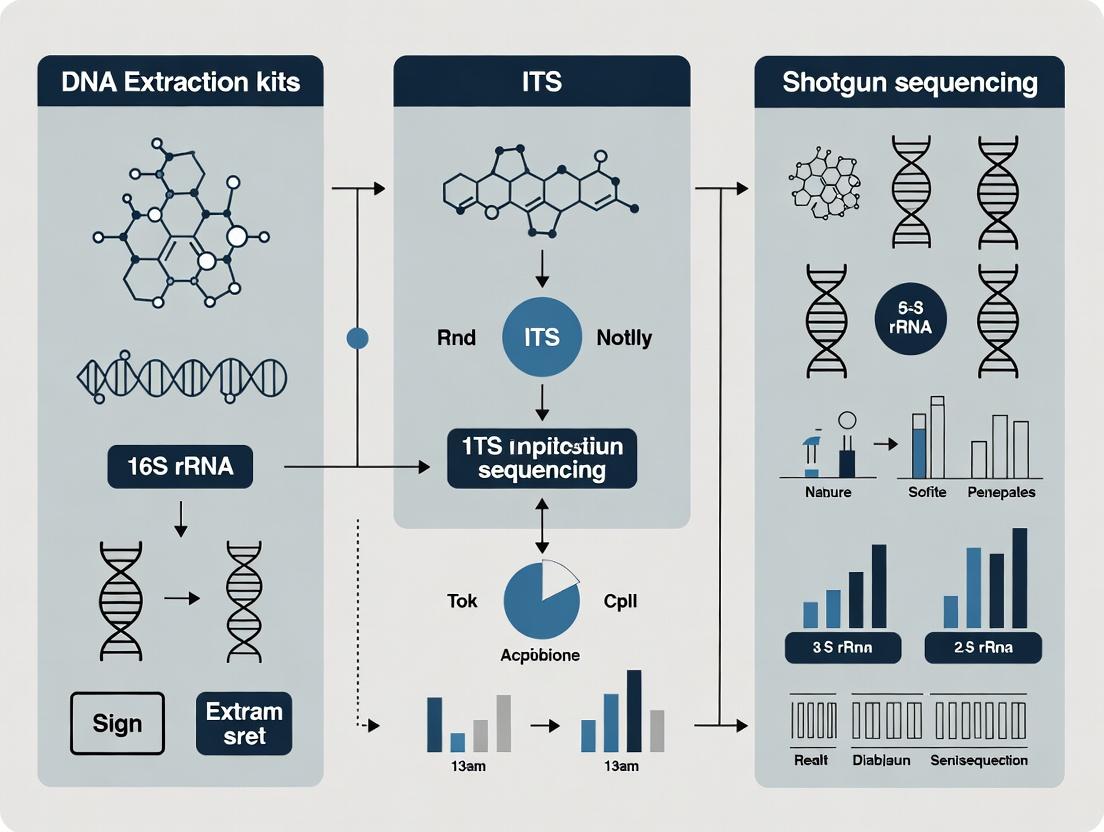
This comprehensive guide provides researchers, scientists, and drug development professionals with essential knowledge for selecting and optimizing DNA extraction kits for 16S, ITS, and shotgun metagenomic sequencing.
Choosing the Right DNA Extraction Kit: A Guide for 16S, ITS, and Shotgun Metagenomic Sequencing Success
Abstract
This comprehensive guide provides researchers, scientists, and drug development professionals with essential knowledge for selecting and optimizing DNA extraction kits for 16S, ITS, and shotgun metagenomic sequencing. It covers foundational principles of how kit chemistry interacts with microbial targets, detailed methodological workflows for diverse sample types, systematic troubleshooting strategies to overcome common yield and bias issues, and a comparative analysis of leading commercial kits. The article aims to empower users to generate high-quality, bias-minimized sequencing libraries critical for robust microbiome and metagenomic research in biomedical and clinical applications.
Understanding the Core Principles: DNA Extraction Chemistry, Targets (16S vs. ITS vs. Shotgun), and Bias Sources
Within the broader thesis on DNA extraction kit optimization for microbiome research, selecting the appropriate sequencing strategy is a critical initial step. The choice between targeted amplicon sequencing and whole-genome shotgun (WGS) metagenomics is fundamentally dictated by the study's primary goals, budget, and required resolution. This application note delineates the objectives, applications, and protocols for each method to guide researchers, scientists, and drug development professionals in experimental design.
Comparative Goals and Data Output
The table below summarizes the core distinctions in goals and typical data outputs for each method, based on current literature and standard practices.
Table 1: Comparative Goals and Specifications of Amplicon vs. WGS Metagenomic Sequencing
| Feature | Amplicon Sequencing (16S/ITS) | Whole-Genome Shotgun Metagenomics |
|---|---|---|
| Primary Goal | Profiling microbial taxonomy and community structure. | Comprehensive analysis of taxonomic composition, functional potential, and metabolic pathways. |
| Target Region | Hypervariable regions of 16S rRNA gene (bacteria/archaea) or Internal Transcribed Spacer (ITS) (fungi). | All genomic DNA fragments in a sample. |
| Read Depth Required | 10,000 - 100,000 reads per sample (saturation often reached). | 5 - 40+ million reads per sample (depth scales with complexity). |
| Key Output Metrics | OTU/ASV tables, Alpha/Beta diversity, Taxonomic composition (often to genus level). | Species/strain-level taxonomy, Gene abundance (KEGG, COG, etc.), Pathway reconstruction, AMR/virulence factor detection. |
| Functional Insight | Indirect, via inferred phylogeny. | Direct, from sequenced coding regions. |
| Approx. Cost per Sample (USD) | $20 - $100 (low to moderate). | $150 - $600+ (moderate to high). |
| Susceptibility to Bias | High (from primer selection, PCR amplification). | Lower (no PCR, but affected by DNA extraction efficiency). |
| Optimal DNA Extraction Kit Feature | Effective lysis of diverse cell walls, PCR inhibitor removal. | High molecular weight DNA, unbiased lysis across taxa, minimal host DNA contamination. |
Detailed Experimental Protocols
Protocol 1: Library Preparation for 16S rRNA Gene Amplicon Sequencing (V3-V4 Region)
This protocol follows the Illumina 16S Metagenomic Sequencing Library Preparation guide, adapted for use with extracted DNA from various kit methodologies.
Materials:
- Purified genomic DNA (concentration > 1 ng/µL).
- KAPA HiFi HotStart ReadyMix (2X).
- 16S V3-V4 Primer Mix (341F: 5'-CCTACGGGNGGCWGCAG-3', 805R: 5'-GACTACHVGGGTATCTAATCC-3') with overhang adapters.
- AMPure XP Beads.
- Index Primers (Nextera XT Index Kit v2).
- Magnetic stand, thermal cycler, Qubit fluorometer.
Procedure:
- Amplify Target Region:
- Prepare 25 µL reaction: 12.5 µL KAPA HiFi Mix, 5 µL Primer Mix, 2.5 µL DNA, 5 µL PCR-grade water.
- Thermal cycle: 95°C for 3 min; 25 cycles of (95°C for 30s, 55°C for 30s, 72°C for 30s); 72°C for 5 min.
- Clean PCR Amplicons:
- Add 25 µL of AMPure XP beads to the 25 µL PCR product. Incubate 5 min, place on magnet for 2 min, discard supernatant.
- Wash twice with 80% ethanol. Air dry beads for 5 min.
- Elute DNA in 27.5 µL of 10 mM Tris buffer (pH 8.5).
- Attach Dual Indices:
- Prepare 50 µL indexing PCR: 25 µL KAPA HiFi Mix, 5 µL PCR product, 5 µL of each index primer (i5 & i7), 10 µL water.
- Thermal cycle: 95°C for 3 min; 8 cycles of (95°C for 30s, 55°C for 30s, 72°C for 30s); 72°C for 5 min.
- Final Library Cleanup:
- Repeat Step 2 using 50 µL of AMPure XP beads on the 50 µL indexing reaction. Elute in 32.5 µL Tris buffer.
- Quantify & Pool Libraries: Quantify using Qubit dsDNA HS Assay. Normalize and pool equimolarly. Validate library size (~550-600 bp) on Bioanalyzer.
Protocol 2: Library Preparation for Whole-Genome Shotgun Metagenomics
This protocol is based on the Illumina DNA Prep workflow, suitable for fragmented metagenomic DNA.
Materials:
- Purified, high-integrity genomic DNA (≥ 100 ng).
- Illumina DNA Prep Kit (includes Tagmentation Mix, Stop Solution, Bead-Linked Transposomes, PCR Mix, Index Primers).
- AMPure XP Beads.
- Magnetic stand, thermal cycler, Qubit fluorometer, Bioanalyzer.
Procedure:
- Tagmentation:
- Combine 20 µL DNA (input: 100 ng - 1 µg) and 20 µL Tagmentation Mix in a 0.2 mL tube. Mix gently.
- Incubate at 55°C for 15 min. Immediately add 20 µL Stop Solution and mix.
- Incubate at 37°C for 15 min.
- Clean Up Tagmented DNA:
- Add 80 µL of AMPure XP beads to the 60 µL tagmentation reaction. Incubate 5 min.
- Place on magnet for 2 min until clear. Discard supernatant.
- Wash twice with 80% ethanol. Air dry for 5 min.
- Elute in 22.5 µL of Resuspension Buffer.
- PCR Amplify Libraries:
- Prepare 50 µL PCR: 22.5 µL eluted tagmented DNA, 5 µL Unique Dual Index Primers (i5 & i7), 22.5 µL PCR Mix.
- Thermal cycle: 68°C for 3 min; 98°C for 3 min; 8 cycles of (98°C for 15s, 60°C for 30s, 72°C for 60s); 72°C for 1 min.
- Final Library Cleanup:
- Add 50 µL of AMPure XP beads to the PCR product. Incubate 5 min.
- Place on magnet, discard supernatant. Wash twice with 80% ethanol. Air dry.
- Elute in 33 µL of Resuspension Buffer.
- Library QC: Quantify using Qubit. Assess fragment size distribution (expected broad peak, e.g., 300-800 bp) on Bioanalyzer or TapeStation.
Visualizations
Title: Decision Workflow for Selecting a Metagenomic Method
Title: 16S/ITS Amplicon Sequencing Workflow
Title: Whole-Genome Shotgun Metagenomics Workflow
The Scientist's Toolkit: Essential Research Reagent Solutions
Table 2: Key Reagents and Materials for Metagenomic Sequencing
| Item | Function in Protocol | Key Consideration for DNA Extraction Kit Thesis |
|---|---|---|
| Bead-Beating Lysis Kit (e.g., DNeasy PowerSoil Pro) | Mechanical and chemical disruption of tough microbial cell walls. | Standard for soil/fecal samples; efficiency must be compared across kits for yield and bias. |
| Enzymatic Lysis Kit (e.g., QIAamp DNA Stool Mini Kit) | Gentle enzymatic digestion of cells, often for delicate samples. | May under-lyse Gram-positive bacteria; kit comparison should assess community representation. |
| Inhibitor Removal Technology (e.g., InhibitorEx tablets) | Binds to humic acids, polyphenols, and other PCR inhibitors common in environmental samples. | Critical for downstream success; a key metric for kit evaluation in complex matrices. |
| Magnetic Bead-Based Purification (e.g., AMPure XP) | Size-selective purification and concentration of nucleic acids. | Used in both extraction kits and library prep; bead-to-sample ratio affects size selection. |
| KAPA HiFi HotStart DNA Polymerase | High-fidelity PCR amplification for amplicon or library index PCR. | Requires clean, inhibitor-free DNA from extraction kit for optimal performance. |
| Nextera XT DNA Library Prep Kit | Streamlined, tagmentation-based library construction for shotgun metagenomics. | Requires high-quality, high-molecular-weight input DNA; kit extraction integrity is vital. |
| Qubit dsDNA HS Assay Kit | Fluorometric quantification specific to double-stranded DNA. | More accurate for low-concentration metagenomic DNA than UV spectrophotometry. |
| Bioanalyzer/TapeStation High Sensitivity DNA Assay | Microfluidic electrophoretic analysis of library fragment size distribution. | Essential QC step post-library prep to validate successful preparation from kit-extracted DNA. |
Application Notes
This document provides a comparative analysis of core chemistries in modern DNA extraction kits, contextualized for microbiome (16S/ITS) and shotgun metagenomics research. The choice between mechanical and enzymatic lysis, and between silica-binding column or magnetic bead purification, fundamentally impacts DNA yield, fragment length, and taxonomic bias, which are critical for downstream sequencing accuracy.
Mechanical Lysis (e.g., bead beating) is highly effective for disrupting robust cell walls of Gram-positive bacteria, fungi, and spores. However, it indiscriminately shears DNA, producing shorter fragments unsuitable for long-read sequencing and potentially inducing bias by over-representing easily lysed taxa. Enzymatic Lysis (e.g., lysozyme, proteinase K, mutanolysin) is gentler, preserving high-molecular-weight DNA but may fail to lyse environmentally resilient cells, leading to under-representation.
For purification, Silica-Binding Column chemistry relies on DNA adsorption to a silica membrane in the presence of high chaotropic salt, followed by ethanol washes. It offers high purity and consistency but can have lower recovery of small fragments. Magnetic Bead purification uses silica-coated paramagnetic beads that bind DNA under similar salt conditions. This format is more amenable to automation, allows flexible elution volumes, and can offer better recovery of a broader size range, but bead loss can impact yield.
For 16S/ITS sequencing, bias introduced during lysis can skew community profiles. For shotgun metagenomics, the integrity and unbiased recovery of all genomic material are paramount for accurate assembly and functional analysis.
Table 1: Comparison of Lysis Methods for Microbial Community Analysis
| Parameter | Mechanical Lysis (Bead Beating) | Enzymatic Lysis |
|---|---|---|
| Efficiency on Tough Cells (e.g., Gram+) | High (>95% disruption) | Variable (40-80%, enzyme dependent) |
| DNA Fragment Size | Short (Median ~500-3000 bp) | Long (Median >10-20 kbp) |
| Process Time | Short (1-10 min active) | Long (30 min to 2+ hrs incubation) |
| Risk of Cross-Contamination | Moderate (aerosol generation) | Low (closed tube) |
| Typical Cost per Sample | Low | Moderate to High |
| Bias Potential | Over-representation of easily lysed cells | Under-representation of resistant cells |
Table 2: Comparison of Purification Method Performance
| Parameter | Silica-Binding Column | Magnetic Silica Beads |
|---|---|---|
| Typical DNA Recovery (%) | 60-80% | 70-90% |
| Elution Volume Flexibility | Low (fixed by membrane size) | High (user-defined) |
| Automation Compatibility | Low (centrifuge-based) | High (liquid handler friendly) |
| Hands-on Time | Moderate | Low (when automated) |
| Inhibitor Removal (e.g., Humics) | High | High (with optimized washes) |
| Small Fragment Recovery (<500 bp) | Lower | Higher |
| Throughput Potential | 1-24 samples/run | 96-384 samples/run |
Experimental Protocols
Protocol 3.1: Evaluating Lysis Bias for 16S Sequencing from Stool
Objective: To compare taxonomic profiles generated from mechanical vs. enzymatic lysis of a standardized stool sample. Materials: ZymoBIOMICS Microbial Community Standard, 0.1 mm silica/zirconia beads, enzymatic lysis buffer (20 mM Tris, 2 mM EDTA, 1.2% Triton X-100, 20 mg/ml lysozyme), thermal shaker, centrifuge. Procedure:
- Aliquot 200 mg of homogenized stool sample into two 2 ml tubes.
- Tube A (Mechanical): Add 750 µl of commercial lysis buffer and 0.3 g of beads. Homogenize in a bead beater at 6 m/s for 45 sec. Incubate at 70°C for 5 min.
- Tube B (Enzymatic): Add 750 µl of enzymatic lysis buffer. Incubate at 37°C with shaking (500 rpm) for 60 min. Add Proteinase K and SDS to final 0.5 mg/ml and 0.5%, incubate at 56°C for 30 min.
- Centrifuge both tubes at 13,000 x g for 5 min. Transfer supernatant to new tubes.
- Purify DNA from both lysates using the same magnetic bead protocol (see 3.3).
- Quantify DNA, amplify the V4 region of 16S rRNA gene, sequence on an Illumina MiSeq, and analyze taxonomic composition against the known standard.
Protocol 3.2: Assessing DNA Integrity for Shotgun Sequencing from Soil
Objective: To determine the impact of lysis and purification on DNA fragment size distribution. Materials: Soil sample, DNeasy PowerSoil Pro Kit (mechanical/column), NucleoMag Soil Kit (mechanical/magnetic), agarose gel system, Fragment Analyzer or Bioanalyzer. Procedure:
- Process 250 mg of soil in triplicate using:
- Kit A: Bead beating + silica spin column purification (follow manufacturer's protocol).
- Kit B: Bead beating + magnetic bead purification (follow manufacturer's protocol).
- Elute all DNA in equal volumes (50 µl).
- Quantify DNA using a fluorometric assay (e.g., Qubit dsDNA HS).
- Assess fragment size distribution:
- Run 100 ng of each eluate on a 0.8% agarose gel.
- Analyze 1 µl on a High Sensitivity DNA Fragment Analyzer chip.
- Compare yield (ng DNA/g soil) and average fragment length (bp) between kits.
Protocol 3.3: Generic Magnetic Bead Purification Protocol
Objective: To purify DNA from a cleared lysate after any lysis method. Materials: Cleared lysate, paramagnetic silica beads (e.g., Sera-Mag beads), 80% ethanol, binding buffer (e.g., 2.5 M NaCl, 20% PEG-8000), 10 mM Tris-HCl (pH 8.5), magnetic rack, pipettes. Procedure:
- Bind: Combine cleared lysate with an equal volume of binding buffer. Add 1.0x sample volume of well-resuspended magnetic beads. Mix thoroughly and incubate at room temperature for 5 min.
- Capture: Place tube on a magnetic rack until the solution clears (≈2 min). Carefully aspirate and discard the supernatant.
- Wash (2x): With the tube on the rack, add 500 µl of freshly prepared 80% ethanol. Incubate 30 sec, then fully aspirate. Repeat with a second ethanol wash. Ensure all ethanol is removed. Air-dry beads for 5-10 min until they appear matte.
- Elute: Remove tube from rack. Add desired volume (e.g., 50 µl) of 10 mM Tris-HCl, pH 8.5. Pipette mix thoroughly to resuspend. Incubate at room temp for 2 min. Place back on the magnetic rack, then transfer the cleared eluate containing purified DNA to a new tube.
Diagrams
Diagram Title: DNA Extraction Workflow Decision Tree
Diagram Title: Magnetic Bead DNA Binding Chemistry
The Scientist's Toolkit
Table 3: Essential Research Reagent Solutions for DNA Extraction Optimization
| Item | Function & Relevance |
|---|---|
| Lysis Matrix B (0.1 mm silica beads) | Provides mechanical shearing force for disrupting tough cell walls in bead beating. Critical for soil and stool samples. |
| Lysozyme (20-50 mg/ml stock) | Enzymatically hydrolyzes peptidoglycan in Gram-positive bacterial cell walls. Used in gentle enzymatic lysis protocols. |
| Proteinase K (>600 mAU/ml) | Broad-spectrum serine protease. Degrades proteins and inactivates nucleases, crucial for freeing and protecting DNA. |
| Guanidine Hydrochloride (GuHCl, 4-6 M) | Chaotropic salt. Denatures proteins, disrupts cell membranes, and enables DNA binding to silica in both columns and beads. |
| Paramagnetic Silica Beads | Core purification material. Silica coating binds DNA; magnetic core enables separation via a magnetic rack. Size affects binding kinetics. |
| Polyethylene Glycol (PEG) 8000 | A crowding agent used in binding buffers to promote DNA aggregation and enhance binding efficiency to silica surfaces. |
| RNase A (10 mg/ml) | Degrades RNA co-purified with DNA, improving DNA purity and accuracy of fluorometric quantification. |
| Inhibitor Removal Technology (IRT) / SP2 Wash Buffer | Specialized wash buffers (often proprietary) designed to remove PCR inhibitors like humic acids, polyphenolics, and pigments from complex samples. |
| TE Buffer (10 mM Tris, 1 mM EDTA, pH 8.0) | Standard elution/storage buffer. Tris stabilizes pH, EDTA chelates Mg²⁺ to inhibit DNase activity. Low salt promotes elution from silica. |
Within the broader thesis on optimizing DNA extraction for 16S, ITS, and shotgun metagenomic sequencing, a central finding is the pronounced bias introduced by standard extraction protocols. These kits, often optimized for human tissues or Gram-negative bacteria, systematically under-represent Gram-positive bacteria (with thick peptidoglycan walls), fungi (with chitinous cell walls), and bacterial endospores (with highly resistant coats). This bias distorts microbial community profiles, impacting research in dysbiosis, drug development, and environmental monitoring. This document provides application notes and detailed protocols to mitigate this bias.
Quantitative Comparison of Lysis Efficacy and Bias
The following tables summarize key data from recent studies comparing extraction methods.
Table 1: Relative DNA Yield from Different Microbial Targets Across Common Lysis Methods
| Microbial Target | Bead-Beating Only | Enzymatic Lysis Only | Chemical Lysis Only | Integrated Method (Protocol 1) |
|---|---|---|---|---|
| E. coli (Gram-negative) | 100% (Baseline) | 95% | 98% | 99% |
| S. aureus (Gram-positive) | 35% | 75% | 40% | 96% |
| B. subtilis (Spores) | 5% | 15% | 10% | 92% |
| C. albicans (Yeast) | 25% | 90% | 30% | 94% |
| A. niger (Mold) | 10% | 85% | 20% | 88% |
Data normalized to yield from E. coli with bead-beating, representing common bias. Source: Aggregated from recent comparative studies (2023-2024).
Table 2: Impact on Downstream Sequencing Metrics (Shotgun)
| Extraction Method | Observed G+/G- Ratio (Theoretical: 1:1) | Fungal Read Proportion | Alpha Diversity (Shannon) | DNA Fragment Size (avg. bp) |
|---|---|---|---|---|
| Standard Kit (Column) | 0.3:1 | 0.5% | 4.1 ± 0.3 | 12,000 |
| Bead-Beating Intensive | 0.8:1 | 3.2% | 5.8 ± 0.2 | 5,000 |
| Protocol 1 (Integrated) | 0.95:1 | 4.8% | 6.5 ± 0.1 | 8,500 |
Experimental Protocols
Protocol 1: Integrated Mechanical, Enzymatic, and Chemical Lysis for Unbiased Extraction
Objective: To maximize lysis efficiency across Gram-positive bacteria, fungi, and spores while maintaining high DNA integrity for shotgun and amplicon sequencing.
Materials: See "The Scientist's Toolkit" below.
Detailed Workflow:
Sample Preparation:
- Resuspend pelleted sample (up to 200 mg) in 800 µL of Lysis Buffer A.
- Add 50 µL of Lysozyme Solution (100 mg/mL) and 20 µL of Mutanolysin (5,000 U/mL). Vortex briefly.
- Incubate at 37°C for 30 minutes with gentle agitation (300 rpm).
Spore and Fungal Wall Disruption:
- Add 100 µL of Chitinase Solution (10 U/µL) and 25 µL of Proteinase K (20 mg/mL). Vortex.
- Incubate at 50°C for 20 minutes.
- Add 50 µL of DTT Solution (1M) to reduce disulfide bonds in spore coats. Incubate at 50°C for a further 10 minutes.
Mechanical Lysis:
- Transfer the mixture to a tube containing a sterile, DNA-free bead mix (0.1 mm glass and 0.5 mm zirconia beads).
- Secure tubes on a high-throughput bead beater. Process at 6.5 m/s for 3 cycles of 60 seconds each, with 90-second pauses on ice between cycles to prevent overheating.
Chemical Lysis Completion:
- Add 200 µL of Lysis Buffer B (high-salt, high-detergent). Vortex thoroughly.
- Incubate at 70°C for 10 minutes.
- Centrifuge at 13,000 x g for 5 minutes at room temperature to pellet debris.
DNA Purification:
- Transfer the supernatant to a clean tube. Add 1 volume of Binding Buffer and mix.
- Load onto a silica-membrane column (designed for large fragments >10 kb). Centrifuge at 10,000 x g for 1 minute.
- Wash twice with 700 µL of Wash Buffer (with ethanol). Dry column by centrifugation for 2 minutes.
- Elute DNA in 50-100 µL of pre-warmed (55°C) Elution Buffer (10 mM Tris-HCl, pH 8.5). Let stand for 2 minutes before centrifuging.
Protocol 2: Validation via Spore Spike-In and qPCR
Objective: Quantitatively assess bias reduction using a known spike-in control.
Method:
- Spike-In Preparation: Prepare a known quantity (e.g., 10^6 cells) of Bacillus atrophaeus spores (heat-killed) as an internal control.
- Co-extraction: Add the spike-in control to a complex sample (e.g., stool, soil) prior to starting Protocol 1. Process an identical sample with a standard kit in parallel.
- qPCR Analysis: Perform triplicate qPCR reactions targeting the B. atrophaeus-specific spoVF gene.
- Primers: F: 5'-GCTGCATCAACTGGCAGAAT-3', R: 5'-TTCGCCACCATACCTTCTCA-3'.
- Mix: 10 µL SYBR Green Master Mix, 0.8 µL each primer (10 µM), 2 µL template DNA, 6.4 µL nuclease-free water.
- Cycling: 95°C for 3 min; 40 cycles of 95°C for 15s, 60°C for 1 min; melt curve analysis.
- Calculation: Compare Cq values between the two extraction methods. The method yielding a lower Cq (higher recovery) for the spore target demonstrates reduced bias. Calculate percent recovery relative to the known input.
Visualizations
Title: Unbiased DNA Extraction Workflow
Title: Barriers and Solutions for Resilient Microbes
The Scientist's Toolkit: Key Research Reagent Solutions
| Item / Reagent | Function in Bias Reduction | Key Consideration |
|---|---|---|
| Zirconia & Glass Bead Mix | Mechanical disruption of rigid cell walls. Zirconia beads are denser, ideal for spores; smaller glass beads enhance fungal lysis. | Use a homogenizer capable of >6 m/s speed. Pre-clean beads to remove DNA contaminants. |
| Lysozyme & Mutanolysin | Hydrolyze glycosidic bonds in peptidoglycan, specifically targeting Gram-positive walls. Mutanolysin is effective on Streptococcus and related genera. | Use molecular biology grade. Prepare fresh or aliquot and store at -20°C. |
| Chitinase & Glucanase | Degrade chitin and beta-glucan polymers in fungal cell walls, crucial for lysis of molds and yeasts. | Activity is pH and buffer dependent; verify compatibility with your primary lysis buffer. |
| Dithiothreitol (DTT) | Reduces disulfide bonds in the keratin-like protein coats of bacterial endospores, weakening the structure. | Add after enzymatic steps, as it can inhibit some enzymes. Prepare fresh. |
| Proteinase K | Broad-spectrum protease degrades proteins in cell walls and spore coats, and inactivates nucleases. | Ensure incubation is at 50-56°C for optimal activity. |
| High-Salt SDS Lysis Buffer | Sodium dodecyl sulfate (SDS) solubilizes lipids and membranes; high salt concentration helps dissociate proteins from DNA. | Pre-warm to improve solubility of components and efficiency. |
| Inhibitor Removal Technology | Silica-membrane columns or magnetic beads with specific wash buffers designed to remove humic acids, polysaccharides, and other PCR inhibitors common in environmental samples. | For complex samples (soil, stool), consider a post-elution clean-up step. |
| Large-Fragment DNA Binding Columns | Designed to retain very high molecular weight (>10-20 kb) DNA, preserving the long fragments essential for accurate shotgun sequencing and assembly. | Do not over-dry the membrane, as this makes elution of large fragments difficult. |
Within a broader thesis evaluating DNA extraction kits for 16S/ITS amplicon and shotgun metagenomic sequencing, the assessment of key quality metrics is paramount. The reliability and interpretability of sequencing data are directly contingent upon the yield, purity, structural integrity, and inhibitory content of the extracted nucleic acids. This application note details the protocols and benchmarks for quantifying these critical parameters to facilitate informed kit selection and protocol optimization for microbial community research and drug development pipelines.
Quantitative Metrics and Benchmarks
High-quality DNA for NGS applications must meet specific thresholds. The following table summarizes the ideal ranges for key metrics, derived from current literature and sequencing core facility guidelines.
Table 1: Target Metrics for High-Quality DNA for 16S/ITS and Shotgun Sequencing
| Metric | Ideal Range | Importance for Sequencing |
|---|---|---|
| DNA Yield | > 1 ng/µL (for library prep) | Sufficient mass is required for library construction. Low yield leads to failed prep or biased amplification. |
| A260/280 Ratio | 1.8 - 2.0 | Indicates protein contamination (phenol, guanidine). Ratios <1.8 suggest protein carryover; >2.0 may indicate RNA or chaotropic salt residue. |
| A260/230 Ratio | 2.0 - 2.2 | Indicates organic (phenol, EDTA) or salt (guanidine, acetate) contamination. Low ratios (<1.8) strongly correlate with PCR inhibition. |
| Fragment Size (DV200) | > 50% for shotgun | Percentage of DNA fragments >200bp. Critical for shotgun library insert size and coverage. Less critical for short-amplicon (16S V4). |
| Inhibitor Presence | Pass qPCR / SPUD assay | Inhibitors (humics, polyphenols, salts) from samples or kits can suppress enzymatic reactions in library prep and sequencing. |
Detailed Experimental Protocols
Protocol 2.1: Spectrophotometric Analysis for Yield and Purity
Purpose: To quantify DNA concentration and assess purity via A260/280 and A260/230 ratios. Materials: Nanodrop/UV-Vis spectrophotometer, low-absorbance cuvettes, nuclease-free water (blank). Procedure:
- Initialize the spectrophotometer and perform a blank measurement with the elution buffer used for extraction (e.g., TE buffer, nuclease-free water).
- Apply 1-2 µL of the purified DNA sample to the measurement pedestal.
- Record the concentration (ng/µL) from absorbance at 260 nm, where A260 = 1 corresponds to ~50 ng/µL for dsDNA.
- Record the A260/280 and A260/230 ratios directly from the instrument's software.
- Clean the pedestal thoroughly between samples. Interpretation: Compare results to Table 1. Low A260/230 often necessitates additional cleanup (see Protocol 2.3).
Protocol 2.2: Fluorometric Quantification and Fragment Size Analysis
Purpose: To obtain accurate concentration independent of absorbance contaminants and to assess fragment size distribution. Materials: Qubit Fluorometer with dsDNA HS Assay Kit, TapeStation / Bioanalyzer with High Sensitivity D1000/DNA Kit. Procedure for Fluorometry (Qubit):
- Prepare the Qubit working solution by diluting the dye 1:200 in the provided buffer.
- Add 190 µL of working solution to 10 µL of each standard (1 & 2) and to 10 µL of each diluted sample (e.g., 1:10 or 1:100 in TE buffer).
- Vortex for 2-3 seconds, incubate for 2 minutes at room temperature.
- Read samples on the Qubit using the appropriate assay. Use standards to generate the calibration curve. Procedure for Fragment Analysis (TapeStation):
- Prepare samples according to manufacturer's instructions: add 3 µL of Sample Buffer to 1 µL of DNA sample.
- Heat the mixture at 72°C for 3 minutes, then immediately chill on a cooling block.
- Load the samples, ladder, and gel matrix into the TapeStation cassette.
- Run the assay and analyze the electropherogram. Record the DV200 value (percentage of fragments >200 bp).
Protocol 2.3: Inhibitor Removal via Solid-Phase Reversible Immobilization (SPRI) Cleanup
Purpose: To remove salts, organics, and short fragments that inhibit enzymatic steps. Materials: SPRIselect beads, fresh 80% ethanol, nuclease-free water, magnetic stand, low-retention tips. Procedure:
- Vortex SPRIselect beads to ensure homogeneity.
- To the DNA sample (in a low-bind tube), add SPRI beads at a ratio of 0.8X sample volume (e.g., 80 µL beads to 100 µL sample). This ratio selectively binds fragments >~150-200 bp.
- Mix thoroughly by pipetting, incubate at room temperature for 5 minutes.
- Place tube on a magnetic stand until the supernatant is clear (~5 minutes).
- Carefully remove and discard the supernatant without disturbing the bead pellet.
- With tube on magnet, add 200 µL of 80% ethanol. Incubate for 30 seconds, then remove and discard ethanol. Repeat for a total of two washes.
- Air-dry beads for 5-10 minutes until they appear matte (do not over-dry).
- Remove from magnet, elute DNA in 20-50 µL of nuclease-free water or TE buffer. Mix thoroughly, incubate for 2 minutes.
- Place back on magnet, transfer the purified supernatant to a new tube.
- Re-quantify using Qubit and re-assess purity ratios (Protocol 2.1).
Diagrams
DNA Extraction and Quality Control Workflow
How Inhibitors Disrupt NGS Library Prep
The Scientist's Toolkit: Key Research Reagent Solutions
Table 2: Essential Materials for DNA QC in NGS Prep
| Item | Function & Importance |
|---|---|
| Qubit dsDNA HS Assay Kit | Fluorometric quantitation specific to dsDNA; unaffected by common contaminants like RNA or salts, providing accurate concentration for library input. |
| SPRIselect / AMPure XP Beads | Magnetic beads for size-selective cleanup and inhibitor removal. Critical for normalizing input and purifying post-amplification libraries. |
| Agilent TapeStation / Bioanalyzer | Microfluidic capillary electrophoresis for precise fragment size distribution analysis (e.g., DV200) and sample integrity number. |
| PCR/Sequencing Inhibitor Test Kit (e.g., SPUD) | Contains control DNA and primers to detect the presence of enzymatic inhibitors in the sample via qPCR amplification failure. |
| Low-Binding Microcentrifuge Tubes & Tips | Minimizes DNA adsorption to plastic surfaces, preserving yield, especially for low-concentration samples typical in microbiome studies. |
| Nuclease-Free TE Buffer (pH 8.0) | Optimal elution/storage buffer; EDTA chelates Mg2+ to inhibit nucleases, slightly basic pH enhances DNA stability and resuspension. |
Introduction Within the broader thesis evaluating DNA extraction kits for 16S, ITS, and shotgun metagenomic sequencing, the nature of the starting material is the paramount variable. The sample type dictates the optimal lysis strategy, dictates the intensity of inhibitor removal required, and ultimately determines the success of downstream sequencing. This document provides application notes and detailed protocols for handling five critical sample categories: soil, stool, oral, skin, and low-biomass clinical samples (e.g., tissue, plasma, synovial fluid).
1. Comparative Analysis of Sample-Specific Challenges
Table 1: Sample Characteristics and Extraction Implications
| Sample Type | Primary Challenges | Key Contaminants | Recommended Lysis Strategy | Critical QC Metric |
|---|---|---|---|---|
| Soil | High inhibitor load (humics, polysaccharides), diverse cell wall types, particulates. | Humic acids, fulvic acids, metals, polyphenols. | Bead-beating (vigorous) combined with chemical/enzymatic lysis. | A260/A230 ratio (>1.8 indicates humic acid removal). |
| Stool | High inhibitor load (bile salts, complex polysaccharides), high biomass, host DNA. | Bilirubin, bile salts, dietary PCR inhibitors. | Thermal + chemical lysis (e.g., heating in lysis buffer); moderate bead-beating. | Yield (ng/mg) and inhibition assay (e.g., qPCR spike-in). |
| Oral (swab) | Moderate inhibitors, Gram-positive/negative mix, host epithelial cells. | Mucins, host DNA, salivary proteins. | Enzymatic lysis (lysozyme/mutanolysin) followed by bead-beating. | Host-to-microbial DNA ratio (qPCR or shotgun analysis). |
| Skin (swab) | Low biomass, high host DNA, inhibitors from cosmetics/sweat. | Sebum, salts, skincare product residues. | Gentle to moderate bead-beating in specialized low-biomass lysis buffer. | Total DNA yield (often <1 ng/μL); 16S amplicon positivity. |
| Low-Biomass Clinical | Extremely low microbial load, overwhelming host DNA, variable preservation. | Host genomic DNA, heme (blood), formalin (FFPE), albumin. | Enzymatic/proteinase K-based lysis; often no bead-beating to minimize host shearing. | Microbial DNA % via shotgun sequencing; limit of detection. |
Table 2: Performance of Extraction Kit Classes Across Sample Types (Representative Data)
| Extraction Kit Class | Soil Yield (ng/g) | Stool Inhibitor Removal (qPCR ΔCt)* | Oral Swab Host DNA (%) | Skin Swab 16S Pos. Rate (%) | Plasma Microbial Yield (fg/μL) |
|---|---|---|---|---|---|
| Mechanical Lysis Focus | High (500-1000) | Moderate (~2) | High (>80) | Low (40-60) | Very Low |
| Chemical/Inhibitor Removal Focus | Moderate (200-500) | Good (~4) | Moderate (60-80) | Moderate (60-80) | Low |
| Host Depletion/ Low-Biomass Optimized | Low (<200) | Moderate (~3) | Low (<50) | High (>90) | High (50-200) |
*ΔCt: Difference in Ct value of a control PCR spike between sample and water. Larger ΔCt indicates better inhibitor removal.
2. Detailed Experimental Protocols
Protocol 2.1: Integrated Protocol for Soil and Stool (High-Inhibitor Samples) Objective: Extract inhibitor-free, high-molecular-weight DNA from complex matrices.
- Homogenization: For soil, sieve through a 2mm mesh. For stool, aliquot 100-200 mg into a bead-beating tube.
- Lysis: Add 800 μL of a commercial lysis buffer (e.g., containing CTAB and proteinase K) and 0.5g of a mixed bead suite (0.1mm zirconia, 1.0mm silica). Process in a bead-beater for 2 x 45s pulses, with cooling on ice between pulses.
- Inhibitor Removal: Incubate at 70°C for 10 min. Centrifuge. Transfer supernatant to a tube containing an inhibitor-removal resin (e.g., polyvinylpolypyrrolidone). Vortex for 10 min at room temperature.
- Binding & Wash: Centrifuge resin suspension. Transfer cleared lysate to a spin column with a high-salt binding buffer. Centrifuge. Wash twice with an ethanol-based wash buffer.
- Elution: Elute DNA in 50-100 μL of low-EDTA TE buffer or nuclease-free water. Pre-heat elution buffer to 55°C for higher yield.
Protocol 2.2: Protocol for Low-Biomass Skin Swabs and Clinical Fluids Objective: Maximize recovery of trace microbial DNA while minimizing co-extraction of host DNA.
- Collection & Initial Processing: Swab area (e.g., volar forearm) with a pre-moistened (with 1X PBS + 0.1% Tween 20) sterile swab. Snap swab head into a PowerBead tube. For plasma, start with 0.5-1 mL filtered through a 0.8μm filter to remove human cells.
- Gentle Lysis: Add 750 μL of a specialized low-biomass lysis buffer (e.g., with enhanced detergent and carrier RNA). Do not use vigorous bead-beating. Vortex at medium speed for 5 minutes.
- Enzymatic Digestion: Add 20 μL of proteinase K (20 mg/mL). Incubate at 56°C for 30 min with gentle agitation.
- Selective Binding: Add a volume of binding buffer optimized for low-concentration DNA. Incubate on ice for 5 min. Load entire volume onto a silica-membrane column in multiple sequential loads to maximize binding efficiency.
- Stringent Washing: Perform two washes with an ethanol-based buffer. Perform an additional wash with a pre-heated (50°C) wash buffer containing guanidine thiocyanate to remove residual contaminants.
- Elution: Elute in a minimal volume (20-30 μL) of elution buffer directly onto the membrane center. Let column sit at RT for 2 min before centrifugation.
Protocol 2.3: Protocol for Oral Samples Balancing Microbial Yield and Host Depletion Objective: Efficiently lyse oral bacteria while reducing human genomic DNA background.
- Sample Collection: Rinse mouth with water. Swab buccal mucosa and subgingival spaces with a sterile swab. Place swab in a tube with 1 mL of preservation buffer.
- Differential Lysis (Optional): Centrifuge sample at 500 x g for 2 min to pellet host cells. Transfer supernatant (enriched for bacteria) to a new tube and centrifuge at 10,000 x g for 5 min to pellet microbial biomass.
- Enzymatic Lysis of Pellet: Resuspend pellet in 180 μL of enzymatic lysis cocktail (20 mg/mL lysozyme, mutanolysin in TE buffer). Incubate at 37°C for 45 min.
- Complete Lysis: Add 25 μL of proteinase K and 200 μL of commercial AL buffer. Vortex. Incubate at 56°C for 30 min.
- DNA Purification: Follow standard silica-column purification with ethanol washes. Elute in 50 μL.
3. Visualized Workflows and Pathways
Title: DNA Extraction Workflow Decision Tree
Title: Sample-Driven Extraction Logic Pathway
4. The Scientist's Toolkit: Research Reagent Solutions
Table 3: Essential Materials for Diverse Sample DNA Extraction
| Item | Function | Sample Type Specificity |
|---|---|---|
| Zirconia/Silica Bead Mix (0.1, 0.5mm) | Mechanical disruption of tough cell walls (Gram+, spores, fungi). | Critical for: Soil, stool. Use cautiously in: Low-biomass (risk of host DNA shearing). |
| Inhibitor Removal Technology (IRT) Beads / PVPP | Binds polyphenolics, humic/fulvic acids, and other organic inhibitors. | Essential for: Soil, plant, stool. |
| Carrier RNA (e.g., Poly-A, MS2 RNA) | Improves binding efficiency of trace nucleic acids to silica membranes. | Mandatory for: Skin swabs, plasma, CSF, other low-biomass samples. |
| Lysozyme & Mutanolysin | Enzymatically digests bacterial peptidoglycan for enhanced lysis. | Recommended for: Oral, sputum, other Gram+ rich samples. |
| Guanidine Thiocyanate (GuSCN) Buffer | Chaotropic salt that denatures proteins, facilitates inhibitor removal, and promotes DNA binding to silica. | Universal, but concentration is key. Higher for inhibitor-heavy samples. |
| Size-Selective Magnetic Beads (e.g., SPRI) | Post-extraction clean-up to remove short fragments (e.g., host DNA, adapter dimers) and select for microbial genomes. | Valuable for: Low-biomass clinical samples (host depletion), shotgun library prep. |
| DNase-free RNase A | Degrades co-extracted RNA to prevent overestimation of DNA yield/quality via spectrophotometry. | Recommended for: All samples prior to library prep for accurate quantification. |
Step-by-Step Protocols: Tailoring Your DNA Extraction for Specific Sample Types and Sequencing Platforms
Within a comprehensive thesis evaluating DNA extraction kits for 16S/ITS amplicon and shotgun metagenomic sequencing, the library preparation workflow is a critical determinant of downstream data quality. This Application Note details the standardized protocols from sample collection through final elution, providing a framework for consistent kit performance comparison. Optimized and reproducible library construction is paramount for generating unbiased, high-fidelity sequencing data essential for microbial ecology studies and therapeutic target discovery in drug development.
Detailed Experimental Protocol
Sample Collection and Preservation
Objective: To obtain microbial biomass representative of the original environment while inhibiting nucleic acid degradation. Materials: Sterile swabs, collection tubes, liquid nitrogen, RNAlater, or specific stabilization buffers. Procedure:
- Environmental/Biological Sample Acquisition: Collect sample (e.g., soil, water, saliva, tissue) using sterile technique.
- Immediate Stabilization: For meta-genomic studies, immediately preserve samples.
- For tissues: Submerge in RNAlater (10:1 buffer-to-sample ratio) and incubate at 4°C overnight before long-term storage at -80°C.
- For liquids: Add preservative per manufacturer's instructions or flash-freeze in liquid nitrogen.
- Storage: Store all stabilized samples at -80°C until nucleic acid extraction.
Nucleic Acid Extraction and Quantification
Objective: To isolate high-purity, high-molecular-weight DNA suitable for NGS library construction. Procedure (Based on a Modified Kit Protocol):
- Cell Lysis:
- Resuspend or thaw sample in appropriate lysis buffer (e.g., containing SDS or guanidinium thiocyanate).
- Add mechanical disruption (bead-beating for 3-5 minutes at 4-6 m/s) for rigorous environmental samples.
- Incubate at elevated temperature (55-65°C for 30-60 minutes) with proteinase K.
- Inhibition Removal: Add inhibitor removal solution (e.g., for humic acids in soil) and vortex. Centrifuge at 10,000 x g for 1 minute.
- DNA Binding: Transfer supernatant to a silica-membrane column. Centrifuge at 11,000 x g for 1 minute. Discard flow-through.
- Wash: Perform two wash steps using provided ethanol-based wash buffers. Centrifuge at 11,000 x g for 1 minute after each wash. Dry column by centrifuging at full speed for 2 minutes.
- Elution: Elute DNA in low-EDTA TE buffer or nuclease-free water (50-100 µL). Pre-heat elution buffer to 55-70°C for higher yield. Let column stand for 2 minutes before final centrifugation at 11,000 x g for 1 minute.
- Quantification & QC:
- Quantify using fluorometry (e.g., Qubit dsDNA HS Assay).
- Assess purity via Nanodrop (260/280 ~1.8, 260/230 >2.0).
- Check integrity via gel electrophoresis or Fragment Analyzer (DV200 >70% for FFPE).
Table 1: Quantitative Comparison of DNA Extraction Kits for NGS
| Kit Name | Avg. Yield (ng/mg sample) | 260/280 Ratio | Avg. Fragment Size (bp) | Suitability for 16S | Suitability for Shotgun | Inhibitor Removal Rating (1-5) |
|---|---|---|---|---|---|---|
| Kit A (Phenol-Chloroform) | 450 ± 120 | 1.78 ± 0.05 | >23,000 | Good | Excellent | 3 |
| Kit B (Silica-Membrane) | 380 ± 90 | 1.82 ± 0.03 | 15,000 - 20,000 | Excellent | Very Good | 5 |
| Kit C (Magnetic Bead) | 320 ± 70 | 1.80 ± 0.04 | 10,000 - 15,000 | Excellent | Good | 4 |
| Kit D (Rapid Spin) | 250 ± 60 | 1.75 ± 0.08 | 5,000 - 10,000 | Fair | Moderate | 2 |
Library Preparation (Illumina TruSeq Workflow)
Objective: To convert purified DNA into a sequencing-ready library with adapters and indices. Procedure for Shotgun Sequencing:
- DNA Shearing/Fragmentation:
- Use a Covaris S220 sonicator for 300-500 bp inserts.
- Program: 175 Peak Incident Power, 10% Duty Factor, 200 cycles per burst, 45-60 seconds.
- End Repair & A-Tailing:
- Combine fragmented DNA (50-100 ng), end repair mix, and nuclease-free water (total 60 µL).
- Incubate: 30 minutes at 30°C, then 30 minutes at 65°C. Clean up with 1.8x SPRI beads.
- Adapter Ligation:
- Resuspend DNA in 15 µL. Add 2.5 µL of appropriate Illumina index adapter (15 µM).
- Add 12.5 µL ligation master mix. Incubate 10 minutes at 20°C. Perform bead clean-up (0.9x then 1.0x SPRI).
- Library Amplification (PCR Enrichment):
- Prepare PCR mix: 25 µL library, 25 µL PCR master mix, 5 µL index primer.
- Cycle: 98°C for 30s; 8-15 cycles of [98°C 10s, 60°C 30s, 72°C 30s]; 72°C for 5min.
- Final Clean-up & Size Selection:
- Clean with 1.0x SPRI beads. For precise size selection, use a double-SPRI bead ratio (e.g., 0.6x to 0.8x to supernatant) or Pippin Prep.
- Elute in 23 µL Resuspension Buffer (RSB).
Procedure for 16S/ITS Amplicon Sequencing:
- Primary PCR (Target Amplification):
- Amplify hypervariable regions (e.g., V3-V4) using primers with overhang adapters.
- Reaction: 12.5 µL 2x KAPA HiFi Mix, 1 µL each primer (10 µM), 10-20 ng gDNA, water to 25 µL.
- Cycle: 95°C 3min; 25 cycles of [95°C 30s, 55°C 30s, 72°C 30s]; 72°C 5min.
- Clean up with 1x SPRI beads.
- Indexing PCR (Attaching Indices):
- Use the purified primary PCR product as template for a second, short-cycle PCR (8 cycles) with Nextera XT Index primers.
- Final Clean-up: As per shotgun protocol.
Library QC and Pooling
Objective: To accurately quantify and qualify libraries before sequencing. Procedure:
- Quantification: Use qPCR (e.g., KAPA Library Quant Kit) for molarity (nM) calculation.
- Quality Assessment: Run on Agilent Bioanalyzer (High Sensitivity DNA chip) or Fragment Analyzer to confirm insert size distribution and absence of adapter dimer.
- Normalization & Pooling: Dilute each library to 4 nM based on qPCR data. Combine equal volumes of each normalized library. Denature the final pool with 0.1N NaOH for loading onto the sequencer.
Key Visualizations
Diagram 1 Title: NGS Library Prep Workflow from Sample to Pool
The Scientist's Toolkit: Essential Research Reagent Solutions
Table 2: Key Reagents and Materials for NGS Library Preparation
| Item Name | Function/Benefit | Example Product/Brand |
|---|---|---|
| Nucleic Acid Stabilizer | Preserves sample integrity at point of collection, inhibiting RNase/DNase activity. | RNAlater, DNA/RNA Shield |
| Inhibitor Removal Technology | Binds and removes humic acids, polyphenolics, and other PCR inhibitors common in complex samples. | OneStep PCR Inhibitor Removal Kit, PVPP |
| High-Fidelity DNA Polymerase | Essential for accurate amplification during library PCR with low error rates. | KAPA HiFi HotStart, Q5 High-Fidelity |
| SPRI (Solid Phase Reversible Immobilization) Beads | Magnetic beads for size selection and clean-up of DNA fragments; enables automation. | AMPure XP, Sera-Mag Select |
| Dual-Indexed Adapters | Unique molecular barcodes for multiplexing samples, reducing index hopping risk. | Illumina IDT for Illumina, Nextera XT |
| Library Quantification Kit (qPCR-based) | Accurately measures amplifiable library concentration for precise pooling. | KAPA Library Quant Kit, qPCR Absolute Quantification Standard |
| Size Selection System | Isolates DNA fragments within a specific size range for uniform insert libraries. | Pippin Prep, BluePippin |
| Low-EDTA TE Buffer | Optimal elution/storage buffer; high EDTA can interfere with downstream enzymatic steps. | 10 mM Tris-HCl, 0.1 mM EDTA, pH 8.0 |
Within the broader thesis evaluating DNA extraction kits for 16S rRNA, ITS, and shotgun metagenomic sequencing, the pre-extraction phase is critical. Fecal samples are heterogeneous and contain PCR inhibitors (e.g., bilirubin, complex polysaccharides, bile salts). This application note details optimized, reproducible protocols for sample homogenization and inhibitor removal to ensure high-quality, inhibitor-free DNA, maximizing downstream sequencing accuracy and reproducibility.
Key Challenges in Fecal Sample Processing
- Inherent Heterogeneity: Microbial distribution is uneven.
- Inhibitor Diversity: Includes humic acids, hemoglobin derivatives, and dietary compounds.
- Bias Introduction: Inefficient lysis of tough Gram-positive bacteria or spores.
- Inhibition Carryover: Compromises PCR and sequencing library preparation.
Homogenization Strategies: Quantitative Comparison
Effective homogenization is the first critical step for representative subsampling.
Table 1: Comparison of Fecal Sample Homogenization Methods
| Method | Protocol / Equipment | Recommended Duration | Key Advantage | Key Disadvantage | Suitability for High-Throughput? |
|---|---|---|---|---|---|
| Vortexing with Beads | Add stool to PBS/lysis buffer + 0.1mm & 0.5mm glass beads. Vortex at max speed. | 10-15 minutes | Effective for breaking aggregates and cell walls. | Foam generation; potential tube cracking. | Moderate |
| Commercial Stool Homogenizer | Use devices like the Stomacher or BagMixer with sterile filter bags. | 2-5 minutes | Excellent consistency; minimizes aerosol risk. | Per-sample bag cost. | High |
| Manual Agitation | Vigorous shaking by hand after adding buffer and beads. | 5-10 minutes | Low cost; no special equipment. | User-dependent; low reproducibility. | Low |
| Liquidizer | Use a laboratory blender for large sample volumes. | 1-2 minutes (pulsed) | Powerful for large, fibrous samples. | Difficult to clean; cross-contamination risk. | Low |
Inhibitor Removal Strategies & Protocols
Following homogenization, inhibitor removal is essential prior to or during DNA extraction.
Table 2: Common Fecal Inhibitors and Removal Strategies
| Inhibitor Class | Source | Removal Strategy | Mechanism |
|---|---|---|---|
| Humic Substances | Dietary plant matter | Polyvinylpolypyrrolidone (PVPP) or ALU adsorption | Binds polyphenolic compounds. |
| Bile Salts | Host digestion | Size-exclusion columns or ethanol wash | Separates based on size/polarity. |
| Complex Polysaccharides | Host & dietary | CTAB (Cetyltrimethylammonium bromide) | Precipitates polysaccharides. |
| Hemoglobin & Porphyrins | Host blood | Proteinase K digestion & ethanol wash | Degrades and removes proteins. |
Detailed Protocol: Pre-Extraction Inhibitor Removal with PVPP/CTAB
This protocol can be performed prior to loading samples onto commercial kit columns.
Materials:
- Homogenized fecal suspension in PBS.
- Lysis Buffer: 100 mM Tris-HCl (pH 8.0), 100 mM EDTA, 2% CTAB, 1.4 M NaCl.
- PVPP: Pre-washed, sterile.
- Chloroform:Isoamyl Alcohol (24:1)
- Isopropanol
- 70% Ethanol
Procedure:
- Transfer 500 µL of homogenized fecal suspension to a 2 mL microcentrifuge tube.
- Add 500 µL of pre-warmed (60°C) CTAB Lysis Buffer and 50 mg of PVPP.
- Vortex thoroughly and incubate at 70°C for 20 minutes, mixing by inversion every 5 minutes.
- Cool to room temperature. Add 700 µL of Chloroform:Isoamyl Alcohol (24:1).
- Mix vigorously for 2 minutes. Centrifuge at 13,000 x g for 10 minutes at 4°C.
- Carefully transfer the upper aqueous phase to a new tube.
- Add 0.7 volumes of room-temperature isopropanol. Mix by inversion.
- Centrifuge at 13,000 x g for 15 minutes at 4°C to pellet nucleic acids.
- Discard supernatant. Wash pellet with 500 µL of 70% ethanol.
- Centrifuge at 13,000 x g for 5 minutes. Air-dry pellet for 5-10 minutes.
- Resuspend pellet in 100 µL of nuclease-free water or kit-specific elution buffer. This pre-cleaned DNA solution is now suitable for further purification via a spin-column kit.
Integrated Workflow Diagram
Title: Integrated Fecal Sample Processing Workflow
The Scientist's Toolkit: Essential Reagent Solutions
Table 3: Key Research Reagent Solutions for Fecal Processing
| Item | Function & Rationale |
|---|---|
| Zirconia/Silica Beads (0.1 & 0.5mm mix) | Mechanically disrupts microbial cell walls and fecal aggregates during homogenization for more complete lysis. |
| CTAB (Cetyltrimethylammonium Bromide) Buffer | Ionic detergent effective at lysing cells and precipitating polysaccharides, a major PCR inhibitor. |
| Polyvinylpolypyrrolidone (PVPP) | Insoluble polymer that binds and removes phenolic compounds (humic/fulvic acids) via hydrogen bonding. |
| Proteinase K | Broad-spectrum serine protease degrades proteins and inactivates nucleases, crucial for samples with high host protein content. |
| Inhibitor Removal Technology (IRT) / InhibitEX Tablets | Commercial silica-based or chemical matrices designed to selectively adsorb inhibitors from complex lysates. |
| PBS with EDTA | Common homogenization buffer; EDTA chelates divalent cations, inhibiting DNase activity. |
| DNA/RNA Shield or similar | Stabilization buffer that instantly inactivates nucleases and preserves microbial community structure at room temperature. |
Integrating these optimized pre-extraction protocols directly influences the performance evaluation of DNA extraction kits within the thesis framework. Consistent homogenization reduces technical variance, while effective inhibitor removal minimizes kit-specific bias in inhibitor-binding capacity. This allows for a more accurate, head-to-head comparison of kit efficiency, DNA yield, purity, and its direct correlation with downstream 16S/ITS amplicon and shotgun metagenomic sequencing metrics like alpha/beta diversity, genome coverage, and contamination levels.
Within the broader thesis on evaluating DNA extraction kits for 16S rRNA, ITS, and shotgun metagenomic sequencing, the co-extraction of humic substances represents a primary obstacle. Humic acids (HAs) are complex organic polymers that inhibit enzymatic downstream processes, including PCR, library preparation, and sequencing reactions. This application note details an optimized, integrated protocol designed to be compatible with common commercial extraction kits, focusing on the selective removal of humic contaminants while maximizing DNA yield, purity, and microbial community representation.
Table 1: Impact of Humic Acid Concentration on Common Molecular Biology Assays
| Assay / Enzyme | Humic Acid Concentration for 50% Inhibition | Observable Effect | Reference Threshold for Purity (A260/A230) |
|---|---|---|---|
| Taq Polymerase (PCR) | 0.1 - 0.5 µg/µL | Increased Ct, complete failure | >2.0 (Ideal), <1.5 indicates contamination |
| Reverse Transcriptase | 0.05 - 0.2 µg/µL | Reduced cDNA yield | >2.0 |
| Restriction Enzymes | 0.3 - 1.0 µg/µL | Incomplete digestion | N/A |
| DNA Ligases | 0.2 - 0.8 µg/µL | Reduced cloning efficiency | N/A |
| Sequencing Polymerase | <0.1 µg/µL | Poor read quality, low output | >2.0 |
Table 2: Comparison of Humic Acid Removal Techniques for Soil DNA Extracts
| Technique | Principle | Avg. DNA Recovery (%) | Humic Acid Removal Efficacy (A260/A230 improvement) | Suitability for High-Throughput |
|---|---|---|---|---|
| Gel Electrophoresis & Excisation | Size separation | 30-50% | High (to >2.0) | Low |
| CTAB-Based Lysis & Precipitation | Selective HA precipitation | 60-80% | Moderate-High (to ~1.8-2.0) | Medium |
| Silica Column w/ Modified Wash (Optimized) | Binding chemistry & HA solubilization | 85-95% | High (to >2.0) | High |
| Size-Exclusion Chromatography (Sephadex) | Molecular size separation | 70-85% | High (to >2.0) | Low-Medium |
| PEG Precipitation | Differential solubility | 40-70% | Moderate (to ~1.7) | Medium |
| Activated Charcoal Treatment | Adsorption | 50-75% | Variable (to ~1.8) | Medium |
Optimized Protocol: Integrated Humic Acid Cleanup for Soil/Environmental Samples
This protocol is designed as a pre- or post-lysis modification to commercial kits (e.g., DNeasy PowerSoil, FastDNA SPIN Kit).
Materials & Reagents (The Scientist's Toolkit)
Table 3: Essential Research Reagent Solutions
| Item | Function & Rationale |
|---|---|
| High-Efficiency Lysis Buffer (HEL Buffer) | Contains guanidine thiocyanate and CTAB. Denatures proteins, lyses cells, and complexes with humics to reduce inhibition. |
| Inhibitor Removal Technology (IRT) Wash Buffer (Modified) | Commercial silica column wash buffer supplemented with 5 mM EDTA and pH-adjusted to 7.5. Chelates divalent cations that bridge HAs to DNA, enhancing HA removal. |
| Pre-Lysis Wash Buffer (100 mM Sodium Phosphate, pH 8.0) | Removes loosely bound humics and salts from soil particles prior to cell lysis, reducing initial contaminant load. |
| Polyvinylpolypyrrolidone (PVPP) | Insoluble polymer that binds phenolic compounds and humic acids via hydrogen bonding. Added directly to lysis mixture. |
| SDS (Sodium Dodecyl Sulfate), 20% | Ionic detergent aiding in membrane lysis and keeping humic acids in solution, preventing co-precipitation with DNA. |
| PCR Inhibitor Removal Reagents (e.g., Dye-based columns) | Specifically designed to bind humic acids while allowing DNA to pass through (post-extraction cleanup option). |
Detailed Stepwise Protocol
A. Pre-Lysis Soil Preparation (Critical Reduction Step)
- Weigh 0.25-0.5 g of soil/sediment into a 2 mL screw-cap tube.
- Add 1 mL of Pre-Lysis Wash Buffer (100 mM Sodium Phosphate, pH 8.0).
- Vortex vigorously for 30 seconds. Centrifuge at 10,000 x g for 2 minutes.
- Carefully aspirate and discard supernatant. Repeat steps 2-4 once.
- Proceed to lysis or store pelleted washed soil at -20°C.
B. Enhanced Lysis & Binding (Integrated with Kit Workflow)
- To the washed pellet, add your kit's standard lysis buffer (e.g., PowerSoil Bead Solution).
- Add Modifications:
- Add 50 µL of 20% SDS.
- Add ~50 mg of insoluble PVPP.
- (Optional for high-humic samples) Increase lysis temperature to 70°C for 10 minutes after bead-beating.
- Perform mechanical lysis via bead-beating (e.g., 45 sec at 6.0 m/s) as per kit instructions.
- Centrifuge to pellet debris (e.g., 10,000 x g for 1 min). Transfer supernatant to a new tube.
C. Silica Column Binding & Enhanced Washes (Core Optimization)
- Mix supernatant with your kit's binding buffer (often containing guanidine HCl). Vortex.
- Load onto silica spin column. Centrifuge. Discard flow-through.
- Wash 1: Apply standard kit wash buffer (often CWA). Centrifuge. Discard flow-through.
- Wash 2 (Optimized Inhibitor Removal Wash):
- Prepare Modified IRT Wash Buffer: Add 5 mM EDTA (pH 8.0) to the kit's standard wash buffer (e.g., CWB) and adjust final pH to 7.5.
- Apply 500 µL. Let it incubate on the column at room temperature for 2 minutes.
- Centrifuge at full speed for 1 minute. Discard flow-through.
- Repeat this modified wash step once.
- Perform a final ethanol-based wash (if part of kit) and dry column by centrifugation.
D. Elution & Post-Extraction Quality Control
- Elute DNA in 50-100 µL of sterile, low-EDTA TE buffer (pH 8.0) or nuclease-free water pre-warmed to 55°C. Let column sit for 2 minutes before centrifuging.
- Quantify DNA using a fluorometric assay (e.g., Qubit dsDNA HS Assay), as spectrophotometry (A260/A280, A260/A230) remains semi-quantitative with residual humics.
- Quality Assessment: Run a standardized PCR (e.g., 16S V4 region) using a dilution series (1:1, 1:10, 1:100) of the extract to test for inhibition. Evaluate A260/A230 ratios as a secondary metric (target >2.0).
Visualized Workflows and Pathways
Title: Optimized Soil DNA Extraction Workflow
Title: Humic Acid Inhibition Mechanisms in PCR
Within the broader thesis evaluating DNA extraction kits for 16S, ITS, and shotgun metagenomic sequencing, low-biomass samples present the paramount challenge. Tissue biopsies and plasma cell-free DNA (cfDNA) exemplify samples where microbial or host DNA is minimal and easily overwhelmed by contaminating exogenous DNA introduced during collection and processing. This application note details an optimized, integrated protocol designed to maximize authentic signal recovery while systematically minimizing contamination, thereby ensuring data integrity for downstream high-sensitivity sequencing applications.
Key Research Reagent Solutions
| Item | Function in Low-Biomass Work |
|---|---|
| DNA/RNA Shield or similar nucleic acid stabilization buffer | Immediately inactivates nucleases and microbes upon sample collection, preserving in-situ nucleic acid profiles. |
| Carrier RNA (e.g., poly-A RNA) | Added to lysis buffers to improve adsorption of minute nucleic acid quantities to silica membranes, drastically improving yield. |
| Ultra-pure, certified Nuclease-Free Water | Used for elution and reagent preparation; critical to avoid bacterial DNA contaminants present in standard-grade water. |
| Proteinase K (Molecular Grade) | Essential for complete digestion of tissues and protein complexes in plasma to liberate all nucleic acids. |
| Mock Community Control (e.g., ZymoBIOMICS) | Defined microbial community standard processed alongside samples to benchmark extraction efficiency, identify kit contaminants, and normalize data. |
| Negative Extraction Control (NEC) | A blank (e.g., water) taken through the entire extraction process to identify contaminating taxa from reagents and kits. |
| Uracil-Specific Excision Reagent (USER) Enzyme | For shotgun sequencing; enzymatically removes deaminated cytosine artifacts in ancient or formalin-fixed tissue DNA, reducing false positives. |
Optimized Step-by-Step Protocol
Phase 1: Pre-extraction: Sample Collection & Pre-processing
- Tissue: Snap-freeze in liquid nitrogen or submerge in DNA/RNA Shield immediately upon resection. Use sterile, single-use biopsy punches or blades. For FFPE tissues, perform deparaffinization with xylene substitutes followed by ethanol washes.
- Plasma: Collect blood into cell-stabilizing tubes (e.g., Streck). Perform double centrifugation (e.g., 1,600 x g for 20 min, then 16,000 x g for 10 min at 4°C) to completely remove cellular debris. Aliquot plasma into DNA LoBind tubes.
Phase 2: Extraction: Maximizing Yield
- Lysis: For tissue, mechanical disruption (bead beating in a homogenizer) in lysis buffer is non-negotiable for robust cell wall breakage. For plasma, add carrier RNA (1 µg/mL final conc.) directly to the lysis buffer. Incubate with Proteinase K (20 mg/mL) at 56°C for 1-3 hours.
- Binding: Transfer lysate to a silica-membrane column. For plasma cfDNA, ensure the kit is optimized for fragments <500bp. Add binding buffer and incubate for 5 minutes before centrifugation.
- Wash: Perform two stringent washes with ethanol-based buffers. Ensure the column is fully dry (centrifuge 2 min at full speed) before elution to avoid ethanol carryover.
- Elution: Elute in 15-30 µL of pre-warmed (60°C) nuclease-free water or low-EDTA TE buffer. Let the column sit for 2 minutes before centrifuging.
Phase 3: Post-extraction: Contamination Assessment
- Quantify DNA yield using a fluorescence-based assay (e.g., Qubit). Do not use absorbance (Nanodrop) due to low sensitivity and impurity interference.
- Assess fragment size distribution (e.g., Bioanalyzer, TapeStation).
- Process all samples alongside a Negative Extraction Control (NEC) and a Mock Community Control. Sequence these controls to create a contaminant "background subtraction" profile.
Experimental Data & Protocol Comparison
Table 1: Comparison of Critical Protocol Modifications vs. Standard Protocol.
| Step | Standard Protocol | Optimized Protocol for Low-Biomass | Impact |
|---|---|---|---|
| Carrier RNA | Often omitted | Mandatory addition to lysis/binding buffer | ↑ Yield by 50-300% for cfDNA/RNA |
| Lysis Duration | 30-60 min | Extended (2-3 hr) with Proteinase K | Complete tissue dissociation; ↑ total DNA yield. |
| Negative Controls | Sometimes included | NEC & Mock Community in every batch | Enables bioinformatic contamination filtering. |
| Elution Volume | 50-100 µL | Minimized (15-30 µL) | ↑ Final DNA concentration by 2-4x. |
| Water Source | Common nuclease-free | Ultra-pure, certified DNA-free | Reduces background bacterial DNA signals. |
Table 2: Performance of Selected Kits on Low-Biomass Mock Communities (Thesis Context).
| Kit Type | Avg. Yield Recovery (from 10^4 cells) | Bias (Gram+ vs. Gram-) | Identified Kit Contaminants | Best Application |
|---|---|---|---|---|
| Silica Membrane (Plasma) | ~75% | Low for bacteria | Pseudomonas, Delftia | Plasma cfDNA, 16S |
| Magnetic Beads (Tissue) | ~85% | Moderate (High G+ lyse poorly) | Lactobacillus, Burkholderia | Tissue homogenates, Shotgun |
| Phenol-Chloroform | ~90% | Low | Laboratory/environmental flora | High-yield shotgun, challenging tissues |
Detailed Experimental Protocol: Plasma cfDNA Extraction with Carrier RNA
This methodology is cited for benchmarking kit performance in the thesis.
- Prepare Lysis Buffer: Add carrier RNA to the commercial lysis buffer to a final concentration of 1 µg/mL. Vortex thoroughly.
- Bind Nucleic Acids: Combine 1 mL of double-centrifuged plasma with 1 mL of prepared lysis buffer and 20 µL of Proteinase K. Vortex for 30 sec. Incubate at 60°C for 1 hour.
- Transfer the lysate to a silica column and incubate at room temperature for 5 min.
- Centrifuge at 12,000 x g for 1 min. Discard flow-through.
- Wash: Add 700 µL of Wash Buffer 1. Centrifuge at 12,000 x g for 1 min. Discard flow-through. Add 700 µL of Wash Buffer 2 (with ethanol). Centrifuge as before. Perform a second wash with 700 µL of Wash Buffer 2.
- Dry Column: Centrifuge the empty column at full speed for 2 min to dry membrane.
- Elute: Place column in a clean 1.5 mL tube. Apply 25 µL of pre-warmed (60°C) nuclease-free water to the center of the membrane. Incubate at room temp for 2 min. Centrifuge at 12,000 x g for 1 min. The eluate contains the purified cfDNA.
Visualizations
Low-Biomass DNA Extraction & QC Workflow
Contamination Sources and Mitigation Strategy
Application Notes
Within a thesis evaluating DNA extraction kits for 16S/ITS amplicon and shotgun metagenomic sequencing, post-extraction quality control (QC) is a critical determinant of downstream success. The choice of QC methodology directly informs data interpretability and kit performance assessment. This document details three cornerstone techniques.
Fluorometric Quantification (e.g., Qubit, PicoGreen) provides highly specific, double-stranded DNA (dsDNA) concentration measurements by binding to the minor groove. This specificity is paramount for normalizing sequencing library inputs, as it avoids overestimation from co-extracted RNA or single-stranded DNA, a common pitfall of spectrophotometric methods (A260). In kit comparisons, it yields the true yield of amplifiable/sequencable DNA.
Fragment Analyzer or Automated Gel Electrophoresis (e.g., TapeStation, Bioanalyzer) assesses DNA integrity and size distribution. For shotgun sequencing, a high-molecular-weight smear is ideal. For 16S/ITS work, the absence of significant low-molecular-weight degradation is key. This metric is crucial for diagnosing extraction-induced shearing or incomplete lysis, directly impacting assembly continuity in metagenomics and amplicon bias.
Viability qPCR employs propidium monoazide (PMA) or similar dyes that penetrate compromised membranes of dead cells, covalently cross-linking to their DNA and inhibiting its amplification. Pre-extraction treatment with PMA, followed by standard extraction and targeted qPCR (e.g., for 16S rRNA genes), allows for the proportional quantification of DNA from intact, potentially viable cells. This is essential for studies aiming to correlate microbial function with living communities, distinguishing them from relic DNA—a significant confounder in kit evaluation for environmental or host-associated samples.
Quantitative Data Summary
Table 1: Comparative Overview of Post-Extraction QC Methods
| Method | Primary Metric | Typical Output | Key Advantage | Key Limitation | Optimal for Kit Evaluation Focus |
|---|---|---|---|---|---|
| Fluorometry | dsDNA Concentration | ng/µL | High specificity for dsDNA; insensitive to contaminants. | Does not assess size or integrity. | Accurate yield determination for library normalization. |
| Fragment Analyzer | Size Distribution & Integrity | Digital Electropherogram (DV50, DV200), Smear Analysis. | High-resolution sizing; quantitative integrity indices. | Higher cost per sample than gel. | Assessing shearing, inhibitor carryover, and gDNA quality. |
| PMA-qPCR | Viability-Proportional DNA | qPCR Ct values; % viable signal. | Selectively quantifies DNA from cells with intact membranes. | Optimization required for sample type; not a direct viability assay. | Differentiating kit performance on intact vs. free DNA. |
Experimental Protocols
Protocol 1: Fluorometric Quantification using Qubit dsDNA HS Assay
Principle: A dye fluoresces only when bound to dsDNA, minimizing interference from RNA, ssDNA, or common contaminants. Materials: Qubit Fluorometer, Qubit dsDNA HS Assay Kit, low-bind tubes. Procedure:
- Prepare the working solution by diluting the Qubit dsDNA HS reagent 1:200 in the provided buffer.
- Prepare standards (0 ng/µL and 10 ng/µL) by adding 190 µL of working solution to 10 µL of each standard.
- For samples, add 199 µL of working solution to 1 µL of extracted DNA (dilute if concentration is expected to be high).
- Vortex all tubes for 2-3 seconds, incubate at room temperature for 2 minutes.
- Read samples on the Qubit fluorometer using the "dsDNA HS" program.
- Calculate concentration based on the standard curve. Results are in ng/µL.
Protocol 2: DNA Integrity Analysis using Fragment Analyzer (e.g., Agilent 5300)
Principle: Capillary electrophoresis separates DNA fragments by size, detected via fluorescence intercalation. Materials: Fragment Analyzer system, DNF-489 High Sensitivity Genomic DNA Analysis Kit (or equivalent), PCR tubes. Procedure:
- Prepare the gel, marker, and internal alignment standard according to kit instructions.
- Dilute DNA samples to a target concentration within the kit's linear range (typically 0.1-5 ng/µL) in low-EDTA TE buffer or nuclease-free water.
- Denature the ladder and samples at 70°C for 2 minutes, then immediately chill on ice.
- Load a 96-well plate: add 10 µL of prepared gel-mix to each well, then 1 µL of sample, ladder, or alignment standard.
- Run the analysis using the appropriate method (e.g., "Genomic DNA 50 kb").
- Analyze the electropherogram. Key metrics: peak location (main band size), DV200 (percentage of fragments >200 bp), and presence of a low-molecular-weight smear.
Protocol 3: Viability Assessment using PMA Treatment and qPCR
Principle: PMA enters dead cells, binds DNA upon light exposure, and blocks PCR amplification. Materials: PMA dye (e.g., PMAxx), LED photoactivation device, qPCR instrument, targeted primer/probe set (e.g., 16S V4 region). Procedure:
- PMA Treatment: Add PMA to extracted DNA samples or, preferably, to the sample pellet prior to extraction (for true viability-linked DNA) to a final concentration of 25-50 µM. Include a no-PMA control for total DNA.
- Incubate: Incubate in the dark for 5-10 minutes with occasional mixing.
- Photo-activate: Expose tubes to the built-in LED light source for 15 minutes. Ensure samples are in thin-walled tubes or plates for even light penetration.
- DNA Extraction: If PMA was added pre-extraction, proceed with your standard kit-based extraction protocol.
- qPCR: Perform quantitative PCR on both PMA-treated and untreated DNA samples using your specific primer set.
- Analysis: Calculate the difference in Ct values (ΔCt = CtPMA - CtNoPMA). A larger ΔCt indicates a higher proportion of DNA from dead/damaged cells. Report as "% viability" = (2^-ΔCt) * 100.
Diagrams
Post-Extraction QC Workflow for Sequencing
PMA-qPCR Mechanism for Viability Assessment
The Scientist's Toolkit
Table 2: Essential Research Reagent Solutions for Post-Extraction QC
| Item | Function/Application | Key Consideration |
|---|---|---|
| Qubit dsDNA HS/BR Assay Kits | Fluorometric quantification of dsDNA. High Sensitivity (HS) for 0.2-100 ng, Broad Range (BR) for 2-1000 ng. | Critical for accurate library pooling. HS assay is standard for low-biomass metagenomic extracts. |
| Fragment Analyzer DNF-489 Kit | High-sensitivity genomic DNA analysis for sizing (50 bp - 50,000 bp). | Provides DV200 metric, crucial for input assessment for NGS libraries (e.g., Illumina). |
| PMAxx Dye | Photoactivatable viability dye for selective inhibition of DNA from membrane-compromised cells. | More efficient than older PMA; used pre-extraction for most accurate viability-linked results. |
| Low-EDTA TE Buffer | DNA resuspension and dilution buffer for fluorometry and Fragment Analysis. | Low EDTA minimizes interference with subsequent enzymatic steps (e.g., library prep). |
| High-Sensitivity qPCR Master Mix | For viability and absolute quantification of target genes (e.g., 16S rRNA). | Requires high efficiency and robustness for complex, potentially inhibitor-containing extracts. |
| DNA Size Ladders (e.g., λ-HindIII) | Essential for calibrating Fragment Analyzer or gel electrophoresis runs. | Used in both traditional gels and automated systems for precise fragment sizing. |
Solving Common Problems: Low Yield, Inhibitor Carryover, GC Bias, and Inconsistent Results
Within the scope of a comprehensive thesis evaluating commercial DNA extraction kits for 16S/ITS amplicon and shotgun metagenomic sequencing research, low DNA yield remains a primary bottleneck. It compromises library preparation, reduces sequencing depth, and introduces bias. Systematic diagnosis isolates the failure to one of three core module failures: Inefficient Lysis, Bead-Binding Issues, or Elution Errors. This application note provides a diagnostic framework, quantitative benchmarks, and targeted protocols for researchers and drug development professionals.
Quantitative Benchmarks & Diagnostic Indicators
The following table synthesizes current data from recent kit evaluations and literature to establish expected yields and diagnostic signatures for common sample types.
Table 1: Expected DNA Yield Ranges and Diagnostic Indicators
| Sample Type (~30 mg) | Expected Yield Range (High-Quality Kit) | Primary Yield-Limiting Factor | Indicator of Specific Failure |
|---|---|---|---|
| Human Stool | 1,500 - 8,000 ng | Inhibitor carryover, incomplete lysis | Low yield + poor PCR = Lysis. Low yield + good PCR = Binding/Elution. |
| Soil (Silty Loam) | 200 - 1,500 ng | Humic acid inhibition, cell wall complexity | Brownish eluate = Inhibitor carryover (Binding). Minimal pellet post-bead-beating = Lysis. |
| Bacterial Pellet (Gram+) | 2,000 - 10,000 ng | Rigid cell wall (peptidoglycan) | Low yield from Gram+ but not Gram- = Lysis Failure. |
| Biofilm | 500 - 3,000 ng | Extracellular polymeric substances (EPS) | Viscous lysate = Inefficient Lysis/Binding. |
| Tissue (Mouse Colon) | 1,000 - 6,000 ng | Proteinaceous debris, nucleases | Protein clumps in lysate = Lysis Failure. A260/A280 < 1.7 = Protein Contamination (Binding). |
Detailed Diagnostic & Remedial Protocols
Protocol 3.1: Diagnostic Spot-Check for Lysis Efficiency
Objective: Visualize intact cells post-lysis to confirm mechanical/chemical disruption.
- Following the standard lysis step (bead-beating/enzymatic), remove a 10 µL aliquot of lysate.
- Mix with 1 µL of fluorescent nucleic acid stain (e.g., SYBR Green I, 1X final).
- Spot onto a glass slide, apply a coverslip, and image using a fluorescence microscope (ex/em ~497/520 nm).
- Interpretation: Numerous bright, intact cocci/rods indicate inefficient lysis. Predominantly diffuse fluorescence suggests successful lysis. Remedy: Increase bead-beating time (e.g., from 2x 45s to 3x 60s) or add a targeted enzymatic step (e.g., lysozyme (20 mg/ml, 37°C, 30 min) for Gram-positives; mutanolysin for tough polysaccharides).
Protocol 3.2: Assessing Silica Bead-Binding Efficiency
Objective: Quantify DNA lost in flow-through to diagnose binding condition failures.
- Perform extraction through the first wash step as per kit instructions.
- Crucially, SAVE the combined flow-through and wash-1 effluent.
- Precipitate DNA from this saved effluent: Add 0.1 volumes 3M sodium acetate (pH 5.2) and 1 volume isopropanol. Incubate at -20°C for 1 hour. Centrifuge at max speed for 15 min.
- Wash pellet with 70% ethanol, air-dry, and resuspend in 50 µL TE buffer.
- Quantify using a fluorescent assay (e.g., Qubit). A yield >10% of the final eluted DNA indicates significant binding failure. Remedy: Optimize binding conditions: ensure correct pH (≤7.5) and chaotrope concentration; add carrier RNA for low-biomass samples; ensure no ethanol depletion in binding buffer.
Protocol 3.3: Optimized Two-Stage Heat Elution
Objective: Maximize DNA recovery from silica membrane in minimal elution volume.
- After the final wash, spin column dry (full speed, 2 min) to remove residual ethanol.
- Apply 25-30 µL of pre-heated (70°C) elution buffer (10 mM Tris-HCl, pH 8.5) or nuclease-free water to the center of the membrane.
- Incubate at room temperature for 2 minutes.
- Centrifuge at full speed for 1 minute. Collect eluate.
- Immediately, apply the same eluate back onto the center of the membrane.
- Incubate at room temperature for 5 minutes.
- Centrifuge at full speed for 1 minute. This second elution typically recovers an additional 15-25% of total DNA.
Visualization of Diagnostic Workflow
Diagram Title: Systematic Diagnostic Workflow for Low DNA Yield
The Scientist's Toolkit: Key Research Reagent Solutions
Table 2: Essential Reagents for Yield Optimization
| Reagent / Material | Primary Function in Yield Diagnosis/Optimization |
|---|---|
| Lysozyme (≥20,000 U/mg) | Enzymatically lyses Gram-positive bacterial cell walls by hydrolyzing peptidoglycan. |
| Mutanolysin | Specifically degrades polysaccharide chains in bacterial cell walls, effective against Streptococcus and other robust Gram-positives. |
| Proteinase K | Broad-spectrum serine protease; digests nucleases and proteins, enhancing lysis and improving DNA purity for binding. |
| Carrier RNA (e.g., Poly-A) | Increases effective mass of nucleic acids during alcohol precipitation, improving silica bead-binding efficiency of low-concentration DNA. |
| SYBR Green I Nucleic Acid Stain | Fluorescent dye for quick microscopy-based assessment of cell lysis efficiency and biomass estimation. |
| Pre-heated Elution Buffer (10 mM Tris, pH 8.5) | Low ionic strength and heat promote desorption of DNA from the silica matrix, increasing elution efficiency. |
| Silica/Zirconia Beads (0.1 mm & 0.5 mm mix) | Mechanically disrupts tough cellular and tissue structures (e.g., spores, fungal hyphae, plant cell walls) during bead-beating. |
| PCR Inhibitor Removal Resin (e.g., PTB) | Binds humic acids, polyphenols, and other common environmental inhibitors post-lysis but pre-binding. |
Identifying and Removing Common PCR Inhibitors (Humics, Polysaccharides, Bile Salts)
Within the context of optimizing DNA extraction kits for 16S, ITS, and shotgun sequencing research, the effective removal of PCR inhibitors is paramount. Common inhibitors such as humic substances (from soil/plant), polysaccharides (from microbial biofilms/plant tissues), and bile salts (from gut microbiota samples) co-purify with nucleic acids and disrupt downstream enzymatic reactions. This application note details protocols and strategies for their identification and removal to ensure high-quality sequencing library preparation.
Quantitative Data on Common PCR Inhibitors
Table 1: Characteristics and Inhibition Thresholds of Common Inhibitors
| Inhibitor Class | Common Sources | Critical Inhibition Threshold (in PCR) | Primary Mechanism of Inhibition |
|---|---|---|---|
| Humic Substances | Soil, sediment, peat, compost | ~5-10 ng/µL | Bind to DNA polymerase, compete with primers for binding sites. |
| Polysaccharides | Plant tissue, feces, biofilms | ~0.004% (w/v) | Increase viscosity, impair enzyme activity, chelate Mg2+ ions. |
| Bile Salts | Fecal, intestinal content | ~0.1% (w/v) | Denature DNA polymerase, disrupt lipid membranes of cells/enzymes. |
| Hematin/Heme (Reference) | Blood, tissue | ~1 µM | Interferes with polymerase function. |
Table 2: Performance of Commercial DNA Kit Additives/Modules Against Inhibitors
| Kit/Additive | Target Inhibitor(s) | Principle | Efficacy (Inhibitor Reduction %) |
|---|---|---|---|
| Inhibitor Removal Beads | Humics, Polysaccharides, Dyes | Selective adsorption of inhibitors | >90% for humics in soil samples |
| BSA (Bovine Serum Albumin) | Polysaccharides, Phenolics | Binds inhibitors, stabilizes polymerase | ~60-80% recovery of PCR signal |
| Polyvinylpyrrolidone (PVP) | Humics, Polyphenolics | Binds polyphenolic compounds | >70% for plant extracts |
| Enhanced Wash Buffers | Salts, alcohols, metabolites | Improved solubilization/removal | Critical for bile salt removal (>95%) |
| Alternative Polymerases | Broad-spectrum inhibitors | Inhibitor-resistant enzyme formulations | Varies; can tolerate 2-5x higher inhibitor levels |
Experimental Protocols
Protocol 1: Assessment of Inhibition via qPCR or Internal Controls
Objective: To detect the presence of inhibitors in extracted DNA.
- Prepare Dilution Series: Dilute the purified DNA sample (e.g., 1:1, 1:10, 1:100) in nuclease-free water.
- Spike-in Control: Use a synthetic exogenous DNA control (e.g., from Arabidopsis thaliana not found in your samples) at a known concentration added to each dilution and a no-inhibitor control reaction.
- Perform qPCR: Run qPCR targeting the spike-in sequence. Use a standardized master mix.
- Analyze Cq Shifts: Compare the Cq values of the spike-in across dilutions. A significant decrease in Cq with dilution indicates the presence of inhibitors in the original extract.
- Calculate Inhibition %:
Inhibition (%) = [1 - (Efficiency_sample / Efficiency_control)] * 100, where efficiency is derived from the slope of the standard curve for the spike-in.
Protocol 2: Humic Acid Removal with Modified Silica-Binding Protocol
Objective: To extract inhibitor-free DNA from soil or compost.
- Lysis: Add 500 mg soil to PowerBead Tubes from a kit (e.g., DNeasy PowerSoil Pro). Add 60 µL of Solution S1 (high-pH buffer) and 800 µL Solution S2 (SDS-based lysis buffer). Vortex and incubate at 65°C for 10 min.
- Inhibitor Binding: Add 250 µL of Solution S3 (a high-salt, low-pH precipitation buffer designed to coagulate humics and proteins). Vortex immediately and incubate on ice for 5 min.
- Centrifugation: Centrifuge at 10,000 x g for 5 min. Transfer supernatant to a clean tube, avoiding the pellet of inhibitors.
- Silica Binding & Washing: Mix supernatant with an equal volume of Solution S4 (binding buffer). Load onto a silica spin column. Centrifuge. Wash with Solution S5 (ethanol-based wash buffer).
- Enhanced Wash: Perform a second wash with Solution S6 (inhibitor removal wash, often containing high [salt] or [ethanol]).
- Elution: Elute DNA in 50-100 µL of 10 mM Tris-HCl, pH 8.5.
Protocol 3: Polysaccharide and Bile Salt Removal from Fecal DNA Extracts
Objective: To purify high-quality microbial DNA from human stool for shotgun metagenomics.
- Lysis: Weigh 200 mg feces into a tube containing garnet beads and 1 mL Inhibitor EX Buffer (specific to kits like QIAamp PowerFecal Pro). Vortex vigorously.
- Heat & Precipitate: Heat at 95°C for 5 min to enhance lysis and dissolve bile salts. Centrifuge briefly.
- Proteinase K Digestion: Add 25 µL Proteinase K, mix, and incubate at 65°C for 10 min.
- Inhibitor Precipitation: Add 100 µL Precipitation Buffer B, vortex, and chill on ice for 5 min. Centrifuge at 13,000 x g for 5 min.
- Binding & Washing: Transfer supernatant to a tube with 650 µL Binding Buffer C and 650 µL ethanol. Mix and apply to a spin column. Centrifuge.
- Stringent Washes: Wash with 500 µL Buffer DW1. Perform a second critical wash with 500 µL Buffer DW2 (contains high [salt]/[ethanol] for polysaccharide/bile salt removal).
- Final Wash & Elution: Perform a final ethanol wash. Dry column. Elute in 50-100 µL Buffer TE.
Visualizations
Diagram Title: Workflow for Inhibitor Removal in DNA Extraction
Diagram Title: Molecular Mechanisms of PCR Inhibition
The Scientist's Toolkit: Research Reagent Solutions
Table 3: Essential Materials for Inhibitor Removal
| Item | Function & Rationale |
|---|---|
| Inhibitor Removal Beads/Buffer (e.g., S3, DW2) | Selective precipitation or solubilization of inhibitory compounds during cleanup. |
| Bovine Serum Albumin (BSA), Molecular Grade | Added to PCR to bind and neutralize inhibitors, stabilizing the polymerase. |
| Polyvinylpyrrolidone (PVP) or PVPP | Added to lysis buffer to bind polyphenolics and humic acids in plant/soil extracts. |
| Inhibitor-Resistant DNA Polymerase | Engineered enzymes (e.g., rTth, modified Taq) with higher tolerance to inhibitors. |
| Silica Spin Columns with Modified Chemistry | Optimized binding/wash buffers for specific sample types (e.g., soil, stool). |
| Guanidine Thiocyanate (GuSCN) | Chaotropic salt in binding buffers that aids in inhibitor dissociation from silica. |
| Magnetic Beads with Carboxyl Surfaces | Used in some kits for selective binding of inhibitors vs. DNA. |
| Exogenous Internal Control DNA | Synthetic DNA spike for quantitative assessment of inhibition levels via qPCR. |
1. Introduction & Context within DNA Extraction Research
This application note is framed within a critical thesis on commercial DNA extraction kits for 16S/ITS amplicon and shotgun metagenomic sequencing: that the default mechanical lysis parameters (bead-beating) provided by many kits are often suboptimal and a primary source of bias in microbial community profiling. Incomplete lysis of robust cells (e.g., Gram-positive bacteria, spores, fungi) leads to their under-representation, while excessive lysis can fragment DNA from more easily lysed cells and damage DNA from sensitive cells, skewing quantitative and functional analyses. Optimizing bead-beating intensity and duration is therefore a fundamental step in achieving a true representation of microbial community structure and genetic content.
2. Key Quantitative Findings from Current Literature
Table 1: Impact of Bead-Beating Intensity on Microbial Community Representation
| Bead Type & Size (mix) | Instrument & Speed (RPM) | Observed Bias Reduction | Recommended For |
|---|---|---|---|
| 0.1 mm silica/zirconia | 4,500 - 6,000 RPM (Mini-Beadbeater) | Increased recovery of Gram-positives (e.g., Firmicutes, Actinobacteria) | Difficult-to-lyse bacteria, soil samples |
| 0.5 mm & 0.1 mm combo | 5.5 m/s (TissueLyser II) | More uniform lysis across cell wall types; higher DNA yield | Complex, heterogeneous communities (gut, soil) |
| 2.7 mm ceramic & 0.1 mm silica | 6,000 RPM (Omni Bead Mill) | Optimal fungal ITS recovery from stool and environmental samples | Fungal-bacterial co-extraction (ITS/16S) |
Table 2: Effect of Bead-Beating Duration on DNA Quality and Community Profile
| Duration (seconds) | DNA Yield Trend | DNA Fragment Size | Community Shift Observation |
|---|---|---|---|
| 30 - 45 s | Low, plateaus | Large (>10 kb) | Under-lysed; Gram-negative bias |
| 60 - 90 s | Peak yield | Optimal (5-15 kb) | Balanced representation |
| 120 - 180 s | Yield declines | Fragmented (1-5 kb) | Over-lysed; Gram-negative over-representation due to double-counting? |
3. Experimental Protocols
Protocol A: Systematic Optimization of Bead-Beating Parameters Objective: To determine the optimal bead-beating intensity and duration for a specific sample type (e.g., stool, soil, biofilm). Materials: Homogenized sample aliquots, preferred DNA extraction kit (lysis buffer only), bead tube assortment (0.1mm, 0.5mm, mixed), bead-beater, microcentrifuge.
- Aliquot Preparation: Prepare 6-9 identical sample aliquots (e.g., 100 mg each) in appropriate lysis buffer.
- Bead Matrix: Add different bead types/combo to tubes in triplicate.
- Mechanical Lysis: Process sets of tubes at varying durations (e.g., 30s, 60s, 90s) at a fixed high speed (e.g., 6 m/s or max RPM). Include a "no beating" control.
- Post-Lysis: Proceed with the standard protocol for the chosen DNA extraction kit (incubation, binding, washing, elution).
- Analysis: Quantify DNA yield (Qubit), assess fragment size (TapeStation), and perform 16S rRNA gene V4-V5 amplicon sequencing on all replicates.
Protocol B: Validation via Spike-In Controls Objective: To quantitatively assess lysis efficiency using an internal standard. Materials: Sample, defined quantity of cells with robust cell wall (e.g., Bacillus subtilis spores or Micrococcus luteus), lysis buffer, beads.
- Spike-In: Add a known number of exogenous control cells to each sample aliquot prior to lysis.
- Bead-Beating: Apply the candidate optimal and suboptimal protocols from Protocol A.
- DNA Extraction & qPCR: Extract DNA. Use qPCR with primers specific to the spike-in organism and a universal bacterial 16S rRNA gene target.
- Calculation: Calculate the recovery ratio of spike-in DNA relative to total DNA. The protocol maximizing recovery of the robust spike-in without degrading the universal signal is optimal.
4. The Scientist's Toolkit: Research Reagent Solutions
Table 3: Essential Materials for Bead-Beating Optimization
| Item | Function & Rationale |
|---|---|
| Zirconia/Silica Beads (0.1 mm) | Creates shear forces for physical disruption of toughest cell walls (Gram-positives, spores). |
| Lysing Matrix E (MP Biomedicals) | A commercially available mix of ceramic, silica, and zirconia particles of different sizes for universal lysis. |
| Garnet or Ceramic Beads (1-2 mm) | Provides macroscopic impact force to break up macroscopic sample aggregates (feces, soil). |
| High-Throughput Bead Mill (e.g., Omni Bead Mill) | Provides consistent, simultaneous, and high-speed homogenization for multiple samples. |
| Bench-Top Vortex Adapter (e.g., Mo Bio Vortex Adapter) | Enables high-intensity bead-beating using a standard vortex for lower-throughput applications. |
| Inhibitor Removal Technology (IRT) or PCR-Inhibitor Resistant Polymerase | Critical post-lysis, as intense bead-beating can release more humic acids, proteins, and other PCR inhibitors. |
5. Visualized Workflows
Title: Optimization Workflow for Bead-Beating
Title: Impact of Bead-Beating on Community Bias
Within the critical workflow of preparing samples for 16S/ITS amplicon and shotgun metagenomic sequencing, the integrity and purity of extracted nucleic acids are paramount. DNA extraction kits, while robust, can yield suboptimal purity ratios, jeopardizing downstream sequencing library preparation and data quality. This application note details the common causes of aberrant A260/280 and A260/230 ratios and provides validated clean-up protocols to rescue precious samples, ensuring reliable input for high-throughput sequencing pipelines.
Interpreting Purity Ratios: Significance and Ideal Ranges
Spectrophotometric ratios (A260/280 and A260/230) are primary indicators of DNA purity against common contaminants. Deviations from ideal values signal specific issues.
Table 1: Interpretation of Nucleic Acid Purity Ratios
| Ratio | Ideal Value (Pure DNA) | Low Value Indicates | High Value Indicates |
|---|---|---|---|
| A260/280 | ~1.8 (Tris buffer) | Protein/phenol contamination (absorb at ~280 nm) | RNA contamination (shifts ratio upward) |
| A260/230 | 2.0 - 2.2 | Contamination by chaotropic salts, EDTA, carbohydrates, or organic compounds (absorb at ~230 nm) | Less common; potential chemical interference |
Primary Causes of Poor Purity Ratios in Extraction Workflows
Poor ratios typically originate from kit chemistry, sample type, or protocol deviations.
1. Causes of Poor A260/280:
- Incomplete Protein Removal: Lysis or binding conditions insufficient for complex samples (e.g., soil, stool, tissue). Proteinase K inactivation or carryover.
- Phenol Contamination: Carryover from phenol-chloroform extraction steps if used in pre-treatment.
- RNA Co-Purification: In kits designed for total nucleic acid or those with ineffective RNase treatment.
2. Causes of Poor A260/230:
- Carryover of Kit Reagents: Chaotropic salts (guanidinium), alcohols (ethanol, isopropanol), or acetate from binding/wash buffers.
- Organic Compound Contamination: Humic/fulvic acids (environmental samples), polyphenols (plant, fecal samples), or carbohydrates.
- Chelating Agents: Excess EDTA from elution buffer or lysis buffer.
Table 2: Common Contaminants by Sample Type in Metagenomics
| Sample Type | Typical Contaminants Affecting A260/230 | Impact on Downstream Sequencing |
|---|---|---|
| Soil/Sediment | Humic acids, polysaccharides, divalent cations | Inhibits polymerases, reduces library efficiency. |
| Plant Tissues | Polyphenols, polysaccharides, pigments | Quenches fluorescence assays, inhibits enzymes. |
| Fecal/ Gut Microbiome | Bilirubin, complex organics, bile salts | PCR inhibition, poor adapter ligation. |
| Cultured Cells | Media components, metabolites, salts | Generally lower impact; ethanol carryover is common. |
Detailed Clean-up Protocols for Sample Rescue
Protocol 1: Silica Column-Based Clean-up (For Salt & Organic Contaminants)
This protocol is optimized for DNA extracted with spin-column kits but showing poor A260/230.
Research Reagent Solutions:
| Item | Function |
|---|---|
| High-Salt Binding Buffer (e.g., Guanidine HCl) | Promotes binding of DNA to silica membrane in presence of residual organics. |
| Wash Buffer 2 (with Ethanol) | Removes salts and polar organic contaminants. |
| Elution Buffer (10 mM Tris-HCl, pH 8.5) | Low-EDTA buffer improves A260/230; pre-warmed (50°C) increases yield. |
| Nuclease-free Water | Alternative eluant; ensure pH is not acidic. |
| Silica Spin Columns | Selective binding of DNA >100 bp. |
Methodology:
- Add 5 volumes of High-Salt Binding Buffer to 1 volume of contaminated DNA sample. Mix thoroughly.
- Transfer the mixture to a silica spin column. Centrifuge at ≥10,000 x g for 1 minute. Discard flow-through.
- Add 700 µL Wash Buffer 2 (with ethanol) to the column. Centrifuge for 1 minute. Discard flow-through.
- Repeat Step 3. Critical: After the second wash, centrifuge the empty column for 2 minutes to dry the membrane completely. This eliminates residual ethanol.
- Transfer column to a clean 1.5 mL microcentrifuge tube. Apply 30-50 µL of pre-warmed Elution Buffer (50°C) to the center of the membrane.
- Incubate at room temperature for 2 minutes. Centrifuge at full speed for 1 minute to elute.
- Quantify DNA and re-assess purity ratios.
Protocol 2: Ethanol Precipitation with Modification (For Severe Contamination)
A more aggressive method for removing persistent contaminants like humics or polyphenols.
Research Reagent Solutions:
| Item | Function |
|---|---|
| 7.5 M Ammonium Acetate | Selective precipitation of DNA over carbohydrates and some organics. Preferred over sodium acetate for A260/230 improvement. |
| Absolute Ethanol (Ice-cold) | Precipitates nucleic acids. |
| 70% Ethanol (Ice-cold) | Washes away co-precipitated salts. |
| Glycogen (20 µg/µL) | Carrier to visualize pellet and improve recovery of low-concentration DNA. |
Methodology:
- To the contaminated DNA sample, add 0.5 volumes of 7.5 M Ammonium Acetate. Mix thoroughly.
- Add 2.5 volumes of ice-cold absolute ethanol. Add 1 µL of glycogen (if DNA is <1 µg). Mix by inversion.
- Incubate at -20°C for a minimum of 30 minutes (overnight is optimal for low concentration samples).
- Centrifuge at >12,000 x g for 30 minutes at 4°C. Carefully decant the supernatant.
- Wash the pellet with 500 µL of ice-cold 70% ethanol. Centrifuge at 12,000 x g for 10 minutes at 4°C.
- Carefully aspirate the supernatant. Air-dry the pellet for 5-10 minutes until no ethanol is visible. Do not over-dry.
- Resuspend the pellet in an appropriate volume of 10 mM Tris-HCl, pH 8.5. Allow resuspension at 4°C for several hours.
Protocol 3: Dual RNase & Column Clean-up (For Poor A260/280 due to RNA)
Targets samples with elevated A260/280 from RNA co-purification.
- Add 2 µL of RNase A (100 µg/mL) per 10 µg of nucleic acid. Incubate at 37°C for 30 minutes.
- Purify the DNA immediately using Protocol 1 to remove RNase and digested RNA fragments.
Workflow for Systematic Troubleshooting
Title: Systematic Decision Workflow for Purity Issues
Preventive Best Practices for DNA Extraction Kits
- Sample-Specific Lysis: Incorporate appropriate pre-treatment (e.g., bead-beating for tough cells, PVPP for polyphenols).
- Complete Wash Buffer Removal: Ensure dry spin steps are performed and columns are not overloaded.
- Elution Optimization: Elute with warm, low-EDTA buffer (pH 8.5-9.0) and let it sit on the membrane for 2-5 minutes.
- Post-Extraction QC: Always use dual quantification (spectrophotometry and fluorometry) for sequencing-grade DNA.
Understanding the specific contaminants indicated by aberrant A260/280 and A260/230 ratios allows for targeted remediation, rescuing DNA extracted from challenging samples. The protocols outlined here, integrated into the DNA extraction workflow for 16S/ITS and shotgun sequencing, enhance the success rate of producing high-quality, sequencing-ready metagenomic DNA, thereby supporting robust and reproducible research outcomes.
1. Introduction Within the thesis "Comparative Evaluation of DNA Extraction Kits for 16S, ITS, and Shotgun Metagenomic Sequencing," a core pillar is methodological reproducibility. Variability in pre-extraction handling—specifically sample input mass, homogenization efficiency, and technician technique—directly impacts DNA yield, quality, and microbial community representation, confounding inter-kit comparisons. This document provides standardized protocols to minimize this pre-analytical variability.
2. Quantitative Impact of Pre-Analytical Variables Table 1: Impact of Homogenization Method on DNA Yield and Community Profile (Representative Data from Recent Literature)
| Sample Type | Homogenization Method | Mean DNA Yield (ng/mg) | Alpha Diversity (Shannon Index) | Observed Taxa | Key Finding |
|---|---|---|---|---|---|
| Mouse Feces | Bead Beating (5 min) | 45.2 ± 3.1 | 5.8 ± 0.2 | 350 ± 15 | Optimal yield & diversity. |
| Mouse Feces | Vortexing (2 min) | 22.7 ± 5.8 | 4.9 ± 0.4 | 285 ± 32 | Significantly lower yield and diversity. |
| Soil (Silty) | Bead Beating (3x 1 min) | 65.5 ± 8.5 | 7.2 ± 0.3 | 520 ± 25 | Required for tough gram-positives. |
| Soil (Silty) | Sonication (5 min) | 58.1 ± 6.2 | 6.5 ± 0.5 | 480 ± 30 | Good yield, moderate bias against Firmicutes. |
Table 2: Effect of Input Mass Deviation on Downstream Sequencing Metrics (Simulated Data)
| Target Input (mg) | Actual Input (mg) | Deviation | DNA Yield (ng) | Shotgun: % Host DNA | 16S: Coefficient of Variation (CV) for Phyla Abundance |
|---|---|---|---|---|---|
| 200 (Stool) | 200 | 0% | 4500 | 15% | 8% |
| 200 (Stool) | 150 | -25% | 3100 | 22% | 18% |
| 200 (Stool) | 250 | +25% | 5800 | 12% | 15% |
| 50 (Biopsy) | 50 | 0% | 850 | 60% | 10% |
| 50 (Biopsy) | 35 | -30% | 520 | 75% | 26% |
3. Standardized Protocols
Protocol 3.1: Precise Aliquotting of Heterogeneous Samples
- Objective: Obtain a representative and mass-standardized starting material.
- Materials: Sterile scalpel or cork borer (for soil/core), sterile spatula, analytical balance (0.1 mg precision), 2 ml sterile screw-cap tubes.
- Procedure for Fecal Samples:
- Homogenize the entire collected stool sample in its container using a sterile spatula for 2 minutes in a laminar flow hood.
- From the center of the homogenized mass, subsample three 200 mg (± 5 mg) aliquots using a pre-weighed spatula.
- Immediately place each aliquot into a pre-labeled 2 ml bead-beating tube containing 1 ml of kit lysis buffer. Process immediately or flash-freeze.
- Procedure for Tissue/Biopsy:
- Blot tissue on sterile filter paper to remove excess fluid.
- Weigh tissue piece to nearest 0.1 mg. If over target mass (e.g., 50 mg), use sterile scalpel to precisely trim.
Protocol 3.2: Calibrated Mechanical Homogenization
- Objective: Achieve consistent cellular lysis across all samples.
- Materials: High-throughput bead beater (e.g., TissueLyser II, FastPrep-24), validated 2 ml bead tubes (e.g., 0.1 mm silica/zirconia beads), cooling adapter or ice bath.
- Validated Parameters (Must be calibrated per sample type and beater model):
- Human Stool: Frequency: 30 Hz, Time: 2 x 3 min cycles, with 2 min on ice between cycles.
- Soil/Environmental: Frequency: 30 Hz, Time: 3 x 1 min cycles, with 1 min on ice between cycles.
- Pure Bacterial Pellet: Frequency: 25 Hz, Time: 1 x 5 min cycle.
- Procedure:
- Secure tubes in bead beater adapter in a balanced configuration.
- Run for the pre-optimized time/frequency. Do not exceed to prevent DNA shearing (critical for shotgun sequencing).
- Immediately place tubes on ice or in a cooling rack for 2 minutes post-homogenization.
- Centrifuge briefly (10 sec, 10,000 x g) to pellet beads and debris before transferring lysate to the next extraction step.
Protocol 3.3: Technician Training and Cross-Validation
- Objective: Eliminate operator-induced variability.
- Procedure:
- Shared Batch Preparation: One technician prepares a master mix of lysis buffer and internal control (e.g., known quantity of Pseudomonas fluorescens cells or synthetic spike-in DNA) for all samples in a study batch.
- Blinded Replication: Two technicians independently process the same set of 5 "validation samples" (different matrix types) alongside each batch of experimental samples.
- QC Metrics: DNA yield from validation samples must have an inter-technician CV < 15%. Spike-in recovery must have a CV < 10%. Sequencing data from these replicates must cluster in a PCoA plot (Bray-Curtis distance).
4. Visualized Workflows
Title: Reproducible DNA Extraction Workflow with Technician Validation
5. The Scientist's Toolkit: Essential Reagent Solutions
Table 3: Key Research Reagents for Standardized Pre-Extraction
| Item | Function & Rationale |
|---|---|
| Sample-Specific Bead Tubes | Pre-filled, sterile tubes with optimized bead matrices (e.g., 0.1mm silica + 0.5mm zirconia) for efficient mechanical lysis of diverse cell walls. |
| Process Control Spikes | Defined quantities of exogenous cells (e.g., P. fluorescens) or synthetic DNA sequences (e.g., Sargasso Sea genome) to monitor extraction efficiency and identify batch effects. |
| Inhibitor-Removal Additives | Supplemental reagents like PTB (Proteinase K, Tris, Buffer) or SDS to enhance lysis of tough gram-positive bacteria in complex matrices like soil. |
| Mass-Calibrated Spatulas | Disposable, pre-weighed spatulas for rapid and precise aliquotting of viscous samples (e.g., stool) to minimize cross-contamination and mass error. |
| DNA/RNA Shield | Commercial stabilization solution added at collection to immediately inhibit nuclease activity and preserve microbial community structure at ambient temperature. |
| Validated Internal Ladder | A defined microbial community (mock community) with known abundance, processed with every batch to assess technical bias in lysis and downstream sequencing. |
Head-to-Head Kit Comparisons: Evaluating Performance, Cost, and Suitability for Your Research
Within the broader thesis evaluating DNA extraction kits for 16S, ITS, and shotgun metagenomics research, selecting an appropriate kit is a foundational yet critical decision. Performance variations directly impact downstream sequencing data quality, reproducibility, and project cost-efficiency. This application note establishes a comparative framework focusing on four cardinal metrics: DNA Yield, Microbial Community Diversity Representation, Cost per Sample, and Hands-on Time. We provide standardized protocols and experimental workflows to generate comparable data across commercial kits, empowering researchers to make evidence-based selections tailored to their specific sample types and research goals.
Experimental Protocols for Kit Evaluation
Protocol 1: Standardized DNA Extraction for Comparative Analysis
- Objective: To eliminate sample heterogeneity as a variable when comparing kit performance.
- Sample Preparation: Create a homogeneous, multi-species microbial mock community (e.g., ZymoBIOMICS Microbial Community Standard) or a well-characterized, aliquoted environmental sample (e.g., soil, stool).
- Procedure:
- Aliquot identical masses or volumes of the standardized sample into n x 4 tubes (where n = number of kits under evaluation).
- Process aliquots in parallel using the manufacturer's protocol for each kit. Include all bead-beating or lysis steps as prescribed.
- Elute all samples in an identical volume of elution buffer (e.g., 50 µL of 10 mM Tris-HCl, pH 8.0).
- Include negative extraction controls (lysis buffer only) for each kit.
- Key Materials: Homogenized mock community, pre-aliquoted sample, candidate DNA extraction kits, vortex adapter for bead-beating tubes.
Protocol 2: Quantification and Purity Assessment
- Objective: To measure DNA yield and purity.
- Procedure:
- Quantify double-stranded DNA using a fluorescence-based assay (e.g., Qubit dsDNA HS Assay). Record yield in ng per sample.
- Assess purity via spectrophotometry (A260/A280 and A260/A230 ratios) using a NanoDrop or equivalent.
- Data Recorded: Total DNA yield (ng), A260/A280, A260/230.
Protocol 3: Assessing Fidelity of Microbial Diversity Representation
- Objective: To evaluate kit bias against the known composition of the mock community.
- Procedure:
- Amplify the 16S rRNA gene V4 region (or ITS2 for fungi) using barcoded primers from each kit's eluate.
- Perform 2x250 bp paired-end sequencing on an Illumina MiSeq platform.
- Process sequences through a standardized bioinformatics pipeline (QIIME 2, DADA2).
- Compare observed relative abundances at the genus/species level to the known theoretical composition.
- Key Metric: Calculate Bray-Curtis dissimilarity between observed and expected composition. Lower values indicate higher fidelity.
Protocol 4: Hands-on Time and Cost Tracking
- Objective: To quantify labor intensity and consumable cost.
- Procedure:
- Hands-on Time: Use a laboratory timer to record active, manual labor time per sample for each kit (from sample in to eluted DNA). Exclude incubation spins.
- Cost per Sample: Calculate based on list price of the kit divided by number of reactions, plus cost of supplemental reagents (beads, ethanol) and consumables (tips, tubes).
Summarized Comparative Data
Table 1: Hypothetical Performance Metrics for Four Kit Classes (per sample)
| Kit Class / Metric | Yield (ng) | Purity (A260/280) | Diversity Fidelity (Bray-Curtis Dissimilarity*) | Hands-on Time (min) | Cost per Sample (USD) |
|---|---|---|---|---|---|
| Premium Bead-Beating | 125.5 ± 12.3 | 1.92 ± 0.04 | 0.05 ± 0.01 | 25 | $12.50 |
| Standard Silica Spin-Column | 89.2 ± 15.6 | 1.88 ± 0.07 | 0.21 ± 0.03 | 20 | $8.30 |
| Magnetic Bead-Based | 75.8 ± 8.9 | 1.95 ± 0.02 | 0.12 ± 0.02 | 15 | $10.75 |
| Rapid Mini-Prep | 45.3 ± 10.1 | 1.80 ± 0.12 | 0.35 ± 0.08 | 10 | $5.80 |
*Lower value indicates better representation of true community.
Visualization of the Evaluation Framework
Diagram 1: Kit Evaluation Decision Pathway
Diagram 2: Core Metrics Interrelationship
The Scientist's Toolkit: Key Research Reagent Solutions
| Item | Function in Evaluation |
|---|---|
| ZymoBIOMICS Microbial Community Standard | Defined mock community of bacteria and fungi; provides ground truth for evaluating extraction bias and diversity fidelity. |
| Qubit dsDNA HS Assay Kit | Fluorometric quantification; highly specific for double-stranded DNA, superior to UV spectrophotometry for low-concentration extracts. |
| Lysis Beads (0.1mm & 0.5mm) | Essential for mechanical disruption of tough microbial cell walls (e.g., Gram-positives, spores) in bead-beating kits. |
| PCR Inhibitor Removal Reagents | (e.g., PTB, DTT): Added to lysis buffer for complex samples (soil, stool) to improve yield and downstream amplifiability. |
| RNase A | Degrades co-extracted RNA to prevent overestimation of DNA yield and purity in UV spectrophotometry. |
| Nuclease-Free Water | Recommended elution buffer for downstream enzymatic applications (PCR, sequencing); avoids EDTA interference from TE buffer. |
Review of Leading Commercial Kits (e.g., QIAGEN DNeasy PowerSoil, MoBio PowerSoil, ZymoBIOMICS, NucleoMag) for 16S/ITS
Within the broader thesis on optimizing DNA extraction for 16S/ITS amplicon and shotgun metagenomic sequencing research, the selection of an extraction kit is a critical foundational step. This review provides detailed application notes and protocols for leading commercial kits, evaluating their performance in yield, purity, inhibitor removal, and bias for downstream molecular analyses. The goal is to equip researchers with the data and methodologies to select the most appropriate kit for their specific sample type and research objectives.
Table 1: Key Performance Metrics of Commercial DNA Extraction Kits
| Kit Name (Manufacturer) | Typical Yield (ng/g soil) | Purity (A260/A280) | Inhibition Resistance | Protocol Duration | Key Technology |
|---|---|---|---|---|---|
| DNeasy PowerSoil Pro (QIAGEN) | 5 - 30 | 1.7 - 2.0 | High | ~60 min | Bead beating, silica-membrane spin column |
| PowerSoil (MoBio) | 5 - 25 | 1.7 - 1.9 | High | ~90 min | Bead beating, silica-membrane spin column |
| ZymoBIOMICS DNA Miniprep (Zymo Research) | 10 - 40 | 1.8 - 2.0 | Very High | ~45 min | Bead beating, Zymo-Spin III-S Filter |
| NucleoMag Soil (Macherey-Nagel) | 8 - 35 | 1.7 - 1.9 | High | ~90 min | Bead beating, magnetic bead purification |
Table 2: Suitability for Downstream Applications
| Kit Name | 16S/ITS Amplicon Sequencing | Shotgun Metagenomics | Host DNA Depletion Compatibility | High-Throughput Automation |
|---|---|---|---|---|
| DNeasy PowerSoil Pro | Excellent | Good | Moderate | Limited (manual) |
| PowerSoil | Excellent | Good | Moderate | Limited (manual) |
| ZymoBIOMICS DNA Miniprep | Excellent | Excellent | High (with modifications) | Limited (manual) |
| NucleoMag Soil | Excellent | Good | High | Excellent (96-well) |
Detailed Experimental Protocols
Protocol 1: Standardized DNA Extraction from Fecal Samples for 16S Sequencing (Using ZymoBIOMICS Kit) Objective: To consistently extract inhibitor-free microbial DNA suitable for 16S rRNA gene amplification.
- Homogenization: Weigh 180-220 mg of fecal sample into a ZR BashingBead Lysis Tube.
- Lysis: Add 750 µL of ZymoBIOMICS Lysis Solution. Secure on a bead beater and homogenize at maximum speed for 5 minutes.
- Centrifugation: Centrifuge at 10,000 x g for 1 minute.
- Binding: Transfer up to 400 µL of supernatant to a Zymo-Spin III-S Filter in a collection tube. Add 1200 µL of ZymoBIOMICS DNA Binding Buffer. Mix by inversion.
- Wash: Load 800 µL of the mixture from step 4 onto a Zymo-Spin IIC Column in a collection tube. Centrifuge at 10,000 x g for 1 minute. Discard flow-through.
- Repeat with the remaining mixture.
- Add 400 µL of ZymoBIOMICS Wash Buffer to the column. Centrifuge at 10,000 x g for 1 minute.
- Elution: Transfer column to a clean 1.5 mL microcentrifuge tube. Add 50-100 µL of DNA Elution Buffer directly to the column matrix. Incubate at room temp for 1 minute. Centrifuge at 10,000 x g for 1 minute to elute DNA.
- QC: Quantify DNA using a fluorometric assay (e.g., Qubit). Assess purity via A260/A280 ratio.
Protocol 2: High-Throughput Soil DNA Extraction for Shotgun Sequencing (Using NucleoMag Soil Kit) Objective: To process many soil samples in parallel with minimal cross-contamination for shotgun library prep.
- Plate Setup: Dispense 250 mg of soil into each well of a 2 mL deep-well plate prefilled with lysis beads.
- Lysis: Add 800 µL of SL1 Lysis Buffer and 100 µL of ES Solution to each well. Seal the plate.
- Homogenization: Process the sealed plate on a plate-compatible bead beater (e.g., ThermoMixer) at 1800 rpm for 10 minutes.
- Binding & Transfer: Centrifuge the plate at 3000 x g for 5 minutes. Using a liquid handler, transfer 400 µL of supernatant to a new 96-well plate containing 30 µL of NucleoMag B-Beads suspension.
- Magnetic Bead Purification: On a magnetic separator: a. Bind: Mix and incubate for 5 min. Place on magnet for 2 min. Discard supernatant. b. Wash 1: Add 500 µL of SM2 Wash Buffer. Resuspend beads, place on magnet, discard supernatant. c. Wash 2: Add 500 µL of SM3 Wash Buffer. Resuspend beads, place on magnet, discard supernatant. Air-dry for 10 min.
- Elution: Remove plate from magnet. Add 50 µL of SE Elution Buffer to each well. Resuspend beads and incubate for 2 min. Place on magnet for 2 min. Transfer eluate containing DNA to a new plate.
- Pooling & QC: Pool samples if required. Quantify via PicoGreen assay. Verify fragment size distribution on a Bioanalyzer/TapeStation.
Visualizations
Kit DNA Extraction and Inhibitor Removal Workflow
Downstream Sequencing Paths from Extracted DNA
The Scientist's Toolkit: Essential Research Reagent Solutions
| Item (Manufacturer Examples) | Function in Protocol |
|---|---|
| Bead Beating Tubes (ZR BashingBead, Lysing Matrix E) | Homogenize tough microbial cell walls and biofilms via mechanical disruption. |
| Inhibitor Removal Technology (IRT) Buffer (Qiagen, MoBio) | Chemically binds to humic acids, polyphenols, and other common environmental inhibitors. |
| Silica-Membrane Spin Columns (QIAGEN, Zymo) | Selectively bind DNA in high-salt conditions, allowing impurities to be washed away. |
| Magnetic Beads (NucleoMag B-Beads, Sera-Mag) | Enable high-throughput, automatable DNA purification via magnetic separation. |
| Fluorometric DNA Assay (Qubit dsDNA HS, PicoGreen) | Accurately quantifies low-concentration, fragmented DNA without measuring contaminants. |
| PCR Inhibitor Removal Additives (BSA, Taq Antibody) | Added to PCR master mix to neutralize trace co-eluting inhibitors from extraction. |
| Broad-Range DNA Standards (ZymoBIOMICS Microbial Standard) | Validates extraction efficiency and identifies kit-induced bias via known mock community. |
Review of Kits Optimized for Shotgun Metagenomics (e.g., Illumina DNA Prep, QIAGEN MagAttract, NEBNext Microbiome)
Application Notes
This review is framed within a broader thesis evaluating DNA extraction and library preparation kits for 16S/ITS amplicon and shotgun metagenomic sequencing. The choice of library preparation kit is critical for shotgun metagenomics, as it directly influences insert size distribution, sequencing coverage uniformity, GC-bias, and the ability to detect low-abundance taxa. Optimized kits must efficiently handle fragmented, low-input, and potentially inhibitor-laden microbial DNA.
Key Considerations:
- Input DNA Flexibility: Performance across a range of inputs (e.g., 1–1000 ng) from diverse sample types (stool, soil, water).
- Bias Minimization: Reduction of GC-bias to ensure equitable representation of genomes.
- Workflow Efficiency: Time-to-library, hands-on time, and automation compatibility.
- Integration: Compatibility with upstream extraction kits and downstream sequencing platforms.
Quantitative Comparison of Key Kits
Table 1: Comparison of Shotgun Metagenomics Library Prep Kits
| Kit Name | Recommended Input DNA | Avg. Hands-on Time | Total Process Time | Key Technology/Feature | Primary Goal |
|---|---|---|---|---|---|
| Illumina DNA Prep | 1–1000 ng | ~1.5 hours | ~3.5 hours | Tagmentation (Tagmentase enzyme) | Fast, integrated workflow for Illumina platforms. |
| QIAGEN QIAseq FX DNA Library Kit | 1–500 ng | ~2 hours | ~4.5 hours | Enzymatic fragmentation & UMI integration | Ultra-low input, unique molecular identifiers (UMIs) for duplicate removal. |
| NEBNext Microbiome DNA Enrichment Kit | 5–50 ng human/microbe mix | ~1 hour | ~1.5 hours | Enzymatic depletion of human/mouse DNA | Enrich microbial sequences from host-dominated samples. |
| NEBNext Ultra II FS DNA Library Prep | 1–1000 ng | ~2 hours | ~4 hours | Fragmentase enzymatic shearing & size selection | High reproducibility and uniform coverage. |
Table 2: Performance Metrics from Recent Studies (2023-2024)
| Kit | GC Bias (Lower is Better) | Duplicate Read Rate | Insert Size Range | Reported Microbial Diversity Recovery |
|---|---|---|---|---|
| Illumina DNA Prep | Moderate | Low with optimized input | 200–500 bp | High, comparable to best-in-class. |
| QIAGEN QIAseq FX | Low | Very Low (with UMI correction) | 150–700 bp | Excellent for low-biomass samples. |
| NEBNext Ultra II FS | Low | Low | 150–800 bp | High, excellent uniformity. |
| KAPA HyperPrep | Low | Moderate | 200–600 bp | High, robust across sample types. |
Experimental Protocols
Protocol 1: Standard Library Preparation using Illumina DNA Prep with Bead-Based Size Selection This protocol is optimized for 100 ng of purified microbial DNA from stool samples.
- Tagmentation: Combine 100 ng DNA (5 µL) with 10 µL Tagment DNA Buffer and 5 µL Amplicon Tagment Mix. Incubate at 55°C for 10 minutes.
- Neutralize: Add 5 µL of Neutralize Tagment Buffer. Mix and incubate at room temperature for 5 minutes.
- PCR Amplification & Indexing: Add 15 µL of Tagment Stop Buffer, 5 µL of i7 and i5 index primers (Illumina CD indexes), and 25 µL of Nextera PCR Master Mix. PCR cycle: 72°C for 3 min; 98°C for 30 sec; then 12 cycles of [98°C for 10 sec, 63°C for 30 sec, 72°C for 1 min]; hold at 4°C.
- Bead-Based Cleanup & Size Selection:
- Bring samples to 100 µL with nuclease-free water. Add 60 µL of magnetic SPRIselect beads (0.6X ratio) to remove large fragments. Incubate 5 min, separate, and keep supernatant.
- Add 40 µL of SPRIselect beads (0.4X ratio) to the supernatant (total 1.0X ratio) to bind desired fragments. Incubate 5 min, wash twice with 80% ethanol, elute in 27 µL Resuspension Buffer.
- Library QC: Quantify using Qubit dsDNA HS Assay. Assess size distribution using Agilent Bioanalyzer High Sensitivity DNA chip (expected peak: 350-550 bp).
Protocol 2: Microbial Enrichment using NEBNext Microbiome DNA Enrichment Kit This protocol is for human stool or saliva samples where host DNA contamination is >90%.
- DNA Denaturation: Combine 5–50 ng of total DNA (in 10 µL) with 1.4 µL of Denaturation Solution. Incubate at 98°C for 2 minutes, then hold at 4°C.
- Digest Human DNA: Add 2.6 µL of Nuclease-free Water, 2 µL of 10X Digestion Buffer, and 4 µL of Digest Enzyme Mix to the denatured DNA. Mix and incubate at 37°C for 30 minutes.
- Digestion Cleanup: Purify the reaction using 1.8X volume of magnetic beads (e.g., AMPure XP). Elute in 20 µL of 10 mM Tris-HCl (pH 8.0).
- Proceed to Library Prep: The enriched microbial DNA is now used as input for a compatible library preparation kit (e.g., NEBNext Ultra II FS).
Mandatory Visualizations
Title: Shotgun Metagenomics Library Prep Workflow
Title: Library Prep Kit Selection Decision Tree
The Scientist's Toolkit: Key Research Reagent Solutions
Table 3: Essential Materials for Shotgun Metagenomics Library Preparation
| Item | Function/Benefit | Example Product |
|---|---|---|
| Magnetic SPRIselect Beads | Size-selective cleanup and purification of DNA fragments. Crucial for insert size control. | Beckman Coulter SPRIselect |
| High-Sensitivity DNA Assay | Accurate quantification of low-concentration libraries. | Invitrogen Qubit dsDNA HS Assay |
| High-Sensitivity DNA Analysis Kit | Precise sizing and quality control of final libraries. | Agilent Bioanalyzer HS DNA kit |
| PCR Index Primers | Provides unique dual indices for sample multiplexing. | Illumina CD Indexes, IDT for Illumina UD Indexes |
| Low-Bind Tubes & Tips | Minimizes DNA loss, especially critical for low-input protocols. | Eppendorf LoBind tubes |
| Thermostable Polymerase Mix | Robust PCR amplification of complex microbial libraries. | KAPA HiFi HotStart ReadyMix, NEBNext Ultra II Q5 Master Mix |
| Enzymatic Fragmentation Mix | Provides consistent, sonication-free DNA shearing. | NEBNext Ultra II FS Enzyme Mix |
Within a comprehensive thesis evaluating DNA extraction kits for 16S/ITS amplicon and shotgun metagenomic sequencing, the validation of kit performance using mock microbial communities is a critical, foundational chapter. Mock communities—artificial, defined mixes of microbial cells or DNA with known composition—serve as essential ground-truth standards. They enable the quantitative assessment of a DNA extraction kit’s fidelity in taxonomic representation, measuring biases introduced during cell lysis, DNA purification, and the co-extraction of inhibitors. This document provides detailed application notes and protocols for employing mock communities in kit validation workflows.
The Scientist's Toolkit: Key Research Reagent Solutions
| Item | Function in Mock Community Validation |
|---|---|
| ZymoBIOMICS Microbial Community Standards | Defined, lyophilized mixes of bacteria and fungi (for 16S/ITS) or genomic DNA (for shotgun). Provides a known truth-set for benchmarking. |
| ATCC Mock Microbial Communities | Characterized, stable assemblies of specific bacterial strains for controlled performance testing. |
| BEI Resources Mock Viruses & Parasites | Defined panels for validating extraction efficiency of harder-to-lyse or low-abundance pathogens. |
| Synthetic Spike-in Controls (e.g., Sequins) | Artificially engineered DNA sequences spiked into samples to quantify technical bias and detection limits in shotgun sequencing. |
| PCR Inhibitor Standards (e.g., humic acid, heparin) | Added to mock samples to test a kit’s inhibitor removal capability and its impact on community profiling. |
Core Experimental Protocol: Validating a DNA Extraction Kit
Experimental Design & Sample Preparation
Objective: Compare the observed microbial profile after DNA extraction and sequencing to the expected profile of the mock community. Materials: DNA extraction kits (A, B, C), ZymoBIOMICS D6300 (log-distributed bacterial community) and D6310 (fungal/bacterial community), nuclease-free water, sample aliquoting tubes. Procedure:
- Reconstitution & Aliquoting: Reconstitute the mock community standard per manufacturer instructions. Aliquot equal volumes (e.g., 200 µL) into 1.5 mL tubes for each extraction kit and replicate (minimum n=3 per kit).
- Extraction: Extract DNA from each aliquot following each kit’s protocol precisely. Include a negative extraction control (nuclease-free water).
- Quantification & Quality Control: Quantify DNA yield using fluorometry (e.g., Qubit). Assess purity via A260/A280 and A260/A230 ratios.
- Library Preparation & Sequencing: For 16S: Amplify V3-V4 region with 341F/806R primers, followed by Illumina MiSeq 2x300 bp sequencing. For Shotgun: Use standardized library prep (e.g., Illumina DNA Prep) and sequence on NovaSeq (2x150 bp).
- Bioinformatic Analysis: Process raw reads through standardized pipelines: DADA2 (for 16S) or KneadData/MetaPhlAn 4 (for shotgun). Assign taxonomy against reference databases (SILVA, UNITE, CHOCPhlAn).
Data Analysis & Fidelity Metrics
Key Quantitative Metrics: Data should be compiled into comparison tables.
Table 1: DNA Yield and Purity Metrics
| Extraction Kit | Mean DNA Yield (ng) ± SD | A260/280 ± SD | A260/230 ± SD | Negative Control Yield (ng) |
|---|---|---|---|---|
| Kit A | 45.2 ± 3.1 | 1.89 ± 0.03 | 2.10 ± 0.05 | 0.1 |
| Kit B | 38.7 ± 2.5 | 1.81 ± 0.07 | 1.95 ± 0.12 | 0.05 |
| Kit C | 50.1 ± 4.3 | 1.92 ± 0.02 | 2.15 ± 0.03 | 0.15 |
Table 2: Taxonomic Fidelity Metrics (16S Sequencing)
| Metric | Formula/Description | Kit A Performance | Kit B Performance |
|---|---|---|---|
| Bray-Curtis Dissimilarity | Measures compositional difference from expected profile. Lower is better. | 0.08 ± 0.02 | 0.15 ± 0.03 |
| Taxon Recovery Rate | % of expected taxa detected above limit of detection. | 98% (49/50) | 90% (45/50) |
| Bias in Log-Abundance | Slope of linear regression (Observed vs. Expected log10 abundance). Ideal = 1. | 0.95 (R²=0.99) | 0.82 (R²=0.94) |
| Coefficient of Variation (CV) | Measure of technical reproducibility across replicates. | <5% for major taxa | <8% for major taxa |
Detailed Protocol: Assessing Bias from Known Inhibitors
Objective: Evaluate kit robustness by spiking mock communities with common PCR inhibitors. Procedure:
- Prepare a base mock community aliquot.
- Spike with a series of concentrations of humic acid (0, 0.5, 1.0, 2.0 mg/mL) or bovine serum albumin (0, 2, 5 mg/mL).
- Extract DNA using the kit protocol.
- Perform qPCR on the extracted DNA using a universal 16S rRNA gene assay. Calculate the ΔCq (Cqspiked – Cqunspiked) to quantify inhibition.
- Sequence samples and measure the deviation in community structure (e.g., Bray-Curtis) compared to the unspiked control.
Table 3: Inhibitor Impact Assessment
| Inhibitor (Concentration) | Kit A: ΔCq | Kit A: Bray-Curtis to Control | Kit B: ΔCq | Kit B: Bray-Curtis to Control |
|---|---|---|---|---|
| Humic Acid (0.5 mg/mL) | +0.8 | 0.05 | +2.5 | 0.18 |
| Humic Acid (2.0 mg/mL) | +3.2 | 0.22 | PCR Inhibition | N/A |
Workflow and Data Interpretation Diagrams
Diagram Title: Mock Community Validation Workflow
Diagram Title: Interpreting Mock Community Data
Application Note 1: Human Microbiome Profiling for Inflammatory Bowel Disease (IBD)
Objective: To compare the performance of DNA extraction kits for 16S rRNA gene sequencing of stool samples from IBD patients and healthy controls. Accurate profiling is critical for identifying dysbiotic signatures. Challenge: Stool samples contain complex inhibitors (bile salts, complex polysaccharides) and require robust cell lysis for Gram-positive bacteria.
Experimental Protocol:
- Sample Collection: Collect ~200 mg of stool from donors into DNA/RNA Shield collection tubes. Homogenize in PBS (1:10 w/v).
- DNA Extraction: Process aliquots in parallel using:
- Kit A: Qiagen DNeasy PowerLyzer PowerSoil Kit (with bead-beating).
- Kit B: ZymoBIOMICS DNA Miniprep Kit.
- Kit C: MagMAX Microbiome Ultra Nucleic Acid Isolation Kit (magnetic bead-based).
- Lysis: Perform mechanical lysis via bead-beating (0.1mm glass beads) for 10 minutes at 30 Hz. For Kit C, follow the automated KingFisher protocol.
- Purification: Follow respective manual or automated protocols. Elute in 50 µL of provided elution buffer or TE.
- QC: Quantify DNA using Qubit dsDNA HS Assay. Assess purity via A260/A280 and A260/A230. Check integrity by agarose gel electrophoresis.
- 16S Library Prep: Amplify the V4 region using 515F/806R primers with Illumina adapters. Clean amplicons with SPRIselect beads.
- Sequencing: Pool libraries and sequence on Illumina MiSeq (2x250 bp).
- Bioinformatics: Process using QIIME 2 (DADA2 for ASV calling). Diversity analysis (alpha/beta) and differential abundance (ANCOM-BC).
Table 1: Kit Performance Metrics for Stool DNA Extraction
| Kit | Avg. Yield (ng DNA/mg stool) | A260/A280 | A260/A230 | Inhibition Rate (qPCR) | Observed ASVs |
|---|---|---|---|---|---|
| A. PowerSoil | 45.2 ± 12.1 | 1.85 ± 0.05 | 2.10 ± 0.15 | 5% | 225 ± 31 |
| B. ZymoBIOMICS | 38.7 ± 9.8 | 1.88 ± 0.04 | 2.05 ± 0.20 | 8% | 215 ± 28 |
| C. MagMAX Ultra | 52.1 ± 15.3 | 1.82 ± 0.08 | 1.95 ± 0.25 | 3% | 240 ± 35 |
Conclusion: For high-throughput IBD studies, the automated MagMAX Microbiome Ultra kit provided the best balance of high yield, low inhibition, and rich community representation. For manual processing, the PowerLyzer PowerSoil kit offers reliable, consistent results.
Diagram 1: Stool DNA Extraction & 16S Analysis Workflow
Title: Stool DNA Extraction & 16S Analysis Workflow
Application Note 2: Environmental Monitoring of Pathogens in Wastewater
Objective: To evaluate kits for extracting microbial DNA from wastewater for shotgun metagenomic sequencing, focusing on pathogen and antibiotic resistance gene (ARG) detection. Challenge: Samples are low biomass, contain potent PCR inhibitors (heavy metals, organics), and have high particulate loads.
Experimental Protocol:
- Sample Processing: Centrifuge 50 mL of raw wastewater at 10,000 x g for 15 min. Resuspend pellet in 1 mL of lysis buffer.
- DNA Extraction: Compare:
- Kit D: FastDNA Spin Kit for Soil (MP Biomedicals).
- Kit E: DNeasy PowerWater Kit (Qiagen).
- Kit F: NucleoMag DNA Water Kit (Macherey-Nagel).
- Concentration: For low-yield samples, perform ethanol precipitation post-extraction.
- Inhibitor Removal: Include optional post-elution clean-up steps (e.g., OneStep PCR Inhibitor Removal Kit).
- QC: Use Qubit and PCR-based inhibition check (spiked internal control).
- Shotgun Library Prep: Fragment 1 ng DNA (Covaris), prepare library using Illumina DNA Prep kit.
- Sequencing: Sequence on NextSeq 2000 (2x150 bp) to target 10 million reads/sample.
- Bioinformatics: Analyze with KneadData (host removal), MetaPhlAn for taxonomy, and AMR++ for ARGs.
Table 2: Kit Performance for Wastewater Shotgun Metagenomics
| Kit | Avg. Yield (ng DNA/L) | % Reads Passing QC | Inhibition Score (ΔCt) | Pathogen Reads Detected | ARG Hits (per Mb) |
|---|---|---|---|---|---|
| D. FastDNA Soil | 5200 ± 1500 | 65% | 3.5 | High | 15.2 |
| E. PowerWater | 4100 ± 900 | 85% | 1.2 | Medium | 12.8 |
| F. NucleoMag Water | 3800 ± 1100 | 88% | 1.0 | Medium | 11.5 |
Conclusion: For wastewater pathogen surveillance, the DNeasy PowerWater Kit is optimal, providing the best balance of inhibitor removal and data quality. The FastDNA Spin Kit yields more DNA but with higher co-extracted inhibitors.
Diagram 2: Wastewater Metagenomic Analysis Pathway
Title: Wastewater Metagenomic Analysis Pathway
Application Note 3: Drug Discovery - Screening for Novel Natural Product Biosynthetic Gene Clusters (BGCs)
Objective: To extract high-molecular-weight (HMW), high-purity DNA from actinomycete cultures for long-read shotgun sequencing to uncover novel BGCs. Challenge: Actinomycetes have tough, mycelial cell walls and often produce secondary metabolites that interfere with extraction and sequencing.
Experimental Protocol:
- Culture: Grow Streptomyces sp. in TSB for 5 days. Harvest mycelia by centrifugation.
- Pre-treatment: Lysozyme incubation (10 mg/mL, 37°C, 1 hr).
- DNA Extraction: Compare:
- Kit G: MasterPure Complete DNA & RNA Purification Kit (manual, phenol-free).
- Kit H: MagAttract HMW DNA Kit (QIAGEN, magnetic beads).
- Method I: Modified CTAB-based method with isopropanol precipitation.
- HMW Handling: Use wide-bore tips. Do not vortex.
- QC: Assess DNA size distribution via FEMTO Pulse or pulse-field gel. Use Nanodrop for purity.
- Library Prep: For PacBio HiFi sequencing, prepare >15 kb SMRTbell libraries.
- Sequencing: Sequence on PacBio Sequel IIe system.
- Bioinformatics: Assemble with Flye or HiCanu, annotate with antiSMASH for BGC discovery.
Table 3: Kit Suitability for HMW DNA from Actinomycetes
| Kit/Method | Avg. DNA Size (bp) | Yield (µg per 10⁹ cells) | A260/A230 | SMRTbell Library Pass Rate | BGCs Identified |
|---|---|---|---|---|---|
| G. MasterPure | 25,000 | 18.5 ± 3.2 | 2.40 | 70% | 12 ± 2 |
| H. MagAttract HMW | 40,000+ | 12.1 ± 2.8 | 2.15 | 90% | 15 ± 3 |
| I. CTAB Method | 30,000 | 22.0 ± 5.5 | 1.80 | 50% | 10 ± 4 |
Conclusion: For BGC discovery pipelines, the MagAttract HMW DNA Kit is superior, providing the longest DNA fragments essential for complete BGC assembly, despite a moderate yield.
The Scientist's Toolkit: Key Reagents for Microbial DNA Extraction
| Reagent / Material | Function in Protocol |
|---|---|
| Bead Beating Tubes (0.1mm silica/zirconia) | Mechanical disruption of tough cell walls (Gram+, spores, fungi). |
| DNA/RNA Shield (Zymo) | Inactivates nucleases & stabilizes samples immediately upon collection. |
| Lysozyme | Enzymatic digestion of bacterial peptidoglycan, critical for actinomycetes. |
| Proteinase K | Broad-spectrum protease; degrades nucleases and cellular proteins. |
| SPRIselect Beads (Beckman) | Size-selective magnetic beads for DNA clean-up and library size selection. |
| OneStep PCR Inhibitor Removal Kit (Zymo) | Removes humic acids, polyphenols, and other common environmental inhibitors. |
| Wide-Bore Pipette Tips | Prevents shearing of high-molecular-weight genomic DNA. |
Diagram 3: Drug Discovery BGC Screening Workflow
Title: BGC Discovery via HMW DNA Workflow
Conclusion
Selecting and optimizing a DNA extraction kit is a foundational, non-trivial step that profoundly impacts the validity and reproducibility of 16S, ITS, and shotgun metagenomic sequencing data. Researchers must align kit chemistry with their specific sample type, target organisms (bacterial vs. fungal), and sequencing intent (amplicon vs. shotgun) to minimize bias. A rigorous, standardized protocol combined with thorough post-extraction QC is essential for generating reliable libraries. As the field advances, future directions include the development of automated, integrated extraction-to-library-prep systems, kits better optimized for host-depletion in clinical samples, and standardized benchmarking using complex mock communities to further reduce inter-lab variability. These improvements will be crucial for translating microbiome research into robust clinical diagnostics and therapeutic interventions.