Controlling Confounding Factors in Microbiome Research: A Strategic Guide for Managing Age, Diet, and Antibiotic Variables
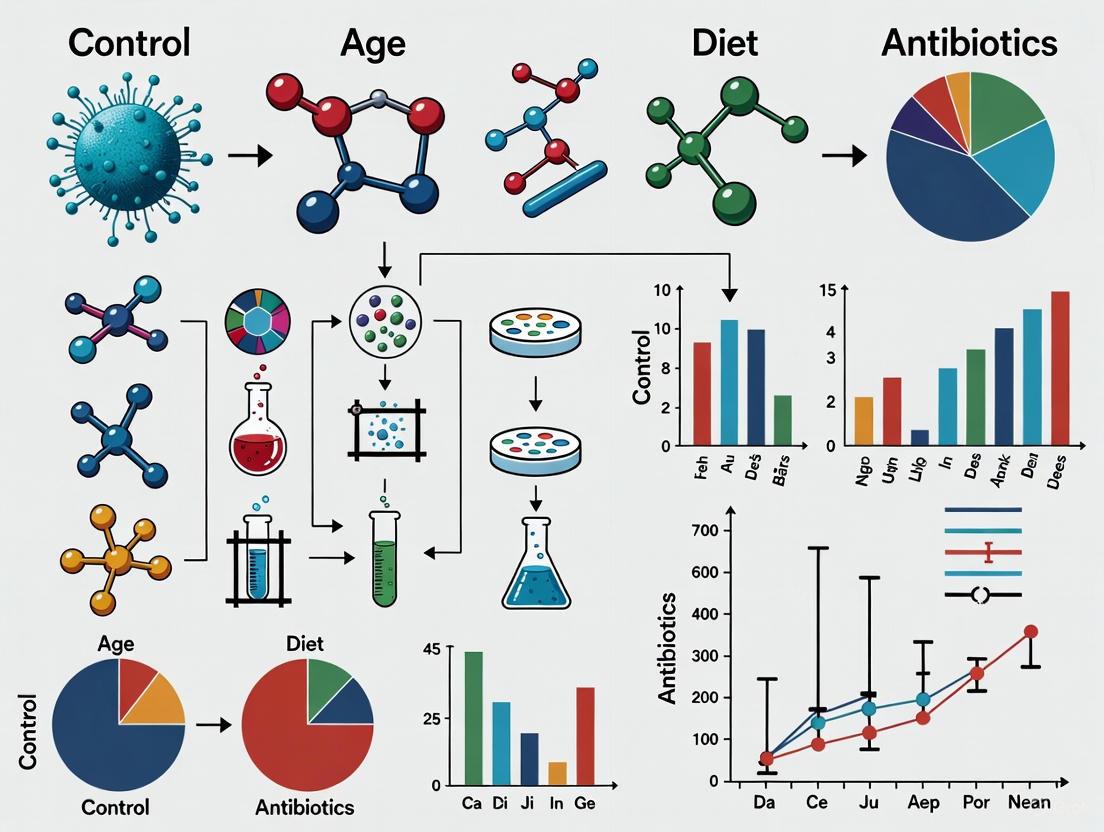
This article provides a comprehensive framework for researchers and drug development professionals to identify, understand, and control for major confounding factors in human microbiome studies.
Controlling Confounding Factors in Microbiome Research: A Strategic Guide for Managing Age, Diet, and Antibiotic Variables
Abstract
This article provides a comprehensive framework for researchers and drug development professionals to identify, understand, and control for major confounding factors in human microbiome studies. It explores the foundational biology of how age, diet, and antibiotics shape microbial communities, offers methodological best practices for study design and sample processing, presents troubleshooting strategies for common experimental pitfalls, and outlines validation approaches for robust data interpretation. By synthesizing current evidence and methodological insights, this guide aims to enhance the reproducibility, accuracy, and clinical relevance of microbiome research across study cohorts and experimental conditions.
Understanding Core Confounders: How Age, Diet, and Antibiotics Fundamentally Reshape the Microbiome
The human gut microbiome undergoes a predictable yet dynamic succession from birth through old age, with its composition evolving in response to host physiology, diet, medications, and immune function. Understanding these progression patterns is crucial for microbiome researchers, as "biome-aging" (age-associated microbiome transformations) represents a key confounding factor in study design. The gut microbiome composition changes continually with age, influencing both physiological and immunological development, with emerging evidence highlighting its close association with healthy, disease-free aging and longevity [1]. This technical guide addresses the major experimental challenges in this field.
Frequently Asked Questions (FAQs) & Troubleshooting
FAQ 1: What are the core, age-dependent microbial signatures I should account for in my cohort stratification?
- The Challenge: A study analyzing samples from adults aged 18-60 finds no significant correlation between microbiome composition and age. The researcher is unsure if the cohort is too narrow or if the analysis is missing key transitional taxa.
- The Solution: The core signature of aging is not just about the presence or absence of taxa, but a shift in community structure. Ensure your analysis looks for the specific transitions listed in Table 1, not just overall diversity. Stratifying your cohort into finer age brackets (e.g., 20-35, 36-50, 51-65) can reveal these subtler shifts that are masked in a broad age range.
FAQ 2: My intervention in an older adult population failed to change the microbiome diversity. Did the intervention fail?
- The Challenge: A clinical trial testing a prebiotic fiber in older adults (70+) shows no change in Shannon diversity, leading to the conclusion that the intervention was ineffective.
- The Solution: Diversity may not be the primary outcome of interest in older cohorts. A healthy aging gut is characterized by its specific taxonomic composition and functional output, not necessarily its highest diversity. You should analyze for:
- Taxonomic Shifts: Did the intervention increase the abundance of health-associated taxa like Akkermansia muciniphila, Christensenellaceae, or Bifidobacterium? [1] [2]
- Functional Restoration: Measure microbial metabolites, especially Short-Chain Fatty Acids (SCFAs) like butyrate. A successful intervention may not alter diversity but can significantly boost SCFA production, which is often diminished with age [1] [2].
FAQ 3: How do I control for the confounding effects of polypharmacy in aging studies?
- The Challenge: A study comparing healthy elderly to younger adults finds significant microbial differences, but the elderly cohort is on an average of 4 medications. It is unclear if the observed dysbiosis is due to age or medication.
- The Solution: This is a major confounder. Best practices include:
- Detailed Metadata Collection: Meticulously record all medications, including dosage and duration.
- Statistical Covariates: Include medication load (number of prescriptions) and specific drug classes as covariates in your statistical models.
- Medication-Matched Subgroups: If possible, recruit a subgroup of younger individuals on similar medications (e.g., metformin) to disentangle the effects of drugs from age itself.
FAQ 4: What is the best way to model human aging and microbiome interactions?
- The Challenge: A researcher wants to test the causal role of the aging microbiome on host physiology but cannot conduct fecal microbiota transplants (FMT) in humans.
- The Solution: Animal models are essential. The table below summarizes key model systems and their experimental readouts, based on established protocols [3].
Table 1: Experimental Models for Studying Microbiome and Aging
| Model System | Key Experimental Readouts | Troubleshooting Tip |
|---|---|---|
| Mouse (FMT from young to old) | Gut barrier integrity (e.g., serum markers), systemic inflammation (e.g., IL-6, TNFα), cognitive function, lifespan [2] [3]. | Use germ-free or antibiotic-treated recipients to ensure engraftment. Monitor for reversibility of effects. |
| African Turquoise Killifish | Locomotion, lifespan, behavioral decline [3]. | This model has a naturally short lifespan, allowing for rapid aging studies. |
| Drosophila melanogaster (Fruit Fly) | Lifespan, gut integrity, immune signaling [3]. | Culture conditions and nutritional environment drastically impact results; standardize food source. |
| Caenorhabditis elegans (Nematode) | Lifespan, mitochondrial function, stress resilience markers [3]. | Use defined bacterial mutants (e.g., E. coli) to probe specific microbial gene functions. |
Core Microbial Signatures Across the Lifespan
The following table summarizes the key microbial taxa and functional characteristics that change significantly across the human lifespan. These signatures should be considered as expected baselines or confounding factors in age-focused microbiome studies.
Table 2: Microbial Succession Signatures from Infancy to Centenarian Age
| Life Stage | Dominant Taxa & Shifts | Functional Characteristics | Key Confounding Factors to Control |
|---|---|---|---|
| Infancy (0-3 yrs) | Dominated by Bifidobacterium spp.; introduction of solid food enriches Bacteroides and Clostridium [1] [4]. | High capacity for human milk oligosaccharide (HMO) digestion; succession leads to enrichment of carbohydrate-degradation genes and SCFA production [4] [5]. | Delivery mode (C-section vs. vaginal), feeding type (breastmilk vs. formula), antibiotic exposure [4] [6]. |
| Adulthood (18-65 yrs) | Stable community dominated by Firmicutes and Bacteroidetes; high inter-individual variation at species level [1] [7]. | Stable metabolic output; core functional groups present. | Long-term dietary patterns, geography, alcohol consumption, sporadic antibiotic use. |
| Older Adulthood (65+ yrs) | Unhealthy Aging: Decreased diversity, loss of Faecalibacterium prausnitzii, increase in Ruminococcus gnavus and Eggerthella lenta [8].Healthy Aging: Rise in Akkermansia, Christensenellaceae, and Bifidobacterium [1] [2]. | Reduced SCFA production; increased gut permeability ("leaky gut"); systemic inflammation (inflammaging) [1] [2]. | Polypharmacy, diet (reduced fiber intake), institutionalization, "inflammaging" status. |
| Centenarians (100+ yrs) | Unique phenotype: High microbial diversity, enrichment of Akkermansia, Christensenellaceae, and Bifidobacterium; capable of producing unique secondary bile acids [1] [9]. | Maintenance of intestinal homeostasis and colonization resistance; unique microbial metabolic profiles, including beneficial bile acid isoforms [1] [9]. | General frailty, extreme dietary adaptations, cumulative lifetime exposures. |
The Scientist's Toolkit: Reagents & Protocols
Key Research Reagent Solutions
Table 3: Essential Reagents for Age-Related Microbiome Research
| Reagent / Material | Function in Experiment | Example from Literature |
|---|---|---|
| Probiotic Formulations | To test causal effects of specific taxa in restoring age-related dysbiosis. | Bifidobacterium bifidum & Lactobacillus acidophilus reduced pathobionts and ARGs in preterm infants [5]. |
| Defined Bacterial Mutants | To pinpoint microbial gene functions in host aging. | E. coli mutants with disrupted folate synthesis or enhanced colanic acid production extended C. elegans lifespan [3]. |
| Postbiotic Preparations | To isolate the effect of microbial components/metabolites without live bacteria. | Heat-killed Lactobacillus paracasei postbiotics improved gut barrier and reduced inflammation in aged mice [2]. |
| Specific Metabolites | To supplement and test direct host effects of microbial-derived molecules. | 3-phenyllactic acid from Lactiplantibacillus plantarum prolonged C. elegans lifespan [3]. |
| Gnotobiotic Animals | To host human-derived microbiota in a controlled, germ-free environment. | Mice humanized with centenarian microbiota showed reduced brain lipofuscin and longer intestinal villi [3]. |
Experimental Protocol: Analyzing the Gut Resistome in Age-Related Studies
Application: This protocol is critical for studies involving older adult populations or any cohort with high antibiotic exposure, as the "resistome" (collection of antibiotic resistance genes) is a significant confounding factor.
Workflow Diagram: The following diagram illustrates the key steps for a resistome analysis workflow, from sample collection to data interpretation.
Detailed Steps:
- Sample Collection & Sequencing: Collect fecal samples using a standardized kit for longitudinal studies. Perform shotgun metagenomic sequencing (e.g., Illumina) for comprehensive gene coverage, unlike 16S rRNA sequencing [5].
- Bioinformatic Processing:
- Quality Control: Use tools like FastQC and Trimmomatic to remove low-quality reads.
- Host DNA Removal: Align reads to the host genome (e.g., human GRCh38) using Bowtie2 and remove matching sequences.
- Assembly & Annotation: Assemble quality-filtered reads into contigs using metaSPAdes. Predict open reading frames (ORFs) from contigs. Annotate ORFs against a specialized database like the Comprehensive Antibiotic Resistance Database (CARD) using RGI [5].
- Resistome Analysis:
- Abundance & Diversity: Calculate the abundance (reads per kilobase per million, RPKM) of each ARG. Determine resistome diversity by counting the number of different ARG classes present (e.g., aminoglycosides, beta-lactams) [5].
- Statistical Integration: Correlate ARG abundance and diversity with microbial taxonomy (e.g., presence of Enterococcus or Klebsiella), clinical metadata (e.g., antibiotic treatment history), and functional pathway data.
Advanced Concepts & Visualization
The Gut-Brain Axis in Aging: A Mechanistic Workflow
The gut-brain axis is a critical pathway through which the aging microbiome influences host health, particularly neurocognitive decline. The following diagram outlines a hypothesized experimental workflow to dissect this mechanism, from inducing dysbiosis to measuring brain outcomes.
Key Mechanistic Insights:
- Dysbiosis & Barrier Failure: Aging is associated with a decline in SCFA-producing bacteria. SCFAs are crucial for maintaining gut barrier integrity. Their reduction can lead to a "leaky gut" [1] [2].
- Inflammaging: A leaky gut allows bacterial components (e.g., LPS) to enter circulation, triggering a chronic, low-grade inflammatory state known as "inflammaging," characterized by elevated IL-6 and TNFα [1] [2] [3].
- Impact on the Brain: Systemic inflammation can compromise the blood-brain barrier and activate the brain's immune cells (microglia), leading to neuroinflammation. This process is implicated in age-related cognitive decline and neurodegenerative diseases [2] [3]. Interventions like postbiotics that thicken the mucus layer and reduce gut permeability have been shown to improve cognitive function in aged mice [2].
Frequently Asked Questions (FAQs)
FAQ 1: Why is the background diet of my study cohort a critical confounding factor? The background diet can significantly alter the gut microenvironment, thereby affecting the efficacy of the interventions you are testing. For instance, diet can influence the gut microbiome and change the metabolism and gene expression of probiotics. It is recommended that trials of prebiotics and probiotics consider the impact of the background diet as a confounder [10].
FAQ 2: How can I account for inter-individual variation in microbiome response to dietary interventions? Interindividual responsiveness to specific diets is partially determined by differences in baseline gut microbiota composition and functionality [11]. The baseline gut microbial profile may be a predictor for an individual’s response. Therefore, detailed metabolic and microbial phenotyping at the start of a study is necessary to stratify participants or interpret variable responses [11].
FAQ 3: Are the effects of early-life dietary exposures relevant to adult health outcomes? Yes, early-life exposures to environmental factors, including maternal diet, can have long-lasting impacts on offspring health and the adult gut microbiome [12]. Studies in mouse models have shown that maternal nutritional deficiencies (e.g., protein or vitamin D) during gestation and lactation can have lasting effects on offspring gut microbiota composition and body weight, depending on the genetic background [12].
FAQ 4: Beyond current diet, what other historical factors should I consider? A person's medication history is a surprisingly strong factor. Research has found that drugs taken years—even decades—ago, including antibiotics, antidepressants, and beta-blockers, can leave lasting imprints on the gut microbiome. This underscores the importance of factoring in complete medication history when interpreting microbiome data [13].
FAQ 5: What is the balance between saccharolytic and proteolytic fermentation, and why is it important? The balance between carbohydrate (saccharolytic) and protein (proteolytic) fermentation in the gut seems to be an important determinant of host metabolism [11]. A shift toward proteolytic fermentation is often associated with the production of metabolites that can have detrimental effects on metabolic health. Dietary strategies that promote saccharolytic fermentation are generally considered beneficial [11].
Troubleshooting Common Experimental Issues
Problem: High inter-individual variability is obscuring the effect of my dietary intervention.
- Potential Solution: Increase your sample size. Due to the intrinsic high variation in microbiota composition, the number of subjects required to allow meaningful statistical comparisons is often higher than used for other types of biological analyses [14]. Furthermore, perform detailed baseline phenotyping of participants (including their gut microbiome and habitual diet) to use as covariates in your models or to stratify your cohort into more responsive subgroups [11].
Problem: My dietary intervention for constipation, specifically a high-fiber diet, is not producing the expected results.
- Potential Solution: Note that while a diet high in fiber has benefits for overall health, according to recent evidence-based guidelines, it is not a first-line, evidence-based option for chronic constipation. Instead, consider specific foods and supplements with proven effectiveness, such as psyllium, inulin-type fructans, kiwifruit, prunes, or magnesium oxide supplements [10].
Problem: My low FODMAP dietary intervention for IBS is met with poor patient adherence.
- Potential Solution: Be aware of common patient challenges. These include the misalignment between food preferences and the dietary regimen, difficulty in composing meals, and the burden of meal preparation. To improve adherence, provide clear, reliable sources of information and practical support in meal planning. Furthermore, new research suggests it may be possible to improve tolerance for FODMAPs by utilizing modified fiber gels like methylcellulose and psyllium [10].
Problem: The gut microbiome in my animal models is not consistent, jeopardizing reproducibility.
- Potential Solution: Control for legacy effects. The same line of mice from different facilities can have very different microbiotas. To minimize this, consider methods like cross-fostering or extended cohousing. Always source animals from the same facility and report their origin. The practice of repeating animal trials is also recommended to confirm findings across different microbial backgrounds [14].
Quantitative Data on Dietary Impacts
Table 1: Evidence-Based Dietary Components for Managing Chronic Constipation [10]
| Dietary Component | Example | Level of Effectiveness |
|---|---|---|
| Fiber Supplements | Psyllium, Inulin-type fructans | Effective |
| Probiotics | Multi-strain probiotics, Bifidobacterium lactis, Bacillus coagulans Unique IS2 | Effective |
| Mineral Supplements | Magnesium oxide | Effective |
| Whole Foods | Kiwifruits, Prunes, Rye bread | Effective |
| Water | High mineral content water | Effective |
Table 2: Key Microbial Metabolites from Macronutrient Fermentation [11]
| Fermentation Type | Primary Macronutrient | Key Metabolites | General Health Association |
|---|---|---|---|
| Saccharolytic | Dietary Fibers/Carbohydrates | Short-Chain Fatty Acids (e.g., acetate, propionate, butyrate) | Generally beneficial |
| Proteolytic | Dietary Proteins | Ammonia, Phenolic Compounds (e.g., indole), Branched-Chain Fatty Acids (BCFAs) | Often detrimental |
Experimental Protocols & Workflows
Protocol 1: Designing a Controlled Dietary Intervention Study
- Baseline Phenotyping: Collect detailed metadata from participants, including habitual diet (using food frequency questionnaires), medication history (current and past), anthropometric measurements, and gut microbiome samples [13].
- Dietary Control: Provide all meals and snacks for the intervention period to ensure strict control over macronutrient and micronutrient intake. If this is not possible, use detailed daily food diaries and provide participants with specific food items.
- Sample Collection: Standardize the collection of biological samples (e.g., feces, blood). For fecal samples, ensure consistent timing, use standardized collection kits, and immediately freeze samples at -80°C [14].
- Microbiome Analysis:
- DNA Extraction: Use a single, validated kit for all extractions to minimize technical bias [14].
- Sequencing: Use 16S rRNA gene sequencing for community composition or shotgun metagenomics for functional potential and strain-level analysis [15].
- Bioinformatics: Process sequences through a standardized pipeline (e.g., QIIME 2) using Amplicon Sequence Variants (ASVs) for higher resolution than traditional OTUs [16].
Protocol 2: Investigating Strain-Level Response to Diet
- Sample Preparation: Perform shotgun metagenomic sequencing on fecal DNA to achieve high sequencing depth (ideally >10 million reads per sample) [15].
- Bioinformatic Strain Identification: Use one of two primary methods:
- Single Nucleotide Variants (SNVs): Map sequences to a database of reference genomes to call SNVs. This requires deep coverage but offers high precision [15].
- Presence/Absence of Genes: Identify the presence or absence of genes from the microbial pangenome. This is sensitive to less abundant members but may not differentiate closely related strains [15].
- Association Analysis: Correlate the abundance of specific strains or their gene content with dietary intake data to identify strain-specific responders to nutritional components.
The Scientist's Toolkit: Research Reagent Solutions
Table 3: Essential Reagents and Kits for Microbiome Research
| Item | Function | Example/Note |
|---|---|---|
| DNA Extraction Kit | To isolate total genomic DNA from complex samples (e.g., feces). | Use a single, validated kit for all samples in a study to minimize technical variation [14]. |
| 16S rRNA Primers | To amplify a variable region of the 16S gene for phylogenetic profiling. | Earth Microbiome Project primers (515F/806R) target the V4 region [12]. |
| Shotgun Metagenomic Library Prep Kit | To prepare sequencing libraries from fragmented genomic DNA for whole-genome sequencing. | Allows for strain-level and functional analysis [15]. |
| RNA Stabilization Reagent | To preserve RNA integrity for metatranscriptomic studies. | Critical for assessing the active functional profile of the community [15]. |
Analytical Pathways and Workflows
Diagram 1: Diet-Microbiome-Metabolism Pathway
Diagram 2: Precision Nutrition Workflow
Troubleshooting Guides
Guide 1: Diagnosing Insufficient Microbiome Resilience Post-Antibiotic Perturbation
Problem: The gut microbiome fails to return to its pre-antibiotic state long after treatment cessation.
Investigation & Solutions:
- Check Patient Age: The microbiome of infants and children is significantly more vulnerable to long-term disruption than that of healthy adults. Antibiotic exposure during the first 6 months to 2 years of life can cause delays in microbiome maturation that persist for over a year [17] [18].
- Review Antibiotic Spectrum: Broad-spectrum antibiotics like meropenem, cefotaxime, and ticarcillin-clavulanate are associated with greater decreases in diversity compared to some narrower-spectrum agents [17].
- Evaluate Diet and Co-factors: A high-fat diet can exacerbate the effects of antibiotic exposure, leading to significant alterations in microbial community structure and host metabolism, including weight gain and changes in serum metabolites [19]. Underlying illness and travel history also modulate resilience [17].
- Consider Restoration Strategies: If resilience is poor, evidence supports investigating interventions like Fecal Microbiota Transplantation (FMT) or specific probiotics to direct recolonization, though these should be tailored to the individual [17].
Guide 2: Addressing High Variability in Antibiotic Perturbation Models
Problem: Inconsistent or unpredictable taxonomic shifts in animal or in vitro models after antibiotic administration.
Investigation & Solutions:
- Control for Genetic Background: Host genetics is a major confounding factor. Studies show the specific response to an antibiotic or dietary insult varies significantly among genetically distinct mouse strains and can be influenced by parent-of-origin effects [20].
- Standardize Experimental Diet: The background diet is a critical variable. Exposure to even trace levels of antibiotics (ng/L) under a High-Fat Diet (HFD) induces significant changes in body weight and short-chain fatty acid (SCFA) profiles that may not occur under standard diets [19].
- Account for Nutrient Competition: Recognize that antibiotic effects are not isolated. The drug's impact is reshaped by nutrient competition within the microbial community. A species may decline either due to direct drug sensitivity or because a competitor is better able to capitalize on the new nutrient landscape created by the drug [21].
- Verify Antibiotic Dosage and Route: For environmental exposure studies, ensure accurate, low-dose administration via drinking water to mimic trace environmental contamination rather than clinical therapeutic doses [19].
Frequently Asked Questions (FAQs)
Q1: What are the most critical factors that determine the impact of an antibiotic on the gut microbiome? The impact is governed by a combination of factors related to the host, the antibiotic, and the environment. Key considerations include the host's age and microbiome maturity, the spectrum and duration of antibiotic treatment, and co-modulatory factors such as diet and underlying health status [17]. The ecological principle of nutrient competition among gut bacteria also plays a fundamental role in shaping the final outcome [21].
Q2: How does the timing of antibiotic exposure, particularly in early life, influence long-term outcomes? The first 2-3 years of life are a critical developmental window for the microbiome. Antibiotic treatment during this period, and even intrapartum antibiotic exposure from the mother, results in greater disruption and delayed maturation of the microbial community. These effects can persist for over a year and are associated with microbiota "age regression," where the microbial maturity lags behind chronological age [17].
Q3: Are the effects of antibiotic exposure uniform across all individuals? No, effects are highly variable. Inter-individual differences in gut microbiota composition are large. Furthermore, host genetic differences significantly modulate susceptibility to environmentally induced dysbiosis. Studies in mice show that the long-term impact of early-life antibiotic exposure on adult gut microbiome composition is dependent on genetic strain [20].
Q4: What is "breakpoint drift" and why is it a confounder in antimicrobial resistance (AMR) surveillance? Breakpoint drift refers to the revisions over time to the minimum inhibitory concentration (MIC) breakpoints used to categorize bacteria as susceptible or resistant. These evidence-based updates mean that an isolate previously classified as susceptible might now be reported as resistant, independent of any biological change in the organism. This can create an illusion of rapidly rising resistance rates that is partly an artifact of shifting diagnostic standards, confounding long-term AMR trend analyses [22].
Q5: Beyond direct killing, how do antibiotics reshape the gut microbial community? Emerging research shows that antibiotics cause collateral damage by altering the gut's nutrient landscape. When a drug reduces certain bacterial populations, it changes the availability of nutrients. The bacteria most adept at consuming these newly available nutrients thrive, leading to a reshuffling of the community structure based on ecological competition, not just direct drug sensitivity [21].
Quantitative Data Tables
Table 1: Impact of Early-Life Antibiotic Exposure on Microbiome Metrics
| Exposure Scenario | Key Microbiome Findings | Timing of Effect | Citation |
|---|---|---|---|
| Intrapartum Antibiotics | ↓ Diversity at 1 month; ↑ ARG enrichment in infants at 6 months | Short & Intermediate-term (6 months) | [17] |
| Antibiotics in first 2 years | ↓ Diversity & ↓ species; Delayed microbiome maturation | Long-term (>1 year) | [17] |
| Neonates (NICU): Meropenem, Cefotaxime | Marked ↓ in microbiome diversity | Acute (during treatment) | [17] |
| Maternal Antibiotics (Mouse Model) | Altered adult offspring composition (e.g., Bacteroides, Akkermansia) | Long-term (8 weeks) | [20] |
Table 2: Effects of Trace Antibiotic Exposure in Mice under High-Fat Diet
| Antibiotic | Concentration | Key Metabolic & Microbiota Findings | Sex-Specific Effect |
|---|---|---|---|
| Azithromycin (AZI) | Environmental (ng/L) | Markedly ↑ SCFAs (acetate, butyrate, propionate); Altered microbial community | Significant body weight gain in male mice only |
| Ciprofloxacin (CIP) | Environmental (ng/L) | Altered serum hormones & metabolic profiles; Restructured microbe-host interactions | Significant body weight gain in male mice only |
Experimental Protocols
Protocol 1: Investigating Long-Term Effects of Early-Life Antibiotic Exposure
Objective: To assess the lasting impact of maternal antibiotic exposure combined with nutritional deficiencies on offspring gut microbiome and growth.
Methodology:
- Animal Model: Use a population of recombinant inbred intercross (RIX) mice from the Collaborative Cross (CC) to model human genetic diversity [20].
- Dams Diet & Exposure: Maintain dams on defined diets from 5 weeks prior to pregnancy until the end of lactation. Diets should include:
- Control (CON): Standard mouse control diet.
- Antibiotic-Containing (AC): Purified AIN93G diet with antibiotics.
- Low-Protein (LP): Protein-deficient diet.
- Low-Vitamin D (LVD): Vitamin D-deficient diet [20].
- Crossing Scheme: Generate F1 offspring from reciprocal crosses (e.g., CC011xCC001 and CC001xCC011) to control for parent-of-origin effects [20].
- Post-Weaning Standardization: After weaning, transfer all offspring to new cages and feed a standardized chow diet until adulthood [20].
- Outcome Measures:
- Host Phenotype: Monitor and record offspring bodyweight regularly until sacrifice at 8 weeks [20].
- Microbiome Analysis: Collect fecal samples at 8 weeks. Perform DNA extraction and 16S rRNA gene sequencing to assess microbial diversity, composition, and specific differential abundances (e.g., Bacteroides, Muribaculaceae, Akkermansia) [20].
Protocol 2: Modeling Environmental Antibiotic Exposure under Metabolic Stress
Objective: To evaluate the impact of chronic, low-dose antibiotic exposure on the gut-microbiota-metabolism axis under a high-fat diet.
Methodology:
- Antibiotic Administration: Administer antibiotics like Azithromycin (AZI) and Ciprofloxacin (CIP) to mice via drinking water at environmentally relevant concentrations (ng/L) for a long duration [19].
- Dietary Regimen: Maintain all mice on a High-Fat Diet (HFD) throughout the exposure period to simulate metabolic stress [19].
- Sample Collection and Analysis:
- Microbiota Profiling: Analyze cecal or fecal content using 16S rRNA gene sequencing to determine changes in microbial community structure [19].
- Metabolite Measurement: Quantify concentrations of key Short-Chain Fatty Acids (SCFAs) like acetate, butyrate, and propionate in cecal content using techniques like GC-MS [19].
- Host Metabolic Phenotyping: Track body weight and collect serum to analyze hormone levels and global metabolic profiles via metabolomics platforms [19].
- Data Integration: Perform correlation network analysis to restructure and visualize the microbe-SCFA and microbe-serum metabolite relationships [19].
Signaling Pathways & Workflow Diagrams
Diagram 1: Antibiotic Perturbation Ecosystem Dynamics
Diagram 2: Factors in Early-Life Antibiotic Response
The Scientist's Toolkit: Research Reagent Solutions
Table 3: Essential Materials for Antibiotic Perturbation Studies
| Item/Category | Function/Application | Example Use Case |
|---|---|---|
| Collaborative Cross (CC) Mice | Genetically diverse mouse population to model human genetic variation and identify genotype-specific responses to perturbation. | Studying how host genetics modulates the long-term impact of early-life antibiotic exposure on the adult gut microbiome [20]. |
| Defined Diets (e.g., AIN93G) | Precisely control nutritional variables. Can be modified to include antibiotics or create specific deficiencies (low protein, low vitamin D). | Investigating the interaction between maternal diet during gestation/lactation and antibiotic exposure on offspring outcomes [20]. |
| Environmental Dose Antibiotics | Administer antibiotics at very low concentrations (ng/L to μg/L) via drinking water to simulate real-world environmental exposure, not clinical treatment. | Assessing the health risks of trace antibiotic pollution in conjunction with metabolic stressors like a high-fat diet [19]. |
| 16S rRNA Gene Sequencing | Culture-independent method for taxonomic profiling of bacterial communities. Assesses diversity and composition changes post-perturbation. | Standard analysis for determining antibiotic-induced shifts in microbial community structure in fecal samples from mice or humans [17] [20]. |
| Metabolomics Platforms (e.g., GC-MS) | Quantify small-molecule metabolites. Used to measure Short-Chain Fatty Acids (SCFAs) and serum metabolic profiles. | Linking microbiome changes to functional host outcomes, such as altered SCFA production or systemic metabolic shifts after antibiotic exposure [19]. |
| Gnotobiotic & Culture Systems | Use of germ-free animals or complex cultured communities from fecal samples to establish controlled systems for testing perturbations. | Systematically testing the effect of hundreds of drugs on complex microbial communities to deduce ecological principles like nutrient competition [21]. |
Frequently Asked Questions: Controlling for Confounders in Microbiome Research
FAQ 1: What are the most critical confounders to control for in human gut microbiome studies? The most critical confounders include host diet, age, medication use (especially antibiotics), and fecal microbial load. Diet profoundly shapes microbial community structure, with high-fiber patterns consistently promoting beneficial, short-chain fatty acid-producing bacteria [23] [24]. Age is a major factor as the gut microbiota evolves from infancy to old age, influenced by diet, lifestyle, and physiological changes [25]. Medication, particularly antibiotics, can cause substantial and sometimes persistent shifts in microbial composition [16]. Recent evidence highlights that fecal microbial load (microbial cells per gram) is a major determinant of gut microbiome variation and can be a stronger explanatory factor for observed changes than the disease condition itself [26].
FAQ 2: How does microbial load act as a confounder, and how can I account for it? Microbial load acts as a confounder because sequencing data typically provides only relative abundances, not absolute quantities. A change in the relative abundance of one taxon can be caused by the actual expansion of that taxon or the decline of others. Machine-learning models can now predict fecal microbial loads from standard relative abundance data [26]. To account for this, researchers should:
- Adjust Statistical Models: Include predicted microbial load as a covariate in models analyzing disease-microbiome associations.
- Interpret with Caution: Recognize that many reported disease-associated microbial signatures may be linked to changes in overall microbial load rather than the specific disease [26]. Adjusting for this effect has been shown to substantially reduce the statistical significance of many purported disease-associated species [26].
FAQ 3: What are the best study designs to minimize confounding in microbiome research? Meticulous study design is key to obtaining meaningful results [16]. Recommended designs include:
- Longitudinal Studies: Tracking the same individuals over time to control for inter-individual variation.
- Randomized Controlled Trials (RCTs): Especially for interventional studies (e.g., diet, probiotics).
- Cross-Sectional Studies with Careful Adjustment: For observational studies, ensure large sample sizes and record comprehensive metadata on potential confounders for statistical adjustment [16]. The use of positive and negative controls during sample processing and sequencing is also critical for improving reliability [16].
FAQ 4: How do confounders like diet and age interact to affect the host? Confounders often do not act in isolation but through intersecting pathways. For example, age-related changes in physiology can alter how the gut microbiota responds to dietary components. Furthermore, gut dysbiosis influenced by diet can promote systemic inflammation via increased intestinal permeability and lipopolysaccharide (LPS) translocation, contributing to age-related conditions like sarcopenia (muscle loss) and vascular stiffness [23] [24]. This creates a complex feedback loop where confounders interact to modulate host health.
FAQ 5: What statistical methods are used to analyze microbiome data while controlling for confounders? Common methods include:
- Beta-Diversity Analysis: Using measures like Bray-Curtis dissimilarity or UniFrac distance to quantify microbial community differences between sample groups, followed by PERMANOVA to test significance while including confounders as covariates [16].
- Differential Abundance Testing: Using specialized tools (e.g., DESeq2, edgeR, MaAsLin2) that can incorporate metadata variables to identify taxa associated with a primary variable of interest after accounting for confounders.
- Ordination Methods: Constrained ordination techniques like Redundancy Analysis (RDA) or Canonical Correspondence Analysis (CCA) can visualize how much of the microbial variation is explained by the primary factor versus confounders [16].
Troubleshooting Guides
Issue 1: Inconsistent or non-reproducible microbiome-disease associations
- Potential Cause: Inadequate control for major confounders such as diet, medication, or microbial load, leading to spurious findings.
- Solution:
- Collect Comprehensive Metadata: Systematically record detailed information on participant diet, medication history, age, and lifestyle at the time of sample collection.
- Predict and Adjust for Microbial Load: Implement a machine-learning-based approach to predict fecal microbial load from your relative abundance data and include it as a key covariate in all association models [26].
- Increase Sample Size: Ensure the study is sufficiently powered to detect effects after accounting for multiple confounders.
Issue 2: High variability within experimental groups obscuring treatment effects
- Potential Cause: High inter-individual variation in baseline microbiota composition, often driven by unaccounted lifestyle or genetic factors.
- Solution:
- Use a Paired or Crossover Design: Where possible, have individuals serve as their own controls.
- Employ Rigorous Sampling Controls: Use standardized sample collection kits with preservatives and include positive and negative controls in your sequencing batches to distinguish technical noise from biological signal [16].
- Pre-screen Participants: For interventional trials, consider pre-screening participants for baseline microbiota composition to create more homogenous groups.
Issue 3: Difficulty interpreting the biological mechanism linking a confounder to a health outcome
- Potential Cause: The pathway from confounder (e.g., poor diet) to host physiology (e.g., inflammation) is complex and involves multiple, interacting biological layers.
- Solution:
- Adopt Multi-Omics Integration: Correlate microbiome data with metabolomics data (e.g., measuring SCFAs, TMAO) and host immune markers (e.g., cytokines like IL-6, TNF-α) to map out functional pathways [23] [24].
- Utilize Mechanistic Animal Models: Employ germ-free or gnotobiotic mouse models to test causal relationships. For example, fecal microbiota transplantation (FMT) from human donors to germ-free mice can demonstrate causality, as shown when FMT from hypertensive donors elevated blood pressure in mice [23].
Experimental Protocols for Key Methodologies
Protocol 1: Conducting a Controlled Microbiome Intervention Study
- Participant Recruitment & Stratification: Recruit participants based on strict inclusion/exclusion criteria. Consider stratifying randomization by key confounders like age, BMI, and baseline microbial diversity.
- Sample Collection: Provide participants with standardized stool collection kits containing DNA/RNA stabilizers to preserve microbial integrity. Instruct them to record immediate diet, medication, and lifestyle data for the 3 days preceding sample collection.
- DNA Extraction & Sequencing: Use a validated, reproducible kit for DNA extraction. Include both a positive control (a mock microbial community with known composition) and negative extraction controls (no sample) in each batch to monitor performance and contamination [16].
- Bioinformatics Processing: Process raw sequencing data using a standardized pipeline like QIIME 2. Cluster sequences into Amplicon Sequence Variants (ASVs) for higher resolution than traditional OTUs [16].
- Statistical Analysis:
- Calculate alpha-diversity (e.g., Shannon index) and beta-diversity (e.g., Bray-Curtis dissimilarity).
- Use PERMANOVA on the beta-diversity matrix to test for group differences, including terms for the intervention, age, sex, and predicted microbial load.
- Perform differential abundance testing with tools that correct for multiple comparisons and allow for covariate adjustment.
Protocol 2: Predicting and Adjusting for Fecal Microbial Load
- Data Preparation: Compile your taxa relative abundance table (e.g., from metagenomic sequencing).
- Model Application: Input the relative abundance data into a pre-trained machine learning model designed to predict microbial load [26]. (Note: Researchers may need to train their own model on a suitable reference dataset or use available software implementations).
- Covariate Integration: Use the predicted microbial load values as a continuous covariate in your downstream statistical models analyzing associations between microbiome features and health outcomes [26].
Research Reagent Solutions
| Reagent / Material | Function in Microbiome Research |
|---|---|
| DNA Stabilization Buffers | Preserves microbial DNA/RNA integrity at the point of sample collection, preventing shifts in microbial composition post-collection. |
| Mock Microbial Communities | Serves as a positive control during DNA extraction and sequencing to assess technical variability, batch effects, and accuracy of the workflow [16]. |
| 16S rRNA Gene Primers | Targets conserved regions for amplicon sequencing, enabling taxonomic profiling of bacterial and archaeal communities. |
| Probiotics (e.g., specific Lactobacillus strains) | Live microorganisms used in intervention studies to investigate their effect on modulating the gut microbiome and host health [25]. |
| Prebiotics (e.g., FOS, GOS, Inulin) | Substrates (often fibers) selectively utilized by host microorganisms to confer a health benefit; used to test dietary modulation of the microbiota [25]. |
| Synbiotics | Combinations of probiotics and prebiotics that work synergistically to enrich the supplemented probiotic in the gut [25]. |
| Germ-Free Mouse Models | Animals with no resident microbiota, used for fecal microbiota transplantation (FMT) studies to establish causality between a donor's microbiome and a host phenotype [23] [24]. |
Signaling Pathways and Experimental Workflows
Diagram: Confounder-Microbiome-Host Health Pathways
Diagram: Microbiome Analysis Workflow
Research Design and Execution: Practical Protocols for Confounder Control
FAQ & Troubleshooting Guide
Q1: Why is age-matching so critical in case-control microbiome studies? The human microbiome evolves throughout life. The gut microbiota stabilizes around age 3 but continues to change in later life. For instance, institutionalized elderly individuals often develop high levels of Proteobacteria [27]. Using age-matched controls is therefore essential to ensure that observed microbial differences are linked to the disease state and not to natural, age-related variations in the microbial community [27].
Q2: My study involves animal models. What is a "cage effect" and how can I control for it? In mouse studies, animals housed in the same cage share similar gut microbiota due to behaviors like coprophagia. One study found that while mouse strain accounted for 19% of the variation in gut microbiota, cage effects contributed to 31% [27]. To control for this, you must set up multiple cages for each study group and statistically treat "cage" as an independent variable in your final analysis. It is acceptable to house two to three mice per cage to manage costs [27].
Q3: Beyond age and diet, what other host variables are major confounders? Machine learning analyses of large datasets have identified several strong sources of gut microbiota variance. If these variables are not evenly matched between cases and controls, they can produce spurious microbial associations with disease. Key confounders include [28]:
- Alcohol consumption frequency: A surprisingly strong source of variance that acts in a dose-dependent manner.
- Bowel movement quality: A robust factor that segregates microbiota profiles.
- Body Mass Index (BMI), sex, and geographical location.
The table below summarizes the quantitative impact of matching cases and controls for these confounding variables.
Table 1: Impact of Confounder-Matching on Observed Microbiota Differences
| Disease Category | Number of Diseases Studied | Reduction in Microbiota Differences After Matching | Notes and Examples |
|---|---|---|---|
| Various Diseases | 13 out of 19 | Yes | Matching for host variables like alcohol, BMI, and age reduced observed community differences [28]. |
| Type 2 Diabetes (T2D) | 1 | Yes (Substantial) | The greatest drop in signal occurred for T2D. Unmatched studies found significant differences, but matching for alcohol, BMI, and age drastically reduced these differences [28]. |
| Clinical Depression, ASD, Migraine | Several | Yes (Complete) | Statistically significant microbiota differences were lost when cases were compared to confounder-matched controls [28]. |
| IBD, Skin Conditions | Several | No | Significant microbiota differences persisted even after matching, indicating a strong disease-specific signal [28]. |
Q4: I have already collected my data without perfect matching. Can I statistically adjust for confounders? While statistical adjustments in linear mixed models can be used, they have limitations. In one T2D study, adding BMI, age, and alcohol intake as covariates reduced the number of spurious microbial associations from 5 to 2. However, the remaining associations were still linked to the confounding variables themselves, not the disease. In contrast, careful subject selection via matching eliminated all false positives, highlighting that statistical adjustment is not a perfect substitute for robust experimental design [28].
Q5: How does dietary standardization improve cross-cohort validation of microbiome biomarkers? Diet is a primary driver of gut microbiota composition [27]. Without dietary control, disease-associated microbial signals can be obscured by noise from dietary variations between cohorts. This is a key reason why microbiome-based classifiers for intestinal diseases (where diet has a direct and potent effect) show better cross-cohort validation performance (~0.73 AUC) than non-intestinal diseases [29]. Standardizing diet, or at least meticulously recording it for matching, is therefore a critical strategy for improving the reproducibility of findings across independent study populations.
Experimental Protocols for Confounder Control
Protocol 1: A Workflow for Matched Cohort Selection in Human Studies This protocol outlines a step-by-step process to select control subjects that minimize confounding effects.
Protocol 2: Designing an Animal Study to Mitigate Cage Effects This protocol ensures that cage effects do not confound the experimental results in rodent models.
The Researcher's Toolkit: Essential Reagents & Materials
Table 2: Key Materials for Standardized Microbiome Cohort Studies
| Item | Function/Application | Key Consideration |
|---|---|---|
| OMNIgene Gut Kit | Allows stable at-room-temperature preservation of fecal samples for DNA analysis [27]. | Critical for sample collection in the field or where immediate freezing at -80°C is not possible. |
| 95% Ethanol | A low-cost preservative for fecal samples when freezing is not immediately available [27]. | An effective alternative to commercial kits for stabilizing microbial community DNA. |
| FTA Cards | Solid support matrix for room-temperature storage of fecal samples for DNA analysis [27]. | Useful for easy transport and storage of samples from remote collection sites. |
| Uniform DNA Extraction Kits | To purify microbial DNA from all samples in a study [27]. | Purchase all kits needed in a single batch at the study's start to minimize reagent lot-to-lot variation, a significant source of technical bias. |
| Synthetic DNA Controls | Non-biological DNA sequences used as positive controls in high-volume analyses [27]. | Helps monitor technical performance and identify potential contamination across sample processing batches. |
Quantitative Data on Confounding Effects
The following table compiles data from a large-scale analysis that used machine learning (Random Forests) to quantify how strongly various host variables are associated with human gut microbiota composition.
Table 3: Host Variables as Sources of Microbiota Heterogeneity
| Host Variable | Strength of Microbiota Association | Notes on Confounding Potential |
|---|---|---|
| Alcohol Consumption | High (AUROC >0.65) | A strong, dose-dependent confounder. Found to have non-zero confounding effects in several diseases, not limited to T2D [28]. |
| Bowel Movement Quality | High (AUROC >0.65) | An unexpectedly strong source of gut microbiota variance that should be reported and matched for [28]. |
| Dietary Variables | High (AUROC >0.65) | Includes intake frequency of meat/eggs, dairy, vegetables, whole grains, and salted snacks [28]. |
| BMI | High (AUROC >0.65) | A well-known confounder that is often unevenly distributed between diseased and healthy subjects [28]. |
| Geography | High (AUROC >0.65) | Reflects regional differences in lifestyle, diet, and environment [28] [29]. |
| Age | High (AUROC >0.65) | Microbiome composition changes from infancy to old age, making age-matching fundamental [28] [27]. |
| Sex | High (AUROC >0.65) | The gut microbiome can serve as a virtual endocrine organ, producing metabolites that interact with sex hormones [27]. |
Troubleshooting Guides
Guide 1: Incomplete or Inaccurate Medication Histories
Problem: Patient medication lists are incomplete, missing antibiotics, or contain inaccurate dosage/frequency information, compromising microbiome study data quality.
Symptoms:
- Discrepancies between patient-reported medications and electronic health records
- Missing over-the-counter antibiotic medications
- Incomplete documentation of dosage, duration, or timing
- Lack of documentation for medications prescribed by multiple providers
Solutions:
- Implement Systematic Documentation Processes: Develop standardized medication history flowcharts specifying responsible personnel, information requirements, documentation locations, and monitoring processes [30].
- Enhance Patient Engagement: Incorporate language in appointment reminders asking patients to bring complete medication lists, including all prescribed, over-the-counter, and herbal medications [30].
- Leverage Technology: Configure electronic health records to prompt staff to document medication history processes and clearly display patient allergies, triggering alerts if conflicting medications are prescribed [30].
- Cross-Reference Multiple Sources: Verify medication information across pharmacy records, primary care providers, and specialist reports to ensure completeness [30].
Guide 2: Confounding Variables in Microbiome Analyses
Problem: Unaccounted host variables create spurious associations between antibiotic exposure and microbiome outcomes.
Symptoms:
- Inconsistent microbiome findings across studies examining similar antibiotics
- Inability to replicate published results
- Significant microbiome differences disappearing after controlling for specific host factors
Solutions:
- Systematically Match Cases and Controls: Prioritize matching for high-impact confounders identified through machine learning approaches, including alcohol consumption frequency, bowel movement quality, BMI, age, and dietary patterns [28].
- Implement Comprehensive Data Collection: Capture recommended host variables for all study participants to enable post-hoc matching and statistical adjustment [28].
- Validate Findings Across Multiple Matching Strategies: Compare results using different matching approaches (full matching, leave-one-out matching) to assess robustness of antibiotic-microbiome associations [28].
Guide 3: Geographic and Population Biases in Microbiome Data
Problem: Research datasets are dominated by samples from Western populations, limiting understanding of antibiotic impacts across diverse geographies.
Symptoms:
- Limited generalizability of findings to underrepresented populations
- Inability to account for regional differences in baseline microbiome composition
- Poor understanding of antibiotic impacts in low- and middle-income countries (LMICs)
Solutions:
- Diversify Sample Collection: Intentionally recruit participants from underrepresented regions, particularly LMICs where antibiotic usage patterns differ significantly [31] [32].
- Account for Regional Baseline Differences: Recognize that gut microbiome composition varies substantially across countries and is influenced by diet, ethnicity, and environmental factors [31].
- Contextualize Antibiotic Resistance Patterns: Monitor gut microbiomes as antibiotic resistance gene reservoirs, particularly in regions with high antibiotic usage and limited regulation [31].
Frequently Asked Questions
Q1: What specific host variables most strongly confound antibiotic-microbiome association studies? Research indicates alcohol consumption frequency and bowel movement quality are unexpectedly strong confounding variables. Machine learning analyses reveal these factors robustly segregate microbiota profiles and often differ in distribution between healthy and diseased subjects, creating spurious associations if not properly controlled [28].
Q2: How do antibiotic impacts on the microbiome differ between children and adults in LMICs? Children demonstrate more pronounced and prolonged disruptions than adults. Antibiotic exposure in children is associated with greater reductions in microbial diversity and lower recovery potential. Adult resistomes show higher antibiotic resistance gene abundance, though functional changes occur across age groups [32].
Q3: What are the limitations of statistical adjustment compared to careful subject matching? Statistical adjustments in linear mixed models may reduce but not eliminate spurious associations. In type 2 diabetes microbiota studies, statistical adjustment reduced significant ASVs from 5 to 2, but these remaining associations still reflected confounding variables rather than true disease signals. Careful subject matching eliminated all spurious associations [28].
Q4: How long do antibiotic-driven resistome changes persist? Evidence suggests limited resistome recovery compared to microbiome composition. Antibiotic-induced enrichment of resistance genes can persist for months following treatment, creating a reservoir for horizontal gene transfer even after taxonomic composition appears restored [32] [33].
Q5: What specific methodological factors contribute to inconsistent findings across antibiotic-microbiome studies? Substantial heterogeneity exists in study methodologies, including sampling timing, duration, sequencing approaches, and geographic settings. Currently available research shows considerable variation in these methodological factors, limiting insights into true antibiotic impacts [33].
Quantitative Data Tables
Table 1: Confounding Variable Impact on Microbiota Analyses
| Confounding Variable | Machine Learning AUROC* | Reduction in Microbiota Differences When Controlled | Diseases Most Affected |
|---|---|---|---|
| Alcohol Consumption Frequency | 0.68 (High) | 20-45% reduction | Type 2 Diabetes, Migraine, Lung Disease |
| Bowel Movement Quality | 0.67 (High) | 15-40% reduction | Autism Spectrum Disorder, Depression |
| Body Mass Index (BMI) | 0.65 (Medium) | 10-35% reduction | Type 2 Diabetes, Thyroid Disease |
| Age | 0.63 (Medium) | 5-25% reduction | Multiple Chronic Conditions |
| Dietary Patterns | 0.61-0.66 (Medium) | 10-30% reduction | Metabolic Syndrome, IBD |
*AUROC (Area Under Receiver Operating Characteristic) values quantify ability of microbiota data to discriminate samples based on host variables (values >0.65 indicate strong associations) [28].
Table 2: Antibiotic Impacts on Gut Microbiome in LMICs
| Parameter | Children (<2 years) | Adults | Recovery Timeline |
|---|---|---|---|
| Alpha Diversity Reduction | Severe (50-70% decrease) | Moderate (30-50% decrease) | Partial recovery by 1-3 months |
| Taxonomic Disruption | Pronounced loss of commensals | Selective taxa alteration | Variable, often incomplete |
| ARG Enrichment | Moderate, but prolonged | Higher baseline, selective | Limited resistome recovery |
| Functional Consequences | Immune development impairment | Metabolic pathway alteration | Unknown long-term effects |
| Key Risk Factors | Multiple antibiotic courses | Cumulative lifetime exposure | Dose-dependent recovery |
Data synthesized from systematic reviews of LMIC studies [32] [33].
Experimental Protocols
Protocol 1: Comprehensive Medication History Documentation for Microbiome Studies
Purpose: Standardized approach for documenting antibiotic exposures in research participants to minimize recall bias and incomplete data.
Materials:
- Electronic data capture system
- Standardized medication history questionnaire
- Pharmacy verification access
- Timeline follow-back methodology materials
Procedure:
- Pre-Visit Preparation:
- Send medication documentation instructions with appointment reminders
- Request patients bring all medication containers, including supplements
- Obtain releases for pharmacy and provider records
Structured Interview:
- Conduct medication history using standardized questionnaire
- Utilize timeline follow-back method for accurate recall
- Specifically probe for antibiotic use in previous 3, 6, and 12 months
- Document name, dosage, duration, and indication for each antibiotic course
Verification Process:
- Cross-reference with pharmacy dispensing records
- Verify with primary care and specialist providers
- Resolve discrepancies through patient follow-up
Data Integration:
- Record complete medication history in standardized format
- Document confidence level for each data element
- Flag uncertain information for potential exclusion in sensitivity analyses
Validation: Implement data quality checks comparing patient report to objective records, calculating concordance rates [30] [28].
Protocol 2: Confounding Variable Assessment and Matching
Purpose: Systematic approach to identify and control for host variables that confound antibiotic-microbiome associations.
Materials:
- Host variable assessment questionnaire
- Data management system for matching algorithms
- Statistical software for propensity score calculation
Procedure:
- Baseline Assessment:
- Collect demographic, lifestyle, and clinical variables
- Include alcohol frequency, bowel movement quality, diet, BMI, age, sex
- Document complete medication history per Protocol 1
Matching Algorithm Implementation:
- Calculate propensity scores based on confounding variables
- Implement Euclidean distance-based pairwise matching
- Prioritize matching for strongest confounders (AUROC >0.65)
Quality Control:
- Assess balance between groups after matching
- Verify no significant differences in confounding variables
- Document matching quality metrics
Sensitivity Analyses:
- Compare results across different matching strategies
- Conduct leave-one-out analyses to identify most influential confounders
- Perform stratified analyses by key variables [28]
Workflow Visualization
Medication History Documentation Pathway
Confounding Factor Control System
Research Reagent Solutions
Essential Materials for Antibiotic-Microbiome Studies
| Research Tool | Function | Application Notes |
|---|---|---|
| Standardized Medication History Questionnaire | Documents antibiotic exposure history | Must include specific probing for timing, dosage, duration; should incorporate verification mechanisms |
| Host Variable Assessment Battery | Captures confounding variables | Should include alcohol frequency, bowel movement quality, dietary patterns, BMI, demographic factors |
| Electronic Data Capture System | Standardizes data collection | Configured with validation rules and quality checks; enables reproducible data collection |
| Matching Algorithm Software | Controls for confounding | Implement propensity score or Euclidean distance-based matching; R or Python packages recommended |
| Microbiome Sequencing Platforms | Characterizes microbial communities | 16S rRNA for taxonomic profiling; shotgun metagenomics for functional and resistome analysis |
| Antibiotic Resistance Gene Databases | Identifies resistome elements | CARD, ARDB, or custom databases for tracking antibiotic resistance genes |
| Quality Control Metrics | Ensures data reliability | Include positive and negative controls; implement batch effect correction |
Based on methodologies from cited studies [31] [28] [32].
This guide addresses frequently asked questions to help you preserve sample integrity and mitigate common confounding factors in microbiome research.
Why is controlling for host variables like age and diet so critical in microbiome study design?
Failure to control for major host variables can lead to spurious associations and false positives, as these factors often explain more variation in microbial composition than the disease condition itself [28] [34] [26].
Key Confounding Host Variables
| Host Variable | Impact on Microbiome | Recommendations for Control |
|---|---|---|
| Age | A major determinant of microbiome composition; disease-associated signatures can be age-specific [34]. | Match cases and controls by age group; use age-adjusted statistical models [34]. |
| Diet | A primary driver of microbiome variation; responses can be highly personalized [35]. | Collect multiple days of dietary history prior to sampling; consider controlled dietary interventions [35]. |
| Alcohol Consumption | An unexpectedly strong source of gut microbiota variance that can confound disease associations [28]. | Record frequency and amount; match cases and controls for this variable [28]. |
| Bowel Movement Quality | A robust source of gut microbiota variance [28]. | Document stool quality using standardized scales (e.g., Bristol Stool Chart). |
| Fecal Microbial Load | The major determinant of gut microbiome variation; changes in load can be mistaken for disease associations [26]. | Use methods to predict or measure microbial load and adjust for it statistically [26]. |
What are the best practices for collecting and storing stool samples?
Optimal stool collection and storage are paramount for preserving microbial community structure and function.
Experimental Protocol: Comparing Preservation Buffers
A systematic evaluation tested the performance of different preservation buffers when storing human stool samples at various temperatures for up to three days, compared against immediately snap-frozen stool [36].
Key Methodology:
- Samples: Stool from 6 healthy subjects.
- Processing: Homogenized within 1 hour of collection.
- Preservation Conditions: 1-gram aliquots were added to tubes containing 8 ml of RNAlater, 95% ethanol, Invitek PSP buffer, or kept dry.
- Storage: Samples were stored at room temperature (20°C), 4°C, or –80°C.
- Analysis: 16S rRNA gene sequencing and SCFA profiling via GC-MS.
Results Summary:
| Preservation Buffer | DNA Yield | Closeness to Original Microbiota (16S profile) | Key Considerations |
|---|---|---|---|
| PSP Buffer | High (similar to dry) | Closest | Best all-around performer for DNA and microbial diversity. |
| RNAlater | Low (requires a PBS wash step) | Very Close | Effective after washing step; suitable for metabolomics. |
| 95% Ethanol | Significantly Lower | Variable/Poor | High failure rate in sequencing; not recommended. |
| Dry (Unbuffered) | High | Divergent | Significant microbial change over time; not recommended for room-temperature storage. |
Conclusion: PSP and RNAlater were the most effective buffers for preserving microbial community structure at ambient temperatures, closely recapitulating the snap-frozen control [36]. Immediate freezing at –80°C remains the gold standard when feasible [37].
How do we prevent contamination in low-biomass microbiome samples (e.g., urine)?
Samples like urine have a low microbial biomass, making them highly susceptible to contamination that can lead to false positives.
Key Contamination Prevention Strategies
- Use of Controls: Always include DNA extraction blanks and non-template controls to identify reagent or environmental contaminants [38].
- Collection Method: Clearly distinguish and report collection methods. Catheterization or cystoscopic collection provides a "urinary bladder" sample, while voided samples represent a "urogenital" microbiome and are prone to urethral and skin contamination [37] [38].
- Personal Protective Equipment (PPE): Use gloves and other PPE during collection and handling [37].
- Sterile Materials: Use sterile collection materials and work in decontaminated environments [37].
- Sample Volume: For catheter-collected urine, larger volumes (30–50 ml) are recommended to obtain sufficient bacterial DNA for analysis [38].
What technical challenges are associated with DNA extraction and sequencing?
Technical variations in DNA extraction and sequencing can introduce significant bias.
DNA Extraction
- Kit Selection: Different DNA isolation kits can produce varying total DNA concentrations, but studies show they can yield comparable 16S-specific sequence depths and alpha/beta diversity metrics [38].
- Standardization: Use the same validated extraction kit across all samples within a study to ensure consistency [37].
Sequencing Approach
| Method | Pros | Cons | Best For |
|---|---|---|---|
| 16S rRNA Amplicon | Cost-effective; well-established | Primer selection bias (e.g., V4 may underestimate richness); lower resolution | Community-level profiling and diversity studies [37] [38] |
| Shotgun Metagenomic | Provides genomic and functional data; higher resolution | More expensive; computationally intensive | Identifying specific microbial genes and pathways [37] [38] |
The Scientist's Toolkit: Essential Reagents and Materials
| Item | Function | Example Use Case |
|---|---|---|
| OMNIgene•GUT (OMR-200) | Self-collection kit that stabilizes stool DNA at room temperature for up to 60 days [39]. | Home-based stool collection for large cohort studies. |
| RNAlater | Preservative that stabilizes nucleic acids in tissue and bacterial samples. | Preserving stool for simultaneous DNA and RNA analysis; requires a washing step for optimal DNA yield [36]. |
| PSP (Stool Stabilising Buffer) | Liquid buffer designed to preserve microbial community structure in stool at room temperature. | Ambient temperature storage and transport of stool samples for 16S sequencing [36]. |
| AssayAssure | Nucleic acid stabilizer added directly to urine samples in a 1:10 ratio to preserve microbial DNA [38]. | Stabilizing low-biomass urine samples during storage and transport. |
| BD Vacutainer Plus Urine Tubes | "Gray top" tubes recommended for urine sample collection for culture-based analysis [38]. | Standardized collection of urine for microbiological study. |
| Catch-All Swabs | Soft, foam swabs with plastic handles for general collection from oral cavity and other surfaces [39]. | Non-invasive sampling of oral, skin, or vaginal microbiomes. |
Workflow and Conceptual Diagrams
Sample Integrity Workflow
Confounding Variable Relationships
Frequently Asked Questions (FAQs)
1. How do environmental variables like geography and co-housing act as confounding factors in microbiome studies? Environmental variables are major drivers of microbiome composition and can introduce significant variation that confounds the analysis of primary research questions. Geography influences microbial exposure through local climate, diet, and environmental microbes [40]. Cohousing, a form of shared environment, leads to microbial exchange between individuals, which can mask or exaggerate effects attributed to other factors if not controlled for [41]. Proper study design and statistical control are essential to account for this shared microbial reservoir [42].
2. What is the best way to control for pet ownership in a human microbiome study? The most robust method is to treat pet ownership as a covariate in your statistical model. During the study design phase, you should systematically record pet ownership status (type of pet, number, indoor/outdoor access) for all participants using a standardized questionnaire [41]. During analysis, you can then include this data as a fixed effect in linear models (e.g., using MaAsLin2) or similar tools to partition the variance explained by pets from the variance explained by your primary variable of interest [42].
3. Our study involves sampling from multiple geographic locations. How can we prevent technical bias from overwhelming true biological signals? Implementing a standardized protocol across all sites is critical. This includes using identical sample collection kits, storage conditions (e.g., -80°C), DNA extraction kits, and sequencing platforms [43]. Furthermore, you must incorporate and sequence negative controls (e.g., empty collection tubes, sterile swabs) and positive controls (e.g., mock microbial communities) at each site. These controls allow you to identify and computationally subtract contamination and technical artifacts introduced during sampling and processing, which is especially vital for low-biomass samples [44].
4. We've detected a significant cohousing effect. How can we determine if it's a true signal or a result of cross-contamination? True cohousing effects are typically characterized by the increased sharing of specific, plausible microbial taxa over time. To rule out technical cross-contamination, you should:
- Check your negative controls: The taxa driving the cohousing signal should not be present in your extraction or sequencing negative controls [44].
- Analyze longitudinal data: A true signal will show convergence of microbiome profiles between co-housed individuals across multiple timepoints, not just in a single sample [41].
- Review laboratory procedures: Ensure that samples from co-housed individuals were not processed in the same batch in a way that could cause well-to-well leakage during DNA extraction or library preparation [44].
5. What statistical methods are recommended for analyzing microbiome data with complex environmental covariates like geography? A multi-faceted approach is best. Start with data transformation (e.g., Centered Log-Ratio) to handle the compositional nature of the data [42]. For global association testing, methods like PERMANOVA can test whether overall microbiome composition differs by geographic region. To model the influence of multiple covariates (e.g., geography, diet, age) on individual microbial taxa, use multivariate methods specifically designed for microbiome data, such as those benchmarked for integrating multiple data types [42]. Always include relevant environmental variables in your models to isolate the effect of your primary variable of interest.
Troubleshooting Guides
Issue 1: Unexpected Strong Geographic Signal Obscuring Primary Variable
Problem: After sequencing, primary analysis reveals that sample clusters are dominated by geographic origin (e.g., by city or country), making it impossible to detect the effect of the primary variable you are studying.
Solution:
- Pre-Study Design:
- Stratified Sampling: If comparing two primary groups (e.g., cases vs. controls), ensure that subjects from both groups are recruited from each geographic location. This design balances the geographic confounder across your groups of interest.
- Centralized Processing: Process all samples (from DNA extraction to sequencing) in a single, centralized laboratory using identical lots of reagents to minimize technical batch effects aligned with geography [43].
- Post-Hoc Analysis:
- Statistical Blocking: In your statistical models (e.g., PERMANOVA, linear models), treat "geography" as a blocking or random effect. This partitions the variance associated with location before testing the significance of your primary variable [42].
- Batch Correction: Use bioinformatic tools (e.g., ComBat, ConQuR) to remove unwanted geographic variation, provided you have a sufficient number of samples per site.
Issue 2: Differentiating Cohousing Effects from Underlying Genetic or Dietary Similarity
Problem: Individuals who cohabitate often share genetics (family) and diet, making it difficult to attribute microbiome similarity solely to the cohousing environment.
Solution:
- Enhanced Metadata Collection: Design detailed questionnaires to capture diet, family relationships, and the duration of cohabitation [41].
- Targeted Study Design: Recruit study populations that can help disentangle these effects. For example, studying couples (shared environment, different genetics) or roommates (shared environment, different genetics and often diet) provides a clearer signal of pure environmental transmission [41].
- Advanced Statistical Modeling: Use multivariate models that can include diet, genetics, and cohousing status as simultaneous predictors. The residual effect of cohousing after accounting for diet and genetics can be attributed to the shared environment [42]. Longitudinal sampling at the start of cohabitation and over time is the most powerful way to track microbial exchange.
Issue 3: Controlling for Pet Ownership in a Cohort with Diverse Animals
Problem: Participants own a variety of pets (dogs, cats, birds, reptiles) with potentially different impacts on the human microbiome, making it difficult to create a simple "pet ownership" variable.
Solution:
- Granular Data Collection: Do not use a simple "yes/no" for pet ownership. Create a detailed questionnaire that captures:
- Species and number of each animal.
- Indoor vs. outdoor status of the pet.
- Level of contact (e.g., sleeps on bed, licks face, rarely touched).
- Create Composite Variables: For analysis, you can create multiple variables. One approach is to create a separate variable for each common pet type (e.g., dog ownership, cat ownership). Another is to create a composite "intensity of contact" score that factors in the number of pets, their access to the home, and interaction frequency with the participant [41].
Issue 4: High Unexplained Variance in Models Despite Including Key Environmental Covariates
Problem: Even after including variables for geography, cohousing, and pets, a large amount of variance in your microbiome data remains unexplained.
Solution:
- Check for Unexplained Batch Effects: Re-examine your laboratory metadata (e.g., DNA extraction date, sequencing run) to see if technical batches align with the residual variance. If so, include these as additional covariates [43].
- Consider Other Major Drivers: The biggest factors influencing the gut microbiome are often diet and medication use, especially antibiotics. Ensure you have collected and included high-quality data on these factors. As highlighted at the GMFH Summit, detailed dietary assessment is crucial as many non-nutritive compounds (e.g., emulsifiers, phytochemicals) can impact the microbiome but are often unmeasured [41].
- Increase Sample Size: Unexplained variance can simply be due to the high intrinsic individuality of microbiomes. Larger sample sizes provide the statistical power to detect weaker, but still significant, effects [45].
Experimental Protocols & Data Presentation
Standardized Protocol for Environmental Variable Assessment
Adhering to a rigorous protocol is essential for generating comparable and reliable data. The workflow below outlines the key stages for controlling environmental variables.
Diagram Title: Environmental Confounder Control Workflow
Key Research Reagent Solutions
The following table details essential materials and their functions for ensuring data quality in studies assessing environmental variables.
| Reagent / Material | Function in Study | Key Considerations |
|---|---|---|
| Standardized Sample Kits | Ensures consistent sample collection, preservation, and initial storage across all participants and geographic locations [46]. | Kits should be validated to prevent microbial growth or composition shifts during storage and transport [43]. |
| DNA Extraction Kit | To lyse microbial cells and extract total DNA for sequencing. Using a single kit/lot is vital for cross-site comparisons [47]. | Performance should be tested across sample types; some kits are optimized for low-biomass samples [44]. |
| Mock Microbial Community | A defined mix of known microorganisms used as a positive control. It assesses DNA extraction efficiency, PCR bias, and sequencing accuracy [43]. | Should be included in every processing batch to monitor technical variability. |
| Negative Control Reagents | Sterile water or buffer taken through the entire DNA extraction and sequencing process. Identifies contaminants from reagents and the laboratory environment [44]. | Essential for low-biomass studies. Its microbial profile should be subtracted from real samples. |
| Internal Standard Spikes | Known quantities of non-native cells (e.g., synthetic cells or from a different environment) added to the sample pre-extraction [47]. | Allows for absolute quantification of microbial loads, moving beyond relative abundance data. |
Statistical Methods for Environmental Covariates
Various statistical methods are available to account for environmental variables. The choice depends on the research question and data structure. The table below summarizes methods benchmarked in recent literature.
| Method Category | Example Methods | Best Use Case for Environmental Variables | Key Strength |
|---|---|---|---|
| Global Association | PERMANOVA, Mantel Test, MMiRKAT [42] | Testing if overall microbiome composition is significantly associated with a factor like geographic region. | Provides an overall "significance" test for the influence of a covariate. |
| Data Summarization | CCA, RDA, PLS, MOFA2 [42] | Visualizing and identifying the main sources of variation (e.g., geography vs. disease state) in the dataset. | Reduces data dimensionality to reveal major patterns driven by covariates. |
| Feature Selection | sCCA, sPLS, LASSO [42] | Identifying the specific microbial taxa that are most strongly associated with a specific variable like pet ownership. | Identifies a shortlist of key drivers from high-dimensional data. |
| Individual Associations | MaAsLin2, Spearman Correlation [42] | Testing for associations between a single environmental covariate and the abundance of one microbial taxon at a time. | Provides detailed, taxon-specific results. |
Quantitative Data on Environmental Influences
Evidence from large-scale studies helps contextualize the importance of controlling for environmental variables. The following table summarizes key quantitative findings.
| Environmental Variable | Observed Effect on Microbiome | Context & Notes |
|---|---|---|
| Cohousing / Shared Environment | Unrelated individuals who cohabit share 30% of their gut microbes, similar to the 34% shared by twins [41]. | Highlights the profound effect of a shared environment, which can be as strong as genetic relatedness. |
| Geography (Urban Pollution) | Relative abundance of total and pathogenic bacteria correlates positively with particle, carbon monoxide, and ozone concentrations [40]. | Demonstrates how local environmental conditions can directly shape microbial exposure and composition. |
| Geography (Climate) | High humidity correlates with increased community pathogenicity. Air temperature shows a positive correlation with bacterial diversity in Arctic soils [40]. | Shows that climate variables (a function of geography) are key drivers of microbial community structure. |
| Antibiotics & Diet Interaction | Dietary sucrose exacerbated antibiotic-induced Enterococcus expansion in allo-HCT patients, an effect not explained simply by reduced fiber intake [41]. | A prime example of a confounder interaction: the effect of antibiotics was modified by a dietary variable (sugar). |
Solving Common Research Challenges: Technical Pitfalls and Optimization Strategies
Frequently Asked Questions (FAQs)
FAQ 1: What makes low-biomass samples so susceptible to contamination?
In low microbial biomass samples, the authentic microbial signal from the environment is very faint. Any contaminating DNA introduced during sampling or laboratory processing constitutes a large proportion of the total DNA recovered. This means the contaminant "noise" can easily overwhelm the true biological "signal," leading to spurious results and incorrect conclusions [44] [48]. This is a lesser concern in high-biomass samples like stool or soil, where the target DNA signal is far larger than potential contaminants [44].
FAQ 2: What are the most common sources of contamination?
Contamination can be introduced at virtually every stage of research. Key sources include:
- Reagents and Kits: DNA extraction kits, PCR master mixes, and water can contain trace microbial DNA [44] [48].
- Laboratory Environment: Dust, aerosols, and laboratory surfaces are significant sources [44] [49].
- Researchers: Human skin and hair can contaminate samples [44].
- Sampling Equipment: Collection tubes, swabs, and other equipment can be contaminated if not properly sterilized [44] [37].
- Cross-Contamination (Well-to-Well Leakage): DNA can transfer between adjacent samples on a 96-well plate during processing, a phenomenon sometimes called the "splashome" [49] [50].
FAQ 3: What types of controls are essential for a reliable low-biomass study?
A robust experimental design incorporates multiple types of controls to identify the source and extent of contamination.
- Negative Controls: These are blank samples that contain no biological material but are processed alongside your experimental samples. They reveal contaminants from reagents and the laboratory environment [44] [49].
- Sampling Controls: These can include swabs of the sampling environment (e.g., air, PPE, surfaces) or an empty collection vessel to account for contaminants introduced during sample collection [44].
- Positive Controls: These are samples with a known microbial composition used to verify that the entire wet-lab and computational pipeline is working correctly [27].
Table 1: Essential Control Types for Low-Biomass Microbiome Studies
| Control Type | Description | Purpose |
|---|---|---|
| Negative Control | Empty tube or well containing no biological material, taken through DNA extraction and sequencing. | Identifies contamination from reagents, kits, and the laboratory environment [44] [49]. |
| Sampling Control | Swab of air, PPE, or sampling equipment; aliquot of preservation solution. | Identifies contaminants introduced during the sample collection process [44]. |
| Positive Control | Sample with a known and defined microbial community. | Verifies the performance and sensitivity of the entire experimental and analytical workflow [27]. |
FAQ 4: Can I just use computational tools to remove contaminants after sequencing?
Computational decontamination tools are valuable, but they are not a substitute for careful experimental design. These tools use control data to identify and subtract contaminant sequences [44]. However, their performance is limited if contamination levels are very high or if the negative controls do not accurately capture all contamination sources [49] [50]. The most effective strategy is a proactive one: minimize contamination experimentally and then use computational tools to remove what remains [44] [50].
Troubleshooting Guides
Guide 1: Diagnosing Contamination in Your Data
Unexpected or unusual results in your microbiome data can often be traced back to contamination. Follow this diagnostic guide to identify potential causes.
Diagnosis: Common Contaminant Taxa If your data show a high abundance of the following taxa, particularly in low-biomass samples, contamination should be strongly suspected [44] [48]. Note that these taxa can also be legitimate residents in some environments (e.g., skin), so context is critical.
Table 2: Common Bacterial Contaminants and Their Sources
| Bacterial Taxon | Typical Contamination Source |
|---|---|
| Bacillus | Environmental spores, dust, soil |
| Pseudomonas | Water, reagents |
| Staphylococcus | Human skin |
| Propionibacterium/Cutibacterium | Human skin |
- Mitigation Action: Compare the taxa in your samples to those found in your negative controls. Sequences that appear in both are strong contamination candidates [44].
Guide 2: Implementing a Robust Decontamination Workflow
A comprehensive, multi-stage approach is required to ensure the validity of low-biomass microbiome research. The following workflow, adapted from the RIDE checklist and other best practices, outlines key steps from collection to analysis [44] [48].
Detailed Protocols for Key Steps:
1. Sample Collection & Decontamination
- Equipment Sterilization: Use single-use, DNA-free collection tools where possible. Reusable equipment should be decontaminated with 80% ethanol (to kill cells) followed by a DNA-degrading solution like sodium hypochlorite (bleach) or UV-C irradiation to destroy residual DNA [44].
- Personal Protective Equipment (PPE): Researchers should wear gloves, masks, clean suits, and other PPE as appropriate to minimize the introduction of human-associated contaminants [44].
- Sample Storage: Immediate freezing at -80°C is ideal. When fieldwork makes this impossible, preservatives like 95% ethanol or commercial buffers (e.g., OMNIgene·GUT) can maintain microbial community integrity at room temperature for a limited time [37] [27].
2. Laboratory Processing & the "Matrix Method" to Prevent Well-to-Well Leakage Standard 96-well plates are a major source of cross-contamination because a single seal connects all wells. An innovative solution is the "Matrix Method" [50].
- Protocol: This method uses individual, pre-barcoded Matrix Tubes for sample collection and processing, instead of a 96-well plate. Cell lysis occurs in these separate tubes, eliminating the shared seal and drastically reducing the potential for well-to-well leakage.
- Evidence: A comparative study showed this method reduced the number of contaminated blank controls from 19% (in the plate-based method) to just 2%, and the average concentration of contaminating DNA was 8 times lower [50].
- Additional Measures: If using plates is unavoidable, randomize sample locations across plates to avoid confounding biological groups with plate location, and avoid processing very high-biomass and very low-biomass samples on the same plate [49] [50].
The Scientist's Toolkit
This table details key reagents and materials essential for conducting reliable low-biomass microbiome research.
Table 3: Key Research Reagent Solutions for Low-Biomass Studies
| Item | Function & Importance |
|---|---|
| DNA Decontamination Solutions (e.g., sodium hypochlorite, DNA-away) | Critical for removing trace DNA from sampling equipment and laboratory surfaces. Sterilization (e.g., autoclaving) kills cells but does not remove persistent DNA [44]. |
| Personal Protective Equipment (PPE) (gloves, masks, cleanroom suits) | Creates a barrier between the researcher and the sample, minimizing contamination from human skin, hair, and aerosols [44] [37]. |
| DNA-Free Reagents & Kits | Specially certified nucleic acid-free water, extraction kits, and plasticware are essential to minimize the introduction of contaminant DNA from these common sources [44] [48]. |
| Sample Preservation Buffers (e.g., AssayAssure, OMNIgene·GUT, 95% Ethanol) | Stabilize microbial community DNA when immediate freezing at -80°C is not feasible, such as during fieldwork or clinical sampling [37] [27]. |
| Negative Control Materials (sterile swabs, empty tubes) | Used to create the essential negative controls (sampling blanks, extraction blanks) that allow for the identification and computational removal of contaminating sequences [44] [49]. |
| Individual Processing Tubes (e.g., Matrix Tubes) | Using individual barcoded tubes instead of 96-well plates for lysis and processing can significantly reduce well-to-well cross-contamination [50]. |
Frequently Asked Questions (FAQs)
1. What exactly is a "cage effect" in animal studies? A cage effect refers to the phenomenon where mice housed in the same cage develop similar gut microbiota, primarily due to behaviors like coprophagy (consumption of feces), which facilitates microbial sharing [51] [27]. This shared microenvironment can become a powerful confounding variable, as microbial communities can cluster more strongly by cage than by the experimental treatment or genotype being studied [52].
2. Why are cage effects a serious problem for my research? Cage effects can derail microbiome studies and other biological experiments because any observed differences between treatment groups may be mistakenly attributed to the treatment when they are actually caused by pre-existing or stochastic differences between cages [51] [53]. This confounding bias undermines the scientific rigor of an experiment, can lead to false positive results, and severely limits the reproducibility of your findings [53] [27].
3. Can't I just statistically adjust for cage effects after I collect the data? While statistical models like mixed linear models can account for cage effects during analysis [54], they cannot rescue a fundamentally flawed design. If the treatment effect is completely confounded with the cage effect (for example, if each treatment group is assigned to a single cage), then valid statistical analysis becomes impossible [53]. The most effective approach is to control for cage effects through robust experimental design from the outset.
4. My study involves a non-modifiable factor (like a genetic mutation). How can I control for cage effects? For studies involving innate characteristics like host genotype, a stratified random cohousing strategy is recommended [55]. After weaning, mice from different genotypes (e.g., wild-type and various knockout strains) are randomly distributed into new cages. This ensures that each cage contains a mix of genotypes, allowing them to acquire a similar microbiota from their shared environment and preventing genotype from being confounded with cage-specific microbiota [52] [55].
5. Are there any downsides to using more complex experimental designs? While designs like the Randomized Complete Block Design (RCBD) may require more cages or more complex statistical analysis, they are essential for producing unbiased, reliable results [53]. There is no evidence that proper environmental enrichment or well-designed caging strategies increase variation in experimental results [56]. On the contrary, these practices improve animal welfare and the validity of your science.
Troubleshooting Guides
Problem: Inconsistent or Non-Reproducible Microbiome Results Across Studies
Potential Cause: Uncontrolled cage effects and confounding from housing conditions are likely contributing to irreproducible findings. The gut microbiota is highly sensitive to its immediate environment [14].
Solutions:
- Implement Robust Experimental Designs: Move beyond Cage-Confounded Designs (CCD). Utilize classical designs developed by R.A. Fisher [53]:
- Completely Randomized Design (CRD): Randomly assign entire cages of animals to a treatment. The cage is the unit of analysis.
- Randomized Complete Block Design (RCBD): House one animal from each treatment group together in a cage. The cage is a "block," and the individual animal is the unit of analysis. This directly controls for the cage environment [53].
- Apply Stratified Random Cohousing: As illustrated in the workflow above, systematically redistribute animals from different litters and treatment groups across cages at the start of the study and after any major intervention [55].
- Use Littermate Controls: Whenever possible, use littermates as experimental and control subjects to minimize genetic and early-life microbiota variation [51].
Problem: Unexpected Microbiota Differences Masking or Mimicking a Treatment Effect
Potential Cause: The baseline microbiota of different experimental groups is too dissimilar, or "cage-specific" microbial communities are developing over time, driven by stochastic factors rather than your intervention [54].
Solutions:
- Standardize Husbandry: Ensure all animals, regardless of treatment group, are housed in the same animal room, on the same rack, with the same type of bedding, food, and water. Purchase all supplies in a single lot to minimize batch effects [51] [27].
- Account for Maternal Influence: The maternal microbiome is a significant source of microbial inoculation for offspring. Use cross-fostering or breed experimental animals from heterozygous parents to standardize maternal effects across genotypes [51] [14].
- Increase Replication at the Cage Level: The sample size (
n) is the number of cages per treatment, not the number of animals. Ensure you have enough cages (blocks) to achieve sufficient statistical power [53] [27]. A common recommendation is to use a minimum of 5-6 cages per treatment group.
The following table summarizes the relative impact of different factors on gut microbiota composition, as identified in controlled studies.
Table 1: Relative Impact of Various Factors on Murine Gut Microbiota Variation
| Factor | Demonstrated Impact on Microbiota | Key Finding |
|---|---|---|
| Cage Environment | High | In one study, the cage environment accounted for 31% of the variation in gut microbiota, a larger share than the host genotype (19%) [27]. |
| Maternal Influence | High | Maternal transmission is a powerful confounding factor that can be mistaken for a genotype effect [51] [54]. |
| Time & Succession | Medium | Microbial communities undergo succession after conventionalization; Proteobacteria often decrease over time, and functional potential shifts from pathogenesis to metabolism [54]. |
| Host Genotype | Variable | In carefully controlled studies using littermates and controlling for cage effects, some genotype-specific differences (e.g., in mdr1a-/- mice) were not detected, highlighting the strength of environmental confounders [51]. |
| Stratified Random Cohousing | Corrective | This strategy has been shown to cause the fecal microbiota of TLR-deficient mice to converge with that of wild-type mice, demonstrating the dominance of environment over innate immunity in shaping the microbiome [52]. |
Experimental Protocols
Protocol 1: Implementing a Randomized Complete Block Design (RCBD)
This design is ideal for controlling cage effect when you have multiple treatments and can house animals from different groups together [53].
- Define Your Experimental Units: Determine your treatments (e.g., Control, Drug A, Drug B).
- Create Blocks: Form blocks (cages) where each block contains one animal randomly assigned to each treatment. The number of animals per cage will equal the number of treatments.
- Randomization: Within each block, randomly assign which animal receives which treatment. Use a random number generator for this process.
- Blinding: Code all treatments so the investigator performing measurements and data analysis is blinded to the group identity.
- Data Analysis: Analyze data using a two-way ANOVA, with Treatment and Cage (Block) as the two factors. The correct unit of analysis is the individual animal.
Application Example: A study investigating three different vaccine formulations plus a PBS control in hamsters used an RCBD. Four hamsters were housed per cage, with one randomly assigned to each of the four treatments, successfully controlling for the cage microenvironment [53].
Protocol 2: Stratified Random Cohousing for Genotype Studies
This protocol is essential for studies of innate characteristics, such as genetic knockouts, to prevent genotype from being confounded with cage-specific microbiota [52] [55].
- Acquire Animals: Obtain weaned mice of all relevant genotypes (e.g., Wild-type, TLR2-/-, TLR4-/-, TLR5-/-).
- Initial Redistribution: Upon arrival, do not keep mice housed by vendor-supplied genotype. Instead, randomly select one mouse from each genotype and place them into a new cage. Repeat this process to create all experimental cages.
- Holding Period: House these mixed-genotype cages for a sufficient period (e.g., 3 weeks) to allow their microbiomes to stabilize and converge through coprophagy.
- Experimental Procedure: Apply your experimental intervention. If the intervention is modifiable (e.g., a drug), repeat the stratified randomization to new cages post-intervention.
- Sample Collection and Analysis: Collect samples (e.g., feces) and analyze data, including "cage" as a variable in your statistical models.
The Scientist's Toolkit: Essential Research Reagents & Materials
Table 2: Key Materials for Controlling Cage Effects in Microbiome Studies
| Item | Function in Experimental Design | Example / Specification |
|---|---|---|
| Individually Ventilated Cages (IVCs) | Houses animals while minimizing airborne cross-contamination between cages. | polycarbonate cages (e.g., bCON Biocontainment System) [53]. |
| Standardized Bedding | Provides a consistent physical environment; type can influence microbiota. | Soft cellulose bedding [53]. |
| Nesting Material | Critical for animal welfare and thermoregulation; an essential enrichment. | Shredded crinkle paper (e.g., Enviro-dri) [53] [56]. |
| Standardized Diet | Diet is a major driver of microbiota composition; use a single lot. | Irradiated rodent chow (e.g., LabDiet 5001) [53]. |
| DNA/RNA Shield Kits | Preserves microbiome samples at ambient temperature for transport from facility. | OMNIgene Gut kit, 95% ethanol, or FTA cards [27]. |
| Ear Tags or Tattoo Equipment | Uniquely identifies individual animals within mixed-treatment cages for blinding. | Subcutaneous microchip transponder [53]. |
Frequently Asked Questions (FAQs)
1. What is temporal variability in the context of the human microbiome? Temporal variability refers to the natural fluctuations in the composition and function of a person's microbial communities over time. It is not random noise but a personalized characteristic, with some individuals harboring more variable communities than others. Managing this inherent instability is crucial for distinguishing it from true experimental or disease-related effects [57].
2. How does temporal variability differ across body sites? Microbiome stability is highly body-site-specific. The stool and oral microbiomes are generally more stable over time, while the skin and nasal microbiomes exhibit greater fluctuations. Ecological attributes also differ; for instance, skin communities often vary most in the number of taxa present, whereas gut and tongue communities vary more in the relative abundances of those taxa [57] [58].
3. What are the major confounding factors in longitudinal microbiome studies? Key confounders include:
- Host Physiology: Age, hormonal cycles (e.g., menstrual cycle), and health status.
- Medications: Antibiotic use is a major disruptor, but other drugs like proton-pump inhibitors also have significant effects [59].
- Diet: The type of dietary carbohydrates (e.g., high vs. low glycemic) can modulate stability, especially following perturbations like antibiotics [60].
- Lifestyle and Environment: Factors such as seasonality can significantly impact the skin microbiome [58].
- Sample Processing: Stool moisture content and consistency can be a major source of variation in gut microbiome profiles [61].
4. Can a single timepoint measurement accurately represent an individual's microbiome? For many microbial genera, a single measurement is not a good estimate of a person's temporal average. Studies have shown that for 78% of gut microbial genera, day-to-day absolute abundance variation is substantially larger within than between individuals, with up to 100-fold shifts observed over weeks. This highlights the high risk of misclassification in single-time-point diagnostics and the need for repeated measurements in study designs [61].
5. Which host factors are linked to microbiome stability? Microbial diversity itself is a key predictor of stability. Individuals with more diverse gut or tongue communities have been shown to exhibit more stable compositions over time compared to those with less diverse communities. Furthermore, conditions like insulin resistance are associated with altered microbial stability and stronger environment-microbiome correlations [57] [58].
Troubleshooting Guides
Issue 1: High Intra-Individual Variation Obscuring Cross-Sectional Signals
- Problem: Differences between patient and control groups are masked by the normal day-to-day variation within individuals.
- Solution:
- Adopt Longitudinal Sampling: Shift from a cross-sectional to a repeated measurement design. Collect multiple samples per participant over time to capture the baseline equilibrium state and its normal fluctuations [61].
- Increase Sampling Frequency: For the gut microbiome, daily or weekly sampling over several weeks can provide a robust estimate of an individual's mean microbial abundance [57] [61].
- Use Community-Wide Descriptors: Focus analysis on summary measures like alpha diversity indices (e.g., Shannon diversity) or enterotype states, which can be more stable than the abundances of individual taxa [61].
Issue 2: Inconsistent Microbiome Dynamics in Clinical Intervention Studies
- Problem: The effects of a drug or intervention on the microbiome are inconsistent across participants, making results difficult to interpret.
- Solution:
- Stratify by Baseline Phenotype: Account for baseline host characteristics known to influence microbiome dynamics, such as insulin sensitivity status [58].
- Model Longitudinal Trajectories: Use analytical methods, such as Bayesian regression models, that can test for different linear trajectories of microbial features between responder and non-responder groups, rather than just comparing baseline abundances [59].
- Control for Concomitant Medications: Actively track and statistically adjust for the use of antibiotics, PPIs, and other drugs that can independently cause large microbiome shifts [59].
Issue 3: Managing the Impact of Antibiotic-Induced Dysbiosis
- Problem: Participants requiring antibiotic treatment during a study introduce a major confounding disruption to the microbiome.
- Solution:
- Document and Adjust: Record the timing, class, and duration of all antibiotic courses. In analysis, include these as covariates or exclude a predefined "wash-out" period following treatment [62] [63].
- Consider Dietary Mitigation: Preclinical research indicates that a low-glycemic diet containing slowly digested amylose (a resistant starch) can protect against severe antibiotic-induced dysbiosis and promote the retention of commensal bacteria like Bacteroides. This suggests dietary context is a critical factor to record and potentially control [60].
Quantitative Data on Temporal Variability
| Body Site | Primary Type of Variation | Key Predictor of Stability | Notes |
|---|---|---|---|
| Forehead & Palm (Skin) | Number of taxa (richness) | Not specified | Exhibits the largest seasonal dynamics. |
| Gut (Stool) | Relative abundance of taxa | Higher microbial diversity | Most stable in terms of community structure; higher diversity linked to greater stability. |
| Tongue (Oral) | Relative abundance of taxa | Higher microbial diversity | More stable than skin/nasal microbiomes. |
| Nasal | Composition | Host-dependent factors | Shows greater personalization than the skin microbiome. |
| Metric | Observation | Implication for Study Design |
|---|---|---|
| Genus Abundance Variation | 78% of genera vary more within than between individuals. | Single measurements are noisy; repeated measures are essential. |
| Day-to-Day Shifts | 72% of genera show >10-fold abundance shifts between consecutive days. | Sampling frequency matters; weekly or daily sampling may be needed. |
| Alpha Diversity Fluctuation | 33% of total variation in Shannon diversity is temporal (ICC: 0.67). | Diversity indices are dynamic, not static, personal features. |
| Evenness Fluctuation | Evenness varies more within than between persons (ICC: 0.46). | The distribution of taxa abundances is highly fluid. |
Experimental Protocols for Key Methodologies
Protocol 1: Longitudinal Sampling and 16S rRNA Gene Sequencing
This protocol is adapted from foundational longitudinal studies of the human microbiome [57] [58].
- Participant Recruitment & Baseline Data: Recruit participants and collect extensive baseline metadata using standardized questionnaires (e.g., demographics, lifestyle, diet, health status).
- Sample Collection:
- Frequency: Collect samples weekly or quarterly for a period of several months to years, depending on the research question.
- Body Sites: Self-collection kits for forehead (skin), stool (gut), palm (skin), and tongue (oral) samples.
- Storage: Immediately freeze samples at -80°C after collection to preserve microbial DNA.
- Weekly Monitoring: Use short weekly questionnaires to track changes in health status, medication use (especially antibiotics), and other significant changes in routine.
- DNA Extraction & Sequencing:
- Extract microbial DNA using a standardized kit (e.g., QiaAMP PowerFecalPro DNA kit).
- Amplify the V4 region of the 16S rRNA gene using primers from the Earth Microbiome Project.
- Perform high-throughput sequencing on an Illumina platform.
- Bioinformatic Processing:
- Process demultiplexed paired-end reads in QIIME2 (v2021.8 or later).
- Use the DADA2 pipeline for quality filtering, denoising, and construction of an Amplicon Sequence Variant (ASV) table.
- Perform taxonomic assignment by training a classifier on the SILVA reference database.
Protocol 2: Analyzing Stability and Host-Microbe Associations
This protocol outlines the analysis of longitudinal data [58] [59].
- Data Normalization: Rarefy all samples to an even sequencing depth (e.g., 10,000 sequences per sample) to correct for uneven sequencing effort.
- Calculate Stability Metrics:
- Alpha Diversity: Calculate within-sample diversity (e.g., Shannon index, richness, evenness) for each sample.
- Intraclass Correlation Coefficient (ICC): Use ICC to partition variance in taxon abundances and diversity metrics into within-subject and between-subject components. A low ICC indicates high temporal variability.
- Model Longitudinal Dynamics:
- For clinical trials, use statistical models (e.g., Bayesian regression with interactions) to test if microbial trajectories (slopes) over time differ between patient groups (e.g., responders vs. non-responders).
- Include key confounders (e.g., study center, medication use, diet) as fixed effects in the model.
- Integrate Multi-Omics Data: Correlate longitudinal microbiome data with host omics data (e.g., plasma proteomics, metabolomics, cytokine levels) collected at the same timepoints to uncover molecular relationships.
Experimental Workflow and Pathway Diagrams
Longitudinal Microbiome Study Design
Researcher's Toolkit: Essential Reagents and Materials
| Item | Function / Application | Example / Note |
|---|---|---|
| DNA Extraction Kit | Isolation of microbial genomic DNA from diverse sample types. | QiaAMP PowerFecalPro DNA Kit (QIAGEN) [60]. |
| 16S rRNA Primers | Amplification of specific variable regions for taxonomic profiling. | Earth Microbiome Project primers for V4 region [57] [60]. |
| Reference Database | Taxonomic classification of sequencing reads. | SILVA database [60]. |
| Bioinformatics Suite | Processing, analyzing, and visualizing microbiome sequencing data. | QIIME2 [60]. |
| Bayesian Statistics Software | Modeling complex longitudinal trajectories and interactions. | R or Python with appropriate Bayesian libraries (e.g., brms, PyMC3) [59]. |
| Low-Glycemic Diet | Dietary intervention to modulate microbiome stability, particularly post-antibiotics. | Contains slowly digested amylose starch (e.g., Hylon VII) [60]. |
Ensuring Robust Findings: Validation Frameworks and Cross-Group Comparisons
Troubleshooting Guides and FAQs
Frequently Asked Questions
Q1: In microbiome studies, what are the most critical confounding factors I need to control for? The most critical confounding factors in microbiome studies include transit time, intestinal inflammation (e.g., fecal calprotectin levels), body mass index (BMI), age, and medication history (especially antibiotics) [64]. These factors can explain more variance in microbial profiles than the actual experimental groups themselves if not properly controlled. For example, one study found that transit time, fecal calprotectin, and BMI were primary microbial covariates that superseded variance explained by colorectal cancer diagnostic groups [64].
Q2: How can I ensure my control groups are properly matched to my treatment groups? Ensure control groups are matched through randomization or careful matching to be as similar as possible to treatment groups at baseline [65]. The intervention should be the only systematic difference between groups. For animal studies, using littermate controls is crucial as it controls for pre-natal and pre-weaning microbial exposure, which significantly impacts results [66]. Control individuals should meet the same criteria as experimental subjects; for instance, in cancer microbiome research, control individuals meeting criteria for colonoscopy but without colonic lesions may still harbor dysbiotic microbial communities [64].
Q3: What is the minimum sample size required for microbiome studies to achieve adequate statistical power? While the minimum depends on your specific research question, each experimental group should have at least 3 replicates to meet minimum statistical testing requirements, though 6 replicates per group are recommended for general experiments, and at least 30 replicates per group for clinical studies [67]. Smaller sample sizes with high within-group variability require more samples to achieve sufficient statistical power.
Q4: How does antibiotic exposure affect microbiome studies, and how can we control for this? Antibiotic exposure significantly alters gut microbiota composition and function, with effects including reduced diversity of protective bacteria and potential long-term metabolic consequences [68]. Life early antibiotic exposure has been associated with multiple health outcomes including obesity, allergies, and psychological issues [69]. Control strategies include screening participants for recent antibiotic use (typically within 3-6 months), documenting complete medication histories, and considering antibiotic pretreatment in animal models when relevant to the research question.
Q5: What is the difference between relative and quantitative microbiome profiling, and when should I use each? Relative microbiome profiling expresses taxon abundances in percentages and remains dominant in microbiome research, but has limitations due to compositionality issues [64]. Quantitative microbiome profiling provides absolute abundances and is increasingly recommended as it reduces both false-positive and false-negative rates, facilitating normalized comparisons across different samples or conditions [64]. QMP is particularly important when studying associations with clinical covariates and for biomarker identification.
Troubleshooting Common Experimental Issues
Problem: Excessive within-group variation in microbial profiles
- Potential Cause: Inconsistent sampling methods, uncontrolled environmental factors, or poorly matched control groups.
- Solution: Standardize all sampling procedures (location, depth, volume for environmental samples; consistent timing and preservation for clinical samples) [67]. Implement strict inclusion/exclusion criteria and document all potential confounding variables for statistical control during analysis [70].
Problem: Inability to reproduce published microbial associations in your experimental system
- Potential Cause: Differences in colonization timing, microbial community dynamics, or animal housing conditions.
- Solution: In animal studies, ensure proper colonization protocols using germ-free animals colonized with defined communities at consistent developmental timepoints [66]. Use first-generation offspring of colonized breeders to minimize "hybrid" microbiotas and maintain consistent environmental conditions including diet, circadian rhythms, and housing [66].
Problem: Unexpected microbial changes attributed to intervention may actually stem from confounding variables
- Potential Cause: Inadequate measurement or control of key covariates known to affect microbiome composition.
- Solution: Measure and statistically control for primary microbial covariates including transit time (via moisture content), intestinal inflammation (via fecal calprotectin), and BMI [64]. Use multivariate statistical approaches like PERMANOVA to partition variance between intervention effects and confounding variables.
Quantitative Data on Key Confounding Variables
Table 1: Effect Sizes of Primary Confounding Variables in Microbiome Studies
| Confounding Variable | Statistical Measure | Effect Size | P-value | Study Details |
|---|---|---|---|---|
| Age | Kruskal-Wallis η² | 0.058 | 2.6×10⁻⁷ | Colorectal cancer study (n=589) [64] |
| Body Mass Index (BMI) | Kruskal-Wallis η² | 0.023 | 1.9×10⁻³ | Colorectal cancer study (n=553) [64] |
| Fecal Calprotectin | Kruskal-Wallis η² | 0.047 | 3.0×10⁻⁶ | Colorectal cancer study (n=583) [64] |
| Sleep Hours | Kruskal-Wallis η² | 0.019 | 4.6×10⁻³ | Colorectal cancer study (n=557) [64] |
Table 2: Impact of Antibiotic Exposure on Microbial Diversity and Metabolic Outcomes
| Exposure Timing | Model System | Key Findings | Reference |
|---|---|---|---|
| Early Life | Mouse Model | Permanent digestive changes, increased obesity risk, altered metabolic regulation | [68] |
| Prenatal | Mouse Model | Higher fat mass, more severe metabolic dysregulation when combined with high-fat diet | [68] |
| Life Early | Human Epidemiological | Associations with allergies, asthma, obesity, and psychological problems | [69] |
Experimental Protocols
Protocol 1: Implementing Proper Control Groups in Microbiome Studies
Objective: To establish well-matched negative and positive control groups that account for major sources of variation in microbiome research.
Materials:
- Research subjects (human, animal, or environmental samples)
- Standardized sampling equipment
- Documentation system for metadata
- DNA-free collection tubes and enzymes [71]
Procedure:
- Define Inclusion/Exclusion Criteria: Establish clear criteria for all experimental groups, with particular attention to factors known to influence microbiome composition including age, BMI, medication use (especially antibiotics), and dietary patterns [67] [64].
Randomization: Assign subjects to experimental groups using randomization procedures when ethically and practically feasible to distribute unknown confounders equally across groups [65].
Metadata Collection: Document extensive metadata for all subjects, including:
- Demographic information (age, sex)
- Anthropometric measurements (BMI, weight)
- Clinical parameters (medications, comorbidities)
- Lifestyle factors (diet, sleep patterns)
- Sample-specific characteristics (transit time, collection method) [64]
Control Group Selection:
- For interventional studies: Use untreated controls, placebo controls, or active comparator controls as appropriate [65]
- For observational studies: Select controls from the same population as cases, matching on key confounding variables
- For animal studies: Use littermate controls whenever possible to account for early microbial exposure [66]
Sample Size Calculation: Ensure adequate sample size based on preliminary data or published effect sizes, with minimum group sizes as described in the FAQs [67].
Blinding: Implement single or double-blind procedures where possible to minimize bias in sample processing and data analysis [70].
Protocol 2: Controlling for Major Confounding Variables in Microbiome Analysis
Objective: To measure and statistically account for key confounding variables in microbiome studies.
Materials:
- Fecal sample collection kits
- Calprotectin test kits
- DNA extraction kits specifically designed for microbiome studies [71]
- Quantitative PCR equipment
- 16S rRNA gene or shotgun metagenomic sequencing capabilities
Procedure:
- Measure Primary Covariates:
Document Additional Covariates:
- Antibiotic and medication history (current and past 3-6 months)
- Dietary patterns through food frequency questionnaires or dietary records
- Age, sex, and other demographic factors
- Sample collection and processing parameters [67]
Statistical Control:
- Use multivariate statistical methods (e.g., PERMANOVA, CCA, RDA) to partition variance between intervention effects and confounding variables [67] [64]
- Include significant confounders as covariates in differential abundance testing
- Apply quantitative microbiome profiling instead of relative abundance analysis when possible to avoid compositionality issues [64]
Visualization of Experimental Workflows
Confounding Factor Assessment Workflow
Confounding Factor Assessment in Microbiome Studies
Gnotobiotic Mouse Model Control Strategy
Gnotobiotic Mouse Model Control Strategy
The Scientist's Toolkit: Research Reagent Solutions
Table 3: Essential Research Reagents for Controlled Microbiome Studies
| Reagent Type | Specific Examples | Function in Microbiome Research | Key Considerations |
|---|---|---|---|
| DNA-Free Enzymes | MetaPolyzme, DNA-free lysozyme [71] | Digestion of resistant microbial cells for DNA extraction without introducing contaminating DNA | Critical for avoiding false positives in low-biomass samples; ensures specific amplification of target sequences |
| Microbial DNA Standards | Individual microbial DNA standards, inactivated microbiome standards [71] | Quality control for PCR, sequencing, and NGS workflows; enables cross-laboratory comparisons | Improves reproducibility and allows normalization across different batches and platforms |
| Selective Media | Various microbial media and raw materials [71] | Selective growth of specific microbial taxa; community characterization and DNA preparation | Allows isolation of specific microorganisms; supports culture-dependent validation of sequencing results |
| Specific Antibodies | Antibodies against bacterial components (toxins, proteins, LPS) [71] | Detection and isolation of specific bacteria via ELISA, Western blot, imaging | Enables validation of sequencing results through protein-level detection; useful for pathogen identification |
| DNA Purification Kits | Microbiome DNA purification kits [71] | High-quality, high-yield microbial DNA isolation from various sample types | Optimal DNA extraction is crucial for robust and reproducible results; different efficiencies can skew community representation |
Frequently Asked Questions (FAQs)
Q1: Why is age stratification necessary in microbiome studies instead of simply using age as a covariate in statistical models? Age stratification is crucial because it reveals specific, age-dependent microbiota alterations that are masked when comparing cohorts in an unstratified manner. Using age merely as a covariate assumes a linear relationship, but the microbiota-immune system interaction undergoes non-linear, transitional changes with age. For instance, a 2024 study on Juvenile Idiopathic Arthritis (JIA) found that age stratification uncovered distinct taxonomic profiles and phenotypic signatures in specific age groups (1-5 years, 6-11 years, and ≥12 years) that were entirely neglected in the general JIA versus control comparison [72]. Similarly, a study on blood glucose levels found that its impact on gut microbiota was significantly more pronounced in the ≥76 years age group, and taxa that differentiated blood glucose levels differed entirely between the ≤75 and ≥76 years groups [73].
Q2: What are the key age-specific confounding factors I must control for when comparing infant and adult microbiomes? The primary confounders differ fundamentally between infants and adults. The table below summarizes the critical factors to match for in age-stratified case-control studies.
Table 1: Key Confounding Factors in Age-Stratified Microbiome Studies
| Age Group | Critical Confounding Factors | Evidence |
|---|---|---|
| Infants/Early Life | Perinatal antibiotic exposure, delivery mode, feeding type (breast milk vs. formula), weaning status, maternal diet/health, host genetics [74] [75] [12]. | Perinatal antibiotic exposure has a more marked and long-term impact on the gut microbiota at 1 year of age than antibiotic courses later in infancy [74]. |
| Adults | Bowel movement quality/transit time, alcohol consumption frequency, Body Mass Index (BMI), diet, medication (e.g., metformin), intestinal inflammation (fecal calprotectin) [28] [64]. | Transit time and fecal calprotectin can supersede variance explained by disease states like colorectal cancer. Alcohol consumption is a surprisingly strong source of gut microbiota variance [28] [64]. |
Q3: What are the consequences of failing to properly control for age and its associated confounders? Failure to control for these factors generates spurious associations and reduces the reproducibility of findings. A landmark analysis demonstrated that for numerous diseases, including type 2 diabetes and autism spectrum disorder, matching cases and controls for confounding variables like age, BMI, and alcohol consumption reduced or completely eliminated observed microbiota differences [28]. Without such matching, what appears to be a disease signal may actually be a signal related to one of these unequally distributed confounders.
Q4: Beyond 16S rRNA sequencing, what advanced methods can reveal age-specific host-microbiome interactions?
- Multi-parameter Microbiota Flow Cytometry (mMFC): This single-cell analysis technique complements taxonomic profiling by characterizing individual bacterial cells. It can assess microbial community structure and measure host-derived features like immunoglobulin coating of bacterial cells, providing phenotypic insights into host-microbiome interaction that change with age [72].
- Quantitative Microbiome Profiling (QMP): Moving beyond relative abundance (percentages), QMP provides absolute microbial counts. This is vital because relative shifts can be misleading; a decrease in one taxon's relative abundance could be due to an absolute increase in another. QMP has shown that confounders like transit time and inflammation can explain more variance than the disease state itself [64].
- Integrated Metabolic Modelling: This approach combines metagenomics, transcriptomics, and metabolomics to construct in-silico models of host-microbiome metabolic interactions. A 2025 study in aging mice used this to reveal a pronounced age-associated reduction in metabolic activity within the microbiome and a decline in beneficial interactions critical for host nucleotide metabolism and intestinal barrier function [76].
Troubleshooting Guides
Problem: Inconsistent or Non-Reproducible Microbial Signatures in an Age-Stratified Cohort
Potential Cause #1: Inadequate Matching for Critical, Non-Age Confounders Even within a well-defined age stratum (e.g., adults 40-50 years), your cases and controls may be mismatched for other powerful drivers of microbiota composition.
Solution:
- Action: Prioritize collecting and matching for the top confounders identified in large-scale studies. For adult cohorts, this includes bowel movement quality/transit time, alcohol consumption frequency, and BMI [28]. For infant cohorts, meticulously document and match for feeding method, perinatal antibiotic exposure, and delivery mode [74] [75].
- Preventive Step: Implement a standardized pre-screening questionnaire to capture these data from all participants. Use a Euclidean distance-based matching process to select controls that are maximally similar to cases for these variables [28].
Potential Cause #2: Use of Relative Microbiome Profiling Instead of Quantitative Profiling Relative abundance data (where the sum of all taxa is 100%) can create false positives and obscure true biological changes, as an increase in one taxon's percentage can force a decrease in others, even if their absolute numbers are unchanged.
Solution:
- Action: Shift from Relative Microbiome Profiling (RMP) to Quantitative Microbiome Profiling (QMP). QMP uses internal standards or flow cytometry to determine absolute cell counts, allowing for normalized comparisons across samples and conditions [64].
- Example: A 2024 colorectal cancer study found that well-established microbial targets like Fusobacterium nucleatum no longer significantly associated with cancer stages when using QMP and controlling for confounders like fecal calprotectin and BMI [64].
Problem: Defining "Healthy" Control Groups for Age-Stratified Analysis
Potential Cause: The "Healthy" Microbiome is Age-Dependent A microbiome considered healthy for an infant is fundamentally different from that of a healthy adult or elderly individual. Using an inappropriate reference standard will lead to misinterpretation of results.
Solution:
- Action: Establish and use age-specific healthy reference ranges for your microbiome metrics. The control group for a study on infants should be healthy infants matched for key early-life factors, not healthy adults [75].
- Consideration: Be aware that even control groups defined by the absence of a specific disease may have underlying dysbiosis. For example, adults meeting criteria for colonoscopy but with no colonic lesions are enriched for the dysbiotic Bacteroides2 enterotype, highlighting uncertainties in defining "healthy" controls [64].
Experimental Protocols for Age-Stratified Analysis
Protocol 1: Age-Stratified Microbiota Characterization using 16S rRNA Sequencing and Phenotypic Flow Cytometry
This protocol is adapted from a 2024 JIA study that successfully identified age-specific microbiota alterations [72].
1. Sample Collection and Preparation:
- Collect stool samples (1-2g) from pre-defined age strata (e.g., 1-5y, 6-11y, 12-18y, adult, elderly).
- Immediately transfer samples to 4°C and process within 96 hours or freeze at -80°C for long-term storage.
- Dilute samples in sterile PBS to 100 mg/ml and sequentially filter through 70 µm and 30 µm filters to remove large particulate matter.
2. DNA Extraction and 16S rRNA Gene Sequencing:
- Extract microbial DNA from aliquot of the filtered sample using a commercial stool DNA kit.
- Amplify the V4 region of the 16S rRNA gene using primers (e.g., 515F/806R) following the Earth Microbiome Project protocol.
- Sequence the amplicons on an Illumina platform (e.g., MiSeq).
- Bioinformatics Analysis: Process sequences using the DADA2 pipeline in QIIME2 to generate amplicon sequence variants (ASVs). Assign taxonomy using the SILVA reference database.
3. Multi-parameter Microbiota Flow Cytometry (mMFC):
- Centrifuge the remaining filtered sample to pellet bacterial cells.
- Resuspend the pellet in blocking solution to prevent non-specific antibody binding.
- Staining: Use fluorescently-labeled antibodies or lectins to probe for:
- Immunoglobulin Coating: Antibodies against host IgA/IgG to measure bacteria-antibody complexes.
- Surface Sugar Expression: Lectins to detect specific bacterial surface glycans.
- Analysis: Acquire data on a flow cytometer and analyze to determine the percentage of bacterial cells coated with host immunoglobulins or expressing specific surface markers within each age stratum.
Protocol 2: Controlling for Transit Time in Adult Cohorts
Transit time is a major confounder often overlooked in adult studies [64] [28].
Simple Proxy Measurement:
- Method: Use fecal moisture content as a proxy for transit time. Higher moisture content is correlated with faster transit.
- Procedure: Weigh a fresh stool sample before and after lyophilization. Fecal moisture content = [(Wet Weight - Dry Weight) / Wet Weight] * 100%.
Direct Measurement:
- Method: The "Blue Poop" method.
- Procedure: Instruct participants to consume a standard meal containing blue food dye (e.g., blue muffins). Participants then record the time of consumption and the time of first visual observation of blue coloration in their stool.
Research Reagent Solutions
Table 2: Essential Reagents for Age-Stratified Microbiome Research
| Reagent / Material | Function / Application | Example from Literature |
|---|---|---|
| Sterile PBS (Phosphate Buffered Saline) | Dilution and washing buffer for stool samples during processing for both sequencing and flow cytometry. | Used in the processing of stool samples for mMFC [72]. |
| 16S rRNA Primers (e.g., 515F/806R) | Amplification of the V4 hypervariable region of the bacterial 16S rRNA gene for taxonomic profiling. | Used for 16S rRNA sequencing in multiple studies to characterize community composition [72] [12] [73]. |
| Anti-Host Immunoglobulin Antibodies (e.g., anti-IgA) | Detection and quantification of host antibody coating on bacterial cells via flow cytometry (mMFC). | Used to interrogate host-microbiome immune interactions in a JIA cohort [72]. |
| Fecal Calprotectin Test Kit | Quantification of intestinal inflammation, a key confounder in studies of inflammatory and metabolic diseases in adults. | Identified as a primary microbial covariate, superseding variance from colorectal cancer diagnosis groups [64]. |
| DNA Extraction Kit (Stool-specific) | Isolation of high-quality microbial genomic DNA from complex stool samples for downstream sequencing. | A prerequisite for all 16S rRNA and shotgun metagenomic sequencing protocols [12] [74]. |
Conceptual Diagrams
Diagram 1: Age-Stratified Analysis Workflow for Robust Microbiome Science
Diagram 2: Impact of Confounder Control on Microbiome-Disease Association Signals
FAQs: Core Concepts and Common Challenges
Q1: What is the fundamental difference between taxonomic and functional profiling in microbiome studies?
Taxonomic profiling answers "who is there?" by identifying microorganisms (e.g., bacteria, archaea) present in a sample, typically through marker genes like the 16S rRNA gene. In contrast, functional profiling addresses "what are they doing?" by characterizing the metabolic capabilities and biochemical pathways encoded in the collective microbial genome, which is achieved via shotgun metagenomic sequencing [77] [78]. While taxonomic profiles can predict function, this prediction is indirect; the presence of a gene does not guarantee its activity, and functional profiles can be conserved across different taxonomic lineages [78].
Q2: Why might functional validation be necessary when a conserved taxonomic core microbiome is not found?
A conserved functional profile can exist even in the absence of a stable taxonomic core. Microbial communities from different individuals or environments can perform similar biochemical functions despite being composed of different species, a concept known as functional redundancy [78]. Therefore, if a study fails to identify a taxonomically conserved core, analyzing functional conservation can reveal a stable, core set of metabolic processes that are crucial for host health or ecosystem function.
Q3: What are the key experimental confounders that can skew both taxonomic and functional analyses?
Multiple factors can introduce bias and must be controlled for during experimental design:
- Demographics and Lifestyle: Age, sex, geography, and pet ownership have been shown to influence microbial community composition [27].
- Diet and Medications: Both long-term dietary patterns and the use of drugs, especially antibiotics and proton pump inhibitors, can significantly alter the microbiome [12] [27]. Antibiotic exposure during critical developmental windows can have long-lasting effects [12].
- Technical Variability: The choice of DNA extraction method, batch effects in reagent kits, and sample storage conditions can introduce more variation than the biological effect of interest if not properly standardized [77] [27].
- Longitudinal Instability: Some body sites, like the gut, are relatively stable in healthy adults, while others, like the vagina, exhibit natural fluctuations over time. Sampling must account for this [27].
Q4: In animal studies, what is a "cage effect" and how can it be mitigated?
Mice housed in the same cage develop similar gut microbiota due to coprophagia (consumption of feces). This "cage effect" can be a stronger determinant of microbial composition than the experimental treatment itself [27]. To mitigate this, an experiment must include multiple cages per study group, and the "cage" variable must be included as a factor in the final statistical model [27].
Troubleshooting Guides
Issue 1: Discrepancy Between Functional Potential and Actual Metabolism
Problem: Metagenomic sequencing identifies a high abundance of genes for a specific pathway (e.g., hydrogenotrophic methanogenesis), but radioisotopic analysis shows a different pathway (e.g., aceticlastic methanogenesis) is dominant in the bioreactor [79].
Solution:
- Interpret Metagenomic Data as Potential: Understand that metagenomic functional profiling reveals potential metabolic capabilities, not necessarily active ones [79].
- Employ Multi-Omic Validation: Integrate metatranscriptomic sequencing to profile gene expression (mRNA) and/or metaproteomics to identify and quantify the proteins actually being produced [80] [79].
- Use Biochemical Assays: Validate key metabolic activities with direct measurements, such as radioisotopic tracers to quantify metabolic flux or metabolomics to profile the end products [79].
Issue 2: Low Microbial Biomass Leading to High Contamination
Problem: In samples with very little microbial DNA (e.g., tissue, sterile body fluids), the sequenced DNA is composed primarily of contaminants from reagents, kits, or the laboratory environment [27].
Solution:
- Include Controls: Always run negative controls (e.g., blank extraction kits with no sample, sterile water) alongside experimental samples in every batch [27].
- Profile Contaminants: Sequence these negative controls to create a profile of contaminating DNA sequences.
- Bioinformatic Decontamination: Use computational tools to subtract contaminant sequences found in the negative controls from the experimental samples. Authentic signals should be significantly more abundant in the true samples than in the negatives [27].
Issue 3: Poor Correlation Between Taxonomic and Functional Profiles
Problem: The overall patterns of taxonomic composition do not align with the patterns of functional gene composition across samples [78] [79].
Solution:
- Check Profiling Methods: Ensure you are comparing appropriate data. A 16S rRNA study cannot provide direct functional data; shotgun metagenomics is required for robust functional profiling [77] [78].
- Investigate Functional Redundancy: This discrepancy may be biologically real. Different taxa can encode the same functions. Use tools like HUMAnN 3 to quantify the abundance of specific pathways and identify which organisms contribute to them [80].
- Strain-Level Analysis: Taxonomic profiling at the species level may mask important functional differences at the strain level. Employ tools like StrainPhlAn 3 and PanPhlAn 3 to resolve strain-level variations, which can be linked to specific functional adaptations [80].
Experimental Protocols for Validation
Protocol 1: Best-Practice Workflow for Integrated Taxonomic and Functional Profiling
The following diagram illustrates a robust, integrated workflow for concurrent taxonomic and functional analysis, from sample collection to data integration.
Detailed Methodology:
Sample Collection & Storage:
DNA Extraction & Quality Control:
Shotgun Metagenomic Sequencing:
Bioinformatic Profiling:
- Taxonomic Profiling: Use MetaPhlAn 3 for species-level identification. It leverages a large database of clade-specific marker genes to provide accurate taxonomic abundance [80].
- Functional Profiling: Use HUMAnN 3 to quantify the abundance of microbial metabolic pathways. It maps reads to a comprehensive protein database (e.g., UniRef) to reconstruct pathway abundances [80].
- Strain-Level Profiling: For dominant species, use StrainPhlAn 3 to characterize strain-level variation and track strains across samples [80].
Data Integration & Validation:
Protocol 2: Controlled Mouse Model for Studying Environmental Insults
This protocol, derived from a 2025 study, details how to investigate the long-term impact of early-life exposures on the adult microbiome while controlling for host genetics [12].
Methodology:
- Animal Model: Use recombinant inbred intercross (RIX) mice from the Collaborative Cross (CC) population. Generate genetically identical F1 offspring from reciprocal crosses (e.g., CC011xCC001 and CC001xCC011). This controls for nuclear genetics while allowing the study of parent-of-origin effects [12].
- Dietary & Antibiotic Insults: Maintain dams on purified experimental diets for 5 weeks prior to pregnancy and throughout gestation/lactation. Diets include:
- Control (CON): Standard AIN93G diet.
- Antibiotic-containing (AC): AIN93G with 1% succinyl sulfathiazole.
- Low-Protein (LP): AIN93G with ~60% reduced protein.
- Low-Vitamin D (LVD): AIN93G with no vitamin D [12].
- Sample Collection: Wean offspring at postnatal day 21, transfer to a standard chow diet, and house in multiple cages per group to control for cage effects. Collect cecal contents at adulthood (e.g., 8 weeks) [12].
- Microbiome Assay: Extract total DNA. Amplify the 16S rRNA gene V4 region using 515F/806R primers. Sequence on an Illumina MiSeq platform. Analyze sequences using the QIIME 2 pipeline with DADA2 for ASV estimation and the SILVA database for taxonomy assignment [12].
Data Presentation: Key Confounding Factors
Table 1: Common confounders in microbiome studies and recommended controls.
| Confounding Factor | Impact on Microbiome | Control/Mitigation Strategy |
|---|---|---|
| Antibiotic Use | Dramatically alters community structure, reducing diversity. Effects can be long-lasting [12] [27]. | Document use and employ a washout period. Statistically correct for it as a covariate. |
| Host Age | Microbial succession from infancy to old age; core community stabilizes around age 3 [27]. | Use age-matched controls in human studies. In mice, sample at consistent developmental time points. |
| Diet | Short- and long-term dietary patterns strongly shape taxonomic and functional profiles [27]. | Record dietary data. Use controlled feeding in animal studies. Employ dietary questionnaires as covariates. |
| Host Genetics | Modulates susceptibility to environmentally induced dysbiosis [12]. | Use genetically defined mouse models (e.g., Collaborative Cross). In human studies, consider family-based designs. |
| Cage Effects (Mice) | Mice housed together share microbiota, making cage a stronger variable than genotype or treatment [27]. | House multiple cages per experimental group. Include "cage" as a random effect in statistical models. |
| Sample Storage | Different preservation methods can introduce bias [27]. | Standardize storage for all samples (preferably -80°C). For field collection, use a uniform preservative. |
| DNA Extraction Batch | Different kit lots can introduce technical variation [27]. | Use a single kit lot for an entire study or batch extractions to avoid confounding with experimental groups. |
The Scientist's Toolkit: Essential Research Reagents & Software
Table 2: Key tools and resources for core microbiome analysis.
| Item | Function/Benefit | Example Use Case |
|---|---|---|
| bioBakery 3 Suite | Integrated, open-source platform for comprehensive meta-omic analysis [80]. | From raw sequencing reads to integrated taxonomic, functional, and strain-level profiles. |
| QIIME 2 | Powerful, extensible platform for microbiome analysis from raw DNA sequencing data [12] [77]. | Processing and analyzing 16S rRNA amplicon data, from demultiplexing to diversity analysis. |
| ChocoPhlAn 3 Database | A comprehensive, curated database of microbial genomes and gene families [80]. | Serves as a standardized reference for highly accurate taxonomic and functional profiling with HUMAnN 3/MetaPhlAn 3. |
| Collaborative Cross (CC) Mice | A powerful recombinant inbred mouse population designed for studying gene-by-environment interactions [12]. | Modeling how host genetic variation modulates the microbiome's response to dietary or antibiotic insults. |
| Negative Control Kits | DNA extraction kits processed without a sample to identify contaminating microbial DNA [27]. | Essential for decontaminating datasets in low-biomass microbiome studies (e.g., tissue, plasma). |
| OMNIgene Gut Kit | A non-refrigerated sample collection system that stabilizes microbial DNA at room temperature [27]. | Standardized sample collection in remote locations or clinical settings without immediate access to -80°C freezers. |
Frequently Asked Questions (FAQs) and Troubleshooting Guide
Category 1: Strain Selection and Characterization
FAQ 1.1: What are the minimum criteria for properly characterizing a probiotic strain for a research study?
A probiotic strain must meet four core criteria to be sufficiently characterized for research use [81]:
- Genetic Identification: The strain must be identified to the genus, species, and strain level. Whole-genome sequencing is the gold standard, as it allows for precise identification and the detection of genes related to safety, such as virulence factors or antibiotic resistance [82] [81].
- Functional Evidence: The strain should be supported by at least one positive human clinical trial demonstrating a specific health benefit for the intended application. Evidence based on mechanisms alone is insufficient [81] [83].
- Safety for Intended Use: Safety must be established for the intended research population. For strains with a history of safe use in food, this may involve historical data. For novel strains, specific safety studies are required [82] [81].
- Viability and Dosage: The product must contain a sufficient number of live microorganisms (e.g., colony-forming units, CFU) at the end of its shelf life to deliver an efficacious dose, as established in clinical trials [81] [83].
Troubleshooting Guide: Your probiotic intervention is yielding inconsistent results between replicates.
- Problem: Inconsistent or unreproducible effects in an animal model or in vitro system.
- Potential Cause: Contamination, genetic drift of the probiotic strain, or inconsistent viability of the probiotic product.
- Solution:
- Verify Strain Purity: Re-authenticate the strain using molecular methods (e.g., PCR, sequencing) to rule out contamination [81].
- Check Viability: Quantify the live bacterial count in the administered product (via plating or flow cytometry) to ensure the dose matches the experimental plan. Always use product from the same manufacturing lot for a single study [81].
- Use Proper Controls: Include a vehicle control group that receives the carrier medium without live bacteria to account for any effects from the formulation itself.
Category 2: Dietary Interventions and Microbiome Modulation
FAQ 2.1: What are the best practices for designing and reporting dietary interventions in microbiome studies?
Dietary interventions are highly susceptible to confounding. Key considerations include [84]:
- Standardized Assessment: Use validated dietary assessment tools (e.g., 24-hour recalls, food frequency questionnaires) to accurately capture baseline and intervention intake.
- Control for Major Confounders: Account for factors known to shape the microbiome, including age, antibiotic use (establish a wash-out period and exclude recent users), body mass index (BMI), and physical activity [85] [84].
- Detailed Reporting: Publish the full composition of experimental diets, including sources of macronutrients and fiber. Report any deviations in diet adherence during the study [84].
Troubleshooting Guide: Your dietary intervention (e.g., high-fiber) shows high inter-individual variability in microbiome response.
- Problem: Significant subject-to-subject variation in microbial community shifts after a standardized dietary intervention.
- Potential Cause: This is a common challenge due to the individual's baseline microbiome composition acting as a major determinant of response [86].
- Solution:
- Profile Baseline Microbiome: Sequence the pre-intervention microbiome of all subjects. Use this data to stratify participants into responders vs. non-responders in the analysis.
- Measure Functional Outputs: Move beyond 16S rRNA sequencing to metagenomics or metabolomics (e.g., measure Short-Chain Fatty Acid (SCFA) levels) to better understand the functional consequences of the dietary change [87] [86].
- Consider Personalization: The high variability underscores the need for precision nutrition models. Frame your results in the context of developing tailored, rather than one-size-fits-all, interventions [85].
Category 3: Experimental Models and Data Interpretation
FAQ 3.1: How can we improve the translation of findings from animal models to human applications?
Bridging the gap between animal models and human biology is a central challenge.
- Human-Relevant Dosing: Ensure the probiotic dose used in animals is scaled appropriately to the efficacious human dose, often normalized to body surface area or weight.
- Contextualize with Human Data: Correlate findings from animal models with human cohort data. For example, if a probiotic increases a specific bacterial taxon in mice, investigate whether the abundance of that same taxon is associated with the health outcome of interest in human populations [85].
- Use Gnotobiotic Models: Germ-free mice colonized with human microbiota provide a powerful model for testing the causal effects of specific human microbial communities and interventions [85].
Troubleshooting Guide: Your germ-free mouse model does not recapitulate the human disease phenotype after fecal transplant.
- Problem: A human donor's dysbiotic microbiome fails to induce the expected pathological phenotype in recipient germ-free mice.
- Potential Cause: The phenotype may depend on host genetics, diet, or other environmental factors not replicated in the mouse facility.
- Solution:
- Co-Transfer Host Factors: Include relevant host elements, such as adapting the mouse diet to match the human donor's dietary patterns (e.g., high-fat) to provide the necessary ecological context [85].
- Validate Engraftment: Use sequencing to confirm that the key microbial taxa from the human donor have successfully established in the mouse gut.
- Measure Immune or Metabolic Markers: Even in the absence of a full behavioral or physical phenotype, assess downstream biomarkers (e.g., inflammatory cytokines, serum metabolites) to confirm a physiological impact [85].
Experimental Protocols for Key Methodologies
Protocol 1: Validating Probiotic Strain Characterization and Purity
Objective: To confirm the identity and purity of a probiotic strain prior to its use in an intervention study.
Materials:
- Lyophilized probiotic powder or bacterial glycerol stock.
- Appropriate culture media (e.g., MRS for lactobacilli, BHI for bifidobacteria).
- DNA extraction kit.
- PCR and sequencing reagents or access to a sequencing service.
- Agar plates for streaking.
Methodology:
- Revival and Culturing: Aseptically streak the probiotic stock onto an appropriate agar plate to obtain single colonies. Incubate under optimal conditions.
- Colony Morphology Check: Inspect colonies for uniform morphology. Pick a single colony to inoculate a liquid broth for culture and DNA extraction.
- Genetic Identification:
- Bioinformatic Analysis:
- Assemble the genome from WGS data.
- Use tools like PATRIC or NCBI for taxonomic assignment.
- interrogate the genome for the absence of acquired antibiotic resistance genes and virulence factors as part of the safety assessment [82].
Protocol 2: Conducting a Controlled Dietary Intervention with Microbiome Analysis
Objective: To investigate the effect of a defined dietary intervention (e.g., high-fiber vs. control diet) on the gut microbiome in a rodent model, while controlling for common confounders.
Materials:
- Age-matched rodent cohorts.
- Precisely formulated control and high-fiber diets.
- Equipment for fecal sample collection (sterile tubes).
- DNA/RNA shield solution.
- -80°C freezer.
- DNA extraction kits and sequencing pipeline access.
Methodology:
- Study Design and Acclimatization: Use a randomized controlled trial (RCT) design. House animals under standardized conditions. After a 1-week acclimatization period on the control diet, randomize animals into control and intervention groups.
- Dietary Intervention: Administer the control or high-fiber diet ad libitum for the study duration (e.g., 8 weeks). Monitor food intake and weight weekly.
- Sample Collection: Collect fresh fecal samples from each animal at baseline, weekly during the intervention, and at the endpoint. Snap-freeze samples immediately in liquid nitrogen and store at -80°C.
- DNA Extraction and Sequencing: Extract microbial DNA from all fecal samples using a standardized kit. Perform 16S rRNA gene sequencing (V4 region) on an Illumina platform. Include negative (no template) controls during extraction and PCR.
- Data Analysis:
- Process sequences using QIIME 2 or a similar pipeline to generate amplicon sequence variants (ASVs).
- Perform alpha-diversity (within-sample diversity) and beta-diversity (between-sample diversity) analyses.
- Use statistical models like DESeq2 or LEfSe to identify differentially abundant taxa between groups, adjusting for covariates like litter effects.
Table 1: Clinically Documented Effects of Specific Probiotics on Lower GI Symptoms
This table synthesizes evidence from a systematic review of 70 randomized controlled trials, grading the evidence for the effect of specific probiotics in managing various conditions [83].
| Indication | Specific Symptom/Condition | Grade of Evidence for Effect | Practical Implication for Researchers |
|---|---|---|---|
| Irritable Bowel Syndrome (IBS) | Overall symptom burden | High | Effect is reproducible; strong rationale for using this as a positive control outcome. |
| Abdominal pain | High | Robust endpoint for clinical trials. | |
| Bloating and distension | Moderate | A supportive, secondary endpoint. | |
| Constipation | Low | More research needed; high-risk for failed trials. | |
| Antibiotic-Associated Diarrhea | Prevention / Reduced duration | High | Well-established model for testing probiotic efficacy. |
| H. pylori Eradication Therapy | Prevention of therapy-associated diarrhoea | High | Validated clinical application. |
Table 2: Key Considerations for Selecting a Research Probiotic
This table outlines critical factors to consider when sourcing and validating probiotics for research purposes, based on international scientific consensus [82] [81].
| Consideration | Critical Checkpoints | Rationale |
|---|---|---|
| Characterization | - Strain-level identification (WGS preferred)- Deposit in a recognized culture collection | Ensures genetic purity and allows for cross-study comparisons. Fundamental for reproducibility [81]. |
| Safety | - History of safe use or specific toxicology studies- Screening for absence of transferable antibiotic resistance genes | Protects research subjects and validates the safety of your intervention model [82]. |
| Evidence | - At least one positive RCT for the intended health benefit | Provides a scientific basis for expecting an effect in your model system [81] [83]. |
| Product Quality | - Viable count (CFU) confirmed at time of use- Full disclosure of all strains in a mixture | Ensures you are administering an efficacious dose. Allows for mechanistic attribution of effects to specific strains [81]. |
Research Reagent Solutions
Table 3: Essential Materials for Probiotic and Dietary Intervention Studies
| Item | Function / Application in Research | Example / Specification |
|---|---|---|
| Whole Genome Sequencing (WGS) Service | Gold-standard for strain identification, detection of virulence factors, and antibiotic resistance genes [82] [81]. | Commercial providers (e.g., Illumina, PacBio services); In-house MiSeq/NextSeq. |
| Gnotobiotic Mouse Facility | Provides animals with no endogenous microbiota for studying causality and colonization of specific human-derived microbes [85]. | Must include flexible isolators and rigorous sterility protocols. |
| Short-Chain Fatty Acid (SCFA) Assay Kits | To measure key microbial metabolites (e.g., butyrate, propionate) as a functional readout of microbiome activity [87] [86]. | Commercial GC-MS or LC-MS/MS kits. |
| Validated Dietary Assessment Software | For accurate tracking and analysis of dietary intake in human observational and intervention studies [84]. | USDA Automated Multiple-Pass Method (AMPM) or equivalent. |
| Standardized DNA Extraction Kit for Stool | Ensures consistent and efficient lysis of diverse microbial cells for downstream sequencing, minimizing batch effects [84]. | Kits with bead-beating step (e.g., Qiagen PowerSoil, MO BIO kits). |
| Live/Dead Bacterial Staining Kit | To quantify the viability of probiotic products prior to administration in experiments (e.g., via flow cytometry) [81]. | Propidium Iodide/SYTO9 stains (e.g., BacLight kit). |
Experimental Workflows and Pathways
Probiotic Strain Qualification Workflow
Dietary Intervention Study Design
Gut-Brain Axis Signaling Pathway
Conclusion
Effective control of age, diet, and antibiotic confounding factors is paramount for generating biologically meaningful and reproducible microbiome research. A comprehensive approach that integrates careful study design, rigorous methodological controls, and appropriate validation frameworks can significantly enhance data quality and interpretation. Future directions should focus on developing standardized reporting guidelines for these confounders, establishing age-specific reference microbiomes, and exploring therapeutic interventions that can modulate confounder effects. As microbiome research transitions toward clinical applications, understanding and controlling for these fundamental variables will be essential for developing targeted microbiome-based diagnostics and therapeutics with real-world efficacy.
References
- 1. Microbiome-based therapeutics towards healthier aging ... [https://pmc.ncbi.nlm.nih.gov/articles/PMC12220006/]
- 2. Aging and the Gut: The Microbiome's Second Act [https://asm.org/articles/2025/july/aging-gut-the-microbiome-second-act]
- 3. a narrative review into the gut microbiome's impact on aging [https://jbiomedsci.biomedcentral.com/articles/10.1186/s12929-025-01179-x]
- 4. Dietary patterns influencing the human colonic microbiota ... [https://www.frontiersin.org/journals/nutrition/articles/10.3389/fnut.2025.1591341/full]
- 5. Impact of early life antibiotic and probiotic treatment on gut ... [https://www.nature.com/articles/s41467-025-62584-2]
- 6. Impact of antimicrobial exposure at delivery and siblings on ... [https://bmcmicrobiol.biomedcentral.com/articles/10.1186/s12866-025-04056-7]
- 7. The microbiome: an emerging key player in aging and ... [https://pmc.ncbi.nlm.nih.gov/articles/PMC7437988/]
- 8. Chronological age estimation from human microbiomes ... [https://www.nature.com/articles/s42003-025-08590-y]
- 9. Achieving healthy aging through gut microbiota-directed ... [https://www.sciencedirect.com/science/article/pii/S2090123224000924]
- 10. Nutrition & microbiome research highlights NeuroGASTRO ... [https://www.gutmicrobiotaforhealth.com/nutrition-and-microbiome-research-highlights-from-neurogastro-2025/]
- 11. Dietary macronutrients and the gut microbiome: a precision ... [https://pmc.ncbi.nlm.nih.gov/articles/PMC9120404/]
- 12. The impact of early-life exposures on growth and adult gut ... [https://pmc.ncbi.nlm.nih.gov/articles/PMC12168266/]
- 13. Common medications may secretly rewire your gut for years [https://www.sciencedaily.com/releases/2025/10/251008030953.htm]
- 14. Experimental design considerations in microbiota ... [https://pmc.ncbi.nlm.nih.gov/articles/PMC4973323/]
- 15. Experimental design and quantitative analysis of microbial ... [https://genomebiology.biomedcentral.com/articles/10.1186/s13059-017-1359-z]
- 16. A guide to human microbiome research: study design ... [https://pmc.ncbi.nlm.nih.gov/articles/PMC7469990/]
- 17. Understanding the impact of antibiotic perturbation on the ... [https://pmc.ncbi.nlm.nih.gov/articles/PMC7523053/]
- 18. Antibiotics as Major Disruptors of Gut Microbiota [https://www.frontiersin.org/journals/cellular-and-infection-microbiology/articles/10.3389/fcimb.2020.572912/full]
- 19. Antibiotic exposure at environmental concentrations under ... [https://www.sciencedirect.com/science/article/pii/S0160412025004301]
- 20. The impact of early-life exposures on growth and adult gut ... [https://pubmed.ncbi.nlm.nih.gov/40524209/]
- 21. Medications change our gut microbiome in predictable ways [https://news.stanford.edu/stories/2025/11/medications-gut-microbiome-bacteria-digestive-system-research]
- 22. Breakpoint drift: a hidden confounder in antimicrobial ... [https://www.frontiersin.org/journals/microbiology/articles/10.3389/fmicb.2025.1674968/full]
- 23. The human gut microbiota is associated with host lifestyle [https://pmc.ncbi.nlm.nih.gov/articles/PMC12233163/]
- 24. Frontiers | The human gut microbiota is associated with host lifestyle: a comprehensive narrative review [https://www.frontiersin.org/journals/microbiology/articles/10.3389/fmicb.2025.1549160/full]
- 25. Exploring the gut microbiome: probiotics, prebiotics, synbiotics, and postbiotics as key players in human health and disease improvement - PMC [https://pmc.ncbi.nlm.nih.gov/articles/PMC11315840/]
- 26. Fecal microbial load is a major determinant of gut ... [https://www.sciencedirect.com/science/article/pii/S0092867424012042]
- 27. Optimizing methods and dodging pitfalls in microbiome research [https://microbiomejournal.biomedcentral.com/articles/10.1186/s40168-017-0267-5]
- 28. Host variables confound gut microbiota studies of human ... [https://pmc.ncbi.nlm.nih.gov/articles/PMC7677204/]
- 29. Performance of Gut Microbiome as an Independent Diagnostic ... [https://pmc.ncbi.nlm.nih.gov/articles/PMC10161951/]
- 30. How to Improve Medication History and Reconciliation ... [https://home.ecri.org/blogs/ecri-blog/how-to-improve-medication-history-and-reconciliation-processes-in-ambulatory-care]
- 31. Antibiotic effects on the gut microbiome across diverse ... [https://www.sciencedirect.com/science/article/abs/pii/S0966842X2500215X]
- 32. Antibiotic impact on human microecology in low- and middle ... [https://pmc.ncbi.nlm.nih.gov/articles/PMC12618827/]
- 33. Impact of antibiotics on gut microbiome composition and ... [https://pmc.ncbi.nlm.nih.gov/articles/PMC10298773/]
- 34. Adjusting for age improves identification of gut microbiome ... [https://elifesciences.org/articles/50240]
- 35. A Guide to Diet-Microbiome Study Design [https://www.frontiersin.org/journals/nutrition/articles/10.3389/fnut.2020.00079/full]
- 36. Optimised human stool sample collection for multi-omic ... [https://www.nature.com/articles/s41598-024-67499-4]
- 37. Best Practice Guidelines for Collecting Microbiome ... [https://www.sciencedirect.com/science/article/abs/pii/S2405456924002657]
- 38. Current Trends and Challenges of Microbiome Research in ... [https://pmc.ncbi.nlm.nih.gov/articles/PMC10920447/]
- 39. Maternal–Child Microbiome: Specimen Collection, Storage ... [https://pmc.ncbi.nlm.nih.gov/articles/PMC5336140/]
- 40. Unraveling the Microbiome–Environmental Change Nexus ... [https://www.mdpi.com/2071-1050/17/16/7209]
- 41. takeaways from the 2025 GMFH Summit [https://www.gutmicrobiotaforhealth.com/clinical-translation-of-microbiome-research-takeaways-from-the-2025-gmfh-summit/]
- 42. A systematic benchmark of integrative strategies for ... [https://www.nature.com/articles/s42003-025-08515-9]
- 43. Grand Challenges in Understanding Gut Microbes - PMC [https://pmc.ncbi.nlm.nih.gov/articles/PMC8524079/]
- 44. Guidelines for preventing and reporting contamination in ... [https://www.nature.com/articles/s41564-025-02035-2]
- 45. Bridging the bench‐to‐bedside divide in microbiome ... [https://pmc.ncbi.nlm.nih.gov/articles/PMC12122186/]
- 46. Microbiome Core Facility Service Guidelines - Duke MGM [https://mgm.duke.edu/centers-and-cores/microbiome-core-facility/microbiome-core-facility-service-guidelines]
- 47. The quest for environmental analytical microbiology: absolute ... [https://microbiomejournal.biomedcentral.com/articles/10.1186/s40168-024-02009-2]
- 48. Contamination in Low Microbial Biomass Microbiome Studies [https://www.sciencedirect.com/science/article/abs/pii/S0966842X18302531]
- 49. Planning and analyzing a low-biomass microbiome study [https://pmc.ncbi.nlm.nih.gov/articles/PMC12445924/]
- 50. Clearing the plate: a strategic approach to mitigate well- ... [https://pmc.ncbi.nlm.nih.gov/articles/PMC11494942/]
- 51. Cage and maternal effects on the bacterial ... [https://www.nature.com/articles/s41598-021-89185-5]
- 52. Cage Environment Regulates Gut Microbiota Independent ... [https://pmc.ncbi.nlm.nih.gov/articles/PMC8370678/]
- 53. A call to action to address critical flaws and bias in ... [https://www.nature.com/articles/s41598-025-15935-4]
- 54. Stochastic changes over time and not founder effects drive ... [https://pmc.ncbi.nlm.nih.gov/articles/PMC3806260/]
- 55. Minimizing caging effects in murine lung microbiome studies [https://pmc.ncbi.nlm.nih.gov/articles/PMC9377779/]
- 56. Effects of Cage Enrichment on Behavior, Welfare and ... [https://pmc.ncbi.nlm.nih.gov/articles/PMC6212514/]
- 57. Temporal variability is a personalized feature of the human ... [https://pmc.ncbi.nlm.nih.gov/articles/PMC4252997/]
- 58. Longitudinal profiling of the microbiome at four body sites ... [https://pmc.ncbi.nlm.nih.gov/articles/PMC11022754/]
- 59. Longitudinal gut microbiome changes in immune ... [https://www.nature.com/articles/s41591-024-02803-3]
- 60. Dietary prevention of antibiotic‐induced dysbiosis and ... [https://pmc.ncbi.nlm.nih.gov/articles/PMC11629448/]
- 61. Temporal variability in quantitative human gut microbiome ... [https://www.nature.com/articles/s41467-021-27098-7]
- 62. Antibiotics and the gut microbiome [https://www.sciencedirect.com/science/article/pii/S2590097824000090]
- 63. The Impact of Antibiotic Use on the Human Gut Microbiome [https://gmr.scholasticahq.com/article/143628-the-impact-of-antibiotic-use-on-the-human-gut-microbiome-a-review]
- 64. Microbiome confounders and quantitative profiling ... [https://www.nature.com/articles/s41591-024-02963-2]
- 65. 如何在研究设计中使用对照组? - FAQ [https://wispaper.ai/zh/faq/how-to-use-control-groups-in-research-design]
- 66. Innate responses to gut microbiota; critical assessment of ... [https://www.sciencedirect.com/science/article/abs/pii/S1369527420300898]
- 67. 理想的微生物组研究结果要注意高质量实验方案与取样细节 [https://blog.csdn.net/Hangzhou_Guhe/article/details/132402394]
- 68. 使用抗生素易导致过度肥胖—论文 - 新闻- 科学网 [https://news.sciencenet.cn/htmlpaper/20148201414559434305.shtm]
- 69. 生命早期抗生素暴露与儿童健康的流行病学研究进展 [https://www.jeom.org/article/doi/10.11836/JEOM23310]
- 70. 51.实验设计中如何防止干扰变量的影响? [https://www.bilibili.com/opus/998775918631583761]
- 71. 微生物组 [https://www.sigmaaldrich.com/HK/zh/products/molecular-biology-and-functional-genomics/microbiome?srsltid=AfmBOorRS6an4azG9CWeBIpwnHVtp8FAzCsg0e_aEKD795kXo0mGo1lG]
- 72. Age-stratification reveals age-specific intestinal microbiota ... [https://pmc.ncbi.nlm.nih.gov/articles/PMC11628465/]
- 73. Age-stratified comparative analysis of the differences of gut ... [https://bmcmicrobiol.biomedcentral.com/articles/10.1186/s12866-019-1466-y]
- 74. Antibiotics at birth and later antibiotic courses: effects on ... [https://www.nature.com/articles/s41390-021-01494-7]
- 75. The Role of Microbiota in Infant Health: From Early Life to ... [https://www.frontiersin.org/journals/immunology/articles/10.3389/fimmu.2021.708472/full]
- 76. Metabolic modelling reveals the aging-associated decline ... [https://www.nature.com/articles/s41564-025-01959-z]
- 77. Current challenges and best-practice protocols for ... [https://pmc.ncbi.nlm.nih.gov/articles/PMC7820839/]
- 78. Exploring Linkages between Taxonomic and Functional Profiles of... [https://pubmed.ncbi.nlm.nih.gov/29629420/]
- 79. analysis of Comparative , taxonomic , and metabolic... functional [https://biotechnologyforbiofuels.biomedcentral.com/articles/10.1186/s13068-016-0465-6]
- 80. Integrating taxonomic , functional , and strain-level profiling of diverse... [https://elifesciences.org/articles/65088]
- 81. Criteria to Qualify Microorganisms as “Probiotic” in Foods ... [https://www.frontiersin.org/journals/microbiology/articles/10.3389/fmicb.2020.01662/full]
- 82. Emerging issues in probiotic safety: 2023 perspectives - PMC [https://pmc.ncbi.nlm.nih.gov/articles/PMC10026873/]
- 83. An updated guide with evidence to help clinicians use ... [https://www.gutmicrobiotaforhealth.com/updated-guide-strengthened-evidence-help-clinicians-use-probiotics-management-lower-gastrointestinal-symptoms/]
- 84. Review Best Practices and Considerations for Conducting ... [https://www.sciencedirect.com/science/article/pii/S2161831325000559]
- 85. Towards Tailored Gut Microbiome-Based and Dietary ... [https://pmc.ncbi.nlm.nih.gov/articles/PMC8280474/]
- 86. Microbiome-based interventions to modulate gut ecology ... [https://pmc.ncbi.nlm.nih.gov/articles/PMC9705255/]
- 87. Gut microbiome engineering with probiotics: current trends ... [https://link.springer.com/article/10.1007/s42452-025-07622-w]