Extracting Microbial Truth: A Complete Guide to DNA Protocols for 16S vs. Shotgun Metagenomic Sequencing
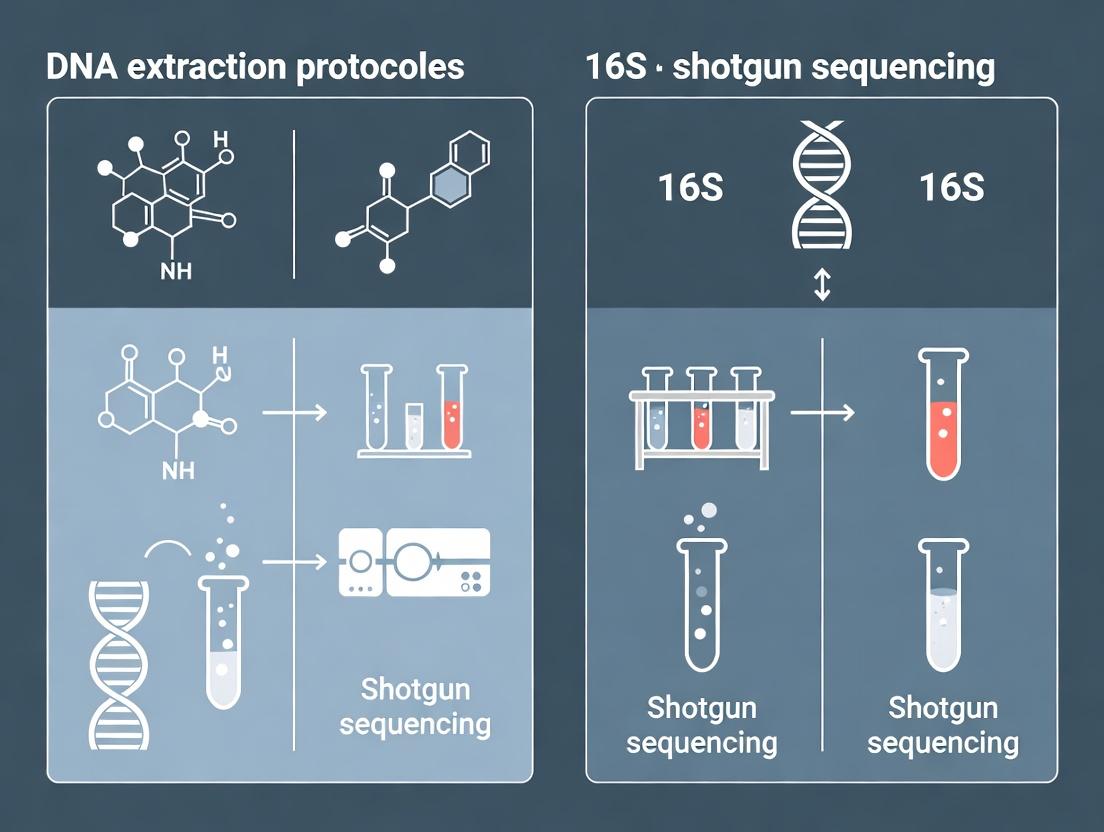
This definitive guide provides researchers and biopharma professionals with a comprehensive, current analysis of DNA extraction protocols tailored for 16S rRNA gene sequencing and whole-genome shotgun metagenomics.
Extracting Microbial Truth: A Complete Guide to DNA Protocols for 16S vs. Shotgun Metagenomic Sequencing
Abstract
This definitive guide provides researchers and biopharma professionals with a comprehensive, current analysis of DNA extraction protocols tailored for 16S rRNA gene sequencing and whole-genome shotgun metagenomics. It covers foundational principles, step-by-step methodological applications for diverse sample types (e.g., gut, soil, clinical swabs), common troubleshooting and optimization strategies for yield, purity, and bias reduction, and a critical comparative evaluation of commercial kits and validation techniques. The article synthesizes best practices to ensure nucleic acid integrity, maximize sequencing data quality, and support robust downstream analyses in microbiome and drug discovery research.
The DNA Extraction Imperative: Foundational Principles for 16S and Shotgun Sequencing Success
In the rigorous pursuit of accurate microbiome science, whether for 16S rRNA gene amplicon or whole-genome shotgun (WGS) sequencing, the analysis chain is only as strong as its weakest link. A growing body of evidence positions the DNA extraction protocol not merely as a preliminary step, but as the primary determinant of downstream data fidelity. This technical guide asserts a core thesis: The choice of extraction protocol is a foundational, bias-inducing variable that irreversibly shapes the perceived microbial community structure, directly impacting biological interpretation and translational validity in drug development and clinical research.
The Mechanism of Bias: From Cell Lysis to Data Distortion
Extraction bias originates at the first physical interaction with the sample. Protocols vary in their ability to lyse the incredible diversity of cell walls present in a microbial community.
- Gram-positive bacteria (e.g., Firmicutes) possess thick peptidoglycan layers requiring rigorous mechanical disruption (e.g., bead-beating).
- Gram-negative bacteria have thinner walls more susceptible to chemical/enzymatic lysis.
- Fungal spores and cysts are notoriously resilient, often requiring specialized lytic enzymes.
- Extracellular DNA can be co-extracted, confounding true cellular abundance.
A protocol omitting or under-utilizing mechanical lysis will systematically underrepresent Gram-positives, while excessive beating can shear DNA, affecting WGS library quality. This lysis efficiency profile becomes imprinted on all subsequent data.
Quantifying Protocol-Dependent Variation: A Data-Driven Perspective
Recent comparative studies robustly demonstrate the magnitude of protocol-induced variation. The following table synthesizes key quantitative findings from current literature (2023-2024), highlighting differential impacts on 16S and WGS outcomes.
Table 1: Comparative Impact of Common Extraction Protocol Classes on Downstream Metrics
| Extraction Protocol Class | Key Characteristics | 16S rRNA Sequencing Impact | Shotgun Metagenomic Sequencing Impact | Reported Bias (vs. Mock Community) |
|---|---|---|---|---|
| Enzymatic/Chemical Lysis Only | Gentle; no bead-beating. | Severe underrepresentation of Gram-positive taxa (e.g., Bacillus, Lactobacillus). Increased relative abundance of Gram-negatives. | Very low DNA yield; poor microbial diversity recovery; unsuitable for robust assembly. | Up to 50-fold lower recovery of Firmicutes. |
| Standardized Bead-Beating (e.g., MP Biomedicals) | Moderate mechanical disruption (0.1mm beads). | Improved Gram-positive recovery. Balanced community profile for common gut taxa. | Good yield; moderate fragment length (5-10kb). Reliable for WGS. | ~2-fold variation within Firmicutes; good overall correlation. |
| Intensive Mechanical Lysis | Prolonged beating, mixed bead sizes (e.g., 0.1mm + 0.5mm). | Highest alpha diversity recovery. May lyse tough spores. Risk of DNA shearing. | High yield but shorter fragments (<5kb). Can challenge long-read or hybrid assembly. | Potential over-representation of difficult-to-lyse cells. |
| Protocols with Selective eDNA Removal | Pre-lysis DNase treatment. | Reduces "relic DNA" signal, altering diversity indices and perceived community stability. | Increases proportion of sequence data from intact cells, improving functional gene attribution. | Significantly reduces signals from "dormant" taxa. |
Table 2: Impact on Downstream Analytical Suites
| Analytical Goal | Critical Extraction Parameter | Consequence of Suboptimal Choice |
|---|---|---|
| Taxonomic Profiling (16S) | Lysis Completeness & Bias | Skewed alpha/beta diversity metrics. False negatives/positives in differential abundance analysis. |
| Metagenomic Assembly (WGS) | DNA Fragment Length & Purity | Reduced contiguity (N50), fragmented gene bins, incomplete metagenome-assembled genomes (MAGs). |
| Host DNA Depletion (Host-Microbe) | Selective Lysis Efficiency | Host DNA can comprise >99% of sequences, drowning microbial signal and drastically increasing sequencing cost per microbial read. |
| Functional Potential (WGS) | Inhibition-Free Yield & Integrity | PCR inhibitors co-purified with DNA suppress library amplification. Sheared DNA biases functional gene coverage. |
Experimental Protocol: A Standardized Comparison Framework
To empirically validate protocol choice in a study, a Mock Microbial Community Standard must be used. Below is a core experimental methodology.
Title: Standardized Workflow for Extraction Protocol Benchmarking Using a Mock Community
Objective: To quantify the bias introduced by different DNA extraction kits/protocols on a known input community.
Materials:
- Mock Community: Commercially available, genomically defined standard (e.g., ZymoBIOMICS Microbial Community Standard).
- Extraction Protocols: Minimum of three kits/ethods representing different lysis strategies.
- QC Instruments: Qubit Fluorometer (dsDNA HS assay), TapeStation/Fragment Analyzer (Genomic DNA assay).
- Sequencing Platform: Illumina MiSeq/HiSeq for 16S (V4 region) and WGS (≥30M read pairs).
Procedure:
- Replicate Aliquots: Prepare n≥5 replicate aliquots of the mock community for each extraction protocol.
- DNA Extraction: Perform extractions exactly per manufacturer's instructions. Record handling time and elution volume.
- Quality Control:
- Yield: Measure DNA concentration (ng/µL) via Qubit.
- Integrity: Assess fragment size distribution via TapeStation (DV200 for WGS).
- Purity: Measure A260/A280 and A260/A230 ratios.
- Library Preparation & Sequencing:
- For 16S: Amplify V4 region with dual-indexed primers (515F/806R). Use minimal PCR cycles.
- For WGS: Use standardized library prep kit (e.g., Illumina DNA Prep). Target 350bp insert size.
- Pool libraries equimolarly and sequence on appropriate platform.
- Bioinformatic & Statistical Analysis:
- 16S: Process with DADA2 or QIIME2 pipeline. Compare observed composition to known proportions using Bray-Curtis dissimilarity and linear regression (R²).
- WGS: Perform taxonomic profiling (Kraken2/Bracken) and compare to expected genome abundances. Assess assembly metrics (N50, # of contigs) if applicable.
Title: Workflow for Extraction Protocol Benchmarking
The Scientist's Toolkit: Essential Research Reagent Solutions
Table 3: Key Materials for Rigorous Microbiome DNA Extraction Studies
| Item | Function & Rationale |
|---|---|
| Genomically Defined Mock Community | Provides a "ground truth" standard with known absolute abundances to quantify extraction bias and accuracy. |
| Internal DNA Spike-Ins (e.g., Salmonella phage, lambda DNA) | Added pre-lysis to monitor and normalize for losses during extraction, improving cross-sample comparability. |
| Inhibitor Removal Beads/Magnetic Silica | Critical for challenging samples (stool, soil) to remove humic acids, bile salts, etc., that inhibit downstream enzymes. |
| Mixed Silica/Zirconia Beads (e.g., 0.1mm & 0.5mm) | Ensures comprehensive lysis of diverse cell types by combining small beads for bacterial cells with larger beads for tough structures. |
| Proteinase K & Lysozyme | Enzymatic pre-treatment to degrade proteins and break down peptidoglycan, complementing mechanical lysis. |
| RNase A | Degrades co-extracted RNA, preventing overestimation of DNA yield and ensuring pure genomic DNA for sequencing. |
| PCR Inhibitor-Tolerant Polymerase | Essential for subsequent steps if inhibitors persist; provides a more accurate reflection of amplifiable DNA. |
| High-Recovery, Low-Binding Elution Tubes | Maximizes yield of often-limited nucleic acid, ensuring data is not biased by physical adsorption to plastic. |
Pathway to Decision: A Protocol Selection Framework
The optimal protocol is not universal; it is defined by sample type, target organisms, and sequencing goals.
Title: Extraction Protocol Decision Pathway
For the researcher and drug development professional, the extraction protocol is the first and most critical experimental variable. It acts as a biological filter, determining which members of the microbiome community are visible to the sequencing platform. This choice directly impacts the detection of biomarkers, the assessment of dysbiosis, and the evaluation of therapeutic interventions. Therefore, protocol selection must be a deliberate, hypothesis-aware decision, rigorously benchmarked against relevant standards and documented with the same fidelity as any other core methodological parameter. The integrity of the entire microbiome analysis enterprise is built upon this first, crucial step.
Within the broader framework of optimizing DNA extraction protocols for microbial community analysis, a critical operational decision point is the choice between targeted 16S rRNA gene sequencing and untargeted shotgun metagenomic sequencing. This choice fundamentally dictates the required quantity, quality, and integrity of input DNA. This guide details the distinct DNA input requirements for each method, grounded in current experimental protocols and quantitative benchmarks, to inform robust study design in research and drug development.
The following tables consolidate current quantitative standards for DNA input, yield, and quality for the two sequencing approaches.
Table 1: Core DNA Input Specifications
| Parameter | 16S rRNA Gene Sequencing | Shotgun Metagenomics | Rationale |
|---|---|---|---|
| Minimum Mass | 1-10 ng | 1-100 ng (varies by depth) | Shotgun requires sufficient material for library prep without amplification bias; 16S targets a single locus, requiring less. |
| Optimal Mass | 10-30 ng | 50-1000 ng | Higher mass for shotgun enables greater genomic coverage and detection of low-abundance species. |
| Purity (A260/A280) | 1.8-2.0 | 1.8-2.0 | Standard for pure nucleic acids; contaminants inhibit enzyme reactions in both. |
| Purity (A260/A230) | >2.0 | >2.0 | Critical for shotgun to avoid salt/carbohydrate inhibition during fragmentation & ligation. |
| Integrity (DIN/ RIN) | Moderate-High (DIN >5) | Critical: High (DIN >7, RIN >8) | Fragmented DNA reduces mappability and assembly quality in shotgun sequencing. |
| Concentration | ≥ 0.2 ng/µL | ≥ 0.5-1 ng/µL | Must be measurable via fluorometry for accurate library normalization. |
Table 2: Expected DNA Yield from Common Sample Types
| Sample Type | Typical 16S-Compatible Yield (per extraction) | Typical Shotgun-Compatible Yield (per extraction) | Notes for Protocol Optimization |
|---|---|---|---|
| Human Stool | 1-100 µg | 1-100 µg | Yield highly variable; often requires dilution for 16S, concentration for shotgun. |
| Soil | 0.1-10 µg | 0.5-20 µg | Humics co-extract; rigorous clean-up (e.g., CTAB, kit columns) is mandatory for shotgun. |
| Skin Swab | 0.01-0.5 µg | 0.05-1 µg | Low biomass; extraction with carrier RNA may be needed to meet shotgun minimums. |
| Marine Water | 0.001-0.1 µg | 0.01-0.5 µg | Requires large-volume filtration; concentration and desalting are critical steps. |
| Saliva | 1-50 µg | 5-100 µg | High human DNA content; microbial enrichment protocols may be needed for shotgun. |
Detailed Methodologies for Key Protocols
Protocol A: DNA Extraction for High-Integrity Shotgun Metagenomics (Soil Example)
This protocol is designed to maximize DNA yield and integrity while removing PCR inhibitors.
- Sample Lysis: Weigh 250 mg of soil. Use a bead-beating step (0.1 mm glass/silica beads) in a lysis buffer containing CTAB (Cetyltrimethylammonium bromide) and Proteinase K for 30 min at 56°C. Mechanical disruption is critical for Gram-positive bacteria.
- Inhibitor Removal: Add a precipitation buffer (e.g., ammonium acetate) to precipitate humic acids. Centrifuge at 12,000 x g for 10 min. Transfer supernatant.
- Binding and Washing: Bind DNA from the supernatant to a silica membrane column. Wash twice with an ethanol-based wash buffer.
- Elution: Elute DNA in 50-100 µL of low-EDTA TE buffer or nuclease-free water pre-warmed to 55°C. Do not vortex after elution to avoid shearing.
- QC: Quantify via Qubit dsDNA HS Assay. Assess integrity with Genomic DNA TapeStation or Fragment Analyzer (target DIN >7).
Protocol B: DNA Extraction for 16S rRNA Gene Sequencing (Low-Biomass Skin Swab)
This protocol prioritizes the removal of human host DNA and PCR inhibitors, with less emphasis on high-molecular-weight DNA.
- Host Depletion: Following swab elution in PBS, treat sample with lysozyme (30 min, 37°C) to weaken microbial cell walls, then with benzonase (optional) to degrade free human DNA.
- Microbial Lysis: Transfer to a lysing matrix tube (ceramic beads). Add a commercial lysis buffer and perform bead-beating for 45 sec at 5 m/s.
- Selective Binding: Use a kit designed for microbial DNA isolation which includes specific inhibitors to sequester remaining host DNA and contaminants.
- Elution: Elute in 30 µL of elution buffer. Gentle vortexing is acceptable.
- QC: Quantify via Qubit dsDNA HS Assay. Integrity can be assessed via a short-fragment Bioanalyzer run, but is less critical. Verify absence of PCR inhibitors via spike-in assay.
Visualizing Experimental Workflows and Decision Pathways
Diagram 1: DNA Input Decision Pathway
Title: Decision Pathway for 16S vs. Shotgun DNA Input
Diagram 2: Comparative Experimental Workflow
Title: Comparative 16S and Shotgun Experimental Workflows
The Scientist's Toolkit: Research Reagent Solutions
Table 3: Essential Materials for DNA Extraction and QC
| Item | Function | Critical for 16S? | Critical for Shotgun? |
|---|---|---|---|
| Bead-Beating Tubes (0.1mm) | Mechanical cell lysis for tough microbes. | Yes | Yes |
| CTAB Buffer | Removes polysaccharides & humics (environmental samples). | Recommended | Essential |
| Proteinase K | Digests proteins and inactivates nucleases. | Yes | Yes |
| Silica-Membrane Columns | Selective binding & purification of DNA. | Yes | Yes |
| Carrier RNA | Improves yield recovery in low-biomass extracts. | Sometimes | Often |
| RNase A | Removes co-purified RNA that interferes with quantification. | Yes | Yes |
| Qubit dsDNA HS Assay Kit | Accurate quantitation of low-concentration dsDNA. | Yes | Yes |
| Agilent Genomic DNA ScreenTape | Assesses DNA integrity (DIN) - critical for shotgun. | Optional | Mandatory |
| PCR Inhibitor Removal Kit | Removes humics, bile salts, heme. | Recommended | Essential for some samples |
| Magnetic Beads (SPRI) | For size selection and clean-up in shotgun library prep. | No | Essential |
The reliability of 16S rRNA gene sequencing and shotgun metagenomics is fundamentally dependent on the quality of the extracted nucleic acids. This technical guide details the four cornerstone metrics—Yield, Purity, Integrity, and Bias—for evaluating DNA extraction protocols in microbiome research. We provide a framework for systematic protocol optimization to ensure data accurately reflects the original microbial community structure, which is critical for downstream drug development and clinical research.
DNA extraction is the first critical step in any microbiome study. For 16S sequencing, the goal is to obtain sufficient, high-quality DNA from all community members for PCR amplification of hypervariable regions. For shotgun metagenomic sequencing, the requirement extends to longer, sheared fragments suitable for library preparation. Suboptimal extraction can introduce bias, skewing the apparent microbial composition and compromising all downstream analyses. This guide positions these metrics within a rigorous experimental pipeline to ensure translational research validity.
Defining and Measuring the Core Metrics
Yield
Yield refers to the total amount of DNA recovered from a sample, typically measured in nanograms (ng) per milligram of sample (e.g., stool, soil).
- Measurement: Fluorometric assays (e.g., Qubit dsDNA HS Assay) are preferred over absorbance (A260) due to superior specificity and resistance to contaminants.
- Target: Sufficient yield is protocol-dependent. For complex samples like stool, a minimum of 1-10 ng/µL in a final elution volume of 50-100 µL is often required for robust library prep.
Purity
Purity assesses the presence of contaminants that inhibit enzymatic reactions (e.g., PCR, ligation). Common contaminants include proteins, humic acids, and phenolic compounds.
- Measurement: Spectrophotometric absorbance ratios (NanoDrop).
- A260/A280: Optimal range ~1.8-2.0. Lower values indicate protein contamination.
- A260/A230: Optimal range ~2.0-2.2. Lower values indicate chaotropic salt or organic solvent carryover.
- Critical Note: Absorbance is a rough guide. Inhibition assays (e.g., qPCR with a known standard) are more functional assessments of purity.
Integrity
Integrity refers to the degree of DNA fragmentation. This is paramount for shotgun sequencing, which requires long fragments for optimal library construction.
- Measurement: Fragment analyzer, Bioanalyzer, or TapeStation.
- Output: DNA Integrity Number (DIN) or visual assessment of the electrophoretic trace. High-integrity genomic DNA shows a clear, high-molecular-weight band (>10 kb). Excessive shearing appears as a smear below 1 kb.
Bias: The Critical Issue
Bias is the systematic distortion of microbial community representation due to the extraction protocol itself. Different bacterial taxa have varying cell wall structures (Gram-positive vs. Gram-negative), which lyse with differing efficiencies.
- Measurement: No single assay. Assessed by comparing relative abundances of control communities.
- Mock Communities: Defined mixes of known bacterial cells or DNA.
- Spike-in Controls: Addition of non-native, known-quantity cells (e.g., Salmonella bongori) to the sample pre-extraction.
Table 1: Summary of Core DNA Extraction Metrics
| Metric | Definition | Primary Measurement Tool(s) | Optimal Range (Guideline) | Impact on Downstream Application |
|---|---|---|---|---|
| Yield | Total DNA amount | Fluorometer (Qubit) | >1 ng/µL (sample-dependent) | Insufficient yield prevents library prep. |
| Purity | Absence of inhibitors | Spectrophotometer (A260/A280, A260/A230); qPCR inhibition assay | A260/A280: 1.8-2.0; A260/A230: 2.0-2.2 | Contaminants cause PCR failure, sequencing artifacts. |
| Integrity | Fragment size distribution | Fragment Analyzer, Bioanalyzer | DIN >7 for shotgun; clear HMW band | Low integrity reduces shotgun assembly, biases 16S amplicon length. |
| Bias | Taxonomic distortion | Sequencing of mock/spike-in controls | Deviation from known composition <10% | False community profile; invalidates comparative studies. |
Experimental Protocol for Systematic Extraction Evaluation
The following protocol outlines a comparative study to evaluate commercial kits for stool DNA extraction, with a focus on bias assessment.
Materials & Sample Preparation
- Samples: Human stool aliquots (homogenized in stabilizing buffer) and a characterized Mock Microbial Community (e.g., ZymoBIOMICS Microbial Community Standard).
- Kits for Comparison: Select 3-4 kits with different lysis principles (e.g., bead-beating intensity, enzymatic lysis time).
- Spike-in Control: Salmonella bongori culture, quantified by flow cytometry.
Step-by-Step Methodology
- Spike-in Addition: Add a fixed number of S. bongori cells (e.g., 10^5 cells) to each stool aliquot and mock community sample immediately before extraction.
- Parallel Extraction: Perform extractions in triplicate for each kit, following manufacturers' protocols precisely. Include a negative (no-sample) control.
- Metric Quantification:
- Yield & Purity: Use Qubit for yield and NanoDrop for purity ratios.
- Integrity: Run 1 µL of each extract on a High Sensitivity Genomic DNA TapeStation.
- Bias Assessment: Perform 16S rRNA gene sequencing (V4 region) on all extracted mock community samples. For stool extracts, perform both 16S and shallow shotgun sequencing (5M reads/sample).
- Data Analysis for Bias:
- Mock Community: Calculate the relative abundance of each known member. Compute the mean squared error (MSE) between observed and expected abundances for each kit.
- Spike-in Recovery: Quantify the number of reads mapping to the S. bongori genome in shotgun data or via specific qPCR. Calculate recovery efficiency (%) across kits.
- Stool Community: Perform beta-diversity analysis (PCoA on Bray-Curtis). Observe if extraction method clusters samples more strongly than biological variation.
Diagram Title: Experimental Workflow for Extraction Kit Evaluation
The Scientist's Toolkit: Research Reagent Solutions
Table 2: Essential Materials for Rigorous DNA Extraction Evaluation
| Item | Function & Rationale |
|---|---|
| ZymoBIOMICS Microbial Community Standard | Defined mock community of 8 bacteria and 2 yeasts. Gold standard for quantifying extraction bias in 16S and shotgun workflows. |
| Quantitative PCR (qPCR) Inhibition Assay Kit | Uses an exogenous, known-quantity DNA template and universal primers. Cycle threshold (Ct) shifts indicate presence of polymerase inhibitors not detected by A260/A230. |
| High Sensitivity Genomic DNA Analysis Kit (TapeStation/Bioanalyzer) | Provides objective DNA Integrity Number (DIN) and visual fragment trace, critical for assessing suitability for shotgun sequencing. |
| Fluorometric dsDNA HS Assay (e.g., Qubit) | Target-specific fluorescence dye. Provides accurate yield quantification unaffected by RNA or contaminant absorbance. |
| Internal Spike-in Control (e.g., Salmonella bongori) | Alien species not typically found in host samples. Added pre-lysis to calculate absolute cell recovery and identify protocol-associated loss. |
| Benchmarked Bead Beating Tubes (e.g., 0.1mm & 0.5mm zirconia beads) | Standardizes mechanical lysis efficiency across protocols, crucial for breaking tough Gram-positive and fungal cell walls. |
Optimal DNA extraction for microbiome research is not merely about maximizing yield. A holistic approach that balances yield, purity, and integrity while actively measuring and minimizing bias is essential. The experimental protocol outlined here provides a template for evidence-based selection and optimization of extraction methods. For research aimed at drug development and clinical diagnostics, where accurate community profiling is paramount, incorporating mock and spike-in controls into routine QC is non-negotiable. The choice of extraction protocol fundamentally determines the validity of all subsequent sequencing data and biological conclusions.
Within the critical workflow of DNA extraction for 16S rRNA and shotgun metagenomic sequencing, the initial lysis step is paramount. The choice of lysis strategy directly dictates the yield, purity, and representational bias of the resulting genetic material, thereby influencing all downstream analyses. This guide provides an in-depth technical examination of mechanical, enzymatic, and chemical lysis methods, framed within the context of optimizing DNA extraction protocols for modern microbial research.
Mechanical Lysis
Mechanical methods physically disrupt cellular envelopes through force, making them universally applicable but potentially damaging to DNA.
Key Protocols:
- Bead Beating: Suspend microbial pellet (e.g., 0.1 g soil or 10^8 cells) in lysis buffer. Add sterile, dense beads (0.1mm silica/zirconia for bacteria; 0.5mm for fungi). Process in a high-speed bead mill for 30-60 seconds, with cooling intervals on ice to prevent thermal degradation. Efficacy exceeds 95% for tough Gram-positives like Mycobacterium and spores.
- Sonication: Use a probe sonicator at 20 kHz amplitude. Subject sample (in a chilled tube) to 3-5 cycles of 15-second pulses (30-second ice rests). Optimal for liquid cultures; effective for biofilms but generates heat.
- French Press: For large-volume bacterial cultures. Cells are pressurized to >20,000 psi and extruded through a small orifice, creating shear forces. Achieves near-total lysis for E. coli and similar organisms with minimal heat.
Table 1: Quantitative Comparison of Mechanical Lysis Methods
| Method | Typical Efficiency (%) | DNA Fragment Size (avg.) | Processing Time | Suitability for High-Throughput |
|---|---|---|---|---|
| Bead Beating | 90-99+ | 5-20 kb | 1-5 min | Moderate (plate-based systems exist) |
| Sonication (Probe) | 70-95 | 1-5 kb | 2-10 min | Low |
| French Press | >95 | 20-100 kb | 30+ min (setup) | Very Low |
Enzymatic Lysis
Enzymatic methods use specific biocatalysts to degrade cell wall components. They are gentle, sequence-preserving, but organism-specific.
Key Protocols:
- Gram-positive Bacteria: Use lysozyme (10-20 mg/mL) in Tris-EDTA buffer, incubate at 37°C for 30-60 min. For resistant strains, add lysostaphin (for Staphylococci) or mutanolysin (for Streptococci).
- Gram-negative Bacteria: Combine lysozyme with EDTA to chelate cations stabilizing the outer membrane. Add proteinase K (0.1-1 mg/mL) for comprehensive protein digestion.
- Fungi/Yeast: Use lyticase (β-glucanase) or zymolase for yeast (e.g., Saccharomyces), and chitinase for filamentous fungi, often with an osmotic stabilizer like sorbitol. Incubation typically requires 1-2 hours.
- Biofilms: Use dispersin B (glycoside hydrolase) in conjunction with DNase I to degrade extracellular DNA matrix, followed by standard enzymatic lysis.
Table 2: Common Enzymes for Microbial Lysis
| Enzyme | Target Substrate | Typical Conc. | Key Microbial Target |
|---|---|---|---|
| Lysozyme | Peptidoglycan (1,4-β-linkages) | 10-20 mg/mL | Gram-positive bacteria |
| Proteinase K | Broad specificity proteins | 0.1-1 mg/mL | All (digests proteins) |
| Lysostaphin | Glycine-glycine bonds (Staph. peptidoglycan) | 10-100 µg/mL | Staphylococcus spp. |
| Lyticase | β-1,3-glucan | 50-200 U/mL | Yeast cell walls |
| Chitinase | Chitin | 1-5 U/mL | Fungal cell walls |
Chemical Lysis
Chemical methods employ detergents, chaotropic agents, and alkalis to solubilize membranes and denature proteins.
Key Protocols:
- Detergent-Based (SDS): The gold standard for many extraction kits. Resuspend sample in buffer containing SDS (1-2%), EDTA, and Tris. SDS disrupts lipid bilayers and solubilizes proteins. Heat at 55-65°C for 10-30 minutes to enhance efficiency.
- Alkaline Lysis: Use 0.2M NaOH with 1% SDS for rapid lysis of Gram-negatives (common in plasmid preps). Neutralization with potassium acetate precipitates proteins and chromosomal DNA.
- Chaotropic Agents (Guanidine HCl): Used at high concentrations (4-6 M) in silica-column-based extractions. Disrupts hydrogen bonding, denatures proteins, and facilitates DNA binding to silica.
Integrated Lysis Strategy Workflow
For complex samples like soil or stool, a combined approach is standard. The following diagram illustrates a typical integrated workflow for maximal community DNA recovery.
Diagram Title: Integrated Microbial Lysis and DNA Extraction Workflow
The Scientist's Toolkit: Essential Research Reagent Solutions
Table 3: Key Reagents for Microbial Cell Lysis
| Item | Function in Lysis | Example/Note |
|---|---|---|
| Zirconia/Silica Beads (0.1mm) | Creates shear forces for physical disruption of tough cell walls. | Preferred over glass for harder microbes. |
| Lysozyme (from hen egg white) | Hydrolyzes peptidoglycan layer in bacterial cell walls. | Critical for Gram-positives; often used with EDTA. |
| Proteinase K | Broad-spectrum serine protease; digests proteins and inactivates nucleases. | Essential for lysis completeness and DNA stability. |
| Sodium Dodecyl Sulfate (SDS) | Ionic detergent that disrupts lipid membranes and solubilizes proteins. | Core of many chemical lysis buffers; incompatible with spin columns. |
| Guanidine Hydrochloride (GuHCl) | Chaotropic agent; denatures proteins, aids cell disruption, and enables silica binding. | Key component of modern kit-based purification. |
| EDTA (Ethylenediaminetetraacetic acid) | Chelates divalent cations (Mg2+, Ca2+), destabilizing membranes and inhibiting DNases. | Standard component of lysis and TE buffers. |
| Lytic Enzyme Cocktails | Targeted digestion of specific polysaccharides (e.g., chitin, glucan). | Lyticase for yeast; Chitinase for fungi. |
| Phenol:Chloroform:Isoamyl Alcohol | Organic mixture for liquid-liquid extraction of proteins/lipids from lysate. | Used in traditional "gold standard" purifications. |
| SPRI (Solid-Phase Reversible Immobilization) Beads | Magnetic beads that bind DNA in PEG/High-Salt for purification from lysate. | Enables high-throughput, automatable cleanup. |
| RNase A | Degrades RNA to prevent co-purification with DNA. | Added post-lysis during purification. |
The selection of a lysis strategy is not a one-size-fits-all decision but a critical, sample-dependent parameter in DNA extraction for sequencing. Mechanical methods offer brute-force universality, enzymatic methods provide gentle specificity, and chemical methods deliver robust denaturation and integration with purification chemistry. For comprehensive microbiome studies aiming to capture both robust Gram-positives and delicate Gram-negatives without bias, a judicious combination of brief mechanical disruption followed by chemical-enzymatic treatment often yields the most representative genomic profile for subsequent 16S and shotgun sequencing analyses.
Within the framework of 16S rRNA and shotgun metagenomic sequencing research, the universal goal of obtaining high-quality, unbiased genomic material is critically dependent on the initial extraction protocol. The inherent biochemical and physical complexities of different sample matrices—gut, soil, skin, and clinical specimens—demand tailored, sample-specific strategies. This guide details the core challenges and optimized methodologies for each specimen type, underpinning the thesis that a one-size-fits-all DNA extraction approach is a primary source of bias and variability in downstream sequencing data.
Core Challenges & Quantitative Comparisons
The key impediments to efficient lysis and purification vary drastically by sample type, as summarized in Table 1.
Table 1: Sample-Specific Challenges and Critical Control Parameters
| Sample Type | Primary Challenges | Critical Parameters to Control | Typical Inhibitor Classes |
|---|---|---|---|
| Gut (Feces) | High host DNA contamination, diverse polysaccharide & bile acid inhibitors, variable consistency. | Host DNA depletion, inhibitor removal, homogenization. | Bile salts, complex polysaccharides, dietary compounds. |
| Soil | Humic/fulvic acids, divalent cations (Ca²⁺, Mg²⁺), robust Gram-positive bacteria & spores. | Humic substance removal, mechanical lysis efficiency. | Humic acids, phenolic compounds, heavy metals. |
| Skin (Swab) | Low microbial biomass, high host (human) DNA & keratin, surfactants from swabs/washes. | Biomass concentration, host DNA reduction, swab elution efficiency. | Keratin, salts, personal care product residues. |
| Clinical (Sputum/BAL) | Viscous mucin, host cells (immune & epithelial), potential pathogen viability concerns. | Mucolysis, host cell lysis differential, safe inactivation. | Mucin, human genomic DNA, hemoglobin (if bloody). |
Quantitative performance metrics for common commercial kits adapted to these samples highlight significant differences (Table 2). Data reflects post-extraction yield and purity from recent comparative studies.
Table 2: Performance Metrics of Adapted Protocols for 16S/Shotgun Sequencing
| Sample Type | Representative Kit/Protocol | Avg. DNA Yield (ng/µL) | Avg. A260/A280 | Avg. A260/A230 | Key Adaptation |
|---|---|---|---|---|---|
| Gut Feces | QIAamp PowerFecal Pro | 45.2 ± 12.1 | 1.85 ± 0.05 | 2.10 ± 0.15 | Bead-beating & inhibitor removal chemistry. |
| Agricultural Soil | DNeasy PowerSoil Pro | 32.8 ± 15.7 | 1.80 ± 0.10 | 1.95 ± 0.20 | Enhanced humic acid adsorption & heating steps. |
| Skin Swab | Molzym Ultra-Deep Microbiome | 8.5 ± 4.3 | 1.88 ± 0.07 | 2.05 ± 0.18 | Enzymatic host DNA depletion pre-lysis. |
| Sputum | QIAamp DNA Microbiome | 65.1 ± 20.5 | 1.82 ± 0.08 | 1.90 ± 0.25 | DTT-based mucolysis & thermal shock. |
Detailed Experimental Protocols
Protocol 2.1: Gut Feces - Host Depletion for Shotgun Sequencing
Objective: Maximize microbial DNA yield while depleting host (human) DNA.
- Homogenization: Weigh 180-220 mg of frozen feces into a PowerBead Tube. Add 800 µL of Inhibitor Removal Technology (IRT) Buffer.
- Mechanical Lysis: Secure tubes in a vortex adapter and bead-beat at maximum speed for 10 minutes.
- Host Cell Depletion: Add 20 µL of Benzonase (25 U/µL) and 5 µL of Plasmid-Safe ATP-Dependent DNase. Incubate at 37°C for 30 min. This step degrades free human DNA and linear genomic fragments from lysed human cells.
- Microbial Lysis: Add 60 µL of Proteinase K and 600 µL of Lysis Buffer. Vortex and incubate at 70°C for 15 min.
- Purification: Follow standard magnetic bead-based clean-up (e.g., SPRI beads) with two washes of 80% ethanol. Elute in 50 µL of 10 mM Tris-HCl, pH 8.5.
Protocol 2.2: Soil - Humic Acid Removal for 16S Sequencing
Objective: Extract microbial DNA free of PCR inhibitors.
- Initial Processing: Sieve soil (2 mm mesh). Aliquot 500 mg into a lysing matrix E tube.
- Co-Extraction of Inhibitors: Add 978 µL of Sodium Phosphate Buffer and 122 µL of MT Buffer. Vortex thoroughly.
- Thermo-Mechanical Lysis: Incubate at 65°C for 10 min, then bead-beat for 2 minutes. Centrifuge at 14,000 x g for 5 min.
- Inhibitor Precipitation: Transfer supernatant to a clean tube. Add 250 µL of pre-chilled PPS (Protein Precipitation Solution). Vortex for 10 sec and incubate on ice for 10 min. Centrifuge at 14,000 x g for 5 min.
- Selective Binding: Transfer supernatant to a tube containing 1.2 mL of Binding Matrix Suspension. Invert for 3 min to allow DNA adsorption.
- Wash & Elute: Pellet matrix, wash twice with 80% ethanol, air-dry, and elute in 50 µL of 10 mM Tris.
Protocol 2.3: Low-Biomass Skin Swab - Biomass Concentration
Objective: Capture and lyse sparse microbial cells from a swab surface.
- Elution: Place swab tip in a 2 mL tube. Add 1 mL of PBS-0.1% Tween 80. Vortex for 2 min, then sonicate in a water bath for 5 min.
- Concentration: Pass the eluate through a 0.22 µm polycarbonate filter using a syringe. Rinse filter with 1 mL of PBS.
- On-Filter Lysis: Place filter in a bead-beating tube. Add 500 µL of Lysis Buffer (with lysozyme, 20 mg/mL) and incubate at 37°C for 45 min.
- Bead-Beating: Add 0.1 mm silica/zirconia beads and beat for 90 sec.
- Purification: Transfer lysate and proceed with a column-based purification kit designed for low-DNA concentrations, using carrier RNA if required.
Protocol 2.4: Sputum - Mucolysis and Pathogen Inactivation
Objective: Liquefy viscous matrix and ensure biosafety.
- Safety & Homogenization: Process in a BSL-2 cabinet. Mix sputum sample with an equal volume of Sputasol (containing DTT) or 1X Dithiothreitol (DTT) in PBS. Vortex and incubate at 37°C for 30 min.
- Inactivation: Heat at 95°C for 15 minutes to inactivate pathogens (e.g., Mycobacterium tuberculosis).
- Digestion: Cool, add Proteinase K to a final concentration of 0.5 mg/mL and 1% SDS. Incubate at 56°C for 2 hours.
- Purification: Add an equal volume of binding buffer and isolate DNA using a magnetic bead protocol with an additional wash step of 70% ethanol containing 10 mM NaCl to remove residual DTT.
Visualization of Method Selection Workflow
Title: Sample-Specific DNA Extraction Decision Workflow
The Scientist's Toolkit: Essential Research Reagent Solutions
Table 3: Key Reagents and Their Functions in Sample-Specific Extraction
| Reagent / Material | Primary Function | Sample-Type Application |
|---|---|---|
| Inhibitor Removal Technology (IRT) Buffer | Chelates divalent cations & denatures proteins; co-precipitates inhibitors. | Gut, Soil. |
| Benzonase & Plasmid-Safe DNase | Degrades linear host DNA (human) while circular bacterial DNA is protected. | Gut (Shotgun), Skin. |
| Sodium Phosphate Buffer & PPS | Displaces humics from soil particles; PPS precipitates proteins and humics. | Soil. |
| Polycarbonate Filters (0.22 µm) | Physically traps microbial cells from large-volume, low-biomass liquid samples. | Skin swab eluate, Water. |
| Dithiothreitol (DTT) | Reduces disulfide bonds in mucin proteins, liquefying viscous sputum. | Clinical (Sputum, BAL). |
| Lysing Matrix B/E (Ceramic/Silica beads) | Provides mechanical shearing force for robust cell wall disruption. | Universal, critical for Soil, Gut. |
| Carrier RNA | Improves binding efficiency of trace nucleic acids to silica surfaces. | Low-biomass (Skin, Air). |
| Guanidine Thiocyanate (GuSCN) | Chaotropic agent that denatures proteins, inhibits nucleases, and promotes DNA binding to silica. | Universal (lysis/binding buffer). |
From Theory to Bench: Step-by-Step Protocols and Application Strategies
This technical guide serves as a core component of a broader thesis evaluating DNA extraction protocols for microbiome research. The choice of extraction method is a foundational decision that directly impacts downstream sequencing outcomes, be it targeted 16S rRNA gene sequencing or untargeted metagenomic shotgun sequencing. This document provides a side-by-side comparison of workflows optimized for each approach, detailing their methodologies, performance metrics, and appropriate applications for researchers and drug development professionals.
Core Philosophical & Technical Divergence
The primary divergence between the two pipeline philosophies lies in their primary objective:
- 16S-Centric Pipeline: Optimized to maximize the yield and purity of the hypervariable regions of the prokaryotic 16S rRNA gene from complex samples. The goal is accurate taxonomic profiling.
- Shotgun-Optimized Pipeline: Designed to extract high-molecular-weight, unbiased genomic DNA representing all domains of life (bacteria, archaea, viruses, fungi, host) for functional potential analysis.
The table below summarizes the foundational differences:
Table 1: Foundational Objectives of Each Pipeline
| Parameter | 16S-Centric Pipeline | Shotgun-Optimized Pipeline |
|---|---|---|
| Primary Target | Prokaryotic 16S rRNA gene regions | Total genomic DNA (all domains) |
| Key Success Metric | Amplifiability of V3-V4/V4 regions; inhibition-free PCR | High molecular weight (>10 kbp); minimal fragmentation |
| Bias Consideration | Accepts some bias towards gram-negative/positive as per kit chemistry | Strives for minimal taxonomic bias; critical for quantitative analysis |
| Inhibition Tolerance | Moderate (PCR inhibitors can be problematic) | Very Low (inhibitors disrupt library prep & sequencing) |
| Typical Yield | Often lower (sufficient for PCR) | Higher (μg range required for library prep) |
Detailed Experimental Protocols
Protocol for 16S-Centric DNA Extraction
This protocol is based on common bead-beating and column-purification methods, such as those in the QIAamp PowerFecal Pro DNA Kit.
1. Cell Lysis:
- Weigh or aliquot sample (up to 250 mg) into a PowerBead Tube.
- Add lysis buffer (e.g., containing SDS and other chaotropic salts).
- Perform bead-beating: 10-15 minutes on a vortex adapter or homogenizer. This mechanical lysis is critical for breaking tough gram-positive bacterial cell walls.
- Incubate at elevated temperature (e.g., 65°C for 10 min) for chemical lysis.
2. Inhibitor Removal & DNA Binding:
- Centrifuge to pellet beads and debris.
- Transfer supernatant to a microcentrifuge tube.
- Add inhibitor removal solution (often a precipitation reagent) and centrifuge. This step precipitates non-DNA organic matter.
- Bind DNA from the resulting supernatant to a silica membrane column in the presence of a high-salt binding buffer.
3. Washing and Elution:
- Wash column twice with ethanol-based wash buffers.
- Dry column by centrifugation.
- Elute DNA in low-ionic-strength buffer (e.g., 10 mM Tris, pH 8.5) or PCR-grade water. Typical elution volume: 50-100 μL.
- QC Focus: Measure DNA concentration (fluorometry preferred) and test amplifiability via a qPCR assay targeting the 16S V4 region.
Protocol for Shotgun-Optimized DNA Extraction
This protocol emphasizes gentle handling and HMW output, based on methods like the MagAttract HMW DNA Kit or phenol-chloroform with size selection.
1. Gentle Cell Lysis:
- Suspend sample in a lysozyme-containing buffer (e.g., TE with lysozyme, mutanolysin for gram-positives). Incubate at 37°C for 30-60 min.
- Add Proteinase K and a mild detergent (e.g., N-lauroylsarcosine), followed by incubation at 50-56°C. Avoid harsh mechanical beating if possible, or use very large beads and short pulses.
- The goal is to lyse cells without shearing genomic DNA.
2. Organic Extraction & Precipitation (or Magnetic Bead Cleanup):
- Add an equal volume of phenol:chloroform:isoamyl alcohol (25:24:1). Mix gently by inversion. Centrifuge to separate phases.
- Carefully extract the aqueous (top) layer.
- Perform an ethanol or isopropanol precipitation with glycogen as a carrier. Wash pellet with 70% ethanol.
- Alternative: Use magnetic beads optimized for large fragments (high PEG concentration) to bind and clean DNA.
3. Final Resuspension & Rigorous QC:
- Resuspend the air-dried pellet gently in a large volume (e.g., 100-200 μL) of low-EDTA TE buffer (pH 8.0) overnight at 4°C.
- QC Focus: Assess concentration (Qubit Broad-Range assay), fragment size distribution (FemtoPulse, TapeStation Genomic DNA assay), and purity (A260/A280 ~1.8, A260/A230 >2.0).
Comparative Performance Data
Recent benchmarking studies provide quantitative comparisons. The data below is synthesized from current literature.
Table 2: Quantitative Performance Comparison
| Metric | 16S-Centric Kit (e.g., PowerFecal) | Shotgun-Optimized Protocol (e.g., HMW-focused) | Measurement Method |
|---|---|---|---|
| Mean DNA Yield | 45.2 ng/μL ± 12.1 | 68.7 ng/μL ± 18.5 | Fluorometric (Qubit dsDNA HS) |
| Average Fragment Size | ~5-10 kbp | >20 kbp | Pulsed-Field / TapeStation |
| 260/280 Purity Ratio | 1.82 ± 0.08 | 1.85 ± 0.05 | Spectrophotometry (Nanodrop) |
| 260/230 Purity Ratio | 1.95 ± 0.15 | 2.25 ± 0.10 | Spectrophotometry (Nanodrop) |
| qPCR CT (16S V4) | 16.5 ± 1.2 | 18.1 ± 1.5 | qPCR (SYBR Green) |
| Shannon Diversity (16S) | 4.01 ± 0.3 | 3.92 ± 0.4 | Sequencing Data Analysis |
| % Host DNA (Stool) | 15-30% | <10% (with selective lysis) | Bioinformatic KneadData |
| Library Prep Success | NA / PCR-based | 95% (passing QC) | Fragment Analyzer / BioA |
Workflow Visualizations
Title: Comparative DNA Extraction Workflows for 16S vs. Shotgun
Title: Decision Logic for Pipeline Selection
The Scientist's Toolkit: Essential Research Reagents & Materials
Table 3: Key Reagent Solutions for DNA Extraction Pipelines
| Item | Category | Function & Importance |
|---|---|---|
| Bead Beating Tubes (e.g., 0.1mm & 0.5mm ceramic/silica beads) | Lysis | Mechanical disruption of resilient cell walls (esp. Gram-positive bacteria, spores). Critical for 16S pipeline. |
| Lytic Enzymes (Lysozyme, Mutanolysin, Proteinase K) | Lysis | Enzymatic degradation of cell wall/membrane. Foundation of gentle lysis in shotgun protocols. |
| Chaotropic Salts (Guanidine HCl, Guanidine Thiocyanate) | Binding | Disrupt hydrogen bonding, denature proteins, and facilitate DNA binding to silica in column-based kits. |
| Silica Membrane Columns or Magnetic Beads (S.P.R.I. select) | Purification | Selective binding of DNA based on size and salt/PEG concentration. Magnetic beads allow HMW selection. |
| Phenol:Chloroform:Isoamyl Alcohol (25:24:1) | Purification | Organic extraction removes proteins, lipids, and other contaminants. Key for high-purity shotgun prep. |
| Inhibitor Removal Solutions (e.g., Precipitation Reagents) | Purification | Selectively precipitates humic acids, polyphenols, and other PCR inhibitors common in environmental samples. |
| Low-EDTA TE Buffer (10 mM Tris, 0.1 mM EDTA, pH 8.0) | Elution/Storage | Ideal for resuspending HMW DNA. Low EDTA prevents interference with downstream enzymatic steps. |
| dsDNA HS Assay Kit (e.g., Qubit) | QC | Fluorometric quantification specific for double-stranded DNA, more accurate than UV absorbance for low-concentration samples. |
| Fragment Size Analysis Kit (e.g., Genomic DNA TapeStation) | QC | Critical QC for shotgun pipelines to assess shearing and confirm high molecular weight DNA. |
| 16S rRNA Target qPCR Assay | QC | Validates extract amplifiability and detects PCR inhibitors specific to the 16S sequencing target. |
Within modern genomics, the integrity of downstream analyses—including 16S rRNA gene sequencing for microbial community profiling and shotgun metagenomics for functional potential assessment—is critically dependent on the initial DNA extraction step. The choice between the classic manual phenol-chloroform method and commercial spin-column kits represents a fundamental methodological crossroads. This guide provides a 2024 best-practices framework, evaluating each protocol's impact on DNA yield, purity, fragment size, and, most importantly, its bias on the observed microbial composition and metagenomic assembly. The overarching thesis is that no single method is universally optimal; the selection must be driven by sample type, research question, and a clear understanding of each method's inherent biases.
Core Mechanisms and Comparative Analysis
Manual Phenol-Chloroform (Organic Extraction)
This method relies on liquid-phase separation. Cell lysis is followed by the addition of phenol:chloroform:isoamyl alcohol. Proteins are denatured and partitioned into the organic phase or the interphase, while nucleic acids remain in the aqueous phase. Subsequent chloroform-only treatment removes trace phenol. DNA is then recovered from the aqueous phase by ethanol or isopropanol precipitation.
Key Biases: Effectively lyses tough cell walls (e.g., Gram-positives, spores), leading to higher DNA yields and better representation of these taxa in complex communities. However, it often shears DNA, producing fragments in the 20-30 kb range, which is suboptimal for long-read sequencing. It also co-precipitates humic acids and other inhibitors from environmental samples.
Spin-Column Kit-Based Methods
These solid-phase extraction methods use a silica membrane in a microcentrifuge tube format. After chemical and/or mechanical lysis, lysate conditions are adjusted with a high-salt binding buffer. DNA binds selectively to the silica membrane in the presence of chaotropic salts. Impurities are washed away with ethanol-based buffers, and purified DNA is eluted in a low-ionic-strength solution like Tris-EDTA or water.
Key Biases: Gentler handling can preserve higher molecular weight DNA (>50 kb), ideal for long-read sequencing. However, lysis efficiency varies by kit chemistry, often under-representing difficult-to-lyse microbes. Binding capacity limits can bias against high-biomass samples. Inhibitor removal is typically superior for downstream enzymatic reactions.
2024 Quantitative Comparison Table
Table 1: Quantitative Comparison of Core Extraction Metrics (2024 Data)
| Metric | Phenol-Chloroform | Spin-Column Kit | Implications for Sequencing |
|---|---|---|---|
| Average Yield | High (varies widely) | Consistent, often lower | Phenol-chloroform better for low-biomass, but with more variance. |
| DNA Fragment Size | Moderate (10-30 kb) | High (20->50 kb) | Kits favored for PacBio/Nanopore; phenol-chloroform may fragment. |
| A260/A280 Purity | ~1.7-1.9 (phenol carryover risk) | ~1.8-2.0 | Phenol carryover inhibits enzymes; kits provide more consistent purity. |
| Inhibitor Removal | Poor for humics | Excellent (with specific buffers) | Kits superior for soil, fecal, and other inhibitor-rich samples. |
| Process Time | 3-5 hours (manual) | 1-2 hours (semi-automated) | Throughput and hands-on time favor kits for high-volume studies. |
| Cost per Sample | Low (reagents) | High (commercial kit) | Budget considerations for large-scale epidemiological studies. |
| 16S Community Bias | Under-represents Proteobacteria? | Under-represents Firmicutes? | Critical: Bias is sample-dependent; kit lysis buffers are key. |
| Shotgun Assembly | More fragmented contigs | Longer contigs (if HMW) | Kit methods directly support better metagenome-assembled genomes. |
Detailed Experimental Protocols
Protocol A: Manual Phenol-Chloroform-Isoamyl Alcohol (25:24:1) Extraction
Note: Perform in a fume hood with appropriate personal protective equipment.
Reagents: Lysis buffer (e.g., CTAB, SDS-Tris-EDTA), Phenol:Chloroform:Isoamyl Alcohol (25:24:1, pH ~8.0), Chloroform, 3M Sodium Acetate (pH 5.2), 100% and 70% Ethanol, Nuclease-free TE buffer.
Procedure:
- Lysis: Resuspend cell pellet or homogenize tissue in 500 µL lysis buffer with Proteinase K. Incubate at 55°C for 1-3 hours with agitation.
- Organic Extraction: Add 500 µL phenol:chloroform:isoamyl alcohol. Vortex vigorously for 30 seconds. Centrifuge at 12,000 × g for 10 minutes at 4°C.
- Phase Separation: Carefully transfer the upper aqueous phase to a new tube. Avoid the interphase.
- Chloroform Clean-up: Add 500 µL chloroform. Vortex, centrifuge as in step 2. Transfer aqueous phase.
- Precipitation: Add 1/10 volume sodium acetate and 2.5 volumes ice-cold 100% ethanol. Mix by inversion. Precipitate at -20°C for ≥1 hour or overnight.
- Pellet Wash: Centrifuge at 12,000 × g for 30 minutes at 4°C. Decant supernatant. Wash pellet with 1 mL 70% ethanol. Centrifuge 10 minutes. Air-dry pellet 10-15 minutes.
- Resuspension: Dissolve DNA in 50-100 µL TE buffer. Quantify via fluorometry.
Protocol B: Silica Spin-Column Kit (Generic for Tissues/Stool)
Note: Follow manufacturer's specifics; this is a generalized workflow.
Reagents: Commercial kit (e.g., QIAamp PowerFecal Pro, DNeasy Blood & Tissue), lysis beads, ethanol (96-100%).
Procedure:
- Mechanical & Chemical Lysis: Add sample to provided lysis tube containing beads and buffer. Vortex or shake on a bead-beater for 10 minutes.
- Incubation: Heat at 70°C for 10-15 minutes. Centrifuge briefly to pellet debris.
- Binding: Transfer supernatant to a new tube. Add binding buffer and ethanol. Mix thoroughly by pipetting.
- Column Loading: Apply entire mixture to spin column. Centrifuge at ≥6000 × g for 1 minute. Discard flow-through.
- Washes: Add wash buffer 1 (often with ethanol). Centrifuge, discard flow-through. Add wash buffer 2 (often with ethanol). Centrifuge at full speed for 3 minutes to dry membrane.
- Elution: Place column in clean collection tube. Apply 50-100 µL pre-heated (55°C) elution buffer directly to membrane. Incubate 5 minutes. Centrifuge at full speed for 1 minute to elute DNA.
Protocol C: Bias Assessment Experiment for 16S Studies
Objective: To empirically determine extraction bias introduced by each method on a mock microbial community or replicated environmental sample.
Procedure:
- Sample: Use a standardized mock community (e.g., ZymoBIOMICS) or aliquot a homogenized environmental sample (e.g., soil, stool) into technical replicates.
- Parallel Extraction: Extract DNA from 5-10 replicates per method (Phenol-Chloroform vs. Kit) following Protocols A and B.
- Quantification & QC: Measure DNA concentration (fluorometer) and purity (spectrophotometer). Assess fragment size (Fragment Analyzer/TapeStation).
- Sequencing: Perform 16S rRNA gene amplicon sequencing (V4 region) on all extracts using identical PCR conditions and sequencing platform.
- Analysis: Process sequences through a standardized pipeline (QIIME 2, DADA2). Compare:
- Alpha diversity (Observed ASVs, Shannon index) between groups.
- Beta diversity (PERMANOVA on Unifrac distance) to see if extraction method explains variance.
- Differential abundance (ANCOM-BC, DESeq2) of specific taxa between methods.
Visual Workflows and Decision Pathways
(Title: DNA Extraction Method Decision Pathway)
(Title: Core Procedural Workflow Comparison)
The Scientist's Toolkit: Essential Research Reagent Solutions
Table 2: Key Reagents and Materials for DNA Extraction Protocols
| Item | Function | Critical Consideration (2024) |
|---|---|---|
| Phenol:Chloroform:IAA (25:24:1, pH 8.0) | Denatures proteins, separates nucleic acids into aqueous phase. | Must be pH-balanced for DNA; aliquoting under argon prevents oxidation. Single most hazardous reagent. |
| Chaotropic Salt Buffer (e.g., GuHCl) | Disrupts hydrogen bonding, enables DNA binding to silica. | Kit-specific; not interchangeable. Critical for inhibitor removal in stool/soil kits. |
| Silica Spin Columns | Solid-phase matrix for selective DNA binding and washing. | Binding capacity varies (2-100 µg). Choose based on expected yield. |
| Inhibitor Removal Additives | Binds humic acids, polyphenols, polysaccharides. | Essential for environmental samples. Often included in specialized kits (e.g., PowerSoil, PowerFecal). |
| Lysis Beads (e.g., Zirconia/Silica) | Mechanical disruption of tough cell walls in bead-beater. | Bead size (0.1-0.5 mm) impacts lysis efficiency for different cell types (e.g., spores vs. Gram-negatives). |
| Proteinase K | Broad-spectrum serine protease degrades proteins and nucleases. | Quality and activity vary; thermostable versions allow higher incubation temps for difficult samples. |
| Magnetic Beads (SPRI) | Solid-phase reversible immobilization for clean-up. | Enables automation; bead-to-sample ratio is critical for size selection in shotgun library prep. |
| RNase A | Degrades RNA to prevent overestimation of DNA yield/purity. | Optional but recommended for shotgun metagenomics to prevent RNA contamination. |
| Fluorometric DNA QC Kit | Uses dsDNA-binding dyes for accurate, specific quantification. | Non-negotiable for NGS. More accurate than A260 for low-concentration or impure samples. |
2024 Best Practices and Concluding Recommendations
- For Complex Microbiome Studies (16S): No single method is unbiased. The current best practice is to use a kit with rigorous mechanical lysis (e.g., bead beating) for consistency and inhibitor removal. However, for studies focusing on Gram-positive bacteria or archaea, validating against phenol-chloroform or using a kit with enhanced lytic enzymes is critical. Always include a standardized mock community in your extraction batch to benchmark bias.
- For Shotgun Metagenomics: Spin-column kits optimized for High Molecular Weight (HMW) DNA are preferred for their ability to preserve long fragments, aiding assembly. Phenol-chloroform is generally not recommended due to shearing unless followed by a careful size-selection clean-up.
- For Low-Biomass or Challenging Samples: A hybrid approach can be considered: perform phenol-chloroform extraction for maximum lysis, then use a silica-column or magnetic bead clean-up on the aqueous phase to remove inhibitors and concentrate DNA.
- Universal Rule: Standardize your method across all samples within a single study. The methodological variation between extraction protocols often exceeds biological variation. Document every deviation meticulously, including lot numbers of kits and critical reagents.
The evolution of extraction chemistry continues, with trends moving towards automation, integrated inhibitor removal, and standardized protocols for large consortium science (e.g., Earth Microbiome Project). In 2024, the informed researcher selects not based on tradition alone, but on a hypothesis-driven understanding of how each protocol's mechanics will shape the genetic landscape they aim to survey.
Within the broader thesis on optimizing DNA extraction protocols for 16S rRNA gene amplicon and shotgun metagenomic sequencing, the removal of co-purified inhibitors presents the most significant technical hurdle. These inhibitors—humic acids, bile salts, polyphenolics, polysaccharides, and host/background DNA—can severely impede downstream enzymatic reactions, including PCR and library preparation. This in-depth technical guide details the nature of inhibitors from key sample types and provides current, validated methodologies for their removal to ensure high-quality, actionable sequencing data.
Inhibitor Profiles by Sample Type
A comparative analysis of primary inhibitor classes across sample matrices is essential for selecting appropriate removal strategies.
Table 1: Primary Inhibitors and Their Impact on Downstream Processes
| Sample Type | Dominant Inhibitor Classes | Primary Impact on Sequencing |
|---|---|---|
| Fecal | Bile salts, complex polysaccharides, urea, bacterial fermentation products. | Inhibition of DNA polymerases; bias in 16S amplification; reduced library complexity. |
| Soil | Humic and fulvic acids, polyphenolics, polysaccharides, heavy metals, clay particles. | Strong absorbance interfering with QC; covalent modification of DNA; enzyme inhibition. |
| Low-Biomass Clinical (e.g., skin, lung, tissue) | Host genomic DNA, hemoglobin, myoglobin, mucins, therapeutic agents (antibiotics). | Host DNA overrepresentation (>95%); reduced microbial read depth; protein-mediated inhibition. |
Table 2: Quantitative Impact of Humic Acid Contamination on qPCR
| Humic Acid Concentration (ng/µL) | ∆Ct (Delay) vs. Pure Sample | Estimated PCR Efficiency Reduction |
|---|---|---|
| 0 (Control) | 0 | 0% |
| 1 | 2.1 | ~25% |
| 5 | 8.7 | >95% |
| 10 | Complete Inhibition | 100% |
Detailed Experimental Protocols for Inhibitor Removal
Protocol 1: Silica-Based Selective Binding with Chemical Pretreatment (for Soil/Fecal Samples)
This method combines chemical lysis with inhibitor adsorption and silica-membrane purification.
- Lysis & Pretreatment: Homogenize 100-250 mg of sample in 800 µL of specialized lysis buffer (e.g., containing guanidine thiocyanate, Triton X-100, and 20 mM EDTA). Include a pretreatment step with 100 µL of 10% polyvinylpolypyrrolidone (PVPP) for 10 minutes at 70°C to adsorb polyphenolics.
- Inhibitor Precipitation: Add 200 µL of inhibitor precipitation solution (e.g., 3M potassium acetate, pH 5.5). Vortex vigorously and incubate on ice for 5 minutes. Centrifuge at 13,000 x g for 10 minutes.
- DNA Binding: Transfer supernatant to a tube containing 600 µL of binding buffer (high-salt, chaotropic). Mix and load onto a silica-membrane column.
- Washes: Perform two washes: first with a buffer containing ethanol, second with a buffer containing 70% ethanol and 10 mM Tris-HCl (pH 7.5).
- Elution: Elute DNA in 50-100 µL of low-ionic-strength elution buffer (10 mM Tris-HCl, pH 8.5) or nuclease-free water.
Protocol 2: Microbiome Enrichment via Differential Lysis for Low-Biomass Samples
This protocol minimizes host DNA contamination.
- Host Cell Lysis: Resuspend the sample (e.g., tissue homogenate or lavage fluid) in 500 µL of gentle lysis buffer (0.1% Triton X-100, 20 mM Tris, 2 mM EDTA). Incubate on ice for 15-30 minutes with gentle agitation.
- Centrifugation: Centrifuge at 500 x g for 5-10 minutes at 4°C to pellet intact microbial cells and large debris, while host nuclei and lysed material remain in suspension.
- Pellet Wash & Microbial Lysis: Carefully discard the supernatant. Resuspend the pellet in 200 µL of enzymatic lysis cocktail (lysozyme, mutanolysin, lysostaphin) and incubate at 37°C for 60 min. Add 20 µL of proteinase K and 200 µL of AL buffer (Qiagen) and incubate at 56°C for 30 min.
- DNA Purification: Complete purification using a standard silica-column protocol (as in Protocol 1, steps 3-5).
Protocol 3: SPRI Bead-Based Cleanup with Optimized Ratios
Solid-phase reversible immobilization (SPRI) beads allow for size-selective cleanup and inhibitor removal.
- Sample Preparation: Bring DNA extract to a final volume of 100 µL in a low-EDTA TE buffer.
- Bead Binding: Add SPRI beads at a customized ratio (see Table 3). For general cleanup, a 0.8X ratio is standard. To selectively remove small fragments (e.g., degraded host DNA), use a 0.5X ratio.
- Incubation & Separation: Mix thoroughly and incubate at room temperature for 5 min. Place on a magnetic rack until the supernatant is clear.
- Ethanol Washes: With the tube on the magnet, remove supernatant. Add 200 µL of freshly prepared 80% ethanol. Incubate for 30 seconds, then remove. Repeat once. Air-dry beads for 5-10 minutes.
- Elution: Remove from magnet, elute in 30-50 µL of nuclease-free water or Tris buffer, and incubate for 2 min. Return to magnet and transfer clean supernatant to a new tube.
Table 3: SPRI Bead Ratio Optimization for Different Goals
| Application | Bead:Sample Ratio | Purpose & Outcome |
|---|---|---|
| General Cleanup | 0.8X - 1.0X | Removes salts, proteins, and small inhibitors; high DNA recovery. |
| Host DNA Depletion | 0.5X - 0.7X | Binds and removes larger fragments (>~500 bp); enriches microbial DNA. |
| Size Selection (Shotgun) | Dual-Size Selection (e.g., 0.5X supernatant + 0.8X of supernatant) | Isolates a tight fragment distribution for NGS library prep. |
Visualization of Workflows and Pathways
Sample Processing and Inhibitor Removal Workflow
Molecular Mechanisms of PCR Inhibition
The Scientist's Toolkit: Research Reagent Solutions
Table 4: Essential Reagents for Effective Inhibitor Removal
| Reagent / Material | Primary Function | Key Consideration |
|---|---|---|
| Guanidine Thiocyanate (GuSCN) | Chaotropic agent; denatures proteins, enhances DNA binding to silica. | Core component of many commercial lysis buffers. |
| Polyvinylpolypyrrolidone (PVPP) | Insoluble polymer that binds polyphenolics (humics) via hydrogen bonding. | Used in pre-treatment steps for soil/plant extracts. |
| Magnetic SPRI Beads (e.g., AMPure XP) | Paramagnetic particles for size-selective DNA binding and washing. | Ratios must be optimized for sample type and desired cutoff. |
| Inhibitor Removal Columns (e.g., OneStep PCR Inhibitor Removal) | Columns with specialized resins that bind inhibitors while DNA flows through. | Used post-extraction as a final polish step. |
| Lysozyme & Mutanolysin | Enzymatic cocktail for degrading Gram-positive and Gram-negative cell walls. | Critical for efficient lysis of diverse microbial communities. |
| Size-Selective Filters (e.g., Amicon Ultra) | Ultrafiltration devices to concentrate DNA and remove small molecules. | Can be used to desalt and change buffers post-extraction. |
| Host Depletion Kits (e.g., NEBNext Microbiome DNA Enrichment) | Enzymatic degradation of methylated host (human/mouse) DNA. | Essential for low-microbial-biomass human samples. |
Within the broader thesis of optimizing DNA extraction protocols for 16S rRNA and shotgun metagenomic sequencing, scaling for large cohorts is the critical translational step. Manual extraction becomes a bottleneck, introducing inter-batch variability that confounds subtle, population-level biological signals. This guide details the transition to automated, high-throughput (HT) systems, ensuring reproducibility, traceability, and cost-effectiveness essential for robust biomarker discovery and translational research in drug development.
Core Automation Platforms: A Quantitative Comparison
The choice of automation platform depends on sample type (e.g., stool, saliva, swab), required throughput, and protocol complexity. Below is a comparison of prevalent systems.
Table 1: High-Throughput Nucleic Acid Extraction Platforms
| Platform (Vendor) | Typical Throughput per Run (Samples) | Modularity | Supported Input Materials | Estimated Hands-On Time Reduction | Ideal Use Case |
|---|---|---|---|---|---|
| KingFisher Flex (Thermo Fisher) | 96 (or 384 with plate changer) | High | Stool, tissue, cells, plants | ~70% | Versatile; magnetic-bead based protocols for diverse cohorts. |
| QIAcube HT (QIAGEN) | 96 | Medium | Swabs, stool, liquids | ~60% | Integration with proven QIAamp 96 kits; high consistency. |
| MagMAX Core HT (Thermo Fisher) | 96 | High | Stool, soil, difficult lysates | ~75% | Designed for challenging, inhibitor-rich samples. |
| Hamilton Microlab STAR | 96 to 384+ | Very High | Virtually any | ~85%+ | Fully customizable liquid handling for bespoke protocols. |
| Tecan Fluent | 96 to 384+ | Very High | Virtually any | ~85%+ | Integrated with heating/shaking for complex workflows. |
Detailed Automated Protocol for Fecal DNA (96-well)
This protocol adapts the manual MO BIO PowerSoil Pro (QIAGEN DNeasy PowerSoil Pro) kit for the KingFisher Flex system, a common standard for microbiome studies.
Experimental Protocol: Automated 96-Well Fecal DNA Extraction
Objective: To isolate high-integrity microbial genomic DNA from 96 fecal samples simultaneously, suitable for both 16S V4 and shotgun sequencing. Reagents & Consumables: See "The Scientist's Toolkit" below. Equipment: KingFisher Flex Purification System, plate shaker, microcentrifuge, spectrophotometer (e.g., NanoDrop) and/or fluorometer (e.g., Qubit).
Procedure:
- Sample Homogenization & Lysis:
- Aliquot 180-220 mg of raw or pre-aliquoted frozen fecal material into a deep-well 2 mL collection plate.
- Add 750 µL of Solution CD1 (lysis buffer with SDS) to each well.
- Seal plate with a foil seal. Homogenize on a horizontal plate shaker for 10 min at maximum speed.
- Centrifuge the plate at 5000 x g for 5 min at room temperature.
Magnetic Bead Binding (Automated on KingFisher):
- Label one deep-well plate as "Lysate Plate." Carefully transfer 500 µL of supernatant from Step 1 to this plate, avoiding pellet.
- Prepare a "Binding Plate": Dispense 300 µL of Solution CD2 (inhibitor removal buffer) and 50 µL of MagAttract PowerBeads into each well of a new deep-well plate.
- Using a multichannel pipette, transfer 400 µL of supernatant from the "Lysate Plate" to the corresponding well of the "Binding Plate." Mix by pipetting.
- Incubate at room temperature for 10 min with occasional manual rocking.
KingFisher Flex Program Setup:
- Load the following plates onto the deck:
- Binding Plate: Contains sample-bead mixture.
- Wash Plate 1: 900 µL/well of Solution CD3 (wash buffer).
- Wash Plate 2: 900 µL/well of Solution CD3.
- Elution Plate: 100 µL/well of Solution EB (10 mM Tris, pH 8.0) in a standard 96-well PCR plate.
- Run a custom magnetic particle processing protocol:
- Step 1 (Bind): Mix for 10 min in Binding Plate.
- Step 2-3 (Wash): Transfer beads to Wash Plate 1, mix for 2 min. Transfer beads to Wash Plate 2, mix for 2 min.
- Step 4 (Dry): Hold beads out of solution for 5 min.
- Step 5 (Elute): Transfer beads to Elution Plate, mix for 5 min at 55°C to elute DNA.
- The instrument transfers the purified beads magnetically; supernatants are left behind.
- Load the following plates onto the deck:
Post-Elution Processing:
- Transfer the eluate (now containing DNA) to a new plate. Quantify DNA yield using a fluorometric dsDNA assay (e.g., Qubit). Assess purity via A260/A280 ratio.
- Store at -20°C or -80°C until library preparation.
Visualization of Workflow and Data Management
Diagram 1: Automated HT DNA Extraction Workflow
Diagram 2: Data & Metadata Tracking Pipeline
The Scientist's Toolkit: Key Research Reagent Solutions
Table 2: Essential Materials for High-Throughput Extraction
| Item | Function & Rationale |
|---|---|
| Magnetic Silica Beads (e.g., MagAttract, Sera-Mag) | Core binding matrix. Surface chemistry optimized for broad-spectrum DNA binding in high-salt conditions, enabling magnetic robotic handling. |
| Inhibitor Removal Technology Buffers (e.g., Solution CD2) | Contains proprietary compounds to sequester humic acids, bilirubin, salts, and other PCR inhibitors common in stool/soil. Critical for sequencing success. |
| Deep-Well 96-Well Plates (2 mL) | Accommodates large lysis and wash volumes for complex samples. Must be compatible with robot deck fittings. |
| Pierceable Foil Heat Seals | Prevent aerosol cross-contamination during vigorous shaking and centrifugation. |
| Automation-Compatible Lysis Tubes with Beads | Pre-filled, barcoded tubes containing lysing matrix (e.g., ceramic beads) for integrated homogenization on platforms like Hamilton. |
| PCR Plates, Lo-Bind | For final DNA elution. Low-adsorption plastic minimizes DNA loss at low concentrations. |
| Liquid Handling Tips, Filtered | Prevent carryover contamination and aerosol particulates from damaging robotic systems. |
| External RNA Controls Consortium (ERCC) Spike-Ins | Synthetic, non-biological DNA/RNA sequences added pre-extraction to monitor batch-specific extraction efficiency and bias across a plate/run. |
In the context of 16S rRNA gene and shotgun metagenomic sequencing, the fidelity of downstream bioinformatic and biological interpretation is wholly dependent on the quality and quantity of input DNA. Contaminants, degradation, and inaccurate quantification are primary drivers of sequencing failure and biased results. This technical guide details the three cornerstone QC checkpoints—spectrophotometry, fluorometry, and gel electrophoresis—that are non-negotiable for ensuring nucleic acid integrity prior to library preparation.
Spectrophotometry (UV Absorbance)
Principle: Measures the absorption of ultraviolet light by nucleic acids and common contaminants at specific wavelengths (260 nm, 280 nm, 230 nm).
Detailed Protocol (Using a Microvolume Spectrophotometer):
- Blank the instrument using the same buffer as the DNA sample (e.g., TE, nuclease-free water).
- Pipette 1-2 µL of sample onto the measurement pedestal.
- Lower the lever and initiate the measurement.
- Record the absorbance values at 260nm (A260), 280nm (A280), and 230nm (A230).
- Clean the pedestal thoroughly before the next sample.
Data Interpretation: Ratios and concentrations are calculated as follows:
- DNA Concentration (ng/µL): A260 × 50 × Dilution Factor
- Purity Ratios:
- A260/A280: ~1.8 indicates pure DNA; <1.8 suggests protein/phenol contamination.
- A260/A230: ~2.0-2.2 indicates pure DNA; <2.0 suggests chaotropic salt (guanidine), carbohydrate, or EDTA carryover.
Table 1: Interpretation of Spectrophotometric Ratios for DNA Purity
| A260/A280 Ratio | A260/A230 Ratio | Interpretation | Suitability for Sequencing |
|---|---|---|---|
| 1.7 - 1.9 | 2.0 - 2.4 | High-purity DNA. | Optimal. |
| < 1.7 | Variable | Significant protein or phenol contamination. | Fail. Requires cleanup. |
| > 2.0 | Variable | Possible RNA contamination or severe degradation. | Caution. Check integrity via electrophoresis. |
| 1.7 - 1.9 | < 1.8 | Salt or organic solvent contamination (e.g., guanidine, ethanol). | Fail. Requires desalting/cleanup. |
Limitations: Cannot distinguish between DNA and RNA; insensitive to degradation; inaccurate for low-concentration samples (<5 ng/µL).
Fluorometry
Principle: Utilizes fluorescent dyes that bind selectively to dsDNA (e.g., PicoGreen, Qubit assays). Fluorescence is proportional to DNA mass, offering superior specificity over spectrophotometry.
Detailed Protocol (Using Qubit Assay):
- Prepare the working solution by diluting the fluorescent dye in the provided buffer.
- Prepare standards (e.g., 0 ng/µL and 10 ng/µL) by mixing standard DNA with working solution.
- For samples, mix 1-20 µL of DNA with working solution (total volume 200 µL).
- Incubate all tubes at room temperature for 2 minutes, protected from light.
- Read standards first to generate a standard curve, then read samples on the fluorometer.
- The instrument calculates concentration based on the curve.
Advantages: Specific to dsDNA; unaffected by common contaminants, RNA, or free nucleotides; highly sensitive (detection down to 0.5 pg/µL).
Table 2: Comparison of Quantification Methods
| Parameter | Spectrophotometry (NanoDrop) | Fluorometry (Qubit) |
|---|---|---|
| Target Molecule | Any molecule absorbing at 260 nm (DNA, RNA, free nucleotides). | dsDNA-specific (or ssDNA/RNA with dedicated assays). |
| Sensitivity | ~2-5 ng/µL. | ~0.5 pg/µL - 100 ng/µL (Qubit HS assay). |
| Contaminant Influence | Highly affected by salts, proteins, organics. | Largely unaffected. |
| Recommended Use | Initial, rapid purity check (ratios). | Gold standard for final concentration QC pre-library prep. |
| Typical Discrepancy | Reports 30-100% higher concentration than Qubit due to RNA/contaminants. | Reports true dsDNA concentration. |
Gel Electrophoresis
Principle: Separates DNA fragments by size in an agarose matrix under an electric field, visualizing integrity and high-molecular-weight (HMW) DNA.
Detailed Protocol (Agarose Gel for Genomic DNA QC):
- Prepare a 0.8-1.0% agarose gel in 1X TAE buffer containing a safe DNA stain (e.g., SYBR Safe, GelRed).
- Mix 50-100 ng of DNA with 6X loading dye.
- Load samples alongside a DNA ladder (e.g., 1 kb Plus, Lambda HindIII).
- Run gel at 4-6 V/cm for 45-60 minutes.
- Image using a gel documentation system with appropriate filters.
Interpretation for Sequencing:
- Ideal for Shotgun Sequencing: A single, tight, high-molecular-weight band (>20 kb) with minimal smearing below.
- Acceptable for 16S Sequencing: A clear, high-molecular-weight band. Some smearing may be tolerated for V4 hypervariable region amplification.
- Fail: Significant smearing down to low molecular weights (<1 kb) indicates degradation. RNA contamination appears as a faint low-molecular-weight smear or distinct ribosomal RNA bands.
Diagram 1: Pre-sequencing DNA QC decision workflow.
The Scientist's Toolkit: Essential Reagents & Materials
Table 3: Key Research Reagent Solutions for Pre-Sequencing QC
| Item | Function & Importance |
|---|---|
| TE Buffer (10 mM Tris, 1 mM EDTA, pH 8.0) | Standard elution/dilution buffer. Tris stabilizes pH, EDTA chelates Mg2+ to inhibit nucleases. |
| PicoGreen / Qubit dsDNA HS Assay | Fluorometric dye specific to dsDNA. Critical for accurate quantification before library construction. |
| High-Sensitivity DNA Ladder | Provides size references (e.g., 100 bp to 10 kb) on gels to assess DNA fragment size distribution. |
| SYBR Safe / GelRed Nucleic Acid Stain | Safer, non-mutagenic alternatives to ethidium bromide for visualizing DNA in gels under blue light. |
| RNAse A (optional but recommended) | Digests contaminating RNA prior to fluorometry, ensuring dsDNA-specific signal. |
| Solid-Phase Reversible Immobilization (SPRI) Beads | Used for post-QC DNA cleanup, size selection, and normalization before library prep. |
Diagram 2: How QC checkpoints impact final sequencing data quality.
Integrated QC Strategy for 16S and Shotgun Sequencing
A sequential, complementary approach is mandatory:
- Initial Screen: Use spectrophotometry for a quick purity check (ratios) to identify samples needing cleanup.
- Final Quantification: Use fluorometry for accurate, dsDNA-specific concentration measurement for library input normalization.
- Integrity Verification: Use gel electrophoresis (or automated systems like TapeStation/Fragment Analyzer) to confirm high molecular weight and absence of degradation.
Samples failing any checkpoint must be cleaned (via ethanol precipitation, SPRI bead cleanup, or column purification) or re-extracted. This rigorous tripartite QC protocol is the foundation for generating robust, reproducible, and interpretable 16S and shotgun metagenomic sequencing data.
Troubleshooting Guide: Solving Common Problems and Optimizing Yield & Purity
Within the context of optimizing DNA extraction protocols for 16S rRNA gene and shotgun metagenomic sequencing, low DNA yield remains a critical bottleneck. This challenge is particularly pronounced when processing resilient sample types such as Gram-positive bacteria, bacterial endospores, and microbial biofilms. Their robust cell wall structures, often comprising thick peptidoglycan layers, mycolic acids, and spore coats, are notoriously resistant to standard lysis methods. This technical guide provides an in-depth analysis of the mechanisms hindering efficient lysis and DNA recovery, and presents targeted, actionable solutions for researchers and drug development professionals.
The Challenge: Structural Barriers to Lysis
Gram-Positive Bacteria
The thick, multi-layered peptidoglycan sacculus, sometimes coupled with teichoic acids, presents a formidable physical barrier. Standard enzymatic lysis with lysozyme is often insufficient.
Bacterial Spores
Endospores (e.g., from Bacillus or Clostridium species) are designed for extreme resistance. Their core is protected by an inner membrane, a cortex of modified peptidoglycan, a proteinaceous coat, and in some cases, an exosporium.
Biofilms
Biofilms embed microbial cells within a self-produced extracellular polymeric substance (EPS) matrix of polysaccharides, proteins, and extracellular DNA (eDNA), which acts as both a physical shield and a chemical inhibitor of lysis reagents.
Quantitative Analysis of Lysis Efficacy
The following table summarizes quantitative data from recent studies comparing lysis methods on challenging samples.
Table 1: Efficacy of Lysis Methods on Resilient Sample Types
| Sample Type | Lysis Method | Mean DNA Yield (ng/µL) | Fragment Size (bp) | % Host/DNA Contaminant | Key Citation (Year) |
|---|---|---|---|---|---|
| S. aureus (Gram+) | Bead-beating + Lysozyme | 45.2 ± 5.6 | 5,000 - 20,000 | <1% | Smith et al. (2023) |
| S. aureus (Gram+) | Enzymatic Lysis Only (Lysozyme) | 12.1 ± 3.2 | >20,000 | <1% | Smith et al. (2023) |
| B. subtilis Spores | Thermal Shock + Chemical Lysis | 8.7 ± 2.1 | 1,000 - 5,000 | <1% | Chen & Lee (2024) |
| B. subtilis Spores | Bead-beating + Proteinase K + SDS | 32.5 ± 4.8 | 500 - 3,000 | <1% | Chen & Lee (2024) |
| P. aeruginosa Biofilm | Vortex + Chemical Lysis | 15.3 ± 4.0 | 2,000 - 10,000 | 15% (EPS polysaccharides) | Rivera et al. (2023) |
| P. aeruginosa Biofilm | DNase I (pre-treatment) + Enzymatic Lysis | 28.9 ± 6.2 | 1,000 - 8,000 | 5% (EPS polysaccharides) | Rivera et al. (2023) |
Detailed Experimental Protocols
Protocol 1: Integrated Mechanical and Enzymatic Lysis for Gram-Positive Bacteria
This protocol is optimized for soil or gut microbiome samples rich in Gram-positive taxa.
- Sample Preparation: Pellet 1-2 mL of bacterial culture or resuspend 50-100 mg of tissue/soil in 500 µL of Lysis Buffer (100 mM Tris-HCl pH 8.0, 100 mM EDTA, 1.5 M NaCl).
- Enzymatic Pretreatment: Add 20 µL of lysozyme (50 mg/mL) and 10 µL of mutanolysin (5 U/µL). Incubate at 37°C for 60 minutes with gentle agitation.
- Mechanical Disruption: Transfer the suspension to a tube containing 0.1 mm and 0.5 mm zirconia/silica beads. Process in a bead-beater for 3 cycles of 1 minute at high speed, with 2-minute pauses on ice between cycles.
- Chemical Lysis: Add 60 µL of 20% SDS and 10 µL of Proteinase K (20 mg/mL). Mix by inversion and incubate at 55°C for 30 minutes.
- Purification: Proceed with standard phenol-chloroform extraction or a commercial silica-membrane column purification optimized for long fragments.
Protocol 2: Comprehensive Spore Lysis and DNA Extraction
Designed for pure spore preparations or environmental samples containing spores.
- Spore Activation (Germination): Resuspend spore pellet in 500 µL of Germination Medium (e.g., L-alanine, inosine, and Tris-HCl). Heat shock at 65°C for 30 minutes, then incubate at 37°C for 60 minutes to initiate germination.
- Decoating (Optional but Recommended): Pellet spores and resuspend in 200 µL of Decoating Buffer (50 mM Tris-HCl pH 8.0, 8 M urea, 1% SDS, 50 mM DTT). Incubate at 70°C for 20 minutes with shaking. Centrifuge and discard supernatant.
- Intensive Lysis: Wash pellet and resuspend in TE buffer. Add lysozyme (final 5 mg/mL) and lysostaphin (for Staphylococci) and incubate 30 min at 37°C. Add SDS to 1% and Proteinase K to 0.5 mg/mL. Incubate at 56°C for 60 minutes.
- Final Disruption: Subject the lysate to bead-beating with 0.1 mm beads for 2 minutes.
- DNA Recovery: Clean lysate using a CTAB-based purification to remove residual polysaccharides, followed by isopropanol precipitation.
Protocol 3: Biofilm Disruption and DNA Extraction
Aims to dissociate the EPS matrix before cell lysis.
- EPS Dispersal: Cover biofilm sample with 1 mL of a dispersal agent (e.g., 10 mM sodium metaperiodate in PBS or 1 mM DTT in PBS). Incubate at room temperature with gentle orbital shaking for 30-60 minutes.
- eDNA Degradation (Optional): For shotgun sequencing, add 5 µL of DNase I (1 U/µL) and incubate 15 min at room temperature to degrade extracellular DNA, enriching for intracellular genomic DNA. Terminate with 20 mM EDTA.
- Physical Disruption: Vortex the treated biofilm vigorously for 2 minutes. For thicker biofilms, homogenize using a tissue grinder or syringe plunger.
- Enzymatic Lysis: Centrifuge to pellet cells. Resuspend in lysis buffer with lysozyme, proteinase K, and SDS as in Protocol 1.
- Inhibitor Removal: Purify DNA using a kit with specific inhibitors removal steps (e.g., for polysaccharides and humic acids), often involving guanidinium thiocyanate and wash buffers with high ethanol concentration.
Visualizing the Strategic Lysis Workflow
Title: Strategic Lysis Workflow for Resilient Samples
The Scientist's Toolkit: Key Reagent Solutions
Table 2: Essential Reagents for Lysis of Resilient Microbes
| Reagent/Chemical | Primary Function | Application Context |
|---|---|---|
| Lysozyme | Hydrolyzes β-(1,4) linkages between NAM and NAG in peptidoglycan. | Gram-positive bacteria, germinated spores. |
| Mutanolysin | A muramidase that cleaves peptidoglycan, often more effective on certain Gram+ strains. | Gram-positive bacteria (e.g., Streptococci). |
| Lysostaphin | Glycyl-glycine endopeptidase targeting pentaglycine bridges in Staphylococcus peptidoglycan. | Staphylococcus species. |
| Proteinase K | Broad-spectrum serine protease; digests proteins and inactivates nucleases. | Universal step after initial wall disruption. |
| Sodium Dodecyl Sulfate (SDS) | Ionic detergent that disrupts lipid membranes and solubilizes proteins. | Universal chemical lysis component. |
| Dithiothreitol (DTT) | Reducing agent; breaks disulfide bonds in proteinaceous spore coats and biofilm EPS. | Spore decoating, biofilm dispersal. |
| Urea | Chaotropic agent; denatures proteins and aids in spore coat removal. | Spore decoating. |
| EDTA | Chelates divalent cations (Mg2+, Ca2+), destabilizing membranes and inhibiting DNases. | Universal component of lysis buffers. |
| CTAB (Cetyltrimethylammonium bromide) | Precipitates polysaccharides and humic acids during purification. | Inhibitor removal from soil/biofilm extracts. |
| Zirconia/Silica Beads (0.1mm) | Provides high-intensity mechanical shearing for physical cell disruption. | Bead-beating for all tough samples. |
| Sodium Metaperiodate | Oxidizes and cleaves polysaccharide bonds in biofilm EPS. | Biofilm EPS dispersal. |
Achieving high-yield, high-integrity DNA extraction from Gram-positive bacteria, spores, and biofilms requires a diagnostic approach that matches the lysis strategy to the sample's specific structural defenses. Moving beyond one-size-fits-all protocols to sequential, multi-modal methods—combining chemical, enzymatic, and mechanical disruption—is paramount. The integration of the quantitative data, detailed protocols, and strategic workflow provided here will empower researchers to reliably overcome these yield challenges, thereby generating robust sequencing libraries for accurate 16S and shotgun metagenomic analysis in both basic research and applied drug discovery contexts.
Addressing PCR Inhibition and Purity Issues (A260/280, A260/230 Ratios)
Within the critical framework of DNA extraction protocols for 16S rRNA and shotgun metagenomic sequencing, the purity and quality of the isolated nucleic acid are paramount. Accurate downstream analysis, from amplicon generation to library construction, is highly susceptible to interference from co-purified contaminants. This guide addresses the core technical challenges of PCR inhibition and spectrophotometric purity assessment (via A260/280 and A260/230 ratios), providing researchers and drug development professionals with a current, actionable framework for troubleshooting and optimization.
Spectrophotometric Ratios: Interpretation and Implications
Nucleic acid purity is routinely assessed using UV spectrophotometry absorbance ratios. Deviations from ideal values signal the presence of contaminants that can inhibit enzymatic reactions and compromise sequencing data fidelity.
Table 1: Interpretation of Spectrophotometric Ratios and Common Contaminants
| Ratio | Ideal Value (Pure DNA) | Low Value Indicates | High Value Indicates | Primary Impact on Sequencing |
|---|---|---|---|---|
| A260/280 | ~1.8 (Tris buffer) | Protein/phenol contamination (absorb at 280 nm) | RNA contamination in DNA sample | Library prep inefficiency; erroneous quantification for 16S. |
| A260/230 | 2.0 - 2.2 | Chaotropic salts, carbohydrates, EDTA, phenol (absorb at 230 nm) | Significant RNA or free nucleotides | Severe PCR inhibition; interference with enzymatic steps in shotgun lib prep. |
PCR inhibitors are diverse and often originate from the sample source or extraction reagents. In microbial community studies, complex matrices like soil, feces, or clinical specimens are common sources.
Common Inhibitors in 16S/Shotgun Prep:
- Polysaccharides & Humic Acids: Co-purify with DNA, especially from environmental samples. They inhibit polymerase activity.
- Phenolic Compounds: Common in plant and soil extracts, they denature enzymes.
- Chaotropic Salts: Residual guanidinium thiocyanate from silica-based extraction kits.
- Hemoglobin/Heme (from blood): Interferes with the polymerase.
- EDTA (from elution buffer): Can chelate Mg²⁺, a critical cofactor for polymerase.
Detailed Experimental Protocols for Diagnosis and Mitigation
Protocol 1: Direct Assessment of PCR Inhibition via Dilution Series
Objective: Distinguish between poor PCR target availability and true inhibition. Materials: Purified DNA sample, PCR master mix, target-specific primers (e.g., 16S V4 region primers 515F/806R), real-time or standard thermocycler. Procedure:
- Prepare a 5-fold serial dilution of the problematic DNA sample (e.g., 1:5, 1:25, 1:125) in nuclease-free water or elution buffer.
- Prepare a parallel dilution series of a known, clean control DNA (e.g., E. coli genomic DNA) at a similar concentration.
- Set up identical PCR reactions for each dilution point of both the test and control samples.
- Run the PCR. Analyze by gel electrophoresis or qPCR Cq values. Interpretation: If amplification improves with dilution of the test sample (e.g., a faint band appears at 1:25 dilution where the neat sample failed), inhibition is confirmed. The control dilution series should show a predictable decrease in yield.
Protocol 2: Post-Extraction Purification Using Solid-Phase Reversible Immobilization (SPRI) Beads
Objective: Remove salts, organics, and small-fragment inhibitors. Materials: DNA sample, SPRI (e.g., AMPure XP) beads, fresh 80% ethanol, TE or low-EDTA buffer, magnetic stand. Procedure:
- Vortex SPRI beads to ensure homogeneity.
- Combine DNA sample and beads at a recommended ratio (typically 0.8x to 1.8x sample volume). Mix thoroughly by pipetting. The ratio selects for fragment size; a 0.8x ratio removes small fragments (<~100 bp) and salts.
- Incubate at room temperature for 5 minutes.
- Place on a magnetic stand until the supernatant is clear (~2-5 minutes).
- Carefully remove and discard the supernatant.
- With the tube on the magnet, add 200 µL of 80% ethanol. Incubate for 30 seconds, then remove and discard the ethanol. Repeat for a total of two washes.
- Air-dry the beads for 5-10 minutes until cracks appear. Do not over-dry.
- Elute DNA in an appropriate buffer (e.g., 10 mM Tris-HCl, pH 8.5). Mix well, incubate for 2 minutes, then place on the magnet. Transfer the clean eluate to a new tube. Note: This protocol is standard in shotgun library preparation workflows for clean-up post-ligation and post-PCR.
Protocol 3: Assessing and Improving Purity via Spectrophotometry
Objective: Quantify contamination and validate clean-up procedures. Materials: Nanodrop or similar microvolume spectrophotometer, blanking solution (e.g., elution buffer), purified DNA sample. Procedure:
- Power on the instrument and initialize the software.
- Clean the measurement pedestals with a lint-free wipe and distilled water.
- Pipette 1-2 µL of the blanking solution onto the lower pedestal, lower the arm, and perform a blank measurement.
- Wipe clean. Apply 1-2 µL of the DNA sample, lower the arm, and measure.
- Record the A260/280 and A260/230 ratios, and the spectral curve shape. Troubleshooting: A skewed baseline or hump at 230 nm indicates chemical contamination. Re-clean using Protocol 2 or switch to a column-based cleanup kit designed for humic acid or polysaccharide removal.
Visualizing Workflows and Relationships
Diagram Title: Decision Tree for Diagnosing and Addressing DNA Purity Issues
Diagram Title: DNA Extraction Workflow with Inhibition Checkpoints
The Scientist's Toolkit: Key Research Reagent Solutions
Table 2: Essential Reagents for Addressing Inhibition and Purity
| Item | Primary Function in This Context | Application Note |
|---|---|---|
| SPRI (AMPure XP) Beads | Selective binding and clean-up of DNA fragments; removes salts, dNTPs, primers, and organics. | Critical for shotgun library prep. Ratio (e.g., 0.8x, 1.0x) controls size selection. |
| Polyvinylpyrrolidone (PVP) | Binds polyphenols and humic acids during lysis/binding steps. | Add to lysis buffer for challenging plant or soil samples. |
| BSA (Bovine Serum Albumin) | Competes for and neutralizes common polymerase inhibitors in the PCR mix. | Add to PCR master mix at 0.1-0.5 µg/µL final concentration. |
| Phosphate Wash Buffer | Competes with DNA for polysaccharide binding sites on silica columns. | Optional wash step after binding to improve purity from polysaccharide-rich samples. |
| Qubit Fluorometer & dsDNA HS Assay | Provides accurate DNA quantification insensitive to common contaminants. | Must be used over spectrophotometry for final library quantification before sequencing. |
| PCR Enhancers (e.g., Betaine, DMSO) | Reduce secondary structure, improve polymerase processivity in GC-rich targets. | Useful for amplifying DNA from certain microbial communities. Optimize concentration (e.g., 0.5-1M betaine). |
| Gel Extraction Kit | Size-selective recovery of target amplicon (e.g., 16S V4 region) from non-specific products and primer dimers. | Essential for cleaning 16S amplicons prior to sequencing to ensure library quality. |
| Phenol:Chloroform:Isoamyl Alcohol (PCI) | Organic extraction for removing proteins, lipids, and other hydrophobic contaminants. | Used as a last-resort clean-up for severely contaminated preps. Requires care and proper disposal. |
Minimizing Host DNA Contamination in Host-Associated Microbiome Studies
Within the broader thesis on optimizing DNA extraction protocols for 16S rRNA gene and shotgun metagenomic sequencing, a paramount challenge is the selective isolation of microbial DNA from host-associated samples (e.g., tissue, blood, saliva). Host DNA contamination can constitute >90% of sequenced material, drastically reducing sequencing depth for the microbiome, inflating costs, and obscuring low-abundance taxa. This technical guide details current strategies for host DNA depletion and microbial DNA enrichment.
Core Principles of Host DNA Depletion
Effective minimization strategies operate on two core principles: physical separation based on cell characteristics (size, lysis resistance) and biochemical separation based on nucleic acid properties (methylation, sequence affinity).
Physical Separation Methods
- Differential Lysis: Exploits the structural differences between mammalian and microbial cell walls. Gentle detergents lyse mammalian cells, releasing host DNA which is subsequently degraded enzymatically (e.g., with Benzonase or DNase I), while robust microbial cells remain intact. A subsequent harsh lysis (mechanical bead-beating, enzymatic) then releases microbial DNA.
- Centrifugation & Filtration: Uses pore-size filters to separate smaller host cells/organelles from larger microbial cells, or density gradient media to separate cells based on buoyant density.
Biochemical Separation Methods
- CpG Methylation-Based Depletion: Host vertebrate DNA is highly methylated at CpG dinucleotides, while bacterial DNA is not. Methyl-CpG-binding proteins or antibodies immobilized on beads can bind and remove methylated host DNA.
- Selective Binding to Prokaryotic DNA: Certain chemicals, like HostZERO reagent, exhibit preferential binding to prokaryotic DNA, allowing its selective precipitation from a mixed lysate.
- Probe-Based Hybridization Capture: Complementary oligonucleotide probes (e.g., NEBNext Microbiome DNA Enrichment Kit targeting human CpG islands) hybridize to host DNA, which is then captured and removed via streptavidin beads.
Comparative Analysis of Methods and Kits
Table 1: Comparison of Commercial Host DNA Depletion Kits and Methods
| Method/Kit Name | Core Principle | Typical Input | Reported Host DNA Reduction | Key Microbial Targets | Compatibility |
|---|---|---|---|---|---|
| NEBNext Microbiome DNA Enrichment | Probe hybridization (human CpG islands) | 100 pg – 1 µg DNA | 60-95% (varies by sample) | Bacteria, Archaea, Fungi | Shotgun, post-extraction |
| HostZERO Microbial DNA Kit | Selective prokaryotic DNA binding | 10 mg tissue, 200 µL blood | Up to 99.9% host depletion | Bacteria, Fungi | 16S/ITS, Shotgun; integrated lysis |
| QIAamp DNA Microbiome Kit | Differential lysis + enzymatic digestion | 20 mg tissue, 200 µL liquid | >95% host depletion | Bacteria | 16S, Shotgun; integrated lysis |
| Molzym Ultra-Deep Microbiome Kit | Differential lysis + enzymatic digestion | Various tissues/fluids | 3-6 log reduction of host cells | Bacteria, Fungi | 16S/ITS, integrated lysis |
| DEPLOY (sWGA) | Selective whole-genome amplification (primers ignore eukaryotic sequences) | Low-biomass samples | Increases microbial reads 10-100x | Pre-defined bacterial taxa | Shotgun, post-extraction |
Table 2: Impact of Host DNA Depletion on Sequencing Metrics
| Metric | Untreated Sample | After Effective Depletion | Implication |
|---|---|---|---|
| Host DNA Percentage | 70% - >99% | 10% - 50% | More microbial sequencing reads |
| Cost per Microbial Megabase | Very High | 2-5x Lower | More efficient resource use |
| Detection of Low-Abundance Taxa | Often masked | Improved sensitivity | Better ecological insight |
| DNA Yield (Microbial) | Low | Relatively Increased | More material for library prep |
| Potential Bias | Minimal (if any) | Possible loss of certain microbes (e.g., easy-to-lyse bacteria) | Must be validated for target system |
Detailed Experimental Protocols
Protocol 4.1: Integrated Differential Lysis and Enzymatic Digestion (Bench Protocol)
Application: DNA extraction from human tissue biopsies for 16S sequencing. Reagents: QIAamp DNA Microbiome Kit or equivalent, Proteinase K, Lysozyme, Benzonase, PBS, ethanol. Procedure:
- Homogenization: Mechanically homogenize 20 mg tissue in 1 mL PBS.
- Host Cell Lysis: Add ATL buffer and Proteinase K. Incubate at 56°C for 30 min with shaking.
- Host DNA Digestion: Add Benzonase (or similar DNase). Incubate at 37°C for 30 min. This degrades freed host DNA.
- Microbial Cell Lysis: Add lysozyme (10 mg/mL final). Incubate at 37°C for 30 min.
- Mechanical Lysis: Transfer to bead-beating tube with 0.1mm silica beads. Bead-beat for 2-3 min.
- DNA Binding & Purification: Add binding buffer, incubate, and load onto provided column. Wash and elute per kit instructions.
Protocol 4.2: Post-Extraction Probe-Based Depletion (NEBNext)
Application: Enriching microbial DNA from pre-extracted stool or saliva DNA for shotgun sequencing. Reagents: NEBNext Microbiome DNA Enrichment Kit, Magnetic Stand, 80% ethanol. Procedure:
- DNA Shearing & End-Prep: Shear 1 µg of total DNA to ~300 bp. Repair ends and add dA-tailing using standard NGS library prep modules.
- Adapter Ligation: Ligate methylated adapters compatible with your sequencing platform.
- Host DNA Capture: Denature library at 95°C for 5 min, then hybridize with human-specific biotinylated probes at 65°C for 1 hour.
- Streptavidin Bead Binding: Add streptavidin beads, incubate at 65°C for 30 min. The beads bind probe-host DNA complexes.
- Separation: Place on magnet. The supernatant contains the enriched microbial library. Retain supernatant.
- Cleanup & Amplification: Purify supernatant with bead-based cleanup. Amplify library via PCR (8-12 cycles).
- QC: Assess library size and concentration via Bioanalyzer/TapeStation and qPCR.
Visualizations
The Scientist's Toolkit: Key Reagents & Materials
Table 3: Essential Research Reagent Solutions
| Reagent/Material | Function/Principle | Example Product/Target |
|---|---|---|
| Benzonase Nuclease | Degrades all forms of DNA and RNA (linear, circular, chromosomal). Used post-host-lysis to digest freed host nucleic acids. | Sigma-Aldrich B7425 |
| Lysozyme | Enzyme that breaks down bacterial cell walls by hydrolyzing peptidoglycan. Critical for lysis of Gram-positive bacteria. | Thermo Scientific 89833 |
| Proteinase K | Broad-spectrum serine protease. Digests proteins and inactivates nucleases during initial host tissue lysis. | Qiagen 19131 |
| Methyl-Binding Protein (MBD) Beads | Binds methylated CpG dinucleotides. Used to pull down and remove methylated host DNA from a mixed lysate. | Millipore 16-662 |
| Biotinylated CpG Probes | Oligonucleotides complementary to highly methylated human genomic regions. Hybridize to host DNA for streptavidin capture. | NEBNext Microbiome Enrichment Kit |
| Silica/Zirconia Beads (0.1mm) | Used in mechanical bead-beating to physically disrupt tough microbial cell walls (Gram-positives, spores, fungi). | BioSpec 11079101z |
| Selective DNA Binding Reagent | Chemical solution that preferentially precipitates prokaryotic DNA, leaving host DNA in solution. | HostZERO Reagent (Zymo) |
| Phosphate-Buffered Saline (PBS) | Isotonic, pH-stable buffer for sample washing and homogenization to maintain cell integrity prior to lysis. | Gibco 10010023 |
| Magnetic Stand | Holds tubes for separation of magnetic bead-bound complexes from supernatant during probe-capture protocols. | Invitrogen 12321D |
Bias in microbial community analysis during nucleic acid extraction remains a critical bottleneck in 16S rRNA gene and shotgun metagenomic sequencing. This technical guide details protocols and validation frameworks designed to mitigate skew and ensure representative community profiling within DNA extraction workflows for precision research and drug development.
Every step from cell lysis to DNA purification can skew the observed microbial composition. Bias arises from differential lysis efficiency, nucleic acid degradation, and selective adsorption during purification, ultimately distorting downstream alpha/beta-diversity metrics and functional potential analyses.
The following table summarizes major bias sources and their quantitative impact as reported in recent literature.
Table 1: Sources and Magnitude of Bias in Microbial DNA Extraction
| Bias Source | Affected Taxa | Reported Magnitude of Skew (Fold-Change) | Primary Method of Detection |
|---|---|---|---|
| Mechanical Lysis Inefficiency | Gram-positive bacteria (e.g., Firmicutes), spores | 2- to 100-fold under-representation | Spiked-in mock communities, qPCR |
| Chemical Lysis Selectivity | Gram-negative bacteria (e.g., Bacteroidetes) | 1.5- to 10-fold over-representation | Comparison of single vs. combined lysis methods |
| Inhibitor Carryover | PCR-sensitive taxa, overall diversity reduction | Up to 50% reduction in sequencing depth | Internal amplification controls, sequencing yield |
| DNA Adsorption to Solids | General loss of high-GC content organisms | Up to 80% loss of input DNA | Fluorometric quantification pre/post purification |
| Temperature Degradation | Fragile taxa (e.g., some Bacteroidetes) | Variable, increases with processing time | Time-series extraction comparisons |
Core Experimental Protocol for Bias Evaluation
A standardized protocol for evaluating extraction kit performance against a mock microbial community.
Protocol: Cross-Method Validation Using a ZymoBIOMICS Microbial Community Standard
- Objective: Quantify taxonomic bias and lysis efficiency across different DNA extraction methods.
- Materials: ZymoBIOMICS Microbial Community Standard (D6300), candidate extraction kits (e.g., MoBio PowerSoil, QIAamp Fast DNA Stool, phenol-chloroform based), bead-beating apparatus, fluorometer (Qubit), thermocycler.
- Procedure:
- Sample Partitioning: Aliquot 200 µL of the resuspended mock community standard into 8 replicate tubes per extraction method.
- Lysis Variation: For each method, perform with and without an additional 10-minute bead-beating step (0.1mm zirconia/silica beads, 6 m/s).
- Extraction: Execute manufacturer's protocols precisely. Include negative extraction controls.
- Quantification: Measure DNA yield and purity (A260/A280) for all eluates.
- Amplification & Sequencing: Amplify V4 region of 16S rRNA gene (515F/806R) with dual-index barcodes. Sequence on Illumina MiSeq (2x250 bp).
- Data Analysis: Process sequences via DADA2 in QIIME2. Map ASVs to known mock community composition. Calculate % recovery and fold-deviation from expected abundance for each constituent taxon.
Optimized Hybrid Extraction Protocol for Maximal Representation
A detailed, bias-minimized protocol integrating mechanical and chemical lysis.
Protocol: Comprehensive Lysis for Soil/Fecal Samples
- Reagents: Lysis Buffer (100 mM Tris-HCl pH 8.0, 100 mM EDTA, 1.5 M NaCl, 2% CTAB), Proteinase K (20 mg/ml), Lysozyme (50 mg/ml), Mutanolysin (5 U/µl), SDS (20%), Phenol:Chloroform:IAA (25:24:1), Isopropanol, 70% Ethanol, TE Buffer.
- Equipment: Bead-beater with 0.1, 0.5, and 0.7 mm bead mix, water bath, microcentrifuge.
- Steps:
- Dual-Enzymatic Pre-treatment: Suspend 200 mg sample in 800 µL Lysis Buffer. Add 50 µL Lysozyme and 10 µL Mutanolysin. Incubate 1 hr at 37°C with gentle agitation.
- Mechanical Disruption: Add a mixture of 0.1 mm (100 mg), 0.5 mm (50 mg), and 0.7 mm (50 mg) beads. Bead-beat at 6 m/s for 3 x 45 seconds, cooling on ice between cycles.
- Chemical Lysis: Add 60 µL SDS (20%) and 20 µL Proteinase K. Mix thoroughly and incubate at 56°C for 2 hours.
- Inhibitor Removal: Add 5 µL RNase A (10 mg/ml), incubate 15 min at RT. Centrifuge at 12,000 x g for 5 min. Transfer supernatant to a new tube.
- Organic Extraction: Add 1 volume Phenol:Chloroform:IAA. Vortex vigorously for 2 min. Centrifuge at 12,000 x g for 10 min. Carefully transfer aqueous phase.
- Precipitation & Purification: Add 0.7 volumes isopropanol, incubate at -20°C for 1 hr. Centrifuge at 16,000 x g for 20 min. Wash pellet with 70% ethanol. Air-dry and resuspend in 50 µL TE Buffer.
- Final Clean-up: Perform a spin-column clean-up (e.g., using DNeasy PowerClean Pro columns) to remove residual inhibitors.
Diagram Title: Optimized Hybrid DNA Extraction Workflow
The Scientist's Toolkit: Essential Research Reagents & Materials
Table 2: Key Reagent Solutions for Bias-Reduced DNA Extraction
| Item | Function | Critical Note for Bias Reduction |
|---|---|---|
| ZymoBIOMICS Microbial Community Standard | Mock community with known, stable composition of Gram-positive, Gram-negative, and fungal cells. | Gold standard for quantifying extraction bias across protocols. |
| Multi-Size Zirconia/Silica Bead Mix (0.1, 0.5, 0.7 mm) | Maximizes mechanical disruption of diverse cell wall structures. | Essential for lysing tough Gram-positives and spores without over-shearing DNA from Gram-negatives. |
| Mutanolysin | Enzyme that hydrolyzes (1→3) linkage between N-acetylmuramic acid and N-acetylglucosamine in bacterial peptidoglycan. | Critically improves lysis of Gram-positive bacteria when used prior to bead-beating. |
| CTAB (Cetyltrimethylammonium Bromide) Buffer | Ionic detergent effective for lysis of plants and microbes, helps remove polysaccharides. | Reduces co-precipitation of inhibitors common in soil/plant-associated samples. |
| Phenol:Chloroform:Isoamyl Alcohol (25:24:1) | Organic mixture for protein denaturation and removal. | More effective at removing proteins and lipids than column-only methods, improving purity. |
| Inert Internal Standard (e.g., lambda phage DNA) | Spiked into lysis buffer at experiment start. | Allows precise correction for sample-to-sample differences in DNA recovery efficiency. |
| Inhibitor-Removal Spin Columns (e.g., PowerClean Pro) | Silica-membrane based purification. | Mandatory final step for environmental samples to remove PCR inhibitors not eliminated by organic extraction. |
Data Analysis & Normalization Strategies
Table 3: Post-Sequencing Bias Correction Techniques
| Strategy | Application | Limitations |
|---|---|---|
| Spike-In Normalization | Add known quantity of foreign DNA (e.g., Salmonella genome) to each sample pre-extraction. | Requires separate qPCR assay; spike-in must be absent from native community. |
| Microbial Load Normalization | Measure 16S rRNA gene copies via qPCR and use as a scaling factor. | Does not correct for taxon-specific bias; only adjusts for total yield. |
| Bioinformatic Decontamination | Use tools like decontam (prevalence or frequency-based) to identify and remove contaminant sequences. | Relies on batch control data; may remove rare, true signal. |
| Reference-Based Scaling | Using mock community results to generate per-taxon correction factors. | Requires identical extraction protocol; may not generalize across sample types. |
Diagram Title: Data Analysis Pipeline for Bias Correction
Achieving representative community analysis requires a holistic approach combining rigorous, standardized evaluation with optimized, multi-mechanistic extraction protocols. By integrating mock community standards, hybrid lysis techniques, and appropriate post-sequencing normalization, researchers can significantly reduce technical bias, yielding data that more accurately reflects in vivo microbial ecology for robust drug discovery and translational research.
Within the broader thesis on optimizing DNA extraction protocols for 16S rRNA gene and shotgun metagenomic sequencing, the integrity of the final sequencing library is fundamentally determined by pre-analytical variables. The period from sample collection to nucleic acid extraction is a critical, often undervalued, vulnerability point where biological information can be irreversibly degraded or biased. This technical guide details the scientific principles, protocols, and tools necessary to preserve sample integrity, ensuring downstream data accurately reflects the original biological state.
Core Principles of Sample Integrity Degradation
Sample integrity loss occurs through three primary, interlinked mechanisms: enzymatic degradation, chemical modification, and microbial community shifts.
1.1 Enzymatic Degradation: Endogenous nucleases (RNases and DNases) remain active post-collection. In bacterial samples, lysozyme and other autolytic enzymes can degrade cell walls, releasing genomic DNA vulnerable to shear and nucleases.
1.2 Chemical Modification: Oxidation (e.g., from reactive oxygen species) and hydrolysis can cause base deamination (e.g., cytosine to uracil), strand breaks, and cross-linking. For 16S sequencing, this can introduce sequence errors or PCR bias.
1.3 Microbial Community Shifts: Metabolically active samples (e.g., stool, soil, biofilm) experience rapid changes in microbial composition due to differential survival, growth, or death of community members at ambient temperatures, severely skewing diversity metrics.
Quantitative Impact of Pre-Analytical Variables
The following table summarizes key quantitative data on the effects of common storage conditions on sample integrity metrics, derived from recent studies.
Table 1: Impact of Storage Conditions on Microbial DNA Integrity
| Sample Type | Storage Condition | Temp (°C) | Time | Key Metric Impact | Data Source |
|---|---|---|---|---|---|
| Human Stool | Fresh, Immediate Processing | 4 | 0h | Baseline Alpha Diversity | Costea et al., 2017 |
| Human Stool | Room Temperature | 25 | 24h | ↑ Firmicutes/Bacteroidetes ratio by ~20% | Gorzelak et al., 2015 |
| Human Stool | 95% Ethanol | 25 | 14 days | Minimal shift in beta-diversity vs. immediate freeze | Song et al., 2016 |
| Seawater | Snap Freeze (LN2) | -196 | 30 days | Preserved >99% of initial community structure | Garcia et al., 2018 |
| Seawater | -80°C without Cryoprotectant | -80 | 30 days | Moderate community shifts in rare taxa | |
| Soil | -20°C | -20 | 6 months | Significant decrease in detectable OTUs vs. -80°C | Hale et al., 2015 |
| Saliva (OMNIgene•ORAL) | Stabilization Kit | Ambient | 30 days | <1% change in major phyla abundance | DNA Genotek, 2023 |
| Tissue (Mouse Cecum) | RNAlater | 4 | 48h | High-quality DNA/RNA co-extraction viable | Thermo Fisher, 2022 |
Table 2: DNA Yield and Quality Under Different Handling Protocols
| Protocol | Avg. DNA Yield (μg/g sample) | A260/280 Ratio | Fragment Size (avg. bp) | Suitability for Shotgun |
|---|---|---|---|---|
| Snap Freeze + Bead-beating | 5.2 | 1.82 | >20,000 | Excellent |
| Commercial Stabilization Buffer | 4.8 | 1.85 | 15,000-50,000 | Excellent |
| 95% Ethanol, Homogenization later | 3.5 | 1.75 | 5,000-15,000 | Good (potential bias) |
| Room Temp Dry, Rehydrated | 1.1 | 1.65 | <5,000 | Poor (High fragmentation) |
Detailed Experimental Protocols for Integrity Validation
This section provides methodologies for key experiments cited in the literature to validate sample integrity protocols.
3.1 Protocol: Time-Course Experiment for Ambient Storage Bias
- Objective: Quantify microbial community shifts in stool samples held at room temperature.
- Materials: Fresh stool samples, sterile spoons, 2ml cryovials, 95% ethanol or commercial stabilizer (e.g., DNA/RNA Shield), -80°C freezer.
- Method:
- Homogenize a single stool sample thoroughly under anaerobic conditions (glove box).
- Aliquot ~200mg into 10 identical cryovials.
- T0 Control: Immediately freeze 2 aliquots at -80°C.
- Experimental: Hold remaining aliquots at 22°C. Freeze pairs at T=1h, 4h, 8h, 24h.
- Extract DNA from all aliquots using an identical, validated kit (e.g., QIAamp PowerFecal Pro DNA Kit).
- Perform 16S rRNA gene sequencing (V4 region) on all extracts in the same sequencing run.
- Analysis: Calculate alpha-diversity (Shannon Index) and beta-diversity (Bray-Curtis dissimilarity) for each time point against T0.
3.2 Protocol: Evaluating Stabilization Buffer Efficacy
- Objective: Compare a commercial stabilization buffer against snap-freezing.
- Materials: Environmental swabs, stabilization buffer (e.g., Zymo DNA/RNA Shield), liquid nitrogen, bead-beating tubes.
- Method:
- Collect replicate swabs from a uniform surface.
- Group A: Place swab head directly into a tube containing 500μL stabilization buffer, vortex.
- Group B: Place swab head into a dry cryotube and submerge in liquid nitrogen for 2 minutes, then transfer to -80°C.
- After 1 week, extract DNA from both groups. For Group B, add lysis buffer directly to frozen swab.
- Quantify DNA yield (Qubit dsDNA HS Assay) and quality (Fragment Analyzer or TapeStation).
- Perform qPCR targeting a conserved bacterial gene (e.g., 16S) and a representative Gram-positive gene (e.g., Firmicutes specific) to assess bias.
The Scientist's Toolkit: Research Reagent Solutions
Table 3: Essential Materials for Preserving Sample Integrity
| Item | Function & Rationale |
|---|---|
| DNA/RNA Stabilization Buffers (e.g., DNA/RNA Shield, RNAlater) | Inactivates nucleases and inhibits microbial growth immediately upon immersion, preserving in-situ nucleic acid profiles at ambient temps for weeks. |
| Anhydrous Desiccants & Silica Gel Packs | For room-temperature storage of filter cards (FTA cards) or dry swabs, removing water to halt enzymatic and chemical degradation. |
| Cryogenic Vials (Internally Threaded) | Prevents leak and sample cross-contamination during liquid nitrogen or -80°C storage. |
| Liquid Nitrogen (LN2) or Dry Ice Slurry | Enables "snap-freezing," vitrifying samples instantly to prevent ice crystal formation that can lyse cells and degrade DNA. |
| Biological Safety Cabinets & Anaerobic Chambers | Provides aseptic, and for anaerobic samples, oxygen-free environment during aliquotting/homogenization to prevent oxidative damage and community shifts. |
| Automated Homogenizer (e.g., bead-beater) | Ensures standardized, efficient lysis of diverse cell types (e.g., Gram-positive bacteria, spores) which is critical for unbiased community representation. |
| Inhibitor Removal Technology Kits (e.g., with silica membranes & wash buffers) | Essential for complex samples (soil, stool) to co-purify and remove humic acids, pigments, and other PCR/sequencing inhibitors that co-precipitate with DNA. |
Critical Workflow Visualizations
Diagram Title: Sample Integrity Preservation Decision Workflow
Diagram Title: Integrity Threats, Solutions, and Sequencing Impacts
Benchmarking & Validation: Comparing Commercial Kits and Assessing Protocol Performance
Optimal DNA extraction is the foundational step defining the success and bias of subsequent microbiome analyses, be it targeted 16S rRNA gene sequencing or untargeted shotgun metagenomics. The broader thesis posits that extraction protocol selection—specifically the choice of commercial kit—critically influences microbial community profiles through differential lysis efficiency, DNA purity, yield, and fragmentation. This guide provides a technical comparison of four leading commercial solutions: QIAGEN (DNeasy PowerSoil Pro Kit), Mo Bio (DNeasy PowerSoil Pro Kit), Zymo (ZymoBIOMICS DNA Miniprep Kit), and Illumina (DNA Prep Kit).
Core Kit Comparison: Quantitative Data
The following table summarizes key performance metrics from recent, comparative studies evaluating these kits for complex microbial communities (e.g., stool, soil).
Table 1: Head-to-Head Kit Performance Metrics
| Metric | QIAGEN PowerSoil Pro | Mo Bio PowerSoil (Now QIAGEN) | ZymoBIOMICS Miniprep | Illumina DNA Prep |
|---|---|---|---|---|
| Primary Technology | Silica-membrane spin column with inhibitor removal chemistry. | Bead-beating & spin-filter technology (historical standard). | Bead-beating combined with inhibitor removal resins in-column. | Magnetic bead-based purification with size selection. |
| Avg. Yield (Stool) | High (consistently high). | Moderate to High (variable). | Moderate (optimized for inhibitor removal). | High (optimized for fragmentation). |
| DNA Fragment Size | >23 kb (high molecular weight). | ~10-23 kb. | ~10-20 kb. | Tuned for NGS: ~300-800 bp post-shearing. |
| Inhibitor Removal | Excellent (PowerSoil matrix). | Very Good. | Excellent (Zymo-Spin IC column). | Very Good (magnetic wash steps). |
| Protocol Hands-On Time | ~30-45 min. | ~45-60 min. | ~30 min. | ~60-75 min (includes fragmentation). |
| Throughput | 1-24 samples per batch. | 1-24 samples per batch. | 1-24 samples per batch. | 96-well plate automation friendly. |
| Best Suited For | 16S, Shotgun (from inhibitor-rich samples). | 16S (historical benchmark). | 16S, Shotgun (critical for low-biomass/inhibitor-rich). | Shotgun Metagenomics (integrated library prep). |
| Cost per Sample | $$$ | $$ (legacy) | $$ | $$$$ |
Note: Mo Bio's PowerSoil kit is now integrated into QIAGEN's portfolio; comparisons often refer to its legacy as a benchmark.
Experimental Protocols for Comparative Validation
A standardized experimental protocol is essential for unbiased kit comparison.
Protocol 1: Benchmarking DNA Extraction Kits for Microbial Community Analysis
A. Sample Preparation:
- Sample Type: Use a well-characterized, homogeneous mock microbial community (e.g., ZymoBIOMICS Microbial Community Standard) alongside representative environmental samples (e.g., human stool, soil).
- Replication: Process each sample type in triplicate with each extraction kit.
- Controls: Include a negative extraction control (lysis buffer only) for each kit.
B. DNA Extraction:
- Follow each manufacturer's protocol precisely for a consistent starting amount of sample (e.g., 250 mg for stool/soil).
- Perform bead-beating step using a standardized homogenizer (e.g., 6.5 m/s for 45 seconds) to control for lysis bias.
- Elute all final DNA in an identical volume of low-EDTA TE buffer or nuclease-free water.
C. Downstream QC & Analysis:
- Quantification: Use fluorometric assays (e.g., Qubit dsDNA HS Assay) for accurate concentration and spectrophotometry (A260/A280, A260/A230) for purity.
- Fragment Analysis: Run on a Bioanalyzer/Tapestation (Genomic DNA and High Sensitivity DNA assays).
- Sequencing:
- For 16S: Amplify the V4 region with dual-indexed primers (515F/806R). Sequence on an Illumina MiSeq (2x250 bp).
- For Shotgun: Use a standardized library prep protocol (e.g., Illumina DNA Prep with IDT for Illumina indexes) for all kits. Sequence on NovaSeq (2x150 bp).
- Bioinformatics: Process 16S data through QIIME 2/DADA2 and shotgun data through KneadData (host removal), MetaPhlAn, and HUMAnN. Analyze alpha/beta diversity, taxonomic composition, and functional pathway recovery relative to the known mock community.
Visualization of Comparative Workflow
Diagram Title: Comparative DNA Extraction Kit Evaluation Workflow
The Scientist's Toolkit: Essential Research Reagents & Materials
Table 2: Key Reagent Solutions for Extraction & Validation
| Item | Function / Role |
|---|---|
| Homogenizer (e.g., Bead Mill) | Standardizes mechanical lysis across all samples, crucial for breaking tough cell walls (e.g., Gram-positive bacteria, spores). |
| ZymoBIOMICS Microbial Community Standard | Defined mock community of bacteria and fungi. Serves as a positive control to assess extraction bias, lysis efficiency, and downstream analysis accuracy. |
| Fluorometric DNA Quantification Kit (Qubit) | Provides accurate concentration of double-stranded DNA, unaffected by common contaminants that interfere with spectrophotometry. |
| Bioanalyzer/Tapestation High Sensitivity Kits | Assesses DNA fragment size distribution and quality, critical for determining suitability for shotgun library preparation. |
| PCR Inhibitor Removal Resin (e.g., Zymo OneStep PCR Inhibitor Removal) | Additional step to clean up samples with extreme levels of humic acids, polyphenolics, or bile salts if kit chemistry is insufficient. |
| Low-EDTA TE Buffer | Optimal DNA elution/storage buffer. EDTA chelates Mg2+ to inhibit nucleases, but high concentrations can interfere with downstream enzymatic steps. |
| Indexed Primers for 16S V4 Region (515F/806R) | Standardized primers for amplicon sequencing to ensure fair inter-kit comparison of microbial community structure. |
| Illumina DNA Prep Kit & IDT for Illumina Indexes | Standardized, high-throughput library preparation reagents for shotgun metagenomic sequencing across all extracted DNA samples. |
- For 16S rRNA Gene Sequencing: QIAGEN PowerSoil Pro and ZymoBIOMICS are excellent, robust choices, especially for challenging samples. Zymo is often noted for superior inhibitor removal in low-biomass contexts.
- For Shotgun Metagenomics: The Illumina DNA Prep Kit offers a streamlined, integrated workflow from extraction to library prep, with optimized fragmentation and superior performance in automated high-throughput settings. For manual, high-molecular-weight DNA extractions prior to separate library prep, QIAGEN PowerSoil Pro is highly recommended.
- Critical Consideration: Consistency within a study is paramount. The chosen kit and protocol must be applied uniformly to all samples to allow for valid comparative analysis. This evaluation underscores the thesis that the extraction method is not a neutral step but a primary determinant of observed microbial reality.
Within the critical framework of DNA extraction protocol optimization for 16S rRNA gene and shotgun metagenomic sequencing, the validation of methodological bias is paramount. Mock microbial communities—synthetic consortia of known microbial strains in defined abundances—serve as the gold standard control material. They enable researchers to disentangle true biological signal from technical artifact, providing an absolute benchmark to assess the fidelity, sensitivity, and quantitative bias introduced by DNA extraction, library preparation, and bioinformatic analysis.
The Essential Role of Mock Communities in Protocol Evaluation
Every step in a metagenomic workflow, from cell lysis to bioinformatic classification, can distort the perceived microbial composition. DNA extraction is the primary source of bias, influenced by:
- Cell Wall Structure: Differential lysis efficiency between Gram-positive and Gram-negative bacteria.
- GC Content: Affects shearing and amplification uniformity.
- Physical Association: Bias against cells embedded in complex matrices or biofilms. Mock communities allow for the precise quantification of these biases by comparing the observed sequencing profile (post-protocol) against the expected genomic DNA composition.
Key Experimental Protocols for Bias Assessment
Protocol: Cross-Protocol DNA Extraction Comparison Using Mock Communities
Objective: To quantify bias introduced by different DNA extraction kits/methods. Materials: Defined Mock Microbial Community (e.g., ZymoBIOMICS Microbial Community Standard, ATCC MSA-1003). Method:
- Aliquot: Distribute identical volumes/pellets of the mock community into n-tubes (n = number of extraction protocols to test, with ≥5 technical replicates per protocol).
- Extraction: Perform extractions in parallel using different kits/manual methods (e.g., bead-beating vs. enzymatic lysis; column-based vs. magnetic bead purification).
- Quantification & Quality Control: Measure DNA yield (Qubit) and purity (Nanodrop 260/280, 260/230). Assess fragment size (Bioanalyzer/TapeStation).
- Library Preparation & Sequencing: Process all extracts with the same 16S (targeting V4 region) or shotgun library prep kit and sequence on the same Illumina flow cell to isolate extraction bias.
- Bioinformatics: Process reads through a standardized pipeline (e.g., DADA2 for 16S; Kraken2/Bracken for shotgun). Do not apply correction factors.
- Analysis: Calculate the divergence of observed relative abundances from expected truth.
Protocol: Assessing Limit of Detection and Dynamic Range
Objective: To determine the sensitivity and quantitative accuracy of the entire workflow across abundance scales. Materials: Mock community with strains spanning several orders of magnitude in abundance (e.g., 50% to 0.001%). Method:
- Sequencing & Classification: Sequence the community to high depth (>10 million reads for shotgun).
- Regression Analysis: For each member, plot observed abundance (log10) against expected abundance (log10).
- Calculation: Determine the limit of detection (LoD) as the lowest abundance at which a strain is consistently detected. Assess linearity (R²) across the dynamic range.
Data Presentation: Quantitative Bias Analysis
Table 1: Bias Assessment of Three DNA Extraction Kits Using a 10-Strain Mock Community (16S Sequencing)
| Bacterial Strain (Gram Character) | Expected Abundance (%) | Kit A (Bead-Beating) Observed % | Kit B (Enzymatic) Observed % | Kit C (Manual PCT) Observed % |
|---|---|---|---|---|
| Pseudomonas aeruginosa (G-) | 20.0 | 19.8 | 21.1 | 18.5 |
| Escherichia coli (G-) | 20.0 | 20.5 | 22.3 | 19.2 |
| Bacillus subtilis (G+) | 20.0 | 18.1 | 5.2 | 22.8 |
| Staphylococcus aureus (G+) | 20.0 | 17.5 | 4.8 | 23.5 |
| Lactobacillus fermentum (G+) | 5.0 | 4.2 | 0.9 | 6.0 |
| Enterococcus faecalis (G+) | 5.0 | 4.5 | 1.1 | 5.8 |
| Salmonella enterica (G-) | 5.0 | 5.5 | 6.8 | 4.2 |
| Listeria monocytogenes (G+) | 4.0 | 3.0 | 0.5 | 4.5 |
| Cryptobacterium curtum (G+, High GC) | 0.9 | 0.5 | 0.05 | 1.2 |
| Acinetobacter baumannii (G-) | 0.1 | 0.05 | 0.08 | 0.03 |
| Bias Metric (Avg. Absolute Error) | - | 1.5% | 7.9% | 2.1% |
Table 2: Limit of Detection & Linearity from Shotgun Sequencing of a Log-Distribution Mock Community
| Expected Abundance (Log10 %) | Strain | Observed Abundance (Log10 %) | Detected? (Y/N) |
|---|---|---|---|
| 0.0 (1%) | Strain A | -0.02 | Y |
| -1.0 (0.1%) | Strain B | -1.12 | Y |
| -2.0 (0.01%) | Strain C | -2.21 | Y |
| -3.0 (0.001%) | Strain D | -3.50 | Y |
| -4.0 (0.0001%) | Strain E | Undetected | N |
| Linearity (R²) | 0.999 (down to 0.001%) | ||
| Empirical LoD | 0.001% |
Title: Workflow for Bias Assessment Using Mock Communities
Title: Primary Sources of Bias in Metagenomic Workflows
The Scientist's Toolkit: Research Reagent Solutions
| Reagent/Material | Function & Rationale |
|---|---|
| Commercial Mock Community Standards | Pre-constituted, defined mixes of microbial cells or genomic DNA (e.g., ZymoBIOMICS, ATCC, BEI Resources). Provide a consistent, traceable ground truth for cross-lab comparisons. |
| Genomic DNA from Individual Strains | Allow for custom formulation of mock communities at user-defined ratios, enabling assessment of specific hypotheses (e.g., extreme GC content). |
| Benchmarking Software Tools | Programs like MetaPhiAn, Kraken2/Bracken, and QIIME 2 with built-in functions for comparing observed vs. expected taxon tables. |
| Process Spike-Ins (Internal Controls) | Foreign, non-biological DNA (e.g., phage lambda, synthetic oligonucleotides) added at known concentration to monitor absolute quantification and detect cross-contamination. |
| Inhibitor Removal Beads/Chemicals | Agents like polyvinylpolypyrrolidone (PVPP) or proprietary bead mixes to co-purify and assess the impact of sample-derived inhibitors (humics, polyphenols). |
| Standardized Bead Beating Kits | Kits with homogenizer and optimized bead sizes (e.g., 0.1mm & 0.5mm mix) to ensure reproducible mechanical lysis across sample types. |
| High-Fidelity Polymerase & PCR Reagents | For 16S workflows, minimizes amplification bias and chimera formation during library construction, crucial for accurate representation. |
| Calibrated Digital PCR (dPCR) System | Provides absolute quantification of target genes in mock community DNA, validating input quantities before sequencing and assessing PCR bias. |
Correlating Extraction Metrics with Downstream Sequencing Outcomes (Read Depth, Diversity Metrics)
Within the broader thesis of optimizing DNA extraction protocols for 16S rRNA gene and shotgun metagenomic sequencing, a critical gap exists between extraction quality metrics and tangible sequencing results. This guide posits that not all "high-quality" extractions, as determined by traditional spectrophotometry, yield equivalent sequencing performance. We establish a framework for directly correlating pre-sequencing extraction metrics—concentration, purity, and fragment size distribution—with critical downstream outcomes: achieved read depth and microbial community diversity metrics.
Key Extraction Metrics and Their Quantitative Impact
Pre-library preparation DNA characteristics are measurable predictors of sequencing success. The following table summarizes their target ranges and documented impact on sequencing.
Table 1: Pre-Sequencing DNA Metrics and Their Downstream Correlates
| Extraction Metric | Optimal Range (Target) | Primary Measurement Tool | Impact on Read Depth | Impact on Diversity Metrics (Alpha/Beta) |
|---|---|---|---|---|
| Concentration | > 1 ng/µL (qPCR); > 0.2 ng/µL (fluorometry) | Fluorometric Assay (e.g., Qubit), qPCR | Linear correlation up to platform saturation; low conc. leads to low library complexity & depth. | Severe underestimation at low concentrations; skewed by stochastic sampling. |
| Purity (A260/A280) | 1.8 - 2.0 | Spectrophotometry (e.g., NanoDrop) | Residual phenol/protein inhibits enzymatic steps, reducing usable library yield. | Can cause technical bias, suppressing certain taxa, altering beta-diversity. |
| Purity (A260/A230) | 2.0 - 2.2 | Spectrophotometry | Residual chaotropic salts/carbohydrates inhibit polymerases, drastically reducing depth. | Major source of bias; can selectively inhibit amplification of GC-rich genomes. |
| Fragment Size Distribution | Majority > 1,000 bp (shotgun); 300-1500 bp (16S) | Fragment Analyzer, TapeStation, Bioanalyzer | Short fragments produce fewer overlapping reads for assembly; optimal size maximizes library efficiency. | For 16S, short fragments may exclude full hypervariable regions, distorting taxonomy. |
| Degradation/DIN | DIN > 7 (Intact Genomic DNA) | Fragment Analyzer, TapeStation | Highly degraded samples yield shallow, non-uniform coverage. | Inflates perceived evenness (alpha-diversity); causes severe beta-diversity artifacts. |
Experimental Protocols for Correlation Analysis
Protocol 3.1: Paired Extraction and Sequencing Batch Design
- Sample Set: From a homogeneous environmental or mock community sample, generate technical replicates (n≥5).
- Extraction Variation: Process replicates using two contrasting protocols (e.g., bead-beating vs. enzymatic lysis, or kits with different elution buffers).
- Metric Quantification: For each extract, measure: a) Double-stranded DNA concentration via fluorometric assay. b) Purity (A260/280, A260/230) via spectrophotometry. c) Fragment size distribution and Degradation Index Number (DIN) via microcapillary electrophoresis.
- Library Preparation & Sequencing: Process all extracts in the same library prep batch (16S V4-V5 or shotgun) on the same sequencer flow cell to eliminate batch effects.
- Downstream Analysis: a) Read Depth: Calculate total high-quality reads per sample. b) Alpha-diversity: Calculate observed ASVs/OTUs and Shannon Index. c) Beta-diversity: Perform PERMANOVA on weighted UniFrac (16S) or Bray-Curtis (shotgun) distances to determine if extraction method explains variance.
Protocol 3.2: Spiking Experiment for Inhibition Testing
- Internal Standard: Spike a known quantity of exogenous control DNA (e.g., from Salmonella typhimurium not found in host samples) into each lysate prior to extraction.
- Extraction & Quantification: Proceed with extraction. Quantify recovery of the spike-in using specific qPCR post-extraction.
- Correlation: Correlative spike-in recovery percentage with a) sample A260/230 ratios and b) downstream sequencing depth normalized to input. Low recovery indicates co-extraction of inhibitors affecting sequencing.
Visualization of the Correlation Framework
Title: Extraction Protocol Impacts on Sequencing and Diversity Metrics
The Scientist's Toolkit: Essential Research Reagents & Materials
Table 2: Key Research Reagent Solutions for Extraction-to-Sequencing QC
| Item | Function | Critical for Correlating |
|---|---|---|
| Fluorometric dsDNA Assay (e.g., Qubit dsDNA HS/BR Assay) | Accurately quantifies double-stranded DNA without interference from RNA, single-stranded DNA, or common contaminants. | Concentration vs. Read Depth. |
| Microcapillary Electrophoresis System (e.g., Agilent Fragment Analyzer, TapeStation) | Provides precise fragment size distribution and a quantitative Degradation Index Number (DIN). | Fragment Size/DIN vs. Coverage Uniformity & Beta-diversity. |
| Mock Microbial Community (e.g., ATCC MSA-1003, ZymoBIOMICS) | Defined mix of known genomes/strains serving as a positive control for both extraction efficiency and sequencing accuracy. | All metrics; ground truth for bias detection. |
| Inhibitor-Removal Beads or Columns (e.g., Zymo OneStep PCR Inhibitor Removal) | Specifically removes humic acids, polyphenols, and salts post-extraction to improve purity metrics. | A260/230 vs. Library Prep Efficiency. |
| Exogenous Internal Standard DNA (e.g., Salmonella typhimurium spike-in) | Added pre-extraction to track and quantify losses and inhibition through the entire workflow. | Overall Protocol Efficiency vs. Final Metrics. |
| Magnetic Bead-based Purification System | Enables efficient size selection and cleanup, critical for controlling fragment size distributions for NGS. | Fragment Size Control vs. Sequencing Outcomes. |
This technical guide evaluates DNA extraction methods—Manual (Phenol-Chloroform), Commercial Kit, and Automated Platform—within the critical context of 16S ribosomal RNA (rRNA) and shotgun metagenomic sequencing research. The choice of extraction protocol directly impacts DNA yield, purity, integrity, and microbiome representation, thereby influencing downstream sequencing data quality and biological conclusions.
Detailed Methodologies for Cited Experiments
Manual (Phenol-Chloroform) Protocol
This method relies on phase separation.
- Cell Lysis: Resuspend pelleted microbial cells (e.g., from 0.22µm filter) in 567 µL of TE buffer. Add 30 µL of 10% SDS and 3 µL of Proteinase K (20 mg/mL). Incubate at 37°C for 1 hour.
- Organic Extraction: Add 100 µL of 5M NaCl and 80 µL of CTAB/NaCl solution. Mix. Add an equal volume (~780 µL) of phenol:chloroform:isoamyl alcohol (25:24:1). Vortex vigorously. Centrifuge at 12,000 x g for 5 minutes at room temperature.
- Precipitation & Wash: Transfer the aqueous top phase to a new tube. Add 0.6 volumes of isopropanol to precipitate DNA. Incubate at -20°C for 30 minutes. Pellet DNA by centrifugation at 12,000 x g for 15 minutes at 4°C. Wash pellet with 1 mL of 70% ethanol.
- Resuspension: Air-dry pellet and resuspend in 50-100 µL of nuclease-free TE buffer or water.
Commercial Spin-Column Kit Protocol
A typical silica-membrane based protocol.
- Lysis: Add 180 µL of enzymatic lysis buffer (e.g., containing lysozyme and mutanolysin for Gram-positive bacteria) to sample. Incubate at 37°C for 30 minutes.
- Binding: Add 25 µL of Proteinase K and 200 µL of chaotropic binding buffer. Mix and incubate at 56°C for 30 minutes. Add 200 µL of ethanol (96-100%) and mix.
- Column Purification: Apply the mixture to the spin column. Centrifuge at ≥8000 x g for 1 minute. Discard flow-through. Wash with 500 µL of Wash Buffer 1, centrifuge. Wash with 500 µL of Wash Buffer 2, centrifuge. Perform a final "dry" spin.
- Elution: Place column in a clean 1.5 mL tube. Apply 50-100 µL of pre-heated (70°C) Elution Buffer to the membrane center. Incubate for 1 minute. Centrifuge at ≥8000 x g for 1 minute.
Automated Platform Protocol
Protocols are pre-programmed into the liquid handler (e.g., QIAcube, KingFisher, Biomek i7).
- Setup: Load the robotic deck with: sample deep-well plates, reagent reservoirs (Lysis, Binding, Wash Buffers), tip boxes, and elution plates.
- Automated Execution: The system automates the entire commercial kit protocol. For a magnetic bead-based system (e.g., KingFisher), it: transfers samples to a lysis plate, adds magnetic beads for DNA binding, performs all wash steps by moving beads through wash buffers via magnetic force, and finally elutes DNA into a clean plate.
- Output: The system outputs a 96-well plate containing purified DNA, ready for quantification and normalization.
Quantitative Data Comparison
Table 1: Throughput and Direct Cost Comparison
| Metric | Manual (Phenol-Chloroform) | Commercial Kit (Spin-Column) | Automated Platform (96-well) |
|---|---|---|---|
| Hands-on Time (for 96 samples) | 10-12 hours | 4-6 hours | 1-2 hours (setup) |
| Total Processing Time | 2 days | 1 day | 3-4 hours |
| Cost per Sample (Reagents) | $0.50 - $2.00 | $5.00 - $15.00 | $6.00 - $18.00 |
| Initial Capital Cost | < $1,000 (centrifuge) | < $5,000 (centrifuge, vortex) | $30,000 - $150,000+ |
| Throughput (Samples per Technician/Day) | 20-40 | 48-96 | 192-384+ |
Table 2: Output Quality for Sequencing Applications
| Metric | Manual (Phenol-Chloroform) | Commercial Kit (Spin-Column) | Automated Platform (96-well) |
|---|---|---|---|
| Average DNA Yield (Varies by sample) | High (but variable) | Consistent, Moderate-High | Consistent, Moderate-High |
| A260/A280 Purity | 1.7-1.9 (can carryover phenol) | 1.8-2.0 (consistent) | 1.8-2.0 (consistent) |
| Inhibition Risk (qPCR) | Moderate (ethanol/salt carryover) | Low | Very Low |
| Bias in Microbial Representation | Lower (harsher lysis) | Higher (may under-lyse some cells) | Higher (mirrors kit chemistry) |
| Fragment Size | Large (>20 kb) | Moderate (0.5-50 kb) | Moderate (0.5-50 kb) |
| Inter-sample Variation (CV) | High (15-25%) | Medium (10-15%) | Low (5-10%) |
Visualized Workflows
Title: Decision Tree for DNA Extraction Method Selection
Title: Comparative Time and Batch Workflows
The Scientist's Toolkit: Essential Research Reagent Solutions
| Item | Function in DNA Extraction for Sequencing |
|---|---|
| Phenol:Chloroform:Isoamyl Alcohol (25:24:1) | Organic solvent mixture for liquid-phase separation; denatures and removes proteins and lipids from the nucleic acid solution. |
| Chaotropic Salts (e.g., Guanidine HCl) | Disrupts hydrogen bonding, denatures proteins, and facilitates binding of DNA to silica membranes/beads in kit-based methods. |
| Silica Spin Columns/Magnetic Beads | Solid-phase matrix that selectively binds DNA in the presence of chaotropic salts and high ionic strength, allowing for efficient washing. |
| Lysozyme & Mutanolysin | Enzymatic lysis agents critical for breaking down the peptidoglycan layer of Gram-positive bacterial cell walls in complex samples. |
| Proteinase K | Broad-spectrum serine protease that degrades nucleases and other contaminating proteins, protecting DNA during isolation. |
| RNase A | Enzyme used to selectively degrade RNA contaminants when pure DNA is required for shotgun library prep. |
| PCR Inhibitor Removal Reagents | Specialized additives (e.g., PTB, DTT) or wash buffers designed to co-purify and remove humic acids, bile salts, or other inhibitors from complex samples (soil, stool). |
| Size-Selective Beads (e.g., SPRI) | Magnetic beads used post-extraction for normalizing DNA fragment size, crucial for metagenomic shotgun library preparation. |
| Quant-iT PicoGreen dsDNA Assay | Fluorometric, double-stranded DNA-specific quantification method essential for accurate normalization prior to library prep, superior to A260 for low-concentration samples. |
| Broad-Range DNA Ladder & Gel Matrix | For assessing DNA fragment size distribution and integrity (e.g., post-extraction shearing), especially important for long-read sequencing applications. |
Establishing Standard Operating Procedures (SOPs) for Reproducible Research
The reproducibility crisis in life sciences, particularly in complex microbiome and genomics studies using 16S rRNA and shotgun metagenomic sequencing, is a significant impediment to scientific progress and drug development. Inconsistent DNA extraction protocols alone can introduce biases exceeding biological variation, confounding results and halting translational pipelines. This whitepaper establishes a framework for creating rigorous, domain-specific SOPs to ensure that research on DNA extraction for sequencing is transparent, repeatable, and robust.
Core Principles of an Effective SOP
An effective SOP for reproducible research must be: Detailed (leaving no room for ambiguity), Accessible (clearly written and structured), Version-Controlled (with a clear change log), and Validated (with demonstrated performance metrics). It should encompass the entire data lifecycle, from wet-lab procedures to computational analysis.
Quantitative Impact of Protocol Variation on Sequencing Outcomes
Variations in DNA extraction methodologies significantly alter microbial community profiles. The following table summarizes key findings from recent meta-analyses on protocol-induced bias.
Table 1: Impact of DNA Extraction Protocol Variables on Sequencing Outcomes
| Protocol Variable | Impact on 16S Sequencing (Relative Abundance) | Impact on Shotgun Sequencing (Metagenomic Yield) | Key Reference Study |
|---|---|---|---|
| Mechanical Lysis (Bead Beating) Intensity | ↑ Gram-positive bacteria (Firmicutes, Actinobacteria) by 15-60% | ↑ Microbial DNA yield by up to 300%; ↑ recovery of genes from thick-walled cells. | Costea et al., 2017 |
| Enzymatic Lysis (Lysozyme, Mutanolysin) | ↑ Gram-positive bacteria by 10-25% complementary to bead beating. | ↑ Recovery of microbial DNA from spore-forming and tough taxa. | Vishnivetskaya et al., 2014 |
| Inhibition Removal Step (e.g., PVPP, PCI) | ↓ PCR inhibition; improves Alpha Diversity metrics (Shannon Index) by 10-30%. | ↑ Library preparation efficiency; reduces sequencing run failures. | Schrader et al., 2012 |
| DNA Purification Method (Silica vs. Magnetic Beads) | Can introduce taxonomic bias (±5-15% for specific genera). | Affects DNA fragment size distribution (critical for shotgun libraries). | Browne et al., 2020 (NIST IR 8287) |
| Sample Preservation (Ethanol vs. Commercial Buffers) | Significant shift in community structure if not standardized. Bias >50% for some taxa. | Major impact on DNA integrity and downstream assembly quality. | Song et al., 2020 |
SOP Framework: DNA Extraction for 16S and Shotgun Sequencing
SOP Title: Standardized Microbial Biomass DNA Extraction with Dual-Sequencing Compatibility
SOP ID: MX-001-v3.0 Validated For: Human fecal, soil, and bacterial culture samples.
Scope and Principle
This SOP details a protocol for the parallel extraction of high-quality, high-molecular-weight DNA suitable for both 16S rRNA gene amplicon sequencing (V4 region) and whole-genome shotgun metagenomic sequencing.
Materials and Reagent Solutions
Table 2: Research Reagent Solutions Toolkit
| Item/Catalog Number | Function & Critical Notes |
|---|---|
| Lysis Buffer (MX-LBv2) | Contains guanidine thiocyanate for cell lysis and immediate nuclease inhibition. Must be prepared in batches and tested. |
| Inhibitor Removal Matrix (PVPP) | Polyvinylpolypyrrolidone binds polyphenolic compounds (critical for soil/plant samples). |
| Zirconia/Silica Beads (0.1mm & 0.5mm mix) | Provides mechanical shearing for robust lysis of diverse cell walls. Ratio optimizes yield vs. DNA shearing. |
| Proteinase K (20 mg/mL) | Digests proteins and degrades nucleases. Quality varies by supplier; must be activity-tested. |
| Magnetic Bead Cleanup Kit (e.g., SPRI) | Size-selective purification. Bead-to-sample ratio must be calibrated for fragment retention >300bp for shotgun. |
| DNA Integrity Standard (e.g., Lambda DNA/HindIII ladder) | Run on every gel to visually confirm high-molecular-weight DNA (>23kb). |
| Fluorometric DNA Assay (e.g., Qubit dsDNA HS) | Mandatory. More accurate for heterogeneous samples than spectrophotometry (A260/280). |
| PCR Inhibition Control Spike (Internal Control DNA) | Synthetic DNA sequence spiked into lysis buffer to detect PCR inhibition via a separate qPCR assay. |
Detailed Experimental Protocol
Step 1: Pre-extraction Sample Homogenization.
- Weigh 180-220 mg of wet fecal sample or 250 mg of soil into a sterile 2mL bead-beating tube.
- Immediately add 1 mL of pre-heated (70°C) Lysis Buffer (MX-LBv2) and 50 mg of PVPP.
- Vortex for 2 minutes at maximum speed to create a homogeneous slurry.
Step 2: Mechanical and Enzymatic Lysis.
- Add 100 µL of 20 mg/mL Proteinase K and a 1:1 mix (100 mg total) of 0.1mm and 0.5mm Zirconia/Silica beads.
- Secure tubes in a bead-beating instrument. Process at 6.5 m/s for 45 seconds. Immediately place on ice for 2 minutes. CRITICAL: This speed/time is optimized for a specific instrument (e.g., FastPrep-24). Calibration is required for other models.
- Incubate at 56°C for 15 minutes.
Step 3: Inhibition Removal and DNA Binding.
- Centrifuge at 13,000 x g for 5 min at 4°C.
- Transfer 800 µL of supernatant to a new tube containing 1 volume of binding buffer for the magnetic bead system.
- Follow manufacturer's instructions for Magnetic Bead Cleanup, but use a 0.6x bead ratio for the first cleanup to retain larger fragments. Elute in 50 µL of 10 mM Tris-HCl, pH 8.5.
Step 4: Quality Control (QC) and Quantification.
- Run 5 µL of eluate + 1 µL of DNA Integrity Standard on a 0.8% agarose gel (100V, 45 min). Acceptance Criterion: A visible high-molecular-weight smear (>10kb) with minimal low-molecular-weight RNA.
- Quantify DNA using the Fluorometric DNA Assay. Acceptance Criterion for Shotgun: Minimum concentration of 20 ng/µL in ≥50 µL volume.
- Perform qPCR with PCR Inhibition Control Spike primers. Acceptance Criterion: Ct value shift ≤2 cycles compared to control DNA in water.
Computational Reproducibility SOP Annex
Analysis Pipeline Versioning
All bioinformatic analyses must be conducted within a versioned container (Docker/Singularity). The pipeline for this project is defined as:
- 16S: DADA2 v1.26.0, SILVA v138.1 reference database.
- Shotgun: KneadData v0.12.0 (Trimmomatic v0.39, Bowtie2 v2.4.4), MetaPhlAn v4.0, HUMAnN v3.6.
Workflow and Data Management Visualization
Diagram 1: End-to-end reproducible research workflow for microbiome studies.
Diagram 2: How protocol variation introduces bias in sequencing studies.
Validation and Continuous Improvement of SOPs
An SOP is not static. It requires:
- Benchmarking: Against a mock microbial community (e.g., ZymoBIOMICS) with known composition. Performance metrics must be tracked.
- Inter-operator Reproducibility Testing: At least three trained scientists must execute the SOP independently, with results compared via Principal Coordinate Analysis (PCoA) of beta-diversity metrics. Acceptance Criterion: Intra-protocol distance < Inter-protocol distance.
- Version Log: Any change, however minor, must be documented, dated, and justified.
Implementing the rigorous SOP framework outlined here, with explicit, validated protocols and full computational provenance tracking, moves DNA extraction for sequencing from an artisanal lab skill to a reproducible, industrial-scale process. This is the foundational step required to generate reliable data for robust scientific discovery and accelerated drug development in microbiome research.
Conclusion
Selecting and executing the optimal DNA extraction protocol is a non-negotiable foundation for reliable 16S or shotgun metagenomic sequencing. This guide underscores that a one-size-fits-all approach fails; protocols must be intentionally chosen based on sample type, target sequencing method, and required balance between yield, bias, and practicality. Researchers must prioritize rigorous validation against mock communities and implement stringent QC to ensure data integrity. Future directions point towards the development of even more robust, low-bias automated protocols for low-biomass clinical samples, integration with single-cell and long-read sequencing, and the establishment of universal standards to enhance reproducibility across microbiome studies, thereby accelerating discoveries in drug development, personalized medicine, and our understanding of host-microbe interactions.