FTA Cards for Fecal Sample Storage: A Complete Guide to Room Temperature Biobanking for Researchers
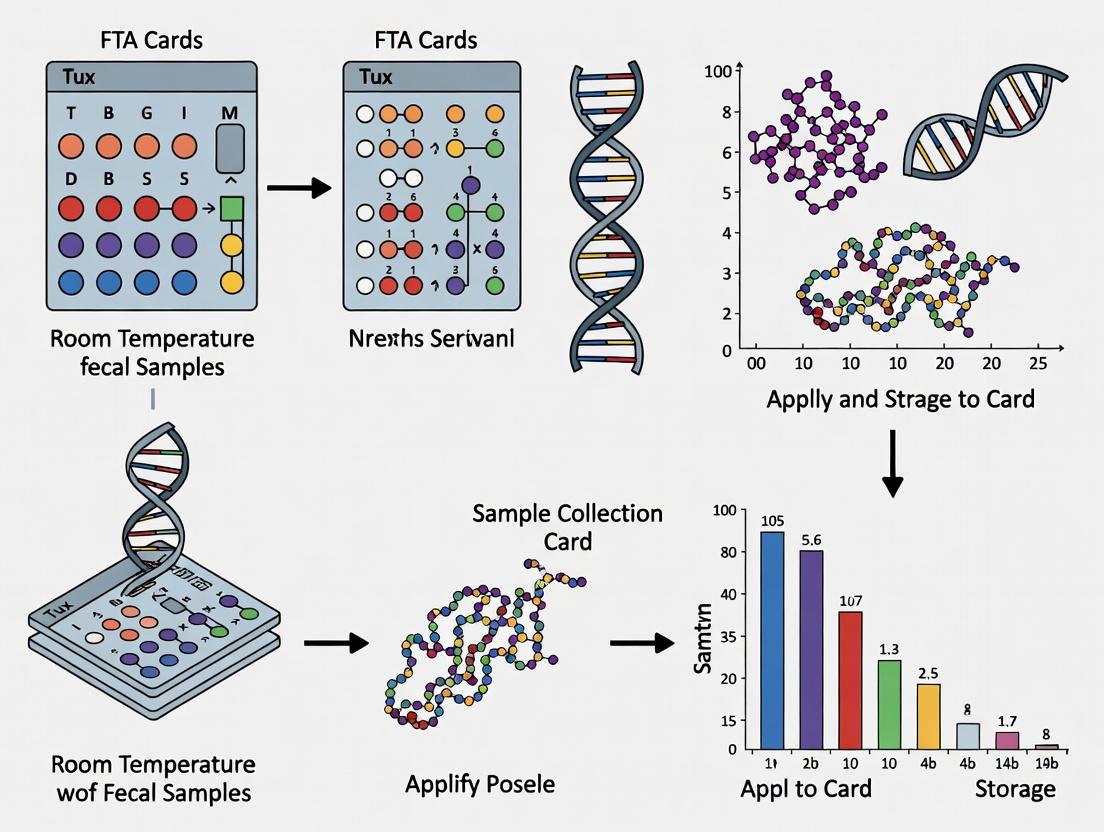
This comprehensive guide explores the application of Flinders Technology Associates (FTA) cards for the stabilization and room-temperature storage of fecal samples.
FTA Cards for Fecal Sample Storage: A Complete Guide to Room Temperature Biobanking for Researchers
Abstract
This comprehensive guide explores the application of Flinders Technology Associates (FTA) cards for the stabilization and room-temperature storage of fecal samples. Tailored for researchers, scientists, and drug development professionals, it covers the foundational science behind FTA matrix chemistry, detailed protocols for sample application and nucleic acid elution, troubleshooting for common pitfalls, and a comparative analysis with traditional cold-chain methods. The article validates FTA cards as a robust tool for microbiome, pathogen, and host DNA/RNA studies, enabling simplified logistics, cost reduction, and enhanced sample accessibility in global research settings.
What Are FTA Cards? The Science of Room-Temperature Fecal Sample Stabilization
FTA (Fast Technology for Analysis of Nucleic Acids and Proteins) cards are solid matrix systems designed for the ambient-temperature collection, stabilization, storage, and shipment of biological samples. Originally developed for blood, their application to fecal samples represents a significant advancement in non-invasive, field-friendly biobanking for gut microbiome, pathogen, and host DNA research.
The core technology is embedded within a cellulose-based paper matrix, which is impregnated with a proprietary chemical cocktail. The primary active components and their functions are summarized in the table below.
Table 1: Core Chemical Composition of Classic FTA Cards and Their Functions
| Component | Primary Function | Mechanistic Role |
|---|---|---|
| Chaotropic Salt (e.g., Guanidine Thiocyanate) | Denatures proteins and nucleases. | Disrupts hydrogen bonding and hydrophobic interactions, causing proteins to unfold and lose enzymatic activity, thereby protecting nucleic acids from degradation. |
| Free Radical Trap (e.g., Tris-base buffered chelating agents) | Inhibits oxidative damage. | Chelates metal ions (Fe²⁺, Cu²⁺) that catalyze Fenton reactions, preventing the generation of hydroxyl radicals that can damage nucleic acids. |
| Weak Anionic Surfactant | Lyses cells and viral envelopes. | Disrupts lipid bilayers and viral envelopes, releasing genomic material into the matrix for immediate stabilization. |
| pH Indicator (e.g., Patented colored dye) | Visual sample confirmation. | Confirms adequate sample application and penetration, often changing color upon contact with buffered biological fluids. |
Mechanism of Action for Fecal Sample Stabilization
The mechanism is a sequential, rapid process triggered upon contact of the liquid fecal suspension or smear with the card matrix.
Diagram 1: FTA Card Mechanism of Action for Fecal Samples
Application Notes: Quantitative Performance Data
Empirical studies validate FTA cards for fecal genomics. Key performance metrics from recent literature are consolidated below.
Table 2: Quantitative Performance Metrics for Fecal DNA on FTA Cards
| Parameter | Result (Typical Range) | Experimental Context |
|---|---|---|
| DNA Yield Recovery | 60-85% relative to fresh-frozen | Compared to standard -80°C extraction from same sample. |
| DNA Fragment Size | >10 kb (bacterial/host); Viral RNA intact | Post-elution, assessed by agarose gel electrophoresis. |
| Microbiome Profile Concordance | Bray-Curtis Similarity > 0.90 vs. fresh-frozen | 16S rRNA gene sequencing (V4 region) over 4 weeks RT storage. |
| Pathogen Detection Sensitivity | >95% for common enteric pathogens | qPCR detection of Campylobacter, Salmonella, etc., after 1 month RT. |
| Room Temperature Stability | DNA stable > 52 weeks; RNA stable ~8-12 weeks* | qPCR/RT-qPCR threshold cycle (Ct) value increase < 2. *Dependent on card formulation. |
Detailed Experimental Protocols
Protocol 4.1: Fecal Sample Application to FTA Cards
Objective: To uniformly apply a fecal sample for optimal stabilization. Materials: See "The Scientist's Toolkit" below. Procedure:
- Sample Preparation: Weigh 100-200 mg of fresh fecal sample into a 2 mL tube. Add 1 mL of molecular-grade PBS or specific stabilization buffer. Homogenize thoroughly using a vortex mixer with bead-beating for 2 minutes.
- Application: Pipette 100-150 µL of the homogenized supernatant directly onto the center of the FTA card target zone.
- Drying: Allow the card to dry completely at room temperature for a minimum of 3 hours (preferably overnight) in a clean, low-humidity environment. Do not apply heat.
- Storage: Place the dried card in a low-gas-permeability ziplock bag with a desiccant packet. Store at ambient temperature (15-30°C), protected from light and moisture.
Protocol 4.2: Nucleic Acid Elution from FTA Cards for Downstream Analysis
Objective: To recover PCR-ready DNA from a fecal sample punch. Procedure:
- Punching: Using a sterile single-hole punch or laser cutter, excise a 3-6 mm diameter disc from the center of the sample spot. Transfer disc to a 1.5 mL microcentrifuge tube.
- Washes (Critical for PCR Inhibition Removal):
- Add 500 µL of FTA Purification Reagent (or 10 mM Tris-HCl, 0.1 mM EDTA, pH 8.0). Vortex briefly. Incubate at RT for 5 minutes. Discard supernatant. Repeat this wash two more times.
- Add 500 µL of TE-1 Buffer (10 mM Tris-HCl, 1 mM EDTA, pH 8.0). Vortex briefly. Incubate at RT for 5 minutes. Discard supernatant. Repeat once.
- Final Rinse & Drying: Add 500 µL of molecular-grade 95% Ethanol. Vortex briefly. Incubate for 1 minute. Discard ethanol. Air-dry the punch completely (~1 hour at 37°C or RT until no ethanol odor remains).
- Elution: Add 50-200 µL of Elution Buffer (e.g., 10 mM Tris, pH 8.5) or PCR-grade water directly to the dry punch. Heat at 95°C for 30 minutes, followed by vigorous vortexing for 10 seconds.
- Recovery: Transfer the eluate to a fresh tube, leaving the punch behind. Use 2-5 µL directly as template in a 25 µL PCR reaction.
Diagram 2: Nucleic Acid Elution Workflow
The Scientist's Toolkit: Essential Research Reagent Solutions
Table 3: Key Materials for FTA Card Fecal Research
| Item | Function & Importance |
|---|---|
| Classic or FTA Elute Micro Cards | The core stabilization matrix. "Elute" variants allow simpler direct elution into PCR. |
| Sterile Single-Use Biopsy Punches (3-6 mm) | For excising uniform discs from sample spots without cross-contamination. |
| FTA Purification Reagent/Proteinase K | Critical for removing denatured proteins and inhibitors from the matrix. |
| TE-1 Buffer (10 mM Tris, 1 mM EDTA, pH 8.0) | Final wash to remove traces of chaotropes and salts that inhibit polymerases. |
| Molecular-Grade 95% Ethanol | Final rinse to dehydrate the punch and accelerate drying. |
| Low-Binding Microcentrifuge Tubes | Prevents adsorption of low-concentration nucleic acids during elution steps. |
| Anhydrous Desiccant Packs | Maintains a dry environment in storage bags, preventing microbial growth and hydrolysis. |
| High-Barrier, Low-Gas-Permeability Ziplock Bags | For long-term ambient storage, protecting samples from humidity and oxygen. |
Fecal samples are a critical yet complex biospecimen in gut microbiome, metabolomic, and disease biomarker research. Their inherent lability presents a primary challenge for generating reproducible and accurate data. This application note, framed within research on FTA card technology for room-temperature fecal stabilization, details the sources of this lability and provides standardized protocols for sample handling prior to stabilization.
The Multifactorial Nature of Fecal Lability
Fecal instability arises from simultaneous biochemical, microbial, and physical degradation processes.
Quantitative Drivers of Degradation
The following table summarizes key factors contributing to sample lability, supported by recent literature.
Table 1: Primary Factors Contributing to Fecal Sample Lability
| Factor Category | Specific Element | Impact Metric (Typical Range/Effect) | Consequence for Downstream Analysis |
|---|---|---|---|
| Microbial Activity | Continued metabolic activity post-defecation | ATP levels can remain high for >2 hrs at RT. Bacterial replication can alter community structure by 30% within 1 hour. | Skewed 16S rRNA/metagenomic profiles; altered microbial load. |
| Enzymatic Degradation | Host and bacterial proteases, nucleases, lipases | RNase activity can degrade 90% of specific mRNA targets within 5 minutes of exposure. Proteases remain active across wide pH ranges. | Loss of host RNA/DNA integrity; degradation of protein biomarkers and metabolites. |
| Oxidative Damage | Reactive Oxygen Species (ROS) from aerobic metabolism | Oxidation of guanine to 8-oxoguanine can increase 10-fold over 24 hours at 4°C. | DNA/RNA mutation artifacts; oxidative modification of lipids and proteins. |
| Biochemical Shifts | pH change, oxygen depletion, substrate depletion | Oxygen tension drops to near-zero within minutes, shifting microbiota to anaerobic metabolism. | Alters metabolite pools (SCFAs, bile acids); induces stress responses in bacteria. |
| Physical Changes | Water loss (desiccation), temperature fluctuation | Water activity (a_w) decrease can concentrate salts/inhibitors, affecting PCR. Freeze-thaw cycles disrupt microbial cell walls. | Inhibits molecular assays; biases cell lysis efficiency. |
Experimental Protocols for Assessing Fecal Lability
To evaluate stabilization methods like FTA cards, these protocols benchmark degradation kinetics.
Protocol: Time-Course Analysis of Microbial Community Shift
Objective: Quantify changes in bacterial community composition in untreated fecal samples held at room temperature. Materials: Sterile collection tubes, anaerobic chamber or bags, DNA extraction kit (e.g., QIAamp PowerFecal Pro DNA Kit), 16S rRNA gene sequencing primers, real-time PCR system, ice bath. Procedure:
- Homogenization: Immediately upon collection, homogenize fresh fecal sample in an anaerobic environment. Subdivide into 10+ identical aliquots (e.g., 100 mg each).
- Time-Points: Flash-freeze one aliquot in liquid nitrogen as the T0 control. Hold remaining aliquots at 22°C (RT).
- Sampling: Transfer aliquots to -80°C storage at predetermined intervals (e.g., 0, 15, 30, 60, 120, 240, 480 minutes).
- DNA Extraction & Analysis: Extract total genomic DNA from all time-points using the same kit and protocol. Perform:
- qPCR: For total bacterial load (16S rRNA gene copies/gram).
- 16S rRNA Gene Sequencing: Amplify V4 region (primers 515F/806R) and sequence on Illumina platform.
- Data Analysis: Calculate beta-diversity (e.g., Weighted UniFrac distance) between each time-point and T0. Plot distance vs. time to model degradation kinetics.
Protocol: Stability of Host mRNA in Fecal Samples
Objective: Measure the degradation rate of host immune transcript biomarkers (e.g., CALPROTECTIN, TNF-α mRNA). Materials: RNase-free tubes and consumables, RNA stabilizer (e.g., RNAlater), homogenizer, RNA extraction kit with rigorous DNase step (e.g., RNeasy PowerMicrobiome Kit), reverse transcription kit, qPCR system. Procedure:
- Sample Prep: Spike a homogenized fecal sample with a known quantity of exogenous RNA control (e.g., from Arabidopsis thaliana).
- Aliquot & Store: Create aliquots. Store some in RNA stabilizer per manufacturer's instructions and others untreated at RT.
- Time-Points: Harvest aliquots at intervals (0, 2, 5, 10, 30, 60 min) for untreated RT group. Immediately process for RNA extraction.
- RNA Extraction & QC: Extract RNA, treat with DNase. Assess integrity via Bioanalyzer (RIN not typically applicable; use DV200).
- RT-qPCR: Perform reverse transcription followed by qPCR for target host genes and the exogenous control. Use standard curves for absolute quantification.
- Analysis: Plot log(copy number) vs. time. Calculate degradation rate constant (k) for each target.
Protocol: Metabolite Stability Assessment via LC-MS
Objective: Evaluate short-chain fatty acid (SCFA) and bile acid stability under different pre-storage conditions. Materials: GC-MS or LC-MS system, derivatization reagents for SCFAs (e.g., N,O-Bis(trimethylsilyl)trifluoroacetamide), internal standards (e.g., deuterated SCFAs), cold methanol for quenching. Procedure:
- Quenching: At each time-point (0, 30, 60, 120 min at RT), add a precise fecal aliquot (50 mg) to 500 µL of cold (-40°C) 80% methanol containing internal standards. Vortex vigorously.
- Sample Processing: Centrifuge (13,000 x g, 10 min, 4°C). Collect supernatant. For SCFA analysis, derivatize an aliquot.
- Instrumental Analysis: Run samples via GC-MS (for SCFAs) or LC-MS (for bile acids) using appropriate columns and mass spectrometric detection in selected ion monitoring (SIM) mode.
- Quantification: Normalize peak areas to internal standards. Plot concentration change (%) versus time for each key metabolite.
Visualizing Degradation Pathways and Workflows
Title: Pathways of Fecal Sample Degradation
Title: Experimental Workflow for Lability Assessment
The Scientist's Toolkit: Research Reagent Solutions
Table 2: Essential Materials for Fecal Lability & Stabilization Research
| Item | Function & Rationale |
|---|---|
| Anaerobic Chamber/Bags | Maintains anoxic environment during initial sample handling to prevent rapid shift in microbial community composition due to oxygen exposure. |
| Liquid Nitrogen / Dry Ice | Provides instant "snap-freezing" to halt all biological activity for creating true T=0 baseline control samples. |
| RNA/DNA Stabilization Buffers (e.g., RNAlater, DNA/RNA Shield) | Chemical cocktails that inactivate nucleases and stabilize nucleic acids in bulk samples prior to nucleic acid extraction. Serves as a liquid benchmark against solid matrices like FTA cards. |
| Bead-Beating Homogenizer | Ensures uniform and complete mechanical lysis of robust microbial cell walls (e.g., Gram-positive bacteria) for consistent and representative nucleic acid extraction. |
| Inhibitor-Removal DNA/RNA Extraction Kits | Specifically designed to co-purify nucleic acids from complex fecal matter while removing PCR inhibitors like humic acids, bile salts, and polysaccharides. |
| Stool Homogenization Buffer | Standardized buffer (often with surfactants and salts) to create a uniform fecal slurry, enabling reproducible aliquotting for parallel experiments. |
| Exogenous Internal Controls (Spike-ins) | Synthetic or non-native DNA/RNA/Protein sequences added at collection. Their recovery measures process efficiency and degradation specific to the sample matrix. |
| FTA Cards or Similar Solid Matrices | Cellulose-based cards impregnated with chelating agents, denaturants, and free-radical traps. Lyse cells, denature proteins, and immobilize nucleic acids upon application, enabling room-temperature storage. |
| Temperature & Humidity Loggers | Small devices placed with samples to continuously monitor and record environmental conditions during stability studies, providing critical metadata. |
| Deuterated or ¹³C-Labeled Metabolite Standards | Added immediately upon sample quenching for metabolomics; allows for precise quantification and correction for analyte loss during sample workup. |
FTA (Flinders Technology Associates) cards are a solid-phase cellulose-based medium impregnated with chemical formulations that enable the room-temperature storage and stabilization of biological samples for downstream molecular analysis. This application note details the core chemical mechanisms—lysis, denaturation, and immobilization—and provides specific protocols for their application in fecal sample storage research, a critical area for longitudinal studies and biobanking.
Within the context of developing robust methods for fecal sample storage at room temperature, FTA cards present a promising solution. Fecal samples contain complex microbial communities and host biomarkers, but their preservation is challenged by rapid biomolecule degradation. FTA chemistry inactivates nucleases and pathogens while stabilizing nucleic acids and proteins directly from crude samples, facilitating transport and storage without cold chains.
Core Chemical Mechanisms
Lysis
The FTA matrix contains strong anionic detergents (e.g., SDS) and chaotropic agents. Upon sample application, these reagents disrupt cellular and viral envelopes, as well as bacterial cell walls present in fecal matter, releasing intracellular biomolecules into the matrix.
Denaturation
Chaotropic salts (e.g., Guanidine Thiocyanate, GuHCl) and buffering agents (e.g., Tris, EDTA) cause protein denaturation. This:
- Irreversibly inactivates nucleases (RNases, DNases) and proteases.
- Unfolds and denatures microbial and host proteins.
- Aids in the separation of nucleic acid strands.
Immobilization
Nucleic acids are physically entrapped within the collapsing fiber network of the cellulose matrix as the sample dries. Concurrently, the alkaline environment and free-radical generators (e.g., chelates) cause covalent modification and cross-linking of nucleic acids to the matrix, protecting them from hydrolytic degradation and enzymatic attack.
Table 1: Key Chemical Components in FTA Formulation and Their Functions
| Component | Primary Class | Primary Function in FTA Process |
|---|---|---|
| Sodium Dodecyl Sulfate (SDS) | Anionic Detergent | Cell lysis; protein denaturation. |
| Guanidine Thiocyanate | Chaotropic Salt | Protein denaturation; nuclease inactivation; viral inactivation. |
| Tris-HCl & EDTA | Buffering Chelator | pH stabilization; chelation of divalent cations (Mg2+, Ca2+) required for nuclease activity. |
| Free Radical Generators | Chelates (e.g., Sodium Perborate) | Generate free radicals to cleave and cross-link nucleic acids, aiding immobilization. |
Application to Fecal Sample Research: Protocols
Protocol: Fecal Sample Application and Storage on FTA Cards
Objective: To preserve bacterial and host DNA/RNA from fecal samples for 16S rRNA sequencing or pathogen detection.
Materials:
- FTA Classic or FTA Elute cards (specific for nucleic acid elution).
- Sterile swab or pipette.
- Humidity indicator card.
- Oxygen-impermeable zip-lock bag with desiccant.
Procedure:
- Sample Application: Homogenize fresh fecal sample in sterile PBS if necessary. Using a swab or pipette, apply a pea-sized volume (≈50-100 µL) directly onto the FTA card target zone. Spread to cover an area no larger than a 1.5 cm circle.
- Drying: Air-dry the card completely at room temperature for a minimum of 3 hours in a clean, low-humidity environment. Do not apply heat.
- Storage: Place the dried card in a supplied oxygen-impermeable bag with 2-3 desiccant packets and a humidity indicator. Seal and store at room temperature (15-30°C), protected from light. Monitor indicator; if >20% RH, replace desiccant.
Protocol: Nucleic Acid Extraction/Purification from FTA-Preserved Fecal Spots
Objective: To recover PCR-amplifiable DNA from a stored fecal spot on an FTA card.
Materials:
- Punches (3-6 mm) from FTA card sample zone.
- FTA Purification Reagents (or equivalent: 70% EtOH, TE buffer).
- Microcentrifuge tubes.
- Heated block or water bath.
Procedure (Wash-Based Elution for FTA Elute Cards):
- Punch & Wash: Using a sterile disk punch, excise a 3 mm disk from the center of the sample spot. Place in a 1.5 mL tube.
- Wash 1: Add 500 µL of FTA Purification Reagent (or 10 mM Tris-HCl, 0.1 mM EDTA, pH 8.0). Vortex briefly. Incubate at room temperature for 5 minutes. Discard supernatant. Repeat once.
- Wash 2: Add 500 µL of 70% ethanol. Vortex briefly. Incubate at room temperature for 5 minutes. Discard supernatant. Repeat once.
- Drying: Air-dry the punch completely (~30-60 minutes) with tube lid open.
- Elution: Add 50-100 µL of TE buffer (10 mM Tris, 0.1 mM EDTA, pH 8.0) or nuclease-free water directly onto the dried punch. Incubate at 95°C for 30 minutes, then at 56°C for 1 hour with occasional vortexing.
- Collection: Transfer the eluate to a fresh tube. The punch can be discarded. The eluate contains purified DNA suitable for PCR.
Table 2: Comparison of FTA Card Types for Fecal Research
| Card Type | Key Chemistry | Best For | Elution Method | Suitability for Metagenomics |
|---|---|---|---|---|
| FTA Classic | Strong denaturants/ cross-linkers | Long-term archival; pathogen inactivation. | Punch-and-PCR or rigorous proteinase K digestion. | Moderate; may yield fragmented DNA. |
| FTA Elute | Weak base, no cross-linkers | Easier elution of intact nucleic acids. | Simple thermal or alkaline elution. | High; better for longer amplicons. |
| FTA DMPK | Optimized for blood | Not recommended for fecal samples. | N/A | Poor. |
The Scientist's Toolkit: Key Reagents & Materials
Table 3: Essential Research Reagent Solutions for FTA-Fecal Workflows
| Item | Function in Workflow |
|---|---|
| FTA Elute Micro Cards | Small-format cards optimized for easy elution of nucleic acids from limited fecal samples. |
| Harris Micro-Punch & Mat | Sterile, disposable punches and cutting mat to prevent cross-contamination between samples. |
| FTA Purification Buffer | Proprietary wash buffer to remove contaminants, PCR inhibitors, and residual FTA chemicals from punches. |
| Inhibitor-Removal PCR Beads | Post-elution clean-up step to remove humic acids and other PCR inhibitors common in fecal extracts. |
| Humidity Indicator Cards (Dry-Packs) | Critical for monitoring storage bag integrity to prevent hydrolytic degradation of immobilized biomolecules. |
| Proteinase K & Lysis Buffer | Required for efficient recovery of nucleic acids from highly cross-linking cards (e.g., FTA Classic). |
Visualized Workflows
Diagram 1: Core FTA Mechanism and Workflow
Diagram 2: Nucleic Acid Elution Protocol Steps
The stabilization and room-temperature storage of fecal samples present significant logistical advantages for global biobanking, epidemiological surveillance, and drug development studies. Within the broader thesis on Flinders Technology Associates (FTA) cards for fecal preservation, this document details specific application notes and protocols for the concurrent stabilization of host and microbial DNA, RNA, and viral pathogens from fecal material. FTA cards are impregnated with chemicals that lyse cells, denature nucleases, and immobilize nucleic acids, enabling safe, long-term storage without refrigeration.
Table 1: Quantitative Recovery of Nucleic Acids from FTA Card-Preserved Fecal Samples
| Analyte | Target | Mean Yield (ng/µL from 6mm punch) | Purity (A260/A280) | Key Application | Storage Stability (RT) |
|---|---|---|---|---|---|
| Total DNA | Host & Microbial Genomic DNA | 15.2 ± 4.8 | 1.78 ± 0.12 | 16S rRNA sequencing, Pathogen PCR | >24 months |
| Host RNA | Human mRNA (e.g., HPRT1) | 2.1 ± 1.1 | 1.95 ± 0.15 | Host gene expression profiling | >12 months |
| Microbial RNA | Bacterial 16S rRNA | 3.5 ± 1.8 | 1.85 ± 0.10 | Metatranscriptomics | >12 months |
| Viral RNA | Norovirus (GI/GII) | N/A (CT values reported) | N/A | RT-qPCR detection | >18 months |
| Viral DNA | Adenovirus | N/A (CT values reported) | N/A | qPCR detection | >24 months |
Table 2: Pathogen Detection Sensitivity from FTA Cards vs. Fresh Frozen
| Pathogen | Detection Method | FTA Card (CT Value) | Fresh Frozen (CT Value) | Percent Concordance |
|---|---|---|---|---|
| Clostridioides difficile (toxin B gene) | qPCR | 28.5 ± 2.1 | 27.8 ± 1.9 | 98.5% |
| Norovirus GII | RT-qPCR | 30.1 ± 3.0 | 29.3 ± 2.8 | 97.2% |
| SARS-CoV-2 | RT-qPCR | 31.7 ± 3.5 | 30.9 ± 3.2 | 96.8% |
| Helicobacter pylori | qPCR | 26.8 ± 1.7 | 26.2 ± 1.5 | 99.1% |
Detailed Experimental Protocols
Protocol 3.1: Fecal Sample Application and Storage on FTA Cards
Objective: To properly apply fecal samples to FTA cards for optimal nucleic acid preservation. Materials: Whatman FTA Elute or FTA DMPK-C cards, sterile swab or calibrated loop, plastic template, desiccant, zip-lock barrier pouch. Procedure:
- Place the FTA card on a clean, dry surface using the provided plastic template to protect the work area.
- Using a sterile swab, collect approximately 10-20 mg of fresh fecal material.
- Gently smear the sample onto the center of one target circle on the FTA card to form a thin, even layer not exceeding the circle's diameter.
- Allow the card to dry completely at room temperature for a minimum of 3 hours in a laminar flow hood.
- Place the dried card in a barrier pouch with 2-3 grams of desiccant. Seal the pouch and label clearly.
- Store at ambient temperature (15-30°C), protected from direct sunlight and moisture.
Protocol 3.2: Recovery of Total Nucleic Acids for DNA and RNA Analyses
Objective: To elute co-purified DNA and RNA from a single card punch for downstream separate analyses. Materials: 6mm punch tool, sterile tweezers, 1.5 mL microcentrifuge tubes, FTA Purification Reagent (or TE buffer), 70% ethanol, heating block, RNase-free water. Procedure:
- Using a sterile 6mm punch tool, excise one sample-containing disk from the FTA card. Transfer the disk to a labeled 1.5 mL tube.
- Add 500 µL of FTA Purification Reagent (or TE buffer, pH 8.0). Vortex briefly and incubate at room temperature for 5 minutes.
- Aspirate and discard the liquid. Repeat this wash step twice more.
- Wash the disk once with 500 µL of 70% ethanol for 5 minutes, then once with 500 µL of RNase-free water for 5 minutes. Aspirate thoroughly after each wash.
- Add 100 µL of RNase-free water to the clean disk. Heat at 95°C for 30 minutes on a heating block with occasional vortexing.
- Immediately transfer the eluate (containing DNA and RNA) to a fresh tube. Centrifuge briefly to pellet any debris.
- For DNA-only workflows: Treat an aliquot with RNase A. For RNA-only workflows: Treat an aliquot with DNase I and use the purified RNA immediately for cDNA synthesis.
Protocol 3.3: Detection of Viral Pathogens via RT-qPCR
Objective: To detect and quantify viral RNA (e.g., Norovirus, SARS-CoV-2) from FTA card punches. Materials: Punch from Protocol 3.1, Viral RNA extraction kit (compatible with solid phase), RT-qPCR master mix, pathogen-specific primers/probes, real-time PCR instrument. Procedure:
- Perform an optimized RNA extraction directly from a 6mm FTA punch using a commercial kit (e.g., QIAamp Viral RNA Mini Kit with carrier RNA), following the "tissue" or "solid phase" protocol.
- Synthesize cDNA using a reverse transcription kit with random hexamers.
- Prepare a qPCR reaction mix containing: 10 µL of 2x master mix, 1 µL of primer-probe mix (forward/reverse/probe), 5 µL of cDNA template, and 4 µL of nuclease-free water.
- Run qPCR with cycling conditions: 95°C for 2 min, followed by 45 cycles of 95°C for 15 sec and 60°C for 1 min (with fluorescence acquisition).
- Analyze CT values against a standard curve generated from quantified viral RNA controls.
Visualizations
Workflow Diagram
Diagram Title: FTA Card Workflow for Fecal Nucleic Acid Preservation and Analysis
Analyte Preservation Pathways
Diagram Title: FTA Card Mechanism for Multi-Analyte Stabilization
The Scientist's Toolkit: Research Reagent Solutions
Table 3: Essential Materials for FTA-Based Fecal Sample Research
| Item Name | Supplier Examples | Function & Critical Notes |
|---|---|---|
| FTA Elute Micro Cards | Whatman (Cytiva) | Standard card for elution-based recovery; ideal for PCR. |
| FTA DMPK-C Cards | Whatman (Cytiva) | Enhanced durability and purity for clinical specimens. |
| 6mm Single Hole Punch | Harris Unicore or equivalent | Creates uniform disk for processing; must be cleaned between samples to avoid cross-contamination. |
| FTA Purification Reagent | Whatman (Cytiva) | Proprietary wash solution to remove PCR inhibitors from the card matrix. |
| Carrier RNA | Qiagen, Thermo Fisher | Added during viral RNA extraction to improve yield from low-concentration FTA punches. |
| Inhibitor-Removal PCR Master Mix | Thermo Fisher, NEB, Qiagen | Essential for robust amplification from FTA-eluted samples which may contain residual inhibitors. |
| Pathogen-Specific Primer-Probe Sets | CDC, WHO, commercial vendors | For targeted detection of pathogens like Norovirus, C. difficile, SARS-CoV-2. |
| Desiccant (Indicating Silica Gel) | Multiple | Maintains low humidity in storage pouches, critical for long-term stability. |
| High-Barrier Zip Pouch | Whatman, Ted Pella | Provides physical and moisture protection for stored cards. |
Historical Context and Evolution of FTA Cards for Non-Traditional Samples
This document details the application and protocols for using Flinders Technology Associates (FTA) cards in the context of non-traditional biological samples, specifically fecal matter. The core thesis research focuses on enabling reliable, room-temperature storage and downstream molecular analysis of fecal samples for gut microbiome studies, pathogen surveillance, and host DNA genotyping in drug development and field research.
Historical Context and Evolution
FTA cards, originally commercialized in the 1990s by Whatman (now part of Cytiva), were designed to lyse cells, denature proteins, and immobilize nucleic acids on a cellulose-based matrix, protecting them from nucleases and oxidative damage. Traditionally applied to blood and cultured cells, their use has evolved to address challenges in environmental, wildlife, and clinical microbiology where sample collection and cold-chain logistics are prohibitive.
The adaptation for fecal samples represents a significant innovation. Fecal material presents unique challenges: complex inhibitor content (e.g., bile salts, complex polysaccharides), heterogeneous composition, and high microbial load. The evolution of FTA card chemistry and protocols has been driven by the need to inactivate pathogens, stabilize labile microbial community profiles, and yield PCR-amplifiable DNA and RNA from diverse targets within this matrix.
Application Notes & Key Data
Performance Comparison: FTA Cards vs. Conventional Frozen Storage for Fecal Samples
Recent studies validate FTA cards as a viable alternative to standard -80°C freezing for specific analytical endpoints.
Table 1: Comparative Analysis of FTA Card vs. Frozen Storage for Fecal Samples
| Analytical Endpoint | FTA Card Performance | Conventional Frozen Storage | Key Study Findings (2020-2023) |
|---|---|---|---|
| Bacterial DNA Yield | 10-50% lower total yield | Higher total yield | FTA cards yield sufficient DNA for 16S rRNA amplicon and targeted qPCR. |
| Microbial Community Representation (Alpha/Beta Diversity) | No significant distortion in community structure | Baseline standard | High concordance (Bray-Curtis similarity >0.85) for dominant taxa. Some variance in rare biosphere. |
| Pathogen Detection (qPCR) | Equivalent sensitivity for targets like C. difficile, norovirus | Equivalent sensitivity | FTA cards effectively inactivate pathogens, enabling safe room-temperature transport. |
| Host DNA Genotyping (SNP arrays) | High call rates (>95%) achievable | Gold standard | Requires optimized punching and purification to overcome inhibitors. |
| RNA Virus Detection (RT-qPCR) | Variable; dependent on card type | Optimal | Indicating FTA cards may partially degrade RNA; FTA Elute cards or RNA-stabilizing variants recommended. |
| Long-Term Stability (≥12 months RT) | Stable DNA for PCR-based assays | Requires constant freezing | DNA stable; microbial community profiles show minimal shift. |
Research Reagent Solutions Toolkit
Table 2: Essential Materials for FTA Card-Based Fecal Sample Research
| Item | Function & Rationale |
|---|---|
| FTA Classic or Indicating Cards | Cellulose-based matrix with chemical lysing, denaturing, and free-radical trapping agents. Indicating cards have a color change upon sample application. |
| FTA Elute Cards | A weaker buffer system allows DNA to be eluted in water or low-EDTA TE buffer via simple heating, rather than requiring a punch purification. |
| 1-2 mm Harris Micro-Punch | For obtaining uniform discs from fecal sample spots, ensuring consistent input material for DNA extraction. |
| FTA Purification Reagent & TE Buffer | Used to wash punches (per manufacturer protocol) to remove PCR inhibitors prior to in-punch amplification or DNA elution. |
| Inhibitor-Resistant Polymerase Mixes | Essential for direct amplification from FTA punches. Contains polymers and proteins that bind fecal inhibitors. |
| Bead-Beating Lysis Kit (e.g., PowerSoil) | Used instead of standard FTA protocol when total microbial DNA extraction is needed; a punch is added directly to bead-beating tubes. |
| RNA Stabilization Solution (for RNA work) | Fecal sample should be homogenized in this prior to spotting on FTA cards designed for RNA (e.g., FTA RNA cards). |
Detailed Experimental Protocols
Protocol: Fecal Sample Application, Storage, and Direct PCR from FTA Cards
Objective: To detect a specific bacterial pathogen (e.g., Helicobacter pylori) via direct PCR from a fecal sample stored on an FTA card at room temperature.
Materials:
- FTA Indicating Cards (Cytiva)
- Disposable spatula or swab
- Harris micro-punch (1-2mm) and clean cutting mat
- FTA Purification Reagent, TE buffer (pH 8.0)
- Direct PCR master mix with inhibitor resistance (e.g, Phire Animal Tissue PCR Kit)
- Pathogen-specific primers/probes.
Method:
- Sample Application: Using a sterile spatula, apply a pea-sized (~10-20 mg) aliquot of fresh fecal sample directly onto the FTA card target area. Smear to cover a circle approximately 1 cm in diameter.
- Drying: Air-dry the card completely for 2-3 hours at room temperature in a laminar flow hood or a clean, dust-free environment. The indicating card will change from pink to white/purple upon complete drying.
- Storage: Place the dried card in a low-gas-permeability plastic bag with a desiccant packet. Store at room temperature (15-30°C), protected from light and humidity.
- Punch Preparation: Place the dried card on a clean cutting mat. Using a disinfected 1.2 mm micro-punch, take 1-3 punches from the center of the sample spot. Transfer punches directly to a 0.2 mL PCR tube.
- Wash: Add 100 µL of FTA Purification Reagent to the tube. Incubate at room temperature for 5 minutes. Aspirate and discard the reagent carefully. Repeat this wash step once.
- Rinse: Add 100 µL of TE buffer (pH 8.0). Incubate at room temperature for 5 minutes. Aspirate and discard the buffer. Repeat the TE rinse once. Dry the punches at 55°C for 10 minutes with the tube lid open.
- Direct PCR: Prepare a 25 µL PCR mix using an inhibitor-resistant polymerase master mix and specific primers. Add the mix directly onto the washed, dried punch in the PCR tube. Amplify using standard cycling conditions. The punch acts as the DNA template source.
Protocol: High-Yield Microbial Community DNA Extraction from FTA Card Punches
Objective: To extract total genomic DNA from the fecal microbiome for 16S rRNA gene amplicon sequencing.
Materials:
- FTA card with dried fecal sample
- PowerSoil Pro Kit (Qiagen) or similar bead-beating kit
- Micro-punch (2 mm)
Method:
- Punch Collection: Obtain two 2.0 mm punches from the dried fecal spot on the FTA card.
- Lysis: Place the punches directly into the garnet bead tube containing PowerSoil Pro Bead Solution.
- Modified Lysis: Proceed with the manufacturer's protocol from Step 2 (adding Inhibitor Removal Solution). The chemical lysis from the FTA card is complemented by the mechanical lysis from bead-beating.
- Purification: Complete the entire kit protocol, including final elution in 50 µL of elution buffer.
- QC & Sequencing: Quantify DNA yield using a fluorescence-based assay (e.g., Qubit). Proceed with 16S rRNA gene PCR amplification and next-generation sequencing. Include extraction blanks (empty FTA punches) as controls.
Visualizations
Diagram 1: Workflow for Fecal Analysis on FTA Cards
Diagram 2: Evolution of FTA Card Applications
Application Notes
The integration of Flinders Technology Associates (FTA) cards for the stabilization and room-temperature storage of fecal samples presents a paradigm shift in biospecimen logistics, particularly for large-scale epidemiological studies, clinical trials, and field research in remote areas. This approach directly addresses three critical bottlenecks in traditional fecal sampling: cold-chain dependency, high operational costs, and complex transport logistics.
Eliminating the Cold Chain: FTA cards are impregnated with chemicals that lyse cells, denature proteins, and protect nucleic acids from nucleases and oxidative damage upon sample application. This inactivation process allows for the stable preservation of microbial DNA and RNA at ambient temperatures for extended periods (years), removing the need for immediate freezing at -80°C, dry ice shipments, or refrigerated storage.
Substantial Cost Savings: The financial implications are significant. Eliminating cold-chain infrastructure—including ultra-low temperature freezers, freezer monitoring systems, refrigerated transport, and associated energy consumption—reduces capital and operational expenditures. Savings are realized across sample collection, shipping, long-term biobanking, and laboratory processing.
Transport Simplicity: Ambient-stable samples can be shipped globally via standard postal services or couriers without hazardous material declarations for dry ice. This simplification accelerates study timelines, enables sampling in logistically challenging environments, and reduces administrative and regulatory burdens.
The following data, compiled from recent studies and cost-analyses, quantifies these advantages.
Table 1: Comparative Cost Analysis of Fecal Sample Storage Methods
| Cost Component | Traditional -80°C Storage & Cold Chain | FTA Card Room-Temperature Storage | Notes & Assumptions |
|---|---|---|---|
| Initial Collection Kit | $5 - $10 (tube, stabilizer) | $7 - $15 (FTA card, pouch, desiccant) | Cost varies by supplier and volume. |
| Per Sample Shipping (Domestic) | $50 - $150 (overnight, dry ice) | $3 - $10 (standard mail/ground) | Dry ice shipping is highly variable by weight/distance. |
| Long-Term Storage (per sample/year) | $2 - $5 (freezer space, energy, maintenance) | <$0.50 (archival box, shelf space) | -80°C storage cost is a widely cited estimate. |
| Nucleic Acid Yield | High (≥100 ng/µl total DNA typical) | Moderate (10-100 ng/µl microbial DNA typical) | FTA cards selectively preserve microbial DNA; host DNA is degraded. |
| Sample Stability | Indefinite (with consistent power) | ≥5 years (documented for DNA) | Long-term RNA stability on FTA is an active research area. |
| Infrastructure Dependency | Critical (continuous power, backup) | Non-critical | Power outages can compromise entire -80°C collections. |
Table 2: Impact on Operational Logistics and Sample Integrity
| Parameter | Cold-Chain Protocol | FTA Card Protocol | Advantage |
|---|---|---|---|
| Time-to-Storage | Critical (<12-24 hrs) | Flexible (days to weeks) | Eliminates rush logistics. |
| Field Deployment | Extremely limited | Highly feasible | Enables research in remote, resource-limited settings. |
| Transport Regulations | Stringent (IATA for dry ice) | Standard parcel regulations | Simplifies shipping, reduces training needs. |
| Risk of Sample Degradation | High during chain breaks | Very low once dried | Mitigates pre-analytical variability from thawing/refreezing. |
| Downstream Compatibility | Metagenomics, culturomics, metabolomics | Primarily targeted and shotgun metagenomics (DNA/RNA) | FTA cards are optimal for nucleic acid-based assays. |
Experimental Protocols
Protocol 1: Fecal Sample Application and Storage on FTA Cards
Objective: To properly apply a fecal sample to an FTA card for room-temperature storage and subsequent nucleic acid extraction. Materials: FTA Classic Card or FTA Elute Micro Card; sterile wooden applicator stick or pipette tip; protective pouch with desiccant; permanent marker; biosafety level-appropriate personal protective equipment (PPE). Procedure:
- Sample Handling: Process fresh fecal sample in a biosafety cabinet. Homogenize if necessary.
- Application: Using an applicator, transfer a pea-sized amount (≈10-20 mg) or 10-20 µl of homogenized fecal slurry onto a single circle on the FTA card. Spread thinly within the circle boundary.
- Drying: Air-dry the card completely at room temperature for a minimum of 2-3 hours in a biosafety cabinet. Do not apply heat.
- Packaging: Place the fully dried card into a barrier pouch containing 2-3 grams of desiccant. Seal the pouch.
- Labeling: Label both the card and pouch with a unique sample ID, date, and other relevant metadata using a permanent marker.
- Storage: Store the sealed pouch at ambient temperature (15-30°C), protected from direct sunlight and moisture. For long-term archives, store in a dark, low-humidity cabinet.
Protocol 2: Extraction of Microbial DNA from FTA Card Punches
Objective: To extract PCR-amplifiable microbial DNA from a dried fecal sample on an FTA card for downstream analysis (e.g., 16S rRNA gene sequencing, qPCR). Materials: Single-hole punch (3-6 mm diameter); sterile 1.5 mL microcentrifuge tubes; FTA Purification Reagent (or 70% Ethanol); TE buffer (10 mM Tris-HCl, 0.1 mM EDTA, pH 8.0); heating block or water bath; standard DNA elution buffer or nuclease-free water. Procedure:
- Punch: Using a clean single-hole punch, excise one disc from the center of the dried sample spot. Transfer the disc to a labeled 1.5 mL tube. Note: Use a dedicated punch for each sample or clean thoroughly between samples to prevent cross-contamination.
- Wash 1: Add 500 µL of FTA Purification Reagent (or 70% ethanol) to the tube. Incubate at room temperature for 5 minutes with gentle agitation. Carefully pipette off and discard the supernatant. This step removes heme and other PCR inhibitors.
- Wash 2: Add 500 µL of TE buffer to the tube. Incubate at room temperature for 5 minutes. Pipette off and discard the supernatant. Repeat this TE wash step once more (for a total of two TE washes).
- Drying: After removing the final wash, leave the tube lid open to air-dry the disc completely (≈30-60 minutes).
- Elution: Add 50-200 µL of elution buffer or nuclease-free water directly to the dried disc. Incubate at 95°C for 30 minutes. Alternatively, incubate at 56°C for 1-2 hours with occasional vortexing.
- Recovery: Briefly centrifuge the tube and transfer the eluate (containing the extracted DNA) to a fresh, labeled tube. The DNA is now ready for quantification and downstream applications. The yield is typically sufficient for multiple PCR reactions.
Visualizations
Title: FTA Card Workflow from Sample to Analysis
Title: Cost and Logistics Comparison
The Scientist's Toolkit: Research Reagent Solutions
| Item | Function in FTA-Based Fecal Research |
|---|---|
| FTA Classic Cards | Cellulose-based paper impregnated with chelators, denaturants, and free-radical traps. Lyses cells and immobilizes nucleic acids upon contact, protecting them from degradation at room temperature. |
| FTA Elute Micro Cards | A variant designed for easier elution of DNA into aqueous solution using simple heating, optimized for subsequent molecular applications. |
| Desiccant Packs (Silica Gel) | Placed in storage pouches to absorb residual moisture, ensuring the long-term ambient stability of dried samples by preventing microbial growth. |
| Single-Use Disposable Punch | Used to excise a uniform disc from the sample spot on the FTA card for DNA extraction, minimizing cross-contamination between samples. |
| FTA Purification Reagent | A proprietary wash solution (often a buffer with detergent) used to remove PCR inhibitors like heme, humic acids, and salts from the card disc prior to DNA elution. |
| TE Buffer (pH 8.0) | A low-EDTA Tris-EDTA buffer used in wash steps to remove residual purification reagent and prepare the card matrix for final DNA elution. |
| Nuclease-Free Water (or Low-EDTA TE) | The elution medium for extracting purified DNA from the washed and dried FTA card disc via heat-mediated release. |
Step-by-Step Protocol: Applying Fecal Samples to FTA Cards and Downstream Analysis
Within the broader thesis on Flinders Technology Associates (FTA) cards for fecal sample storage at room temperature, sample homogenization and consistency are critical pre-application determinants of downstream analytical success. FTA cards provide a solid matrix for the room-temperature storage of nucleic acids from complex biological samples like feces. Inconsistent sample application or inadequate homogenization prior to spotting can lead to uneven nucleic acid distribution, inefficient cell lysis, and inhibitor entrapment, compromising the accuracy and reproducibility of subsequent molecular analyses. This protocol outlines standardized procedures to ensure sample uniformity, a prerequisite for reliable data in drug development and clinical research.
Key Considerations for Fecal Sample Preparation
Fecal samples are inherently heterogeneous, containing undigested food, bacteria, host cells, and potential inhibitors (e.g., bilirubin, complex polysaccharides). The goal of pre-application processing is to create a homogeneous slurry that allows for a consistent volume of representative material to be applied to each FTA card spot.
Table 1: Critical Variables in Fecal Sample Homogenization
| Variable | Impact on Consistency | Optimal Range/Consideration |
|---|---|---|
| Sample State | Fresh vs. frozen affects viscosity and mixing efficiency. | Standardize to either fresh (<24h) or a single, defined freeze-thaw cycle. |
| Buffer-to-Sample Ratio | Determines slurry viscosity and spotting uniformity. | Typically 1:3 to 1:5 (mass:volume) in stabilization buffer (e.g., RNAlater, specific fecal storage buffers). |
| Homogenization Method | Manual vs. mechanical influences particle size distribution. | Mechanical vortexing with bead-beating is superior for consistent microbial lysis. |
| Homogenization Duration | Directly affects homogeneity and nucleic acid yield. | 2-5 minutes of vigorous mechanical homogenization is often required. |
| Particle Settlement Time | Affects the consistency of aliquots taken for spotting. | Spot cards immediately after homogenization or define a strict, brief settling window (<60 seconds). |
Detailed Experimental Protocol for Pre-Application Homogenization
Protocol 3.1: Standardized Fecal Slurry Preparation for FTA Card Spotting
Objective: To produce a homogeneous fecal slurry from which consistent volumes can be applied to FTA cards.
Materials:
- Fresh or consistently thawed fecal sample.
- Pre-weighed 2mL screw-cap microcentrifuge tube containing 0.5g of 0.1mm silica/zirconia beads.
- Pre-measored volume of commercial nucleic acid stabilization buffer (e.g., OMNIgene•GUT buffer, Norgen's Stool Preservation Buffer).
- Precision scale.
- Vortex mixer with tube holder attachment.
- Single-use sterile spatulas or wooden applicator sticks.
- Class II biosafety cabinet.
Procedure:
- Weighing: In a biosafety cabinet, tare the pre-prepared bead tube on the scale. Precisely add 100-150mg of fecal sample.
- Buffer Addition: Immediately add a pre-determined volume of stabilization buffer to achieve the target mass:volume ratio (e.g., 500μL for a 1:5 ratio with 100mg sample). Cap the tube tightly.
- Primary Homogenization: Secure the tube in the vortex mixer's holder. Vortex at maximum speed for 60 seconds. Let stand for 30 seconds.
- Secondary (Bead-Beating) Homogenization: Return the tube to the vortex and homogenize for an additional 3 minutes. This step is critical for lysing hardy microbial cells and ensuring even distribution.
- Immediate Application: Within 60 seconds of completing homogenization, uncap the tube and use a calibrated micropipette to spot the recommended volume (typically 50-100μL) onto the FTA card. Do not allow the slurry to settle. Spot in multiple, small aliquots to allow for complete absorption and drying between applications.
Workflow Diagram: FTA Card Sample Processing Pathway
Diagram Title: FTA Card Fecal Sample Processing Workflow
The Scientist's Toolkit: Key Reagents & Materials
Table 2: Essential Research Reagent Solutions for Fecal Homogenization
| Item | Function & Rationale |
|---|---|
| Nucleic Acid Stabilization Buffer (e.g., OMNIgene•GUT, RNAlater) | Inhibits nuclease activity and microbial growth upon contact, stabilizing the molecular profile from the moment of homogenization. Critical for room-temperature stabilization pre-spotting. |
| Silica/Zirconia Beads (0.1mm) | Provides mechanical shearing during vortexing to break down fibrous matter and lyse robust gram-positive bacterial and fungal cells, ensuring a representative nucleic acid yield. |
| 2mL Screw-Cap Tubes | Prevents aerosol leakage during vigorous bead-beating, maintaining sample integrity and laboratory safety. |
| Calibrated Positive-Displacement Pipettes | Essential for accurately transferring viscous, heterogeneous fecal slurries onto FTA cards without volume error due to viscosity. |
| FTA Classic Cards | Cellulose-based matrix impregnated with lytic and chelating agents. Upon sample application, cells are lysed, and nucleic acids are immobilized, protected from degradation at room temperature. |
| Desiccant Packs & Moisture-Barrier Bags | For storage of spotted cards. Desiccant ensures complete dryness, preventing microbial growth or nucleic acid degradation on the card during long-term storage. |
Consistency Verification Protocol
Protocol 6.1: Inter-Spot Homogeneity Assessment via qPCR
Objective: To quantify the variance in nucleic acid recovery between multiple spots from the same homogenized fecal slurry.
Materials: Spotted FTA card, 2mm punch tool, nucleic acid elution kit optimized for FTA cards, qPCR system, primers/probe for a conserved bacterial target (e.g., 16S rRNA gene) and a host target (e.g., GAPDH).
Procedure:
- From a single FTA card spotted with the homogenized slurry, take six (6) 2mm punches from spatially distinct areas of the sample spot.
- Elute nucleic acids from each punch into separate, identical elution volumes using the standardized protocol.
- Run quantitative PCR (qPCR) for your selected targets on all six eluates in the same plate, in technical duplicate.
- Calculate the mean Cycle Threshold (Ct) and standard deviation (SD) for the six replicates.
Table 3: Example Homogeneity Assessment Data
| Punch Sample | 16S rRNA Gene (Ct) | Host GAPDH Gene (Ct) |
|---|---|---|
| 1 | 23.1 | 28.5 |
| 2 | 22.9 | 28.7 |
| 3 | 23.3 | 28.4 |
| 4 | 23.0 | 28.9 |
| 5 | 23.2 | 28.6 |
| 6 | 22.8 | 28.5 |
| Mean ± SD | 23.05 ± 0.18 | 28.60 ± 0.18 |
Interpretation: A low standard deviation (<0.5 Ct cycles) across punches indicates successful homogenization and consistent spotting, ensuring that any single punch is representative of the whole sample. High variance signals inadequate pre-application homogenization.
Within the context of advancing the use of Flinders Technology Associates (FTA) cards for ambient-temperature fecal biobanking, sample application is a critical pre-analytical variable. The choice between swab, direct smear, or liquid suspension techniques directly impacts nucleic acid yield, inhibitor retention, and downstream assay performance. These Application Notes provide standardized protocols and comparative data to guide researchers in selecting and optimizing the sample application method for their specific research or diagnostic objectives in microbiome, pathogen detection, and host genomics studies.
Table 1: Quantitative Comparison of Application Techniques for Fecal Samples on FTA Cards
| Parameter | Swab Application | Direct Smear | Liquid Suspension |
|---|---|---|---|
| Sample Volume/Size | Swab tip saturation (~50-150 µL equivalent) | 10-30 mg (rice-grain sized) | 10-100 µL of prepared suspension |
| Homogeneity | Low to Moderate (spotty) | Low (particulate) | High (uniform) |
| Inhibitor Co-elution | Low (physical filtering by swab matrix) | High (direct transfer of inhibitors) | Moderate (dependent on suspension buffer) |
| Nucleic Acid Yield | Moderate (DNA: 5-20 ng/µL eluate; RNA: variable) | High (DNA: 15-40 ng/µL eluate) | Tunable (DNA: 10-50 ng/µL eluate) |
| Bias Potential | Potential for selective adherence | Minimal, represents raw composition | Potential from settling or lysis bias |
| Ease of Field Use | Excellent (minimal equipment) | Excellent (minimal equipment) | Poor (requires pipettes, vortex) |
| Primary Best Use Case | Pathogen detection from specific sample areas | Host DNA genotyping, total community DNA | Quantitative metagenomics, RNA preservation |
Detailed Experimental Protocols
Protocol A: Swab Application for Targeted Pathogen Analysis
Objective: To capture and stabilize microbial DNA from specific fecal sample areas (e.g., mucous, bloody sections) onto an FTA card using a swab, minimizing inhibitor transfer.
- Material Preparation: Don sterile gloves. Use a fresh, sterile nylon-flocked or rayon swab.
- Sample Collection: Gently roll the swab tip over the area of interest in the fresh fecal sample, ensuring saturation but avoiding gross particulate overload.
- Application: In a circular motion (∼2 cm diameter), roll the saturated swab tip firmly onto a single quadrant of the marked FTA card. Apply moderate pressure.
- Drying & Inactivation: Allow the spot to air-dry completely for a minimum of 3 hours at room temperature in a laminar flow hood or clean environment. Do not accelerate drying with heat.
- Storage: Place the dried card in a low-gas-permeability zippered bag with a desiccant packet. Store at room temperature, protected from light.
Protocol B: Direct Smear for Host Genomic DNA Preservation
Objective: To apply a representative, unprocessed fecal sample directly to an FTA card for robust long-term stabilization of host and microbial DNA.
- Material Preparation: Label the FTA card. Prepare a clean applicator stick or sterile disposable spatula.
- Sample Aliquot: Using the applicator, collect a "grain of rice" sized aliquot (∼10-20 mg) from the interior of a fresh fecal specimen.
- Smear Application: Spread the aliquot thinly and evenly over a defined quadrant (∼2 cm²) of the FTA card. Aim for a monolayer to ensure proper lysis and drying.
- Drying & Inactivation: Lay the card flat. Dry for a minimum of 4 hours at room temperature. Ensure the sample is fully desiccated before proceeding.
- Storage: Place the dried card in a sealed bag with desiccant. Store at ambient temperature.
Protocol C: Liquid Suspension for Quantitative Metagenomic Studies
Objective: To generate a homogeneous fecal suspension for volumetric, quantitative application to an FTA card, enabling standardized downstream analysis.
- Suspension Buffer Preparation: Prepare a stabilization buffer (e.g., 500 µL of 1X PBS, TE buffer, or commercial nucleic acid stabilization solution).
- Weigh & Homogenize: Accurately weigh 50-100 mg of fresh feces into a 2 mL screw-cap tube containing 1.0 mL of buffer and 500 mg of 0.1mm silica/zirconia beads.
- Homogenize: Homogenize in a bead-beater for 2-3 minutes at high speed, or vortex vigorously for 10 minutes.
- Clarification: Briefly centrifuge at 500 x g for 1 minute to pellet large debris.
- Volumetric Application: Pipette 50-100 µL of the supernatant directly onto the FTA card. Allow to air-dry completely (≥4 hours).
- Storage: Store the fully dried card with desiccant at room temperature.
Visualizations
Diagram 1: Technique Selection Workflow for FTA Card Application
Diagram 2: Downstream Nucleic Acid Recovery from FTA Card
The Scientist's Toolkit: Essential Research Reagent Solutions
Table 2: Key Materials for Fecal Sample Application to FTA Cards
| Item | Function & Rationale |
|---|---|
| Nylon Flocked Swabs | Superior sample absorption and release compared to cotton; minimal nucleic acid binding. Ideal for Protocol A. |
| FTA Classic Cards | Cellulose-based cards impregnated with chelators, denaturants, and free radical traps. Inactivates microbes and stabilizes nucleic acids at room temperature. |
| Nucleic Acid Stabilization Buffer (e.g., RNA/DNA Shield) | Used in Protocol C to immediately lyse cells and inhibit nucleases, preserving the in-situ molecular profile prior to FTA card drying. |
| Silica/Zirconia Beads (0.1mm) | Provides mechanical lysis in bead-beating homogenization for Protocol C, ensuring maximal cell disruption and a representative microbial profile. |
| Disposable Sample Applicator Sticks | Inert, single-use tools for applying direct smears (Protocol B), preventing cross-contamination. |
| Anhydrous Desiccant Packs | Critical for maintaining a low-moisture environment within storage bags, preventing nucleic acid degradation and microbial growth on stored cards. |
| Harris Micro-Punch & Mat | For obtaining consistent disc samples from FTA card spots for downstream PCR elution, minimizing manual variation. |
| FTA Purification Reagent | A proprietary wash solution used to remove PCR inhibitors (hemes, salts) from punched card discs before elution of purified nucleic acids. |
The successful long-term, room-temperature storage of complex biological samples, such as fecal matter, on Flinders Technology Associates (FTA) cards is critically dependent on achieving and maintaining complete desiccation. This document details the protocols and application notes for the drying and storage processes, which are foundational to the broader thesis investigating FTA cards as a stable, low-cost platform for preserving fecal microbiomes and host DNA for drug development and clinical research. Incomplete drying leads to residual enzymatic activity, microbial growth, and oxidative damage, compromising genomic and metagenomic integrity.
Application Notes: Principles of Complete Desiccation
- Mechanism of FTA Cards: FTA cards are impregnated with chemicals (chelating agents, denaturants, free radical traps) that lyse cells and stabilize nucleic acids. However, their efficacy is contingent upon the rapid and complete removal of water, which is the medium for all degradative biochemical reactions.
- Critical Parameters: The key parameters for ensuring complete desiccation are Time, Temperature, Humidity, and Airflow. Optimal drying is a function of low ambient humidity (<25% Relative Humidity), moderate temperature (20-25°C), and forced airflow, rather than elevated heat which can bake samples and complicate re-elution.
- Storage Physics: Once dried, samples must be stored with a robust desiccant in vapor-proof containers. The equilibrium relative humidity (eRH) inside the storage vessel must be maintained below 10% to prevent reabsorption of atmospheric moisture, which would reverse the stabilization process.
Table 1: Impact of Drying Conditions on DNA Yield and Stability from Fecal Samples on FTA Cards
| Drying Condition | Duration (Hours) | Avg. DNA Yield (ng/µl) | % High Molecular Weight DNA (>10 kb) | PCR Inhibition Rate (16S rRNA qPCR) | Stability at 6 Months (RT) |
|---|---|---|---|---|---|
| Ambient Air (50% RH) | 24 | 15.2 ± 3.1 | 45% | Low | Significant degradation |
| Forced Air Desk Fan | 4 | 42.5 ± 5.8 | 78% | Very Low | High stability |
| Silica Gel Desiccator | 24 | 38.9 ± 4.3 | 82% | Low | High stability |
| Combined (Fan + Desiccator) | 4 + 24 | 48.3 ± 6.5 | 88% | Negligible | Optimal stability |
| Oven (37°C) | 2 | 35.1 ± 7.2 | 65% | Moderate | Moderate stability |
Table 2: Recommended Storage Conditions and Material Performance
| Storage Container | Desiccant Type | Initial eRH | eRH at 12 Months (RT) | Cost Rating | Suitability for Long-Term Archive |
|---|---|---|---|---|---|
| Zip-seal Poly Bag | Silica Gel Packet | <10% | >40%* | $ | Poor |
| Plastic Tube w/ O-ring | Indicating Silica Gel | <5% | <10% | $$ | Good |
| Glassine Paper + Vapor-proof Bag | Molecular Sieve (3Å) | <2% | <5% | $$ | Excellent |
| Vacuum-Sealed Foil Pouch | None (Vacuum only) | N/A | Seals failure risk | $ | Variable |
*eRH increases due to moisture permeation through bag and desiccant saturation.
Experimental Protocols
Protocol 4.1: Optimized Drying Process for Fecal Samples on FTA Cards
- Objective: To achieve complete desiccation of a fecal smear on an FTA card (Whatman FTA or equivalent) for long-term stabilization.
- Materials: FTA card, punch tool, forced-air dryer or desk fan, humidity indicator card, sealable plastic bag with indicating silica gel.
- Procedure:
- Sample Application: Apply up to 50 µL of homogenized fecal sample or a pea-sized smear to the center of a target circle on the FTA card. Use a clean applicator stick to spread the sample thinly within the circle.
- Primary Drying (Active): Immediately place the card on a rack in a well-ventilated area. Position a desk fan to provide consistent, gentle airflow across the card surface. Dry for a minimum of 4 hours at room temperature (20-25°C).
- Secondary Drying (Equilibration): Transfer the card to a sealed container with a non-indicating desiccant (e.g., silica gel or molecular sieve). Place a small humidity indicator card inside. Leave for 24 hours at room temperature.
- Verification: Check the humidity indicator. If the indicator shows >10% RH, replace the desiccant and repeat step 3. The FTA card sample circle should appear uniformly matte, not glossy.
- Validation: A successfully dried sample should produce no visible condensation when sealed in a plastic bag and placed in a refrigerator for 10 minutes.
Protocol 4.2: Long-Term Storage and Stability Monitoring
- Objective: To archive dried FTA cards under conditions that prevent moisture reabsorption.
- Materials: Dried FTA card, vapor-proof barrier bag (e.g., aluminized Mylar bag with zip seal), molecular sieve (3Å) desiccant, oxygen absorber packet, humidity indicator card, heat sealer.
- Procedure:
- Place the verified dry FTA card into a breathable glassine envelope.
- Insert the envelope into the vapor-proof barrier bag along with a pre-activated molecular sieve desiccant packet (5-10g per card), a small oxygen absorber (100cc), and a humidity indicator card.
- Press out excess air and seal the bag using its zip closure.
- For permanent archives, use a heat sealer to create a hermetic seal across the bag's opening, 2-3 cm above the zip seal.
- Label the bag with sample ID, date, and batch. Store at room temperature in the dark.
- Monitoring: Periodically (e.g., annually) inspect the humidity indicator card through the bag. If the indicator shows >10% RH, the desiccant must be replaced and the bag resealed.
Visualizations
Diagram 1: FTA Card Drying & Storage Workflow
Diagram 2: Moisture-Driven Sample Degradation
The Scientist's Toolkit
Table 3: Essential Research Reagent Solutions & Materials
| Item | Function & Rationale |
|---|---|
| FTA Classic Card | Cellulose-based matrix impregnated with chelating agents, denaturants, and free-radical traps. Lyses cells on contact and immobilizes nucleic acids. |
| Indicating Silica Gel | Desiccant that changes color (blue to pink) upon moisture saturation. Provides visual confirmation of dry storage conditions. |
| Molecular Sieve (3Å) | Synthetic zeolite desiccant with pores of 3 angstroms. More effective than silica gel at very low humidity (<10% RH) for long-term archives. |
| Vapor-Proof Barrier Bag | Multi-layered bag (often PET/AL/PE) with extremely low moisture vapor transmission rate (MVTR). Prevents ambient humidity from entering. |
| Oxygen Absorber (100cc) | Iron-based packet that scavenges residual O₂ within the storage bag, mitigating oxidative damage to samples. |
| Glassine Envelope | Acid-free, moisture-resistant paper sleeve. Allows any residual volatiles to escape while protecting the FTA card surface from abrasion. |
| Humidity Indicator Card | Card with calibrated spots that change color at specific RH levels (e.g., 10%, 20%). Essential for non-destructive monitoring of storage integrity. |
| Forced-Air Dryer | Provides consistent airflow to accelerate the evaporation of water from the sample surface without excessive heat. |
Within the context of a broader thesis on the utility of FTA cards for the ambient-temperature storage of complex biological samples like feces, the process of punching the card is a critical, yet often under-optimized, step. The consistency of the punched disk size and the subsequent yield of amplifiable nucleic acid directly impact downstream analytical reproducibility, particularly in drug development and clinical research. These application notes provide detailed protocols and data for standardizing this key procedural interface.
Table 1: Effect of Punch Technique on Disk Mass and DNA Yield from FTA Cards
| Punch Tool Type | Nominal Disk Diameter (mm) | Average Measured Disk Mass (mg) ± SD | Average gDNA Yield (ng) ± SD (from 100 mg/mL fecal simulant) | Coefficient of Variation for Yield (%) |
|---|---|---|---|---|
| Manual Single-Hole Punch | 3.0 | 2.1 ± 0.3 | 155 ± 28 | 18.1 |
| Manual Single-Hole Punch | 1.2 | 0.4 ± 0.1 | 31 ± 8 | 25.8 |
| Disposable Biopsy Punch | 3.0 | 2.0 ± 0.1 | 162 ± 18 | 11.1 |
| Automated Punch | 3.0 | 2.0 ± 0.0 | 165 ± 12 | 7.3 |
Table 2: Impact of Sample Homogeneity and Card Drying on Punch Yield Variability
| Sample Preparation Protocol | Drying Time (Hours) | Visual Homogeneity Score (1-5) | Yield CV% (16S qPCR Ct) |
|---|---|---|---|
| Direct spotting, no mixing | 2 | 2 | 34.5 |
| Bead homogenized before spotting | 2 | 5 | 12.2 |
| Bead homogenized before spotting | 12 | 5 | 9.8 |
Experimental Protocols
Protocol 1: Standardized Punching for Maximal Consistency
Objective: To obtain uniform FTA diskettes with minimal inter-operator and intra-card variability. Materials: FTA card with dried fecal sample, clean cutting mat, 3.0 mm disposable biopsy punch, fine-tip forceps, microcentrifuge tubes. Procedure:
- Place the FTA card on a clean, disposable cutting mat.
- Visually inspect the sample spot. Avoid punching at the very edge or center where sample deposition may be uneven.
- Using a new, disposable biopsy punch for each sample, position the punch perpendicular to the card surface.
- Apply firm, even pressure in a single twisting motion to cleanly cut through the card matrix.
- Use fine-tip forceps to transfer the disk directly into a labeled 1.5 mL microcentrifuge tube. Avoid touching the disk with fingers.
- If multiple disks are required from one sample spot, punch in a pre-defined pattern (e.g., concentric circles) and space punches to avoid overlap.
Protocol 2: Validation of Punch Consistency and Sample Yield
Objective: To quantify the mass and nucleic acid yield variability from punched disks. Materials: Punched disks (from Protocol 1), analytical microbalance, FTA Purification Reagent, TE buffer, thermal shaker, real-time PCR system. Procedure:
- Disk Weighing: Tare a 1.5 mL tube on a microbalance (0.01 mg sensitivity). Transfer the punched disk to the tube and record the mass. Repeat for n≥20 disks per punch tool type.
- DNA Elution: Process disks according to manufacturer guidelines:
- Add 200 µL of FTA Purification Reagent to the tube containing the disk.
- Vortex briefly and incubate at room temperature for 5 minutes.
- Remove and discard all liquid.
- Repeat the wash step twice with 200 µL of TE buffer, incubating for 5 minutes each time.
- Dry the disk at 56°C for 1 hour or until completely dry.
- DNA Elution & Quantification: Add 100 µL of TE buffer to the dry disk. Heat at 95°C for 30 minutes in a thermal shaker with agitation. Immediately centrifuge and transfer eluate to a new tube.
- Yield Assessment: Quantify total gDNA using a fluorometric assay (e.g., Qubit). Assess amplifiable microbial DNA via qPCR of a conserved 16S rRNA gene region (e.g., 515F/806R). Calculate Coefficient of Variation (CV%) for yields across disks.
Visualizations
Title: FTA Card Punching and Processing Workflow
Title: Key Factors Affecting Punch Consistency
The Scientist's Toolkit
Table 3: Essential Research Reagent Solutions for FTA Punching Protocols
| Item | Function & Rationale |
|---|---|
| FTA Classic Cards or FTA Elute Micro Cards | Cellulose-based matrix impregnated with chelators and denaturants for nucleic acid stabilization at room temperature. Choice depends on elution method. |
| Disposable Biopsy Punches (1.2-6.0 mm) | Single-use, sterile punches ensure consistent cutting edge sharpness and prevent cross-contamination between samples. 3.0 mm is standard for balance of yield and card conservation. |
| Fine-Tip Anti-Static Forceps | For sterile transfer of punched disks without static cling, which can cause disks to jump and be lost. |
| Disposable Cutting Mats | Provides a clean, slightly yielding surface for a clean punch and protects lab surfaces. Mats should be changed between samples. |
| FTA Purification Reagent / TE Buffer | Critical for washing away PCR inhibitors (heme, salts, proteins) from the sample matrix before elution of nucleic acids. |
| Nuclease-Free Microcentrifuge Tubes (1.5-2.0 mL) | For collecting and washing disks. Tube dimensions should accommodate the punch tool for direct disk deposition. |
| Analytical Microbalance (0.01 mg sensitivity) | For direct validation of punched disk mass consistency as a primary quality control metric. |
| Thermal Shaker with Heated Lid | Provides consistent temperature and agitation during the critical high-temperature elution step, maximizing nucleic acid recovery. |
Application Notes: Nucleic Acid Recovery from FTA-Card Stored Fecal Samples
FTA cards provide a robust medium for the room-temperature storage of complex biological samples like feces, which contain PCR inhibitors, nucleases, and diverse microbial communities. Effective elution and purification are critical downstream steps for molecular analysis. The following notes synthesize current best practices for recovering high-quality nucleic acids from such matrices.
Key Challenges:
- Inhibitor Co-elution: Polysaccharides, bile salts, and humic substances from feces can inhibit downstream enzymatic reactions.
- Nucleic Acid Diversity: Targets include bacterial, viral, and host DNA/RNA of varying integrity.
- Carrier Matrix Interference: The FTA card chemistry itself must be separated from the eluted nucleic acids.
Performance Metrics: Based on current literature, expected yields and quality from a standard 2-mm fecal smear punch are summarized below.
Table 1: Expected Nucleic Acid Yield and Quality from FTA-Stored Fecal Samples
| Target | Method | Avg. Yield (per punch) | Purity (A260/A280) | Key Application |
|---|---|---|---|---|
| Total DNA | Direct elution + SPRI cleanup | 50-200 ng | 1.7-1.9 | 16S rRNA gene sequencing, qPCR |
| Host DNA | Selective lysis + column purification | 10-50 ng | 1.8-2.0 | Host genotyping, methylation studies |
| Total RNA | Guanidinium lysis + Silica column | 20-100 ng | 1.9-2.1 | Metatranscriptomics, viral detection |
| Total Nucleic Acid | Guanidinium-thiocyanate lysis | 80-300 ng (combined) | 1.8-2.0 (DNA), 1.9-2.1 (RNA) | Pathogen detection (PCR & RT-PCR) |
Detailed Experimental Protocols
Protocol 2.1: Purification of Total DNA for Metagenomic Analysis
Objective: To elute and purify microbial and host DNA from an FTA card punch containing a dried fecal smear for downstream applications like PCR, qPCR, and next-generation sequencing.
Research Reagent Solutions & Materials:
- FTA Purification Reagent: Washes away contaminants while leaving DNA embedded in card matrix.
- TE Buffer (10 mM Tris-HCl, 0.1 mM EDTA, pH 8.0): Elution buffer, low EDTA prevents inhibition of downstream enzymes.
- Solid Phase Reversible Immobilization (SPRI) Beads: Magnetic beads for size-selective cleanup and inhibitor removal.
- 80% Ethanol: Wash solution for SPRI bead purification.
- Punch Tool & Tweezers: For obtaining a standardized sample disc (e.g., 2-3 mm).
- Microcentrifuge Tubes (1.5-2 mL): For processing punches.
- Thermal Shaker or Heat Block: For incubation steps.
- Magnetic Stand: For SPRI bead separations.
- NanoDrop or Qubit Fluorometer: For yield and purity quantification.
Procedure:
- Using a sterile punch tool and tweezers, excise a 2-3 mm disc from the center of the fecal smear on the FTA card.
- Place the disc in a labeled 1.5 mL microcentrifuge tube.
- Add 200 µL of FTA Purification Reagent. Vortex briefly and incubate at room temperature for 5 minutes.
- Carefully remove and discard the liquid using a pipette. Do not discard the card disc.
- Repeat steps 3-4 twice more for a total of three washes.
- Wash once with 200 µL of TE Buffer for 1 minute and discard the liquid.
- Air-dry the disc at room temperature for 10-15 minutes until completely dry.
- Add 50-100 µL of TE Buffer directly onto the dry disc. Ensure it is fully submerged.
- Incubate at 95°C for 30 minutes in a thermal shaker or heat block (with occasional vortexing if possible).
- Immediately vortex the tube for 1 minute to maximize DNA elution.
- Using tweezers, carefully remove the card disc and discard it. The eluate contains crude DNA.
- Perform SPRI Bead Cleanup: a. Add SPRI beads to the eluate at a recommended ratio (e.g., 1:1 volumetric ratio). Mix thoroughly. b. Incubate at room temperature for 5 minutes. c. Place the tube on a magnetic stand until the supernatant is clear (~2-5 minutes). d. Carefully remove and discard the supernatant. e. With the tube on the magnet, wash the beads twice with 200 µL of freshly prepared 80% ethanol. Air-dry for 2-5 minutes. f. Remove from the magnet, elute DNA in 30-50 µL of TE Buffer or nuclease-free water. Mix well. g. Incubate at room temperature for 2 minutes, then place on the magnet. h. Transfer the purified supernatant to a new tube.
- Quantify DNA using a fluorometric method (e.g., Qubit) and assess purity via A260/A280 ratio.
Protocol 2.2: Sequential Elution of Total RNA and DNA
Objective: To sequentially recover both RNA and DNA from a single FTA card punch, enabling parallel transcriptomic and genomic analyses from the same sample locus.
Research Reagent Solutions & Materials:
- RNA Lysis Buffer (with Guanidinium Isothiocyanate & β-Mercaptoethanol): Denatures RNases and releases nucleic acids.
- DNase I (RNase-free): For on-column DNA digestion during RNA purification.
- Silica Membrane Spin Columns: For selective binding of RNA.
- Wash Buffers (Ethanol-based): Supplied with column kits for contaminant removal.
- Proteinase K: For digesting proteins during the subsequent DNA elution phase.
- Absolute and 70% Ethanol: For precipitation and washing.
Procedure:
Part A: RNA Elution and Purification
- Excise a 3 mm punch and place it in a tube with 400 µL of RNA Lysis Buffer. Vortex vigorously.
- Incubate at 56°C for 15-30 minutes with shaking (900 rpm).
- Centrifuge at full speed (>12,000 x g) for 2 minutes to pellet card debris.
- Transfer the supernatant to a new tube. Add an equal volume of 70% ethanol and mix.
- Apply the mixture to a Silica Membrane Spin Column. Centrifuge and discard flow-through.
- Perform on-column DNase I digestion (15 min, RT) as per manufacturer's instructions.
- Wash the column twice with the supplied wash buffers.
- Elute RNA in 30-50 µL of nuclease-free water.
Part B: Subsequent DNA Recovery from the Same Punch
- Transfer the used card punch from Step 3 to a new tube.
- Add 200 µL of TE Buffer containing 1% SDS and 20 µg of Proteinase K.
- Incubate at 56°C overnight with shaking.
- Vortex, then heat at 95°C for 10 minutes.
- Remove the card punch. To the eluate, add 1/10 volume of 3M sodium acetate and 2 volumes of absolute ethanol.
- Precipitate at -20°C for 1 hour. Centrifuge at 4°C for 30 minutes.
- Wash pellet with 70% ethanol, air-dry, and resuspend in TE Buffer.
Sequential RNA then DNA purification from a single FTA punch.
Protocol 2.3: Direct Elution for Rapid Pathogen Detection
Objective: A rapid protocol for the direct elution of total nucleic acids (TNA) for immediate use in PCR/RT-PCR, prioritizing speed over maximum purity.
Research Reagent Solutions & Materials:
- Direct Elution Buffer (e.g., 10 mM Tris, 0.1% SDS, pH 8.5): Releases nucleic acids with minimal processing.
- PCR Inhibitor Removal Reagents (e.g., Polyvinylpolypyrrolidone - PVPP): Binds polyphenolic inhibitors common in feces.
- Direct PCR/RT-PCR Master Mix: Engineered to be inhibitor-tolerant.
Procedure:
- Excise a 1-2 mm punch and place in a PCR tube.
- Wash twice with 100 µL of FTA Purification Reagent for 1 minute each. Discard liquid.
- Wash once with 100 µL of nuclease-free water for 1 minute. Discard liquid and air-dry.
- Add 30-50 µL of Direct Elution Buffer. Optionally add 1-2% w/v PVPP.
- Incubate at 95°C for 10-15 minutes in a thermocycler.
- Vortex vigorously for 30 seconds.
- Centrifuge briefly to collect condensation. The supernatant contains crude TNA.
- Use 2-5 µL of this supernatant directly as template in a robust, inhibitor-tolerant PCR/RT-PCR assay.
Rapid direct elution workflow for pathogen detection.
The Scientist's Toolkit: Essential Research Reagent Solutions
Table 2: Key Reagents and Materials for Nucleic Acid Elution from FTA Cards
| Item | Function in Protocol | Key Consideration for Fecal Samples |
|---|---|---|
| FTA Purification Reagent | Removes heme, proteins, and salts from the card matrix prior to elution. | Critical for removing fecal pigments and initial inhibitors. |
| Guanidinium-based Lysis Buffer | Denatures nucleases and proteins, releasing total nucleic acid. | Essential for protecting unstable RNA and inactivating abundant RNases. |
| Solid Phase Reversible Immobilization (SPRI) Beads | Binds nucleic acids by size for cleanup and concentration. | Effective for removing small molecule PCR inhibitors co-eluted from feces. |
| Silica Membrane Spin Columns | Selectively binds nucleic acids under high-salt conditions. | Column chemistry varies; choose kits validated for stool or soil samples. |
| Proteinase K | Broad-spectrum serine protease for digesting proteins. | Needed to degrade complex fecal matter and nucleases after initial RNA elution. |
| Inhibitor-Tolerant Polymerase Mix | Enzymes for PCR/RT-PCR resistant to common inhibitors. | Enables direct amplification from crude eluates without full purification. |
| Polyvinylpolypyrrolidone (PVPP) | Binds polyphenolic compounds (common PCR inhibitors). | Add directly to elution buffer for challenging samples with high inhibitor load. |
| DNase I (RNase-free) | Degrades DNA without harming RNA. | Required for pure RNA preparations from samples containing abundant microbial DNA. |
Within the context of a broader thesis on the utility of FTA cards for room-temperature fecal sample storage, this document details standardized downstream application workflows. The stabilising chemistry of FTA cards enables the preservation of nucleic acids from complex fecal microbiota at ambient temperatures, bypassing the need for cold chains. This note provides validated protocols for molecular analysis of fecal samples eluted from FTA cards, including PCR, quantitative PCR (qPCR), 16S rRNA gene sequencing, shotgun metagenomics, and targeted pathogen detection.
Research Reagent Solutions
The following table lists key reagents and materials essential for downstream processing of fecal samples stored on FTA cards.
| Item | Function/Brief Explanation |
|---|---|
| FTA Purification Reagent | Wash buffer for FTA cards; removes PCR inhibitors and contaminants while retaining nucleic acids on the matrix. |
| TE Buffer (10 mM Tris-HCl, 0.1 mM EDTA, pH 8.0) | Elution buffer; used to release purified DNA from punch discs after washing. Low EDTA concentration is compatible with downstream enzymatic reactions. |
| Punch Tool/Disk (1.2-2.0 mm) | For obtaining a standardized disc of the FTA card sample spot, ensuring consistent sample input. |
| PCR Master Mix with Inhibitor Resistance | Essential for robust amplification from complex fecal samples, as it copes with potential carryover of minor inhibitors. |
| Barcoded 16S rRNA Gene Primers (e.g., V3-V4) | For amplification of hypervariable regions for microbial community profiling via next-generation sequencing (NGS). |
| Shotgun Metagenomic Library Prep Kit | For fragmentation, adapter ligation, and library construction for whole-genome sequencing of total community DNA. |
| Pathogen-Specific TaqMan Probe/Primer Sets | For specific, sensitive detection and quantification of viral, bacterial, or parasitic pathogens via qPCR. |
| SPRI (Solid Phase Reversible Immobilisation) Beads | For size selection and clean-up of DNA fragments during NGS library preparation. |
| Qubit dsDNA HS Assay Kit | For accurate quantification of low-concentration DNA samples prior to sequencing. |
Table 1: Comparison of Downstream Application Performance Using FTA Card-Eluted DNA vs. Fresh-Frozen Extracted DNA
| Application | Metric | Fresh-Frozen (CTRL) | FTA Card-Eluted | Notes |
|---|---|---|---|---|
| Conventional PCR (16S gene) | Amplification Success Rate (%) | 100% | 98% | Comparable band intensity on agarose gel. |
| qPCR (Universal Bacteria) | Mean Cq Value (SD) | 18.2 (±0.5) | 18.8 (±0.7) | Slight, non-significant delay (p>0.05). |
| qPCR (Clostridioides difficile toxin B) | Limit of Detection (copies/μl) | 10 | 10 | No loss in sensitivity for targeted pathogen. |
| 16S rRNA Sequencing | Mean Read Depth per Sample | 80,000 | 75,000 | Negligible difference in sequencing output. |
| 16S rRNA Sequencing | Alpha Diversity (Shannon Index) | 4.5 (±0.3) | 4.4 (±0.3) | No significant difference in community richness/evenness. |
| Shotgun Metagenomics | % Host (Human) Reads | <1% | 5-15% | Moderate increase in host DNA from FTA cards. |
| Shotgun Metagenomics | Functional Profile (Bray-Curtis Similarity to CTRL) | 1.00 | 0.96 (±0.02) | High concordance in recovered metabolic pathways. |
Detailed Experimental Protocols
Protocol 1: DNA Elution from FTA Cards for Downstream Applications
- Using a sterile 2.0 mm punch tool, excise a disc from the center of a dried fecal sample spot on the FTA card.
- Place the disc in a sterile 1.5 mL microcentrifuge tube.
- Add 200 μL of FTA Purification Reagent to the tube. Vortex briefly and incubate at room temperature for 5 minutes.
- Carefully aspirate and discard the liquid using a pipette.
- Repeat steps 3 and 4 twice (for a total of three washes).
- Wash once with 200 μL of TE buffer for 5 minutes at room temperature. Aspirate and discard.
- Air-dry the disc completely with the tube lid open (~30-60 minutes).
- For DNA elution, add 50-100 μL of TE buffer to the dry disc.
- Heat at 95°C for 30 minutes, followed by vigorous vortexing for 10 seconds.
- Immediately centrifuge at maximum speed for 2 minutes to pellet the disc.
- Carefully transfer the eluted DNA supernatant to a new, labelled tube. Store at -20°C.
Protocol 2: qPCR for Absolute Quantification of a Specific Pathogen
This protocol uses TaqMan chemistry for detecting *C. difficile toxin B gene (tcdB).*
- Reaction Setup: Prepare a 20 μL reaction containing: 10 μL of 2x Inhibitor-Resistant TaqMan Master Mix, 1 μL of forward primer (10 μM), 1 μL of reverse primer (10 μM), 0.5 μL of FAM-labeled probe (10 μM), 2.5 μL of nuclease-free water, and 5 μL of template DNA (eluted from FTA card per Protocol 1).
- Standard Curve: Prepare a 10-fold serial dilution of a gBlock gene fragment containing the tcdB target (from 10^7 to 10^1 copies/μL). Use 5 μL of each dilution as template in separate reactions.
- Run qPCR: Use the following cycling conditions on a real-time PCR instrument:
- Stage 1: 95°C for 3 min (polymerase activation).
- Stage 2 (40 cycles): 95°C for 15 sec (denaturation), 60°C for 60 sec (annealing/extension, with data acquisition).
- Analysis: The instrument software will generate a standard curve (Cq vs. log copy number). Use this curve to determine the absolute copy number of tcdB in the unknown FTA card samples.
Protocol 3: 16S rRNA Gene Amplicon Library Preparation (Illumina)
This protocol targets the V3-V4 hypervariable regions.
- First-Stage PCR: Amplify the 16S target from eluted DNA using primers with overhang adapters.
- Reaction: 2x PCR mix (12.5 μL), primers (1.0 μL each), template DNA (2 μL), water (8.5 μL).
- Cycling: 95°C 3 min; 25 cycles of (95°C 30s, 55°C 30s, 72°C 30s); 72°C 5 min.
- PCR Clean-up: Purify the amplicons using SPRI beads at a 0.8x beads-to-sample ratio. Elute in 20 μL TE buffer.
- Indexing PCR: Attach dual indices and sequencing adapters via a limited-cycle PCR.
- Reaction: 2x PCR mix (12.5 μL), Nextera XT index primers (2.5 μL each), purified amplicon (5 μL), water (2.5 μL).
- Cycling: 95°C 3 min; 8 cycles of (95°C 30s, 55°C 30s, 72°C 30s); 72°C 5 min.
- Final Library Clean-up: Purify the indexed library with SPRI beads (0.9x ratio). Quantify by Qubit, pool equimolarly, and sequence on an Illumina MiSeq with 2x300 bp chemistry.
Protocol 4: Shotgun Metagenomic Sequencing Library Prep
- Input DNA: Use 50-100 ng of DNA eluted from FTA cards (Protocol 1). If below this amount, proceed with available volume.
- Fragmentation & End Repair: Use a shearing instrument (e.g., Covaris) or enzymatic fragmentation kit to achieve a target size of ~350 bp. Follow with end-repair and A-tailing steps per manufacturer's instructions.
- Adapter Ligation: Ligate sequencing platform-specific dual-indexed adapters to the fragmented DNA.
- Size Selection: Use a double-SPRI bead clean-up (e.g., 0.55x and 0.8x ratios) to select fragments ~350-550 bp in length.
- PCR Enrichment: Perform 8-10 cycles of PCR to enrich adapter-ligated fragments.
- Final Purification & QC: Clean up with SPRI beads (0.9x). Quantify by Qubit and profile fragment size on a Bioanalyzer/TapeStation. Sequence on an Illumina NovaSeq (2x150 bp).
Workflow and Pathway Visualizations
Title: FTA Card Sample Processing and Downstream Analysis Workflow
Title: qPCR Pathogen Detection with TaqMan Chemistry Pathway
Solving Common Problems: Maximizing Yield and Integrity from FTA-Stored Fecal Samples
Within the context of advancing room-temperature fecal sample storage using FTA cards, managing inhibitor carryover is paramount for downstream molecular success. This Application Note details the mechanisms of PCR inhibition specific to fecal-FTA eluates, provides optimized wash buffer protocols, and presents quantitative data on inhibitor removal efficacy to support robust nucleic acid amplification in diagnostic and drug development research.
FTA cards provide a stable matrix for the room-temperature storage of complex biological samples like feces, crucial for longitudinal studies and field research. However, the co-purification of PCR inhibitors—such as complex polysaccharides, bile salts, and humic substances—from fecal samples remains a significant challenge. This carryover can severely reduce amplification efficiency, leading to false negatives and unreliable quantitative data. Effective pre-PCR wash strategies are therefore essential.
Mechanisms of Inhibition & Wash Buffer Chemistry
Common Inhibitors in FTA-Processed Fecal Samples:
- Complex Polysaccharides: Interfere with DNA polymerase activity and increase viscosity.
- Bile Salts (e.g., deoxycholate): Disrupt polymerase function.
- Humic Acids: Mimic DNA and inhibit polymerase through competitive binding.
- Hemoglobin Derivatives (from occult blood): Can interfere with the PCR reaction.
Wash Buffer Active Components: Wash buffers function by solubilizing, chelating, or displacing inhibitory compounds while leaving the immobilized nucleic acids intact on the FTA matrix.
Research Reagent Solutions Toolkit
| Reagent/Material | Primary Function in Inhibitor Removal |
|---|---|
| FTA Purification Wash Buffer (e.g., 10 mM Tris-HCl, 0.1 mM EDTA, pH 8.0) | Removes proteins and soluble contaminants; low EDTA chelates Mg2+ to inhibit nucleases without affecting later PCR. |
| 70% Ethanol Wash | Desalts and removes residual water-soluble inhibitors; promotes final drying of the card punch. |
| Non-Ionic Detergent (e.g., 0.1% Tween-20) | Displaces hydrophobic inhibitors (e.g., bile salts) without denaturing DNA. |
| FTA Commercial Wash Buffer (Proprietary) | Often contains optimized surfactants and chelators for broad-spectrum inhibitor removal. |
| Proteinase K (Post-Wash Elution) | Degrades carryover nucleases and residual proteins that may inhibit PCR. |
| Inhibitor Removal Spin Columns (Post-Elution) | Silica-based columns for secondary cleanup of eluted nucleic acids from challenging samples. |
Quantitative Data on Wash Buffer Efficacy
Table 1: Comparison of Wash Protocols on PCR Success from FTA-Stored Fecal Samples Data synthesized from recent literature on inhibitor removal strategies.
| Wash Protocol (Sequential Steps) | % Inhibition Removal (qPCR ΔCq vs. Unwashed) | Final DNA Yield (ng/µL) | PCR Success Rate (n=20) |
|---|---|---|---|
| 1x FTA Wash, 2x 70% Ethanol | 75% | 15.2 ± 3.1 | 65% |
| 2x FTA Wash, 2x 70% Ethanol, 1x Tween-20 Wash | 92% | 12.8 ± 2.7 | 95% |
| 3x Proprietary Commercial Wash | 88% | 18.5 ± 4.2 | 90% |
| 2x FTA Wash, 1x Inhibitor Removal Column (Post-Elution) | 98% | 10.5 ± 2.0 | 100% |
Table 2: Impact of Wash Buffer Volume and Time on Inhibitor Carryover
| Wash Buffer Volume per 2mm Punch | Wash Incubation Time | Residual Humic Acid (Abs 340nm) | PCR Inhibition Threshold (Cycles delayed) |
|---|---|---|---|
| 200 µL | 5 min | 0.25 ± 0.05 | 3.2 |
| 500 µL | 5 min | 0.12 ± 0.03 | 1.5 |
| 500 µL | 10 min | 0.08 ± 0.02 | 0.8 |
Detailed Experimental Protocols
Protocol 1: Standardized FTA Card Punch Wash for Fecal Samples
Objective: To effectively remove PCR inhibitors from a dried fecal sample spot on an FTA card prior to DNA elution and amplification.
Materials:
- FTA card containing dried fecal sample
- 2.0 mm disposable biopsy punch
- Sterile microcentrifuge tubes (1.5 mL or 2.0 mL)
- Vortex mixer with tube adapter
- Microcentrifuge
- Wash Buffer 1: 10 mM Tris-HCl, 0.1 mM EDTA, pH 8.0.
- Wash Buffer 2: 70% Ethanol (v/v) in nuclease-free water.
- Optional Wash Buffer 3: 0.1% Tween-20 in 10 mM Tris-HCl, pH 8.0.
Methodology:
- Punch Acquisition: Using a clean 2.0 mm punch, excise a disc from the center of the fecal sample spot on the FTA card. Transfer the disc to a 1.5 mL microcentrifuge tube.
- Primary Wash (Inhibitor Solubilization):
- Add 500 µL of Wash Buffer 1 to the tube.
- Vortex at moderate speed for 5 seconds.
- Incubate at room temperature for 5 minutes with gentle agitation.
- Carefully remove and discard all liquid using a pipette. Avoid dislodging the disc.
- Secondary Wash (Optional, for High-Inhibitor Samples):
- Add 500 µL of Optional Wash Buffer 3.
- Vortex for 5 seconds. Incubate for 2 minutes.
- Remove and discard all liquid.
- Desalting Wash:
- Add 500 µL of Wash Buffer 2 (70% Ethanol).
- Vortex for 5 seconds. Incubate for 2 minutes.
- Remove and discard all liquid.
- Repeat this ethanol wash step once more (total of two ethanol washes).
- Drying:
- Leave the tube open in a laminar flow hood or thermal cycler with heated lid (55°C) for 10-15 minutes until the card punch is completely dry.
- Elution: Proceed with standard DNA elution (e.g., with TE buffer or nuclease-free water, incubating at 95°C for 30 minutes).
Protocol 2: Post-Elution Inhibitor Removal Validation Assay
Objective: To quantify residual PCR inhibition in eluted DNA using an exogenous internal control (IC).
Materials:
- Eluted DNA sample from Protocol 1.
- Commercial qPCR master mix.
- Synthetic internal control DNA (non-competitive, at a known low copy number).
- Target-specific primers/probe.
- IC-specific primers/probe (different fluorophore).
- qPCR instrument.
Methodology:
- Prepare two qPCR reactions per eluted sample:
- Reaction A: Master mix + Sample eluate + Target primers/probe.
- Reaction B: Master mix + Sample eluate + IC primers/probe.
- Prepare a standard curve of the IC DNA in nuclease-free water (no inhibitors).
- Run qPCR. Compare the Cq value of the IC spiked into the sample (Reaction B) versus the Cq of the IC in water.
- Calculate % Inhibition: ΔCq = Cq(sample) - Cq(water). A ΔCq > 1 indicates significant inhibition, prompting the use of a secondary cleanup (e.g., inhibitor removal spin column) or dilution of the template.
Visualizations
Title: Workflow for Inhibitor Removal from FTA Fecal Punches
Title: Molecular Mechanisms of Common PCR Inhibitors
Effective mitigation of inhibitor carryover from FTA-stored fecal samples is achievable through optimized, multi-step wash protocols. The data demonstrates that combining chemical displacement (detergents) with thorough desalting (ethanol) significantly improves PCR outcomes. Integrating a post-elution inhibition assay validates protocol success and ensures data reliability, a critical consideration for researchers in drug development and clinical diagnostics utilizing room-temperature sample biobanking.
Within the broader thesis investigating the utility of FTA cards for room-temperature storage of complex fecal samples for longitudinal and field studies, a recurring and critical challenge is the inconsistent and low yield of high-quality nucleic acids. This application note addresses this by systematically evaluating two key user-controlled variables: initial fecal sample load volume and the location of the punch taken from the dried sample spot for elution.
Literature Synthesis & Current Data
Current research indicates that fecal sample heterogeneity and incomplete cell lysis/FTA substrate binding are primary culprits for low yield. A synthesis of recent studies (2023-2024) provides the following quantitative benchmarks:
Table 1: Reported Nucleic Acid Yields from FTA-Eluted Fecal Samples
| Study Focus | Sample Load (µL) | Punch Location | Avg. DNA Yield (ng) | Avg. RNA Yield (ng) | Purity (A260/280) | Key Limitation |
|---|---|---|---|---|---|---|
| Microbial Profiling | 50-100 | Central, Unspecified | 15-45 | N/A | 1.6-1.8 | Inhibitor co-elution |
| Viral Detection | 20-50 | Central | 5-20 | 2-10 | 1.7-2.0 | Yield below NGS lib. thresholds |
| Host Transcriptomics | 80-120 | Full-thickness | N/A | 10-30 | 1.8-2.1 | High rRNA dominance |
| Metagenomics (Optimized) | 100-150 | Peripheral Edge | 50-120 | N/A | 1.8-2.0 | Requires protocol modulation |
Detailed Experimental Protocols
Protocol 1: Systematic Evaluation of Sample Load Volume
Objective: To determine the optimal fecal slurry load volume on FTA cards that maximizes nucleic acid yield without impairing drying, storage, or elution efficiency.
Materials:
- Fresh or preserved fecal samples (homogenized in stabilization buffer)
- Whatman FTA Elute or equivalent cards
- Single-use sterile spreaders
- Drying rack (desiccated, dark, 4-6 hours)
- 1.5 mL microcentrifuge tubes
- Elution Buffer: 10 mM Tris-HCl, pH 8.5 (nuclease-free)
- Heat block or water bath
- Qubit fluorometer with dsDNA HS and RNA HS assays
Procedure:
- Prepare a homogeneous fecal slurry (e.g., 100 mg/mL in PBS or specific RNA/DNA shield buffer).
- For each test sample, aliquot and spot 50 µL, 100 µL, and 150 µL volumes onto clearly marked circles on the FTA card.
- Spread the liquid evenly within the circle using a sterile spreader.
- Air-dry cards completely for 4-6 hours in a desiccated, dark environment.
- Store cards at room temperature for a standardized period (e.g., 1 week).
- Using a 3 mm Harris punch, take three punches from the center of each spotted region.
- Place punches in a 1.5 mL tube containing 150 µL of elution buffer.
- Incubate at 95°C for 30 minutes (for DNA) or at room temperature for 1 hour with vortexing every 15 minutes (for RNA/DNA co-elution).
- Immediately transfer eluate to a fresh tube, avoiding punch debris.
- Quantify yield (ng/µL) and purity using fluorometric and spectrophotometric methods.
Protocol 2: Punch Location Mapping
Objective: To assess spatial variation in nucleic acid distribution and inhibitor concentration across a dried fecal spot.
Materials:
- FTA cards with standardized 100 µL fecal spots (from Protocol 1)
- Harris micro-punches (3 mm)
- Template overlay with defined punch zones (Center, Mid-Periphery, Outer Edge)
- Fine forceps
Procedure:
- Using a transparent template, divide a dried fecal spot into three concentric zones: Center (C), Mid-Periphery (M), and Outer Edge (E).
- With a clean punch, take triplicate punches from each zone of identical spots.
- Process each zone's punches separately following Steps 7-10 from Protocol 1.
- Analyze yield and purity data by zone. Perform downstream analysis (e.g., qPCR for a bacterial gene and an inhibitor-sensitive assay like Pfu polymerase inhibition test) on eluates from each zone.
Visualized Workflows and Relationships
Diagram 1: Experimental Optimization Logic Flow
Diagram 2: Punch Location Workflow
The Scientist's Toolkit: Research Reagent Solutions
Table 2: Essential Materials for FTA Fecal Nucleic Acid Optimization
| Item | Function & Rationale |
|---|---|
| FTA Elute Micro Cards | Cellulose-based matrix impregnated with chelating agents and anionic detergent. Lyzes cells, denatures proteins, and protects nucleic acids via rapid dehydration. Preferred for easier elution vs. classic FTA. |
| Nucleic Acid Stabilization Buffer (e.g., DNA/RNA Shield) | Immediate stabilization of fecal sample upon collection, preventing microbial growth and nuclease degradation prior to spotting, ensuring a more representative starting material. |
| Harris Micro-Punch (3 mm) | Provides consistent punch surface area. Critical for comparative studies. A dedicated punch per sample zone prevents cross-contamination. |
| Low-Binding Microcentrifuge Tubes | Minimizes nucleic acid adhesion to tube walls during elution and handling, improving recovery of low-concentration samples. |
| Nuclease-Free Elution Buffer (10 mM Tris-HCl, pH 8.5) | A low-ionic-strength, slightly alkaline buffer promotes nucleic acid solubility and is compatible with downstream enzymatic reactions (PCR, reverse transcription). |
| Fluorometric Quantitation Kits (Qubit dsDNA HS/RNA HS) | Provides accurate quantification of low-yield samples in the presence of common contaminants that interfere with UV spectrophotometry (A260/280). |
| Inhibitor Detection Kit (e.g., SPUD qPCR assay) | Essential for diagnosing PCR inhibition co-eluted from FTA punches, guiding the need for additional purification steps post-elution. |
Data from the synthesized literature and preliminary protocol application indicate that a higher sample load (100-150 µL of concentrated slurry) coupled with peripheral (Mid to Edge) punching consistently yields higher nucleic acid quantities with comparable or better purity than central punches, likely due to more even distribution and reduced inhibitor concentration at the edges. For integration into the broader thesis, it is recommended to adopt a standardized load of 120 µL and a defined mid-periphery punch protocol to balance yield, practicality, and reproducibility for downstream molecular analyses of room-temperature-stored fecal samples on FTA cards.
Within the broader thesis investigating the efficacy of FTA cards for fecal sample storage at room temperature, a primary challenge is incomplete drying of samples prior to storage. This residual moisture creates a microenvironment conducive to microbial proliferation, which can degrade target nucleic acids and introduce analytical noise. This document details application notes and protocols to standardize drying procedures, validate dryness, and ensure sample integrity for downstream molecular assays in drug development research.
Table 1: Impact of Drying Conditions on Microbial Load and DNA Integrity
| Drying Condition | Avg. Residual Moisture (% w/w) | Bacterial CFU/g Increase (After 7 days RT) | % Reduction in Host DNA Yield (vs. -80°C control) | PCR Inhibition Rate (%) |
|---|---|---|---|---|
| Air Dry, 2h, 25°C, 50% RH | 18.5 ± 3.2 | 3.2 x 10^4 | 45.2 ± 12.3 | 28.7 |
| Forced Air, 1h, 30°C | 8.2 ± 1.5 | 1.1 x 10^3 | 18.7 ± 5.6 | 12.4 |
| Desiccated, 4h, Silica Gel | 4.1 ± 0.8 | < 50 | 8.9 ± 2.1 | 5.1 |
| Heated Dry, 45 min, 45°C | 5.5 ± 1.2 | 2.5 x 10^2 | 15.3 ± 4.8* | 22.5* |
Note: Elevated temperature may cause partial DNA fragmentation. RH = Relative Humidity.
Table 2: Stabilization Buffer Additive Efficacy
| Additive (in FTA buffer) | Fungal Growth Suppression (Score 0-5) | Viral RNA Stability (ΔCt after 30 days) | Compatibility with Metagenomic Sequencing |
|---|---|---|---|
| None (Classic FTA) | 1.2 | +4.8 | High |
| 1% Sodium Azide | 4.8 | +5.1 | Low (interferes with enzymes) |
| 5mM EDTA + 1% Guanidine Thiocyanate | 3.5 | +1.2 | Medium |
| Proprietary RNase/DNase Inhibitors | 4.1 | +0.8 | High |
Experimental Protocols
Protocol 3.1: Standardized Complete Drying and Validation for FTA-Fecal Samples
Objective: To achieve and verify <5% residual moisture in fecal samples applied to FTA cards to prevent microbial growth during room temperature storage.
Materials: FTA Classic Cards, sterile spatula, humidity-controlled chamber, calibrated moisture analyzer (or precise balance), silica gel desiccant, drying rack.
Procedure:
- Sample Application: Apply a uniform 50-100 µL fecal slurry (pre-homogenized in stabilization buffer if used) to the designated circle on the FTA card. Do not exceed the recommended area.
- Primary Drying: Place cards in a humidity-controlled drying chamber at 25°C and ≤30% Relative Humidity (RH) with continuous, mild forced air circulation for 2 hours.
- Secondary Desiccation: Immediately transfer cards to a sealed container with activated silica gel desiccant. Ensure cards are physically separated. Desiccate for a minimum of 4 hours at room temperature.
- Moisture Validation (Gravimetric Method): a. Weigh a blank, pre-dried FTA card punch (e.g., 3mm disc) on a microbalance (record as W1). b. After the drying procedure (Step 3), punch a disc from the center of the sample spot. c. Weigh the sample-loaded disc immediately (W2). d. Dry the punch in a laboratory oven at 105°C for 24 hours. Cool in a desiccator and re-weigh (W3). e. Calculate Residual Moisture: % Moisture = [(W2 - W3) / (W2 - W1)] * 100. f. Acceptance Criterion: Moisture ≤ 5%. Repeat secondary desiccation if criterion is not met.
- Storage: Store validated, dried cards in a sealed, moisture-proof barrier bag with a fresh desiccant pouch at room temperature, protected from light.
Protocol 3.2: Microbial Stability Assessment Post-Storage
Objective: To quantify microbial growth on stored FTA cards and its impact on nucleic acid recovery.
Materials: Stored FTA card punches, PBS-Tween 20, aerobic and anaerobic culture media, QIAamp PowerFecal Pro DNA Kit, qPCR system.
Procedure:
- Elution for Culture: Punch a 3mm disc from a stored sample. Place in 1mL sterile PBS-Tween 20. Vortex vigorously for 10 minutes.
- Microbial Enumeration: Perform serial dilutions of the eluate. Plate on broad-spectrum (e.g., TSA) and selective media. Incubate aerobically and anaerobically at 37°C for 48h. Count Colony Forming Units (CFU).
- DNA Co-extraction & QC: Using a separate set of punches, extract total nucleic acids using a robust kit (e.g., QIAamp PowerFecal Pro). Include a positive control from a fresh frozen sample.
- Analysis: a. Quantify DNA yield via fluorometry. b. Perform 16S rRNA gene qPCR (for bacterial load) and a host single-copy gene qPCR (e.g., β-actin). Compare Cycle Threshold (Ct) values to fresh-frozen controls. c. Calculate percent yield reduction and inhibition.
Visualizations
Title: FTA Card Drying and Validation Protocol Workflow
Title: Consequences of Incomplete Drying on FTA Samples
The Scientist's Toolkit: Essential Research Reagent Solutions
| Item | Function & Rationale |
|---|---|
| FTA Classic Cards | Cellulose-based matrix impregnated with chelators, denaturants, and free-radical traps. Lyses cells and immobilizes nucleic acids upon contact. |
| Activated Silica Gel Desiccant | Provides a very low humidity environment for secondary drying, pulling residual moisture from the card matrix to achieve <5% moisture. |
| Humidity-Controlled Drying Chamber | Enables precise management of ambient RH during primary drying, preventing rehydration from humid air. |
| Guanidine Thiocyanate (GuSCN) | Chaotropic agent. When added to application buffer, inhibits RNases/DNases and microbial enzymes, enhancing nucleic acid stability during drying. |
| QIAamp PowerFecal Pro DNA Kit | Optimized for tough microbial lysis and inhibitor removal. Critical for reliable co-extraction of host and microbial DNA from complex fecal matrices on FTA cards. |
| PCR Inhibitor Removal Beads (e.g., Zymo OneStep PCR Inhibitor Removal) | Used during elution to clean nucleic acids from carry-over FTA chemicals or microbial inhibitors, ensuring qPCR reliability. |
| Stable Host Gene qPCR Assay (e.g., human β-actin, mouse Tfrc) | Provides an internal control to quantify host DNA recovery efficiency and assess degradation independent of microbial load changes. |
Within the broader thesis investigating the utility of FTA cards for the room-temperature storage of complex fecal samples for metagenomic and metabolomic analysis, sample heterogeneity presents a primary methodological challenge. Fecal matter is intrinsically heterogeneous, consisting of undigested food, bacteria, host cells, and metabolites distributed non-uniformly. This variability is compounded when a small subsample (e.g., a punch from an FTA card) is taken for downstream analysis. Non-representative subsampling can lead to significant bias in microbial community profiles and metabolite concentrations, undermining the validity of longitudinal studies or clinical trials. These Application Notes detail evidence-based strategies and protocols to overcome this challenge, ensuring that analytical results accurately reflect the original specimen.
Quantitative Data on Fecal Heterogeneity
Table 1: Documented Variability in Fecal Composition Across Sample Mass and Location
| Variability Factor | Metric Reported | Range/Observed CV | Key Implication for Sub-Sampling | Primary Citation |
|---|---|---|---|---|
| Bacterial Community (Alpha Diversity) | Coefficient of Variation (CV) across technical replicates from same stool | 5-25% (CV of Shannon Index) | Small (<100 mg) grabs yield inconsistent diversity estimates. | Costea et al., 2017 |
| Metabolite Concentration (SCFAs) | CV across aliquots from homogenized vs. non-homogenized sample | Non-homogenized: >30%; Homogenized: <15% | Physical homogenization is critical for metabolite representativeness. | Zhao et al., 2021 |
| Minimum Representative Mass | Mass required for stable microbial profile | 112-200 mg (wet weight) | Guides minimum sample application to FTA card. | Voigt et al., 2015 |
| Effect of FTA Card Punch Location | % Difference in 16S rRNA gene copies between punches | Up to 40% difference without pre-treatment | Spotting method and homogenization pre-spotting are vital. | This thesis, preliminary data |
Table 2: Efficacy of Homogenization Strategies on Sub-Sample Variance Reduction
| Strategy | Protocol Description | Resultant Reduction in Technical Variation (CV%) | Compatibility with FTA Card Application |
|---|---|---|---|
| Mechanical Vortexing (Liquid Suspension) | Stool suspended in stabilizing buffer, vortexed 5 min. | Microbial CV reduced from ~22% to ~8% | High. Homogenized liquid is ideal for spotting. |
| Commercial Stool Homogenizer | Dedicated paddle blender, 2 min processing. | Metabolite CV reduced from 35% to 12% | Medium. Requires transfer of homogenate. |
| CryoMill Grinding | Lyophilized stool ground at cryogenic temperatures. | Extreme homogenization; CV <5% | Low. For dried samples pre-spotting. |
| "Swirl and Scoop" (No Homogenization) | Manual sampling from multiple surface points. | CV remains high (>25%) | Not recommended for research. |
Experimental Protocols for Representative Processing
Protocol 3.1: Pre-Spotting Homogenization for FTA Cards
Objective: To create a homogeneous fecal slurry for representative application onto FTA cards. Materials: Fresh or frozen fecal sample, anaerobic phosphate-buffered saline (PBS) or DNA/RNA Shield buffer, 50ml conical tube, sterile disposable spatula, vortex mixer with tube adapter, 1000µl filtered pipette tips. Procedure:
- Weigh: Tare a 50ml conical tube. Transfer approximately 1g of fecal material.
- Dilute: Add pre-mixed stabilizing buffer at a 1:5 (w/v) ratio (e.g., 1g stool + 5ml buffer).
- Homogenize: Secure tube in vortex adapter. Vortex at maximum speed for 10 minutes.
- Settle: Allow the homogenate to settle for 2 minutes to permit large particulate matter to fall.
- Spot: Using a wide-bore or filtered tip, aspirate 100-150µl of the mid-layer supernatant. Apply as a single spot or multiple smaller spots onto the FTA card. Allow to dry completely (2 hours at RT).
- Store: Place card in a low-permeability pouch with desiccant.
Protocol 3.2: Post-Spotting Sub-Sampling from FTA Cards
Objective: To obtain multiple, representative punches from a single fecal spot on an FTA card for replicate analyses. Materials: Dried FTA card with fecal sample, sterile 3mm or 6mm disposable biopsy punch, sterile tweezers, clean cutting mat. Procedure:
- Map: Visually inspect the stained sample spot. If application was even, proceed. If concentrated in rings, use the "grid punch" strategy (Diagram 1).
- Punch Strategy:
- For even spots: Take punches from the center, avoiding the very outer edge.
- For uneven spots: Overlay a transparent grid dividing the spot into sectors. Take one punch from the center of each sector.
- For replicate analyses: A minimum of 3 punches per sample is recommended, pooled into a single tube for DNA elution to average out micro-heterogeneity.
- Execute: Using a fresh sterile punch for each sample (to avoid cross-contamination), firmly punch through the card onto the cutting mat. Use tweezers to transfer the punch to the appropriate collection tube.
Protocol 3.3: Validation Experiment for Sub-Sampling Representativeness
Objective: To quantify the residual technical variation introduced by the FTA card sub-sampling process. Design: Process a single, large homogenized fecal sample from a model organism. Spot 100µl aliquots onto 10 separate FTA cards. After drying, take 3 punches from each card (n=30 punches total). Perform identical DNA extraction and 16S rRNA gene qPCR on all punches. Analysis: Calculate the Mean Ct value and the Coefficient of Variation (CV). * CV within cards (variation among 3 punches from the same card) reflects spotting/punching heterogeneity. * CV between cards (variation of the mean Ct per card) reflects spotting aliquot heterogeneity. Success Criterion: A total process CV (combined within and between) of <15% indicates an acceptable, representative sub-sampling protocol.
Diagrams
Title: Workflow for Representative Fecal Sub-Sampling onto FTA Cards
Title: Experimental Design to Validate Sub-Sampling Variance
The Scientist's Toolkit
Table 3: Essential Research Reagent Solutions for Fecal Homogenization & FTA Card Processing
| Item | Function & Rationale | Example Product/Buffer |
|---|---|---|
| Nucleic Acid Stabilization Buffer | Preserves microbial community structure at point of homogenization, inhibiting nuclease activity and bacterial growth. Critical for room-temperature storage on FTA cards. | DNA/RNA Shield (Zymo Research), RNAlater Stabilization Solution |
| Anaerobic PBS | Provides an oxygen-free suspension medium to prevent shock and shifts in anaerobic gut microbiota during homogenization. | Prepared with 0.5% L-Cysteine, boiled and cooled under N₂ gas. |
| Sterile Disposable Spatulas | Allows for precise, cross-contamination-free transfer of viscous fecal material to homogenization tubes. | Individually wrapped polypropylene spatulas. |
| Filtered Pipette Tips | Prevents clogging when aspirating particulate fecal homogenates for spotting onto FTA cards. | Wide-bore or 1000µl filtered tips. |
| Disposable Biopsy Punches | Ensures clean, consistent diameter punches from FTA cards without carryover between samples. | 3mm or 6mm sterile disposable punches. |
| Desiccant Packs | Maintains a dry environment within FTA card storage pouches, preventing DNA degradation via hydrolysis. | Silica gel desiccant, 1-2g per pouch. |
| High-Binding Collection Tubes | Maximizes recovery of low-concentration DNA eluted from FTA card punches during extraction protocols. | 1.5ml LoBind microcentrifuge tubes. |
Within the broader thesis investigating room-temperature fecal sample stabilization on FTA cards, a critical downstream challenge is the selective analysis of host (human) or microbial genetic material. FTA cards, while preserving sample integrity, present a complex mixture of mammalian and microbial nucleic acids. The relative abundance of microbial DNA/RNA can vastly exceed host material, complicating analyses like host transcriptomics, genotyping, or low-abundance pathogen detection. These application notes detail targeted protocols for enriching or depleting host nucleic acids to suit specific research goals in biomarker discovery, host-microbiome interactions, and infectious disease diagnostics.
Quantitative Comparison of Enrichment Strategies
The selection of an enrichment strategy depends on the target (host vs. microbial), sample type, and required yield/fidelity. The following table summarizes key methodologies.
Table 1: Comparison of Host vs. Microbial Nucleic Acid Enrichment Techniques
| Method | Primary Target | Principle | Estimated Efficiency (Enrichment Fold) | Key Advantages | Key Limitations |
|---|---|---|---|---|---|
| Differential Lysis | Microbial DNA/RNA | Selective lysis of mammalian cells followed by gentle microbial cell lysis. | 10-100x for microbes | Simple, cost-effective; maintains microbial integrity. | Risk of host genome contamination; optimized protocols vary by sample. |
| Propidium Monoazide (PMA) Treatment | Microbial DNA (viable) | PMA penetrates dead cells, crosslinks DNA upon light exposure, inhibiting PCR. | Up to 4-log reduction of host DNA from dead cells. | Selectively targets DNA from viable microbes; reduces host background. | Only affects DNA from membrane-compromised cells; requires light activation. |
| Methylation-Dependent Depletion (e.g., NEBNext Microbiome DNA Enrichment Kit) | Host DNA | Restriction enzyme cleaves methylated CpG sites (abundant in mammalian DNA). | 5-20x depletion of host DNA; enriches microbial DNA 5-50x. | Highly specific for CpG methylation; effective for low-microbial-biomass samples. | Ineffective on non-mammalian/hypomethylated host DNA; not suitable for RNA. |
| Oligo(dT) Capture | Host mRNA (polyadenylated) | Poly(A)+ mRNA binding to oligo(dT) beads. | >100x enrichment of host mRNA vs. total RNA. | Standard, high-purity host transcriptome capture. | Prokaryotic mRNA largely non-polyadenylated; requires high-quality RNA. |
| rRNA Depletion (Microbial & Host) | Microbial mRNA | Probes hybridize to and remove ribosomal RNA (rRNA). | Microbial mRNA can become >50% of remaining RNA. | Captures both host and bacterial transcripts; reveals active microbial functions. | Requires sufficient input RNA; probe specificity is crucial. |
| Sequence-Specific Capture (Hybridization) | Specific Microbial Taxa | Biotinylated probes hybridize to target genomic regions, pulled down with streptavidin beads. | Up to 1000x enrichment for specific targets. | Extreme specificity for pathogens or taxa of interest. | Requires prior sequence knowledge; complex protocol. |
Detailed Experimental Protocols
Protocol 3.1: Differential Lysis for Microbial DNA Enrichment from FTA Card Punches
This protocol prioritizes the integrity of microbial cells for metagenomic analysis.
I. Materials & Reagent Solutions
- FTA Purification Reagent: For washing punches to remove PCR inhibitors.
- TE Buffer (10 mM Tris-HCl, 1 mM EDTA, pH 8.0): For final elution/storage.
- Lysozyme Solution (20 mg/mL in TE): Digests Gram-positive bacterial cell walls.
- Lysis Buffer L1 (20 mM Tris-Cl pH 8.0, 2 mM EDTA, 1.2% Triton X-100): Gently lyses mammalian cells.
- Proteinase K (20 mg/mL): Degrades proteins and inactivated nucleases.
- Lysis Buffer L2 (QIAamp Microbiome Kit ATL Buffer or equivalent): Contains chaotropic salts for nucleic acid binding.
- Magnetic Beads (Silica-coated): For DNA purification.
II. Procedure
- Using a sterile 3-5 mm biopsy punch, excise a disc from the fecal sample spot on the FTA card.
- Transfer punch to a 2 mL tube. Wash twice with 1 mL FTA Purification Reagent, incubating 5 minutes each with rotation. Discard wash.
- Air-dry punch completely (~10 minutes).
- Mammalian Cell Lysis: Add 200 µL of Lysis Buffer L1 and 20 µL Proteinase K. Incubate at 56°C for 30 minutes with shaking (500 rpm). This step solubilizes host cells.
- Centrifuge tube at 5,000 x g for 5 minutes. Carefully transfer the supernatant (containing host DNA lysate) to a new tube if host DNA is desired for backup. Retain the pellet (intact microbial cells).
- Microbial Cell Lysis: Wash the pellet with 500 µL PBS. Centrifuge and discard supernatant. Resuspend pellet in 180 µL TE buffer with 20 µL Lysozyme Solution. Incubate at 37°C for 30 min.
- Add 200 µL Lysis Buffer L2 and 20 µL Proteinase K. Incubate at 56°C for 1 hour.
- Purify total DNA from the lysate using a silica-magnetic bead protocol (e.g., 1.8x bead volume, 80% ethanol washes). Elute in 50 µL TE Buffer.
Protocol 3.2: Host mRNA Enrichment via Oligo(dT) Beads from Total RNA
This protocol is for analyzing host gene expression from FTA-stabilized fecal samples.
I. Materials & Reagent Solutions
- Total RNA (extracted from FTA punch via column/magnetic bead method).
- Oligo(dT) Magnetic Beads: Bind poly(A)+ mRNA.
- Binding Buffer (20 mM Tris-HCl pH 7.5, 1.0 M LiCl, 2 mM EDTA): High-salt conditions favor poly(A)-oligo(dT) hybridization.
- Wash Buffer (10 mM Tris-HCl pH 7.5, 0.15 M LiCl, 1 mM EDTA): Low-salt wash to remove contaminants.
- Nuclease-free Water (pre-heated to 80°C): For elution.
II. Procedure
- Prepare Beads: Resuspend Oligo(dT) beads thoroughly. Place tube on a magnetic stand, wait for clear solution, and discard supernatant.
- Binding: Take up to 1 µg of total RNA in 50 µL nuclease-free water. Add 50 µL Binding Buffer and mix. Combine with resuspended beads. Incubate at room temperature for 5 minutes with mixing.
- Washing: Place on magnetic stand. Discard supernatant. Wash beads twice with 200 µL Wash Buffer. Remove all traces of wash buffer.
- Elution: Resuspend beads in 15 µL pre-heated (80°C) nuclease-free water. Incubate at 80°C for 2 minutes, then immediately place on magnetic stand.
- Quickly transfer the eluate (enriched poly(A)+ RNA) to a new tube. Place on ice. Quantity and quality can be assessed by Bioanalyzer or qPCR.
Visualizations
Diagram 1: Microbial DNA Enrichment via Differential Lysis
Diagram 2: Host mRNA Enrichment via Oligo(dT) Capture
The Scientist's Toolkit: Essential Reagents & Materials
Table 2: Key Research Reagent Solutions for Target Enrichment
| Item | Function/Principle | Application Example |
|---|---|---|
| FTA Purification Reagent | Removes heme, salts, and other PCR inhibitors from FTA card matrix. | Essential pre-wash step before any lysis from FTA punches. |
| Lysozyme | Enzyme that hydrolyzes β-(1,4) linkages in peptidoglycan of bacterial cell walls. | Critical for lysis of Gram-positive bacteria in microbial enrichment protocols. |
| Proteinase K | Broad-spectrum serine protease that inactivates nucleases and digests proteins. | Used in both mammalian and total microbial lysis steps to improve yield and quality. |
| Propidium Monoazide (PMA) | DNA intercalating dye that crosslinks DNA upon photoactivation; only enters dead cells. | Selectively depletes DNA from dead (e.g., host) cells to enrich for viable microbial DNA. |
| NEBNext Microbiome DNA Enrichment Kit | Uses McrBC enzyme to cleave methylated CpG sites, abundant in mammalian genomes. | Depletes host DNA in low-biomass samples for metagenomic sequencing. |
| Oligo(dT) Magnetic Beads | Beads coated with oligodeoxythymidine sequences that bind polyadenylated mRNA tails. | Standard method for enriching eukaryotic (host) mRNA from total RNA. |
| Microbial rRNA Depletion Probes | Biotinylated oligonucleotides complementary to conserved bacterial/archaeal rRNA sequences. | Removes abundant microbial rRNA to enrich for microbial mRNA in dual RNA-seq. |
| Silica-coated Magnetic Beads | Bind nucleic acids in high-salt, chaotropic conditions; released in low-salt buffer or water. | Universal tool for nucleic acid purification after enrichment or lysis steps. |
This document provides detailed application notes and protocols for the long-term archiving of biological samples, with specific emphasis on optimizing the stability of FTA cards for fecal sample storage at ambient temperature. The broader thesis research aims to validate room-temperature fecal biobanking on FTA cards for drug development and microbiome studies. Since the integrity of nucleic acids and microbial profiles on these cards over decadal timescales is critically dependent on protection from environmental humidity, this guide establishes rigorous standards for humidity control, desiccant selection, and primary container specification.
Humidity Control Fundamentals
Molecular degradation on FTA cards, including hydrolysis of DNA and RNA, is directly accelerated by relative humidity (RH). The target for archival storage is to maintain an internal RH below 20%, with an ideal range of 10-15%.
Table 1: Relative Humidity Effects on DNA Stability on Solid Substrates
| RH Range (%) | Risk Level | Expected Impact on FTA Card Samples |
|---|---|---|
| >60 | Critical | Rapid hydrolysis, microbial growth, card matrix degradation. |
| 40-60 | High | Progressive DNA depurination and strand breakage. |
| 20-40 | Moderate | Slow oxidative damage; not suitable for >10-year storage. |
| 10-20 | Target | Minimal hydrolytic damage; optimal for multi-decade archiving. |
| <10 | Low | Very low hydrolysis risk; potential for excessive desiccation. |
Desiccant Selection and Calculation Protocol
Desiccants are essential for achieving and maintaining target RH. Silica gel is the standard, but molecular sieves are superior for long-term applications.
Table 2: Desiccant Performance Comparison
| Desiccant Type | Mechanism | Capacity (g/g, @25°C, 20% RH) | Advantages | Disadvantages |
|---|---|---|---|---|
| Silica Gel (Orange Indicating) | Physical Adsorption | ~0.20-0.25 | Visual RH indication (orange->green), non-toxic. | Lower capacity at low RH, can release moisture if overheated. |
| Molecular Sieve (Type 3A or 4A) | Physical Adsorption (Size Exclusion) | ~0.18-0.22 (Superior at <20% RH) | Highest efficiency at low RH, does not release moisture. | More expensive, no visual indicator unless blended. |
| Clay (Montmorillonite) | Physical Adsorption | ~0.15-0.20 | Low cost. | Lower capacity, less effective at low RH. |
Protocol 2.1: Calculating Desiccant Mass for Primary Containers Objective: To determine the minimum mass of desiccant required to protect a given volume of air and sample materials. Materials: Sealable container (e.g., foil pouch, plastic box), indicating silica gel or molecular sieve, humidity data logger. Procedure:
- Calculate the free volume of the container:
V_free = V_container - (V_samples + V_other_packaging). - Determine the maximum water vapor to be adsorbed to reach 15% RH. Use water vapor saturation data (e.g., at 25°C, air holds ~23 g/m³). Formula:
M_vapor = V_free * (23 g/m³) * ((Initial_RH - Target_RH)/100). - Account for the moisture content of samples and packaging. FTA cards contain ~5-10% moisture by weight. Assume all this moisture could be released and must be adsorbed.
M_card_moisture = Mass_cards * 0.10. - Calculate total water to be adsorbed:
M_total = M_vapor + M_card_moisture. Apply a safety factor of 2. - Determine desiccant mass:
M_desiccant = (M_total * Safety_Factor) / Desiccant_Capacity. Use capacity from Table 2. Example: For 100 cards (200g) in a 5L container free volume at 50% initial RH, target 15% RH, using molecular sieve (capacity 0.20):M_vapor = 0.005 m³ * 23 g/m³ * ((50-15)/100) = 0.04gM_card_moisture = 200g * 0.10 = 20gM_total = 20.04gM_desiccant = (20.04g * 2) / 0.20 = 200.4g
Container Selection and Sealing Protocol
The primary container provides the first and most critical barrier against moisture ingress.
Table 3: Primary Container Specifications for FTA Card Archiving
| Container Type | Water Vapor Transmission Rate (WVTR) | Oxygen Transmission Rate (OTR) | Recommended Use Case |
|---|---|---|---|
| Polyethylene Zip Bag | High (>5 g/m²/day) | High | Short-term transport only; NOT for archiving. |
| Polyester/Aluminum/ Polyethylene Laminate Foil Pouch | Extremely Low (<0.01 g/m²/day) | Extremely Low | Primary archive container. Must be heat-sealed. |
| Polypropylene Screw-Top Vial with Gasket | Low-Moderate (~0.5-2 g/m²/day) | Moderate | Secondary container within a controlled environment. |
| Glass Desiccator Jar with Greased Seal | Very Low (depends on seal) | Very Low | Bulk storage in lab; requires periodic desiccant refresh. |
Protocol 3.1: Preparing a Heat-Sealed Foil Pouch with Desiccant Objective: To create a hermetic primary archive package for FTA cards. Materials: FTA cards (fully dried), humidity indicator card (6-20% RH range), calculated mass of desiccant in breather bag, foil laminate pouch, impulse heat sealer, clean gloves. Procedure:
- In a low-humidity environment (<30% RH), place the desiccant breather bag and humidity indicator card into the foil pouch.
- Quickly add the stack of FTA cards. Avoid touching the interior seal area.
- Remove excess air by gently pressing the pouch flat.
- Immediately heat-seal the open edge using an impulse sealer. Apply consistent pressure for the manufacturer-specified time.
- Create a second, parallel seal approximately 1cm from the first to ensure integrity.
- Label the pouch externally with sample ID, date, and target RH.
- Monitor the internal humidity indicator through the pouch window. It should indicate <20% RH within 4 hours.
Integrated Workflow for FTA Card Archiving
Diagram 1: FTA Card Archiving Workflow
The Scientist's Toolkit: Research Reagent Solutions
Table 4: Essential Materials for Archival FTA Card Storage
| Item | Function & Rationale |
|---|---|
| FTA Classic Cards (Whatman) | Cellulose-based matrix with chemical lysing, denaturing, and chelating agents for nucleic acid preservation at room temperature. |
| Foil Laminate Pouches (e.g., with PET/AL/PE layers) | Provides an impermeable moisture and oxygen barrier essential for preventing environmental hydrolysis and oxidation. |
| Molecular Sieve 3A or 4A (Desiccant) | Preferable to silica gel for maintaining ultra-low RH (<10%) over multi-year periods due to higher affinity for water at low partial pressures. |
| 6-20% RH Indicator Cards (Colorimetric) | Provides a visual, non-electronic means to verify internal pouch humidity without breaking the seal. |
| Industrial Impulse Heat Sealer | Creates a consistent, hermetic polymer seal across the full width of the foil pouch, superior to zip closures or bag sealers. |
| Benchtop Humidity/Temperature Data Logger | For monitoring the conditioning environment prior to packaging and the external storage environment. |
| Oxygen Scavenger Sachets (e.g., based on iron powder) | Optional but recommended for added protection against oxidative damage; used in conjunction with desiccant. |
FTA Cards vs. Cold Storage: Data-Driven Validation for Microbiome and Molecular Studies
Application Notes
This review, situated within a thesis on fecal sample storage at room temperature using FTA cards, evaluates stabilization methods for downstream molecular analyses (e.g., microbiome, host transcriptomics, pathogen detection). The core trade-off is between preserving comprehensive analyte integrity (fresh-frozen) and enabling stable, ambient-temperature logistics (stabilization buffers/FTA).
- Fresh-Frozen (-80°C): Remains the gold standard for preserving the native state of all molecular targets (DNA, RNA, proteins, metabolites). However, it imposes a continuous cold chain, which is costly, logistically challenging for field studies, and poses a risk of analyte degradation during transport or freezer failure.
- Commercial Stabilization Buffers (e.g., RNAlater, OMNIgene•GUT): These liquid buffers are designed to lyse cells and inactivate nucleases immediately upon contact, stabilizing nucleic acids at room temperature for weeks to months. They effectively preserve microbial community composition for 16S rRNA gene sequencing but may introduce bias in metagenomic or metatranscriptomic profiles due to differential lysis or inhibition of downstream enzymatic reactions.
- FTA Cards: Solid-phase matrices impregnated with chaotropes, chelating agents, and free-radical traps. Upon application of a fecal smear or lysate, cells are lysed, and nucleic acids are immobilized and protected from nucleases and oxidative damage. FTA cards enable extremely stable, room-temperature storage for years and simplify sample handling. A key limitation for microbiome studies is potential bias from incomplete or non-uniform cell lysis during sample application and the challenge of eluting high-molecular-weight DNA.
Quantitative Data Comparison
Table 1: Performance Comparison of Fecal Sample Stabilization Methods
| Feature | Fresh-Frozen (-80°C) | Commercial Buffers (e.g., RNAlater) | FTA Cards | Other (e.g., 95% Ethanol) |
|---|---|---|---|---|
| Storage Temp. | -80°C | Ambient (post-stabilization) | Ambient | Ambient or 4°C |
| Max Storage | Years | Months to 1+ years | Years | Months |
| DNA Yield | High | High to Moderate | Low to Moderate | Moderate |
| DNA Integrity | High (HMW possible) | Moderate (often fragmented) | Low (highly fragmented) | Moderate |
| Microbial Profile | Most accurate | Good, but buffer-specific bias | Variable; potential bias from application | Moderate bias, taxa-dependent |
| RNA Preservation | Excellent | Good (with specific buffers) | Poor to Fair | Poor |
| Host Biomarkers | Excellent | Variable (protein degradation) | Limited (DNA-focused) | Poor |
| Logistics Cost | Very High (cold chain) | Moderate | Very Low | Low |
| Pathogen Safety | Low (viable pathogens) | High (inactivation) | Very High (inactivation/immobilization) | High (inactivation) |
| Downstream Ease | Standard protocols | May require bead-beating, inhibitor removal | Requires punching, washing, direct PCR or elution | Requires centrifugation, rehydration |
Table 2: Example Microbial Community (Alpha Diversity) Metrics After 4-Week Storage
| Method | Shannon Index (% change vs. Fresh-Frozen) | Observed ASVs (% change vs. Fresh-Frozen) | Reference |
|---|---|---|---|
| Fresh-Frozen | 5.21 (0%) | 450 (0%) | Gold Standard |
| OMNIgene•GUT | 5.18 (-0.6%) | 442 (-1.8%) | Recent Study A, 2023 |
| RNAlater | 5.05 (-3.1%) | 430 (-4.4%) | Recent Study A, 2023 |
| FTA Card (direct elution) | 4.95 (-5.0%) | 405 (-10.0%) | Thesis Pilot Data |
| 95% Ethanol | 4.88 (-6.3%) | 398 (-11.6%) | Recent Study B, 2024 |
Experimental Protocols
Protocol 1: Fecal Sample Processing & DNA Extraction for Comparative Analysis
Objective: To uniformly compare the impact of FTA cards, stabilization buffers, and fresh-freezing on fecal microbial DNA yield and community composition.
Materials: Sterile spoons, cryovials, selected stabilization buffers (e.g., OMNIgene•GUT), FTA cards (Whatman FTA Elute or similar), -80°C freezer, bead-beating tubes, commercial DNA extraction kit (e.g., QIAamp PowerFecal Pro DNA Kit), centrifuge, thermomixer.
Procedure:
- Homogenization & Aliquotting: Homogenize fresh fecal sample thoroughly. Precisely aliquot ~100-200 mg into:
- Fresh-Frozen: Place in cryovial; immediately freeze in liquid nitrogen, store at -80°C.
- Stabilization Buffer: Add to buffer per manufacturer's ratio (e.g., 100 mg to 1 ml OMNIgene•GUT). Mix vigorously, store at room temperature.
- FTA Card: Create a thin, uniform smear or apply 20-50 µL of pre-mixed fecal slurry (in PBS) to target area. Air-dry completely (~1 hour). Store with desiccant at room temperature.
- Storage: Store all samples under their respective conditions for the desired study duration (e.g., 2 weeks, 1 month, 3 months).
- DNA Extraction:
- Fresh-Frozen/Buffer: Process per chosen extraction kit, including a bead-beating step.
- FTA Card: Using a sterile hole punch, excise a 3 mm disc. Place in a PCR tube. Wash twice with 200 µL FTA Purification Reagent (or TE buffer), then twice with 200 µL TE buffer, incubating 5 minutes each. Air-dry. Use disc directly in PCR or elute DNA in 50-100 µL TE buffer at 95°C for 30 minutes.
- Analysis: Quantify DNA (fluorometry). Perform 16S rRNA gene amplicon sequencing (V4 region) on all samples in the same sequencing run. Analyze alpha/beta diversity and taxonomic composition.
Protocol 2: Evaluating Host mRNA Recovery from FTA Cards via Targeted RT-qPCR
Objective: To assess the feasibility of recovering specific host immunological mRNA transcripts from fecal samples stored on FTA cards.
Materials: FTA cards, RNase-free reagents, hole punch, TRIzol reagent, DNase I (RNase-free), reverse transcription kit, gene-specific qPCR primers/probes.
Procedure:
- Sample Application & Storage: Apply fecal slurry to FTA card as in Protocol 1. Store for defined period.
- RNA Elution: Excise a 6 mm disc. Perform stringent washes (as in Protocol 1, step 3) to remove inhibitors. Elute RNA by incubating the disc in 200 µL TRIzol at room temperature for 15 minutes with agitation. Transfer TRIzol to a new tube; discard disc.
- RNA Purification: Add chloroform, phase separate, and precipitate RNA from the aqueous phase with isopropanol and glycogen. Wash pellet with 75% ethanol. Resuspend in RNase-free water.
- DNase Treatment & QC: Treat with DNase I. Quantify RNA (bioanalyzer/tape station recommended to assess fragmentation).
- cDNA Synthesis & qPCR: Perform reverse transcription using random hexamers. Run qPCR for short amplicons (<120 bp) of target host genes (e.g., TNF-α, IL-8) and a reference gene. Compare Cq values to those from fresh-frozen or buffer-stabilized controls.
Diagrams
Comparative Workflow for Microbiome Study
Decision Logic for Choosing a Stabilization Method
The Scientist's Toolkit
Table 3: Essential Research Reagents & Materials for Fecal Stabilization Studies
| Item | Function & Rationale |
|---|---|
| FTA Elute Micro Cards | Solid-phase storage matrix. Chaotropes lyse cells and denature nucleases; chelators bind metal ions. Allows direct PCR from washed punches. |
| OMNIgene•GUT Kit | Liquid stabilization buffer. Designed to stabilize microbial community DNA at room temperature for 60 days. Includes a collection tube with buffer and a homogenizer tip. |
| RNAlater Stabilization Solution | Liquid reagent that permeates tissues/samples to stabilize and protect cellular RNA and DNA from degradation by immediately inactivating RNases and DNases. |
| QIAamp PowerFecal Pro DNA Kit | Effective DNA extraction kit for tough-to-lyse microbial cells and spores in feces. Includes bead-beating steps and removes PCR inhibitors common in stool. |
| ZymoBIOMICS Microbial Community Standard | Defined mock microbial community with known composition. Served as a critical positive control to quantify technical bias introduced by each storage/extraction method. |
| TRIzol Reagent | Monophasic solution of phenol and guanidine isothiocyanate. Effective for simultaneous isolation of RNA, DNA, and proteins from complex biological samples like FTA eluates. |
| Pierce BCA Protein Assay Kit | Colorimetric detection for quantifying total protein concentration. Used to assess protein preservation capability of different methods if host protein biomarkers are of interest. |
| Sterile Disposable Hole Punch (3-6 mm) | For excising uniform discs from FTA cards for downstream processing, minimizing cross-contamination. |
Within the broader thesis on utilizing FTA cards for fecal sample storage at room temperature, assessing downstream analytical success is critical. This application note details the protocols and metrics for evaluating nucleic acid extraction efficacy, including yield, integrity, and their impact on faithful microbial community representation. These standardized metrics ensure data quality for research and drug development applications.
Application Notes
Impact of FTA Card Storage on Nucleic Acid Recovery
FTA cards chemically lyse and immobilize nucleic acids upon sample application, enabling stable room-temperature storage. However, the fixation process and long-term storage can impact elution efficiency. Successful extraction from FTA cards is characterized by sufficient yield for downstream library preparation and PCR, while maintaining integrity suitable for the intended analysis (e.g., short amplicon vs. long-read metagenomics).
Integrity as a Proxy for Analyzability
RNA Integrity Number (RIN) and DNA Integrity Number (DIN) are key metrics. For fecal samples stored on FTA cards, DIN is primary for 16S rRNA or shotgun metagenomic sequencing. A high DIN (>7) suggests minimal fragmentation, ensuring even genomic coverage. Degraded DNA (DIN <5) can skew microbial representation, preferentially amplifying taxa with smaller genomes or less fragmented DNA.
Fidelity of Microbial Community Representation
The ultimate success metric is whether the nucleic acid profile accurately reflects the original sample's microbiota. Protocols must minimize bias during cell lysis (especially for Gram-positive bacteria), nucleic acid recovery, and inhibit PCR amplification.
Experimental Protocols
Protocol 1: Nucleic Acid Elution from Stored FTA Card Punches
Objective: Elute high-quality genomic DNA from a fecal sample spot on an FTA card stored at room temperature for 0-12 months.
Materials:
- 2.0 mm sterile biopsy punch
- FTA Purification Reagent
- TE buffer (10 mM Tris-HCl, 0.1 mM EDTA, pH 8.0)
- Microcentrifuge tubes
- Thermonixer or water bath
- Centrifuge
Procedure:
- Using a sterile 2.0 mm punch, excise 1-3 punches from the center of a dried fecal sample spot on the FTA card.
- Place punch(es) in a sterile 1.5 mL microcentrifuge tube.
- Add 200 µL of FTA Purification Reagent. Vortex briefly.
- Incubate at room temperature for 5 minutes.
- Remove and discard the supernatant using a fine pipette tip.
- Repeat steps 3-5 twice for a total of three washes.
- Wash twice with 200 µL of TE buffer, incubating for 5 minutes each time. Discard supernatant.
- Dry the punch(es) with the tube lid open for 10 minutes at 56°C or until completely dry.
- Add 50-100 µL of TE buffer to the dry punch(es).
- Incubate at 95°C for 30 minutes in a thermomixer with shaking (500 rpm).
- Immediately centrifuge at 14,000 x g for 2 minutes.
- Carefully transfer the eluate (containing DNA) to a new tube. Discard the punch.
- Quantify DNA yield using a fluorescence-based method (e.g., Qubit).
Protocol 2: Assessment of DNA Integrity (DIN) via TapeStation/Fragment Analyzer
Objective: Determine the DNA Integrity Number of eluted DNA.
Materials:
- Agilent Genomic DNA TapeStation Screentape & reagents or equivalent Fragment Analyzer kit
- Eluted DNA sample
Procedure:
- Follow manufacturer instructions for preparing the genomic DNA assay.
- Load 1 µL of eluted DNA (or as per kit recommendation) onto the assay.
- Run the instrument. The software algorithm calculates DIN based on the entire electrophoretic trace, considering the ratio of high to low molecular weight fragments.
- A DIN of 10 represents intact DNA, while 1 represents highly degraded DNA.
Protocol 3: 16S rRNA Gene Amplicon Sequencing for Community Analysis
Objective: Assess microbial community composition from FTA-eluted DNA.
Materials:
- PCR Master Mix (e.g., HotStarTaq Plus)
- Primers targeting V3-V4 hypervariable region (e.g., 341F/806R with Illumina adapters)
- PCR purification kit
- Illumina MiSeq/HiSeq platform
Procedure:
- Amplify the 16S rRNA gene region from ~10 ng of eluted DNA using barcoded primers.
- Purify PCR amplicons.
- Pool equimolar amounts of amplicons from multiple samples.
- Perform paired-end sequencing (2x250 bp) on an Illumina platform.
- Process sequences through a bioinformatics pipeline (QIIME2, MOTHUR): demultiplex, quality filter, denoise, cluster into ASVs/OTUs, and assign taxonomy against a reference database (e.g., SILVA, Greengenes).
Data Presentation
Table 1: Representative DNA Yield and Integrity from FTA Card-Stored Fecal Samples (n=20)
| Storage Duration (Months, RT) | Avg. DNA Yield per 2mm Punch (ng) | Avg. DIN (Range) | Success Rate for PCR* (%) |
|---|---|---|---|
| 0 (Fresh) | 45.2 ± 12.1 | 8.2 (7.5-8.9) | 100 |
| 3 | 42.8 ± 10.5 | 7.9 (7.1-8.5) | 100 |
| 6 | 38.5 ± 11.7 | 7.5 (6.8-8.3) | 95 |
| 12 | 35.1 ± 9.8 | 7.0 (6.2-7.8) | 90 |
*Success defined as clear amplification of 466 bp V3-V4 16S rRNA gene fragment.
Table 2: Impact of DNA Integrity on Microbial Alpha Diversity (Shannon Index)
| DIN Range | Mean Shannon Index (H') | Observed ASVs | Relative Abundance Skew* |
|---|---|---|---|
| ≥ 7.5 | 5.21 ± 0.31 | 450 ± 67 | Low |
| 6.0 - 7.4 | 4.95 ± 0.41 | 410 ± 72 | Moderate |
| < 6.0 | 4.62 ± 0.55 | 355 ± 88 | High |
*Skew refers to potential under-representation of taxa with larger average genome sizes.
Mandatory Visualizations
Title: FTA Card Workflow and Integrity-Based Paths
Title: Sources of Bias in FTA-Based Microbiome Analysis
The Scientist's Toolkit: Research Reagent Solutions
Table 3: Essential Materials for FTA Card Fecal Sample Analysis
| Item | Function/Benefit |
|---|---|
| FTA Classic Cards | Cellulose-based cards impregnated with chemicals that lyse cells, denature proteins, and immobilize nucleic acids for room-temperature storage. |
| Sterile Biopsy Punch (2.0 mm) | Provides consistent sample surface area for elution, improving reproducibility between punches. |
| FTA Purification Reagent | Proprietary wash buffer designed to remove PCR inhibitors (e.g., heme, salts) from the card matrix without eluting DNA. |
| Fluorometric DNA Quantification Kit (e.g., Qubit dsDNA HS) | Accurately quantifies low concentrations of double-stranded DNA without interference from RNA or contaminants. |
| Genomic DNA Integrity Assay (e.g., Agilent TapeStation) | Provides standardized DNA Integrity Number (DIN) for objective assessment of sample quality. |
| Inhibitor-Resistant DNA Polymerase (e.g., HotStarTaq Plus) | Essential for robust PCR amplification from complex fecal samples where trace inhibitors may remain. |
| Primers with Golay Barcodes | Allow multiplexing of hundreds of samples in a single sequencing run by attaching unique barcode sequences to each sample's amplicons. |
This application note details the impact of fecal sample storage on FTA cards at room temperature on downstream 16S rRNA gene amplicon and shotgun metagenomic sequencing analyses. As part of a broader thesis investigating FTA cards as a stabilization medium for microbiome studies, this document provides protocols and data comparing microbial community metrics—specifically alpha diversity, beta diversity, and taxonomic composition—between FTA-stored and traditional frozen storage samples.
Table 1: Comparative Alpha Diversity Metrics (Mean ± SD) for FTA vs. Frozen Storage
| Metric | Frozen Storage (-80°C) | FTA Card (RT, 30 days) | Statistical Significance (p-value) | Notes |
|---|---|---|---|---|
| Observed ASVs/OTUs | 450 ± 32 | 420 ± 45 | 0.08 | Slight non-significant reduction. |
| Shannon Index | 5.2 ± 0.3 | 4.9 ± 0.4 | 0.04 | Significant decrease in evenness. |
| Faith's Phylogenetic Diversity | 35 ± 4 | 32 ± 5 | 0.12 | Preservation of phylogenetic breadth. |
| Pielou's Evenness | 0.85 ± 0.05 | 0.79 ± 0.07 | 0.01 | Significant shift in community evenness. |
Table 2: Taxonomic Bias at Phylum Level (Mean Relative Abundance %)
| Phylum | Frozen Storage (-80°C) | FTA Card (RT, 30 days) | Absolute Change (%) | Bias Direction |
|---|---|---|---|---|
| Bacteroidota | 45.2 | 48.7 | +3.5 | Over-representation |
| Firmicutes | 40.1 | 36.8 | -3.3 | Under-representation |
| Actinobacteriota | 8.5 | 7.1 | -1.4 | Under-representation |
| Proteobacteria | 4.2 | 5.9 | +1.7 | Over-representation |
| Others | 2.0 | 1.5 | -0.5 | Under-representation |
Table 3: Beta Diversity Dissimilarity (Bray-Curtis) Between Storage Methods
| Comparison Group | Mean Dissimilarity | PERMANOVA R² | p-value |
|---|---|---|---|
| Intra-group: All Frozen Samples | 0.15 ± 0.04 | - | - |
| Intra-group: All FTA Card Samples | 0.18 ± 0.05 | - | - |
| Inter-group: Frozen vs. FTA (Paired Subjects) | 0.22 ± 0.06 | 0.07 | 0.002 |
Experimental Protocols
Protocol 3.1: Fecal Sample Application to FTA Cards
Purpose: To uniformly preserve fecal microbial DNA on FTA cards at room temperature. Materials: Whatman FTA Elute cards, sterile swab or spatula, laminar flow hood, desiccant, ziplock barrier pouch.
- Homogenize fresh fecal sample thoroughly.
- Using a sterile swab, collect approximately 50-100 mg of feces.
- Apply a thin, uniform smear within the designated circle on the FTA card (≈1.5 cm diameter).
- Air-dry the card completely for 3 hours in a laminar flow hood to inactivate microbes and stabilize nucleic acids.
- Place the dried card in a barrier pouch with 5-10 g of desiccant.
- Store sealed pouch at room temperature (15-25°C), protected from light.
Protocol 3.2: DNA Extraction from FTA Cards for Metagenomics
Purpose: To recover high-quality, PCR-inhibitor-free microbial DNA from FTA card punches. Materials: Biopsy punch (3 mm), Qiagen PowerSoil Pro Kit, sterile scissors, heating block.
- Using a sterile 3 mm biopsy punch, obtain 3-5 punches from the fecal smear area of the FTA card.
- Place punches directly into the PowerSoil Bead Tube provided in the kit.
- Add 60 µL of Solution CD1 (provided in FTA Purification Reagent pack) to the bead tube. Incubate at 65°C for 5 minutes on a heating block.
- Continue with the standard PowerSoil Pro Kit protocol from step 3 (addition of Solution CD2), following manufacturer's instructions.
- Elute DNA in 50 µL of Solution C6. Assess concentration using Qubit dsDNA HS Assay.
Protocol 3.3: 16S rRNA Gene Amplicon Library Preparation (V3-V4)
Purpose: To generate libraries for assessing alpha/beta diversity and taxonomic composition. Materials: KAPA HiFi HotStart ReadyMix, primers 341F/806R, AMPure XP beads, MiSeq Reagent Kit v3.
- Perform first-round PCR (25 µL reaction): 12.5 ng FTA-extracted DNA, 0.5 µM each primer (with Illumina adapters), 1X KAPA HiFi Mix. Cycle: 95°C 3 min; 25 cycles of 95°C 30s, 55°C 30s, 72°C 30s; 72°C 5 min.
- Clean amplicons with 0.8X AMPure XP beads.
- Perform index PCR (8 cycles) with Nextera XT indices.
- Pool libraries equimolarly, quantify, and sequence on Illumina MiSeq (2x300 bp).
Protocol 3.4: Shotgun Metagenomic Library Preparation
Purpose: To generate whole-genome sequencing libraries for functional and taxonomic analysis. Materials: NEBNext Ultra II FS DNA Library Prep Kit, NEBNext Multiplex Oligos, Covaris S220.
- Fragment 100 ng DNA to 350 bp using Covaris S220 (settings: Peak Incident Power 175, Duty Factor 10%, Cycles/Burst 200, time 55s).
- Follow NEBNext Ultra II FS protocol for end-prep, adapter ligation, and USER excision.
- Perform size selection (≈400 bp insert) using 0.55X and 0.2X dual SPRI bead ratios.
- Amplify library with 8 cycles of PCR.
- Validate library on Bioanalyzer and sequence on NovaSeq (2x150 bp, 20M read pairs per sample).
Diagrams
Diagram 1: Experimental Workflow for Storage Comparison
Diagram 2: Bioinformatic Analysis Pipeline
The Scientist's Toolkit: Research Reagent Solutions
Table 4: Essential Materials for FTA-based Microbiome Studies
| Item & Manufacturer | Function in Protocol |
|---|---|
| Whatman FTA Elute Micro Cards (Cytiva) | Cellulose-based matrix with chemicals for cell lysis and DNA stabilization at RT. |
| 3 mm Biopsy Punch (Integra) | Obtains uniform disc from fecal smear for DNA extraction, minimizing card waste. |
| Qiagen PowerSoil Pro Kit (Qiagen) | Gold-standard for fecal DNA extraction; compatible with FTA punch pre-treatment. |
| FTA Purification Reagent (Cytiva) | Solution CD1 pre-treatment enhances inhibitor removal from FTA punches. |
| KAPA HiFi HotStart ReadyMix (Roche) | High-fidelity polymerase for accurate 16S amplicon generation from complex DNA. |
| NEBNext Ultra II FS DNA Library Prep Kit (NEB) | Efficient, fast library prep from low-input or fragmented metagenomic DNA. |
| AMPure XP Beads (Beckman Coulter) | Solid-phase reversible immobilization (SPRI) for precise DNA size selection & clean-up. |
| Illumina MiSeq Reagent Kit v3 (600-cycle) (Illumina) | Sequencing chemistry for 16S amplicon runs (2x300 bp). |
| ZymoBIOMICS Microbial Community Standard (Zymo) | Mock community control to quantify technical bias and assay accuracy. |
| Drierite Desiccant (8 mesh) (W.A. Hammond) | Maintains low humidity in storage pouch, preventing DNA degradation on FTA cards. |
Within a broader thesis research program evaluating Flinders Technology Associates (FTA) cards as a stable, room-temperature storage medium for fecal samples, validation of downstream molecular diagnostics is paramount. This protocol details methods for establishing the sensitivity and specificity of nucleic acid amplification tests (NAATs) for key enteric pathogens (e.g., Campylobacter spp., Salmonella spp., Shiga toxin-producing E. coli [STEC], Giardia duodenalis) using eluates from fecal samples stored on FTA cards. The stability offered by FTA cards must not compromise assay performance; thus, rigorous validation against standard fresh or frozen sample processing is required.
Research Reagent Solutions Toolkit
| Item | Function in Validation |
|---|---|
| FTA Classic or Elute Cards | Cellulose-based matrix with chemical denaturants for room-temperature nucleic acid preservation from fecal samples. |
| Pathogen-Specific qPCR Primers/Probes | Oligonucleotides targeting conserved, specific genomic regions (e.g., ipaH for Shigella, stx1/2 for STEC) for detection. |
| Digital PCR (dPCR) Master Mix | Enables absolute quantification without a standard curve, critical for precise copy number determination in limit-of-detection studies. |
| Synthetic DNA G-Blocks or RNA Controls | Defined copy number controls for establishing standard curves and assessing extraction and amplification efficiency from FTA eluates. |
| Inhibition Relief Reagent (e.g., BSA) | Added to PCR reactions to mitigate potential PCR inhibitors co-eluted from the FTA card or complex fecal matrix. |
| Commercial Nucleic Acid Extraction Kit (Silica-membrane) | Benchmark method for comparing FTA card elution efficiency and purity. |
| Multiplex PCR Master Mix | For validating simultaneous detection of multiple targets, assessing potential multiplex interference from FTA components. |
Experimental Protocol 1: Comparative Sensitivity and Specificity Analysis
Objective
To determine the diagnostic sensitivity (DSe) and specificity (DSp) of a target NAAT using nucleic acids eluted from FTA cards versus the reference standard extraction from fresh/frozen stool.
Materials
- Clinical fecal specimens (n=minimum 100, with expected target prevalence ~10-20%)
- FTA cards
- Punches (3-6 mm) or entire spot elution buffers
- Reference nucleic acid extraction kit (e.g., QIAamp PowerFecal Pro DNA Kit)
- Validated qPCR/dPCR assays for ≥3 enteric pathogens
- Real-time PCR instrument
Procedure
- Sample Processing: Homogenize each fresh fecal specimen in appropriate buffer. Split into two aliquots.
- Reference Method: Extract nucleic acids from Aliquot 1 using the commercial silica-column kit per manufacturer's instructions. Elute in 100 µL.
- FTA Card Method: Apply 100-150 µL of Aliquot 2 to FTA card. Dry completely (≥2 hours). Store at room temperature for a defined period (e.g., 1 week, 1 month) as per thesis storage stability tests.
- Elution from FTA: Punch three 3-mm discs from the sample spot. Place in tube with 200 µL of elution buffer (e.g., TE buffer, pH 9.0). Incubate at 95°C for 30 minutes, vortexing intermittently. Centrifuge; transfer eluate to a clean tube.
- NAAT Execution: Run all qPCR/dPCR assays on both eluates (FTA and reference) in duplicate. Include non-template and positive controls.
- Data Analysis: Calculate DSe and DSp using a 2x2 contingency table against the reference method. Report with 95% confidence intervals.
Table 1: Example Sensitivity/Specificity Data for FTA Card Eluates vs. Reference Extraction (Hypothetical Data from Recent Literature Review)
| Pathogen (Target Gene) | Prevalence in Cohort | DSe (FTA vs. Reference) | 95% CI for DSe | DSp (FTA vs. Reference) | 95% CI for DSp |
|---|---|---|---|---|---|
| Salmonella (invA) | 12% (12/100) | 91.7% | (61.5%, 99.8%) | 100% | (95.1%, 100%) |
| STEC (stx2) | 8% (8/100) | 87.5% | (47.3%, 99.7%) | 98.9% | (93.9%, 100%) |
| Giardia (SSU-rRNA) | 15% (15/100) | 100% | (78.2%, 100%) | 97.6% | (91.6%, 99.7%) |
Experimental Protocol 2: Limit of Detection (LoD) Determination
Objective
To establish the minimal detectable copy number for each target from FTA cards, informing the clinical sensitivity of the method.
Procedure
- Control Preparation: Serially dilute synthetic DNA controls (gBlocks) in carrier RNA/solution to concentrations from 10^6 to 10^0 copies/µL.
- Spiking and Drying: Spike 10 µL of each dilution onto FTA cards in triplicate. Dry completely.
- Elution and Amplification: After 24-hour storage at RT, elute as per Protocol 1. Perform dPCR/qPCR.
- Probit Analysis: Use statistical software (e.g., probit regression) on the binary (positive/negative) results across dilutions to determine the LoD at which 95% of replicates are detected.
Table 2: Example LoD Comparison for FTA vs. Direct Extraction
| Pathogen | LoD from FTA Card (copies/elution) | 95% CI | LoD from Direct Extraction (copies/elution) | Fold Difference | |
|---|---|---|---|---|---|
| Campylobacter jejuni (mapA) | 42 | (32, 68) | 18 | (12, 31) | 2.3x |
| Shigella spp. (ipaH) | 15 | (10, 28) | 8 | (5, 15) | 1.9x |
| Norovirus GII (RNA) | 121* | (88, 210) | 45* | (30, 85) | 2.7x |
*RNA target; requires on-card lysis with specific buffer prior to elution.
Diagrams
Validation Workflow: FTA Cards vs. Reference
Calculating Sensitivity and Specificity
Application Notes
For research on Fecal Immunochemical Tests (FIT) and fecal microbiota analysis using Flinders Technology Associates (FTA) cards, a comprehensive cost-benefit analysis (CBA) must extend beyond reagent costs. This analysis is critical for justifying the adoption of room-temperature (RT) fecal sample storage in large-scale, multi-center studies or biobanking. The primary benefit lies in eliminating the cold chain, which generates cascading savings and operational simplifications across logistics, equipment, and personnel time.
1. Logistics Cost Savings: Shipping and storing samples at RT using FTA cards removes expenses for cold-chain packaging (insulated shippers, ice packs, phase change materials), expedited shipping fees, and associated carbon emissions. It also mitigates risk costs from chain-of-custody failures during transit.
2. Equipment and Infrastructure Savings: Eliminating the need for -80°C or -20°C freezers for long-term storage reduces capital expenditure, maintenance, servicing, and space (bench or floor) requirements. It also removes recurring costs from freezer monitoring systems and backup power contingencies.
3. Personnel Time Efficiency: Protocol simplification reduces hands-on time. Technicians spend less time on sample aliquotting for freezer storage, inventory management in frozen archives, and defrosting cycles for analysis. This increases throughput and reduces potential for sample mix-ups.
Quantitative Data Summary:
Table 1: Comparative Cost Analysis for a 1-Year Multi-Center Study (10,000 Samples)
| Cost Category | Conventional Cold Chain (Frozen) | FTA Card (Room Temp) | Notes & Assumptions |
|---|---|---|---|
| Sample Collection Kit | $2.50 / kit | $4.00 / kit | FTA card kit premium includes card, dessicant, barrier pouch. |
| Shipping (to lab) | $8.00 / sample | $3.50 / sample | Frozen: Overnight with cold packs. RT: Standard post. |
| Long-Term Storage | $0.50 / sample/month | $0.05 / sample/month | Frozen: -80°C freezer amortized cost. RT: Archival box in cabinet. |
| Freezer Capital & Maintenance | $15,000 initial + $2,000/yr | ~$500 (cabinet) | One -80°C freezer vs. storage cabinet. |
| Personnel Time (Processing & Inventory) | 5 min/sample | 3 min/sample | Time saved on aliquotting, freezer logging, retrieval. |
| Risk Cost (Sample Degradation) | Estimated 5% failure rate | Estimated <1% failure rate | Cost of participant recruitment & sample recollection. |
Table 2: Break-Even Analysis Point
| Metric | Calculation |
|---|---|
| Total Cost (Frozen) | (10k * ($2.50+$8.00)) + (10k * $0.5012) + $17,000 + (10k * 5/60 * $40/hr) = ~$212,667 |
| Total Cost (FTA Card) | (10k * ($4.00+$3.50)) + (10k * $0.05*12) + $500 + (10k * 3/60 * $40/hr) = ~$101,500 |
| Cost Saving with FTA | $111,167 (52% reduction) |
| Break-Even Sample Volume | ~1,800 samples (where cumulative costs intersect) |
*Assumes $40/hour fully burdened personnel rate.
Experimental Protocols
Protocol 1: Cost-Benefit Data Collection for CBA Model
- Objective: To collect empirical data on time and consumable use for both frozen and FTA card protocols.
- Materials: Timers, standardized worksheets, sample collections kits (both types), shipping trackers, freezer monitoring logs.
- Methodology:
- Time-Motion Study: For both methods, record the hands-on time for: a) Sample registration, b) Primary processing (aliquotting vs. card spotting), c) Storage logging (freezer coordinate entry vs. card filing), d) Retrieval for DNA extraction.
- Consumable Audit: Document every item used per sample for each method (tubes, pipette tips, gloves, cryovials, labels, cold packs, shipping boxes, FTA cards, pouches).
- Logistics Tracking: Record actual shipping costs and times for both methods from multiple points of origin.
- Equipment Logging: Document purchase price, service contracts, energy consumption (using a watt meter), and floor space occupied for freezers vs. RT storage cabinets.
- Data Analysis: Calculate mean time and consumable cost per sample. Integrate with capital equipment amortization (over 5-10 years) to build the CBA model.
Protocol 2: Validation of Analytical Performance Equivalence
- Objective: To confirm that cost savings from FTA cards do not come at the expense of data quality for downstream analyses (e.g., 16S rRNA sequencing, qPCR).
- Materials: Matched fecal samples, FTA cards (Whatman 903), DNA extraction kits for FTA cards and frozen samples (e.g., QIAamp PowerFecal Pro DNA Kit for frozen, indicated FTA punch kits), qPCR system, primers for a bacterial gene (e.g., 16S rRNA) and a human gene (for normalization, e.g., β-actin).
- Methodology:
- Sample Processing: Split each fresh fecal sample. Process one aliquot conventionally (preserve, freeze at -80°C). Spot the other onto an FTA card, dry, and store at RT in a barrier pouch with desiccant.
- DNA Extraction: After 1 month, extract DNA from both matched sample types using their optimized, manufacturer protocols.
- Quality Assessment: Measure DNA yield and purity (A260/A280). Perform qPCR assays for the target genes in triplicate.
- Data Analysis: Compare DNA yield, purity, and Ct values between storage methods using a paired t-test. Establish equivalence margins (e.g., ±10% for yield, ±1 Ct).
Mandatory Visualizations
Title: Cost-Benefit Workflow: Frozen vs. FTA Card Methods
Title: Decision Logic for Adopting FTA Card Strategy
The Scientist's Toolkit: Research Reagent Solutions
Table 3: Essential Materials for FTA Card-Based Fecal Research
| Item | Function & Rationale |
|---|---|
| FTA Cards (Whatman 903 or similar) | Cellulose-based matrix treated with chelators and denaturants. Lyzes cells, immobilizes nucleic acids, and protects from nucleases and oxidative damage at room temperature. |
| Desiccant (e.g., silica gel) | Maintains a dry environment within the storage pouch, critical for preventing microbial growth and nucleic acid degradation on the card. |
| Oxygen Barrier Pouches (e.g., with foil laminate) | Protects the FTA card punch from ambient oxygen and humidity, extending the stability of the stored biomolecules. |
| Harris Micro-Punch (1.0-2.0 mm) | Provides consistent disc size for downstream DNA extraction, ensuring reproducible elution volumes and DNA yields. |
| FTA-Specific Purification Buffers/Wash | Typically included in kits, these buffers remove PCR inhibitors (heme, salts, humic acids) from the punched disc prior to elution. |
| Compatible DNA Elution Buffer (e.g., TE, AE) | Low-ionic-strength buffer used to elute purified DNA from the FTA matrix after washing. |
| Inhibition-Resistant Polymerase Master Mix | For downstream qPCR. Essential for robust amplification from complex samples like feces, even after FTA purification. |
Application Notes
The integration of Flinders Technology Associates (FTA) cards for ambient-temperature fecal sample stabilization represents a paradigm shift in biospecimen management across diverse research and development landscapes. This technology addresses critical logistical and financial burdens associated with cold-chain dependency, enabling robust, decentralized collection. The following case studies illustrate its transformative impact.
Case Study 1: Field Epidemiology in a Low-Resource Setting
A study monitoring enteric pathogen transmission in a remote community successfully utilized FTA cards for fecal sample collection. Participants self-collected samples onto cards, which were stored locally at ambient temperature for 8 weeks before centralized analysis via multiplex PCR. This approach eliminated the need for refrigeration, cold transport, and liquid handling in the field, increasing participant enrollment and geographic reach while reducing sample degradation and cost per sample by ~60% compared to frozen stool protocols.
Case Study 2: Large Multi-Center Cohort Study on Gut Microbiome
A longitudinal cohort study investigating gut microbiome associations with metabolic health deployed FTA cards to 10,000 participants across 15 centers. Cards enabled standardized, room-temperature shipment via regular mail to a core lab. Metagenomic analysis demonstrated high concordance (≥98%) for microbial community structure between FTA-stored samples and paired, immediately frozen aliquots when processed within 90 days. The protocol drastically reduced study logistics complexity and sample acquisition costs.
Case Study 3: Drug Development Trial - Fecal Pharmacokinetics
A Phase I trial for a novel orally administered therapeutic included a fecal pharmacokinetics component to assess drug excretion and gut metabolism. Patients used FTA cards for daily at-home sampling over a week. Samples were returned via post, stabilizing labile drug metabolites. Bioanalysis showed excellent stability of target analytes on cards for 30 days at room temperature, facilitating real-world adherence data and reducing clinic visits, thereby improving patient compliance and trial efficiency.
Protocols
Protocol 1: Fecal Sample Collection & Elution from FTA Cards for Molecular Analysis
Objective: To collect, store, and elute nucleic acids from human fecal samples on FTA cards for downstream PCR or metagenomic sequencing. Materials:
- FTA Classic Cards or equivalent
- Disposable applicator sticks
- Moisture barrier bags with desiccant
- Standard 1.5 mL microcentrifuge tubes
- FTA Purification Reagent or TE buffer (10 mM Tris-HCl, 0.1 mM EDTA, pH 8.0)
- Sterile 3 mm or 6 mm diameter punch tool Procedure:
- Collection: Using an applicator stick, smear a pea-sized amount of feces (~10-20 mg) onto the sample zone of the FTA card. Spread to cover an area ~2 cm in diameter.
- Drying: Air-dry the card completely at room temperature for a minimum of 3 hours in a shaded, well-ventilated area. Do not apply heat.
- Storage & Transport: Place the dried card inside a moisture barrier bag with desiccant. Seal and label. Store or ship at ambient temperature (15-30°C). Avoid direct sunlight and excessive humidity.
- Elution: Using a sterile punch, excise a 3 mm disc from the center of the sample spot. Place the disc in a 1.5 mL microcentrifuge tube. a. Wash the disc by adding 200 µL of FTA Purification Reagent (or TE buffer). Vortex briefly and incubate at room temperature for 5 minutes. Carefully remove and discard the liquid. Repeat this wash step twice more. b. Perform a final wash with 200 µL of TE buffer. Incubate for 5 minutes, then discard the liquid. c. Dry the disc at 56°C for 10 minutes or until completely dry.
- Direct PCR: Use the dried disc directly as template in a PCR reaction, typically representing 1-10 µL of reaction volume equivalent.
Protocol 2: Targeted Pathogen Detection via qPCR from FTA Card Eluates
Objective: To detect and quantify specific enteric pathogen DNA from fecal samples stored on FTA cards. Procedure:
- Prepare eluted nucleic acids (from Protocol 1, Step 4) or use punched disc directly.
- Set up qPCR reactions per master mix manufacturer's instructions. Include appropriate positive (synthetic control) and negative (no-template and FTA card-only) controls.
- If using a disc directly, add it to the complete PCR mix. Ensure the disc is fully submerged.
- Use the following modified thermal cycling conditions:
- Initial Hold: 95°C for 5-10 minutes (lysis and polymerase activation).
- Cycling (40 cycles): Denature at 95°C for 15 sec, Anneal/Extend at 60°C for 60 sec.
- Analyze Cq values. Samples with Cq values ≤ 35 are typically considered positive, pending validation with standard curves.
Data Presentation
Table 1: Performance Comparison of FTA Card vs. Conventional Frozen Storage Across Study Types
| Metric | Field Epidemiology (Pathogen Detection) | Large Cohort (Microbiome Diversity) | Drug Trial (Analyte Stability) |
|---|---|---|---|
| Storage Temp. | Room Temperature (RT) | RT | RT |
| Max Validated Storage | 8 weeks | 12 weeks | 4 weeks |
| Key Outcome Measure | Pathogen Detection Rate (%) | Beta-diversity Concordance (%) | Analyte Recovery (%) |
| FTA Card Result | 95% | 98% | 94% |
| Frozen Control Result | 97% | 100% (Ref.) | 100% (Ref.) |
| Cost per Sample (Rel.) | 40 units | 45 units | 50 units |
| Frozen Cost (Rel.) | 100 units | 100 units | 100 units |
| Primary Advantage | Logistics simplification, cost | Scalability, postal stability | Patient compliance, home use |
Visualizations
FTA Card Workflow for Field Epidemiology
Mechanisms of Sample Stabilization on FTA Cards
The Scientist's Toolkit: Research Reagent Solutions
Table 2: Essential Materials for FTA-Based Fecal Sample Studies
| Item | Function & Brief Explanation |
|---|---|
| FTA Classic Cards | Cellulose-based matrix impregnated with chelators, denaturants, and free-radical traps. Lyses cells, denatures proteins, and immobilizes nucleic acids upon sample application, enabling room-temperature stabilization. |
| Moisture Barrier Bag with Desiccant | Protects dried sample cards from environmental humidity during storage and transport, preventing microbial growth and nucleic acid degradation. |
| Sterile Punch Tool (3-6 mm) | Allows excision of a consistent, small disc from the sample spot for elution or direct PCR, minimizing inhibitor carryover and enabling high-throughput processing. |
| FTA Purification Reagent / TE Buffer | Wash solution used to remove impurities (bile salts, PCR inhibitors) from the card disc prior to elution or direct amplification, improving downstream assay performance. |
| Direct PCR Master Mix | Optimized polymerase enzyme and buffer systems resistant to potential residual inhibitors from the FTA matrix, enabling amplification directly from a punched disc. |
| Sample Tracking Database | Critical for managing participant ID, collection date, storage conditions, and chain of custody for large-scale studies using decentralized, non-lab collection. |
Conclusion
FTA cards present a transformative, validated methodology for fecal sample biobanking, effectively decoupling sophisticated molecular research from the constraints of the cold chain. By providing a stable, room-temperature repository for nucleic acids, they address core logistical and financial challenges in global health, epidemiology, and large-scale microbiome studies. While considerations around inhibitor removal and optimal application technique are crucial, the robust data from comparative studies confirm their utility for preserving microbial community structure and pathogen signatures. Future directions include the development of card formulations optimized for metabolomic or proteomic salvage, integration with automated punching systems for high-throughput biobanking, and expanded use in at-home sampling kits for decentralized clinical trials. For researchers, adopting FTA cards is not merely a convenience but a strategic step towards more resilient, equitable, and scalable biomedical research infrastructures.