Mapping the Invisible Landscape: How MALDI Imaging Mass Spectrometry Revolutionizes Human Tissue Microbiome Research
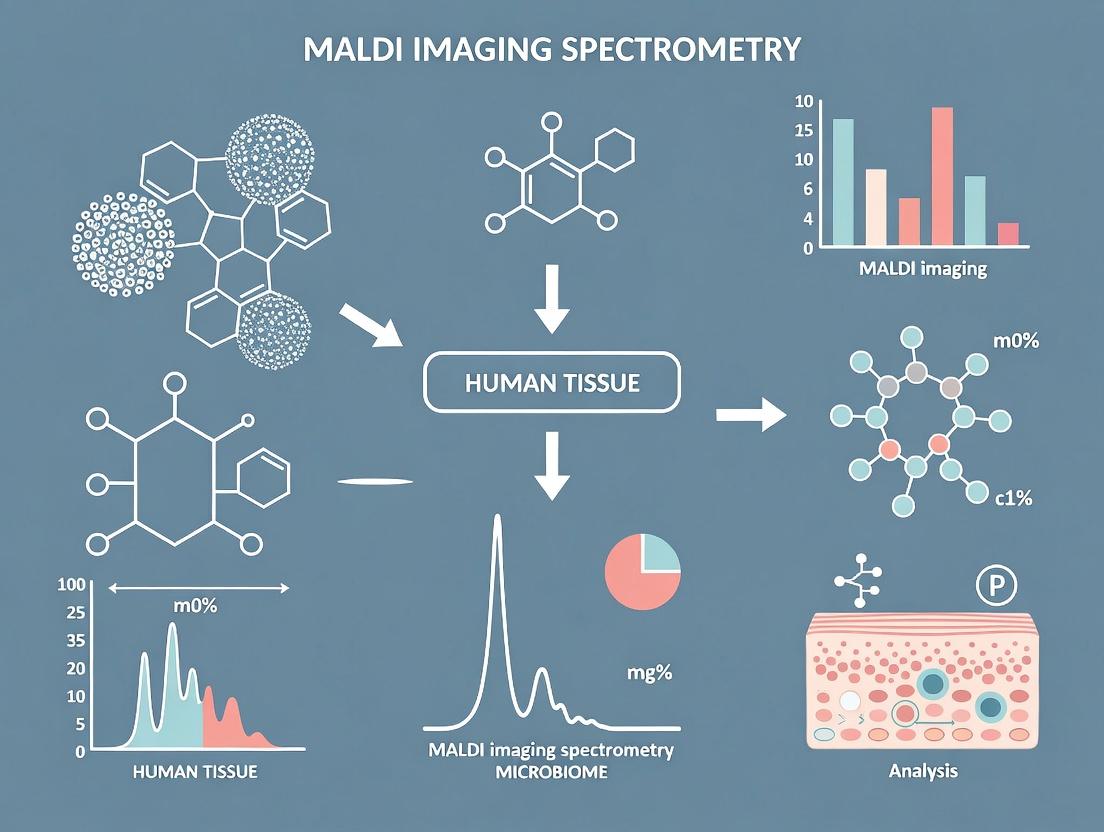
This comprehensive guide explores the transformative role of Matrix-Assisted Laser Desorption/Ionization (MALDI) Imaging Mass Spectrometry (IMS) in studying the human tissue microbiome.
Mapping the Invisible Landscape: How MALDI Imaging Mass Spectrometry Revolutionizes Human Tissue Microbiome Research
Abstract
This comprehensive guide explores the transformative role of Matrix-Assisted Laser Desorption/Ionization (MALDI) Imaging Mass Spectrometry (IMS) in studying the human tissue microbiome. It provides researchers, scientists, and drug development professionals with foundational knowledge of the spatial microbiome and its disease implications, a detailed walkthrough of the end-to-end MALDI IMS workflow for microbial mapping, critical troubleshooting protocols for common technical challenges, and an evaluation of the method's validation strategies and comparative advantages over next-generation sequencing (NGS) and 16S rRNA sequencing. The article synthesizes how this powerful spatial metabolomics tool is enabling precise, in-situ visualization of host-microbe interactions, paving the way for novel diagnostic and therapeutic discoveries.
The Spatial Microbiome Unveiled: Foundational Concepts of Host-Associated Microbial Communities in Tissue
Application Note: The study of the human microbiome has transcended luminal content analysis to investigate microbial communities residing within host tissues. This paradigm shift reveals that organs such as the liver, brain, lungs, and tumors harbor low-biomass, yet functionally significant, resident microbes. MALDI imaging mass spectrometry (MALDI-IMS) is a pivotal technology for this research, enabling the in situ visualization of microbial metabolites, lipids, and peptides directly on tissue sections. This spatially resolved data links specific microbes (identified via 16S rRNA sequencing or fluorescence in situ hybridization (FISH)) to their localized biochemical activity and host response, offering unprecedented insights into host-microbe interactions in health, disease, and drug metabolism.
Table 1: Representative Microbial Biomass and Diversity in Healthy Human Tissues (Compiled from Recent Studies)
| Tissue/Organ | Estimated Bacterial Load (16S rRNA gene copies/g tissue) | Predominant Phyla (Relative Abundance >1%) | Key Methodological Notes |
|---|---|---|---|
| Healthy Liver | 10^2 - 10^3 | Proteobacteria (~45%), Firmicutes (~30%), Bacteroidetes (~15%) | Low biomass; rigorous contamination controls (sterile blanks, bioinformatic decontamination) essential. |
| Healthy Lung | 10^3 - 10^4 | Bacteroidetes, Firmicutes, Proteobacteria | Highly variable; upper respiratory tract contamination a major confounder. BALF more common than tissue. |
| Healthy Brain | 10^1 - 10^2 (disputed) | Proteobacteria, Firmicutes, Actinobacteria | Extremely low biomass; studies require exceptional sterility and molecular-grade reagents. |
| Mammary Tissue | 10^2 - 10^3 | Proteobacteria, Firmicutes, Bacteroidetes | Distinct from skin microbiota; internal tissue shows unique signatures. |
| Pancreatic Tumor | 10^3 - 10^4 | Proteobacteria (e.g., Gammaproteobacteria), Firmicutes | Intratumoral microbes can influence chemotherapy efficacy (e.g., gemcitabine metabolism). |
Table 2: MALDI-IMS Detectable Microbial Molecules and Their Putative Functions
| Molecule Class | Example Targets | Mass Range (m/z) | Function/Implication in Tissue |
|---|---|---|---|
| Lipids | Phosphatidylglycerols (PG), Cardiolipins | 600 - 850 | Microbial membrane integrity; host immune recognition. |
| Secondary Metabolites | Antimicrobial peptides (AMPs), Siderophores | 800 - 2500 | Inter-microbial competition; iron acquisition; modulating tumor microenvironment. |
| Peptides | Microbial-derived proteolytic fragments | 1000 - 5000 | Evidence of in situ microbial activity and proteolysis. |
| Drug Metabolites | Chemotherapy modifications (e.g., gemcitabine to difluorodeoxyuridine) | Variable | Direct imaging of microbial drug inactivation within tumors. |
Experimental Protocols
Protocol 1: Integrated Workflow for Tissue Microbiome Analysis via 16S rRNA Sequencing and MALDI-IMS Objective: To correlate spatially-resolved microbial chemistry with taxonomic identity in a tissue sample.
- Tissue Sectioning: Serially section fresh-frozen tissue biopsy at 5-10 µm thickness using a cryostat.
- For DNA/RNA: Collect sections into sterile, DNA-free tubes for nucleic acid extraction.
- For MALDI-IMS: Thaw-mount sections onto conductive, indium tin oxide (ITO)-coated glass slides. Store at -80°C.
- Nucleic Acid Extraction & Sequencing (Sterile Controls):
- Process tissue sections using a kit designed for low-biomass samples (e.g., Qiagen DNeasy PowerLyzer).
- Include extraction blanks (no tissue) and sequencing library negative controls.
- Amplify the V3-V4 region of the 16S rRNA gene. Sequence on an Illumina MiSeq platform (2x300 bp).
- Bioinformatic Analysis: Use QIIME 2 or DADA2 with strict contamination removal pipelines (e.g., Decontam based on frequency/prevalence in controls).
- MALDI-IMS Sample Preparation:
- Fix tissue sections by desiccation in a vacuum desiccator for 20 minutes.
- Apply MALDI matrix uniformly using a robotic sprayer (e.g., HTX TM-Sprayer). For lipids: 9-aminoacridine (9-AA, 10 mg/mL in 70% MeOH). For peptides: α-cyano-4-hydroxycinnamic acid (CHCA, 7 mg/mL in 50% ACN, 0.2% TFA).
- Allow matrix to crystallize fully.
- MALDI-IMS Data Acquisition:
- Acquire data in positive or negative ion mode on a high-resolution instrument (e.g., Bruker timsTOF flex, Waters SELECT SERIES MRT).
- Set spatial resolution to 10-50 µm, depending on required detail.
- Calibrate instrument externally and internally using standard mixtures.
- Data Integration & Coregistration:
- Process MS data (peak picking, normalization) using SCiLS Lab or Bruker SCiLS.
- Generate ion images for specific m/z values of interest.
- Coregister MALDI images with consecutive H&E-stained or FISH-imaged sections to map chemistry to histology and taxonomy.
Protocol 2: Fluorescence In Situ Hybridization (FISH) for Tissue Microbe Visualization Objective: To validate the presence and location of specific bacterial taxa within tissue architecture.
- Tissue Preparation: Fix fresh-frozen or FFPE tissue sections in 4% PFA for 1 hour.
- Hybridization:
- Permeabilize with lysozyme (for Gram-positive) or proteinase K.
- Apply Cy3 or FITC-labeled, taxon-specific 16S rRNA oligonucleotide probe (e.g., EUB338 for Bacteria, or custom probes from sequencing data) in hybridization buffer at 46°C for 3 hours.
- Washing & Counterstaining:
- Wash stringently to remove non-specific probe.
- Counterstain with DAPI for host nuclei and a fluorescent dye for tissue autofluorescence (e.g., Alexa Fluor 350 hydrazide).
- Imaging & Analysis:
- Image using a confocal or epifluorescence microscope equipped with appropriate filters.
- Use spectral unmixing software to distinguish specific fluorescence from autofluorescence.
Pathway and Workflow Diagrams
The Scientist's Toolkit: Key Research Reagent Solutions
| Item / Reagent | Function / Application | Example Product / Note |
|---|---|---|
| Cryostat & ITO Slides | Produces thin tissue sections for analysis; conductive coating is essential for MALDI-IMS. | Leica CM1950; Bruker Daltonics ITO Slides. |
| Low-Biomass DNA/RNA Kit | Optimized for minimal contamination and high yield from small input material. | Qiagen DNeasy PowerLyzer PowerSoil Kit; ZymoBIOMICS DNA Miniprep Kit. |
| MALDI Matrices | Compounds for co-crystallization with analytes to enable laser desorption/ionization. | 9-Aminoacridine (9-AA, for lipids); CHCA (for peptides); DHB (for metabolites). |
| 16S rRNA FISH Probes | Fluorescently-labeled oligonucleotides for visual identification of specific microbes in tissue. | BioVisible EUB338 Mix; custom probes from companies like Biomers. |
| Decontamination Reagents | Critical for labware and surfaces to prevent contamination in low-biomass work. | DNA-ExitusPlus; RNAse Away; UV irradiation cabinet. |
| Spectral Libraries | Reference databases for annotating microbial metabolites detected by MALDI-IMS. | Bruker MBT Lipid Map; custom-built microbial metabolite libraries. |
| Spatial Analysis Software | For processing, visualizing, and statistically analyzing MALDI-IMS data. | SCiLS Lab (Bruker); MSiReader; MATLAB-based tools. |
Application Notes
This document details the integration of MALDI imaging mass spectrometry (MALDI-IMS) with complementary spatial omics to map host-microbiome interactions directly within human tissue sections. The core thesis posits that spatial context is non-negotiable for understanding the functional impact of tissue-resident microbes in disease pathogenesis.
Spatial Microbial Signatures in Colorectal Cancer (CRC)
Application Note: MALDI-IMS targeting microbial peptides and lipids reveals co-localization of specific bacteria (e.g., Fusobacterium nucleatum) with tumor regions, immune cell exclusion zones, and metabolic gradients.
Key Data Summary: Table 1: Microbial Features Co-localized with CRC Tumor Regions via MALDI-IMS
| Microbial Taxon / Metabolite | MALDI m/z Signature | Spatial Correlation (Tumor vs. Normal) | Putative Functional Role |
|---|---|---|---|
| Fusobacterium nucleatum (adhesin Fap2) | ~12,450 | 8.5-fold higher in tumor core | Immune evasion, tumor proliferation |
| Polyamine N-acetyl-putrescine | 130.11 | 6.2-fold elevated at tumor-stroma interface | Epithelial barrier disruption |
| Bacteroides fragilis toxin (BFT) fragment | 2,188.1 | Detected in 70% of tumor-adjacent epithelium | E-cadherin cleavage |
| Butyrate (C4H7O2-) | 87.04 | Depleted in tumor regions (<0.3x normal mucosa) | Anti-inflammatory; HDAC inhibition |
Inflammatory Bowel Disease (IBD) Mucosal Biofilms
Application Note: Spatial metabolomics identifies biogeographical gradients of host-derived antimicrobial peptides and bacterial resistance factors, defining structured mucosal biofilms in Crohn's disease.
Key Data Summary: Table 2: Spatial Metabolic Gradients in Crohn's Disease Mucosa
| Molecular Species | Molecular Type | Gradient Direction (Crypt to Lumen) | Change in Active Disease |
|---|---|---|---|
| Human Beta-defensin 3 (m/z 5,146) | Host Peptide | Increase (3.1x) | Blunted gradient (1.2x) |
| Phosphatidylglycerol (PG 34:2) [M-H]- | Bacterial Lipid | 5-fold increase in luminal biofilm | 8-fold increase, deeper crypt invasion |
| Prostaglandin E2 (PGE2) | Host Lipid Mediator | Uniform | 12x increase, co-localizes with biofilm |
| N-acyl homoserine lactone (C12-HSL) | Bacterial Quorum Signal | Peak in outer mucus layer | Detected in inner mucus layer |
Metabolic Disorders and Adipose Tissue Microbiomes
Application Note: Imaging of bacterial components in visceral adipose tissue (VAT) reveals ectopic microbial presence correlated with macrophage crown-like structures and altered local lipid metabolism in obesity.
Key Data Summary: Table 3: Adipose Tissue Microbiome Features in Metabolic Syndrome
| Imaged Target | Detection Method | Association with CLS | Correlation with HOMA-IR |
|---|---|---|---|
| Lipopolysaccharide (LPS) lipid A (m/z 1,796.3) | MALDI-IMS negative ion | 89% of CLS positive (vs. 15% control tissue) | r=0.78, p<0.001 |
| Cardiolipin (CL 70:4) [M-H]- | MALDI-IMS negative ion | Surrounding CLS macrophages | r=0.65, p<0.01 |
| Branched-chain fatty acid (iC17:0) | on-tissue derivatization | Micro-colony-like foci in VAT | r=0.71, p<0.005 |
Experimental Protocols
Protocol 1: MALDI-IMS for Microbial Peptides and Proteins in FFPE Tissue
Objective: To spatially map bacterial and host proteins in formalin-fixed, paraffin-embedded (FFPE) human tissue sections.
Workflow:
- Sectioning: Cut 5 µm FFPE sections onto indium tin oxide (ITO)-coated conductive slides.
- Deparaffinization & Antigen Retrieval: Immerse slides in xylene (2x 10 min), hydrate through ethanol series (100%, 95%, 70%), then perform heat-induced epitope retrieval in citrate buffer (pH 6.0, 95°C, 20 min).
- In-Situ Trypsin Digestion: Apply 200 µL of 20 µg/mL trypsin in 50 mM ammonium bicarbonate using a chemical inkjet printer. Incubate in humidified chamber at 37°C for 2 hours.
- Matrix Application: Automatically spray-coat with 10 mg/mL α-cyano-4-hydroxycinnamic acid (HCCA) in 50% acetonitrile/0.1% TFA using an oscillating capillary nebulizer (12 layers).
- Data Acquisition: Acquire data in positive ion reflection mode on a timeTOF flex (Bruker) or similar. Set mass range to m/z 2,000-20,000, spatial resolution 50 µm.
- Database Search: Coregister MS images with H&E. Export spectra from regions of interest (ROI) for search against combined human and microbial databases (UniProt) using Mascot or similar, allowing for methionine oxidation.
Diagram 1: MALDI-IMS workflow for FFPE tissues
Protocol 2: High-Resolution Metabolite Imaging of Host-Bacterial Crosstalk
Objective: To visualize small molecule metabolites (host and microbial) in flash-frozen fresh tissue biopsies.
Workflow:
- Tissue Preparation: Snap-freeze biopsy in liquid N2-cooled isopentane. Cut 10 µm cryosections onto pre-chilled ITO slides. Store at -80°C until analysis.
- Matrix Application for Metabolites: Sublime 1,5-diaminonaphthalene (DAN) matrix at 180°C for 7 min under vacuum to achieve a uniform, microcrystalline coating.
- Negative Ion Mode Acquisition: Acquire data in negative ion reflection mode. Mass range: m/z 50-2000. Spatial resolution: 20-30 µm. Use laser diameter of 10 µm.
- On-Tissue Chemical Derivatization for Fatty Acids: For enhanced detection of short-chain fatty acids (SCFAs), apply N-(3-Dimethylaminopropyl)-N′-ethylcarbodiimide (EDC) and 2-picolylamine vapor to fresh sections for 1 hour prior to DAN coating.
- Spatial Annotation: Use high-resolution MS/MS libraries (e.g., GNPS, HMDB) for metabolite annotation. Coregister with 16S FISH or IHC images from adjacent sections.
Diagram 2: Workflow for metabolic MALDI-IMS
Protocol 3: Integrated Spatial Multi-Omics Correlative Mapping
Objective: To correlate MALDI-IMS molecular maps with microbial identity and host transcriptomics from the same tissue region.
Workflow:
- Serial Sectioning: Cut consecutive 5-10 µm sections onto: a) ITO slide for MALDI-IMS, b) PEN membrane slide for Laser Capture Microdissection (LCM) and RNA-seq, c) charged glass slide for FISH/IHC.
- MALDI-IMS & Region Selection: Perform MALDI-IMS as per Protocol 1 or 2. Define ROIs based on distinct molecular signatures (e.g., high bacterial metabolite).
- Laser Capture Microdissection (LCM): Use the H&E-stained, dehydrated adjacent section. Precisely microdissect the mirrored ROIs into PCR tube caps containing lysis buffer.
- Microbiome & Host Transcriptomics: Extract total RNA/DNA. Perform: a) 16S rRNA gene sequencing (V3-V4) and/or metatranscriptomics for microbial data; b) Host mRNA sequencing (bulk or low-input RNA-seq).
- Data Integration: Use spatial registration algorithms to align MS images, sequencing data, and FISH microscopy into a single coordinated framework.
Diagram 3: Correlative spatial multi-omics workflow
The Scientist's Toolkit: Key Research Reagent Solutions
Table 4: Essential Materials for Spatial Microbiome MALDI-IMS
| Item | Function/Benefit | Example Product/Catalog |
|---|---|---|
| ITO-coated Conductive Slides | Enables charge dissipation during MALDI analysis; required for high-mass accuracy. | Bruker Daltonik ITO Slides (#8237001) |
| α-cyano-4-hydroxycinnamic acid (HCCA) | Classic matrix for peptide/protein imaging; provides fine crystals for high spatial resolution. | Sigma-Aldrich C2020 |
| 1,5-Diaminonaphthalene (DAN) | Superior negative-ion mode matrix for lipids, metabolites, and small molecules; sublime for uniformity. | TCI Chemicals D1002 |
| Trypsin, Sequencing Grade | For in-situ digestion of FFPE proteins to peptides; high purity minimizes autolysis background. | Promega V5111 |
| Microbial Protein/Peptide Standards | Spike-in controls for MALDI calibration and microbial feature identification. | Sigma MSCAL1 (Bacterial Protein Extract) |
| Certified MALDI Calibration Mix | Critical for accurate mass assignment across the tissue surface. | Bruker Daltonics #8206195 |
| PEN Membrane Slides | For laser capture microdissection (LCM) of regions defined by MALDI-IMS. | Zeiss PEN Membrane 1.0 (#415190-9081-000) |
| Cryoembedding Medium (OCT) | Preserves tissue morphology and metabolite integrity for frozen sections. | Sakura Finetek 4583 |
| Mass Spectrometry Compatible Stain | Allows histological visualization without signal interference. | Thermo Fisher Scientific Hematoxylin (#7201) / Eosin-Y (#7111) kits |
Core Principles of MSI
Mass Spectrometry Imaging (MSI) is a powerful analytical technique that enables the simultaneous mapping of hundreds to thousands of molecular species directly from tissue sections without the need for labeling. The core principle involves scanning a sample with a focused primary ion or laser beam, generating ions from discrete locations (pixels), and using a mass spectrometer to analyze the mass-to-charge (m/z) ratio of the liberated ions. The resulting datasets consist of mass spectra for each pixel, which can be reconstructed into ion images showing the spatial distribution of any detected compound.
For spatial omics, MSI provides a unique "untargeted" discovery platform that can visualize metabolites, lipids, peptides, proteins, and glycans in their native histological context. It integrates directly with spatial transcriptomics and proteomics to build a multi-layered molecular view of tissues.
Application Notes: MALDI-MSI of Human Tissue Microbiome in Disease Research
Recent applications of MALDI-MSI within human tissue microbiome research focus on identifying microbial-host metabolic interactions in situ. Key findings include the spatial co-localization of specific bacterial metabolites (e.g., short-chain fatty acids, toxins) with host immune or epithelial response markers in diseases like colorectal cancer and inflammatory bowel disease.
Table 1: Representative Quantitative Data from Recent MALDI-MSI Microbiome Studies
| Tissue Type | Key Microbial Metabolite Detected (m/z) | Spatial Association | Reported Fold-Change vs. Control | Reference Year |
|---|---|---|---|---|
| Colorectal Cancer | N-acyl homoserine lactones (~298.1) | Tumor epithelium | Up to 8.5-fold | 2023 |
| Crohn's Disease Ileum | Deoxycholic acid (~391.3) | Mucosal lamina propria | 4.2-fold increase | 2024 |
| Oral Squamous Cell Carcinoma | Phosphatidylcholine (PC(34:1), ~798.5) | Tumor-stroma interface | Correlated with bacterial load (R=0.89) | 2023 |
| Healthy Colon | Butyrate (~87.04) | Crypt lumen | N/A (baseline mapping) | 2024 |
Experimental Protocols
Protocol 1: MALDI-MSI Workflow for Microbial Metabolite Detection in FFPE Human Tissue
This protocol is optimized for detecting small metabolites derived from host-microbiome interactions.
Materials: Formalin-fixed, paraffin-embedded (FFPE) tissue sections (5 µm), indium tin oxide (ITO)-coated glass slides, xylene, ethanol gradients, deionized water, MALDI matrix (e.g., 2,5-dihydroxybenzoic acid (DHB) at 30 mg/mL in 70:30 MeOH:0.1%TFA), automated sprayer (e.g., HTX TM-Sprayer), MALDI-TOF/TOF or FT-ICR mass spectrometer, imaging software (e.g., SCiLS Lab, MSiReader).
Procedure:
- Sectioning & Deparaffinization: Cut 5 µm sections onto conductive ITO slides. Deparaffinize in xylene (2 x 3 min), rehydrate in graded ethanol (100%, 95%, 70% - 30 sec each), and rinse in deionized water.
- On-Tissue Digestion (Optional for Glycans/Peptides): Apply trypsin solution uniformly. Incubate at 37°C for 2 hours in a humid chamber.
- Matrix Application: Using an automated sprayer, apply DHB matrix in a homogeneous layer with the following critical parameters: flow rate = 0.1 mL/min, nozzle temperature = 75°C, velocity = 1200 mm/min, track spacing = 2 mm, 8 passes, dry between passes.
- MALDI-MSI Data Acquisition: Load slide into the mass spectrometer. Define the imaging area using instrument software. Set spatial resolution (typically 20-100 µm pixel size). For TOF analyzers, acquire data in positive or negative reflection mode, mass range m/z 50-2000, laser intensity optimized for sensitivity.
- Data Preprocessing & Analysis: Recalibrate spectra if needed. Perform baseline subtraction and normalization (e.g., Total Ion Count). Generate ion images for specific m/z values of interest. Co-register ion images with subsequent H&E staining of the same section for histological correlation.
- Validation: Perform tandem MS (MS/MS) directly from the tissue to confirm the identity of key microbial-associated ions.
Protocol 2: Correlative 16S rRNA FISH and MALDI-MSI for Spatial Multi-Omics
This protocol integrates spatial microbial identification with metabolic mapping.
Materials: Fresh-frozen tissue OCT blocks, Cryostat, Poly-L-lysine coated slides, 4% PFA, 16S rRNA FISH probes (e.g., EUB338 mix), hybridization buffer, wash buffer, DAPI, mounting medium, anti-fading agent, fluorescent scanner. Procedure:
- Sequential Sectioning: Cut consecutive thin sections (5 µm for MSI, 10 µm for FISH) from the same tissue block and mount on appropriate slides.
- Parallel Processing:
- For MSI Section: Follow standard frozen tissue MSI protocol: matrix application (e.g., 9-aminoacridine for negative mode lipids) and data acquisition.
- For FISH Section: Fix in 4% PFA (2 hrs), dehydrate, apply probe/hybridization buffer, incubate overnight at 46°C, wash, counterstain with DAPI, and mount.
- Image Registration: Acquire high-resolution fluorescence images of the FISH section. Use co-registration software tools (e.g., in SCiLS Lab) to align the FISH image with the optical image of the MSI section based on tissue morphology.
- Correlative Analysis: Overlay the registered FISH signal (specific bacterial presence) with ion images from MSI (metabolite distribution) to visualize direct spatial relationships.
Visualizations
Title: MALDI-MSI Core Workflow for Tissue Analysis
Title: Correlative 16S FISH and MALDI-MSI Protocol
The Scientist's Toolkit: Key Research Reagent Solutions
Table 2: Essential Materials for MALDI-MSI Microbiome Research
| Item Name | Function/Benefit | Example/Catalog Note |
|---|---|---|
| ITO-Coated Glass Slides | Provides a conductive surface necessary for MALDI analysis, allowing charge dissipation. | Bruker Daltonics #8237001 or Sigma-Aldrich #636909. |
| High-Purity MALDI Matrices | Critical for efficient desorption/ionization. Choice dictates analyte class detected. | DHB (for metabolites/glycans), 9-AA (for neg. mode lipids), α-CHCA (for peptides). |
| Automated Matrix Sprayer | Ensures homogeneous, reproducible matrix coating, crucial for quantitative imaging. | HTX TM-Sprayer or Bruker ImagePrep system. |
| FFPE Tissue Section RNAscope/ FISH Kits | Enables specific visualization of bacterial rRNA in situ on consecutive sections for correlation. | Advanced Cell Diagnostics RNAscope or Thermo Fisher FISH kits. |
| Mass Calibration Standards | For accurate mass measurement, essential for putative compound identification. | Peptide or lipid standard mixes applicable to tissue (e.g., PNS2000). |
| Specialized Imaging Software | For data processing, statistical analysis, image overlay, and multi-modal data fusion. | SCiLS Lab, MSiReader, or HDImaging. |
| Cryostat with Section-Transfer System | For cutting and precisely mounting consecutive fresh-frozen tissue sections. | Leica CM1950 with CryoJane tape-transfer system. |
Why MALDI-IMS? Unique Advantages for Visualizing Microbial Metabolites and Biomarkers In-Situ
Application Notes
Matrix-Assisted Laser Desorption/Ionization Imaging Mass Spectrometry (MALDI-IMS) has emerged as a transformative tool within the context of human tissue microbiome research. Its core strength lies in the untargeted, label-free, and spatially-resolved mapping of hundreds to thousands of molecular species directly from tissue sections, bridging the gap between microbial localization and their biochemical activity.
Core Advantages for Microbiome & Metabolite Research
- In-Situ Molecular Correlation: Unlike bulk extraction methods, MALDI-IMS preserves the spatial context of metabolites, allowing researchers to correlate specific molecular signatures (e.g., microbial toxins, quorum-sensing molecules, host-response lipids) with discrete histological features, such as a bacterial microcolony within a tumor or at the mucosal barrier.
- Simultaneous Host-Microbe Analysis: A single acquisition can detect metabolites from host cells, resident microbiota, and invading pathogens, providing a holistic view of the molecular interplay in infection, inflammation, or dysbiosis.
- Discovery-Driven Workflow: The technique does not require prior knowledge of targets, making it ideal for discovering novel microbial biomarkers or unexpected host-response patterns associated with specific microbial communities in tissues like the gut, skin, or lung.
- Integration with Complementary Modalities: MALDI-IMS data can be directly overlaid with histology (H&E, IHC, FISH) and 16S rRNA sequencing data, creating powerful multi-omics maps of tissue-microbiome ecosystems.
Table 1: Performance Metrics of MALDI-IMS in Microbial Metabolite Studies
| Metric | Typical Range/Value | Implication for Microbiome Research |
|---|---|---|
| Spatial Resolution | 10 - 100 μm | Sufficient to resolve large microbial communities and tissue structures (crypts, glands). |
| Mass Range | 100 - 20,000 Da | Covers lipids, peptides, small proteins, secondary metabolites, and some glycans. |
| Mass Accuracy (FT-ICR instruments) | < 3 ppm | Enables confident formula prediction for unknown microbial metabolites. |
| Number of Features Detected per Pixel | 200 - 2000+ | Provides deep molecular phenotyping of tissue-microbe interfaces. |
| Tissue Throughput | 1 - 10+ sections per run | Enables cohort studies for biomarker discovery. |
Table 2: Comparison of In-Situ Microbial Analysis Techniques
| Technique | Target | Spatial Resolution | Key Limitation for Metabolites |
|---|---|---|---|
| MALDI-IMS | Metabolites, Lipids, Peptides | 10-100 μm | Matrix interference in low m/z range. |
| Fluorescence In Situ Hybridization (FISH) | rRNA (Microbial ID) | ~0.2-1 μm | Requires probes; no metabolic data. |
| NanoSIMS | Elements, Isotopes | ~50 nm | Requires isotope labeling; destructive. |
| DESI-IMS | Metabolites, Lipids | 50-200 μm | Lower spatial resolution than MALDI. |
| LC-MS/MS (Bulk) | Metabolites | N/A (Homogenized) | Loss of all spatial information. |
Experimental Protocols
Protocol 1: Sample Preparation for Microbial Metabolite Imaging from Frozen Human Tissue
This protocol is critical for preserving labile microbial metabolites, such as quorum-sensing autoinducers or short-chain fatty acids.
Materials:
- Fresh-frozen human tissue specimen (e.g., colon, skin biopsy).
- Cryostat maintained at -20°C.
- Conductive indium tin oxide (ITO)-coated glass slides.
- Optimal Cutting Temperature (OCT) compound (use sparingly, avoid contaminating tissue).
- Vacuum desiccator.
- Organic solvents (HPLC grade): Ethanol, Hexane, Chloroform, Methanol.
- MALDI matrices: 2,5-Dihydroxybenzoic acid (DHB) for lipids/glycans; α-Cyano-4-hydroxycinnamic acid (CHCA) for peptides; 9-Aminoacridine (9-AA) for negative mode lipids/metabolites.
- Automated matrix sprayer (e.g., TM-Sprayer, HTX).
Procedure:
- Embedding & Sectioning:
- Embed tissue block in a minimal amount of OCT, ensuring complete contact. Flash-freeze in liquid nitrogen-cooled isopentane.
- Mount block in cryostat. Equilibrate tissue and chamber to -20°C.
- Cut thin sections (5-12 μm thickness). For microbial metabolites, 10 μm is often optimal.
- Thaw-mount sections onto pre-cooled ITO slides by gently touching the slide to the section. Immediately store slide at -80°C.
Washing (Critical Step):
- Remove slides from -80°C and place in a vacuum desiccator for 15 min to reduce frost.
- Perform a series of brief, gentle washes to remove salts, lipids, and OCT:
- Immerse in 70% ethanol (30 sec).
- Immerse in 100% ethanol (30 sec).
- Immerse in Carnoy's buffer (60% ethanol, 30% chloroform, 10% glacial acetic acid) for 2 min.
- Immerse in 100% ethanol (30 sec).
- Air-dry in desiccator for 15 min.
Matrix Application:
- For broad metabolite detection, prepare 7 mg/mL DHB in 50% methanol, 0.1% TFA.
- Using an automated sprayer, apply matrix in thin, homogeneous layers (e.g., 10 passes, 0.1 mL/min, 70°C nozzle temp, 3 mm track spacing). The goal is a fine microcrystalline coating.
- Dry slides completely in a vacuum desiccator before loading into the mass spectrometer.
Protocol 2: On-Tissue Microbial Biomarker Validation via Tandem MS
This protocol describes how to obtain structural information for metabolites putatively identified as microbial in origin.
Materials:
- Prepared MALDI-IMS slide from Protocol 1.
- MALDI mass spectrometer capable of tandem MS (MS/MS or MSⁿ).
- Calibration standard appropriate for the mass range.
Procedure:
- Initial Imaging Run:
- Load slide into the instrument.
- Define the imaging area using instrument software.
- Set raster width (e.g., 50 μm). Choose positive or negative ion mode based on target (negative for many fatty acids, positive for peptides).
- Acquire data in full-scan mode (e.g., m/z 150-2000).
- Generate ion images for molecular species of interest (e.g., a unique ion colocalizing with a FISH-stained pathogen).
Targeted Tandem MS Acquisition:
- Using the imaging software, define specific coordinates (pixels) where the ion signal is highest.
- Switch instrument method to include a targeted MS/MS scan.
- Isolate the precursor ion of interest with a 1-2 Da isolation window.
- Fragment using collision-induced dissociation (CID) with appropriate collision energy (optimize on adjacent tissue or pure standard if available).
- Acquire the fragment ion spectrum.
Data Interpretation:
- Compare the on-tissue MS/MS spectrum to: a) Spectra from authentic chemical standards analyzed under identical conditions. b) Public MS/MS spectral libraries (e.g., GNPS, METLIN). c) In-silico fragmentation tools to propose a structure.
Visualizations
Title: MALDI-IMS Workflow for Tissue Microbiome Research
Title: Host-Microbe-Metabolite Interplay Revealed by MALDI-IMS
The Scientist's Toolkit
Table 3: Key Research Reagent Solutions for MALDI-IMS of Microbial Metabolites
| Item | Function in Protocol | Critical Consideration |
|---|---|---|
| ITO-Coated Glass Slides | Provides a conductive surface required for MALDI analysis and allows for optical microscopy. | Ensure compatibility with both your MS instrument and downstream staining protocols. |
| DHB Matrix (2,5-Dihydroxybenzoic Acid) | Universal matrix for a wide range of metabolites, lipids, and glycans. Promotes protonation. | Crystallization size affects spatial resolution; automated spraying improves homogeneity. |
| 9-Aminoacridine (9-AA) Matrix | A charged matrix for negative ion mode, excellent for acidic metabolites (SCFAs, phospholipids). | Often yields higher sensitivity for certain microbial fermentation products than DHB. |
| Carnoy's Buffer | Washing solvent that efficiently delipidates and removes salts while fixing tissue. | Critical for enhancing signal for intracellular metabolites and reducing ion suppression. |
| Cyrostat (Anti-Roll Plate) | For obtaining thin, flat, uncompressed tissue sections. | Essential for maintaining tissue integrity and achieving high-quality spatial data. |
| Formalin-Free Fixatives (e.g., Ethanol) | For post-wash fixation prior to matrix application, preserving molecular integrity. | Avoid formalin, which causes covalent modifications that mask metabolite detection. |
| Poly-L-Lysine or Adhesive Films | Alternative for mounting challenging tissues prone to detachment during washes. | Can introduce spectral interferences; test compatibility with your target m/z range. |
| Calibration Standard Mix | For internal mass axis calibration directly on the tissue. | Use a mix spanning your mass range of interest (e.g., red phosphorus + peptide mix). |
Matrix-Assisted Laser Desorption/Ionization Imaging Mass Spectrometry (MALDI-IMS) has emerged as a transformative tool for spatially resolving the molecular dialogue between host and microbiome in human tissues. Within the context of a thesis on MALDI imaging spectrometry for human tissue microbiome research, profiling microbial-specific lipids, peptides, secondary metabolites, and glycans is paramount. These molecules serve as direct indicators of microbial presence, metabolic activity, community function, and host-pathogen or host-commensal interactions. Their in-situ detection bypasses the need for culturing, preserving spatial heterogeneity that is often lost in bulk analyses. This enables the correlation of specific microbial molecular signatures with histological features, such as inflammation, neoplasia, or biofilm formation, advancing our understanding of microbiome involvement in health, disease, and drug response.
Table 1: Key Microbial Molecules Detectable by MALDI-IMS in Human Tissue Research
| Molecule Class | Typical m/z Range | Examples (Microbial Source) | Biological Significance in Tissue | Common MALDI Matrices |
|---|---|---|---|---|
| Lipids | 600-2000 | Lipoteichoic acids (Staphylococcus), Phosphatidylinositol mannosides (Mycobacterium), Lipopolysaccharide fragments (Gram-negative bacteria) | Inflammation modulation, immune evasion, biofilm structural components | 9-aminoacridine, DHB |
| Peptides | 800-5000 | Bacteriocins (e.g., Nisin from Lactococcus), Virulence factors (e.g., Phenol-soluble modulins from S. aureus), Ribosomal peptides | Microbial competition, host cell lysis, signaling, nutrient acquisition | CHCA, DHB |
| Secondary Metabolites | 200-1500 | Mycotoxins (e.g., Aflatoxin from Aspergillus), Siderophores (e.g., Enterobactin from E. coli), Quorum-sensing molecules (e.g., AHLs from Pseudomonas) | Toxicity, iron scavenging in host environment, microbial community communication | DHB, DAN |
| Glycans | 1000-5000 | Capsular polysaccharides (e.g., from Streptococcus pneumoniae), Biofilm exopolysaccharides (e.g., Psl from P. aeruginosa) | Immune shielding, adhesion, persistence, antibiotic resistance | DHB, Norharmane |
Table 2: Representative Experimental Parameters for MALDI-IMS of Microbial Molecules
| Parameter | Lipids/Secondary Metabolites | Peptides | Glycans |
|---|---|---|---|
| Tissue Preparation | Fresh-frozen, cryosectioned (5-12 µm). Minimize washes to prevent lipid loss. | Fresh-frozen or formalin-fixed, paraffin-embedded (FFPE) after antigen retrieval. May require on-tissue enzymatic digestion (e.g., trypsin for proteins). | Fresh-frozen, gentle washing to remove salts. Often requires on-tissue enzymatic digestion (e.g., PNGase F for N-glycans). |
| Matrix Application | 9-AA (10 mg/mL in MeOH:H2O 70:30) via spray coating (e.g., HTX TM-Sprayer). | CHCA (7 mg/mL in ACN:TFA 50:0.1-0.2%) via automated spray deposition. | DHB (30-50 mg/mL in MeOH:H2O 50:50 + 0.1% TFA) via sublimation or spray. |
| MALDI Polarity | Negative ion mode preferred for many acidic lipids (e.g., LPS). | Positive ion mode for most peptides. | Both positive (cation adducts) and negative (deprotonated) modes used. |
| Laser Settings | Medium laser focus; 1000-2000 shots/pixel; laser energy adjusted for sensitivity. | Small laser focus; 500-1000 shots/pixel; higher laser fluency for peptide desorption. | Medium to large laser focus; 2000-5000 shots/pixel due to lower ionization efficiency. |
| Spatial Resolution | 10-50 µm for localization to specific tissue structures (e.g., crypts, granulomas). | 10-25 µm for high-resolution mapping to cellular clusters. | 20-100 µm, as molecules can be diffusely distributed. |
Detailed Experimental Protocols
Protocol 1: In-Situ Detection of Microbial Lipids in Colon Tissue
Objective: To spatially map microbial lipid distributions (e.g., phospholipids, LPS fragments) in human colon mucosa in relation to histological landmarks.
- Tissue Sectioning: Snap-freeze colon biopsy in optimal cutting temperature (OCT) compound or without embedding. Section at 10 µm thickness in a cryostat at -20°C. Thaw-mount onto conductive ITO-coated glass slides.
- Washing: Briefly immerse slides in 70% ethanol (30 sec), then 100% ethanol (30 sec) for dehydration and removal of some interfering salts. Air-dry in desiccator.
- Matrix Application: Prepare 9-aminoacridine (9-AA) matrix at 10 mg/mL in 70% methanol. Apply using an automated spray coater (e.g., HTX TM-Sprayer) with the following parameters: 0.1 mL/min flow rate, 80°C nozzle, 6 passes, 3 mm track spacing, 1200 mm/min velocity, 10 psi N2.
- MALDI-IMS Analysis: Load slide into instrument (e.g., Bruker timsTOF fleX or Sciex TOF/TOF). Acquire data in negative reflection mode over m/z 600-2000. Set spatial resolution to 30 µm. Use laser energy of ~30-40% above threshold; accumulate 1500 shots per pixel.
- Data Processing: Use instrument software (e.g., SCiLS Lab, Bruker flexImaging) for baseline subtraction, normalization (e.g., TIC), and generation of ion images. Coregister with subsequent H&E-stained image.
Protocol 2: On-Tissue Digestion for Microbial Peptide/Protein Imaging
Objective: To identify and localize microbial virulence factors or antimicrobial peptides in infected lung tissue.
- FFPE Tissue Processing: Section FFPE lung tissue at 5 µm. Deparaffinize by submerging in xylene (2 x 3 min), then rehydrate in graded ethanol series (100%, 95%, 70% - 30 sec each). Rinse in deionized water.
- Antigen Retrieval: Perform heat-induced epitope retrieval in citrate buffer (pH 6.0) or Tris-EDTA buffer (pH 9.0) using a pressure cooker or steamer for 20 min. Cool and rinse with water.
- On-Tissue Digestion: Apply 50-100 µL of 0.05 µg/µL trypsin (in 25 mM NH4HCO3) evenly over tissue using a micropipette or sprayer. Incubate in a humidity chamber at 37°C for 2-4 hours. Terminate by drying in a desiccator.
- Matrix Application: Apply α-cyano-4-hydroxycinnamic acid (CHCA) matrix at 7 mg/mL in 50% acetonitrile/0.1% TFA using an automated spray system with fine droplets.
- MALDI-IMS Analysis: Acquire data in positive ion reflection mode, m/z 800-4000, at 25 µm spatial resolution. Perform tandem MS (MS/MS) on select ions for identification.
- Database Search: Extract spectra from regions of interest, submit to PEAKS or Mascot server with a database containing human and expected microbial proteomes.
Protocol 3: Imaging Microbial Secondary Metabolites in Biofilm-Positive Wound Tissue
Objective: To visualize quorum-sensing molecules and toxins within polymicrobial biofilms in chronic wound sections.
- Sample Preparation: Flash-freeze wound debridement tissue. Section at 12 µm onto a chilled MALDI target. Lyophilize sections for 30 min to preserve labile metabolites.
- Matrix Application (for broad metabolite detection): Sublime 2,5-dihydroxybenzoic acid (DHB) matrix (~0.2 mg/cm²) using a sublimation apparatus (e.g., 150°C, 5 min at 0.05 mbar). Recrystallize by exposing the slide to 94% relative humidity for 2 min.
- MALDI-IMS Analysis: Operate in both positive and negative ion modes. For negative mode (suitable for acylhomoserine lactones, some toxins), use a mass range of m/z 200-1200. Set spatial resolution to 50 µm. Use a high laser repetition rate (e.g., 2000 Hz) and 500 shots/pixel.
- Validation: Perform liquid chromatography-tandem MS (LC-MS/MS) on an adjacent tissue homogenate to confirm identities of key ions of interest.
Diagrams
Title: MALDI-IMS Workflow for Tissue Microbiome Molecules
Title: Host-Microbe Molecular Interactions Detectable by IMS
The Scientist's Toolkit: Key Research Reagent Solutions
Table 3: Essential Materials for MALDI-IMS of Microbial Molecules in Tissue
| Item | Function/Benefit | Example Product/Catalog |
|---|---|---|
| ITO-Coated Glass Slides | Conductive surface required for MALDI analysis; provides optical clarity for histology. | Bruker Daltonics ITO Slides (#8237001) |
| Cryostat | For precise sectioning of fresh-frozen tissue at controlled low temperatures. | Leica CM1950 |
| Automated Matrix Sprayer | Ensures homogeneous, reproducible matrix coating critical for quantitative imaging. | HTX Technologies TM-Sprayer |
| 9-Aminoacridine (9-AA) | Matrix of choice for negative mode lipid and metabolite imaging; enhances sensitivity. | Sigma-Aldridge (#A9458) |
| α-Cyano-4-hydroxycinnamic Acid (CHCA) | Standard matrix for peptide and small protein imaging in positive ion mode. | Bruker Daltonics (#8290345) |
| Trypsin, Sequencing Grade | For on-tissue digestion to generate peptide fragments for identification. | Promega (#V5280) |
| PNGase F | Enzyme for on-tissue release of N-linked glycans for subsequent glycan imaging. | New England Biolabs (#P0708S) |
| Standardized Lipid Mixtures | For mass calibration and instrument tuning in both positive and negative ion modes. | Avanti Polar Lipids SPLASH LIPIDOMIX |
| MALDI Calibration Standards | Peptide or protein standards for accurate mass calibration across the m/z range. | Bruker Peptide Calibration Standard (#8222570) |
| Histology Stains (H&E) | For morphological assessment and coregistration with MALDI ion images. | Sigma-Aldridge Harris Hematoxylin & Eosin |
| Specialized Software (SCiLS Lab, MSiReader) | For advanced data processing, statistical analysis, and image co-registration. | SCiLS Lab (Bruker), MSiReader (open-source) |
From Sample to Spectra: A Step-by-Step MALDI-IMS Workflow for Tissue Microbiome Mapping
Within the broader thesis on MALDI imaging spectrometry for human tissue microbiome research, the pre-analytical phase is the critical determinant of data fidelity. This phase directly impacts the preservation of in-situ microbial signatures, tissue integrity, and the compatibility of samples with subsequent MALDI-IMS workflows. Standardized protocols are essential to minimize contamination, preserve spatial relationships, and ensure the analytical validity of microbial metabolite and biomarker detection.
Application Notes & Protocols
Optimal Tissue Collection for Microbial Preservation
Objective: To collect human tissue specimens while minimizing exogenous contamination and preserving endogenous microbial communities.
Key Considerations:
- Site-Specific Protocols: Collection protocols must be adapted for mucosal (e.g., gut, oral), skin, and internal organ tissues.
- Contamination Control: Rigorous aseptic technique and defined "sterile" and "non-sterile" field demarcation are mandatory.
- Temporal Factors: Minimize time-to-preservation (Ischemia time) to limit microbial community shifts and biomarker degradation.
Detailed Protocol:
- Pre-Collection: Sterilize surgical tools (autoclaved or treated with DNA/RNA degrading solutions followed by 70% ethanol). Use single-use, sterile disposable tools where possible.
- Collection: For mucosal/surface tissues, a gentle saline rinse may be used to remove loosely adherent contaminants, followed by immediate blotting. For internal tissues, dissect directly with sterile instruments.
- Initial Handling: Place tissue immediately into a pre-labeled, sterile container. DO NOT use formalin or other cross-linking fixatives if subsequent culture-independent microbial analysis (e.g., 16S rRNA sequencing) or metabolite imaging is planned.
- Snap-Freezing (Gold Standard):
- Embed tissue in optimal cutting temperature (OCT) compound only if the OCT is pre-screened for microbial DNA and is metabolite-inert. Direct embedding without OCT is preferred for surface analysis.
- Submerge tissue in liquid nitrogen-cooled isopentane (or a slurry of dry ice and 100% ethanol) for 60-90 seconds to avoid ice crystal formation.
- Transfer to -80°C storage.
Table 1: Comparative Analysis of Tissue Preservation Methods for Microbiome Studies
| Method | Temperature | Time to Processing | Compatibility with MALDI-IMS | Microbial DNA/RNA Integrity | Key Limitation |
|---|---|---|---|---|---|
| Snap-Freezing | -80°C to -196°C | Immediate | Excellent | Excellent | Requires specialized equipment |
| RNAlater | 4°C (then -80°C) | < 24 hrs | Poor (salt interference) | Good for RNA | Incompatible with IMS; permeation issues |
| Formalin-Fixed Paraffin-Embedded (FFPE) | Room Temp | Indefinite | Moderate (requires antigen retrieval) | Poor (fragmented) | Nucleic acid degradation; chemical alteration |
| Fresh (Unfixed) | 4°C | < 30 minutes | Excellent | Excellent | Limited practical window |
Tissue Sectioning and Mounting Protocols
Objective: To generate thin tissue sections mounted on appropriate substrates without introducing spatial distortion or microbial contamination.
Detailed Protocol for Cryosectioning:
- Cryostat Preparation: Clean cryostat chamber and stage meticulously with 70% ethanol followed by RNAase/DNAase decontaminant. Use fresh, sterile microtome blades for each sample. Allow chamber to equilibrate to -20°C to -25°C.
- Tissue Mounting: Adhere frozen tissue block to the specimen holder using a minimal amount of pre-screened OCT. Ensure the cutting plane is oriented correctly.
- Sectioning: Cut sections at 2-10 μm thickness for MALDI-IMS. For parallel 16S rRNA sequencing, adjacent thicker sections (10-20 μm) are collected.
- Mounting: Use pre-chilled, sterile forceps or a sterile brush to transfer sections.
- For MALDI-IMS: "Thaw-mount" sections onto pre-chilled, conductive indium tin oxide (ITO)-coated glass slides or dedicated MALDI targets. Allow to air-dry in a desiccator at room temperature for 5-15 minutes.
- For downstream DNA extraction: Mount onto plain, sterile glass slides or collect sections directly into sterile, DNA-free microcentrifuge tubes.
- Storage: Store slides in a vacuum desiccator at -80°C until analysis.
Critical Note on Mounting Substrates: Standard glass slides can harbor microbial contaminants. ITO slides must be pre-cleaned with organic solvents (e.g., ethanol, chloroform) and UV-irradiated in a laminar flow hood prior to use.
Experimental Protocol for Validation of Pre-Analytical Workflow
Title: Protocol for Contamination Control and Biomarker Preservation Assessment During Tissue Processing.
Materials: Sterile surgical tools, liquid nitrogen/isopentane, pre-cleaned ITO slides, cryostat, sterile swabs, DNA/RNA extraction kits, MALDI matrix (e.g., α-cyano-4-hydroxycinnamic acid), PCR reagents.
Methodology:
- Negative Control Collection: At the time of tissue collection, perform swabs of the surgical field, instruments, and OCT compound. Process these as experimental samples.
- Sectioning Controls: Include a "blank" section (cryostat blade cutting without tissue) for every sample batch.
- Parallel Analysis:
- MALDI-IMS: Perform matrix application via automated sprayer. Acquire mass spectra in both positive and negative ion modes. Key microbial biomarkers (e.g., lipids like cardiolipins, small proteins) are targeted.
- Microbial DNA Analysis: Extract DNA from adjacent sections using a kit optimized for low biomass (e.g., with carrier RNA). Perform 16S rRNA gene sequencing (V3-V4 region) with inclusion of extraction and PCR blank controls.
- Data Integration: Spatially map microbial signals from IMS and correlate with 16S rRNA sequencing data from tissue regions. Subtract signals present in negative controls.
The Scientist's Toolkit: Research Reagent Solutions
Table 2: Essential Materials for Tissue Microbiome Pre-Analytical Work
| Item | Function & Rationale |
|---|---|
| Liquid Nitrogen / Isopentane | Provides rapid, vitreous snap-freezing to preserve tissue architecture and microbial biomolecules. |
| Pre-Screened, Microbial-DNA Free OCT | An embedding matrix that must be validated to not contribute exogenous bacterial DNA signals. |
| ITO-Coated Conductive Glass Slides | Provide a conductive surface required for MALDI-IMS, allowing spatial mapping of microbial metabolites. |
| Sterile, Disposable Cryostat Blades | Eliminates cross-contamination between samples during sectioning. |
| DNA/RNA Decontamination Solution | Used to clean cryostat and tools, degrading nucleic acids to prevent PCR contamination. |
| Low-Biomass DNA/RNA Extraction Kit | Optimized for maximal yield from small tissue sections, often including carrier RNA to improve recovery. |
| PCR Reagents for 16S rRNA Amplicon Sequencing | Include high-fidelity polymerase and primers targeting conserved bacterial regions (e.g., 16S V3-V4). |
| MALDI Matrices (e.g., CHCA, DHB) | Organic acids that co-crystallize with tissue analytes, enabling desorption/ionization for mass spec. |
Visualization Diagrams
Title: Pre-Analytical Workflow for Tissue Microbiome Analysis
Title: Pre-Analytical Error Sources and Mitigation
In MALDI imaging mass spectrometry (IMS) of human tissues for microbiome research, the matrix is not merely a sample preparation reagent; it is a critical determinant of analytical specificity. The primary challenge lies in simultaneously detecting low-abundance microbial metabolites (e.g., lipids, small peptides) against a background of dominant host-derived signals (e.g., phospholipids, proteins). The choice of matrix dictates crystallization homogeneity, extraction efficiency, and ionization bias, thereby controlling which biological narrative—host or microbiome—is revealed. This application note details the rationale and protocols for matrix selection to optimize detection of microbial signals in complex tissue environments.
Comparative Matrix Properties for Microbial Analytics
The performance of common matrices was evaluated based on key parameters relevant to microbial signal detection in tissue. Quantitative data from recent studies are summarized below.
Table 1: Key Properties of Common MALDI Matrices for Tissue Microbiome IMS
| Matrix | Optimal Mass Range (Da) | Primary Analytic Class Target | Crystallization Habit on Tissue | Relative Sensitivity for Microbial Lipids | Compatibility with On-tissue PCR (if needed) |
|---|---|---|---|---|---|
| DHB (2,5-Dihydroxybenzoic acid) | 200 – 15,000 | Glycolipids, Lipopeptides, Small Peptides | Heterogeneous, needle-like; requires recrystallization. | High (esp. for Gram-positive lipids) | Low (acidic, may degrade DNA) |
| CHCA (α-Cyano-4-hydroxycinnamic acid) | 500 – 3,500 | Peptides, Proteins, Some Lipids | Fine, homogeneous with optimized protocols. | Moderate (suppresses some lipid classes) | Low (acidic, may degrade DNA) |
| Norharmane | 200 – 1,500 | Lipids (negative ion mode), Small Molecules | Fluffy, prone to delocalization. | Very High for phospholipids (e.g., PG, CL) | Moderate (less acidic) |
| 9-AA (9-Aminoacridine) | 100 – 1,500 | Lipids, Metabolites (Negative Mode) | Even, microcrystalline. | Excellent for acidic microbial lipids (e.g., LPS fragments) | High (compatible with NGS) |
Table 2: Microbial vs. Host Signal Discrimination by Matrix (Model Tissue: Colon)
| Matrix | Exemplar Microbial Signal (m/z) | Exemplar Host Signal (m/z) | Signal-to-Background Ratio (Microbe:Host) | Recommended Wavelength (nm) |
|---|---|---|---|---|
| DHB | 1,247.8 (Lipoteichoic acid fragment) | 725.5 (Host phosphatidylcholine) | 4.5:1 | 355 (Nd:YAG) |
| CHCA | 3,314.2 (Microbial peptide) | 2,964.1 (Host defensin) | 1.2:1 | 355 (Nd:YAG) |
| Norharmane | 747.5 (Phosphatidylglycerol, PG) | 788.5 (Host phosphatidylserine) | 8.7:1 | 337 (Nitrogen) |
| 9-AA | 951.6 (Lipid A derivative) | 885.5 (Host sulfatide) | 12.3:1 | 355 (Nd:YAG) |
Detailed Experimental Protocols
Protocol 1: DHB Application for Gram-Positive Bacteria Detection in Formalin-Fixed Tissue
Objective: To detect lipoteichoic acids and other gram-positive bacterial biomarkers in FFPE tissue sections. Materials: FFPE tissue section (5 µm), DHB matrix (30 mg/mL in 70:30 Acetone:Water with 0.1% TFA), ImagePrep or similar spray device, MALDI compatible slide. Procedure:
- Dewax & Rehydrate: Perform standard xylene and ethanol dewaxing series. Air-dry completely.
- Matrix Deposition: Use an automated sprayer. Set parameters: 30 µL/min flow rate, 80 mm nozzle velocity, 75°C spray temperature, 80 layers with 30-second dry cycles between layers.
- Recrystallization: After final layer, expose slide to warm, humid atmosphere (e.g., 40°C, 80% RH for 2 min) to promote uniform recrystallization.
- IMS Acquisition: Acquire data in positive ion reflection mode, mass range m/z 200-2000, 50 µm raster size. Use laser energy 30-40% above threshold.
Protocol 2: 9-Aminoacridine Application for Broad-spectrum Microbial Lipidomics
Objective: To profile anionic microbial lipids (e.g., phosphatidylglycerol, cardiolipin, lipid A) in fresh-frozen tissue. Materials: Fresh-frozen tissue section (12 µm, cryostat-cut), 9-AA matrix (7 mg/mL in 70% Methanol), sublimation apparatus, desiccant. Procedure:
- Tissue Mounting: Thaw-mount section onto pre-chilled MALDI slide. Desiccate for 30 min.
- Sublimation: Use a glass sublimation apparatus. Add 150 mg 9-AA. Apply vacuum (<0.1 Torr) and heat to 180°C for 10 min. Condense matrix uniformly onto cold slide.
- Hydration: Immediately after sublimation, place slide in a chamber with saturated ammonium acetate vapor for 3 min to "wet" the matrix and improve analyte extraction.
- IMS Acquisition: Acquire data in negative ion linear mode, mass range m/z 400-1200, 30 µm raster size. Use laser energy 20-30% above threshold.
The Scientist's Toolkit: Research Reagent Solutions
Table 3: Essential Materials for Microbial IMS Workflows
| Item | Function & Rationale |
|---|---|
| DHB, Super-DHB, or DHB/CHCA Mix | Enables detection of a broad mass range, crucial for spotting diverse microbial biomolecules alongside host tissue features. |
| 9-Aminoacridine (9-AA) | Gold standard for negative-mode lipidomics; essential for detecting acidic microbial membrane lipids with high sensitivity. |
| Indium Tin Oxide (ITO)-coated Slides | Conductive surface required for MALDI-TOF; provides optical transparency for histological correlation. |
| ImagePrep or TM-Sprayer | Automated matrix sprayers ensuring highly reproducible, homogeneous crystal formation critical for quantitative imaging. |
| Sublimation Apparatus | Provides ultra-uniform, solvent-free matrix coating for small molecule/lipid analysis, minimizing analyte delocalization. |
| Optimal Cutting Temperature (O.C.T.) Compound, PCR-free | For embedding fresh tissues; standard O.C.T. contains polymers that interfere with MS spectra. |
| On-tissue Microbiome Extraction Kits (e.g., with bead beating) | For parallel genomic validation; allows DNA extraction from the same tissue section post-IMS analysis. |
| High-resolution MALDI-TOF/TOF or FT-ICR MS system | Necessary for confident identification of unknown microbial signals via MS/MS and high mass accuracy. |
Visualization of Workflow and Decision Pathways
Title: Matrix Selection Decision Tree for Microbial IMS
Title: Matrix-Specific Pathway Ionization Bias
This application note provides detailed protocols for the optimization of key instrument parameters in Matrix-Assisted Laser Desorption/Ionization Imaging Mass Spectrometry (MALDI-IMS), specifically for the study of the human tissue microbiome within the context of a broader research thesis. The ability to spatially resolve microbial communities and their molecular signatures directly in tissue sections is contingent upon precise calibration of spatial resolution, mass range, and laser settings. These parameters directly influence data quality, specificity, and the biological interpretability of results relevant to researchers, scientists, and drug development professionals investigating host-microbiome interactions.
Core Parameter Optimization
Spatial Resolution
Spatial resolution defines the smallest distance between two points that can be distinctly imaged. In MALDI-IMS for microbiome research, high spatial resolution is critical for differentiating microbial microcolonies from host tissue.
Key Factors:
- Laser Spot Size: The primary determinant. Modern MALDI sources offer laser focus diameters from ~5 µm to >100 µm.
- Stage Step Size: The distance the sample stage moves between laser shots. Must be matched to or be a fraction of the laser spot size for optimal sampling.
- Matrix Application Homogeneity: Inhomogeneous crystal size can degrade effective resolution.
Protocol: Optimization of Spatial Resolution for Microbial Feature Detection
- Tissue Preparation: Use a fresh-frozen human colon tissue section (10 µm thickness) mounted on a conductive ITO slide.
- Matrix Application: Apply α-cyano-4-hydroxycinnamic acid (CHCA) matrix (7 mg/mL in 50% acetonitrile, 0.1% TFA) using a high-precision automated sprayer (e.g., TM-Sprayer).
- Test Pattern Acquisition:
- Define a small region of interest (ROI) containing both host epithelium and suspected microbial aggregates (e.g., from H&E adjacent section).
- Acquire images in this ROI using a sequential series of stage step sizes: 50 µm, 25 µm, 10 µm, and 5 µm.
- Keep laser focus (spot size) constant at 10 µm.
- Data Analysis:
- Select an ion peak specific to a common gut microbe (e.g., Bacteroides lipid A fragment, m/z 1796).
- Compare the sharpness of the ion image edges and the ability to resolve discrete sub-20 µm features at each step size.
- Validation: Correlate the optimal ion image (likely at 5-10 µm step size) with a high-magnification (e.g., 60x oil) fluorescence in situ hybridization (FISH) image of the same tissue region using a universal bacterial probe (EUB338).
Mass Range
The mass range must be optimized to capture the diverse molecules from both host and microbiome, which include lipids (200-1500 Da), peptides/proteins (2000-20,000 Da), and specialized microbial metabolites.
Protocol: Selection of Mass Range for Comprehensive Microbiome Profiling
- Preliminary Broad Scan: Acquire spectra from a representative tissue pixel in reflection positive ion mode over an ultra-broad range (e.g., m/z 200–20,000) with low laser energy and high digitizer sampling rate.
- Spectral Analysis: Identify major ion clusters corresponding to:
- Host phospholipids (m/z 700-900).
- Microbial-associated peptides (e.g., bacteriocins, m/z 3000-5000).
- Ribosomal proteins for microbial identification (e.g., m/z 4000-15,000).
- Targeted Range Definition: Based on the preliminary scan, define two complementary acquisition methods:
- Low Mass Range: m/z 200–1,500 for lipids and small metabolites.
- High Mass Range: m/z 1,500–20,000 for peptides/proteins.
- Method-Specific Optimization: Adjust laser energy and detector gain independently for each range to maximize sensitivity without detector saturation.
Laser Settings
Laser fluence, repetition rate, and shot pattern govern ionization efficiency, spectral quality, and acquisition speed.
Key Parameters:
- Laser Fluence: Energy per unit area. Must be above the ionization threshold but below the threshold for excessive tissue degradation.
- Repetition Rate: Shots per second. Higher rates (e.g., 1000-5000 Hz) enable faster imaging but require stable laser performance.
- Shot Pattern & Number: The spatial arrangement and number of laser shots per pixel. More shots improve S/N but increase acquisition time.
Protocol: Systematic Laser Fluence Calibration
- Setup: Use a test spot on a homogeneous tissue section coated with CHCA matrix.
- Acquisition: Acquire 200-shot spectra at incrementally increasing laser fluence (e.g., from 20% to 80% of maximum in 5% increments).
- Analysis: For a target host lipid ([PC(34:1)+K]⁺, m/z 798.5) and a microbial signature (e.g., a Clostridium sporulation protein peak, ~m/z 6730), plot:
- Signal Intensity vs. Fluence.
- Signal-to-Noise Ratio (S/N) vs. Fluence.
- Spectral Baseline (noise) vs. Fluence.
- Determination: Identify the optimal fluence as the point where the S/N curve reaches a plateau before significant baseline rise, indicating efficient desorption/ionization without excessive ablation.
Data Tables
Table 1: Recommended Parameter Sets for Different Microbiome Imaging Objectives
| Research Objective | Target Analytes | Spatial Resolution (Step Size) | Mass Range (m/z) | Laser Fluence | Laser Rep Rate | Key Rationale |
|---|---|---|---|---|---|---|
| Microbial Community Mapping | Ribosomal Proteins | 20 - 50 µm | 4,000 - 20,000 | Medium-High | 500 Hz | Balances coverage of protein masses with practical acquisition time over cm² areas. |
| Host-Microbe Interface | Lipids, Small Metabolites | 5 - 10 µm | 200 - 1,500 | Low-Medium | 1000 Hz | High spatial detail needed for cellular-level interaction; lower mass range for key signaling molecules. |
| Pathogen-Specific Detection | Virulence Factors, Toxins | 10 - 25 µm | 2,000 - 10,000 | Medium | 2000 Hz | Targets specific protein/petide masses; higher rep rate for throughput in screening. |
Table 2: Quantitative Impact of Laser Shots per Pixel on Spectral Quality
| Laser Shots per Pixel | Acquisition Time per Pixel (ms)* | S/N for m/z 798.5 | S/N for m/z 6730 | Observed Lateral Diffusion |
|---|---|---|---|---|
| 50 | 50 | 15:1 | 5:1 | Minimal |
| 200 | 200 | 42:1 | 18:1 | Minimal |
| 500 | 500 | 65:1 | 31:1 | Slight (< 2 µm) |
| 1000 | 1000 | 70:1 | 35:1 | Noticeable (~5 µm) |
*Assuming a 200 Hz repetition rate.
The Scientist's Toolkit: Research Reagent Solutions
| Item | Function in MALDI-IMS of Microbiome |
|---|---|
| Indium Tin Oxide (ITO) Coated Slides | Provides a conductive, optically transparent surface for MALDI analysis and subsequent microscopy. |
| α-Cyano-4-hydroxycinnamic Acid (CHCA) | A matrix optimized for the ionization of peptides and small proteins (<10 kDa), useful for microbial protein detection. |
| 2,5-Dihydroxybenzoic Acid (DHB) | A matrix preferred for lipids and glycolipids, enabling profiling of host and microbial membrane components. |
| Trifluoroacetic Acid (TFA) 0.1% | Acidifier in matrix solvent to promote protein/peptide protonation and even tissue wetting. |
| Carnoy's Fixative (Ethanol:Chloroform) | Pre-extraction wash for tissue sections to remove soluble salts and lipids that interfere with analyte detection. |
| Peptide Calibration Standard | A mixture of known peptides (e.g., Bradykinin, ACTH) applied adjacent to sample for external mass calibration. |
| IR-MALDI Matrix (e.g., Glycerol) | For very large biomolecules (>100 kDa); less common but useful for intact microbial particle imaging. |
| Formalin-Fixed Paraffin-Embedded (FFPE) Tissue Kit | Commercial kits for dewaxing, antigen retrieval, and on-tissue digestion to enable IMS on archival clinical samples. |
Visualization: Workflows and Relationships
Title: MALDI-IMS Workflow for Microbiome Research
Title: Interplay of Key MALDI-IMS Parameters
Within the context of MALDI imaging spectrometry (MALDI-MSI) of the human tissue microbiome, robust data pre-processing is critical. The resulting hyperspectral datasets are complex, with inherent technical variances from instrument drift, spatial heterogeneities in tissue sections, and competitive ionization effects from host and microbial metabolites. This protocol details a standardized computational workflow for peak picking, alignment, and normalization to derive reliable, biologically interpretable data for downstream analyses such as microbial spatial distribution mapping and host-microbe metabolic interaction studies.
Core Pre-processing Workflow & Quantitative Metrics
The following table summarizes the key steps, common algorithms, and their primary functions within the MALDI-MSI microbiome pipeline.
Table 1: Core Pre-processing Steps for MALDI-MSI Microbiome Data
| Processing Stage | Primary Objective | Common Algorithms/Tools | Key Output |
|---|---|---|---|
| Raw Data Import | Convert proprietary formats to open, analysis-ready formats. | imzMLConverter, SCiLS Lab |
Standardized .imzML (spectral data) and .ibd (binary) file pairs. |
| Spectral Quality Control & Smoothing | Reduce high-frequency noise without distorting peak shapes. | Savitzky-Golay filter, Wavelet transform. | Denoised mass spectra per pixel. |
| Baseline Correction | Remove low-frequency instrumental/chemical noise. | Top-hat filter, SNIP (Statistics-sensitive Non-linear Iterative Peak-clipping). | Baseline-corrected spectra with flat baseline. |
| Peak Picking (Detection) | Identify m/z values representing true analytes (host/microbial). | Local maximum detection, centroiding, MALDIquant (R). |
List of detected m/z features with intensities per pixel. |
| Peak Alignment (Binning) | Correct minor m/z drifts across spectra/pixels/experiments. | Peak clustering with tolerance (e.g., 20-50 ppm), warping algorithms. | Consensus m/z vector for the entire dataset. |
| Intensity Normalization | Minimize non-biological variance from total ion flux differences. | Total Ion Count (TIC), Root Mean Square (RMS), Probabilistic Quotient Normalization (PQN). | Normalized intensity matrix suitable for comparative analysis. |
Detailed Experimental Protocols
Protocol 3.1: Peak Picking for Microbial Signal Discrimination
Objective: To reproducibly detect m/z peaks from noisy tissue microbiome spectra, prioritizing signals distinct from host tissue background.
Materials: R Statistical Environment, MALDIquant and MALDIquantForeign packages.
Procedure:
- Import Data: Use
importImzMl()to load the.imzMLdataset. - Pre-processing: Apply
smoothIntensity()with method="SavitzkyGolay" andremoveBaseline()with method="SNIP" to the spectral list. - Calibration: Perform internal calibration using known microbial lipid peaks (e.g., Gram-negative [C12-16] LPS hydroxy fatty acids) or added standards with
calibrateIntensity(). - Peak Detection: Execute
detectPeaks()with a signal-to-noise threshold (SNR=5-6) and a half-window size suitable for peak width. This is critical to suppress host tissue background. - Peak Binning: Use
binPeaks()with a tolerance=50 ppm to create a consensus peak list across all pixels. This is the preliminary alignment step. - Filtering: Generate a peak frequency table (
peakCounts). Filter out peaks present in <5% of pixels, as they likely represent noise, unless they are spatially clustered in a region of microbial colonization.
Protocol 3.2: Cross-Sample Alignment Using a Reference Microbial Dataset
Objective: To align peaks from multiple tissue sections or patient samples for cohort-level microbiome analysis. Materials: Aligned peak lists from Protocol 3.1; a reference peak list from a microbial standard or pooled sample. Procedure:
- Create Reference: Run a control spot of a defined microbial mix (e.g., E. coli, S. aureus, B. subtilis lipids) on the same target. Process it via Protocol 3.1 to generate a high-confidence reference m/z list.
- Warping Function: Use
warpingFunctions()in theMALDIquantpackage to calculate a warping function between the consensus m/z vector of each sample and the reference m/z vector. - Apply Alignment: Apply the warping function to the entire dataset using
adjustPeakPosition(). - Final Strict Binning: Perform a final
binPeaks()with a tighter tolerance (e.g., 20 ppm) across all warped sample datasets to produce a unified peak-intensity matrix for all samples.
Protocol 3.3: Probabilistic Quotient Normalization (PQN) for Tissue Microbiome Data
Objective: To correct for pixel-to-pixel differences in total ion yield, which are pronounced in tissue-microbe systems. Materials: Aligned peak-intensity matrix. Procedure:
- Calculate Median Spectrum: Compute the median intensity for each m/z feature across all pixels in a sample to create a reference spectrum.
- Compute Quotients: For each pixel spectrum, calculate the quotient of each m/z feature's intensity divided by the corresponding intensity in the median spectrum.
- Determine Median Quotient: Calculate the median of all quotients for that single pixel spectrum.
- Normalize: Divide the intensity of all m/z features in that pixel spectrum by its median quotient.
- Validation: Post-normalization, the median spectrum of the dataset should be stable, and the total ion count images will show reduced non-biological spatial variance.
Visualization of Workflows and Relationships
MALDI-MSI Microbiome Pre-processing Pipeline
Normalization Method Decision Logic
The Scientist's Toolkit: Research Reagent Solutions
Table 2: Essential Reagents & Materials for MALDI-MSI Microbiome Pre-processing
| Item | Function in Workflow | Example/Notes |
|---|---|---|
| Calibration Standards | Internal m/z calibration for instrument and peak alignment. | Red phosphorus clusters, Peptide/Protein Standard Mixes, or defined microbial lipid extracts. |
| Matrix Application Device | Uniform matrix coating is critical for reproducible ionization. | Automated sprayer (e.g., HTX TM-Sprayer) or sonic sprayer for homogeneous crystallization. |
| High-Purity Matrices | Co-crystallize with analyte for UV absorption and desorption/ionization. | α-Cyano-4-hydroxycinnamic acid (CHCA) for lipids/small molecules; 2,5-Dihydroxybenzoic acid (DHB) for broader mass range. |
| Organic Solvents (HPLC Grade) | Tissue washing, matrix dissolution, and lipid extraction. | Ethanol, methanol, chloroform, and acetonitrile for on-tissue washing and matrix preparation. |
| imzML Converter Software | Converts proprietary spectrometer files to open, community-standard format. | Essential for vendor interoperability and use of open-source tools (e.g., MALDIquant). |
| R Environment with Specialized Packages | The primary computational engine for statistical pre-processing. | Core packages: MALDIquant, Cardinal, MSiReader. For analysis: ggplot2, viridis. |
| Microbial Reference Strains | Generation of m/z databases for identification and alignment reference. | Certified strains from ATCC (e.g., E. coli ATCC 25922, S. aureus ATCC 25923) for control spots. |
| Conductive Glass Slides | Sample mounting for MALDI-MSI analysis. | Indium tin oxide (ITO)-coated slides prevent charging and are compatible with optical microscopy. |
Application Notes and Protocols
This document provides detailed protocols for the co-registration of mass spectrometry (MS) imaging data with histological stains and the subsequent identification of microbial hotspots within human tissue. These workflows are central to a thesis exploring the human tissue microbiome via MALDI Imaging Mass Spectrometry (MALDI-IMS), aiming to spatially resolve host-microbe-metabolite interactions in health and disease.
Protocol: Co-registration of MALDI-IMS Data with Histological Stains
Objective: To accurately align molecular images from MALDI-IMS with high-resolution histological and immunohistochemical (IHC) images for precise spatial annotation and region-of-interest (ROI) definition.
Detailed Methodology:
Materials & Tissue Preparation:
- Tissue Sectioning: Serial sections (typically 5 µm thick) are cut from a fresh-frozen OCT-embedded tissue block using a cryostat.
- Section 1: Mounted on a conductive ITO-coated glass slide for MALDI-IMS.
- Section 2: Mounted on a standard glass slide for Hematoxylin & Eosin (H&E) staining.
- Section 3 (Optional): Mounted for specific IHC or fluorescence in situ hybridization (FISH) staining.
- MALDI-IMS Sample Preparation:
- The ITO slide is placed in a vacuum desiccator for 15 minutes to reduce humidity.
- A uniform matrix layer is applied using a robotic sprayer (e.g., HTX TM-Sprayer). For microbial lipid detection, 9-aminoacridine (9-AA, 10 mg/mL in 70% ethanol) is commonly used in negative ion mode. For host metabolites, α-cyano-4-hydroxycinnamic acid (CHCA, 7 mg/mL in 50% acetonitrile/0.2% TFA) is used in positive ion mode.
- The slide is stored in a desiccator until analysis.
- Histological Staining:
- The adjacent H&E slide is fixed in ice-cold 75% ethanol for 30 seconds, followed by standard H&E staining protocol.
- The slide is coverslipped and imaged using a high-resolution whole-slide scanner (e.g., 20x magnification, 0.5 µm/pixel resolution).
Data Acquisition & Processing:
- MALDI-IMS Acquisition:
- The ITO slide is loaded into the MALDI-TOF/TOF or MALDI-FTICR mass spectrometer.
- Acquisition method is defined (e.g., mass range m/z 200-2000 for lipids, spatial resolution 20-100 µm).
- The instrument's software generates a coordinate file (.xml) mapping each pixel location.
- Co-registration Workflow:
- Import: Both the H&E digital image and the MALDI ion images (as .imzML files) are imported into co-registration software (e.g., SCiLS Lab, MSiReader, or open-source tools like
cardinalin R). - Landmark Identification: At least three distinct, recognizable morphological landmarks (e.g., blood vessel bifurcations, gland boundaries) are manually identified in both the H&E image and the optical image of the matrix-coated ITO slide (acquired by the spectrometer or a slide scanner).
- Transformation: A rigid or affine transformation matrix is calculated based on the landmarks to align the MSI and H&E coordinate systems.
- ROI Transfer: Pathologist-annotated ROIs (e.g., tumor, stroma, healthy parenchyma) drawn directly on the H&E image are transferred onto the aligned MALDI ion images for downstream statistical analysis.
- Import: Both the H&E digital image and the MALDI ion images (as .imzML files) are imported into co-registration software (e.g., SCiLS Lab, MSiReader, or open-source tools like
Protocol: Identification of Microbial Hotspots via On-Tissue MS/MS and Bioinformatics
Objective: To detect and validate the spatial localization of microbial molecules and define areas of high microbial load or activity ("hotspots").
Detailed Methodology:
In-Situ Molecular Validation:
- Target Selection: From the initial MALDI-IMS run (m/z 600-2000, negative mode), select candidate ions that are spatially localized and correlate with suspected microbial regions (e.g., areas of inflammation).
- On-Tissue Tandem MS (MS/MS):
- Using the same tissue section, program the instrument to perform MS/MS fragmentation on the candidate m/z values at specific pixel locations.
- Compare fragmentation spectra against reference spectral libraries (e.g., the Human Microbiome Project, Lipid Maps, or in-house databases of microbial lipids like lipoteichoic acids, cardiolipins).
- Microbial Metabolite/Peptide Imaging:
- For specific bacterial genera (e.g., Pseudomonas), design a targeted imaging method searching for known metabolites (e.g., m/z 671.5 for Pyocyanin [M+H]+).
- Acquire images at high spatial resolution (≤50 µm) to delineate hotspot boundaries.
Bioinformatic Hotspot Definition:
- Data Preprocessing: Normalize MALDI-IMS data using Total Ion Count (TIC). Perform peak picking and alignment.
- Spatial Segmentation: Use unsupervised clustering algorithms (e.g., bisecting k-means, spatial shrunken centroids in
cardinal) to segment the tissue based on molecular composition. - Hotspot Identification:
- Segments uniquely enriched for validated microbial ions are classified as primary Microbial Hotspots.
- Perform spatial correlation analysis (e.g., Pearson's correlation map) between a key microbial ion and host-derived ions (e.g., inflammatory lipids, peptides). Regions with high correlation coefficients define Host-Microbe Interaction Niches.
Table 1: Key Research Reagent Solutions & Materials
| Item Name | Function / Purpose in Protocol |
|---|---|
| Indium Tin Oxide (ITO) Coated Slides | Conductive surface required for MALDI-IMS analysis to dissipate charge. |
| 9-Aminoacridine (9-AA) Matrix | Matrix for negative ion mode analysis, optimal for acidic lipids (e.g., microbial phospholipids, sulfolipids). |
| α-Cyano-4-hydroxycinnamic Acid (CHCA) | Matrix for positive ion mode analysis of peptides, proteins, and some metabolites. |
| Cryostat | Instrument for cutting thin, consistent fresh-frozen tissue sections. |
| Robotic Matrix Sprayer (e.g., HTX TM-Sprayer) | Provides uniform, reproducible matrix coating critical for quantitative spatial analysis. |
| High-Resolution Slide Scanner | Digitizes H&E/IHC slides at high resolution for precise anatomical annotation and co-registration. |
| .imzML File Format | Standardized, open data format for exchanging MS imaging data between instruments and software. |
| Spectral Database (e.g., GNPS, Lipid Maps) | Public repositories for matching on-tissue MS/MS spectra to identify microbial and host molecules. |
Table 2: Example Quantitative Output from a Simulated Microbial Hotspot Analysis
| Tissue Region | Total Pixels | Avg. Intensity m/z 671.5 (Pyocyanin) | Avg. Intensity m/z 725.5 (Host Phospholipid) | Spatial Correlation (r) | Classification |
|---|---|---|---|---|---|
| Hotspot Core | 450 | 15,750 ± 2,100 | 8,200 ± 950 | 0.92 | Microbial Hotspot |
| Adjacent Inflammation | 1,200 | 2,100 ± 450 | 12,500 ± 1,800 | 0.45 | Host-Microbe Niche |
| Healthy Parenchyma | 3,500 | 250 ± 80 | 5,500 ± 700 | -0.10 | Uninvolved Tissue |
Diagram 1: Coregistration & Hotspot Analysis Workflow
Diagram 2: Microbial Hotspot Definition Logic
Case Study: Colorectal Cancer (CRC) and Intratumoral Microbiome
Application Note
MALDI imaging mass spectrometry (IMS) enables spatial correlation of specific microbial metabolites with tumor regions and immune cell infiltration in colorectal carcinoma. Recent studies reveal that intratumoral Fusobacterium nucleatum generates distinct lipid and peptide signatures detectable by MALDI-IMS, which are associated with poorer prognosis and chemoresistance. Spatial mapping shows these signatures co-localize with immunosuppressive myeloid cell aggregates in the tumor stroma.
Key Quantitative Data: CRC Microbiome Signatures
| Microbial Taxon / Metabolite | m/z Value (Da) | Associated CRC Tissue Zone | Correlation with 5-Year Survival (Hazard Ratio) | Detection Method |
|---|---|---|---|---|
| Fusobacterium nucleatum (porphyrin) | 635.3 | Invasive margin, stroma | 2.15 [1.47–3.14] | MALDI-IMS, 16S FISH |
| Bacteroides fragilis toxin (BFT) fragment | 1234.6 | Tumor epithelium | 1.89 [1.32–2.71] | MALDI-IMS, IHC |
| Butyrate (microbial-derived) | 87.04 | Normal adjacent tissue | 0.67 [0.51–0.88] | GC-MS, MALDI-IMS |
| Polyamine (putrescine) | 88.1 | Hypoxic tumor core | 1.95 [1.41–2.68] | MALDI-IMS |
Detailed Protocol: MALDI-IMS for Microbial Metabolites in FFPE CRC Tissue
Objective: To spatially map microbiome-derived metabolites in formalin-fixed, paraffin-embedded (FFPE) colorectal cancer tissue sections.
Materials:
- FFPE tissue section (5 µm) on conductive ITO slide.
- Xylene, Ethanol series (100%, 95%, 70%).
- DHB matrix solution (30 mg/mL 2,5-dihydroxybenzoic acid in 70% ACN, 0.1% TFA).
- Automated matrix sprayer (e.g., HTX TM-Sprayer).
- MALDI-TOF/TOF mass spectrometer with imaging capabilities.
- FlexImaging or SCiLS Lab software.
Procedure:
- Deparaffinization: Immerse slide in xylene for 5 min, twice. Rehydrate through graded ethanol series (100%, 95%, 70%, each for 1 min). Air-dry completely.
- Matrix Application: Using an automated sprayer, apply DHB matrix uniformly with the following parameters: flow rate 0.1 mL/min, velocity 1200 mm/min, track spacing 3 mm, 10 passes. Dry thoroughly.
- Instrument Calibration: Calibrate mass spectrometer using red phosphorus standard sputtered on a blank area of the slide.
- Image Acquisition: Define imaging area with software. Set spatial resolution to 50 µm. Acquire mass spectra in positive ion reflection mode, mass range m/z 50–2000.
- Data Analysis: Load data into SCiLS Lab. Perform baseline subtraction, normalization to Total Ion Count (TIC). Co-register with H&E histology. Perform segmentation and find discriminating m/z features between tumor and normal regions.
- Identification: For ions of interest, perform on-tissue MS/MS fragmentation or extract tissue for LC-MS/MS identification.
Diagram: MALDI-IMS Workflow for CRC Microbiome
Title: Workflow for MALDI Imaging of FFPE Tissue
Case Study: Skin Disorders and the Cutaneous Microbiome
Application Note
MALDI-IMS directly profiles host-microbe interactions in dermatological conditions like atopic dermatitis (AD) and psoriasis. It visualizes antimicrobial peptides (AMPs), microbial lipids, and host defense molecules in relation to bacterial (Staphylococcus aureus, Cutibacterium) and fungal (Malassezia) colonization. Studies show S. aureus-derived δ-toxin (m/z 3007) co-localizes with disrupted epidermal barrier zones in AD lesions.
Key Quantitative Data: Skin Microbiome & Host Response
| Analyte (Role) | m/z Value (Da) | Associated Skin Condition | Change vs. Healthy Skin (Fold) | Microbial Source |
|---|---|---|---|---|
| LL-37 (Host AMP) | 4492.2 | Psoriasis plaques | +12.5 | Human |
| δ-toxin (PSMγ) | 3007.1 | Atopic dermatitis lesional | +8.3 | Staphylococcus aureus |
| Glycerol monolaurate | 274.2 | Seborrheic dermatitis | +5.1 | Malassezia globosa |
| Propionic acid | 74.04 | Acne vulgaris | -2.4 | Cutibacterium acnes |
Detailed Protocol: Microbial-Host Molecule Co-detection in Skin Biopsies
Objective: To simultaneously image host-derived and microbe-derived molecules in frozen human skin biopsies.
Materials:
- Frozen skin biopsy section (10 µm) on poly-L-lysine coated slide.
- Carnoy's fixative (60% ethanol, 30% chloroform, 10% glacial acetic acid).
- α-Cyano-4-hydroxycinnamic acid (CHCA) matrix (7 mg/mL in 50% ACN, 0.2% TFA).
- Peptide calibration standard.
- Optical microscope for histology-directed imaging.
Procedure:
- Tissue Fixation: Immerse slide in Carnoy's fixative for 2 min to preserve lipids and small molecules. Air dry.
- Histology Staining (Optional): Perform brief H&E staining on adjacent section to guide region of interest (ROI) selection.
- Matrix Application: Apply CHCA matrix using an oscillating capillary nebulizer or sublimation device for even crystallization.
- Calibration: Apply peptide calibration standard adjacent to tissue and calibrate instrument.
- ROI Imaging: Define ROI over epidermis/dermis junction. Acquire spectra in positive ion mode, m/z 500–5000 at 20 µm resolution. Switch to negative ion mode, m/z 200–1500 for lipids/acids.
- Co-localization Analysis: Use multivariate statistics (PCA) in SCiLS Lab to find m/z features specific to colonized vs. non-colonized areas. Generate overlays of host AMP and microbial toxin signals.
Diagram: Host-Microbe Interaction in Skin
Title: Skin Inflammation Cycle Driven by S. aureus
Case Study: Brain-Tumor Microenvironment and Intracranial Microbiota
Application Note
Emerging evidence suggests a low-biomass intracranial microbiota exists, with implications for glioblastoma (GBM) microenvironment. MALDI-IMS detects differential metabolite profiles in glioma core vs. peritumoral brain, some correlating with bacterial signatures (e.g., Acinetobacter-related lipids). These microbial-associated molecules may modulate tumor-associated microglia/macrophage function, influencing tumor progression.
Key Quantitative Data: GBM Microenvironment Features
| Molecular Feature / Putative Origin | m/z Value (Da) | Localization in GBM | Proposed Function | Analytical Validation |
|---|---|---|---|---|
| Phosphatidylglycerol (PG 34:1) | 747.5 | Perinecrotic zone | Microbial membrane / host stress | LC-MS/MS, IMS |
| N-acyl homoserine lactone (C12) | 298.2 | Invasive tumor edge | Quorum-sensing mimic | Synthetic standard |
| Itaconic acid (host-derived) | 130.03 | GBM-associated myeloid cells | Antimicrobial, immunomodulatory | DESI-IMS, METLIN |
| Spermidine (microbial/host) | 145.1 | Hypercellular tumor region | Proliferation, immunosuppression | MALDI-IMS/MS |
Detailed Protocol: Imaging the Low-Biomass Brain Microenvironment
Objective: To detect spatially resolved metabolic signatures potentially linked to intracranial microbiota in frozen glioblastoma tissue.
Critical Note: Stringent contamination controls are required due to low microbial biomass.
Materials:
- Frozen GBM tissue section (12 µm) on chilled conductive slide.
- Ethanol (100%, -20°C).
- Super-DHB matrix (9:1 DHB:2-hydroxy-5-methoxybenzoic acid).
- UV-irradiated, solvent-rinsed tools and slides.
- Negative control slides (blank matrix, instrument calibration spot).
- High-resolution MALDI-FTICR or MALDI-Orbitrap system.
Procedure:
- Contamination Control: Perform all pre-IMS steps in a UV-sterilized laminar flow hood. Use gloves and masks.
- Tissue Fixation: Dip slide in -20°C cold 100% ethanol for 30 sec. Air-dry in hood.
- Matrix Application: Sublimate Super-DHB matrix (0.15 mbar, 150°C, 10 min) for ultra-clean, even coating.
- High-Resolution Imaging: Acquire data in negative ion mode on a MALDI-FTICR system at 100 µm resolution, mass range m/z 150-1000, resolving power >100,000.
- Background Subtraction: Subtract peaks present in negative control (blank matrix) spectra from tissue spectra.
- Spatial Metabolomics: Use Metaspace or similar platform for putative metabolite annotation. Perform colocalization analysis with IHC markers (e.g., IBA1 for microglia) from serial section.
Diagram: Brain Tumor Microenvironment Network
Title: Proposed Microbiota-Glia-GBM Interaction Network
The Scientist's Toolkit: Key Research Reagent Solutions
| Item | Function in MALDI Microbiome IMS Research |
|---|---|
| FFPE & Frozen Tissue Sections | Preserved human tissue for spatial analysis; FFPE for histology integration, frozen for lipid/metabolite preservation. |
| ITO-coated Conductive Slides | Essential for MALDI-IMS to dissipate charge during laser ablation and MS analysis. |
| DHB & CHCA Matrix | Chemical matrices for co-crystallization with analytes; DHB for broad metabolites/lipids, CHCA for peptides. |
| Carnoy's Fixative | Alternative to formalin for frozen sections, better preserves small molecules and lipids for IMS. |
| Poly-L-lysine Coated Slides | For enhanced adhesion of challenging tissue sections like skin. |
| Sublimation Apparatus | Provides a uniform, contamination-minimized matrix coating, critical for low-biomass studies. |
| SCiLS Lab / FlexImaging Software | Core software for IMS data processing, visualization, and statistical analysis. |
| 16S/23F FISH Probes | For orthogonal validation of bacterial localization in serial tissue sections. |
| LC-MS/MS System | For definitive identification of m/z features detected by MALDI-IMS. |
| High-Resolution MALDI Platform (FTICR) | For confident mass assignment and detection of complex mixtures in low-biomass samples. |
Solving the Signal-to-Noise Puzzle: Troubleshooting Common MALDI-IMS Challenges in Microbiome Studies
The core thesis of this broader research initiative posits that the human tissue microenvironment harbors low-biomass, spatially-organized microbial communities that influence physiology and disease pathogenesis. Matrix-Assisted Laser Desorption/Ionization Imaging Mass Spectrometry (MALDI-IMS) is a pivotal tool for mapping the spatial distribution of molecular ions directly from tissue sections. However, a fundamental challenge in applying MALDI-IMS to the tissue microbiome is the profound signal suppression of microbial metabolites (e.g., lipids, peptides) by the overwhelming abundance of host-derived molecules (e.g., phospholipids, hemoglobin, structural proteins). This suppression obfuscates the detection and spatial localization of low-abundance microbial signals, creating a significant analytical barrier.
Table 1: Comparative Abundance and Ionization Efficiency of Host vs. Microbial Molecules in Human Tissue
| Molecule Class | Representative Example | Approx. Conc. in Tissue | Relative Ionization Efficiency (MALDI) | Primary m/z Range | Signal Suppression Potential |
|---|---|---|---|---|---|
| Host Phospholipids | Phosphatidylcholines (PC) | 10-100 mM (lipid extract) | High (1.0 reference) | 700-900 | Very High |
| Host Proteins/Peptides | Hemoglobin subunits | 1-10 mM | Medium-High | 15,000-16,000 | High |
| Host Metabolic Ions | ATP, Glutathione | 0.1-5 mM | Low-Medium | 500-800 | Medium |
| Bacterial Lipids | Phosphatidylglycerol (PG) | µM-nM | Medium | 700-750 | High (suppressed) |
| Bacterial Peptides | Lipopeptides (e.g., Surfactin) | pM-nM | High (if ionized) | 1000-1100 | Very High |
| Fungal Metabolites | Glucosylceramide | nM | Low | 700-800 | High |
Table 2: Impact of Sample Preparation on Microbial Signal Recovery
| Preparation Method | Host Signal Reduction | Microbial Signal Preservation | Spatial Resolution | Key Limitation |
|---|---|---|---|---|
| Standard Wash (EtOH/Hexane) | Low (10-20%) | Low | < 10 µm | Removes salts, not major lipids |
| On-Tissue Lipid Extraction | High (50-70%) | Medium | 50-100 µm | Tissue morphology disruption |
| MALDI Matrix Choice (e.g., DAN) | Variable | Selective for N-rich ions | < 10 µm | Limited analyte scope |
| Microbial Enrichment Probes | High (Targeted) | High (Targeted) | 20-50 µm | Requires a priori knowledge |
Application Notes & Detailed Protocols
Protocol 1: On-Tissue Sequential Washing for Host Phospholipid Depletion
Objective: To selectively deplete highly abundant host phospholipids prior to matrix application, thereby reducing ion suppression for low-mass microbial metabolites.
Materials: See Scientist's Toolkit (Section 5). Workflow:
- Cryosection human tissue (5-10 µm thickness) onto conductive IMS slide.
- Fixation: Place slide in a Coplin jar with 70% ethanol for 30 seconds. Air dry completely.
- First Wash (Polar Metabolites): Immerse slide in ice-cold 50 mM ammonium formate (pH 6.8) in 50% acetonitrile for 30 seconds with gentle agitation. Quickly decant and plunge slide into fresh, ice-cold solution for another 30 seconds.
- Dry under a stream of nitrogen for 2 minutes.
- Second Wash (Neutral Lipids): Immerse slide in chilled chloroform for 60 seconds. Perform in a fume hood.
- Dry thoroughly under nitrogen for 5 minutes.
- Matrix Application: Apply α-cyano-4-hydroxycinnamic acid (CHCA) at 10 mg/mL in 70% ACN/0.2% TFA using an automated sprayer (e.g., HTX TM-Sprayer).
- Proceed with MALDI-IMS analysis in positive ion mode, m/z 200-2000.
Note: Optimize wash times for each tissue type. Validate retention of morphology via post-IMS H&E staining.
Protocol 2: Targeted Microbial Signal Enhancement Using Derivatization
Objective: Chemically tag microbial-specific functional groups (e.g., primary amines in bacterial peptidoglycan fragments) to enhance ionization efficiency and shift their m/z to a less-suppressed region.
Materials: See Scientist's Toolkit (Section 5). Workflow:
- Tissue sectioning and initial ethanol fixation as in Protocol 1, Step 1-2.
- Derivatization Reagent Application: Using a pneumatic sprayer, uniformly apply a solution of N-hydroxysuccinimide (NHS)-ester functionalized reagent (e.g., TMPP, m/z tag) at 1 mg/mL in anhydrous dimethylformamide (DMF) with 0.1% triethylamine.
- Incubate slides in a humidified chamber at 37°C for 2 hours.
- Quenching: Expose slides to ammonia vapor in a sealed chamber for 10 minutes to quench unreacted NHS-esters.
- Wash: Briefly dip slide in 50 mM ammonium bicarbonate buffer (pH 8.0) to remove excess reagent. Dry under nitrogen.
- Apply 2,5-dihydroxybenzoic acid (DHB) matrix and acquire MALDI-IMS data in positive ion mode, targeting the m/z region corresponding to the derivatized microbial products.
Visualization Diagrams
Diagram 1: The Core Challenge of Ion Suppression in MALDI-IMS
Diagram 2: Host Depletion & Signal Recovery Workflow
The Scientist's Toolkit
Table 3: Essential Research Reagent Solutions for Overcoming Signal Suppression
| Item | Function & Rationale | Example Product/Catalog |
|---|---|---|
| Conductive IMS Slides | Coated glass slides ensuring electrical conductivity for MALDI analysis. Critical for signal quality. | Bruker MTP Slide, ITO-coated slides |
| Cryostat | For sectioning frozen tissue biopsies at precise, thin (5-10 µm) sections for optimal laser penetration. | Leica CM1950, Thermo Fisher HM525 |
| Anhydrous, LC-MS Grade Solvents | High-purity solvents (ACN, MeOH, Chloroform, TFA) minimize chemical noise and adduct formation. | Sigma-Aldrich, Honeywell |
| Sequential Wash Buffers | Custom formulations (e.g., Ammonium formate/ACN) for selective host molecule solubilization. | Prepared in-lab, filter-sterilized. |
| Specialized MALDI Matrices | Matrices selected for targeting microbial compounds (e.g., DHB for lipids, CHCA for peptides). | CHCA, DHB, 9-AA, DAN |
| Derivatization Reagents | NHS-esters or other tags to covalently modify microbial amines/carboxyls, enhancing detectability. | TMPP-Ac-OSu, m/z tags |
| Automated Matrix Sprayer | Provides homogeneous, reproducible matrix coating, crucial for quantitative spatial analysis. | HTX TM-Sprayer, Bruker ImagePrep |
| High-Resolution Mass Spectrometer | Orbitrap or FT-ICR MS coupled to MALDI source for high mass accuracy to distinguish host/microbial ions. | Bruker timsTOF fleX, Thermo Fusion Lumos |
| Spatial Metabolomics Software | For image registration, segmentation, and differential analysis of ion intensities. | SCiLS Lab, MSiReader, Metaspace |
Matrix-Assisted Laser Desorption/Ionization Imaging Mass Spectrometry (MALDI-IMS) enables the in situ spatial mapping of biomolecules, including microbial metabolites and biomarkers, directly from tissue sections. Within the thesis of advancing human tissue microbiome research, a central challenge is differentiating signals from true, tissue-resident endogenous microbial communities from those introduced as exogenous contaminants during sample collection, processing, or analysis. This document provides application notes and detailed protocols to address this challenge, ensuring data integrity in microbial spatialomics.
Contamination can be introduced at multiple stages. The table below summarizes primary sources and their potential impact on MALDI-IMS data.
Table 1: Primary Sources of Exogenous Microbial Contamination in Tissue MALDI-IMS Workflows
| Workflow Stage | Potential Contaminant Source | Impact on Microbial Signal | Typical Contaminant Genera (from recent literature) |
|---|---|---|---|
| Sample Acquisition | Surgical tools, endoscopes, ambient air, skin of personnel. | Introduction of environmental (e.g., Staphylococcus, Corynebacterium) or gut microbes. | Staphylococcus, Pseudomonas, Acinetobacter |
| Tissue Processing | Cryostat blades, embedding media (OCT), water baths, laboratory surfaces. | Ubiquitous environmental bacteria and human skin flora. | Cutibacterium, Streptococcus, Micrococcus |
| Section Mounting | Glass slides, adhesives, contaminants in desiccant. | Introduction of fungal spores and dust-associated microbes. | Bacillus, Penicillium, Aspergillus |
| Matrix Application | Solvents, matrix (e.g., DHB, CHCA) solutions, sprayer systems. | Bacterial/fungal growth in solvents or matrix stocks. | Burkholderia, Ralstonia, Candida |
| MALDI Instrument | Ion source, sample chamber, vacuum seals. | Carry-over from previous samples, instrument-specific biofilms. | Varies by laboratory environment. |
Experimental Protocols for Contamination Control and Validation
Protocol 3.1: Rigorous Pre-Processing Blank Controls
Purpose: To establish a contamination baseline for all reagents and tools. Procedure:
- Reagent Blank: Process a sterile, inert substrate (e.g., indium tin oxide-coated slide, pristine tissue section from a gnotobiotic animal) through the entire protocol—sectioning, mounting, matrix application—using all standard reagents.
- Tool Blank: After standard cleaning, slice a block of pure optimal cutting temperature (OCT) compound or gelatin in the cryostat. Collect sections and process as a tissue sample.
- Analysis: Analyze these blanks via MALDI-IMS using the same spectral acquisition methods (e.g., m/z 2000-20000 for ribosomal proteins) as experimental samples.
- Data Processing: Create a mass list of peaks detected in blanks. This "contaminant peak library" must be subtracted from experimental tissue data during analysis.
Protocol 3.2: On-Slide Negative Control Section
Purpose: To monitor ambient and procedural contamination specific to each batch. Procedure:
- Alongside human tissue sections, mount consecutive sections from a sterile control block (e.g., gnotobiotic mouse liver, synthetic polymer).
- Ensure the control section undergoes identical handling, matrix coating, and is placed in the same slide holder for simultaneous MALDI-IMS analysis.
- Any microbial signals detected in this control are considered exogenous artifacts for that experimental run.
Protocol 3.3: Spatial Correlation Analysis via 16S rRNA FISH
Purpose: To visually confirm the spatial localization of microbial cells independently of MALDI-IMS signals. Procedure:
- Perform MALDI-IMS on a tissue section.
- Post-IMS Fixation: Gently fix the same matrix-coated section in 4% paraformaldehyde for 1 hour.
- Fluorescence In Situ Hybridization (FISH): Apply a universal bacterial 16S rRNA probe (e.g., EUB338) labeled with Cy5.
- Imaging: Acquire fluorescence images using a confocal microscope. Overlay the FISH image with the ion image from a putative microbial marker (e.g., a microbial lipid or peptide).
- Validation: A high degree of spatial co-localization supports an endogenous origin. Lack of correlation suggests artifact.
Protocol 3.4: Microbial Culture from Adjacent Tissue
Purpose: To provide orthogonal, culture-based evidence for viable endogenous microbes. Procedure:
- Serially section tissue. Use one section for MALDI-IMS.
- Homogenize the immediately adjacent, untouched tissue section in sterile PBS under anaerobic/aerobic conditions as appropriate.
- Plate homogenate on broad-spectrum and selective culture media.
- Identify cultured isolates by MALDI-TOF MS or sequencing.
- Correlative Analysis: Compare the MALDI-TOF MS protein profiles of cultured isolates with signals detected via IMS from the adjacent section.
Data Interpretation: Criteria for Endogenous Microbial Signal Assignment
Table 2: Decision Matrix for Differentiating Endogenous vs. Exogenous Signals in MALDI-IMS Data
| Criterion | Endogenous Microbial Signal | Exogenous Artifact Signal |
|---|---|---|
| Spatial Distribution | Localized to specific histological niches (e.g., crypts, lamina propria, tumor core). | Diffuse, uniform across tissue surface, or concentrated at edges/tissue folds. |
| Signal in Controls | Absent in reagent/tool blanks and on-slide negative controls. | Present in blanks and negative controls. |
| Replicate Consistency | Detected in the same histological region across multiple biological replicate sections. | Inconsistent across replicates, appearing randomly. |
| Orthogonal Validation | Co-localizes with FISH signal or correlates with cultivable species from adjacent tissue. | No co-localization with FISH; species not cultivable from tissue. |
| Spectral Profile | Contains multiple peaks corresponding to known biomarkers (e.g., lipids, peptides) from a single microbial taxon. | Isolated, non-specific peaks commonly associated with contaminants (e.g., Bacillus surfactin). |
The Scientist's Toolkit: Essential Research Reagent Solutions
Table 3: Key Reagents and Materials for Contamination-Controlled Tissue MALDI-IMS
| Item | Function & Rationale | Contamination-Control Specification |
|---|---|---|
| RNase Away / DNA Away | To remove nucleic acid contaminants from surfaces prior to FISH validation. | Reduces cross-contamination between samples during post-IMS processing. |
| PCR-Grade Water | For preparing matrix solutions and buffers. | Certified nuclease-free and sterile, low in microbial biomass background. |
| HPLC-Grade Solvents | (Acetonitrile, Ethanol, Chloroform) for matrix and lipid extraction. | Low organic impurities reduce chemical noise and potential microbial growth in stored stocks. |
| Sterile OCT Compound or Gelatin | For embedding tissues; used for tool blank controls. | Must be sterilized by autoclaving or filtration and stored in small, single-use aliquots. |
| Positively Charged or ITO-Coated Slides | For tissue mounting with minimal adhesive. | Pre-baked (250°C for 1 hr) to pyrolyze organic and microbial contaminants. |
| DHB (2,5-Dihydroxybenzoic Acid) or CHCA (α-Cyano-4-hydroxycinnamic Acid) Matrix | For co-crystallization with analytes in MALDI. | Re-crystallized from HPLC-grade solvents or purchased in "MS-grade" purity. Prepared fresh daily or stored at -20°C in aliquots. |
| Universal 16S FISH Probe (e.g., EUB338-Cy5) | For orthogonal visualization of bacterial cells on the tissue post-IMS. | Validated for specificity; aliquoted to prevent freeze-thaw degradation and contamination. |
| Gnotobiotic Animal Tissue | Provides a definitive biological negative control tissue known to be microbiome-free. | Essential baseline for identifying instrument and reagent background signals. |
Visualization of Workflows and Relationships
Diagram 1: Integrated workflow for contamination-controlled MALDI-IMS microbiome study.
Diagram 2: Decision tree for classifying microbial signals in MALDI-IMS data.
Application Notes
Within the context of MALDI imaging mass spectrometry (MALDI-IMS) of human tissue microbiomes, the analysis of labile microbial metabolites presents a significant analytical challenge. These compounds, including acyl-homoserine lactones, quinolones, peptides, and polyketides, are prone to in-source decay (ISD) and fragmentation during the MALDI desorption/ionization process. This compromises spatial fidelity and accurate molecular identification in tissue sections. ISD leads to the detection of fragment ions at the m/z of the precursor, obscuring the true distribution of intact metabolites. This note outlines protocols to diagnose, mitigate, and leverage these phenomena for robust microbial metabolome imaging.
Quantitative Impact of ISD on Common Microbial Metabolite Classes
Table 1: Susceptibility of Select Microbial Metabolite Classes to MALDI-Induced In-Source Decay.
| Metabolite Class | Example Compound | Typical [M+H]+ (m/z) | Common ISD Fragments (m/z) | Approximate ISD Yield* (%) in Standard α-CHCA Matrix |
|---|---|---|---|---|
| N-Acyl Homoserine Lactones | C12-HSL | 298.24 | 102.06 (homoserine lactone), 143.11 (acyl chain loss + H) | 40-60 |
| Quinolones | Pseudomonas Quinolone Signal (PQS) | 260.16 | 216.14, 188.15 (decarboxylation, demethylation) | 30-50 |
| Linear Peptides | Gramicidin S (cyclic) | 1142.71 | 1141.70, 1128.70 (deamination, dehydration) | 20-40 |
| Non-ribosomal Peptides | Pyocyanin | 211.10 | 211.10 (radical cation), 175.08 (loss of HCl) | 50-70 |
| Siderophores | Enterobactin | 670.15 | 652.14 (dehydration), 637.12 (demethylation) | 25-45 |
*ISD Yield calculated as (Σ fragment ion intensity / (precursor ion intensity + Σ fragment ion intensity)) x 100 under standard MALDI conditions.
Experimental Protocols
Protocol 1: Diagnosing In-Source Decay in Tissue Imaging
Objective: To distinguish true spatial distributions of labile metabolites from artifacts generated by ISD. Materials: Fresh-frozen or formalin-fixed, paraffin-embedded (FFPE) tissue sections (5-10 µm) on conductive ITO slides; microbial culture or metabolite standards; MALDI matrices (9-aminoacridine (9-AA), 2,5-dihydroxybenzoic acid (DHB), α-cyano-4-hydroxycinnamic acid (CHCA)); ionic liquid matrix (ILM) preparation (e.g., CHCA/N,N-diisopropylethylamine 1:1 molar ratio); automated MALDI matrix sprayer; high-resolution MALDI-TOF/TOF or MALDI-FT-ICR mass spectrometer.
Procedure:
- Tissue Preparation & Matrix Application:
- Serial tissue sections are prepared. One is used for H&E staining and microbial FISH confirmation.
- Apply different matrices to serial sections: Standard CHCA (high ISD), DHB (moderate), and 9-AA or ILM (low ISD, "soft" ionization).
- For ILM, apply using a gentle spray method to form a homogeneous, fine crystalline layer.
Data Acquisition with Variable Laser Energy:
- Define an imaging raster over regions with confirmed microbial colonies (e.g., from FISH).
- Acquire MALDI-IMS data in positive ion mode, reflector, with a mass range up to m/z 2000.
- Critical Step: Perform the same imaging experiment at three distinct, precisely controlled laser fluence levels: threshold (just above ion generation), standard (manufacturer's recommendation), and high (30-50% above standard).
Data Analysis for ISD Diagnosis:
- For a target labile metabolite (e.g., m/z 298.24 for C12-HSL), extract ion images for the precursor and all suspected fragments (e.g., m/z 102.06) across all matrix and laser conditions.
- Key Diagnostic: A true metabolite's spatial distribution remains consistent across laser energies and matrices. An ISD fragment's image will: a) Show perfect co-localization with its precursor only under high laser energy on a standard matrix. b) Diminish or disappear relative to the precursor when using 9-AA/ILM or low laser energy. c) Have a spatial distribution that matches the precursor's, not the tissue histology.
Protocol 2: Stabilization via On-Tissue Chemical Derivatization
Objective: To chemically stabilize labile functional groups (e.g., carboxyl, carbonyl) to reduce ISD. Materials: N-hydroxysuccinimide ester (NHS) or N,N-Diisopropylethylamine (DIPA) based derivatization reagents; anhydrous dimethylformamide (DMF); pneumatic nebulizer for reagent application; humidity chamber.
Procedure:
- Derivatization Reagent Preparation: Prepare a fresh solution of 10 mg/mL of a primary amine-containing derivatization tag (e.g., 4-aminophenol for carbonyls, Girard's P reagent for ketones/aldehydes) in 70:30 DMF:water containing 1% (v/v) DIPA as catalyst.
On-Tissue Derivatization:
- Thaw tissue section at room temperature in a desiccator for 30 min.
- Using a pneumatic nebulizer, uniformly apply the derivatization reagent in a fine mist (2-3 passes).
- Immediately place the slide in a sealed humidity chamber at 60°C for 30-60 minutes to drive the reaction.
Matrix Application & Imaging:
- Allow slide to cool. Gently wash with ultrapure water for 10 seconds to remove unreacted reagent. Dry under vacuum.
- Apply a compatible MALDI matrix (e.g., DHB).
- Perform MALDI-IMS. The derivatized metabolite will be detected at [M+Tag+H]+, with a mass shift corresponding to the tag.
- Validation: Compare the spatial distribution of the derivatized ion to the underivatized precursor/fragment images from Protocol 1. Successful stabilization yields a single, intense ion whose distribution is anatomically plausible.
Protocol 3: Leveraging ISD for Structural Elucidation In Situ
Objective: To use controlled, in-source fragmentation as a tool for tentative identification of unknown microbial metabolites directly from tissue. Materials: High-resolution MALDI mass spectrometer with precise laser control; tandem mass spectrometry (MS/MS) capability.
Procedure:
- ISD Fingerprinting: From a microbial colony region identified in a standard imaging run, perform a pixel-by-pixel mass spectrum acquisition while incrementally increasing laser fluence from threshold to high.
Fragment Pattern Analysis:
- For an unknown ion of interest, plot the appearance and intensity of concomitant lower m/z ions as a function of laser energy.
- Generate a pseudo-MS/MS "in-source decay" spectrum by subtracting the low-energy spectrum (primarily precursor) from the high-energy spectrum (precursor + fragments).
Spectral Correlation:
- Compare the in-situ ISD fingerprint to reference ISD spectra of metabolite standards spotted onto control tissue and acquired under identical conditions.
- Use high-mass accuracy measurements of the fragments to calculate potential neutral losses (e.g., 102.06 Da for homoserine lactone moiety) to infer structural subunits.
Diagrams
Title: Workflow for Managing In-Source Decay
Title: Mechanism of ISD Artifact Generation
The Scientist's Toolkit: Research Reagent Solutions
Table 2: Essential Materials for Studying Labile Metabolites in MALDI-IMS.
| Item | Function in ISD Mitigation/Study | Key Consideration |
|---|---|---|
| 9-Aminoacridine (9-AA) Matrix | "Soft" ionization matrix; minimizes fragmentation by promoting deprotonation [M-H]- in negative mode, reducing ISD for acids. | Ideal for acidic microbial metabolites (e.g., siderophores, organic acids). |
| Ionic Liquid Matrices (ILM) | Eutectic mix of matrix & organic base (e.g., CHCA/DIPA); forms homogeneous layer, improves reproducibility, reduces peak broadening and ISD. | Enhances sensitivity and spatial resolution for labile compounds. |
| Derivatization Reagents (e.g., Girard's P, 4-AP, NHS esters) | Chemically tag labile functional groups (ketones, aldehydes, carboxyls) to stabilize against ISD and increase detection sensitivity. | Must be volatile, react efficiently on-tissue, and not delocalize metabolites. |
| High-Resolution Mass Spectrometer (FT-ICR, Orbitrap) | Provides exact mass measurements to distinguish precursor from isobaric fragments and identify neutral losses from ISD. | Required for confident identification in complex tissue backgrounds. |
| Precision Laser Controller | Allows fine control of laser fluence for systematic ISD diagnosis and controlled in-source fragmentation experiments. | Critical for Protocol 1 & 3. |
| Humidity Chamber | Provides controlled environment for on-tissue chemical derivatization reactions, improving yield and reproducibility. | Standardizes Protocol 2. |
The spatial mapping of microbial metabolites directly within human tissue sections via Matrix-Assisted Laser Desorption/Ionization Imaging Mass Spectrometry (MALDI IMS) presents a powerful frontier for understanding host-microbiome interactions in health, disease, and drug response. A central thesis in this field posits that localized microbial chemical production directly modulates host tissue microenvironments, influencing inflammation, oncogenesis, and drug metabolism. However, a critical technical limitation is the poor ionization efficiency and low detection sensitivity for many crucial microbial compounds, including short-chain fatty acids (SCFAs), bile acids, quorum-sensing molecules, and certain antimicrobial peptides. On-tissue chemical derivatization (OTCD) addresses this by covalently modifying target analytes in situ to introduce functional groups with higher proton affinity or permanent charge, thereby dramatically enhancing their ionization efficiency and specificity in MALDI IMS analysis.
Core Principles and Key Target Compounds
OTCD involves applying a chemical reagent directly onto the tissue section prior to matrix application. The reagent selectively reacts with specific functional groups (e.g., carboxylic acid, amine, carbonyl) on the target analytes. The derivatizing agent typically contains a charged tag (e.g., quaternary ammonium) or a highly basic moiety to enhance positive ion mode detection, or a acidic tag for negative mode.
Table 1: Key Microbial Compound Classes Amenable to OTCD in Tissue Research
| Target Compound Class | Example Microbial Analytes | Functional Group for Derivatization | Derivatization Goal | Expected Sensitivity Gain* |
|---|---|---|---|---|
| Short-Chain Fatty Acids (SCFAs) | Butyrate, Propionate, Acetate | Carboxyl (-COOH) | Introduce permanent charge or high proton affinity moiety | 10- to 100-fold |
| Bile Acids (Microbial-modified) | Deoxycholic acid, Lithocholic acid | Carboxyl (-COOH) | Enhance detection in positive ion mode | 50- to 200-fold |
| Polyamines | Putrescine, Cadaverine | Primary Amine (-NH₂) | Introduce pre-charged tag | 20- to 50-fold |
| Acyl Homoserine Lactones (AHLs) | C4-HSL, 3-oxo-C12-HSL | Carbonyl (C=O) / Lactone ring | Enhance proton affinity and stabilize detection | 30- to 80-fold |
| Antimicrobial Peptides | Nisin, Colicins | N-terminus & Lysine residues | Increase ionization yield and reduce fragmentation | 5- to 20-fold |
*Reported gains vary based on tissue type, reagent, and instrument.
Application Notes: Protocol for SCFA Derivatization with AmpliTAG
The following detailed protocol outlines the OTCD process for detecting microbial SCFAs (e.g., butyrate) in formalin-fixed paraffin-embedded (FFPE) colon tissue sections, a key application in colorectal cancer microbiome research.
Reagent and Material Preparation
- Tissue Sections: 5 µm FFPE colon tissue sections mounted on conductive ITO-coated glass slides.
- Derivatization Reagent: AmpliTAG (or prepared alternative: 10 mg/mL 4-APEBA in 50:50 Acetonitrile:Water with 1% Diisopropylethylamine). Function: Phenylaminopyridine-based reagent reacts with carboxylic acids to form an amide bond, introducing a permanent positive charge and a UV-absorbing pyridine ring.
- Matrix Solution: 7 mg/mL α-Cyano-4-hydroxycinnamic acid (CHCA) in 70:30 Acetonitrile: 0.1% Trifluoroacetic Acid.
- Application Device: An automated pneumatic sprayer (e.g., HTX TM-Sprayer) or a manual artistic airbrush.
Stepwise Derivatization and Imaging Protocol
- Dewaxing and Rehydration: Place slides in fresh xylene (2 x 5 min), followed by graded ethanol washes (100%, 95%, 70% - 30 sec each), then gently dip in deionized water.
- On-Tissue Derivatization:
- Using the sprayer, apply the AmpliTAG reagent uniformly across the tissue section in a fine, misty layer.
- Critical Parameters: Flow rate: 0.1 mL/min; Nozzle temperature: 75°C; Velocity: 1200 mm/min; Track spacing: 3 mm; Number of passes: 8.
- Reaction Incubation: Transfer the coated slides to a humidified chamber (maintained with saturated NaCl solution for ~75% RH) and incubate at 60°C for 10 minutes to drive the aminolysis reaction to completion.
- Matrix Application: After cooling, apply the CHCA matrix directly over the derivatized tissue using the same sprayer. Parameters: Flow rate: 0.12 mL/min; Temperature: 85°C; Velocity: 1300 mm/min; Passes: 12. This forms a homogeneous co-crystallized layer.
- MALDI IMS Data Acquisition:
- Load slide into the MALDI-TOF/TOF or FT-ICR mass spectrometer.
- Define the imaging area using instrument software.
- Set mass spectrometer to positive ion reflection mode.
- Calibration: Use a standard spot of derivatized butyrate (m/z 265.1445 [M+H]+) for external calibration.
- Acquisition: Set laser spot size to "small" (≈25 µm), laser energy 5-10% above threshold, spatial resolution of 50 µm. Acquire data in the m/z range 200-600.
Data Analysis and Validation
- Generate ion images for derivatized SCFAs (e.g., m/z 265.14 for butyrate-AmpliTAG adduct).
- Co-register with H&E-stained serial sections for anatomical context.
- Validate identities via on-tissue MS/MS fragmentation directly from regions of interest.
Experimental Workflow and Pathway Diagrams
Workflow for On-Tissue Derivatization MALDI-IMS
OTCD Enhances Ionization via Chemical Modification
The Scientist's Toolkit: Research Reagent Solutions
Table 2: Essential Materials for OTCD in Microbial Metabolite Imaging
| Item Name | Function/Benefit | Example Product/Composition |
|---|---|---|
| Charge-Tagging Derivatization Reagents | Covalently attach permanent charged moiety (e.g., quaternary ammonium) to low-ionizability compounds. | AmpliTAG (for -COOH), TMAPA (for -C=O), Girard's Reagent T (for ketones/aldehydes). |
| Matrix-Compatible Sprayer | Provides uniform, controlled, and reproducible application of reagents and matrix in µm-scale layers. | HTX TM-Sprayer, iMatrixSpray, or manual airbrush with fine nozzle. |
| Conductive Microscope Slides | Essential for MALDI IMS analysis to facilitate charge dissipation during laser ablation. | ITO-coated glass slides (indium tin oxide). |
| Humidified Incubation Chamber | Prevents tissue drying and reagent crystallization during the on-tissue reaction, improving yield. | Custom chamber with saturated salt solutions to control Relative Humidity (RH). |
| High-Resolution Mass Spectrometer | Provides the mass accuracy and resolution needed to identify derivatized adducts in complex tissue. | MALDI-FT-ICR MS or MALDI-TOF/TOF with imaging capabilities. |
| Validated Internal Standards | Isotope-labeled versions of target analytes for quantitative or semi-quantitative spatial analysis. | d₄-Butyric Acid, ¹³C-Acetate for SCFA quantification. |
| Specialized Imaging Software | For data acquisition, visualization, co-registration with histology, and statistical analysis. | SCiLS Lab, MSiReader, Voyager Imaging Tool. |
Application Note: Enhancing Microbial Metabolite Identification in Human Tissue
Context & Rationale
Within the thesis on MALDI imaging spectrometry for human tissue microbiome research, a principal challenge is the confident annotation of microbial and host-derived metabolites in situ. Low-resolution MS imaging often yields ambiguous m/z matches. This application note details an optimized workflow integrating high-mass-resolution MALDI-FTICR or MALDI-Orbitrap imaging with on-tissue and ex-situ tandem MS/MS for unambiguous molecular identification, crucial for elucidating host-microbiome interactions.
The following table compares the performance metrics of MS imaging platforms relevant for microbiome tissue analysis.
Table 1: Performance Metrics of MS Imaging Platforms for Microbial Metabolite Detection
| Platform | Mass Resolution (at m/z 400) | Mass Accuracy (ppm) | MS/MS Capability (On-tissue) | Suitability for Microbial ID |
|---|---|---|---|---|
| MALDI-TOF/TOF | ~20,000 | 50-100 | Yes (CID) | Moderate (Targeted analysis) |
| MALDI-FTICR | >100,000 | <2 | Limited | High (Untargeted, complex mixtures) |
| MALDI-Orbitrap | 60,000-240,000 | <3 | Yes (CID, HCD) | Very High (Balance of speed & resolution) |
| DESI-Q-TOF | ~40,000 | <5 | Yes | High (Ambient, no matrix) |
Detailed Experimental Protocols
Protocol 1: High-Resolution MALDI Imaging of Human Intestinal Tissue
Objective: To spatially map metabolites from host and adherent microbiota with high confidence in m/z assignment.
Materials & Reagents:
- Fresh-frozen human intestinal tissue section (5-10 µm thickness)
- MALDI-grade matrix: 2,5-dihydroxybenzoic acid (DHB, 30 mg/mL in 70:30 MeOH:0.2% TFA) for lipids/polymers; α-Cyano-4-hydroxycinnamic acid (CHCA, 7 mg/mL in 50:50 ACN:0.2% TFA) for peptides.
- Organic solvents: HPLC-grade Methanol, Ethanol, Acetonitrile, Chloroform.
- MALDI target plate (indium tin oxide coated glass slides preferred)
- Calibrant solution: Pierce LTQ Velos ESI Positive Ion Calibration Solution or custom mix.
Procedure:
- Tissue Preparation: Cryosection tissue at 5-10 µm. Thaw-mount onto pre-chilled ITO slide. Desiccate for 15 min.
- Matrix Application: Apply DHB matrix using a controlled spray system (e.g., TM-Sprayer). Optimize for fine, homogeneous crystals: Flow rate 0.1 mL/min, 70°C nozzle, 12 passes, 2 mm track spacing, 3 sec dry time between passes.
- Instrument Calibration: Perform external calibration on a separate spot. For internal calibration, apply calibrant droplets adjacent to tissue or use known ubiquitous lipid ions (e.g., m/z 734.5674 [PC(34:1)+K]⁺, m/z 798.5486 [PE(38:4)-H]⁻).
- High-Res Imaging: Acquire data on a MALDI-Orbitrap (e.g., Q Exactive HF) or MALDI-FTICR (e.g., timsTOF fleX) system.
- Mass Range: m/z 150-2000.
- Spatial Resolution: 10-50 µm (adjust based on region of interest).
- Resolution Setting: 120,000 at m/z 200 (Orbitrap) or >200,000 (FTICR).
- Polarity: Positive and Negative mode (separate acquisitions).
- Data Processing: Use imaging software (e.g., SCiLS Lab, MSiReader) for visualization. Generate ion images for putative microbial metabolites (e.g., bile acid derivatives, short-chain fatty acid clusters, antimicrobial peptides).
Protocol 2: On-Tissue & LC-Tandem MS/MS for Structural Validation
Objective: To obtain fragment spectra for confident identification of metabolites differentially abundant in microbiome-associated tissue regions.
A. On-Tissue MALDI-MS/MS:
- Region Selection: Based on high-res imaging results, select 3-5 specific pixel coordinates (e.g., lamina propria vs. epithelial layer).
- Tandem MS Acquisition: On the same tissue section, switch instrument to MS/MS mode.
- Isolation Window: 1-2 Da.
- Collision Energy: Ramped (20-50 eV for CID; 25-60 eV for HCD on Orbitrap).
- Fragment Analysis: Acquire MS/MS spectra at high resolution (>15,000) for accuracy.
- Database Search: Query MS/MS spectra against spectral libraries (e.g., GNPS, METLIN, LIPID MAPS) and in-silico fragmentation tools (e.g., CFM-ID, MS-FINDER).
B. Ex-Situ LC-MS/MS from Extracted Tissue Micro-punches:
- Micro-punching: Using a hollow needle, biopsy specific tissue regions of interest (ROIs) identified by imaging (e.g., area with high microbial metabolite signal).
- Metabolite Extraction: Place punch in homogenizer tube with 200 µL of 80% MeOH. Homogenize (e.g., bead beater, 5 min). Sonicate for 10 min, centrifuge at 15,000g, 4°C, for 15 min. Collect supernatant.
- LC-MS/MS Analysis:
- Column: C18 reversed-phase (2.1 x 100 mm, 1.7 µm).
- Gradient: 5-95% B over 18 min (A: 0.1% Formic acid in H₂O; B: 0.1% FA in ACN).
- Instrument: UPLC coupled to high-resolution tandem MS (e.g., Q-TOF, Orbitrap).
- Data Acquisition: Data-Dependent Acquisition (DDA) mode. Top 5 ions per cycle fragmented.
Integration: Correlate LC-MS/MS identifications with on-tissue MS/MS and imaging m/z values using accurate mass (±2 ppm) and isotopic pattern matching.
Visualization: Workflow & Pathway Diagrams
Title: High-Resolution and Tandem MS Imaging Workflow for Microbiome Tissue
Title: Host-Microbe Metabolic Crosstalk Studied via MS Imaging
The Scientist's Toolkit: Key Research Reagent Solutions
Table 2: Essential Materials for MALDI Imaging of Tissue Microbiome Metabolites
| Item | Function & Rationale |
|---|---|
| Indium Tin Oxide (ITO) Coated Slides | Conductive surface required for MALDI analysis. Allows for optical microscopy pre- and post-analysis for histology correlation. |
| Super-DHB Matrix | 9:1 mixture of DHB and 2-hydroxy-5-methoxybenzoic acid. Improves crystallization for broader metabolite coverage, especially lipids. |
| Trifluoroacetic Acid (TFA), 0.2% | Additive in matrix solvent. Promotes protein/peptide ionization and improves spot homogeneity. |
| PBS-rinsed Cryostat Microtome Blades | Pre-cleaning removes manufacturing oils, reducing background chemical noise in low m/z range critical for microbial metabolites. |
| MALDI Calibrant Spots (e.g., PE Calibrant) | Pre-spotted calibrants adjacent to tissue enable constant internal mass calibration, ensuring <2 ppm accuracy. |
| Conductive Double-Sided Tape | For mounting difficult tissue sections (e.g., mucosa). Prevents charging and maintains vacuum compatibility. |
| Micro-punch Tool (0.5-2mm diameter) | For precise extraction of ROI identified by imaging for downstream LC-MS/MS validation. |
| MS-Compatible Histology Stains (e.g., Carnoy's fixative, MRI-stain) | Allows histological staining post-MALDI analysis without signal degradation for precise spatial registration. |
Thesis Context: Within a broader thesis on characterizing the human tissue microbiome via MALDI Imaging Mass Spectrometry (MALDI-IMS), a significant challenge is the selective analysis of low-biomass microbial foci against a dominant host tissue background. This protocol details the integration of Laser Capture Microdissection (LCM) to isolate these specific foci for downstream molecular analysis, thereby enhancing sensitivity and spatial specificity.
Table 1: Comparative Performance of Microbial Analysis Techniques in Tissue
| Parameter | Conventional MALDI-IMS (Bulk Tissue) | LCM-Targeted MALDI-IMS/MS | Notes & Reference Range |
|---|---|---|---|
| Spatial Resolution | 20-100 µm | 1-10 µm (capture) / 20-50 µm (MALDI) | LCM enables single-cell to micro-colony capture. |
| Limit of Detection (Microbial Biomass) | ~10^4 CFU/spot (est.) | 10-100 cells (post-amplification) | Highly dependent on downstream analysis. |
| Sample Throughput (Cells/Day) | High (full-section imaging) | Low-Moderate (10-100 foci/day) | Bottleneck is visual identification & capture. |
| Host Contamination in Sample | High (co-ionization) | Very Low (physically isolated) | Key advantage for metagenomics/proteomics. |
| Primary Downstream Applications | Spatial mapping of abundant signals | Metagenomics, 16S rRNA-seq, Targeted Proteomics, Culturomics | Enables sequence-based ID from precise locations. |
| Typical Capture Area | N/A (full section) | 1,000 - 50,000 µm² | Sized to target microcolony or host response zone. |
Table 2: Critical Protocol Parameters and Optimization Targets
| Protocol Step | Key Variable | Recommended Setting/Range for Microbial Foci | Impact on Yield/Quality |
|---|---|---|---|
| Tissue Preparation | Fixation Method | Ethanol (70-95%) or Methanol-Carnoy's; avoid cross-linking fixatives. | Presents protein/RNA integrity, reduces adhesion. |
| Staining & Visualization | Histological Stain | Low-concentration Cresyl Violet (0.1%) or H&E; 30-60 sec dips. | Over-staining inhibits downstream PCR/MALDI. |
| LCM Capture | Laser Spot Size & Power | Minimum spot size (3-10µm), higher power for precise cutting. | Balance of clean cuts and minimal thermal damage. |
| Sample Collection | Capture Surface | Polymer caps (for proteomics) or sterile PCR tube caps (for genomics). | Must be compatible with downstream processing. |
| Downstream Analysis | Nucleic Acid Amplification | Whole Genome Amplification (WGA) or 16S rRNA nested PCR. | Essential for low-biomass LCM samples. |
Experimental Protocols
Protocol 2.1: Integrated Workflow for LCM of Microbial Foci from FFPE Tissue for 16S rRNA Sequencing
Objective: To isolate microbial foci from formalin-fixed, paraffin-embedded (FFPE) human tissue for subsequent metagenomic analysis.
Materials: See "Scientist's Toolkit" (Section 4). Procedure:
- Sectioning: Cut 5-10 µm thick FFPE sections onto PEN membrane-coated slides. Air-dry for 5 minutes.
- Deparaffinization & Staining:
- Immerse slides in xylene (or substitute) for 5 minutes. Repeat with fresh xylene for another 5 minutes.
- Hydrate through graded ethanol series (100%, 95%, 70%) for 30 seconds each.
- Stain in diluted Cresyl Violet (0.1% in 10% ethanol) for 45 seconds.
- Dehydrate quickly through 70%, 95%, 100% ethanol (30 sec each). Air-dry completely.
- LCM Targeting & Capture:
- Visualize tissue under LCM microscope. Identify candidate microbial foci (based on morphology, host immune cell clustering).
- Define the perimeter of the focus using the LCM software. Use the UV cutting laser at minimum diameter (e.g., 5µm) to circumscribe the area.
- Activate the infrared capture laser to fuse the polymer cap to the selected tissue. Lift cap to collect the microdissected sample.
- Capture multiple foci onto a single cap, pooling for sufficient biomass.
- DNA Extraction & Amplification:
- Place the LCM cap onto a 0.2 mL PCR tube containing 20 µL of digestion buffer (e.g., with proteinase K). Incubate at 56°C for 3 hours.
- Heat-inactivate at 95°C for 10 minutes.
- Perform whole genome amplification (e.g., using REPLI-g Single Cell Kit) according to manufacturer's instructions.
- Use amplified DNA as template for 16S rRNA gene (V3-V4 region) PCR and library preparation for Illumina sequencing.
Protocol 2.2: Correlative MALDI-IMS and LCM for Targeted Proteomic Analysis
Objective: To use MALDI-IMS to guide LCM of regions exhibiting specific molecular signatures (e.g., host defense peptides) for focused proteomics. Procedure:
- Consecutive Sectioning: Cut serial sections (5µm). Mount one on a standard glass slide for staining/H&E, one on an ITO-coated slide for MALDI-IMS, and one on a PEN membrane slide for LCM.
- MALDI-IMS Analysis:
- Apply matrix (e.g., α-cyano-4-hydroxycinnamic acid) to the ITO slide using a robotic sprayer.
- Acquire mass spectra in the m/z range 2,000-20,000 at 50µm spatial resolution.
- Generate ion images for peaks of interest (e.g., m/z values corresponding to defensins, calprotectin).
- Image Registration & Target Identification:
- Digitally align the optical image of the H&E-stained section and the ion image from MALDI-IMS with the image of the unstained LCM section using fiduciary marks.
- Identify regions on the LCM section that correlate with high intensity of microbial or host response signals in the MALDI ion image.
- LCM Capture: Perform LCM (as in Protocol 2.1, step 3) on the registered regions of interest.
- Microproteomic Analysis:
- Collect LCM samples directly into 10 µL of lysis buffer.
- Reduce, alkylate, and digest proteins in-gel or in-solution using trypsin.
- Desalt peptides and analyze by nanoLC-MS/MS using a high-sensitivity mass spectrometer (e.g., Orbitrap Eclipse).
Visualizations
Title: Correlative LCM-MALDI Workflow for Targeted Microbiome Analysis
Title: Host-Microbe Signaling Guiding LCM Target Selection
The Scientist's Toolkit: Essential Research Reagents & Materials
Table 3: Key Reagent Solutions for LCM of Microbial Foci
| Item | Function/Role | Example Product/Criteria |
|---|---|---|
| PEN Membrane Slides | Provides a thermoplastic ethylene vinyl acetate layer beneath tissue. The laser melts this layer, allowing precise capture with minimal specimen contact. | Leica PEN-Membrane slides, Arcturus PEN membrane slides. |
| LCM-Compatible Stains | Histological dyes that allow visualization without inhibiting downstream enzymatic reactions (PCR, trypsin digestion). | Cresyl Violet, HistoGene LCM Staining Kit, diluted Toluidine Blue. |
| Nuclease-Free LCM Caps | Sterile, polymer-coated caps that collect microdissected material. Format specific to LCM instrument. | Arcturus CapSure Macro LCM Caps, Zeiss µCaps. |
| Proteinase K, LCM Grade | For digesting tissue post-capture for genomics. Must be high-purity, carrier-free for low-biomass samples. | Recombinant Proteinase K (e.g., from Ambion). |
| Whole Genome Amplification Kit | Essential for amplifying the minute amounts of genomic DNA from LCM-captured microbes. | REPLI-g Single Cell Kit (Qiagen), GenomePlex Single Cell WGA (Sigma). |
| 16S rRNA PCR Primers | For targeted amplification of the bacterial 16S gene from amplified DNA. | 341F/806R (V3-V4), 27F/1492R (full length). |
| CHCA Matrix for MALDI-IMS | Matrix for detecting peptides/proteins in the lower mass range, relevant to antimicrobial peptides. | α-cyano-4-hydroxycinnamic acid, applied via robotic sprayer. |
| Trypsin, MS Grade | Protease for in-solution or on-tissue digestion of proteins from LCM samples for LC-MS/MS. | Sequencing-grade modified trypsin (e.g., Promega). |
Validating the Map: Correlative Strategies and Comparative Analysis of MALDI-IMS vs. Other Microbiome Tools
This application note provides a detailed protocol for the gold-standard validation of microbial spatial distributions in human tissue as detected by Matrix-Assisted Laser Desorption/Ionization Imaging Mass Spectrometry (MALDI-IMS). A primary thesis in human tissue microbiome research posits that specific bacterial species or communities are not merely passengers but active contributors to tissue homeostasis, disease pathogenesis, and treatment response. Correlative validation is essential to move from detecting microbial-associated ions to confirming the presence of intact, viable microbes in their morphological context.
Rationale for a Multi-Modal Approach
No single technique provides a complete picture. This protocol integrates four orthogonal methods:
- MALDI-IMS: Discovers in-situ spatial distribution of microbial metabolites/lipids.
- 16S rRNA Gene Sequencing: Provides comprehensive, genus/species-level taxonomic identification from bulk tissue.
- Fluorescence In-Situ Hybridization (FISH): Visually confirms the presence, morphology, and spatial organization of specific taxa within tissue architecture.
- Immunohistochemistry (IHC): Validates host response to localized microbial presence (e.g., immune cell infiltration).
Detailed Experimental Protocols
Protocol 1: Tissue Processing for Correlative Analysis
Objective: To prepare serial or adjacent tissue sections from a single FFPE or fresh-frozen block for all four modalities without cross-contamination. Materials: Cryostat or microtome, conductive ITO slides, poly-L-lysine slides, RNAse/DNAse-free slides, laser microdissection caps (optional). Procedure:
- Section tissue block consecutively at 5 µm thickness.
- Section 1 (MALDI-IMS): Thaw-mount onto a pre-chilled ITO slide. Store at -80°C until analysis.
- Section 2 (IHC): Mount onto a standard charged slide. Process for H&E staining and subsequent IHC.
- Sections 3-5 (FISH): Mount onto poly-L-lysine slides. Store with desiccant at -80°C.
- Remaining Tissue (16S Sequencing): For bulk analysis, scrape remaining tissue from the block face into a sterile tube. For spatial correlation, use laser microdissection on an unstained, non-coated section to capture specific regions of interest (ROIs) defined by MALDI-IMS.
Protocol 2: MALDI-IMS for Microbial Metabolite Detection
Objective: To map the spatial distribution of microbial-derived molecules (e.g., lipids, small peptides). Methods:
- Matrix Application: Apply 7 mg/mL α-cyano-4-hydroxycinnamic acid (CHCA) in 50:50:0.1 ACN:H2O:TFA using a robotic sprayer (e.g., HTX TM-Sprayer). Optimal conditions: 30 passes, 80°C nozzle, 1200 mm/min velocity, 3 mm track spacing.
- Data Acquisition: Use a MALDI-TOF/TOF or FT-ICR mass spectrometer in positive ion mode. Set spatial resolution to 50 µm for discovery or 10-20 µm for high-detail. Mass range: m/z 200-2000.
- Analysis: Use instrument software (e.g., SCiLS Lab, Bruker) to co-register ion images with the histological image. Identify ions differentially abundant in ROIs. Statistically validate using receiver operating characteristic (ROC) analysis (AUC > 0.8).
Protocol 3: 16S rRNA Gene Sequencing from Tissue
Objective: To taxonomically identify the bacterial community within the whole tissue section or laser-captured ROIs. Methods:
- DNA Extraction: Use a kit optimized for low-biomass tissue (e.g., Qiagen DNeasy PowerLyzer PowerSoil Kit). Include negative extraction controls. Perform extraction in a UV-sterilized laminar flow hood.
- Library Prep: Amplify the V3-V4 hypervariable region using primers 341F and 806R with Illumina adapters. Use a minimum of 35 PCR cycles. Clean amplicons with bead-based purification.
- Sequencing & Bioinformatic Analysis: Sequence on an Illumina MiSeq (2x300 bp). Process using QIIME 2 or DADA2 pipeline. Filter chimeras, cluster into amplicon sequence variants (ASVs). Taxonomic assignment against the SILVA or Greengenes database.
Protocol 4: FISH for Spatial Validation
Objective: To visually confirm the presence of bacteria in ROIs defined by MALDI-IMS. Methods:
- Probe Design: Use the probeBase database. Universal probe: EUB338 (5'-GCTGCCTCCCGTAGGAGT-3'), labeled with Cy5. Negative control: NON338.
- Hybridization: Deparaffinize and permeabilize sections. Hybridize with 5 ng/µL probe in hybridization buffer at 46°C for 90 min. Wash in pre-warmed buffer at 48°C for 15 min.
- Counterstaining & Imaging: Counterstain with DAPI (1 µg/mL) for host nuclei and Wheat Germ Agglutinin (WGA) Alexa Fluor 488 for tissue morphology. Image using a confocal or epifluorescence microscope with a 63x oil objective. Co-register with the MALDI-IMS ion image using software like Visiopharm.
Protocol 5: IHC for Host Response Context
Objective: To characterize the host immune response in bacterial-rich vs. bacterial-poor regions. Methods:
- Targets: Standard markers include CD45 (pan-leukocyte), CD68 (macrophages), CD3 (T-cells), and MPO (neutrophils).
- Staining: Perform automated IHC on a Ventana BenchMark or Leica Bond RX platform using manufacturer-optimized protocols and HRP/DAB detection.
- Quantification: Use digital pathology software (e.g., HALO, QuPath) to quantify immune cell density within FISH-confirmed bacterial ROIs versus control ROIs.
Data Presentation and Correlation
Table 1: Summary of Correlative Data from a Hypothetical Colorectal Cancer Study
| Tissue ROI | MALDI-IMS Ion (m/z) | Putative ID | 16S Seq (Relative Abundance) | FISH (Cells/mm²) | IHC: CD68+ Cells/mm² |
|---|---|---|---|---|---|
| Tumor Core | 671.5 | Phosphatidylglycerol (PG 34:2) | Fusobacterium nucleatum (45%) | 1.2 x 10⁵ ± 2500 | 850 ± 120 |
| Adjacent Normal | 725.6 | Cardiolipin (CL 70:4) | Bacteroides fragilis (12%) | 2.5 x 10⁴ ± 1800 | 210 ± 45 |
| Dysplastic Polyp | 671.5 | Phosphatidylglycerol (PG 34:2) | F. nucleatum (28%) | 8.0 x 10⁴ ± 3200 | 540 ± 85 |
Table 2: Key Reagent Solutions for Correlative Microbiome Tissue Analysis
| Reagent / Kit | Vendor Example | Function in Protocol |
|---|---|---|
| CHCA Matrix | Bruker Daltonics | Matrix for MALDI-IMS; crystallizes with analytes for desorption/ionization. |
| DNeasy PowerLyzer PowerSoil Kit | Qiagen | Optimized for microbial lysis and DNA purification from complex, low-biomass samples like tissue. |
| Illumina 16S Metagenomic Library Prep | Illumina | Standardized reagents for amplifying and preparing the V3-V4 region for sequencing. |
| EUB338-Cy5 FISH Probe | Biomers.net | Cy5-labeled oligonucleotide probe targeting a conserved region of bacterial 16S rRNA. |
| Anti-CD68 [KP1] Rabbit Monoclonal | Abcam | Primary antibody for identifying tumor-associated macrophages via IHC. |
| Wheat Germ Agglutinin, Alexa Fluor 488 | Thermo Fisher | Fluorescent stain for outlining tissue and host cell membranes in FISH imaging. |
Visualization of Workflows and Pathways
Diagram 1: Correlative Validation Experimental Workflow
Diagram 2: Example Host-Microbe Pathway for F. nucleatum
Within the context of human tissue microbiome research using MALDI imaging mass spectrometry, selecting the appropriate profiling technique is critical. Next-generation sequencing (NGS) approaches, including bulk 16S rRNA/ITS sequencing, shotgun metagenomics, and emerging spatial transcriptomics, offer distinct insights but possess inherent limitations. This application note provides a direct, quantitative comparison to inform protocol selection for researchers and drug development professionals investigating host-microbe interactions in situ.
Quantitative Comparison of Profiling Techniques
Table 1: Direct Comparison of Microbiome Profiling Techniques
| Parameter | MALDI Imaging MS | Bulk NGS (16S/ITS) | Bulk NGS (Shotgun) | Spatial Transcriptomics (Visium, Xenium) |
|---|---|---|---|---|
| Primary Output | Spatial distribution of microbial metabolites & biomolecules | Microbial taxonomy (OTUs/ASVs) | Microbial taxonomy + functional gene potential | Host & microbial gene expression with spatial context |
| Spatial Resolution | 10-100 µm | None (homogenized sample) | None (homogenized sample) | 1-55 µm (platform-dependent) |
| Detection Target | Proteins, lipids, secondary metabolites, <5kDa molecules | 16S/ITS rRNA gene regions | All genomic DNA | Poly-A mRNA (primarily host, some prokaryotic) |
| Sensitivity (Limit of Detection) | ~10⁴-10⁵ cells/feature | ~10¹-10² cells/sample | ~10³-10⁴ cells/sample | Variable; low for microbial RNA |
| Throughput | Low-Medium (hours/sample) | High (hundreds/samples per run) | High (tens/samples per run) | Medium (1-8 samples/run) |
| DNA/RNA Integrity Requirement | Not required | Required (DNA) | Required (DNA) | Critical (RNA, RIN >7) |
| Cost per Sample (Approx.) | $500-$1500 | $50-$150 | $150-$500 | $1000-$5000 |
| Key Strength | In-situ chemical mapping; no labeling | High taxonomic sensitivity; cost-effective | Functional potential; strain-level resolution | Spatial host response context |
| Key Limitation | Limited microbial ID resolution; database-dependent | PCR bias; no spatial data; no functional data | Host DNA contamination; computationally intensive | Low capture efficiency for microbial transcripts; high cost |
Table 2: Suitability for Common Research Questions
| Research Question | Optimal Technique(s) | Rationale |
|---|---|---|
| What microbes are present in this tissue biopsy? | Bulk 16S/ITS NGS | Highest taxonomic sensitivity and cost-effectiveness for cataloging presence. |
| Where is a specific microbial metabolite localized? | MALDI Imaging MS | Unique capability to spatially map small molecules without tags. |
| How is host gene expression altered near a microbial colony? | Spatial Transcriptomics | Provides untargeted, genome-wide host response data in situ. |
| What are the functional capabilities of the tissue microbiome? | Bulk Shotgun Metagenomics | Allows inference of metabolic pathways and resistance genes. |
| Co-localization of microbes and host immune markers | Multi-modal Integration (MALDI Imaging + Spatial Transcriptomics + IHC) | No single technique suffices; correlative imaging required. |
Experimental Protocols
Protocol 1: Correlative Analysis of Tissue Microbiome Using MALDI Imaging MS and Bulk 16S rRNA Sequencing
Objective: To identify microbial taxa via NGS and correlate their presence with spatial metabolite signatures from adjacent tissue sections.
Materials:
- Fresh-frozen or FFPE tissue section (serial sections: 5µm for NGS, 10-12µm for MALDI)
- DNA extraction kit (e.g., QIAamp DNA FFPE Tissue Kit)
- PCR reagents for 16S V3-V4 amplification (e.g., 341F/806R primers)
- MALDI matrix (e.g., α-cyano-4-hydroxycinnamic acid for metabolites)
- Conductive indium tin oxide (ITO) coated slides
Procedure:
- Sectioning: Cryosection or microtome tissue sequentially. Mount one section on ITO slide for MALDI, adjacent on sterile membrane for DNA extraction.
- DNA Extraction & NGS: Perform genomic DNA extraction from one section per manufacturer's protocol. Amplify 16S rRNA gene region. Perform 2x300 bp paired-end sequencing on Illumina MiSeq. Process using DADA2 or QIIME2 pipeline for ASV table generation.
- MALDI Imaging: a. Matrix Application: Apply CHCA matrix via automated sprayer (e.g., 10 mg/mL in 50% acetonitrile, 0.1% TFA). b. Data Acquisition: Use a MALDI-TOF/TOF or FT-ICR instrument in positive ion mode, 20-50 µm raster width. Mass range: m/z 200-2000. c. Spectral Processing: Use instrument software (e.g., SCiLS Lab, Bruker) for baseline subtraction, normalization (TIC), and peak picking.
- Data Integration: Register H&E images from both sections. Use spatial statistics (e.g., Pearson correlation) to test for co-localization of specific m/z features (from MALDI) with NGS-derived taxa abundance from the adjacent block.
Protocol 2: Targeted Validation of Microbial Presence via Probe-Based Spatial Transcriptomics
Objective: Validate the spatial localization of a microbe identified by bulk NGS within tissue architecture.
Materials:
- Visium Spatial Gene Expression slides (10x Genomics)
- Probe set for microbial rRNA (e.g., Pan-bacterial 16S FISH probe)
- RNAscope HiPlex Kit (ACD Bio)
- Fresh-frozen tissue, OCT-embedded
Procedure:
- Bulk NGS Guide: First, perform bulk 16S sequencing on a representative sample to identify dominant taxa of interest (e.g., Fusobacterium nucleatum).
- Tissue Preparation: Cryosection tissue at 10 µm onto Visium slide. Perform H&E staining and imaging. Permeabilize tissue for optimal mRNA capture (optimize time).
- Spatial Library Prep: Follow Visium protocol for reverse transcription, second-strand synthesis, and cDNA amplification. Include a spike-in of synthetic probes complementary to the target microbe's 16S region.
- In Situ Hybridization (Parallel): On a serial section, perform RNAscope using species-specific probes for the target microbe. Image using fluorescence microscopy.
- Analysis: Align H&E images from Visium and RNAscope slides. Compare the spatial transcriptomics clusters (e.g., host inflammatory signatures) with the positive RNAscope signal locations to confirm microbial spatial niches.
Visualizations
Diagram Title: Workflow Comparison for Tissue Microbiome Profiling
Diagram Title: Technique Selection Logic for Research Questions
The Scientist's Toolkit: Research Reagent Solutions
Table 3: Essential Reagents & Kits for Integrated Microbiome Profiling
| Item | Supplier Examples | Function in Context |
|---|---|---|
| Pan-bacterial 16S FISH Probe Set | Biosearch Technologies, Sigma-Aldrich | Validation of bacterial presence via in situ hybridization on serial sections. |
| RNAscope HiPlex Kit | ACD Bio | Multiplexed, sensitive detection of specific microbial RNA in tissue. |
| QIAamp DNA FFPE Tissue Kit | Qiagen | Reliable DNA extraction from challenging FFPE samples for bulk NGS. |
| Nextera XT DNA Library Prep Kit | Illumina | Preparation of metagenomic libraries for shotgun sequencing. |
| CHCA (α-cyano-4-hydroxycinnamic acid) | Bruker, Sigma-Aldrich | Common MALDI matrix for positive ion mode detection of metabolites. |
| Visium Spatial Tissue Optimization Slide | 10x Genomics | Determines optimal permeabilization time for spatial transcriptomics. |
| Microbial Mass Spectrometry Identification Database | Bruker MBT, Andromeda | Spectral libraries for matching MALDI MS peaks to microbial taxa (limited). |
| ZymoBIOMICS Microbial Community Standard | Zymo Research | Positive control for both NGS and MALDI workflows, assessing bias/LOD. |
| GeoMx DSP RNA/Protein Isolation Kits | NanoString (Now Bruker) | For digitally spatial profiling of host RNA/protein from ROI defined by MALDI. |
| CellCelector Plus | ALS | Automated single-cell/laser microdissection to isolate microbes for downstream NGS. |
Within the context of human tissue microbiome research using Matrix-Assisted Laser Desorption/Ionization Imaging Mass Spectrometry (MALDI-IMS), quantitative analysis is paramount. Moving from qualitative spatial mapping to robust quantitation allows researchers to correlate microbial metabolite abundance with host pathophysiology, drug response, and disease states. This application note details current protocols for both relative and absolute quantitation, specifically tailored for the unique challenges of microbial imaging in tissue samples.
Core Quantitative Approaches: Comparison and Application
Table 1: Comparison of Quantitative Approaches for MALDI-IMS Microbiome Data
| Approach | Principle | Best For | Key Limitations | Required Reagents/Tools |
|---|---|---|---|---|
| Relative: Internal Standard (ISTD) Normalization | Normalizing signal intensities to a spiked, uniformly distributed compound. | Correcting for spatial heterogeneity in matrix crystallization and ion suppression. | Requires a compound not endogenous to the sample; may not correct for tissue-specific suppression. | Stable isotope-labeled microbial metabolites (e.g., d4-succinate), robotic sprayer. |
| Relative: Total Ion Current (TIC) Normalization | Scaling each spectrum's intensities by the sum of all intensities in that spectrum. | Broad, initial normalization to account for overall signal variance. | Amplifies noise in low-signal regions; sensitive to dominant peaks. | Software packages (SCiLS Lab, MSiReader, imzML). |
| Relative: Probabilistic Quotient Normalization (PQN) | Scaling spectra based on a reference spectrum (e.g., median spectrum). | Accounting for dilution effects and systematic variance. | Assumes most peaks are constant, which may not hold in heterogeneous tissue. | Advanced preprocessing software (MATLAB, R packages). |
| Absolute: Standard Curves via Tissue Mimics | Generating calibration curves by spiking analytes into homogenized control tissue or agarose microbial colonies. | Estimating absolute concentrations of target microbial metabolites. | Difficulty replicating exact tissue-analyte interactions; labor-intensive. | Purified microbial standards, control tissue, phantom tissue models. |
| Absolute: On-Tissue Dilution Series | Printing a dilution series of standards directly adjacent to the tissue section. | Direct calibration within the IMS experiment, accounting for tissue effects. | Limited by printing spatial resolution; consumes instrument time. | Chemical printer (e.g., CHIP-1000), purified standards. |
| Absolute: LC-MS/MS Correlation | Using adjacent tissue sections for targeted, quantitative LC-MS/MS to calibrate IMS signals. | Gold-standard validation and calibration for specific targets. | Destructive; requires precise registration of IMS and LC-MS/MS data. | LC-MS/MS system, homogenization tools, stable isotope-labeled ISTDs. |
Detailed Experimental Protocols
Protocol 3.1: Relative Quantitation via Sprayed Internal Standard
Aim: To normalize MALDI-IMS data for spatial variations in ionization efficiency across a tissue section containing bacterial colonies. Materials: Fresh-frozen tissue section, MALDI-grade matrix (e.g., DHB for lipids/metabolites), stable isotope-labeled internal standard (e.g., ( ^{13}C_3 )-lactate), robotic sprayer (e.g., TM-Sprayer), MALDI-TOF/TOF or FT-ICR instrument. Procedure:
- ISTD Solution Preparation: Prepare a matrix solution containing 10 mg/mL DHB in 70:30 MeOH:H₂O with 0.1% TFA. Add the isotope-labeled standard to a final concentration of 1 µM.
- Coating: Apply the matrix+ISTD solution uniformly using the robotic sprayer with the following parameters: flow rate 0.1 mL/min, nozzle temperature 75°C, track spacing 2 mm, velocity 1000 mm/min, 8 passes.
- IMS Data Acquisition: Acquire data in negative ion mode (for organic acids) with a spatial resolution of 50 µm. Set mass range to m/z 50-1000.
- Data Processing: Load data into analysis software (e.g., SCiLS Lab). For each pixel, calculate the ratio of the analyte peak intensity (e.g., m/z 89.0244 for native lactate) to the ISTD peak intensity (e.g., m/z 92.0412 for ( ^{13}C_3 )-lactate). Generate ion images based on this ratio.
Protocol 3.2: Absolute Quantitation Using On-Tissue Printed Standard Curves
Aim: To determine the absolute abundance of a specific microbial toxin (e.g., Phenyllactic acid) in an infected tissue section. Materials: Tissue section, chemical microprinter (CHIP-1000), purified toxin standard, MALDI matrix (e.g., α-CHCA for small molecules), calibration standards. Procedure:
- Standard Series Preparation: Prepare a dilution series of the purified toxin in MeOH/H₂O (1:1) at these concentrations: 0, 10, 50, 100, 500, and 1000 fmol/spot.
- Printing: Prior to matrix application, use the chemical printer to deposit 100 pL droplets of each standard concentration in a grid pattern outside the tissue area but on the same slide. Perform triplicate spots per concentration.
- Matrix Application: Apply α-CHCA matrix uniformly over the entire slide, including the printed standard grid, using a robotic sprayer.
- IMS Acquisition: Acquire IMS data from the entire plate, ensuring the standard grid and tissue are within the acquisition region.
- Calibration Curve Generation: Extract the average intensity of the toxin [M-H]⁻ peak (m/z 165.0557) from each standard spot. Plot concentration vs. average intensity and fit a linear regression.
- Quantitation: Apply the calibration curve equation to the intensity value of each pixel within the tissue to calculate the local concentration (fmol/pixel). Generate a quantitative ion image.
Visualization of Workflows and Relationships
Diagram Title: Quantitative MALDI-IMS Workflow Decision Tree
Diagram Title: Core Quantitative IMS Protocol Pathways
The Scientist's Toolkit: Research Reagent Solutions
Table 2: Essential Materials for Quantitative MALDI-IMS Microbiome Studies
| Item | Function & Rationale | Example Product/Type |
|---|---|---|
| Stable Isotope-Labeled Internal Standards (IS) | Spiked into matrix for pixel-level signal normalization; corrects for ionization suppression. Crucial for relative quantitation. | ( ^{13}C ), ( ^{15}N )-labeled microbial metabolites (e.g., d5-phenylacetic acid, ( ^{13}C_6 )-citrate). |
| Homogenized Control Tissue / Agarose Phantoms | Serves as a blank matrix for creating standard curves that mimic tissue-analyte interactions. | Porcine or murine liver homogenate; 0.5% agarose gels seeded with inert polymers. |
| MALDI-Grade Matrices (Specific) | Selected based on target analyte class (microbial lipids, peptides, metabolites). Critical for sensitivity. | DHB (organic acids, lipids), α-CHCA (small peptides, toxins), DAN for N-linked glycosylation. |
| Robotic Matrix Sprayer | Provides uniform, reproducible matrix coating, essential for quantitative reproducibility. | HTX TM-Sprayer, SunCollect. |
| Chemical Microprinter | Enables precise deposition of standard curves directly onto the IMS slide for absolute quantitation. | CHIP-1000 (ChemInnovations), Portrait 630. |
| IMS-Compatible Conductive Slides | Ensure consistent electrical contact and reduce charging effects during analysis. | ITO-coated glass slides, Bruker GroundSteel targets. |
| High-Resolution Mass Spectrometer | Provides the mass accuracy and resolution needed to separate host and microbial signals. | FT-ICR, Q-TOF, or high-field Orbitrap systems. |
| Spatial Registration Software | Aligns IMS data with H&E images and LC-MS/MS data from adjacent sections for validation. | MATLAB-based tools, Orbitrap ImageLab. |
| Quantitative ImzML Data Format | Standardized data format enabling data portability between different processing software for quantitation. | ImzML 1.1.0 with continuous or processed mode. |
Application Notes and Protocols for MALDI Imaging Spectrometry in Human Tissue Microbiome Research
1. Introduction Reproducibility in MALDI imaging (MALDI-I) of the human tissue microbiome is challenged by pre-analytical variables, instrumentation differences, and data processing heterogeneity. Standardization initiatives are critical for validating microbial spatial distributions as biomarkers in drug development and diagnostic research.
2. Current Initiatives and Benchmarks
Table 1: Key Reproducibility Initiatives in Mass Spectrometry Imaging
| Initiative/Consortium | Primary Focus | Key Benchmarking Outcome | Reference |
|---|---|---|---|
| METASPACE | Cloud-platform for metabolite & microbe annotation | Standardized annotation workflows; Inter-lab F1-score >0.8 for core microbial metabolites | Nat Methods, 2023 |
| Clinical and Translational Mass Spectrometry Imaging (CT-MSI) | Pre-analytical tissue handling for microbiome | Reduced variance in microbial signal (<15% CV) with controlled desiccation protocols | J Am Soc Mass Spectrom, 2024 |
| ISO/TC 276/WG 5 (Biotechnology) | General standardization for 'omics | Under development: Guidelines for microbial imaging QC metrics | ISO/DIS 20397 |
| Inter-laboratory Study by Maier et al. | MALDI-I reproducibility across 5 centers | Identification concordance of 72.3% for microbial features in colorectal carcinoma | Anal Chem, 2023 |
Table 2: Quantitative Benchmarks from Recent Inter-laboratory Studies
| Parameter | Target Value (Optimal) | Acceptable Range | Measurement Method |
|---|---|---|---|
| Spatial Resolution (Pixel Size) | 20 µm | 10-50 µm | Microbial feature edge sharpness |
| Mass Accuracy (RMS) | <3 ppm | <5 ppm | Internal calibrant lock mass |
| Signal Intensity RSD (Inter-lab) | <20% | <30% | Common tissue homogenate control spot |
| Microbial Identification Reproducibility | >80% | >70% | Percentage of labs detecting consensus m/z |
3. Detailed Protocols
Protocol 3.1: Standardized Tissue Preparation for Microbiome MALDI-I Objective: To minimize exogenous microbial contamination and preserve endogenous microbial metabolites. Materials: Cryostat (pre-decontaminated), conductive ITO slides, 70% ethanol, 0.1% TFA in 90% MeOH, 2,5-dihydroxybenzoic acid (DHB) matrix. Procedure:
- Snap-freeze tissue biopsy in liquid N₂ within 20 min of excision.
- Decontaminate cryostat chamber with 70% ethanol and UV irradiation for 30 min.
- Cut 5 µm sections at -20°C. Thaw-mount onto pre-labeled ITO slide.
- Wash slides in 0.1% TFA in 90% MeOH (30 s) to remove interfering lipids and salts.
- Apply DHB matrix (10 mg/mL in 50% ACN, 0.1% TFA) using a calibrated sublimation apparatus (100 mg, 10 min, 0.1 mbar).
- Store slides in desiccator until analysis (<24h).
Protocol 3.2: Inter-laboratory Calibration and QC Run Objective: To ensure instrument performance aligns with consortium benchmarks. Materials: Peptide calibration standard (e.g., Bruker Bacterial Test Standard), homogeneous microbial film control (E. coli DH5α spotted array). Procedure:
- Acquire data from calibration standard in reflector positive mode (mass range 400-4000 Da).
- Verify mass accuracy RMS is <3 ppm. Adjust calibration if not met.
- Image the standardized E. coli control film (spot spacing 2 mm).
- Extract ion images for three consensus microbial lipids (e.g., m/z 671.5, 789.5, 826.5).
- Calculate the inter-spot RSD for each m/z from 9 spots. Accept if RSD <15%.
- Upload raw data and QC report to shared repository (e.g., PRIDE).
4. Visualizations
Standardized MALDI-I Microbiome Workflow
Barriers and Solutions for Reproducibility
5. The Scientist's Toolkit
Table 3: Essential Research Reagent Solutions for Standardized Studies
| Item | Function & Rationale | Example Product/Catalog |
|---|---|---|
| Conductive ITO Slides | Provide uniform surface for tissue adhesion and charge dissipation during MALDI. Essential for spatial fidelity. | Bruker Part# 8237001 |
| 2,5-Dihydroxybenzoic Acid (DHB) Matrix | Preferred for broad-range microbial metabolite detection (lipids, peptides). Sublimation ensures even coating. | Sigma-Aldrich 149357-10G |
| Bacterial Test Standard (BTS) | Calibrant containing known microbial peptides (e.g., from E. coli ribosomes). Validates mass accuracy for microbial IDs. | Bruker Part# 8255344 |
| Pre-coated Homogenate Control Slides | Lyophilized, homogeneous film of microbial/brain homogenate. Inter-laboratory signal intensity normalization control. | Provided by CT-MSI initiative |
| 0.1% Trifluoroacetic Acid (TFA) in 90% MeOH | Wash solvent. Removes soluble lipids and salts that suppress microbial ion signals, improving reproducibility. | Freshly prepared in-lab |
| Formalin-Free, RFID-Labeled Tissue Cassettes | Tracks pre-analytical time for microbiome studies. Avoids formalin-induced microbial & metabolic artifacts. | Tissue-Tek Uni-Cassette II |
| Cloud-Based Annotation Database | Standardized microbial metabolite database for consistent cross-lab annotation (e.g., curated from Human Microbiome Project). | METASPACE Core Databases |
Application Notes
Integrating metagenomics, metatranscriptomics, and Matrix-Assisted Laser Desorption/Ionization Imaging Mass Spectrometry (MALDI-IMS) provides a spatially-resolved, multi-omics framework for studying the human tissue microbiome. This approach transcends taxonomic cataloging, enabling the mapping of microbial identity, metabolic potential, transcriptional activity, and chemical output directly within the tissue architecture. Within the thesis context of human tissue microbiome research, this multimodal integration is pivotal for linking specific microbial consortia and their expressed functions to histological features, host response gradients, and disease pathology, offering novel insights for diagnostic and therapeutic development.
Key Applications:
- Spatially-Informed Host-Microbe Metabolomics: Correlating bacterial gene abundance (metagenomics) and expression of virulence or metabolic genes (metatranscriptomics) with the localized production of microbial metabolites (e.g., toxins, signaling molecules, short-chain fatty acids) detected via MALDI-IMS. This identifies active microbial contributors to the tissue chemical landscape.
- Microbiome Niche Partitioning in Cancer: Mapping intra-tumoral microbial heterogeneity. Genomic data identifies "who is there," transcriptomics reveals "what they are doing" in situ, and MALDI-IMS visualizes the resulting metabolic microenvironments (e.g., oncometabolite gradients) that may influence tumor sub-regions and drug efficacy.
- Pharmacomicrobiomics in Drug Development: Profiling tissue-associated microbes that may locally bioactivate or inactivate therapeutics. A unified model can predict spatial variation in drug metabolism based on co-localized microbial enzymatic pathways, informing targeted delivery or combination therapies.
Experimental Protocols
Protocol 1: Concurrent Tissue Processing for Multimodal Analysis
Objective: To generate spatially-registered datasets from a single tissue specimen for integrated analysis.
Materials:
- Fresh-frozen human tissue biopsy (e.g., colorectal tumor, mucosal tissue)
- Cryostat
- Conductive indium tin oxide (ITO)-coated glass slides for MALDI-IMS
- RNase-free tools and environment for -omics
- PAXgene Tissue RNA system or equivalent
Procedure:
- Sectioning: Serially section a fresh-frozen tissue block at 10-12 μm thickness in a cryostat at -20°C.
- Slide 1 (MALDI-IMS): Thaw-mount the first section onto a pre-chilled ITO slide. Store desiccated at -80°C until matrix application.
- Slide 2 (Histology): Mount the adjacent serial section on a standard glass slide for H&E staining. This serves as the histological reference.
- Remaining Tissue: Precisely microdissect the remaining frozen tissue block, guided by the H&E reference, to isolate regions of interest (e.g., tumor epithelium, stroma, healthy margin).
- Nucleic Acid Extraction:
- DNA (for Metagenomics): Extract total DNA from microdissected tissues using a kit optimized for low-biomass host/microbe co-extraction (e.g., Qiagen DNeasy PowerLyzer PowerSoil Kit) with bead-beating.
- RNA (for Metatranscriptomics): Extract total RNA using a protocol that stabilizes RNA immediately upon lysis (e.g., PAXgene). Treat with DNase. Deplete abundant human rRNA probes (e.g., using NuGEN's AnyDeplete).
- Spatial Registration: Digitally scan the H&E slide and the final MALDI-IMS ion image. Use co-registration software to align all data to a common coordinate system.
Protocol 2: Integrated Data Generation Workflow
Objective: To generate the three core data types from prepared samples.
A. Metagenomic Sequencing (Microbial Census)
- Library Prep: Prepare sequencing libraries from total DNA using a kit compatible with low-input and degraded DNA (e.g., Illumina DNA Prep). Include negative extraction controls.
- Sequencing: Perform shallow shotgun sequencing (5-10 million 2x150bp reads per sample) on an Illumina platform.
- Bioinformatics:
- Quality trim reads (Trimmomatic).
- Perform host read subtraction (Kraken2 against human genome).
- Profile microbial taxonomy (Kraken2/Bracken against a standard database) and functional potential (HUMAnN3 via MetaPhlAn for taxonomy and UniRef90 for pathways).
B. Metatranscriptomic Sequencing (Microbial Activity)
- Library Prep: Construct cDNA libraries from depleted total RNA using a random-primed, strand-specific protocol (e.g., Illumina Stranded Total RNA Prep).
- Sequencing: Sequence deeply (20-30 million 2x150bp reads) on an Illumina platform.
- Bioinformatics:
- Process as in A.3, but after host subtraction, map reads to genes (Bowtie2 to integrated gene catalog) or assemble de novo (metaSPAdes). Quantify gene expression (Salmon).
C. MALDI-Imaging Mass Spectrometry (Chemical Phenotype)
- Matrix Application: Apply 9-aminoacridine (9-AA, 7 mg/mL in 70% ethanol) for negative ion mode lipids/metabolites, or α-cyano-4-hydroxycinnamic acid (CHCA, 5 mg/mL in 50% ACN/0.1% TFA) for positive ion mode peptides, using a robotic sprayer (e.g., HTX TM-Sprayer).
- Data Acquisition: Acquire data in a high-resolution mass spectrometer (e.g., Bruker timsTOF flex) in imaging mode. Set spatial resolution to 20-50 μm. Mass range: m/z 150-2000.
- Processing: Use SCiLS Lab or Spectronaut for peak picking, alignment, and generation of ion intensity maps.
Protocol 3: Data Integration and Unified Modeling
Objective: To fuse datasets into a predictive spatial model.
- Feature Alignment: Create a shared feature table where each sample (spatial pixel or region) contains vectors for:
- Relative abundance of top microbial genera.
- Expression levels of key microbial pathways (e.g., LPS biosynthesis, butyrate metabolism).
- Intensity of discriminant m/z features from MALDI-IMS.
- Multivariate Correlation: Use regularized Canonical Correlation Analysis (rCCA) or Multi-Omics Factor Analysis (MOFA) to identify latent factors that explain covariance across the three data layers.
- Spatial Mapping: Project significant latent factors back onto the tissue image to visualize co-varying molecular-microbial hotspots.
- Predictive Modeling: Train a Random Forest or Graph Neural Network model to predict MALDI-IMS metabolic profiles from the combined metagenomic and metatranscriptomic features of a tissue region. Validate on held-out tissue sections.
Data Presentation
Table 1: Representative Output from Multimodal Analysis of Colorectal Cancer Tissue
| Tissue Region (Microdissected) | Dominant Genus (Metagenomics) | Upregulated Pathway (Metatranscriptomics) | Correlated MALDI-IMS Ion (m/z) | Putative Identification |
|---|---|---|---|---|
| Tumor Epithelium | Fusobacterium | Peptidoglycan Biosynthesis | 785.54 | Lipid A (Gram-negative) |
| Tumor Stroma | Bacteroides | Butyrate Metabolism | 145.05 | Butyrate |
| Healthy Mucosa | Faecalibacterium | Oxidative Phosphorylation | 89.02 | Acetate |
| Necrotic Core | Parvimonas | Glycolysis / Fermentation | 195.08 | Lactate |
Table 2: Key Performance Metrics for Unified Model (Random Forest)
| Model Input Features | Mean R² (Predicted vs. Actual MALDI m/z Intensity) | Top Predictive Feature (Mean Decrease Gini) |
|---|---|---|
| Metagenomics Only | 0.41 | Fusobacterium abundance |
| Metatranscriptomics Only | 0.58 | Expression of but gene cluster (butyrate synthesis) |
| Combined MetaG + MetaT | 0.79 | Expression of pks island (colibactin synthesis) |
Visualizations
Workflow for Multimodal Tissue Microbiome Analysis
Data Integration Links Taxonomy to Metabolites
The Scientist's Toolkit: Research Reagent Solutions
| Item | Function in Multimodal Microbiome Research |
|---|---|
| Indium Tin Oxide (ITO) Slides | Conductive glass slides required for MALDI-IMS analysis to prevent surface charging during laser ablation. |
| 9-Aminoacridine (9-AA) Matrix | A MALDI matrix optimized for negative ion mode detection of lipids, fatty acids, and other metabolites from tissue. |
| PAXgene Tissue RNA System | Stabilizes RNA immediately upon tissue disruption, critical for preserving the labile metatranscriptome of low-biomass samples. |
| NuGEN AnyDeplete Kit | Probes for selective depletion of abundant human (and optionally bacterial) rRNA, enriching for mRNA in metatranscriptomic seq. |
| Qiagen DNeasy PowerLyzer Kit | Combines chemical lysis with mechanical bead-beating optimized for simultaneous disruption of human cells and hardy microbial cell walls. |
| Zymo BIOMICS DNA Spike-in Kit | Defined synthetic microbial community added pre-extraction as an internal control for quantifying extraction bias and sequencing efficiency. |
| α-Cyano-4-hydroxycinnamic Acid (CHCA) | A MALDI matrix for positive ion mode analysis, suitable for imaging peptides and small proteins. |
| Bruker MALDI-IMS Calibration Kit | Peptide/standard mixture for precise mass calibration of the mass spectrometer prior to tissue imaging runs. |
Conclusion
MALDI Imaging Mass Spectrometry has emerged as an indispensable spatial metabolomics platform, providing an unprecedented, molecule-specific map of the human tissue microbiome. By mastering its foundational principles (Intent 1), meticulous workflow (Intent 2), overcoming its technical hurdles (Intent 3), and rigorously validating its findings against complementary omics tools (Intent 4), researchers can move beyond cataloging microbial presence to functionally understanding their spatial activity and interaction with the host. This capability is pivotal for deciphering the etiological roles of microbes in diseases like cancer and autoimmune disorders. Future directions must focus on improving sensitivity for ultra-low biomass environments, developing robust, open-source bioinformatics pipelines for spatial metabolome-microbiome integration, and establishing standardized protocols to enable large-scale, translational clinical studies. The ultimate goal is to leverage these high-resolution spatial insights to discover novel microbial biomarkers and engineer precisely targeted microbial-modulating therapies.