Optimizing DNA Extraction for Stool Microbiome Analysis: A Comprehensive Guide for Biomedical Researchers
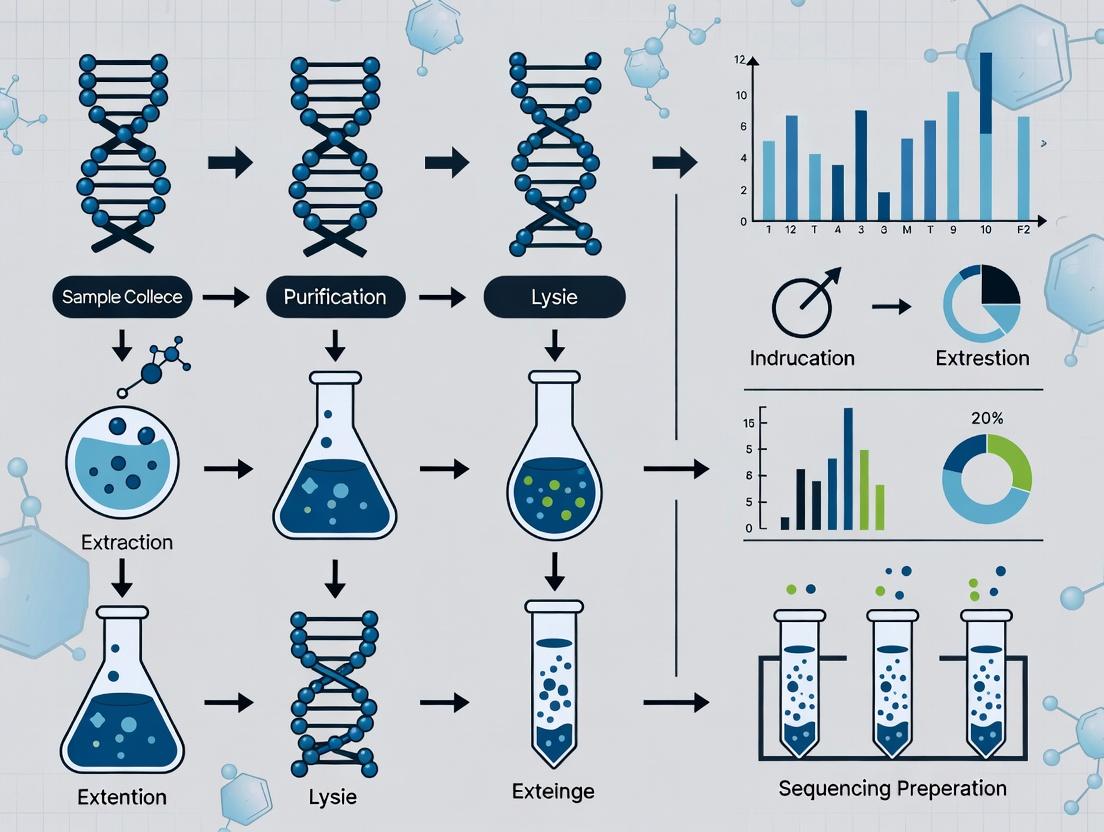
This article provides a detailed, up-to-date guide on DNA extraction methods for stool microbiome analysis, tailored for researchers, scientists, and drug development professionals.
Optimizing DNA Extraction for Stool Microbiome Analysis: A Comprehensive Guide for Biomedical Researchers
Abstract
This article provides a detailed, up-to-date guide on DNA extraction methods for stool microbiome analysis, tailored for researchers, scientists, and drug development professionals. It covers foundational principles of gut microbiome complexity and the critical role of extraction, evaluates commercial kits and standardized protocols like the International Human Microbiome Standards (IHMS) and FDA-ARGOS, addresses common troubleshooting and optimization strategies for challenging samples, and compares method performance through validation metrics including yield, purity, bias, and reproducibility. The goal is to empower informed method selection to generate robust, comparable data for translational and clinical research.
The Gut Microbiome and DNA Extraction: Why Your Method is the Foundation of Your Data
Application Notes
Stool represents a critical but analytically challenging biospecimen for microbiome research. Its matrix is a complex amalgam of (1) microbial biomass (bacteria, archaea, viruses, fungi), (2) host-derived materials (intestinal epithelial cells, immune cells, mucus, digestive enzymes), and (3) non-biological inhibitors (dietary residues, bilirubin, complex polysaccharides, bile salts). Efficient DNA extraction is paramount for accurate downstream analysis, as the composition of this matrix directly impacts extraction yield, purity, and microbial community representation. Variations in protocols can introduce significant bias, affecting the reproducibility and biological interpretation of data.
The choice of DNA extraction method must balance several factors: lysis efficiency across diverse microbial cell walls, effective inhibition of host DNA co-extraction, and robust removal of PCR inhibitors. Mechanical lysis (e.g., bead-beating) is essential for breaking tough Gram-positive bacterial and fungal cell walls, but must be optimized to avoid excessive DNA shearing. Chemical and enzymatic lysis steps complement this process. The subsequent purification must target the removal of humic acids, bilirubin, and other inhibitors that are abundant in stool and can degrade enzyme performance in PCR and sequencing library preparation.
Table 1: Impact of Common Stool Matrix Components on DNA Extraction & Downstream Analysis
| Matrix Component | Source | Primary Interference | Mitigation Strategy in Protocol |
|---|---|---|---|
| Humic Acids | Dietary plant matter decomposition | Bind to nucleic acids & enzymes; inhibit PCR & sequencing | Use polyvinylpolypyrrolidone (PVPP) or specific inhibitor-removal columns |
| Bile Salts | Host digestion | Disrupt cell membranes prematurely; inhibit enzymatic reactions | Include wash buffers with ethanol or isopropanol at appropriate concentrations |
| Complex Polysaccharides (Mucus) | Host secretion | Co-precipitate with DNA; reduce yield & purity | Optimized alcohol precipitation conditions; use of specialized buffers |
| Host Cells | Intestinal epithelium & immune cells | Overwhelm microbial signal; skew abundance metrics | Selective lysis steps (mild detergents) or host DNA depletion kits |
| Bilirubin | Hemoglobin breakdown | Fluorescent compound; interferes with spectrophotometry | Column-based purification; use of Qubit for quantification |
| Bacterial Endospores | Firmicutes (e.g., Clostridia) | Resistant to standard lysis; underrepresentation | Extended bead-beating or use of specialized lytic enzymes |
Table 2: Comparison of Commercially Available Stool DNA Extraction Kits (Representative Data)
| Kit Name | Lysis Principle | Avg. Yield (μg/100mg stool) | A260/280 Purity | Inhibitor Removal Efficacy (PCR) | Bias Against Gram+ Bacteria* |
|---|---|---|---|---|---|
| Kit A (Mechanical Focus) | Intensive bead-beating, chemical lysis | 8.5 ± 2.1 | 1.8 - 2.0 | High | Low |
| Kit B (Chemical Focus) | Enzymatic + chemical lysis, mild beating | 5.2 ± 1.5 | 1.7 - 1.9 | Moderate | Moderate-High |
| Kit C (Spin-Column) | Standardized bead-beating, silica columns | 7.0 ± 1.8 | 1.8 - 2.0 | High | Low-Moderate |
| Kit D (Magnetic Bead) | Bead-beating, magnetic silica particles | 6.8 ± 1.7 | 1.9 - 2.1 | Very High | Low |
*Based on comparative 16S rRNA gene sequencing data versus an intensive, multi-protocol composite standard.
Experimental Protocols
Protocol 1: Standardized Bead-Beating and Column-Based DNA Extraction from Stool
Objective: To extract total genomic DNA from stool samples with high efficiency, purity, and minimal microbial community bias.
Materials:
- Stool sample (fresh or frozen at -80°C)
- Sterile scoop or swab
- PowerLyzer PowerBead Tubes (0.1 mm & 0.5 mm beads)
- Phenol:Chloroform:Isoamyl Alcohol (25:24:1)
- Inhibitor Removal Solution (e.g., Solution C1 from QIAamp kit)
- Lysis Buffer (e.g., ASL buffer)
- Proteinase K
- RNase A
- Absolute ethanol
- Silica-membrane spin columns
- Collection tubes
- Microcentrifuge
- Vortex adapter for bead-beating tubes
- Thermomixer or water bath (56°C, 70°C)
- Qubit Fluorometer and dsDNA HS Assay Kit
Procedure:
- Homogenization: Aliquot 180-220 mg of stool into a PowerBead Tube containing 1.4 mL of lysis buffer (ASL). Vortex thoroughly for 1 minute.
- Heat & Enzymatic Lysis: Add 20 μL of Proteinase K (20 mg/mL). Mix by pulse-vortexing. Incubate at 56°C for 10 minutes in a thermomixer with shaking (900 rpm).
- Mechanical Lysis: Secure tubes in a vortex adapter and bead-beat at maximum speed for 10 minutes.
- Inhibitor Binding: Centrifuge tubes at 13,000 x g for 1 minute. Transfer 1.2 mL of supernatant to a new 2 mL tube. Add 1 volume of Inhibitor Removal Solution (C1). Vortex for 15 seconds. Incubate on ice for 5 minutes.
- Centrifugation: Centrifuge at 13,000 x g for 5 minutes. Carefully transfer the entire supernatant to a new tube.
- Optional RNase Treatment: Add 5 μL of RNase A (100 mg/mL). Incubate at room temperature for 2 minutes.
- Binding: Add 1 volume of binding buffer (e.g., ACB) and 1 volume of ethanol (96-100%). Mix by vortexing for 15 seconds.
- Column Purification: Apply up to 700 μL of the mixture to a silica-membrane spin column. Centrifuge at 13,000 x g for 1 minute. Discard flow-through. Repeat until all lysate is processed.
- Washes: Wash the column with 700 μL of wash buffer AW1. Centrifuge at 13,000 x g for 1 minute. Discard flow-through. Wash with 700 μL of wash buffer AW2. Centrifuge at 13,000 x g for 1 minute. Discard flow-through. Perform a final dry spin at 13,000 x g for 2 minutes.
- Elution: Place the column in a clean 1.5 mL microcentrifuge tube. Apply 50-100 μL of pre-warmed (70°C) elution buffer (AE) or nuclease-free water to the center of the membrane. Incubate at room temperature for 2 minutes. Centrifuge at 13,000 x g for 1 minute to elute DNA.
- Quantification & Storage: Quantify DNA using the Qubit dsDNA HS Assay. Assess purity via A260/A280 ratio (target 1.8-2.0). Store at -20°C or -80°C.
Protocol 2: Assessment of PCR Inhibitor Removal Efficiency
Objective: To evaluate the presence of residual PCR inhibitors in extracted stool DNA.
Materials:
- Extracted stool DNA samples
- PCR-grade water
- Taq DNA Polymerase with standard buffer
- dNTP mix
- Universal 16S rRNA gene primers (e.g., 515F/806R)
- Purified, quantified E. coli genomic DNA (spike-in control)
- Real-time PCR system
Procedure:
- Prepare Dilution Series: Dilute each stool DNA sample to a standard concentration (e.g., 5 ng/μL) in PCR-grade water. Create a 1:10 and 1:100 dilution of this stock.
- Spike-in Control Preparation: Dilute E. coli gDNA to 1 pg/μL.
- PCR Setup: For each stool DNA dilution and a no-template control (NTC), set up a 25 μL reaction containing:
- 1X PCR Buffer
- 200 μM each dNTP
- 0.4 μM each primer
- 1 U Taq Polymerase
- 5 μL of template (stool DNA dilution OR 5 μL of E. coli spike-in [5 pg] for "spiked" reactions)
- PCR-grade water to 25 μL
- For Inhibitor Testing: For each stool DNA dilution, prepare a duplicate reaction spiked with 5 pg of E. coli gDNA (reduce water volume accordingly).
- Real-time PCR Program:
- Initial Denaturation: 95°C for 3 min.
- 35 Cycles: 95°C for 30 sec, 55°C for 30 sec, 72°C for 45 sec.
- Final Extension: 72°C for 5 min.
- (With fluorescence acquisition at the end of each extension step).
- Analysis: Compare the Cycle Threshold (Ct) values:
- The spiked E. coli control alone gives Ct(E).
- The stool sample spiked with E. coli gives Ct(S+E).
- Inhibition is indicated by a ΔCt = Ct(S+E) - Ct(E) > 1.5 cycles. A higher ΔCt in less dilute samples indicates stronger residual inhibition.
The Scientist's Toolkit: Research Reagent Solutions
| Item | Function in Stool DNA Extraction |
|---|---|
| PowerLyzer PowerBead Tubes | Contain a mix of ceramic/silica beads (e.g., 0.1 & 0.5 mm) to mechanically disrupt tough microbial cell walls during vortexing or homogenization. |
| Inhibitor Removal Technology (IRT) / C1 Solution | A proprietary solution that binds to humic acids, bilirubin, and other organic inhibitors, allowing their removal by centrifugation prior to DNA binding. |
| Polyvinylpolypyrrolidone (PVPP) | An additive to lysis buffers that binds polyphenolic compounds (e.g., humic acids), preventing their co-purification with DNA. |
| Guanidine Thiocyanate (GuSCN) | A chaotropic salt used in lysis/binding buffers that denatures proteins, inhibits nucleases, and promotes DNA binding to silica matrices. |
| Silica-Membrane Spin Columns | Devices that, in the presence of high-concentration chaotropic salts, selectively bind DNA while allowing contaminants to pass through during washes. |
| Magnetic Silica Beads | Paramagnetic particles coated with silica for high-throughput, automated DNA purification using magnetic racks, minimizing cross-contamination. |
| Host DNA Depletion Kit (e.g., NEBNext) | Enzymatic or probe-based methods to selectively degrade or remove abundant human/host DNA, enriching for microbial sequences. |
| Qubit dsDNA HS Assay Kit | A fluorescence-based quantification method specific for double-stranded DNA, unaffected by common contaminants that interfere with UV spectrophotometry (A260/280). |
Visualizations
Diagram 1: Stool matrix to microbiome data workflow.
Diagram 2: Core steps in stool DNA extraction.
Diagram 3: PCR inhibition assessment protocol logic.
Within the thesis on DNA extraction methods for stool microbiome analysis, the extraction step is the critical foundation. The quality of downstream data—including 16S rRNA gene sequencing, metagenomic profiling, and biomarker discovery for drug development—is irrevocably shaped by the efficiency, bias, and reproducibility of the DNA extraction protocol. This document outlines application notes and detailed protocols centered on achieving maximal microbial DNA yield, minimizing taxonomic bias, and ensuring robust inter-laboratory reproducibility.
Quantitative Comparison of Common Stool DNA Extraction Kits
Recent studies (2023-2024) have systematically evaluated commercial kits against a standardized mock microbial community. The following table summarizes key performance metrics.
Table 1: Performance Metrics of Selected Stool DNA Extraction Kits (Mock Community Analysis)
| Kit Name / Method | Avg. Total DNA Yield (ng/g stool) | Gram-positive:Gram-negative Recovery Ratio* | Inhibition Rate (qPCR) | Intra-kit CV (%) | Key Bias Identified |
|---|---|---|---|---|---|
| Bead-beating + Phenol-Chloroform (Manual) | 8500 ± 1200 | 0.95:1 | 15% | 25% | High yield but variable; high inhibition risk. |
| Kit Q (Mechanical Lysis) | 5200 ± 450 | 0.98:1 | 5% | 12% | Most balanced community profile. |
| Kit R (Chemical + Thermal Lysis) | 3500 ± 300 | 0.65:1 | 3% | 18% | Under-represents Firmicutes (Gram+). |
| Kit S (Enzymatic + Bead-beating) | 6100 ± 520 | 1.05:1 | 8% | 15% | Slight over-representation of tough spores. |
| Rapid Spin Column Kit T | 1800 ± 200 | 0.55:1 | <1% | 10% | Severe bias against Gram-positive bacteria. |
*Ratio of 1:1 indicates unbiased recovery relative to known mock community composition. CV = Coefficient of Variation.
Detailed Protocol: Optimized Bead-Beating for Maximal Yield and Minimal Bias
This protocol is optimized for 200-250 mg of human stool sample.
Materials & Reagents (The Scientist's Toolkit)
Table 2: Essential Research Reagent Solutions
| Item | Function & Critical Notes |
|---|---|
| Lysis Buffer (500mM Tris, 100mM EDTA, 100mM NaCl, 4% SDS) | Disrupts cell membranes, chelates Mg2+ to inhibit DNases. pH 8.0 is critical. |
| Inhibitor Removal Solution (IRS; e.g., 1M Phosphate Buffer) | Precipitates non-DNA organic and inorganic inhibitors common in stool. |
| Proteinase K (≥20 mg/mL) | Digests proteins and degrades nucleases. Must be added after SDS to prevent precipitation. |
| Homogenization Beads (0.1mm & 0.5mm Zirconia/Silica mix) | 0.1mm beads disrupt small cells; 0.5mm disrupts tough spores and fungi. |
| Phenol:Chloroform:Isoamyl Alcohol (25:24:1) | Organic extraction removes lipids, proteins, and polysaccharides. |
| Isopropanol (with Glycogen carrier, 20µg/mL) | Precipitates DNA; glycogen improves visibility and recovery of low-concentration DNA. |
| DNase/RNase-Free Water (TE Buffer, pH 8.0) | Final elution/storage. EDTA in TE prevents long-term degradation. |
| Internal DNA Extraction Control (e.g., Pseudomonas fluorescens cells) | Spiked pre-extraction to monitor extraction efficiency and detect inhibition. |
Step-by-Step Workflow
- Homogenization: Weigh 200 mg stool into a 2mL bead-beating tube containing 0.1g of the mixed bead matrix. Add 1mL of Lysis Buffer and 50µL of IRS.
- Mechanical Lysis: Secure tubes in a bead-beater homogenizer. Process at 6.0 m/s for 2 x 60 seconds, with 5-minute incubation on ice between cycles.
- Enzymatic Lysis: Add 20µL of Proteinase K (20 mg/mL). Vortex briefly. Incubate at 56°C for 1 hour with gentle agitation.
- Inhibitor Removal: Centrifuge at 13,000 x g for 5 min at 4°C. Transfer supernatant to a fresh 2mL tube.
- Organic Extraction: Add 1 volume of Phenol:Chloroform:Isoamyl Alcohol. Vortex vigorously for 30 sec. Centrifuge at 13,000 x g for 10 min at 4°C. Carefully transfer the upper aqueous phase to a new tube.
- DNA Precipitation: Add 0.7 volumes of room-temperature isopropanol (with glycogen). Invert gently 50x. Incubate at -20°C for 30 min. Centrifuge at 13,000 x g for 15 min at 4°C.
- Wash and Elute: Wash pellet with 1mL of 70% ethanol. Centrifuge at 13,000 x g for 5 min. Air-dry pellet for 10 min. Resuspend in 100µL of TE Buffer. Incubate at 55°C for 10 min to aid dissolution.
- Quality Assessment: Quantify via fluorometry (Qubit). Assess inhibition via qPCR amplification of the internal control and a universal 16S rRNA gene target. Run a fragment analyzer for integrity.
Visualizing Critical Relationships and Workflows
Diagram 1: Interplay of Core Extraction Goals
Diagram 2: Optimized Stool DNA Extraction Workflow
Protocol for Assessing Extraction Bias and Efficiency
Using a Mock Microbial Community
- Material: Defined Mock Community (e.g., ZymoBIOMICS Microbial Community Standard).
- Protocol:
- Resuspend mock community pellet in sterile PBS to simulate stool slurry consistency.
- Aliquot identical volumes for extraction in triplicate using the test method and a reference method (e.g., optimized bead-beating).
- Perform 16S rRNA gene sequencing (full-length or V4 region) on all extracts.
- Analysis: Compare the observed relative abundances to the known composition. Calculate bias indices (e.g., Log2 fold-change) for each constituent taxon. A perfect extraction shows a Log2FC of 0 for all members.
Internal Control Spike-and-Recovery qPCR
- Material: Genomic DNA from a non-strain (Pseudomonas fluorescens).
- Protocol:
- Spike a known quantity (e.g., 10^4 copies) of control DNA into the lysis buffer at the start of extraction.
- Post-extraction, perform absolute qPCR targeting a unique gene from the control.
- Calculation: % Recovery = (Copies recovered / Copies added) * 100. Recovery <90% indicates significant inhibition or DNA loss.
Ensuring Reproducibility: Standardization Notes
- Sample Preservation: Standardize on either immediate freezing at -80°C or use of a stabilization buffer (e.g., RNAlater, Stool Nucleic Acid Collection Tubes). Document hold times.
- Homogenization: Use calibrated, fixed-speed bead-beaters. Record batch numbers for bead types and lot numbers for all reagents.
- Negative Controls: Include a "blank" extraction control with no sample for every batch to monitor kit and laboratory contamination.
- Data Reporting: The MIxS (Minimum Information about any (x) Sequence) standards, specifically the MIMARKS checklist, should be followed to report all extraction parameters.
Application Notes
Within stool microbiome analysis research, DNA extraction is the critical first step determining downstream data accuracy. The core challenge is a dual-front battle: 1) Efficiently lysing robust biological structures (Gram-positive bacterial cell walls, fungal walls, and bacterial endospores) to ensure comprehensive representation, and 2) Effectively removing potent PCR inhibitors (bile salts, complex polysaccharides, dietary-derived phenolics, and humic substances) co-extracted from stool. Failure to address either front skews microbial community profiles and compromises qPCR quantification.
Comparative Performance of Lysis Methods on Tough Structures
The efficacy of mechanical, chemical, and enzymatic lysis methods varies significantly.
Table 1: Lysis Method Efficacy Against Resilient Targets
| Lysis Method | Principle | Relative Efficiency vs. Gram-positives | Relative Efficiency vs. Spores | Co-extraction of Inhibitors | Sample Throughput |
|---|---|---|---|---|---|
| Bead Beating | Mechanical shearing | High (85-95% lysis) | Moderate-High (70-85%) | High | Medium |
| Chemical Lysis (Hot SDS/Alkaline) | Detergent & pH disruption | Moderate (60-75%) | Low (<20%) | Medium | High |
| Enzymatic Lysis (Lysozyme, Mutanolysin) | Peptidoglycan hydrolysis | Targeted High (>90%) for susceptibles | Very Low | Low | Low |
| Thermal Shock (for spores) | Heat activation & germination | Low | High for germinated spores | Low | Medium |
| Combination (Bead + Chemical) | Integrated mechanical/chemical | Very High (90-98%) | High (80-90%) | Very High | Medium |
Quantification of Common Stool-Derived PCR Inhibitors
Inhibitors impact PCR by affecting polymerase activity or nucleic acid binding.
Table 2: Common PCR Inhibitors in Stool Extracts & Removal Efficiency
| Inhibitor Class | Source | Critical Concentration for 50% PCR Inhibition | Effective Removal Methods |
|---|---|---|---|
| Bile Salts | Intestinal secretions | 0.1% (w/v) | Silica-column purification, SPRI beads, size-exclusion chromatography |
| Complex Polysaccharides | Plant matter, microbial capsular | 0.4 μg/μL | CTAB precipitation, optimized silica binding buffers |
| Phenolic Compounds | Diet (plant pigments) | 0.5 mM | Polyvinylpolypyrrolidone (PVPP), activated charcoal |
| Humic Substances | Degraded organic matter | 0.2 μg/μL | Aluminum potassium sulfate, inhibitor-removal resins |
| Hemoglobin/Heme | Blood | 50 μM | Ethanol precipitation with high salt |
Experimental Protocols
Protocol 1: Integrated Mechanical-Chemical Lysis for Comprehensive Biomass Recovery
This protocol maximizes rupture of tough cell walls while managing inhibitor release.
I. Materials & Reagents: "The Scientist's Toolkit"
| Item | Function & Rationale |
|---|---|
| Lysis Buffer (Guanidine Thiocyanate + SDS) | Chaotropic salt denatures proteins, SDS solubilizes membranes. Synergistic with mechanical lysis. |
| Zirconia/Silica Beads (0.1mm & 0.5mm mix) | Differential bead sizes target diverse cell wall strengths. Zirconia resists degradation. |
| Bench-top Bead Beater (e.g., MagNA Lyser) | Provides consistent, high-energy mechanical disruption. |
| Proteinase K (recombinant) | Degrades proteins, destabilizing cell walls and nucleoprotein complexes. Heat-stable. |
| Inhibitor Removal Solution (e.g., Polyvinylpyrrolidone) | Binds polyphenolic inhibitors during extraction. |
| SPRI (Solid Phase Reversible Immobilization) Beads | Selective binding of DNA over inhibitors; allows wash steps. |
| PCR Inhibitor-Removal Column (e.g., OneStep PCR Inhibitor Removal) | Specific resin-based removal of humics, polysaccharides. |
II. Step-by-Step Workflow:
- Homogenization: Suspend 100-200 mg stool in 1 mL Lysis Buffer. Vortex thoroughly.
- Pre-treatment: Add 20 μL Proteinase K (20 mg/mL). Incubate at 56°C for 10 minutes.
- Mechanical Lysis: Transfer to tube containing ~0.3g mixed zirconia beads. Bead beat at 6,500 rpm for 2 cycles of 45 seconds each, with 2-minute intervals on ice.
- Chemical Lysis Completion: Incubate bead-beaten sample at 95°C for 5 minutes.
- Inhibitor Binding: Add 200 μL of 10% Polyvinylpyrrolidone (PVPP) solution. Vortex and incubate on ice for 10 minutes.
- Centrifugation: Centrifuge at 13,000 x g for 5 minutes. Transfer supernatant to a new tube.
- DNA Purification: Use a commercial silica-column or SPRI bead-based kit optimized for stool. Include optional on-column wash with inhibitor-removal wash buffer.
- Final Elution: Elute DNA in 50-100 μL low-EDTA TE buffer or molecular-grade water. Store at -80°C.
Protocol 2: Validation of Lysis Efficiency and Inhibition Management
Quantitative assessment of protocol performance.
I. Assessing Lysis Efficiency:
- Spike-in Control: Prior to lysis, spike sample with a known quantity of Bacillus subtilis spores (e.g., 10^6 CFU) and Micrococcus luteus (Gram-positive) cells.
- qPCR Quantification: Post-extraction, perform qPCR targeting single-copy genes specific to the spike-in organisms.
- Calculation: Lysis Efficiency (%) = (DNA recovered from spike-in / Theoretical DNA yield based on spike-in count) * 100.
II. Assessing PCR Inhibition:
- Internal Amplification Control (IAC): Add a known copy number of a synthetic DNA sequence (non-competitive) to each PCR reaction.
- qPCR Monitoring: Amplify both the sample target and the IAC in duplex or separate reactions.
- Inhibition Metric: Compare the Cq value of the IAC in the sample vs. a no-inhibition control. A ΔCq > 1 indicates significant inhibition.
Visualizations
Diagram 1: The dual-front challenge in stool DNA extraction leading to data bias.
Diagram 2: Integrated workflow combining lysis and inhibitor removal steps.
The Impact of Extraction Bias on Downstream 16S rRNA Gene Sequencing and Shotgun Metagenomics
1. Introduction Within a thesis focused on optimizing DNA extraction methods for stool microbiome analysis, understanding extraction bias is paramount. The choice of extraction protocol systematically alters the observed microbial community composition, impacting data from both 16S rRNA gene sequencing (targeting specific regions) and shotgun metagenomics (capturing all genetic material). This bias stems from differential lysis efficiency of diverse bacterial cell walls (e.g., Gram-positive vs. Gram-negative), co-extraction of PCR inhibitors, and DNA fragment size selection. Consequently, the biological interpretation of downstream analyses—diversity metrics, taxonomic abundance, and functional potential—is inherently confounded by methodological artifacts. This application note details protocols and comparative data to quantify and mitigate this bias.
2. Comparative Quantitative Data: Extraction Kits and Observed Bias
Table 1: Impact of Four Commercial Extraction Kits on Synthetic Microbial Community (ZymoBIOMICS Gut Standard) Analysis
| Extraction Kit (Example) | Mean DNA Yield (ng/µg stool) | Gram+ to Gram- Ratio Bias (vs. Known) | Shannon Diversity Index (16S V4) | % of Expected Species Detected (Shotgun) | Inhibitor Carryover (ΔCq in qPCR) |
|---|---|---|---|---|---|
| Kit A (Bead-beating + Mechanical Lysis) | 45.2 ± 5.1 | 1.05:1 | 2.15 ± 0.08 | 98% | 1.2 |
| Kit B (Enzymatic Lysis Focus) | 28.7 ± 3.8 | 0.65:1 (Under-rep Gram+) | 1.87 ± 0.11 | 82% | 0.5 |
| Kit C (Chemical Lysis Focus) | 32.4 ± 4.2 | 0.71:1 (Under-rep Gram+) | 1.92 ± 0.09 | 85% | 3.5 |
| Kit D (High-Throughput Spin Column) | 38.9 ± 4.9 | 0.89:1 | 2.04 ± 0.10 | 95% | 2.1 |
Table 2: Bias Propagation to Downstream Functional Prediction (from Shotgun Data)
| Functional Pathway (KEGG Level 2) | Kit A (Reference) | Kit B | % Change vs. Kit A | Primary Taxa Contributing to Bias |
|---|---|---|---|---|
| Peptidoglycan Biosynthesis | 1.50% ± 0.15% | 1.10% ± 0.12% | -26.7% | Firmicutes (Gram+) |
| Lipopolysaccharide Biosynthesis | 0.80% ± 0.08% | 0.95% ± 0.09% | +18.8% | Bacteroidetes (Gram-) |
| Sporulation | 0.45% ± 0.05% | 0.30% ± 0.04% | -33.3% | Clostridiales |
3. Detailed Experimental Protocols
Protocol 3.1: Benchmarking DNA Extraction Kits Using a Mock Community Objective: To quantitatively assess the lysis bias and inhibitor co-extraction of different DNA isolation methods. Materials: ZymoBIOMICS Gut Microbial Community Standard (D6300), four target extraction kits, phosphate-buffered saline (PBS), sterile 2ml bead-beating tubes, bench-top centrifuge, Qubit fluorometer, real-time PCR system. Procedure:
- Sample Aliquot: Resuspend the mock community standard according to the manufacturer's instructions. Aliquot 200µl (∼2 x 10^8 cells) into ten 2ml tubes per extraction kit to be tested.
- Extraction: Perform DNA extraction following each kit's standard protocol for stool. For kits without integrated bead-beating, use a homogenizer (e.g., 6.5 m/s for 60s) with 0.1mm glass/silica beads.
- DNA Quantification: Quantify total DNA yield using a fluorescence-based assay (e.g., Qubit dsDNA HS Assay). Record yield in ng/µl.
- Inhibitor Assessment: Perform a standardized qPCR assay (e.g., 16S rRNA gene universal primers) on a dilution series of each extract. Calculate the ΔCq value (shift in quantification cycle) compared to a clean control DNA template at the same concentration.
- Sequencing Library Prep: For both 16S (V4 region, primers 515F/806R) and shotgun libraries (350bp insert), use equal input DNA mass (e.g., 10ng) from each extract.
Protocol 3.2: Evaluating Lysis Efficiency via Spiked-In Internal Controls Objective: To differentiate between lysis bias and downstream PCR/sequencing bias. Materials: Pseudomonas aeruginosa (Gram-negative control), Clostridium difficile (Gram-positive control), Methanobrevibacter smithii (Archaea control), culture equipment, specific qPCR assays for each control. Procedure:
- Control Cell Preparation: Grow control organisms to mid-log phase. Wash cells in PBS and enumerate via flow cytometry or plate counting to create a stock of known concentration (CFU/ml).
- Spike-In: Add a known, equal number of cells from each control organism (e.g., 1 x 10^5 CFU each) to identical aliquots of a complex stool sample or lysis buffer prior to extraction.
- Co-Extraction: Perform DNA extraction using the protocol under evaluation.
- Quantitative Recovery Analysis: Use species-specific qPCR (or ddPCR for absolute quantification) to measure the DNA copies recovered for each spiked-in control. Calculate recovery efficiency as: (Copies recovered / Copies input) * 100%.
- Bias Calculation: The ratio of recovery efficiencies (e.g., Gram+/Gram-) directly quantifies the lysis bias of the protocol.
4. Visualization of Experimental Workflow and Bias Impact
Diagram 1: Workflow of extraction bias impact assessment.
Diagram 2: Sources and consequences of extraction bias.
5. The Scientist's Toolkit: Key Research Reagent Solutions
Table 3: Essential Materials for Extraction Bias Studies
| Item | Function & Rationale |
|---|---|
| ZymoBIOMICS Gut Microbial Community Standard (D6300) | Defined mock community with known composition. Serves as a ground-truth control for quantifying taxonomic bias in extraction and sequencing. |
| Hard-to-Lysis Control Cells (e.g., Micrococcus luteus) | Gram-positive bacteria with robust cell walls. Spiked into samples to empirically measure lysis efficiency of a protocol. |
| Inhibitor Spike (e.g., Humic Acid Solution) | Known PCR inhibitor. Added to lysis buffer to test an extraction kit's inhibitor removal capabilities. |
| Magnetic Bead-Based Cleanup Kits (e.g., SPRIselect) | Allow for size selection of DNA fragments post-extraction. Critical for evaluating and controlling for fragment-length bias in shotgun metagenomics. |
| PCR Inhibition Detection Kit (e.g., internal positive control) | Contains a synthetic DNA template and primers. Spiked into PCR reactions to detect residual inhibitors via Cq shift. |
| DNA Standard for Metagenomics (e.g., ATCC MSA-1003) | Complex genomic material from 20 strains. Used for benchmarking shotgun metagenomic workflow performance, including extraction. |
| Stool Storage & Stabilization Buffer (e.g., OMNIgene·GUT, DNA/RNA Shield) | Preserves microbial composition at point of collection, minimizing pre-extraction bias from sample degradation. |
A Practical Guide to Stool DNA Extraction Kits and Standardized Protocols
Within the broader thesis on optimizing DNA extraction methods for stool microbiome analysis, the lysis step is paramount for unbiased microbial representation. Mechanical lysis via bead-beating and enzymatic lysis represent fundamentally different approaches to disrupting the robust cell walls of Gram-positive bacteria, spores, and other recalcitrant organisms prevalent in stool. This application note examines bead-beating intensity and duration as critical, often confounding, variables when compared to gentler enzymatic methods. The goal is to provide protocols and data to guide researchers in selecting parameters that maximize yield and community representation while minimizing DNA shearing and bias.
Table 1: Impact of Bead-Beating Parameters on DNA Yield and Quality from Stool Samples
| Lysis Method | Bead Size (mm) | Duration (min) | Speed (RPM) | Mean DNA Yield (ng/µg) | Mean Fragment Size (bp) | Shannon Index (Alpha Diversity) |
|---|---|---|---|---|---|---|
| Enzymatic Only | N/A | 60 (incubation) | N/A | 45.2 ± 12.1 | >23,000 | 6.1 ± 0.4 |
| Bead-Beating (Low) | 0.1 | 2 | 1800 | 68.5 ± 15.3 | 15,000 ± 2000 | 6.8 ± 0.3 |
| Bead-Beating (Medium) | 0.1 | 3 | 3200 | 82.1 ± 18.7 | 8,000 ± 1500 | 7.2 ± 0.2 |
| Bead-Beating (High) | 0.1 | 5 | 4800 | 75.4 ± 20.1 | 3,000 ± 1000 | 6.9 ± 0.5 |
| Bead-Beating (Mixed Beads) | 0.1 & 0.5 | 3 | 3200 | 88.3 ± 16.9 | 5,500 ± 1200 | 7.4 ± 0.3 |
Table 2: Relative Abundance (%) of Selected Bacterial Groups by Lysis Method
| Taxonomic Group | Enzymatic Only | Bead-Beating (Low) | Bead-Beating (Medium) | Bead-Beating (High) |
|---|---|---|---|---|
| Firmicutes | 40.1 ± 5.2 | 48.3 ± 4.1 | 52.2 ± 3.8 | 50.9 ± 4.5 |
| Bacteroidetes | 45.3 ± 4.8 | 41.2 ± 3.9 | 38.1 ± 3.5 | 39.0 ± 4.1 |
| Actinobacteria | 8.1 ± 2.1 | 5.2 ± 1.5 | 4.8 ± 1.2 | 4.5 ± 1.3 |
| Proteobacteria | 4.5 ± 1.8 | 3.8 ± 1.2 | 3.5 ± 1.0 | 4.1 ± 1.4 |
| Recalcitrant Cells (Spores/Cysts) | Estimated Low | Moderate | High | Very High |
Detailed Experimental Protocols
Protocol 1: Optimized Bead-Beating for Comprehensive Stool Lysis
Objective: To mechanically disrupt the full spectrum of microbial cells in a stool sample. Materials: See "The Scientist's Toolkit" below. Procedure:
- Sample Preparation: Aliquot 180-220 mg of homogenized stool into a 2 ml screw-cap tube containing 1.4 mm (ceramic) and 0.1 mm (silica) beating beads.
- Lysis Buffer Addition: Add 800 µL of a guanidine thiocyanate-based lysis buffer (e.g., from QIAamp PowerFecal Pro DNA Kit) and 100 µL of 10% SDS.
- Bead-Beating: Secure tubes in a high-throughput homogenizer (e.g., Fisherbrand Bead Mill 24). Process at 3200 RPM for 3 minutes. Ensure the instrument is in a cold room or uses a cooling block to prevent heat generation.
- Cooling & Clarification: Immediately place tubes on ice for 2 minutes. Centrifuge at 13,000 x g for 5 minutes at 4°C to pellet debris.
- Supernatant Transfer: Carefully transfer up to 700 µL of the supernatant to a new 2 ml tube, avoiding the pellet and bead layer.
- Proceed to Purification: Follow standard silica-column or magnetic bead-based purification protocols.
Protocol 2: Sequential Enzymatic-Mechanical Lysis
Objective: To combine gentle enzymatic pre-treatment with targeted mechanical lysis for sensitive samples or downstream long-read sequencing. Procedure:
- Enzymatic Pre-treatment: Resuspend 200 mg stool in 1 mL of enzymatic lysis cocktail (20 mg/mL Lysozyme, 5 U/mL Mutanolysin, 20 mM Tris-HCl, pH 8.0, 2 mM EDTA). Incubate at 37°C for 60 minutes with gentle agitation.
- Buffer Addition: Add 200 µL of 10% SDS and 800 µL of guanidine-based buffer. Mix by inversion.
- Gentle Bead-Beating: Add 0.5 mm glass beads. Process at 1800 RPM for 60 seconds.
- Heat Step: Incubate at 70°C for 10 minutes.
- Clarification & Purification: Centrifuge and transfer supernatant as in Protocol 1, Step 5. Proceed to DNA purification.
Visualizations: Workflows and Decision Pathways
Diagram Title: Lysis Method Selection for Stool Microbiome DNA Extraction
Diagram Title: Bead-Beating Lysis Workflow and Critical Variables
The Scientist's Toolkit: Essential Research Reagents & Materials
Table 3: Key Reagents and Materials for Stool Lysis Optimization
| Item | Function in Lysis | Example Product/Brand | Key Consideration |
|---|---|---|---|
| Guanidine Thiocyanate Buffer | Chaotropic agent. Denatures proteins, inhibits nucleases, and aids in nucleic acid binding to silica. | QIAamp PowerFecal Pro DNA Kit Buffer, ZymoBIOMICS Lysis Solution | Concentration is critical for effective inhibition of RNases and DNases. |
| Ceramic Beads (1.4 mm) | Primary mechanical disruptors for breaking up stool matrix and larger microbial structures. | Garnet beads, Zirconia/Silica beads | Inert and prevent DNA adsorption better than some glass beads. |
| Silica/Glass Beads (0.1 mm) | Targets small, hard-to-lyse bacterial cells through high-frequency impact. | Acid-washed silica beads | Smaller size increases lysis efficiency but also shear forces. |
| High-Throughput Homogenizer | Instrument for consistent, high-speed bead-beating of multiple samples. | Fisherbrand Bead Mill 24, MP Biomedicals FastPrep-24 | Must have adjustable speed and time settings, with cooling capability. |
| Lysozyme | Enzymatic lysis agent. Breaks down peptidoglycan in Gram-positive bacterial cell walls. | Sigma-Aldrich Lysozyme from chicken egg white | Effective concentration and incubation time vary by sample type. |
| Mutanolysin | Specialized enzyme for breaking streptococcal and other bacterial cell walls. | Sigma-Aldrich Mutanolysin from Streptomyces globisporus | Often used in combination with lysozyme for enhanced lysis. |
| Proteinase K | Broad-spectrum serine protease. Degrades proteins and inactivates nucleases. | Invitrogen Proteinase K, recombinant | Requires incubation at 56°C; essential for enzymatic digestion of stool. |
| Inhibitor Removal Technology (IRT) | Specific compounds or matrices to bind and remove PCR inhibitors (e.g., humic acids) common in stool. | Qiagen's Inhibitor Removal Technology, Zymo's Inhibitor Removal Solution | Integrated into many stool-specific extraction kits; critical for downstream success. |
Application Notes In stool microbiome research, the choice of DNA extraction kit fundamentally shapes downstream 16S rRNA gene sequencing and metagenomic results by introducing biases in lysis efficiency, DNA yield, purity, and microbial community representation. This review, framed within a thesis on optimizing DNA extraction for reproducible microbiome analysis, evaluates leading commercial kits. The primary challenge is overcoming stool's complex matrix—comprising host cells, dietary residues, PCR inhibitors (e.g., bile salts, complex polysaccharides), and microbes with varying cell wall strengths (Gram-positive vs. Gram-negative bacteria, spores, fungi).
This analysis focuses on kits employing two dominant strategies: (1) Mechanical lysis-centric protocols (e.g., DNeasy PowerLyzer, MP Biomedicals FastDNA Spin Kit) that utilize vigorous bead-beating to ensure uniform disruption of tough cell walls, and (2) Integrated chemical-mechanical lysis protocols (e.g., QIAGEN QIAamp PowerFecal Pro, Thermo Fisher MagMAX Microbiome) that combine chemical lysis with controlled mechanical disruption, often followed by magnetic bead-based purification for high-throughput compatibility.
Critical performance metrics include DNA yield (ng/mg stool), purity (A260/A280, A260/A230), fragment size, inhibitor removal efficacy, and representation of hard-to-lyse taxa (e.g., Firmicutes, Actinobacteria). Consistency and compatibility with automated platforms are also vital for large-scale studies.
Comparative Performance Data
Table 1: Comparison of Key Commercial Stool DNA Extraction Kits
| Kit Name (Manufacturer) | Core Technology | Avg. Yield (ng/mg stool) | Purity (A260/A280) | Inhibitor Removal | Protocol Duration (Manual) | Automation Compatibility |
|---|---|---|---|---|---|---|
| QIAamp PowerFecal Pro (QIAGEN) | Chemical lysis + bead-beating, spin column | 50-150 | 1.7-1.9 | Excellent (InhibitEX buffer) | ~1 hour | Yes (QIAcube) |
| MagMAX Microbiome (Thermo Fisher) | Chemical/mechanical lysis, magnetic beads | 40-120 | 1.8-2.0 | Excellent (MagMAX beads) | ~1.25 hours | Yes (KingFisher, MagMAX) |
| DNeasy PowerLyzer (QIAGEN) | Intensive bead-beating, spin column | 80-200 | 1.6-1.8 | Good | ~1.5 hours | Limited |
| FastDNA Spin Kit (MP Biomedicals) | High-speed bead-beating (FastPrep), spin column | 100-300 | 1.7-1.9 | Moderate | ~1 hour | No |
| ZymoBIOMICS DNA Miniprep (Zymo Research) | Bead-beating, spin column (Inhibitor Removal Tech) | 60-180 | 1.8-2.0 | Excellent | ~1 hour | Yes (B.E.A.S.T.) |
| Nexterra DNA Flex (Illumina) | Enzymatic/chemical lysis, magnetic beads | 30-100 | 1.8-2.0 | Excellent | ~1.5 hours | Yes (iSeq, NextSeq) |
Table 2: Microbial Community Bias Assessment (Relative Abundance % by Kit)
| Representative Taxon | PowerFecal Pro | MagMAX Microbiome | PowerLyzer | FastDNA Spin | Notes |
|---|---|---|---|---|---|
| Firmicutes (Gram+) | 25-35% | 28-38% | 30-40% | 32-42% | Higher yields with intensive bead-beating. |
| Bacteroidetes (Gram-) | 45-55% | 42-52% | 40-50% | 38-48% | Can be over-represented with gentle lysis. |
| Actinobacteria (Gram+) | 2-4% | 3-5% | 4-6% | 5-7% | Very cell-wall tough; needs aggressive lysis. |
| Proteobacteria (Gram-) | 1-3% | 1-3% | 1-2% | 1-2% | Variable. |
| Total DNA Yield | Consistent | Consistent | High, Variable | Highest, Variable | Yield variability correlates with lysis aggressiveness. |
Detailed Experimental Protocols
Protocol 1: Standardized Stool DNA Extraction using QIAamp PowerFecal Pro Kit Principle: This protocol uses a proprietary InhibitEX tablet to adsorb PCR inhibitors, followed by simultaneous chemical and mechanical lysis in a PowerBead Tube, and final purification via a silica-membrane spin column.
- Homogenization: Aliquot 180-220 mg of raw or preserved stool into a PowerBead Tube.
- Inhibitor Removal: Add InhibitEX Tablet and vortex vigorously for 1 min. Incubate at 70°C for 5 min. Vortex for 15 sec. Centrifuge at 13,000-20,000 x g for 1 min.
- Lysis: Transfer supernatant to a new tube. Add 200 µL Buffer APL2 and 200 µL ethanol. Vortex.
- Binding: Apply mixture to an MB Spin Column. Centrifuge at 13,000 x g for 1 min. Discard flow-through.
- Washes: Add 500 µL Buffer AW1. Centrifuge at 13,000 x g for 1 min. Discard flow-through. Add 500 µL Buffer AW2. Centrifuge at 13,000 x g for 1 min. Discard flow-through. Perform a final dry spin at 13,000 x g for 2 min.
- Elution: Place column in a clean 1.5 mL tube. Apply 50-100 µL Buffer ATE or nuclease-free water to the membrane. Incubate for 1 min at room temperature. Centrifuge at 13,000 x g for 1 min. Store DNA at -20°C.
Protocol 2: High-Throughput Extraction using MagMAX Microbiome Kit on a KingFisher System Principle: This automated protocol uses magnetic bead-based purification with specialized wash buffers to remove inhibitors, following chemical and mechanical lysis.
- Plate Setup (Deep-Well 96-Plate):
- Plate 1 (Sample Plate): 100 µL stool slurry + 100 µL Lysis Buffer + 200 µL binding beads.
- Plate 2 (Wash 1): 200 µL Wash Buffer 1.
- Plate 3 (Wash 2): 200 µL Wash Buffer 2.
- Plate 4 (Elution Plate): 100 µL Elution Buffer.
- Automated Run: Load plates onto KingFisher instrument. Run pre-programmed "MagMAX_Microbiome" protocol. Key steps: Bead mixing for lysis/binding (10 min), two magnetic wash steps, and a 5-minute elution.
- Recovery: Transfer eluted DNA from Plate 4 to a storage plate. Quantify and store at -20°C.
Visualizations
Diagram 1: Generic Workflow for Stool DNA Extraction Kits
Diagram 2: Lysis Method Impact on Microbial Community Bias
The Scientist's Toolkit: Essential Research Reagent Solutions
Table 3: Key Reagents and Materials for Stool DNA Extraction Research
| Item | Function & Importance | Example Product/Note |
|---|---|---|
| Inhibitor Removal Beads/Resin | Selectively binds humic acids, bile salts, and polysaccharides; critical for PCR success. | InhibitEX Tablets (QIAGEN), OneStep PCR Inhibitor Removal (Zymo) |
| Lysis Beads (≤0.1mm) | Mechanically disrupts robust microbial cell walls (Gram-positives, spores). Essential for unbiased lysis. | Zirconia/Silica beads (e.g., BioSpec 0.1mm) |
| Proteinase K | Proteolytic enzyme that degrades proteins and enhances cell wall breakdown. | Molecular biology grade, >30 U/mg |
| PCR Inhibition Spike-in Control | Internal control to detect residual inhibitors in extracted DNA. | PCR Efficiency Kits (e.g., from ATCC) |
| Mock Microbial Community | Defined mix of microbial cells/genomic DNA to benchmark extraction kit performance and bias. | ZymoBIOMICS Microbial Community Standard |
| Automation-Compatible Plates | For high-throughput processing. Must be low-binding and withstand bead-beating. | 96-well Deep Well Plates, 2.0 mL, square well |
| RNA Later or similar | Nucleic acid stabilizer for field collection and long-term stool storage at -80°C. | Thermo Fisher RNAlater, OMNIgene.GUT |
Within a thesis focused on optimizing DNA extraction for stool microbiome research, the adoption of the International Human Microbiome Standards (IHMS) Standard Operating Procedures (SOPs) is a critical foundation. These protocols provide the methodological rigor necessary for reproducible, comparable, and high-quality data across global studies—essential for both basic research and translational drug development.
Application Notes on IHMS SOP for Stool DNA Extraction
The IHMS consortium established that DNA extraction methodology is the single greatest technical variable affecting microbial community profiles. The recommended QIAamp DNA Stool Mini Kit protocol includes specific lysis enhancements to maximize yield from Gram-positive bacteria.
Key Quantitative Findings from IHMS Benchmarking Studies:
Table 1: Impact of Extraction Protocol on Microbial Community Metrics
| Metric | Protocol A (Bead-beating) | Protocol B (Enzymatic Lysis) | Notes |
|---|---|---|---|
| Total DNA Yield | 25.4 ± 8.7 µg/100 mg stool | 12.1 ± 5.2 µg/100 mg stool | Bead-beating yields significantly higher (p<0.01) |
| Firmicutes/Bacteroidetes Ratio | 1.8 ± 0.5 | 3.4 ± 1.1 | Bead-beating reduces bias against Gram-positives |
| Observed Species Richness (Alpha Diversity) | 215 ± 32 | 178 ± 41 | Bead-beating recovers 20% more species (p<0.05) |
| Inter-Sample Variability (Beta Diversity) | 15% lower technical variation | Higher technical variation | Standardization reduces batch effects |
Detailed Experimental Protocol: IHMS SOP 07 V1 (Adapted)
Title: Standardized DNA Extraction from Human Stool Using Bead-Beating and the QIAamp Platform.
Principle: Mechanical disruption of microbial cells via bead-beating combined with chemical lysis and silica-membrane purification.
Materials:
- Frozen stool aliquot (100 mg ± 10 mg)
- Inhibitor Removal Technology (IRT) buffer (provided)
- ASL lysis buffer
- Proteinase K
- Lysozyme (20 mg/mL)
- Bead-beating tubes (0.1 mm and 0.5 mm zirconia/silica beads)
- QIAamp spin columns
- Ethanol (96-100%)
- AE elution buffer
- Vortexer with bead-beating adapter
- Thermomixer or water bath (70°C)
- Microcentrifuge
- RNase A (optional)
Procedure:
- Homogenization: Weigh 100 mg stool into a bead-beating tube containing 1.4 mL of ASL buffer. Vortex thoroughly.
- Heat Lysis: Incubate the suspension at 70°C for 5 minutes in a thermomixer (900 rpm). Vortex again.
- Bead-Beating: Secure tubes in a vortex adapter and bead-beat at maximum speed for 10 minutes.
- Enzymatic Lysis: Centrifuge tubes briefly. Transfer 1.2 mL of supernatant to a new tube. Add 40 µL of Proteinase K and 50 µL of Lysozyme (20 mg/mL). Mix and incubate at 70°C for 10 minutes.
- Inhibitor Removal: Centrifuge at 20,000 x g for 1 minute. Transfer up to 1.2 mL of supernatant to a new tube. Add 1 InhibitEX tablet. Vortex for 1 minute until homogenous. Incubate at room temp for 1 minute.
- Binding: Centrifuge the InhibitEX mixture at 20,000 x g for 3 minutes. Pipette 200 µL of supernatant into a new tube with 15 µL Proteinase K. Add 200 µL of AL buffer, mix, and incubate at 70°C for 10 minutes.
- Column Purification: Add 200 µL ethanol (96-100%) to the lysate, mix. Apply entire mixture to a QIAamp spin column. Centrifuge at 20,000 x g for 1 minute. Discard flow-through.
- Washes: Add 500 µL AW1 buffer, centrifuge (1 min), discard flow-through. Add 500 µL AW2 buffer, centrifuge (1 min), discard flow-through. Perform a final dry spin at 20,000 x g for 3 minutes.
- Elution: Place column in clean 1.5 mL tube. Apply 100 µL of pre-warmed (70°C) AE buffer to the membrane. Incubate at room temp for 5 minutes. Centrifuge at 20,000 x g for 1 minute. Store DNA at -80°C.
Visualization of Workflows
IHMS DNA Extraction Core Workflow
Downstream Analysis Pathway Post-Extraction
The Scientist's Toolkit: Key Research Reagent Solutions
Table 2: Essential Materials for IHMS-Compliant Stool DNA Extraction
| Item | Function / Rationale | Example Product |
|---|---|---|
| Bead-Beating Tubes | Mechanical disruption of tough microbial cell walls (esp. Gram-positive). Critical for unbiased lysis. | Lysing Matrix E (MP Biomedicals) or 0.1 mm zirconia beads |
| Inhibitor Removal Buffers | Binds stool-derived PCR inhibitors (bile salts, complex polysaccharides). Essential for downstream success. | Inhibitor Removal Technology (IRT) buffer (Qiagen) |
| Silica-Membrane Spin Columns | Selective binding and purification of DNA, removing contaminants and enzyme residues. | QIAamp mini spin columns |
| Lysozyme | Enzymatic digestion of peptidoglycan in bacterial cell walls, complementing mechanical lysis. | Molecular biology-grade lysozyme |
| RNase A (Optional) | Degrades contaminating RNA to increase DNA purity and accurate quantitation. | DNase-free RNase A |
Within a comprehensive thesis on DNA extraction methods for stool microbiome analysis, sample integrity is the foundational variable. The decision to process stool fresh, freeze it, or employ a chemical stabilization buffer profoundly impacts downstream DNA yield, microbial community representation, and experimental reproducibility. These application notes detail the critical considerations, comparative data, and standardized protocols for these pre-extraction handling methods.
Quantitative Impact on Microbial Community Analysis
Table 1: Comparative Effects of Common Stool Preservation Methods on DNA and Microbiota
| Parameter | Fresh Processing (Gold Standard) | Immediate Freezing at -80°C | Commercial Stabilization Buffer (e.g., OMNIgene•GUT, RNAlater) |
|---|---|---|---|
| Primary Goal | Minimize pre-analytical variability. | Halt biological activity via rapid freezing. | Stabilize nucleic acids at ambient temperature for transport/storage. |
| DNA Yield | High (baseline). | Comparable to fresh if frozen within 1-2 hours. | Often slightly reduced due to buffer dilution; highly reproducible. |
| DNA Integrity | High. | High. | High for DNA; RNA preservation superior to freezing alone. |
| Bias in Composition | Minimal. | Moderate; some taxa (e.g., Bacteroidetes) may be sensitive to freeze-thaw. | Buffer-specific biases reported; generally stabilizes the in vivo profile. |
| Critical Time Window | <15 minutes (optimal). | ≤2 hours from collection for minimal shift. | Up to several days at room temp post-stabilization. |
| Key Advantage | Captures "true" state. | Long-term storage feasibility. | Logistics, stability, and standardization for multi-site studies. |
| Key Disadvantage | Logistically challenging, not scalable. | Requires constant cold chain, freeze-thaw effects. | Cost, introduction of buffer chemicals, potential inhibitor carryover. |
Table 2: Representative Quantitative Changes in Key Phyla Relative to Fresh Processing (Data synthesized from recent longitudinal studies)
| Preservation Method | Firmicutes | Bacteroidetes | Proteobacteria | Actinobacteria |
|---|---|---|---|---|
| Frozen (-80°C) | -2% to +5% | -10% to +3% | +1% to +15%* | -5% to +5% |
| Stabilization Buffer | -8% to +4% | -5% to +8% | -2% to +5% | -10% to +2% |
*Variability often linked to delays before freezing.
Detailed Experimental Protocols
Protocol A: Optimal Fresh Stool Processing for DNA Extraction
Objective: To process fresh stool samples for DNA extraction with minimal alteration to the native microbial community. Reagents & Equipment: Anaerobic chamber (optional but recommended), pre-weighed sterile bead-beating tubes, sterile spatulas, ice, DNA extraction kit (e.g., QIAamp PowerFecal Pro DNA Kit), microcentrifuge.
- Preparation: Pre-cool a metal tray or weigh boat on ice inside an anaerobic chamber (if using).
- Homogenization: Using a sterile spatula, transfer 180-220 mg of stool (from multiple sites within the sample if heterogeneous) into a bead-beating tube containing lysis buffer and garnet beads. Perform this step within 15 minutes of sample production.
- Immediate Lysis: Securely close the tube and begin mechanical lysis immediately using a bead-beater (e.g., 2 x 45 seconds at 6 m/s) or vortex adapter.
- DNA Extraction: Proceed directly with the remainder of the manufacturer's DNA extraction protocol without interruption. Note: If immediate full extraction is impossible, complete the lysis step and store the lysate at -80°C.
Protocol B: Standardized Frozen Stool Processing
Objective: To process stool samples that have been stored frozen at -80°C, minimizing biases introduced by thawing. Reagents & Equipment: Cryostorage vials, dry ice, sterile stainless steel spatulas cooled with liquid nitrogen, -80°C freezer.
- Rapid Transfer: Upon receipt, aliquot fresh stool into cryovials and immediately snap-freeze in liquid nitrogen or a dry ice-ethanol bath. Store long-term at -80°C.
- Controlled Thaw: For DNA extraction, remove one vial and keep it partially frozen on dry ice or a pre-cooled block.
- Subsampling While Frozen: Using a sterile, pre-chilled spatula, quickly scrape or chip off the required mass of stool from the still-frozen core of the sample. Transfer this fragment directly into a bead-beating tube containing lysis buffer.
- Immediate Lysis: Place the tube back on ice and proceed with mechanical lysis as in Protocol A. Avoid allowing the entire sample to thaw and re-freeze.
Protocol C: Processing Buffer-Stabilized Stool
Objective: To extract DNA from stool preserved in a commercial stabilization buffer. Reagents & Equipment: Stabilization buffer collection kit (e.g., OMNIgene•GUT, Streck Cell-Free DNA BCT), vortex mixer, microcentrifuge.
- Stabilization: At point of collection, add the exact recommended mass of stool (e.g., 100 mg) to the tube containing stabilization buffer. Shake vigorously for 30 seconds to 5 minutes as per manufacturer instructions.
- Storage/Transport: Store stabilized samples at room temperature for up to the buffer's validated period (typically 7-60 days).
- Aliquoting for Extraction: Vortex the stabilized mixture thoroughly. Pipette a precise volume of the homogenized slurry (e.g., 200 µL) into the bead-beating tube. Note: The starting material is a liquid suspension, not solid stool.
- Buffer-Specific Steps: Follow any manufacturer-recommended pre-lysis steps (e.g., heat treatment, additional centrifugation). Proceed with standard bead-beating and DNA extraction.
Visualization of Method Decision Pathways
Title: Decision Workflow for Stool Preservation Method
Title: Sources of Bias from Preservation to Data
The Scientist's Toolkit: Essential Research Reagents & Materials
Table 3: Key Reagents and Solutions for Stool Sample Processing
| Item | Function & Rationale |
|---|---|
| Anaerobic Chamber | Creates an oxygen-free environment for fresh processing, preventing exposure-induced shifts in obligate anaerobes. |
| Garnet Beads (0.1-0.5 mm) | Mechanical shearing agents for rigorous cell wall disruption of tough Gram-positive bacteria during lysis. |
| Lysis Buffer (e.g., SLB + EDTA) | Sodium phosphate buffer (SLB) maintains osmotic stability, while EDTA chelates Mg2+ to inhibit DNases. |
| Commercial Stabilization Buffer (OMNIgene•GUT) | Contains guanidine salts and chaotropes to denature nucleases and stabilize microbial profiles at room temperature. |
| Proteinase K | Protease that degrades proteins, inactivating nucleases and aiding in the release of DNA from complexes. |
| Inhibitor Removal Technology (IRT) Columns | Silicon membrane columns with specialized chemistry to adsorb humic acids, bile salts, and polysaccharides. |
| DNA Elution Buffer (10 mM Tris-HCl, pH 8.5) | Low-ionic-strength, slightly basic buffer ideal for stable, long-term storage of purified DNA and compatibility with downstream enzymes. |
| Dry Ice / Liquid N₂ | Enables rapid, snap-freezing of samples to form small ice crystals, minimizing cell rupture and preserving community structure. |
| Sterile, RNase/DNase-Free Cryovials | For long-term archival of frozen samples or lysates, preventing contamination and sample degradation. |
Automation and High-Throughput Workflows for Large-Scale Cohort Studies
Application Notes
Context: Within the broader thesis on optimizing DNA extraction methods for stool microbiome analysis, the transition from manual, low-throughput protocols to automated, high-throughput workflows is critical for large-scale cohort studies. Such studies, essential for population-level microbiome-disease associations, require reproducibility, reduced cross-contamination, and processing efficiency that can only be achieved through systematic automation.
Key Challenges Addressed:
- Sample Integrity: Automated liquid handling minimizes batch effects and technician-induced variability in the initial lysis and homogenization steps, which are pivotal for DNA yield and microbial representation.
- Process Standardization: Robotics enforce precise timing and reagent volumes across thousands of samples, a prerequisite for meaningful comparative analysis in drug development research.
- Contamination Control: Closed-system automation and disposable tip heads virtually eliminate amplicon and sample-to-sample carryover.
- Data Integrity: Automated sample tracking via barcodes directly links physical samples to metadata from sample accessioning through sequencing, ensuring chain of custody.
Quantitative Benefits: Data from recent implementations highlight the impact of automation.
Table 1: Comparative Metrics: Manual vs. Automated Stool DNA Extraction Workflows
| Metric | Manual (Single Technician) | Automated (Platform e.g., Hamilton Microlab STAR) | Improvement Factor |
|---|---|---|---|
| Samples Processed per 8-hour Shift | 48 - 96 | 384 - 576 | 4x - 8x |
| Hands-on Time per 96 Samples | ~6 hours | ~1 hour (loading only) | ~80% reduction |
| Inter-Sample Coefficient of Variation (DNA Yield) | 15% - 25% | 5% - 10% | 2x - 3x improvement |
| Reagent Cost per Sample | $X (Baseline) | ~0.85 * $X | ~15% reduction |
| Plate-to-Plate Contamination Events | 1-2 per 1000 samples | <0.1 per 1000 samples | >10x reduction |
Detailed Experimental Protocols
Protocol 1: Automated High-Throughput Stool Sample Homogenization and Lysis
Objective: To standardize the initial critical step of microbial cell disruption for 96-well plate-based DNA extraction.
Materials: See "The Scientist's Toolkit" below.
Workflow:
- Sample Registration & Aliquoting: Thaw deep-well 96-well plates containing pre-weighed stool aliquots (e.g., 100-200 mg) on a cooling rack (4°C). Scan plate barcode into Laboratory Information Management System (LIMS).
- Automated Lysis Buffer Addition: The robotic system, using a 1mL 96-channel head, adds 800 µL of Inhibitor Removal Technology (IRT) buffer containing garnet beads to each well. Internal standards (e.g., 10^5 copies of Pseudomonas fluorescens DNA) are spiked into the buffer reservoir for downstream quantitative normalization.
- Sealing & Homogenization: The robot places a pre-pierced sealing mat on the plate. The sealed plate is automatically transferred via conveyor to a high-throughput bead mill homogenizer (e.g., OMNI Bead Ruptor Elite) for a standardized cycle (e.g., 6.0 m/s for 60 seconds).
- Incubation & Centrifugation: The plate is transferred to a heated shaker on deck for thermal lysis incubation (e.g., 65°C, 10 min, 750 rpm), followed by centrifugation on an integrated plate centrifuge (e.g., 4°C, 5 min, 3200 x g). The plate is returned to deck.
- Supernatant Transfer: The robot pierces the mat seal and transfers 400 µL of clarified lysate supernatant from each well to a fresh, barcoded deep-well plate, avoiding the bead pellet. This "lysate plate" is the input for Protocol 2.
Diagram 1: Automated Lysis Workflow
Protocol 2: Automated Magnetic Bead-Based DNA Purification
Objective: To perform high-throughput, consistent purification of microbial genomic DNA from stool lysates using magnetic particle handling.
Materials: See "The Scientist's Toolkit" below.
Workflow:
- System Prime: The automated workstation pre-washes tips and primes lines with binding buffer.
- Binding: The robot mixes 400 µL of lysate with 400 µL of binding buffer in the lysate plate. It then transfers 650 µL of this mixture to a new, barcoded 96-well plate containing 20 µL of magnetic silica beads per well. The plate is mixed on-deck for 10 minutes to allow DNA adsorption.
- Magnetic Separation & Washes: The plate is moved to a magnetic stand module. After bead pelleting (2 min), the robot aspirates and discards the supernatant. Beads are washed twice on-magnet with 500 µL of freshly prepared 80% ethanol (aspirate fully). A final off-deck spin and residual ethanol removal is performed.
- Elution: Beads are air-dried on-magnet for 5-7 minutes. The robot moves the plate off-magnet and adds 100 µL of pre-heated (55°C) low-EDTA TE buffer or nuclease-free water. After resuspension and a 5-minute incubation, beads are pelleted on-magnet. The eluate (containing purified DNA) is automatically transferred to a final, barcoded 96-well elution plate.
- Quality Control Pooling: The robot creates a QC pool by combining 5 µL from wells A1, B6, C12, D8, etc., into a single tube for downstream spectrophotometry and PCR check.
Diagram 2: Magnetic Bead Purification Logic
The Scientist's Toolkit: Key Research Reagent Solutions
Table 2: Essential Materials for Automated Stool DNA Extraction Workflows
| Item | Function & Rationale |
|---|---|
| Pre-filled Deep-Well Lysis Plates | 96-well plates containing pre-measured bead beating matrix (e.g., garnet beads) and lysis reagents. Enables direct sample aliquoting, eliminates manual reagent dispensing variability. |
| Automation-Compatible IRT Buffers | Lysis/binding buffers chemically formulated to remove PCR inhibitors (humics, bilirubin) and compatible with robotic fluidics (low viscosity, low foaming). |
| Magnetic Silica Beads (Superparamagnetic) | Uniform, high-binding-capacity particles with defined surface chemistry for consistent DNA recovery across a wide fragment size range. Crucial for reproducible microbiome representation. |
| Low-EDTA or EDTA-Free Elution Buffer | Preserves DNA integrity while being compatible with downstream enzymatic steps (e.g., library preparation for sequencing). EDTA can inhibit polymerases. |
| Barcoded, Automation-Rated Labware | PCR plates, deep-well plates, and tip boxes with barcodes and dimensional tolerances certified for robotic handling. Ensures tracking and prevents jams. |
| Process Internal Standard (Spike-in) | Known quantity of non-stool-derived DNA (e.g., from P. fluorescens) added during lysis. Allows for normalization of extraction efficiency and quantification across samples. |
| LIMS Integration Software | Software layer (e.g., Hamilton Venus, Green Button Go) that translates protocol steps into robot commands and logs all actions, linking physical process to digital sample metadata. |
Troubleshooting Stool DNA Extraction: Solving Common Problems and Enhancing Yield
In stool microbiome analysis, high-yield, high-purity DNA extraction is paramount for downstream applications like 16S rRNA gene sequencing, shotgun metagenomics, and qPCR. The complex, inhibitor-rich nature of stool presents unique challenges, including polysaccharides, bile salts, and humic acids, which can co-purify with nucleic acids, leading to low yield and compromised purity. This document provides a systematic problem-solving framework within a research thesis focused on optimizing DNA extraction methods for robust, reproducible microbiome data.
Systematic Problem-Solving Workflow: A Decision Tree
The following diagram outlines a logical, step-by-step approach to diagnose issues.
Key Diagnostic Experiments & Protocols
Protocol: Assessing Lysis Efficiency via Microscopy
- Objective: Visually confirm mechanical and chemical lysis of robust Gram-positive bacteria and spores.
- Reagents: PBS, SYTO 9 or DAPI stain.
- Procedure:
- After the lysis step, remove a 10 µL aliquot of the lysate.
- Mix with an equal volume of fluorescent nucleic acid stain (e.g., SYTO 9 at 5 µM).
- Place on a slide, add coverslip, and incubate for 5 min in the dark.
- Observe under a fluorescence microscope (40x-100x oil immersion).
- Interpretation: High counts of intact, brightly fluorescent cells indicate insufficient lysis.
Protocol: Quantifying Inhibitors via qPCR Inhibition Assay
- Objective: Detect the presence of PCR inhibitors in the extracted DNA.
- Reagents: Commercial qPCR master mix, known copy number of a control template (e.g., plasmid, gDNA), primers for the control.
- Procedure:
- Prepare two qPCR reactions in duplicate.
- Test Reaction: 1-5 µL of extracted stool DNA + control template.
- Control Reaction: Nuclease-free water + the same amount of control template.
- Run qPCR using standard cycling conditions.
- Compare the Ct (Cycle Threshold) values.
- Prepare two qPCR reactions in duplicate.
- Interpretation: A significant delay (>2 Ct) in the test reaction vs. control indicates the presence of inhibitors.
Table 1: Spectrophotometric Purity Ratios and Interpretations
| Metric | Ideal Range | Indicative Problem (Low Value) | Common Cause in Stool |
|---|---|---|---|
| A260/A280 | 1.8 - 2.0 | Protein contamination (<1.8) | Incomplete removal of proteins during lysis/precipitation. |
| A260/A230 | 2.0 - 2.2 | Organic compound/salt contamination (<1.8) | Co-purification of carbohydrates, phenolics, or guanidine salts. |
Table 2: Expected DNA Yield Ranges from Common Stool Kits
| Kit Type (Mechanism) | Typical Yield Range (per 100 mg stool) | Notes on Purity (A260/230) |
|---|---|---|
| Silica Spin-Column | 500 ng - 5 µg | Often lower A260/230 due to carryover of binding salts. |
| Magnetic Beads | 1 µg - 10 µg | Generally higher purity; sensitive to over-drying of beads. |
| CTAB/Phenol-Chloroform | 10 µg - 30 µg | Highest yield but variable purity; skilled technique required. |
The Scientist's Toolkit: Key Research Reagent Solutions
Table 3: Essential Reagents for Troubleshooting Stool DNA Extraction
| Reagent / Material | Primary Function | Application in Troubleshooting |
|---|---|---|
| Inhibitor Removal Solution | Binds and precipitates polysaccharides & humic acids. | Add during initial lysis to improve A260/230 ratio. |
| Proteinase K | Digests proteins and degrades nucleases. | Use at 55-70°C to improve lysis and A260/A280. |
| Lysozyme & Mutanolysin | Enzymatically degrade Gram-positive cell walls. | Add during lysis step to increase yield from firmicutes. |
| RNase A | Degrades RNA contaminant. | Ensures A260/A280 reflects DNA purity, not RNA presence. |
| SPRI (Magnetic) Beads | Selective DNA binding in high PEG/NaCl. | Optimize bead:sample ratio for size selection and inhibitor removal. |
| PCR Inhibition Relief Buffer | Binds or neutralizes common inhibitors. | Add to PCR reaction as a last resort if DNA cannot be re-purified. |
Corrective Action Workflow
The diagram below synthesizes diagnostic results with targeted solutions.
Within a broader thesis investigating standardized DNA extraction methods for stool microbiome analysis, achieving complete and unbiased microbial lysis is paramount. Mechanical lysis via bead-beating is widely recognized as critical for disrupting resilient Gram-positive bacteria and spores. This application note systematically addresses the optimization of bead material, bead size, and homogenizer settings to maximize lysis efficiency while minimizing DNA shearing and bias, thereby ensuring representative downstream genomic analyses for research and drug development.
Table 1: Bead Material Properties and Applications
| Material | Density (g/cm³) | Recommended Application | Advantages | Potential Drawbacks |
|---|---|---|---|---|
| Silica/Zirconia | ~3.8-5.7 | General-purpose, tough cell walls (Gram-positive bacteria, spores) | High density, efficient energy transfer, chemically inert. | Can cause significant DNA shearing if over-processed. |
| Ceramic (e.g., garnet) | ~4.0-4.2 | Environmental samples, fibrous stools | Abrasive surface enhances disruption of complex matrices. | May degrade over time, generating fine particles. |
| Glass (borosilicate) | ~2.2-2.5 | Standard bacterial lysis, delicate cells | Low cost, uniform size availability, low DNA binding. | Lower density may require longer processing times. |
| Stainless Steel | ~7.9-8.0 | Extremely tough tissues, fungal spores, seeds | Highest density, rapid lysis, reusable. | High cost, risk of tube puncturing, can inhibit PCR if ions leach. |
Table 2: Bead Size Impact on Lysis Efficiency
| Bead Diameter (mm) | Target Microbes | Mechanism | Optimal Homogenization Time | Notes |
|---|---|---|---|---|
| 0.1 mm (100 µm) | Small bacteria, biofilms | High surface area, fine grinding. | 1-3 minutes | High shearing risk; can generate heat. |
| 0.5 mm | Standard Gram-positive bacteria (e.g., Firmicutes) | Balanced impact frequency and energy. | 2-5 minutes | Most commonly used universal size for stool. |
| 1.0 mm | Yeast cells, fungal hyphae | Higher impact energy per collision. | 3-6 minutes | Often used in combination with smaller beads. |
| 2.0 mm & larger | Macro-aggregates, stool pellets | Macro-disruption of matrix, improves sample mixing. | 30 sec - 2 minutes | Typically used as a single large bead or with smaller beads. |
Table 3: Homogenizer Setting Optimization
| Parameter | Typical Range | Effect on Lysis | Effect on DNA Integrity | Recommended Starting Point for Stool |
|---|---|---|---|---|
| Speed (RPM) | 4,500 - 7,000 | Higher speed increases impact force, improving lysis of tough cells. | Speeds >6,500 RPM significantly increase shearing. | 5,500 - 6,000 RPM |
| Time (Cyclic vs. Continuous) | 30s - 180s per cycle | Multiple short cycles (e.g., 3 x 60s) prevent overheating. | Continuous beating >3 min drastically fragments DNA. | 3 cycles of 60 seconds, with 30s pauses on ice. |
| Sample Volume to Bead Slurry Ratio | 1:1 to 1:3 (v/v) | Insufficient slurry reduces efficiency; excess increases shear. | Higher bead load increases mechanical damage. | 1:2 ratio (e.g., 100 µL sample to 200 µL bead volume). |
| Temperature Control | 4°C (on ice) vs. Room Temp | Cooling minimizes enzymatic degradation post-lysis. | Slightly reduces lysis efficiency but preserves DNA length. | Perform all beating steps with tubes chilled on ice. |
Detailed Experimental Protocol: A Standardized Workflow
Protocol: Optimized Bead-Beating for Stool Microbiome DNA Extraction
Objective: To completely lyse the broadest spectrum of stool microbes with minimal DNA fragmentation.
Materials & Reagents:
- Stool Sample: Aliquot (~200 mg) preserved in DNA/RNA Shield or similar.
- Lysis Buffer: Containing guanidine thiocyanate, Tris-HCl, EDTA, and Sarkosyl.
- Inactivation Buffer: For pathogen inactivation if required (e.g., 70°C incubation).
- Bead Combination: A mixture of 0.5 mm and 0.1 mm zirconia/silica beads (at a 70:30 ratio).
- High-Throughput Homogenizer: (e.g., Precellys, Bertin Technologies, or MP Biomedicals FastPrep-24).
- 2 mL Screw-cap tubes with O-ring seals.
- Ice bucket.
- Microcentrifuge.
- Subsequent purification reagents (e.g., magnetic beads, silica columns, or phenol-chloroform).
Procedure:
- Sample Preparation: Weigh 180-220 mg of stool into a 2 mL homogenization tube.
- Buffer Addition: Add 800 µL of pre-heated (70°C) lysis buffer. Vortex briefly to mix.
- Heat Inactivation: Incubate at 70°C for 10 minutes to inactivate pathogens and nucleases. Cool on ice for 2 minutes.
- Bead Addition: Ensure the tube contains the pre-defined bead mixture (total bead volume ~600 µL).
- Homogenization: Secure tubes in the homogenizer. Process at 5,800 RPM for 3 cycles of 60 seconds each, with a 30-second pause on ice between cycles.
- Centrifugation: After beating, centrifuge at 13,000 x g for 5 minutes at 4°C.
- Supernatant Collection: Carefully transfer ~700 µL of the supernatant to a fresh tube, avoiding the bead layer and pellet.
- Purification: Proceed with your chosen downstream DNA purification method (e.g., magnetic bead cleanup).
Critical Notes:
- Validation: For each new sample type or homogenizer, validate lysis efficiency using qPCR for broad 16S rRNA genes and spiked-in internal control cells (e.g., Bacillus subtilis spores).
- Inhibition Test: Always include a control for PCR inhibition post-extraction.
Visualized Workflows & Relationships
Title: Optimized Bead-Beating Wet-Lab Protocol Workflow
Title: Interaction of Key Parameters for Optimal Lysis
The Scientist's Toolkit: Essential Research Reagent Solutions
| Item | Function in Bead-Beating Optimization | Example Product/Brand |
|---|---|---|
| Zirconia/Silica Bead Mix (0.1 & 0.5 mm) | Provides optimal balance for disrupting diverse bacterial morphologies in stool. | OMNI Bead Ruptor Elite Beads, MP Biomedicals Lysing Matrix B |
| Guanidine-Based Lysis Buffer | Denatures proteins, inactivates nucleases, and stabilizes nucleic acids during mechanical disruption. | QIAGEN ATL Buffer, Zymo Research DNA/RNA Shield with Lysis Buffer |
| High-Throughput Homogenizer | Delivers consistent, high-speed oscillating motion for reproducible bead-beating across many samples. | Bertin Precellys Evolution, MP Biomedicals FastPrep-24, OMNI Bead Ruptor |
| Screw-cap Tubes with O-rings | Prevents aerosol contamination and ensures containment of the sample during high-energy agitation. | Sarstedt SafeSeal tubes, OMNI Tough Micro Tubes |
| Internal Lysis Control (Spiked Cells) | Quantitative standard to measure absolute lysis efficiency across different protocols. | Zymo Research ZymoBIOMICS Spike-in Control, ATCC Microbial Mock Communities |
| PCR Inhibition Removal Beads | Critical post-lysis step to remove humic acids, bile salts, and other stool-derived PCR inhibitors. | Zymo Research OneStep PCR Inhibitor Removal Kit, MagAttract PowerSoil DNA Kit beads |
The analysis of the stool microbiome via PCR-based methods is foundational to understanding host-microbiome interactions in health, disease, and therapeutic response. However, stool is a complex matrix containing a plethora of substances that inhibit the polymerase chain reaction (PCR), leading to false negatives, quantification inaccuracies, and reduced assay sensitivity. This application note, framed within a broader thesis on optimizing DNA extraction for robust microbiome analysis, details strategies to overcome three major inhibitor classes: humic acids (from diet, degradation products), bile salts (endogenous digestive agents), and complex carbohydrates (e.g., polysaccharides, dietary fibers). Effective removal is critical for reliable metagenomic sequencing, qPCR, and diagnostic assays in both research and drug development.
Table 1: Common PCR Inhibitors in Stool, Their Sources, and Inhibitory Concentrations
| Inhibitor Class | Primary Source in Stool | Typical Inhibitory Concentration in PCR | Primary Mechanism of Interference |
|---|---|---|---|
| Humic Acids | Degraded plant matter, diet | >0.5 ng/µL | Bind to DNA, inhibit polymerase activity, co-precipitate with DNA. |
| Bile Salts | Endogenous secretion (e.g., cholate, deoxycholate) | >0.1% (w/v) | Disrupt cell membranes, denature proteins/DNA polymerases. |
| Complex Carbohydrates | Dietary fiber (e.g., cellulose, pectin), mucins | >0.4 µg/µL | Increase viscosity, sequester cations, interfere with DNA isolation. |
Table 2: Comparison of Removal Efficacy for Different Extraction & Clean-Up Methods
| Method/Kit | Humic Acid Removal | Bile Salt Removal | Complex Carbohydrate Removal | Relative DNA Yield | Suitability for Downstream NGS |
|---|---|---|---|---|---|
| Phenol-Chloroform (Manual) | Moderate | High | Low | High | Low (carryover inhibitor risk) |
| Silica-column based | High | Moderate | Moderate | Moderate-High | High (with wash optimizations) |
| Magnetic Bead based | High | High | High | Moderate | Very High |
| CTAB-based pre-treatment | Very High | Low | Moderate | Moderate | Moderate |
| Inhibitor Removal Spin Columns | Very High | High | High | Low-Moderate (clean-up step) | Excellent (post-extraction) |
Detailed Experimental Protocols
Protocol 3.1: Optimized Magnetic Bead-Based Extraction with Pre-Lysis Wash
This protocol integrates steps specifically designed to remove inhibitors prior to cell lysis.
I. Materials:
- Stool sample (100-200 mg aliquot).
- Inhibitor Removal Buffer (IRB): 120 mM Sodium Phosphate, 5 mM EDTA, pH 8.0.
- Lysis Buffer: (e.g., containing guanidine thiocyanate, SDS, and proteinase K).
- Binding Buffer: High-salt, chaotropic agent solution.
- Paramagnetic Silica Beads.
- Wash Buffers: 70-80% ethanol, optional proprietary wash buffer with detergents.
- Elution Buffer: 10 mM Tris-HCl, pH 8.5.
- Vortexer, thermal shaker, magnetic rack, microcentrifuge.
II. Procedure:
- Pre-Lysis Wash: Suspend 200 mg stool in 1 mL of Inhibitor Removal Buffer (IRB). Vortex vigorously for 2 min. Centrifuge at 12,000 x g for 5 min. Discard supernatant. This step removes soluble bile salts and some humics.
- Mechanical Disruption: Resuspend pellet in 1 mL Lysis Buffer. Add 0.5 g of 0.1 mm zirconia/silica beads. Vortex at maximum speed for 10 min or use bead-beater.
- Incubation: Incubate at 70°C for 15 min with intermittent vortexing. Centrifuge at 15,000 x g for 5 min.
- Binding: Transfer supernatant to a fresh tube containing Binding Buffer. Add paramagnetic beads, mix, and incubate for 5 min.
- Washes: Place tube on magnetic rack. Discard supernatant. Wash beads twice with 500 µL Wash Buffer 1 (e.g., with modifiers for polysaccharides). Perform a final wash with 80% ethanol. Dry beads.
- Elution: Resuspend beads in 100 µL Elution Buffer. Incubate at 55°C for 5 min. Capture beads and transfer eluate to a clean tube.
Protocol 3.2: Post-Extraction Clean-Up Using Specialist Columns
For samples known to be heavily inhibited (e.g., from patients with cholestasis or high-fiber diets).
I. Materials:
- Extracted DNA (in up to 100 µL volume).
- Commercial Inhibitor Removal Kit (e.g., Zymo Research OneStep PCR Inhibitor Removal Kit, Thermo Scientific SureClean Plus).
- Microcentrifuge.
II. Procedure:
- Add 5 volumes of the provided Binding Solution to 1 volume of DNA sample. Mix.
- Load the mixture onto the inhibitor removal spin column. Centrifuge at 12,000 x g for 1 min. Discard flow-through.
- Add 500 µL of Wash Buffer. Centrifuge at 12,000 x g for 1 min. Discard flow-through. Repeat wash step.
- Centrifuge empty column for 2 min to dry.
- Elute DNA with 20-50 µL of Elution Buffer or nuclease-free water by centrifugation.
The Scientist's Toolkit: Key Research Reagent Solutions
Table 3: Essential Reagents for Inhibitor Removal in Stool DNA Extraction
| Reagent / Material | Function & Rationale |
|---|---|
| Guanidine Thiocyanate (GuSCN) | Chaotropic salt in lysis/binding buffers. Denatures proteins, inhibits nucleases, and promotes DNA binding to silica. |
| Polyvinylpyrrolidone (PVP) | Added to lysis or wash buffers. Binds polyphenols (humic acids) via hydrogen bonds, preventing co-purification. |
| Bovine Serum Albumin (BSA) | PCR additive. Binds to inhibitors (e.g., bile salts, humics) in the reaction mix, freeing polymerase. |
| Ethylenediaminetetraacetic Acid (EDTA) | Chelating agent in pre-wash buffers. Chelates divalent cations required for inhibitor activity, disrupts bacterial aggregates. |
| Cetyltrimethylammonium bromide (CTAB) | Ionic detergent. Effective at precipitating polysaccharides and humic acids in a pre-extraction step. |
| Paramagnetic Silica Beads | Solid phase for nucleic acid binding. Allow for flexible, efficient wash steps to remove contaminants. |
| Inhibitor Removal Spin Columns | Contain resins with high affinity for organic acids and salts. Used for final purification of problematic extracts. |
Visualized Workflows and Pathways
Title: Optimized Magnetic Bead DNA Extraction Workflow with Inhibitor Removal
Title: PCR Inhibitor Classes, Mechanisms, and Primary Solutions
Within the broader thesis on optimizing DNA extraction for stool microbiome analysis, the primary challenge is overcoming sample-specific biases that distort microbial community profiles. Standardized protocols often fail with non-ideal samples, leading to low DNA yield, purity, or incomplete lysis of tough Gram-positive bacteria. This document details modifications for three problematic sample types: highly fibrous (high plant content), watery (liquid consistency), and inhibitor-rich (e.g., high bilirubin, complex polysaccharides) stools, ensuring representative and high-quality metagenomic data.
The following table summarizes key modifications to a standard bead-beating/phenol-chloroform or commercial kit protocol for each difficult sample type.
Table 1: Summary of Protocol Modifications for Difficult Stool Samples
| Sample Type | Primary Challenge | Recommended Pre-Processing | Lysis Enhancement | Inhibition Mitigation | Expected Outcome |
|---|---|---|---|---|---|
| Highly Fibrous | Non-homogeneity, preferential lysis of easy-to-lyse cells. | Homogenization: Use a laboratory blender or stomacher in lysis buffer. Filtration: Pass homogenate through a sterile mesh (e.g., 100µm) to remove large debris. | Increased Mechanical Disruption: Extend bead-beating time by 30-50%, use a mixture of zirconia/silica beads (e.g., 0.1mm, 0.5mm, 1mm). | Polyvinylpolypyrrolidone (PVPP) Addition: Add 1-3% (w/v) PVPP to lysis buffer to bind polyphenols. | More uniform community representation, higher DNA yield from tough cells. |
| Watery (Liquid) | Low biomass, dilution of bacterial cells. | Concentration: Centrifuge 1-2mL at 16,000× g, 15 min, 4°C. Resuspend pellet in minimal volume of lysis buffer. | Centration of Pellet: Resuspend concentrated pellet directly in lysis buffer; ensure adequate buffer-to-biomass ratio. | Carrier RNA: Add 1-5 µg of carrier RNA (e.g., from kits) during binding steps to improve silica-column recovery. | Increased DNA yield from low-input samples, reduced sampling error. |
| Inhibitor-Rich (e.g., high bilirubin, bile salts, heme) | Co-purification of PCR/sequencing inhibitors. | Wash Steps: Add 1-2 extra wash steps with chilled 70% ethanol or kit wash buffers. | Standard lysis is typically sufficient. | Specialized Columns: Use inhibitor-removal silica columns (e.g., OneStep PCR Inhibitor Removal tubes). Dilution: Elute in larger volume and dilute template (5-10x) for downstream PCR. | Higher purity DNA (A260/A230 >2.0), restored enzymatic activity in PCR/NGS. |
Detailed Experimental Protocols
Protocol 2.1: Enhanced Protocol for Highly Fibrous Stools
Based on modifications to the International Human Microbiome Standards (IHMS) SOP and MO BIO PowerSoil Pro Kit.
Materials:
- Lysis Buffer (e.g., solution CD1 from Qiagen kit or 240 µL of 200mM NaCl, 200mM Tris, 20mM EDTA, pH 8.0)
- Homogenization buffer (PBS or proprietary solution)
- Polyvinylpolypyrrolidone (PVPP)
- Bead tube containing a mixture of 0.1, 0.5, and 1.0 mm zirconia/silica beads
- Laboratory stomacher or vortex adapter for tubes
Procedure:
- Weigh and Homogenize: Aliquot 180-220 mg of fibrous stool into a 15mL tube containing 5mL of homogenization buffer. Process in a stomacher for 2 minutes or vortex vigorously for 5 minutes.
- Pre-Filtration: Filter the homogenate through a sterile 100µm nylon mesh into a clean 50mL tube. Centrifuge the filtrate at 5,000× g for 10 min at 4°C to pellet microbial cells.
- Lysis: Resuspend the pellet in 800 µL of lysis buffer supplemented with 2% (w/v) PVPP. Transfer the entire suspension to the bead tube.
- Enhanced Bead-Beating: Secure tubes in a vortex adapter or bead beater. Process at maximum speed for 10 minutes (vs. standard 5-7 min).
- Continue with standard extraction steps (heating, centrifugation, supernatant transfer, binding, washing, elution) as per your chosen kit or manual protocol.
Protocol 2.2: Concentration Protocol for Watery Stools
Adapted from the protocol for diarrheal samples by the Global Microbiome Conservancy.
Materials:
- High-speed microcentrifuge
- Carrier RNA (e.g., from Qiagen EZ1 kit)
- Standard DNA extraction kit (e.g., QIAamp Fast DNA Stool Mini Kit)
Procedure:
- Sample Input: Aliquot 1.0 - 1.5 mL of liquid stool into a 2.0 mL microcentrifuge tube.
- Concentration: Centrifuge at 16,000 × g for 15 minutes at 4°C. Carefully aspirate and discard the supernatant, leaving ~50-100 µL to avoid disturbing the often-gelatinous pellet.
- Lysis: Add the recommended volume of lysis buffer (e.g., ASL buffer from Qiagen) directly to the concentrated pellet. Vortex thoroughly until the pellet is fully resuspended.
- InhibitEX Addition (if applicable): Follow kit instructions for adding inhibitor-removal particles, as watery stools can still be inhibitor-rich.
- Carrier Addition: During the DNA binding step to a silica membrane, add 2 µg of carrier RNA to the binding mixture to enhance recovery.
- Elution: Elute DNA in a reduced volume (e.g., 50 µL) to maximize final concentration.
Protocol 2.3: Inhibitor Removal Protocol for High-Bilirubin/Bile Stools
Incorporating the use of specialized clean-up columns post-extraction.
Materials:
- Standard DNA extraction kit
- OneStep PCR Inhibitor Removal Kit (Zymo Research) or similar
- Isopropanol and 70% ethanol
Procedure (Two-Step Clean-Up):
- Perform Initial Extraction: Complete your standard stool DNA extraction protocol (e.g., bead-beating, spin-column based). Elute in 50-100 µL of elution buffer or water.
- Prepare for Re-Purification: Add 5 volumes of Inhibitor Removal Binding Buffer (from Zymo kit) to 1 volume of eluted DNA. Mix thoroughly.
- Column Binding: Transfer the mixture to a provided inhibitor-removal column in a collection tube. Centrifuge at 12,000 × g for 1 minute. Discard flow-through.
- Wash: Add 400 µL of Wash Buffer to the column. Centrifuge at 12,000 × g for 1 minute. Discard flow-through. Repeat wash step once.
- Elute: Transfer column to a clean 1.5 mL tube. Apply 20-50 µL of DNA Elution Buffer or water directly to the column matrix. Incubate at room temp for 2 min. Centrifuge at 12,000 × g for 1 min to elute inhibitor-free DNA.
- Quantify and Test: Measure DNA purity (A260/A280, A260/A230). Test PCR amplification with a broad-range 16S rRNA gene assay (e.g., 515F/806R). If inhibition persists, dilute the cleaned DNA 1:5 for PCR.
Diagrams & Workflows
Title: Decision Workflow for Stool Sample Protocol Selection
Title: Stool Inhibitor Sources, Impacts, and Solutions
The Scientist's Toolkit: Research Reagent Solutions
Table 2: Essential Reagents & Kits for Difficult Stool DNA Extraction
| Item | Function/Description | Example Product/Brand |
|---|---|---|
| Inhibitor Removal Technology Column | Specialized silica membrane designed to bind common stool inhibitors (bilirubin, bile salts, humic acids) while allowing DNA to pass through or binding DNA specifically. | Zymo Research OneStep PCR Inhibitor Removal Kit; Qiagen QIAamp Inhibitor Removal Technology. |
| Polyvinylpolypyrrolidone (PVPP) | Insoluble polymer that binds and removes polyphenolic compounds from plant material, preventing their co-purification as inhibitors. | Sigma-Aldrich Polyvinylpolypyrrolidone (PVPP), cross-linked. |
| Carrier RNA | Enhances recovery of low-concentration DNA during silica-column binding by providing molecules to occupy nonspecific binding sites. | Qiagen Carrier RNA (supplied with viral/bacterial kits). |
| Zirconia/Silica Bead Mix | A heterogeneous mix of bead sizes (e.g., 0.1, 0.5, 1.0 mm) maximizes mechanical disruption of diverse cell walls (Gram-positive, spores, fungal). | OMNI International OMNI Bead Tubes; MP Biomedicals Lysing Matrix E. |
| Stool Homogenizer/Stomacher | Provides consistent, high-throughput mechanical homogenization of fibrous samples prior to lysis, ensuring representative subsampling. | BagMixer (Interscience); MiniG (SPEX SamplePrep). |
| InhibitEX Tablets/Particles | Proprietary silica-based particles added early in lysis to adsorb inhibitors (bile salts, complex polysaccharides). | Incorporated in Qiagen QIAamp Fast DNA Stool Mini Kit. |
| Bovine Serum Albumin (BSA) | Added to PCR master mix (0.1-1.0 µg/µL) to bind residual inhibitors and stabilize DNA polymerase, restoring amplification. | New England Biolabs Molecular Biology Grade BSA. |
Within a thesis focused on optimizing DNA extraction methods for stool microbiome analysis, rigorous quality control (QC) is paramount. The complex and inhibitor-rich nature of stool samples necessitates multiple, complementary QC checkpoints to ensure the extracted nucleic acid is of sufficient purity, concentration, and integrity for downstream applications like 16S rRNA gene sequencing or shotgun metagenomics. This document details standardized application notes and protocols for spectrophotometry, fluorometry, and gel electrophoresis.
Spectrophotometry (NanoDrop/Take3)
Spectrophotometric measurement assesses nucleic acid concentration and purity by measuring absorbance at specific wavelengths. It is a rapid, non-destructive first-pass QC.
Protocol: Spectrophotometric Assessment of Stool DNA
Materials:
- Purified DNA sample.
- Microvolume spectrophotometer (e.g., NanoDrop, Take3).
- Appropriate blanking solution (e.g., TE buffer, elution buffer, nuclease-free water).
- Low-volume pipettes and tips.
Procedure:
- Initialize Instrument: Power on the instrument and initialize the software.
- Blank Measurement: Apply 1-2 µL of the blanking solution used during DNA elution to the measurement pedestal. Perform a blank measurement to establish a baseline.
- Clean: Wipe the pedestals with a clean, lint-free laboratory wipe.
- Sample Measurement: Apply 1-2 µL of the DNA sample. Perform the absorbance measurement.
- Record Data: Record the concentrations (ng/µL) and purity ratios (A260/A280, A260/A230). Clean the pedestals between samples.
- Interpretation: Refer to Table 1 for purity thresholds.
Data Interpretation (Table 1)
Table 1: Spectrophotometric Purity Ratios and Interpretation for Stool DNA
| Parameter | Ideal Range (Pure DNA) | Acceptable Range | Indication of Problem |
|---|---|---|---|
| A260/A280 | ~1.8 | 1.7 - 2.0 | <1.7: Protein/phenol contamination. >2.0: Possible RNA contamination. |
| A260/A230 | >2.0 | 1.8 - 2.4 | <1.8: Chaotropic salt, carbohydrate, or organic solvent carryover. |
| Sample Concentration | N/A | >5 ng/µL (library prep dependent) | Low yield may indicate inefficient extraction or inhibitory carryover. |
Note: Spectrophotometry is sensitive to many impurities common in stool extracts (e.g., humic acids, bile salts). Low A260/A230 is common and necessitates further purification or the use of inhibitor-resistant enzymes in PCR.
Fluorometry (Qubit/Broad Range Assays)
Fluorometry uses DNA-binding dyes to provide a specific quantitation of double-stranded DNA (dsDNA), unaffected by common contaminants, RNA, or single-stranded DNA. This is critical for accurate library preparation input.
Protocol: Fluorometric Quantitation of dsDNA using Qubit
Materials:
- Qubit Fluorometer and associated tubes.
- Qubit dsDNA HS (High Sensitivity) or BR (Broad Range) Assay Kit.
- Purified DNA sample.
- Nuclease-free water.
Procedure:
- Prepare Working Solution: For each standard and sample, prepare 200 µL of working solution by diluting the Qubit dsDNA dye 1:200 in the supplied buffer. Mix by vortexing.
- Prepare Standards: Add 190 µL of working solution to each of two Qubit assay tubes. Add 10 µL of Standard #1 to tube S1 and 10 µL of Standard #2 to tube S2. Mix by vortexing.
- Prepare Samples: Add 1-20 µL of DNA sample to 199-180 µL of working solution in a Qubit assay tube for a total volume of 200 µL. The sample volume should be within the instrument's detection range (consult the manual).
- Incubate: Incubate all tubes at room temperature for 2 minutes, protected from light.
- Measure: On the Qubit, select the appropriate assay. Read the standards (S1 then S2), followed by all sample tubes.
- Calculate: The instrument calculates and reports the sample concentration (ng/µL). Multiply by the dilution factor if used.
Comparison: Fluorometry typically reports lower concentrations than spectrophotometry for stool extracts due to its specificity for dsDNA and lack of signal from contaminants.
Gel Electrophoresis
Gel electrophoresis visualizes the integrity (fragment size distribution) of the extracted DNA and confirms the absence of significant RNA contamination.
Protocol: Agarose Gel Electrophoresis for Genomic DNA Integrity
Materials:
- Electrophoresis tank, gel tray, comb, and power supply.
- Agarose (molecular biology grade).
- 1x TAE or TBE buffer.
- DNA ladder (e.g., 1 kb Plus, High Molecular Weight).
- DNA loading dye (6x).
- Fluorescent nucleic acid stain (e.g., SYBR Safe, GelRed).
- Gel documentation system.
Procedure:
- Prepare Gel: Prepare a 0.8-1.0% agarose gel by dissolving agarose in 1x TAE buffer by heating. Cool to ~55°C, add nucleic acid stain per manufacturer's instructions, and pour into a tray with a comb.
- Load Samples: Once set, place the gel in the tank filled with 1x TAE. Mix 5 µL of DNA sample with 1 µL of 6x loading dye. Load 5-10 µL of this mix and an appropriate DNA ladder into separate wells.
- Run Gel: Run the gel at 4-6 V/cm (distance between electrodes) until the dye front has migrated sufficiently (30-45 minutes).
- Visualize: Image the gel under blue light transillumination.
- Interpretation: High-quality microbial community DNA should appear as a tight, high-molecular-weight band (>10 kb) with minimal smearing toward lower sizes. A "ladder" of bands indicates shearing. A bright low-molecular-weight smear indicates significant RNA contamination.
Experimental Workflow Diagram
Title: Sequential QC Workflow for Stool DNA
The Scientist's Toolkit: Key Research Reagent Solutions
Table 2: Essential Materials for Stool DNA QC
| Item | Function | Example Product/Brand |
|---|---|---|
| Microvolume Spectrophotometer | Measures nucleic acid concentration and purity ratios (A260/A280, A260/A230). | Thermo Scientific NanoDrop, BioTek Take3 |
| Fluorometer & dsDNA Assay Kit | Provides contaminant-resistant, specific quantitation of double-stranded DNA. | Invitrogen Qubit 4, dsDNA HS Assay |
| Agarose (Molecular Biology Grade) | Forms the matrix for gel electrophoresis to separate DNA by size. | SeaKem LE Agarose |
| Fluorescent Nucleic Acid Gel Stain | Binds DNA/RNA for safe visualization under blue light; replaces ethidium bromide. | Invitrogen SYBR Safe, Biotium GelRed |
| DNA Ladder (High Molecular Weight) | Provides size reference for interpreting genomic DNA integrity on gels. | NEB Lambda HindIII, 1 kb Plus Ladder |
| TE Buffer (pH 8.0) | Common blanking and DNA storage buffer; EDTA inhibits nucleases. | Invitrogen UltraPure TE Buffer |
| Inhibitor-Resistant Polymerase Mix | Essential for PCR amplification from stool DNA, which often contains carryover inhibitors. | KAPA HiFi HotStart ReadyMix, Taq DNA Polymerase |
| Magnetic Bead-based Cleanup Kit | For post-extraction purification to improve A260/A230 ratios and remove PCR inhibitors. | AMPure XP Beads, Mag-Bind TotalPure NGS |
Benchmarking DNA Extraction Methods: Validation Metrics and Comparative Performance Data
Within the broader thesis investigating optimal DNA extraction methods for stool microbiome analysis, establishing robust validation metrics is paramount. The choice of extraction protocol directly influences downstream sequencing results and biological interpretations. This document defines and details the core validation metrics—DNA Yield, Purity, Fragmentation Length, and Microbial Community Representation—providing standardized protocols for their assessment to ensure methodological rigor and cross-study comparability.
Core Validation Metrics & Assessment Protocols
DNA Yield
Definition: The total quantity of double-stranded DNA recovered, typically measured in nanograms per milligram of stool input (ng/mg). It is a primary indicator of extraction efficiency. Protocol: Fluorometric Quantitation (e.g., Qubit)
- Principle: Use dsDNA High-Sensitivity (HS) or Broad-Range (BR) assays based on expected yield. Fluorophores bind specifically to dsDNA, minimizing interference from RNA, salts, or proteins.
- Procedure:
- Prepare standards and samples as per kit instructions.
- Load 200 µL of each standard and sample into Qubit assay tubes.
- Measure on the Qubit fluorometer.
- Calculate concentration and total yield (Concentration × Elution Volume).
- Considerations: Always use the same fluorometric method for cross-comparison. Spectrophotometric methods (NanoDrop) overestimate yield due to contaminants.
DNA Purity
Definition: The absence of contaminants (e.g., proteins, humic acids, phenols) assessed by absorbance ratios (A260/A280 and A260/A230). Protocol: Spectrophotometric Assessment (e.g., NanoDrop)
- Procedure:
- Blank the instrument with the elution buffer used (e.g., TE, nuclease-free water).
- Apply 1-2 µL of DNA sample to the pedestal.
- Record absorbance values at 230nm, 260nm, and 280nm.
- Calculate ratios: A260/A280 (protein/phenol contamination) and A260/A230 (organic compound/salt contamination).
- Interpretation: Ideal ratios are ~1.8 for A260/A280 and 2.0-2.2 for A260/A230. Deviations indicate contamination requiring cleanup.
DNA Fragmentation Length
Definition: The size distribution of extracted DNA fragments, critical for library preparation in shotgun metagenomics. Protocol: Fragment Analyzer or Bioanalyzer
- Principle: Microfluidic electrophoretic separation of DNA fragments with fluorescence detection.
- Procedure (Generic for Automated Systems):
- Prepare gel-dye mix and priming solution as per kit (e.g., Agilent High Sensitivity DNA).
- Prime the chip station.
- Load gel-dye mix and samples into designated wells.
- Vortex chip and run on the instrument.
- Analyze the electrophoretogram for the peak profile and calculate the average fragment size (bp).
- Alternative: Agarose gel electrophoresis with high-molecular-weight markers provides a qualitative assessment.
Microbial Community Representation
Definition: The fidelity with which the extracted DNA reflects the true taxonomic composition and relative abundance of the stool microbiome, free from bias introduced by lysis efficiency. Protocol: Quantitative PCR (qPCR) for Total Bacterial Load & Spike-Ins
- Principle: Use universal 16S rRNA gene primers to quantify total bacterial abundance. Include an internal standard (e.g., known quantity of an alien DNA sequence or a defined microbial spike-in control) to assess absolute extraction efficiency.
- Procedure:
- Standard Curve: Prepare a 10-fold serial dilution of a genomic DNA standard (e.g., from E. coli).
- qPCR Reaction: Use a master mix (e.g., SYBR Green), universal primers (e.g., 338F/806R), and template DNA.
- Cycling Conditions: 95°C for 3 min; 40 cycles of 95°C for 30s, 55°C for 30s, 72°C for 30s.
- Analysis: Determine the absolute 16S rRNA gene copy number per mg of stool from the standard curve. Compare recovery of spike-in controls across different extraction methods.
Table 1: Benchmarking of Common Stool DNA Extraction Kits Against Core Metrics (Data synthesized from recent comparative studies, 2022-2024)
| Extraction Method | Avg. Yield (ng/mg stool) | Purity (A260/A280) | Avg. Fragment Length (bp) | Gram-Negative Bias* | Key Bias Indicator |
|---|---|---|---|---|---|
| Bead-Beating + Column (Kit A) | 120 ± 35 | 1.85 ± 0.10 | 15,000 ± 5,000 | Low | Most balanced composition |
| Bead-Beating + SPRI (Kit B) | 180 ± 50 | 1.90 ± 0.08 | 5,000 ± 2,000 | Low | High yield, shorter fragments |
| Enzymatic Lysis + Column | 60 ± 20 | 1.75 ± 0.15 | 23,000 ± 7,000 | High | Under-represents Gram-positives |
| Thermal/ Chemical Lysis | 40 ± 15 | 1.60 ± 0.20 | 30,000+ | Severe | High purity fail, major bias |
*Gram-Negative Bias: Relative over-representation of Gram-negative bacteria due to inefficient lysis of Gram-positive cell walls.
Table 2: Acceptable Ranges for Validation Metrics in Stool Microbiome Studies
| Metric | Optimal Range | Acceptable Range | Action Required if Outside Range |
|---|---|---|---|
| DNA Yield | > 50 ng/mg | 20 - 50 ng/mg | Optimize lysis or increase input mass |
| Purity (A260/A280) | 1.8 - 2.0 | 1.7 - 2.1 | Perform clean-up (e.g., SPRI beads) |
| Purity (A260/A230) | 2.0 - 2.4 | 1.8 - 2.5 | Perform clean-up to remove organics |
| Fragment Length (Shotgun) | > 10,000 bp | 4,000 - 10,000 bp | Check mechanical lysis intensity |
| 16S qPCR (Log copies/mg) | 8.0 - 10.0 | 7.0 - 8.0 | Investigate inhibition or low biomass |
Experimental Workflow for Method Validation
Diagram Title: Workflow for Validating DNA Extraction Methods
The Scientist's Toolkit: Key Reagent Solutions
Table 3: Essential Reagents for DNA Extraction and Validation
| Reagent / Kit | Function | Key Consideration |
|---|---|---|
| Inhibitor Removal Buffers | Binds humic acids, bilirubin, and polysaccharides from stool. | Critical for PCR success from complex samples. |
| Mechanical Lysis Beads | (0.1mm & 0.5mm ceramic/silica) Disrupts tough microbial cell walls (Gram-positive, spores). | Bead composition and size ratio affect yield and fragmentation. |
| Proteinase K | Degrades proteins and inactivates nucleases. | Essential for efficient lysis, especially with enzymatic protocols. |
| SPRI (Solid Phase Reversible Immobilization) Beads | Clean up and size-select DNA; replace silica columns. | Allow automation and control over fragment size retention. |
| Internal Spike-in Control (e.g., SPC) | Defined, non-native DNA sequence or whole cells added pre-extraction. | Quantifies absolute extraction efficiency and identifies bias. |
| Fluorometric dsDNA Assay Kits | Specific quantitation of dsDNA (Qubit). | Preferable over NanoDrop for accurate yield assessment. |
| PCR Inhibitor Spike | Added post-extraction to check for residual inhibitors. | Validates clean-up efficiency before downstream sequencing. |
| Standardized Mock Microbial Community | DNA or live cells of known composition (e.g., ZymoBIOMICS). | Gold standard for assessing taxonomic bias in community representation. |
Within a thesis on DNA extraction methods for stool microbiome analysis, the choice of extraction kit is a critical pre-analytical variable. This protocol details a comparative study designed to evaluate how commercially available DNA extraction kits influence downstream 16S rRNA gene amplicon sequencing results, specifically measures of alpha diversity (within-sample richness), beta diversity (between-sample dissimilarity), and taxonomic composition. Stool samples are complex, heterogeneous, and contain difficult-to-lyse Gram-positive bacteria and inhibitors that can bias results. Consistent, high-yield, and inhibitor-free DNA extraction is paramount for reproducible research and reliable biomarker discovery in drug development.
Experimental Protocol: Comparative Kit Evaluation
Objective: To systematically compare the performance of four leading stool DNA extraction kits.
Sample Preparation:
- Sample Pooling: Create a homogenized, aliquoted stool reference sample from multiple healthy donors to minimize biological variability. Include a mock microbial community standard (e.g., ZymoBIOMICS Microbial Community Standard) as a control.
- Aliquotting: Aliquot 200 mg (±10 mg) of homogenized stool into 2 ml screw-cap tubes for each kit, in triplicate. Include triplicate extractions of the mock community per kit.
DNA Extraction (Per Kit Triplicate):
- Kit A (Bead-beating + Column-based):
- Add 1 ml of kit-specific lysis buffer to the sample.
- Bead-beat for 3 minutes at high speed using 0.1mm silica/zirconia beads.
- Heat at 70°C for 10 minutes.
- Centrifuge. Transfer supernatant to a new tube.
- Add inhibitor removal solution, incubate on ice, centrifuge.
- Bind DNA to spin column, wash twice, elute in 50 µL elution buffer.
- Kit B (Chemical Lysis + Magnetic Beads):
- Add lysis buffer and proteinase K, vortex.
- Incubate at 65°C for 10 minutes with intermittent vortexing.
- Add binding buffer and magnetic beads. Mix.
- Place on magnetic stand, discard supernatant.
- Wash beads twice with wash buffers.
- Air dry and elute DNA in 50 µL TE buffer.
- Kits C & D: Follow respective manufacturer's protocols for 180-220 mg stool.
Downstream Analysis:
- DNA Quantification & Quality: Use fluorometric assay (e.g., Qubit dsDNA HS) and spectrophotometry (A260/A280, A260/A230).
- 16S rRNA Gene Amplicon Sequencing:
- PCR Amplification: Amplify the V4 hypervariable region using primers 515F/806R with attached Illumina adapters.
- Library Preparation: Use a standardized library prep kit. Index PCR.
- Sequencing: Pool equimolar libraries and sequence on Illumina MiSeq (2x250 bp).
Bioinformatics & Statistical Analysis:
- Process sequences through DADA2 or QIIME 2 pipeline for ASV/OTU table generation.
- Alpha Diversity: Calculate Chao1 (richness) and Shannon (evenness) indices. Compare using Kruskal-Wallis test.
- Beta Diversity: Calculate Bray-Curtis and Weighted Unifrac distances. Visualize via PCoA. Test for significant clustering by "Extraction Kit" using PERMANOVA.
- Taxonomic Composition: Aggregate reads at the family and genus level. Identify differentially abundant taxa using ANCOM-BC or LEfSe.
Data Presentation
Table 1: DNA Yield and Quality Metrics (Mean ± SD, n=3 per kit)
| Extraction Kit | DNA Yield (ng/µg stool) | A260/A280 | A260/A230 | Inhibitor PCR Pass Rate |
|---|---|---|---|---|
| Kit A | 45.2 ± 5.6 | 1.89 ± 0.04 | 2.10 ± 0.15 | 100% |
| Kit B | 38.7 ± 4.1 | 1.91 ± 0.03 | 1.95 ± 0.12 | 100% |
| Kit C | 52.1 ± 6.3 | 1.82 ± 0.06 | 1.78 ± 0.20 | 67% |
| Kit D | 29.8 ± 3.5 | 1.95 ± 0.02 | 2.05 ± 0.10 | 100% |
Table 2: Impact on Alpha Diversity Indices (Mean ± SD)
| Extraction Kit | Chao1 Index | Shannon Index | Observed ASVs |
|---|---|---|---|
| Kit A | 350 ± 25 | 4.8 ± 0.3 | 320 ± 22 |
| Kit B | 380 ± 30 | 5.1 ± 0.2 | 355 ± 28 |
| Kit C | 295 ± 35 | 4.2 ± 0.4 | 270 ± 31 |
| Kit D | 330 ± 28 | 4.9 ± 0.3 | 305 ± 25 |
Table 3: PERMANOVA Results for Beta Diversity (Factor: Extraction Kit)
| Distance Metric | R² Value | p-value |
|---|---|---|
| Bray-Curtis | 0.45 | 0.001 |
| Weighted Unifrac | 0.38 | 0.001 |
Visualizations
Experimental Workflow for Kit Comparison
Kit-Dependent Taxonomic Bias
The Scientist's Toolkit
| Research Reagent / Material | Function in Protocol |
|---|---|
| Homogenized Stool Reference Material | Provides a consistent, biologically complex sample matrix for cross-kit comparison, reducing donor-to-donor variability. |
| ZymoBIOMICS Microbial Community Standard | Defined mock community of known composition; serves as a positive control to assess extraction bias, PCR efficiency, and bioinformatic accuracy. |
| Silica/Zirconia Beads (0.1mm & 0.5mm) | Used in bead-beating steps to mechanically lyse robust cell walls (e.g., Gram-positive bacteria) for more complete community representation. |
| Inhibitor Removal Solution (e.g., PTB) | Precipitates and removes PCR inhibitors common in stool (e.g., humic acids, bile salts) that can cause sequencing failure or bias. |
| Magnetic Bead-Based Purification System | Enables high-throughput, automatable DNA purification, reducing cross-contamination risk versus spin columns. |
| Fluorometric DNA Quantification Assay | Accurately quantifies double-stranded DNA without interference from RNA or contaminants, crucial for library pooling. |
| Phusion High-Fidelity DNA Polymerase | Provides high-fidelity amplification of the 16S rRNA gene target with low error rates for accurate ASV generation. |
| Dual-Indexed Barcoded Primers (e.g., Nextera) | Allows for multiplexing of hundreds of samples in a single sequencing run by attaching unique sample identifiers during PCR. |
Application Notes
This document provides detailed protocols and considerations for assessing reproducibility in stool microbiome research using defined Mock Microbial Communities (MMCs). It is framed within a broader thesis investigating the impact of DNA extraction methodologies on the accuracy and variability of microbiome data.
Core Challenge: In stool microbiome analysis for drug development and clinical research, variability is introduced at multiple stages: sample homogenization, cell lysis, DNA purification, and bioinformatic processing. This complicates cross-study comparisons and hinders the identification of robust biomarkers. Using MMCs as process controls is critical for deconvolving technical noise from biological signal.
Key Applications:
- Benchmarking DNA Extraction Kits: Quantifying bias introduced by different lysis methods (mechanical vs. enzymatic, bead-beating intensity) against a known truth.
- Laboratory Quality Control: Establishing standardized SOPs and monitoring intra-lab performance over time.
- Cross-Site Study Harmonization: Assessing and correcting for inter-lab variability in multi-center clinical trials.
- Bioinformatic Pipeline Validation: Evaluating the accuracy of taxonomic classifiers and the impact of sequencing depth using a community with a known composition.
Experimental Protocols
Protocol 1: Preparation of a Stool-Spiked Mock Microbial Community
Objective: To create a consistent and challenging mock community matrix that mimics the physical and chemical properties of human stool, spiked with known quantities of microbial cells.
Materials:
- Sterile, synthetic stool matrix (e.g., as defined by the International Human Microbiome Standards Consortium).
- Lyophilized or glycerol stock cultures of 20+ bacterial strains (e.g., from ATCC or DSMZ), representing diverse phyla (Bacteroidota, Firmicutes, Proteobacteria, Actinobacteria) with varying cell wall properties.
- Anaerobic workstation (for anaerobic strains).
- Pre-reduced Anaerobic Broth.
- Spectrophotometer or flow cytometer for cell counting.
- Sterile PBS (pH 7.4).
- Matrix Aliquoting System.
Procedure:
- Culture and Harvest: Grow each bacterial strain to mid-log phase under its optimal conditions. Harvest cells by centrifugation.
- Wash and Count: Wash cell pellets twice in sterile PBS. Quantify cell density for each strain using flow cytometry (preferred) or optical density calibrated to cell counts.
- Prepare Spike Cocktail: Combine strains in pre-defined staggered ratios (e.g., spanning 5 orders of magnitude from 10⁹ to 10⁴ cells/mL) in a single cocktail. Use PBS with 0.1% peptone as a stabilizer.
- Spike Matrix: Thoroughly mix the defined cell cocktail into the synthetic stool matrix. Homogenize for 15 minutes using a paddle mixer.
- Aliquot and Store: Dispense the spiked matrix into single-use, DNA-free cryovials (e.g., 0.2 g aliquots). Immediately flash-freeze in liquid nitrogen and store at -80°C.
Protocol 2: Intra-Laboratory Reproducibility Assessment
Objective: To determine the within-laboratory, inter-operator, and inter-batch variability of a specific DNA extraction protocol.
Experimental Design: A single lot of stool-spiked MMC aliquots is used. Three technicians each perform extractions in triplicate across three separate days (N=27 total extractions).
Procedure:
- Randomization: Randomize all frozen MMC aliquots prior to the experiment.
- DNA Extraction: Execute extraction using the protocol under evaluation (e.g., QIAGEN QIAamp PowerFecal Pro DNA Kit with a modified bead-beating step).
- Key Variable: Homogenization time on a vortex adapter is varied (2 min, 5 min, 10 min) as a sub-experiment.
- Quantification & QC: Quantify DNA yield using fluorometry (e.g., Qubit). Assess quality via spectrophotometry (A260/A280) and fragment analyzer.
- Library Preparation & Sequencing: Use a standardized 16S rRNA gene (V4 region) or shotgun metagenomic library prep protocol. Sequence all libraries on a single Illumina flow cell to minimize sequencing run bias.
- Bioinformatics: Process reads through a single pipeline (e.g., QIIME 2 for 16S; KneadData/MetaPhlAn for shotgun). Do not apply batch correction algorithms at this stage.
Protocol 3: Inter-Laboratory Reproducibility Assessment
Objective: To quantify variability introduced by different laboratories using their own SOPs on identical starting material.
Experimental Design: A central coordinating lab prepares and distributes identical aliquots of the stool-spiked MMC to three participating laboratories. Each lab processes the samples (N=10 per lab) using their in-house validated DNA extraction and library prep protocols.
Procedure:
- Sample Distribution: Ship aliquots on dry ice with temperature monitors to all labs simultaneously.
- Local Processing: Each lab extracts DNA, prepares libraries (using their standard platform, e.g., 16S or shotgun), and sequences on their local sequencer.
- Data Submission: Labs submit raw sequencing data (FASTQ) and a detailed methodological metadata sheet to the coordinator.
- Centralized Analysis: The coordinating lab processes all raw FASTQ files through a single, version-controlled bioinformatic pipeline to eliminate pipeline variability from the analysis.
Table 1: Intra-Lab Variability of DNA Yield and Alpha Diversity
Data simulated from typical experiment outcomes.
| Technician | Day | Homogenization (min) | Mean DNA Yield ± SD (ng) | Observed ASVs ± SD | Shannon Index ± SD |
|---|---|---|---|---|---|
| A | 1 | 5 | 145 ± 12 | 98 ± 5 | 3.45 ± 0.08 |
| A | 2 | 5 | 138 ± 15 | 101 ± 3 | 3.48 ± 0.05 |
| B | 1 | 5 | 152 ± 18 | 95 ± 7 | 3.40 ± 0.12 |
| B | 2 | 5 | 141 ± 10 | 99 ± 4 | 3.46 ± 0.06 |
| Overall Mean (CV%) | 144 (6.1%) | 98 (4.3%) | 3.45 (2.1%) |
Table 2: Inter-Lab Variability in Taxonomic Recovery (Shotgun Metagenomics)
Recovery vs. Expected Abundance for Select Taxa.
| Taxon (Species) | Expected Abundance (%) | Lab 1 Recovery (%) | Lab 2 Recovery (%) | Lab 3 Recovery (%) | Inter-Lab CV% |
|---|---|---|---|---|---|
| Bacteroides vulgatus | 25.0 | 22.1 | 28.5 | 19.8 | 18.7 |
| Escherichia coli | 15.0 | 17.5 | 14.2 | 12.5 | 16.2 |
| Faecalibacterium prausnitzii | 10.0 | 8.2 | 9.5 | 6.8 | 20.1 |
| Lactobacillus rhamnosus | 5.0 | 3.1 | 4.5 | 2.9 | 28.3 |
| Clostridium sporogenes | 2.5 | 1.8 | 2.1 | 1.5 | 17.4 |
Table 3: The Scientist's Toolkit: Essential Research Reagents & Materials
| Item | Function & Rationale |
|---|---|
| Defined Mock Community (e.g., ZymoBIOMICS Microbial Community Standard) | Provides a ground-truth control with known composition and abundance for benchmarking and troubleshooting. |
| Synthetic Stool Matrix | An inert, consistent substrate for spiking mock communities, eliminating donor variability in physical/chemical properties. |
| Inhibitor-Removal DNA Extraction Kit (e.g., QIAGEN PowerFecal Pro, MO BIO PowerSoil) | Essential for efficient lysis of tough Gram-positive cells and removal of humic acids/pigments that inhibit downstream PCR. |
| Benchmarked Lysis Beads (e.g., 0.1mm & 0.5mm mixture) | Mechanical disruptors critical for breaking microbial cell walls; size mixture enhances lysis efficiency across diverse morphologies. |
| PCR Inhibitor Spike (e.g., Porcine Gastric Mucin, Hemin) | Added to mock samples to test extraction kit's inhibitor removal capacity under realistic challenging conditions. |
| Process Internal Control (e.g., Salmonella bongori spike) | A known, rare spike into the sample to track absolute efficiency of DNA recovery through the entire workflow. |
| Standardized Library Prep Kit (e.g., Illumina 16S Metagenomic, Nextera XT) | Reduces protocol-induced bias in amplification and adapter ligation steps, crucial for cross-lab comparisons. |
Visualizations
Title: Intra-Lab Variability Assessment Workflow
Title: Sources of Variability & MMC Role
Application Notes
Context: In stool microbiome research for drug development, data comparability across studies is paramount. Variability in DNA extraction methods directly impacts microbial community profiles, confounding results. FDA-ARGOS and EQA schemes provide critical reference frameworks to benchmark laboratory performance and validate methodologies.
1.1 FDA-ARGOS (Genetic Reference Standards) FDA-ARGOS is a publicly accessible database of curated, high-quality reference genomes and associated clinical metadata. Its primary role in microbiome research is to provide Reference Materials (RMs) and Reference Data for:
- Validation of NGS assays: Ensuring sequencing platforms and bioinformatics pipelines accurately detect and characterize microorganisms.
- Benchmarking bioinformatic tools: Providing a "ground truth" for evaluating the sensitivity and specificity of taxonomic classifiers and variant callers.
- Quality control for DNA extraction: While not providing physical stool standards, the reference genomes enable assessment of extraction bias by serving as targets in spike-in experiments.
1.2 External Quality Assessment (EQA) Schemes EQA schemes (or Proficiency Testing programs) distribute well-characterized test samples to multiple laboratories for analysis. Participants compare their results to predefined criteria, allowing for:
- Inter-laboratory performance evaluation: Identifying outliers and biases introduced by specific DNA extraction kits or protocols.
- Method optimization: Informing decisions on lysis conditions, inhibitor removal, and normalization steps.
- Demonstration of competency: Essential for regulatory submissions and multi-center clinical trials.
Table 1: Quantitative Comparison of Key Reference & EQA Resources for Microbiome Research
| Resource | Provider/Organizer | Sample Type | Key Measurable Parameters | Primary Application in Stool Microbiome Research |
|---|---|---|---|---|
| FDA-ARGOS Reference Genomes | FDA, NCBI | Genomic DNA, Sequence Data | Genome completeness, contamination level, % ambiguous bases | Bioinformatic pipeline validation; spike-in control design |
| Microbiome 2024 EQA | QCMD (Quality Control for Molecular Diagnostics) | Simulated stool (microbial cells in matrix) | Taxonomic identification (presence/absence, relative abundance), detection limit | Inter-laboratory comparison of extraction and sequencing workflow |
| ZymoBIOMICS Microbial Community Standards | Zymo Research | Defined mock microbial communities (lysed cells or DNA) | Abundance fidelity vs. expected composition, alpha diversity metrics | Intra-laboratory validation of extraction kit bias and PCR inhibition |
Experimental Protocols
Protocol 2.1: Utilizing FDA-ARGOS Genomes for Extraction Protocol Benchmarking
Objective: To evaluate the efficiency and bias of a stool DNA extraction kit using defined spike-in controls.
Research Reagent Solutions & Materials:
| Item | Function |
|---|---|
| FDA-ARGOS-derived Genomic DNA (e.g., Pseudomonas aeruginosa ARGOS 001, Clostridium sporogenes) | Spike-in controls from phylogenetically diverse species absent in typical human stool. |
| Commercial Stool DNA Extraction Kit (e.g., QIAamp PowerFecal Pro, MagMAX Microbiome Ultra) | Standardized reagent set for cell lysis, DNA purification. |
| Negative Extraction Control (lysis buffer only) | Monitors reagent or environmental contamination. |
| Quantitative PCR (qPCR) System | For absolute quantification of spike-in recovery. |
| 16S rRNA Gene or Shotgun Metagenomic Sequencing Platform | For assessing bias in community representation. |
Methodology:
- Spike-in Cocktail Preparation: Reconstitute and quantify FDA-ARGOS genomic DNAs. Combine equimolar amounts of 5-10 phylogenetically diverse genomes to create a cocktail.
- Sample Spiking: Aliquot 200 mg of homogenized stool matrix (from a healthy donor) into five tubes. Spike with serial dilutions (e.g., 10^6 to 10^2 genome copies) of the DNA cocktail. Include one non-spiked stool sample and one negative control.
- DNA Extraction: Perform extraction according to the manufacturer's protocol for all samples. Elute in a fixed volume (e.g., 50 µL).
- qPCR Analysis: Perform absolute qPCR using species-specific primers for 2-3 spike-in organisms. Calculate percent recovery:
(Copies measured in spiked sample - Copies in non-spiked) / Copies added * 100. - Sequencing Analysis: Perform shotgun sequencing on spiked and non-spiked samples. Analyze the relative recovery of spike-ins via metagenomic read classification against the known reference database. Calculate bias as the log2 ratio of observed vs. expected relative abundance.
Protocol 2.2: Participation in an EQA Scheme for Stool Microbiome Analysis
Objective: To assess laboratory performance in taxonomic profiling using an external, blinded sample.
Methodology:
- Registration & Sample Acquisition: Enroll in a relevant EQA scheme (e.g., QCMD Microbiome). Receive blinded simulated stool samples.
- Routine Processing: Process the EQA sample identically to research/clinical samples using the established in-house stool DNA extraction and library preparation protocol.
- Data Generation & Submission: Perform sequencing and bioinformatic analysis using the standard pipeline. Submit the taxonomic profile (e.g., OTU/ASV table, species-level abundance file) to the EQA organizer by the deadline.
- Performance Assessment: Receive a summary report comparing your lab's results to the expected composition and the consensus of all participants. Key metrics include:
- Specificity: False positive identifications.
- Analytical Sensitivity: Detection of low-abundance targets.
- Quantitative Bias: Deviation from expected relative abundances.
- Corrective Action: Use discrepant analysis to identify weak points—e.g., under-representation of Gram-positive bacteria may indicate insufficient mechanical lysis.
Mandatory Visualizations
Title: Validation Workflow Using FDA-ARGOS and EQA
Title: Spike-in Experiment Protocol Flow
This document provides application notes and protocols for DNA extraction from human stool, framed within a thesis on methodological optimization for microbiome analysis. The choice of extraction protocol directly impacts downstream results for diversity assessments, functional gene quantification, and sensitive pathogen detection.
Comparative Performance of Commercial Kits for Divergent Study Goals
Based on recent comparative studies (2023-2024), the performance of leading commercial extraction kits varies significantly by application.
Table 1: Quantitative Performance Metrics of Commercial Stool DNA Extraction Kits
| Kit Name | Yield (ng DNA/mg stool) | Bacterial Diversity (Shannon Index) | Host DNA % | Pathogen Detection Sensitivity (LOQ) | Functional Gene Recovery (qPCR for 16S vs groEL) |
|---|---|---|---|---|---|
| QIAamp PowerFecal Pro | 45.2 ± 12.1 | 6.8 ± 0.3 | 2.1% | 10^3 CFU/g | 1.0 : 0.95 |
| MagMAX Microbiome Ultra | 38.7 ± 9.8 | 6.5 ± 0.4 | 1.8% | 10^2 CFU/g | 1.0 : 0.99 |
| NucleoMag DNA Stool | 32.5 ± 10.5 | 6.2 ± 0.5 | 5.5% | 10^4 CFU/g | 1.0 : 0.85 |
| ZymoBIOMICS DNA Miniprep | 28.4 ± 7.3 | 6.9 ± 0.2 | 1.2% | 10^3 CFU/g | 1.0 : 0.92 |
| Phenol-Chloroform (Bead-beating) | 55.6 ± 20.3 | 7.1 ± 0.2 | 15.8% | 10^1 CFU/g | 1.0 : 1.05 |
LOQ: Limit of Quantification. Reference ratios normalized to *16S recovery for QIAamp kit.*
Detailed Experimental Protocols
Protocol 3.1: Optimized Protocol for Microbial Diversity and Functional Potential (MagMAX Microbiome Ultra)
Goal: Maximize community representation and recovery of Gram-positive bacteria and genes for functional profiling.
- Homogenization: Weigh 180-220 mg of fresh or frozen stool into a 2 ml lysing matrix tube.
- Lysis: Add 1 ml of MBL Lysis Buffer and 50 µl of Proteinase K. Vortex for 1 min.
- Mechanical Disruption: Process in a bead-beater (e.g., FastPrep-24) at 6.0 m/s for 3 x 60s cycles, with 5 min incubations on ice between cycles.
- Inhibition Removal: Centrifuge at 13,000 x g for 5 min. Transfer 800 µl supernatant to a new tube. Add 250 µl of Inhibitor Removal Buffer, vortex, incubate at 4°C for 10 min, centrifuge at 13,000 x g for 5 min.
- Magnetic Bead Cleanup: Transfer 750 µl supernatant to a deep-well plate containing 20 µl of RNase A. Add 650 µl of binding beads (magnetic silica), mix thoroughly. Bind on a magnetic rack for 5 min.
- Washes: Perform two washes with 800 µl of 80% ethanol while plate is on the magnet.
- Elution: Air-dry beads for 10 min. Elute DNA in 100 µl of pre-warmed (55°C) molecular grade water. Quantify via fluorometry (Qubit dsDNA HS Assay).
Protocol 3.2: High-Sensitivity Protocol for Pathogen Detection (Modified Phenol-Chloroform)
Goal: Maximize recovery of low-abundance pathogens and viral DNA, accepting higher host contamination.
- Pre-treatment: Suspend 1 g of stool in 10 ml of PBS. Centrifuge at 500 x g for 5 min to remove large debris.
- Concentration: Transfer supernatant and centrifuge at 16,000 x g for 30 min at 4°C to pellet microbial cells and viral particles.
- Dual Lysis: Resuspend pellet in 1 ml of ASL Buffer (Qiagen). Add 0.3 g of 0.1mm zirconia beads. Vortex vigorously for 15 min.
- Organic Extraction: Add 1 ml of Phenol:Chloroform:Isoamyl Alcohol (25:24:1). Vortex for 2 min. Centrifuge at 13,000 x g for 10 min at 4°C.
- Nucleic Acid Precipitation: Transfer aqueous phase to a new tube. Add 1 µl of glycol-blue coprecipitant, 0.1 vol sodium acetate (3M, pH 5.2), and 2.5 vol ice-cold 100% ethanol. Precipitate at -80°C for 1 hour.
- Pellet Wash: Centrifuge at 16,000 x g for 30 min at 4°C. Wash pellet with 1 ml of 70% ethanol. Air-dry for 15 min.
- Resuspension: Dissolve pellet in 50 µl of TE buffer. Perform a secondary cleanup using the Zymo OneStep PCR Inhibitor Removal Kit. Elute in 30 µl.
Protocol 3.3: Protocol for High-Throughput 16S rRNA Gene Sequencing Studies (QIAamp PowerFecal Pro 96-Well)
Goal: Consistent, high-throughput processing with minimal batch effects for population-scale diversity studies.
- Plate Setup: Aliquot 100-125 mg of stool into each well of a deep-well (2 ml) 96-well plate containing garnet beads.
- Automated Lysis: Using a liquid handler (e.g., QIAcube HT), dispense 800 µl of CD1 solution. Seal plate and agitate on a horizontal microplate shaker at 1800 rpm for 20 min.
- Inhibition Removal: Centrifuge plate at 4000 x g for 5 min. The liquid handler transfers 600 µl of supernatant to a new S-Block containing 200 µl of CD2 solution, mixes, and incubates for 10 min at 4°C.
- Filtration and Binding: After centrifugation, the supernatant is passed through a DNA binding plate (via vacuum or centrifugation). The plate is washed twice with 600 µl of AW1 and AW2 buffers automatically.
- Elution: DNA is eluted in 100 µl of C6 buffer. The eluate is transferred to a standard 96-well PCR plate for storage.
Visualized Workflows and Decision Pathways
Diagram 1: DNA Extraction Protocol Selection Workflow
Diagram 2: Generic Stool DNA Extraction Process
The Scientist's Toolkit: Key Research Reagent Solutions
Table 2: Essential Materials for Stool DNA Extraction Protocols
| Item Name | Supplier Examples | Critical Function in Protocol |
|---|---|---|
| Lysing Matrix Tubes (Garnet/Zirconia Beads) | MP Biomedicals, Qiagen | Provides mechanical shearing force to break open robust bacterial (esp. Gram-positive) and fungal cell walls. |
| Inhibitor Removal Technology (IRT) Buffer | Thermo Fisher (MagMAX), Zymo Research | Binds to common stool-derived PCR inhibitors (bilirubin, complex polysaccharides) via chemical or magnetic means. |
| Magnetic Silica Beads | Thermo Fisher, Promega, Beckman Coulter | Enable high-throughput, automatable nucleic acid binding and washing without centrifugation or filtration columns. |
| Proteinase K (>800 U/mL) | Qiagen, Roche, Thermo Fisher | Degrades proteins and inactivates nucleases, crucial for efficient lysis and preventing DNA degradation. |
| Glycol-Blue Coprecipitant | Thermo Fisher, Merck | Enhances visibility and recovery of small nucleic acid pellets during ethanol precipitation steps. |
| Phenol:Chloroform:Isoamyl Alcohol (25:24:1) | Merck, Thermo Fisher | Organic solvent mixture for denaturing and removing proteins, lipids, and other non-nucleic acid material. |
| DNA Elution Buffer (TE or low EDTA) | IDT, Qiagen | Stabilizes purified DNA at neutral pH; low EDTA prevents interference with downstream enzymatic reactions. |
| Automated Nucleic Acid Extractor (e.g., QIAcube HT) | Qiagen | Standardizes high-throughput processing, minimizing human error and batch effects in large studies. |
Conclusion
Selecting and optimizing a DNA extraction protocol is the most critical pre-analytical step in stool microbiome analysis, directly determining the accuracy and reproducibility of all downstream data. A robust method must effectively lyse a broad range of microbial cells while purifying DNA free of inhibitors, with choice dependent on study-specific goals. Standardization using validated protocols and benchmarking against mock communities is essential for generating comparable data across studies—a cornerstone for advancing translational microbiome research. Future directions point toward increased automation, integration of host DNA depletion strategies, and the development of extraction methods tailored for functional analyses (e.g., metatranscriptomics, virome). As the field moves into clinical diagnostics and therapeutic development, rigorous validation and reporting of extraction methodologies will be paramount for generating reliable, actionable insights into human health and disease.