The CLR Transformation Guide: Mastering Compositional Data Analysis for Microbiome Research & Drug Discovery
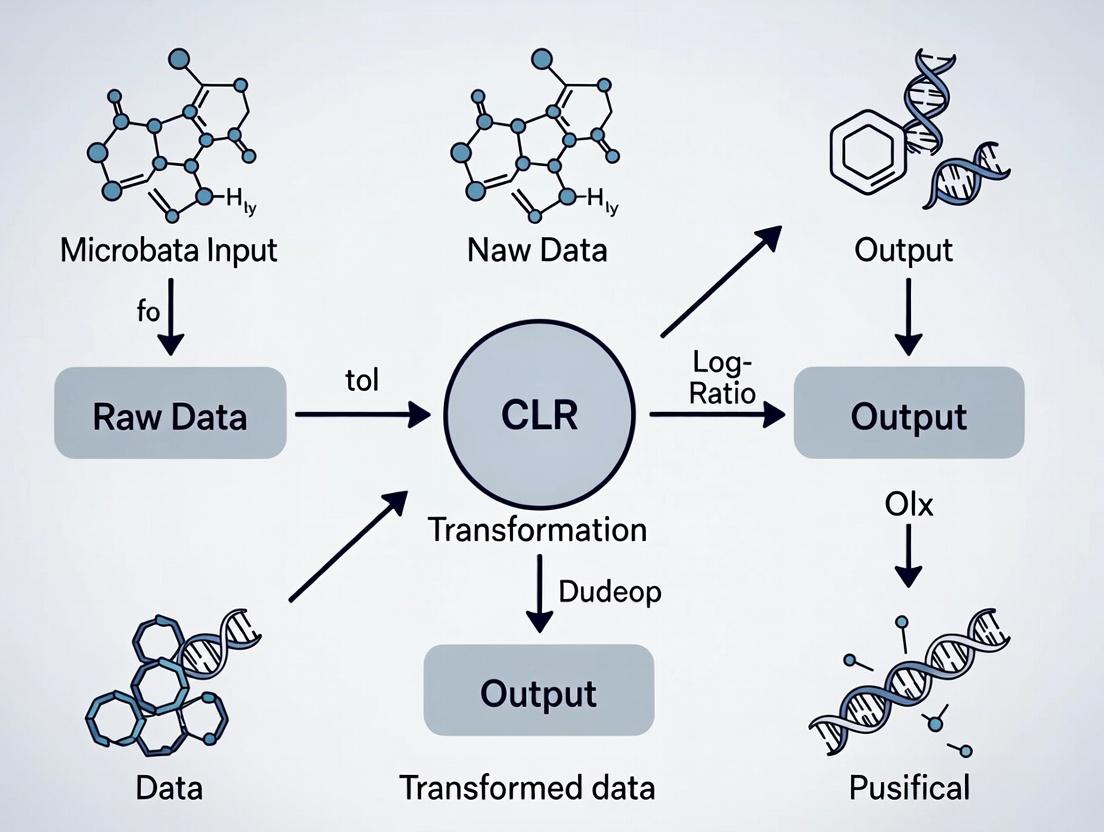
This comprehensive guide details the Center Log-Ratio (CLR) transformation for analyzing microbiome sequencing data, which is inherently compositional.
The CLR Transformation Guide: Mastering Compositional Data Analysis for Microbiome Research & Drug Discovery
Abstract
This comprehensive guide details the Center Log-Ratio (CLR) transformation for analyzing microbiome sequencing data, which is inherently compositional. It covers foundational concepts of compositional data analysis (CoDA), step-by-step methodological implementation, common pitfalls and optimization strategies, and comparative validation against other normalization methods. Targeted at researchers, scientists, and drug development professionals, the article provides the practical knowledge needed to apply CLR transformation correctly, ensuring statistically sound and biologically interpretable insights in studies of the human microbiome and its role in health, disease, and therapeutic intervention.
Why Compositional Data Demands CLR: Foundational Principles for Microbiome Analysis
Within the broader thesis advocating for the centered log-ratio (CLR) transformation as a foundational step in robust microbiome data analysis, understanding the nature of compositional data is the primary hurdle. Microbiome sequencing data (e.g., from 16S rRNA gene amplicon or shotgun metagenomics studies) is inherently compositional. The total number of reads per sample (library size) is an artifact of sequencing depth, not a measure of absolute microbial abundance. Consequently, data is typically normalized to relative abundances (proportions), where each sample sums to 1 (or 100%). This is the 'Constant Sum' Constraint. This property induces spurious correlations and distorts distance metrics, making standard statistical methods invalid. The CLR transformation, defined as the logarithm of the ratio of each component to the geometric mean of all components, is a critical step to break this constraint and move data into a Euclidean space amenable to standard analysis, provided zeros are appropriately handled.
Table 1: Simulated Example of Spurious Correlation Induced by Closure (Sum=1)
| Taxon | True Absolute Abundance (Sample A) | True Absolute Abundance (Sample B) | Relative Abundance (Sample A) | Relative Abundance (Sample B) |
|---|---|---|---|---|
| Taxon 1 | 1000 | 1000 | 0.50 | 0.20 |
| Taxon 2 | 500 | 2000 | 0.25 | 0.40 |
| Taxon 3 | 300 | 1500 | 0.15 | 0.30 |
| Taxon 4 | 200 | 500 | 0.10 | 0.10 |
| Total Count | 2000 | 5000 | 1.00 | 1.00 |
Interpretation: In absolute terms, Taxon 1 is unchanged between samples. However, because the total count increased in Sample B (a technical artifact), Taxon 1's relative abundance decreases from 0.50 to 0.20. This creates an artificial negative correlation between Taxon 1 and other taxa, purely due to the closure operation.
Table 2: Key Properties of Raw, Relative, and CLR-Transformed Data
| Property | Raw Count Data | Relative Abundance (Closed) | CLR-Transformed Data |
|---|---|---|---|
| Sum Constraint | No (Variable Total) | Yes (Constant Sum=1) | No (Sum=0) |
| Sample Space | Non-negative Integers | Simplex (0,1] | Real Euclidean Space |
| Covariance Structure | Unconstrained | Distorted (Negative Bias) | Interpretable (Aitchison) |
| Appropriate Stats | Count Models (e.g., Neg. Binomial) | Limited (Compositional Methods) | Standard Euclidean Stats* |
*After zero imputation (e.g., using a multiplicative replacement strategy).
Experimental Protocols
Protocol 1: Standard 16S rRNA Gene Amplicon Data Pre-processing Pipeline Leading to CLR Transformation
Objective: To process raw sequencing reads into a CLR-transformed feature table for downstream statistical analysis.
Materials: See "The Scientist's Toolkit" below. Procedure:
- Demultiplexing & Quality Control: Use
demuxplugin in QIIME 2 to assign reads to samples based on barcodes. Denoise sequences with DADA2 (viaq2-dada2) to correct errors, infer exact amplicon sequence variants (ASVs), and remove chimeras. - Feature Table Construction: Generate an ASV table (BIOM format) containing counts per sample.
- Taxonomic Assignment: Classify ASVs against a reference database (e.g., SILVA, Greengenes) using a classifier like
q2-feature-classifier. - Normalization & Filtering:
a. Filter out ASVs present in less than 10% of samples or with low prevalence.
b. Addressing Zeros: Apply a multiplicative replacement (e.g., using
zCompositionsR packagecmultRepl()function) to impute zeros prior to CLR. This adds a small pseudo-count proportional to the abundance of nonzero components. - CLR Transformation: Compute the geometric mean G(x) of all D components in a sample: G(x) = (x₁ * x₂ * ... * x_D)^(1/D). Then, apply CLR: clr(x) = [ln(x₁/G(x)), ln(x₂/G(x)), ..., ln(x_D/G(x))]. This can be performed using the
mixOmics::clr()function in R orskbio.stats.composition.clrin Python. - Output: A transformed matrix where rows are samples and columns are CLR-transformed ASV abundances, ready for PCA, regression, or correlation networks.
Protocol 2: Validating Compositional Effects via a Spike-in Experiment
Objective: To empirically demonstrate the necessity of CLR transformation using controlled spike-in communities.
Materials: Defined microbial community standards (e.g., ZymoBIOMICS Microbial Community Standard), DNA spike-ins. Procedure:
- Experimental Design: Create a series of samples with a background microbiome community. Spike in a known, varying absolute abundance of a control organism (or synthetic DNA sequences) not present in the background.
- Sequencing: Process all samples simultaneously in a single sequencing run to minimize batch effects.
- Data Analysis: a. Generate relative abundance tables. b. Observe the relative abundance of the spike-in taxon. Despite its known increasing absolute abundance, its relative abundance may appear non-monotonic or decrease due to the constant sum constraint from variations in the background community. c. Apply CLR transformation to the entire dataset (including background and spike-in). d. Correlate the CLR-transformed values of the spike-in taxon with its known log-transformed absolute concentration. The CLR values should show a strong linear relationship, validating its utility for recovering meaningful biological signal.
Visualizations
Title: Microbiome Data Analysis Workflow with CLR Transformation
Title: Mathematical Relationship: Simplex to Euclidean Space via CLR
The Scientist's Toolkit: Research Reagent Solutions
Table 3: Essential Materials & Tools for Compositional Microbiome Analysis
| Item | Function / Relevance |
|---|---|
| ZymoBIOMICS Microbial Community Standard | Defined mock community of known composition. Critical for benchmarking pre-processing pipelines and validating the detection of compositional effects. |
| PowerSoil Pro DNA Extraction Kit | Robust, standardized kit for microbial cell lysis and DNA isolation from complex samples. Reproducibility is key for comparative studies. |
| QIIME 2 (BioBakery) Software Platform | Open-source, reproducible pipeline for microbiome analysis from raw reads to initial visualizations. Essential for standardized pre-processing. |
zCompositions R Package |
Provides functions for dealing with zeros in compositional data, including the cmultRepl function for multiplicative replacement, a prerequisite for CLR. |
CoDaSeq / robCompositions R Packages |
Offer a suite of tools for compositional data analysis, including CLR transformation, outlier detection, and additional imputation methods. |
mixOmics R Package |
Contains optimized clr() function and provides integrative multivariate analysis methods (sPLS-DA) designed for or compatible with CLR-transformed data. |
| Silva or Greengenes Database | Curated 16S rRNA gene reference databases for taxonomic assignment of sequence variants. Accuracy here influences downstream biological interpretation. |
| Phylogenetic Tree (e.g., from SATé) | Used for phylogenetic-aware diversity metrics (UniFrac). CLR-transformed data can also be incorporated into phylogenetic models. |
Compositional data are vectors of positive components representing parts of a whole, carrying only relative information. This is the defining characteristic of microbiome sequencing data, where total read counts (library size) are arbitrary and non-informative. The Aitchison geometry provides the mathematical framework for analyzing such data, based on principles of scale invariance, sub-compositional coherence, and permutation invariance.
The Aitchison Geometry: Principles & Operations
Key operations within the simplex sample space (S^D) are defined below.
Table 1: Core Principles of Aitchison Geometry
| Principle | Mathematical Definition | Implication for Microbiome Data |
|---|---|---|
| Scale Invariance | C(x) = C(αx) for any α>0 | Normalization (e.g., rarefaction) does not change the composition. |
| Sub-compositional Coherence | Analysis of a subset of parts is consistent with the full composition. | Results for a phylogenetic subgroup are consistent with the full community analysis. |
| Permutation Invariance | Analysis is independent of the order of components. | Taxon order in the OTU/ASV table does not affect results. |
Table 2: Aitchison Geometry Operations
| Operation | Formula | Purpose |
|---|---|---|
| Perturbation (⊕) | x ⊕ y = C(x₁y₁, ..., xDyD) | Simplex analogue of addition. Represents a change in composition. |
| Powering (α ⊗ x) | α ⊗ x = C(x₁^α, ..., x_D^α) | Simplex analogue of scalar multiplication. |
| Inner Product | ⟨x, y⟩A = (1/(2D)) ∑{i,j} ln(xi/xj) ln(yi/yj) | Defines distances and angles in the simplex. |
| Aitchison Norm | ‖x‖A = √⟨x, x⟩A | Measure of the magnitude of a composition. |
| Aitchison Distance | dA(x, y) = ‖x ⊖ y‖A = √∑{i,j} [ln(xi/xj) - ln(yi/y_j)]² | Distance between two compositions. |
The Centered Log-Ratio (CLR) Transformation
The CLR transformation is a cornerstone isometric map from the D-dimensional simplex to (D-1)-dimensional real space, central to the thesis context. It is defined as:
clr(x) = [ln(x₁ / g(x)), ln(x₂ / g(x)), ..., ln(x_D / g(x))]
where g(x) = (∏_{i=1}^D x_i)^(1/D) is the geometric mean of all components.
Table 3: Properties of the CLR Transformation
| Property | Description | Relevance to Microbiome Analysis |
|---|---|---|
| Isometry | Preserves Aitchison distances as Euclidean distances. | Enables use of standard Euclidean-based statistical methods (PCA, regression). |
| Singular Covariance | The clr-coordinates sum to zero, leading to a singular covariance matrix. | Requires special handling for multivariate procedures (e.g., use of pseudoinverse). |
| Interpretability | Each coordinate is the log-ratio of a part to the geometric mean of all parts. | Features represent the relative abundance of a taxon compared to the average taxon. |
Protocol: CLR Transformation for Microbiome Data
Objective: To transform raw count or relative abundance data into isometric, real-valued coordinates for downstream analysis.
Input: D-dimensional composition (e.g., ASV/OTU counts after quality control).
Reagents & Software: R (v4.3+), packages compositions, zCompositions, or SpiecEasi.
Procedure:
- Data Preprocessing: Filter low-abundance taxa (e.g., prevalence <10% across samples). Handle zeros using a multiplicative replacement method (e.g.,
cmultReplfromzCompositions) with a small delta (δ=0.65). - Normalization: Convert filtered counts to relative abundances (closed compositions) by dividing each sample vector by its total count.
- Geometric Mean Calculation: For each sample, compute the geometric mean
g(x)of all D components (post-zero handling). - CLR Computation: For each component
iin a sample, computeclr_i = log(x_i / g(x)). - Output: A matrix of size
(n_samples x D)clr-transformed values. Note: This matrix is rank-deficient (columns sum to 0).
Application Notes & Case Protocol: Microbial Dysbiosis Detection
Experimental Workflow
Diagram Title: CLR-Based Microbiome Analysis Workflow
Research Reagent Solutions & Essential Materials
Table 4: Key Reagents & Tools for CoDA Microbiome Analysis
| Item | Function / Description | Example Product / Package |
|---|---|---|
| Zero-Replacement Reagent | Replaces count zeros to allow log-transform, preserving compositional properties. | zCompositions::cmultRepl (R) |
| CLR Transformation Module | Computes isometric log-ratio coordinates from closed compositions. | compositions::clr (R), skbio.stats.composition.clr (Python) |
| CoDA-Capable Stats Package | Performs PCA, regression, and testing on compositional data. | robCompositions (R), prophetic (Python) |
| Compositional Data Simulator | Validates pipelines with known ground-truth compositional effects. | compositions::rDirichlet.acomp (R) |
| High-Contrast Color Palette | Ensures clear visualization of clr-PCA biplots and balances. | ColorBrewer Set2 or Tableau10 |
Detailed Protocol: Identifying Differential Taxa via CLR
Objective: To identify taxa whose relative abundance differs significantly between two groups (e.g., Healthy vs. Disease). Experimental Design: Case-Control study, 16S rRNA gene sequencing.
Procedure:
- Apply CLR Transformation: Follow Protocol 3.1 to obtain clr-matrix
Z(n x D). - Dimensionality Reduction: Perform PCA on the covariance matrix of
Z. Plot PC1 vs. PC2 to visualize sample separation. - Univariate Testing: For each clr-transformed taxon
j, perform a two-sample t-test (or Mann-Whitney) between groups. The clr-value is interpreted as the log-ratio of taxonj's abundance to the geometric mean of all taxa. - Multiple Testing Correction: Apply Benjamini-Hochberg FDR correction to p-values from all D tests.
- Interpretation: A significant taxon with a positive mean clr difference in Group A indicates that taxon is more abundant relative to the microbial average in Group A than in Group B.
Table 5: Example Results from CLR-Based Differential Analysis
| Taxon (ASV ID) | Mean clr (Healthy) | Mean clr (Disease) | clr Difference | p-value (FDR adj.) | Interpretation |
|---|---|---|---|---|---|
| Bacteroides ASV1 | 2.15 | 0.98 | -1.17 | 0.003 | Depleted in Disease |
| Ruminococcus ASV5 | -0.45 | 1.89 | +2.34 | <0.001 | Enriched in Disease |
| Faecalibacterium ASV12 | 1.67 | 1.72 | +0.05 | 0.82 | Not Significant |
Critical Considerations & Limitations
- Zero Handling: Critical pre-processing step. Choice of method (multiplicative, Bayesian) influences results.
- High-Dimensionality: D >> n leads to poorly estimated geometric mean and covariance. Consider alternative log-ratios (e.g., ILR) or regularization.
- Confounding: Variation in the geometric mean can dominate the first CLR component, often correlating with technical factors like sequencing depth.
- Not for Absolute Change: CLR analyzes relative changes. Integrating microbial load (qPCR) is needed for absolute quantification.
What is CLR Transformation? Definition, Mathematical Formulation, and Core Properties.
Definition
The Centered Log-Ratio (CLR) transformation is a compositional data analysis technique used to transform constrained, relative data (like microbiome read counts or OTU tables) into a Euclidean space suitable for standard statistical analysis. It addresses the unit-sum constraint (e.g., all samples sum to 1 or a fixed total) by taking the logarithm of the ratio between each component and the geometric mean of all components within a sample. This transformation is a cornerstone in the analysis of high-throughput sequencing data within the broader thesis on developing robust analytical pipelines for microbiome-host interaction studies in drug development.
Mathematical Formulation
For a composition vector x = (x₁, x₂, ..., x_D) with D components (e.g., microbial taxa), the CLR transformation is defined as:
CLR(x) = [ ln(x₁ / g(x)), ln(x₂ / g(x)), ..., ln(x_D / g(x)) ]
where g(x) is the geometric mean of the composition: g(x) = (∏{i=1}^D xi)^{1/D}
This ensures that the transformed values sum to zero: ∑{i=1}^D CLR(xi) = 0.
A pseudocount (typically 1) is added to all components to handle zeros before transformation: xi' = xi + 1.
Core Properties
- Scale Invariance: Results are independent of the total sequencing depth (library size).
- Sub-compositional Coherence: Analysis of a subset of taxa is consistent with the analysis of the full composition.
- Isometry: Approximates preservation of Aitchison distances in the transformed Euclidean space.
- Zero-Sum Constraint: Transformed values are centered, introducing linear dependency (covariance matrix is singular).
Application Notes and Protocols
Note 1: Data Pre-processing for CLR
CLR transformation is applied to count data after filtering and normalization. A critical step is zero handling via pseudocount addition or imputation.
Protocol: Standard Pre-CLR Workflow
- Filtering: Remove taxa with prevalence < 10% across all samples.
- Normalization (Optional): Convert raw counts to relative abundances (divide by total reads per sample).
- Zero Management: Add a uniform pseudocount of 1 to all abundance values.
- Transformation: Apply the CLR formula using computational tools (e.g.,
clr()function in thecompositionsR package orskbio.stats.composition.clrin Python). - Downstream Analysis: Use transformed data for PCA, regression, or network analysis.
Note 2: Comparative Analysis of Transformations
For microbiome data, CLR is compared against other common transformations.
Table 1: Comparison of Common Transformations for Microbiome Data
| Transformation | Formula (Per Component i) | Handles Zeros | Preserves Euclidean Geometry | Use Case |
|---|---|---|---|---|
| Raw Proportion | ( pi = xi / T ) | No | No | Basic visualization |
| Log10 | ( \log{10}(xi + 1) ) | Yes (pseudocount) | Poor | Simple normalization |
| CLR | ( \ln(x_i / g(\mathbf{x})) ) | Requires imputation | Yes (Aitchison) | PCA, covariance networks |
| ALR | ( \ln(xi / xD) ) | Requires imputation | No (non-isometric) | Regression with reference taxon |
Note 3: Experimental Protocol for Differential Abundance Testing with CLR
This protocol is designed for a case-control study within drug efficacy research.
Title: CLR-based Linear Model for Differential Abundance Objective: Identify taxa whose abundances are associated with a treatment condition. Reagents & Materials:
- Input: Filtered OTU/ASV count table.
- Software: R (v4.3+) with packages
compositions,limma, orMaaslin2. Procedure:
- Apply CLR: Transform the entire filtered count table using the standard protocol above.
- Model Fitting: For each taxon j, fit a linear model:
CLR_j ~ Treatment + Covariate1 + Covariate2. - Hypothesis Testing: Perform t-tests or F-tests on the 'Treatment' coefficient using empirical Bayes moderation (
limma) to improve variance estimates. - Multiple Testing Correction: Apply the Benjamini-Hochberg procedure to control the False Discovery Rate (FDR) at 5%.
- Interpretation: Significantly associated taxa with |log2 fold change| > 1 and FDR < 0.05 are reported as differentially abundant.
Visualizations
CLR Transformation Data Processing Workflow
Core Mathematical Properties of CLR Transformation
The Scientist's Toolkit: Research Reagent Solutions
Table 2: Essential Materials & Tools for CLR-Based Microbiome Analysis
| Item | Function / Role | Example Product/Software |
|---|---|---|
| Pseudocount Reagent | Adds a small constant to handle zero counts, enabling log-transformation. | Uniform addition of 1. Imputation: zCompositions R package. |
| Geometric Mean Calculator | Computes the central tendency measure used as the CLR divisor. | gm_mean() function in R; scipy.stats.mstats.gmean in Python. |
| CLR Transformation Software | Applies the transformation to entire data matrices efficiently. | R: compositions::clr(). Python: skbio.stats.composition.clr. |
| Compositional Covariance Estimator | Calculates robust covariance matrices from CLR data for network inference. | SpiecEasi package with mbMethod="clr". |
| Compositional PCA Tool | Performs principal component analysis on CLR-transformed data. | prcomp function in R on CLR matrix; sklearn.decomposition.PCA. |
| Differential Abundance Suite | Fits linear models to CLR data for association testing. | Maaslin2, limma with voom/limma-trend on CLR output. |
Within the broader thesis on Centered Log-Ratio (CLR) transformation for microbiome data analysis, a fundamental obstacle is the nature of raw amplicon sequence variant (ASV) or operational taxonomic unit (OTU) count data. Direct analysis of these raw reads is compromised by three interrelated issues: Sparsity, the challenge of insufficient Sequencing Depth, and the resulting propensity for False Correlations. This document details these problems, provides protocols for their diagnosis, and introduces preprocessing steps essential for robust downstream analysis, including CLR transformation.
Table 1: Quantitative Manifestations of Raw Read Problems in Typical Microbiome Studies
| Problem | Typical Metric | Range in Typical 16S rRNA Studies | Impact on Downstream Analysis | ||
|---|---|---|---|---|---|
| Sparsity | Percentage of Zero Counts | 50-90% of the sample-by-feature matrix | Inflates beta-diversity distances; violates assumptions of many statistical models. | ||
| Insufficient Depth | Total Reads per Sample | 10,000 - 100,000 reads (highly variable) | Fails to capture rare taxa; leads to undersampling bias. | ||
| False Correlations | Spurious Correlation Coefficient | Can exceed | ±0.7 | in simulation | Misleads network inference, biomarker discovery, and mechanistic hypotheses. |
Table 2: Causes and Consequences of False Correlations
| Primary Cause | Mechanism | Resulting Artifact |
|---|---|---|
| Compositionality | Sum constraint (e.g., library size) creates negative dependence between features. | A decrease in one taxon's proportion artificially inflates the proportions of others. |
| Sparsity-Induced | Co-occurrence of zeros (due to undersampling, not biology) is misinterpreted as positive association. | Non-coexisting taxa appear correlated. |
| Depth Heterogeneity | Large variation in library sizes across samples distorts covariance structure. | Correlations reflect sampling effort rather than biological relationships. |
Diagnostic Protocols
Protocol 3.1: Assessing Sparsity and Sequencing Depth
Objective: To quantify data sparsity and depth variation within a dataset prior to analysis. Materials:
- Sample-by-feature count table (e.g., ASV table).
- Statistical software (R, Python).
Procedure:
- Calculate Library Size: For each sample i, compute total reads:
LibSize_i = sum(counts_i). - Calculate Sparsity: For the entire dataset, compute:
Sparsity = (Number of Zero Entries) / (Total Entries in Table) * 100. - Visualize Distribution: Generate histograms for (a) library sizes per sample and (b) read counts per non-zero feature.
- Set Depth Threshold: Apply a minimum read threshold (e.g., 10,000 reads) for sample inclusion. Justify based on rarefaction curves (see Protocol 3.2).
Research Reagent Solutions:
| Item | Function in Diagnosis |
|---|---|
| QIIME 2 (q2-core) | Pipeline for importing and summarizing feature tables. |
| R phyloseq package | sample_sums() and taxa_sums() functions for rapid calculation. |
| ggplot2 R package | Creation of publication-quality histograms and density plots. |
Protocol 3.2: Generating Rarefaction Curves
Objective: To determine if sequencing depth was sufficient to capture community diversity. Procedure:
- Subsampling: Using a tool like
vegan::rarecurvein R, repeatedly subsample without replacement at increasing sequencing depths (e.g., 100, 1000, 5000... reads). - Calculate Richness: At each depth, compute the number of observed features.
- Plot & Interpret: Plot subsampled richness against sequencing depth. A plateau indicates sufficient depth; a continued rise suggests undersampling.
Preprocessing Workflow for CLR Transformation
CLR transformation (clr(x) = log(x / g(x)), where g(x) is the geometric mean) is a cornerstone of the presented thesis. However, it cannot be applied directly to raw reads containing zeros. The following workflow mitigates sparsity and depth issues to enable valid CLR application.
Title: Preprocessing Workflow to Enable CLR Transformation
Protocol 4.1: Prevalence-Based Filtering
Objective: Remove spurious features that exacerbate sparsity. Procedure: Remove any feature (ASV/OTU) not present in at least 10% of all samples (or a sample subset, e.g., per treatment group). This reduces the number of uninformative zeros.
Protocol 4.2: Addressing Depth Variation (Two Pathways)
Objective: To negate the effect of variable sequencing depth on covariance structure. Option A: Rarefaction
- Use
q2-corepluginrarefyor R packagevegan::rrarefy. - Choose a rarefaction depth that balances data retention (minimal sample loss) and diversity capture (from rarefaction curves).
- Drawback: Discards valid data.
Option B: Cumulative Sum Scaling (CSS) Normalization
- Use
metagenomeSeq::cumNormfunction in R. - This method scales counts by a percentile (e.g., median) of counts distributed across features, preserving all data while reducing technical variation.
Research Reagent Solutions:
| Item | Function in Preprocessing |
|---|---|
| QIIME 2 q2-core plugin | For rarefaction (rarefy) and prevalence filtering (feature-table filter-features). |
| R metagenomeSeq package | For CSS normalization (cumNorm, MRcounts). |
| DESeq2 R package | For median-of-ratios normalization (an alternative for RNA-seq, adaptable for microbiome). |
Protocol 4.3: Zero Imputation for Compositional Methods
Objective: To replace zeros with sensible non-zero values, allowing log-ratio analysis.
Procedure using R package zCompositions:
- Install and load the
zCompositionspackage. - Apply the Bayesian-multiplicative replacement method:
cmultRepl(t_count_table, method="CZM", label=0). - This function replaces zeros with estimates based on the correlation structure of the data, preserving the compositional nature.
Validation Protocol: Detecting False Correlations
Protocol 5.1: Simulation to Benchmark Correlation Methods
Objective: To compare the false positive rate of correlation methods on compositional data. Procedure:
- Simulate Data: Use the
SPIEC-EASI::makeGraphandSPIEC-EASI::sparsifyfunctions in R to generate a known, sparse ground-truth microbial network with no correlations. - Generate Counts: Use
SPIEC-EASI::makeMockDatato produce realistic, compositional count data from the network. - Calculate Correlations: Compute pairwise correlations on (a) raw counts, (b) normalized counts, and (c) CLR-transformed data.
- Quantify Error: Calculate the false discovery rate (FDR) for each method by comparing inferred correlations to the known (null) network.
Title: Validation of Correlation Methods via Simulation
Key Reagent: SPIEC-EASI R package (Tools for generating synthetic microbiome data and inferring networks, essential for method benchmarking).
Key Assumptions and Prerequisites for Applying CLR to Microbiome Datasets
The centered log-ratio (CLR) transformation is a cornerstone of compositional data analysis (CoDA) for microbiome sequencing data, such as 16S rRNA gene amplicon or shotgun metagenomic surveys. Its application is not universal and rests on specific mathematical and biological assumptions. Within the broader thesis on CLR for microbiome research, this protocol outlines the critical pre-application checks and methodologies.
Core Prerequisite: Recognizing Compositionality Microbiome sequence count data is fundamentally compositional. The total number of sequences per sample (library size) is arbitrary and constrained, carrying no biological information. Thus, inferences can only be made about relative abundances. CLR is designed to operate within this simplex sample space.
Key Assumptions: Validation Checklist
Applying CLR requires verifying the following assumptions. Failure to do so can lead to spurious correlations and erroneous statistical conclusions.
Table 1: Key Assumptions for CLR Application
| Assumption Category | Specific Requirement | Diagnostic Check | Acceptable Outcome | ||
|---|---|---|---|---|---|
| Data Structure | Absence of True Zeros | Examine count table for zeros. | Zeros are only due to undersampling (i.e., "count zeros"), not structural absence. | ||
| Data Structure | High-Dimensionality | Assess feature (e.g., ASV/OTU) count. | Features (p) >> Samples (n). CLR is most stable when p is large. | ||
| Distributional | Log-Normality Underlying | Use goodness-of-fit tests on non-zero reads. | After imputation, the underlying (unobserved) absolute abundances are log-normal. | ||
| Experimental | Library Size Independence | Correlate library size with first PC of raw counts. | Correlation is negligible (e.g., | r | < 0.1). |
| Biological | Relevant Signal in Covariance | Perform prior variance analysis (e.g., via ANCOM-BC). | A substantial proportion of features show differential abundance across groups. |
Pre-Processing Protocol: From Raw Counts to CLR Input
This detailed protocol must be executed prior to the CLR transformation itself.
Protocol 3.1: Zero Handling and Pseudo-Count Addition
Objective: To address count zeros, which are undefined in log-space, without introducing severe bias.
Materials: Raw Amplicon Sequence Variant (ASV) count table (samples x features).
Procedure:
1. Filtering: Remove features with a prevalence (percentage of non-zero samples) below 5-10%. This eliminates rare, spurious taxa that amplify noise.
2. Pseudo-Count Addition: Add a uniform pseudo-count of 1 to all counts in the matrix. Critical Note: This is a minimal, non-informative imputation. For more sophisticated handling, implement Bayesian multiplicative replacement (e.g., using the zCompositions R package) which models zeros as missing values below a detection limit.
3. Validation: Post-addition, confirm no zeros remain in the dataset slated for CLR transformation.
Protocol 3.2: Library Size and Compositional Effect Diagnostic Objective: To verify that the variation in library size does not dominate the biological signal. Procedure: 1. Calculate total reads (library size) per sample. 2. Perform a Principal Component Analysis (PCA) on the raw, filtered count matrix (without CLR). 3. Calculate the Pearson correlation between sample library sizes and their scores along the first principal component (PC1). 4. Interpretation: A strong correlation (|r| > 0.3) suggests library size is a major source of variance, violating the core compositional principle. In such cases, consider more aggressive filtering or investigate technical batch effects before proceeding.
Core CLR Transformation Protocol
Protocol 4.1: Mathematical Implementation
Objective: To correctly compute the CLR-transformed features.
Input: Pre-processed count matrix X with n samples and p features, containing only positive values.
Formula:
For a sample vector x = [x₁, x₂, ..., xₚ], the CLR transformation is:
clr(x) = [log(x₁ / g(x)), log(x₂ / g(x)), ..., log(xₚ / g(x))]
where g(x) = (∏ᵢ xᵢ)^(1/p) is the geometric mean of the sample vector.
Software Steps:
1. In R, use the clr() function from the compositions or mixOmics package.
2. In Python, use the clr() function from the skbio.stats.composition module.
Output: An n x p matrix of real-valued, centered log-ratios. Each feature's values are centered around zero by the sample-specific geometric mean.
Visualization of Workflows and Relationships
Title: CLR Application Pre-Processing and Validation Workflow
Title: Mathematical Relationship of CLR Transformation for Three Taxa
The Scientist's Toolkit: Essential Research Reagents & Solutions
Table 2: Key Reagent Solutions for CLR-Based Microbiome Analysis
| Item/Category | Function & Rationale | Example Product/Software |
|---|---|---|
| High-Fidelity PCR Mix | For initial 16S rRNA gene amplification. Minimizes PCR drift bias, which can distort composition prior to sequencing. | Q5 High-Fidelity DNA Polymerase (NEB). |
| Standardized Mock Community | Essential positive control. Validates sequencing run and bioinformatic pipeline, confirming that observed zeros are technical. | ZymoBIOMICS Microbial Community Standard. |
| DNA Extraction Kit with Bead Beating | Standardized cell lysis. Critical for unbiased representation of Gram-positive and Gram-negative bacteria in the final composition. | DNeasy PowerSoil Pro Kit (Qiagen). |
| Bioinformatic Pipeline (QIIME 2 / DADA2) | Processes raw sequences into Amplicon Sequence Variant (ASV) count tables. Accurate denoising reduces artificial inflation of rare taxa. | QIIME 2 (2024.5 release), DADA2 R package. |
| CoDA Software Library | Performs the CLR transformation and related compositional methods (e.g., robust variant, proportionality). | compositions (R), scikit-bio (Python). |
| SparCC or PRO | Algorithm for inferring microbial association networks from CLR-transformed data, addressing the compositionality-induced bias in correlation. | SparCC (Python), propr (R). |
Step-by-Step CLR Implementation: A Practical Pipeline for Microbiome Data
Within the broader thesis on the Centered Log-Ratio (CLR) transformation for microbiome data analysis, pre-processing is the critical, non-negotiable foundation. The CLR transformation, defined as CLR(x) = ln[x_i / g(x)], where g(x) is the geometric mean of the feature vector, is highly sensitive to zeros and compositionality. Therefore, rigorous pre-processing protocols for filtering, zero handling, and library size normalization are essential to ensure the resulting compositional representations are biologically valid and statistically sound for downstream analyses in drug development and biomarker discovery.
Key Pre-processing Steps: Protocols & Application Notes
Library Size Normalization (Total Sum Scaling)
Protocol: Total Sum Scaling (TSS) to counts per million (CPM).
- Input: Raw count matrix (features × samples).
- Calculation: For each sample j, divide the count of every feature i by the sample's total library size and multiply by a scaling factor (e.g., 1,000,000).
CPM_ij = (X_ij / Σ_i X_ij) * 1,000,000 - Output: Relative abundance matrix. This mitigates differences in sequencing depth but does not address compositionality.
Table 1: Effect of Library Size Normalization on a Simulated Dataset
| Sample ID | Raw Count (Feature A) | Total Library Size | CPM (Feature A) |
|---|---|---|---|
| S1 | 150 | 50,000 | 3,000 |
| S2 | 150 | 150,000 | 1,000 |
| S3 | 300 | 100,000 | 3,000 |
Filtering of Low-Abundance Features
Protocol: Prevalence and Minimum Abundance Filtering.
- Define Thresholds: Set a minimum abundance (e.g., >10 counts) and a minimum prevalence (e.g., in >10% of samples).
- Apply Filter: For each feature, calculate the number of samples where it exceeds the minimum abundance. Retain only features where this count meets or exceeds the prevalence threshold.
- Rationale: Removes spurious noise, reduces dimensionality, and minimizes false positives. Critical Note: Filtering must be performed before zero-handling steps to avoid imputing or modifying zeros from features deemed irrelevant.
Zero Handling: Pseudocounts vs. CZM
Zeros are non-informative and prevent geometric mean calculation for CLR. Two primary strategies are employed.
Protocol A: Pseudocount Addition
- Method: Add a uniform, small positive value to all entries in the count matrix.
X_adj = X + α, where α is typically 1 or the minimum positive count observed. - Impact: Simplifies CLR computation but is arbitrary. It disproportionately affects low-abundance features and can distort the covariance structure.
Protocol B: Count Zero Multiplicative (CZM) Imputation
- Method: Replace zeros with a probability-based, feature-specific value that respects the compositional nature of the data.
- Algorithm (Simplified): a. For each sample, estimate the probability that a zero is a "count zero" (due to undersampling). b. Impute zeros multiplicatively using the remaining positive counts and a Bayesian approach. c. This preserves the relative proportions of the non-zero parts.
- Rationale: More statistically rigorous than a pseudocount for compositional data, as it attempts to model the zero as a missing value due to sampling depth.
Table 2: Comparison of Zero-Handling Methods for CLR Transformation
| Method | Core Principle | Advantage | Disadvantage | Suitability for CLR |
|---|---|---|---|---|
| Pseudocount | Add constant (e.g., 1) to all counts. | Simple, fast, guaranteed non-zero. | Arbitrary, biases low counts, distors variance. | Low - introduces compositional bias. |
| CZM Imputation | Probabilistic, multiplicative replacement. | Respects compositionality, models sampling zeros. | Computationally intensive, requires careful parameterization. | High - designed for compositional data. |
Integrated Experimental Workflow for CLR Pre-processing
Title: Integrated Pre-processing Workflow for CLR Transformation
The Scientist's Toolkit: Research Reagent Solutions
Table 3: Essential Tools for Microbiome Data Pre-processing
| Tool/Software | Function | Key Application in Protocol |
|---|---|---|
| R with phyloseq | Bioconductor object for organizing microbiome data. | Container for OTU table, taxonomy, and sample metadata; enables integrated filtering. |
| R with microbiome package | Specialized toolbox for microbiome analysis. | Provides functions for prevalence filtering, compositionality tools, and CZM implementation. |
| R with zCompositions | R package for handling zeros in compositional data. | Primary tool for CZM imputation (cmultRepl function). |
| QIIME 2 (qiime2.org) | End-to-end microbiome analysis platform. | Offers plugins for filtering (feature-table filter-features) and downstream analysis. |
| Python with skbio & SciKit-bio | Python libraries for bioinformatics and machine learning. | Enables scripting of custom pre-processing pipelines and integration with ML workflows. |
| Jupyter / RStudio | Interactive development environments. | Essential for exploratory data analysis, protocol scripting, and visualization. |
Within microbiome data analysis, the Compositional Data Analysis (CoDA) paradigm is essential due to the non-informative total sum constraint of sequencing data. The Centered Log-Ratio (CLR) transformation is a cornerstone technique for moving data from the simplex to real Euclidean space, enabling the application of standard statistical methods. This application note, situated within a broader thesis on robust CLR application for drug development biomarker discovery, details the precise calculation and critical importance of the geometric mean as the CLR's denominator.
The CLR transformation for a (D)-component compositional vector (\mathbf{x} = [x1, x2, ..., xD]) is defined as: [ CLR(\mathbf{x}) = \left[ \ln\frac{x1}{g(\mathbf{x})}, \ln\frac{x_2}{g(\mathbf{x})}, ..., \ln\frac{D}{g(\mathbf{x})} \right] ] where (g(\mathbf{x})) is the geometric mean of all (D) components. This transformation centers the log-transformed components around zero, ensuring isometric (distance-preserving) properties, but its validity is wholly dependent on a correctly and robustly calculated (g(\mathbf{x})).
Theoretical Foundation & Quantitative Data
The geometric mean, as opposed to the arithmetic mean, is the appropriate measure of central tendency for multiplicative processes and ratio-based data, such as microbial abundances.
Table 1: Comparison of Mean Types for Compositional Data
| Mean Type | Formula | Sensitivity to Zeros | Appropriate Data Space |
|---|---|---|---|
| Arithmetic | (\frac{1}{D}\sum{i=1}^{D} xi) | Low (zero values reduce sum) | Real Euclidean, additive |
| Geometric | (\left(\prod{i=1}^{D} xi\right)^{1/D}) | High (any zero makes product zero) | Simplex, multiplicative |
| Modified Geometric* | (\left(\prod{i=1}^{D} (xi + c)\right)^{1/D}) | Mitigated by pseudo-count (c) | Aitchison geometry (with care) |
*Required for sparse microbiome data containing true zeros.
Table 2: Impact of Geometric Mean Calculation on CLR Output (Simulated Data)
| Taxon | Raw Abundance (Sample A) | CLR (Correct GM) | CLR (GM w/ Pseudo-count=1) | CLR Error |
|---|---|---|---|---|
| Taxon_1 | 10 | 1.05 | 0.85 | -0.20 |
| Taxon_2 | 5 | 0.21 | 0.01 | -0.20 |
| Taxon_3 | 0 | -3.91* | -1.56 | +2.35 |
| Taxon_4 | 120 | 2.65 | 2.45 | -0.20 |
| Geometric Mean | 0.0 | 2.87 | 4.17 | N/A |
*Derived from a pseudo-count applied prior to GM calculation for the whole sample. This table illustrates the systemic shift and distortion introduced when a pseudo-count alters the denominator.
Experimental Protocols
Protocol 3.1: Standard Geometric Mean Calculation for Non-Zero Compositions
Purpose: To compute the CLR denominator for a compositional sample with no zero values.
- Input: A vector of (D) positive, non-zero abundance values ((x1, x2, ..., x_D)).
- Log-Transform: Calculate the natural logarithm of each component: (li = \ln(xi)).
- Arithmetic Mean of Logs: Compute ( \bar{l} = \frac{1}{D} \sum{i=1}^{D} li ).
- Exponentiate: The geometric mean (g(\mathbf{x}) = e^{\bar{l}}).
- CLR Calculation: For each component (i), (CLRi = \ln(xi) - \bar{l}). Note: This is mathematically equivalent to (g(\mathbf{x}) = (\prod x_i)^{1/D}) but avoids numerical overflow.
Protocol 3.2: Modified Geometric Mean with Pseudo-Count for Sparse Data
Purpose: To compute a stable CLR denominator for sparse microbiome data containing zeros.
- Input: A vector of (D) non-negative abundance values, some potentially zero.
- Pseudo-Count Selection: Choose an appropriate positive value (c). Common strategies include:
- A global minimum non-zero value across the dataset (e.g., 1 for integer counts).
- A proportion of the minimum non-zero value per sample (e.g., 0.65).
- The cmultRepl method from the
zCompositionsR package.
- Replacement: Create a modified vector (\mathbf{x'} = (x1 + c, x2 + c, ..., x_D + c)).
- Geometric Mean Calculation: Apply Protocol 3.1 to the modified vector (\mathbf{x'}) to obtain (g(\mathbf{x'})).
- CLR Calculation: For each component (i), (CLRi = \ln(xi + c) - \ln(g(\mathbf{x'}))). Critical Consideration: The choice of (c) introduces bias and affects downstream analysis. This must be documented and justified within the research thesis.
Protocol 3.3: Evaluation of Geometric Mean Stability Across Sample Groups
Purpose: To assess the robustness of the CLR denominator in a case-control study.
- Grouping: Partition samples into pre-defined groups (e.g., Healthy vs. Disease).
- Calculate: Compute the geometric mean for each individual sample using Protocol 3.1 or 3.2.
- Statistical Test: Perform a non-parametric Mann-Whitney U test between the log-transformed geometric means of the two groups.
- Interpretation: A significant p-value (e.g., < 0.05) indicates a systematic difference in the central tendency of the microbial biomass between groups, violating the assumption of a common baseline and complicating inter-group CLR comparisons. This may necessitate a more sophisticated normalization (e.g., between-sample CLR, also known as CLR-b).
Mandatory Visualizations
Diagram Title: CLR Transformation Workflow with Geometric Mean.
Diagram Title: Role of GM as the Centering Point for CLR.
The Scientist's Toolkit: Research Reagent Solutions
Table 3: Essential Tools for CLR & Geometric Mean Analysis
| Item/Category | Example/Product | Function in Analysis |
|---|---|---|
| CoDA Software Package | compositions (R), scikit-bio (Python) |
Provides built-in, optimized functions for clr() and geometric mean calculation, ensuring mathematical correctness. |
| Zero-Handling Library | zCompositions (R package) |
Implements advanced pseudo-count and multiplicative replacement methods for dealing with zeros prior to GM calculation. |
| High-Precision Math Library | GNU MPFR (via Rmpfr or mpmath) |
Prevents numerical underflow/overflow when calculating the GM of very large or small numbers across many taxa. |
| Data Visualization Suite | ggplot2 (R), matplotlib/seaborn (Python) |
Creates essential diagnostic plots (e.g., boxplots of sample GMs, scatterplots of CLR values) to assess transformation performance. |
| Statistical Testing Framework | statsmodels (Python), stats (R) |
Enables Protocol 3.3 to test for significant differences in geometric means across experimental groups, a key validity check. |
In the broader thesis on Centered Log-Ratio (CLR) transformation for microbiome data analysis, this document serves as a practical guide for implementing this essential preprocessing step. CLR transformation addresses the compositional nature of microbiome sequencing data, allowing for the application of standard statistical methods by moving from the simplex to real Euclidean space. Its correct application is critical for meaningful downstream analysis in drug development and biomarker discovery.
Core Mathematical Principles
The CLR transformation is defined for a composition x = (x₁, x₂, ..., xₖ) as:
clr(x) = [ln(x₁ / g(x)), ln(x₂ / g(x)), ..., ln(xₖ / g(x))]
where g(x) is the geometric mean of all components. This creates a transformation with a zero-sum constraint.
Research Reagent Solutions & Essential Materials
| Item/Category | Function in Microbiome CLR Analysis |
|---|---|
| 16S rRNA Gene Sequencing Kit (e.g., Illumina 16S Metagenomic) | Provides the raw count data from microbial communities for transformation. |
| QIIME2 or mothur Pipeline | Processes raw sequences into Amplicon Sequence Variant (ASV) or Operational Taxonomic Unit (OTU) tables. |
R compositions Package |
Implements coherent compositional data analysis, including robust CLR. |
R microbiome Package |
Provides microbiome-specific utilities and wrappers for transformation. |
Python scikit-bio Library |
Offers skbio.stats.composition.clr for compositional data analysis. |
Zero-Replacement Tool (e.g., zCompositions R package) |
Handles zeros, which are undefined in log-ratios, prior to CLR transformation. |
| High-Performance Computing (HPC) Cluster | Enables transformation of large-scale microbiome datasets (e.g., >10,000 samples). |
Detailed Experimental Protocols
Protocol 4.1: Data Preprocessing Prior to CLR
- Input: An ASV/OTU table (Samples x Taxa) of raw read counts.
- Filtering: Remove taxa present in fewer than 10% of samples or with fewer than 10 total reads (thresholds adjustable per study).
- Zero Handling:
- Apply a multiplicative replacement method using the
cmultReplfunction from thezCompositionsR package (for count data). - OR apply a Bayesian-multiplicative replacement using the
bayesmultReplfunction for more robust handling. - Pseudocode:
table_no_zeros <- zCompositions::cmultRepl(count_table, method="CZM", output="p-counts")
- Apply a multiplicative replacement method using the
- Normalization: Convert the zero-handled table to relative abundances (sum to 1 per sample) or use the output from
cmultRepldirectly. - Output: A compositionally coherent table ready for CLR transformation.
Protocol 4.2: Performing CLR Transformation in R
Method A: Using the compositions Package (Theoretically Cohesive)
Method B: Using the microbiome Package (Microbiome-Optimized)
Protocol 4.3: Performing CLR Transformation in Python
Protocol 4.4: Validation of CLR Transformation
- Zero-Sum Check: Calculate the sum of each sample's CLR-transformed features. The result should be approximately zero (within floating-point precision error).
- R:
all(colSums(clr_matrix) < 1e-10) - Python:
np.allclose(df_clr.sum(axis=1), 0, atol=1e-10)
- R:
- Dimensionality Assessment: Perform Principal Component Analysis (PCA) on the CLR matrix. The first principal component should explain a substantial proportion of variance, as CLR transforms to a
D-1dimensional space. - Downstream Analysis: Use the validated CLR matrix in multivariate analyses (e.g., PERMANOVA, DESeq2 for differential abundance).
Table 1: Impact of CLR Transformation on a Simulated Microbiome Dataset (n=100 samples, D=50 taxa)
| Metric | Raw Count Data | Relative Abundance | CLR-Transformed Data |
|---|---|---|---|
| Data Space | Counts (ℕ⁵⁰) | Simplex (S⁵⁰) | Real Euclidean (ℝ⁴⁹) |
| Mean Correlation between Features | -0.12 | -0.38 | 0.02 |
| Avg. Euclidean Distance between Samples | 1.2e5 ± 4500 | 0.81 ± 0.05 | 12.7 ± 1.2 |
| Variance Explained by PC1 (%) | 45.2% | 62.5% | 34.1% |
| Result of Zero-Sum Check | N/A | N/A | TRUE (sum < 1e-12) |
Visual Workflows and Pathways
Diagram 1: Standard CLR Transformation Protocol Workflow
Diagram 2: Logical Rationale for CLR in Microbiome Analysis
This Application Note, framed within a broader thesis on Centered Log-Ratio (CLR) transformation for microbiome data analysis, details the interpretation of CLR-transformed abundance values. In microbiome and metabolomics research, raw compositional data (e.g., 16S rRNA sequencing counts, metabolite intensities) are subject to a constant-sum constraint, making standard statistical analyses invalid. The CLR transformation, a cornerstone of Compositional Data Analysis (CoDA), addresses this by transforming data into a log-ratio space, enabling the application of Euclidean geometry and standard multivariate methods. This document provides researchers, scientists, and drug development professionals with protocols and interpretive frameworks for accurately analyzing and deriving biological meaning from CLR-transformed data.
Core Concepts & Mathematical Definition
The CLR Transformation converts a composition vector x = (x₁, x₂, ..., x_D) of D components (e.g., microbial taxa) with positive parts to a vector of log-ratios relative to the geometric mean of all components.
[ clr(\mathbf{x}) = \left[ \ln\frac{x1}{g(\mathbf{x})}, \ln\frac{x2}{g(\mathbf{x})}, ..., \ln\frac{xD}{g(\mathbf{x})} \right] ] where the geometric mean ( g(\mathbf{x}) = \sqrt[D]{x1 \cdot x2 \cdots xD} ).
This transformation results in values that are centered (sum to zero), are scale-invariant, and exist in a D-1 dimensional real space (the Aitchison simplex). The interpretation of a single CLR value for a feature (e.g., a bacterial taxon) is its log-abundance relative to the average abundance across all features in the sample.
Data Presentation: Interpreting CLR Values
Table 1: Interpretation Guide for CLR-Transformed Abundance Values
| CLR Value | Interpretation | Relative Abundance Context |
|---|---|---|
| 0 | The feature's abundance is exactly equal to the geometric mean abundance of all features in the sample. | Baseline (Average) |
| Positive (e.g., +2.0) | The feature is more abundant than the geometric mean. A value of +2.0 means the feature is exp(2.0) ≈ 7.4 times more abundant than the geometric mean. | Relatively Enriched |
| Negative (e.g., -3.0) | The feature is less abundant than the geometric mean. A value of -3.0 means the feature is exp(-3.0) ≈ 0.05 times (or 1/20th) the geometric mean. | Relatively Depleted |
| Magnitude Difference (e.g., Δ = 4.0) | The difference in CLR values between two conditions for the same feature. exp(4.0) ≈ 54.6 indicates a ~55-fold relative change in abundance between conditions. | Fold-Change in Relative Space |
Table 2: Example CLR Values from a Simulated Gut Microbiome Dataset
| Taxon | Sample A (Healthy) CLR | Sample B (Disease) CLR | Δ (B - A) | exp(Δ) | Interpretive Summary |
|---|---|---|---|---|---|
| Bacteroides | 3.21 | 1.85 | -1.36 | 0.26 | ~4-fold relative depletion in Disease. |
| Faecalibacterium | 2.15 | 0.98 | -1.17 | 0.31 | ~3-fold relative depletion in Disease. |
| Escherichia | -4.50 | -2.10 | +2.40 | 11.02 | ~11-fold relative enrichment in Disease. |
| Akkermansia | -1.22 | -3.50 | -2.28 | 0.10 | ~10-fold relative depletion in Disease. |
Note: CLR values are only directly comparable within the same sample or across samples transformed together, as the geometric mean is sample-specific.
Experimental Protocols
Protocol 4.1: Standard CLR Transformation for Microbiome Abundance Tables
Objective: To transform a count or proportion table (OTU/ASV table) into CLR-transformed abundances suitable for downstream statistical analysis.
Materials:
- Raw count table (features x samples).
- Computational environment (R/Python).
Procedure:
- Preprocessing & Filtering:
- Remove features present in fewer than 10% of samples or with a total count below a chosen threshold (e.g., 10 reads).
- Do NOT rarefy. Use methods robust to sequencing depth.
- Handling Zeros (Critical Step):
- Apply a multiplicative replacement strategy (e.g., the
cmultReplfunction in R'szCompositionspackage ormultiplicative_replacementin Python'sscikit-bio). - This method replaces zeros with small, non-zero values based on the multiplicative structure of the data, preserving the covariance structure for CoDA.
- Apply a multiplicative replacement strategy (e.g., the
- Transformation:
- Calculate the geometric mean for each sample across all features.
- For each feature in each sample, compute the natural logarithm of the proportion relative to the sample's geometric mean.
- R code:
clr_table <- compositions::clr(count_table + 1)(pseudocount; less ideal) or usemicrobiome::transform(abund_table, "clr")after zero-handling. - Python code:
from skbio.stats.composition import clr; clr_table = clr(abund_table)
- Output: A matrix of CLR-transformed abundances (dimensions: samples x features).
Protocol 4.2: Differential Abundance Analysis Using CLR-Transformed Data
Objective: To identify features whose relative abundance differs significantly between two or more experimental conditions using CLR-transformed data.
Materials:
- CLR-transformed abundance table (from Protocol 4.1).
- Sample metadata with grouping variables.
Procedure:
- Statistical Modeling:
- For simple two-group comparisons, use a linear model (e.g., t-test on CLR values).
- For complex designs, use linear models (e.g.,
limmain R) or linear mixed-effects models (e.g.,lme4in R) with CLR values as the response variable. - Important: The CLR transformation legitimizes the use of these Euclidean-based models.
- Effect Size Calculation:
- The model coefficient for a group contrast (e.g., Disease vs. Healthy) is the estimated difference in mean CLR value (Δ).
- Interpretation: exp(Δ) is the fold-difference in relative abundance between the conditions. An exp(Δ) of 2 means the feature is, on average, twice as abundant relative to the geometric mean in the first group compared to the second.
- Multiple Testing Correction:
- Apply Benjamini-Hochberg False Discovery Rate (FDR) correction to p-values across all tested features.
- Output: A list of differentially abundant features with Δ (CLR difference), exp(Δ) (fold-change), p-value, and q-value (FDR-adjusted p-value).
Mandatory Visualizations
Title: Workflow for CLR Transformation of Microbiome Data
Title: Step-by-Step CLR Calculation Example
The Scientist's Toolkit
Table 3: Research Reagent & Computational Solutions for CLR-Based Analysis
| Item / Resource | Function in CLR Analysis | Notes & Recommendations |
|---|---|---|
zCompositions R Package |
Implements Bayesian-multiplicative zero imputation (cmultRepl). |
Essential for proper zero handling before CLR. Preferable to simple pseudocounts. |
compositions R Package |
Core package for CoDA. Contains the clr() function and related tools. |
Provides a robust suite for all compositional transformations. |
scikit-bio Python Library |
Provides the clr() function and multiplicative_replacement in Python. |
Key Python resource for implementing CoDA workflows. |
microbiome R Package |
Wrapper function transform() for easy CLR transformation of phyloseq objects. |
Streamlines workflow within the popular phyloseq ecosystem. |
limma R Package |
Performs differential analysis on CLR-transformed data using linear models. | Ideal for complex experimental designs with multiple factors. |
MetagenomeSeq R Package |
Uses a zero-inflated Gaussian model on CLR-like log2 transformed data (fitFeatureModel). |
An alternative model-based approach that handles zeros internally. |
| SILVA / Greengenes Databases | Provide taxonomic classification for 16S rRNA sequences. | Required for annotating features before biological interpretation of CLR results. |
ggplot2 / ComplexHeatmap |
Visualization of CLR results (boxplots, heatmaps of CLR-transformed abundances). | CLR values are suitable for creating intuitive, quantitative visualizations. |
Application Notes
Differential Abundance Analysis (ANCOM-BC)
ANCOM-BC (Analysis of Compositions of Microbiomes with Bias Correction) is a robust statistical method for identifying differentially abundant taxa across groups. It accounts for the compositionality of microbiome data and corrects for bias induced by sample-specific sampling fractions.
Key Principles:
- Log-ratio Transformation: Operates on a chosen log-ratio (e.g., CLR) to address compositionality.
- Bias Correction: Estimates and corrects for sample-specific sampling efficiency biases.
- Linear Modeling: Fits a linear regression model to the bias-corrected abundances.
- False Discovery Rate (FDR): Controls for multiple hypothesis testing.
Recent Comparative Performance Data (Simulation Studies, 2023-2024):
| Method | Control of False Discovery Rate (FDR) | Power (Sensitivity) | Handles Zero Inflation | Adjusts for Covariates | Reference |
|---|---|---|---|---|---|
| ANCOM-BC | Strong (≤0.05) | High (>0.85) | Yes | Yes | [Lin & Peddada, 2020] |
| ALDEx2 | Moderate | Moderate | Yes | Yes | [Fernandes et al., 2014] |
| DESeq2 (modified) | Variable | High | Yes | Yes | [McMurdie & Holmes, 2014] |
| LEfSe | Weak | High | No | Limited | [Segata et al., 2011] |
| MaAsLin2 | Strong | Moderate-High | Yes | Yes | [Mallick et al., 2021] |
Microbial Correlation Networks
Microbial correlation networks infer co-occurrence or co-exclusion relationships between microbial taxa, providing insights into community structure and potential ecological interactions.
Key Considerations:
- Association Measure: Choice of correlation metric (e.g., SparCC, Proportionality, robust correlations on CLR-transformed data) to mitigate compositionality.
- Pseudo-count Addition: A critical step before CLR transformation to handle zeros. Recent benchmarks (2024) suggest values like 1/2 the minimum non-zero count or Bayesian-multiplicative replacements outperform simple addition of 1.
- Sparsity & Inference: Methods like SPIEC-EASI or gCoda apply graphical model inference to distinguish direct from indirect associations.
Performance Metrics of Network Inference Methods (Benchmark on Mock Communities):
| Method | Core Algorithm | Precision (1-FDR) | Recall | Runtime | Recommended for |
|---|---|---|---|---|---|
| SPIEC-EASI (MB) | Neighborhood Selection | 0.89 | 0.71 | Medium | Large-scale networks |
| SPIEC-EASI (GLasso) | Graphical Lasso | 0.85 | 0.75 | Slow | Dense networks |
| gCoda | Compositional Graphical Lasso | 0.91 | 0.68 | Fast | Moderate-sized datasets |
| SparCC | Iterative Correlation | 0.80 | 0.65 | Fast | Exploratory analysis |
| Propr (ρp) | Proportionality | 0.95 | 0.60 | Very Fast | Close associations |
Machine Learning for Microbiome Data
Supervised ML models are used for classification (e.g., disease state) or regression (e.g., predicting metabolite levels) using microbial features.
State-of-the-Art Workflow (Post-CLR Transformation):
- Feature Engineering: CLR-transformed abundances are the primary features. Phylogenetic or functional hierarchies can be used to create aggregated features.
- Model Selection: Regularized models (LASSO, Elastic Net) are favored for their inherent feature selection. Random Forests and gradient-boosting machines (XGBoost) are also common.
- Validation: Strict nested cross-validation is mandatory to avoid overfitting. External validation on a hold-out cohort is the gold standard.
Comparative Model Performance on IBD Classification (Meta-analysis, 2023):
| Model | Mean AUC (95% CI) | Key Top Features Identified | Feature Selection | Interpretability |
|---|---|---|---|---|
| LASSO Logistic Regression | 0.88 (0.85-0.91) | 15-20 Genera (e.g., Faecalibacterium, Escherichia) | Intrinsic | High (coefficients) |
| Random Forest | 0.90 (0.87-0.93) | 50+ OTUs, incl. rare taxa | Importance Scores | Medium |
| XGBoost | 0.91 (0.89-0.94) | Complex interactions | Gain-based | Medium-Low |
| SVM (Linear Kernel) | 0.86 (0.83-0.89) | Similar to LASSO | External filter | Low |
| MLP (Neural Net) | 0.89 (0.86-0.92) | Distributed representation | None | Very Low |
Experimental Protocols
Protocol: Differential Abundance Analysis with ANCOM-BC
Objective: To identify taxa whose absolute abundances are significantly different between two or more study groups (e.g., Control vs. Treatment).
Materials: CLR-transformed OTU/ASV table (samples x taxa), sample metadata table.
Software: R (≥4.0.0) with ANCOMBC package.
Procedure:
- Data Preparation:
Run ANCOM-BC:
Interpret Results:
Protocol: Constructing a Co-occurrence Network with SPIEC-EASI
Objective: To infer a sparse, undirected network of direct microbial associations from CLR-transformed abundance data.
Materials: CLR-transformed OTU/ASV table. A high-performance computing environment is recommended for large datasets.
Software: R with SpiecEasi and igraph packages.
Procedure:
- Data Input & Preprocessing:
Network Inference (using the Meinshausen-Bühlmann method):
Network Extraction & Analysis:
Protocol: Building a Predictive Classifier with Regularized Regression
Objective: To develop a model that predicts a binary outcome (e.g., disease status) from CLR-transformed microbial features.
Materials: CLR-transformed feature table, corresponding response vector. A pre-defined train/test split or cross-validation scheme.
Software: R with glmnet and caret packages.
Procedure:
- Setup for Nested Cross-Validation:
Train Elastic Net Model with Tuning:
Evaluate & Interpret Final Model:
Visualizations
Diagram Title: ANCOM-BC Analysis Workflow
Diagram Title: Supervised Machine Learning Pipeline
The Scientist's Toolkit: Research Reagent Solutions
| Item | Function in Analysis | Example/Note |
|---|---|---|
| R/Python Environment | Core computational platform for statistical and ML analyses. | R 4.3+ with tidyverse, ANCOMBC, SpiecEasi, glmnet. Python 3.10+ with scikit-learn, pandas, networkx. |
| CLR-Transformed Data Table | The primary analytical input, mitigating compositionality. | A samples (rows) x taxa/features (columns) matrix. Should be checked for and handled for zeros prior to CLR. |
| Stable Pseudo-count | Added to raw counts to enable log-transformation. | Recommended: ½ minimum non-zero count per sample or Bayesian-multiplicative replacement (e.g., zCompositions package). |
| High-Quality Metadata | Covariates and experimental factors for modeling and correction. | Must be meticulously curated. Includes clinical variables, batch, sequencing depth. |
| Reference Databases | For taxonomic and functional annotation of features. | SILVA, GTDB for 16S rRNA; UniRef, KEGG for shotgun metagenomics. |
| Computational Resources | For intensive tasks like network inference or large-scale ML. | Multi-core CPU, ≥16GB RAM for moderate datasets. HPC cluster for large-scale SPIEC-EASI or deep learning. |
| Visualization Tools | For generating publication-quality figures. | R: ggplot2, igraph, pheatmap. Python: matplotlib, seaborn, Cytoscape (for networks). |
Solving Common CLR Challenges: Troubleshooting, Pitfalls, and Best Practices
The centered log-ratio (CLR) transformation is a cornerstone of modern compositional data analysis for microbiome sequencing (e.g., 16S rRNA, shotgun metagenomics). A fundamental incompatibility arises because CLR requires non-zero values, while microbiome abundance tables contain an overwhelming number of zero-count features from undersampling, biological absence, or technical non-detects. This article, situated within a broader thesis on robust CLR application, critically compares prevalent zero-handling methods, providing explicit protocols and analytical guidance.
Critical Comparison of Zero-Handling Methods
Table 1: Comparison of Primary Zero-Handling Methods for CLR Transformation
| Method | Core Principle | Key Parameters & Variants | Advantages | Major Disadvantages | Suitability for CLR |
|---|---|---|---|---|---|
| Multiplicative Replacement | All zeros replaced with a proportion δ of a chosen baseline (e.g., minimum non-zero count). |
δ typically between 0.5-0.66. Baseline: global min, feature-wise min, or a constant. |
Simple, preserves data structure. Fast. | Introduces artificial "pseudo-counts." Distorts covariance structure. Sensitivity to δ choice. |
Directly enables CLR. May induce bias in downstream stats. |
| Bayesian Multiplicative Replacement (BM-R) | Models counts with Dirichlet or Multinomial distribution, replacing zeros with posterior estimates. | Dirichlet prior strength (alpha). Implemented in zCompositions R package. |
More statistically principled than simple multiplicative. Reduces distortion. | Computationally heavier. Prior choice influences results. | Good. Provides non-zero comp. for CLR. |
| Pseudocount Addition | Adds a fixed constant C to all counts in the matrix. |
C commonly 0.5, 1, or a minimal value (e.g., 1e-10). |
Extremely simple to implement. | Arbitrary. Over-inflates low counts. Severely distorts compositional properties. | Enables CLR but is not recommended for microbiome data. |
| Probability of Being Zero (PBZ) / Model-Based | Uses a statistical model (e.g., hurdle model) to estimate if a zero is biological or technical. | Implemented in tools like mbImpute or SparseDOSSA. |
Attempts to distinguish technical zeros. Can impute more realistic values. | Complex. Model-dependent. Risk of over-imputation. | Can provide a cleaned matrix for CLR if imputed values >0. |
| Simple Subtraction | Replace zeros with a small, fixed non-zero value (e.g., 0.001). | Value must be less than the smallest observed count. | Simple. | Highly arbitrary. Can dominate the composition of low-biomass samples. | Enables CLR but often produces poor, unstable results. |
Table 2: Quantitative Impact on Simulated Microbiome Data (Example)
| Method (Parameters) | Mean Relative Error of Covariance* | Mean Aitchison Distance from Ground Truth* | Runtime (sec, 100x500 matrix) |
|---|---|---|---|
| Ground Truth (No Zeros) | 0.00 | 0.00 | N/A |
| Multiplicative (δ=0.65) | 0.42 | 1.85 | <0.1 |
| BM-R (alpha=0.5) | 0.28 | 1.21 | 3.5 |
| Pseudocount (C=1) | 0.87 | 3.94 | <0.1 |
| PBZ Imputation | 0.31 | 1.45 | 62.0 |
*Lower values are better. Simulated data with 70% zeros.
Detailed Experimental Protocols
Protocol 3.1: Standardized Pipeline for Comparing Zero-Handling Methods
Objective: To evaluate the impact of different zero-handling methods on downstream CLR-based analyses (e.g., differential abundance, beta-diversity).
Materials: High-performance computing environment, R/Python with necessary packages.
Procedure:
- Data Input: Load a count matrix
X(samples x features) and metadata. - Method Application: Create copies of
Xand process each with a different zero-handling method.- Multiplicative Replacement (R):
- Multiplicative Replacement (R):
CLR Transformation: Apply CLR to each processed matrix.
Downstream Analysis:
- Beta-diversity: Calculate Euclidean distance on CLR matrices (equivalent to Aitchison distance). Perform PERMANOVA.
- Differential Abundance: Apply linear models (e.g., MaAsLin2,
limma) on CLR-transformed data.
- Benchmarking: Compare outputs against a validated benchmark (e.g., mock community data, simulation ground truth) using metrics from Table 2.
Protocol 3.2: Optimization of Delta (δ) for Multiplicative Replacement
Objective: Empirically determine an optimal δ value for a specific dataset.
Procedure:
- Define a search grid for
δ(e.g.,seq(0.5, 1, by=0.05)). - For each
δ:- Apply multiplicative replacement.
- Perform CLR and PCA.
- Calculate the Procrustes correlation between this PCA and a reference PCA derived from a high-depth, rarefied subset of data with minimal zeros.
- Plot Procrustes correlation vs.
δ. Theδyielding the highest correlation suggests optimal preservation of the geometric data structure. - Validate by checking the stability of key differential taxa identifications across a range of
δvalues near the optimum.
Visualizations
Title: Zero-Handling Workflow for CLR Analysis
Title: Core Method Comparison Table
The Scientist's Toolkit: Research Reagent Solutions
Table 3: Essential Tools for Zero-Handling & CLR Analysis
| Item / Solution | Function in Research | Example / Specification |
|---|---|---|
R Package: zCompositions |
Implements multiplicative, BM-R, and other zero replacement methods. Primary tool for protocol. | v1.5.0+. Function: cmultRepl(). |
R Package: compositions / robCompositions |
Provides the clr() function and robust compositional data analysis tools. |
Essential for the transformation step after zero handling. |
Python Library: scikit-bio |
Python implementation of CLR and other compositional metrics. | skbio.stats.composition.clr |
| Benchmark Dataset: Mock Community | Ground truth data with known compositions to validate method performance. | e.g., ATCC MSA-1003, BEI Mock Communities. |
Simulation Framework: SPARSim / SparseDOSSA |
Generates synthetic microbiome data with controlled zero structures for method testing. | Critical for controlled experiments in thesis research. |
| High-Performance Computing (HPC) Access | Necessary for running intensive model-based imputation (PBZ) or large-scale benchmarking. | Cloud (AWS, GCP) or institutional cluster. |
Managing High-Dimensionality and Low Sample Size (the 'p >> n' problem)
The analysis of microbiome data, characterized by sequencing count tables with thousands of microbial taxa (features, p) across far fewer samples (observations, n), epitomizes the 'p >> n' problem. This high-dimensionality, low-sample-size regime invalidates standard statistical inferences, leading to model overfitting, unreliable feature selection, and poor generalizability. Within the broader thesis on Centerd Log-Ratio (CLR) transformation for microbiome analysis, addressing 'p >> n' is paramount. The CLR transformation, by addressing compositionality, itself operates in the high-dimensional space. Therefore, subsequent analytical steps must incorporate robust dimensionality reduction, regularization, and validation protocols specifically designed for this challenging data structure to draw biologically meaningful conclusions applicable to drug development and translational research.
Table 1: Common Consequences of the 'p >> n' Problem in Microbiome Data Analysis
| Challenge | Manifestation | Typical Impact (Quantitative Example) |
|---|---|---|
| Curse of Dimensionality | Distance concentration; all pairwise distances become similar. | In a 16S rRNA study with p=10,000 ASVs and n=50, sample dissimilarity measures lose discriminative power. |
| Model Overfitting | Perfect in-sample prediction with zero out-of-sample accuracy. | A classifier may achieve 100% training accuracy but perform at ~50% (random) on an independent test set. |
| High-False Discovery Rate | Inflated Type I errors in differential abundance testing. | Without correction, with 10,000 hypothesis tests at α=0.05, 500 false positives are expected by chance alone. |
| Rank Deficiency | Covariance matrix is singular, preventing inversion. | The p x p covariance matrix has rank at most n-1 (e.g., 49), making multivariate methods like standard LDA impossible. |
| Feature Selection Instability | Selected features vary drastically between subsamples. | Top 20 "important" taxa identified from bootstrap samples may show less than 30% overlap. |
Table 2: Comparative Efficacy of Common 'p >> n' Mitigation Strategies in Microbiome Context
| Strategy | Key Mechanism | Advantages | Limitations (Post-CLR Application) |
|---|---|---|---|
| Regularized Regression (LASSO/Elastic Net) | L1/L2 penalty to shrink coefficients, perform automatic feature selection. | Produces sparse, interpretable models; handles collinearity. | Choice of penalty (λ) is critical; features selected can be sensitive to data perturbations. |
| Dimensionality Reduction (PCA on CLR) | Projects data onto orthogonal axes of maximal variance. | Reduces noise, facilitates visualization. | Principal components may not be biologically interpretable or relevant to the outcome. |
| Distance-Based Methods (PERMANOVA) | Uses a permutation test on a distance matrix (e.g., Aitchison). | Non-parametric; makes few distributional assumptions. | Provides only global significance, not feature-specific inferences. |
| Tree-/Network-Based Methods (Random Forests) | Aggregates predictions from many decorrelated trees. | Handles non-linearities; provides feature importance measures. | Prone to overfitting if not carefully tuned; can be computationally intensive. |
| Bayesian Graphical Models | Incorporates prior distributions to regularize estimates. | Quantifies uncertainty naturally; robust to small n. | Computationally complex; requires careful prior specification. |
Experimental Protocols for Managing 'p >> n'
Protocol 3.1: Regularized Regression Pipeline for Biomarker Discovery (Post-CLR)
Objective: To identify a stable, minimal set of microbial taxa predictive of a host phenotype (e.g., disease state) from CLR-transformed data.
- Input Data: CLR-transformed abundance matrix
Z(n x p) and response vectory(e.g., case/control). - Pre-screening (Optional): Apply a univariate filter (e.g., Wilcoxon rank-sum test) to reduce p to a more manageable size (e.g., 500-1000 top taxa) while maintaining a liberal alpha (e.g., 0.10).
- Data Splitting: Partition data into independent Training (70%), Validation (15%), and Hold-out Test (15%) sets. Ensure stratification by
yif classes are imbalanced. - Hyperparameter Tuning on Training Set:
- For Elastic Net (glmnet), perform 10-fold cross-validation over a grid of λ (penalty) and α (mixing parameter: 0=L2, 1=L1).
- The optimal (λ, α) pair is that which minimizes the cross-validated mean squared error (for continuous
y) or deviance (for binaryy).
- Model Training: Fit the final Elastic Net model on the entire training set using the optimal hyperparameters.
- Feature Selection: Extract the non-zero coefficients from the fitted model. These taxa constitute the candidate biomarker panel.
- Validation & Stability Assessment:
- Predict on the Validation Set to assess preliminary performance (AUC-ROC, accuracy).
- Perform stability analysis using 100 bootstrap resamples of the training set. Report the frequency with which each taxon is selected.
- Final Evaluation: Assess the final model's performance on the untouched Hold-out Test Set to report unbiased estimates of generalizability.
Protocol 3.2: Stability Selection Framework for Robust Feature Identification
Objective: To control false discoveries and increase the reproducibility of selected features in high-dimensional settings.
- Base Selector: Choose a feature selection method prone to high variance in 'p >> n' (e.g., LASSO, univariate testing).
- Subsampling: Generate B (e.g., 100) random subsamples of the data, each containing 50% of the samples.
- Selection: Apply the base selector to each subsample, recording which features are selected.
- Stability Score Calculation: For each feature j, compute its selection probability: Π̂_j = (Number of subsamples where j is selected) / B.
- Thresholding: Define a stable feature set as {j: Π̂j ≥ πthr}, where π_thr is a user-defined threshold (e.g., 0.6 - 0.8). This controls the expected number of false discoveries.
Protocol 3.3: Proper Validation and Error Estimation in 'p >> n'
Objective: To obtain an unbiased estimate of model prediction error.
- Never use training error. It is vastly over-optimistic.
- Use Nested Cross-Validation (CV):
- Outer Loop (Performance Estimation): Split data into K folds (e.g., K=5). For each fold k:
- Hold out fold k as the test set.
- On the remaining K-1 folds, perform an inner loop CV (e.g., 5-fold) to tune all hyperparameters (e.g., λ for LASSO).
- Train the final model with the best hyperparameters on the K-1 folds.
- Predict on the held-out fold k and record the loss.
- Final Estimate: Average the loss across all K outer folds. This is the nearly unbiased estimated test error.
- Outer Loop (Performance Estimation): Split data into K folds (e.g., K=5). For each fold k:
- Hold-out Test Set: If sample size permits, the gold standard is to lock away a completely independent test set before any analysis, used only for the final model assessment.
Visualizations (Graphviz DOT)
Diagram 1: p >> n Problem in Microbiome Analysis
Diagram 2: Nested CV for Unbiased Error Estimation
The Scientist's Toolkit: Research Reagent Solutions
Table 3: Essential Analytical Tools for the 'p >> n' Microbiome Researcher
| Tool / Reagent (Software/Package) | Category | Primary Function in 'p >> n' Context |
|---|---|---|
glmnet (R) |
Regularized Modeling | Fits LASSO, Ridge, and Elastic Net regression models with efficient cross-validation for hyperparameter tuning, crucial for feature selection and prediction. |
mixOmics (R) |
Multivariate Analysis | Provides sparse PLS-DA and other projection methods designed for integrative 'p >> n' data, useful for classification and biomarker identification. |
SIAMCAT (R) |
Machine Learning Pipeline | A complete workflow for statistical inference of microbial communities, including cross-validation, permutation testing, and model interpretation. |
sklearn (Python) |
Machine Learning | Offers a comprehensive suite of tools for regularization, dimensionality reduction (PCA, t-SNE), and nested cross-validation. |
q2-feature-classifier (QIIME 2) |
Phylogenetic Analysis | Leverages high-dimensional taxonomic or phylogenetic feature data for machine learning classification tasks within the QIIME 2 framework. |
stabs (R) |
Stability Selection | Implements the stability selection framework with various base selectors to control false discoveries and improve feature selection stability. |
| Aitchison Distance Matrix | Distance Metric | The appropriate non-Euclidean distance for CLR-transformed data, used in PERMANOVA or ordination to assess community differences. |
| Independent Validation Cohort | Biological Samples | The ultimate "reagent": a fully independent set of samples not used in model building, essential for validating generalizability and clinical relevance. |
Addressing Outliers and Their Impact on the Geometric Mean
Within the broader thesis on Centered Log-Ratio (CLR) transformation for microbiome data analysis, addressing outliers is a critical preprocessing step. The geometric mean, central to the CLR transformation, is highly sensitive to outlier values. This document provides detailed application notes and protocols for identifying, assessing, and managing outliers to ensure robust compositional data analysis.
Theoretical Framework: Outliers and the Geometric Mean
The CLR transformation for an D-dimensional composition x is defined as:
CLR(x) = [log(x₁ / g(x)), log(x₂ / g(x)), ..., log(x_D / g(x))]
where g(x) is the geometric mean of all components. An outlier (e.g., an erroneously high count from contamination or a true biological extreme) disproportionately influences g(x), distorting all transformed values.
Table 1: Impact of a Simulated Outlier on Geometric Mean and CLR
| Scenario | Count Vector (x) | Geometric Mean (g(x)) | CLR(x₁) |
|---|---|---|---|
| Baseline | [1000, 1500, 800, 1200] | 1084.47 | -0.077 |
| With 10x Outlier | [10000, 1500, 800, 1200] | 2094.79 | 1.533 |
| % Change | 900% in x₁ | +93.2% | +2091% |
Protocol: Systematic Outlier Detection for Microbiome Features
Materials & Reagent Solutions
Table 2: Research Reagent Solutions & Computational Tools
| Item | Function/Description | Example Source/Package |
|---|---|---|
| QIIME 2 | Pipeline for microbiome analysis from raw sequences to statistical analysis. | qiime2.org |
| ALDEx2 | Differential abundance tool incorporating CLR and outlier-robust methods. | Bioconductor R package |
| robCompositions | R package for robust compositional data analysis, including outlier detection. | CRAN R package |
| zero-inflated Gaussian (ZINB) Model | Statistical model to distinguish technical zeros from biological absences. | pscl or GLMMadaptive R packages |
| PCR Primer Set (e.g., 16S V4) | To amplify target region; poor specificity can cause outlier sequences. | e.g., 515F/806R |
| MagBind Ultra-Pure Mega Kit | High-fidelity DNA extraction to minimize technical outliers from kit contamination. | Omega Bio-tek |
| ZymoBIOMICS Microbial Community Standard | Mock community for positive control and outlier detection calibration. | Zymo Research |
Experimental Protocol: Wet-Lab QC to Minimize Outliers
Title: Sample Processing and Sequencing Workflow for Outlier Minimization
- Sample Preparation: Include a blank extraction control and a ZymoBIOMICS Mock Community Standard in every sequencing batch.
- DNA Extraction: Use a standardized, high-yield kit (e.g., MagBind). Record any protocol deviations.
- PCR Amplification: Perform triplicate 25µL reactions per sample using barcoded primers. Pool replicates to mitigate single-reaction anomalies.
- Library QC: Quantify pooled libraries via fluorometry (e.g., Qubit). Normalize to 4nM. Assess fragment size on Bioanalyzer.
- Sequencing: Use an Illumina MiSeq with ≥10% PhiX spike-in for low-diversity samples.
Computational Protocol: Outlier Identification & Management
Title: Computational Workflow for Outlier Assessment in CLR Analysis
- Data Import & Normalization: Import feature table (ASVs/OTUs) into R. Apply a minimal count filter (e.g., features present in >5% of samples).
- Presumptive Outlier Detection: For each feature, calculate the median absolute deviation (MAD). Flag counts exceeding
Median ± 3 * MAD. - Robust Geometric Mean Calculation: Compute the geometric mean for CLR using a trimmed dataset. Exclude the top and bottom 5% of non-zero counts per sample prior to calculation.
- CLR Transformation & Validation: Perform CLR using the robust geometric mean. Compare the variance of per-feature CLR values against the CLR using the standard geometric mean. Features with a variance ratio > 2 warrant investigation.
- Iterative Review & Decision: For flagged outliers, trace back to:
- Wet-lab records: Was there a protocol deviation for that sample?
- Sequencing metrics: Was the sample's read depth exceptionally high/low?
- Biological context: Is the outlier a known contaminant (e.g., Pseudomonas in negative control)?
- Action: Based on review, either (a) correct (if artifact), (b) retain (if biologically valid), or (c) impute using a robust method (e.g., k-nearest neighbors on CLR-transformed, outlier-cleaned data).
Diagram 1: Outlier Management for Robust CLR (76 chars)
Protocol: Evaluating Outlier Impact via Simulation
Title: Protocol for Simulating Outlier Impact on Beta-Diversity
- Load Data: Start with a clean, CLR-transformed microbiome dataset (e.g., from a mock community).
- Inject Outliers: Systematically multiply the count of a single, moderately abundant feature in a random sample by factors of [2, 5, 10, 100].
- Re-calculate: For each outlier-injected dataset, recompute the geometric mean, CLR transform, and Aitchison distance matrix.
- Quantify Impact: Calculate the Procrustes correlation (
protest()in Rvegan) between the original and outlier-distorted Aitchison distance matrices. - Visualize: Plot the outlier magnitude against the Procrustes correlation to establish a sensitivity threshold for your dataset.
Table 3: Simulation Results: Outlier Magnitude vs. Data Distortion
| Injected Outlier Multiplier | Procrustes Correlation with Original | Mean Shift in Aitchison Distance |
|---|---|---|
| 2x | 0.997 | 0.02 |
| 5x | 0.982 | 0.11 |
| 10x | 0.941 | 0.31 |
| 100x | 0.712 | 1.85 |
Alternative Robust Estimators
For contexts where trimming is insufficient, consider replacing the standard geometric mean with a more robust estimator within the CLR framework.
Diagram 2: Robust Center Estimators for CLR (48 chars)
Table 4: Comparison of Robust Center Estimators for CLR
| Estimator | Calculation | Advantage for Microbiome Data | Disadvantage |
|---|---|---|---|
| Standard Geometric Mean | (Π x_i)^(1/D) | Standard, interpretable. | Highly sensitive to zeros and outliers. |
| Trimmed Geometric Mean | GM after removing extreme values (e.g., top/bottom 5%). | Simple, effective for mild contamination. | Choice of trim % is arbitrary. |
| Median-Based Geometric Mean | exp(median(log(x))) | Very robust to extreme outliers. | Ignores non-outlier data distribution. |
| Spatial Median (Geometric) | Iterative L1-norm minimization in log-space. | Most robust, multivariate consideration. | Computationally intensive. |
For robust CLR transformation in microbiome thesis research, a two-stage protocol is recommended: 1) rigorous wet-lab QC to prevent technical outliers, followed by 2) computational application of a trimmed geometric mean (e.g., 5% trimming) during CLR transformation, accompanied by systematic outlier flagging and review. This balanced approach mitigates distortion while preserving legitimate biological variation.
The centered log-ratio (CLR) transformation is a cornerstone of compositional data analysis for microbiome research, addressing the unit-sum constraint of sequence count data. A critical pre-processing step before applying the CLR is the replacement of zeros with a pseudocount to allow for log-transformation. The choice of pseudocount profoundly influences downstream statistical results, including differential abundance and correlation networks. This protocol, framed within a thesis on robust microbiome data analysis, details both empirical rules and data-driven methods for selecting this key parameter.
Quantitative Comparison of Pseudocount Selection Methods
Table 1: Common Pseudocount Selection Strategies and Their Impact
| Method | Typical Value/Range | Rationale | Key Advantages | Key Limitations |
|---|---|---|---|---|
| Arbitrary Small Constant | 0.5, 1, 0.01 | Simple, stabilizes log-ratio. | Computational simplicity; widely used. | Arbitrary; can distort variance structure; sensitive choice. |
| Proportion of Minimum Non-Zero | e.g., 0.65 * min(count) | Scales with data magnitude. | Data-aware; simple heuristic. | Still heuristic; may not reflect true sampling depth. |
| Bayesian Multiplicative Replacement (BMRe) | Derived from Dirichlet prior. | Probabilistic replacement of zeros. | Respects compositional nature; theory-driven. | Computationally intensive; requires hyperparameter choice. |
| Limit of Detection (LOD) | e.g., 0.5 * min sequencing depth | Models technical zeros from undersampling. | Links to technical detection limits. | Overly simplistic for complex microbial ecosystems. |
| Optimal for Variance Stabilization | Derived via optimization. | Aims to minimize variance dependence on mean. | Data-driven; objective function. | Computationally complex; function-specific. |
Experimental Protocols for Pseudocount Evaluation
Protocol 3.1: Empirical Evaluation of Pseudocount Impact on Differential Abundance
Objective: To systematically assess how different pseudocounts affect the sensitivity and false discovery rate of a standard differential abundance test.
Materials & Reagent Solutions:
- Benchmark Dataset: A publicly available microbiome dataset with known spiked-in controls (e.g., from the
microbiomeDataR package) or a well-validated case-control study. - Software: R (v4.3.0+) with packages
ALDEx2,DESeq2,ggplot2,tidyverse. - Pseudocount Grid: A vector of pseudocounts to test (e.g.,
c(0.01, 0.1, 0.5, 1, 5, 10)).
Procedure:
- Data Preprocessing: Rarefy the benchmark dataset to an even sequencing depth if necessary to control for library size effects. Remove taxa with negligible prevalence (e.g., < 10% of samples).
- CLR Transformation Loop: For each pseudocount
pcin the grid: a. Addpcto all counts in the abundance matrix. b. Apply the CLR transformation:clr(x) = log(x) - mean(log(x))for each sample. - Statistical Testing: Perform a Welch's t-test or Wilcoxon rank-sum test on each CLR-transformed feature between sample groups.
- Performance Metrics: Calculate sensitivity (true positive rate) and false discovery rate (FDR) using the known truth. For spiked-in datasets, known differential features are defined by the spike-in. For real datasets, use a consensus approach from multiple robust tools as a pseudo-ground truth.
- Visualization: Plot sensitivity vs. FDR (ROC curve) for each pseudocount value to identify the optimal trade-off.
Protocol 3.2: Data-Driven Selection via Variance Trend Analysis
Objective: To identify a pseudocount that minimizes the relationship between feature variance and mean abundance post-CLR, an assumption of many parametric tests.
Materials & Reagent Solutions:
- Dataset: User's own microbiome count matrix.
- Software: R with
stats,mgcv,ggplot2.
Procedure:
- Define Search Space: Create a logarithmic sequence of pseudocount candidates (e.g., from 0.01 to 100).
- Iterative Fitting: For each candidate
pc: a. Apply the CLR transformation (as in Protocol 3.1, step 2). b. For each feature, compute the mean (μ) and variance (σ²) of its CLR values across samples. c. Fit a local regression (LOESS) or a generalized additive model (GAM) betweenlog(σ²)andμ. d. Calculate the deviance explained (R²) or AIC of this model. A lower dependence (lower R²) is desirable. - Optimal Selection: Identify the pseudocount value that minimizes the deviance explained (or AIC) of the variance-mean relationship. This represents the value that most successfully stabilizes variance across the abundance range.
- Validation: Apply the selected pseudocount, perform CLR, and visually inspect the variance-mean scatter plot for the absence of a strong trend.
Visualization of Methodologies
Title: Workflow for Evaluating Pseudocounts in CLR Analysis
Title: Pseudocount Magnitude Impact on Statistical Results
The Scientist's Toolkit: Essential Research Reagents & Solutions
Table 2: Key Reagents and Computational Tools for Pseudocount Optimization
| Item/Category | Function & Relevance | Example/Note |
|---|---|---|
| Synthetic Benchmark Datasets | Provide ground truth for evaluating pseudocount performance. Contains known differential features. | SPsimSeq (R package), in silico spiked-in communities. |
| Statistical Software Suite | Enables implementation of transformation, testing, and visualization. | R with compositions, zCompositions, ALDEx2, phyloseq. |
| Variance Stabilization Metrics | Quantitative measure to optimize for data-driven pseudocount selection. | Deviance explained (R²) from GAM of variance vs. mean. |
| High-Performance Computing (HPC) Access | Facilitates iteration over large pseudocount grids and complex Bayesian methods. | Needed for large cohort meta-analyses or intensive cross-validation. |
| Bayesian Prior Estimation Tool | Implements probabilistic zero replacement (BMRe). | zCompositions::cmultRepl() or ALDEx2::aldex.clr() with Monte-Carlo instances. |
| Visualization Library | Critical for diagnosing variance-mean relationships and result stability. | ggplot2, plotly for interactive exploration of pseudocount effects. |
Within the broader thesis on Centered Log-Ratio (CLR) transformation for microbiome data analysis, a critical caveat is its performance with specific data structures. The CLR transformation, defined as clr(x) = log[ x_i / g(x) ] where g(x) is the geometric mean, is a cornerstone of compositional data analysis (CoDA). It effectively addresses the unit-sum constraint, enabling the use of standard statistical tools. However, its reliance on the geometric mean g(x) makes it vulnerable when data are extremely sparse (containing a high proportion of zeros) or when the assumption of compositional coherence (i.e., that all features are part of a relevant whole) is violated. This document details the scenarios where CLR underperforms and provides practical alternatives with accompanying protocols.
Table 1: Comparative Analysis of Transformations for Sparse/Non-Compositional Data
| Method | Core Principle | Handles Zeros? | Preserves Compositionality? | Best For | Key Limitation |
|---|---|---|---|---|---|
| CLR | Log-ratio to geometric mean of all features | No (g(x)=0 with zeros) | Yes | Balanced, dense compositions | Fails with excessive zeros; sensitive to choice of pseudo-count. |
| ALR | Log-ratio to a chosen reference feature | No (if ref feature has zeros) | Yes | Focus on ratios to a stable, abundant feature | Results depend on reference feature choice; not isometric. |
| PhILR | Phylogenetic ILR transform | Uses pseudo-counts | Yes | Leveraging phylogenetic tree structure | Complex implementation; requires a robust phylogenetic tree. |
| TSS + Arcsin-Sqrt | Variance-stabilizing transform | Yes (after normalization) | No | Mildly sparse, community ecology analyses | Not a log-ratio method; suboptimal for covariance inference. |
| Rarefaction | Subsampling to even depth | Yes (by removal) | No (alters data) | Simple alpha-diversity comparisons prior to modeling. | Discards data; statistical power reduction; controversial. |
| MetaGenomeSeq (CSS) | Cumulative Sum Scaling normalizes by data-driven factor | Yes | No | Specifically designed for sparse count data (e.g., RNA-seq). | Not a coherent compositional method. |
| DESeq2's Variance Stabilizing Transformation (VST) | Models variance-mean trend & transforms | Yes | No | Differential abundance testing for sparse counts. | Assumes negative binomial distribution; computational cost. |
| Binomial / Negative Binomial Models | Models counts directly with GLMs | Inherently | No | Hypothesis testing (differential abundance/expression). | Requires careful overdispersion modeling. |
Table 2: Impact of Sparsity on CLR Geometric Mean (Simulated Data)
| Dataset Sparsity (% Zeros) | Geometric Mean (g(x)) of a Sample | CLR Feasibility | Artifact Risk |
|---|---|---|---|
| 30% | Positive, stable | Feasible | Low |
| 60% | Very low, unstable | Borderline | High (distorted ratios) |
| 85% | Approaches or equals zero | Failed | Catastrophic (undefined/infinite values) |
Experimental Protocols for Evaluating and Applying Alternatives
Protocol 3.1: Diagnostic Workflow for Assessing CLR Suitability
Objective: To determine if a given microbiome dataset is too sparse or non-compositional for reliable CLR analysis.
Materials: Raw ASV/OTU count table, associated metadata, computational environment (R/Python).
Procedure:
- Calculate Sparsity: For each sample, compute the percentage of features with zero counts. Generate a histogram.
- Test Geometric Mean: Compute the geometric mean
g(x)for each sample. Flag samples whereg(x) = 0or is near the machine epsilon. - Pseudo-Count Sensitivity Test:
a. Apply CLR with a range of pseudo-counts (e.g., 0.5, 1,
min(positive count)/2). b. Perform Principal Components Analysis (PCA) on each CLR-transformed matrix. c. Assess the correlation between the first 3 PC scores across different pseudo-count choices. Low correlation (|r| < 0.8) indicates high sensitivity and CLR instability. - Decision: If >50% of samples have sparsity >70% AND the pseudo-count sensitivity test shows instability, proceed to alternative methods.
Protocol 3.2: Applying a Dirichlet-Multinomial Model for Differential Abundance
Objective: To perform robust group-wise comparison on sparse count data without transformation.
Rationale: The Dirichlet-Multinomial (DM) model explicitly accounts for over-dispersion in multivariate count data, making it suitable for sparse microbiome datasets.
Materials: R with HMP or MAST package, or Python with scikit-bio.
Procedure:
- Data Preparation: Aggregate counts to a relevant taxonomic level (e.g., Genus). Filter out taxa with a total prevalence (non-zero counts) < 10% across all samples.
- Model Fitting: Fit a DM model to the count matrix. Estimate the overall mean proportions (π) and over-dispersion parameter (θ) for the dataset.
- Hypothesis Testing (Two Groups):
a. Use the
HMP::DM.MoM(Method of Moments) test or a likelihood ratio test to compare the mean proportion vectors (πA vs. πB) between two groups. b. The test statistic follows an approximate F-distribution. Calculate p-values. - Multiple Testing Correction: Apply Benjamini-Hochberg FDR correction to p-values.
- Interpretation: Report taxa with FDR-adjusted p-value < 0.05 and a meaningful fold-change in relative abundance as differentially abundant.
Protocol 3.3: Analysis Using Phylogenetic Isometric Log-Ratio (PhILR) Transform
Objective: To utilize phylogenetic information to create stable, orthogonal balances for sparse data.
Materials: Phyloseq object (R) containing a count table and a rooted phylogenetic tree. The philr R package.
Procedure:
- Pre-processing: a. Add Pseudocount: Add a uniform pseudo-count (e.g., 0.5) to all counts. b. Taxa Filtering: Optionally filter low-abundance taxa. c. Tree Check: Ensure the phylogenetic tree is rooted and includes all taxa in the count table.
- PhILR Transformation:
a. Run
philr::philr()on the count matrix. Specify parameters:part.weights='uniform',ilr.weights='uniform', andsbp.method='blw'(balances are phylogenetically aware). b. The output is an_samples x (n_taxa - 1)matrix of PhILR coordinates (balances). - Downstream Analysis: Use standard multivariate statistics (e.g., PCA, PERMANOVA, linear regression) on the PhILR coordinate matrix.
- Back-Transformation: Use
philr::invp()to interpret significant balances in terms of original taxa abundances on branches of the tree.
Visualizations (Graphviz DOT Scripts)
Title: Decision Workflow for CLR Use in Microbiome Data
Title: Dirichlet-Multinomial Analysis Pathway
The Scientist's Toolkit: Research Reagent Solutions
Table 3: Essential Tools for Sparse/Non-Compositional Microbiome Analysis
| Item | Function/Benefit | Example (R/Python Package) |
|---|---|---|
| Sparsity Diagnostic Script | Calculates per-sample zero percentage and geometric mean stability to objectively flag CLR risk. | Custom R function using apply(), gm_mean(). |
| Pseudo-Count Sensitivity Module | Systematically tests CLR outcome stability across a range of pseudo-counts, informing decision. | Custom function wrapping compositions::clr() or skbio.stats.composition.clr. |
| Dirichlet-Multinomial Test Suite | Provides robust differential abundance testing for group comparisons on sparse count data. | R: HMP::DM.MoMTest; MAST::zlm. Python: scikit-bio.stats.distance.permanova. |
| Phylogenetic ILR Implementation | Enables log-ratio transformation using phylogenetic neighbors to combat sparsity. | R: philr package. |
| Variance-Stabilizing Transform (VST) | Normalizes count data based on mean-variance trend, suitable for downstream ordination. | R: DESeq2::varianceStabilizingTransformation. |
| Cumulative Sum Scaling (CSS) Normalizer | Data-driven normalization for sparse counts, mitigating influence of highly variable features. | R: metagenomeSeq::cumNorm. |
| Robust Count Regression Framework | Fits Negative Binomial or Zero-Inflated GLMs to model counts directly for hypothesis testing. | R: DESeq2, edgeR, glmmTMB. Python: statsmodels. |
CLR vs. Other Methods: A Comparative Analysis for Robust Statistical Validation
1. Introduction Within the broader thesis on Centered Log-Ratio (CLR) transformation for microbiome data analysis, this protocol addresses the critical choice between CLR and simple proportional normalization. Proportional normalization expresses each taxon's abundance as a fraction of the total sample read count, resulting in a composition. The CLR transformation, an isometric log-ratio transformation, addresses the sum constraint of compositional data by transforming values relative to the geometric mean of all components. This document details the comparative evaluation of their statistical power and interpretability for differential abundance testing.
2. Quantitative Comparison Summary
Table 1: Key Characteristics of Normalization Methods
| Feature | Proportional (Relative Abundance) | CLR Transformation |
|---|---|---|
| Data Type | Compositional (closed; [0,1]) | Aitchison Geometry (real space; (-∞, +∞)) |
| Variance Structure | Heteroscedastic; subject to spurious correlation | Stabilized; more homoscedastic |
| Zero Handling | Cannot handle zeros directly (requires pseudocounts) | Requires pseudocounts or specialized imputation |
| Statistical Power | Lower in high-dimensional, sparse data due to noise | Generally higher for multivariate methods |
| Interpretation | Intuitive as "fraction of community" | Log-ratio of taxon to geometric mean of community |
| Downstream Tests | Limited to compositional-aware methods (e.g., ALDEx2, ANCOM-BC) | Compatible with standard parametric tests (e.g., t-test, linear regression) |
Table 2: Simulated Differential Abundance Detection (Power Analysis)
| Condition | Effect Size (Fold Change) | Power (Proportional + Wilcoxon) | Power (CLR + t-test) |
|---|---|---|---|
| Low Sparsity (10% Zeros) | 2 | 0.65 | 0.82 |
| Low Sparsity (10% Zeros) | 5 | 0.92 | 0.99 |
| High Sparsity (70% Zeros) | 2 | 0.18 | 0.41 |
| High Sparsity (70% Zeros) | 5 | 0.55 | 0.88 |
| Note: Simulation based on 20 cases vs. 20 controls, 100 taxa, 1000 iterations. Power = proportion of true positives correctly rejected at α=0.05. |
3. Experimental Protocols
Protocol 3.1: Benchmarking Statistical Power for Differential Abundance Objective: To compare the statistical power and false discovery rate of CLR vs. proportional normalization using simulated and spiked-in datasets. Materials: Mock community data (e.g., BEI Resources HM-276D), sequencing platform, computational workstation. Procedure:
- Data Simulation: Use the
SPsimSeqR package to generate synthetic count tables with known differentially abundant taxa. Incorporate varying sparsity levels (30%, 50%, 70% zeros) and effect sizes (fold-change: 2, 5, 10). - Spiked-in Data Processing: Process a publicly available spiked-in dataset (e.g.,
microbiomeHDrepository). Extract truth sets based on known spike-in concentrations. - Normalization:
a. Proportional: Divide each taxon count by the total sample read count. Add a uniform pseudocount of 0.5 if zeros are present.
b. CLR: Add a pseudocount of 1 (or use
zCompositions::cmultRepl). Calculate geometric mean per sample, then transform:CLR(x) = log(x / g(x)). - Statistical Testing: a. Apply Wilcoxon rank-sum test to proportional data. b. Apply Student's t-test to CLR-transformed data.
- Evaluation: Calculate Power (True Positive Rate) and False Discovery Rate (FDR) against the known truth. Plot ROC curves and precision-recall curves.
Protocol 3.2: Assessing Correlation Distortion in Metagenome-Associated Analysis Objective: To evaluate the impact of normalization on correlation with continuous host phenotypes (e.g., metabolite concentration). Materials: Paired microbiome-metabolome dataset, clinical metadata. Procedure:
- Data Preparation: Filter microbiome count table to exclude low-prevalence features (<10% prevalence). Randomly split data 80/20 into training and validation sets.
- Normalization: Apply both Proportional and CLR normalization as in Protocol 3.1.
- Correlation Analysis: a. For each normalized dataset, compute Spearman correlations between all microbial features and the target host phenotype. b. In the training set, identify the top 20 features with strongest absolute correlations.
- Validation: Assess the stability of the identified correlations in the held-out validation set. Compute the mean absolute difference in correlation coefficients between training and validation sets.
- Interpretation: CLR-transformed data is expected to show more stable and less spurious correlations due to alleviation of the compositionality constraint.
4. Visualizations
Title: Statistical Analysis Workflow Comparison
Title: The Compositionality Problem and Solutions
5. The Scientist's Toolkit: Research Reagent Solutions
Table 3: Essential Materials and Computational Tools
| Item / Resource | Function / Purpose |
|---|---|
| BEI Resources Mock Communities (e.g., HM-276D) | Provides known, quantifiable microbial mix for benchmarking normalization and pipeline performance. |
| zCompositions R Package | Implements robust methods for handling zeros in compositional data prior to CLR (e.g., cmultRepl). |
compositions or robCompositions R Package |
Core libraries for performing CLR and other isometric log-ratio transformations. |
SPsimSeq R Package |
Simulates realistic, sparse microbiome count data with known differential abundance for power calculations. |
microbiomeHD Standardized Datasets |
Curated, real-world datasets with associated metadata for method validation. |
| ANCOM-BC & ALDEx2 Software | Benchmark methods specifically designed for compositional differential abundance testing. |
QIIME 2 / phyloseq |
Primary environments for managing raw sequence data, taxonomy, and metadata before normalization. |
| Geometric Mean Pseudocount (e.g., +1) | Simple, common reagent for making all counts positive for log-ratio transformation. |
Within the broader thesis on the application of the Centered Log-Ratio (CLR) transformation for microbiome data analysis, it is critical to understand its position among other compositional data analysis (CoDA) techniques. Microbiome data, generated from high-throughput sequencing, is inherently compositional—the absolute abundance of taxa is unknown, and only relative proportions (subject to a unit-sum constraint) are measured. This thesis posits that CLR transformation, despite its challenges with zero values and covariance interpretation, offers a uniquely practical and information-rich framework for downstream statistical and machine learning analyses in drug development and biomarker discovery. This document provides application notes and protocols for comparing CLR with two other principal log-ratio transformations: Additive Log-Ratio (ALR) and Isometric Log-Ratio (ILR).
Core Conceptual Comparison & Data Presentation
The following table summarizes the mathematical definitions, key properties, advantages, and disadvantages of the three primary log-ratio transformations.
Table 1: Comparison of ALR, CLR, and ILR Transformations for Microbiome Data
| Feature | Additive Log-Ratio (ALR) | Centered Log-Ratio (CLR) | Isometric Log-Ratio (ILR) |
|---|---|---|---|
| Definition | ALR(x)_i = log(x_i / x_D) for i=1,...,D-1; x_D is reference denominator. |
CLR(x)_i = log( x_i / g(x) ), where g(x) is geometric mean of all components. |
ILR(x) = V^T * log(x), where V is an orthonormal basis in the simplex (e.g., from a Sequential Binary Partition). |
| Dimensionality | Reduces to D-1 dimensions. | Preserves D dimensions but creates a singular covariance matrix (components sum to zero). | Reduces to D-1 orthogonal, non-collinear dimensions. |
| Interpretability | Simple; ratios relative to a chosen reference (e.g., a common taxon). Can be arbitrary. | Each value represents log-abundance relative to the average sample abundance. Intuitive per-feature transformation. | Coordinates represent balances between groups of parts, based on phylogenetic or functional hierarchies. |
| Covariance Structure | Non-singular but distorted; depends heavily on choice of reference. | Singular (non-invertible), but Euclidean distances approximate Aitchison distance. | Orthogonal (Euclidean) coordinates; ideal for standard multivariate stats. |
| Primary Advantage | Simplicity of calculation and interpretation for a specific comparison. | Symmetric treatment of all components. Forms basis for many distance metrics (e.g., Euclidean on CLR). | Produces orthonormal coordinates perfectly suited for PCA, regression, and hypothesis testing. |
| Primary Disadvantage | Arbitrary choice of denominator influences all results. Not isometric. | Covariance matrix is singular, complicating some multivariate techniques. Requires careful zero-handling. | Interpretability of balances can be complex without a clear biological basis for the partition. |
| Common Use Case | Focused analysis on ratios to a specific, biologically relevant reference taxon. | Exploratory analysis, distance-based methods (PERMANOVA), and machine learning where feature number is preserved. | Formal hypothesis testing, multivariate statistics, and analyses requiring uncorrelated, orthogonal predictors. |
Table 2: Quantitative Summary of Transformation Properties from Simulated Dataset *Based on a simulated microbiome dataset (10 samples, 100 taxa) with 10% sparse zeros.
| Property | ALR (ref=taxon_1) | CLR | ILR (Phylogenetic Balance) |
|---|---|---|---|
| Final Dimensions | 99 | 100 (singular) | 99 |
| Mean Euclidean Distance Between Samples | 12.45 | 9.87 | 9.87 |
| Correlation with Aitchison Distance | 0.72 | 1.00 | 1.00 |
| Avg. Pairwise Correlation between Coord. | 0.15 | -0.01 (by design) | 0.00 (orthogonal) |
| Zero-Handling Required? | Yes (for ref & numerator) | Yes (for all taxa) | Yes (for all taxa) |
*Simulated data illustrates that CLR and ILR preserve the Aitchison geometry of the simplex, while ALR distorts it.
Experimental Protocols
Protocol 1: Comparative Analysis of Beta-Diversity Preservation
Objective: To evaluate how well each transformation preserves the true Aitchison distance between samples, which is the gold-standard metric for compositional differences. Materials: Normalized microbiome count table (e.g., from 16S rRNA gene sequencing), computational environment (R/Python). Procedure:
- Preprocessing: Apply a consistent zero-handling method (e.g., pseudo-count of 0.5 or multiplicative replacement).
- Calculate Aitchison Distance: Compute the Aitchison distance directly from the preprocessed, normalized compositional data.
- Apply Transformations:
- ALR: Transform data using a pre-selected reference taxon (e.g., most abundant or a housekeeping taxon). Calculate Euclidean distance on the ALR-transformed data.
- CLR: Transform data using the geometric mean of all taxa. Calculate Euclidean distance on the CLR-transformed data.
- ILR: Define a Sequential Binary Partition (SBP) based on taxonomy or another hierarchy. Transform data using the
ilr()function (from thecompositionsR package orscikit-bioin Python). Calculate Euclidean distance on the ILR coordinates.
- Comparison: Calculate the Mantel correlation coefficient between the Aitchison distance matrix (Step 2) and each of the Euclidean distance matrices from the transformed data (Step 3). The transformation yielding a correlation closest to 1 best preserves beta-diversity.
Protocol 2: Differential Abundance Analysis Pipeline
Objective: To identify taxa associated with a clinical phenotype using different CoDA backbones. Materials: Case/control microbiome data, relevant metadata, statistical software. Procedure:
- Normalization & Zero Replacement: Perform total-sum scaling (or another appropriate normalization) followed by consistent zero-handling across all methods.
- Parallel Analysis Tracks:
- Track A (ALR): Perform ALR transformation with a robust, prevalent reference. Run linear models or t-tests on each ALR feature. Results are interpreted as log-fold change relative to the reference taxon.
- Track B (CLR): Perform CLR transformation. Use a compositionally aware method such as
LinDA(Linear model for Differential Abundance analysis) orANCOM-BC, which are explicitly designed for CLR-like or count-based compositional data. Do not apply standard t-tests/linear models directly to CLR data due to covariance singularity. - Track C (ILR): Perform ILR transformation using an interpretable SBP (e.g., aggregating taxa at phylum or family level). Run standard multivariate tests (e.g., MANOVA) or univariate tests on individual balance coordinates to find associated balances.
- Synthesis: Compare lists of significant taxa/balances from each track. Concordance between CLR-based (Track B) and ILR-based (Track C) results is expected if the ILR balances are well-chosen. ALR results (Track A) should be interpreted strictly in the context of the chosen reference.
Mandatory Visualizations
Title: Comparative Pipeline for CoDA-Based Differential Abundance Analysis
Title: Mapping from Simplex to Real Space via ALR, CLR, and ILR
The Scientist's Toolkit: Research Reagent Solutions
Table 3: Essential Computational Tools & Packages for CoDA in Microbiome Research
| Item (Software/Package) | Function | Primary Use Case |
|---|---|---|
R: compositions package |
Provides core functions for clr(), alr(), ilr(), apt() (additive replacement), and Aitchison distance calculation. |
Foundational CoDA transformations and operations. |
R: robCompositions package |
Offers robust methods for zero/imputation (impRZalr), outlier detection, and model-based CoDA. |
Handling outliers and zeros in compositional data. |
R: zCompositions package |
Specializes in zero replacement methods (e.g., multiplicative, count-based multiplicative). | Principled treatment of zeros before log-ratio analysis. |
R: MicrobiomeStat package |
Integrates CLR-based methods like linda (LinDA) for differential abundance analysis. |
Differential abundance testing in a compositionally aware framework. |
Python: scikit-bio module |
Contains skbio.stats.composition with clr, alr, ilr, and multiplicative_replacement. |
CoDA transformations within Python-based bioinformatics pipelines. |
Python: gneiss package |
Designed for ILR transformation using phylogenetic or other hierarchies to create balances. | Building and analyzing ILR balances in a microbiome context. |
QIIME 2 (q2-composition) |
Plugin for CoDA analyses, including ANCOM for differential abundance testing. | Integrated workflow within the QIIME 2 microbiome analysis platform. |
| Pseudo-Count Reagents | Small positive values (e.g., 0.5, 1) added to all counts to enable log transformation. | A simple, though sometimes biased, method for handling zeros. |
Application Notes
Within the broader thesis investigating the application of Compositional Data Analysis (CoDA) principles, specifically centered log-ratio (CLR) transformation, for microbiome data analysis, benchmarking against traditional normalization methods is critical. This document provides application notes and protocols for comparing CLR-based workflows against three prevalent non-CoDA methods: Rarefaction, TMM (Trimmed Mean of M-values), and DESeq2's median-of-ratios normalization. These methods, while widely used, often ignore or inadequately address the compositional nature of microbiome sequencing data (relative abundance, constant sum constraint), leading to potential spurious correlations and false inferences. The objective is to provide a standardized framework for evaluating their performance against a CoDA-aware CLR approach in downstream analytical tasks such as differential abundance testing and multivariate ordination.
Key Comparative Insights
- Theoretical Foundation: Rarefaction, TMM, and DESeq2 were developed for RNA-seq data and primarily address technical variation (library size, sampling depth). While DESeq2 incorporates a pseudo-reference, it does not explicitly model compositions. CLR transformation directly addresses the compositional constraint, enabling the use of standard Euclidean geometry.
- Impact on Differential Abundance: Non-CoDA methods often inflate false positive rates when comparing taxa with high variance or in conditions with large compositional shifts, as they misinterpret the unit-sum constraint as biological variance.
- Impact on Correlation & Distance Metrics: Using non-normalized or inadequately normalized count data with correlation measures (e.g., Spearman) or distance metrics (e.g., Bray-Curtis) can lead to severely distorted ecological inferences, a problem mitigated by CLR transformation followed by Aitchison or Euclidean distance.
Table 1: Core Characteristics and Benchmarking Outcomes of Normalization Methods
| Method | Category | Core Principle | Handles Zeroes? | Addresses Compositionality? | Typical Downstream Statistical Use | Observed Performance in Microbiome Benchmarking* |
|---|---|---|---|---|---|---|
| Rarefaction | Subsampling | Randomly subsamples all samples to an even sequencing depth. | Eliminates them via subsampling. | No. Distorts composition and discards data. | Bray-Curtis PCoA, PERMANOVA, non-parametric tests. | High false positive rate in differential abundance; low statistical power; distorts beta-diversity. |
| TMM | Scaling | Trims extreme log-fold-changes and library sizes to calculate a scaling factor. | No. Requires pre-filtering or replacement. | No. A scaling method assuming most features are not differentially abundant. | Linear models (e.g., limma-voom), edgeR. | Improved over rarefaction but sensitive to the assumption of non-DA majority; can be biased by large, abundant taxa. |
| DESeq2 | Scaling | Models data with negative binomial GLM; normalization via geometric mean of per-feature counts. | Internally uses a zero-tolerant pseudo-count. | Partially (implicitly via geometric mean). | Negative binomial GLM for differential abundance testing. | Robust for large-effect differences but can be anti-conservative for small-effect, high-variance taxa; inferences remain compositionally constrained. |
| CLR Transformation | Compositional | Applies a log-ratio transformation relative to the geometric mean of all features in a sample. | Requires zero imputation (e.g., Bayesian, small constant). | Yes. Explicitly accounts for the constant-sum constraint. | Euclidean-based methods (PCA, linear models, clustering), after zero-handling. | Controls false discovery rate in DA; enables valid correlation analysis; provides coherent multi-group comparisons. |
*Performance based on published simulations and empirical re-analyses (e.g., Gloor et al. 2017, Weiss et al. 2017, Quinn et al. 2019).
Table 2: Typical Reagent and Computational Toolkit for Benchmarking Workflow
| Item / Solution | Function / Purpose in Benchmarking |
|---|---|
| QIIME 2 (v2024.5) / DADA2 | Pipeline for processing raw sequencing reads into Amplicon Sequence Variant (ASV) tables. Provides plugin for rarefaction. |
| R (v4.4+) & RStudio | Primary computational environment for statistical analysis, visualization, and executing normalization protocols. |
| phyloseq (v1.48+) R package | Data object structure and ecosystem for organizing microbiome data (OTU/ASV table, taxonomy, sample metadata). |
| edgeR (v4.2+) & DESeq2 (v1.44+) | Packages implementing TMM and median-of-ratios normalization, respectively, with associated GLM testing frameworks. |
| compositions (v2.0+) / zCompositions (v1.6+) R packages | Provides cenLR() (CLR) function and Bayesian-multiplicative zero imputation (e.g., cmultRepl()), respectively. |
| microViz (v0.10+) / vegan (v2.6+) R packages | For advanced compositional data visualization, ordination (PCA on CLR), and PERMANOVA analysis. |
| Benchmarking Data | A publicly available dataset with a known ground truth (e.g., mock community with known proportions) and/or a complex clinical dataset with multiple covariates. |
Experimental Protocols
Protocol 1: Standardized Data Pre-processing for Benchmarking
- Input: Raw ASV/OTU count table (features x samples), taxonomic classification, and sample metadata.
- Low-Depth Filtering: Remove samples with total reads below a study-specific threshold (e.g., < 10,000 reads).
- Prevalence Filtering: Remove features (ASVs) with non-zero counts in fewer than n% of samples (e.g., 10%).
- Data Splitting: For empirical datasets without a known ground truth, split data into a discovery (training) set and a validation set (e.g., 70/30 split) to assess generalizability.
- Apply Normalizations: Generate four distinct processed datasets from the filtered count table for benchmarking:
- Dataset R: Rarefied to the minimum sampling depth across all retained samples (using
phyloseq::rarefy_even_depth). - Dataset TMM: TMM-normalized counts (using
edgeR::calcNormFactorsfollowed bycpmorvoom). - Dataset DESeq2: DESeq2 median-of-ratios normalized counts (using
DESeq2::vstorDESeq2::rlogtransformation, which internally normalizes). - Dataset CLR: CLR-transformed abundances.
- Zero Imputation: Apply a Bayesian-multiplicative method (e.g.,
zCompositions::cmultRepl) with a suitable prior. - CLR Transformation: Apply CLR using
compositions::clr()or manually:log(abundance) - rowMeans(log(abundance)).
- Zero Imputation: Apply a Bayesian-multiplicative method (e.g.,
- Dataset R: Rarefied to the minimum sampling depth across all retained samples (using
Protocol 2: Benchmarking Differential Abundance (DA) Detection
- Simulation Ground Truth (Preferred):
- Use the
SPsimSeqR package to simulate microbiome count data with a predefined set of differentially abundant taxa, effect sizes, and group structures. This provides a perfect ground truth for evaluating False Discovery Rate (FDR) and True Positive Rate (TPR).
- Use the
- DA Analysis on Each Dataset:
- R, TMM, DESeq2 Datasets: Use method-specific tests: non-parametric (Wilcoxon) for R;
limma-voomon TMM-cpm for TMM;DESeq2::DESeqfor DESeq2. - CLR Dataset: Use standard linear models (e.g.,
lmon each CLR-transformed feature) or penalized regression (e.g.,glmnet).
- R, TMM, DESeq2 Datasets: Use method-specific tests: non-parametric (Wilcoxon) for R;
- Performance Evaluation:
- For simulated data, calculate metrics: FDR, TPR, Area Under the Precision-Recall Curve (AUPRC).
- For empirical data, assess stability and consistency of discovered DA taxa across random data splits or via concordance analysis (e.g., Rank-rank agreements).
Protocol 3: Benchmarking Beta-Diversity and Ordination
- Distance Matrix Calculation:
- Dataset R: Calculate Bray-Curtis dissimilarity.
- Dataset CLR: Calculate Euclidean distance.
- (Note: TMM and DESeq2 normalized counts are not directly intended for distance metrics but can be used with Bray-Curtis for comparison).
- Ordination & Visualization:
- Perform Principal Coordinates Analysis (PCoA) on each distance matrix.
- Visually assess separation of pre-defined sample groups (e.g., disease vs. control) in the first two PCoA axes.
- Statistical Testing:
- Perform PERMANOVA (using
vegan::adonis2) with 9999 permutations on each distance matrix to test for group differences. - Record the R² (variance explained) and p-value for the group factor. Compare the robustness of results.
- Perform PERMANOVA (using
Mandatory Visualizations
Diagram Title: Microbiome Normalization Benchmarking Workflow
Diagram Title: Logical Basis for CoDA vs. Non-CoDA Methods
Application Notes and Protocols
Context: These notes are framed within a thesis investigating the application of the Centered Log-Ratio (CLR) transformation to microbiome count data, specifically evaluating its impact on the sensitivity and false discovery rate (FDR) of differential abundance (DA) detection methods compared to other normalization or transformation approaches.
1. Core Quantitative Performance Metrics Table
Table 1: Key Performance Metrics for Differential Abundance Detection.
| Metric | Formula/Definition | Interpretation in DA Context |
|---|---|---|
| Sensitivity (Recall/TPR) | TP / (TP + FN) | Proportion of truly differentially abundant taxa correctly identified by the method. |
| False Discovery Rate (FDR) | FP / (FP + TP) | Proportion of reported significant taxa that are false positives. |
| Precision | TP / (TP + FP) | Proportion of identified taxa that are truly differential. |
| Area Under the ROC Curve (AUC-ROC) | Area under TPR vs. FPR plot | Overall ability to discriminate between differential and non-differential taxa across all detection thresholds. |
| Area Under the Precision-Recall Curve (AUC-PR) | Area under Precision vs. Recall plot | Performance assessment for imbalanced data where most taxa are null. |
2. Benchmarking Protocol: Simulating Microbiome Data for DA Tool Evaluation
Objective: To generate synthetic microbiome datasets with known differentially abundant taxa to serve as ground truth for evaluating sensitivity and FDR.
Materials & Reagents:
- High-performance computing cluster or workstation (R/Python environment).
- R packages:
SPsimSeq,phyloseq,ANCOMBC,DESeq2,edgeR,metagenomeSeq,Maaslin2. - Reference 16S rRNA gene sequencing dataset (e.g., from healthy human gut) to estimate real ecological parameters.
Procedure:
- Parameter Estimation: Use a real, well-characterized microbiome dataset (e.g., from the Human Microbiome Project) to estimate key ecological parameters: library sizes, taxon proportions, dispersion, and covariance structure between taxa.
- Data Simulation: Employ the
SPsimSeqR package to generate two groups of samples (e.g., Control vs. Treatment), each with n replicates (typical n=10-20 per group).- Specify the total number of taxa (e.g., 200).
- Randomly designate a defined percentage (e.g., 10%) as truly differentially abundant.
- Assign a log fold-change (LFC) to these true signal taxa (e.g., LFC ± 2.0).
- Apply Transformations/Normalizations: Process the raw simulated count data through different preprocessing pipelines:
- Pipeline A: CLR transformation (with a pseudocount).
- Pipeline B: DESeq2's median of ratios normalization.
- Pipeline C: TMM normalization (from edgeR).
- Pipeline D: Cumulative Sum Scaling (CSS) from metagenomeSeq.
- Differential Abundance Testing: Apply appropriate statistical tests to each preprocessed dataset.
- For CLR data: Apply a parametric (Welch's t-test) or non-parametric (Wilcoxon) test per taxon, followed by FDR correction (Benjamini-Hochberg).
- For normalized counts: Use the corresponding model (e.g.,
DESeq2,edgeR,metagenomeSeq fitZig,Maaslin2).
- Performance Calculation: Compare the list of significant taxa (at a nominal FDR threshold, e.g., 0.05) against the simulation ground truth. Calculate Sensitivity, FDR, Precision, and AUC-PR.
Diagram 1: DA Tool Benchmarking Workflow (81 chars)
3. Protocol for Evaluating FDR Control in the Presence of Compositionality
Objective: To assess the robustness of the CLR-based DA pipeline in controlling the FDR when the vast majority of taxa are non-differential (null), a key challenge due to compositional effects.
Procedure:
- Simulate data as in Section 2, but with 0% differentially abundant taxa (a global null scenario) or a very low proportion (e.g., 1%).
- Apply the CLR transformation and statistical testing across 1000 independent simulation iterations.
- For each iteration, record the p-value distribution for all taxa.
- Calculate the empirical FDR at various nominal p-value thresholds. Under a perfect null, the p-value distribution should be uniform, and the empirical FDR should match the nominal level.
- Compare the empirical FDR of the CLR approach against that of methods designed for compositional data (e.g., ANCOM-BC, Aldex2) and count-based models.
Diagram 2: Protocol to Assess FDR Control (75 chars)
4. The Scientist's Toolkit: Key Research Reagent Solutions
Table 2: Essential Computational Tools for DA Evaluation.
| Tool/Reagent | Function/Description | Primary Use Case |
|---|---|---|
| SPsimSeq / mobsim | Simulates realistic, correlated microbiome count data. | Generating benchmark datasets with known ground truth for method validation. |
| ANCOM-BC | Statistical framework for DA analysis that accounts for compositionality and sampling fraction. | A reference method for comparisons, known for robust FDR control. |
| DESeq2 / edgeR | Negative binomial-based models for sequence count data. | Representing widely-used count-based normalization and testing approaches. |
| ALDEx2 | Uses CLR transformation and Dirichlet-multinomial sampling for compositional DA. | A primary comparator for CLR-based approaches, handling compositionality explicitly. |
| Maaslin2 | Flexible linear model framework for microbiome data. | Evaluating associations while adjusting for complex covariates (common in cohort studies). |
| microViz / vegan | R packages for advanced microbiome data visualization and ecology statistics. | Calculating beta-diversity, generating ordination plots, and supplementary analyses. |
| Benjamini-Hochberg Procedure | Method for controlling the False Discovery Rate (FDR) during multiple hypothesis testing. | Applied as the final step in most DA workflows to correct p-values. |
This application note is framed within a broader thesis investigating the utility of the Centered Log-Ratio (CLR) transformation for microbiome data analysis. A core thesis hypothesis is that CLR transformation, by addressing compositionality, provides a more robust foundation for downstream statistical inference compared to raw or simple proportional data. This case study applies and compares multiple analytical methods—with and without CLR preprocessing—to a real public dataset to empirically evaluate this claim in the context of disease-associated microbiome research.
Dataset Acquisition and Description
We utilized the "PRJEB1220" study from the European Bioinformatics Institute (EBI), which profiles the gut microbiome of patients with Inflammatory Bowel Disease (IBD), specifically Crohn's disease (CD) and ulcerative colitis (UC), versus healthy controls (H). This 16S rRNA gene sequencing dataset contains 130 samples.
Table 1: Summary of the PRJEB1220 (IBD) Cohort
| Characteristic | Healthy Controls (H) | Crohn's Disease (CD) | Ulcerative Colitis (UC) | Total |
|---|---|---|---|---|
| No. of Samples | 50 | 58 | 22 | 130 |
| Median Age (Range) | 35 (18-70) | 33 (16-69) | 39 (21-66) | - |
| Sex (% Female) | 52% | 48% | 41% | - |
| Median Sequencing Depth (Reads) | 85,421 | 79,844 | 81,205 | 82,156 |
Experimental Protocols
Protocol 3.1: Data Preprocessing and CLR Transformation
- Raw Data Import: Download the raw OTU (Operational Taxonomic Unit) or ASV (Amplicon Sequence Variant) table from EBI/ENA accession PRJEB1220. Import into R using
phyloseqorqiime2R. - Basic Filtering: Remove taxa with less than 10 total counts across all samples. Remove samples with less than 1,000 total reads.
- Normalization (for non-CLR methods): For methods requiring total-sum scaling, normalize to relative abundance (proportions) by dividing each taxon count by the total reads per sample.
- CLR Transformation:
a. Add a pseudo-count of 1 (or use Bayesian-multiplicative replacement via the
zCompositionsR package) to all zero values. b. For each sample i, calculate the geometric mean of all D taxa: G(x_i) = (∏_{j=1}^{D} x_{ij})^(1/D). c. Apply the CLR: clr(x_i) = [log(x_{i1} / G(x_i)), ..., log(x_{iD} / G(x_i))]. d. Implement using themicrobiome::transform()orcompositions::clr()function in R.
Protocol 3.2: Differential Abundance Analysis (DAA)
- Method A: ALDEx2 (CLR-based). Uses a Dirichlet-multinomial model to generate posterior probabilities of observed counts, followed by CLR transformation of each instance and Welch's t-test/Wilcoxon test on the transformed data.
- Method B: DESeq2 (Raw Count-based). Models raw counts with a negative binomial distribution, estimates size factors for normalization, and tests using Wald or LRT.
- Method C: ANCOM-BC (Composition-aware). Estimates the unknown sampling fraction, corrects bias through a linear regression framework, and tests for log-fold changes.
- Experimental Design: Apply each method (ALDEx2, DESeq2, ANCOM-BC) to compare CD vs. H and UC vs. H. For ALDEx2, use 128 Monte Carlo instances. For DESeq2, use default parameters. For ANCOM-BC, set
zero_cut= 0.90. Use a significance threshold of adjusted p-value (FDR) < 0.05.
Protocol 3.3: Dimensionality Reduction and Ordination
- Input Data: Use three data representations: (i) Raw CLR-transformed matrix, (ii) Relative Abundance matrix, (iii) Aitchison Distance matrix (Euclidean distance of CLR values).
- Principal Component Analysis (PCA): Apply to the CLR-transformed matrix using
prcomp()(centering is inherent in CLR). - Principal Coordinates Analysis (PCoA): Apply to Aitchison and Bray-Curtis distance matrices using
cmdscale(). - Visualization: Plot first two principal components/coordinates, colored by disease state. Calculate and display percent variance explained.
Results & Quantitative Comparison
Table 2: Differential Abundance Results for Crohn's Disease (CD) vs. Healthy (H)
| Method | Data Input | # Significant Taxa (FDR<0.05) | Key Example Taxa (Increased in CD) | Key Example Taxa (Decreased in CD) |
|---|---|---|---|---|
| ALDEx2 | CLR-transformed | 28 | Escherichia/Shigella (p.adj=1.2e-5), Ruminococcus gnavus (p.adj=0.003) | Faecalibacterium prausnitzii (p.adj=4.8e-7), Roseburia spp. (p.adj=0.001) |
| DESeq2 | Raw Counts | 31 | Escherichia/Shigella (p.adj=9.5e-6), Ruminococcus gnavus (p.adj=0.002) | Faecalibacterium prausnitzii (p.adj=2.1e-7), Roseburia spp. (p.adj=0.002) |
| ANCOM-BC | Raw Counts | 25 | Escherichia/Shigella (W=25, p.adj=0.008) | Faecalibacterium prausnitzii (W=28, p.adj=0.001) |
Table 3: Ordination Analysis Performance Metrics
| Distance/Dissimilarity Measure | Data Transformation | PERMANOVA R² (CD vs. H) | PERMANOVA p-value | Separation Visual Clarity |
|---|---|---|---|---|
| Aitchison Distance | CLR | 0.187 | 0.001 | High |
| Bray-Curtis Dissimilarity | Relative Abundance | 0.162 | 0.001 | Moderate |
| Euclidean Distance | Raw Counts (rarefied) | 0.121 | 0.001 | Low |
Visualizations
Microbiome CLR Transformation Workflow
IBD Microbiome-Immune Signaling Pathway
The Scientist's Toolkit: Research Reagent Solutions
Table 4: Essential Materials and Tools for Microbiome Data Analysis
| Item/Reagent | Function/Benefit | Example Product/Software |
|---|---|---|
| QIIME 2 | End-to-end microbiome analysis platform from raw reads to statistical results. Manages data and reproducibility. | QIIME 2 Core Distribution (https://qiime2.org) |
R phyloseq & microbiome Packages |
R-based data structures and functions for handling, visualizing, and statistically analyzing microbiome data. | Bioconductor phyloseq, CRAN microbiome |
| CLR Transformation Scripts | Custom or package-based scripts to perform CLR, essential for compositionally aware analysis. | compositions::clr(), microbiome::transform('clr'), ALDEx2::aldex.clr() |
| Zero-Imputation Tool | Handles zeros in compositional data prior to log-ratio transformations. | R package zCompositions (cmultRepl) |
| Differential Abundance Suite | Suite of statistical tools for robust identification of differentially abundant taxa. | ALDEx2, DESeq2, ANCOM-BC, Maaslin2 |
| Aitchison Distance Calculator | Computes the Euclidean distance on CLR-transformed data, the proper metric for compositional data. | vegan::vegdist() on CLR matrix or robCompositions::aDist() |
Conclusion
The CLR transformation is an indispensable tool for the rigorous statistical analysis of microbiome compositional data, moving beyond relative abundances to enable valid inference on log-ratio scales. By grounding analysis in Aitchison geometry, CLR mitigates spurious correlations arising from compositionality, forming a robust foundation for differential abundance testing, network analysis, and predictive modeling. Successful application requires careful attention to zero handling and pre-processing. While CLR is often superior to simple proportions or rarefaction for many inference tasks, the choice of method should be guided by the specific biological question and data structure. Future directions involve integrating CLR with advanced mixed-effects models for longitudinal studies, developing robust Bayesian priors for zero imputation, and creating standardized CLR-based biomarkers for clinical diagnostics and patient stratification in drug development, ultimately bridging microbiome science and translational medicine.