The Complete 16S rRNA Hypervariable Regions V1-V9 Guide: Selection, Sequencing, and Analysis for Precision Microbiology
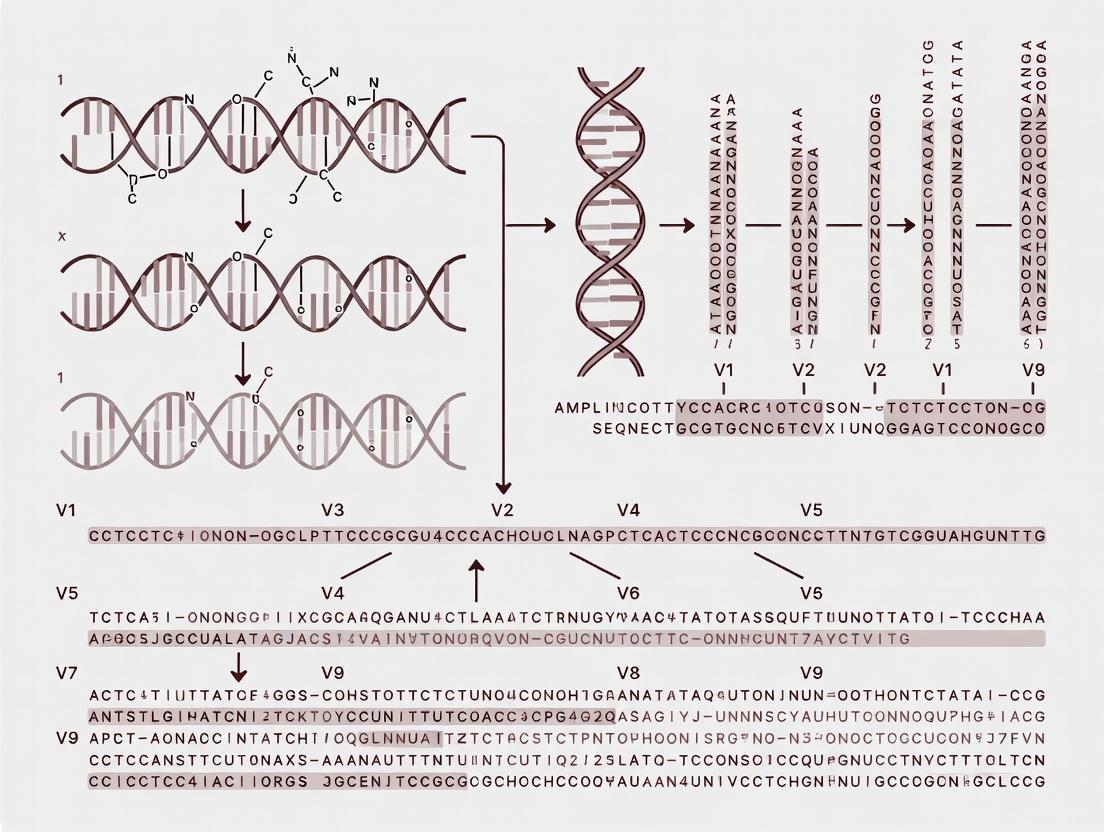
This comprehensive guide demystifies the nine hypervariable regions (V1-V9) of the 16S rRNA gene for microbial researchers.
The Complete 16S rRNA Hypervariable Regions V1-V9 Guide: Selection, Sequencing, and Analysis for Precision Microbiology
Abstract
This comprehensive guide demystifies the nine hypervariable regions (V1-V9) of the 16S rRNA gene for microbial researchers. We cover foundational biology, provide a decision framework for region selection based on your specific research goals (e.g., broad-spectrum surveys vs. high-resolution strain typing), and detail optimized wet-lab and bioinformatics protocols. The article addresses common experimental pitfalls, compares leading primer sets and sequencing platforms, and validates approaches through comparative analysis of taxonomic resolution and bias. Designed for scientists and drug development professionals, this resource equips you to design robust, reproducible, and insightful microbiome studies.
Decoding the 16S rRNA Gene: A Primer on V1-V9 Biology and Evolutionary Significance
The 16S ribosomal RNA (rRNA) gene is a cornerstone of microbial phylogenetics and ecology. This ~1,500 bp gene contains nine hypervariable regions (V1-V9) interspersed with conserved stretches. The conserved regions serve as universal priming sites for PCR amplification across Bacteria and Archaea, while the hypervariable regions provide the taxonomic resolution necessary for differentiation. This whitepaper, framed within a broader thesis on the V1-V9 regions, provides a technical guide for researchers and drug development professionals on leveraging this genetic scaffold for microbial analysis.
The Universal Scaffold: Conserved Regions
The conserved sequences of the 16S rRNA gene are under strong evolutionary pressure due to their critical role in ribosome assembly and protein translation. These regions enable the design of broad-range primers.
Table 1: Common Universal Primer Pairs Targeting 16S Conserved Regions
| Primer Name | Target Region (E. coli pos.) | Sequence (5' -> 3') | Expected Amplicon Size (bp) | Primary Application |
|---|---|---|---|---|
| 27F / 1492R | V1-V9 (8-1541) | AGAGTTTGATCMTGGCTCAG / GGTTACCTTGTTACGACTT | ~1500 | Full-length gene sequencing |
| 515F / 806R | V4 (515-806) | GTGYCAGCMGCCGCGGTAA / GGACTACNVGGGTWTCTAAT | ~290 | Illumina MiSeq community profiling |
| 341F / 785R | V3-V4 (341-785) | CCTAYGGGRBGCASCAG / GGACTACNNGGGTATCTAAT | ~440 | High-resolution community profiling |
| Bakt341F / Bakt805R | V3-V4 (341-805) | CCTACGGGNGGCWGCAG / GACTACHVGGGTATCTAATCC | ~460 | Improved coverage for some clades |
The Hypervariable Landscape: Regions V1-V9
The nine hypervariable regions evolve at differing rates and offer varying degrees of taxonomic discrimination.
Table 2: Characteristics and Discriminatory Power of 16S Hypervariable Regions (V1-V9)
| Region | Approx. Position (E. coli) | Length (bp) | Taxonomic Resolution | Notable Characteristics & Challenges |
|---|---|---|---|---|
| V1 | 69-99 | ~30 | High (Genus/Species) | Highly variable; prone to sequencing errors in early cycles. |
| V2 | 137-242 | ~105 | High (Genus/Species) | Good discrimination; often paired with V3. |
| V3 | 433-497 | ~65 | Moderate (Genus) | Classic region for fingerprinting; good for Gram+ differentiation. |
| V4 | 576-682 | ~107 | Moderate-High (Genus) | Most commonly used (e.g., Earth Microbiome Project); balanced. |
| V5 | 822-879 | ~58 | Moderate (Genus) | Shorter length; often used with V4. |
| V6 | 986-1043 | ~58 | Low-Moderate (Family/Genus) | Less discriminatory alone. |
| V7 | 1117-1173 | ~57 | Low-Moderate (Family/Genus) | Often included in V4-V7 long reads. |
| V8 | 1243-1294 | ~52 | Low (Family) | Lower sequence variation. |
| V9 | 1435-1465 | ~31 | Low (Family/Phylum) | Least variable; useful for deep phylogenetic studies. |
Table 3: Recommended Hypervariable Region Selection for Specific Research Goals
| Research Goal | Recommended Region(s) | Key Rationale |
|---|---|---|
| Full species/strain discrimination | V1-V3 or V1-V9 | Maximizes informational content for differentiation. |
| High-throughput community profiling (Bacteria) | V4 | Best balance of length, discrimination, and database coverage. |
| Profiling complex communities (e.g., soil) | V3-V4 or V4-V5 | Increased length improves classification in diverse samples. |
| Archaeal community profiling | V4-V5 or V6-V8 | Targets regions with better archaeal sequence divergence. |
| Long-read sequencing (PacBio, Nanopore) | V1-V9 or V1-V8 | Leverages read length for full-length or near-full-length analysis. |
| Rapid pathogen screening | V2-V3 | Good discrimination for clinical isolates. |
(Decision Workflow for Selecting 16S rRNA Hypervariable Regions)
Experimental Protocols
Standard Protocol for 16S Amplicon Library Preparation (Illumina)
This protocol details the preparation of libraries targeting the V4 region using a two-step PCR approach.
Materials:
- Genomic DNA from microbial community.
- Primers: 515F and 806R with overhang adapters.
- Polymerase: High-fidelity DNA polymerase (e.g., Q5 Hot Start, KAPA HiFi).
- Clean-up: SPRIselect beads.
- Quantification: Fluorometric assay (e.g., Qubit dsDNA HS Assay).
Procedure:
- First-Stage PCR (Amplify Target Region):
- Reaction Mix: 12.5 μL 2X Master Mix, 1.25 μL each primer (10 μM), 1-10 ng genomic DNA, nuclease-free water to 25 μL.
- Cycling: 98°C for 30s; 25 cycles of (98°C for 10s, 55°C for 30s, 72°C for 30s); 72°C for 2 min.
- Clean-up PCR1 Product: Use 0.8X volume SPRIselect beads. Elute in 20 μL nuclease-free water.
- Second-Stage PCR (Attach Indices & Sequencing Adaptors):
- Reaction Mix: 25 μL 2X Master Mix, 2.5 μL each unique index primer (Nextera XT), 5 μL cleaned PCR1 product, water to 50 μL.
- Cycling: 98°C for 30s; 8 cycles of (98°C for 10s, 55°C for 30s, 72°C for 30s); 72°C for 5 min.
- Clean-up PCR2 Product: Use 1X volume SPRIselect beads. Elute in 30 μL buffer.
- Library Validation: Check fragment size on Bioanalyzer/TapeStation (~550 bp). Quantify by fluorometry.
- Pooling & Sequencing: Normalize and pool libraries equimolarly. Sequence on Illumina MiSeq with 2x250 bp or 2x300 bp chemistry.
Protocol for Full-Length 16S Sequencing (PacBio)
This protocol generates circular consensus sequences (CCS) for the V1-V9 region.
Materials:
- Genomic DNA.
- Primers: 27F and 1492R, barcoded with 16-base-pair PacBio overhang.
- Polymerase: HiFi polymerase designed for long fragments (e.g., KAPA HiFi, Platinum SuperFi II).
- Clean-up: AMPure PB beads.
Procedure:
- PCR Amplification:
- Reaction Mix: As per manufacturer, using high-fidelity polymerase.
- Cycling: 98°C for 2 min; 30 cycles of (98°C for 20s, 55°C for 15s, 72°C for 90s); 72°C for 5 min.
- Clean-up: Use 1X volume AMPure PB beads. Elute in 40 μL.
- SMRTbell Library Prep: Follow PacBio 'Amplicon >5kb' checklist. Steps include damage repair, end repair, A-tailing, and ligation of SMRTbell adapters using the SMRTbell Prep Kit 3.0.
- Size Selection: Use the BluePippin system with a 0.75% agarose cassette for size selection (target ~1.7-1.8 kb).
- Sequencing: Bind library to polymerase using Sequel II Binding Kit. Sequence on PacBio Sequel IIe with 30-hour movie time to generate sufficient CCS passes.
The Scientist's Toolkit: Key Research Reagent Solutions
Table 4: Essential Materials for 16S rRNA Gene-Based Experiments
| Item | Function & Rationale | Example Products |
|---|---|---|
| High-Fidelity DNA Polymerase | Critical for accurate amplification with low error rates to prevent artificial sequence diversity. | Q5 Hot Start (NEB), KAPA HiFi (Roche), Platinum SuperFi II (Thermo) |
| Magnetic Bead Clean-up Kits | For efficient PCR purification and size selection. Minimizes bias vs. column-based methods. | SPRIselect (Beckman Coulter), AMPure XP/PB (Beckman Coulter) |
| Dual-Indexed Primer Kits | Allows massive multiplexing by attaching unique barcodes to each sample during PCR, reducing index hopping risk. | Nextera XT Index Kit (Illumina), 16S Barcoding Kit (Oxford Nanopore) |
| Fluorometric DNA Quant Kits | Accurate quantification of dsDNA for library pooling, essential for balanced sequencing depth. | Qubit dsDNA HS Assay (Thermo), Quant-iT PicoGreen (Thermo) |
| qPCR Library Quant Kits | Precise quantification of amplifiable library fragments for optimal loading on sequencer. | KAPA Library Quant Kit (Roche), NEBNext Library Quant Kit (NEB) |
| Standardized Mock Community DNA | Positive control containing known genomic DNA from multiple bacterial species to assess primer bias, sequencing accuracy, and bioinformatic pipeline performance. | ZymoBIOMICS Microbial Community Standard, ATCC MSA-1003 |
| Inhibition-Resistant PCR Mixes | For challenging sample types (e.g., stool, soil) that contain PCR inhibitors like humic acids. | OneTaq Quick-Load (NEB), Phusion Blood Direct (Thermo) |
(Standard 16S rRNA Amplicon Sequencing Workflow)
Data Analysis & Interpretation Considerations
Post-sequencing, raw reads undergo quality filtering, denoising (e.g., DADA2, Deblur to generate Amplicon Sequence Variants - ASVs), chimera removal, and taxonomic assignment against reference databases (e.g., SILVA, Greengenes, RDP). The choice of hypervariable region directly impacts database match confidence. Full-length sequences provide the highest classification accuracy, while shorter regions require carefully curated region-specific databases.
In drug development, 16S analysis is pivotal in understanding microbiome-drug interactions, identifying biomarkers of response/toxicity, and discovering novel antimicrobial targets. Selecting the optimal V-region scaffold is not a one-size-fits-all decision but must be tailored to the specific hypothesis—whether tracking a specific pathogen (requiring high resolution in V1-V3) or surveying global dysbiosis in a clinical trial (optimized for robustness with V4). The universal scaffold enables the experiment, but the hypervariable landscape dictates its resolving power.
Within the broader thesis on constructing a definitive 16S rRNA hypervariable regions guide for research, this technical guide provides a detailed analysis of the nine canonical hypervariable regions (V1-V9). The 16S ribosomal RNA gene is the cornerstone of microbial ecology, phylogenetics, and diagnostics. Its conserved regions facilitate universal primer binding, while the hypervariable regions provide the phylogenetic resolution necessary for taxonomic classification. Precise mapping of these regions—their exact nucleotide boundaries, length heterogeneity, and differential evolutionary rates—is critical for robust experimental design, from primer selection to accurate bioinformatic analysis in drug discovery and microbiome research.
Location and Defining the V-Region Boundaries
Defining the exact start and end points of each V-region is not universally standardized and depends on the reference sequence and alignment used. The following table summarizes the consensus locations based on the Escherichia coli 16S rRNA reference sequence (accession number J01859), which is the standard for numbering.
Table 1: Consensus Location and Length of 16S rRNA Hypervariable Regions (E. coli reference)
| Hypervariable Region | E. coli Start Position | E. coli End Position | Approximate Length (bp) | Flanking Conserved Regions |
|---|---|---|---|---|
| V1 | 69 | 99 | 30-50 | C1, C2 |
| V2 | 137 | 242 | 60-100 | C2, C3 |
| V3 | 433 | 497 | 60-65 | C3, C4 |
| V4 | 576 | 682 | 65-80 | C4, C5 |
| V5 | 822 | 879 | 55-65 | C5, C6 |
| V6 | 986 | 1043 | 55-60 | C6, C7 |
| V7 | 1117 | 1173 | 55-60 | C7, C8 |
| V8 | 1243 | 1294 | 50-55 | C8, C9 |
| V9 | 1435 | 1465 | 30-40 | C9, C10 |
Note: Positions are based on the standard E. coli numbering system. Actual boundaries can shift by a few nucleotides in different classification schemes.
Length Variation Across Taxonomic Groups
The length of each V-region is not fixed and exhibits significant variation across different bacterial phyla. This heterogeneity is a key factor in sequencing read quality and alignment accuracy.
Table 2: Representative Length Variation of V-Regions Across Major Bacterial Phyla
| V-Region | Firmicutes (bp) | Bacteroidetes (bp) | Proteobacteria (bp) | Actinobacteria (bp) | Archaea (bp) | Primary Source of Length Variation |
|---|---|---|---|---|---|---|
| V1 | 35-45 | 30-40 | 30-35 | 40-55 | 45-65 | Insertions/deletions (indels) in stem-loops |
| V2 | 80-100 | 70-90 | 60-75 | 90-110 | 100-130 | Large indels in central loop |
| V3 | 60-65 | 60-65 | 60-65 | 60-65 | 55-70 | Relatively conserved length |
| V4 | 70-80 | 65-75 | 65-75 | 75-85 | 60-75 | Indels in loop structures |
| V5 | 55-65 | 50-60 | 55-60 | 60-70 | 70-90 | Variable stem-loop |
| V6 | 55-60 | 50-55 | 55-60 | 60-70 | 45-60 | Indels in loop region |
| V7 | 55-60 | 50-55 | 55-60 | 60-70 | 40-55 | Minor indels |
| V8 | 50-55 | 45-50 | 50-55 | 55-60 | 30-45 | Short, variable loop |
| V9 | 30-40 | 30-35 | 30-35 | 35-45 | 25-35 | Indels in terminal loop |
Evolutionary Rate Variation and Phylogenetic Signal
The evolutionary rate—the frequency of nucleotide substitutions over time—varies considerably among the V-regions. This directly impacts their utility for different taxonomic levels (e.g., phylum vs. species discrimination).
Table 3: Comparative Evolutionary Rate and Phylogenetic Utility of V-Regions
| V-Region | Relative Evolutionary Rate (Scale: Low/Med/High) | Best Suited For (Taxonomic Level) | Notes on Sequence Conservation |
|---|---|---|---|
| V1 | Medium-High | Genus to Species | Highly variable in Actinobacteria and Archaea. |
| V2 | High | Family to Species | One of the most variable regions; powerful for low-level taxonomy. |
| V3 | High | Genus to Species | Classic target for microbiome studies; good for distinguishing many pathogens. |
| V4 | Medium | Phylum to Genus | Most commonly used single region due to balanced length and variability. |
| V5 | Medium | Phylum to Genus | Often sequenced with V4 (e.g., V4-V5 amplicon). |
| V6 | Medium-High | Genus to Species | Highly variable in some Gammaproteobacteria. |
| V7 | Low-Medium | Phylum to Family | More conserved, useful for broader classification. |
| V8 | Low-Medium | Phylum to Family | Short and relatively conserved. |
| V9 | Low | Domain to Phylum | Most conserved V-region; useful for deep phylogeny and detecting novel lineages. |
Experimental Protocols for V-Region Analysis
Protocol: Full-Length 16S rRNA Gene Amplification and Sequencing for V-Region Mapping
Objective: To generate accurate, reference-quality full-length 16S rRNA gene sequences from a bacterial isolate for precise boundary determination of all V-regions.
Materials: See "The Scientist's Toolkit" below. Procedure:
- Genomic DNA Extraction: Use a bead-beating or enzymatic lysis kit optimized for Gram-positive and Gram-negative bacteria to obtain high-molecular-weight DNA. Verify integrity via gel electrophoresis.
- PCR Amplification: Set up a 50 µL reaction with:
- 10-100 ng genomic DNA.
- 1X high-fidelity PCR buffer.
- 0.2 mM each dNTP.
- 0.5 µM universal primers 27F (5'-AGRGTTYGATYMTGGCTCAG-3') and 1492R (5'-RGYTACCTTGTTACGACTT-3').
- 1-2 U high-fidelity DNA polymerase (e.g., Phusion).
- PCR Cycle: Initial denaturation at 98°C for 30s; 30 cycles of (98°C for 10s, 55°C for 20s, 72°C for 90s); final extension at 72°C for 5 min.
- Amplicon Purification: Clean the PCR product using a spin-column based PCR purification kit. Quantify using a fluorometric assay.
- Library Preparation & Sequencing: Use a long-read sequencing platform (e.g., PacBio SMRT or Oxford Nanopore). For PacBio: Prepare SMRTbell library using the Express Template Prep Kit 2.0. Perform size selection to enrich for ~1.5 kb inserts. Sequence on a Sequel IIe system using CCS (Circular Consensus Sequencing) mode to generate high-accuracy (>99%) full-length reads.
- Bioinformatic Mapping:
- Process CCS reads (e.g., using SMRT Link).
- Align reads to the E. coli J01859 reference sequence using a multiple sequence aligner (MAFFT, SSU-ALIGN).
- Manually inspect the alignment in a viewer (e.g., Geneious) to identify the boundaries of each V-region, defined as stretches of high sequence variability flanked by conserved blocks.
Protocol: Targeted Amplicon Sequencing of a Specific V-Region (e.g., V3-V4)
Objective: To profile microbial community composition by sequencing a specific hypervariable region (e.g., V3-V4).
Procedure:
- Primer Selection: Use well-validated primers. For V3-V4: 341F (5'-CCTACGGGNGGCWGCAG-3') and 806R (5'-GGACTACHVGGGTWTCTAAT-3').
- PCR Amplification & Indexing: Perform a two-step PCR. First, amplify the target with primers containing adapter overhangs. Second, attach dual indices and full sequencing adapters using a limited-cycle PCR.
- Library Pooling & Cleanup: Quantify indexed libraries, pool in equimolar ratios, and clean using size-selective magnetic beads to remove primer dimers.
- Sequencing: Load the pooled library onto an Illumina MiSeq, NextSeq, or NovaSeq system using a 2x250 bp or 2x300 bp paired-end kit to adequately cover the region.
- Bioinformatic Analysis:
- Demultiplex reads based on unique barcodes.
- Perform quality filtering, denoising, and chimera removal (using DADA2, QIIME 2, or USEARCH).
- Cluster sequences into Amplicon Sequence Variants (ASVs) or Operational Taxonomic Units (OTUs).
- Classify taxonomy using a reference database (SILVA, Greengenes, RDP) trained on the specific V-region sequenced.
The Scientist's Toolkit
Table 4: Essential Research Reagent Solutions for 16S rRNA V-Region Analysis
| Item | Function & Rationale |
|---|---|
| High-Fidelity DNA Polymerase (e.g., Phusion, Q5) | Minimizes PCR errors during amplification, critical for generating accurate sequence data for evolutionary rate studies. |
| Universal 16S rRNA Primer Panels | Sets of validated primer pairs targeting individual or combined V-regions (e.g., V1-V2, V3-V4, V4-V5, V6-V8). Essential for targeted amplicon sequencing. |
| Magnetic Bead-Based Cleanup Kits (e.g., AMPure XP) | For consistent size selection and purification of PCR amplicons, removing primers, dimers, and contaminants to ensure clean sequencing libraries. |
| Long-Read Sequencing Chemistry (PacBio SMRTbell or Nanopore Ligation Kit) | Enables sequencing of the full-length (~1.5 kb) 16S rRNA gene, allowing definitive mapping of all V-regions from single reads. |
| Illumina Indexing Kits (e.g., Nextera XT, 16S Metagenomic Kit) | Allows multiplexing of hundreds of samples for high-throughput V-region amplicon sequencing on short-read platforms. |
| SSU-ALIGN Software | A specialized NCRNA-aware aligner based on covariance models. The gold standard for accurate alignment of 16S rRNA sequences to infer true V-region boundaries. |
| Curated 16S Reference Databases (SILVA, RDP, Greengenes) | Provide high-quality, aligned full-length and region-specific sequences necessary for taxonomic classification and phylogenetic placement. |
| Mock Microbial Community Genomic DNA (e.g., ZymoBIOMICS) | A defined mix of known bacterial genomes. Serves as an essential positive control and calibrator for evaluating primer bias, sequencing accuracy, and bioinformatic pipeline performance across different V-regions. |
A precise and nuanced understanding of the location, length heterogeneity, and differential evolutionary rates of the nine 16S rRNA hypervariable regions is foundational for modern microbial genomics. This guide, situated within a comprehensive thesis on 16S rRNA, provides researchers and drug development professionals with the technical framework to select the appropriate V-region(s) for their specific application—whether it's detecting a pathogen at the species level (using V2 or V3) or unraveling deep evolutionary relationships (using V9). The integration of robust experimental protocols, specialized bioinformatic tools, and standardized controls is paramount for generating reproducible and biologically meaningful data that can inform therapeutic discovery and diagnostic development.
This whitepaper explores the critical role of hypervariable regions (V1-V9) within the 16S ribosomal RNA (rRNA) gene in microbial taxonomy and identification. The core thesis is that the measured sequence diversity within these defined regions provides the discriminatory power necessary for accurate phylogenetic placement and species-level differentiation, forming the cornerstone of modern microbiome research and its applications in drug discovery and therapeutic development.
The 16S rRNA Gene and Its Hypervariable Landscape
The prokaryotic 16S rRNA gene (~1,500 bp) comprises nine conserved regions interspersed with nine hypervariable regions (V1-V9). The conserved regions enable universal primer binding for PCR amplification, while the hypervariable regions accumulate mutations at a higher rate, providing the sequence signatures used for differentiation.
Table 1: Characteristics of 16S rRNA Hypervariable Regions (V1-V9)
| Region | Approximate Position (E. coli) | Average Length (bp) | Relative Variability | Primary Taxonomic Utility |
|---|---|---|---|---|
| V1 | 69-99 | 30 | High | Genus-level (some Bacteria) |
| V2 | 137-242 | 105 | High | Genus/Family level |
| V3 | 433-497 | 65 | Very High | Broad differentiation |
| V4 | 576-682 | 107 | High | Common for microbiome surveys |
| V5 | 822-879 | 58 | Medium | Genus-level |
| V6 | 986-1043 | 58 | Medium | Phylum/Genus level |
| V7 | 1117-1173 | 57 | Low-Medium | Complementary region |
| V8 | 1243-1294 | 52 | Low-Medium | Complementary region |
| V9 | 1435-1465 | 31 | Low | High-level taxonomy |
Data synthesized from current reviews on primer selection and benchmarking studies (2023-2024).
Experimental Protocols for 16S rRNA Analysis
Protocol 3.1: Targeted Amplicon Sequencing (Illumina Platform)
Objective: To amplify and sequence specific hypervariable regions from a complex microbial community.
- DNA Extraction: Use a bead-beating mechanical lysis kit (e.g., DNeasy PowerSoil Pro) to ensure Gram-positive cell breakage. Include negative extraction controls.
- Primer Selection: Choose primers flanking the target region(s). Common pairs: 515F/806R for V4, 27F/338R for V1-V2. Attach Illumina adapter sequences and sample-specific barcodes to the forward primer.
- PCR Amplification: Perform triplicate 25-µL reactions per sample. Use a high-fidelity polymerase (e.g., Q5 Hot Start). Cycle: 98°C/30s; 25-35 cycles of (98°C/10s, 55°C/30s, 72°C/30s); final extension 72°C/2min.
- Amplicon Purification: Pool replicates, then clean using magnetic beads (e.g., AMPure XP) to remove primers and dimers.
- Library Preparation & Sequencing: Index with a second PCR (8 cycles), purify, quantify, pool equimolarly, and sequence on Illumina MiSeq (2x300 bp) or NovaSeq.
Protocol 3.2: Full-Length 16S Sequencing (PacBio SMRT or Nanopore)
Objective: To obtain near-complete 16S rRNA gene sequences for highest resolution.
- DNA Extraction: As in Protocol 3.1, but prioritize high molecular weight DNA.
- Full-Length Amplification: Use primers 27F and 1492R with long-read polymerase. Cycle conditions extended for ~2 kb product.
- Library Prep: For PacBio: Prepare SMRTbell library with barcoded adapters. For Nanopore: Use native barcoding kit (SQK-16S024).
- Sequencing: Load on PacBio Sequel IIe system (Circular Consensus Sequencing mode) or Oxford Nanopore MinION R10.4.1 flow cell.
From Sequences to Taxonomy: The Bioinformatic Workflow
(Diagram Title: 16S rRNA Data Analysis Pipeline)
The Scientist's Toolkit: Research Reagent Solutions
Table 2: Essential Materials for 16S rRNA Research
| Item | Function & Rationale | Example Product |
|---|---|---|
| Mechanical Lysis Beads | Ensures uniform cell disruption of diverse cell wall types (Gram+, Gram-, spores). Essential for unbiased community representation. | 0.1mm & 0.5mm Zirconia/Silica beads |
| High-Fidelity DNA Polymerase | Reduces PCR amplification errors, critical for accurate sequence variant (ASV) calling. | Q5 Hot Start, Phusion Plus |
| Magnetic Bead Cleanup Kits | For size selection and purification of amplicons, removing primer dimers and contaminants. | AMPure XP, SPRIselect |
| Quantitation Kit (Fluorometric) | Accurate dsDNA quantification for library pooling to ensure even sequencing depth. | Qubit dsDNA HS Assay |
| Mock Microbial Community | Positive control containing known genomic DNA from defined bacterial strains to assess bias and accuracy. | ZymoBIOMICS Microbial Community Standard |
| Validated Primer Pairs | Optimized primers with known coverage and bias for target hypervariable regions. | Earth Microbiome Project 515F/806R |
| Reference Database | Curated 16S sequence database with high-quality taxonomic labels for classification. | SILVA, Greengenes, RDP |
Quantitative Insights: Discriminatory Power of Regions
Table 3: Discriminatory Power of Single vs. Paired Hypervariable Regions
| Target Region(s) | Average Read Length | Bacterial Genus Resolution Rate* | Proposed Best Use Case |
|---|---|---|---|
| V1-V2 | ~400 bp | 75-85% | Skin, respiratory microbiomes |
| V3-V4 | ~460 bp | 80-90% | Gut microbiome surveys |
| V4 | ~290 bp | 70-82% | High-throughput environmental screens |
| V4-V5 | ~390 bp | 78-88% | Marine/freshwater samples |
| Full-Length (V1-V9) | ~1,500 bp | 92-98% | Strain-level discrimination, novel species discovery |
Resolution Rate: Percentage of sequences assigned to a genus with ≥95% confidence, based on in silico analysis of reference genomes (current benchmarks).
Applications in Drug Development
Hypervariable region analysis directly impacts pharmaceutical R&D by:
- Identifying Disease-Associated Taxa: Correlating specific microbial signatures with disease states for target discovery.
- Monitoring Drug Impact: Assessing off-target effects of drugs on the microbiome (e.g., antibiotics).
- QC for Live Biotherapeutic Products (LBPs): Ensuring identity, purity, and stability of bacterial consortia.
(Diagram Title: Microbiome-Driven Drug Development Cycle)
The hypervariable regions V1-V9 of the 16S rRNA gene are not merely variable segments; they are precisely tuned instruments for microbial classification. The selection of region(s), coupled with rigorous experimental and computational protocols, directly dictates the resolution and accuracy of taxonomic identification. This foundational capability is indispensable for advancing our understanding of microbial ecology in health, disease, and the development of next-generation therapeutics.
This whitepaper, framed within a broader thesis on 16S rRNA hypervariable regions V1-V9, examines the fundamental trade-off between taxonomic resolution and amplification bias inherent to each region. For researchers and drug development professionals, optimizing this balance is critical for accurate microbiome profiling, which informs therapeutic discovery and diagnostic development.
Quantitative Comparison of 16S rRNA Regions
The following tables summarize the key performance metrics for each hypervariable region, based on current literature.
Table 1: Taxonomic Resolution and Coverage by Hypervariable Region
| Region | Amplicon Length (bp) | Taxonomic Resolution (Genus Level) | Coverage of Major Phyla | Notes on Common Misses |
|---|---|---|---|---|
| V1-V3 | ~500-600 | High for many Gram-positives | Good for Firmicutes, Actinobacteria; Moderate for some Gram-negatives | Can underrepresent Bacteroidetes; prone to chimera formation. |
| V3-V4 | ~460 | High (Current gold standard) | Excellent overall coverage | Best balance for current short-read platforms (MiSeq). |
| V4 | ~290 | Moderate to High | Excellent, most widely used | Robust, minimal bias; but shorter length limits species/strain resolution. |
| V4-V5 | ~390 | Moderate to High | Very Good | Good alternative to V3-V4 with similar performance. |
| V6-V8 | ~380 | Moderate | Good for many; poor for others | Can struggle with Bacilli and Clostridia classes. |
| V7-V9 | ~330 | Low to Moderate | Moderate; biases observed | Often targets Bacteroidetes; can miss key Firmicutes. |
| Full-length (V1-V9) | ~1500 | Highest (Species/Strain) | Complete, by definition | Requires long-read sequencing (PacBio, Nanopore). |
Table 2: Amplification Bias and Technical Performance
| Region | Primer Pair (Example) | GC-Bias | Amplification Efficiency | Observed Bias Against/For Certain Taxa |
|---|---|---|---|---|
| V1-V3 | 27F-534R | Moderate-High | Variable | Against high-GC% Actinobacteria; for Staphylococcus. |
| V3-V4 | 341F-805R | Low-Moderate | High | Minimal, though some under-amplification of Bifidobacterium. |
| V4 | 515F-806R | Low | High | Most balanced; slight bias against Lactobacillus spp. |
| V6-V8 | 926F-1392R | Moderate | Moderate | Against Clostridium cluster XI; for Bacteroides. |
| V7-V9 | 1100F-1392R | High | Low-Moderate | Strong for Bacteroidetes; against many Firmicutes. |
| Full-length | 27F-1492R | High | Low | Highly variable efficiency; requires specialized polymerases. |
Experimental Protocols for Assessing Bias and Resolution
Protocol 1: In Silico Evaluation of Primer Coverage and Specificity
- Primer Alignment: Retrieve target primer sequences from literature (e.g., 341F:
CCTACGGGNGGCWGCAG). - Database Download: Obtain a curated 16S rRNA gene database (e.g., SILVA, Greengenes, RDP).
- Tool: Use
probeMatchfunction in mothur orTestPrimein QIIME 2. - Parameters: Allow up to 1-2 mismatches. Group sequences by taxon.
- Output Analysis: Calculate the percentage of target taxa (e.g., all Bacteria, or specific phyla) containing perfect and mismatched hits. Identify taxonomic groups with >2 mismatches (likely to be under-amplified).
Protocol 2: Mock Community Experiment for Bias Quantification
- Material: Purchase a defined genomic mock community (e.g., ZymoBIOMICS Microbial Community Standard) with known, quantified genome copies.
- DNA Extraction: Extract DNA using a robust mechanical lysis protocol (e.g., bead-beating) to ensure equal cell disruption.
- PCR Amplification: Amplify target regions (e.g., V4, V3-V4, V1-V3) in triplicate using standardized cycling conditions. Keep PCR cycles low (25-30) to reduce bias.
- Library Prep & Sequencing: Use a dual-indexing strategy on an Illumina MiSeq with sufficient depth (>100,000 reads per sample).
- Bioinformatic Analysis: Process reads through a standardized pipeline (DADA2, QIIME 2). Do not apply abundance filters.
- Bias Calculation: For each organism i in the mock community, calculate Observed/Expected Ratio = (Sequencing Read Count Proportion i) / (Known Genome Copy Proportion i). A ratio of 1 indicates no bias; <1 indicates under-amplification; >1 indicates over-amplification.
Protocol 3: Long-read vs. Short-read Comparison for Resolution
- Sample: Use a complex environmental sample (e.g., gut microbiome).
- Parallel Amplification: Amplify the V3-V4 region for Illumina sequencing and the full-length V1-V9 region for PacBio SMRT or Nanopore sequencing.
- Sequencing: Sequence both libraries to high depth.
- Analysis: Cluster V3-V4 reads at 97% identity for OTUs or generate ASVs. Classify full-length reads to species level using a database like GTDB.
- Resolution Metric: Compare the number of unique taxonomic assignments at the genus and species level between the two methods. Calculate the percentage of V3-V4 genera that can be resolved to species with full-length data.
Visualizing the Trade-off and Workflow
16S Region Selection Trade-off
Optimal 16S Region Selection Workflow
The Scientist's Toolkit: Research Reagent Solutions
Table 3: Essential Reagents and Materials for 16S rRNA Bias Studies
| Item | Function in Experiment | Example Product/Brand |
|---|---|---|
| Defined Genomic Mock Community | Serves as a ground-truth standard with known composition to quantitatively measure PCR and sequencing bias. | ZymoBIOMICS Microbial Community Standard; ATCC Mock Microbiome Standards. |
| Bias-Reduced DNA Polymerase | High-fidelity, low-bias polymerase is crucial for accurate amplification of diverse 16S templates, especially for long or GC-rich regions. | KAPA HiFi HotStart ReadyMix; Q5 High-Fidelity DNA Polymerase. |
| Dual-Indexed PCR Primers | Allows multiplexing of hundreds of samples while minimizing index-hopping errors during sequencing. | Nextera XT Index Kit; Custom 16S primers with Illumina adapter overhangs. |
| Magnetic Bead-based Cleanup | For consistent size selection and purification of PCR amplicons, removing primer dimers and contaminants. | AMPure XP Beads; SPRIselect Beads. |
| High-Sensitivity DNA Quantitation Kit | Accurate quantification of library DNA is essential for balanced pooling and optimal sequencing loading. | Qubit dsDNA HS Assay; Fragment Analyzer HS NGS Fragment Kit. |
| Benchmarked 16S rRNA Reference Database | Required for in silico primer evaluation and taxonomic classification of sequenced reads. | SILVA SSU Ref NR; Greengenes; Ribosomal Database Project (RDP). |
| Positive Control (Phage/Spike-in DNA) | Added post-extraction to monitor PCR and sequencing efficiency independently of the biological sample. | PhiX Control v3; External RNA Controls Consortium (ERCC) spike-ins. |
The study of microbial ecology has been fundamentally transformed by the development of 16S ribosomal RNA (rRNA) gene sequencing. The 16S rRNA gene contains nine hypervariable regions (V1-V9) interspersed between conserved stretches. The comparative analysis of these V regions serves as the primary tool for microbial identification, phylogeny, and ecological surveying, forming the core thesis that targeted sequencing of specific V regions dictates the resolution, bias, and ecological inference of microbial community studies.
Quantitative Comparison of 16S rRNA Hypervariable Regions
The selection of which V region(s) to amplify and sequence is critical, as each varies in length, sequence diversity, and taxonomic resolution.
Table 1: Characteristics and Performance of Primary 16S rRNA Gene Hypervariable Regions
| Region | Approx. Length (bp) | Taxonomic Resolution | Key Advantages | Key Limitations / Biases |
|---|---|---|---|---|
| V1-V3 | ~500-600 | High for many bacteria; good for Firmicutes, Bacteroidetes. | Often provides species-level resolution. Well-suited for Roche 454 & Ion Torrent historically. | Can underrepresent Bifidobacterium and Lactobacillus. Primer bias is a significant concern. |
| V3-V4 | ~460 | High; current community standard. | Excellent for Illumina MiSeq 2x300 bp sequencing. Balanced resolution for most phyla. | May miss discrimination within some Proteobacteria. |
| V4 | ~250-290 | Moderate to High. | Short, highly conserved primers minimize bias. Gold standard for large-scale studies (e.g., Earth Microbiome Project). | Lower phylogenetic resolution compared to longer multi-V region amplicons. |
| V4-V5 | ~390 | Moderate to High. | Good for diverse communities including environmental samples. Compatible with older Illumina kits (2x250). | Less commonly used than V4 or V3-V4. |
| V6-V8 | ~420 | Moderate. | Effective for marine and extreme environment microbiomes. | Lower resolution for certain Gram-positive bacteria. |
| V9 | ~150-180 | Lower. | Very short; useful for highly degraded DNA (e.g., formalin-fixed samples). | Lowest phylogenetic resolution; primarily for domain-level or broad phylum-level surveys. |
Table 2: Impact of V Region Choice on Observed Microbial Diversity in a Simulated Community
| Sequenced Region | Estimated Richness (vs. Known) | Bias Against Phylum X | Bias For Phylum Y | Computational Processing Error Rate |
|---|---|---|---|---|
| V4 | 95% | Low (-2%) | Low (+3%) | Low (Q30 > 90%) |
| V3-V4 | 98% | Moderate (-8%) | Moderate (+5%) | Moderate (Q30 ~ 85%) |
| V1-V3 | 90% | High (-15%) | High (+12%) | Higher (Q30 ~ 80%) |
| V9 | 75% | Very High (-25%) | Very Low (+1%) | Low (Q30 > 90%) |
Experimental Protocols for V Region Analysis
Protocol 1: Standard Illumina Library Preparation for the V3-V4 Region
This protocol is optimized for the Illumina MiSeq platform using the 341F/805R primer pair.
DNA Extraction:
- Use a bead-beating mechanical lysis kit (e.g., DNeasy PowerSoil Pro) for robust cell wall disruption across diverse taxa.
- Include negative extraction controls.
- Quantify DNA using a fluorescence-based assay (e.g., Qubit dsDNA HS Assay).
Primary PCR Amplification:
- Reaction Mix (25 µL): 2.5 µL 10x Reaction Buffer, 1 µL dNTPs (10 mM each), 0.5 µL each forward and reverse primer (10 µM), 0.25 µL Polymerase (e.g., AccuPrime Taq High Fidelity), 1-10 ng template DNA, nuclease-free water to volume.
- Primers: 341F (5'-CCTACGGGNGGCWGCAG-3'), 805R (5'-GACTACHVGGGTATCTAATCC-3').
- Cycling Conditions: 95°C for 3 min; 25-30 cycles of: 95°C for 30s, 55°C for 30s, 72°C for 60s; final extension 72°C for 5 min.
- Clean amplicons using magnetic beads (e.g., AMPure XP) at a 0.8x ratio.
Index PCR & Library Pooling:
- Attach dual indices and Illumina sequencing adapters in a second, limited-cycle (8 cycles) PCR.
- Clean as above. Quantify pools using qPCR (e.g., KAPA Library Quant Kit).
- Pool libraries equimolarly. Load at 4-6 pM with a 5-10% PhiX spike-in for run quality control.
Protocol 2: Bioinformatics Pipeline for Processing V Region Amplicon Data (QIIME 2/DADA2)
This protocol denoises sequences to Amplicon Sequence Variants (ASVs).
- Demultiplexing & Quality Control: Use
qiime demux emp-pairedorqiime tools import. Visualize quality withqiime demux summarize. - Denoising & Chimera Removal (DADA2):
- Command:
qiime dada2 denoise-pairedwith parameters:--p-trunc-len-f 280 --p-trunc-len-r 220 --p-trim-left-f 0 --p-trim-left-r 0 --p-max-ee-f 2 --p-max-ee-r 2. - This step infers exact ASVs, correcting sequencing errors, and removes chimeras de novo.
- Command:
- Taxonomic Assignment: Train a classifier on the specific V region used. Use
qiime feature-classifier classify-sklearnagainst a reference database (e.g., SILVA, Greengenes). - Diversity Analysis: Generate a phylogenetic tree with
qiime phylogeny align-to-tree-mafft-fasttree. Calculate core metrics withqiime diversity core-metrics-phylogenetic.
Visualizing the Workflow and Impact
Title: Workflow from Sample to Ecological Insight via V Region Targeting
Title: Factors Shaping the Observed Community Profile
The Scientist's Toolkit: Research Reagent Solutions
Table 3: Essential Reagents and Kits for 16S rRNA V Region Studies
| Item Name | Supplier Examples | Function in V Region Analysis |
|---|---|---|
| DNeasy PowerSoil Pro Kit | QIAGEN | Gold-standard for microbial genomic DNA extraction from complex samples; minimizes inhibitor co-purification. |
| AccuPrime Taq High Fidelity | Thermo Fisher | High-fidelity polymerase for accurate amplification of the target V region with low error rates. |
| KAPA Library Quantification Kit | Roche | Precise quantification of sequencing libraries by qPCR for accurate pooling and optimal cluster density. |
| Nextera XT Index Kit | Illumina | Provides unique dual indices for multiplexing hundreds of samples during V region library prep. |
| AMPure XP Beads | Beckman Coulter | Magnetic beads for size selection and purification of PCR amplicons and final libraries. |
| PhiX Control v3 | Illumina | Spiked into runs as a quality control for cluster generation, sequencing, and alignment. |
| Qubit dsDNA HS Assay Kit | Thermo Fisher | Fluorometric quantification of double-stranded DNA, crucial for normalizing input for PCR. |
| MiSeq Reagent Kit v3 (600-cycle) | Illumina | Chemistry for 2x300 bp paired-end sequencing, ideal for V3-V4 or V4-V5 amplicons. |
| ZymoBIOMICS Microbial Community Standard | Zymo Research | Mock community with known composition for validating entire workflow from extraction to bioinformatics. |
Strategic Selection and Sequencing Protocols for V1-V9 in Modern Research
This whitepaper provides a technical guide for selecting 16S rRNA hypervariable regions (V1-V9) for targeted amplicon sequencing. Within the broader thesis of a comprehensive V1-V9 guide, the selection matrix is presented as a critical decision-making tool, aligning specific region(s) with defined research objectives to optimize data accuracy, taxonomic resolution, and relevance to sample type.
The selection of a hypervariable region profoundly influences the observed microbial community structure. The following table synthesizes current data on key region characteristics and their primary research applications.
Table 1: Hypervariable Region Characteristics and Primary Research Applications
| Target Region(s) | Amplicon Length (bp) | Key Taxonomic Strengths | Optimal Research Context | Common PCR Primers (Examples) |
|---|---|---|---|---|
| V1-V3 | ~500 | High resolution for Firmicutes, Bacteroidetes, Actinobacteria | Clinical diagnostics, skin microbiome, specific pathogen detection | 27F (AGAGTTTGATCMTGGCTCAG) / 534R (ATTACCGCGGCTGCTGG) |
| V3-V4 | ~460 | Robust community profiling, balanced for gut microbiota | Human gut microbiome, general bacterial diversity studies | 341F (CCTACGGGNGGCWGCAG) / 805R (GACTACHVGGGTATCTAATCC) |
| V4 | ~292 | Shorter, highly conserved; minimizes amplification bias | Environmental samples (soil, water), large-scale meta-studies (e.g., Earth Microbiome Project) | 515F (GTGYCAGCMGCCGCGGTAA) / 806R (GGACTACNVGGGTWTCTAAT) |
| V4-V5 | ~400 | Good for Proteobacteria, Cyanobacteria | Marine/freshwater microbiomes, engineered systems | 515F / 926R (CCGYCAATTYMTTTRAGTTT) |
| V6-V8 | ~430 | Effective for Firmicutes and environmental Bacteria | Mammalian gut, anaerobic digesters | 926F (AAACTYAAAKGAATTGACGG) / 1392R (ACGGGCGGTGTGTRC) |
| V7-V9 | ~380 | Targets longer fragments for deeper phylogenetic resolution | Archaea and deep-branching bacterial lineages | 1100F (YAACGAGCGCAACCC) / 1392R (ACGGGCGGTGTGTRC) |
Table 2: Performance Metrics by Sample Type (Generalized)
| Sample Type | Recommended Region(s) | Primary Rationale | Considerations |
|---|---|---|---|
| Human Gut | V3-V4, V4 | Extensive reference databases, optimal for core gut phyla. | V4 offers cost-efficiency; V3-V4 may offer slightly higher resolution. |
| Soil | V4, V4-V5 | Handles high phylogenetic diversity and potential PCR inhibitors. | Shorter V4 amplicon is less susceptible to interference from humic acids. |
| Freshwater/Marine | V4-V5, V6-V8 | Enhanced detection of common aquatic phyla (Cyanobacteria, Proteobacteria). | Salinity and biomass may influence primer binding efficiency. |
| Oral/Skin | V1-V3, V3-V4 | High resolution for diverse communities at species/strain level. | Host DNA contamination is a concern; primer specificity is critical. |
| Extreme/ Low-Biomass | V4 | Short amplicon maximizes success with degraded or minimal DNA. | Risk of off-target amplification; requires stringent controls. |
Detailed Experimental Protocol: 16S rRNA Gene Amplicon Library Preparation (V3-V4 Region)
This protocol is a standard workflow for Illumina MiSeq sequencing.
Materials & Equipment
- Purified genomic DNA samples
- Phusion High-Fidelity DNA Polymerase (or equivalent)
- Library preparation primers with overhang adapters:
- Forward (341F): 5’ TCGTCGGCAGCGTCAGATGTGTATAAGAGACAGCCTACGGGNGGCWGCAG 3’
- Reverse (805R): 5’ GTCTCGTGGGCTCGGAGATGTGTATAAGAGACAGGACTACHVGGGTATCTAATCC 3’
- Agencourt AMPure XP beads
- Indexing primers (Nextera XT Index Kit)
- Qubit Fluorometer and dsDNA HS Assay Kit
- Agilent Bioanalyzer or TapeStation with High Sensitivity DNA kit
- Thermal cycler with heated lid
- Magnetic stand for 1.5mL tubes
- Nuclease-free water
Procedure
Step 1: First-Stage PCR (Amplification with Overhang Adapters)
- Prepare the PCR mix on ice (25 µL reaction):
- 12.5 µL 2X Phusion Master Mix
- 1.0 µL Forward Primer (10 µM)
- 1.0 µL Reverse Primer (10 µM)
- 1.0 µL Template DNA (1-10 ng)
- 9.5 µL Nuclease-Free Water
- Run the PCR with the following program:
- Initial Denaturation: 98°C for 30 sec.
- 25-35 Cycles: Denature at 98°C for 10 sec, Anneal at 55°C for 30 sec, Extend at 72°C for 30 sec.
- Final Extension: 72°C for 5 min. Hold at 4°C.
- Verify amplicon size (~550-600bp with adapters) on a 1.5% agarose gel.
Step 2: PCR Product Purification
- Vortex AMPure XP beads thoroughly. Add 25 µL (0.8X ratio) of beads to each 25 µL PCR reaction. Mix thoroughly.
- Incubate at room temperature for 5 minutes.
- Place on a magnetic stand for 2 minutes until supernatant is clear.
- Carefully remove and discard the supernatant.
- With tube on magnet, wash beads twice with 200 µL freshly prepared 80% ethanol.
- Air dry beads for 5 minutes. Remove from magnet.
- Elute DNA in 25 µL of 10 mM Tris-HCl, pH 8.5. Mix well, incubate 2 minutes, place on magnet, and transfer cleaned supernatant to a new tube.
Step 3: Indexing PCR (Attachment of Dual Indices and Sequencing Adaptors)
- Prepare the indexing PCR (50 µL reaction):
- 25 µL 2X Phusion Master Mix
- 2.5 µL Nextera XT Index Primer 1 (N7xx)
- 2.5 µL Nextera XT Index Primer 2 (S5xx)
- 5 µL Purified PCR Product from Step 2
- 15 µL Nuclease-Free Water
- Run the indexing PCR:
- Initial Denaturation: 98°C for 30 sec.
- 8 Cycles: 98°C for 10 sec, 55°C for 30 sec, 72°C for 30 sec.
- Final Extension: 72°C for 5 min. Hold at 4°C.
Step 4: Final Library Purification, Quantification, and Pooling
- Repeat the AMPure XP bead cleanup (Step 2) using a 0.9X bead ratio (45 µL beads to 50 µL PCR).
- Elute in 30 µL Tris buffer.
- Quantify each library using the Qubit dsDNA HS Assay.
- Check library fragment size distribution using the Agilent High Sensitivity DNA kit.
- Normalize libraries to 4 nM based on Qubit and average fragment size.
- Pool equal volumes of normalized libraries.
- Dilute the pool to the final loading concentration (e.g., 4-6 pM) for sequencing on the Illumina MiSeq with a 2x300bp v3 kit.
Workflow Diagram
Diagram 1: 16S rRNA Amplicon Sequencing Workflow
The Scientist's Toolkit: Research Reagent Solutions
Table 3: Essential Reagents and Materials for 16S rRNA Amplicon Studies
| Item | Function/Application | Key Considerations |
|---|---|---|
| Phusion or KAPA HiFi HotStart DNA Polymerase | High-fidelity PCR amplification of the target hypervariable region. | Reduces amplification errors and PCR bias; essential for complex mixtures. |
| Validated 16S Primer Pairs (e.g., 341F/805R) | Specific annealing to conserved regions flanking the chosen V region. | Primer choice dictates target; must be selected from the Region Selection Matrix. |
| Agencourt AMPure XP or SPRIselect Beads | Size-selective purification of PCR amplicons and final libraries. | Removes primers, dimers, and contaminants; critical for library quality. |
| Nextera XT or Equivalent Indexing Kit | Attaches unique dual indices (barcodes) and full sequencing adapters. | Enables multiplexing of hundreds of samples in a single run. |
| Qubit dsDNA High Sensitivity (HS) Assay Kit | Accurate fluorometric quantification of low-concentration DNA libraries. | More accurate for libraries than UV spectrometry; prevents over/under-loading. |
| Agilent High Sensitivity DNA Kit (Bioanalyzer/TapeStation) | Assesses library fragment size distribution and detects adapter dimers. | Quality control checkpoint before pooling and sequencing. |
| MiSeq Reagent Kit v3 (600-cycle) | Standard chemistry for 2x300bp paired-end sequencing of ~460bp amplicons. | Provides sufficient overlap for reliable merging of paired-end reads. |
| Positive Control DNA (e.g., ZymoBIOMICS Microbial Standard) | Validates entire workflow from PCR through sequencing. | Community standard with known composition to assess bias and accuracy. |
| Negative Control (PCR-grade Water) | Detects contamination during library preparation. | Should be included in every PCR and library prep batch. |
This guide is framed within a broader thesis on the comprehensive analysis of 16S rRNA hypervariable regions V1-V9. Accurate taxonomic profiling in microbiome research hinges on the selection of primer sets with high specificity, coverage, and minimal bias. This document provides a curated, updated list of gold-standard primer pairs for each region (V1-V9), based on current literature and experimental validation, serving as a critical resource for researchers, scientists, and drug development professionals.
Primer Performance Metrics & Selection Criteria
Gold-standard primers are evaluated based on key quantitative metrics: Coverage (percentage of target taxa amplified), Specificity (for Bacteria and/or Archaea), Amplicon Length, and Estimated Error Rate. The following table summarizes the top-performing primer sets for each hypervariable region, based on recent benchmarking studies.
Table 1: Gold-Standard Primer Sets for 16S rRNA Hypervariable Regions V1-V9
| Region | Forward Primer (5'->3') | Reverse Primer (5'->3') | Key Application/Phylum Bias | Amplicon Length (bp) | Recommended Use |
|---|---|---|---|---|---|
| V1-V2 | 27F (AGAGTTTGATCMTGGCTCAG) | 338R (TGCTGCCTCCCGTAGGAGT) | Broad bacterial diversity; skin microbiota. | ~310 | Full-length 16S sequencing surveys. |
| V3-V4 | 341F (CCTACGGGNGGCWGCAG) | 805R (GACTACHVGGGTATCTAATCC) | General gut & environmental microbiomes. | ~465 | Illumina MiSeq standard (dual-index). |
| V4 | 515F (GTGYCAGCMGCCGCGGTAA) | 806R (GGACTACNVGGGTWTCTAAT) | Earth Microbiome Project standard; minimal bias. | ~290 | High-throughput environmental/bacterial studies. |
| V4-V5 | 515F (GTGYCAGCMGCCGCGGTAA) | 926R (CCGYCAATTYMTTTRAGTTT) | Marine & engineered system microbiomes. | ~410 | Differentiating closely related taxa. |
| V6-V8 | 926F (AAACTYAAAKGAATTGACGG) | 1392R (ACGGGCGGTGTGTRC) | Archaeal inclusion; longer fragment analysis. | ~460 | Archaeal & bacterial community profiling. |
| V7-V9 | 1114F (GCAACGAGCGCAACCC) | 1392R (ACGGGCGGTGTGTRC) | Focus on Firmicutes, Bacteroidetes. | ~280 | Human gut microbiome specificity. |
Detailed Experimental Protocol: 16S rRNA Gene Amplicon Library Preparation
This protocol is optimized for the V3-V4 primer pair (341F/805R) on the Illumina MiSeq platform, a current community standard.
Protocol: Two-Step PCR Amplification and Library Construction
Objective: To generate indexed Illumina libraries from genomic DNA for sequencing the hypervariable V3-V4 region.
Materials:
- Template DNA: Purified genomic DNA (10-20 ng/µL) from microbial communities.
- First-Stage Primers: 341F and 805R with Illumina overhang adapters.
- Second-Stage Primers: Nextera XT Index Kit v2 primers (Illumina).
- PCR Master Mix: High-fidelity DNA polymerase (e.g., KAPA HiFi HotStart ReadyMix).
- Purification: AMPure XP beads.
- Quantification: Fluorometric kit (e.g., Qubit dsDNA HS Assay).
Procedure:
- First-Stage PCR (Add Overhang Adapters):
- Prepare 25 µL reactions: 12.5 µL PCR Master Mix, 2.5 µL each forward and reverse overhang primer (1 µM), 2.5 µL template DNA, 5 µL nuclease-free water.
- Thermocycling: 95°C for 3 min; 25 cycles of [95°C for 30 s, 55°C for 30 s, 72°C for 30 s]; final extension at 72°C for 5 min.
- Purify amplicons using AMPure XP beads (0.8x ratio). Elute in 33 µL nuclease-free water.
Second-Stage PCR (Attach Dual Indices):
- Prepare 50 µL reactions: 25 µL PCR Master Mix, 5 µL each forward and reverse index primer (Nextera XT), 5 µL purified first-stage product, 10 µL nuclease-free water.
- Thermocycling: 95°C for 3 min; 8 cycles of [95°C for 30 s, 55°C for 30 s, 72°C for 30 s]; final extension at 72°C for 5 min.
- Purify final libraries using AMPure XP beads (0.9x ratio). Elute in 25 µL nuclease-free water.
Library Validation & Pooling:
- Quantify each library using the Qubit assay.
- Check fragment size on a Bioanalyzer or TapeStation (expected peak ~550-600 bp including adapters).
- Normalize libraries to 4 nM and pool equimolarly.
- Denature and dilute the pooled library per Illumina specifications for loading onto the MiSeq sequencer with a 2x300 bp kit.
Visualization of Workflow and Primer Binding
Diagram 1: 16S Amplicon Library Prep Workflow
Diagram 2: Primer Binding Sites on 16S rRNA Gene
The Scientist's Toolkit: Research Reagent Solutions
Table 2: Essential Materials for 16S rRNA Amplicon Sequencing
| Item | Function & Rationale | Example Product |
|---|---|---|
| High-Fidelity DNA Polymerase | Critical for accurate amplification with low error rates during PCR, essential for reducing sequencing artifacts. | KAPA HiFi HotStart ReadyMix, Q5 High-Fidelity DNA Polymerase. |
| Magnetic Bead Clean-up Kit | For size-selective purification of PCR products, removing primers, dimers, and contaminants. | AMPure XP Beads, SPRIselect. |
| Fluorometric DNA Quantitation Kit | Accurate dsDNA concentration measurement for library normalization prior to pooling and sequencing. | Qubit dsDNA HS Assay Kit. |
| Library Quantification Kit (qPCR) | Measures the concentration of amplifiable library fragments with Illumina adapters for precise loading. | KAPA Library Quantification Kit for Illumina. |
| Dual-Index Primers | Unique barcodes for multiplexing samples, allowing pooling and demultiplexing after sequencing. | Illumina Nextera XT Index Kit v2, 96 Indexes. |
| DNA Analysis Kit | Assesses library fragment size distribution and quality pre-sequencing. | Agilent High Sensitivity D1000 ScreenTape. |
| Standardized Mock Community DNA | Positive control containing DNA from known bacterial species to assess primer bias, sequencing accuracy, and bioinformatics pipeline. | ZymoBIOMICS Microbial Community Standard. |
This guide details the comprehensive wet-lab workflow for generating amplicon sequencing libraries, specifically framed within the critical research context of selecting and analyzing the nine hypervariable regions (V1-V9) of the 16S rRNA gene. The choice of single or multiple regions directly impacts taxonomic resolution, bias, and experimental outcomes in microbial ecology, biomarker discovery, and therapeutic development.
DNA Extraction: Foundational Step for Reliable Amplicon Data
Core Principle: The extraction method must yield high-quality, inhibitor-free genomic DNA representative of the microbial community. Bias introduced here propagates through all downstream steps.
Detailed Protocol: Modified Silica-Membrane Column Protocol for Stool/Environmental Samples
Cell Lysis:
- Weigh 180-220 mg of sample (e.g., stool, soil) into a 2 mL lysing matrix tube.
- Add 1 mL of a pre-heated (70°C) lysis buffer (e.g., containing guanidine thiocyanate, EDTA, and Triton X-100).
- Add 50 µL of Proteinase K (20 mg/mL). Vortex vigorously for 1 minute.
- Incubate at 70°C for 10 minutes with agitation (900 rpm).
- Perform bead-beating on a homogenizer at 6.0 m/s for 45 seconds to mechanically disrupt resilient cells.
Inhibitor Removal & Binding:
- Centrifuge at 13,000 x g for 5 minutes at room temperature (RT).
- Transfer ~800 µL of supernatant to a new 2 mL tube.
- Add 250 µL of Inhibitor Removal Buffer (often containing acidified alumina). Vortex for 10 seconds.
- Centrifuge at 13,000 x g for 3 minutes (RT).
- Transfer 600 µL of cleared supernatant to a new tube.
DNA Binding & Wash:
- Add 600 µL of binding buffer (containing guanidine HCl and isopropanol). Mix by inversion.
- Load 650 µL onto a silica-membrane column. Centrifuge at 10,000 x g for 30 seconds. Discard flow-through and repeat until all sample is processed.
- Add 500 µL of Wash Buffer 1 (high-salt). Centrifuge at 10,000 x g for 30 seconds. Discard flow-through.
- Add 500 µL of Wash Buffer 2 (ethanol-based). Centrifuge at 10,000 x g for 30 seconds. Discard flow-through.
- Perform a second wash with 500 µL Wash Buffer 2. Centrifuge at 10,000 x g for 1 minute. Discard flow-through and spin column dry (full speed, 2 minutes).
Elution:
- Place column in a clean 1.5 mL tube.
- Apply 50-100 µL of pre-heated (55°C) low-EDTA TE buffer or nuclease-free water to the center of the membrane.
- Incubate at RT for 2 minutes.
- Centrifuge at 10,000 x g for 1 minute to elute DNA.
- Quantify using fluorometry (e.g., Qubit dsDNA HS Assay).
Table 1: Comparison of Common DNA Extraction Methods for 16S Studies
| Method | Principle | Typical Yield (Stool) | Inhibitor Removal | Community Bias | Hands-on Time |
|---|---|---|---|---|---|
| Silica-Membrane Column | Chemical lysis + binding to silica | 5 - 50 µg/g | Good | Moderate (lysis efficiency varies) | ~90 min |
| Magnetic Bead-Based | Chemical lysis + binding to paramagnetic beads | 5 - 60 µg/g | Excellent | Moderate | ~75 min |
| Phenol-Chloroform | Organic phase separation | 10 - 100 µg/g | Poor | High (transfer bias) | ~120 min |
| CTAB-Based | Cetyltrimethylammonium bromide precipitation | 2 - 30 µg/g | Moderate | Low for tough cells | ~150 min |
Hypervariable Region Selection & Primer Design
The choice of region(s) is a primary experimental design decision guided by the research thesis.
Table 2: Characteristics of 16S rRNA Hypervariable Regions V1-V9
| Region | Approx. Length (bp) | Taxonomic Resolution | Recommended for | Key Considerations |
|---|---|---|---|---|
| V1-V3 | 450 - 550 | High for many bacteria; good for Firmicutes | Species-level differentiation | Shorter read platforms (e.g., MiSeq 2x300bp). |
| V3-V4 | 450 - 500 | Good general balance | Broad microbial surveys (Earth Microbiome Project) | Well-established, low GC bias. |
| V4 | 250 - 300 | Moderate to good | Large-scale studies, high throughput | Short, highly conserved primers; minimizes errors. |
| V4-V5 | 400 - 450 | Good for environmental samples | Marine, soil microbiota | Balances length and discrimination. |
| V6-V8 | 500 - 600 | Good for Proteobacteria | Pathogen detection | Longer region, requires 2x300bp or longer reads. |
| V7-V9 | 350 - 450 | Lower resolution | Archaea, fungal ITS often paired here | Useful for degraded DNA (e.g., FFPE). |
| Full-length (V1-V9) | ~1500 | Highest (near species/strain) | Reference databases, gold standard | Requires long-read sequencing (PacBio, Nanopore). |
Experimental Protocol: Primer Selection and Validation
- In Silico Validation: Use tools like
TestPrime(SILVA) orEzBioCloudto check primer coverage and specificity against current 16S rRNA databases. Aim for >90% coverage of the target domain (Bacteria/Archaea). - Wet-Lab Validation:
- Perform PCR on a panel of control DNA from diverse taxa (e.g., E. coli, B. subtilis, P. aeruginosa, a mock community).
- Use a thermal profile: 95°C for 3 min; 30 cycles of (95°C for 30s, Primer-Specific Tm for 30s, 72°C for 30s/kb); 72°C for 5 min.
- Analyze products on a high-sensitivity electrophoresis system (e.g., Agilent TapeStation). Expect a single, sharp band of correct size.
- Sanger sequence PCR products to confirm target region amplification.
Amplicon PCR & Library Preparation
Detailed Protocol: Two-Step PCR with Dual Indexing for Illumina Platforms
Step 1: Target-Specific Amplicon PCR
- Reaction Mix (25 µL):
- Nuclease-free water: 12.5 µL
- 2X High-Fidelity Master Mix (e.g., KAPA HiFi, Q5): 12.5 µL
- Forward Primer (10 µM, with overhang): 0.75 µL
- Reverse Primer (10 µM, with overhang): 0.75 µL
- Template DNA (1-10 ng/µL): 1.5 µL
- Thermal Cycling:
- 95°C for 3 min.
- 25-30 cycles of: 95°C for 30s, 55°C* for 30s, 72°C for 30s/kb.
- 72°C for 5 min. Hold at 4°C. *Use primer-specific Tm, often 55-60°C.
- Purification: Clean amplicons using a bead-based clean-up (e.g., AMPure XP beads at 0.8X ratio). Elute in 20 µL.
Step 2: Indexing PCR (Attaching Full-Length Illumina Adapters)
- Reaction Mix (25 µL):
- Nuclease-free water: 12.5 µL
- 2X High-Fidelity Master Mix: 12.5 µL
- P5 Index Primer (N7xx, 10 µM): 2.5 µL
- P7 Index Primer (S5xx, 10 µM): 2.5 µL
- Purified Amplicon from Step 1: 5 µL
- Thermal Cycling (8-10 cycles only):
- 95°C for 3 min.
- 8 cycles of: 95°C for 30s, 55°C for 30s, 72°C for 30s/kb.
- 72°C for 5 min. Hold at 4°C.
- Final Purification & Pooling:
- Clean indexing PCR product with beads (0.8X ratio). Elute in 30 µL.
- Quantify each library by fluorometry.
- Pool libraries equimolarly (e.g., 4 nM each).
- Validate pool size distribution (TapeStation/ Bioanalyzer) and quantify by qPCR (e.g., KAPA Library Quant Kit) prior to sequencing.
The Scientist's Toolkit: Essential Research Reagent Solutions
Table 3: Key Reagents and Materials for 16S Amplicon Workflow
| Item | Function & Rationale | Example Product(s) |
|---|---|---|
| Inhibitor-Removal Lysis Buffer | Chemical lysis of diverse cell walls while inactivating nucleases and binding inhibitors. Critical for complex samples. | PowerLyzer PowerSoil Kit buffer, InhibitEX (Qiagen) |
| Bead Beating Tubes | Homogenization matrix for mechanical lysis of tough Gram-positive and fungal cells. Ensures community representation. | Garnet or ceramic beads in 2mL tubes |
| Silica-Membrane Columns / Magnetic Beads | Selective binding and purification of DNA away from contaminants (humics, proteins, salts). | DNeasy columns, AMPure XP beads |
| High-Fidelity DNA Polymerase | PCR enzyme with low error rate and high processivity. Essential for accurate sequence representation. | KAPA HiFi HotStart, Q5 Hot Start, Platinum SuperFi II |
| Validated 16S Primer Pairs | Oligonucleotides targeting specific hypervariable regions with known coverage and bias profiles. | 27F/534R (V1-V3), 515F/806R (V4), etc. |
| Dual Indexed Adapter Primers | Primer sets containing unique 8-base indices (i5, i7) and full Illumina adapter sequences for multiplexing. | Nextera XT Index Kit, IDT for Illumina |
| Size-Selective Magnetic Beads | Clean-up of PCR products and final libraries, removing primers, dimers, and large contaminants. | AMPure XP beads (Beckman Coulter) |
| Fluorometric DNA Quant Kit | Accurate, double-stranded DNA-specific quantification for normalization and pooling. | Qubit dsDNA HS Assay |
| Library Quantification Kit (qPCR) | Quantifies amplifiable library molecules for accurate loading onto sequencer. Avoids over/under-clustering. | KAPA Library Quant Kit (Illumina) |
| Mock Microbial Community | Defined genomic mix of known strains. Serves as a positive control and for identifying technical bias. | ZymoBIOMICS Microbial Community Standard |
Within the framework of a comprehensive thesis on 16S rRNA hypervariable regions (V1-V9) guide research, the choice of sequencing technology is a foundational decision. This technical guide examines the core dichotomy: short-read sequencing for targeting specific hypervariable regions versus long-read sequencing for capturing the full-length 16S rRNA gene. The distinction is critical for microbial community analysis, influencing resolution, accuracy, and downstream biological interpretation in research and drug development.
Short-Read Sequencing (e.g., Illumina) amplifies and sequences specific, short hypervariable regions (e.g., V3-V4, ~460 bp). Long-Read Sequencing (e.g., PacBio SMRT, Oxford Nanopore) sequences the entire ~1,500 bp 16S gene, encompassing all nine variable regions (V1-V9).
Table 1: Core Technical Comparison
| Feature | Short-Read (Targeted V Region) | Long-Read (Full-Length 16S) |
|---|---|---|
| Typical Platform | Illumina MiSeq/NextSeq | PacBio SEQUEL IIe, Oxford Nanopore |
| Read Length | Up to 600 bp (paired-end) | >10,000 bp; 1,500 bp for 16S |
| Target | 1-3 Hypervariable Regions (e.g., V3-V4) | Full 16S Gene (V1-V9) |
| Average Accuracy | >99.9% (Q30) | ~99.5% (PacBio HiFi), ~98-99% (ONT) |
| Throughput/Run | High (Millions of reads) | Moderate (Hundreds of thousands) |
| Primary Advantage | High throughput, low cost per sample, high accuracy | Species/strain-level resolution, linkage of all V regions |
| Primary Limitation | Limited phylogenetic resolution (often genus-level); region selection bias | Higher cost per sample; higher DNA input; computationally intensive |
Table 2: Impact on Taxonomic Resolution (Representative Studies)
| Sequencing Approach | Typical Resolvable Taxonomic Level | Key Limiting Factor |
|---|---|---|
| Short-Read (V4 region) | Genus to Family | Limited informative sites; database ambiguity |
| Short-Read (V3-V4 regions) | Genus, sometimes Species | Increased but still partial information |
| Full-Length 16S | Species to Strain | Complete set of diagnostic nucleotides across V1-V9 |
Experimental Protocols
Protocol for Short-Read (Illumina) 16S V3-V4 Amplicon Sequencing
- DNA Extraction: Use a bead-beating mechanical lysis kit (e.g., DNeasy PowerSoil Pro) for robust cell wall disruption across diverse taxa.
- PCR Amplification: Amplify the target region (e.g., V3-V4) using tailed primers (341F/806R). Include a unique dual-index barcode combination for each sample.
- Reaction: 25 µL containing ~10 ng genomic DNA, Q5 Hot Start High-Fidelity Master Mix.
- Cycling: 98°C 30s; 25-35 cycles of (98°C 10s, 55°C 30s, 72°C 30s); 72°C 2 min.
- Amplicon Purification: Clean PCR products using magnetic bead-based clean-up (e.g., AMPure XP beads).
- Library Quantification & Pooling: Quantify libraries via fluorometry (e.g., Qubit), normalize, and pool equimolarly.
- Sequencing: Load pooled library onto Illumina MiSeq with v3 (600-cycle) kit for 2x300 bp paired-end sequencing.
Protocol for Long-Read (PacBio HiFi) Full-Length 16S Sequencing
- DNA Extraction: Use high-molecular-weight (HMW) DNA extraction protocol (e.g., MagAttract HMW DNA Kit). Assess integrity via pulsed-field or agarose gel electrophoresis.
- PCR Amplification (Optional): For low-biomass samples, amplify full-length 16S using primers 27F/1492R with barcodes.
- Use a high-fidelity, long-read polymerase (e.g., KAPA HiFi HotStart).
- SMRTbell Library Preparation: Ligate universal hairpin adapters to both ends of the amplicon or native HMW DNA to create circularizable SMRTbell templates.
- Size Selection & Purification: Perform size selection using SageELF or BluePippin to isolate the ~1.6 kb target band.
- Sequencing Primer Annealing & Polymerase Binding: Anneal sequencing primer to the SMRTbell template and bind a proprietary DNA polymerase.
- Sequencing on SMRT Cell: Load complex onto a PacBio SMRT Cell. HiFi reads are generated via Circular Consensus Sequencing (CCS), where the same molecule is sequenced multiple times to generate a highly accurate (>99.5%) single consensus read.
Visualizations
Decision Workflow: Short-Read 16S Sequencing
Decision Workflow: Long-Read Full-Length 16S Sequencing
The Scientist's Toolkit: Research Reagent Solutions
Table 3: Essential Materials for 16S rRNA Sequencing Studies
| Item | Function & Rationale |
|---|---|
| Bead-Beating DNA Extraction Kit (e.g., DNeasy PowerSoil) | Standardized, mechanical lysis for diverse microbial cell walls, crucial for unbiased community representation. |
| PCR Inhibitor Removal Beads (e.g., OneStep PCR Inhibitor Removal) | Critical for challenging samples (stool, soil) to ensure robust PCR amplification. |
| High-Fidelity PCR Master Mix (e.g., Q5 Hot Start, KAPA HiFi) | Minimizes PCR errors, essential for accurate amplicon sequence variant (ASV) calling. |
| Dual-Indexed PCR Primers (e.g., Nextera XT Index Kit) | Enables multiplexing of hundreds of samples in a single sequencing run. |
| Magnetic Bead Clean-up Kit (e.g., AMPure XP) | For size selection and purification of amplicons, removing primers and primer dimers. |
| Fluorometric DNA Quant Kit (e.g., Qubit dsDNA HS Assay) | Accurate quantification of low-concentration amplicon libraries, superior to absorbance. |
| PacBio SMRTbell Prep Kit | Converts DNA into circular templates required for PacBio's SMRT sequencing. |
| ONT Native Barcoding Kit | Allows multiplexing for Oxford Nanopore sequencing of full-length 16S amplicons. |
| Positive Control Mock Community DNA (e.g., ZymoBIOMICS) | Validates entire workflow, from extraction to bioinformatics, and assesses bias. |
| Bioinformatics Pipeline (e.g., QIIME2, DADA2, MOTHUR) | Software for processing raw reads into analyzed taxonomic and phylogenetic data. |
This technical guide explores four pivotal application areas for 16S rRNA gene sequencing, framed within the broader thesis that selection and analysis of hypervariable regions V1-V9 is foundational to research design and interpretation. The utility and limitations of each region dictate experimental outcomes across diverse fields. This document provides current methodologies, data comparisons, and practical toolkits for researchers.
The 16S rRNA gene contains nine hypervariable regions (V1-V9), interspersed with conserved sequences. No single region universally resolves all taxonomic ranks, making informed selection critical. The choice of region(s) directly influences downstream application success, from microbiome profiling to diagnostic assay development.
Gut Microbiome Research
Thesis Context: Comprehensive gut microbiome profiling often requires multi-region analysis or full-length sequencing to achieve species- and strain-level resolution, as single hypervariable regions have differential discriminatory power across bacterial phyla.
Key Quantitative Data: Table 1: Performance of Common Hypervariable Regions in Gut Microbiome Taxonomy
| Target Region(s) | Primers (Example) | Taxonomic Resolution (Bacterial Group Specific) | Key Limitation in Gut Studies |
|---|---|---|---|
| V1-V3 | 27F, 519R | Good for Bacteroidetes; Poor for some Firmicutes | Length (~500bp) can challenge short-read platforms. |
| V3-V4 | 341F, 806R | Broadly applicable; Standard for Illumina MiSeq. | Misses some Bifidobacteria and Lactobacillus. |
| V4 | 515F, 806R | Robust against sequencing error; good for ecology. | Lower species-level resolution vs. longer regions. |
| V4-V5 | 515F, 926R | Improved for Firmicutes and Actinobacteria. | Primer mismatches for certain Verrucomicrobia. |
| Full-length (V1-V9) | 27F, 1492R | Highest possible resolution for reference databases. | Requires PacBio or Nanopore; higher cost/error rate. |
Detailed Experimental Protocol: Illumina MiSeq Library Prep for V3-V4
- DNA Extraction: Use a bead-beating mechanical lysis kit (e.g., QIAamp PowerFecal Pro DNA Kit) for robust cell wall disruption.
- PCR Amplification: Perform triplicate 25µL reactions using:
- 1X Q5 Hot Start High-Fidelity Master Mix
- 0.5µM forward primer (341F:
CCTACGGGNGGCWGCAG) - 0.5µM reverse primer (806R:
GGACTACHVGGGTWTCTAAT) - 10-50ng genomic DNA.
- Cycle: 98°C 30s; 25 cycles of (98°C 10s, 55°C 30s, 72°C 30s); 72°C 2m.
- Amplicon Pooling & Purification: Combine triplicates, then purify using solid-phase reversible immobilization (SPRI) beads (0.8X ratio).
- Index PCR & Clean-up: Add Illumina Nextera XT indices via a second, limited-cycle (8 cycles) PCR. Clean with SPRI beads (0.9X ratio).
- Library Quantification & Pooling: Quantify by fluorometry (e.g., Qubit), normalize, and pool equimolarly.
- Sequencing: Denature and dilute pooled library to 4-6pM, load on MiSeq with 15% PhiX, using a 2x300 v3 kit.
The Scientist's Toolkit: Gut Microbiome Table 2: Essential Research Reagents & Kits
| Item | Function & Example |
|---|---|
| Bead-beating Lysis Kit | Mechanical disruption of diverse bacterial cell walls (Gram+, Gram-, spores). Example: MP Biomedicals FastDNA Spin Kit. |
| High-Fidelity DNA Polymerase | Reduces PCR errors and chimeras during amplification. Example: NEB Q5 Hot-Start or Thermo Fisher Platinum SuperFi II. |
| Target-Specific Primers | Critical: Validated primer pairs for chosen hypervariable region. Example: Klindworth et al. 2013 primers. |
| SPRI Beads | Size-selective purification and clean-up of PCR products. Example: Beckman Coulter AMPure XP. |
| Mock Community Control | Validates entire workflow, from extraction to bioinformatics. Example: ZymoBIOMICS Microbial Community Standard. |
| Bioinformatics Pipeline (QIIME 2, mothur) | Processes raw sequences into taxonomy tables and diversity metrics. |
Drug Discovery
Thesis Context: In drug discovery, the selection of hypervariable regions is optimized for detecting specific, often low-abundance, drug-target taxa or for monitoring community-wide shifts in response to therapeutic interventions (e.g., antibiotics, live biotherapeutics).
Key Quantitative Data: Table 3: Hypervariable Region Selection Criteria in Drug Discovery
| Application Goal | Preferred Region(s) | Rationale | Example Study Output |
|---|---|---|---|
| Antibiotic Impact Assessment | V4 or V3-V4 | Balanced community profile to track broad dysbiosis. | Decrease in alpha diversity; specific taxon depletion. |
| Targeted Pathogen Detection | V1-V3 or V6-V8 | Superior for identifying specific pathogens (e.g., C. difficile). | Presence/Absence and relative abundance of target. |
| Probiotic Strain Engraftment | V2-V3 or Full-Length | High-resolution regions needed for strain-level tracking. | Detection of single-nucleotide variants distinguishing strain. |
Detailed Experimental Protocol: In Vitro Screening of Compound Impact on Microbiome
- Fecal Inoculum Preparation: Collect human fecal sample anaerobically, dilute in pre-reduced PBS, and homogenize. Filter through sterile gauze.
- Culturing in Bioreactor: Use a controlled anaerobic bioreactor (e.g., mini-bioreactor array) containing gut microbiota medium. Inoculate with 1% (v/v) fecal slurry.
- Compound Dosing: After 24h stabilization, add the test compound (antibiotic, drug candidate) at a physiologically relevant concentration. Include vehicle and untreated controls.
- Time-series Sampling: Collect 1mL aliquots at T=0 (pre-dose), 6h, 24h, 48h, and 72h under anaerobic conditions.
- DNA Extraction & Sequencing: Extract DNA from pellets (as per Gut Microbiome protocol). Sequence the chosen hypervariable region(s).
- Analysis: Measure changes in richness/diversity, differential abundance analysis (e.g., DESeq2, LEfSe), and correlate with metabolomics data.
Visualization: Drug-Microbiome Interaction Workflow
Diagram Title: In Vitro Microbiome Compound Screening Workflow
Environmental Monitoring
Thesis Context: Environmental samples (soil, water) present high microbial diversity and PCR inhibitors. Region choice balances amplicon length (for degraded DNA) with informativeness, and primer bias is a major concern for comparative biodiversity studies.
Key Quantitative Data: Table 4: Optimizing Hypervariable Regions for Environmental Samples
| Sample Type | Challenge | Recommended Region(s) | Mitigation Strategy |
|---|---|---|---|
| Soil | High diversity, humic acids (inhibitors) | V4 (short, robust) | Dilution of template DNA; use of inhibitor-removal kits. |
| Freshwater/Low Biomass | Low microbial load | V4-V5 (higher yield) | High-volume filtration; increased PCR cycles (cautiously). |
| Marine Water | Specific community (e.g., SAR11) | V6-V8 (SAR11 specific) | Tailored primers; qPCR for absolute quantification. |
| Degraded DNA (e.g., Forensic) | Fragmented DNA | Short single region (V2, V3) | Targeting <200bp amplicons. |
Detailed Experimental Protocol: 16S Analysis for Soil Microbial Diversity
- Soil DNA Extraction: Use a dedicated soil kit with rigorous inhibitor removal (e.g., MoBio PowerSoil Pro Kit). Include extraction blanks.
- PCR Optimization: Perform a titration of template DNA (0.5-10ng) to overcome inhibition. Use a polymerase tolerant to inhibitors (e.g., Platinum Taq HiFi). Amplify the V4 region.
- Library Preparation & Sequencing: Follow steps similar to the gut microbiome protocol, but increase purification bead ratios to remove primer dimers common in low-template reactions.
- Bioinformatic Processing: Use stringent quality filtering, and remove sequences matching chloroplast and mitochondrial DNA (common contaminants).
Visualization: Environmental Sample Analysis Pathway
Diagram Title: Environmental 16S rRNA Analysis Workflow
Clinical Diagnostics
Thesis Context: Diagnostic assays require precise, sensitive, and rapid detection of pathogens. This often involves targeting a single, maximally informative hypervariable region for qPCR or designing assays across multiple regions for capture-based enrichment in metagenomic next-generation sequencing (mNGS).
Key Quantitative Data: Table 5: Hypervariable Regions in Infectious Disease Diagnostics
| Diagnostic Modality | Target Region Principle | Example Pathogen & Target | Clinical Utility |
|---|---|---|---|
| Species-specific qPCR | Unique sequence within a single HV region | Mycobacterium tuberculosis (V3) | Rapid detection in sputum. |
| Broad-range PCR + Sanger | Conserved across a domain, variable between species | Bacterial Sepsis (V1-V2 or V3-V4) | Culture-negative infection ID. |
| mNGS (Capture) | Probes designed across V1-V9 for enrichment | All bacterial pathogens (pan-bacterial) | Comprehensive pathogen detection in CSF, blood. |
Detailed Experimental Protocol: Broad-Range 16S PCR for Culture-Negative Infection
- Sample Processing: Process sterile site fluid (e.g., synovial fluid) by centrifugation (10,000 x g, 10 min). Resuspend pellet.
- DNA Extraction: Use a high-sensitivity extraction kit (e.g., Qiagen DNeasy Blood & Tissue). Elute in low TE buffer.
- Broad-Range PCR: Use "universal" primers (e.g., for V1-V2: 27F and 338R). Include positive (bacterial DNA) and negative (water) controls.
- 50µL reaction with high-fidelity polymerase.
- Cycle: Increase elongation time to 2 min for full-length amplification.
- Amplicon Verification: Run on 1.5% agarose gel. Expected band ~350bp (for V1-V2).
- Sanger Sequencing & ID: Purify PCR product, sequence with forward and reverse primers. Align sequences to a curated database (e.g., NCBI BLAST, RDP) for identification.
Visualization: Clinical Diagnostic 16S Pathway Logic
Diagram Title: Clinical 16S Diagnostic Pathway Selection
The selection of 16S rRNA hypervariable regions (V1-V9) is not a mere technical step but a fundamental research design decision that dictates the resolution, bias, and ultimate interpretability of data across application domains. A hypothesis-driven approach to region selection—whether for broad ecological surveying in environmental monitoring or precise pathogen detection in clinical diagnostics—is essential for robust, reproducible science that advances our understanding of the microbial world and its applications.
Solving Common 16S rRNA Region Pitfalls: From Primer Dimers to Database Gaps
Within the framework of a comprehensive thesis on 16S rRNA hypervariable regions V1-V9, achieving precise and specific amplification is paramount. Off-target amplification and host DNA contamination are critical obstacles that can confound microbiome analysis, leading to erroneous taxonomic profiles and flawed biological interpretations. This technical guide delves into advanced strategies for designing highly specific primers, particularly for 16S rRNA gene sequencing, to ensure the fidelity of data derived from complex microbial communities.
Principles of Specific Primer Design for 16S rRNA Hypervariable Regions
The selection of hypervariable region(s) (V1-V9) directly influences primer specificity, amplicon length, and taxonomic resolution. The core challenge lies in identifying sequences unique to target microbial clades while avoiding conserved regions shared with host eukaryotic DNA (e.g., human, mouse, plant) or non-target bacterial groups.
Key Design Parameters:
- Specificity Check: Primers must be evaluated in silico against comprehensive databases (e.g., SILVA, Greengenes, RDP) and relevant host genome sequences.
- 3' End Stability: The last 3-5 nucleotides at the 3' end are critical for priming specificity; mismatches here dramatically reduce off-target extension.
- Melting Temperature (Tm): Forward and reverse primers should have matched Tm (±1°C) for efficient co-amplification.
- Secondary Structures: Avoid self-dimers, hairpins, and primer-dimer artifacts.
Quantitative Comparison of Primer Sets for V1-V9 Regions
The following table summarizes the performance characteristics of commonly used and recently developed primer sets targeting different hypervariable regions, with a focus on their propensity for host DNA amplification.
Table 1: Comparison of 16S rRNA Gene Primer Pairs Across Hypervariable Regions
| Target Region | Common Primer Pair (Name/Sequence) | Amplicon Length (bp) | Reported Host (Human) DNA Amplification* | Key Taxonomic Coverage Bias/Notes |
|---|---|---|---|---|
| V1-V2 | 27F / 338R | ~350 | Low | Good for Gram-positives; may underrepresent some Bacteroidetes. |
| V3-V4 | 341F / 806R (CCTAYGGGRBGCASCAG / GGACTACNNGGGTATCTAAT) | ~465 | Very Low | Current gold-standard for Illumina MiSeq; well-balanced coverage. |
| V4 | 515F / 806R (GTGYCAGCMGCCGCGGTAA / GGACTACNVGGGTWTCTAAT) | ~290 | Negligible | Used in Earth Microbiome Project; short length suits degraded samples. |
| V4-V5 | 515F / 926R | ~410 | Low | Improved resolution over V4 alone for certain marine taxa. |
| V6-V8 | 926F / 1392R | ~460 | Moderate | Covers longer region; potential for higher eukaryotic rRNA mismatch. |
| V7-V9 | 1100F / 1392R | ~310 | High | Prone to co-amplify human 18S/28S rRNA; not recommended for host-associated samples. |
*Relative risk based on *in silico alignment and empirical studies. Performance is sample-type dependent.*
In Silico Specificity Validation Protocol
Objective: To computationally assess primer pair specificity against target (16S rRNA) and non-target (host nuclear/mitochondrial) genomes before wet-lab experimentation.
Required Tools & Databases:
- Primer Design Software: Primer-BLAST (NCBI), ARB, DECIPHER.
- Sequence Databases: SILVA SSU Ref NR, Greengenes, host genome (e.g., GRCh38 for human).
- Alignment Tool: BLASTN.
Methodology:
- Define Target Region: Select hypervariable region combination (e.g., V3-V4).
- Retrieve Reference Sequences: Download aligned 16S rRNA sequences from SILVA and the complete host genome sequence from ENSEMBL/NCBI.
- Perform Specificity BLAST:
- Input candidate primer sequences into NCBI Primer-BLAST.
- Set the 16S ribosomal RNA database for target search.
- Set the Genomic + transcript databases for the specific host organism (e.g., Homo sapiens) for off-target search.
- Adjust parameters:
Primer Specificity Stringency=High (0.001);Max Product Size= 600 bp.
- Analyze Results:
- Target Hits: Confirm primers anneal to a broad spectrum of bacterial/archaeal 16S sequences.
- Off-Target Hits: Scrutinize any hits to host genomic or mitochondrial DNA. Even a single 3' end match to a highly abundant host sequence can cause significant contamination.
- Mismatch Tolerance Modeling: Use tools like ProbeCheck to visualize the location and impact of mismatches across the primer sequence.
Experimental Workflow for Specificity Verification
Protocol: Testing Primer Specificity with Host DNA Spikes
Objective: Empirically quantify host DNA amplification by a candidate primer set.
Research Reagent Solutions: Table 2: Essential Reagents for Specificity Testing
| Item | Function |
|---|---|
| Candidate Primer Pair | The oligonucleotides targeting the selected 16S region. |
| Host Genomic DNA | Purified DNA from the host organism (e.g., human HEK293 cell line DNA). |
| Mock Microbial Community DNA | Defined genomic mix from known bacteria (e.g., ZymoBIOMICS Microbial Community Standard). |
| High-Fidelity DNA Polymerase | Enzyme with strong proofreading to minimize mismatch extension (e.g., Q5, Phusion). |
| qPCR Master Mix with Intercalating Dye | For real-time quantification of amplification (e.g., SYBR Green). |
| Agarose Gel Electrophoresis System | For post-amplification size verification and visual detection of non-specific products. |
| Next-Generation Sequencing (NGS) Library Prep Kit | For preparing amplicons from mixed templates for deep sequencing analysis. |
Procedure:
- Template Preparation: Create a dilution series of mock microbial DNA (e.g., 10^4-10^6 16S gene copies) spiked with a constant, high amount of host genomic DNA (e.g., 100 ng, representing ~3x10^4 human genome copies).
- qPCR Amplification:
- Set up reactions in triplicate with the candidate primer set and a qPCR master mix.
- Use a no-template control (NTC) and a host-DNA-only control.
- Run amplification with a standardized cycle: Initial denaturation (98°C, 30s); 35 cycles of (98°C, 10s; [Primer Tm]°C, 15s; 72°C, 30s).
- Analysis:
- Compare Cq values between spiked samples and microbial-DNA-only controls. A significant decrease in Cq (increase in efficiency) in spiked samples indicates host DNA amplification.
- Analyze melting curves. A single, sharp peak indicates specific product; additional peaks suggest off-target amplicons.
- Sequencing Verification:
- Prepare NGS libraries from the endpoint PCR products of the host-DNA-only and mixed samples.
- Perform shallow sequencing. Bioinformatically classify all reads.
- Quantify Specificity: Calculate the percentage of reads mapping to non-target host sequences.
Visualization of Primer Specificity Assessment Workflow
Title: Primer Specificity Validation and Optimization Workflow
Advanced Strategies to Minimize Host DNA Amplification
- Blocking Oligonucleotides (PNA/PNACls): Use peptide nucleic acid (PNA) clamps designed to bind host ribosomal sequences with higher affinity than primers, blocking their extension.
- Touchdown PCR: Start with an annealing temperature above the primer Tm, gradually decreasing it over cycles. This favors amplification of perfect matches (target 16S) over imperfect ones (host DNA).
- Propiolactone Treatment: Chemically modifies host DNA (preferentially bisulfite-treated cytosines in mammalian DNA) to inhibit its PCR amplification, though efficiency varies.
- Two-Step PCR with Tailored Primers: In the first step, use primers with 5' overhangs specific to the target microbiome. In the second step, use primers that only bind these overhangs, preventing direct amplification of any host DNA surviving step one.
For research focused on the 16S rRNA hypervariable regions V1-V9, particularly in host-associated environments, primer specificity is non-negotiable. A rigorous, two-pronged approach combining in silico analysis with empirical spike-in controls is essential for validating primer sets. The selection of the V3-V4 or V4 regions with modern, optimized primer pairs remains the most robust strategy to minimize off-target host DNA amplification, thereby ensuring the accuracy and biological relevance of downstream microbiome analyses in drug development and microbial ecology.
Optimizing PCR Conditions to Minimize Chimera Formation and Amplification Bias
Within the context of 16S rRNA gene sequencing for microbial community analysis, targeting hypervariable regions V1-V9 presents a powerful tool for taxonomic profiling. However, the fidelity of this analysis is critically dependent on the initial PCR amplification step. Chimera formation (artifactual sequences from incomplete extension) and amplification bias (differential amplification of templates) systematically distort microbial diversity estimates, compromising downstream conclusions in research and drug development. This technical guide details current, evidence-based strategies to optimize PCR conditions, thereby preserving true community structure.
Chimera Formation: Primarily occurs when a partially extended DNA strand from one template dissociates and acts as a primer on a different, homologous template during subsequent cycles. This is exacerbated by:
- Excessive cycle numbers.
- Too much template DNA, leading to competition.
- Suboptimal polymerase processivity or fidelity.
- Short extension times.
Amplification Bias: Arises from differential amplification efficiency due to:
- Primer-template mismatches, especially given the variability in V1-V9 regions.
- GC content variation across templates.
- Secondary structure in template DNA.
- Polymerase preference for certain sequences.
Title: PCR Artifact Mechanisms and Their Drivers
Table 1: Effect of PCR Parameters on Chimera Formation and Bias
| Parameter | Typical Range Tested | Optimal Value for 16S V1-V9 | Impact on Chimeras | Impact on Bias | Key Reference(s) |
|---|---|---|---|---|---|
| Number of Cycles | 25 - 40 | 25 - 30 | Strong Increase with cycles >30 | Increases significantly >30 cycles | Sze & Schloss (2019) |
| Template Amount | 0.1 - 100 ng | 1 - 10 ng | High amounts (>20 ng) increase | High amounts increase | Kennedy et al. (2014) |
| Polymerase Type | Taq, Hi-Fi, HS | High-Fidelity (e.g., Q5, Phusion) | Major Reduction with Hi-Fi | Reduces, especially for GC-rich templates | Green et al. (2015) |
| Extension Time | 10s/kb - 60s/kb | 15-30 s/kb | Increases if too short | Increases for longer amplicons | Polymerase MFG guidelines |
| Denaturation Time | 5s - 30s | 5-10 s | Minor effect | Can affect complex templates | |
| Primer Concentration | 0.1 - 1.0 µM | 0.2 - 0.5 µM | High conc. can increase | High conc. can increase bias |
Table 2: Performance Comparison of High-Fidelity Polymerases
| Polymerase | Processivity | Error Rate (mutations/bp) | Recommended Extension Time (s/kb) | Suitability for GC-rich V regions | Relative Cost |
|---|---|---|---|---|---|
| Standard Taq | Low | ~1.1 x 10⁻⁴ | 60 | Poor | $ |
| Q5 Hot Start | High | ~2.8 x 10⁻⁷ | 20-30 | Very Good | $$$ |
| Phusion HF | High | ~4.4 x 10⁻⁷ | 15-30 | Excellent | $$$ |
| KAPA HiFi | High | ~2.6 x 10⁻⁷ | 15-30 | Excellent | $$ |
Detailed Experimental Protocols
Protocol 1: Optimized 16S rRNA Gene Amplicon PCR (V1-V9 or sub-regions)
Objective: Amplify 16S rRNA gene regions with minimal artifacts for Illumina sequencing. Reagents:
- Template: Genomic DNA (1-10 ng/µL in 10 mM Tris-HCl, pH 8.5).
- Primers: Adapter-tagged universal primers (e.g., 27F/1492R for full-length; region-specific).
- Polymerase: High-fidelity, hot-start master mix (e.g., Q5 Hot Start).
- Nuclease-free water.
Procedure:
- Reaction Setup (25 µL total volume, on ice):
- Nuclease-free water: 12.5 µL
- 2X Hi-Fi Master Mix: 12.5 µL
- Forward Primer (10 µM): 0.5 µL
- Reverse Primer (10 µM): 0.5 µL
- Template DNA (1-10 ng): 1.0 µL
- Thermocycling Conditions:
- Initial Denaturation: 98°C for 30 s.
- 25-30 Cycles of:
- Denaturation: 98°C for 5-10 s.
- Annealing: 55-65°C (primer-specific) for 10-20 s.
- Extension: 72°C for 15-30 seconds per kb (e.g., 45 s for ~1.5 kb full-length).
- Final Extension: 72°C for 2 min.
- Hold: 4°C.
- Post-PCR: Purify amplicons using a size-selective magnetic bead clean-up (e.g., 0.8x ratio for SPRI beads) to remove primers and primer dimers. Quantify by fluorometry.
Protocol 2: Chimera Check via Replicate PCR and Bioinformatics
Objective: Empirically assess chimera rate from a specific protocol. Procedure:
- Perform triplicate PCR reactions (as per Protocol 1) on a standardized mock microbial community (e.g., ZymoBIOMICS Microbial Community Standard).
- Purify and sequence replicates separately on a high-accuracy platform (e.g., Illumina MiSeq 2x300 bp).
- Process sequences through a pipeline (DADA2, USEARCH) without chimera removal.
- Compare ASVs/OTUs across replicates. Sequences not appearing in at least two replicates are potential PCR chimeras/artifacts.
- Quantify chimera rate by also running a dedicated chimera-checking tool (e.g., UCHIME2 de novo) on the pooled data.
Title: Experimental Workflow for Chimera Rate Validation
The Scientist's Toolkit: Key Research Reagent Solutions
Table 3: Essential Materials for Bias-Minimized 16S rRNA PCR
| Item | Example Product(s) | Function & Rationale |
|---|---|---|
| High-Fidelity Hot-Start Polymerase | Q5 Hot Start (NEB), Phusion HF (Thermo), KAPA HiFi (Roche) | Critical. High processivity and 3'→5' exonuclease (proofreading) activity drastically reduce error rates and chimera formation. Hot-start prevents non-specific priming. |
| Mock Microbial Community Standard | ZymoBIOMICS Microbial Community Standard, ATCC MSA-1000 | Essential for validation. Contains known, stable genomic ratios of bacteria/fungi to quantitatively assess amplification bias and chimera rates in your protocol. |
| Low-Binding Microtubes & Tips | LoBind tubes (Eppendorf), ART tips | Minimizes DNA adsorption to plastic surfaces, ensuring accurate template and primer concentrations, especially critical for low-input samples. |
| Next-Generation Sequencing Kit | Illumina MiSeq Reagent Kit v3 (600-cycle), NovaSeq 6000 SP | Provides the platform for high-throughput sequencing of amplicons. v3 chemistry allows longer reads (2x300 bp), improving coverage of V1-V9 regions. |
| Size-Selective Magnetic Beads | AMPure XP (Beckman), Sera-Mag Select (Cytiva) | For post-PCR clean-up. A 0.8x bead:sample ratio effectively removes primer dimers and small non-specific products, enriching for the target amplicon. |
| Fluorometric Quantitation Kit | Qubit dsDNA HS Assay (Thermo), Quant-iT PicoGreen (Invitrogen) | Provides accurate concentration measurement of dsDNA amplicons for library pooling, superior to absorbance (A260) which is sensitive to contaminants. |
| Universal 16S rRNA Primers | 27F (AGRGTTYGATYMTGGCTCAG), 1492R (RGYTACCTTGTTACGACTT) | For full-length amplification. Must be selected/validated for the specific hypervariable region(s) of interest to minimize primer bias. |
Within the thesis of a comprehensive 16S rRNA hypervariable regions V1-V9 guide, accurate full-length sequence analysis is paramount. Long-read sequencing technologies, such as those from PacBio and Oxford Nanopore, enable the capture of entire 16S rRNA genes (V1-V9), providing superior taxonomic resolution. However, this comes with significant bioinformatics hurdles: high error rates necessitate sophisticated denoising, the debate between ASV and OTU clustering paradigms continues, and insertion/deletion (indel) errors complicate alignment and phylogenetic placement. This guide addresses these challenges with current methodologies.
Denoising Long-Read Amplicon Data
Denoising is the process of correcting random sequencing errors to reveal true biological sequences. For long reads, this is computationally intensive due to read length and error profiles.
Key Protocol: DADA2 for PacBio Circular Consensus Sequencing (CCS) Reads
- Input: PacBio HiFi (CCS) reads in FASTQ format. These are long reads (e.g., ~1500 bp for full-length 16S) with quality scores (Q20+).
- Quality Filtering: Use the
filterAndTrim()function with parametersmaxN=0, maxEE=2.0, truncQ=2. This removes reads with ambiguous bases and high expected errors. - Error Rate Learning: The
learnErrors()function learns a distinct error model from the data, crucial for long-read error profiles which differ from short-read Illumina data. - Dereplication & Sample Inference:
derepFastq()followed bydada()applies the error model to infer exact Amplicon Sequence Variants (ASVs), correcting indels and substitutions. - Chimera Removal: Use
removeBimeraDenovo()with method="consensus" to identify and remove chimeric sequences.
Alternative for Nanopore Data: Tools like deepsignal or Nanonet can perform basecall correction prior to amplicon-specific denoising with UNOISE3 (in USEARCH/VSEARCH).
ASV vs. OTU Clustering for Full-Length 16S
The choice of clustering method impacts taxonomic resolution and ecological interpretation, especially across V1-V9.
Table 1: ASV vs. OTU Clustering for Long-Read 16S Data
| Feature | ASV (Amplicon Sequence Variant) | OTU (Operational Taxonomic Unit) |
|---|---|---|
| Definition | Exact biological sequence inferred via denoising. | Cluster of sequences defined by a % identity threshold (e.g., 97%). |
| Method | Error-correction (DADA2, UNOISE3). | Distance-based clustering (VSEARCH, UCLUST). |
| Resolution | Single-nucleotide, highest possible. | Arbitrary, defined by threshold; blurs subtle variation. |
| Handles Indels | Yes, intrinsically through denoising. | Only after alignment; alignment accuracy is critical. |
| Best For (V1-V9) | Strain-level discrimination, tracking specific variants across studies. | Broad taxonomic profiling, compatibility with legacy databases. |
| Computational Load | High for long reads. | Moderate to high, depends on alignment step. |
Protocol: De Novo OTU Clustering with VSEARCH
- Dereplicate:
vsearch --derep_fulllength input.fasta --output derep.fasta --sizeout - Sort by Abundance:
vsearch --sortbysize derep.fasta --output sorted.fasta --minsize 2 - Cluster at 97%:
vsearch --cluster_size sorted.fasta --id 0.97 --centroids centroids.fasta --otutabout otu_table.txt - Assign Taxonomy: Align centroids to a full-length 16S database (e.g., SILVA, RDP) using
blastnorSINTAX.
Handling Indels in Long Reads
Indels are the predominant error type in long-read sequencing and can cause frameshifts in downstream functional prediction if uncorrected. They are a major challenge for aligning full-length 16S sequences.
Strategy: Use alignment algorithms and profiles tuned for indels.
- Multiple Sequence Alignment (MSA): Use
MAFFT(with--adjustdirectionand--autoparameters) orHMMERwith a profile Hidden Markov Model (HMM) built from a trusted 16S database. These are more robust to indels than simple pairwise aligners. - Reference-Based Correction: Align denoised reads to a curated reference (e.g., GTDB) using a local aligner like
MINIMAP2(-ax map-hififor PacBio,-ax map-ontfor Nanopore), then call a consensus.
Table 2: Quantitative Impact of Indel Handling on Full-Length 16S Analysis
| Metric | Without Indel-Aware Pipeline | With Indel-Aware Pipeline |
|---|---|---|
| Alignment Accuracy | ~85-90% | ~95-99% |
| Chimera Detection Rate | Lower (false indels mask breakpoints) | Higher |
| Genus-Level Resolution | Compromised | Optimal |
| Downstream Phylogeny | Branch length artifacts | Robust, accurate trees |
Visualization of Workflows
Title: Bioinformatics Pipeline for Long-Read 16S rRNA Analysis
The Scientist's Toolkit: Research Reagent Solutions
Table 3: Essential Materials for Full-Length 16S rRNA Sequencing & Analysis
| Item | Function & Rationale |
|---|---|
| PacBio SMRTbell Express Template Prep Kit 3.0 | Prepares barcoded, full-length 16S amplicons for sequencing on PacBio Sequel IIe/II systems. Optimized for high-fidelity (HiFi) CCS read generation. |
| Oxford Nanopore 16S Barcoding Kit (SQK-16S024) | Enables rapid (10-min) barcoding of full-length 16S amplicons for multiplexed sequencing on MinION/PromethION flow cells. |
| Primers (27F-1492R) | Universal primers targeting conserved regions flanking V1-V9 for amplification of the entire ~1500 bp 16S rRNA gene. |
| ZymoBIOMICS Microbial Community Standard | Defined mock community of known bacterial strains. Critical for benchmarking denoising error rates, indel correction, and taxonomic assignment accuracy. |
| SILVA SSU rRNA database (v138.1) | Comprehensive, quality-checked reference alignment and taxonomy for full-length 16S sequences. Essential for alignment and classification. |
| GTDB (Genome Taxonomy Database) | Genome-based taxonomy reference. Used with tools like pplacer for precise phylogenetic placement of full-length ASVs into a reference tree. |
| QIIME 2 (2024.2 release) | Containerized platform providing reproducible pipelines (q2-dada2, q2-vsearch, q2-phylogeny) that integrate denoising, clustering, and alignment. |
| RDP Classifier | Naive Bayesian classifier for taxonomic assignment. Trained on full-length 16S from RDP; works well with long-read ASVs. |
Addressing Reference Database Limitations and Taxonomic Assignment Ambiguity
Within the context of 16S rRNA hypervariable region (V1-V9) research, accurate taxonomic assignment is paramount for elucidating microbial community structure and function in fields ranging from environmental ecology to human microbiome-associated drug development. However, this process is fundamentally constrained by two interdependent factors: the limitations of reference databases and the inherent ambiguity in assigning short-read sequences to taxonomic units. This guide details the technical challenges and presents current methodologies to mitigate these issues.
Core Challenges: Databases and Ambiguity
2.1 Reference Database Limitations Publicly available 16S rRNA databases (e.g., SILVA, Greengenes, RDP) are foundational but suffer from incompleteness, uneven taxonomic representation, and curation lag. The selective amplification of hypervariable regions (V1-V9) exacerbates these issues, as reference sequences often lack full-length coverage or contain errors.
2.2 Taxonomic Assignment Ambiguity Ambiguity arises from (i) the evolutionary conservation differential across V regions, (ii) chimeric sequences, (iii) intra-genomic heterogeneity (multiple 16S rRNA operons), and (iv) the probabilistic nature of classification algorithms when dealing with novel or closely related taxa.
Table 1: Quantitative Comparison of Major 16S rRNA Reference Databases (Current as of 2024)
| Database | Latest Version | Total Prokaryotic Sequences | Full-Length Sequences | Curated Taxonomy? | Last Major Update |
|---|---|---|---|---|---|
| SILVA | SSU r138.1 | ~2.7 million | ~1.1 million | Yes (LTP) | 2023 |
| Greengenes2 | 2022.10 | ~0.5 million | ~0.4 million | Yes (GTDB) | 2022 |
| RDP | 11.5 | ~4.0 million | ~0.01 million | Yes (Bergey's) | 2022 |
| GTDB | R214 | ~65,000 genomes | N/A (genome-based) | Yes (Phylogenomic) | 2024 |
Experimental Protocols for Validation and Improvement
3.1 Protocol: In-silico PCR and Region-Specific Database Creation Purpose: To assess and mitigate primer bias and region-specific database gaps.
- Obtain a comprehensive set of 16S rRNA gene sequences from a source like SILVA.
- Use tools like
trimSeqs(motifur) orinsilico.pcrto extract exact hypervariable region sequences corresponding to your primer pairs (e.g., V3-V4). - Filter sequences for length and potential chimeras using UCHIME or VSEARCH in reference mode.
- Cluster sequences at 99% identity using USEARCH or CD-HIT to reduce redundancy.
- Assign taxonomy using a robust, genome-based taxonomy (e.g., GTDB) propagated to the clustered sequences.
- This curated, region-specific database becomes the reference for your study.
3.2 Protocol: Wet-Lab Validation via Long-Read Sequencing Purpose: To ground-truth ambiguous assignments from short-read (V-region) data.
- From the same sample extract used for Illumina (V-region) sequencing, perform full-length 16S rRNA gene amplification using primers 27F and 1492R.
- Prepare library using the PacBio HiFi or Oxford Nanopore Technologies (ONT) platform.
- Sequence to achieve sufficient coverage (≥10,000 reads per complex sample).
- Process long-reads: Denoise (DADA2 for PacBio, GUI-denoise for ONT), remove chimeras, and cluster into OTUs/ASVs.
- Assign taxonomy to full-length sequences using a dedicated classifier (e.g., IDTAXA, SINTAX) with a comprehensive database.
- Use the full-length assignments as a reference to evaluate the accuracy of the V-region-specific assignments.
Methodological Framework for Robust Assignment
Title: Computational Workflow for Robust Taxonomic Assignment
The Scientist's Toolkit: Research Reagent Solutions
Table 2: Essential Reagents and Materials for 16S rRNA V-Region Research
| Item | Function & Rationale |
|---|---|
| High-Fidelity DNA Polymerase (e.g., Phusion, Q5) | Minimizes PCR amplification errors that create artifactual sequences, crucial for accurate ASV inference. |
| Mock Microbial Community (e.g., ZymoBIOMICS) | Positive control containing known, quantifiable genomes to benchmark primer bias, sequencing error, and bioinformatics pipeline accuracy. |
| PCR Inhibition Removal Kit (e.g., OneStep PCR Inhibitor Removal) | Critical for complex samples (stool, soil) to ensure unbiased amplification of target V regions. |
| Library Preparation Kit with Dual Indexes (e.g., Illumina Nextera XT V2) | Enables high-throughput multiplexing while minimizing index-hopping (index misassignment) contamination. |
| Size Selection Beads (e.g., SPRselect, AMPure XP) | Precise excision of the target amplicon size removes primer dimers and non-specific products, improving data quality. |
| Full-Length 16S rRNA Amplification Kit (e.g., PacBio SMRTbell) | For generating long-read validation data to resolve short-read assignment ambiguity. |
Signaling Pathway of Taxonomic Ambiguity Resolution
Title: Decision Pathway for Handling Ambiguous Assignments
Best Practices for Contamination Control and Negative/Positive Controls Across V Regions
Within the framework of a comprehensive thesis on 16S rRNA hypervariable region (V1-V9) selection for microbial community profiling, rigorous contamination control and the implementation of appropriate controls are paramount. The choice of V region(s) for amplification introduces specific biases and contamination risks that must be systematically managed. This technical guide details best practices for ensuring data integrity across all nine hypervariable regions.
The Contamination Challenge in 16S rRNA Sequencing
Contaminants can originate from laboratory reagents (e.g., DNA extraction kits, polymerases, water), the laboratory environment, and sample handling. Their impact is magnified in low-biomass samples and varies with the V region targeted due to differential amplification efficiency.
Table 1: Common Contaminant Taxa and Their Prevalence Across Common V Regions
| Contaminant Taxon (Genus Level) | Typical Source | Most Prominently Detected in V Regions | Suggested Control Type |
|---|---|---|---|
| Pseudomonas | Molecular grade water, reagents | V1-V3, V4 | Extraction Negative, PCR Negative |
| Acinetobacter | DNA extraction kits | V3-V5, V4-V6 | Extraction Negative, Kit Lot Blank |
| Burkholderia | Commercial polymerases | V1-V3, V6-V8 | PCR Negative, Enzyme Blank |
| Propionibacterium/Cutibacterium | Human skin, lab personnel | V2-V4, V4-V5 | Mock Community Positive Control |
| Ralstonia | Laboratory water systems | V3-V5, V4 | Water Blank, Process Blank |
Core Control Strategies for Every Experiment
A multi-layered control strategy is non-negotiable for reliable interpretation.
Negative Controls
- Extraction/Isolation Negative Control: Uses sterile swab or empty tube processed identically to samples.
- PCR Negative Control (No-Template Control, NTC): Contains all PCR master mix components except template DNA.
- Library Preparation Negative Control: Carried through library prep and sequencing.
- Reagent-Only Controls: For critical reagents like elution buffers.
Positive Controls
- Mock Microbial Community: A defined mix of known genomic DNA from diverse taxa (e.g., ZymoBIOMICS, ATCC MSA-1002). Crucial for assessing V region-specific bias, PCR efficiency, and bioinformatic pipeline accuracy.
- Spike-In Controls: Known quantities of exogenous DNA (e.g., Salmonella bongori) added to the sample matrix to track efficiency and inhibition.
Sample-Specific Controls
- Sample Processing Control: For complex matrices, a parallel sample spiked with a known, rare organism.
Detailed Experimental Protocols
Protocol 1: Implementing a Comprehensive Contamination Control Workflow
Objective: To identify and monitor contamination from sample collection through sequencing. Materials: Sterile collection tools, DNA/RNA Shield, sterile laminar flow hood, UV-treated PCR workstations, dedicated pipettes, low-binding filter tips. Procedure:
- Pre-Sampling: Clean surfaces with 10% bleach followed by 70% ethanol. Use single-use, sterile equipment.
- DNA Extraction: Include one extraction negative control per 10 samples. Use a bead-beating protocol validated for your sample type.
- PCR Amplification: Set up reactions in a UV-treated hood. Include:
- One PCR NTC per primer set/plate.
- A positive control (mock community) for each V region primer set used.
- Use polymerase with high fidelity and low contamination risk.
- Library Prep & Sequencing: Include a library prep negative control. Pool controls equivalently to samples.
Protocol 2: Validating V Region Primer Sets Using Mock Communities
Objective: To quantify the bias and efficiency of different V region primer pairs. Materials: Defined mock community DNA, selected 16S primer pairs (e.g., 27F-534R for V1-V3, 515F-806R for V4), high-fidelity polymerase, qPCR instrument. Procedure:
- qPCR Calibration: Perform qPCR on serial dilutions of mock community DNA with each primer pair. Calculate amplification efficiency (E = 10^(-1/slope) - 1).
- Amplicon Sequencing: Perform standard library prep and sequencing on products from a single input concentration.
- Bioinformatic Analysis: Process reads through a standardized pipeline (DADA2, QIIME 2). Calculate the observed vs. expected relative abundance for each member.
- Bias Calculation: Compute primer-specific bias using metrics like Bray-Curtis dissimilarity between observed and expected compositions.
Table 2: Example Performance Metrics of Primer Pairs Against ZymoBIOMICS D6300 Mock Community
| 16S Region | Primer Pair (Fwd-Rev) | Mean Amplification Efficiency (qPCR) | Observed vs. Expected Composition Similarity (Bray-Curtis Index)* | Key Taxa Underrepresented |
|---|---|---|---|---|
| V1-V3 | 27F (AGAGTTTGATCCTGGCTCAG) - 534R (ATTACCGCGGCTGCTGG) | 92.5% | 0.86 | Lactobacillus fermentum |
| V4 | 515F (GTGYCAGCMGCCGCGGTAA) - 806R (GGACTACNVGGGTWTCTAAT) | 96.1% | 0.94 | Minimal bias observed |
| V3-V5 | 341F (CCTACGGGNGGCWGCAG) - 806R (GGACTACHVGGGTWTCTAAT) | 94.3% | 0.89 | Pseudomonas aeruginosa |
| V6-V8 | 926F (AAACTYAAAKGAATTGACGG) - 1392R (ACGGGCGGTGTGTRC) | 88.7% | 0.78 | Staphylococcus aureus |
*Values closer to 0 indicate higher similarity.
Visualizing the Control Strategy and Impact
Control Strategy Workflow for 16S rRNA Studies
Deconvoluting Observed Signal with Controls
The Scientist's Toolkit: Essential Research Reagent Solutions
Table 3: Key Reagents and Materials for Controlled 16S rRNA Studies
| Item | Function & Rationale | Example Product(s) |
|---|---|---|
| Certified DNA-free Water | Solvent for all molecular biology reactions; critical for reducing background in NTCs. | Invitrogen UltraPure DNase/RNase-Free Distilled Water, Teknova Molecular Biology Grade Water. |
| High-Fidelity, Low-Bias Polymerase | Amplifies target V regions with minimal error and reduced contamination from enzyme preparations. | KAPA HiFi HotStart ReadyMix, Q5 High-Fidelity DNA Polymerase. |
| Defined Mock Microbial Community | Validates entire workflow, quantifies V region primer bias, and acts as positive control. | ZymoBIOMICS Microbial Community Standard, ATCC MSA-1002. |
| DNA/RNA Preservation Buffer | Stabilizes microbial community at point of collection, preventing shifts. | Zymo DNA/RNA Shield, RNAlater. |
| Low-Binding Filter Tips & Tubes | Minimizes adsorption of low-concentration DNA and cross-contamination. | Eppendorf LoBind, USA Scientific SureLock. |
| PCR Decontamination Reagent | Inactivates contaminating DNA in master mixes or on surfaces. | UNG (Uracil-N-Glycosylase) systems, DNA-ExitusPlus. |
| Quantification Kits for Low DNA | Accurately measures low-yield extracts without contamination from carrier DNA. | Qubit dsDNA HS Assay, Quant-iT PicoGreen. |
Effective contamination control and the strategic use of negative and positive controls are the bedrock of reliable 16S rRNA hypervariable region analysis. By implementing the layered control protocols, validating primer bias with mock communities for each V region studied, and utilizing appropriate reagents, researchers can produce data that accurately reflects the biological system under investigation, thereby strengthening the conclusions of any thesis or publication.
Benchmarking V Region Performance: Resolution, Bias, and Reproducibility Analysis
Within the framework of a comprehensive thesis on 16S rRNA gene sequencing, selecting the optimal hypervariable region(s) is a critical, foundational decision. This guide provides a head-to-head comparison of the nine canonical hypervariable regions (V1-V9) based on current research, focusing on their power to resolve taxonomy from the phylum to the species level. The choice of region directly impacts the accuracy, depth, and biological relevance of microbiome studies in both basic research and applied drug development.
Comparative Analysis of Taxonomic Resolution
A live search of recent literature (2023-2024) reveals that no single region provides optimal resolution across all taxonomic ranks. Performance is influenced by primer specificity, sequencing platform, reference database completeness, and the specific microbial community under study.
Table 1: Taxonomic Resolution Power and Key Characteristics of 16S rRNA Hypervariable Regions
| Region | Primary Amplification Pair (Examples) | Read Length (bp) | Phylum/Class Resolution | Genus Resolution | Species/Strain Resolution | Key Advantages | Key Limitations |
|---|---|---|---|---|---|---|---|
| V1-V2 | 27F/338R | ~400 | Excellent | Good | Moderate | High diversity capture, good for Firmicutes and Bacteroidetes. | Prone to chimeras, may miss some Gram-positives. |
| V1-V3 | 27F/534R | ~550 | Excellent | Very Good | Moderate | Broad resolution, common in clinical studies. | Longer length can limit depth on some platforms (e.g., MiSeq). |
| V3-V4 | 341F/805R | ~465 | Excellent | Very Good | Moderate | Most widely used. Balanced length & quality, extensive database support. | Often cannot resolve species. Underrepresents Bifidobacterium. |
| V4 | 515F/806R | ~292 | Excellent | Good | Poor | Short, robust, highly reproducible. Core of Earth Microbiome Project. | Limited discriminatory power at species level. |
| V4-V5 | 515F/926R | ~410 | Excellent | Good | Moderate | Good for diverse environmental samples. | Less commonly used than V3-V4 or V4 alone. |
| V5-V7 | 799F/1193R | ~450 | Good | Very Good | Moderate | Reduces plastid/chloroplast contamination in plant samples. | May miss some bacterial groups. |
| V6-V8 | 926F/1392R | ~500 | Good | Good | Moderate | Useful for specific environmental niches. | Less common, reference databases may be sparser. |
| V7-V9 | 1100F/1392R | ~350 | Moderate | Moderate | Poor | Useful for Archaea and certain bacterial phyla. | Low general phylogenetic resolution. |
| Full-Length (V1-V9) | 27F/1492R | ~1500 | Optimal | Optimal | Best Possible | Gold standard for resolution, enables precise OTU clustering. | Requires long-read tech (PacBio, Nanopore), higher cost, lower throughput. |
Table 2: Quantitative Performance Metrics from Recent Studies (Meta-Analysis)
| Comparison Metric | V1-V2 | V3-V4 | V4 | V4-V5 | V5-V7 | Full-Length (V1-V9) |
|---|---|---|---|---|---|---|
| Mean % of reads classified to Genus | 78.5% | 85.2% | 80.1% | 82.7% | 81.9% | >99% |
| Mean % of reads classified to Species | 12.3% | 15.8% | 5.1% | 18.5% | 20.1% | >85% |
| Alpha Diversity (Shannon Index) Relative Score | 1.05 | 1.00 (Ref) | 0.98 | 1.02 | 1.03 | 1.10 |
| Community Differentiation Power (Beta Diversity Effect Size) | High | High | Moderate | High | High | Highest |
| Reference Database Coverage (GreenGenes/SILVA) | High | Very High | Very High | High | Medium | Medium (but growing) |
Experimental Protocol: Standardized Workflow for Regional Comparison
To empirically compare regions, researchers can implement the following controlled protocol.
Protocol: Multi-Region Amplification and Sequencing for Resolution Assessment
1. Sample Preparation & DNA Extraction:
- Sample: Use a well-characterized mock microbial community (e.g., ZymoBIOMICS Microbial Community Standard) alongside experimental samples.
- Extraction: Perform extraction using a bead-beating and column-based kit (e.g., Qiagen DNeasy PowerSoil Pro) to ensure lysis of Gram-positive bacteria. Elute in 10mM Tris-HCl, pH 8.5. Quantify DNA via fluorometry (Qubit).
2. Multi-Region PCR Amplification:
- Primer Sets: Design or select primer pairs for 5-7 key regions (e.g., V1-V2, V3-V4, V4, V4-V5, V5-V7, V7-V9). Use primers with Illumina overhang adapters.
- PCR Reaction: For each region, perform triplicate 25 µL reactions containing:
- 12.5 µL 2x KAPA HiFi HotStart ReadyMix
- 5 pmol each forward and reverse primer
- 1-10 ng genomic DNA template
- Nuclease-free water to volume.
- Thermocycling: 95°C for 3 min; 25-30 cycles of (95°C for 30s, Region-specific Tm for 30s, 72°C for 30s/kb); 72°C for 5 min.
3. Amplicon Pooling & Purification:
- Pool equimolar amounts of the triplicate PCR products for each region.
- Clean the pooled amplicons using a size-selective magnetic bead system (e.g., AMPure XP beads) at a 0.8x ratio to remove primer dimers.
4. Library Preparation & Sequencing:
- Index PCR: Perform a limited-cycle (8 cycles) PCR using Nextera XT index primers to add dual indices and sequencing adapters.
- Final Cleanup: Purify with AMPure XP beads (0.9x ratio).
- Quantification & Pooling: Quantify libraries via qPCR (KAPA Library Quantification Kit). Pool libraries at equimolar concentrations.
- Sequencing: Sequence on an Illumina MiSeq or NovaSeq platform using 2x250 bp or 2x300 bp chemistry to accommodate longer regions.
5. Bioinformatic Analysis:
- Processing: Use DADA2 or QIIME 2 for denoising, paired-end read merging, and chimera removal. Process all regions through an identical pipeline.
- Taxonomy Assignment: Assign taxonomy against the same reference database (e.g., SILVA v138) using a consistent classifier (e.g., Naive Bayes). For full-length reads, use a dedicated database like SILVA 138.1 SSU Ref NR99.
- Resolution Metrics: Calculate: i) Percentage of reads classified at each taxonomic rank, ii) Alpha diversity indices, iii) Beta diversity distances (weighted UniFrac) between sample groups, and iv) Statistical power to differentiate sample groups (PERMANOVA).
Title: Workflow for Empirical Comparison of 16S Regions
The Scientist's Toolkit: Key Research Reagent Solutions
Table 3: Essential Materials for 16S Hypervariable Region Research
| Item | Function & Rationale | Example Product |
|---|---|---|
| Characterized Mock Community | Provides ground-truth controls to benchmark accuracy, resolution, and bias of each primer region. | ZymoBIOMICS Microbial Community Standard |
| High-Fidelity DNA Polymerase | Critical for low-error PCR amplification to minimize sequencing artifacts. | KAPA HiFi HotStart ReadyMix |
| Illumina-Compatible Primers | Primer pairs with added overhang adapters for seamless integration into Nextera-style library prep. | 341F (5'-TCGTCGGCAGCGTCAGATGTGTATAAGAGACAG-CCTACGGGNGGCWGCAG-3') |
| Size-Selective Magnetic Beads | For clean removal of primer dimers and optimized size selection of amplicons. | Beckman Coulter AMPure XP |
| Fluorometric DNA Quant Kit | Accurate quantification of low-concentration DNA and libraries, superior to absorbance methods. | Invitrogen Qubit dsDNA HS Assay |
| Library Quantification Kit | qPCR-based precise measurement of sequencing-ready library concentration. | KAPA Library Quantification Kit for Illumina |
| Curated Reference Database | Essential for taxonomy assignment. Choice influences results. | SILVA SSU rRNA database |
| Bioinformatic Pipeline Software | Integrated suite for reproducible processing, analysis, and visualization. | QIIME 2, mothur |
Pathway to Region Selection
The decision logic for selecting a hypervariable region is multi-factorial and must align with study goals.
Title: Decision Logic for 16S Hypervariable Region Selection
For broad-spectrum community profiling (phylum to genus), the V3-V4 region remains the best compromise. For studies demanding the highest possible species-level resolution and where resources allow, full-length 16S sequencing is superior. The V4 region is optimal for large-scale ecological studies prioritizing reproducibility and depth over fine-scale resolution. Empirical validation with mock communities and pilot studies using the outlined protocol is strongly recommended before committing to a large-scale project.
The selection of a 16S rRNA gene hypervariable region (V1-V9) for amplification is a foundational step in microbial community analysis. This choice is not neutral; each region exhibits distinct and reproducible biases in amplification efficiency due to sequence heterogeneity, secondary structure, and primer-template mismatches. These biases systematically distort the observed microbial abundance profiles, leading to quantitative inaccuracies that can compromise downstream ecological inferences and translational applications in drug development and microbiome therapeutics. This whitepaper quantifies these biases, presents standardized protocols for their assessment, and provides a framework for researchers to critically evaluate and correct for regional distortion.
Quantitative Comparison of Hypervariable Region Biases
Recent studies have systematically compared the performance of primer sets targeting different V regions against mock microbial communities of known composition. The following table summarizes key quantitative findings on bias magnitude and taxonomic resolution.
Table 1: Quantitative Performance Metrics of Common 16S rRNA Hypervariable Regions
| Target Region | Common Primer Pairs | Average Bias (Fold-Change) | Taxonomic Resolution | Notable Taxonomic Biases |
|---|---|---|---|---|
| V1-V3 | 27F-534R | 10-100x (High) | Good for Gram-positives | Overrepresents Actinobacteria; underrepresents Bacteroidetes |
| V3-V4 | 341F-805R | 5-50x (Moderate-High) | Excellent for most phyla | Underrepresents Bifidobacterium; biases within Firmicutes |
| V4 | 515F-806R | 2-20x (Low-Moderate) | Good for broad surveys | Relatively balanced; minor bias against some Clostridia |
| V4-V5 | 515F-926R | 3-30x (Moderate) | Good | Can underrepresent Lactobacillus |
| V6-V8 | 926F-1392R | 20-200x (Very High) | Variable | Severe biases against high-GC content organisms |
Note: Bias magnitude is expressed as the observed fold-change in abundance relative to the known mock community standard. Data synthesized from current literature (2023-2024).
Experimental Protocol for Quantifying Amplification Bias
Protocol 1: Mock Community Benchmarking
Objective: To empirically measure the amplification bias introduced by primer sets targeting different V regions.
Materials:
- Mock Microbial Community: Genomic DNA from a defined mix of 20+ bacterial strains (e.g., ZymoBIOMICS Microbial Community Standard).
- Primer Sets: Multiple primer pairs targeting V1-V3, V3-V4, V4, V4-V5, V6-V8.
- PCR Reagents: High-fidelity DNA polymerase, dNTPs, optimized buffer.
- Sequencing Platform: Illumina MiSeq or NovaSeq with paired-end chemistry.
- Bioinformatics Pipeline: DADA2, QIIME 2, or mothur for sequence processing.
Procedure:
- DNA Extraction: Perform a minimal, unbiased extraction on the mock community material.
- Amplification: Amplify the mock community DNA in triplicate with each primer set. Use a minimal, controlled PCR cycle number (e.g., 25 cycles) to reduce stochastic bias.
- Library Preparation & Sequencing: Index amplifications, pool equimolarly, and sequence on a high-output platform to achieve >100,000 reads per sample.
- Bioinformatic Analysis: a. Process reads (quality filter, denoise, merge, remove chimeras). b. Cluster sequences into Amplicon Sequence Variants (ASVs) or OTUs. c. Assign taxonomy using a curated reference database (e.g., SILVA, Greengenes).
- Bias Calculation: For each taxon i in primer set p, calculate:
Bias(i,p) = log2( Observed Abundance(i,p) / Known Abundance(i) ). The standard deviation of Bias(i,p) across all taxa is a metric of overall primer set distortion.
Protocol 2: In silico Probe Match Analysis
Objective: To predict primer bias based on primer-template mismatches across a phylogenetic tree.
Procedure:
- Alignment: Align full-length 16S rRNA gene sequences from a representative database (e.g., RDP) using a secondary-structure aware aligner.
- Primer Mapping: Map the forward and reverse primer sequences for each V region to the alignment.
- Mismatch Counting: For each 16S sequence, count the number of mismatches (especially at the 3' end) for each primer.
- Correlation: Correlate mismatch counts per taxon with observed biases from Protocol 1 to identify mismatch "hot spots" responsible for bias.
Visualization of Bias Assessment Workflow
Workflow for Quantifying 16S Amplification Bias
The Scientist's Toolkit: Research Reagent Solutions
Table 2: Essential Reagents and Materials for Bias Quantification Studies
| Item | Function & Rationale |
|---|---|
| ZymoBIOMICS Microbial Community Standard | A defined, even mixture of bacterial and fungal genomic DNA. Serves as the gold-standard ground truth for benchmarking. |
| Mock Community (Even/Staggered) DNA | Controls containing genomes at known, varied abundances (e.g., 1%, 10%, 50%) to assess dynamic range and linearity. |
| High-Fidelity DNA Polymerase (e.g., Q5, KAPA HiFi) | Minimizes PCR errors and reduces chimera formation, ensuring sequencing artifacts do not confound bias measurements. |
| Standardized 16S rRNA Primer Sets | Verified primer sets (e.g., Earth Microbiome Project primers) with well-documented performance and biases. |
| PCR Barcode/Index Kit (e.g., Nextera XT) | Allows multiplexing of many samples (different primer sets, replicates) in a single sequencing run. |
| Negative Extraction & PCR Controls | Critical for detecting contamination, which can be misinterpreted as bias. |
| Bioinformatics Pipeline Software (QIIME 2, DADA2) | Standardized, reproducible workflows for sequence processing and diversity analysis. |
| Curated 16S Database (SILVA, Greengenes) | High-quality reference taxonomy for accurate classification of sequences to the genus/species level. |
Implications for Research and Drug Development
For drug development professionals, understanding region-specific bias is critical when selecting a microbial biomarker. A taxon underrepresented due to V4 bias may appear as a compelling drug target, while its true abundance revealed by a V1-V3 assay would negate the hypothesis. Cross-region validation or use of multiple primer sets is recommended for pivotal studies. The future lies in developing bias-correction algorithms trained on mock community data and moving towards full-length 16S sequencing via long-read technologies to obtain the true community profile.
This technical guide provides an in-depth comparison of the three dominant sequencing platforms—Illumina, PacBio, and Oxford Nanopore—for 16S rRNA amplicon sequencing. The analysis is framed within the critical context of selecting hypervariable regions (V1-V9) for specific research questions, a cornerstone of microbial ecology and therapeutic development. Platform choice directly impacts read length, accuracy, throughput, cost, and the ability to resolve specific regions of the 16S gene, thereby influencing downstream biological interpretations.
Technical Platform Comparison
The core specifications of each platform for 16S amplicon sequencing are summarized in the table below.
Table 1: Core Platform Specifications for 16S Amplicon Sequencing
| Feature | Illumina (MiSeq/ iSeq) | Pacific Biosciences (Sequel IIe/ Revio) | Oxford Nanopore (MinION/ PromethION) |
|---|---|---|---|
| Core Technology | Sequencing-by-Synthesis (SBS) | Single Molecule, Real-Time (SMRT) Sequencing | Protein Nanopore-based Electronic Sensing |
| Read Type | Short, paired-end | Long, single-molecule Circular Consensus Sequencing (CCS) | Ultra-long, single-molecule |
| Typical 16S Read Length | 2x300 bp (paired-end) | 1,300 - 1,600 bp (full-length CCS) | 1,500 - 4,500+ bp |
| Raw Read Accuracy | >99.9% (Q30) | >99.9% (HiFi CCS reads, Q30) | ~97-99% (raw, Q20-Q30); >Q30 with duplex |
| Throughput per Run | 25 M (MiSeq) | 4-8 M HiFi reads (Sequel IIe) | 10-50 Gb (PromethION P48) |
| Run Time (Fast Mode) | 24-56 hours | 0.5-30 hours (for CCS) | 10-72 hours |
| Primary 16S Advantage | High-throughput, low per-sample cost, excellent reproducibility | Single-molecule resolution of full-length 16S gene, high accuracy | Real-time, ultra-long reads enable full operon (16S-ITS-23S) sequencing |
| Key Limitation | Cannot sequence full-length 16S in a single read; chimera formation from PCR | Higher per-sample cost; requires larger amplicon input | Higher raw error rate requires specific bioinformatic polishing |
Table 2: Platform Suitability for 16S Hypervariable Region Analysis
| Hypervariable Region Span | Recommended Platform(s) | Justification |
|---|---|---|
| Single Region (e.g., V3-V4) | Illumina | Cost-effective, high-accuracy standard for large cohort studies. |
| Full-Length 16S (V1-V9) | PacBio (HiFi), Oxford Nanopore | Provides complete phylogenetic resolution and ambiguity removal. PacBio HiFi offers higher consensus accuracy. |
| Beyond 16S (e.g., 16S-ITS-23S) | Oxford Nanopore | Ultra-long reads uniquely capable of spanning intergenic regions. |
| Rapid, In-field Analysis | Oxford Nanopore (MinION) | Portable, real-time sequencing capability. |
Experimental Protocols for 16S Library Preparation
Illumina 16S Amplicon Protocol (V3-V4 Region)
This is the standard, well-established protocol for dual-indexed amplicon sequencing.
Detailed Methodology:
- Primer Design: Use region-specific primers (e.g., 341F/805R for V3-V4) with overhang adapters (
5'-TCGTCGGCAGCGTCAGATGTGTATAAGAGACAG-[locus-specific sequence]-3'and5'-GTCTCGTGGGCTCGGAGATGTGTATAAGAGACAG-[locus-specific sequence]-3'). - First-Stage PCR (Amplification):
- Reaction: 2x KAPA HiFi HotStart ReadyMix, 1µM each primer, 10-50 ng gDNA. Thermocycling: 95°C 3 min; 25-35 cycles of 95°C 30s, 55°C 30s, 72°C 30s; final 72°C 5 min.
- Cleanup: Use AMPure XP beads (0.8x ratio) to purify amplicons.
- Indexing PCR (Add Illumina Indices):
- Reaction: 2x KAPA HiFi HotStart ReadyMix, 5µl purified PCR1 product, 5µl each Nextera XT Index Primer. Thermocycling: 95°C 3 min; 8 cycles of 95°C 30s, 55°C 30s, 72°C 30s; final 72°C 5 min.
- Cleanup: AMPure XP bead cleanup (0.9x ratio).
- Library Quantification & Normalization: Quantify with Qubit dsDNA HS Assay. Normalize libraries to 4 nM.
- Pooling & Denaturation: Combine equal volumes of normalized libraries. Denature with NaOH, then dilute to 8-10 pM final loading concentration with Illumina HT1 buffer.
- Sequencing: Load on MiSeq with a 600-cycle v3 kit (2x300 bp).
PacBio Full-Length 16S Amplicon Protocol (V1-V9)
This protocol leverages SMRTbell adapters and Circular Consensus Sequencing (CCS) for high-accuracy long reads.
Detailed Methodology:
- Primer Design: Use primers targeting conserved regions flanking V1-V9 (e.g., 27F/1492R) with 16-base barcodes on the forward primer.
- PCR Amplification:
- Reaction: LongAmp Taq 2x Master Mix, 10µM barcoded primers, 10-50 ng gDNA. Thermocycling: 94°C 30s; 25-30 cycles of 94°C 20s, 55°C 30s, 65°C 90s; final 65°C 5 min.
- Cleanup: AMPure PB bead cleanup (0.8x ratio).
- Damage Repair & End-Prep: Use the SMRTbell Prep Kit 3.0. Incubate amplicons with Repair Mix to create blunt-ended DNA.
- SMRTbell Ligation: Ligate blunt-ended amplicons to hairpin adapters using DNA Ligase, creating circular templates.
- Purification & Size Selection: Treat with ExoIII/ExoVII to remove failed ligation products. Perform a 0.45x followed by a 0.2x AMPure PB bead cleanup for size selection.
- Primer Annealing & Polymerase Binding: Anneal sequencing primer to the SMRTbell template. Bind the primed template to the proprietary polymerase using the Sequel II Binding Kit.
- Sequencing: Load onto SMRT Cells. Perform CCS sequencing (typically 10-30 hours) to generate HiFi reads.
Oxford Nanopore Full-Length 16S Protocol
This protocol uses native barcoding to prepare full-length or near-full-length 16S amplicons.
Detailed Methodology:
- PCR Amplification (with Barcodes):
- Reaction: LongAmp Hot Start 2x Master Mix, 10µM Nanopore-compatible barcoded primers (e.g., 27F-BC/1492R-BC), 20 ng gDNA. Thermocycling: 95°C 1 min; 25 cycles of 95°C 20s, 55°C 30s, 65°C 2 min; final 65°C 5 min.
- Cleanup: AMPure XP bead cleanup (0.6x ratio).
- Normalization & Pooling: Quantify with Qubit. Pool barcoded amplicons in equimolar ratios.
- End-Prep & Ligation: Use the Ligation Sequencing Kit (SQK-LSK114). Perform end-prep/dA-tailing on the pooled amplicons. Ligate ONT Adapter (AMII) to the dA-tailed DNA.
- Cleanup: Clean up ligated library using AMPure XP beads (0.4x ratio).
- Priming & Loading: Add Sequencing Buffer (SB) and Loading Beads (LB) to the flow cell priming port. Mix the library with Flow Cell Tether (FCT) and finally add to the spot-on sample port.
- Sequencing: Start the 72-hour sequencing run via MinKNOW software. Basecalling (Guppy) can be performed in real-time or post-run.
Visualized Workflows and Logical Frameworks
Illumina 16S Amplicon Workflow
Platform Selection Logic Based on Research Goal
The Scientist's Toolkit: Essential Research Reagents & Materials
Table 3: Key Reagent Solutions for 16S Amplicon Sequencing
| Item | Function & Rationale |
|---|---|
| KAPA HiFi HotStart ReadyMix | High-fidelity PCR enzyme master mix. Essential for minimizing amplification bias and errors during the initial and indexing PCR steps (Illumina) due to its proofreading activity. |
| LongAmp Taq / Hot Start Master Mix | Optimized for long-range PCR (>5 kb). Required for robust amplification of the full-length ~1.5 kb 16S gene for PacBio and Nanopore libraries. |
| AMPure XP / AMPure PB Beads | Solid-phase reversible immobilization (SPRI) magnetic beads. Used for post-PCR cleanup, size selection, and normalization. AMPure PB is optimized for long DNA fragments. |
| SMRTbell Prep Kit 3.0 (PacBio) | All-in-one kit for converting PCR amplicons into SMRTbell libraries. Includes reagents for damage repair, end-prep, adapter ligation, and exonuclease cleanup. |
| Ligation Sequencing Kit (ONT, e.g., SQK-LSK114) | Core kit for Nanopore library prep. Contains enzymes and buffers for end-prep/dA-tailing, adapter ligation, and proprietary components for preparing DNA for nanopore translocation. |
| Qubit dsDNA HS Assay Kit | Fluorometric quantification of double-stranded DNA. More accurate for quantifying libraries prior to sequencing than spectrophotometric methods (e.g., Nanodrop), which are sensitive to contaminants. |
| Nextera XT Index Kit (Illumina) | Provides unique dual-index (i7 and i5) primers for the second-stage PCR, enabling multiplexing of hundreds of samples in a single run and reducing index hopping effects. |
| Native Barcoding Expansion Kit (ONT) | Provides PCR barcodes or rapid barcodes for multiplexing samples on a single Nanopore flow cell, analogous to Illumina indices. |
In the study of microbial ecology via 16S rRNA gene sequencing, researchers target one or more of the nine hypervariable regions (V1-V9) to profile community composition. Multi-region studies, which sequence several variable regions simultaneously or comparatively, are increasingly employed to achieve higher taxonomic resolution and robustness. However, the choice of region, primer bias, PCR conditions, and sequencing platform introduce significant technical variation that can confound biological interpretation. This guide provides a framework for quantifying and mitigating this technical variation to ensure reproducible and reliable research outcomes, a prerequisite for robust drug development and clinical translation.
Technical variation arises at multiple stages:
- Primer Selection: Complementarity to template, mismatches leading to bias.
- PCR Amplification: Polymerase fidelity, cycle number, chimera formation.
- Sequencing Platform: Read length, error profiles (Illumina vs. PacBio vs. Ion Torrent).
- Bioinformatic Processing: Denoising algorithms, chimera detection, clustering thresholds.
Core Reproducibility Metrics: Definition and Calculation
Reproducibility is assessed by measuring the agreement between technical replicates (same sample, repeated processing).
Table 1: Core Reproducibility Metrics for 16S Data
| Metric | Formula/Description | Ideal Range | Interpretation in Multi-Region Context |
|---|---|---|---|
| Jaccard Similarity Index | J = (A ∩ B) / (A ∪ B) where A, B are OTU/ASV sets. | >0.8 (High Reproducibility) | Measures stability of presence/absence calls across replicates for a given region. |
| Bray-Curtis Dissimilarity | BC = (Σ |pi - qi|) / (Σ (pi + qi)) for taxa i in samples P & Q. | <0.1 (Low Dissimilarity) | Assesses agreement in community structure (abundance-weighted). Sensitive to dominant taxa. |
| Intra-class Correlation Coefficient (ICC) | ICC = (MSbetween - MSwithin) / (MSbetween + (k-1)*MSwithin) | >0.75 (Excellent Reliability) | Quantifies consistency of alpha diversity (e.g., Shannon Index) across replicates. |
| Coefficient of Variation (CV) per Taxon | CV = (σ / μ) * 100% for abundance of a taxon across replicates. | <25% (Low Variation) | Identifies taxa disproportionately affected by technical noise in a specific region. |
| PERMANOVA R² (Technical Factor) | Variance explained by "Batch" or "Replicate" factor in adonis test. | <0.05 (Minimal Effect) | Quantifies proportion of total variance attributable to technical, not biological, factors. |
Experimental Protocol for Assessing Variation
This protocol outlines a controlled experiment to quantify technical variation across targeted V regions.
Title: Protocol for Systematic Quantification of Technical Variation Across 16S rRNA Hypervariable Regions.
Objective: To measure intra-region (reproducibility) and inter-region (concordance) technical variation.
Materials:
- Mock Microbial Community: Genomically defined bacterial mix (e.g., ZymoBIOMICS Microbial Community Standard).
- Primer Pairs: Validated primer sets for V1-V2, V3-V4, V4-V5, V6-V8, V7-V9.
- High-Fidelity Polymerase: To minimize PCR errors.
- Sequencing Platform: Illumina MiSeq with paired-end chemistry.
Procedure:
- Nucleic Acid Extraction: Perform triplicate extractions from the mock community using a standardized kit.
- Multi-Region PCR Amplification: For each extract, amplify each target hypervariable region (V1-V2, V3-V4, etc.) in triplicate PCR reactions (yielding 3 extracts x 5 regions x 3 PCR reps = 45 libraries).
- Library Preparation & Sequencing: Pool libraries equimolarly, sequence on a single MiSeq run using a v3 600-cycle kit to minimize run-to-run variation.
- Bioinformatic Processing: Process all raw reads through a uniform pipeline (e.g., DADA2 for Illumina) with identical parameters (trimming, error learning, chimera removal). Assign taxonomy against a common database (e.g., SILVA).
- Data Analysis:
- Intra-Region Reproducibility: For a given region (e.g., V3-V4), calculate all metrics in Table 1 between the triplicate PCRs from the same extract.
- Inter-Region Concordance: Compare the consensus profile (mean of replicates) from one region to that of another using Bray-Curtis and Jaccard metrics to assess biological signal conservation.
Visualizing Experimental Design and Outcomes
Title: Workflow for Multi-Region Technical Variation Study
Title: Sources of Technical Variation in 16S Workflow
The Scientist's Toolkit: Essential Research Reagents & Materials
Table 2: Key Research Reagent Solutions for Multi-Region Studies
| Item | Function & Rationale | Example Product(s) |
|---|---|---|
| Defined Mock Community | Provides a ground-truth standard with known composition and abundance to quantify bias and error. | ZymoBIOMICS Microbial Community Standard; ATCC Mock Microbiome Standards. |
| High-Fidelity DNA Polymerase | Reduces PCR-induced errors and chimera formation, improving sequence fidelity. | Q5 High-Fidelity DNA Polymerase; Platinum SuperFi II PCR Master Mix. |
| Validated 16S Primer Panels | Pre-optimized, bias-minimized primer sets for specific hypervariable regions (V1-V9). | Klindworth et al. (2013) primers; Illumina 16S Metagenomic Sequencing Library Prep primers. |
| PCR Inhibition Removal Beads | Clears inhibitors from complex samples (e.g., stool), ensuring uniform amplification efficiency. | OneStep PCR Inhibitor Removal Kit; SeraMag Beads. |
| Quantitative Library Normalization Beads | Enables accurate, bead-based equimolar pooling of amplicon libraries for balanced sequencing. | Invitrogen Collibri ES DNA Normalization Beads; AMPure XP Beads with qPCR quant. |
| Positive Control Spike-in (External) | Synthetic DNA sequences not found in nature, added pre-extraction to monitor absolute recovery. | Spike-in Control Mixtures (e.g., from Zymo Research, ATCC). |
| Negative Extraction Control | Sterile water processed through extraction to identify kit or environmental contaminant taxa. | Nuclease-Free Water. |
| Bioinformatic Standardized Pipeline | Containerized, version-controlled pipeline to ensure identical processing of all samples. | QIIME 2, DADA2, or mothur workflows in Docker/Singularity. |
The selection and analysis of 16S rRNA hypervariable regions (V1-V9) is a cornerstone of microbial ecology, offering a cost-effective method for taxonomic profiling. However, inferences about community function derived from 16S data alone are predictive, based on genomic databases. This guide details the technical framework for rigorously validating such predictions. Core validation hinges on correlating 16S findings with two orthogonal data layers: 1) Metagenomic shotgun sequencing (MGS), which provides a comprehensive, unbiased view of the community's genetic potential, and 2) Functional data (e.g., metabolomics, transcriptomics, phenotypic assays), which reflects the community's actual biochemical activity. Establishing robust correlation between these layers is essential for moving from descriptive microbial census to actionable mechanistic insights in therapeutic development.
Core Validation Methodologies & Protocols
Experimental Design for Parallel Sequencing
A robust validation study requires the same biological samples to be subjected to three analytical streams.
Protocol 2.1.1: Concurrent Nucleic Acid Extraction for 16S and MGS.
- Objective: Obtain high-quality, high-molecular-weight DNA suitable for both amplicon and shotgun library construction from a single aliquot.
- Procedure:
- Homogenize sample (e.g., stool, biofilm) in a lysis buffer containing a combination of mechanical (e.g., bead-beating), chemical (e.g., SDS), and enzymatic (e.g., lysozyme, proteinase K) disruption.
- Purify DNA using a column-based or magnetic bead-based kit designed to remove inhibitors (humic acids, bile salts) and recover fragments >10 kb.
- Quantify DNA using fluorometric methods (e.g., Qubit). Assess integrity via agarose gel electrophoresis or Fragment Analyzer. Aliquot for 16S and MGS libraries.
Protocol 2.1.2: 16S rRNA Gene Amplicon Sequencing (Targeting V1-V9 or sub-regions).
- Objective: Generate taxonomic profiles.
- Procedure:
- Primer Selection: Choose primer pairs spanning the desired variable region(s) (e.g., 27F/1492R for near-full-length V1-V9; region-specific pairs for short-read platforms).
- PCR Amplification: Perform limited-cycle PCR with barcoded primers. Include negative controls.
- Library Preparation: Clean amplicons, normalize, and pool. Sequence on platforms like Illumina MiSeq/NovaSeq or PacBio Sequel for full-length.
Protocol 2.1.3: Metagenomic Shotgun Sequencing Library Preparation.
- Objective: Generate fragments representing the entire genomic content.
- Procedure:
- Fragment DNA: Use acoustic shearing (Covaris) or enzymatic fragmentation (Nextera) to achieve target insert size (e.g., 350-550 bp).
- Library Construction: Perform end-repair, A-tailing, adapter ligation, and PCR enrichment using kits compatible with low-input DNA.
- Sequencing: Sequence on high-output platforms (Illumina NovaSeq) to achieve sufficient depth (e.g., 10-50 million paired-end reads per sample).
Protocol for Generating Functional Correlation Data
- Protocol 2.2.1: Metabolomic Profiling of the Same Sample Aliquot.
- Objective: Quantify microbial metabolites.
- Procedure:
- Extraction: Snap-freeze an aliquot of sample. Extract metabolites using a solvent mixture (e.g., methanol/acetonitrile/water).
- Analysis: Perform Liquid Chromatography-Mass Spectrometry (LC-MS) in both positive and negative ionization modes.
- Data Processing: Use software (e.g., MS-DIAL, XCMS) for peak picking, alignment, and annotation against public libraries (e.g., HMDB, GNPS).
Data Integration and Correlation Analysis
Quantitative Data Comparison Table
Table 1: Key Metrics for Comparative Analysis of 16S, MGS, and Functional Data
| Metric | 16S rRNA Amplicon Data | Metagenomic Shotgun (MGS) Data | Functional Data (e.g., Metabolomics) | Correlation Analysis Objective |
|---|---|---|---|---|
| Primary Output | Relative abundance of taxa (Genus, Species). | Relative abundance of taxa; Gene/pathway abundance (KEGG, COG). | Concentration of metabolites/short-chain fatty acids (SCFAs). | Validate taxonomic composition; Link genes to molecules. |
| Key Diversity Index | Shannon, Chao1, Phylogenetic Diversity (PD). | Species-level Shannon; Functional richness (number of KOs). | Chemical diversity (number of annotated compounds). | Compare ecological structure across data types. |
| Read/Data Depth | ~50,000 reads/sample suffices for saturation. | ~10-50 million reads/sample for gene-centric analysis. | ~10,000-100,000 metabolic features detected. | Ensure sufficient power for correlation statistics. |
| Functional Resolution | Predicted via PICRUSt2, Tax4Fun2 (using 16S tables). | Directly measured gene families and pathways. | Directly measured chemical output of community. | Assess accuracy of 16S-based functional prediction tools. |
| Limitations | PCR bias; Cannot resolve strains; Predictive function. | Host DNA contamination; High cost; Computational demand. | Unknown compound identification; Host vs. microbial origin. | Design experiments to mitigate each limitation. |
Statistical Correlation Workflow
- Data Normalization: Convert all data (taxa, genes, metabolites) to relative abundance or use centered log-ratio (CLR) transformations.
- Dimensionality Reduction: Perform Principal Coordinates Analysis (PCoA) on Bray-Curtis (taxonomy) and Euclidean (metabolite) distances.
- Correlation: Use Spearman or Pearson correlation to link:
- Taxon vs. Gene: Bacteroides abundance vs. polysaccharide utilization locus (PUL) gene counts.
- Gene vs. Metabolite: Butyrate kinase gene (buk) abundance vs. butyrate concentration.
- Predicted vs. Measured Function: PICRUSt2-predicted pathway abundance vs. MGS-derived pathway abundance.
- Network Analysis: Construct multi-omic association networks using tools like
mixOmicsorMMvec.
Visualizing the Validation Workflow and Relationships
Diagram 1: Core Validation Workflow for 16S Findings (84 chars)
Diagram 2: Statistical Correlation Pathways Between Data Types (99 chars)
The Scientist's Toolkit: Key Research Reagent Solutions
Table 2: Essential Reagents and Kits for Validation Experiments
| Item | Supplier Examples | Function in Validation |
|---|---|---|
| PowerSoil Pro Kit | QIAGEN | Gold-standard for inhibitor-rich sample DNA/RNA co-extraction; ensures compatibility for both 16S and MGS. |
| Nextera XT DNA Library Prep Kit | Illumina | Standardized, rapid preparation of metagenomic shotgun libraries from low-input DNA. |
| KAPA HiFi HotStart ReadyMix | Roche | High-fidelity polymerase for accurate 16S amplicon generation with minimal bias. |
| ZymoBIOMICS Microbial Community Standard | Zymo Research | Defined mock community for controlling and benchmarking sequencing accuracy across 16S and MGS protocols. |
| PICRUSt2 / Tax4Fun2 Software | BioBakery / GitHub | Bioinformatics tools for predicting metagenomic functional potential from 16S data, forming the basis for correlation. |
| MetaPhlAn & HUMAnN3 | BioBakery Suite | Standardized pipelines for taxonomic and functional profiling from MGS data, enabling direct comparison to 16S. |
| MS-GF+ / MZmine Software | Public Domains | Computational tools for processing raw mass spectrometry data into quantifiable metabolite features for correlation. |
| Butyrate ELISA Kit | Various (e.g., Abbexa) | Targeted functional assay to quantify a key microbial metabolite for direct validation of predicted SCFA production. |
Conclusion
Selecting and utilizing the 16S rRNA hypervariable regions V1-V9 is not a one-size-fits-all endeavor but a critical strategic decision that directly impacts data quality and biological interpretation. A foundational understanding of region-specific biology, combined with a methodological framework aligned with research intent, forms the bedrock of robust studies. Proactive troubleshooting and optimization are essential to mitigate inherent technical biases, while rigorous validation through comparative analysis ensures findings are reliable. As sequencing technologies evolve towards affordable long-read platforms, the use of full-length 16S (spanning all V regions) promises unprecedented taxonomic resolution, blurring the lines between amplicon and shotgun metagenomics. For biomedical and clinical research, this progress will enhance our ability to discover diagnostic biomarkers, understand drug-microbiome interactions, and ultimately develop novel microbiome-targeted therapeutics with greater precision. The future lies in integrating multi-region or full-length 16S data with metabolomic and host-response datasets for a truly systems-level understanding of microbial communities.