The Essential Guide to DNA Extraction QC for Robust Microbiome Research: From Basics to Best Practices
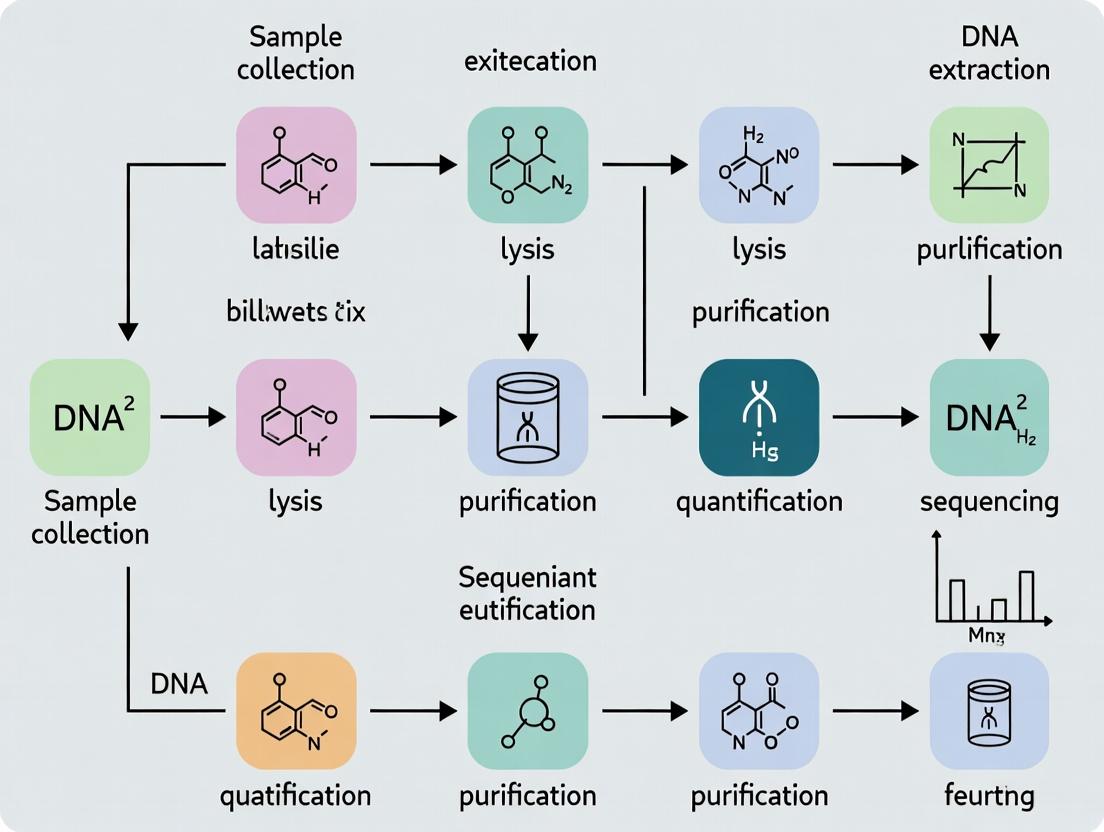
This comprehensive guide addresses the critical role of DNA extraction quality control (QC) in ensuring the reliability, reproducibility, and validity of microbiome study data.
The Essential Guide to DNA Extraction QC for Robust Microbiome Research: From Basics to Best Practices
Abstract
This comprehensive guide addresses the critical role of DNA extraction quality control (QC) in ensuring the reliability, reproducibility, and validity of microbiome study data. Tailored for researchers and drug development professionals, the article systematically explores the foundational principles of how extraction biases affect microbial community profiles, reviews and compares current methodological standards and commercial kits, provides actionable troubleshooting and optimization strategies for common pitfalls, and establishes a framework for rigorous validation and cross-study comparison. By synthesizing these four core intents, the guide empowers scientists to implement robust QC pipelines, thereby enhancing data integrity for translational biomedical and clinical research.
Why Extraction Matters: Foundational Principles of DNA QC in Microbiome Profiling
For microbiome studies, the reliability of downstream sequencing and analysis is fundamentally dependent on the quality of the input DNA. Quality control (QC) is therefore not a peripheral step, but a central component of the research pipeline. This technical support center defines the four pillars of DNA extraction QC—Purity, Yield, Integrity, and Bias—within the context of microbiome research. Effective troubleshooting in these areas ensures that observed biological variation stems from the sample, not from technical artifacts introduced during extraction.
The Four Pillars of DNA Extraction QC
Purity: Assesses the presence of contaminants (e.g., proteins, humic acids, phenolic compounds, RNA, salts) that can inhibit downstream enzymatic reactions like PCR and library preparation.
Yield: Quantifies the total amount of DNA recovered. In microbiome studies, low yield can prevent library prep or skew representation by failing to capture low-abundance taxa.
Integrity: Evaluates the fragmentation state of the DNA. High molecular weight, intact genomic DNA is ideal for long-read sequencing, while some fragmentation is tolerable for short-read applications.
Bias: The most critical and challenging metric for microbiome work. It refers to the non-uniform extraction efficiency across different microbial cell types (Gram-positive vs. Gram-negative, spores, fungi) which distorts the true microbial community profile.
Troubleshooting Guides & FAQs
Purity Issues
Q1: My DNA extract has low A260/A230 ratios (<1.8). What does this indicate and how can I fix it? A: A low A260/A230 ratio suggests contamination with carbohydrates, phenolic compounds, guanidine salts (common in kit-based extractions), or other organic compounds. For soil or plant microbiome samples, humic acid co-purification is a frequent cause.
- Troubleshooting: Increase wash steps with the provided ethanol-based buffers. For difficult samples, consider post-extraction purification using spin-columns designed for humic acid removal or agarose gel electrophoresis followed by gel extraction. Optimizing the initial sample washing (e.g., with PBS or specialized buffers) before lysis is also crucial.
Q2: My A260/A280 ratio is outside the ideal range (1.8-2.0). What does this mean? A: A ratio significantly lower than 1.8 indicates protein contamination (phenol can also contribute). A ratio higher than 2.0 often indicates RNA contamination or significant DNA degradation.
- Troubleshooting: For protein contamination, add an additional proteinase K digestion step or repeat the protein precipitation step if using a CTAB method. For high ratios suggesting RNA contamination, treat the extract with RNase A (ensure it is DNase-free). Always re-purity using a column or precipitation after RNase treatment.
Yield Issues
Q3: My DNA yield is consistently low from my microbial community samples. How can I improve it? A: Low yield often stems from inefficient cell lysis or DNA loss during purification.
- Troubleshooting Protocol for Enhanced Lysis:
- Mechanical Lysis: Incorporate a bead-beating step (using 0.1mm glass or zirconia beads) for 3-5 minutes at high speed. This is essential for breaking tough cell walls (e.g., Gram-positive bacteria, spores).
- Enzymatic Lysis: Pre-treat samples with lysozyme (for Gram-positives) and/or mutanolysin. For fungal elements, add chitinase.
- Chemical Lysis: Follow mechanical disruption with an incubation in a lysis buffer containing SDS and proteinase K at 56°C for 30-60 minutes.
- Carrier Effect: Add glycogen or linear polyacrylamide during ethanol precipitation to aid recovery of low-concentration DNA.
Q4: My yield is high, but PCR amplification fails. Why? A: This is a classic symptom of high purity failure due to co-purified enzymatic inhibitors (humic substances, detergents, salts). Quantification by fluorometry (e.g., Qubit) is more accurate than absorbance (Nanodrop) in these cases, as it is specific for dsDNA and less affected by contaminants.
Integrity & Bias Issues
Q5: My DNA appears sheared on the gel. Is this a problem for 16S rRNA gene sequencing? A: For short-amplicon sequencing (e.g., 16S V4 region), moderate shearing is usually not a problem as the target is small (~300-500bp). However, for shotgun metagenomic sequencing, sheared DNA can reduce library preparation efficiency and assembly quality. Investigate overly aggressive physical lysis (excessive bead-beating time/speed) and avoid vigorous pipetting or vortexing of DNA after elution.
Q6: How can I assess and minimize extraction bias in my microbiome study? A: Complete elimination is impossible, but mitigation and assessment are key.
- Mitigation Strategy: Use a standardized, validated protocol combining mechanical and enzymatic lysis. For a broad range of cells, a 3-5 minute bead-beating with 0.1mm beads followed by enzymatic treatment is recommended.
- Assessment Protocol: Use a mock microbial community composed of known, equal quantities of diverse cells (e.g., from ZymoBIOMICS). Extract DNA alongside your samples and perform your standard sequencing. Analyze the results: taxa that are under-represented in your sequence data relative to the known input indicate a bias in your extraction protocol for those cell types.
| QC Metric | Ideal Value/Range | Common Measurement Method | Primary Implication for Microbiome Studies |
|---|---|---|---|
| Purity (A260/A280) | 1.8 - 2.0 | Spectrophotometry (Nanodrop) | Ratios <1.8: Protein/phenol contamination inhibits PCR. |
| Purity (A260/A230) | 2.0 - 2.2 | Spectrophotometry (Nanodrop) | Ratios <1.8: Salt/organic solvent carryover inhibits enzymes. |
| Yield | Sample-dependent; >1 ng/µl for NGS | Fluorometry (Qubit) - Preferred | Low yield may preclude library prep or bias against rare taxa. |
| Integrity | Sharp high-molecular weight band | Gel Electrophoresis (TapeStation/Bioanalyzer) | Excessive shearing harms shotgun metagenomic library prep. |
| Bias | Faithful representation of a mock community | Sequencing of a standardized control (e.g., ZymoBIOMICS) | Skewed taxonomic abundance data, leading to false conclusions. |
Key Experimental Protocols
Protocol 1: Comprehensive QC Workflow for Microbiome DNA Extracts
- Quantification: Use a fluorometric assay (Qubit dsDNA HS Assay) for accurate yield measurement. Confirm with Nanodrop for purity ratios.
- Integrity Check: Run 100-200 ng of DNA on a 1% agarose gel or an Agilent TapeStation (Genomic DNA screentape). Look for a tight, high-molecular weight band.
- PCR Inhibition Test: Perform a universal 16S rRNA gene PCR (e.g., 515F/806R for V4 region) on a serial dilution (1:1, 1:10) of your DNA extract. Compare amplification success to a positive control.
- Bias Assessment: Include a commercial mock community standard in every extraction batch. Sequence and analyze to generate a bias profile for your protocol.
Protocol 2: Post-Extraction Purification for Humic Acid Contamination
- Add an equal volume of 5% (w/v) polyvinylpolypyrrolidone (PVPP) in TE buffer to the DNA extract.
- Incubate on ice for 15-30 minutes, vortexing gently every 5 minutes.
- Centrifuge at 12,000 x g for 5 minutes at 4°C.
- Carefully transfer the supernatant to a new tube. Precipitate the DNA with 0.7 volumes of isopropanol and standard protocols.
Visualizations
DNA Extraction QC Decision Workflow
The Scientist's Toolkit: Research Reagent Solutions
| Item | Function in QC/Microbiome Extraction |
|---|---|
| Fluorometric DNA Assay (Qubit) | Provides specific, accurate quantification of dsDNA yield, unaffected by common contaminants. |
| Mock Microbial Community (e.g., ZymoBIOMICS) | Standardized mix of known microbes essential for quantifying extraction bias and sequencing accuracy. |
| Inhibitor-Removal Spin Columns (e.g., PowerClean, OneStep PCR Inhibitor Removal) | For post-extraction cleanup of humic acids, polyphenols, and other common environmental inhibitors. |
| RNase A (DNase-free) | To eliminate RNA contamination that can inflate absorbance-based yield and purity measurements. |
| Lysis Matrix Tubes (0.1mm beads) | Ensures standardized mechanical disruption of diverse cell walls to minimize lysis bias. |
| Lysozyme & Mutanolysin | Enzymes targeting peptidoglycan for enhanced lysis of Gram-positive bacteria. |
| Phosphate-Buffered Saline (PBS) | For preliminary washing of samples (e.g., stool, soil) to remove soluble PCR inhibitors. |
| Guanidine Hydrochloride | Chaotropic agent in lysis buffers that denatures proteins, inhibits nucleases, and aids binding to silica. |
The Impact of Extraction Bias on Microbial Community Representation
Technical Support Center: Troubleshooting & FAQs
Q1: Our 16S rRNA sequencing results show unusually low diversity in Gram-positive bacteria compared to expectations. What extraction-related issue should we suspect? A: This commonly indicates inadequate cell lysis of thick-walled Gram-positive organisms. Standard bead-beating protocols may be insufficient.
- Troubleshooting Steps:
- Verify bead-beating time and speed. Increase bead-beating duration incrementally (e.g., from 2 to 5 minutes) in a validation experiment.
- Incorporate a chemical pre-treatment step with lysozyme (e.g., 30 mg/mL, 37°C for 30 min) prior to mechanical lysis.
- Use a positive control (e.g., a defined mock community with Bacillus and Staphylococcus species) to benchmark protocol efficiency.
- Relevant QC Metric: Monitor the ratio of Gram-positive to Gram-negative bacterial DNA in a characterized mock community using qPCR with group-specific primers.
Q2: We observe high host DNA contamination in samples from low-biomass environments (e.g., skin swabs). How can extraction bias be minimized? A: Standard protocols co-extract host and microbial DNA. Selective lysis or post-extraction depletion is required.
- Troubleshooting Steps:
- Selective Lysis: Use a mild detergent-based lysis buffer first to lyse mammalian cells, digest released DNA with a DNase, then apply vigorous mechanical lysis for microbial cells.
- Post-Extraction Depletion: Use commercial kits with probes targeting human mitochondrial and ribosomal sequences to deplete host DNA post-extraction.
- Inhibition Check: Use a spike-in control (exogenous DNA not found in the sample) to check for inhibition from host-derived contaminants.
- Relevant QC Metric: Calculate the percentage of reads mapping to the host genome. For skin microbiome, aim for <80% host reads.
Q3: How does the choice of extraction kit affect the representation of specific bacterial phyla, and how can we quantify this? A: Different kits have varying efficiencies for different cell wall types due to lysis chemistry and purification matrix biases. Quantification requires a standardized mock community.
- Experimental Protocol for Kit Comparison:
- Obtain a commercially available, DNA-free mock microbial community with a known, even composition of organisms (e.g., from ZymoBIOMICS or ATCC).
- Split the same physical sample and extract DNA using at least 3 different extraction kits/manual protocols in parallel (n=5 per method).
- Perform 16S rRNA gene amplicon sequencing (constant V4 region) on the same sequencing platform.
- Analyze the deviation of observed relative abundance from the known, expected abundance for each constituent.
Table 1: Impact of Common Extraction Kits on Phylum-Level Recovery from a Defined Mock Community
| Extraction Kit Type | Key Lysis Method | Avg. % Recovery Gram+ (Firmicutes/Actinobacteria) | Avg. % Recovery Gram- (Bacteroidetes/Proteobacteria) | Coefficient of Variation (CV) Across Replicates |
|---|---|---|---|---|
| Kit A (Manual, Phenol-Chloroform) | Bead-beating + Chemical | 92% | 95% | 8% |
| Kit B (Spin-Column, Enzymatic) | Enzymatic Lysis (Lysozyme) | 65% | 98% | 15% |
| Kit C (Magnetic Bead, Mechanical) | Intensive Bead-beating | 102% | 88% | 6% |
Q4: What is an effective protocol for validating extraction efficiency across different sample matrices? A: Implement a standardized spike-in control protocol.
- Detailed Protocol:
- Spike-in Selection: Choose an exogenous, non-native microbe (e.g., Pseudomonas veronii for human gut studies) or synthetic DNA constructs (gBlocks).
- Spike-in Addition: Add a known, constant quantity (e.g., 10^4 cells) of the spike-in organism to each sample immediately before the lysis step. This controls for losses from lysis through elution.
- Quantification: Use qPCR with primers specific to the spike-in organism on the extracted DNA.
- Calculation: Calculate the percent recovery of the spike-in. Low and variable recovery indicates technical bias introduced by the extraction process specific to that sample type (e.g., stool vs. soil).
Table 2: Spike-in Recovery Across Sample Matrices Using Protocol X
| Sample Matrix | Mean Spike-in Recovery (%) | Standard Deviation | Inferred Overall Extraction Efficiency |
|---|---|---|---|
| Fecal | 85 | 5.2 | High |
| Saliva | 78 | 7.8 | Moderate-High |
| Soil | 45 | 12.1 | Low |
| Skin Swab | 60 | 15.3 | Low-Moderate |
The Scientist's Toolkit: Research Reagent Solutions
| Item | Function & Rationale |
|---|---|
| Mechanical Lysis Beads (0.1mm & 0.5mm mix) | Homogenizes sample and breaks tough cell walls. A mix of sizes improves lysis efficiency across diverse cell types. |
| Lysozyme | Enzyme that degrades peptidoglycan in Gram-positive bacterial cell walls, improving lysis when used as a pre-treatment. |
| Proteinase K | Broad-spectrum protease that digests proteins and inactivates nucleases, crucial for sample integrity and yield. |
| Inhibitor Removal Technology (e.g., PTFE, silica) | Binds to common PCR inhibitors (humic acids, bile salts, polyphenols) co-extracted from complex samples. |
| Mock Microbial Community (Standardized) | A defined mix of microbial cells or DNA used as a positive control to benchmark extraction bias and sequencing accuracy. |
| Exogenous Spike-in Control (Cells or DNA) | Added pre-extraction to quantify absolute recovery and identify matrix-specific inhibition/losses. |
| Guanidine Thiocyanate-based Lysis Buffer | Powerful chaotropic agent that denatures proteins, inhibits RNases/DNases, and aids in nucleic acid binding to silica. |
Visualization of Protocols and Relationships
Diagram 1: Workflow for Assessing Extraction Bias
Diagram 2: Sources of Bias in DNA Extraction
Troubleshooting Guides & FAQs
Cell Lysis Efficiency
Q1: How can I verify my lysis protocol is effective for both Gram-positive and Gram-negative bacteria in a microbiome sample? A: Inefficient lysis, particularly of hardy Gram-positive bacteria, leads to skewed community representation. To verify effectiveness, perform a microscopic cell count with a viability stain (e.g., propidium iodide) pre- and post-lysis. A reduction of intact cells by >99% is target. Quantitatively, compare 16S rRNA gene copy numbers from a standardized mock community (containing both Gram-types) processed with your protocol vs. a known rigorous method (e.g., bead-beating + enzymatic lysis) using qPCR. A deviation of >1 Ct value (2-fold) suggests under-lysis.
Q2: My extracted DNA yield is low. Is this a lysis problem or a precipitation/binding issue? A: First, diagnose the step. After the lysis step, centrifuge a small aliquot. If the pellet is still substantial, lysis is incomplete. If the supernatant is viscous but final yield is low, the issue is with downstream purification. Implement an internal control: spike a known quantity of an exogenous organism (e.g., Pseudomonas aeruginosa) not expected in your sample pre-lysis. Low recovery of this control's DNA post-extraction indicates a global lysis or inhibition issue.
PCR Inhibitors
Q3: How do I detect the presence of PCR inhibitors in my DNA extract? A: Perform a dilution series qPCR assay. Prepare a 1:10 and 1:100 dilution of your sample DNA and amplify a target gene. If the Ct values decrease linearly with dilution (e.g., ~3.3 cycles per 10-fold dilution), inhibitors are likely present and are being diluted out. Alternatively, use an inhibition spike-in control: add a known amount of a synthetic DNA template or a control plasmid to your PCR reaction with your sample DNA. Compare its amplification efficiency to a control reaction with water. A Ct shift of >1 cycle indicates inhibition.
Q4: What are the most common inhibitors in microbiome DNA extracts, and how do I remove them? A: Common inhibitors vary by sample type:
- Fecal/Human: Humic acids, bilirubin, bile salts.
- Soil: Humic and fulvic acids, polyphenols, heavy metals.
- Plant: Polysaccharides, polyphenols, tannins. Remediation strategies include:
- Post-Extraction: Use inhibitor removal columns (e.g., Zymo OneStep PCR Inhibitor Removal Kit) or dilute the template.
- In-PCR: Add enhancers like bovine serum albumin (BSA, 0.1-0.4 µg/µL), betaine (0.5-1.5 M), or commercial inhibitor-resistant polymerase blends (e.g., Phusion U Green Hot Start).
Contaminants
Q5: I keep detecting reagent/kitome contaminants in my no-template controls (NTCs). How do I identify and mitigate these? A: Reagent-borne bacterial DNA is a major contaminant source. To identify, regularly sequence NTCs (water + full extraction kit reagents) and PCR blanks. Maintain a "contaminant database" from these runs. Common culprits include Delftia acidovorans, Pseudomonas spp., and Bradyrhizobium spp.. Mitigation involves:
- Using UV-irradiated or DNA-free certified reagents and plastics.
- Performing enzymatic pre-treatment of reagents with DNase (requires subsequent heat inactivation).
- Applying a background subtraction pipeline in bioinformatics, filtering out OTUs/ASVs present in your NTCs at a significant threshold (e.g., >0.01% of your sample's read count).
Q6: How can I distinguish low-biomass signal from true contamination? A: This is critical for sterile-site microbiome studies. Implement rigorous experimental controls:
- Negative Controls: Multiple extraction and PCR negatives per batch.
- Positive Controls: A mock microbial community of known composition.
- Sample Replication: Technical replicates to assess consistency.
Statistically, use tools like
decontam(R package) which leverages frequency and prevalence methods to identify contaminants based on their higher prevalence in negative controls or inverse correlation with DNA concentration.
Data Presentation
Table 1: Impact of Lysis Method on Microbial Community Representation from a Mock Community (Zymo D6300)
| Lysis Method | Gram-Negative Recovery (Log16S copies) | Gram-Positive Recovery (Log16S copies) | Bias (Gram+/- Ratio) | Representative Citation |
|---|---|---|---|---|
| Enzymatic Only (Lysozyme) | 5.8 ± 0.2 | 4.1 ± 0.3 | 0.05 | Costea et al., 2017 |
| Bead-Beating (90 sec) | 6.0 ± 0.1 | 5.9 ± 0.2 | 0.79 | Yuan et al., 2012 |
| Chemical + Heat (95°C) | 5.7 ± 0.2 | 4.5 ± 0.4 | 0.06 | Vlčková et al., 2012 |
| Combined (Enz. + Beads) | 6.1 ± 0.1 | 6.0 ± 0.1 | 0.79 | Best Practice |
Table 2: Common PCR Inhibitors and Their Effects
| Inhibitor Source | Typical Compound | Effect on PCR (1X Concentration) | Mitigation Strategy |
|---|---|---|---|
| Fecal Samples | Humic Acids | 50% Inhibition at 0.5 µg/µL | Dilution (1:10), BSA addition |
| Soil Samples | Polyphenols | Complete inhibition at 0.1 µg/µL | Polyvinylpyrrolidone (PVP) in lysis buffer |
| Blood/Biospecimens | Hemoglobin/Heparin | Ct delay of 3-5 cycles | Ethanol wash, inhibitor-removal column |
| Plant Tissues | Polysaccharides | Non-specific amplification, smearing | CTAB-based extraction, silica column wash |
Experimental Protocols
Protocol 1: Bead-Beating Enhanced Lysis for Robust Microbiome DNA Extraction Principle: Mechanical disruption via bead-beating ensures uniform breakage of tough cell walls, especially Gram-positives.
- Sample Preparation: Aliquot 200 mg of sample (e.g., stool, soil) into a 2mL lysing matrix tube containing 0.1mm and 0.5mm silica/zirconia beads.
- Lysis Buffer: Add 1 mL of a pre-heated (70°C) lysis buffer (e.g., Tris-EDTA-SDS, pH 8.0, with 20 mg/mL Lysozyme and 1 mg/mL Proteinase K).
- Mechanical Lysis: Homogenize in a bead-beater (e.g., FastPrep-24) at 6.0 m/s for 45 seconds. Place on ice for 2 minutes. Repeat twice.
- Incubation: Incubate at 56°C for 30 minutes, then at 70°C for 10 minutes.
- Centrifuge: Centrifuge at 12,000 x g for 5 minutes at 4°C.
- Supernatant Transfer: Carefully transfer the supernatant to a fresh tube for downstream purification.
Protocol 2: qPCR-Based Inhibition Detection and Assessment Principle: Inhibitors cause a deviation from the linear relationship between DNA concentration and amplification efficiency.
- Template Preparation: Prepare a 5-point, 1:10 serial dilution of your purified sample DNA (e.g., 10 ng/µL to 0.001 ng/µL).
- Control Dilution: Prepare an identical dilution series of a known, clean control DNA (e.g., Lambda phage DNA).
- qPCR Setup: Use a universal 16S rRNA gene primer set (e.g., 515F/806R) and a SYBR Green master mix. Run all sample and control dilutions in triplicate.
- Analysis: Plot Ct values against the log of DNA concentration. Calculate amplification efficiency (E) from the slope: E = 10^(-1/slope) - 1. Ideal efficiency is 100% (E=1.0, slope=-3.32). A significant difference in efficiency or a non-linear curve for the sample vs. control indicates inhibition.
Mandatory Visualization
Title: Impact of Lysis Method on Community Representation
Title: Mechanism and Detection of PCR Inhibition
The Scientist's Toolkit: Research Reagent Solutions
| Item | Function & Rationale |
|---|---|
| Lysing Matrix Tubes (0.1, 0.5mm beads) | Provides mechanical shearing force for comprehensive cell wall disruption of diverse microorganisms. |
| Inhibitor Removal Technology Columns (e.g., Zymo ZR) | Selective binding of humic acids, polyphenols, and other inhibitors while allowing DNA to pass through. |
| DNase/RNase-Free, UV-Treated Water | Minimizes background contaminant DNA that can confound low-biomass or sensitive microbiome analyses. |
| Mock Microbial Community Standards (e.g., ATCC MSA-1000) | Provides a known quantitative control to benchmark extraction efficiency, lysis bias, and sequencing accuracy. |
| PCR Enhancers (BSA, Betaine) | Competes for or neutralizes inhibitory compounds, stabilizing polymerase activity in complex samples. |
| DNA-Free Plasticware (Tubes, Tips) | Manufactured and packaged to eliminate ambient bacterial DNA contaminants. |
| Broad-Spectrum Lysis Buffers (e.g., with CTAB or SDS) | Disrupts a wide range of cell membranes and inactivates nucleases, compatible with subsequent purification. |
Technical Support Center
Troubleshooting Guide & FAQs
Q1: My 16S sequencing run shows unusually low alpha diversity and high abundance of a single genus (e.g., Pseudomonas). Pre-extraction QC (Nanodrop) showed good yield and purity. What went wrong? A: This is a classic sign of contamination from degraded DNA or PCR reagents, often missed by spectrophotometric methods. Poor QC at the post-extraction stage fails to detect low molecular weight contaminants that outcompete target microbial DNA during early PCR cycles. Solution: Implement fluorometric QC (Qubit) for accurate dsDNA quantification and fragment analyzer (e.g., Bioanalyzer, TapeStation) to assess DNA integrity. Re-extract using a kit with inhibitors removal steps and include a negative extraction control.
Q2: Our shotgun metagenomics libraries have very low complexity, high duplication rates, and poor assembly metrics. The DNA passed Qubit and Bioanalyzer QC. Where is the failure? A: The issue likely stems from carryover of PCR inhibitors (e.g., humic acids, polyphenols) not detected by standard QC. Inhibitors suppress library preparation enzymes, leading to biased, low-complexity amplification. Solution: Add a post-extraction QC step using a spike-in control (e.g., Internal Amplification Control - IAC) in a qPCR assay to detect inhibition. Clean the DNA with a validated inhibitor removal kit (e.g., OneStep PCR Inhibitor Removal Kit) before library prep.
Q3: We observe significant batch effects and inconsistent taxa recovery between different sequencing runs, despite using the same DNA extraction protocol. A: Inconsistent lysis efficiency and bead-beating homogenization during extraction lead to variable representation of Gram-positive vs. Gram-negative bacteria. Poor QC does not monitor this bias. Solution: Standardize the mechanical lysis step (bead size, time, speed). Implement a QC step using a mock community with known, hard-to-lyse cells (e.g., Bacillus subtilis, Mycobacterium). Use qPCR targeting 16S genes from these controls to validate lysis efficiency across batches.
Q4: After implementing rigorous post-extraction QC, our shotgun data improved, but we still see high host DNA contamination in low-biomass samples, drowning out microbial signals. A: Standard QC measures total DNA, not host vs. microbial proportion. Solution: Integrate a host-depletion step before final QC. Use a probe-based method (e.g., NEBNext Microbiome DNA Enrichment Kit). Follow with a qPCR-based QC specific for a conserved bacterial gene (e.g., 16S V4) versus a host gene (e.g., β-actin) to calculate the enrichment ratio. Proceed only if the ratio meets your threshold.
Table 1: Impact of DNA QC Metrics on Downstream Sequencing Outcomes
| QC Metric (Method) | Acceptable Range | Outcome if Poor | Effect on 16S Sequencing | Effect on Shotgun Metagenomics |
|---|---|---|---|---|
| Concentration (Spectrophotometer) | N/A (Inaccurate) | Overestimation | PCR inhibition; skewed community profile | Severe library prep failure; low yield |
| Concentration (Fluorometer) | >0.5 ng/μL (varies) | Underestimation | Low sequencing depth; missed rare taxa | Insufficient data; poor assembly |
| Purity A260/A280 (Nanodrop) | 1.8-2.0 | Out of range (e.g., <1.8) | PCR inhibition from protein/phenol | Enzyme inhibition in library prep |
| Purity A260/A230 (Nanodrop) | 2.0-2.2 | Out of range (e.g., <2.0) | PCR inhibition from salts/carbohydrates | Reduced ligation/amplification efficiency |
| Integrity Number (DIN/ RIN) | DIN >7 (for metaG) | Low Score (<5) | Bias against long fragments; false diversity | Short reads; fragmented assemblies; missed genes |
| Inhibition (qPCR Cq shift) | ΔCq < 2 vs. control | ΔCq > 2 | Reduced amplification efficiency; bias | Low complexity; high PCR duplication |
Table 2: Recommended QC Checkpoints for Microbiome Workflow
| Workflow Stage | Mandatory QC Step | Optimal Method | Failure Action |
|---|---|---|---|
| Pre-Extraction | Sample Homogenization | Visual/Manual check | Re-homogenize |
| Post-Extraction | DNA Quantity & Purity | Qubit + NanoDrop A260/A230 | Purify, re-extract, or adjust input |
| Post-Extraction | DNA Integrity | Fragment Analyzer (DIN) | Exclude if degraded; optimize lysis |
| Post-Extraction | PCR Inhibition | qPCR with IAC | Dilute or use inhibitor removal kit |
| Pre-Sequencing | Library Quantification | qPCR (not just Bioanalyzer) | Re-quantify and pool accurately |
Detailed Experimental Protocols
Protocol 1: Post-Extraction DNA QC for Inhibitor Detection via qPCR
- Prepare qPCR Master Mix: For each sample, mix 10 μL of 2X Environmental Master Mix, 0.4 μL of 50X Internal Amplification Control (IAC, e.g., from TaqMan Exogenous Internal Positive Control), 1 μL of IAC primers/probe, 1 μL of sterile nuclease-free water.
- Prepare Standards & Samples: In separate wells, combine 8.6 μL of the master mix with 1.4 μL of standard curve genomic DNA (e.g., 10^1 to 10^6 copies/μL) or 1.4 μL of your purified sample DNA.
- Run qPCR: Use the following cycling conditions: 95°C for 10 min (enzyme activation), followed by 40 cycles of 95°C for 15 sec and 60°C for 1 min (data acquisition).
- Analyze Data: Calculate the Cq value for the IAC in each sample well. A delay in Cq (ΔCq >2 cycles) compared to the no-template control (NTC) with IAC alone indicates the presence of PCR inhibitors in the sample DNA.
Protocol 2: Assessing Lysis Efficiency Using a Mock Community Control
- Spike-in Control: Add a known quantity (e.g., 10^4 cells) of a hard-to-lyse bacteria (e.g., Bacillus subtilis spores) or a commercial mock community (e.g., ZymoBIOMICS Microbial Community Standard) to your sample prior to the lysis step.
- Proceed with Extraction: Perform your standard DNA extraction protocol.
- Quantitative Analysis: Perform absolute qPCR targeting the 16S rRNA gene region of the spiked-in control organism(s) using specific primers. Also, qPCR the total bacterial 16S.
- Calculate Efficiency: Compare the recovered DNA copy number (from qPCR) of the spiked-in control to the expected input. Low recovery indicates suboptimal lysis conditions requiring optimization (e.g., longer bead-beating, enzymatic pre-treatment).
Visualizations
Title: Impact of DNA QC Rigor on Sequencing Data Quality
Title: Downstream Effects of Poor DNA Quality on Shotgun Data
The Scientist's Toolkit: Research Reagent Solutions
Table 3: Essential QC Reagents and Materials for Microbiome DNA Studies
| Item | Function/Description | Key Consideration for QC |
|---|---|---|
| Fluorometric dsDNA Assay Kit (e.g., Qubit) | Accurately quantifies double-stranded DNA using a fluorescent dye specific to dsDNA. | Essential for pre-library prep quantification. More accurate than spectrophotometry for low-concentration samples. |
| Fragment Analyzer/ Bioanalyzer Kit (e.g., HS NGS Fragment Kit) | Provides electrophoregram and DV200/DIN score to assess DNA fragment size distribution and integrity. | Critical for shotgun metagenomics. DIN >7 is generally recommended for high-quality libraries. |
| Internal Amplification Control (IAC) for qPCR | A synthetic DNA sequence with unique primers/probe spiked into qPCR reactions to detect inhibitors. | A shift in IAC Cq indicates PCR inhibition not detected by purity ratios. |
| Inhibitor Removal Kit (e.g., OneStep PCR Inhibitor Removal) | Magnetic bead or spin-column based cleanup to remove humic acids, polyphenols, and other inhibitors. | Use after extraction if qPCR indicates inhibition, especially for soil or fecal samples. |
| Mock Microbial Community Standard (e.g., ZymoBIOMICS) | A defined mix of microbial cells with known genome sequences and abundance. | Process alongside samples to benchmark extraction bias, lysis efficiency, and overall sequencing accuracy. |
| Host Depletion Kit (e.g., NEBNext Microbiome DNA Enrichment) | Uses probes to bind and remove CpG-methylated host (e.g., human) DNA. | Vital for low-microbial-biomass samples (e.g., tissue, blood) to increase microbial sequencing depth. |
| Library Quantification Kit (qPCR-based, e.g., KAPA) | Quantifies only amplifiable library fragments using adaptor-specific primers, not total DNA. | Mandatory for accurate pooling and loading of libraries for sequencing to ensure balanced coverage. |
Technical Support Center & Troubleshooting
FAQs and Troubleshooting Guides
Q1: My qPCR amplification curves are irregular or show late amplification (high Cq). What MIQE-compliant checks should I perform for DNA from microbiome samples? A: This typically indicates poor template quality or PCR inhibition from co-extracted contaminants.
- Check DNA Purity: Measure A260/A280 and A260/A230 ratios via spectrophotometry (e.g., Nanodrop). For microbiome-derived DNA, ideal ratios are ~1.8 and >2.0 respectively. Low A260/A230 (<1.8) suggests carryover of humic acids or phenolic compounds from soil/stool.
- Assess Inhibition: Perform a spike-in assay. Dilute your sample and a known, clean control DNA with the same buffer. Amplify both with a universal 16S rRNA gene assay. A significant decrease in Cq for the diluted sample versus the undiluted indicates inhibition.
- Verify Integrity: Run an aliquot (100-200 ng) on a 1% agarose gel. High molecular weight, sheared genomic DNA should be visible. Excessive smearing may indicate degradation.
- Quantify Accurately: Use a fluorescence-based assay (e.g., Qubit, PicoGreen) specific for double-stranded DNA. This is more accurate for microbiome samples than absorbance-based methods.
Q2: My MiSeq run for 16S rRNA amplicon sequencing yielded low library concentration or low cluster density. Which MISeq checklist parameters are critical? A: This often stems from issues during library preparation or quantification.
- Accurate Library Quantification: Prior to pooling, quantify using a fluorometric method specific for dsDNA (e.g., Qubit) and by qPCR using a library quantification kit (e.g., Kapa Biosystems). qPCR quantifies only amplifiable fragments, which is critical for sequencing success.
- Verify Fragment Size: Use a Bioanalyzer, TapeStation, or agarose gel to confirm the expected amplicon size (e.g., ~460bp for V3-V4 region) and the absence of primer dimers.
- Check for Over-cycling in PCR: Excessive cycles during the indexing PCR can create heteroduplexes and chimeras. Follow the recommended cycles (often 8-12) and use a high-fidelity polymerase.
- Normalization Method: Ensure libraries are pooled based on molarity (nM), not mass concentration (ng/µL). Use the average fragment size from your bioanalyzer trace in the molarity calculation.
Q3: My negative control (no-template or extraction blank) shows amplification or yields sequence reads. How do I troubleshoot this contamination within the MIQE/MISeq framework? A: Contamination is a major concern in sensitive microbiome studies.
- Reagent Contamination: Test all PCR reagents (water, polymerase, master mix) individually by running them as templates. Replace any contaminated lot.
- Cross-Contamination: Use dedicated pre- and post-PCR pipettes, filter tips, and separate workspaces. Include multiple negative controls throughout the process: extraction blank, PCR master mix blank, and a sterile water sample processed identically to experimental samples.
- Amplicon Contamination: Strictly separate pre- and post-PCR areas. Decontaminate surfaces with DNA-degrading solutions (e.g., 10% bleach, UV irradiation).
- Bioinformatic Filtering: In your analysis pipeline, remove Operational Taxonomic Units (OTUs) or Amplicon Sequence Variants (ASVs) that appear in your negative controls at a threshold (e.g., any ASV with >0.1% of reads in a control should be subtracted from all samples).
Q4: How do I determine the optimal amount of input DNA for microbiome qPCR or amplicon library prep? A: The optimal input minimizes inhibition and maximizes specificity.
- For qPCR: Perform a template titration. Run your assay with a dilution series of your DNA (e.g., 0.1, 1, 10 ng/µL). The dilution that yields the lowest Cq without signs of inhibition (determined by spike-in) is optimal. Refer to the table below for typical inputs.
- For Amplicon Library Prep: Follow the kit manufacturer's recommendation, but validate it. Too much input can cause over-cycling artifacts; too little leads in poor library complexity. A common starting point is 10-30 ng of genomic DNA for the first-stage amplicon PCR.
Table 1: Key Nucleic Acid Quality Metrics for Microbiome Studies
| Metric | Ideal Value (MIQE/MISeq Guideline) | Typical Acceptable Range (Microbiome DNA) | Method of Assessment | Implication of Deviation |
|---|---|---|---|---|
| Concentration | Sufficient for assay | >1 ng/µL for downstream assays | Fluorescence (Qubit) | Low yield may preclude analysis. |
| Purity (A260/A280) | ~1.8 | 1.7 - 2.0 | Spectrophotometry | Ratio <1.7 suggests protein/phenol contamination. |
| Purity (A260/A230) | >2.0 | 1.8 - 2.4 | Spectrophotometry | Ratio <1.8 suggests humic acid, guanidine, or carbohydrate contamination. |
| Integrity | High molecular weight band | Clear band >10 kb, minimal smearing | Gel Electrophoresis | Degraded DNA reduces amplification efficiency and biases results. |
| qPCR Efficiency | 90-110% | 85-115% | Standard Curve (10-fold dilutions) | Poor efficiency invalidates relative quantification. |
| Amplicon Library Size | As expected (e.g., ~460bp) | ±10% of target size | Bioanalyzer/TapeStation | Incorrect size leads to poor sequencing efficiency. |
| Library Quantification | qPCR-based molarity | Consistency between fluorometry & qPCR | qPCR (Kapa assay) | Fluorometry alone overestimates amplifiable library. |
Experimental Protocols
Protocol 1: MIQE-Compliant DNA Quality Control for Microbiome Samples Purpose: To assess the suitability of extracted DNA for downstream qPCR and sequencing applications. Materials: Extracted DNA, Qubit dsDNA HS Assay Kit, Nanodrop or equivalent, 1x TAE buffer, 1% agarose gel, DNA ladder, GelRed nucleic acid stain. Procedure:
- Fluorometric Quantification:
- Prepare Qubit working solution by diluting the reagent 1:200 in buffer.
- Add 190 µL of working solution to 10 µL of each DNA sample and standard.
- Vortex, incubate 2 minutes at room temperature.
- Read on Qubit using the "dsDNA HS" setting.
- Spectrophotometric Assessment:
- Blank the instrument with the same elution buffer used for DNA.
- Apply 1-2 µL of each sample to the pedestal.
- Record concentration (ng/µL), A260/A280, and A260/A230 ratios.
- Gel Electrophoresis for Integrity:
- Prepare a 1% agarose gel in 1x TAE with GelRed (1x final concentration).
- Mix 100-200 ng of DNA with 6x loading dye.
- Load samples alongside a high molecular weight DNA ladder.
- Run at 5 V/cm for 45-60 minutes.
- Visualize under a blue light transilluminator. High-quality DNA appears as a tight, high molecular weight band.
Protocol 2: MISeq-Compatible 16S rRNA Gene Amplicon Library Preparation (Dual Index) Purpose: To prepare barcoded sequencing libraries for the Illumina MiSeq platform targeting the V3-V4 hypervariable region. Materials: Genomic DNA (10-30 ng/µL), KAPA HiFi HotStart ReadyMix, validated primer set (e.g., 341F/805R), Nextera XT Index Kit v2, AMPure XP beads, Qubit dsDNA HS Assay Kit, Agilent Bioanalyzer High Sensitivity DNA kit. Procedure:
- First-Stage PCR (Amplification):
- In a 25 µL reaction: 12.5 µL KAPA HiFi Mix, 2.5 µL each primer (1 µM final), 5-50 ng gDNA, nuclease-free water to volume.
- Cycle: 95°C/3 min; 25 cycles of [98°C/20 s, 55°C/15 s, 72°C/15 s]; 72°C/5 min.
- Amplicon Cleanup:
- Pool replicate reactions if used.
- Add 1.0x volume of AMPure XP beads, incubate 5 minutes.
- Wash twice with 80% ethanol.
- Elute in 25 µL 10 mM Tris-HCl, pH 8.5.
- Indexing PCR (Dual Barcoding):
- In a 50 µL reaction: 25 µL KAPA HiFi Mix, 5 µL each Nextera XT index primer (i5 & i7), 5 µL cleaned amplicon, 10 µL water.
- Cycle: 95°C/3 min; 8 cycles of [95°C/30 s, 55°C/30 s, 72°C/30 s]; 72°C/5 min.
- Library Pooling & Cleanup:
- Quantify each indexed library by qPCR (Kapa Library Quant kit).
- Pool libraries in equimolar amounts based on qPCR concentration.
- Perform a final 1:1 AMPure XP bead cleanup on the pooled library.
- Final QC:
- Quantify the final pool by Qubit and qPCR.
- Analyze 1 µL on a Bioanalyzer High Sensitivity chip to confirm a single peak at the expected size (~600 bp including adapters).
Visualizations
Title: Microbiome Study Workflow from Extraction to Analysis
Title: qPCR Troubleshooting Decision Tree
The Scientist's Toolkit: Research Reagent Solutions
Table 2: Essential Materials for Microbiome Nucleic Acid Studies
| Item | Function/Application | Example Products/Brands |
|---|---|---|
| Inhibitor-Removal Extraction Kit | Maximizes yield and purity from complex samples (stool, soil) by removing humic acids, phenolics, and other PCR inhibitors. | QIAamp PowerFecal Pro DNA Kit, DNeasy PowerSoil Pro Kit, MO BIO PowerLyzer Kit. |
| Fluorometric DNA Quantification Assay | Provides accurate, specific quantification of double-stranded DNA, unaffected by common contaminants. Critical for MIQE compliance. | Qubit dsDNA HS/BR Assay Kits, Invitrogen Picogreen. |
| High-Fidelity, Hot-Start DNA Polymerase | For PCR amplification of target genes (16S rRNA) with low error rates and reduced primer-dimer formation. Essential for unbiased amplicon sequencing. | KAPA HiFi HotStart, Q5 Hot Start (NEB), Platinum SuperFi II. |
| Library Quantification Kit (qPCR-based) | Accurately quantifies only amplifiable, adapter-ligated library fragments. Critical for correct pooling and optimal cluster density on MiSeq. | KAPA Library Quantification Kit (Illumina), qPCR Quantification Kit (Thermo). |
| SPRI Beads (Size-Selective) | For clean-up and size selection of PCR products and final libraries. Removes primers, dimers, and large contaminants. | AMPure XP Beads, SPRIselect Reagent. |
| Bioanalyzer/TapeStation DNA Kits | Provides precise sizing and qualitative assessment of DNA fragments (genomic DNA, amplicons, final libraries). Required for MISeq prep QC. | Agilent High Sensitivity DNA Kit (Bioanalyzer), D1000/High Sensitivity D1000 ScreenTapes (TapeStation). |
| Validated Primer Panels | Primer sets with demonstrated specificity and coverage for the target taxon or gene region (e.g., 16S V3-V4). Reduces amplification bias. | 341F/805R for 16S, Earth Microbiome Project primers, ITS1/ITS2 for fungi. |
| Nuclease-Free Water & Filter Tips | Prevents contamination from nucleases and carryover of nucleic acids between samples. Critical for sensitive amplification steps. | Molecular biology grade water, aerosol barrier pipette tips. |
Best Practices in Action: Methodological Standards for Microbiome DNA Extraction QC
Technical Support & Troubleshooting Center
This support center provides solutions for common issues encountered when assessing DNA extraction quality for microbiome studies. Accurate QC is critical for downstream applications like 16S rRNA sequencing and shotgun metagenomics.
Spectrophotometry (NanoDrop/UV-Vis) Troubleshooting
Q1: My A260/A280 ratio is abnormally low (<1.7) or high (>2.0). What does this indicate and how can I fix it? A: An abnormal A260/A280 ratio suggests contamination.
- Low Ratio (<1.7): Typically indicates protein or phenol contamination from the extraction process. For microbiome samples, residual humic acids from soil or plant material can also depress the ratio.
- Solution: Perform an additional clean-up step using a column-based purification kit designed to remove inhibitors (e.g., silica membrane wash with ethanol-based buffers). Re-precipitate the DNA if necessary.
- High Ratio (>2.0): Often indicates RNA contamination of a DNA sample, or significant dsDNA degradation leading to hyperchromicity.
- Solution: Treat the sample with RNase A (heat-labile if you wish to remove the enzyme later). For degraded DNA, re-extract using a gentler lysis protocol, ensure samples are kept on ice, and use fresh protease inhibitors.
Q2: My A260/A230 ratio is low (<1.8), suggesting contamination, but my sequencing seems fine. Why? A: The A260/A230 ratio is sensitive to salts (guanidine, EDTA), carbohydrates, and organic compounds. Many microbiome sample types (e.g., stool, soil) co-extract these substances. Some sequencers (e.g., Illumina) are more tolerant of certain salts than others.
- Solution: If downstream failure occurs, use a dedicated clean-up kit. Verify the contaminant by checking for a absorbance peak ~230 nm. For high-throughput studies, correlate low A260/A230 with PCR amplification failure to determine your lab's threshold.
Q3: My spectrophotometer gives a concentration reading, but my fluorometer says the concentration is much lower. Which is correct? A: The fluorometer is almost always more accurate for complex microbiome extracts. UV spectrophotometry measures all nucleic acids and absorbing contaminants, while fluorometry uses dsDNA-specific dyes.
- Solution: Trust the fluorometric quantification for critical steps like library preparation. Use the spectrophotometric data for ratios (A260/A280) to assess purity. Always use the same instrument for a given study to ensure consistency.
Fluorometry (Qubit/PicoGreen) Troubleshooting
Q4: My fluorometer reading is "Out of Range." What should I do? A: This means the concentration is either below the detection limit or above the linear range of the assay.
- Solution: For low concentration, concentrate the sample by ethanol precipitation or using a vacuum concentrator. For high concentration, dilute the sample with TE buffer or the assay buffer and re-read. Always use the appropriate assay (e.g., Qubit dsDNA HS vs. BR).
Q5: Can I use the same fluorometric assay for both genomic DNA and amplicons? A: Yes, but ensure you use the correct standard curve. The dsDNA HS assay is ideal for low-concentration amplicons and gDNA post-fragmentation. For intact, high-concentration gDNA, the BR assay may be more appropriate.
- Protocol: Always prepare fresh standards from the provided stock. Vortex the working solution thoroughly. Incubate samples for exactly 2 minutes at room temperature before reading.
Gel Electrophoresis Troubleshooting
Q6: My genomic DNA appears as a smear on the gel instead of a tight, high-molecular-weight band. A: Smearing indicates degradation, often due to DNase activity or harsh physical lysis.
- Solution: Ensure all tubes and solutions are sterile. Include nuclease inhibitors during extraction. For tough-to-lyse samples, optimize bead-beating time (e.g., 2-3 minutes for stool, 5 minutes for soil) to balance cell breakage and DNA shearing. Always include a positive control (intact lambda DNA) on the gel.
Q7: No DNA bands are visible on my gel, but my fluorometer detected DNA. A: This is common with low-concentration microbiome samples. The fluorometer is far more sensitive.
- Solution: Increase the load volume on the gel (up to 50 µL per well). Use a high-sensitivity DNA stain (e.g., SYBR Gold, GelRed) instead of ethidium bromide. Run the gel at a lower voltage (3-4 V/cm) for sharper bands.
Q8: How do I differentiate between RNA contamination and degraded DNA on a gel? A: RNA appears as a low-molecular-weight smear or discrete bands (28S, 18S, 5S rRNA) below 1000 bp. Degraded DNA appears as a smear extending from the well downward.
- Solution: Run one sample aliquot untreated and another treated with RNase A (at 37°C for 10 min). The disappearance of the low-MW smear/bands confirms RNA contamination.
FAQs for Microbiome DNA QC
Q: What are the ideal QC metric thresholds for microbiome DNA intended for 16S sequencing? A: While project-specific, general benchmarks are:
- Concentration: >1 ng/µL minimum for robust PCR.
- A260/A280: 1.8 - 2.0.
- A260/A230: >1.8 (ideal), but >1.5 may be acceptable for difficult samples.
- Fragment Size: Predominantly >10,000 bp for gDNA.
Q: Which QC method is most critical for shotgun metagenomics? A: Fluorometric quantification and fragment size analysis (e.g., TapeStation, Bioanalyzer) are most critical. Accurate concentration is needed for library input, and fragment size distribution is key for sizing selection during library prep.
Q: Can poor A260/A230 ratios cause PCR failure in 16S workflows? A: Yes. Salts and organic inhibitors like humic acids (common in environmental samples) can inhibit Taq polymerase. Even with sufficient DNA, PCR will fail. Mandatory clean-up is recommended for samples with A260/A230 < 1.5.
| QC Metric | Instrument/Method | Ideal Value (Microbiome DNA) | Acceptable Range | Indicates | Primary Risk if Poor |
|---|---|---|---|---|---|
| DNA Concentration | Fluorometry (Qubit) | >10 ng/µL | 1 - 1000 ng/µL | Total double-stranded DNA yield. | Failed library prep or PCR. |
| Spectrophotometry (NanoDrop) | Varies | N/A | Total nucleic acids + contaminants. Use for purity, not concentration. | Over- or under-estimation of usable DNA. | |
| Purity (A260/A280) | UV Spectrophotometry | 1.8 - 2.0 | 1.7 - 2.2 | Protein/phenol contamination (low), RNA/degradation (high). | Enzyme inhibition in downstream steps. |
| Purity (A260/A230) | UV Spectrophotometry | >1.8 | >1.5 (minimum) | Salt, guanidine, carbohydrate, or organic compound contamination. | PCR or sequencing inhibition. |
| Fragment Size | Gel Electrophoresis | Single, tight band >10 kb | Visible smear >1 kb | DNA integrity. High molecular weight is ideal. | Poor library efficiency in shotgun metagenomics. |
| Bioanalyzer/TapeStation | DV200 > 70% for FFPE-like samples | N/A | Percentage of fragments >200 bp. Critical for challenging samples. |
Detailed Experimental Protocols
Protocol 1: Comprehensive QC Workflow for Microbiome DNA
Purpose: To fully assess the quantity, purity, and integrity of DNA extracted from complex samples (stool, soil, swabs) for next-generation sequencing.
Materials:
- Purified DNA sample
- TE Buffer (pH 8.0)
- Qubit dsDNA HS Assay Kit and tubes
- Qubit Fluorometer
- NanoDrop One/OneC or equivalent
- TAE Buffer (1x)
- Agarose (Molecular Biology Grade)
- High-sensitivity DNA stain (e.g., SYBR Safe)
- DNA Gel Loading Dye (6x)
- DNA Ladder (High Molecular Weight, e.g., λ HindIII)
- Electrophoresis system
- Imaging system (blue light or UV transilluminator)
Method:
- Spectrophotometry:
- Blank the instrument with 1-2 µL of TE buffer.
- Clean the pedestal. Load 1-2 µL of sample. Record concentration (ng/µL), A260/A280, and A260/A230 ratios.
- Clean the pedestal thoroughly between samples.
Fluorometry:
- Prepare the Qubit working solution by diluting the dye 1:200 in Qubit assay buffer.
- Prepare standards (#1 & #2) in 0.5 mL tubes with 190 µL working solution + 10 µL standard.
- For samples, add 1-20 µL of DNA to 199-180 µL of working solution (total 200 µL). The sample volume should place the concentration within the assay range.
- Vortex mix tubes for 2-3 seconds. Incubate at room temperature for 2 minutes.
- Read on the Qubit fluorometer using the appropriate assay. Use the Calculate Stock Conc. feature.
Gel Electrophoresis:
- Prepare a 0.8% agarose gel by dissolving agarose in 1x TAE buffer. Cool to ~60°C, add DNA stain per manufacturer's instructions, and pour.
- Mix 5 µL of DNA sample with 1 µL of 6x loading dye. Load into the gel alongside 5 µL of appropriate DNA ladder.
- Run the gel in 1x TAE buffer at 4-5 V/cm for 45-60 minutes.
- Image using the appropriate channel for the stain used.
Protocol 2: DNA Clean-up for Samples with Low A260/A230 Ratios
Purpose: To remove salts and organic inhibitors from contaminated microbiome DNA extracts.
Materials: Silica membrane-based clean-up kit (e.g., Zymo DNA Clean & Concentrator, Qiagen MinElute), 100% ethanol, TE buffer.
Method:
- Add 5 volumes of DNA Binding Buffer to 1 volume of DNA sample. Mix thoroughly.
- Transfer the mixture to a silica spin column in a collection tube. Centrifuge at 12,000 x g for 30 seconds. Discard flow-through.
- Add 200 µL of Wash Buffer (with ethanol). Centrifuge at 12,000 x g for 30 seconds. Discard flow-through.
- Repeat the wash step. Centrifuge the empty column for 1 minute to dry the membrane.
- Place the column in a clean 1.5 mL microcentrifuge tube. Elute DNA by adding 15-30 µL of pre-warmed (55°C) TE buffer or nuclease-free water directly to the membrane center.
- Let it stand for 1 minute. Centrifuge at 12,000 x g for 1 minute.
- Re-quantify the DNA using fluorometry and re-assess purity ratios.
Diagrams
Diagram Title: DNA QC Decision Workflow for Microbiome Samples
Diagram Title: QC Anomaly Diagnostic Map
The Scientist's Toolkit: Essential Reagents & Materials
| Item | Function in Microbiome DNA QC | Key Considerations for Microbiome Work |
|---|---|---|
| Fluorometric Dye (e.g., PicoGreen, Qubit dsDNA HS Dye) | Selectively binds dsDNA, providing accurate quantification even in the presence of common contaminants. | Essential for low-biomass samples (e.g., skin swabs). Use the High Sensitivity (HS) assay. |
| Silica Membrane Spin Columns | Bind DNA in high-salt conditions for washing and elution; critical for removing PCR inhibitors (humics, bile salts, ions). | Choose kits validated for "environmental" or "stool" samples. |
| RNase A (DNase-free) | Degrades contaminating RNA that can inflate spectrophotometric DNA readings and interfere with library quantification. | Use heat-labile RNase if complete enzyme removal is required for sensitive applications. |
| High-Sensitivity DNA Gel Stain (e.g., SYBR Gold, GelRed) | Fluorescent stains for visualizing low-concentration DNA; safer alternatives to ethidium bromide. | More sensitive than EtBr, crucial for visualizing faint bands from low-yield extractions. |
| TE Buffer (pH 8.0) | Elution and dilution buffer; EDTA chelates Mg2+ to inhibit DNases, Tris stabilizes pH. | Always elute in TE for long-term storage of microbiome DNA. Avoid water for elution. |
| Certified DNA Ladders (High MW & Low MW) | Size standards for agarose gel electrophoresis to assess DNA integrity and size distribution. | Use a High Molecular Weight ladder (>10 kb) to assess gDNA integrity. |
| Proteinase K | Broad-spectrum serine protease used during extraction to degrade nucleases and other proteins. | Ensure it is PCR-grade and free of contaminating nucleases. Critical for Gram-positive bacteria lysis. |
| PCR Inhibitor Removal Reagents (e.g., PVPP, BSA) | Added during lysis or PCR to bind or compete with common inhibitors co-extracted from complex samples. | Pre-treatment of samples with Polyvinylpolypyrrolidone (PVPP) can help with humic acid removal from soil. |
Technical Support Center
Troubleshooting Guides & FAQs
Q1: My extracted DNA yields are consistently low. What are the primary causes and solutions? A: Low DNA yield is often due to inefficient cell lysis or nucleic acid loss during purification.
- Check: Ensure lysis buffer is fresh and contains the correct concentration of lysozyme or proteinase K for your sample type (e.g., Gram-positive bacteria require stronger lysozyme treatment). For soil samples, increase bead-beating duration.
- Solution: Incorporate an internal control (e.g., synthetic spike-in DNA) to differentiate between low biomass and protocol failure. Re-evaluate the binding conditions for your silica column or magnetic beads; ensure ethanol concentration in the wash buffer is correct.
Q2: I see high variation in my 260/280 and 260/230 ratios between replicate samples. What does this indicate? A: This typically indicates contamination or inconsistent sample handling.
- 260/280 < 1.8: Suggests protein contamination (e.g., carryover from proteinase K or incomplete purification). Add an additional wash step with your kit's wash buffer.
- 260/230 < 2.0: Suggests carryover of organic compounds (phenol, guanidine) or salts. Ensure complete removal of ethanol in the final wash step and let the column dry appropriately before elution.
- General Fix: Standardize the elution step. Always elute in a consistent volume of low-EDTA TE buffer or nuclease-free water pre-warmed to 55°C, and let it incubate on the membrane for 2 minutes before centrifugation.
Q3: My qPCR results for bacterial 16S rRNA genes show high Cq values and poor reproducibility after extraction. A: This points to PCR inhibitors co-extracted with the DNA.
- Diagnosis: Perform a dilution series qPCR. If Cq values decrease with dilution, inhibition is confirmed.
- Solution: Use an inhibition-removal kit or dilute the template DNA for downstream assays. For future extractions, consider incorporating a more stringent wash step or switching to a kit validated for inhibitor removal (e.g., from humic acids in soil).
Q4: My fragment analyzer shows sheared or degraded DNA. How can I improve integrity? A: Degradation often occurs due to nuclease activity or excessive mechanical force.
- Action: Ensure all tools and solutions are sterile and nuclease-free. For enzymatic lysis, inactivate nucleases early (e.g., with proteinase K). For bead-beating, optimize time/speed to balance lysis efficiency and DNA shearing. Use beads of a consistent, appropriate size.
Q5: My microbiome sequencing results show high levels of contaminant taxa (e.g., Delftia, Bradyrhizobium). Are these from my reagents? A: Yes, these are common kit and laboratory contaminants.
- Mitigation: Always include negative control extractions (no-sample blanks) to identify contaminant signals. Use ultra-pure, filtered reagents. Consider using a "reagent blank" subtraction pipeline in bioinformatics. Document lot numbers of all kits and reagents.
Data Presentation
Table 1: Common DNA QC Metrics, Optimal Ranges, and Troubleshooting Implications
| QC Metric | Optimal Range (NanoDrop) | Implication of Deviation | Common Cause |
|---|---|---|---|
| 260/280 Ratio | 1.8 - 2.0 | <1.8: Protein contamination. >2.0: Possible RNA residue. | Incomplete purification, RNAse A degraded. |
| 260/230 Ratio | 2.0 - 2.4 | <2.0: Organic or salt contamination. | Ethanol or guanidine carryover, poor washing. |
| DNA Concentration | Sample Dependent | Consistently low: Poor lysis or binding. High but variable: Pipetting error. | Inefficient protocol, inaccurate elution volume. |
| Fragment Size (TapeStation) | >10,000 bp (intact) | Smear <1000 bp: Degraded DNA. | Nuclease activity, excessive mechanical lysis. |
Table 2: Comparison of Common DNA Extraction Methods for Microbiome Studies
| Method | Principle | Typical Yield (ng/g stool)* | Integrity | Inhibition Removal | Best For |
|---|---|---|---|---|---|
| Phenol-Chloroform | Organic separation | High (500-5000) | High (if gentle) | Moderate | High purity needs, culture isolates. |
| Silica Column | Binding at high salt | Medium (200-2000) | Medium-High | Good (varies by kit) | High-throughput, clinical samples. |
| Magnetic Beads | Paramagnetic binding | Medium (200-2000) | Medium | Good (varies by kit) | Automation, high-throughput. |
| CTAB Method | Precipitation & column | Medium-High (300-4000) | Medium-High | Excellent | Difficult samples (soil, plants). |
*Yields are highly sample-dependent and represent a generalized range.
Experimental Protocols
Protocol 1: Standardized DNA Extraction from Fecal Samples using a Commercial Kit (with Modifications) Principle: Mechanical and enzymatic lysis followed by silica-column purification.
- Homogenization: Weigh 180-220 mg of fecal sample into a tube containing 1.0 mL of kit lysis buffer and a 0.1 mm garnet bead mixture.
- Mechanical Lysis: Bead-beat at 6.0 m/s for 45 seconds using a homogenizer. Place on ice for 2 minutes.
- Enzymatic Lysis: Add 20 µL of proteinase K (20 mg/mL). Vortex and incubate at 56°C for 1 hour with shaking.
- Inhibition Removal: Centrifuge at 13,000 x g for 5 min. Transfer 800 µL of supernatant to a new tube. Add 200 µL of inhibitor removal solution. Vortex, incubate at 4°C for 5 min, then centrifuge at 13,000 x g for 5 min.
- Binding: Transfer 750 µL of supernatant to a silica column. Centrifuge at 11,000 x g for 1 min. Discard flow-through.
- Washing: Wash with 500 µL wash buffer 1. Centrifuge at 11,000 x g for 1 min. Wash twice with 500 µL wash buffer 2 (with ethanol). Centrifuge as before and perform a final empty spin.
- Elution: Place column in a clean 1.5 mL tube. Apply 50-100 µL of pre-warmed (55°C) low-EDTA TE buffer to the center of the membrane. Incubate for 2 minutes. Centrifuge at 11,000 x g for 2 minutes. Store DNA at -80°C.
Protocol 2: Comprehensive DNA QC Workflow Principle: Multi-platform assessment of DNA quantity, purity, and suitability for sequencing.
- Spectrophotometry (Purity): Use 1.5 µL of DNA on a NanoDrop or equivalent. Record concentration (ng/µL), A260/280, and A260/230 ratios.
- Fluorometry (Quantitation): Dilute DNA 1:10 in TE buffer. Use 2 µL with a dsDNA-specific fluorescent dye (e.g., Qubit HS assay) for accurate concentration measurement.
- Fragment Analysis (Integrity): Dilute DNA to ~1 ng/µL. Run 1 µL on a high-sensitivity Fragment Analyzer, TapeStation, or agarose gel to assess size distribution and degradation.
- qPCR (Amplifiability & Inhibition): Perform a 10-fold dilution series (neat to 1:1000) of the DNA. Run qPCR targeting the V4 region of the 16S rRNA gene. Analyze amplification efficiency and Cq values. Inhibition is suspected if Cq decreases with dilution.
Visualizations
Title: DNA Extraction and QC Decision Workflow
Title: qPCR Inhibition Diagnostic Flowchart
The Scientist's Toolkit
Table 3: Essential Research Reagent Solutions for Reproducible DNA Extraction & QC
| Item | Function & Rationale |
|---|---|
| Lysis Buffer (Commercial Kit) | Provides chaotropic salts (guanidine HCl) to denature proteins, inhibit nucleases, and prepare DNA for binding to silica. |
| Proteinase K (20 mg/mL) | Broad-spectrum serine protease critical for digesting contaminating proteins and inactivating nucleases during lysis. |
| Lysozyme (≥50,000 U/mg) | Enzymatically degrades peptidoglycan cell walls of Gram-positive bacteria, critical for efficient lysis in complex samples. |
| Inhibitor Removal Solution | Often contains polymers that bind humic acids, polyphenols, and other common environmental PCR inhibitors. |
| Silica-Binding Columns/Magnetic Beads | Selective binding of DNA in high-salt conditions, allowing separation from contaminants via washing. |
| Wash Buffer (with Ethanol) | Removes salts, proteins, and other impurities while keeping DNA bound to the silica matrix. |
| Low-EDTA TE Buffer (pH 8.0) | Ideal elution/storage buffer. Tris stabilizes pH, low EDTA chelates Mg2+ to inhibit nucleases without affecting downstream PCR. |
| dsDNA HS Assay Kit (Fluorometric) | Provides accurate concentration measurement by specifically binding dsDNA, unaffected by RNA or contaminants. |
| 16S rRNA Gene qPCR Primer/Probe Mix | Quantifies bacterial load and assesses DNA amplifiability, serving as a functional QC before sequencing. |
| DNA Size Standard (High Sensitivity) | Essential for calibrating fragment analyzers to accurately assess DNA integrity and size distribution. |
Technical Support Center: Troubleshooting & FAQs
Troubleshooting Guides
Issue: Low DNA Yield from Stool Samples
- Potential Cause: Inefficient lysis of Gram-positive bacteria or inhibition from complex stool matrices.
- Solution: Incorporate a bead-beating step (using 0.1mm glass or zirconia beads) for 5-10 minutes during lysis. Increase sample input mass up to 250mg if kit allows. Include an inhibitor removal wash step with a kit-specific buffer or a post-extraction cleanup column.
- Verification Protocol: Quantify yield via fluorometry (Qubit). Run a 1% agarose gel to check for high molecular weight DNA shearing.
Issue: Host DNA Contamination in Skin or Oral Samples
- Potential Cause: Lysis conditions are too gentle, selectively lysing human epithelial cells before microbial cells.
- Solution: Use a kit with enzymatic pre-treatment (e.g., lysozyme, mutanolysin, lysostaphin for specific taxa) to weaken microbial cell walls first, followed by mechanical lysis. Reduce initial incubation time in gentle lysis buffers.
- Verification Protocol: Perform qPCR with universal 16S rRNA gene primers and human-specific (e.g., β-actin) primers to calculate the ratio of microbial to host DNA.
Issue: Inconsistent Results & Contamination in Low-Biomass Samples (e.g., Skin, Saliva, Swabs)
- Potential Cause: Reagent/labware contamination or kit carryover during extraction.
- Solution: Use UV-irradiated hoods, dedicated equipment, and filtered pipette tips. Include multiple negative controls (extraction blanks, no-template PCR controls). Perform all pre-PCR steps in a separate, clean room. Consider kits with uracil-digestion systems for carryover prevention.
- Verification Protocol: Sequence all negative controls. Analyze bioinformatics pipeline outputs (e.g.,
decontamR package) to identify and remove contaminant operational taxonomic units (OTUs) present in controls.
Issue: PCR Inhibition Despite High DNA Yield
- Potential Cause: Co-purification of humic substances (stool), heme (blood), or polyphenols (plant-based diets) which inhibit downstream polymerase.
- Solution: Dilute DNA template 1:10 and 1:100 for PCR. Use a post-extraction silica-column cleanup or add amplification facilitators like bovine serum albumin (BSA, 0.1-0.4 µg/µL) or betaine (0.5-1 M) to the PCR mix.
- Verification Protocol: Perform spiking assay with a known quantity of exogenous DNA (e.g., phage lambda DNA) and compare PCR efficiency from the sample extract vs. a clean buffer.
Frequently Asked Questions (FAQs)
Q1: Which KPIs are most critical when evaluating extraction kits for microbiome studies? A: The primary KPIs are: 1) DNA Yield (ng/mg sample), measured by fluorometry; 2) DNA Purity (A260/A280 and A260/A230 ratios); 3) Community Representation (assessed via 16S rRNA gene sequencing metrics like alpha/beta diversity compared to a standardized mock community); 4) Inhibitor Presence (via qPCR efficiency or spiking assays); and 5) Reproducibility (inter- and intra-kit coefficient of variation).
Q2: How should I handle sample normalization before extraction—by mass or volume? A: For heterogeneous samples like stool, mass (mg) is preferable. For swabs (skin/oral), elution volume of the preservation buffer is used. For low-biomass, the entire sample should be processed whenever possible to avoid stochastic loss. Always record and report the exact input used.
Q3: Our oral swab sequencing shows high levels of Streptococcus. Is this kit bias? A: Certain lysis methods (e.g., harsh mechanical beating) may over-lyse easy-to-lyse bacteria like Streptococcus, skewing relative abundance. Compare results from at least two kits with different lysis principles (e.g., enzymatic/chemical vs. mechanical). Using a mock community with known proportions spiked into a sterile swab matrix is the best validation.
Q4: What is the best practice for including controls in a low-biomass study? A: A rigorous control scheme is mandatory:
- Negative Extraction Control: Kit reagents only, processed identically.
- Positive Control: A standardized mock microbial community.
- Sample Processing Control: A sterile swab or collection tube taken through the entire collection and extraction process.
- PCR No-Template Control. Sequence all controls and use them for bioinformatic contamination filtering.
Q5: Can I use the same kit for both high-biomass (stool) and low-biomass (skin) samples? A: While possible, it is suboptimal. Stool-specific kits are optimized for inhibitor removal. Low-biomass kits are optimized for maximal recovery from small input and minimal reagent-derived contamination. For cross-sample-type studies, use a kit validated for both and include extensive controls to document performance.
Table 1: Comparative KPI Summary for Different Sample Types
| Sample Type | Target Yield (ng) | Optimal A260/A280 | Key Challenge | Recommended Lysis Method |
|---|---|---|---|---|
| Stool | 1000 - 10,000 ng/50mg | 1.8 - 2.0 | Inhibitor Removal | Bead-beating + Chemical Lysis |
| Skin Swab | 1 - 100 ng/swab | 1.7 - 2.0 | Host DNA, Low Yield | Enzymatic Pre-treatment + Gentle Beating |
| Oral Swab | 100 - 1000 ng/swab | 1.8 - 2.0 | Host DNA, Over-representation of easy-to-lyse taxa | Enzymatic + Short Mechanical Lysis |
| Low-Biomass (e.g., CSF) | 0.1 - 10 ng/filter | 1.7 - 2.0 | Contamination, Stochastic Loss | Carrier RNA, Total Protocol Controls |
Detailed Experimental Protocols
Protocol 1: Evaluating Kit Bias with a Mock Microbial Community
- Material: ZymoBIOMICS Microbial Community Standard (D6300).
- Spiking: Resuspend mock community per manufacturer's instructions. Spike ~10^6 cells into a sterile matrix relevant to your sample type (e.g., sterile stool suspension buffer, saline solution for swabs).
- Extraction: Extract the spiked sample using the kit(s) under evaluation, following the standard protocol. Include a direct extraction of the mock community in water as a reference.
- Analysis: Perform 16S rRNA gene sequencing (V3-V4 region) on an Illumina platform. Analyze data using QIIME2. Calculate the Bray-Curtis dissimilarity between the spiked extract and the reference. The kit producing a community profile closest to the reference (lowest dissimilarity) has the least bias.
Protocol 2: Inhibitor Detection via qPCR Efficiency Assay
- DNA Preparation: Extract your sample. Prepare a 1:10 dilution of the extracted DNA in nuclease-free water.
- Standard Curve: Prepare a 10-fold serial dilution (e.g., 10^1 to 10^6 copies/µL) of a known template (e.g., synthetic 16S rRNA gene fragment) in both nuclease-free water and in a dilution of your extraction elution buffer.
- qPCR Setup: Run all samples and standards in triplicate using universal 16S rRNA gene primers (e.g., 515F/806R) and a SYBR Green master mix.
- Calculation: Generate standard curves for the "water" and "buffer" dilution series. Calculate PCR efficiency: E = [10^(-1/slope) - 1] * 100%. A drop in efficiency (>10%) for the "buffer" series or the sample indicates inhibition.
Visualizations
Diagram 1: Kit Evaluation Workflow
Diagram 2: Low-Biomass Contamination Control Strategy
The Scientist's Toolkit: Essential Research Reagent Solutions
Table 2: Key Materials for DNA Extraction QC in Microbiome Studies
| Item | Function in Evaluation | Example Product/Category |
|---|---|---|
| Standardized Mock Community | Serves as a positive control to assess extraction bias, lysis efficiency, and sequencing accuracy. | ZymoBIOMICS Microbial Community Standard, ATCC Mock Microbiome Standards |
| Inhibitor-Removal Matrices | Used to test kit performance against specific, known inhibitors common in sample types. | Humic Acid, Hematin, Bovine Serum Albumin (BSA) spiked into samples. |
| Carrier RNA | Enhances recovery of minute quantities of nucleic acid during precipitation steps in low-biomass protocols. | Glycogen, Linear Polyacrylamide, or commercial carrier RNA solutions. |
| DNA Binding Beads/Silica Membranes | Core component of extraction kits; different binding capacities and inhibitor resistance affect yield and purity. | Magnetic Silica Beads, Silica Spin Columns. |
| Enzymatic Lysis Cocktail | For tough-to-lyse cell walls (Gram-positives, spores). Critical for representative community profiling. | Lysozyme, Mutanolysin, Proteinase K, Lysostaphin. |
| Mechanical Lysis Beads | Ensures uniform disruption of diverse cell types. Size and material affect efficiency and DNA shearing. | 0.1mm Zirconia/Silica beads for bacteria, larger beads for fungal/spores. |
| Fluorometric DNA Quantification Dye | Provides accurate, double-stranded DNA-specific quantification superior to UV absorbance for microbiome DNA. | Qubit dsDNA HS/BR Assay, PicoGreen. |
| Inhibition Detection Kit | Directly measures the level of PCR inhibitors in an eluted DNA sample. | Internal Amplification Control (IAC) qPCR assays, PCR Efficiency Test Kits. |
Technical Support Center: Troubleshooting & FAQs
FAQ 1: Why is my DNA extraction yield low despite using a spike-in control, and how do I diagnose the issue?
- Answer: Low yield can stem from inefficient lysis, inhibitor carryover, or poor recovery during purification. A spike-in control helps pinpoint the stage of failure.
- Diagnosis Protocol: Quantify your spike-in DNA separately from your sample DNA using qPCR with unique primers/probes for each. Compare the recovery rate of the spike-in to its expected value.
- Data Interpretation: See Table 1.
Table 1: Diagnostic Interpretation of Spike-in Recovery in Low-Yield Extractions
| Spike-in Recovery | Sample DNA Yield | Likely Issue | Recommended Action |
|---|---|---|---|
| Low (<70% expected) | Low | Global extraction failure (lysis, binding, or elution inefficiency). | Optimize lysis conditions (e.g., enzymatic + mechanical). Check binding conditions (e.g., silica membrane salt/pH). Ensure proper elution buffer volume/temperature. |
| Normal (70-130% expected) | Low | Sample-specific issue (e.g., tough-to-lyse organisms, sample inhibitors affecting only native cells). | Implement harsher, targeted lysis for your sample type (e.g., bead-beating for Gram-positives). Add inhibitor removal steps. |
| High (>130% expected) | Low | Possible spike-in artifact or quantification error. | Verify spike-in stock concentration. Ensure no cross-reactivity in quantification assay. Re-check sample biomass input. |
FAQ 2: How do I distinguish true biological variation from technical bias introduced during DNA extraction in a synthetic community experiment?
- Answer: Use a well-characterized, even or staggered mock community as an external process control alongside your samples. Analyze the deviation of observed proportions from known proportions.
- Experimental Protocol: In every extraction batch, include a replicate of a commercial mock community (e.g., ZymoBIOMICS, ATCC MSA). Perform standard 16S rRNA gene or shotgun sequencing. Bioinformatically filter the mock community data from your samples.
- Analysis: Calculate the relative abundance of each constituent in the mock community. Compare to the known composition. Significant deviations indicate technical bias (e.g., lysis bias, GC-bias).
Table 2: Common Technical Biases Revealed by Mock Community Analysis
| Observed Deviation | Potential Technical Bias | Corrective Measure |
|---|---|---|
| Under-representation of Gram-positive bacteria (e.g., Bacillus, Staphylococcus). | Inefficient cell lysis. | Incorporate bead-beating or enzymatic lysis with lysozyme/mutanolysin. |
| Under-representation of high-GC content organisms. | GC-bias during PCR or sequencing. | Use a polymerase optimized for high-GC content. Employ PCR-free library prep for shotgun sequencing. |
| Over-representation of extracellular or "naked" DNA. | Inability to distinguish intact cells from free DNA. | Use an appropriate viability treatment (e.g., propidium monoazide/PMA) prior to extraction if targeting intact cells. |
| High variation between replicate extractions. | Inconsistent protocol execution. | Standardize input volume, homogenization time, and elution steps. Automate where possible. |
FAQ 3: My internal spike-in control shows good recovery, but my sample's microbial profile looks skewed compared to expected ecology. What should I check?
- Answer: Good spike-in recovery validates the DNA extraction chemistry, but not necessarily its completeness for all cell types. The skew likely indicates differential lysis efficiency among community members.
- Troubleshooting Protocol:
- Verify Spike-in Type: Ensure your spike-in is a whole cell spike-in (e.g., Pseudomonas fluorescens, Salmonella enterica cells) added at the very beginning of extraction, not purified DNA added post-lysis. Only whole cells control for lysis efficiency.
- Perform a Mock Community Test: Run an internal mock community with a range of cell types (Gram-positive, Gram-negative, yeast) through your protocol. Use the workflow below to guide diagnostics.
- Troubleshooting Protocol:
Diagram Title: Diagnostic Path for Profile Skew Despite Good DNA Recovery
FAQ 4: What is the optimal concentration for adding a spike-in control to avoid interfering with my sample's native DNA?
- Answer: The spike-in should be detectable without dominating the sequencing library. A common range is 0.1% to 2% of the total expected sequencing reads.
- Protocol for Determining Spike-in Concentration:
- Estimate the total genomic DNA yield from your typical sample (e.g., 10 ng/µL).
- Calculate the amount of spike-in DNA needed to constitute ~1% of the total mass. For a 10 ng/µL sample, aim for ~0.1 ng/µL of spike-in DNA.
- Critical: If using whole cells, you must empirically determine the cell count that yields this target DNA amount after lysis, as cell size and genome copy number vary.
- Validate by qPCR or sequencing that the spike-in constitutes the intended minor fraction of the final data.
- Protocol for Determining Spike-in Concentration:
The Scientist's Toolkit: Key Research Reagent Solutions
| Item | Function & Rationale |
|---|---|
| Whole Cell Spike-in (e.g., Pseudomonas fluorescens cells) | Added at sample homogenization. Controls for lysis efficiency, DNA recovery, and inhibitor effects throughout the entire extraction process. Essential for absolute quantification. |
| Purified DNA Spike-in (e.g., Synthetic E. coli dsDNA) | Added post-lysis, before purification. Controls only for DNA recovery during purification and inhibition in downstream assays (qPCR, sequencing). Does not control for lysis bias. |
| Characterized Synthetic Mock Community | A defined mix of microbial cells or genomes with known abundances. Serves as an external process control to identify technical biases in lysis, amplification, and sequencing that affect community profile accuracy. |
| Inhibitor-Removal Beads/Silica Columns | Selectively bind contaminants (humic acids, bile salts, polyphenols) while allowing DNA to pass through or binding DNA separately. Critical for samples from soil, feces, or plants to ensure downstream assay efficiency. |
| Bead Beating Matrix (e.g., 0.1mm silica/zirconia beads) | Provides mechanical shearing force for disrupting tough cell walls (Gram-positives, spores, fungi). Size and material influence lysis efficiency and DNA shearing. |
| PMA or EMA Dye | Viability dyes that penetrate compromised membranes and crosslink DNA upon light exposure. Suppresses signal from free DNA and dead cells, helping to profile intact cells. Used prior to DNA extraction. |
| PCR Inhibition Test Kit (Internal Amplification Control - IAC) | A non-target DNA sequence included in the PCR mix. Detects the presence of PCR inhibitors in the extracted DNA eluate by observing reduced IAC amplification. |
Troubleshooting Guides and FAQs
Q1: During DNA extraction from stool samples, my final yield is consistently low. What are the primary causes and solutions?
A: Low yield in stool DNA extraction is frequently due to incomplete cell lysis or inhibitor carryover.
- Cause 1: Inefficient Lysis of Gram-positive Bacteria. Stool contains robust Gram-positive bacteria resistant to standard lysis.
- Solution: Incorporate a mechanical lysis step (e.g., bead beating) for at least 2-3 minutes. Combine with an enzymatic lysis step using lysozyme and/or mutanolysin.
- Cause 2: DNA Binding Loss on Silica Columns. Viscous samples or excess inhibitors can impede binding.
- Solution: Ensure sample homogenization. Do not overload the binding column. Include a pre-wash step with a buffer containing guanidine thiocyanate to remove impurities.
- Cause 3: Inaccurate DNA Quantification. Spectrophotometry (A260) overestimates yield due to RNA contamination.
- Solution: Always use a fluorometric assay (e.g., Qubit, PicoGreen) for accurate double-stranded DNA quantification. Run a fragment analyzer gel to assess quality.
Q2: My extracted DNA shows high levels of inhibition in downstream qPCR, despite a good fluorometric yield. How can I remove inhibitors?
A: Common inhibitors in stool are humic acids, bile salts, and complex carbohydrates.
- Solution 1: Use Inhibitor-Removal Specific Kits. Many commercial kits have specialized inhibitor removal steps. Verify your kit is validated for complex microbiomes.
- Solution 2: Perform a Dilution Series. A 1:10 dilution of your DNA template in the qPCR reaction can often dilute inhibitors to sub-critical levels. Include an internal amplification control (IAC) to confirm.
- Solution 3: Post-Extraction Purification. Re-purity the DNA using silica-column clean-up kits or size-exclusion chromatography. For severe cases, use agarose gel electrophoresis to excise and extract the high-molecular-weight band.
Q3: My 16S rRNA gene sequencing shows high levels of host (human) DNA contamination. How can I minimize this?
A: Host DNA dilutes microbial signals and reduces sequencing depth for the microbiome.
- Solution 1: Selective Lysis Methods. Use lysis buffers that preferentially lyse microbial cells over mammalian cells (e.g., weaker detergents), followed by differential centrifugation.
- Solution 2: Enzymatic Depletion. Treat the extracted nucleic acids with a human DNA depletion kit, often using methylation-dependent restriction enzymes.
- Solution 3: Probe-Based Depletion. Use kits with probes that hybridize to host genomic DNA for subsequent removal. Record the percentage of non-host reads in your metadata.
Q4: How do I document my DNA extraction process for peer review in a microbiome study?
A: Comprehensive metadata is non-negotiable. The table below outlines the minimum essential information.
Table 1: Essential Metadata for DNA Extraction from Microbiome Samples
| Metadata Category | Specific Data to Record | Example / Units |
|---|---|---|
| Sample Information | Sample type, collection date/time, storage condition (temp, duration), preservative used. | Stool, -80°C, 6 months, 95% Ethanol. |
| Extraction Protocol | Kit name and version, or detailed custom method. LOT numbers for critical reagents. | QIAamp PowerFecal Pro DNA Kit, LOT# 12345. |
| Process Modifications | Any deviations from the manufacturer's protocol. Bead beating time/speed, incubation times/temps. | Bead beating: 10 min at 30 Hz. Lysozyme incubation: 30 min at 37°C. |
| Quality Control Metrics | DNA concentration (fluorometric), purity (A260/280, A260/230), integrity (DV200, RINe, gel image). | 45 ng/µL (Qubit), A260/280=1.85, DV200=75%. |
| Inhibition Assessment | qPCR efficiency, Cq value of an internal control, or spike-in control recovery. | Cq shift of IAC: +2.5 cycles. |
| Operator & Instrument | Name of personnel, centrifuge model/rotor, homogenizer model. | Researcher ID, Eppendorf 5424R, TissueLyser II. |
Experimental Protocols
Protocol 1: Comprehensive DNA Extraction with Bead Beating for Stool
- Homogenization: Weigh 180-220 mg of stool into a PowerBead Tube.
- Lysis: Add 750 µL of lysis buffer (e.g., Buffer ATL or similar with guanidine HCl). Vortex.
- Mechanical Disruption: Secure tubes on a bead beater. Process at 30 Hz for 10 minutes. Place on ice.
- Heat Incubation: Incubate at 95°C for 5 minutes to further lyse cells and denature nucleases.
- Centrifugation: Centrifuge at 13,000 x g for 1 minute to pellet debris.
- Binding: Transfer supernatant to a new tube. Add binding buffer and ethanol. Mix. Load onto a silica spin column.
- Washing: Wash twice with wash buffers (typically ethanol-based). Centrifuge to dry the membrane.
- Elution: Elute DNA in 50-100 µL of low-EDTA TE buffer or nuclease-free water. Pre-heat elution buffer to 55°C.
- Storage: Store at -20°C or -80°C for long-term.
Protocol 2: Inhibitor Detection via qPCR Internal Amplification Control (IAC)
- Prepare Master Mix: Create a standard qPCR master mix for your target (e.g., 16S V4 gene).
- Spike-in Control: Add a known quantity of a synthetic, non-competitive DNA sequence (the IAC) and its specific primers/probe to the master mix.
- Run qPCR: Amplify your sample DNA alongside a standard curve of the IAC alone in pure buffer.
- Analyze: Compare the Cq value of the IAC spiked into your sample to the Cq value of the IAC in the pure buffer control. A significant Cq shift (>3 cycles) indicates inhibition.
Visualizations
DNA Extraction and QC Workflow
Key Reagents in DNA Extraction Workflow
The Scientist's Toolkit: Research Reagent Solutions
Table 2: Essential Materials for Microbiome DNA Extraction QC
| Item | Function | Key Consideration |
|---|---|---|
| Inhibitor-Removal DNA Kit | Simultaneously extracts and purifies DNA, removing humic acids, bile salts, etc. | Ensure it includes a mechanical lysis step (beads) for robust Gram-positive lysis. |
| Lysozyme & Mutanolysin | Enzymes that degrade peptidoglycan in bacterial cell walls, enhancing lysis. | Critical for communities with high Firmicutes (e.g., gut). Include a 37°C incubation step. |
| Internal Amplification Control (IAC) | A synthetic DNA sequence spiked into qPCR to detect inhibition. | Distinguishes between true target absence and PCR failure. Must not compete with target. |
| Fluorometric DNA Assay (Qubit) | Uses DNA-binding dyes for specific quantification of dsDNA. | Superior to A260 for microbiome samples, as it ignores RNA and free nucleotides. |
| Fragment Analyzer / Bioanalyzer | Microfluidic capillary electrophoresis to assess DNA size distribution and integrity. | Provides DV200 metric (% of fragments >200bp), crucial for NGS library prep success. |
| Standardized Mock Community | A defined mix of microbial cells or DNA with known composition. | Acts as a positive control to evaluate extraction bias and sequencing accuracy across runs. |
Solving QC Failures: Troubleshooting and Optimizing Your DNA Extraction Protocol
Troubleshooting Guides & FAQs
Q1: Why is my DNA yield from a soil/sediment sample extremely low, even after bead beating? A: Low yield often stems from inefficient cell lysis or DNA adsorption to co-precipitated contaminants. Ensure your lysis method matches sample type (e.g., use CTAB for humic acid-rich soils). Include a pre-lysis step with a chelating agent (e.g., sodium phosphate buffer) to desorb DNA from particles. Increase bead-beating time incrementally (e.g., from 30s to 2 mins) but monitor for shearing. A key solution is to use an internal control (spike-in DNA) to distinguish between lysis failure and PCR inhibition downstream.
Protocol: Modified CTAB-PCI Extraction for Humic-Rich Soils
- Weigh 0.25 g of soil into a lysing matrix E tube.
- Add 750 µL of pre-warmed (65°C) CTAB buffer (100 mM Tris-HCl pH 8.0, 20 mM EDTA, 1.4 M NaCl, 2% CTAB, 2% PVP-40) and 75 µL of Proteinase K (20 mg/mL).
- Incubate at 65°C for 30 min with gentle agitation.
- Bead-beat at 6 m/s for 45 seconds.
- Centrifuge at 12,000 x g for 5 min. Transfer supernatant.
- Perform one round of Phenol:Chloroform:Isoamyl Alcohol (25:24:1) extraction.
- Precipitate DNA with 0.6 volumes of isopropanol and 0.1 volumes of 3M sodium acetate (pH 5.2).
- Wash pellet with ice-cold 80% ethanol. Resuspend in TE buffer with RNAse A.
Q2: My DNA passes QC but subsequent 16S rRNA gene amplification fails or shows bias. The purity ratios (260/230) are often low (<1.8). What's the culprit? A: Low 260/230 ratios indicate carryover of organic compounds (phenols, humic acids, chaotropic salts) which are potent PCR inhibitors. Silica-column based kits often fail to remove these completely from complex samples. Implement a post-extraction purification step.
Protocol: Post-Extraction Clean-up Using Silica Columns with Inhibitor Removal Wash
- To your extracted DNA in TE buffer, add 5 volumes of Buffer PB (from QIAquick kit) or equivalent (binding buffer with high chaotropic salt concentration).
- Load onto a silica membrane column. Centrifuge at 13,000 x g for 1 min.
- Critical Step: Perform two wash steps:
- Wash 1: Add 750 µL of Buffer PE (ethanol-based). Centrifuge. Discard flow-through.
- Wash 2: Add 750 µL of an "Inhibitor Removal Wash" (e.g., 80% ethanol, 20% 5 mM EDTA, pH 8.0, OR a commercial wash solution like OneStep PCR Inhibitor Removal Buffer). Let it sit on the column for 2 mins, then centrifuge.
- Dry column. Elute in low-EDTA TE buffer or nuclease-free water.
Q3: My extracts have good yield but show high variability in community composition between technical replicates. What could cause this? A: Inconsistent lysis efficiency and sub-sampling bias are primary causes. Ensure homogeneous starting material by vortexing the original sample slurry thoroughly before aliquoting. Standardize the mechanical lysis energy input (bead type/size, shaking speed, time). Do not overload bead-beating tubes.
Protocol: Standardized Bead-Beating for Homogenization
- Prepare a soil slurry by vortexing the main sample in extraction buffer for 10 minutes.
- Immediately aliquot 500 µL of slurry into each bead-beating tube containing a standardized lysing matrix (e.g., 0.1 mm silica beads + 0.5 mm ceramic beads).
- Use a calibrated, high-throughput homogenizer (e.g., Bertin Instruments Precellys) set to a fixed speed (e.g., 5500 rpm) and time (2 x 30 sec pulses with a 5 min ice incubation between).
- Process all samples in the same machine run to avoid inter-run variation.
Table 1: Impact of Common Extraction Issues on Downstream Analysis
| Issue | Typical Yield (ng/µL) | A260/280 Ratio | A260/230 Ratio | Impact on 16S qPCR (Ct Delay) | Impact on HTS (Alpha Diversity Bias) |
|---|---|---|---|---|---|
| Incomplete Lysis | < 2 | 1.7-1.9 | 1.5-2.2 | High (>3 cycles) | High (Underestimation of Gram+) |
| Humic Acid Carryover | Variable | 1.6-1.8 | < 1.5 | Moderate-High (2-5 cycles) | Moderate (Skewed community profile) |
| Polysaccharide Carryover | >50 (overestimated) | < 1.6 | 1.8-2.2 | Low-Moderate (1-3 cycles) | Low |
| DNA Shearing (Over-lysing) | Good but fragments <1kb | 1.8-2.0 | 1.8-2.2 | Low | High (Loss of long fragments, bias) |
Table 2: Efficacy of Different Clean-up Methods on Inhibitor Removal
| Clean-up Method | Humic Acid Reduction* | Polysaccharide Reduction* | DNA Recovery | Recommended For |
|---|---|---|---|---|
| Silica Column (Standard) | 70-80% | 50-60% | 60-80% | Low-inhibitor samples |
| Silica Column (IR Wash) | >95% | 70-80% | 50-70% | Soil, plant, fecal samples |
| Size-Exclusion Chromatography | 85-90% | >90% | 70-90% | Mucosal, sludge samples |
| Ethanol + Potassium Acetate | 40-50% | 30-40% | 30-50% | Polysaccharide-rich samples |
*Estimated reduction in inhibitor concentration post-clean-up.
Visualizations
Title: Low Yield/Purity Diagnostic Decision Tree
Title: Inhibitor Removal Wash Workflow Impact
The Scientist's Toolkit: Research Reagent Solutions
| Item | Function in DNA Extraction for Microbiome Studies |
|---|---|
| Lysing Matrix E (MP Biomedicals) | A standardized mix of ceramic, silica, and glass beads for efficient mechanical lysis of diverse microbial cell walls in environmental samples. |
| CTAB (Cetyltrimethylammonium bromide) | A cationic detergent effective at lysing cells and precipitating polysaccharides and humic acids, crucial for clean extracts from soil/plant matter. |
| PVP-40 (Polyvinylpyrrolidone) | Binds to phenolic compounds and prevents their co-purification with DNA, improving purity from plant-based samples. |
| Proteinase K | A broad-spectrum serine protease that degrades cellular proteins and nucleases, enhancing lysis and protecting released DNA. |
| Phenol:Chloroform:Isoamyl Alcohol (25:24:1) | A liquid-liquid extraction reagent that denatures and removes proteins, lipids, and other hydrophobic contaminants from the aqueous DNA phase. |
| Inhibitor Removal Technology Wash Buffer (e.g., Zymo Research) | A specialized wash buffer for silica columns containing reagents that displace and remove persistent PCR inhibitors like humic and fulvic acids. |
| PCR Spike-In Control (e.g., Synthetic 16S rRNA Gene) | A known quantity of exogenous DNA added post-extraction to differentiate between true low biomass and PCR inhibition in downstream assays. |
| Mobio PowerSoil Pro Kit | A commercial, widely benchmarked kit optimized for maximal inhibitor removal and DNA yield from challenging environmental samples. |
Troubleshooting Guides & FAQs
FAQ 1: What are the most common signs that my PCR reaction is inhibited, and how can I confirm it?
- Answer: Common signs include complete PCR failure (no amplicon), reduced yield, inconsistent replicate results, or a shift in the Cq value to a later cycle in qPCR. To confirm inhibition, perform a spiking experiment. Take your purified DNA sample and a known clean control (e.g., nuclease-free water). Add a known quantity of a standardized target (e.g., a plasmid or synthetic DNA fragment) to both. Amplify using a primer set specific to this spike. A significant delay (typically >2 cycles) in Cq for the spiked sample versus the spiked control indicates the presence of inhibitors.
FAQ 2: My DNA extract from soil has a good concentration (Nanodrop) but PCR fails. What is the likely cause?
- Answer: This is a classic symptom of co-purified inhibitors. Spectrophotometric methods (Nanodrop) measure all nucleic acids and contaminants like humic/fulvic acids, which absorb strongly at 230-260 nm, giving a falsely high DNA reading. These substances are potent PCR inhibitors. Always use a fluorescence-based assay (e.g., Qubit with dsDNA HS assay) for accurate DNA quantification in complex matrices. The A260/A230 ratio on a Nanodrop (<1.8) can be an initial indicator of such contamination.
FAQ 3: What is the most effective method to remove humic acids from environmental DNA extracts?
- Answer: While column-based purification kits often include inhibitor-removal steps, for heavy humic acid contamination, a post-extraction treatment with polyvinylpolypyrrolidone (PVPP) or its inclusion in the extraction buffer is highly effective. For a post-extraction protocol: Add solid PVPP to your DNA extract to a final concentration of 5% (w/v). Vortex thoroughly, incubate on ice for 15-30 minutes, then centrifuge at >12,000 x g for 5 minutes. Carefully transfer the supernatant (containing DNA) to a new tube. The PVPP binds to polyphenolic inhibitors, pelleting them out.
FAQ 4: How can I differentiate between inhibition and low DNA template as the cause of PCR failure in my microbiome sample?
- Answer: Perform a serial dilution test. Prepare a dilution series (e.g., 1:1, 1:5, 1:25) of your DNA extract in nuclease-free water and run PCR/qPCR on each dilution. If the issue is purely low template, the Cq value will increase predictably with dilution. If inhibition is present, you may see improved amplification (lower Cq) in the diluted samples because the inhibitors are also being diluted, reducing their effect.
FAQ 5: My inhibitor removal column didn't work. What are my next options?
- Answer: Consider alternative or complementary strategies:
- Use a more inhibitor-resistant polymerase: Switch to a polymerase specifically engineered for robustness (e.g., Taq DNA Polymerase Dye+, or one with added bovine serum albumin (BSA)).
- Chemical Additives: Supplement your PCR with BSA (0.1-0.5 µg/µL) or T4 gene 32 protein (gp32). These agents bind to inhibitors, sequestering them.
- Physical Methods: Re-extract using a different lysis method (e.g., bead beating + chemical lysis) and combine with a silica-based purification in the presence of a high-concentration chaotropic salt (e.g., guanidine thiocyanate).
Data Presentation
Table 1: Common PCR Inhibitors in Complex Matrices, Their Sources, and Diagnostic Indicators
| Inhibitor Class | Common Sources (Matrix) | Primary Effect on PCR | Diagnostic Indicator (e.g., Spectrophotometry) |
|---|---|---|---|
| Humic & Fulvic Acids | Soil, Sediment, Compost | Bind to DNA/Taq polymerase, interfere with primer annealing | Low A260/A230 ratio (<1.8), brownish tint in extract |
| Polysaccharides | Plant Tissue, Feces | Increase viscosity, interfere with DNA polymerization | Gelatinous pellet during extraction, high A230 |
| Hemoglobin & Heparin | Blood, Tissue Samples | Interact with Mg²⁺ ions, necessary for polymerase activity | High A260/A280 ratio (>2.0) can indicate heparin |
| Urea & Bile Salts | Feces, Urine | Denature enzymes, disrupt ionic environment | - |
| Ethanol & Phenol | Carryover from extraction | Denature enzymes, disrupt hydrogen bonding | High A270 absorbance (phenol), low PCR efficiency |
| Ca²⁺ Ions | Bone, Dairy Products | Stabilize DNA duplex, inhibit polymerase | - |
Table 2: Comparison of Major Inhibitor Removal Strategies for Microbiome DNA
| Strategy | Mechanism | Key Advantage | Key Limitation | Typical Efficiency (Inhibitor Reduction) |
|---|---|---|---|---|
| Silica Spin Columns | DNA binds to silica in high salt; inhibitors wash away. | High throughput, consistent, removes many classes. | May not remove all humics/polysaccharides. | 70-90% for common inhibitors |
| PVPP Treatment | Binds polyphenolic compounds (humics) via H-bonding. | Highly specific and effective for humics. | Requires optimization, adds a step. | >95% for humic acids |
| Dilution | Reduces concentration of both inhibitor and DNA. | Simple, fast, no extra reagents. | Can dilute target DNA below detection. | Variable (dilution-dependent) |
| Gel Electrophoresis & Excision | Physically separates DNA from smaller/larger inhibitors. | Very effective for size-separable contaminants. | Time-consuming, low yield, not high-throughput. | High for specific contaminants |
| Polymerase/Additive Selection | Polymerase is resistant; additives (BSA) bind inhibitors. | Easy to implement, enhances existing protocols. | May not overcome severe inhibition. | Can improve yield 10-100 fold |
Experimental Protocols
Protocol 1: Standardized Inhibition Detection via Spiked Amplification Purpose: To definitively confirm the presence of PCR inhibitors in a DNA extract.
- Prepare a stock of known template (e.g., 10⁶ copies/µL of a plasmid carrying a 16S rRNA gene fragment).
- Prepare two PCR master mixes for your target spike (e.g., plasmid-specific primers). For each reaction, mix: 10 µL 2X inhibitor-resistant master mix, 1 µL forward primer (10 µM), 1 µL reverse primer (10 µM), 1 µL spike template (~10⁴ copies), and X µL nuclease-free water.
- Tube A (Control): Add 7 µL of nuclease-free water to the master mix for a 20 µL total.
- Tube B (Test): Add 2 µL of your test DNA extract and 5 µL of nuclease-free water.
- Run PCR/qPCR with optimized cycling conditions.
- Analysis: Compare Cq values. A ∆Cq (Test - Control) > 2 cycles confirms inhibition.
Protocol 2: Post-Extraction Humic Acid Removal Using PVPP Purpose: To remove residual humic/fulvic acid inhibitors from purified DNA.
- Prepare PVPP Slurry: Weigh out PVPP powder. Add nuclease-free water to create a 20% (w/v) slurry. Mix well.
- Treat Sample: To your DNA extract (in a 1.5 mL tube), add the PVPP slurry to achieve a final concentration of 5% PVPP (e.g., for 50 µL extract, add 12.5 µL of 20% slurry).
- Incubate: Vortex vigorously for 30 seconds. Incubate on ice for 30 minutes, vortexing briefly every 10 minutes.
- Pellet PVPP: Centrifuge at 12,000 x g for 10 minutes at 4°C. The PVPP with bound inhibitors will form a tight pellet.
- Recover DNA: Carefully pipette the supernatant (cleared DNA solution) into a new, clean tube. Avoid disturbing the pellet.
- Optional Clean-up: If desired, perform a standard ethanol precipitation to concentrate the DNA.
Mandatory Visualizations
Workflow for Managing PCR Inhibitors in Microbiome Studies
Mechanisms of PCR Inhibition and Their Effects
The Scientist's Toolkit
Table 3: Essential Research Reagent Solutions for Inhibitor Management
| Reagent/Material | Primary Function in Inhibitor Management | Example Use Case |
|---|---|---|
| PVPP (Polyvinylpolypyrrolidone) | Binds and precipitates polyphenolic inhibitors (humic/fulvic acids). | Post-extraction clean-up of soil or plant DNA. |
| BSA (Bovine Serum Albumin) | Competes for non-specific binding sites on polymerase; sequesters inhibitors. | Added to PCR master mix (0.1-0.5 µg/µL) for fecal or blood extracts. |
| Inhibitor-Resistant DNA Polymerase | Enzyme engineered to remain active in the presence of common inhibitors. | Primary polymerase for direct PCR from crude or complex lysates. |
| Guanidine Thiocyanate (GuSCN) | Chaotropic salt that promotes DNA binding to silica while keeping inhibitors in solution. | Key component in silica-membrane binding buffers for column purification. |
| Size-Exclusion Microcolumns (e.g., Sephadex G-50) | Separate DNA (large) from smaller inhibitor molecules via gel filtration. | Final clean-up step for samples with small molecular weight contaminants. |
| Synthetic Spike DNA & Primers | Internal control template for inhibition detection assays. | Used in spiking experiments to quantify the level of inhibition in a sample. |
| Fluorometric DNA Quantification Dye | Binds specifically to dsDNA, providing accurate concentration despite contaminants. | Essential for measuring true DNA yield after extraction (e.g., Qubit assay). |
Technical Support Center: Troubleshooting Guides & FAQs
FAQ: General DNA Extraction & Quality Control
Q1: Why is my DNA yield from a low-biomass sample (e.g., skin swab, bronchial lavage) undetectable by spectrophotometry?
A: This is expected. For low-biomass samples, fluorometric assays (e.g., Qubit dsDNA HS Assay) are essential as they are 1,000-10,000x more sensitive to dsDNA than UV absorbance. Spectrophotometry (NanoDrop) often measures contaminants. Always use a fluorescence-based quantitation method for microbiome DNA from low-biomass sources. Validate with a sensitive PCR targeting the 16S rRNA gene (e.g., 35-40 cycles).
Q2: My formalin-fixed, paraffin-embedded (FFPE) tissue extract shows no amplification in downstream PCR. What are the primary causes?
A: The primary causes are DNA crosslinking/fragmentation and residual paraffin/inhibitors. Troubleshoot by:
- Verify Deparaffinization: Ensure complete paraffin removal using multiple xylene or proprietary dewaxing solution washes.
- Optimize Proteinase K Digestion: Increase digestion time (overnight at 56°C) and consider using a specialized high-activity FFPE-grade Proteinase K.
- Add a Post-Extraction Purification: Perform a cleanup with a bead-based or column-based kit designed to remove inhibitors and short fragments.
- Use a Polymerase for Damaged DNA: Employ a polymerase blend optimized for amplifying fragmented, damaged DNA (e.g., with uracil-DNA glycosylase to counter deamination).
Q3: My high-inhibitor sample (e.g., soil, feces) extract shows inhibition in qPCR, evidenced by a delayed internal control. How can I overcome this?
A: Inhibition requires additional purification steps.
- Dilute the Template: A 1:10 or 1:100 dilution of the DNA extract can often reduce inhibitor concentration below a critical threshold.
- Use Inhibitor Removal Columns/Kits: Employ specialized silica columns or magnetic beads with wash buffers formulated for humic acids, polyphenols, or bile salts.
- Incorporate an Inhibition-Robust Polymerase: Use a polymerase mix containing BSA or other commercial additives designed to tolerate common inhibitors.
- Quantify Inhibition: Always run a spiked internal control (e.g., synthetic DNA sequence) in your qPCR to quantitatively assess inhibition levels.
Experimental Protocols for Key Methods
Protocol 1: Enhanced DNA Extraction from Low-Biomass Swabs
- Sample Collection: Use validated sterile swabs with non-wooden shafts. Store immediately in DNA/RNA Shield or similar preservation buffer.
- Cell Lysis: Apply mechanical lysis via bead-beating (0.1mm silica/zirconia beads) for 5-10 minutes at high speed in the presence of a lysis buffer containing guanidine thiocyanate and a detergent (e.g., SDS).
- Inhibitor Removal: Pass lysate through a specialized spin column with an inhibitor removal wash (e.g., containing EDTA and ethanol).
- DNA Binding & Elution: Bind DNA to a silica membrane. Perform two final wash steps with 80% ethanol. Elute in a low-EDTA TE buffer or nuclease-free water (pre-heated to 55°C) in a minimal volume (e.g., 20-30 µL).
Protocol 2: Decontamination & Extraction for FFPE Tissues
- Microtomy & Deparaffinization: Cut 2-3 x 10 µm sections. Place in a 1.5 mL tube. Add 1 mL of xylene (or proprietary dewaxing solution), vortex, incubate at 55°C for 3 min, centrifuge, and discard supernatant. Repeat. Wash with 1 mL of 100% ethanol, vortex, centrifuge, discard supernatant. Air-dry pellet.
- Digestion & Crosslink Reversal: Digest pellet in 180 µL of lysis buffer with 20 µL of Proteinase K (high purity, FFPE-grade) at 56°C overnight, followed by incubation at 90°C for 1 hour to reverse formaldehyde crosslinks.
- DNA Purification: Purify lysate using a bead-based system optimized for short-fragment recovery. Include an optional RNase A step if RNA contamination is a concern. Elute in 30-50 µL.
Protocol 3: Inhibitor Removal from Complex Environmental Samples
- Initial Binding: After standard bead-beating lysis, combine lysate with a binding buffer containing guanidine HCl and isopropanol. Do not bind immediately.
- Inhibitor Adsorption: Add a defined volume of an inhibitor adsorption particle suspension (e.g., PTB/Polyvinylpolypyrrolidone). Vortex and incubate at room temperature for 5 minutes. Centrifuge to pellet inhibitors and particles.
- DNA Capture: Transfer the cleaned supernatant to a standard silica spin column or magnetic bead mix to capture DNA.
- Stringent Washes: Perform two stringent wash steps with a wash buffer containing ethanol and optionally a dilute acid or salt solution to remove residual contaminants.
- Final Elution: Elute with a low-salt buffer or water.
Table 1: Comparison of DNA Quantification Methods for Low-Biomass Samples
| Method | Principle | Sensitivity (Lower Limit) | Inhibitor Sensitivity | Recommended Use Case |
|---|---|---|---|---|
| NanoDrop UV-Vis | Absorbance at 260nm | 2-5 ng/µL | High - Major interference | Quick check for high-yield, clean extracts. Not for low-biomass. |
| Qubit Fluorometry | Fluorescent DNA-binding dye | 0.5 pg/µL (HS Assay) | Low - Dye specific | Gold standard for low-biomass microbiome DNA quantitation. |
| qPCR (16S Copy #) | Amplification efficiency | 1-10 gene copies/µL | Medium - Affected by inhibitors | Functional quantitation for amplifiable DNA; detects inhibition. |
| Bioanalyzer/TapeStation | Capillary electrophoresis | 0.1 ng/µL | Low | Assess DNA fragment size distribution (critical for FFPE samples). |
Table 2: Recommended Polymerase Systems for Challenging Samples
| Sample Type | Primary Challenge | Recommended Polymerase Additive/System | Key Benefit |
|---|---|---|---|
| Low-Biomass | Stochastic sampling, primer-dimers | Hot-start, high-fidelity polymerase with GC enhancer | Reduces non-specific amplification, improves yield from complex templates. |
| High-Inhibitor (Soil/Feces) | Humic acids, polyphenols, bile salts | Polymerase blended with BSA, enhancers (e.g., T4 gp32) | Tolerates common inhibitors, reduces qPCR delay. |
| FFPE/Damaged DNA | Fragmentation, crosslinks, deamination (C>T) | Polymerase with UDG (uracil-DNA glycosylase) and robust processivity | Removes uracil from deaminated cytosine, amplifies short fragments efficiently. |
The Scientist's Toolkit: Key Research Reagent Solutions
| Item | Function in Protocol |
|---|---|
| DNA/RNA Shield | Sample preservation buffer that immediately inactivates nucleases and microbes, stabilizing nucleic acids at room temperature for transport/storage. |
| Guanidine Thiocyanate (GuSCN) | Chaotropic salt in lysis buffers; denatures proteins, inactivates RNases, and facilitates nucleic acid binding to silica. |
| Proteinase K (FFPE-grade) | High-purity, robust serine protease optimized for digesting crosslinked proteins in FFPE tissues and releasing DNA. |
| Inhibitor Removal Technology (IRT) Beads/Resin | Specialized particles (e.g., silica-coated, charge-based) that selectively bind common PCR inhibitors (humics, polyphenols, heparin) during purification. |
| Magnetic Silica Beads | Paramagnetic particles coated with silica for high-efficiency, automatable DNA purification via magnetic separation. |
| PCR Inhibitor Removal Buffer (e.g., PTB) | A buffer containing compounds that competitively bind or precipitate inhibitors, used prior to silica binding. |
| BSA (Bovine Serum Albumin) | Common qPCR additive that binds to and neutralizes inhibitory compounds, freeing the polymerase to function. |
| UDG (Uracil-DNA Glycosylase) | Enzyme added to PCR master mixes for FFPE DNA; cleaves uracil residues (from deaminated cytosine) preventing carryover contamination and C>T artifacts. |
Workflow and Pathway Diagrams
Workflow for DNA Extraction from Challenging Samples
Addressing Key Challenges in FFPE DNA Extraction
Mechanism of PCR Inhibition and Its Consequence
Technical Support Center
Troubleshooting Guides & FAQs
Q1: Our negative extraction controls (NECs) consistently show high levels of bacterial DNA, predominantly from Pseudomonas and Burkholderia genera. What are the most likely sources? A: This pattern typically indicates reagent-borne contamination. These Gram-negative bacteria are common in water systems and can survive in molecular-grade reagents. Follow this protocol to identify the source:
- Protocol: Reagent Lot Testing
- Prepare multiple NECs using different lots of your core reagents (e.g., lysis buffers, proteinase K, water).
- Perform DNA extraction and 16S rRNA gene sequencing (targeting V3-V4 region) under identical conditions.
- Quantify total background DNA via qPCR and compare taxonomic profiles across lots.
- Expected Outcome: One reagent lot will correlate with the contaminant profile. Switch to a validated, low-biomass-grade lot and re-validate your NECs.
Q2: How do we systematically distinguish true low-biomass signals from background contamination introduced during sample handling? A: Implement a tiered control strategy and apply a data-driven subtraction model.
- Protocol: Tiered Control Workflow
- For each batch, include: a) Sterile Swab Control (handled like a sample), b) Negative Extraction Control (NEC), c) Positive Extraction Control (ZymoBIOMICS Microbial Community Standard), d) Template-Free PCR Control.
- Sequence all controls alongside samples on the same MiSeq (or equivalent) flow cell.
- Use the following table to interpret results:
| Control Type | High Biomass Detected | Low Biomass Detected | Interpretation & Action |
|---|---|---|---|
| Template-Free PCR | Yes | Yes | Critical PCR Contamination. Discard entire batch, decontaminate PCR workstation, test enzyme/tube lots. |
| NEC | Yes | No | Reagent/Labware Contamination. Proceed with contamination subtraction using NEC profile. |
| Sterile Swab | Yes | No | Handling/Kitome Contamination. Subtract swab control profile; review aseptic technique. |
| Positive Control | No (or deviant) | N/A | Extraction/PCR Failure. Batch invalid; troubleshoot extraction efficiency and PCR inhibition. |
Q3: Our lab has recently moved to a new facility. What is the most critical step for re-establishing a low-contamination environment for microbiome prep? A: The highest priority is validating and establishing a dedicated, spatially segregated pre-PCR area. Follow this setup protocol:
- Protocol: Low-Biomass Pre-PCR Lab Validation
- Designate Area: A dedicated room or enclosed hood with positive air pressure and UV irradiation.
- Equipment: Dedicate single-use or regularly decontaminated (10% bleach, DNA-Zap) pipettes, centrifuges, and vortexers.
- Validation Test: Over 5 consecutive days, process NECs (n=3 per day) in this new space using a standardized low-biomass kit.
- Success Criteria: Mean DNA concentration in NECs ≤ 0.1 ng/µL (Qubit HS DNA assay) and no dominant taxa comprising >1% of reads in pooled NEC sequencing.
Q4: Which DNA extraction kit components are most frequently contaminated, and how can we screen them? A: Enzymes and bead-beating tubes are common culprits. Use this micro-screening protocol.
- Protocol: Kit Component Spot-Check
- Aliquot 100 µL of molecular-grade water into 5 separate, sterile tubes.
- To each, add a single suspected component (e.g., 10 µL of Proteinase K, a blank lysing matrix tube, 200 µL of Binding Buffer).
- Include one tube with water only.
- Incubate at the kit's lysis temperature (e.g., 56°C for 10 min), then proceed with the standard extraction protocol from the purification stage.
- Quantify DNA yield. Components yielding >0.05 ng/µL above the water blank are flagged as contaminated.
Data Presentation
Table 1: Common Contaminant Genera and Their Typical Sources in Microbiome Reagents
| Contaminant Genus | Typical Source | Average 16S rRNA Copy Number* | Relative Abundance in NECs (%)* |
|---|---|---|---|
| Pseudomonas | Water, Salts, Some Enzymes | 4.2 | 15-45 |
| Burkholderia | Water, Plasticware | 3.1 | 10-30 |
| Delftia | Laboratory Environments, Kits | 4.9 | 5-20 |
| Sphingomonas | Ethanol, Spin Columns | 3.6 | 5-15 |
| Ralstonia | Water Systems, Buffers | 2.8 | 5-25 |
| Cuthbacterium | Human Skin, Cross-Contamination | 1.0 | 1-10 |
Data synthesized from recent studies (e.g., *BMC Biology, 2023; Microbiome, 2022) on reagent background.
The Scientist's Toolkit: Research Reagent Solutions
| Item | Function in Low-Biomass Studies |
|---|---|
| UltraPure DNase/RNase-Free Water | Serves as the base for NECs and reagent preparation; low endogenous DNA is critical. |
| Molecular-Grade Ethanol (200 proof) | Used in DNA purification; must be certified nuclease-free to avoid Sphingomonas contamination. |
| DNA/RNA Shield or similar | Sample preservative that inactivates nucleases and microbes, stabilizing true community DNA. |
| Certified Low-Biomass DNA Extraction Kits (e.g., Qiagen DNeasy PowerSoil Pro) | Kits validated for minimal reagent-derived background bacterial DNA. |
| Garnet Bead Tubes (Sterile) | For mechanical lysis; pre-sterilized tubes prevent introduction of environmental contaminants. |
| ZymoBIOMICS Microbial Community Standard | Defined mock community used as a positive control for extraction and sequencing accuracy. |
| DNA Degradation Solution (e.g., DNA-ExitusPlus) | For decontaminating surfaces and non-dedicated equipment before low-biomass work. |
Visualizations
Title: Contamination Source Troubleshooting Logic Flow
Title: Essential Control Strategy for Low-Biomass Assays
Troubleshooting Guides & FAQs
Q1: Our 16S rRNA sequencing data shows clear clustering by extraction batch in PCoA plots, overwhelming biological variation. What are the first steps to diagnose and correct this? A: This indicates a strong batch effect. First, verify your negative extraction controls. If controls show high biomass or cluster with samples, reagent/labware contamination is likely. Next, quantify input material uniformly across all batches using fluorometry (e.g., Qubit) rather than absorbance (A260/280), which is sensitive to batch-specific contaminants. Implement a standardized internal control: spike a consistent quantity of an exogenous microbial community (e.g., ZymoBIOMICS Microbial Community Standard) into each sample at the lysis step. Its profile in final sequencing data acts as a batch performance tracer.
Q2: We observe significant variation in DNA yield and purity (260/280 ratios) between identical samples processed in different runs. How can we stabilize yield? A: Inconsistent lysis is a primary culprit. Standardize the mechanical lysis step precisely. If using bead beating, ensure identical bead type/size, fill volume, beating time, and frequency across all runs. For enzymatic lysis, aliquot a large master mix of lysozyme/mutanolysin to avoid activity variation. Monitor reagent lot numbers and, when a new lot is introduced, perform a parallel extraction of a reference sample with both old and new lots.
Q3: Our extraction kit has been discontinued. How do we validate a new kit without introducing batch effects that confound our longitudinal study? A: Perform a phased validation with overlap.
- Parallel Extraction: Select a subset of diverse sample types from your study. Extract each using both the old kit (remaining stock) and the new kit in the same run.
- Sequencing & Analysis: Sequence all products in the same sequencing run to avoid confounders. Use metrics like alpha-diversity indices, relative abundance of key taxa, and PCoA to assess bias.
- Statistical Correction: If a consistent, non-random bias is found, you may apply batch-effect correction tools (like
ComBatin R) for the transition period, but this is a last resort. The goal is to find a kit that minimizes systematic bias.
Q4: How do we systematically track and document variables to facilitate batch effect correction in downstream analysis? A: Maintain a exhaustive extraction metadata sheet. This is critical for post-hoc statistical adjustment.
Table 1: Essential Metadata for Batch Effect Tracking
| Metadata Category | Specific Variables to Record | Example |
|---|---|---|
| Sample Processing | Technician ID, Date of Extraction, Instrument ID, Room Humidity | Tech03, 2023-10-27, BeadBeater02, 45% |
| Reagent Information | Kit Lot Number, Enzyme Lot Number, Buffer Preparation Date | LysisBuffer Lot#AB123, Prep: 2023-10-20 |
| Equipment | Centrifuge Model & Rotor ID, Thermomixer Calibration Date | Eppendorf 5430R, Rotor FA-45-30, Calib: 2023-09-01 |
| QC Metrics | Input Mass (mg), Elution Volume (µL), QC Method & Result | 200mg, 50µL, Qubit 4.0: 15 ng/µL |
Featured Experimental Protocol: Internal Standard Spike-in for Batch Monitoring
Objective: To detect and correct for technical variation introduced during DNA extraction across multiple batches. Materials: See "The Scientist's Toolkit" below. Procedure:
- Standard Preparation: Reconstitute the commercial mock microbial community standard according to manufacturer instructions. Aliquot into single-use volumes (e.g., 10 µL containing ~10^4 cells) and store at -80°C.
- Spike-in: At the very beginning of lysis, add one aliquot of the standard to each test sample and to a dedicated "Extraction Control" tube containing only lysis buffer.
- Co-extraction: Proceed with your standard extraction protocol (e.g., bead beating, inhibitor removal, binding, washing, elution).
- Sequencing: Include all extracted samples (with standards) in the same sequencing library prep and sequencing run.
- Bioinformatic Analysis: After standard bioinformatic processing, separate the sequencing reads belonging to the internal standard (by matching to its known genome sequences) from the reads belonging to your sample.
- Assessment: Calculate the recovery rate and profile of the standard for each extraction batch. Significant deviation in the standard's profile indicates a batch-specific technical issue.
The Scientist's Toolkit: Key Reagent Solutions
Table 2: Essential Materials for Batch-Effect Controlled Extraction
| Item | Function & Importance for Batch Consistency |
|---|---|
| Mock Microbial Community Standard (e.g., ZymoBIOMICS) | Defined mix of known microbes. Spiked in to monitor extraction efficiency, GC bias, and detect batch-specific bias in lysis efficiency. |
| Inhibitor-Removal Beads (e.g., OneStep PCR Inhibitor Removal Kit beads) | Consistent removal of humic acids, bile salts, etc., which can vary by sample type and affect downstream PCR uniformity across batches. |
| Standardized Bead Beating Tubes (e.g., Garnet or Zirconia/Silica beads) | Uniform bead material and size ensures reproducible mechanical lysis, the largest source of variation for tough Gram-positive bacteria. |
| Mass-Mastered Lysis Buffer | Prepare a single, large-volume batch of lysis buffer (containing guanidine thiocyanate, detergents) for the entire study to avoid lot-to-lot chemistry variation. |
| Fluorometric QC Kit (e.g., Qubit dsDNA HS Assay) | Provides accurate DNA concentration measurements independent of common contaminants that affect A260/280, allowing for accurate normalization prior to sequencing. |
Visualizations
Diagram 1: Internal Standard Workflow for Batch Monitoring
Diagram 2: Batch Effect Diagnosis & Correction Decision Tree
Benchmarking for Rigor: Validating and Comparing DNA Extraction Methods for Reproducible Science
FAQs & Troubleshooting Guides
Q1: Our method comparison study showed poor agreement between two DNA extraction kits for bacterial load (16S qPCR). The Bland-Altman plot shows proportional bias. What does this mean and how should we proceed? A: Proportional bias indicates that the difference between the two methods changes as the concentration of the target increases. This is common in microbiome DNA extraction when kits differ in lysis efficiency for certain cell wall types.
- Troubleshooting Steps:
- Verify Calibration: Ensure all qPCR standard curves for both methods have efficiency between 90-110% and R² > 0.99.
- Analyze Bias Pattern: Use the following table to interpret:
| Bias Pattern | Possible Cause in Microbiome Context | Recommended Action |
|---|---|---|
| Proportional Bias (Spread increases with mean) | One kit is inefficiently lysing Gram-positive bacteria, causing increasing under-quantification at higher biomass. | Perform a spike-in experiment with defined ratios of Gram-positive (e.g., Bacillus subtilis) and Gram-negative (e.g., E. coli) cells. Re-extract and quantify. |
| Fixed Bias (Constant offset) | Differential carryover of PCR inhibitors or consistent loss in one kit's purification step. | Measure inhibitor presence using an internal control (e.g., SPUD assay) post-extraction for both methods. |
Q2: We are comparing a new high-throughput extraction robot to our manual gold-standard. What statistical tests are mandatory beyond Bland-Altman analysis? A: For a comprehensive comparison, you must assess both agreement and impact on downstream biological conclusions. Implement this protocol:
Protocol: Tiered Statistical Assessment for DNA Extraction Method Comparison
- Precision: For each method, extract 10 replicates from the same homogeneous mock community or sample. Calculate intra-method Coefficient of Variation (CV%). A robust method should have CV% < 10% for quantitative metrics.
- Quantitative Agreement: Perform Bland-Altman analysis on quantitative outputs (e.g., total DNA yield, 16S qPCR cycle threshold).
- Comparative Bias: Use Passing-Bablok or Deming regression to identify constant and proportional bias.
- Community Composition Agreement: For microbiome data, calculate beta-diversity (e.g., Weighted UniFrac distance). Use PERMANOVA to test if the extraction method explains a significant portion of variance compared to biological variation. Aim for <5% explanation by method.
Q3: How do we visually present the agreement of microbial community composition (alpha and beta diversity) between two compared extraction methods? A: Use a combination of plots. The workflow for this analysis is below.
Diagram Title: Workflow for Comparing Microbiome Diversity Metrics Between Two Methods
Q4: Our comparison study found the new method yields less DNA but shows higher Shannon diversity. Which method should we choose? A: This conflict highlights the need for a decision framework based on your primary study goal. Refer to the table below.
| Primary Research Goal | Key Comparison Metric | Recommended Statistical Focus | Interpretation of "Less DNA, Higher Diversity" |
|---|---|---|---|
| Pathogen Detection / Quantification | Quantitative Bias, Limit of Detection | Bland-Altman, Sensitivity/Specificity Analysis | The new method may be insufficient; lower yield risks false negatives for low-abundance targets. |
| Community Ecology Profiling | Beta-diversity Concordance, Taxon Recovery | PERMANOVA, Concordance Correlation of Phyla Ratios | The new method may be superior if it lyses a broader range of taxa, even if total yield is lower. Prioritize method with least bias vs. a validated mock community. |
The Scientist's Toolkit: Key Reagent Solutions for DNA Extraction Method Comparison
| Item | Function in Comparison Study |
|---|---|
| Certified Mock Microbial Community (e.g., ZymoBIOMICS, ATCC MSA-1003) | Provides a truth standard with known biomass and composition to calculate accuracy, taxon recovery, and bias. |
| Inhibitor-Spiked Sample Matrix | Add humic acid or bile salts to stool/soil samples to test method robustness and inhibition removal efficiency. |
| Bead Beating Mix (Heterogeneous) | Combine different sizes of silica/zirconia beads. Critical for comparing lysis efficiency across kits; ensure bead beating time/ intensity is consistent. |
| Carrier RNA | Added to lysis buffer in some kits. Improves recovery of low-concentration DNA. Must be standardized or excluded when comparing kits. |
| Internal Control Spike (Exogenous DNA) | A known quantity of non-biological DNA (e.g., phage lambda) added pre-lysis monitors extraction efficiency and identifies step-specific losses. |
| Inhibitor Detection Kit (e.g., SPUD assay, PCR Efficiency Kit) | Quantifies co-purified PCR inhibitors post-extraction, explaining differential qPCR results between methods. |
FAQs & Troubleshooting Guides
Q1: Our bacterial community profiles (e.g., from 16S rRNA sequencing) show unexpected low alpha diversity and high variation between technical replicates extracted from the same homogenate. What is the likely cause and how can we resolve it?
A: This is a classic sign of incomplete cell lysis and/or inhibitor carryover, which causes stochastic amplification and biases in downstream PCR. Low lysis efficiency misses certain taxa, while inhibitors affect replicates unevenly.
Troubleshooting Protocol:
- Assess Lysis Efficiency: Implement a pre-extraction bead-beating step. For tough Gram-positive bacteria and spores, use a high-intensity bead beater (e.g., 0.1mm glass or zirconia beads) for 5-10 minutes.
- Check for Inhibitors: Perform a spiking experiment. Spike a known quantity of control DNA (e.g., from a non-native species) into your extracted DNA and run a qPCR. Compare the Cq value to a clean control sample. A significant delay (>2 Cq) indicates inhibition.
- Protocol Adjustment: If inhibition is detected, include an additional wash step with an inhibitor removal solution (e.g., wash buffers containing ethanol or proprietary reagents) before the final elution. Ensure the elution buffer is pre-heated (50-55°C) and incubated for 5 minutes to increase DNA yield.
Q2: We observe significant batch effects and shifts in the Firmicutes/Bacteroidetes ratio when switching to a new kit lot or a different kit manufacturer. How can we attribute this to extraction bias versus biological variation?
A: Kit-specific biases in lysis chemistry and binding matrix are well-documented. You must perform a controlled comparative analysis.
Experimental Protocol: Comparative Kit Evaluation
- Sample Design: Use a standardized mock microbial community (e.g., ZymoBIOMICS Microbial Community Standard) AND a representative subset of your actual samples (e.g., fecal, soil).
- Extraction: Process all samples in parallel with the old kit (Control), the new kit lot (Test A), and a competitor kit (Test B). Include at least 5 replicates per kit per sample type.
- Analysis: Sequence (16S or shotgun) and calculate alpha/beta diversity metrics. Use the known composition of the mock community to calculate bias (observed/expected ratio for each taxon).
Table 1: Example Data from a Mock Community Analysis of Three Kits
| Target Taxon | Expected Abundance (%) | Kit A Observed (%) | Kit B Observed (%) | Kit C Observed (%) |
|---|---|---|---|---|
| Pseudomonas aeruginosa | 12.0 | 10.5 | 14.2 | 5.8 |
| Escherichia coli | 12.0 | 13.1 | 11.7 | 18.5 |
| Bacillus subtilis | 12.0 | 8.2 | 3.1 | 11.0 |
| Lactobacillus fermentum | 12.0 | 15.3 | 10.8 | 13.2 |
| Staphylococcus aureus | 12.0 | 9.8 | 20.5 | 8.7 |
| Alpha Diversity (Shannon Index) | - | 1.58 ± 0.05 | 1.62 ± 0.11 | 1.41 ± 0.15 |
Interpretation: Kit C shows severe under-representation of P. aeruginosa and over-representation of E. coli. Kit B under-lyses B. subtilis but over-represents S. aureus. Kit A shows the least bias against this mock community.
Q3: Our negative extraction controls consistently show contaminating reads, complicating low-biomass sample analysis. What is the comprehensive contamination mitigation strategy?
A: Contamination can originate from kits (reagents), laboratory environment, and personnel.
Mitigation Workflow Protocol:
- Reagent Treatment: For low-biomass studies, treat all liquid reagents (except enzymes) with a combination of 0.1% diethyl pyrocarbonate (DEPC) and UV irradiation (≥ 1 Joule/cm²).
- Process Controls: Include multiple negative controls: a) Kit reagent-only control, b) Sterile collection tube/sample handle control.
- Bioinformatic Subtraction: Create a "contaminant database" from all negative control runs and subtract these sequences from experimental samples using tools like
decontam(prevalence-based method) in R.
Diagram: Contamination Mitigation Workflow
Title: Workflow for Mitigating Contamination in Low-Biomass Studies
Q4: How does the choice of elution buffer volume and pH directly impact downstream library preparation and diversity metrics?
A: Elution volume and pH affect DNA concentration, fragment retention, and polymerase activity.
Mechanism & Protocol Optimization:
- Volume: A very small elution volume (< 50 µL) may concentrate inhibitors and lead to DNA shearing. A very large volume (> 200 µL) yields dilute DNA, requiring evaporation which can also shear DNA.
- Optimal Protocol: Elute in 70-100 µL of 10 mM Tris-HCl, pH 8.0-8.5. This pH is optimal for DNA stability and polymerase activity in downstream steps. Perform dual elution (apply eluent, incubate, spin, then re-apply the flow-through to the same column for a second spin) to increase yield by 15-25%.
Diagram: Impact of Elution Conditions on Downstream Steps
Title: Effect of Elution Parameters on DNA Quality and Downstream Steps
The Scientist's Toolkit: Key Research Reagent Solutions
| Item | Function & Rationale |
|---|---|
| Mechanical Lysis Beads (0.1mm Zirconia) | Essential for breaking tough cell walls (e.g., Gram-positive bacteria, spores) to ensure equitable lysis and avoid diversity bias. |
| Mock Microbial Community Standard (e.g., ZymoBIOMICS) | Contains known, stable proportions of diverse microbes. The gold standard for quantifying extraction kit bias and benchmarking protocol performance. |
| Inhibitor Removal Technology Buffers (e.g., OneStep PCR Inhibitor Removal) | Specialized wash buffers containing compounds to adsorb humic acids, polyphenols, and bile salts from complex samples (soil, feces). |
| DNA LoBind Tubes | Reduce DNA adhesion to tube walls, critical for maximizing recovery from low-biomass eluates and preventing cross-contamination. |
| PCR Grade Water (UV-treated, DNase-free) | Used for reconstituting enzymes and as a negative control. Must be certified free of microbial DNA to prevent false positives. |
| Carrier RNA (e.g., poly-A RNA) | Added to lysis buffer of kits designed for viral/nucleic acid isolation. Improves recovery of low-concentration DNA by enhancing silica membrane binding. |
Using Mock Microbial Communities as a Gold Standard for Validation
Troubleshooting Guides & FAQs
Frequently Asked Questions
Q1: Our extracted DNA from a mock community shows significant deviation from the expected relative abundance profile after sequencing. What are the primary causes? A: This is a critical QC failure. Primary causes include:
- Bias during Cell Lysis: Bead-beating intensity and duration can preferentially lyse certain cell types (e.g., Gram-positive vs. Gram-negative).
- Inhibitor Carryover: Residual salts, humic acids, or proteins from the extraction kit or sample can inhibit downstream PCR, skewing abundances.
- DNA Binding Bias: Silica-column or magnetic bead binding efficiency can vary by fragment size and GC content, under-representing some taxa.
- PCR Amplification Bias: Early cycle PCR primer mismatches or differences in polymerase processivity can dramatically alter final amplicon counts.
Q2: We observe low DNA yield from our ZymoBIOMICS or ATCC Mock Microbial Community. How can we improve recovery? A: Low yield often indicates suboptimal lysis. Implement a tiered approach:
- Verify Kit Compatibility: Ensure your kit is validated for both Gram-positive and Gram-negative bacteria, and fungi if present.
- Increase Mechanical Disruption: For bead-beating protocols, increase the bead-beating time incrementally (e.g., from 5 to 10 minutes). Use a mix of bead sizes (e.g., 0.1mm and 0.5mm).
- Add Enzymatic Lysis: Incorporate a pre-step with lysozyme (for Gram-positives) and/or mutanolysin (for tough cell walls) at 37°C for 30-60 minutes before mechanical lysis.
Q3: Our negative extraction control shows contamination. How do we identify the source and prevent it? A: Contamination invalidates results. Follow this diagnostic path:
- Reagent Test: Aliquot fresh molecular-grade water and run it as a standalone "reagent-only" control through your extraction workflow.
- Process Audit: Check for contamination sources: unsterilized beads, reused tubes, dirty workspaces, or non-filtered pipette tips.
- Kit Lot Test: Test a different lot of your extraction kit to rule out kit-borne contamination. Persistent contamination may require switching to a kit with UV-irradiated, DNA-free reagents.
Technical Troubleshooting Guide
| Problem | Potential Cause | Diagnostic Step | Recommended Solution |
|---|---|---|---|
| Skewed Abundance | Incomplete lysis of robust cells | Perform microscopy (Gram stain) pre- and post-lysis on a mock cell pellet. | Add enzymatic pre-treatment; optimize bead-beating parameters. |
| High CV between replicates | Inconsistent sample processing | Review pipetting technique and vortexing steps. | Use calibrated pipettes; vortex samples for a standardized time (e.g., 1 min) before each step. |
| Inhibited PCR (high Cq) | Carryover of extraction inhibitors | Quantify DNA with fluorescence (Qubit) and compare ratio to A260/A230 on a nanodrop. A low A230 indicates carryover. | Include an additional wash step with provided buffer or 80% ethanol. Re-elute in a larger volume. |
| Missing Taxa | Primer/probe mismatch | In silico check your primer set against the mock community's known genome sequences. | Use a validated, broad-coverage primer set (e.g., 515F/806R for 16S) and consider a mock community with strains matching your primer specificity. |
| Excessive Shearing | Overly aggressive mechanical lysis | Run extracted DNA on a Bioanalyzer or TapeStation to visualize fragment size distribution. | Reduce bead-beating time or speed; use larger, smoother beads designed for DNA preservation. |
Experimental Protocol: Validating DNA Extraction Kits Using Mock Communities
Objective: To systematically evaluate bias and efficiency of a DNA extraction protocol for microbiome studies.
Materials:
- Mock Community: ZymoBIOMICS Microbial Community Standard (D6300) or ATCC MSA-1003.
- Extraction Kits: (Test 3-4 kits in parallel, e.g., QIAamp PowerFecal Pro, DNeasy PowerLyzer, MagMAX Microbiome).
- QC Instruments: Qubit 4 Fluorometer, Bioanalyzer 2100/TapeStation, Real-Time PCR System.
- PCR Reagents: Broad-coverage 16S rRNA gene (V4) primers (515F/806R) and a validated polymerase master mix.
Methodology:
- Reconstitution & Aliquoting: Hydrate the mock community per manufacturer instructions. Vortex thoroughly for 10 minutes. Prepare 8-12 identical technical replicate aliquots per extraction kit being tested.
- Extraction: Perform extractions strictly following each kit's manual. Include a negative control (molecular water) for every kit.
- DNA QC:
- Yield: Quantify with Qubit (dsDNA HS assay).
- Purity: Measure A260/A280 and A260/A230 ratios.
- Integrity: Assess fragment size profile via Bioanalyzer (DNA High Sensitivity chip).
- Sequencing Preparation & Analysis:
- Amplify the V4 region in triplicate PCRs per extract. Pool triplicates, purify, and sequence on an Illumina MiSeq with 2x250 bp reads.
- Process raw reads through a standardized pipeline (e.g., QIIME2/DADA2). Assign taxonomy against the known reference sequences of the mock community.
- Validation Metrics: Calculate for each kit and each taxon:
- Bias: (Observed Relative Abundance / Expected Relative Abundance).
- Limit of Detection: Can all expected taxa be recovered?
- Precision: Coefficient of Variation (%CV) of taxon abundance across replicates.
Table 1: Example Validation Output for Three Commercial Kits Using the ZymoBIOMICS Standard (Log10 Adjusted Abundance)
| Expected Taxon | Genomic DNA % | Kit A (Mean log10) | Kit B (Mean log10) | Kit C (Mean log10) |
|---|---|---|---|---|
| Pseudomonas aeruginosa | 12% | 11.8 ± 0.2 | 12.1 ± 0.1 | 10.5 ± 0.5 |
| Escherichia coli | 12% | 11.9 ± 0.1 | 12.0 ± 0.2 | 11.7 ± 0.3 |
| Salmonella enterica | 12% | 11.7 ± 0.3 | 11.9 ± 0.2 | 11.5 ± 0.4 |
| Lactobacillus fermentum | 12% | 10.1 ± 0.5 | 11.5 ± 0.3 | 11.8 ± 0.2 |
| Bacillus subtilis | 12% | 9.8 ± 0.6 | 11.2 ± 0.4 | 11.9 ± 0.2 |
| Staphylococcus aureus | 12% | 10.5 ± 0.4 | 11.8 ± 0.3 | 11.7 ± 0.3 |
| Saccharomyces cerevisiae | 12% | 9.5 ± 0.7 | 10.9 ± 0.5 | 11.5 ± 0.4 |
| Cryptococcus neoformans | 4% | 8.1 ± 1.0 | 9.5 ± 0.6 | 10.1 ± 0.5 |
| Total Yield (ng) | N/A | 45 ± 12 | 62 ± 8 | 58 ± 9 |
| Pass? | N/A | Fail (Low GC+) | Pass | Pass |
Table 2: The Scientist's Toolkit: Key Reagents & Materials
| Item | Function | Critical Consideration |
|---|---|---|
| ZymoBIOMICS Microbial Community Standard | Defined mix of 8 bacteria and 2 fungi with even genomic DNA ratios. Provides a "ground truth" for benchmarking. | Contains tough-to-lyse Gram-positive bacteria and yeast, challenging extraction completeness. |
| Lysis Beads (0.1mm & 0.5mm mix) | Mechanical disruption of diverse cell wall structures. | Smaller beads (<0.1mm) cause excessive DNA shearing. A mix improves lysis efficiency. |
| Lysozyme & Mutanolysin | Enzymatic digestion of bacterial peptidoglycan layers, especially crucial for Gram-positive cells. | Must be added before mechanical lysis. Verify enzyme solutions are nuclease-free. |
| Inhibitor Removal Technology (IRT) | Silica-based columns or magnetic beads with buffers designed to remove humic acids, salts, etc. | Kit-dependent. Essential for complex samples but can introduce binding bias. |
| Broad-Range 16S/ITS PCR Primers | For amplifying target regions from all community members post-extraction. | Must be validated in silico against the mock community's genomes to avoid amplification bias. |
| SPRI (Solid Phase Reversible Immobilization) Beads | For post-PCR cleanup and size selection before sequencing library preparation. | Bead-to-sample ratio critically affects size selection and recovery of smaller fragments. |
Visualizations
Assessing Inter-Laboratory Reproducibility and the Role of Centralized QC Cores
Technical Support Center: Troubleshooting DNA Extraction for Microbiome Studies
Frequently Asked Questions (FAQs)
Q1: Our 16S rRNA gene sequencing data shows unusually low microbial alpha diversity across all samples compared to similar studies. What could be the root cause in the DNA extraction phase? A: This is frequently linked to inefficient cell lysis, particularly of Gram-positive bacteria and spores. Validate your extraction kit's lysis efficacy against a mock community containing tough-to-lyse organisms like Bacillus or Lactobacillus. A centralized QC core would flag this by providing standardized benchmarking data across kits.
Q2: We observe high variation in DNA yield and quality between different technicians in our lab using the same protocol. How can we standardize this? A: Inter-technician variation often stems from inconsistent manual steps. Implement and mandate the use of automated liquid handlers for critical volumetric steps. A centralized QC core provides standard operating procedures (SOPs) with video demonstrations and conducts regular proficiency testing by distributing identical sample aliquots for blinded extraction.
Q3: Our negative extraction controls consistently show contamination with human DNA or common environmental taxa. How should we address this? A: This indicates reagent contamination or cross-contamination during processing. First, aliquot all reagents into single-use volumes. Use UV-treated bench spaces and dedicated pipettes. A centralized QC core performs routine, high-sensitivity qPCR on blank extraction kits to batch-test reagents from different lots before distribution, as shown in the data below.
Q4: When we sent identical stool aliquots to three different partner labs, their microbiome profiles (e.g., Firmicutes/Bacteroidetes ratio) were significantly different. What is the likely culprit? A: This is a classic inter-laboratory reproducibility issue, most often caused by the use of different DNA extraction kits and homogenization methods. Adopt a single, validated kit across all sites. A centralized QC core's primary role is to mandate and supply this standardized kit, along with calibrated bead-beating homogenizers, to all collaborating labs.
Q5: How do we determine if differences in our data are biological or introduced during DNA extraction? A: Integrate a standardized internal control—a synthetic spike-in community with known abundances (e.g., ZymoBIOMICS Spike-in Control I). Monitor its recovery profile. A centralized QC core analyzes these controls for all submitted samples and flags extractions where spike-in recovery deviates beyond acceptable thresholds, ensuring data integrity.
Data Presentation: Inter-Laboratory Comparison Study
Table 1: Impact of DNA Extraction Kit on Microbial Community Metrics (n=5 identical stool samples)
| Metric / Kit Used | Kit A (Mechanical Lysis) | Kit B (Enzymatic Lysis) | Kit C (Centralized QC Core Standard) |
|---|---|---|---|
| Mean DNA Yield (ng/µl) | 45.2 ± 12.1 | 28.7 ± 8.5 | 39.5 ± 3.2 |
| Observed ASVs (Mean) | 215 ± 41 | 152 ± 38 | 228 ± 12 |
| Firmicutes/Bacteroidetes Ratio | 3.1 ± 1.5 | 1.2 ± 0.6 | 2.8 ± 0.3 |
| Spike-in Recovery CV% | 35% | 50% | 8% |
| Inter-Lab CV% (Beta Diversity) | 22% | 30% | 7% |
CV: Coefficient of Variation; ASV: Amplicon Sequence Variant.
Experimental Protocols
Protocol 1: Standardized DNA Extraction with QC Spike-in (Based on the International Human Microbiome Standards Protocol)
- Homogenization: Weigh 100 mg of frozen stool into a tube containing 0.1mm and 0.5mm zirconia/silica beads. Add 800 µl of lysis buffer (e.g., from Kit C).
- Spike-in Addition: Add 10 µl of a (1:10^5) diluted synthetic microbial spike-in control (known concentration) immediately to the lysis buffer.
- Mechanical Lysis: Secure tubes in a calibrated bead-beater homogenizer. Process at 6.0 m/s for 45 seconds. Place on ice for 2 minutes. Repeat for a total of 3 cycles.
- Incubation: Heat samples at 70°C for 10 minutes.
- Purification: Follow the remainder of the magnetic bead-based purification steps per the manufacturer's instructions (Kit C). Include two ethanol wash steps.
- Elution: Elute DNA in 50 µl of nuclease-free water. Quantify using fluorometry.
Protocol 2: Centralized QC Core Sample Integrity Check
- Receipt: Log incoming sample DNA plates. Run on a fragment analyzer (e.g., Agilent TapeStation) to generate a DNA Integrity Number (DIN).
- qPCR Assay: Perform a triplex qPCR assay in a 384-well format targeting:
- 16S rRNA gene V4 region (Total bacterial load)
- Human ACTB gene (Human contamination check)
- Spike-in specific marker (Extraction efficiency)
- Data Analysis: Calculate PCR efficiency, total 16S copy number, human DNA percentage, and spike-in recovery. Compare to pre-defined acceptance criteria.
- Reporting: Generate a QC report (Pass/Caution/Fail) for each sample and distribute to the submitting lab.
Visualizations
Diagram 1: Centralized QC Core Workflow for Multi-Lab Studies
Diagram 2: Troubleshooting Low Diversity in DNA Extraction
The Scientist's Toolkit: Research Reagent Solutions
Table 2: Essential Materials for Reproducible Microbiome DNA Extraction
| Item | Function & Rationale |
|---|---|
| Validated Mechanical Lysis Kit (e.g., MagAttract PowerSoil DNA Kit) | Combines chemical and rigorous mechanical bead-beating for broad-spectrum cell lysis. Essential for breaking Gram-positive bacteria. |
| ZymoBIOMICS Microbial Community Standard | Defined mock community with known ratios. Used to validate the entire workflow from extraction to sequencing for bias detection. |
| ZymoBIOMICS Spike-in Control I | Synthetic organisms not found in nature. Added pre-extraction to precisely monitor and correct for extraction efficiency variations. |
| Inert Internal Control (e.g., Phocine Herpesvirus DNA) | Added post-extraction, pre-PCR, to identify inhibition in downstream molecular steps, isolating extraction issues. |
| Certified DNA-/RNA-Free Tubes and Tips | Critical for preventing contamination of low-biomass samples with environmental nucleic acids. |
| Calibrated Bead-Beater Homogenizer | Standardizes the most critical variable in extraction—lysis efficiency. Centralized QC cores often calibrate and distribute these. |
| Fluorometric DNA Quantification Kit (e.g., Qubit dsDNA HS) | More accurate for microbial DNA than UV spectrophotometry, which is skewed by residual kit reagents and RNA. |
| Fragment Analyzer (e.g., Agilent TapeStation) | Assesses DNA fragment size distribution and integrity, identifying sheared or degraded samples. |
Establishing Laboratory-Specific Acceptance Criteria for QC Metrics
Technical Support Center
Troubleshooting Guides & FAQs
Q1: Our DNA extraction yields from stool samples are consistently low (<10 ng/µL). What are the primary causes and solutions? A: Low yield often stems from inefficient cell lysis or inhibitor carryover.
- Troubleshooting Steps:
- Confirm Lysis Efficiency: Implement a pre-extraction bead-beating step (0.1mm glass/zirconia beads, 5-10 min at high speed) for robust mechanical disruption of Gram-positive bacteria.
- Check Inhibitor Removal: Assess absorbance ratios (A260/A230 < 1.8 indicates humic acid/peptide carryover). Increase wash steps with inhibitor removal buffers (e.g., 5M guanidine HCl, 20% ethanol).
- Optimize Input Mass: Use a standardized mass of starting material (e.g., 150-250 mg of stool). Too little reduces yield; too much increases inhibitors.
- Protocol (Bead-Beating Enhancement):
- Aliquot 180-220 mg of homogenized stool into a PowerBead Tube.
- Add 750 µL of lysis buffer (e.g., CDT Solution) and 200 µL of 0.1mm beads.
- Secure tubes on a vortex adapter or bead beater. Process at maximum speed for 8 minutes.
- Centrifuge at 13,000 x g for 1 minute. Proceed with your chosen extraction kit protocol using the supernatant.
Q2: How do we interpret degraded DNA profiles (e.g., from Bioanalyzer) and set acceptance criteria for fragment size? A: Degradation manifests as a smear on an electrophoretic trace instead of a distinct high-molecular-weight band.
- Troubleshooting Steps:
- Identify Source: Degradation often occurs post-extraction due to repeated freeze-thaw cycles or nuclease contamination. Ensure single-use aliquots of eluted DNA and nuclease-free reagents.
- Set Size Threshold: For 16S rRNA gene amplicon sequencing (V4 region ~390bp), the primary peak should be >1000bp, indicating intact genomic DNA. For shotgun metagenomics, the ideal peak should be >10,000bp.
- Acceptance Criteria Table:
| Sequencing Method | Recommended QC Platform | Acceptance Criterion (Primary Peak) | Rejection Action |
|---|---|---|---|
| 16S rRNA Amplicon (V4) | TapeStation / Bioanalyzer | > 1,000 bp | Re-extract; audit sample handling |
| Shotgun Metagenomics | TapeStation / Bioanalyzer | > 10,000 bp | Re-extract; optimize lysis to avoid shear |
| qPCR/PCR | Spectrophotometer (A260/A280) | 1.8 - 2.0 | Purify with silica-column or AMPure beads |
Q3: Our qPCR for bacterial 16S rRNA genes shows high Ct values and poor standard curve efficiency. How do we resolve this? A: This indicates PCR inhibition or suboptimal reaction conditions.
- Troubleshooting Steps:
- Test for Inhibition: Perform a spike-in assay. Compare Ct values of a known quantity of control DNA in water vs. in your sample extract. A ΔCt > 3 indicates significant inhibition.
- Purify DNA: Re-clean inhibited samples using a kit designed for difficult samples (e.g., OneStep PCR Inhibitor Removal Kit) or via dilution.
- Optimize Master Mix: Use a polymerase master mix resistant to common inhibitors (e.g., humic acids, bile salts).
- Protocol (Inhibition Test):
- Prepare two qPCR reactions: one with 2 µL of eluted DNA sample, one with 2 µL of nuclease-free water.
- To both, add 8 µL of master mix containing a known copy number (e.g., 10^4 copies) of a control plasmid (e.g., containing 16S gene insert).
- Run qPCR. Calculate ΔCt (Ctsamplespike - Ctwaterspike). ΔCt > 3 requires re-purification.
Q4: What are the critical QC metrics and their lab-specific ranges for microbiome DNA intended for shotgun sequencing? A: Beyond concentration, purity and integrity are paramount. Establish ranges using historical in-lab data from successful library preps.
| QC Metric | Measurement Tool | Recommended Range | Laboratory-Specific Threshold (Example) |
|---|---|---|---|
| Concentration | Qubit / PicoGreen | > 5 ng/µL (for 1ng input) | > 7.5 ng/µL |
| Purity (A260/A280) | Nanodrop / µDrop | 1.8 - 2.0 | 1.85 - 2.0 |
| Purity (A260/A230) | Nanodrop / µDrop | 2.0 - 2.2 | > 1.9 |
| Integrity Number | TapeStation / Bioanalyzer | > 7 (for shotgun) | DIN > 8.5 |
| % of fragments >1kb | TapeStation / Bioanalyzer | > 50% | > 65% |
| qPCR for quantitation | qPCR (copy number/µL) | Library-specific | Pass: Amplifiable DNA detected, Ct < 28 for neat sample |
Experimental Workflow for Establishing In-House QC Criteria
Protocol: Defining Baseline QC Ranges
- Sample Cohort Selection: Assemble a retrospective set of 30-50 DNA extracts from your specific sample type (e.g., human stool, skin swab) that produced high-quality sequencing data (based on post-sequencing QA like low % host DNA, high mean read depth).
- Comprehensive QC Profiling: Measure each extract using all available tools: Fluorometric (Qubit), Spectrophotometric (Nanodrop), Fragment Analyzer (TapeStation), and functional assay (16S/qPCR).
- Statistical Analysis: For each metric, calculate the mean (µ) and standard deviation (σ). The preliminary acceptance range can be set as µ ± 2σ. Refine this range based on clinical/batch relevance.
- Prospective Validation: Apply these candidate criteria to the next 20 extracts. Correlate QC pass/fail with subsequent library preparation success (e.g., % of samples that passed ligation, final library yield). Adjust ranges if failure rate is high for passing samples.
Workflow for Defining Lab-Specific QC Criteria
The Scientist's Toolkit: Research Reagent Solutions
| Item | Function in Microbiome DNA QC |
|---|---|
| Magnetic Beads (e.g., AMPure XP) | Size-selective purification of DNA fragments; critical for removing primers, dimers, and concentrating libraries post-amplification. |
| Inhibitor Removal Beads/Resin | Specifically bind humic acids, polyphenols, and bile salts common in complex samples (stool, soil), improving PCR amplification. |
| Fluorometric Assay Dye (e.g., PicoGreen, Qubit dsDNA HS) | Quantifies double-stranded DNA specifically, unaffected by RNA or contaminants, providing accurate concentration for library input. |
| Fragment Analyzer Capillaries (e.g., DNF-464-33) | Used with systems like Agilent 5200/Fragment Analyzer to provide high-resolution DNA integrity numbers (DIN) for integrity assessment. |
| qPCR Master Mix for Inhibited Samples | Polymerase and buffer formulations resistant to common environmental and biological inhibitors, enabling accurate quantitation of amplifiable DNA. |
| Synthetic Control (e.g., ZymoBIOMICS Spike-in) | Defined community of microbes with known abundance, added pre-extraction to monitor extraction bias, efficiency, and contamination. |
Conclusion
High-quality DNA extraction is the non-negotiable foundation of any credible microbiome study, directly determining the biological validity of downstream insights. This guide has underscored that robust QC is not a single step but an integrated pipeline encompassing foundational understanding, standardized methodology, proactive troubleshooting, and rigorous comparative validation. For the fields of biomedical and clinical research, where microbiome signatures are increasingly linked to disease diagnostics, therapeutic monitoring, and drug development, adopting these stringent QC practices is paramount. Future directions must focus on the development of universal, community-endorsed QC benchmarks, advanced synthetic controls for absolute quantification, and automated, integrated platforms that minimize technical variation. By prioritizing extraction QC, researchers can transform microbiome data from noisy observations into reliable, actionable biological knowledge capable of driving translational breakthroughs.