Ultimate Guide to Soil DNA Extraction for Metagenomics: Protocols, Troubleshooting & Clinical Applications
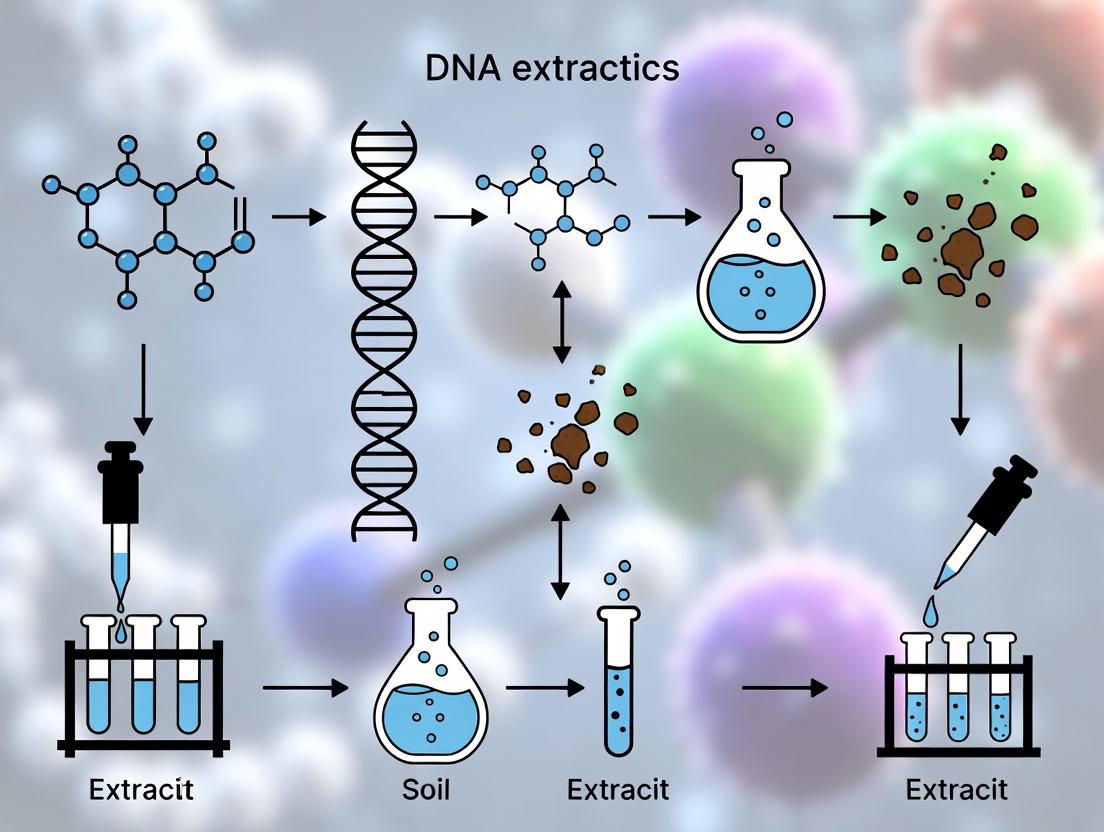
This comprehensive guide provides researchers, scientists, and drug development professionals with a complete framework for soil metagenomic DNA extraction.
Ultimate Guide to Soil DNA Extraction for Metagenomics: Protocols, Troubleshooting & Clinical Applications
Abstract
This comprehensive guide provides researchers, scientists, and drug development professionals with a complete framework for soil metagenomic DNA extraction. We cover the foundational science of soil-microbe interactions, detail current and emerging commercial kit and in-house protocols, address common pitfalls and optimization strategies, and provide a comparative analysis of methods for validating yield, purity, and integrity. The article bridges fundamental methodology with advanced applications in novel enzyme and antibiotic discovery, empowering robust and reproducible microbiome research for biomedical innovation.
The Hidden World Beneath: Why Soil DNA Extraction is Crucial for Modern Research
Soil metagenomics provides direct access to the genetic potential of the entire soil microbial community, bypassing the limitations of culturing. Within the context of a thesis on DNA extraction methods for soil metagenomics, the choice of extraction protocol is the foundational step that determines downstream analytical success. This document provides application notes and detailed protocols for this critical phase.
Application Notes: The Impact of Extraction Method on Metagenomic Data
The efficiency and bias of DNA extraction directly influence the representativeness of the recovered metagenome. Key factors include cell lysis efficiency, DNA fragment size, and co-extraction of inhibitors like humic acids.
Table 1: Comparison of Soil DNA Extraction Method Outcomes
| Extraction Method Type | Average DNA Yield (ng/g soil) | Average Fragment Size (bp) | Major Contaminants | Suitability for Long-Read Sequencing |
|---|---|---|---|---|
| Physical Lysis (Bead-beating) | 500 - 10,000 | 500 - 23,000 | Humic acids, polysaccharides | Moderate-High (dependent on intensity) |
| Chemical Lysis (SDS/Alkaline) | 100 - 5,000 | 1,000 - 50,000 | Humic acids, phenolics | High |
| Commercial Kit (Silica-column) | 200 - 3,000 | 300 - 20,000 | Kit-specific buffers | Low-Moderate |
| Enzymatic Lysis (Lysozyme, Proteinase K) | 50 - 1,000 | 10,000 - 100,000+ | Cellular proteins | Very High |
Table 2: Influence of Soil Properties on Extraction Efficacy
| Soil Characteristic | Recommended Lysis Enhancement | Expected Inhibition Challenge |
|---|---|---|
| High Clay Content | Increased bead-beating time, pre-treatment with chelating agents (e.g., EDTA) | High adsorption of DNA to particles; lower yield. |
| High Organic Matter/Humic Content | Post-extraction purification with CTAB or PVPP; use of inhibitor-removal columns. | PCR and enzyme inhibition; spectrophotometric interference. |
| Low Biomass/Arid | Larger soil sample mass; carrier RNA during precipitation. | Very low yield; increased stochasticity. |
| Calcareous/High pH | Mild acid pre-treatment; increased buffer strength. | Reduced lysis efficiency; DNA degradation. |
Protocol 1: Enhanced Physical-Chemical Extraction for Diverse Soil Types
This protocol maximizes yield and representativeness for general soil metagenomic surveys, balancing rigorous lysis with DNA purity.
Materials & Reagents:
- Lysis Buffer: 100 mM Tris-HCl (pH 8.0), 100 mM EDTA (pH 8.0), 100 mM Sodium Phosphate (pH 8.0), 1.5 M NaCl, 1% CTAB, 2% SDS.
- Inhibitor Removal: Polyvinylpolypyrrolidone (PVPP).
- Bead-beating Matrix: 0.1 mm and 0.5 mm silica/zirconia beads.
- Precipitation Agents: 10M Ammonium acetate, isopropanol, 70% ethanol.
- Purification Kit: Optional silica-membrane column for final clean-up.
Procedure:
- Soil Preparation: Homogenize 0.5 g of fresh or frozen soil. Add 100 mg of PVPP to the sample.
- Primary Lysis: Transfer soil to a bead-beating tube. Add 800 µL of pre-warmed (60°C) lysis buffer and bead matrix. Vortex thoroughly.
- Mechanical Disruption: Bead-beat at 6.0 m/s for 45 seconds. Incubate at 70°C for 20 minutes, with gentle inversion every 5 minutes.
- Pellet Debris: Centrifuge at 10,000 x g for 5 minutes at room temperature (RT).
- Nucleic Acid Precipitation: Transfer supernatant to a new tube. Add 0.7 volumes of isopropanol and 0.1 volumes of 10M ammonium acetate. Incubate at -20°C for 1 hour. Centrifuge at 16,000 x g for 30 minutes at 4°C.
- Wash and Resuspend: Wash pellet with 500 µL of 70% ethanol. Air-dry for 10 minutes and resuspend in 50 µL TE buffer or nuclease-free water.
- Optional Purification: Pass resuspended DNA through a silica-column purification kit per manufacturer's instructions to remove residual inhibitors.
Protocol 2: High-Molecular-Weight (HMW) DNA Extraction for Long-Read Sequencing
This protocol prioritizes DNA integrity over maximum yield, suitable for Nanopore or PacBio sequencing.
Materials & Reagents:
- Mild Lysis Buffer: 500 mM EDTA (pH 9.0), 10% Sarkosyl, 2 mg/mL Lysozyme, 20 µg/mL RNase A.
- Protein Degradation: 1 mg/mL Proteinase K, 1% SDS.
- Gentle Purification: Low-melt agarose plugs or Large-DNA dialysis membranes.
- DNA Stain: GelRed or SYBR Safe.
Procedure:
- Soft Enzymatic Lysis: Suspend 2 g of soil in 5 mL of Mild Lysis Buffer. Incubate with rotation at 37°C for 2 hours.
- Proteinase Digestion: Add Proteinase K to 1 mg/mL and SDS to 1%. Incubate at 55°C with gentle rotation for 3 hours.
- Crude Clarification: Centrifuge at 5,000 x g for 10 minutes at 4°C to pellet heavy debris.
- DNA Capture: Either:
- Agarose Plug Method: Mix supernatant with molten low-melt agarose and cast into plugs. Dialyze plugs extensively in TE buffer.
- Dialysis Method: Load supernatant into a dialysis membrane (100 kDa MWCO). Dialyze against 2L of TE buffer at 4°C, with three buffer changes over 24 hours.
- Assessment: Visualize DNA integrity by pulsed-field gel electrophoresis (PFGE) or using a genomic DNA tape station.
Visualizations
Workflow for Soil Metagenomic DNA Extraction
From DNA to Discovery in Soil Metagenomics
The Scientist's Toolkit: Key Research Reagent Solutions
| Reagent/Material | Function in Soil Metagenomics |
|---|---|
| CTAB (Cetyltrimethylammonium bromide) | Ionic detergent effective for lysing cells and precipitating polysaccharides and humic acids, reducing co-purification. |
| PVPP (Polyvinylpolypyrrolidone) | Insoluble polymer that binds polyphenolic compounds, removing key PCR inhibitors commonly found in organic-rich soils. |
| Sodium Phosphate Buffer | Helps desorb DNA bound to clay minerals, improving yield from mineral-rich soils. |
| Silica/Zirconia Beads (Mix of 0.1 & 0.5 mm) | Provides heterogeneous mechanical shearing for more complete lysis of diverse cell wall types (Gram+, Gram-, spores). |
| Inhibitor Removal Technology Columns (e.g., Zymo ZR, Qiagen PowerSoil) | Silica-membrane columns with specialized buffers designed to selectively bind DNA while washing away soil-derived inhibitors. |
| SPRI (Solid Phase Reversible Immobilization) Beads | Magnetic beads used for size-selective cleanup and normalization of DNA fragments during library preparation. |
| Lysozyme & Proteinase K | Enzyme duo for gentle, sequential degradation of peptidoglycan and proteins, crucial for recovering intact HMW DNA. |
| Low-Melt Agarose | Used to entrap HMW DNA in plugs for gentle dialysis, preventing mechanical shearing during handling. |
Application Notes
Context within Soil Metagenomics Thesis: Effective DNA extraction is the critical first step in unlocking soil's biomedical potential. The vast majority (>99%) of soil microorganisms are unculturable, making metagenomic approaches essential for accessing the biosynthetic gene clusters (BGCs) encoding novel enzymes and antibiotics. The choice of extraction method directly impacts DNA yield, purity, fragment length, and community representation, thereby determining downstream success in functional screening and sequencing-based BGC discovery.
1. Quantifying the Biomedical Potential in Soil The following table summarizes key quantitative findings on soil's metagenomic potential, directly correlated with DNA extraction efficiency.
Table 1: Quantitative Scope of Soil's Biomedical Metagenome
| Metric | Value/Range | Significance for Drug Discovery |
|---|---|---|
| Estimated Bacterial & Archaeal Species per gram of soil | Up to 10^9 | Represents immense phylogenetic diversity for novel BGC discovery. |
| Percentage of soil microbes that are unculturable | >99% | Necessitates culture-independent metagenomic DNA extraction. |
| Known Antibiotic classes derived from soil microbes (e.g., Actinomycetes) | >100 | Validates soil as a prime discovery reservoir. |
| Novel Antibiotic candidates from single soil metagenome studies | Dozens to Hundreds | Highlights yield from functional screening of extracted DNA. |
| Average BGCs per bacterial genome in soil | 20-40 | Indicates high density of bioactive compound encoding potential. |
| Increase in novel enzyme discovery rate using metagenomics vs. culture | ~10-fold | Demonstrates the power of direct environmental DNA access. |
2. Linking DNA Extraction to BGC Recovery The quality of extracted metagenomic DNA is paramount for two primary discovery pathways: function-based screening (requiring large-insert, high-purity DNA for expression libraries) and sequence-based screening (requiring representative, high-molecular-weight DNA for sequencing).
Table 2: Impact of DNA Extraction Method on Downstream Applications
| Extraction Method Characteristic | Impact on Function-Based Screening | Impact on Sequence-Based BGC Mining |
|---|---|---|
| DNA Fragment Size (>40 kbp optimal) | Critical for constructing fosmid/cosmid libraries to capture entire BGCs. | Enables better assembly of long, repetitive BGCs from sequencing reads. |
| Inhibition-Free Purity (A260/A280 ~1.8, A260/A230 >2.0) | Essential for downstream enzymatic reactions (cloning, transformation). | Vital for library prep efficiency and sequencing accuracy. |
| Representational Bias (Minimized cell lysis bias) | Captures diversity from Gram-positive/negative, spores, for broader enzyme discovery. | Avoids missing BGCs from "hard-to-lyse" but biochemically rich taxa (e.g., Actinobacteria). |
| Yield (Microgram quantities per gram soil) | Enables construction of large-library sizes (>10^6 clones) for rare gene discovery. | Allows for deep sequencing coverage to detect low-abundance BGCs. |
Protocols
Protocol 1: Robust High-Molecular-Weight (HMW) Metagenomic DNA Extraction from Soil for BGC Cloning
This protocol maximizes DNA fragment size and purity for construction of large-insert expression libraries.
Research Reagent Solutions Toolkit
| Item | Function |
|---|---|
| Lysis Buffer (pH 8.0) with CTAB & Proteinase K | Disrupts cell walls, denatures proteins, and complexes with polysaccharides to reduce co-precipitation. |
| Inhibitor Removal Technology (IRT) Beads | Selectively binds humic acids, phenolics, and other common soil-derived PCR inhibitors. |
| Guanidine Thiocyanate Solution | Powerful chaotropic agent that denatures contaminants while stabilizing nucleic acids. |
| Size-Selective Magnetic Beads (e.g., SPRI) | Enable clean-up and size selection of HMW DNA fragments (>30 kbp). |
| Phenol:Chloroform:Isoamyl Alcohol (25:24:1) | Organic extraction removes lipids and residual proteins. |
| Pulsed-Field Gel Electrophoresis (PFGE) System | Gold-standard for quality assessment of HMW DNA fragment length. |
Procedure:
- Homogenization: Weigh 5g of soil (wet weight). Add to 15 mL of pre-warmed (60°C) lysis buffer (100 mM Tris-HCl, 100 mM EDTA, 1.5 M NaCl, 1% CTAB, 2% PVPP). Vortex vigorously for 1 minute.
- Chemical/Enzymatic Lysis: Add 200 µL of Proteinase K (20 mg/mL). Incubate at 56°C for 2 hours with horizontal shaking at 200 rpm.
- Inhibitor Removal: Centrifuge at 6,000 x g for 10 minutes. Transfer supernatant to a new tube. Add 1x volume of IRT bead suspension. Follow manufacturer's incubation and magnetic separation protocol.
- Organic Clean-up: To the cleared lysate, add an equal volume of Phenol:Chloroform:Isoamyl Alcohol. Mix gently by inversion for 5 minutes. Centrifuge at 10,000 x g for 15 minutes at 4°C. Carefully transfer the upper aqueous phase.
- DNA Precipitation: Add 0.7x volume of isopropanol and 0.1x volume of 3M sodium acetate (pH 5.2). Mix gently. Incubate at -20°C for 1 hour. Pellet DNA by centrifugation at 16,000 x g for 30 minutes at 4°C.
- Wash & Resuspend: Wash pellet with 1 mL of 70% ethanol. Air-dry for 10 minutes. Resuspend gently in 100 µL of low-EDTA TE buffer (10 mM Tris, 0.1 mM EDTA, pH 8.0) at 4°C overnight.
- Size Selection & QC: Perform size selection using SPRI beads per manufacturer's HMW protocol. Quantify using Qubit Fluorometer. Assess fragment size distribution via PFGE (1% agarose, 6 V/cm, 120° switch angle, 5-50 s switch time, 18 hours).
Protocol 2: Direct Soil DNA Extraction for Shotgun Metagenomic Sequencing of BGCs
This rapid protocol optimizes for yield and community representation for next-generation sequencing.
Procedure:
- Rapid Lysis: Place 0.5g of soil in a PowerBead Tube. Add 800 µL of phosphate buffer (pH 8.0) and 200 µL of MT/SDS lysis solution. Secure on a vortex adapter and vortex at maximum speed for 10 minutes.
- Inhibition Removal: Centrifuge at 10,000 x g for 1 minute. Transfer up to 700 µL of supernatant to a clean tube. Add 250 µL of guanidine thiocyanate solution and 250 µL of inhibitor removal solution. Vortex briefly. Incubate on ice for 5 minutes.
- DNA Binding: Centrifuge at 10,000 x g for 5 minutes. Transfer supernatant to a tube containing 1.2 mL of DNA binding matrix solution. Invert for 2 minutes.
- Column Purification: Pellet matrix by centrifugation at 3,000 x g for 1 minute. Discard supernatant. Resuspend pellet in 700 µL of wash buffer (ethanol-based). Transfer to a spin column. Centrifuge at 10,000 x g for 1 minute. Discard flow-through.
- Wash & Elution: Repeat wash step. Perform an additional dry spin. Transfer column to a clean tube. Elute DNA with 50-100 µL of pre-warmed (55°C) low-EDTA TE buffer. Centrifuge at 10,000 x g for 1 minute.
- Sequencing QC: Quantify DNA via Qubit. Assess quality by Nanodrop (A260/280, A260/230). Check fragment size distribution (~20 kbp desired) on a 0.8% agarose gel. Proceed with shotgun library prep (e.g., Illumina Nextera XT) or long-read prep (PacBio HiFi, Oxford Nanopore).
Visualizations
Title: Soil Metagenomics Discovery Pipeline
Title: DNA Extraction Method Selection Criteria
Application Notes on Soil DNA Extraction Challenges
Efficient DNA extraction from soil is the cornerstone of robust soil metagenomics, a field critical for drug discovery from natural products. The core challenges lie in overcoming three interconnected barriers that compromise DNA yield, purity, and subsequent molecular analyses.
Humic Substances and PCR Inhibitors: Humic acids, fulvic acids, and other polyphenolic compounds co-extract with nucleic acids. They are potent inhibitors of polymerase enzymes, blocking downstream PCR, restriction digestion, and sequencing library preparation. Their absorbance at 230nm and 260nm also interferes with spectrophotometric DNA quantification.
Heterogeneous Soil Matrices: Soils vary drastically in composition (e.g., clay, sand, silt, organic matter). This heterogeneity affects cell lysis efficiency, DNA adsorption to particles, and the consistency of extraction protocols across different sample types. Clay particles, with their high cation exchange capacity, can strongly bind DNA, drastically reducing yields.
Quantitative Impact Summary: The following table summarizes the documented effects of these challenges on downstream processes.
Table 1: Impact of Soil-Derived Inhibitors on Downstream Molecular Processes
| Inhibitor Class | Common Effect on PCR | Typical Reduction in Yield/Purity | Effect on qPCR (Ct delay) |
|---|---|---|---|
| Humic/Ligninic Substances | Complete failure or reduced amplification | A260/A230 ratios often <1.5 | 3-8 cycles |
| Polysaccharides (e.g., from root exudates) | Reduced amplification efficiency | Increased viscosity; A260/A280 may be skewed | 1-4 cycles |
| Metal Ions (Ca²⁺, Fe³⁺ from clays) | Enzyme inhibition/denaturation | Co-precipitate with DNA; reduce solubility | 2-6 cycles |
| Colloidal/Clay Particles | Non-specific binding of enzymes/DNA | Unpredictable yield losses; high variability | Highly variable |
Detailed Experimental Protocols
Protocol 1: Optimized Soil DNA Extraction with Inhibitor Removal
This protocol combines mechanical lysis with chemical and physical purification steps, tailored for high-inhibitor soils (e.g., forest, peat).
Materials: PowerSoil Pro Kit (QIAGEN) or equivalent, sterile 0.1 mm and 0.5 mm glass/zirconia beads, Bead Ruptor homogenizer, microcentrifuge, heating block (65°C), 2 mL collection tubes.
Procedure:
- Homogenization: Weigh 0.25 g of soil (fresh or frozen) into a PowerBead Pro tube.
- Lysis: Add 60 µL of Solution IRS. Add 800 µL of Solution CD1. Secure tubes on a bead homogenizer and homogenize at 5.0 m/s for 45 seconds. Incubate at 65°C for 10 minutes.
- Inhibitor Precipitation: Centrifuge at 15,000 x g for 1 minute. Transfer up to 700 µL of supernatant to a clean 2 mL tube. Add 250 µL of Solution CD2, vortex for 5 seconds, and incubate on ice for 5 minutes. Centrifuge at 15,000 x g for 3 minutes.
- DNA Binding: Transfer ~600 µL of supernatant to a clean tube, avoiding pellet. Add 600 µL of Solution CD3 and 20 µL of ETR binding reagent. Vortex for 5 seconds. Load 650 µL onto an MB Spin Column and centrifuge at 15,000 x g for 1 minute. Discard flow-through and repeat until all lysate is processed.
- Washes: Add 500 µL of Solution EA to the column. Centrifuge at 15,000 x g for 1 minute. Discard flow-through. Add 500 µL of Solution C5. Centrifuge at 15,000 x g for 1 minute. Discard flow-through. Centrifuge again at 15,000 x g for 3 minutes to dry the membrane.
- Elution: Place column in a clean 1.5 mL tube. Add 50-100 µL of Solution CE (10 mM Tris, pH 8.0) to the center of the membrane. Incubate at room temp for 2 minutes. Centrifuge at 15,000 x g for 1 minute. Store DNA at -20°C.
Protocol 2: Post-Extraction Purification Using Sephadex G-10 Spin Columns
For DNA extracts with persistent inhibitors (A260/A230 < 1.7), this gravity-flow gel filtration step is effective.
Materials: Sephadex G-10 (fine), 5 mL syringe barrels, sterile glass wool, microcentrifuge tubes, TE buffer (10 mM Tris-HCl, 1 mM EDTA, pH 8.0).
Procedure:
- Column Preparation: Hydrate Sephadex G-10 in TE buffer overnight at 4°C. Plug the bottom of a 5 mL syringe barrel with a small amount of sterile glass wool. Fill the barrel with the Sephadex slurry. Equilibrate with 3 column volumes of TE buffer.
- Sample Loading and Elution: Apply the crude DNA extract (≤100 µL) to the top of the column bed. Allow it to fully enter the bed. Add TE buffer for elution. Collect the first 500 µL eluate (contains the DNA, while smaller inhibitors are retained in the matrix). Concentrate using a vacuum concentrator if needed.
Visualizations
Title: Core Workflow for Soil DNA Extraction and Purification
Title: Molecular Mechanisms of PCR Inhibition by Humics
The Scientist's Toolkit: Key Research Reagent Solutions
Table 2: Essential Reagents for Overcoming Soil DNA Extraction Challenges
| Reagent/Material | Primary Function | Role in Mitigating Challenge |
|---|---|---|
| Zirconia/Silica Beads (0.1 mm) | Mechanical cell disruption | Efficient lysis of tough Gram-positive bacteria/spores in a heterogeneous matrix. |
| CTAB (Cetyltrimethylammonium bromide) | Detergent & humic acid precipitant | Forms complexes with polysaccharides and humics, removing them during chloroform extraction. |
| Polyvinylpolypyrrolidone (PVPP) | Polyphenol-binding agent | Added to lysis buffer to bind and precipitate polyphenolic inhibitors (humics). |
| Sephadex G-10/G-50 | Gel filtration matrix | Separates DNA (high MW) from small molecule inhibitors (salts, phenolics) via size exclusion. |
| Silica Membrane Spin Columns (e.g., DNeasy) | DNA binding and wash | Selective DNA binding in high-salt; washes (e.g., with ethanol) remove residual contaminants. |
| Aluminum Ammonium Sulfate (AlNH₄(SO₄)₂) | Flocculating agent | Precipitates humic substances post-lysis, allowing removal by centrifugation. |
| PCR Additives: BSA or T4 Gene 32 Protein | Competitor/inhibitor shield | Binds to nonspecific inhibitors in the PCR mix, protecting polymerase activity. |
| Phosphate Wash Buffer (e.g., 120 mM Na₃PO₄) | Desorption buffer | Competes with DNA for binding sites on clay particles, increasing yield from clay-rich soils. |
Within the broader thesis on optimizing DNA extraction for soil metagenomics, the pre-extraction phase is critical for determining the success of downstream analyses, including amplicon sequencing and shotgun metagenomics for drug discovery. The integrity, yield, and representativeness of extracted nucleic acids are fundamentally governed by initial handling: soil type classification, storage conditions, and homogenization protocols. These steps directly influence the detection of microbial taxa and functional genes, impacting bioprospecting efforts for novel therapeutic compounds.
Soil Type: The Foundational Variable
Soil type dictates microbial community structure, biomass, and the complexity of inhibitory substances co-extracted with DNA. Key soil properties influencing extraction efficiency include texture, organic matter content, pH, and cation exchange capacity (CEC).
Table 1: Impact of Soil Properties on DNA Extraction Efficiency
| Soil Property | Typical Range | Effect on DNA Yield/Purity | Recommended Extraction Adjustment |
|---|---|---|---|
| Clay Content | 0-60% | High clay reduces yield via adsorption; increases humic acid co-purification. | Increased mechanical lysis (e.g., bead beating); enhanced humic acid removal steps. |
| Soil Organic Matter (SOM) | 1-100 g/kg | High SOM increases humic/fulvic acid contamination, inhibiting enzymes. | Use of polyvinylpolypyrrolidone (PVPP) or activated charcoal in lysis buffer. |
| pH | 3.5-10 | Extreme pH reduces microbial biomass; alters cell wall integrity. | pH adjustment of lysis buffer to match soil type (e.g., neutral pH for acidic soils). |
| Cation Exchange Capacity (CEC) | 1-40 cmol⁺/kg | High CEC indicates high clay/organic content, complicating purification. | Addition of chelating agents (e.g., EDTA) to lysis buffer to bind cations. |
Protocol 1.1: Soil Characterization for Metagenomics Planning Objective: Quantify key soil properties to inform DNA extraction protocol selection. Materials: Sieve (2 mm), pH meter, loss-on-ignition furnace, hydrometer. Steps:
- Sample Preparation: Air-dry 50g of field-moist soil. Sieve to <2mm to remove rocks and roots.
- pH Measurement: Create a 1:2.5 soil:deionized water suspension. Shake for 5 minutes, let stand for 30 minutes. Measure pH with calibrated electrode.
- Soil Texture Analysis: Perform hydrometer analysis per ASTM D422. Weigh 50g of dry soil, disperse with sodium hexametaphosphate, and take hydrometer readings at 40 seconds (clay+silt) and 2 hours (clay). Calculate sand, silt, and clay percentages.
- Organic Matter Content: Weigh 5g of dry soil in a crucible (W1). Ignite at 550°C for 4 hours in a muffle furnace. Cool in desiccator and reweigh (W2). Calculate SOM as [(W1-W2)/W1] * 100.
Sample Storage: PreservingIn SituMicrobial Signatures
Storage conditions must halt microbial activity and prevent DNA degradation to preserve the snapshot of the microbial community.
Table 2: Effect of Storage Conditions on DNA Integrity and Community Composition
| Storage Condition | Temperature | Duration Studied | Key Findings (Quantitative) |
|---|---|---|---|
| Immediate Extraction (Gold Standard) | N/A | 0 days | Baseline for yield and diversity. |
| Freezing at -20°C | -20°C | 30 days | DNA yield drops ~15%; significant shift in Gram-positive vs. Gram-negative ratios observed after 14 days. |
| Freezing at -80°C | -80°C | 180 days | Minimal change in yield (<5% loss) and community composition over 90 days. Recommended for long-term. |
| Lyophilization | Ambient (post-drying) | 365 days | Preserves DNA yield effectively; may cause cell wall brittleness, affecting lysis efficiency of some taxa. |
| Preservation Solutions (e.g., RNAlater, LifeGuard) | 4°C or -20°C | 60 days | Maintains community structure best at 4°C for short term; yield loss <10% at 30 days. |
Protocol 2.1: Optimal Soil Storage for Metagenomic Studies Objective: To store soil samples while minimizing microbial community shifts and DNA degradation. Materials: Sterile corer, aliquot bags, cryovials, -80°C freezer, liquid nitrogen (optional), LifeGuard Soil Preservation Solution. Steps:
- Field Collection: Using a sterile corer, collect a representative soil sample. Place immediately on wet ice or in a portable cooler.
- Homogenization & Aliquotting: In lab, sieve soil (<2mm) under cool conditions. Subdivide into multiple, small-volume aliquots (e.g., 0.5-2g) to avoid freeze-thaw cycles.
- Recommended Protocol: For each aliquot:
- Primary Storage: Place one set of aliquots in cryovials and flash-freeze in liquid nitrogen. Store at -80°C.
- Backup/Alternative: Mix 2g soil with 5ml LifeGuard Solution. Incubate at 4°C for 24-48h, then store at -80°C.
- Documentation: Record storage time and temperature for each aliquot. Avoid repeated thawing.
Homogenization: Ensuring Representativeness and Lysis Efficiency
Homogenization serves two purposes: creating a representative subsample and initiating cell lysis by disrupting soil aggregates and microbial cell walls.
Table 3: Comparison of Soil Homogenization and Lysis Methods
| Method | Principle | Optimal For | Drawbacks |
|---|---|---|---|
| Manual Grinding (Mortar & Pestle) | Mechanical shearing under liquid N₂. | Hard, aggregated soils; prevents thawing. | Low throughput; potential for cross-contamination. |
| Bead Beating | High-speed shaking with beads (e.g., zirconia, silica). | Robust cell wall disruption (Gram-positives, spores). | Can cause excessive DNA shearing; heat generation. |
| Sonication | Cavitation from ultrasonic waves. | Laboratory-cultured cells in soil slurries. | Inefficient for particulate soils; localized heating. |
| Chemical Lysis (SDS, CTAB) | Detergent-based membrane dissolution. | Often combined with physical methods for complete lysis. | Ineffective alone for many environmental microbes. |
Protocol 3.1: Integrated Homogenization and Initial Lysis Protocol Objective: To obtain a homogeneous soil slurry and begin cell lysis for maximal DNA yield from diverse cell types. Materials: Pre-cooled bead-beating tubes (0.1mm & 0.5mm glass/zirconia beads), bead beater, lysis buffer (e.g., containing 100mM Tris-HCl pH8.0, 100mM EDTA, 1.5M NaCl, 1% CTAB, 2% SDS), PVPP. Steps:
- Weighing: Transfer 0.25-0.5 g of frozen soil directly into a pre-cooled bead-beating tube.
- Additives: Add 0.5g of sterile PVPP to the tube to bind polyphenols.
- Lysis Buffer: Immediately add 800μl of pre-warmed (60°C) lysis buffer.
- Bead Beating: Secure tubes in bead beater. Process at 6.5 m/s for 45 seconds. Immediately place tubes on ice for 2 minutes to dissipate heat.
- Repeat: Perform a second bead-beating cycle (6.5 m/s, 45 seconds) if soils are rich in spores or actinobacteria.
- Incubation: Incubate the homogenized slurry in a 70°C water bath for 15-20 minutes, inverting tubes every 5 minutes.
Visualizations
Title: Soil Pre-Extraction Decision and Workflow
Title: Storage Impact on DNA and Microbial Community
The Scientist's Toolkit: Key Research Reagent Solutions
| Item | Function in Pre-Extraction | Example Product/Brand |
|---|---|---|
| LifeGuard Soil Preservation Solution | Stabilizes microbial nucleic acids at point of collection by inhibiting RNases and DNases. | Qiagen LifeGuard Soil Preservation Solution |
| Polyvinylpolypyrrolidone (PVPP) | Binds polyphenolic compounds (e.g., humic acids) during lysis, reducing co-purification inhibitors. | Sigma-Aldrich Polyvinylpolypyrrolidone |
| CTAB Lysis Buffer | Cetyltrimethylammonium bromide aids in cell lysis and complexes with polysaccharides and humics for removal. | Custom formulation (CTAB, NaCl, EDTA, Tris-HCl). |
| Zirconia/Silica Beads (0.1mm & 0.5mm mix) | Provides mechanical shearing for robust cell wall disruption across diverse microbial morphologies. | MP Biomedicals Zirconia Beads |
| DNA/RNA Shield for Soil | A proprietary solution that immediately inactivates nucleases and stabilizes nucleic acids at ambient temps. | Zymo Research DNA/RNA Shield for Soil |
| Sterile Disposable Sieves (2mm) | Standardizes soil particle size, removes debris and macrofauna, ensuring representative homogenization. | Fisherbrand Sterile Test Sieves |
Within the critical workflow of soil metagenomics research for drug discovery, the initial step of effective cell lysis is paramount. The complexity and resilience of soil microbial communities, combined with inhibitory substances like humic acids, demand a strategic and often combinatorial approach to lysis. This application note details the core principles—mechanical, chemical, and enzymatic—for liberating nucleic acids from diverse soil microbiota, forming the foundational chapter for a thesis on optimized DNA extraction methods.
Mechanical Lysis Strategies
Mechanical methods physically disrupt cell walls and membranes through applied force, crucial for robust environmental samples.
Key Principles & Protocols:
Bead Beating: The most prevalent method for soil. Cells are subjected to high-speed agitation with dense beads (e.g., zirconia/silica).
- Protocol: 1) Weigh 0.25g of soil into a sterile bead-beating tube. 2) Add 0.5g of a 0.1mm and 0.5mm bead mixture. 3) Add 750µL of lysis buffer (e.g., phosphate buffer with SDS). 4) Securely cap and process in a homogenizer at 6.0 m/s for 45 seconds. 5) Immediately place on ice to prevent overheating. Critical: Optimize time/speed to balance yield with DNA shearing.
Sonication: Uses ultrasonic waves to create cavitation bubbles that implode, generating shear forces.
- Protocol: 1) Suspend soil pellet in 1mL lysis buffer. 2) Place probe in suspension. 3) Sonicate on ice with settings: 20% amplitude, 30 seconds pulse-on, 30 seconds pulse-off, for a total of 2-3 minutes. 4) Centrifuge to remove debris.
Freeze-Thaw: Repeated cycles physically rupture cells via ice crystal formation and osmotic shock.
- Protocol: 1) Suspend soil sample in lysozyme/TE buffer. 2) Flash-freeze in liquid nitrogen. 3) Thaw at 65°C or 37°C in a water bath. 4) Repeat cycle 3-5 times. 5) Centrifuge to collect lysate.
Table 1: Quantitative Comparison of Mechanical Lysis Methods for Soil
| Method | Typical Efficiency (DNA Yield) | DNA Fragment Size | Processing Time | Scalability | Cost |
|---|---|---|---|---|---|
| Bead Beating | High (80-95% cell disruption) | Medium-Low (5-20 kb) | Very Fast (1-3 min) | High (multi-sample) | Medium |
| Sonication | Medium-High | Low (1-5 kb) | Medium (5-10 min) | Low (serial) | High |
| Freeze-Thaw | Low-Medium | High (>50 kb) | Slow (Hours) | High | Low |
Diagram 1: Mechanical Lysis Action Pathways
Chemical Lysis Strategies
Chemical agents disrupt lipid bilayers and denature proteins by altering pH, ionic strength, or solubilizing membranes.
Key Principles & Protocols:
Detergents: Solubilize lipid membranes.
- SDS (Ionic): Powerful, denatures proteins. Use at 0.1-2% w/v. Caution: Inhibits downstream PCR if not thoroughly removed.
- CTAB (Ionic): Effective for soils with polysaccharides; complexes with DNA. Protocol: Use CTAB buffer (2% CTAB, 1.4M NaCl, 100mM Tris-HCl pH 8.0) at 65°C.
- Triton X-100 (Non-ionic): Milder, often used in combination.
Chaotropic Agents: Disrupt hydrogen bonding and hydrophobic interactions.
- Guanidine HCl (4-6 M): Denatures proteins, protects DNA from nucleases. Standard in many soil DNA kits.
- Urea (4-8 M): Used for protein denaturation.
Alkaline Lysis: High pH (NaOH, pH ~12) saponifies lipids and denatures proteins.
- Protocol: 1) Resuspend soil pellet in 200µL of Solution I (Glucose/Tris/EDTA). 2) Add 400µL of fresh Solution II (0.2N NaOH, 1% SDS). 3) Mix gently by inversion. 4) Incubate 5 min on ice. 5) Neutralize with 300µL of Solution III (3M potassium acetate, pH 5.2).
Table 2: Key Chemical Lysis Agents for Soil
| Agent Class | Example | Typical Concentration | Primary Mechanism | Key Consideration for Soil |
|---|---|---|---|---|
| Ionic Detergent | SDS | 0.1-2% | Solubilizes membranes, denatures proteins | Inhibitory; requires clean-up. |
| Chaotropic Salt | Guanidine HCl | 4-6 M | Disrupts H-bonding, inactivates nucleases | Stabilizes DNA; viscous. |
| Alkali | Sodium Hydroxide | 0.1-0.5 N | Hydrolyzes lipids, denatures proteins | Can damage DNA; requires precise neutralization. |
| Chelating Agent | EDTA | 10-50 mM | Binds divalent cations, inhibits DNases | Essential in all lysis buffers. |
Diagram 2: Chemical Lysis Agents and Targets
Enzymatic Lysis Strategies
Enzymatic methods provide targeted, gentle degradation of specific cell wall components, vital for accessing difficult-to-lyse microbes.
Key Principles & Protocols:
- Lysozyme: Hydrolyzes β-1,4-glycosidic bonds in peptidoglycan of Gram-positive bacteria.
- Protocol: 1) Suspend soil pellet in TE buffer. 2) Add lysozyme to 1-10 mg/mL. 3) Incubate at 37°C for 30-60 min.
- Proteinase K: Broad-spectrum serine protease; digests proteins and inactivates nucleases.
- Protocol: Use at 50-200 µg/mL in buffer with SDS/EDTA. Incubate at 50-65°C for 30-120 min. Essential for comprehensive lysis.
- Mutanolysin/Lysostaphin: Target specific bonds in peptidoglycan (e.g., Staphylococcus sp.).
- Chitinase/Cellulase: For fungal cell walls (chitin) or plant material (cellulose) in soil.
Integrated Protocol for Comprehensive Soil Lysis (Mechanical-Chemical-Enzymatic):
- Pre-treatment: 0.25g soil washed with 500µL of 120mM sodium phosphate buffer (pH 8.0) to reduce humics.
- Mechanical Step: Add 750µL of lysis buffer (100mM Tris-HCl pH 8.0, 100mM EDTA pH 8.0, 1.5M NaCl, 1% CTAB, 1% SDS) and beads. Bead-beat at 6 m/s for 45s.
- Chemical/Enzymatic Step: Transfer supernatant to a new tube. Add Proteinase K to 100 µg/mL. Incubate at 56°C for 2 hours with gentle agitation.
- Cleaning: Proceed with standard phenol-chloroform extraction and isopropanol precipitation or commercial clean-up column.
The Scientist's Toolkit: Research Reagent Solutions
Table 3: Essential Materials for Soil Metagenomic DNA Extraction via Lysis
| Item | Function in Lysis | Example Product/Specification |
|---|---|---|
| Zirconia/Silica Beads (0.1mm) | Maximum abrasion and disruption of tough cell walls during bead beating. | BioSpec Products, 11079101z |
| Lysis Buffer with CTAB & EDTA | Chemical disruption of membranes & inhibition of Mg2+-dependent DNases. | 2% CTAB, 1.4M NaCl, 100mM Tris, 20mM EDTA, pH 8.0 |
| Proteinase K (Molecular Grade) | Digests proteins, degrades nucleases, crucial for full lysis. | Thermo Scientific, EO0491 (800 U/mL) |
| Guanidine Hydrochloride (GuHCl) | Chaotropic agent for protein denaturation and DNA stabilization. | 6M solution, molecular biology grade |
| Inhibitor Removal Technology (IRT) Columns | Binds and removes humic acids, phenolics, and other PCR inhibitors from soil lysates. | Zymo Research, D6030 Soil Microbe DNA Kit |
| Phenol:Chloroform:Isoamyl Alcohol (25:24:1) | Organic extraction to separate DNA from proteins and lipids in the crude lysate. | Saturated with 10mM Tris, pH 8.0 |
Diagram 3: Integrated Soil Lysis Workflow
No single lysis principle is universally optimal for soil metagenomics. Mechanical methods ensure broad disruption, chemical agents solubilize and protect, and enzymatic treatments offer specificity. A sequential, integrated protocol combining all three principles—such as bead-beating in a CTAB/SDS buffer followed by Proteinase K digestion—typically yields the highest quantity and quality of microbial community DNA, providing a robust foundation for downstream sequencing and analysis in drug discovery pipelines.
Step-by-Step Protocols: From Commercial Kits to Custom In-House Methods
Within the broader thesis on optimizing DNA extraction for soil metagenomics—which asserts that the lysis method and inhibitor removal efficacy are the primary determinants of downstream sequencing success—this review provides a critical application-focused analysis of prominent commercial kits. The following notes and protocols are designed to guide researchers and drug development professionals in selecting and implementing the most appropriate methodology for their specific soil matrix and research objectives.
Application Notes
Soil metagenomics aims to profile microbial communities for applications ranging from biodiscovery to bioremediation. Commercial kits offer standardized protocols but differ significantly in their approach to the fundamental challenges: mechanical lysis efficiency, humic acid removal, and DNA yield/purity trade-offs. Our evaluation, contextualized within the thesis framework, identifies key operational differentiators.
DNeasy PowerSoil Pro Kit (QIAGEN): Employs bead-beating in a proprietary Inhibitor Removal Technology (IRT) solution. It is consistently noted for superior inhibitor removal, particularly from humic-rich soils, making it ideal for PCR-sensitive applications like 16S rRNA amplicon sequencing. However, its conservative lysis may under-represent Gram-positive bacteria.
FastDNA SPIN Kit for Soil (MP Biomedicals): Utilizes aggressive, high-speed bead-beating in the FastPrep instrument. This kit maximizes cell disruption and DNA yield, favoring comprehensive community representation for shotgun metagenomics. The trade-off is often co-extraction of inhibitors, requiring careful downstream purification assessment.
ZymoBIOMICS DNA Miniprep Kit (Zymo Research): Features a novel dual lysis mechanism (bead-beating and chemical) coupled with column-based purification designed to remove PCR inhibitors. It is benchmarked with a standardized microbial community, providing strong reproducibility for comparative studies.
MagMAX Microbiome Ultra Nucleic Acid Isolation Kit (Thermo Fisher Scientific): A magnetic bead-based, high-throughput option suitable for automation. Its differential lysis/binding steps aim to separate microbial from host/plant DNA, an advantage for rhizosphere studies.
NEXTFLEX Rapid DNA-Seq Kit (PerkinElmer): Focuses on speed, with a sub-60-minute protocol. Best suited for relatively clean, low-biomass soils where workflow efficiency is paramount over complex inhibitor loads.
Key Consideration: No single kit is universally optimal. Choice depends on soil type (e.g., clay, peat, sediment), target organisms (bacteria, fungi, spores), and downstream application (qPCR, long-read sequencing, functional gene arrays).
Table 1: Comparative Performance Metrics of Leading Soil DNA Extraction Kits (2024)
| Kit Name (Manufacturer) | Avg. Yield (ng/g soil)* | A260/A280 Purity* | A260/A230 Purity* | Inhibitor Removal Efficacy | Protocol Duration (min) | Cost per Sample (USD) |
|---|---|---|---|---|---|---|
| DNeasy PowerSoil Pro (QIAGEN) | 15 - 45 | 1.8 - 2.0 | 2.0 - 2.3 | Excellent | ~60 | $8 - $10 |
| FastDNA SPIN (MP Biomedicals) | 50 - 150 | 1.7 - 1.9 | 1.5 - 2.0 | Good | ~30 | $6 - $8 |
| ZymoBIOMICS DNA Miniprep (Zymo) | 20 - 60 | 1.8 - 2.0 | 2.0 - 2.4 | Excellent | ~60 | $7 - $9 |
| MagMAX Microbiome Ultra (Thermo) | 10 - 40 | 1.8 - 2.0 | 1.8 - 2.2 | Very Good | ~90 (manual) | $9 - $12 |
| NEXTFLEX Rapid DNA-Seq (PerkinElmer) | 5 - 30 | 1.7 - 1.9 | 1.6 - 2.0 | Moderate | <60 | $5 - $7 |
*Ranges are representative and highly soil-type dependent.
Table 2: Suitability for Downstream Applications
| Kit Name | qPCR / 16S Amplicon | Shotgun Metagenomics | Long-Read Sequencing (Nanopore/PacBio) | Microarray |
|---|---|---|---|---|
| DNeasy PowerSoil Pro | ★★★★★ | ★★★☆☆ | ★★★★☆ | ★★★★★ |
| FastDNA SPIN | ★★★☆☆ | ★★★★★ | ★★★☆☆ | ★★☆☆☆ |
| ZymoBIOMICS DNA Miniprep | ★★★★★ | ★★★★☆ | ★★★★☆ | ★★★★☆ |
| MagMAX Microbiome Ultra | ★★★★☆ | ★★★★☆ | ★★★☆☆ | ★★★☆☆ |
| NEXTFLEX Rapid DNA-Seq | ★★★☆☆ | ★★★☆☆ | ★★☆☆☆ | ★★☆☆☆ |
Experimental Protocols
Protocol 1: Standardized Evaluation of Extraction Kit Performance (for Thesis Validation) Objective: To compare yield, purity, and microbial community representation across kits using a homogenized, characterized soil sample. Materials: Homogenized soil (e.g., from ISMET Soil Standard), selected kits, thermal shaker or vortex adapter, microcentrifuge, spectrophotometer (Nanodrop), fluorometer (Qubit), agarose gel equipment, PCR reagents. Procedure:
- Aliquot 250 mg (±10 mg) of homogenized wet soil into required number of replicate tubes per kit.
- Follow each manufacturer's protocol precisely. For bead-beating kits, use a consistent homogenizer setting (e.g., 6.5 m/s for 45s on FastPrep).
- Elute all DNA in an identical volume (e.g., 50 µL) of provided elution buffer or nuclease-free water.
- Quantification & Purity:
- Measure DNA concentration using a fluorometric assay (Qubit dsDNA HS).
- Assess purity via spectrophotometric ratios (A260/A280, A260/A230).
- Quality Assessment:
- Run 100 ng of each extract on a 0.8% agarose gel to visualize fragment size.
- Perform qPCR amplification of a conservative 16S rRNA gene region (e.g., V4) in triplicate. Compare Cq values and amplification efficiency.
- Downstream Analysis:
- Submit normalized DNA amounts (e.g., 10 ng) for 16S rRNA gene amplicon sequencing on an Illumina platform.
- Analyze alpha- and beta-diversity metrics to assess bias in community representation.
Protocol 2: Supplemental Inhibitor Removal for Challenging Soils (Post-Extraction) Objective: To further purify DNA extracts from humic-rich soils (e.g., peat, compost) when kit purification is insufficient. Materials: Purified extract, Sephadex G-10 resin, spin columns, centrifuge. Procedure:
- Hydrate Sephadex G-10 powder in TE buffer overnight at 4°C.
- Pipette 500 µL of slurry into a spin column. Centrifuge at 500 x g for 2 min to pack.
- Apply up to 100 µL of DNA extract directly onto the center of the packed resin bed.
- Place column in a clean collection tube. Centrifuge at 500 x g for 2 min. The eluate contains purified DNA.
- Re-quantify DNA and re-assess A260/A230 ratio.
Visualization: Kits in the Soil Metagenomics Workflow
Title: Soil DNA Extraction and Analysis Workflow
Title: DNA Kit Selection Logic Based on Priority
The Scientist's Toolkit: Research Reagent Solutions
Table 3: Essential Materials for Soil Metagenomic DNA Extraction
| Item | Function & Rationale |
|---|---|
| Inhibitor Removal Technology (IRT) Beads/Solution (QIAGEN) | Proprietary chemistry that selectively binds humic acids and polyphenols during lysis, critical for PCR-sensitive work. |
| Garnet or Silica/Zirconia Beads (0.1-0.5 mm) | Provides abrasive mechanical lysis for robust cell wall disruption. Different sizes target different cell types. |
| Phosphate Buffered Saline (PBS) | Used for pre-washing soil to remove loose extracellular DNA or soluble inhibitors before extraction. |
| Proteinase K | A broad-spectrum serine protease that degrades proteins and inactivates nucleases, enhancing yield and stability. |
| Sephadex G-10/G-20 Resin | Size-exclusion chromatography medium for post-extraction removal of residual humic acids (low A260/A230 correction). |
| SPRI (Solid Phase Reversible Immobilization) Beads | Magnetic beads with size-selective DNA binding, used for cleanup, size selection, and normalization in high-throughput workflows. |
| PCR Inhibitor Removal Spin Columns (e.g., OneStep PCR Inhibitor Removal, Zymo) | Specialized columns for rapid post-extraction cleanup when kit purification is insufficient. |
| Internal DNA Standard (e.g., ZymoBIOMICS Spike-in Control) | A defined mix of microbial cells added pre-lysis to quantify extraction efficiency and identify kit-induced bias. |
Within a comprehensive thesis on DNA extraction methods for soil metagenomics research, evaluating the purity and yield of genetic material is paramount. While newer commercial kits offer convenience, the phenol-chloroform isoamyl alcohol (PCI) method remains the gold-standard for fundamental lysis and purification against which new methods are benchmarked. This protocol details the PCI extraction process optimized for challenging soil matrices.
The Scientist's Toolkit: Essential Reagents for PCI Extraction
| Reagent/Solution | Function in Soil Metagenomics DNA Extraction |
|---|---|
| Lysis Buffer (e.g., CTAB, SDS) | Disrupts soil microaggregates and cell membranes, denatures proteins, and complexes humic acids to prevent co-purification. |
| Proteinase K | A broad-spectrum serine protease that digests proteins and degrades nucleases, preventing DNA degradation. |
| Phenol:Chloroform:Isoamyl Alcohol (25:24:1) | Phenol denatures proteins, chloroform removes lipids and phenol residues, and isoamyl alcohol prevents foaming. Separates DNA into the aqueous phase. |
| Chloroform:Isoamyl Alcohol (24:1) | Used for a final clean-up to remove trace phenol prior to precipitation. |
| Isopropanol or Ethanol | Precipitates nucleic acids from the aqueous phase by reducing solubility in the presence of salts. |
| Sodium Acetate (3M, pH 5.2) | Provides the necessary monovalent cations (Na⁺) to neutralize the DNA phosphate backbone, facilitating ethanol/isopropanol precipitation. |
| TE Buffer or Nuclease-Free Water | Resuspension buffer for purified DNA. TE (Tris-EDTA) stabilizes DNA, while EDTA chelates Mg²⁺ to inhibit nucleases. |
| Lysozyme & Mutanolysin | (Optional, for Gram-positive bias) Enzymes that degrade bacterial cell wall polysaccharides, improving lysis efficiency in soil. |
Quantitative Comparison of DNA Precipitation Agents
Table 1: Efficacy of Common Precipitation Agents for Post-PCI DNA Recovery
| Precipitation Agent | Typical Final Concentration | Incubation | Recovery Efficiency | Notes for Soil DNA |
|---|---|---|---|---|
| Isopropanol | 0.6 - 0.7 volumes | -20°C, 30 min to overnight | High (~90%) | Precipitates more salt; use for small DNA fragments. Preferred for high-volume samples. |
| Ethanol | 2.0 - 2.5 volumes | -20°C, 1 hr to overnight | High (~85-90%) | Requires salt (e.g., NaOAc). Results in cleaner precipitate; better for removing residual organics. |
| Glycogen | 20-50 µg/mL (carrier) | Co-precipitate with alcohol | Improves microgram/low-yield recovery | Essential for dilute soil extracts. Visible pellet forms. Ensure nuclease-free. |
| Sodium Acetate | 0.3M final (pH 5.2) | Added prior to alcohol | Maximizes yield | Optimal salt for ethanol precipitation. pH 5.2 ensures efficient DNA neutralization. |
Detailed Experimental Protocol: PCI Extraction from Soil
Protocol: Purification of Crude Soil Lysate via PCI Partitioning
Principle: Following mechanical and chemical lysis of soil, the crude lysate contains DNA, proteins, lipids, carbohydrates, and inhibitory humic substances. Sequential extraction with PCI and CI separates these components based on solubility, partitioning DNA into the aqueous phase.
Materials:
- Crude soil lysate (pre-cleared by centrifugation)
- Phenol:Chloroform:Isoamyl Alcohol (25:24:1, pH ~7.8-8.0)
- Chloroform:Isoamyl Alcohol (24:1)
- 3M Sodium Acetate (pH 5.2)
- Isopropanol (-20°C)
- 70% Ethanol (-20°C)
- TE Buffer (pH 8.0)
- Phase-lock gel tubes (heavy) or standard microcentrifuge tubes
- Microcentrifuge capable of ≥12,000 g
- Safety equipment for organic solvents
Method:
- PCI Extraction: Transfer the aqueous crude lysate to a fresh tube. Add an equal volume of PCI. Mix thoroughly by vigorous inversion for 2-3 minutes to form an emulsion. Do not vortex.
- Phase Separation: Centrifuge at 12,000 g for 5 minutes at room temperature. Three phases will form: a lower organic phase (phenol-chloroform), an interphase (denatured proteins), and an upper aqueous phase (containing DNA).
- Aqueous Phase Recovery: Carefully transfer the upper aqueous phase to a new tube, taking extreme care not to disturb the interphase. If using phase-lock gel, simply pour the aqueous phase out.
- CI Clean-up: Add an equal volume of Chloroform:Isoamyl Alcohol (24:1) to the recovered aqueous phase. Mix by inversion for 1-2 minutes. Centrifuge at 12,000 g for 3 minutes.
- Final Aqueous Recovery: Transfer the upper aqueous phase to a clean 1.5 mL microcentrifuge tube.
- DNA Precipitation: Add 0.1 volumes of 3M Sodium Acetate (pH 5.2) and mix. Add 0.6-0.7 volumes of room-temperature isopropanol. Mix by inversion. Incubate at -20°C for a minimum of 30 minutes (or overnight for maximum yield).
- Pellet DNA: Centrifuge at ≥12,000 g for 30 minutes at 4°C. Carefully decant the supernatant.
- Wash: Wash the pellet (which may not be visible) with 500 µL of ice-cold 70% ethanol. Centrifuge at 12,000 g for 10 minutes at 4°C. Carefully decant the ethanol.
- Dry and Resuspend: Air-dry the pellet for 5-10 minutes (do not over-dry). Resuspend the DNA pellet in 50-100 µL of TE Buffer or nuclease-free water. Incubate at 55°C for 1 hour or 4°C overnight to fully dissolve.
Visualization of the PCI Extraction Workflow
PCI Extraction & Purification Workflow
Logic of Choosing PCI for Soil DNA Purification
In soil metagenomics research, the efficient and unbiased lysis of diverse microbial cells is the critical first step governing downstream sequencing success. Mechanical lysis via bead-beating remains the gold standard for breaking robust environmental samples like soil. This application note, framed within a broader thesis on advancing DNA extraction methods for soil metagenomics, details optimized and automated protocols for bead-beating to enhance throughput, yield, and reproducibility while minimizing bias and inhibitor co-extraction.
Optimal bead-beating is a balance between sufficient cell disruption and the prevention of DNA shearing and humic acid release. The following parameters, derived from recent studies, are summarized in Table 1.
Table 1: Optimized Bead-Beating Parameters for Soil Metagenomics
| Parameter | Optimal Range/Type | Impact on Yield & Quality | Rationale |
|---|---|---|---|
| Bead Size & Composition | 0.1 mm (silica/zirconia) + 2-4 mm (glass/ceramic) mixture | Yield: High. Purity: Moderate. | Small beads target bacteria; larger beads improve soil particle disaggregation. |
| Bead-to-Sample Ratio | 2:1 to 3:1 (v/v) | Yield: Optimal. Purity: Optimal. | Ensures efficient collision energy; too high a ratio increases heating/shearing. |
| Lysis Buffer | High-salt (e.g., NaCl, CTAB) with PVPP | Yield: High. Purity: High. | Inhibits nuclease activity; PVPP binds phenolic compounds (humics). |
| Homogenization Speed | 5.5 - 6.5 m/s | Yield: Peak. Purity: Peak. | Speed <5 m/s under-lyses; >7 m/s increases shear & inhibitor release. |
| Homogenization Time | 30-45 seconds (intermittent) | Yield: Optimal. Purity: Optimal. | 60+ seconds increases temperature and shearing; intermittent cycles (e.g., 3x 10s) reduce heat. |
| Sample Cooling | Pre-chilled tubes & post-beating ice bath | Yield: Maintained. Purity: Maintained. | Prevents thermal degradation of DNA and microbial activity shifts. |
| Sample Mass | 250 mg (typical) | Yield: Representative. Purity: Manageable. | Balances DNA yield with inhibitor load; >500 mg often saturates buffer capacity. |
Detailed Experimental Protocols
Protocol 1: Manual High-Throughput Bead-Beating for 96 Samples
Objective: To uniformly lyse diverse microbial cells from soil samples in a 96-deep-well plate format. Materials: See "The Scientist's Toolkit" (Section 5). Procedure:
- Preparation: Pre-chill a 96-deep-well plate (2 ml/well) on ice. Aliquot 250 mg of soil per well.
- Buffer Addition: Add 750 µl of pre-heated (60°C) CTAB-PVPP lysis buffer to each well.
- Bead Addition: Using an automated dispenser, add a sterile bead mixture (500 mg of 0.1 mm zirconia + 2 mm glass beads per well).
- Sealing: Secure the plate with a silicone-AeraSeal film and a rigid plastic mat.
- Homogenization: Load plate onto a high-throughput homogenizer (e.g., Omni Bead Raptor). Process at 6.0 m/s for 3 cycles of 15 seconds, with 60-second pauses on ice between cycles.
- Post-Lysis: Immediately place plate on ice for 5 minutes. Proceed to centrifugation and DNA purification.
Protocol 2: Automated Workflow Integration on a Liquid Handler
Objective: To fully automate bead-beating and subsequent lysate transfer, minimizing cross-contamination and hands-on time. Materials: Liquid handling robot (e.g., Hamilton STAR), integrated bead mill module (e.g., Precellys), deep-well plates, tip boxes. Procedure:
- Setup: The robot aspirates and dispenses soil slurry (from a pre-weighed master plate) and lysis buffer into a new deep-well plate containing pre-loaded beads.
- Automated Sealing: The instrument applies a pierceable foil seal.
- Integrated Bead-Beating: The plate is mechanically transferred by the robot to the integrated bead mill, which executes the homogenization profile (6.2 m/s, 40 seconds total, intermittent).
- Lysate Recovery: The plate returns to the deck. After a brief centrifugation step (on-deck centrifuge, if available), the robot pierces the seal and transfers the clarified supernatant to a purification plate.
- Downstream Processing: The automation script proceeds to bind, wash, and elute DNA using magnetic bead-based chemistry on the same platform.
Visualized Workflows & Pathways
Title: Manual High-Throughput Bead-Beating Workflow
Title: Automated Bead-Beating Integration on Liquid Handler
The Scientist's Toolkit: Key Research Reagent Solutions
| Item | Function & Rationale |
|---|---|
| Zirconia/Silica Beads (0.1 mm) | Provides high-density, abrasive surfaces for efficient rupture of bacterial cell walls. |
| Glass/Ceramic Beads (2-4 mm) | Aids in macroscopic soil aggregate disruption, improving access to microbes. |
| CTAB-PVPP Lysis Buffer | Cetyltrimethylammonium bromide (CTAB) complexes with DNA and inhibits nucleases; Polyvinylpolypyrrolidone (PVPP) binds humic acids and phenolics. |
| High-Throughput Homogenizer | Instrument capable of homogenizing multiple samples (e.g., 4-96) simultaneously at controlled, high speeds (up to 10 m/s). |
| Deep-Well Plates (2 ml) | Polypropylene plates resistant to mechanical stress and chemical corrosion during bead-beating. |
| Silicone-AeraSeal Films | Breathable seals prevent aerosol contamination and pressure build-up while securing samples. |
| Magnetic Bead DNA Binding Mix | SPRI (Solid-Phase Reversible Immobilization) beads for post-lysis automated nucleic acid purification. |
| Liquid Handling Robot with Bead Mill | Integrated system for hands-free sample preparation, homogenization, and lysate processing. |
Thesis Context: In soil metagenomics research, a one-size-fits-all approach to DNA extraction is insufficient. The choice of method—targeting viral, plasmid, or high-molecular-weight (HMW) genomic DNA—directly determines the biological questions that can be addressed, from horizontal gene transfer to ecosystem function. This application note details targeted extraction protocols within a comprehensive soil DNA analysis framework.
Application Notes
The targeted extraction of specific DNA fractions from soil is critical for dissecting microbial community structure and function.
- Viral DNA Extraction: Isolates free viral particles (virome), crucial for studying phage-host dynamics, gene transfer agents, and viral ecology. Soil pre-treatment with virion separation techniques (e.g., filtration, ultracentrifugation) is essential to remove cellular debris.
- Plasmid DNA Extraction: Targets extrachromosomal mobile genetic elements, providing insights into the horizontal gene pool (plasmidome), including antibiotic resistance genes (ARGs) and metabolic adaptability. Alkaline lysis-based methods, often coupled with density gradient centrifugation, are employed post-cell lysis.
- High-Molecular-Weight (HMW) Genomic DNA Extraction: Aims to recover intact, large (>20-50 kb) fragments of chromosomal DNA, enabling advanced genomics like long-read sequencing, metagenomic assembly, and binning. This requires gentle lysis (e.g., enzymatic) to avoid shearing and effective humic acid removal.
Quantitative Comparison of Extraction Outcomes from a Model Soil Sample:
Table 1: Typical Yield and Quality Metrics by Targeted Extraction Method
| Target | Typical Yield (µg DNA/g soil) | Average Fragment Size | Key Purity Metric (A260/A280) | Primary Downstream Application |
|---|---|---|---|---|
| Viral DNA | 0.01 - 0.5 | 5 - 50 kb (in prophage) | 1.7 - 1.9 | Viral metagenomics, phage discovery |
| Plasmid DNA | 0.1 - 2.0 | 3 - 300 kb (supercoiled) | 1.8 - 2.0 | Plasmidome analysis, ARG tracking |
| HMW Genomic DNA | 1.0 - 10.0 | >50 - 100 kb | 1.8 - 2.0 | Long-read sequencing, genome assembly |
Experimental Protocols
Protocol 1: Targeted Viral DNA Extraction from Soil
Principle: Separate virus-like particles (VLPs) from cells and debris, followed by concentration, lysis, and DNA purification.
- Soil Pre-treatment: Suspend 10 g soil in 30 mL SM Buffer. Vortex vigorously for 15 min.
- Clarification: Centrifuge at 6,000 x g for 10 min (4°C). Filter supernatant through a 0.22 µm PES membrane.
- Virion Concentration: Concentrate filtrate using tangential flow filtration or PEG precipitation (10% PEG 8000, 1 M NaCl, overnight at 4°C). Pellet at 10,000 x g for 1 hr.
- Nuclease Treatment: Resuspend pellet in SM Buffer. Treat with DNase I/RNase A (1 U/µL, 30 min, 37°C) to degrade free nucleic acids.
- Viral Lysis & DNA Extraction: Add EDTA (to 20 mM), Proteinase K (to 0.5 mg/mL), and SDS (to 0.5%). Incubate at 56°C for 1 hr.
- Purification: Purify DNA using a phenol-chloroform-isoamyl alcohol (25:24:1) extraction, followed by isopropanol precipitation. Elute in TE buffer.
Protocol 2: Plasmid DNA Extraction from Soil Microbial Communities
Principle: Differential lysis and separation of supercoiled plasmid DNA from linear chromosomal DNA.
- Cell Harvesting: Extract total microbial cells from 10 g soil using Nycodenz density gradient centrifugation (details in Protocol 3, steps 1-3).
- Alkaline Lysis: Resuspend cell pellet in 200 µL Solution I (Glucose, Tris, EDTA). Add 400 µL freshly prepared Solution II (NaOH, SDS). Mix gently by inversion. Incubate 5 min at RT.
- Neutralization & Precipitation: Add 300 µL chilled Solution III (Potassium acetate, pH 4.8). Mix immediately. Incubate on ice for 10 min. Centrifuge at 12,000 x g for 15 min.
- Plasmid Enrichment: Transfer supernatant. For further purification of plasmid DNA, add 0.6 volumes isopropanol, incubate at -20°C for 1 hr, and centrifuge at 12,000 x g for 30 min.
- Purification: Wash pellet with 70% ethanol. Resuspend in TE buffer. Optional: Further purify using commercial plasmid mini-prep kits or CsCl-ethidium bromide density gradient ultracentrifugation.
Protocol 3: HMW Genomic DNA Extraction from Soil
Principle: Gentle chemical/enzymatic lysis to preserve DNA integrity, coupled with stringent humic substance removal.
- Cell Extraction: Homogenize 5 g soil in 15 mL Cell Extraction Buffer (100 mM Tris, 100 mM EDTA, 1.5% NaCl, pH 8.0). Shake horizontally (200 rpm, 30 min, 4°C).
- Density Gradient Centrifugation: Layer supernatant onto a Nycodenz gradient (1.3 g/mL). Centrifuge at 10,000 x g for 30 min (4°C). Harvest the opaque microbial cell band at the gradient interface.
- Gentle Lysis: Pellet cells (6,000 x g, 15 min). Resuspend in Lysozyme buffer (20 mg/mL, 1 hr, 37°C). Add Proteinase K and SDS to final concentrations of 100 µg/mL and 1%, respectively. Incubate at 55°C for 2 hrs with gentle agitation.
- Humic Acid Removal: Add CTAB/NaCl solution (final CTAB 2%) and incubate at 65°C for 20 min. Extract with an equal volume of chloroform-isoamyl alcohol (24:1).
- DNA Precipitation & Dialysis: Precipitate DNA with 0.6 volumes isopropanol. Use a wide-bore pipette tip to spool the HMW DNA. Wash in 70% ethanol. Dialyze against TE buffer (4°C, overnight) to remove salts.
Visualizations
Targeted DNA Extraction from Soil Workflow
The Scientist's Toolkit: Research Reagent Solutions
Table 2: Essential Materials for Targeted DNA Extraction from Soil
| Item | Function in Protocol | Key Consideration |
|---|---|---|
| SM Buffer (NaCl, MgSO₄, Tris, Gelatin) | Stabilizes viral particles during extraction and storage. | Prevents virion degradation and adhesion to surfaces. |
| 0.22 µm PES Membrane Filter | Physically separates viral particles and soluble DNA from microbial cells and large debris. | Low protein binding minimizes viral loss. |
| Polyethylene Glycol (PEG) 8000 | Precipitates and concentrates virus-like particles from large volume filtrates. | Concentration and incubation time are critical for yield. |
| Nycodenz / Iodixanol | Density gradient medium for isopycnic separation of intact microbial cells from soil particles. | Forms non-ionic, iso-osmotic gradients, preserving cell viability. |
| Alkaline Lysis Solutions (I, II, III) | Differential lysis: Solution II denatures chromosomal DNA; Solution III selectively precipitates it. | Fresh preparation of Solution II (NaOH/SDS) is mandatory. |
| Lysozyme | Enzymatically degrades peptidoglycan in bacterial cell walls for gentle, controlled lysis. | Critical for HMW DNA; effectiveness varies by microbial taxa. |
| Cetyltrimethylammonium Bromide (CTAB) | Binds and precipitates polysaccharides and humic acids, major soil-derived contaminants. | Used in high-salt buffers to prevent co-precipitation of DNA. |
| Wide-Bore Pipette Tips (≥2 mm) | Allows aspiration of viscous, high-molecular-weight DNA without mechanical shearing. | Essential for handling DNA fragments >50 kb after spooling. |
Application Notes for Soil Metagenomics Research
Within the broader thesis on optimizing DNA extraction methods for complex soil matrices, this document details the critical subsequent steps: the preparation of sequencing libraries and the application of two dominant sequencing platforms. The integrity of extracted DNA, heavily influenced by the extraction protocol (e.g., bead-beating intensity, inhibitor removal), directly impacts the success of library construction and final data quality. These application notes provide standardized protocols and comparative insights for transitioning from raw, extracted environmental DNA to sequence-ready libraries.
Platform Comparison & Selection Guide
The choice between short-read (Illumina) and long-read (Nanopore) sequencing is fundamental and depends on the research question. The following table summarizes key quantitative and qualitative differences.
Table 1: Comparative Overview of Illumina and Oxford Nanopore Sequencing Technologies
| Feature | Illumina (e.g., NovaSeq 6000, MiSeq) | Oxford Nanopore (e.g., MinION, PromethION) |
|---|---|---|
| Read Type | Short-read (50-600 bp) | Long-read (1 bp -> >2 Mb) |
| Throughput | 10 Gb – 6,000 Gb per run | 10 – 300 Gb per flow cell (varies) |
| Accuracy | Very high (>99.9% consensus) | Moderate (~96-99% raw read accuracy) |
| Run Time | 1-55 hours | Minutes to days (real-time) |
| Cost per Gb | Lower | Higher |
| Library Prep Time | 1.5 – 9 hours | 10 minutes – 2 hours |
| Key Advantages | High throughput, low cost per base, established pipelines | Real-time analysis, ultra-long reads, direct RNA/epigenetic detection |
| Key Limitations | Short reads, PCR amplification bias, GC bias | Higher error rate, higher DNA input requirement |
| Best for (Soil Metagenomics) | Species profiling (16S/ITS), high-coverage gene quantification, SNP detection | Metagenome assembly, resolving complex repeats, detecting structural variants, plasmid reconstruction |
Platform Selection Logic for Soil Metagenomics
Experimental Protocols
Universal DNA Quality Control (QC) Post-Extraction
Before library preparation, assess the quality and quantity of extracted soil DNA.
Protocol: Fluorometric Quantification and Fragment Analysis
Quantification (Qubit dsDNA HS Assay):
- Prepare Qubit working solution by diluting the dsDNA HS reagent 1:200 in buffer.
- Piper 198 µL of working solution into Qubit assay tubes for standards (#1 & #2) and samples.
- Add 2 µL of each standard or sample to the respective tube. Mix by vortexing for 2-3 seconds.
- Incubate at room temperature for 2 minutes.
- Read on the Qubit fluorometer. Use standards to generate a curve and interpolate sample concentrations (ng/µL).
Fragment Analysis (e.g., Agilent TapeStation, Bioanalyzer):
- For Genomic DNA ScreenTape: Load 1 µL of sample ladder into the designated well.
- Mix 2 µL of sample with 2 µL of sample buffer. Heat at 72°C for 1 minute, then cool.
- Load the mixture into a sample well. Run the TapeStation analysis.
- Examine the electrophoretogram and summary table for DNA concentration and distribution of fragment sizes (critical for library prep method selection).
Illumina Nextera XT Library Preparation Protocol
This protocol is suitable for low-input (1 ng) microbial DNA and produces multiplexed libraries.
Materials:
- Nextera XT DNA Library Prep Kit (Illumina)
- Nextera XT Index Kit v2 (Illumina)
- AMPure XP beads (Beckman Coulter)
- 80% Freshly prepared ethanol
- Magnetic stand
- PCR thermocycler
Method:
- Tagmentation: Combine 1-5 ng of input DNA (in 5 µL) with 10 µL of TD Buffer and 5 µL of ATM. Incubate at 55°C for 5-10 minutes.
- Neutralization: Immediately add 5 µL of NT Buffer. Mix and incubate at room temperature for 5 minutes.
- PCR Amplification & Indexing: To the tagmented DNA, add 5 µL of each unique N7xx and S5xx index primers (from Index Kit), 15 µL of PCR Master Mix (NPM), and 10 µL of PCR-grade water. Total volume: 50 µL.
- PCR Cycling: Run on a thermocycler: 72°C for 3 min; 95°C for 30 sec; then 12 cycles of [95°C for 10 sec, 55°C for 30 sec, 72°C for 30 sec]; final hold at 10°C.
- Cleanup with SPRI Beads (AMPure XP):
- Add 30 µL (0.6x ratio) of room-temperature AMPure XP beads to the 50 µL PCR product. Mix thoroughly.
- Incubate at room temperature for 5 minutes. Place on a magnetic stand for 2 minutes until clear.
- Discard supernatant. Wash beads twice with 200 µL of 80% ethanol.
- Air-dry for 5 minutes. Remove from magnet and resuspend in 27.5 µL of Resuspension Buffer (RSB). Incubate for 2 minutes.
- Place on magnet, and transfer 25 µL of purified library to a new tube.
- QC and Normalization: Quantify the library (e.g., via Qubit). Use the Illumina Library Normalization protocol to pool libraries at equimolar ratios.
Oxford Nanopore Ligation Sequencing (LSK) Protocol
This protocol is recommended for high-molecular-weight (HMW) DNA to generate long reads.
Materials:
- Ligation Sequencing Kit (SQK-LSK114)
- Native Barcoding Expansion (EXP-NBD114, EXP-NBD196)
- AMPure XP beads
- Magnetic stand, thermomixer, Hula mixer (or rotator)
Method:
- DNA Repair and End-Prep: Combine up to 1 µg of HMW DNA (in 47 µL) with 3.5 µL of NEBNext FFPE Repair Buffer, 2 µL of NEBNext Ultra II End-prep enzyme mix, and 2.5 µL of Ultra II End-prep reaction buffer. Incubate in a thermomixer: 20°C for 5 minutes, 65°C for 5 minutes. Hold at 4°C.
- Cleanup (0.4x Beads): Add 50 µL of room-temperature AMPure XP beads (0.4x ratio). Mix and incubate for 5 minutes. Pellet on magnet, discard supernatant. Wash with 80% ethanol. Air-dry and elute in 25 µL of Elution Buffer (EB).
- Native Barcoding (Optional): Combine 25 µL of end-prepped DNA with 2.5 µL of a unique Native Barcode (NBxx). Add 25 µL of Blunt/TA Ligase Master Mix. Incubate at room temperature for 10 minutes.
- Barcoded Sample Cleanup (0.4x Beads): Repeat Step 2 using a 0.4x bead ratio. Elute in 11 µL of EB.
- Adapter Ligation: To the 11 µL barcoded DNA, add 1 µL of Adapter Mix II (AMII), 1 µL of T4 DNA Ligase, 3.5 µL of Ligation Buffer, and 13.5 µL of nuclease-free water. Mix gently and incubate at room temperature for 20 minutes.
- Final Cleanup (SQK-LSK114 Specific): Add 20 µL of room-temperature AMPure XP beads. Mix and incubate for 5 minutes. On magnet, discard supernatant. Wash with 200 µL of Long Fragment Buffer (LFB). Elute in 15 µL of Elution Buffer.
- Priming and Loading: Follow the specific flow cell priming protocol (e.g., for R10.4.1). Add 12 µL of the prepared library mixed with Sequencing Buffer (SB) and Loading Beads (LB) to the primed flow cell.
The Scientist's Toolkit: Key Reagent Solutions
Table 2: Essential Materials for Library Prep and Sequencing
| Item (Supplier Examples) | Function in Pipeline | Critical Consideration for Soil DNA |
|---|---|---|
| AMPure/SPRI Beads (Beckman Coulter, MagBio) | Size-selective purification and cleanup of DNA fragments. | Bead ratio is critical for size selection. HMW DNA requires low (0.4-0.6x) ratios to retain long fragments. |
| Qubit dsDNA HS Assay Kit (Thermo Fisher) | Fluorometric quantification of dsDNA; insensitive to RNA or contaminants. | Essential over spectrophotometry (Nanodrop), as soil co-extracted humics do not fluoresce, giving accurate DNA concentration. |
| Nextera XT / DNA Prep Kits (Illumina) | Enzymatic tagmentation for fast, parallel library construction from low DNA input. | PCR cycle number should be minimized (e.g., 12 cycles) to reduce amplification bias from complex communities. |
| Ligation Sequencing Kit (LSK) (Oxford Nanopore) | Enzymatic preparation of DNA for ligation of motor protein adapters. | Input DNA integrity (HMW) is paramount. Success depends heavily on the preceding extraction and handling. |
| Native Barcoding Kits (Oxford Nanopore) | Allows multiplexing of samples on a single Nanopore run via in-line barcodes. | Enables cost-effective sequencing of multiple soil samples, crucial for experimental replication and scaling. |
| Flow Cells (R10.4.1) (Oxford Nanopore) | The consumable containing nanopores for sequencing. | Pore decay is influenced by sample purity. Residual soil inhibitors can reduce pore lifespan and yield. |
From Soil to Sequence: Core Application Pipeline
Solving Common Extraction Problems: A Troubleshooting Toolkit for Pure DNA
Within the broader thesis on optimizing DNA extraction methods for soil metagenomics, a primary challenge is the inconsistent recovery of high-quality, high-molecular-weight DNA. This application note provides a systematic diagnostic flowchart and supporting protocols to identify and rectify the root causes of low yield and poor quality in extracted soil DNA, which is critical for downstream applications like shotgun sequencing and functional gene analysis.
Diagnostic Flowchart & Protocol Integration
The following diagram outlines the systematic decision-making process for diagnosing extraction failures, with each decision point linked to a specific validation protocol.
Table 1: Common Soil Inhibitors and Their Impact on Downstream Analysis
| Inhibitor Class | Common Source | Impact on qPCR (ΔCt) | Impact on Sequencing (% Loss of Library) |
|---|---|---|---|
| Humic Acids | Organic Matter | +3 to +8 | 40-70% |
| Polyphenols | Plant Debris | +2 to +6 | 30-50% |
| Heavy Metals (e.g., Ca²⁺) | Clay Minerals | +1 to +4 | 10-30% |
| Salts | Arid Soils | +1 to +3 | 20-40% |
Table 2: Lysis Method Comparison for Major Soil Types
| Soil Type | Bead-Beating (5 min) Yield (ng/g) | Enzymatic Lysis Yield (ng/g) | Recommended Primary Method |
|---|---|---|---|
| Sandy Loam | 850 ± 120 | 320 ± 75 | Bead-beating |
| Clay | 150 ± 45 | 280 ± 60 | Enzymatic (+ Chelators) |
| Peat | 450 ± 90 | 550 ± 110 | Combined (Enzymatic + Gentle Beating) |
| Forest Soil | 720 ± 150 | 400 ± 85 | Bead-beating |
Experimental Protocols
Protocol 1: Verification of Cell Lysis Efficiency (Linked to Flowchart Decision) Objective: Determine if low yield stems from incomplete microbial cell wall disruption. Workflow:
- Split a homogenized soil sample (0.5 g) into two aliquots.
- Aliquot A: Process through your standard DNA extraction.
- Aliquot B: Prior to extraction, add a known quantity (e.g., 10⁸ cells) of an exogenous internal standard (e.g., Pseudomonas putida KT2440 spores). Process identically to A.
- Quantify DNA yield from both aliquots via fluorometry.
- Perform qPCR targeting a single-copy gene specific to the internal standard.
- Calculation: Lysis Efficiency (%) = (Calculated recovered cells from qPCR / Initial spiked cells) * 100. An efficiency <80% indicates inadequate lysis.
Protocol 2: Detection and Removal of Co-Extracted Inhibitors Objective: Identify inhibitor presence and apply mitigation strategies. Method:
- Detection: Perform a dilution series (1:1, 1:5, 1:10) of the extracted DNA in nuclease-free water. Perform qPCR on each dilution with a universal 16S rRNA gene assay. An inconsistent or improving amplification curve with dilution indicates inhibition.
- Mitigation (Post-Extraction): Apply a post-extraction purification using:
- Gel Electrophoresis & Excison: For visible inhibitor bands (dark stain).
- Column-Based Purification with inhibitor-wash buffers (e.g., PTB buffer).
- Chemical Flocculation: Add 3% PVPP (Polyvinylpolypyrrolidone) to the lysate, vortex, incubate on ice for 15 min, centrifuge (14,000 x g, 5 min), and recover supernatant.
Protocol 3: Assessment of Physical Shearing and DNA Fragmentation Objective: Evaluate if DNA is being mechanically sheared during extraction. Procedure:
- Analyze 100 ng of extracted DNA on a 0.8% agarose gel (low EEO, 60V for 90 min) alongside a High Molecular Weight (HMW) DNA ladder.
- Visualization: Use a sensitive fluorescent stain (e.g., GelRed).
- Interpretation: High-quality DNA should appear as a tight, high-molecular-weight band (>20 kb). A pronounced smear below 10 kb indicates excessive mechanical shearing from bead-beating speed/duration or rough pipetting.
Protocol 4: Spike-In Control for Holistic Process Validation Objective: Distinguish between low microbial biomass and methodological failure. Materials: Synthetic, non-natural DNA sequence (e.g., from lambda phage with modified primer sites) or known microbial spores. Steps:
- Spike Addition: Add a precise amount (e.g., 10⁴ copies) of control DNA after the initial lysis step but before purification. This controls for losses in purification/binding, not lysis.
- Co-Extraction: Process the sample normally.
- Quantification: Use qPCR with primers specific to the spike-in sequence.
- Analysis: Calculate % recovery of the spike-in. Recovery <90% indicates issues with DNA adsorption, washing, or elution steps.
The Scientist's Toolkit: Research Reagent Solutions
Table 3: Essential Reagents for Soil DNA Extraction & QC
| Reagent/Material | Function | Key Consideration |
|---|---|---|
| Guanidine Thiocyanate | Chaotropic agent; denatures proteins, enhances DNA binding to silica. | Critical for effective inhibitor separation during lysis. |
| Hexadecyltrimethylammonium Bromide (CTAB) | Detergent; effective at removing polysaccharides and humics from clay/peat soils. | Use in pre-lysis buffer for humic-rich soils. |
| Polyvinylpolypyrrolidone (PVPP) | Binds polyphenols via hydrogen bonding, preventing co-precipitation. | Add 2-4% w/v to lysis buffer for plant-rich soils. |
| Ethylenediaminetetraacetic Acid (EDTA) | Chelating agent; sequesters divalent cations (Mg²⁺, Ca²⁺) to inhibit nucleases and reduce humic acid solubility. | Higher concentrations (e.g., 100 mM) for calcareous soils. |
| Silica/Magnetic Beads | Solid-phase matrix for selective DNA binding and washing. | Particle size and coating affect HMW DNA recovery efficiency. |
| Inhibitor Removal Buffers (e.g., PTB, IWB) | Wash buffers containing ethanol, salts, and specific inhibitors of enzymatic reactions. | Essential step before elution to remove residual humics. |
| Fluorometric DNA Binding Dye (e.g., PicoGreen) | Quantifies double-stranded DNA with high specificity, less affected by RNA/contaminants than UV absorbance. | Required for accurate yield assessment of complex soil extracts. |
| Broad-Host-Range qPCR Assay (e.g., 16S rRNA gene) | Assesses DNA amplifiability and detects PCR inhibitors via dilution analysis. | Primary QC tool for functional DNA quality. |
Within the context of a thesis on optimizing DNA extraction for soil metagenomics research, the removal of humic acids and polyphenolic compounds is a critical challenge. These contaminants co-extract with nucleic acids, inhibiting downstream enzymatic reactions like PCR and sequencing library preparation. This application note details enhanced, contemporary purification steps designed to overcome this bottleneck, enabling high-fidelity molecular analysis for research and drug discovery.
Quantitative Comparison of Purification Methods
The efficacy of various methods is summarized in the table below, compiled from recent studies (2023-2024).
Table 1: Comparison of Enhanced Purification Methods for Humic Acid/Polyphenol Removal
| Method | Principle | Average DNA Yield (ng/g soil) | A260/A230 Purity Ratio* | PCR Inhibition Removal | Key Advantage | Key Limitation |
|---|---|---|---|---|---|---|
| Modified Silica-Matrix with Wash Buffers | Selective DNA binding in high chaotropic salt; enhanced wash buffers. | 45 ± 12 | 2.1 ± 0.2 | >95% | High consistency, scalable. | Can bias against very small/large fragments. |
| Functionalized Magnetic Beads (e.g., carboxylated) | pH-dependent DNA binding on carboxyl groups; humics remain soluble. | 52 ± 15 | 2.3 ± 0.3 | >98% | Rapid, automatable, low reagent volume. | Optimized bead:DNA ratio is critical. |
| Chitosan-Coated Carrier Systems | Cationic chitosan binds anionic contaminants; DNA free in supernatant. | 38 ± 10 | 2.4 ± 0.2 | >99% | Excellent for high-humic soils (peat, compost). | Requires preparation of chitosan particles. |
| Gel Filtration Chromatography (Sephadex G-15/G-50) | Size exclusion; small contaminants enter pores, DNA elutes first. | 30 ± 8 | 2.5 ± 0.1 | >90% | Excellent A260/A230 purification. | Dilutes sample, not ideal for low-yield samples. |
| Combined CTAB-PVPP Pre-Lysis | CTAB complexes humics; PVPP binds polyphenols during cell lysis. | 60 ± 20 | 1.9 ± 0.3 | ~85% | High yield from difficult soils. | Requires careful chloroform:isoamyl alcohol extraction. |
A target A260/A230 ratio >2.0 indicates effective removal of humics/polyphenols.
Detailed Experimental Protocols
Protocol 3.1: Combined CTAB-PVPP Pre-Lysis and Silica-Column Cleanup
This two-step protocol is optimized for highly humic-rich soils (e.g., forest, peatland).
I. Materials:
- Soil sample (0.25 g, fresh or frozen)
- Pre-warmed (60°C) CTAB-PVPP Lysis Buffer (see Reagent Solutions)
- Proteinase K (20 mg/mL)
- Lysozyme (50 mg/mL)
- Chloroform:Isoamyl Alcohol (24:1)
- Isopropanol and 70% Ethanol
- Commercial silica-membrane spin column with modified wash buffers (e.g., with added PVPP or EDTA).
II. Procedure:
- Pre-Lysis Binding: Transfer 0.25 g soil to a 2 mL tube. Add 750 µL of pre-warmed CTAB-PVPP Lysis Buffer and 20 µL Proteinase K. Vortex vigorously for 5 minutes. Incubate at 60°C for 30 minutes with horizontal shaking.
- Enzymatic Lysis: Add 25 µL Lysozyme. Mix by inversion. Incubate at 37°C for 15 minutes.
- Initial Separation: Centrifuge at 12,000 x g for 10 min at 4°C. Transfer supernatant to a new 2 mL tube.
- Organic Extraction: Add an equal volume of Chloroform:Isoamyl Alcohol (24:1). Vortex for 2 min. Centrifuge at 12,000 x g for 10 min at 4°C. Carefully transfer the upper aqueous phase to a new tube.
- Silica-Column Purification: Add 1.5 volumes of isopropanol to the aqueous phase, mix, and load onto the silica-membrane column. Centrifuge per manufacturer's instructions.
- Enhanced Washes: Perform two wash steps: a. Wash Buffer 1 (standard high-salt): Centrifuge. Discard flow-through. b. Wash Buffer 2 (low-salt, 10% ethanol, 1 mM EDTA): Centrifuge. Discard flow-through. Centrifuge column dry for 2 minutes.
- Elution: Elute DNA in 50-100 µL of pre-warmed (60°C) nuclease-free water or TE buffer (pH 8.0). Store at -20°C.
Protocol 3.2: Functionalized Magnetic Bead Cleanup
Ideal for automated, high-throughput processing of moderate-contaminant soils.
I. Materials:
- Crude DNA extract (in a binding buffer, e.g., 10% PEG-8000, 1.25 M NaCl).
- Carboxyl-modified magnetic beads (e.g., Sera-Mag beads).
- Magnetic separation rack.
- 80% Ethanol.
- Elution buffer.
II. Procedure:
- Binding Condition Adjustment: To 100 µL of crude DNA extract, add 20 µL of 5M NaCl and 100 µL of magnetic bead suspension (pre-equilibrated in 10% PEG/1.25M NaCl). The final PEG concentration should be ~10-15%.
- Contaminant Removal: Mix thoroughly by pipetting or vortexing. Incubate at room temperature for 5 minutes. Place on a magnetic rack for 2 minutes or until the supernatant clears. Discard the supernatant (contains unbound humics).
- Bead Washes: With the tube on the magnetic rack, add 200 µL of freshly prepared 80% ethanol. Incubate for 30 seconds. Remove and discard ethanol. Repeat for a total of two washes. Air-dry beads for 5-10 minutes.
- Elution: Remove from magnetic rack. Resuspend beads in 50 µL of elution buffer (e.g., 10 mM Tris-HCl, pH 8.5). Incubate at 55°C for 2 minutes. Place back on the magnetic rack and transfer the purified DNA supernatant to a clean tube.
Visualization of Workflows and Pathways
Diagram 1: Purification Strategy Decision Flow
Diagram 2: Humic Acid Inhibition Mechanism on Polymerase
The Scientist's Toolkit: Research Reagent Solutions
Table 2: Essential Reagents for Enhanced Contaminant Removal
| Reagent | Function & Rationale | Key Consideration |
|---|---|---|
| CTAB (Cetyltrimethylammonium Bromide) | Cationic detergent that complexes anionic humic acids and polysaccharides during lysis, precipitating them. | Use at 2-3% (w/v) in lysis buffer. Must be followed by chloroform extraction. |
| PVPP (Polyvinylpolypyrrolidone) | Insoluble polymer that binds polyphenols via hydrogen bonding and hydrophobic interactions, preventing oxidation and co-purification. | Use at 1-3% (w/v) in lysis buffer. Must be of high purity (ash-free). |
| Chitosan-coated Particles | Cationic biopolymer that electrostatically flocculates anionic humic substances, allowing DNA separation by centrifugation. | pH-sensitive; optimal binding at pH 5-6. Prepare fresh suspension. |
| Carboxylated Magnetic Beads | Provide a clean, solid-phase matrix for DNA binding under specific PEG/salt conditions, leaving contaminants in solution. | Binding is highly dependent on PEG molecular weight (8000) and salt concentration. |
| Sephadex G-15/G-50 | Cross-linked dextran gel that separates small molecules (humics) from larger DNA via size exclusion chromatography. | Ideal as a final polish step. Use spin columns for convenience. Pre-swollen gels give best results. |
| Enhanced Silica Wash Buffer | Standard wash buffer supplemented with 1-5 mM EDTA to chelate residual ions, and/or 0.1% PVPP to trap polyphenols. | Improves final A260/A230 ratio without significant DNA loss. |
Optimizing Lysis Conditions for Diverse Soil Types (Clay, Sand, Peat).
Within the broader thesis on advancing DNA extraction methods for soil metagenomics research, a central challenge is the significant bias introduced by varying soil physico-chemical properties. The lysis step is critical, as inefficient cell disruption reduces DNA yield and diversity, while overly harsh methods shears DNA and co-extracts inhibitors. This application note provides optimized, soil-specific lysis protocols to maximize the recovery of high-quality, high-molecular-weight DNA representative of the native microbial community from clay, sandy, and peat soils.
Comparative Analysis of Soil-Specific Challenges & Lysis Strategies
The optimal lysis strategy is dictated by soil composition, which influences microbial adhesion, humic substance content, and inhibition potential.
Table 1: Soil-Specific Characteristics and Lysis Implications
| Soil Type | Key Characteristics | Primary Lysis Challenge | Optimal Lysis Principle |
|---|---|---|---|
| Clay | High surface area, cationic charge, strong microbial adsorption. | Efficient detachment and rupture of tightly-bound cells. | Mechanical dominance with chemical pre-treatment for detachment. |
| Sand | Low organic matter, low adsorption, low microbial density. | Maximizing yield from a low-biomass sample; avoiding DNA loss. | Gentle chemical lysis combined with moderate mechanical force. |
| Peat | Very high organic matter (humics), acidic, high inhibitor content. | Inhibiting humic acid co-extraction while lysing robust cells (e.g., Gram-positives). | Inhibitor management first; enzymatic & chemical lysis favored over intense bead-beating. |
Table 2: Quantitative Comparison of Lysis Method Efficacy Across Soil Types Data derived from recent meta-analyses and primary studies (2023-2024). Yield and Purity are normalized scores (0-10, where 10 is optimal).
| Lysis Method | Clay Yield | Clay Purity | Sand Yield | Sand Purity | Peat Yield | Peat Purity | DNA Fragment Size (avg.) |
|---|---|---|---|---|---|---|---|
| Bead-beating Only | 8 | 5 | 7 | 8 | 4 | 2 | Low (< 5 kb) |
| Chemical/Enzymatic Only | 4 | 9 | 5 | 9 | 6 | 7 | High (> 20 kb) |
| Sequential Chemical + Mild Beating | 9 | 7 | 8 | 8 | 7 | 8 | Medium-High (~15 kb) |
| Optimized Hybrid (Soil-Specific) | 10 | 8 | 9 | 9 | 8 | 9 | Soil-Dependent |
Detailed Experimental Protocols
Protocol A: Pre-Lysis Soil Pre-Treatment (Universal)
- Homogenization: Sieve soil (<2 mm) and thoroughly mix.
- Aliquot: Dispense 0.5 g (wet weight) into a sterile, labeled 2 mL lysing tube.
- Pre-Wash (Optional, for high-humic soils): Add 1 mL of 120 mM Sodium Phosphate Buffer (pH 8.0) to the peat aliquot. Vortex for 2 minutes, centrifuge at 10,000 x g for 5 min. Carefully discard supernatant. This step reduces soluble humic acids.
Protocol B: Optimized Hybrid Lysis by Soil Type
All steps follow Pre-Treatment. Use the table below to select buffers and parameters.
Table 3: Soil-Specific Lysis Buffer and Parameters
| Component / Step | Clay Soil | Sandy Soil | Peat Soil |
|---|---|---|---|
| Primary Lysis Buffer | 1 mL CTAB-PVP Buffer (2% CTAB, 1% PVP, 100 mM Tris-HCl pH 8.0, 100 mM EDTA). | 1 mL SDS-Based Buffer (1% SDS, 100 mM NaCl, 100 mM Tris-HCl pH 8.0, 50 mM EDTA). | 1 mL Inhibitor-Reducing Buffer (500 mM GuSCN, 100 mM Tris-HCl pH 8.0, 50 mM EDTA, 1% Sarkosyl). |
| Enzymatic Pre-Treatment | Add 20 µL Lysozyme (100 mg/mL), incubate 30 min at 37°C. | Add 20 µL Proteinase K (20 mg/mL), incubate 10 min at 55°C. | Add 20 µL Lysozyme + 10 µL Mutanolysin (5 KU/mL), incubate 45 min at 37°C. |
| Bead Beating | Add 0.3 g of 0.1 mm zirconia/silica beads & 0.3 g of 2 mm beads. Beat for 90 sec at 6.5 m/s. | Add 0.3 g of 0.5 mm glass beads. Beat for 45 sec at 5.0 m/s. | Avoid bead-beating if possible. If needed, use 0.3 g of 1.0 mm beads, beat for 30 sec at 4.0 m/s. |
| Chemical Lysis Incubation | Add 50 µL 20% SDS post-beating, incubate at 65°C for 15 min. | Incubate at 65°C for 20 min with gentle inversion every 5 min. | Add 50 µL CTAB/NaCl solution post-enzyme, incubate at 65°C for 30 min. |
| Post-Lysis Clarification | Centrifuge at 16,000 x g for 10 min at 4°C. Transfer supernatant to a new tube for purification. | Centrifuge at 12,000 x g for 5 min at 4°C. Transfer supernatant. | Centrifuge at 16,000 x g for 15 min at 4°C. Carefully collect the middle aqueous layer, avoiding pelleted debris and surface lipids. |
The Scientist's Toolkit: Key Reagent Solutions
Table 4: Essential Reagents for Soil DNA Lysis Optimization
| Reagent / Material | Function & Rationale |
|---|---|
| CTAB (Cetyltrimethylammonium bromide) | Ionic detergent effective for lysing cells and complexing/removing polysaccharides and humic acids, especially in clay and peat. |
| PVP (Polyvinylpyrrolidone) | Binds polyphenols and humic acids, preventing their co-purification. Critical for organic-rich soils (peat, clay). |
| GuSCN (Guanidine thiocyanate) | Chaotropic agent that denatures proteins, inhibits nucleases, and helps separate DNA from humic contaminants in peat. |
| Sarkosyl (N-Lauroylsarcosine) | Mild anionic detergent, effective for cell lysis with less shearing and compatible with many downstream enzymatic steps. |
| Zirconia/Silica Beads (0.1 mm & 2 mm mix) | Provides superior mechanical shearing for tough soils (clay) and robust cell walls. Mixing sizes improves lysis efficiency. |
| Sodium Phosphate Buffer (pH 8.0) | Pre-wash buffer that elutes loosely bound humics and ions from soil particles without significantly lysing microbial cells. |
| Mutanolysin | Enzyme that hydrolyzes polysaccharides in Gram-positive bacterial cell walls. Crucial for diverse community lysis in peat. |
| Inhibitor-Removal Technology Columns (e.g., silica-based with inhibitor wash buffers) | Post-lysis purification is essential. These columns selectively bind DNA while allowing humics and salts to pass through. |
Visualizations
Soil-Specific Lysis Decision Workflow
Logic of Lysis Component Selection
Mitigating Shearing and Fragmentation for Long-Read Sequencing
Within the broader thesis investigating optimal DNA extraction methods for soil metagenomics, this application note addresses a critical downstream challenge: the preservation of high-molecular-weight (HMW) DNA for long-read sequencing platforms. Soil matrices are notorious for co-extracting contaminants that exacerbate DNA shearing during handling. This document provides detailed protocols and data to mitigate fragmentation, enabling the recovery of ultra-long DNA fragments essential for accurate metagenome-assembled genomes (MAGs) and structural variant analysis in drug discovery pipelines.
Table 1: Impact of Shearing Mitigation Strategies on DNA Fragment Size Distribution
| Strategy / Reagent | Mean Fragment Length (bp) | N50 (bp) | DNA Yield (ng/g soil) | Purity (A260/A280) | Key Application |
|---|---|---|---|---|---|
| Standard Phenol-Chloroform | 8,500 | 15,200 | 45 ± 12 | 1.75 ± 0.10 | Baseline for comparison |
| Gel Electrophoresis Size Selection | 32,500 | 67,300 | 18 ± 5 | 1.82 ± 0.05 | HMW enrichment post-extraction |
| SPRI Bead Dual-Size Selection | 25,800 | 48,500 | 22 ± 4 | 1.80 ± 0.08 | Rapid size selection |
| Circulomics Nanobind HB | 75,400 | 115,000+ | 30 ± 8 | 1.90 ± 0.05 | Direct HMW isolation from lysate |
| In-Gel Lysis with Agarase | 105,000 | 200,000+ | 15 ± 6 | 1.85 ± 0.10 | Maximum length preservation |
Table 2: Long-Read Sequencing Performance Metrics with Mitigated DNA
| Extraction/Mitigation Method | Sequencing Platform | Read Length N50 (bp) | Number of Contigs (>50 kb) | N50 of Assembly (Mb) |
|---|---|---|---|---|
| Standard (Control) | PacBio HiFi | 12,500 | 45 | 0.85 |
| Gel Size Selection | PacBio HiFi | 18,200 | 112 | 2.10 |
| Nanobind HB | Oxford Nanopore | 48,700 | 215 | 4.50 |
| In-Gel Lysis | Oxford Nanopore | 68,500 | 308 | 6.80 |
Detailed Experimental Protocols
Protocol 3.1: In-Gel Lysis and Agarase Digestion for Maximal Length Preservation
Objective: To isolate ultra-HMW DNA (>150 kbp) from soil samples by embedding cells in low-melt agarose plugs to prevent mechanical shearing.
Materials: See "The Scientist's Toolkit" (Section 6).
Procedure:
- Soil Pre-processing: Suspend 2g of soil in 5 mL of Cell Suspension Buffer. Gently vortex and allow large particulates to settle. Transfer supernatant to a new tube.
- Embedding: Mix the supernatant 1:1 with 2% CleanCut Low-Melt Agarose (melted and cooled to 42°C). Pipette gently into plug molds. Solidify at 4°C for 20 minutes.
- In-Gel Lysis: Extrude plugs into 5 mL of Lysis Buffer with Proteinase K (1 mg/mL). Incubate with gentle agitation (20 rpm) at 50°C for 18 hours.
- Washing: Transfer plugs to 15 mL of Wash Buffer (10 mM Tris, 50 mM EDTA, pH 8.0). Agitate gently for 30 minutes at room temperature. Repeat wash 4x.
- Agarase Digestion: Equilibrate plugs in 1x Agarase Digestion Buffer for 1 hour. Melt plugs at 68°C for 10 minutes, then cool to 42°C. Add β-agarase (5 units per plug) and incubate at 42°C for 4 hours.
- DNA Recovery: Carefully pipette the digested solution (avoiding debris) and subject to a single, gentle SPRI bead cleanup (0.4x sample volume) to remove enzymes and salts. Elute in 10 mM Tris-HCl, pH 8.0.
Protocol 3.2: Dual-Size Selection with Solid-Phase Reversible Immobilization (SPRI) Beads
Objective: To efficiently enrich for DNA fragments >20 kbp using a two-step bead cleanup.
Procedure:
- Crude DNA Preparation: Begin with 100 µL of extracted DNA in a low-EDTA TE buffer.
- Small Fragment Removal: Add SPRI beads at a 0.4x sample volume ratio. Mix thoroughly and incubate for 5 minutes. Place on magnet until supernatant clears. Retain the supernatant containing the larger fragments.
- Large Fragment Capture: Transfer the supernatant to a new tube. Add SPRI beads at a 1.0x sample volume ratio to the original 100 µL volume (e.g., if supernatant volume is 90 µL, still add 100 µL beads). Mix and incubate for 5 minutes.
- Wash and Elute: Place on magnet, remove supernatant, wash beads twice with 80% ethanol. Air-dry and elute DNA in 15-30 µL of low-EDTA TE buffer.
Visualization of Workflows
Title: In-Gel Lysis Workflow for Ultra-HMW DNA
Title: Dual-Size Selection SPRI Bead Protocol
The Scientist's Toolkit: Research Reagent Solutions
Table 3: Essential Materials for HMW DNA Preservation
| Item / Reagent | Function & Rationale | Key Supplier Example |
|---|---|---|
| CleanCut Low-Melt Agarose | Forms a protective matrix for cells, preventing shear during lysis. Low gelling temperature reduces heat damage. | Bio-Rad |
| β-Agarase (High Purity) | Specifically digests agarose post-lysis, releasing DNA without pipetting shear. Essential for in-gel protocols. | New England Biolabs |
| Magnetic SPRI Beads | Enable gentle, solution-based size selection. Dual-ratio cleanup effectively removes short fragments and contaminants. | Beckman Coulter |
| Megaruptor 3 System | Alternative use: For controlled, instrument-based shearing when specific target sizes are needed, minimizing random fragmentation. | Diagenode |
| Nanobind HMW DNA Kit | Uses a unique silica polymer (Nanobind Big DNA Disk) for high-efficiency binding of very long fragments directly from lysate. | Circulomics (now part of PacBio) |
| Wide-Bore (≥1.2 mm) Pipette Tips | Critical for all liquid handling steps post-lysis. Reduces hydrodynamic shear forces on long DNA molecules. | Any molecular biology supplier |
| Low-EDTA TE Buffer | Elution and storage buffer. Low EDTA prevents sequencer inhibition while maintaining DNA stability. | Prepared in-lab |
Best Practices for DNA Quantification and Storage to Prevent Degradation
Within soil metagenomics research, the integrity of extracted DNA directly dictates the success of downstream analyses, including PCR, sequencing, and functional gene annotation. Following extraction via methods such as the ISO standard 11063 or commercial kits (e.g., DNeasy PowerSoil Pro), accurate quantification and stringent storage are critical to prevent degradation and ensure representative analysis of microbial communities. This protocol details best practices for these post-extraction steps, framed within a thesis investigating extraction method efficacy for downstream drug discovery from soil microbiomes.
Quantification Methodologies
Accurate DNA quantification is essential to normalize inputs for library preparation. Common methods are compared below.
Table 1: Comparison of DNA Quantification Methods for Soil Metagenomic Samples
| Method | Principle | Optimal Sample Type | Sensitivity | Detects Contaminants? | Key Advantage for Soil DNA |
|---|---|---|---|---|---|
| UV Spectrophotometry (A260/A280) | Absorbance of UV light by nucleic acids. | Pure, high-concentration DNA. | 2-50 ng/µL | Yes (via A260/A230, A260/A280 ratios) | Fast, inexpensive; screens for humic acid (low A260/A230) and protein contamination. |
| Fluorometric (Qubit dsDNA HS/BR Assays) | Dye binding specifically to dsDNA. | All, especially low-concentration or contaminated samples. | 0.2-100 ng/µL (HS Assay) | No | High specificity; unaffected by RNA, salts, or common soil contaminants. Critical for accurate library prep. |
| qPCR (Quantitative PCR) | Amplification of a conserved gene region (e.g., 16S rRNA gene). | All, especially for assessing amplifiability. | <1 pg/µL | Indirectly (inhibits reaction) | Determines functional DNA concentration; assesses PCR inhibitors from soil. |
Detailed Protocol: Fluorometric Quantification using Qubit Assay
Objective: Precisely quantify dsDNA concentration in a soil DNA extract potentially contaminated with humic substances. Materials:
- Qubit fluorometer (e.g., Qubit 4)
- Qubit dsDNA High Sensitivity (HS) or Broad Range (BR) Assay Kit
- DNA samples and TE buffer (10 mM Tris-HCl, 1 mM EDTA, pH 8.0)
- PCR tubes (0.5 mL)
- Vortex mixer and microcentrifuge
Procedure:
- Preparation of Working Solution: For n standards and samples, prepare (n+2) × 199 µL of Qubit working solution by diluting the Qubit dsDNA HS/BR reagent 1:200 in the provided buffer. Vortex thoroughly for 3-5 seconds.
- Standard Preparation: Pipette 190 µL of working solution into two tubes for Standards #1 and #2. Add 10 µL of the respective standard provided in the kit. Mix by vortexing for 3-5 seconds.
- Sample Preparation: For each unknown sample, add 1-20 µL of DNA extract to a tube containing 190-199 µL of working solution, for a total volume of 200 µL. The sample volume should be within the assay's detection range.
- Incubation: Incubate all tubes at room temperature for 2 minutes, protected from light.
- Measurement: On the Qubit fluorometer, select the appropriate assay. Calibrate using the two standards. Measure each sample tube, recording the concentration in ng/µL.
- Calculation: Account for the dilution factor to determine the original sample concentration.
DNA Storage Protocols
Long-term storage stability is paramount for preserving soil DNA for future multi-omic analyses.
Table 2: DNA Storage Conditions and Stability
| Storage Condition | Temperature | Recommended Buffer | Expected Stability (for high-integrity DNA) | Key Considerations for Soil Metagenomic DNA |
|---|---|---|---|---|
| Short-Term | +4°C | TE buffer (pH 8.0) or Elution Buffer | 1-4 weeks | Avoid repeated freeze-thaw cycles. Monitor for microbial growth. |
| Long-Term | -20°C | TE buffer (pH 8.0) | 1-3 years | Suitable for frequent access. EDTA chelates Mg²⁺, inhibiting DNases. |
| Archival | -80°C | TE buffer (pH 8.0) | >5 years | Gold standard. Aliquot to avoid repeated freeze-thaw. Use low-binding tubes. |
| Desiccated | -20°C or RT | Stabilization matrices (e.g., Whatman FTA cards) | Years | For transport or room-temperature backup. DNA is immobilized, resistant to degradation. |
Detailed Protocol: Aliquotting DNA for Archival Storage at -80°C
Objective: To preserve high-molecular-weight soil DNA by minimizing freeze-thaw degradation. Materials:
- Purified soil DNA sample in TE buffer (pH 8.0)
- Low-DNA-binding microcentrifuge tubes (1.5 mL or 0.2 mL PCR strips)
- -80°C freezer with stable temperature log
- Benchtop cooler or dry ice
Procedure:
- Quantify & Dilute: Precisely quantify the DNA using a fluorometric method (see Protocol 1). If necessary, dilute concentrated samples with TE buffer to a standardized, workable concentration (e.g., 50 ng/µL).
- Determine Aliquot Volume: Calculate the required volume per aliquot based on typical downstream application needs (e.g., 20 µL for one library prep reaction).
- Prepare Tubes: Label all low-binding tubes with sample ID, date, concentration, and aliquot number.
- Aliquot: On a clean bench, rapidly pipette the calculated volume into each pre-labeled tube. Keep tubes chilled on a benchtop cooler.
- Immediate Freezing: Transfer all aliquots directly to the -80°C freezer. Do not place them first at -20°C.
- Usage: When needed, remove one aliquot and thaw it on ice or at 4°C. After use, do not re-freeze the aliquot. Discard any unused portion.
The Scientist's Toolkit: Key Research Reagent Solutions
Table 3: Essential Materials for DNA Quantification and Storage
| Item | Function & Rationale |
|---|---|
| Qubit dsDNA HS/BR Assay Kits | Fluorometric assays providing highly specific quantification of dsDNA, crucial for contaminated soil extracts where UV absorbance fails. |
| Low-Binding DNA LoBind Tubes (Eppendorf) | Microcentrifuge tubes with a proprietary polymer surface that minimizes DNA adhesion, maximizing recovery, especially for low-yield soil samples. |
| Nuclease-Free TE Buffer (pH 8.0) | Standard storage buffer. Tris maintains pH, EDTA chelates divalent cations to inactivate DNases. pH 8.0 prevents depurination. |
| Tris-EDTA (TE) Buffered Phenol:Chloroform:Isoamyl Alcohol | Used in re-purification if significant contamination is detected post-extraction. Removes proteins and other organic contaminants. |
| DNA Stable or DNAZap Solutions | Decontaminants for workspaces and equipment to destroy contaminating DNA/RNase, preventing cross-sample contamination and degradation. |
| Glycogen or Linear Polyacrylamide (Carrier) | Aids in the ethanol precipitation of low-concentration DNA samples (<50 ng/mL) by co-precipitating, improving recovery post-cleanup. |
Visualizations
Workflow for Assessing Soil DNA Post-Extraction
DNA Degradation Pathways & Stabilization
Benchmarking Your Results: Validation Metrics and Comparative Method Analysis
In the context of a broader thesis on optimizing DNA extraction methods for soil metagenomics, the accurate assessment of nucleic acid quality is paramount. Soil matrices present unique challenges including humic acid contamination, metal ions, and enzymatic inhibitors. The key metrics of yield, purity (via spectral ratios A260/A280 and A260/A230), and integrity collectively determine the suitability of extracted DNA for downstream applications like PCR, library preparation, and next-generation sequencing. This application note details standardized protocols and interpretation for these critical assessments.
Quantitative Metrics: Benchmarks and Interpretation
The following tables summarize the target values and implications for key DNA quality metrics in soil metagenomics research.
Table 1: Interpretation of Spectrophotometric Purity Ratios for Soil-Derived DNA
| Metric | Ideal Value (Pure DNA) | Acceptable Range (Soil Metagenomics) | Common Contaminants Indicated by Deviation |
|---|---|---|---|
| A260/A280 | ~1.8 | 1.7 - 2.0 | Low ratio: Protein/phenol contamination. High ratio: RNA contamination. |
| A260/A230 | ~2.0 - 2.2 | >1.7 | Low ratio: Humic acids, chaotropic salts, carbohydrates, or phenol. |
| Yield (ng/µL) | N/A (Project Dependent) | Varies with soil type | Calculated as: [DNA] = A260 × 50 ng/µL × Dilution Factor |
Table 2: Impact of Quality Metrics on Downstream Applications
| Metric | PCR/ qPCR | Shotgun Metagenomic Sequencing | 16S rRNA Amplicon Sequencing |
|---|---|---|---|
| Low Yield | Limited reactions; potential stochastic bias. | Insufficient library input; sequencing depth failure. | May succeed but with limited sample multiplexing. |
| Low A260/A280 (<1.7) | Enzyme inhibition; failed reactions. | Poor library prep efficiency; high sequencing error. | Potential inhibition of polymerase. |
| Low A260/A230 (<1.5) | Severe inhibition; likely failure. | High failure rate; low-quality reads; high false positives. | High risk of complete inhibition or bias. |
| Degraded Integrity | Amplicon size limited. | Fragmented data; poor assembly. | Less critical for short amplicons. |
Experimental Protocols
Protocol 3.1: Spectrophotometric Assessment of DNA Yield and Purity
Objective: To quantify DNA concentration and assess protein/organic contamination using UV absorbance. Materials:
- Purified DNA sample.
- UV-transparent cuvette (e.g., quartz) or plate for microvolume spectrophotometers.
- TE buffer (10 mM Tris-HCl, 1 mM EDTA, pH 8.0) or molecular grade water for blanking/dilution.
- Microvolume spectrophotometer (e.g., NanoDrop) or conventional spectrophotometer.
Procedure:
- Power on the instrument and initialize the software. Use the nucleic acid application setting.
- Blank the instrument using the same buffer used for DNA elution/storage (e.g., TE buffer).
- Carefully pipette 1-2 µL of the blank solution onto the measurement pedestal for microvolume systems, or fill a quartz cuvette for conventional systems. Perform the blank measurement.
- Wipe the pedestal clean with a lint-free lab tissue. Apply 1-2 µL of the undiluted DNA sample. For high-concentration samples (>500 ng/µL), a dilution in the blank buffer may be necessary for accuracy.
- Record the measurements: A260, A280, A230, and the calculated ratios and concentration.
- Clean the pedestal thoroughly between samples.
Data Analysis: Calculate ratios from provided values. A sample with A260/A280 of 1.5 and A260/A230 of 1.2 suggests co-extraction of humic substances and proteins, indicating a need for further purification.
Protocol 3.2: Agarose Gel Electrophoresis for Integrity Assessment
Objective: To visually evaluate the size distribution and integrity of extracted genomic DNA, detecting shearing or RNA contamination. Materials:
- DNA sample.
- TAE or TBE electrophoresis buffer (1x).
- Molecular grade agarose.
- DNA ladder (e.g., 1 kb Plus DNA Ladder).
- Gel loading dye (6x).
- Nucleic acid stain (e.g., SYBR Safe, GelRed).
- Gel electrophoresis system, power supply, and blue light or UV transilluminator.
Procedure:
- Prepare a 0.8% - 1.0% agarose gel by dissolving agarose in 1x electrophoresis buffer. Microwave to dissolve completely. Cool to ~55°C, add nucleic acid stain as per manufacturer’s instructions, and pour into a gel tray with a comb.
- Allow the gel to solidify completely (20-30 minutes). Place it in the electrophoresis tank and cover with 1x buffer.
- Prepare DNA samples: Mix 5 µL of DNA with 1 µL of 6x loading dye. For the ladder, mix 5 µL of ladder with 1 µL of dye.
- Carefully load the mixture into the wells. Include a ladder in the first or last well.
- Run the gel at 4-6 V/cm (e.g., 80-100 V constant) for 45-60 minutes, or until the dye front has migrated sufficiently.
- Visualize the gel using a blue light or UV transilluminator. Caution: Use appropriate PPE for UV light.
Interpretation: High-molecular-weight soil metagenomic DNA should appear as a tight, high-molecular-weight band (>10 kb) with minimal smearing downward. A smear from high to low molecular weight indicates significant shearing. A discrete low-molecular-weight band may indicate contaminating RNA.
Visualization of DNA Quality Assessment Workflow
Title: DNA Quality Control Workflow for Soil Metagenomics
Title: Spectrophotometric Metrics and Contaminant Interference
The Scientist's Toolkit: Research Reagent Solutions
Table 3: Essential Materials for DNA Quality Assessment in Soil Metagenomics
| Item / Reagent Solution | Function & Importance |
|---|---|
| Magnetic Bead-Based Cleanup Kits (e.g., SPRIselect) | Selective binding of DNA fragments post-extraction to remove humic acids, salts, and inhibitors. Critical for improving A260/A230 ratios. |
| PCR Inhibitor Removal Resins (e.g., PVPP, PTB) | Added to lysis buffer or used in post-lysis cleanup to bind polyphenolic compounds (humics) common in soil. |
| Fluorometric Assay Kits (e.g., Qubit dsDNA HS) | Uses DNA-binding dyes for specific quantification of double-stranded DNA. Unaffected by common contaminants that skew UV absorbance, providing a more accurate yield. |
| Gel Imaging Systems with Safe Stains (e.g., SYBR Safe) | Allows visualization of DNA integrity under safe blue light, avoiding UV-induced DNA damage and safer for the user. |
| High-Throughput Microplate Spectrophotometers | Enables rapid, multi-sample measurement of A260/A280/A230 for 96-well plates, essential for processing large soil sample sets. |
| TE Buffer (pH 8.0) | Standard elution/storage buffer. Low EDTA concentration helps chelate nucleases, while Tris stabilizes pH. Acidic pH can hydrolyze DNA. |
| Broad-Range DNA Ladder (e.g., 1 kb Plus Ladder) | Essential reference for determining fragment size distribution on gels, from 100 bp to >10 kb, covering the expected range of metagenomic DNA. |
Application Notes
Within the broader thesis investigating optimized DNA extraction methods for soil metagenomics, functional validation of the extracted nucleic acids is a critical, non-negotiable step. The quality and purity of the DNA directly determine the success of downstream applications aimed at assessing microbial community structure and functional potential. This document details the application and protocols for validating soil-extracted DNA through PCR amplification of phylogenetic marker genes (16S rRNA for bacteria/archaea and ITS for fungi) and through quality checks for metagenomic library construction. These validation steps serve as a gatekeeper, ensuring that only DNA of sufficient quality and purity proceeds to costly sequencing and analysis, thereby safeguarding research integrity and resource allocation.
Key Applications:
- Assessment of DNA Extract Purity: Successful amplification indicates the absence of potent PCR inhibitors (e.g., humic acids, phenolic compounds, heavy metals) that co-extract with DNA from soil.
- Verification of Microbial DNA Integrity: Amplification of genes of expected size confirms that the extraction process did not cause excessive shearing and that the DNA is a viable template for enzymes.
- Comparative Benchmarking of Extraction Methods: Amplification efficiency (as quantified by Cq values and amplicon yield) provides a quantitative metric to compare different DNA extraction protocols developed or optimized in the thesis.
- Pre-Screening for Metagenomics: Validation ensures that DNA intended for metagenomic library preparation (e.g., for shotgun sequencing or functional screening) meets basic size and purity requirements.
Protocols for Functional Validation
Protocol 1: PCR Amplification of 16S rRNA and ITS Marker Genes
Objective: To validate the quality and inhibitor-free nature of soil-extracted DNA by amplifying variable regions of the bacterial/archaeal 16S rRNA gene and the fungal ITS region.
Materials:
- Validated soil DNA extract (10-50 ng/µL recommended).
- High-fidelity DNA polymerase master mix (e.g., Q5 Hot Start, KAPA HiFi).
- Sterile, nuclease-free water.
- Primer pairs (see Table 1).
- Thermocycler.
- Agarose gel electrophoresis system.
Procedure:
- Primer Reconstitution: Centrifuge primer tubes briefly. Resuspend lyophilized primers in sterile TE buffer or nuclease-free water to a final stock concentration of 100 µM. Prepare a 10 µM working solution.
- Reaction Setup: Prepare reactions on ice in a 25 µL total volume:
- Nuclease-free water: to 25 µL
- 2X Master Mix: 12.5 µL
- Forward Primer (10 µM): 1.25 µL
- Reverse Primer (10 µM): 1.25 µL
- DNA Template (10 ng/µL): 2 µL (~20 ng)
- Include a negative control (no-template water) and a positive control (DNA from a known pure culture or a validated soil extract).
- Thermocycling Conditions: Use a touchdown program to enhance specificity:
- Initial Denaturation: 98°C for 30 seconds.
- Touchdown Cycles (10 cycles): Denaturation: 98°C for 10 sec; Annealing: Start at 65°C, decrease by 0.5°C per cycle for 10 cycles (65°C to 60.5°C), 30 sec; Extension: 72°C for 30 sec.
- Standard Cycles (25 cycles): Denaturation: 98°C for 10 sec; Annealing: 60°C for 30 sec; Extension: 72°C for 30 sec.
- Final Extension: 72°C for 2 minutes.
- Hold: 4°C.
- Analysis: Resolve 5 µL of the PCR product alongside a DNA ladder (e.g., 100 bp) on a 1.5% agarose gel stained with GelRed. Visualize under UV light. A single, bright band of the expected size (see Table 1) indicates successful validation.
Protocol 2: Quality Assessment for Metagenomic Library Construction
Objective: To evaluate the size, integrity, and suitability of high-molecular-weight (HMW) DNA for fragmentation and library preparation.
Materials:
- HMW soil DNA extract.
- Pulsed-field gel electrophoresis (PFGE) system or high-sensitivity genomic DNA analysis system (e.g., Fragment Analyzer, TapeStation).
- Fluorometric quantitation kit (e.g., Qubit dsDNA HS Assay).
- Spectrophotometer (e.g., NanoDrop).
Procedure:
- Quantitation and Purity:
- Use a fluorometric assay (Qubit) for accurate concentration measurement of double-stranded DNA. Record concentration in ng/µL.
- Use spectrophotometry (NanoDrop) to determine purity ratios (A260/A280 and A260/A230). Ideal ranges are ~1.8-2.0 and >2.0, respectively. Low A260/A230 indicates residual humic acid contamination.
- Size Distribution Analysis:
- Option A (PFGE): Cast a 1% pulsed-field certified agarose gel. Mix 100-200 ng of DNA with loading dye. Load alongside a HMW ladder (e.g., Lambda HindIII). Run with appropriate pulsed-field conditions (e.g., 6 V/cm, 120° included angle, 1-20 sec switch time, 16-18 hours at 14°C). Stain and visualize. The bulk of DNA should be >20 kb.
- Option B (Automated System): Follow manufacturer's instructions for genomic DNA analysis. The software will provide a precise size distribution profile.
- End-Repair Test (Optional but Recommended): Perform a small-scale test of the end-repair and adenylation step used in your chosen library prep kit. Successful conversion and adapter ligation in a pilot reaction confirm enzymatic compatibility.
Table 1: Common Primer Pairs for Soil DNA Validation
| Target Gene | Primer Name | Sequence (5' → 3') | Amplicon Size (bp) | Key Application |
|---|---|---|---|---|
| 16S rRNA (V3-V4) | 341F | CCTAYGGGRBGCASCAG | ~460 | Broad-range bacterial & archaeal amplification. Illumina Nextera adapter overhangs often added. |
| 806R | GGACTACNNGGGTATCTAAT | |||
| 16S rRNA (V4) | 515F | GTGYCAGCMGCCGCGGTAA | ~290 | Standard for Earth Microbiome Project. High specificity. |
| 806R | GGACTACNVGGGTWTCTAAT | |||
| ITS (Fungal) | ITS1F | CTTGGTCATTTAGAGGAAGTAA | Variable (~300-600) | Fungal-specific; reduces plant plastid co-amplification. |
| ITS2 | GCTGCGTTCTTCATCGATGC |
Table 2: Quality Thresholds for Metagenomic Library Construction
| Parameter | Assessment Method | Minimum Threshold for HMW Libraries | Optimal Target |
|---|---|---|---|
| Concentration | Fluorometry (Qubit) | > 20 ng/µL in >30 µL volume | > 50 ng/µL |
| Purity (A260/A280) | Spectrophotometry | 1.7 - 2.0 | 1.8 - 2.0 |
| Purity (A260/A230) | Spectrophotometry | > 1.7 | > 2.0 |
| Mean Fragment Size | PFGE / Fragment Analyzer | > 20 kbp | > 30 kbp |
| PCR Amplifiability | 16S/ITS PCR | Clear band of correct size | Strong, single band with low Cq value |
Visualizations
Diagram 1: Soil DNA Validation Workflow for Metagenomics Thesis
Diagram 2: PCR Inhibition Mechanisms on Polymerase
The Scientist's Toolkit: Research Reagent Solutions
| Item | Function in Validation | Example Product/Brand |
|---|---|---|
| High-Fidelity PCR Master Mix | Provides high-processivity polymerase, dNTPs, and optimized buffer for robust, accurate amplification of complex soil templates, minimizing errors. | Q5 Hot Start High-Fidelity (NEB), KAPA HiFi HotStart ReadyMix (Roche) |
| Inhibitor-Resistant Polymerase | Specialized enzymes with modified buffers to tolerate common soil-derived PCR inhibitors, useful for difficult samples. | Phusion Blood Direct PCR Kit (Thermo), Taq DNA Polymerase, recombinant (Invitrogen) |
| Broad-Range 16S/ITS Primers | Validated primer sets targeting conserved regions flanking variable zones for taxonomic profiling. | 515F/806R (16S V4), ITS1F/ITS2 (Fungal ITS) |
| Fluorometric DNA Quantification Kit | Highly specific, dye-based assay for accurate dsDNA concentration, unaffected by RNA or contaminant salts. | Qubit dsDNA HS Assay Kit (Invitrogen) |
| DNA Size Standard (High Molecular Weight) | Ladder for assessing DNA fragment integrity via PFGE or automated systems. | Lambda PFG Ladder (NEB), Genomic DNA 165 kb Ladder (Bio-Rad) |
| Gel Stain (Safe, High Sensitivity) | Nucleic acid stain for visualizing PCR products and DNA size distribution. | GelRed (Biotium), SYBR Safe (Invitrogen) |
| Solid-Phase Reversible Immobilization (SPRI) Beads | For post-PCR clean-up (removing primers, salts) and size selection during metagenomic library prep. | AMPure XP Beads (Beckman Coulter) |
| Metagenomic Library Preparation Kit | All-in-one solutions for end-repair, adapter ligation, and indexing of fragmented DNA for next-gen sequencing. | Nextera XT DNA Library Prep Kit (Illumina), KAPA HyperPrep (Roche) |
Application Notes
DNA extraction from soil is a critical first step in metagenomics, directly influencing downstream taxonomic and functional profiling. This study, situated within a broader thesis on soil metagenomic methodologies, demonstrates that extraction method selection introduces systematic bias, impacting conclusions about microbial community structure and genetic potential. Key biases stem from differential lysis efficiency for Gram-positive vs. Gram-negative bacteria, spores, and microbes adhered to soil particles, as well as from co-extraction of humic substances that inhibit enzymatic reactions.
Core Findings:
- Taxonomic Bias: Bead-beating methods recover a higher diversity, particularly of Firmicutes (Gram-positive) and Actinobacteria, but may lyse fragile protists. Gentle enzymatic lysis underrepresents these groups.
- Functional Bias: Harsher methods yield higher quantities of DNA but with shorter fragment sizes, potentially missing large gene clusters or operons. Methods with poor inhibitor removal skew functional annotation by causing false negatives in PCR and sequencing.
- Data Integrity: The choice of extraction kit or protocol directly affects alpha and beta diversity metrics, comparative abundance figures, and the statistical power to detect differences between samples.
Recommendation: No single method is universally optimal. The extraction protocol must be selected based on the target organisms and downstream applications, and must be kept consistent within a study to allow for valid comparisons.
Experimental Protocols
Protocol 1: Comparative Evaluation of Commercial Kits for Soil Metagenomics Objective: To compare the performance of three common commercial DNA extraction kits on the same homogenized soil sample.
- Soil Preparation: Homogenize 5g of sieved (2mm) soil from a single composite sample. Divide into 15 aliquots of 0.25g each.
- Extraction Groups: Process 5 aliquots per kit according to manufacturer instructions. Kits evaluated: Kit M (PowerSoil Pro), Kit Q (DNeasy PowerLyzer), Kit Z (FastDNA SPIN Kit for Soil).
- Inhibition Check: Quantify DNA using fluorometry (Qubit). Perform a standardized qPCR assay (targeting 16S rRNA gene) on a 1:10 dilution of all extracts. Calculate the difference between expected (from standard curve) and observed Cq values as an inhibition score.
- Fragment Analysis: Run 100 ng of DNA on a Bioanalyzer or TapeStation to assess fragment size distribution.
- Sequencing: Normalize all extracts to 5 ng/µL. Prepare 16S rRNA gene (V4 region) and shotgun metagenomic libraries using standardized protocols (e.g., Illumina 16S Metagenomic Sequencing Library Preparation and Nextera XT DNA Library Prep). Sequence on an Illumina MiSeq or NovaSeq platform.
- Analysis: Process 16S data through QIIME 2/DADA2 for taxonomy. Process shotgun data through KneadData, MetaPhlAn for taxonomy, and HUMAnN for functional pathways.
Protocol 2: Assessing Lysis Efficiency via Spiked-in Controls Objective: To quantitatively measure the lysis efficiency for different microbial cell types.
- Spike-in Preparation: Cultivate Escherichia coli (Gram-negative), Bacillus subtilis (Gram-positive, vegetative), Micrococcus luteus (Gram-positive, high GC), and Saccharomyces cerevisiae (fungi). Wash cells and quantify via flow cytometry.
- Spike-in Addition: To identical 0.25g soil aliquots, add a known quantity (e.g., 10^6 cells) of each control organism.
- Extraction: Apply different lysis modules (e.g., enzymatic only, bead-beating for 30s, bead-beating for 2min, thermal shock) from various kits to the spiked samples.
- Quantification: Use qPCR with species-specific primers to quantify the recovery of DNA from each spiked-in control relative to the input cell count.
Data Presentation
Table 1: Quantitative Performance Metrics of Three Extraction Kits
| Metric | Kit M (PowerSoil Pro) | Kit Q (PowerLyzer) | Kit Z (FastDNA SPIN) |
|---|---|---|---|
| Mean DNA Yield (ng/g soil) | 45.2 ± 5.1 | 62.8 ± 7.3 | 85.5 ± 10.2 |
| DNA Purity (A260/280) | 1.85 ± 0.05 | 1.92 ± 0.03 | 1.78 ± 0.08 |
| Inhibition Score (ΔCq) | 0.5 ± 0.2 | 0.8 ± 0.3 | 2.1 ± 0.5 |
| Mean Fragment Size (bp) | 15,000 | 8,000 | 5,000 |
| 16S α-diversity (Shannon Index) | 8.1 ± 0.3 | 9.5 ± 0.2 | 9.8 ± 0.3 |
| % Relative Abundance Firmicutes | 12% | 18% | 22% |
| % Relative Abundance Proteobacteria | 31% | 25% | 21% |
| Shotgun Read Pairs Passing QC (%) | 88% | 82% | 65% |
Table 2: Recovery Efficiency of Spiked-in Control Organisms
| Lysis Method | E. coli (G-) | B. subtilis (G+) | M. luteus (High GC) | S. cerevisiae (Fungi) |
|---|---|---|---|---|
| Enzymatic Lysis Only | 95% ± 4% | 15% ± 3% | 8% ± 2% | 40% ± 6% |
| Bead-beating (30s) | 92% ± 5% | 75% ± 6% | 70% ± 7% | 85% ± 8% |
| Bead-beating (2min) | 88% ± 6% | 88% ± 5% | 85% ± 6% | 50% ± 9% |
| Thermal Shock (95°C) | 80% ± 7% | 10% ± 2% | 5% ± 1% | 5% ± 2% |
Mandatory Visualizations
Diagram 1: Extraction Method Influence on Final Profiles
Diagram 2: Lysis Efficiency Varies by Cell Type
The Scientist's Toolkit: Research Reagent Solutions
| Item | Function & Rationale |
|---|---|
| Inhibitor Removal Technology (IRT) / SPIN Filters | Silica-based membranes or solutions that bind DNA while allowing humic acids, phenolics, and other PCR inhibitors to pass through. Critical for obtaining sequencing-ready DNA from complex soils. |
| Lysis Matrix Tubes (e.g., Garnet, Silica Beads) | Provides mechanical shearing via bead-beating. Garnet beads are more abrasive, improving lysis of tough cells. Size and composition affect lysis efficiency and DNA fragment size. |
| Proteinase K | Broad-spectrum serine protease. Degrades nucleases and other proteins, aiding in cell lysis and protecting released nucleic acids from degradation. |
| Hexadecyltrimethylammonium Bromide (CTAB) | Ionic detergent effective in disrupting membranes and complexes with polysaccharides and humics, which are then separated from DNA in a chloroform step. |
| Phosphate Buffer (e.g., Sodium Phosphate) | Helps desorb microbial cells from soil particles, increasing yield. Often used in initial washing steps. |
| PCR Inhibition Spike (e.g., Internal Amplification Control) | A known DNA sequence added to extracts prior to qPCR. Used to detect and quantify the level of inhibition in a sample, validating data quality. |
| Standardized Mock Community DNA | A defined mix of genomic DNA from known organisms. Used as a positive control in sequencing runs to assess and correct for technical bias in library prep and sequencing. |
1. Introduction Within the context of a doctoral thesis investigating DNA extraction methods for soil metagenomics, selecting an appropriate strategy for large-scale sampling is a foundational and costly decision. This analysis provides application notes and protocols to systematically evaluate commercial kits against in-house chemical protocols, balancing yield, purity, cost, time, and reproducibility.
2. Quantitative Comparison Summary Table 1: Aggregated Cost & Performance Data for Large-Scale Studies (Per Sample)
| Parameter | Commercial Kit (e.g., DNeasy PowerSoil Pro) | In-House Protocol (e.g., CTAB-SDS) | Notes/Source |
|---|---|---|---|
| Reagent Cost (USD) | 5.50 - 8.00 | 0.75 - 2.50 | Kit list price vs bulk chemical cost. |
| Hands-on Time (min) | 20 - 30 | 45 - 75 | Includes preprocessing steps. |
| Total Processing Time | 1.5 - 2 hours | 3 - 4 hours | Includes incubation/centrifugation steps. |
| Average DNA Yield (ng/g soil) | 150 - 350 | 400 - 800+ | Yield highly soil-type dependent. |
| A260/A280 Purity | 1.8 - 2.0 | 1.6 - 1.9 | In-house more variable. |
| Inhibitor Co-extraction | Low | Moderate-High | Kit spin columns remove humics. |
| Throughput (samples/day/person) | 48 - 96 | 24 - 32 | Based on 8-hour day. |
| Reproducibility (CV) | 10-15% | 15-30% | Coefficient of Variation for yield. |
| Upfront Equipment Cost | Low | High | Requires bead-beater, centrifuge. |
Table 2: Hidden Cost & Operational Considerations
| Consideration | Commercial Kit | In-House Protocol |
|---|---|---|
| Supply Chain Risk | High (kit shortages) | Low (generic chemicals) |
| Protocol Flexibility | Low (fixed chemistry) | High (adjustable for soil type) |
| Waste Generated | High (plastic) | Low (glassware reusable) |
| Technical Skill Required | Low-Medium | High |
| Scalability Cost Trajectory | Linear | Sub-linear (bulk discounts) |
3. Detailed Experimental Protocols
Protocol A: Commercial Kit DNA Extraction (High-Throughput Adaptation) Kit Exemplar: Qiagen DNeasy PowerSoil Pro Kit.
- Soil Aliquot: Dispense 250 mg of homogenized soil into a PowerBead Pro tube provided.
- Lysis: Add 60 µL of Solution C1. Secure on a vortex adapter and vortex at maximum speed for 10 minutes.
- Inhibition Removal: Centrifuge tubes at 10,000 x g for 1 minute. Transfer up to 400 µL of supernatant to a clean 2 mL tube.
- Precipitate Inhibitors: Add 130 µL of Solution C2. Vortex for 5 seconds. Incubate at 4°C for 5 minutes. Centrifuge at 10,000 x g for 1 minute.
- DNA Binding: Transfer up to 450 µL of supernatant to a new tube. Add 675 µL of Solution C3. Vortex briefly. Load 675 µL onto a MB Spin Column. Centrifuge at 10,000 x g for 1 minute. Discard flow-through and repeat with remaining supernatant.
- Wash: Add 500 µL of Solution C4. Centrifuge at 10,000 x g for 30 seconds. Discard flow-through. Add 650 µL of Solution C5. Centrifuge at 10,000 x g for 30 seconds. Discard flow-through. Centrifuge again at 10,000 x g for 1 minute to dry.
- Elution: Place column in a clean 1.5 mL microcentrifuge tube. Apply 50-100 µL of Solution C6 (10 mM Tris, pH 8.0) to the center of the membrane. Incubate at room temp for 1 minute. Centrifuge at 10,000 x g for 30 seconds to elute DNA. Store at -20°C.
Protocol B: In-House CTAB-SDS Protocol for Soils Adapted from Zhou et al. (1996) for high-throughput. Solutions Required: CTAB Lysis Buffer (100 mM Tris-HCl pH 8.0, 100 mM EDTA pH 8.0, 100 mM Sodium Phosphate pH 8.0, 1.5 M NaCl, 1% CTAB, 2% SDS - add just before use), Phenol:Chloroform:Isoamyl Alcohol (25:24:1), Isopropanol, 70% Ethanol, TE Buffer.
- Lysis: Weigh 0.5 g soil into a 2 mL lysing matrix E tube. Add 750 µL of pre-warmed (60°C) CTAB Lysis Buffer. Vortex thoroughly.
- Bead Beating: Secure tubes in a bead beater and process at 5.5 m/s for 45 seconds. Incubate at 70°C for 20 minutes, vortexing every 5 minutes.
- Centrifugation: Centrifuge at 12,000 x g for 5 minutes at room temperature.
- Organic Extraction: Transfer supernatant to a new tube. Add an equal volume of Phenol:Chloroform:Isoamyl Alcohol. Vortex vigorously for 30 seconds. Centrifuge at 12,000 x g for 5 minutes.
- Aqueous Recovery: Carefully transfer the upper aqueous phase to a new tube. Repeat Step 4 if supernatant remains brown.
- DNA Precipitation: Add 0.7 volumes of isopropanol. Mix by inversion. Incubate at -20°C for 30 minutes. Centrifuge at 16,000 x g for 15 minutes at 4°C. Carefully decant supernatant.
- Wash: Wash pellet with 500 µL of cold 70% ethanol. Centrifuge at 16,000 x g for 5 minutes. Decant ethanol. Air-dry pellet for 10-15 minutes.
- Resuspension: Resuspend DNA pellet in 100 µL of TE buffer or nuclease-free water. Incubate at 55°C for 10 minutes to aid dissolution. Store at -20°C.
4. Visualized Workflows & Decision Pathway
Decision Path: Commercial Kit Workflow
Decision Path: In-House Protocol Workflow
Decision Tree: Kit vs Protocol Selection
5. The Scientist's Toolkit: Key Research Reagent Solutions
| Item | Function in DNA Extraction |
|---|---|
| Lysing Matrix Tubes (e.g., Garnet, Silica beads) | Provides mechanical shearing via bead-beating to disrupt tough soil aggregates and microbial cell walls. |
| CTAB (Cetyltrimethylammonium Bromide) | A cationic detergent effective in lysing cells and separating polysaccharides and humic acids from nucleic acids. |
| SDS (Sodium Dodecyl Sulfate) | Anionic detergent used with CTAB to denature proteins and disrupt lipid membranes. |
| Phenol:Chloroform:Isoamyl Alcohol | Organic solvent mixture for liquid-phase separation; removes proteins and lipids from the aqueous DNA-containing phase. |
| Silica Membrane Spin Columns | Selective binding of DNA in high-salt conditions, allowing contaminants to be washed away (core of kit technology). |
| Sodium Phosphate Buffer (pH 8.0) | Helps desorb DNA from soil particles and chelates contaminants, often used in in-house buffers. |
| Proteinase K | Broad-spectrum serine protease used to digest proteins and degrade nucleases, often included in kit lysis steps. |
| Inhibitor Removal Technology (IRT) Solutions | Proprietary kit solutions (e.g., Solution C2) designed to precipitate humic acids and other PCR inhibitors. |
Within the thesis context of optimizing DNA extraction methods for soil metagenomics, the adoption of Standard Operating Procedures (SOPs) is paramount. Inconsistent DNA extraction protocols lead to significant bias in microbial community profiles, obstructing cross-study comparisons and meta-analyses. This document provides application notes and detailed protocols for standardizing soil DNA extraction, focusing on critical control points to enhance reproducibility and enable robust data integration across research initiatives in both academic and pharmaceutical drug discovery settings.
Recent meta-analyses and comparative studies highlight the quantitative impact of extraction method choice on yield, purity, and community representation.
Table 1: Comparison of Common Soil DNA Extraction Method Categories
| Method Category | Average Yield (ng DNA/g soil) | Average A260/A280 | Key Bias Introduced | Best Suited For Soil Type |
|---|---|---|---|---|
| Physical Lysis (Bead-beating) | High (50-500) | Moderate (1.7-1.9) | Under-represents Gram-positive bacteria, fungi. | Mineral, high-biomass. |
| Chemical Lysis (Enzymatic/SDS) | Low-Moderate (10-100) | Good (1.8-2.0) | Under-represents spores, hardy cells. | Organic, peat. |
| Commercial Kit (Spin-Column) | Moderate (30-200) | Excellent (1.8-2.0) | Size bias (<~23 kb fragments lost). | Wide range, moderate biomass. |
| Phenol-Chloroform | High (100-600) | Variable (1.6-1.9) | Humic co-extraction, toxic waste. | Challenging, high-humic. |
Table 2: Effect of Bead-Beating Time on Community Representation (16S rRNA Amplicon Data)
| Bead-Beating Time (min) | Observed ASV Richness | Relative Abundance of Gram-positive Actinobacteria (%) | DNA Fragment Size (avg. bp) |
|---|---|---|---|
| 1 | 150 ± 25 | 5 ± 2 | >12,000 |
| 3 | 210 ± 30 | 12 ± 3 | ~8,000 |
| 5 | 230 ± 20 | 15 ± 2 | ~5,000 |
| 10 | 225 ± 15 | 16 ± 1 | <2,000 |
Detailed Experimental Protocols
Protocol 3.1: Standardized SOP for Soil Metagenomic DNA Extraction (Modified Bead-Beating/Phenol-Chloroform)
Objective: To obtain high-molecular-weight, humic-acid-free DNA representative of broad microbial diversity.
I. Materials and Pre-extraction
- Soil Pre-processing: Air-dry soil at 30°C for 48 hours. Homogenize by sieving through a 2mm mesh. Record dry weight.
- Inhibition Control Spike: Add 10⁴ cells of Pseudomonas fluorescens strain DSM 50090 (non-soil native) per 0.25g soil as an internal process control.
II. Cell Lysis
- Weigh 0.25 g of processed soil into a sterile 2ml Lysing Matrix E tube.
- Add 978 µl of Sodium Phosphate Buffer (120 mM, pH 8.0) and 122 µl of MT Buffer (provided in MP Biomedicals FastDNA Spin Kit).
- Secure tubes in a bead-beater (e.g., Fisherbrand Bead Mill 24) and process at 5.5 m/s for exactly 45 seconds. Immediately place on ice for 2 minutes. Repeat once for a total of 90s beating.
- Centrifuge at 14,000 x g for 10 minutes at 4°C. Transfer supernatant (~800 µl) to a new 2 ml tube.
III. Humic Acid Removal and DNA Purification
- Add 250 µl of 10% CTAB solution (in 0.7M NaCl) to the supernatant. Incubate at 65°C for 10 minutes.
- Add an equal volume (~1 ml) of Phenol:Chloroform:Isoamyl Alcohol (25:24:1). Vortex vigorously for 30 seconds.
- Centrifuge at 14,000 x g for 10 minutes at room temperature. Carefully transfer the upper aqueous phase to a new tube.
- Add 0.7 volumes of room-temperature isopropanol. Mix by inversion. Precipitate at -20°C for 1 hour.
- Pellet DNA by centrifugation at 14,000 x g for 20 minutes at 4°C.
- Wash pellet with 500 µl of 70% ethanol. Centrifuge at 14,000 x g for 5 minutes. Air-dry pellet for 10 minutes.
- Resuspend DNA in 50 µl of TE Buffer (10 mM Tris-HCl, 0.1 mM EDTA, pH 8.0) or nuclease-free water.
- Treat with 2 µl of RNase A (10 mg/ml) at 37°C for 15 minutes.
IV. Quality Control & Quantification
- Quantify DNA using a fluorometric assay (e.g., Qubit dsDNA HS Assay). Record yield as ng DNA/g dry soil.
- Assess purity via NanoDrop (A260/A280 target: 1.8-2.0; A260/A230 target: >2.0).
- Verify fragment size and integrity via pulsed-field or standard 0.8% agarose gel electrophoresis.
- Quantify inhibition control spike via qPCR targeting P. fluorescens-specific gene gyrB. Calculate extraction efficiency.
Protocol 3.2: SOP for Cross-Study DNA Quality Assessment via qPCR Inhibition Test
Objective: Standardized evaluation of PCR inhibition strength in extracted DNA, enabling normalization across studies.
- Prepare a serial dilution of a known standard DNA (e.g., genomic DNA from E. coli K-12) in nuclease-free water (e.g., 10⁶ to 10¹ copies/µl).
- Prepare duplicate qPCR reactions for the standard curve using a universal 16S rRNA gene primer set (e.g., 515F/806R).
- For each soil DNA sample, prepare two qPCR reactions:
- Reaction A: 1 µl of undiluted soil DNA + standard mix containing 10⁴ target copies.
- Reaction B: 1 µl of 1:10 diluted soil DNA + standard mix containing 10⁴ target copies.
- Run qPCR. Calculate the apparent recovery of the spiked standard in each reaction. The degree of inhibition is indicated by the difference in Cq values between Reactions A and B, and the deviation from the standard curve.
Visualizations
Soil DNA Extraction SOP Core Workflow
SOP Adoption Logic for Cross-Study Comparisons
The Scientist's Toolkit: Key Research Reagent Solutions
| Item (Supplier Example) | Function in Standardized SOP | Critical Note for Reproducibility |
|---|---|---|
| Lysing Matrix E Tubes (MP Biomedicals) | Contains ceramic and silica particles for mechanical lysis of diverse cell types. | Standardize tube type. Matrix composition directly affects lysis efficiency profile. |
| CTAB (Hexadecyltrimethylammonium bromide) | Forms complexes with polysaccharides and humic acids, enabling their removal during purification. | Prepare fresh 10% solution in 0.7M NaCl; pH adjustment is critical. |
| Phenol:Chloroform:Isoamyl Alcohol (25:24:1) | Organic solvent mixture for protein denaturation and removal, and lipid dissolution. | Use high-purity, molecular biology grade. Phase-lock gels can improve recovery. |
| Sodium Phosphate Buffer (120 mM, pH 8.0) | Provides a stable chemical environment during lysis, chelating ions and stabilizing DNA. | pH must be precisely calibrated. Variation affects humic acid solubility. |
| TE Buffer (10 mM Tris, 0.1 mM EDTA, pH 8.0) | Final DNA resuspension buffer. Tris stabilizes pH; EDTA chelates Mg²⁺ to inhibit nucleases. | Use low-EDTA formulation (0.1 mM) to be compatible with downstream enzymatic steps. |
| Internal Inhibition Control Cells (e.g., P. fluorescens) | Spiked pre-extraction to quantify per-sample extraction efficiency and PCR inhibition. | Use a non-native, cultivable strain. Quantity must be consistent and documented. |
| Fluorometric DNA QC Kit (e.g., Qubit) | Quantifies only double-stranded DNA, unaffected by common contaminants like humics or RNA. | Mandatory over spectrophotometry. Enables accurate normalization for sequencing. |
Conclusion
Successful soil metagenomic DNA extraction is the critical first step that determines all downstream analyses. Mastering the foundational principles, selecting and executing a protocol matched to your soil type and research goals, rigorously troubleshooting, and validating outputs are non-negotiable for high-quality data. As methods evolve towards greater throughput, lower bias, and compatibility with long-read sequencing, the potential for clinical translation accelerates. The standardized, optimized approaches detailed here directly enable the discovery of novel microbial metabolites, enzymes, and antibiotics from soil, bridging environmental microbiology with next-generation drug development and personalized medicine. Future directions will focus on in-situ extraction, single-cell genomics from complex soils, and integrating extraction data with advanced bioinformatics for functional prediction.